Home Blog Page 7143

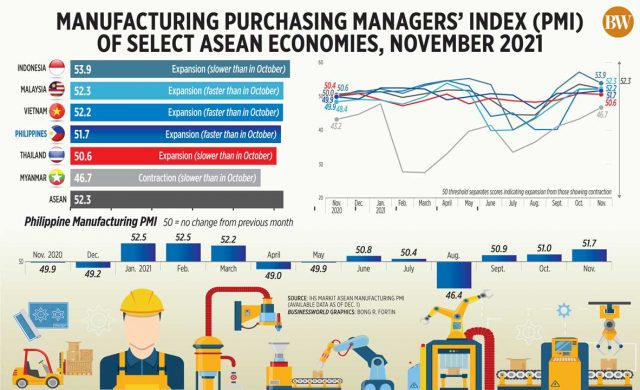
Manufacturing Purchasing Managers’ Index of select ASEAN economies, Nov. 2021

PHILIPPINE MANUFACTURING activity rose to an eight-month high in November, as new orders increased for the first time since March, IHS Markit said on Wednesday. Read the full story.

Manufacturing Purchasing Managers’ Index of Select ASEAN Economies, Nov. 2021

BoC beats Nov. collection target by over 13%

PHILSTAR FILE PHOTO

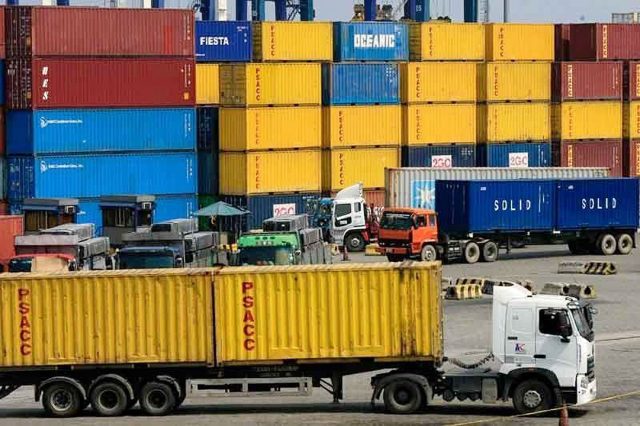
THE Bureau of Customs (BoC) collected P58.79 billion in revenue in November, exceeding its target by 13.39% as import volumes increased.

The BoC in a statement Wednesday said that 12 out of 17 collection districts exceeded their targets for the month.

In the year to date, the BoC collected P584.16 billion, equivalent to 94.7% of the 2021 collection target of P616.75 billion.

“The observed recovery in collection performance is attributed to several factors, including the improvement in volume of imports,” the BoC said.

Other factors contributing to growth include improved valuations, the gradual improvement of the economy as borders and businesses reopen, and government efforts to ease the movement of goods, the BoC added.

Collection districts that exceeded their targets were the Ports of San Fernando, Manila International Container Port, Ninoy Aquino International Airport, Batangas, Legaspi, Iloilo, Tacloban, Zamboanga, Davao, Subic, Clark, and Limay.

The BoC has been consistently beating its monthly collection targets since January.

Customs Commissioner Rey Leonardo B. Guerrero in a House Public Accounts Committee hearing last week said he is confident the bureau will hit its full-year collection goal set by the Development Budget Coordination Committee.

BoC collections declined by 14% to P537 billion last year due to the slowdown in international trade. — Jenina P. Ibañez

Foreign chambers tout FDI as key to economic recovery, poverty relief

GLOBE.COM.PH

FOREIGN BUSINESS chambers said the next government needs to open the economy further to foreign direct investment (FDI) in order to supercharge the recovery from the pandemic and alleviate poverty.

“The Joint Foreign Chambers (JFC) wishes to highlight our advocacy to remove (foreign investment) restrictions as part of the post-pandemic reforms to boost growth and create more jobs,” Senior Adviser of the American Chamber of Commerce of the Philippines and Author of the Arangkada Philippines Project John D. Forbes said at a virtual forum Wednesday. 

“With liberalization reforms, we anticipate an additional $50 billion in FDI will flow into the Philippines during the present decade,” Mr. Forbes added.

The JFC is pushing for the passage of amendments to the Foreign Investment Act, the Public Service Act, and the Retail Trade Liberalization Act. 

Amendments to the Foreign Investment Act of 1991 will allow foreigners to own 100% of domestic enterprises except in areas where restrictions apply, as outlined by the foreign investment negative list.

The legislation is currently with the Bicameral Conference Committee after having been certified as urgent by President Rodrigo R. Duterte in September.

Meanwhile, the Public Service Act seeks to amend the 85-year-old Commonwealth Act 46 in a manner that will attract more foreign investment, which is expected to make the quality and cost of public services more competitive.

The bill, now on the Senate floor for amendment, specifically seeks to declassify telecommunications companies as public utilities, thereby removing the 40% cap on foreign ownership of telcos.

Amendments to the 20-year-old Retail Trade Liberalization Act seek to lower the minimum capital investment by foreign retailers to P25 million from P125 million. 

The Bicameral Conference Committee report on the amendments to the Retail Trade Liberalization Act were ratified in September by the Senate, where the measure is known as Senate Bill 1840, while ratification is pending in the House of Representatives, whose version of the legislation is known as House Bill 59. 

Forum participants said China, Singapore, Malaysia, and Vietnam overcame poverty by opening up their economy to FDI.

“Unless people are rescued from poverty… you can’t talk about anything else,” Anthony A. Abad, chief executive officer of think tank TradeAdvisors, said at the forum.

Mr. Abad said FDI provides long-term capital needed for inclusive growth and a resilient economy, as well as technology transfer and heightened competition with the introduction of higher-quality and innovative products and services. 

He urged the next government to amend the 1987 Constitution in a manner that makes the economy more open to foreign investment.

McKinsey and Co. Philippines Acting Managing Partner Jonathan Canto said the Philippines should explore a potential niche as a manufacturing hub with the planned pullout of 80% of US companies and 67% of European companies from China to elsewhere in Asia, which Vietnam, Thailand, and Malaysia are currently preparing for.

Citigroup Hong Kong Chief Economist Johanna D. Chua said FDI will address the capital and technology needs to transform Philippine manufacturing.

Mr. Canto recommended that the Philippines reassess its FDI strategy and priority sectors, build unique deal-focused value propositions, focus on investment promotion, and ensure end-to-end support for investors.

Center for Research and Communication Founder and Research Director Bernardo M. Villegas also said FDI will help accelerate the ongoing infrastructure buildout and the push for digitalization. — Bianca Angelica D. Añago

Officials hoping for continuity in infrastructure projects

GOVERNMENT OFFICIALS involved in the infrastructure program are hoping for continuity when the next administration takes over projects already underway.

“Transparency and good governance will ensure continuity,” said Officer-in-Charge – Undersecretary for Investment Programming Group Jonathan L. Uy of the National Economic and Development Authority (NEDA) during the Arangkada Philippines Forum 2021 Wednesday.

He added that it is also critical for national and local governments to jointly flesh out all master plans, including investment plans.

“We have to improve our data. We really need to know our clients. Like the private sector, we really have to understand what our beneficiaries want and can afford, and I think all of us are already doing this right now, especially with the technologies available,” Mr. Uy said.

Infrastructure industry leaders have said that the next government will need to address right-of-way issues, slow permit approvals for infrastructure projects, and prepare long-term plans that look as far ahead as 30 years.

NEDA Assistant Secretary Roderick M. Planta said that there must be a continuity in the pursuit of the Philippine Development Plan.

“The (proposed) water regulatory commission should be enacted as soon as possible to address the fragmented nature of the sector,” he said.

“We’d like water assessments conducted so we know where we are in terms of water supply.”

Jaime C. Melo, assistant secretary for aviation and airports at the Transportation department, said he expects the continuation of the improvements to the Ninoy Aquino International Airport (NAIA), which is still expected to be the primary airport.

“Even without privatization, we will continue to improve NAIA.”

Transportation Undersecretary Timothy John R. Batan expressed confidence in the completion of various railway projects by 2030.

“By 2030, the LRT-1 Cavite extension will be completed, LRT-2 will be completed, MRT-3 will have been restored to its designed operating condition, our newest project MRT-4 will be completed by then, MRT-7 will definitely be completed by then, the Metro Manila subway will be done by 2030, the North–South Commuter Railway will be fully operational by 2030, the Subic-Clark railway will be completed by then as well, the PNR Bicol is expected to be completed by 2025 or 2026,  and the Mindanao railway Phase 1 as well,” he said. — Arjay L. Balinbin

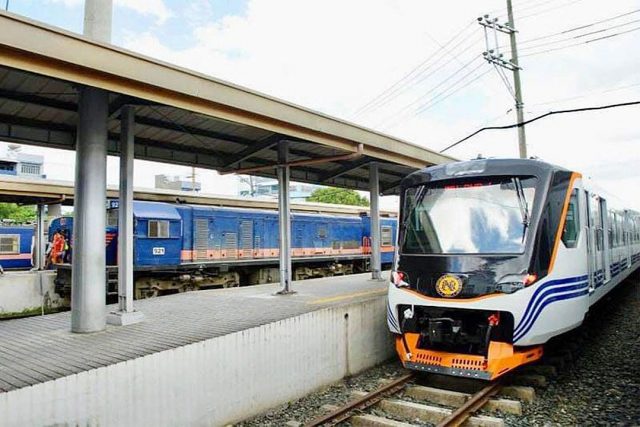
Construction progress for PNR Clark Phase 1 Balagtas, Bocaue stations exceeds 23%

PHILSTAR

THE Transportation department said Wednesday that it is seeking to maintain the timeline for the Philippine National Railways (PNR) Clark Phase 1, which runs from Tutuban in Manila to Malolos, Bulacan, with the Bocaue Station now at an overall progress rate of 23.18% and the Balagtas Station at 23.97%.

The department expects that in less than a year, nine more stations will be making significant progress along the 38-kilometer line.

“Construction is ongoing for all these stations,” Transportation Undersecretary Timothy John R. Batan said during the inspection of the rail line’s Balagtas station Wednesday.

PNR Clark Phase 1, which is one of the three segments of the North-South Commuter Railway (NSCR) project, is expected to serve around 300,000 passengers daily and reduce travel time between Tutuban and Malolos, Bulacan to 35 minutes from the current hour and 30 minutes.

The 147-kilometer NSCR project, which will have 35 stations be serviced by 464 train cars, is supported by the Japan International Cooperation Agency. It will run from Clark in Central Luzon to Calamba, Laguna.

“In less than two years’ time, we will see six more stations taking shape within the 53 kilometers of PNR Clark 2 from Malolos to Clark International Airport,” Mr. Batan noted.

“And by next year, we will see 19 more stations start construction within the 56 kilometers of PNR Calamba from Manila to Calamba, Laguna,” he added, noting that bidding for all the nine contracts of the southern segment is almost complete. — Arjay L. Balinbin

Christmas spending expected to top P37,000 per household

PHILIPPINE STAR/MICHAEL VARCAS

HOUSEHOLDS are expected to spend about P37,106 each to celebrate Christmas, according to a study conducted by a remittance company.

The Philippines’ estimated Christmas spend is eighth-largest among 15 economies surveyed by WorldRemit.

“Christmas celebrations begin as early as September and extend until January in the Philippines, making it challenging for many families to afford the basic costs of Christmas,” WorldRemit said in a statement.

Households in Lebanon, Canada, and France were found to have the top Christmas spending levels.

Other countries that were part of the study were Mexico, Australia, the US, the UK, Cameroon, Kenya, Nigeria, Rwanda, Ghana, India, and Uganda.

The study showed that Filipinos reserved the highest proportion of their expected spend to gifts, which will account for about 48% or P17,922 of their holiday costs.

Food accounted for 45% or P16,688 of the holiday budget. Decorations were expected to take up 3% or P2,496.

WorldRemit said overseas Filipino workers strive to ensure that families back home have enough for holiday spending.

“The Christmas season is the perfect time to celebrate old traditions and create new ones with friends and family across the globe. One tradition that is all too well known for Filipino households with friends and families overseas is sending money in lieu of gifts,” Earl Melivo, country director of WorldRemit Philippines, said in a statement.

The Philippines is the fourth biggest recipient of remittances, following India, China, and Mexico, according to the World Bank. Such inflows support household spending, which accounts for about three-fourths of the Philippines’ economy.

The central bank estimates that cash remittances rose 5.2% year on year to $2.737 billion in September. In the year to date, remittances amounted to $23.117 billion, up 5.6%. — Luz Wendy T. Noble

Key legislator calls for voiding of Malampaya deals, citing faulty process

SHELL GLOBAL

SENATOR Sherwin T. Gatchalian said Wednesday that the Department of Energy (DoE) must void its approval of the Chevron Malampaya LLC’s transfer of its 45% stake in the Malampaya gas project to Udenna group subsidiary UC Malampaya (Pte Ltd.), calling the approval process defective.

Mr. Gatchalian, who chairs the Senate’s Committee on Energy, said the Energy department has admitted to lapses in the processing of the stake sale approval.

“When there’s a gap in the law, there’s a lapse in the process,” Mr. Gatchalian told BusinessWorld in a video interview.

Mr. Gatchalian said the DoE can therefore rescind the approval of Chevron Malampaya’s sale of its stake to Dennis A. Uy-controlled UC Malampaya.

“They can because if they admit that the process is defective, therefore the approval is invalid. Then the transaction should be voided,” he said.

He also noted that the Senate can only pressure and make recommendations to the Executive and Judiciary branches of government to initiate proceedings to void the deal.

Assistant Energy Secretary Gerardo D. Erguiza, Jr. told reporters Wednesday that instead of finding fault with the deal, gaps in the law need to be addressed.

Mr. Erguiza said that there is no need for the DoE to rescind the deal as the law does not authorize the agency to regulate the sale of shares between private parties on a willing seller-willing buyer basis.

Mr. Gatchalian, on the other hand, countered by saying, “Nowhere in the documents that they submitted to us indicate that there are any gaps in the law. We were made to understand that the law is sufficient and Department Circular 2007-04-003 (DC 2007) — Prescribing the guidelines and procedures for the transfer of rights and obligations in Petroleum Service Contracts under PD 87 as amended — and Presidential Decree 87 will be used to evaluate this transaction.”

Mr. Gatchalian, who is leading an investigation into the Malampaya transaction, said that the DoE sent an e-mail during its budget hearing indicating that it does not deem it necessary to amend the law.

The DoE was also asked during a Senate hearing in November last year about the sufficiency of the current regulations, which the department said were sufficient.

Mr. Erguiza said the DoE is drafting a circular to clarify the process for approving such sales.

Mr. Gatchalian said a circular does not have the force of law and will not suffice as an amendment.

PD 27 or the Oil Exploration and Development Act of 1972 allows for the discovery and production of petroleum as pursued by the government and private sector.

Under the decree, parties working with the government to explore petroleum in the Philippines work under Service Contracts (SCs) — SC 38 in the case of Malampaya — under which exploration labor and technology will be provided by the contractor, with financing from the government, which will assume ownership of any discoveries.

DC 2007 prescribes the procedure for approving requests for the transfer or assignment of rights and obligations under a Service Contract. — Marielle C. Lucenio

Domestic goods trade declines by value in Q3 

PHILSTAR

THE VALUE of domestically traded goods fell nearly 15% in the third quarter, the Philippine Statistics Authority (PSA) said Wednesday.

Preliminary results from the PSA report on “Commodity Flow in the Philippines” indicate that the value of goods traded during the three months to September fell 14.9% year on year to P142.33 billion.

By volume, traded goods grew 0.7% from a year earlier to 3.84 million tons.

The decline in third-quarter trading value and the slight growth in volumes represent a recovery from the preceding year’s declines of 26.7% and 36.2% by value and volume, respectively. However, the third-quarter performance marked a slowdown compared with the second quarter, when the value gain was 74.8% and that for volume was 75.4%.

Commodity flow, a proxy for the health of domestic trade, covers goods shipped by water, air, and rail transport systems, with waterborne goods the dominant segment.

Seven out of the 10 commodity categories monitored by the PSA reported a decline by value. Of these, mineral fuels, lubricants and related materials registered the biggest decline with 71.5% to P1.76 billion. Volume was down 74.6% at 32,216 tons.

Eastern Visayas was the top source of commodities in the third quarter, with outflows amounting to P32.31 billion. It had a domestic trade surplus of P20.32 billion, the biggest among the five regions where exports outweighed imports.

Caraga was the top destination for commodities with total inflows of P34.81 billion. It posted the biggest trade deficit among 10 regions with P30.44 billion.

“Contributing most to the (third-quarter) domestic trade decline were restrictions that affected inter-island mobility, on top of rising fuel costs observed for most of the quarter,” Security Bank Corp. Chief Economist Robert Dan J. Roces said in an e-mail.

Mr. Roces said companies were dealing with the impact of the lockdowns imposed in the second quarter with the onset of the Delta variant of the coronavirus disease 2019 (COVID-19), with the resulting stricter curbs serving to dampen domestic trade further.

Mr. Roces, however, expects domestic trade to pick up in the fourth quarter, when lockdowns were being eased.

“(W)e are observing some mobility uptrends already at the start of the quarter; domestic demand is also projected to be higher with the onset of the holiday season,” he said.

“However, downside risks include the new Omicron variant that could dampen consumer confidence and lead to stricter curbs.”

In a separate e-mail, ING Bank N.V. Manila Senior Economist Nicholas Antonio T. Mapa said economic activity may pick up, but that challenges of supply-side bottlenecks “should continue to weigh on domestic trade in the coming months and cap any upside.” — Lourdes O. Pilar 

PEZA says investments top P4-T since agency’s founding

THE Philippine Economic Zone Authority (PEZA) said it has taken in P4.018 trillion worth of investments since it took on its investment promotion role 26 years ago.

“Our locator companies, whose investments, expansion projects, and reinvestments have totaled P4.018 trillion over the last 26 years,” PEZA Director General Charito B. Plaza said during the agency’s Investors’ Recognition Day 2021 on Nov. 25, as quoted in a PEZA statement Wednesday.

Ms. Plaza added that the export revenue of locators amounted to $916.53 billion or P46.16 trillion.

Locators have also created about 1.73 million direct jobs in PEZA economic zones, which it estimates are equivalent to between 5 and 8.63 million indirect jobs when the rest of the supply chain and other businesses attracted to the economic zones are considered.

Trade Secretary Ramon M. Lopez said the agency has managed to bring in foreign investors even during the pandemic.

Mr. Lopez added that the PEZA stakeholders’ investments led to 20% growth in exports as of September 2021, exceeding the growth rates recorded pre-pandemic.

“All of you are also the reason why our country, as of 3rd quarter (this year), has experienced 7% economic growth, 12% growth in the 2nd quarter, and a year to date of 4.9% growth in GDP,” Mr. Lopez told the firms.

Ms. Plaza also announced during the event that the agency’s online payment and collection system for fees is now available via mobile wallet, credit and debit card, and bank transfer channels in over 80,000 payment centers.

PEZA and the Manila Electric Co. (Meralco) also signed an agreement on Nov. 24 covering the issuance of the electronic Certificate of Final Electrical Inspection (CFEI) for PEZA companies.

“PEZA can now submit in advance a list of the approved CFEIs to MERALCO through electronic mail before the physical certificates are actually sent,” Ms. Plaza said. — Bianca Angelica D. Añago

Net settlements: The VAT implications of offsetting

With the recent relaxation of travel restrictions in Metro Manila and most areas in the Philippines under the Inter-Agency Task Force’s COVID-19 Alert Level System, people can now start planning their travel getaways almost two years after being constrained by the pandemic quarantine — though there is a new variant that we now need to again consider. 

When traveling as a group, one common practice is the “abono” or “paluwal,” in which someone advances the payment for another person or the entire group, subject to reimbursement. More often, instead of paying, the others take up the subsequent expenses during their travel to offset the group’s payables. This arrangement reduces the inefficiencies of collecting each person’s share right before every group activity and saves everyone the trouble of making payments back and forth. However, the group must maintain a list of expenses incurred and ideally keep all the receipts as a reference for when it’s time to compute each person’s net receivables or payables.

Offsetting is also common for companies with multiple transactions with the same counterparty. To cover this arrangement, in 2016, the Bureau of Internal Revenue (BIR) issued Revenue Memorandum Circular (RMC) No. 61-2016, which prescribed policies and guidelines for accounting and recording transactions involving “Netting” or “Offsetting.”

Under the RMC, the practice of offsetting payable or receivable transactions of taxpayers, and consequently the accounting and recording of the transaction in the books of the parties, is strictly prohibited for tax purposes. As such, accrued receivables or payables arising from the sale or lease of goods or properties or the performance of services must be recognized at gross amounts for income and value-added tax (VAT) or percentage tax purposes. Moreover, payments subject to withholding tax (i.e., creditable or final) must also be recorded at gross, regardless of whether the transactions are offset or provide for net settlement of cash flows.

A careful reading of the Circular would show that the prohibition on offsetting arrangements ensures that gross amounts are reported for tax purposes, not just the net amounts. If the transaction only involves settlement through offsetting or through a net settlement of cash flow, but sales and expenses are reported at gross for income tax and VAT/percentage tax purposes, then such transactions must be acceptable.

Prior to 2016, a number of court cases and BIR rulings recognized offsetting as a mode of payment, which satisfies the requirement for a zero-rated sale to be paid for in acceptable foreign currency and accounted for in accordance with the rules and regulations of the Bangko Sentral ng Pilipinas (BSP). For instance, in 2005, the Supreme Court ruled that a taxpayer need not present proof of foreign currency proceeds from its sales to qualify for zero-rating. Instead, the taxpayer must show that there was an actual offsetting of intercompany accounts (i.e., intercompany receivables and payables) to support the constructive inward receipt of foreign currency proceeds. Moreover, the BIR confirmed in a 2008 ruling that payments for the export sale of services, made through offsetting arrangements, satisfies the zero-rating requirement for the consideration to be paid for in accordance with BSP rules and regulations.

In Revenue Memorandum Order (RMO) No. 47-2020, which provides consolidated and updated guidelines and procedures on the processing of claims for VAT credit/refund, the BIR recognized that the “paid for in acceptable foreign currency” requirement of a zero-rated sale also includes constructive remittance. Under the RMO’s Annex D – Verification procedures for sales of services, in case of constructive remittances, such as offsetting arrangements, the assigned Revenue Offices need to obtain a copy of any of the following: board resolution authorizing the offsetting arrangement; intercompany debit/credit memorandum on the amount of constructive remittance under the offsetting arrangement; or loan documents or proofs of intercompany advances.

However, in a Court of Tax Appeals (CTA) case in July, which involves a taxpayer whose actual proceeds were lower than the reported VAT zero-rated sales due to certain adjustments, including offsetting arrangements, the CTA allowed only the peso equivalent of the net proceeds to be treated as valid zero-rated sales for two reasons. First, the taxpayer failed to connect the offsetting adjustments to the zero-rated sales with documentary support, and second, offsetting is prohibited under RMC No. 61-2016.

The rules and jurisprudence are clear that offsetting arrangements must be justified by supporting documents. However, with due respect, I beg to disagree with the CTA when it used the offsetting arrangement as grounds to disqualify a sale as a valid zero-rated transaction, by referring to the 2016 RMC as the legal basis. The facts of the case show that the taxpayer diligently reported gross sales as VAT zero-rated. The taxpayer did not under-declare its sales, at least for VAT purposes, through its offsetting arrangements. At any rate, CTA cases are not case law unless upheld by the Supreme Court. As such, the 2005 Supreme Court decision should still bear more weight as a legal precedent.

In sum, offsetting arrangements are allowed for tax purposes if it is for the settlement of receivables/payables. Considerably, it is practical and helpful for taxpayers in managing their cash flows and avoiding unnecessary charges when transferring cash from one bank account to another. It is only prohibited if the taxpayer is offsetting to reduce the amount of sales or even expenses reported for tax purposes. In any case, sufficient and appropriate documents must always be presented to support the taxpayer’s tax treatment for each transaction. 

The views or opinions expressed in this article are solely those of the author and do not necessarily represent those of Isla Lipana & Co. The content is for general information purposes only, and should not be used as a substitute for specific advice.

Nestine P. Buisan is a manager at the Tax Services Department of Isla Lipana & Co., the Philippine member firm of the PwC network.

nestine.p.buisan@pwc.com

Filipinos to get boosters soon as Omicron looms

DEPARTMENT OF HEALTH FB PAGE

FILIPINO adults will be given booster shots against the coronavirus in the next couple of days, according to the Department of Health (DoH), as the world faces the threat of a potentially more contagious Omicron variant.

The local drug regulator has approved the emergency use of the booster shots and the government would soon issue the guidelines, Health Undersecretary Myrna C. Cabotaje told a televised news briefing on Wednesday.

“In the next couple of days, we will have the boosters for all the 18 years old and above,” she said.

The Philippines this month started giving booster shots to health workers, senior citizens and seriously ill people.

The local Food and Drug Administration (FDA) approved four vaccine brands as a third dose from Pfizer, Inc., AstraZeneca Plc, Sinovac Biotech Ltd. and Russia’s Gamaleya Research Institute of Epidemiology and Microbiology.

“It was approved on Monday to include all adults 18 years old and above, based on assessment of benefit and risks similar to the US Centers for Disease Control and Prevention,” FDA Director-General Rolando Enrique D. Domingo said in a statement.

The Philippines aims to fully vaccinate 54 million people by the end of the year.

The Omicron variant has yet to be detected in the Philippines, but health experts have said its entry is only a matter of time.

The latest coronavirus variant could pose a greater threat than the Delta variant, which has been causing surges worldwide, according to the World Health Organization. “This variant has a large number of mutations, some of which are concerning,” it said on its website.

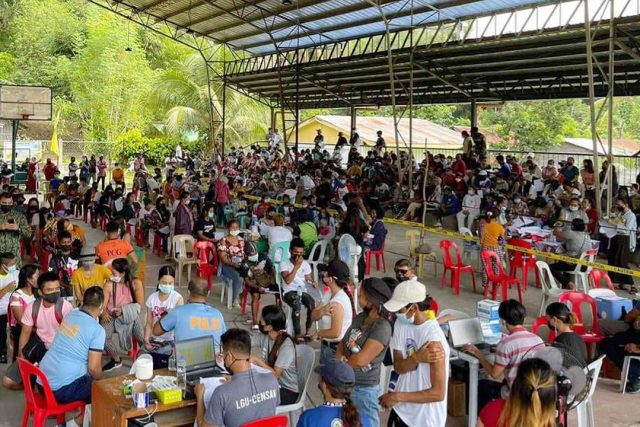
At least 5 million people got vaccinated against the coronavirus disease 2019 (COVID-19) in the first two days of a three-day national vaccination drive, Ms. Cabotaje said.

The agency has a 9-million target “but just in case we will be unable to reach it, this record is already high,” she said.

She said 2.71 million vaccine doses were given out on Monday and 2.29 million the next day.

Ms. Cabotaje said some Filipinos failed to get vaccinated on Nov. 30, a national holiday, after some health centers closed early.

The government is considering a second round of its three-day vaccination drive on Dec. 15-17 to boost protection against the Omicron variant, Cabinet Secretary Karlo Alexei B. Nograles told the ABS-CBN News Channel.

“The reason for all of this is again, to add a defense against Omicron and whatever variants there are,” he said.

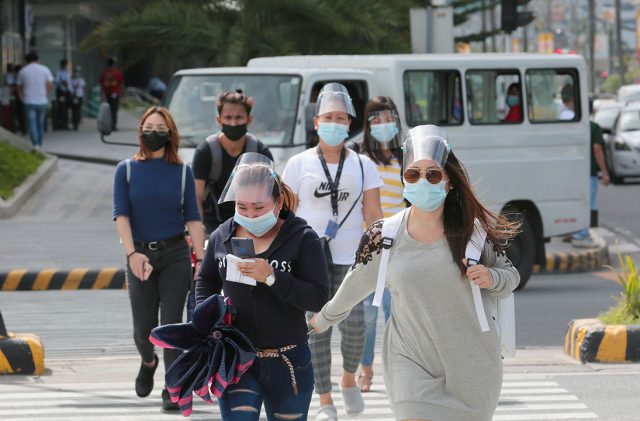
On Monday night, the presidential palace said an inter-agency task force had approved a plan to keep Manila, the capital and nearby cities under Alert Level 2.

All provinces in the country have been placed under Alert Level 2 except Apayao, which is now under Alert Level 3.

The government announced the quarantine levels, which run on Dec. 1 to 15, after it tightened border controls to prevent an outbreak of the Omicron variant, which authorities said has had several mutations.

The Philippines has suspended inbound flights from South Africa, Botswana, Namibia, Zimbabwe, Lesotho, Eswatini and Mozambique, Austria, the Czech Republic, Hungary, the Netherlands, Switzerland, Belgium and Italy.

It also suspended a plan to allow the entry of fully vaccinated foreign travelers from Dec. 1-15.

LAST PLACE
The country has been dealing with one of Asia’s worst COVID-19 outbreaks and its vaccine rollout has been slower than many neighbors.

It remained in last place among 53 countries in an updated Bloomberg study that measured the resilience and response of economies to the coronavirus pandemic. It was followed by Indonesia, Vietnam and Malaysia.

The “perverse consequences of global vaccine inequality have only been underscored by Omicron’s emergence, something that scientists and the World Health Organization had warned will happen — and will keep happening — until the developing world is able to more efficiently access and administer shots,” Bloomberg said in the study released on Wednesday. 

South Africa dropped seven spots as other countries cut off travel access to the first country that sequenced the new variant and where it appears to be spreading the fastest. “Cases and positive test rates are also on the rise while vaccination is still only at 43 doses per 100 people.”

Mr. Nograles in a statement noted that while the Bloomberg data could help the Philippines evaluate its pandemic response, it failed to consider “country-specific COVID-19 context.”

“A case in point is the importance given by Bloomberg in reopening progress, which involves lockdown severity, flight capacity and vaccinated travel routes,” he said.

The evidence shows that the alert level system and granular lockdowns that the Philippines enforced in November had allowed the government to “effectively manage COVID-19 risks while providing for an environment conducive to economic growth.”

Active cases continue to fall, with 425 infections added on Nov. 30, the lowest daily tally since July 2020. The coronavirus death rate in the Philippines is also one of the lowest, he added.

“We recently placed fifth-highest in single-day vaccination rates worldwide, with 2.5 million doses administered yesterday during the first day of our Bayanihan, Bakunahan program,” Mr. Nograles said.

As of Nov. 29, more than 35.89 million Filipinos have been fully vaccinated against the coronavirus, nearing the government’s 54-million goal by year-end. More than 46.27 million Filipinos have received their first dose. — Norman P. Aquino and Alyssa Nicole O. Tan


DoH logs 500 more COVID infections; 167 more people die

PHILIPPINE STAR/ MICHAEL VARCAS

THE DEPARTMENT of Health (DoH) reported 500 coronavirus infections on Wednesday, bringing the total to 2.83 million.

The death toll hit 48,712 after 167 more patients died, while recoveries increased by 951 to 2.77 million, it said in a bulletin.

There were 15,327 active cases, 7,183 of which were mild, 756 did not show symptoms, 2,489 were severe, 3,832 were moderate and 1,067 were critical.

The agency said nine duplicates had been removed from the tally, eight of which were reclassified as recoveries, while 187 cases were found to have tested negative and have been removed from the tally. Of these, 186 were relisted as recoveries.

DoH said 147 cases tagged as recoveries had been reclassified as deaths.

Two laboratories did not operate on Nov. 29, while three laboratories failed to submit data.

The agency said 27% of intensive care units in the Philippines were occupied, while the rate for Metro Manila was 28%.

The positivity rate was at 2.1%, based on test results from 30,841 people on Nov. 29.

The Philippines on Tuesday logged the lowest daily coronavirus tally since July 2020.

Also on Wednesday, the Private Hospitals Association of the Philippines (PHAP) said it was preparing for a potential spike in infections amid the threat of the Omicron variant from Africa.

PHAP President Jose Rene De Grano, said there were ample supplies of oxygen and vacant beds amid decreasing infections in recent weeks. “Private hospitals are ready in case another COVID surge happens,” he told ABS-CBN Teleradyo in Filipino.

South Africa reported the Omicron variant to the World Health Organization (WHO) on Nov. 24.

Much is still unknown about the latest coronavirus variant, but the WHO said its high number of mutations might make it more contagious or resistant to vaccines.

A number of countries, including the Philippines, have tightened their borders to prevent its spread.

As of Nov. 29, about 8,153 out of 28,482 hospital beds in the Philippines were occupied, according to data from the Health department.

Meanwhile, health authorities have quarantined a Filipino worker who came home last week from South Africa, where the Omicron coronavirus variant was first detected, ABS-CBN News reported, citing Bureau of Quarantine Deputy Director Roberto Salvador, Jr. 

The male worker is in quarantine in Bacolod City in central Philippines and was not showing any symptoms, he said.

An inter-agency task force had ordered the bureau to work with the local government in tracing people who have had close contact with the overseas Filipino workers, Mr. Salvador said.

Also on Wednesday, the House of Representatives approved on final reading a bill that seeks to mandate local governments to allot a portion of their share in national taxes for health services.

Voting 224-0 with no abstention, congressmen approved House Bill 10392, which will amend the Local Government Code of 1991.

The bill will require local governments to set aside 20% of their annual budget and 15% of their national tax allotment for development projects and health services.

Their health programs should be approved by their health boards in accordance with Universal Healthcare Law. — Alyssa Nicole O. Tan and Russell Louis C. Ku

ADVERTISEMENT
ADVERTISEMENT