Home Blog Page 7101

52 innovative organizations being accorded the International Innovation Awards 2021
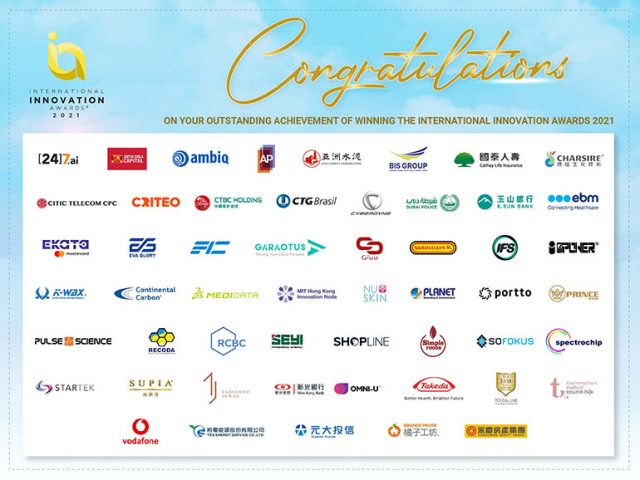
Enterprise Asia is pleased to honor 52 award recipients at the International Innovation Awards 2021. Spearheading the Innovation Revolution, the International Innovation Awards, which aims to create an innovation ecosystem for enterprises, is held annually to recognize outstanding innovations across the globe.

The 2021 Global Innovation Index has shown that in spite of the massive impact of the pandemic, many companies have shown remarkable resilience — especially those that have embraced digitalization, technology and innovation. It has shown that the spending growth of R&D in 2019 at 8.5% has successfully contributed to the global innovation ecosystem building on pre-crisis performance in 2020.

This year’s awardees demonstrated the role of innovation in accelerating growth, efficiency and inclusiveness which is in line with the objective of the award recognition program. The awards not only provide a global platform for enterprises to showcase their innovations but also encourage organizations to continue investing in innovation to pave the path towards a better and sustainable future.

The award drew an exceptional mix of submissions from various industries and countries such as Brazil, Finland, Germany, Hong Kong, Italy, Japan, Singapore, Taiwan, United Kingdom, the United States of America. 52 emerged as victors from the 260 applications through undergoing a rigorous evaluation process by a jury of prominent judges across three categories: Product, Service & Solution, and Organization & Culture.

“To best prepare our organizations for IR 4.0, we must inculcate greater innovation within our organizations. We must empower our people to constantly innovate and build a culture of innovation within our respective companies. Institutionalize it, so that innovation becomes all-permeating within our organizations rather than a job function or reaction to market forces. Hence, the key is not just changing the way we do business but changing our mindset as well,” Richard Tsang, president of Enterprise Asia, stated in his welcome address.

Among the notable recipients of the ‘InnoCube’ under the Product Category include CYBERDYNE, Inc. from Japan with its Wearable Cyborg HAL, the world’s first wearable cyborg that uses brain waves to command movements, and E.SUN Commercial Bank, Ltd. from Taiwan with E.SUN Smart FX Service, which is a comprehensive FX service with anti-fraud functions embedded in its transactions.

Esteemed winners under the Service & Solution Category are SHOPLINE from Taiwan with SHOPLINE Social Commerce, a full-featured platform that tailors all-in-one commerce solutions for every business type, and Ambiq from United States of America with its Ultra-low Power Processor Solutions for IoT Endpoint Devices, which is the most energy-efficient sensor processing solution in the market.

Prominent awardees under the Organization & Culture Category include Dubai Police with Dubai Police Next 50 Innovation Hub, a transformation initiative to redesign the Dubai Police innovation ecosystem, and Sofokus from Finland with Better Monday®, which is an organism management system that measures employee happiness in the workplace to achieve a happiness-oriented company culture.

Prior to the International Innovation Awards, the International Innovation Summit 2021 was held during the day. Themed “Unleash Your Organization’s Superpower Innovation,” the virtual summit aimed to encourage organizations to tap into their inner innovation powers to innovate in a way that is profitable, creates value and captures customers’ interests.

Over 300 innovation experts, industry leaders and policy makers across the globe gathered at the summit to share and exchange the latest insights on conquering uncertainties and exploring the unknown for organizations to innovate, grow, and evolve.

At the Summit’s opening, Enterprise Asia Chairman Dr. Fong Chan Onn expressed that “Organizations must be courageous to explore the uncertainty to innovate and create. As our journeys grow and evolve, so must our ideas. Improving the ability to innovate has become vital to keeping up with the times.”

Among the keynote speakers is Josemaria Siota, executive director of IESE Business School, who covered the topic of “Corporate-startup innovations in deep tech: Challenges, Opportunities, and Trends.” Mr. Siota shared invaluable insights on establishing a start-up mindset and culture to develop new technologies and offerings and keep organizations on the right track.

Other speakers include Alexey Semeney, CEO & founder, DevTeam.Space; Andy Chun, regional director & Technology Innovation of Prudential Corporation Asia; Akina Ho, head of Digital Transformation and Innovation at Great Eagle HK; Praveen Lala, global director of Delivery, Process, and Operations of GE Digital; Raushida Vasaiwala, general manager of APAC at Celtra;  Makoto Shibata, head of FINOLAB & Chief Community Officer of FINOLAB INC.; Guy Parsonage, partner & Experience Consulting leader of PwC Experience Centre, Hong Kong; Ivana Bartoletti, Global Data Privacy officer of Wipro and founder of Women Leading in AI network; William De Vos, managing director APAC of Board Of Innovation; Dr. Geoffrey Yuen, chief scientist at Parallel Chain; with Gary Ng, co-founder & CEO at viAct, and Martin Daffner, founder & Innovation architect and Corporate Innovation coach of INNOBRIX, as the moderators.

The International Innovation Awards and International Innovation Summit are organized annually by Enterprise Asia, Asia’s largest nongovernmental organization for entrepreneurship and is supported by the British Chamber of Commerce Singapore, Canada-ASEAN Business Council (CABC), Malaysian Alliance of Corporate Directors, Malaysian Global Innovation & Creativity Centre (MaGIC), Malaysian-Thai Chamber of Commerce, National Agency for Technology Entrepreneurship and Commercialization Development (NATEC) Vietnam, National Science and Technology Development Agency Thailand, OAV – German Asia-Pacific Business Association, Singapore Thai Chamber of Commerce (STCC), The Malaysian Chamber of Commerce (HK and Macau) Limited (MAYCHAM). PR Newswire is the official press release distributor partner, and 3Particle as the official production partner. AsianNGO, Bangkok Post, Biz Hub Vietnam, BusinessWorld, Commercial Times, DigiconAsia, Hong Kong Economic Times, Jumpstart, Kumparan, Nikkei Asia, SME and Viet Nam News are the official media partners.

RECIPIENT LIST OF THE INTERNATIONAL INNOVATION AWARDS 2021

PRODUCT CATEGORY
COMPANY WINNING INNOVATION TITLE COUNTRY
AP (Thailand) Public Company Limited KATSAN: INNOVATION FOR PEACE OF MIND Thailand
Bioscience Animal Health Public Company Limited Angentex® COVID-19 qPCR Detection Kit (with IC) Thailand
Charsire Biotechnology Corp. Celludoxa Sanovazo – A Class II Medical Device Trauma Dressing from Patented Process Soybean Extract Taiwan
CTG Brasil Turbine Pneumatic Governor for hydropower plants Brazil
CYBERDYNE Inc. Wearable Cyborg HAL Japan
E.SUN Commercial Bank, Ltd. E.SUN Wallet Taiwan
E.SUN Commercial Bank, Ltd. E.SUN Smart FX Service Taiwan
EVA-GLORY Industrial Co., Ltd Nitrex: protection foam Taiwan
First International Computer, Inc. AR HUD Taiwan
Hettigoda Industries Private Limited Siddhalepa Pain Relief Spray Sri Lanka
IPOWER PRODUCTS LIMITED Electric Pendant Heater + Light & Remote Control Hong Kong
K-WAX International Co., Ltd C.C Coating Maintenance Taiwan
Linyuan Advanced Materials Technology Co., Ltd. Continex LH Series Carbon Black Taiwan
Nu Skin Enterprises Singapore Pte Ltd ageLOC Boost Singapore
PLANET Technology Corporation Renewable Energy Management Controller Taiwan
Pulse Science Company Limited BioSafety Mobile Unit Thailand
Pulse Science Company Limited Incuwork ic Thailand
Simple Foods Co., Ltd. 137 Degrees Almond Milk Products Thailand
SUPIA ASIA PTE LIMITED Supia Academy Hong Kong
Thammachart Seafood Retail Co., Ltd. Salmon Bacon Thailand
Vodafone GmbH Vodafone Giga AR App: A futuristic cooking experience Germany
Yuen Foong Yu Consumer Products Co., Ltd. Orange House 5 in 1 Laundry Detergent Pods Taiwan


SERVICE & SOLUTION CATEGORY
COMPANY WINNING INNOVATION TITLE COUNTRY
Aditya Birla Capital Limited Implementation of Digital & Tech Capability India
Ambiq Ultra-low Power Processor Solutions for IoT Endpoint Devices USA
Asia Cement Corporation ACTEC AI Control System Taiwan
Cathay Life Insurance Cathay Vision Experience (CVX) Taiwan
CITIC Telecom CPC DataHOUSE™ AR Remote Hand Hong Kong
Criteo Singapore Pte Ltd Criteo’s First-Party Media Network Singapore
CTG Brasil CTG Comunica Brazil
Dubai Police EFAAD United Arab Emirates
EBM Technologies Inc. Ubiquitous Diagnostic Environment (UDE) App Taiwan
Ekata, Inc. Account Opening API
Merchant Onboarding API
Merchant Review
Singapore
GARAOTUS (SYSTEX Group) GARAOTUS Cloud Platform Taiwan
GLUU Pte Ltd GLUU, ​A ​Marketplace ​Where ​Individuals/​Businesses ​Can ​Source ​For ​Connectivity (WiFi or ​Mobile ​Data) Singapore
IFS Facility Services Co., Ltd. IFS Intelligent Visitor Management Solution Thailand
Medidata Solutions International Asia Pacific Pte. Ltd. Medidata Decentralized Clinical Trials Program Singapore
portto Blocto: Cross-chain, Integrated Smart Contract Wallet Service Taiwan
PRINCE BANK PLC. Prince Bank MobileBiz Digital Banking Application Cambodia
Regional Corridor Development Authority (RECODA) RECODA PROJECT MANAGEMENT SYSTEM (RPMS) Malaysia
Rizal Commercial Banking Corporation (RCBC) RCBC’s DiskarTech Philippines
Shieh Yih Machinery Industry Co., Ltd. Smart Stamping Solution Taiwan
SHOPLINE SHOPLINE Social Commerce Taiwan
SpectroChip Inc. The ONE InstantCare for COVID-19 Rapid Screening Taiwan
Startek Startek Cloud India
Tailored Jewel Sdn Bhd Malaysia’s First Omnichannel Online Jeweller Malaysia
Taiwan Shin Kong Commercial Bank OMNI-U Taiwan
Takeda (Thailand), Ltd. IBD Friend Thailand
TCI Co., Ltd. Innovation Service for Corporate ESG Value Taiwan
Yes Energy Service Co., Ltd. EV/EM Charging System Taiwan
Yuanta Securities Investment Trust Co., Ltd. Yuanta ETF AI Investment Platform Taiwan
Yung Ching Realty Group Yung Ching Realty App Taiwan
Yung Ching Realty Group iplus Smart Innovation Center Taiwan


ORGANIZATION & CULTURE CATEGORY
COMPANY WINNING INNOVATION TITLE COUNTRY
[24]7 Customer Philippines Inc. Project CoLove Philippines
AP (Thailand) Public Company Limited AP THAILAND: INNOVATION FROM EMPATHY CULTURE Thailand
Criteo Singapore Pte Ltd Strengthening ​Our Culture ​Of Inclusion ​Through ​A​nd ​Beyond ​The ​Pandemic Singapore
CTBC Financial Holding Co., Ltd. We are family – Stronger Culture, Happy Workplace Taiwan
CTG Brasil Mapping of Social Innovations for Sustainable Tourism Brazil
Dubai Police Dubai Police Next 50 Innovation Hub United Arab Emirates
E.SUN Commercial Bank, Ltd. E.SUN Digital Transformation Taiwan
MIT Hong Kong Innovation Node MIT Innovation Academy Hong Kong
Sofokus Better Monday® Finland


Spotlight is BusinessWorld’s sponsored section that allows advertisers to amplify their brand and connect with BusinessWorld’s audience by enabling them to publish their stories directly on the BusinessWorld Web site. For more information, send an email to online@bworldonline.com.

Join us on Viber to get more updates from BusinessWorld: https://bit.ly/3hv6bLA.
Philippines lags in attracting top talent

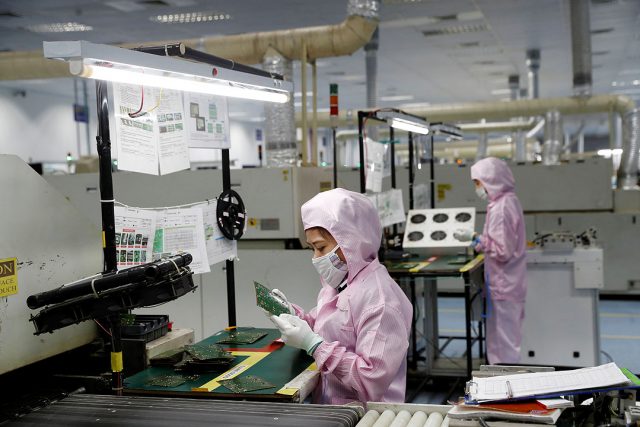
Medical students observe physical distancing while seated in a classroom at the University of Santo Tomas, in Manila, Philippines, June 14, 2021. REUTERS/Lisa Marie David

By Revin Mikhael D. Ochave, Reporter

THE Philippines dropped nine spots in an annual global ranking of countries’ ability to attract and retain a skilled workforce, as the coronavirus pandemic disrupted the education of millions of young Filipinos.

In the IMD World Talent Ranking 2021 report released on Thursday, the Philippines ranked 57th out of 64 economies, down nine places from 48th (out of 63) in 2020.

“The IMD World Talent Ranking assesses the extent to which an economy develops its domestic talent pool while tapping into the overseas pipeline so as to be able to satisfy the market’s demands for talent,” the IMD World Competitiveness Center, which conducted the research, said.

The IMD rankings are based on three factors: “appeal” or the extent to which an economy attracts foreign and retains local talent, “investment and development” which refers to the measurement of resources allotted to develop a homegrown workforce, and “readiness” or the quality of the skills in the country’s talent pool.

The latest report showed the Philippines remained near the bottom at 62nd place (from 61st last year) in terms of “investment and development.”

“The main factors affecting the Philippines’ performance in investment and development are the effective implementation of apprenticeship programs, the quality of education (measured as pupil-teacher ratio, primary and secondary schools), and the effectiveness of the healthcare system,” IMD World Competitiveness Center told BusinessWorld via e-mail.

The Philippines ranked 60th in terms of total public expenditure on education per student at $475. Its pupil-teacher ratios for both primary (25.78 students to teacher) and secondary education (25.19 students to teacher) ranked 60th and 59th place, respectively. Public expenditure on education stood at 3.5% of GDP (52nd place).

In terms of “readiness,” the Philippines ranked 47th (from 33rd spot in 2020), thanks to its strengths such as readily available skilled labor (9th), competent senior managers (17th), and language skills (21st).

“In terms of readiness, the capacity of the university and management education to meet talent demands as well as the percentage of student graduating in sciences and student mobility inbound are among the factors affecting the Philippines’ performance,” IMD said.

It also flagged the Philippines’ scores from the Programme for International Student Assessment (PISA) survey of 15-year-old students’ scholastic performance on mathematics, science, and reading.

The Philippines fell to the 43rd place from 31st spot a year ago in terms of “appeal,” which the IMD said was due to the cost of living and low levels of motivation among the workforce.

According to IMD’s talent ranking website, the Philippines this year faced challenges such as ensuring inclusive economic recovery, reviving businesses and consumer confidence, and establishing resilient social infrastructure, especially in health and education.

Sought for comment, University of Asia and the Pacific (UA&P) Senior Economist Cid L. Terosa said via e-mail that the decline in the country’s ranking can be attributed to the “relatively” weak government investment and support for the education sector.

“Among the 64 countries included in the ranking, the country’s total public expenditure on education per student is the fifth lowest. The inability of the government to spend more on education has partly contributed to the low ranking of the country in terms of pupil-teacher ratio for both primary and secondary education as well as educational assessment,” Mr. Terosa said.

“I think the onslaught of the coronavirus disease 2019 (COVID-19) pandemic last year has made it difficult for the government to allocate more resources to the education sector and to support the transition to alternative modes of learning and instruction,” he added.

Further, Mr. Terosa said the lower ranking will have implications on the Philippines’ economic recovery, since the “talents, education, skills, and training of Filipinos will determine whether more of them will be productively employed in the new normal.”

Mr. Terosa said it is unlikely the Philippines’ ranking will improve considerably next year, given the challenges brought by the pandemic and the transition to a new administration.

Calixto V. Chikiamco, Foundation for Economic Freedom (FEF) president, said in a mobile phone message that the country’s ranking might even slide next year because it is one of the last countries to conduct face-to-face classes.

“The decline in the country’s performance in various education and competency tests — it placed last in the PISA rankings on math and science competency — may account for the low rankings in global talent,” Mr. Chikiamco said.

“Moreover, due to the unaffordability and lack of broadband, many schoolchildren couldn’t even do remote learning,” he added.

University of the Philippines Professor Emeritus Rene E. Ofreneo said in an e-mail interview that the results are not surprising following the prolonged lockdowns due to the COVID-19 pandemic.

“The educational system was not ready. We are plagued with problems about poor internet connection, lack of quality modular materials, lack of quality teachers, and other readiness issues,” Mr. Ofreneo said.

Makati Business Club Executive Director Coco Alcuaz, Jr. said in a Viber message that the government, schools, and private sector should work harder in strengthening the country’s present and future workforce.

“Even if we execute pandemic recovery, infrastructure programs, and other policies and programs, without a strong workforce, we will have a harder time competing in the more competitive, more knowledge-based economy of the future,” Mr. Alcuaz said.

“We have a lot of catch-up to do. Hopefully, the candidates and the next administration put more effort here,” he added.

Meanwhile, Switzerland remained on top of the World Talent Ranking report, which IMD said reflected the widening gap between workers in “talent-strong” economies and a brain drain in others.

European countries dominated the rankings, with the top 10 all from the region. Sweden ranked second, followed by Luxembourg, Norway, Denmark, Austria, Iceland, Finland, Netherlands and Germany.

The Philippines lagged behind other Asian countries in the list.  Hong Kong had the highest ranking (11th), followed by Singapore (12th), Taiwan (16th), Malaysia (28th), South Korea (34th), China (36th) and Japan (39th), Thailand (43rd), and Indonesia (50th).

“This has consequences for leadership responsibilities, as it’s clear that talent attraction and retention is no longer just a policy issue. It’s also the responsibility of senior executives who need to realize their role in boosting worker motivation, which is not just driven by external factors such as salary, safety, or quality of life, but also by the opportunities leaders can provide for workers to reskill, to work flexibly, and to have the use of the best tech at their fingertips,” Arturo Bris, director of the IMD World Competitiveness Center, said in a statement.

PHL economy likely to grow ‘at least 7%’ in Q4 — Diokno

The Philippine Star / Michael Varcas

PHILIPPINE economic growth this year could beat the government’s downgraded target, with fourth-quarter gross domestic product (GDP) likely to expand by at least 7%, Bangko Sentral ng Pilipinas (BSP) Governor Benjamin E. Diokno said.

“I think it will be more likely that it will be more than 5% this year. Because right now, the year to date is 4.9%, so it’s stands to reason that the fourth quarter will be at least around 7%,” he said at an online briefing on Thursday.

In the third quarter, GDP rose by 7.1% year on year and 3.8% quarter on quarter.

Economic managers lowered its GDP target to 4-5% in August, from 6-7% previously, after the reimposition of a strict lockdown to curb the Delta-driven surge in coronavirus disease 2019 (COVID-19) infections.

As COVID-19 cases declined, the government eased mobility restrictions and allowed more businesses to reopen. The country is currently under Alert Level 2, but economic managers hope the most relaxed alert level will be implemented by January.

The Health department reported 562 new COVID-19 cases to bring the active caseload to 12,169 on Thursday. Daily infections have plunged from the record highs in September.

Mr. Diokno said there is a need to “patiently maintain” its policy support to drive economic recovery.

“At this point, the BSP remains committed to providing the appropriate policy support to ensure a sustainable path to economic recovery,” he said, ahead of the Dec. 16 policy setting meeting.

Mr. Diokno noted the uneven global recovery that has exacerbated supply issues, which in turn affected inflation.

“Although the increase in prices is expected to slow in the coming years, upside risks to the inflation outlook remain as firms expect supply disruptions to persist until the second half of 2022,” he said.

In particular, Mr. Diokno said the dependence of some local firms on imported raw materials may contribute to higher domestic prices.

He cited higher global non-oil prices, impact of weather disturbances, prolonged pork shortage, and jeepney fare hike petition as factors that could cause faster price increases.

On the other hand, he said that delays in easing restriction measures, lower world economic growth, and the temporary reduction in the excise taxes of petroleum products could help to ease inflation.

“The BSP stands ready to utilize its wide range of policy instruments to ensure that monetary settings remain appropriate to mitigate possible spillovers from external developments that may affect domestic inflation and growth dynamics,” he said.

Headline inflation in November slowed to a four-month low of 4.2%, although still above the central bank’s 2-4% target. This was mainly due to slower increase in food prices.

The country’s inflation has breached the BSP’s target for all months of 2020, except in July when it stood at 4%.

The consumer price index rose by 4.5% year to date, faster than the 4.3% forecast by the BSP. For 2022 and 2023, the central bank expects inflation to return to within target at 3.3% and 3.2%, respectively. — Luz Wendy T. Noble

ASEAN inflation seen at 10-year high in 2022 as demand recovers

INFLATION in Southeast Asian Nations (ASEAN) economies is set to hit its highest level in a decade next year, setting the stage for the start of monetary policy tightening across the region, according to Bank of America (BofA).

Higher energy prices and a recovery in domestic demand and employment will drive inflation to an average of 2.7% in 2022, up from an estimated 2.2% this year, BofA Securities ASEAN economist Faiz Nagutha said at a media briefing on Thursday. Vietnam and Indonesia are set to see the steepest price growth.

“Inflation is here, and it’s here to stay,” Mr. Nagutha said, adding that it will likely peak in the early part of 2022 before coming off a bit and staying at elevated levels. Global inflation is seen to hit 4.3% next year, up from 3.9% expected this year.

Key points from the briefing:

  • The US Federal Reserve will likely double the pace of reducing its asset purchases at its December meeting, and will deliver three rate hikes next year starting in June.
  • A faster Fed taper, along with accelerating inflation, will put pressure on some ASEAN central banks to tighten sooner.
  • Indonesia seen to hike by 75 basis points (bps), Malaysia and Vietnam by 50 basis points, while Thailand and the Philippines are expected to raise their key rates by 25 bps each next year

• Singapore may further tighten monetary policy on top of a 50-basis-point increase in the currency slope expected in April. — Bloomberg

SMC’s Bank of Commerce plans P4-billion IPO

BW FILE PHOTO

San Miguel Corp. (SMC) affiliate Bank of Commerce is eyeing to raise as much as P4.03 billion through an initial public offering (IPO) by March next year.

In an e-mail on Thursday, the Securities and Exchange Commission (SEC) said it received the bank’s registration statement for its IPO on Dec. 7.

The bank is eyeing to offer 280,602,800 common shares for up to P12.50 apiece, with an overallotment option of up to 42,090,400 common shares.

According to Bank of Commerce’s preliminary prospectus dated Nov. 26, net proceeds from the primary offer will be used for lending activities and capital expenditures for its information technology (IT) projects, while the balance will be used for the acquisition of investment securities.

“The issuer will not receive any of the proceeds from the sale of the option shares by the selling shareholders,” the bank said.

Bank of Commerce may net up to P3.34 billion from the sale of primary shares.

The bank said it plans to use P1.8 billion to expand its loan portfolio along with its strategy to generate higher interest income. It said the loans “will be primarily to corporate borrowers as well as some housing and auto loans.”

Meanwhile, the net proceeds that will be allocated for its IT projects will be rolled out from 2022 to 2026.

Its P522-million “ATM Refresh” project entails replacing 273 existing automated teller machines (ATM) machines with 144 cash recycling machines and 129 ATMs will be updated with newer versions. The bank also plans to buy additional 15 cash recycling machines and 15 cash deposit machines for offsite locations.

The full implementation of the ATM Refresh project is slated for 2023, while the bank is expected to make annual payments of P104.4 million until 2026.

Meanwhile, it plans to use P400 million to replace its existing Silverlake Integrated Banking Solution (SIBS) core banking system. The system is projected to “go live” by 2023 with annual payments expected until 2026.

“As part of its liquidity management, the Bank plans to place a portion of the proceeds in Philippine government securities to both generate interest revenue as well as to satisfy the High-Quality Liquid Asset requirements of the BSP (Bangko Sentral ng Pilipinas) under Basel III,” Bank of Commerce said.

Should the net proceeds from the sale of the primary offer be lower than the expected amount, the bank said it still plans to allocate its net proceeds accordingly.

Bank of Commerce aims to conduct an offer period for trading participants and retail investors from March 7 to 18, with a tentative listing at the main board of the Philippine Stock Exchange on March 25.

The bank assigned BDO Capital & Investment Corp., China Bank Capital Corp., Philippine Commercial Capital, Inc., and PNB Capital Investment Corp. as the offer’s joint issue managers, joint lead underwriters, and joint bookrunners. — Keren Concepcion G. Valmonte

GMA Network sets ‘little less than’ P2-B capex

BW FILE PHOTO

By Arjay L. Balinbin, Senior Reporter

GMA Network, Inc. announced on Thursday that it had set aside slightly less than P2 billion for next year to cover various projects, including the expansion of its digital transmission network and regional television network.

The amount will also cover the company’s investment in content.

“For next year, the capex (capital expenditures) earmarked is a little less than P2 billion, which will be for the expansion of our digital transmission network, upgrading of our post-production capabilities and of our content playout facilities, and expansion of our regional TV network, etc.,” GMA Network Chairman and Chief Executive Officer Felipe L. Gozon said at the company’s special stockholders’ meeting.

In January, the media company announced that it had allocated more than P20 billion for capex and content cost this year until 2023.

The company aims to construct a new building in Quezon City.

Mr. Gozon said GMA Network expects to miss its consolidated gross revenue target this year. “But we will exceed our net income.”

He said in May that the company was anticipating a 15% increase in its earnings this year, on the assumption that vaccine rollouts across the country would further ease restrictions.

As for his growth outlook for 2022, Mr. Gozon said: “As you know, the situation about the pandemic is improving. That’s why we expect the momentum in the later part of the fourth quarter of the year to continue up to next year.”

“And next year being a presidential election year, we have reason to be optimistic. However, it still depends on how far and fast our recovery will be and whether the pandemic will surge or not,” he added.

Mr. Gozon also recalled that in the 2019 elections, political ad sales accounted for only 5% of the company’s total consolidated sales.

“With the pandemic and the Comelec-imposed… 40-50% discount…, we don’t think that this year of political ads will significantly change from prior elections. In other words, our main source of revenues will still come from recurring advertisers,” he said.

GMA Network stockholders also approved on Thursday the company’s subscription to the increase in the authorized capital stock of its wholly-owned subsidiary GMA Ventures, Inc. (GVI) from P50 million to P1 billion, which subscription will initially be in the amount of P250 million.

They also approved the payment of P100 million for the said subscription, including the grant of authority to GMA Network’s executive committee to make additional payment and, if necessary, to increase the subscription of the company to the authorized capital stock of GVI.

“Our diversification efforts to invest in businesses that are not related to our core business of broadcasting will be carried out by GVI,” Mr. Gozon said.

He also gave updates on GMA Now, the media company’s mobile digital terrestrial television (DTT) receiver, which was launched in February.

“As of Dec. 5, 2021, we have sold something like 31,000 units of GMA Now.”

The lockdowns, he said, had an impact on sales. “But we are still optimistic that sales will gain traction as soon as people [are able to] leave their homes.”

He also said the company sold 740,000 units of its DTT receiver GMA Affordabox this year.  “Last year, we sold a little less than one million units. Again, we see that sales of our Affordabox will increase next year.”

GMA Network shares closed 0.15% lower at P13.48 apiece on Thursday.

West Side Story, Dune among AFI’s top 10 movies of 2021

DUNE

LOS ANGELES — Musical West Side Story, sci-fi epic Dune, and King Richard, the biopic about the father of tennis champions Serena and Venus Williams, were among the top 10 movies of 2021 as chosen on Wednesday by the American Film Institute (AFI).

RACHEL ZEGLER and Ansel Elgort in West Side Story (2021) — IMDB.COM

The list, which is not ranked, gives an early glimpse into likely frontrunners for the annual Oscars next year. The films were chosen for their cultural and artistic significance.

It also includes global warming satire Don’t Look Up, coming-of-age tale Licorice Pizza, musical Tick, tick…Boom!, deaf community film CODA, Shakespearean drama The Tragedy of Macbeth, thriller Nightmare Alley and drama The Power of the Dog.

British director Kenneth Branagh’s film Belfast, about his childhood in Northern Ireland, was given a special award by the AFI.

“From soaring in spirit to dark and dangerous — from heartbreaking to hilarious — these are the stories that have united us in uncertain times and continue to drive culture forward,” AFI president Bob Gazzale said in a state-ment.

The AFI also named its 10 top TV shows of 2021. They include comedies Ted Lasso and Hacks along with dramas Succession, Mare of Easttown, The White Lotus and Marvel comics series Wanda Vision

Nominations for the Oscars will be announced on Feb. 8. — Reuters

8990 Holdings eyes P165B from home sales

8990holdings.com

8990 Holdings Inc. is eyeing to raise P165 billion from selling 78,352 housing units in the next seven to 10 years, which will be supported by its expansive land bank.

The property developer told the exchange on Thursday that it currently has 670.91 hectares in its land bank, which is currently appraised at P41.2 billion.

“While we continue to acquire land bank, it’s very encouraging to know that with just our current land bank, we can expect to see sustainable growth for 8990 as we project an estimated P165 billion in sales,” 8990 Holdings President and Chief Executive Officer Anthony Vincent S. Sotto said.

Its properties in Luzon are currently valued at P30 billion, Visayas at P9.8 billion, and its land in Mindanao is worth P1.3 billion.

For January to September, 8990’s projects are expected to deliver 52,240 units collectively worth P95 billion in sales. Majority or 51% of the projects are in Luzon, 38% in Visayas, and 10% will be from Mindanao-based projects.

8990 Holdings said it expects to hit P20 billion by the end of the year. The company said it has an unrealized sale of P2.75 billion from 1,680 units, most of which will be recognized by the fourth quarter.

“Our outstanding results, both for the third quarter of 2021 and for the first nine months of the year, definitely show an increase in confidence for the future from our core market of first-time homebuyers and end users,” Mr. Sotto said, describing 89% of the housing units as primary homes.

Half of the company’s homebuyers are said to be 35 years old and below, with 64% of them earning P55,000 monthly.

The company said it is able to provide accessible housing to “challenged demographic groups.” Its homebuyers also include undergraduate females, those who live outside of Metro Manila, and overseas Filipino workers.

“This is made possible by our partnerships with institutions that make financing easier for our buyers,” Mr. Sotto said.

The company has added P17.7 billion to the Home Development Mutual Fund. Meanwhile, its sale of receivables without recourse sold to financial institutions covering 2016 to September this year reached P228.2 billion.

As of August, the company also said it started its “end-buyer financing programs.”

The company has so far delivered 81,700 units from 65 projects after over 10 years. It has an occupancy rate of 89% with 324,000 residents.

On Thursday, 8990 shares at the stock exchange climbed 2.06% or 22 centavos to close at P10.90 each. — Keren Concepcion G. Valmonte

SG-based data center firm Digital Edge entering PHL

DIGITAL Edge (Singapore) Holdings Pte. Ltd. said on Thursday that it is building a data center in Manila with its local partner Threadborne Group.

Digital Edge and Threadborne Group, a family office focused on technology and real estate, have formed a joint venture to “construct and operate a 10-MW data center” in the Philippine capital, the Singapore-based company said.

The project has a “capital commitment in excess of $100 million collectively from both parties,” Digital Edge said in an e-mailed statement to reporters.

The data center is already under construction and is expected to be completed in the fourth quarter of next year.

“The facility will allow Digital Edge to offer flexible, high-quality colocation and interconnection services to both local and international customers in the Greater Manila region,” Digital Edge said.

The country’s colocation market is expected to reach $313 million by 2026, growing at a compound annual growth rate of 22% between 2021 and 2026, the company also noted, citing data from research and consulting firm Structure Research.

“Alibaba Cloud is currently the first and only hyperscale cloud platform to announce a cloud region deployment in Manila, Philippines,” Structure Research Head of Research Jabez Tan said.

“We believe more cloud region announcements will soon follow in the next two years driven by the overall decentralization of hyperscale cloud platforms into more distributed and in-country data center architectures to cater for the increasing performance requirements and data privacy regulations,” he added.

The PLDT group has also announced plans to build a hyperscaler data center in the country next year.

The group intends to complete the project by the first quarter of 2024. Its data center will serve the massive power and IT requirements of global tech giants.

“I think the [budget] for the new data center would be approximately about P5 billion,” PLDT Chief Finance Officer Anabelle L. Chua said during the company’s virtual briefing in November.

Hastings Holdings, Inc., a unit of PLDT Beneficial Trust Fund subsidiary MediaQuest Holdings, Inc., has a majority stake in BusinessWorld through the Philippine Star Group, which it controls. — Arjay L. Balinbin

The Beatles: Get Back and the magic of seeing chords become anthems

FILMED in Jan. 1969, the documentary Let It Be follows The Beatles rehearsing and recording songs for their 12th studio album of the same name. It also includes footage of the legendary rooftop concert by the group, which would be their last public performance together.

Reaction to the film was lukewarm at the time. The British Film Institue’s Monthly Film Bulletin regarded it as “rather tedious” and the response to the accompanying album fared no better. Writing in the New Musical Express, journalist Alan Smith said the record would stand as a “cheapskate epitaph, a cardboard tombstone, a sad and tatty end” to a glittering and epoch-defining musical career.

But now a new documentary series by director Peter Jackson has re-imagined the film in three lengthy and detailed segments. Thanks to an array of fresh footage, Mr. Jackson’s film sheds new light on this period and the band.

Pre-publicity for the Get Back project emphasized the work that had gone into restoring the original footage.

The kinds of painstaking technical processes that WingNut (Mr. Jackson’s production company) deployed are typical of remastered films and music. These techniques are a key way of marketing the repackaging of old material. With a run-time of eight hours, the huge scope of Get Back is in-keeping with the contemporary penchant for extremely long films, indulgent director’s cuts, and expanded LP box sets featuring multiple versions of songs.

In all these fields, “more” is equated with “best.” However, with Get Back, the initially impressive gloss of the restoration project soon fades as the real fascination lies in the raw and intimate footage of the original project.

We can view Let It Be as a continuation of the fine tradition of cinema verité — documentaries that sought to represent the truth as objectively as possible. With music documentaries, this tradition began with DA Pennebaker’s 1967 Bob Dylan film Don’t Look Back followed by Maysles brothers’ Gimme Shelter and Michael Wadleigh’s Woodstock (both 1970).

In Get Back, the whistle-stop preamble that Mr. Jackson provides, the labeling of every song played (no matter how ephemeral) and the contextual historical information which frames the group for a modern audience are all nice touches. But it is the raw excitement of the original footage that makes the film really soar.

That’s because this version of the story also sheds new light on what was initially remembered as a depressing watch — the Beatles bickering and stuttering their way to a final rupture. As he watched the hours of film footage, Mr. Jackson witnessed a more positive and warmer picture of the group emerging. This is reflected in the previously unseen sequences where the group laugh and lark about and where good humor and encouragement, rather than arguments, shape the mood.

The Let It Be album project (also originally titled Get Back) emerged in early 1969 out of the ashes of the recently released White Album. As writers Roy Carr and Tony Tyler noted, the White Album “indicated the passing of the Beatles as a group… on this LP they act as each other’s session men.”

This idea of the Beatles fading as a coherent unit and writing more as individuals is something I also explore in my own book on the LP. But it would seem that the desire with the original Get Back was to return to a more com-munal way of creating songs, jamming and improvising towards a final version that was unencumbered by recording studio trickery.

The magical evolution of a song from a few chords and snatches of lyrics to a complex arrangement is one of the most fascinating aspects of Get Back. The song “Get Back” itself is a prime example. Developing out of Paul McCartney strum-ming a few chords on his bass, the song’s journey in the film culminates in a triumphant full-blown version in the famous rooftop sequence that closes both films. For Beatles obsessives and less devoted bystanders alike, the chance to eaves-drop on how pop songs are actually made — a normally secretive and mysterious process — is revelatory.

Get Back, while split into three episodes, is eight hours long, which might be daunting for many viewers. While it would have been nice to see this documentary on the big screen, streaming has afforded Mr. Jackson this length. I think this was a deliberate choice by Mr. Jackson to fully immerse the viewer in the slow grind of producing great pop songs.

The famous rooftop concert, viewed from any angle, is truly magnificent, a “shining hour of absolute extreme excitement” as the Beatles own press officer Derek Taylor put it. Publicists tend to exaggerate but in this case the description is spot on, the mundane nature of the performance (especially after all the big talk about concerts in Arabian deserts and ocean liners) demonstrating that often it is the simple things that can mean so much.

The purpose of the album was to allow the Beatles to “get back” to their deep roots as a performing band. As this dream faded it became “let it be” — an expression of resignation and closure. Now, with Mr. Jackson’s version, Get Back means something different again; a return to the original project but also to the Beatles and their legacy, which, well into the 21st century and with the help of this film, still seems firmly assured.

Mark Goodall is a Senior Lecturer on Film and Media, the University of Bradford

Cebu Landmasters launches P1.2-billion corporate tower

cebulandmasters.com

Cebu Landmasters, Inc. (CLI) has launched its P1.2-billion commercial tower Latitude Corporate Center in Cebu Business Park, it said on Thursday.

In a disclosure to the exchange, the listed Visayas-Mindanao property developer said the tower is the first project of BL CBP Ventures, Inc., its joint venture with Borromeo Brothers Estate, Inc.

Latitude Corporate Center aims to attract local and multinational firms as its tenants. This includes banks, technology service providers, real estate, companies from food and retail industries, and IT-BPO firms.

“Our economy is now reopening and we see a future turnover for office spaces, especially from the IT-BPO sectors,” said Jose R. Soberano III, chairman and chief executive officer of CLI.

“As we expand our office footprint, we also foresee our industry players slowly transition business operations back to normalcy in the coming months as we anticipate post-pandemic recovery,” Mr. Soberano said.

The company said it engaged Leechiu Property Consultants as its leasing agent.

Latitude Corporate Center stands 24 floors high. The first two floors will host the retail component of the development. Its eighth to 12th floors, meanwhile, are dedicated to business process outsourcing (BPO) offices and the 14th to 16th floors will be for executive offices.

It will offer 83 units with 35,000 square meters (sq.m.) of gross floor area. It will also lease spaces from 51 sq.m. up to 2,000 sq.m., which is said to be “ideal” for small and medium-sized enterprises as well as large-scale businesses.

The building will also have its own parking area with 247 slots.

Latitude Corporate Center features LED lighting, operable windows for natural ventilation, a rainwater collection system, provision for fresh air via “stub-outs,” and material recovery facility.

It will also have its own plaza with a tree sanctuary, a “live wall” at its main lobbies, 60% glass ration, and 20% vegetated green spaces.

The development has been awarded a four-star accreditation under the Building for Ecologically Responsive Design Excellence (BERDE) rating.

“Its schematic building design follows a unique ‘stacked building blocks’ form to mirror a minimal, elegant and timeless façade,” CLI said. It was designed by Philippine architectural firm AIDEA Philippines, Inc.

Latitude Corporate Center brought the company’s gross leasable area (GLA) to 29,000 sq.m. from 14,000 sq.m. The company also said it has over 47,000 sq.m. of office and retail GLA under construction.

CLI’s long-term strategy is to build up its a GLA to 200,000 sq.m. The property developer said it aims to have its of office, retail, and its hospitality portfolios contribute 10% of its topline in the next three to five years.

CLI shares at the stock exchange declined 2.09% or six centavos on Thursday, closing at P2.81 apiece. — Keren Concepcion G. Valmonte

ADVERTISEMENT
ADVERTISEMENT