Home Blog Page 6987

Roxas Boulevard repairs targeted to begin mid-Jan.

PHILSTAR

THE planned closure of a portion of Roxas Boulevard is targeted for the middle of this month to allow for the repair of a damaged drainage structure, the Metropolitan Manila Development Authority (MMDA) said on Wednesday.

The repairs might start in “one or two weeks,” MMDA Chairman Benjamin D. Abalos, Jr. said at the Kapihan sa Manila Bay virtual forum, referring to the planned closure of the thoroughfare, a major route used by trucks to access the Port of Manila.

Kasi ang problema baka mag-collapse ‘yung kalye eh (The problem is that the street might collapse),” he noted. The Department of Public Works and Highways (DPWH) is repairing the damaged box culvert that was constructed in the 1970s.

Nag-collapse ito dahil ginawa ito 1970 pa (The culvert collapsed because it was constructed in the 1970s), so it’s a 50-year-old culvert.”

Mr. Abalos said in December that the agency had yet to determine whether a portion of the southbound direction of Roxas Boulevard fronting HK Sun Plaza would be totally or partially closed to vehicular traffic.

“The structural integrity is at stake. Hence, we are appealing for the public’s understanding of the inconvenience the road closure would cause. This is temporary. The construction is only for three months,” he said in a statement.

Mr. Abalos and officials from the Department of Transportation, DPWH, Philippine Ports Authority, and International Container Terminal Services, Inc. also met last month to discuss solutions for trucks and trailers which will be affected by the closure.

“One of the possible solutions that we are eyeing is for the container vans to be carried on barges for transport from MICT (Manila International Container Terminal) to the Cavite Gateway Terminal in Tanza, Cavite,” Mr. Abalos said.

The move is expected to reduce the number of trailer trucks using the road by 25%.

“’Yung mga trailer trucks doon (Cavite) na lang susundo. ’Yung byaheng Cavite, ang tantya namin that’s only about 25% or 20%, pero at least makokonti, mababawasan (The pickup point for containers will be in Cavite. We expect the reduction in truck traffic to be only 20-25%, but at least there will be a reduction,” Mr. Abalos said during the forum Wednesday.

The Confederation of Truckers Associations of the Philippines has said that instead of closure, the MMDA and the DPWH should allow the use of some of the northbound lanes.

“Our suggestion is for two out of the four northbound lanes to be used as southbound lanes, so there would be no congestion going to South Superhighway,” the truckers’ group President Maria B. Zapata said in a phone interview last month.

She said the planned road closure is worrisome because many operators who use the road could be affected.

To such proposals, Mr. Abalos replied: “Sabi ko pwede bang kalahati ng kalye? Sabi nila (DPWH), ‘Chairman baka habang sinisemento mag-crack, because of the pounding at ma-compromise ang (structural) integrity… (When we explored the possibility of using half the road, the DPWH replied that the newly-paved road work will crack, compromising the structural integrity of the project) For the meantime, we should brace ourselves for secondary or tertiary roads.”

DPWH South Manila district engineer Mikunug D. Macud said previously that the department is hoping to start work by the first week of January.

Total closure at that time would mean the completion of rehabilitation works by the first week of March, he said in a phone interview last month. — Arjay L. Balinbin

Coal supply instability seen adding to urgency of energy transition

PEXELS-PIXABAY

A CONSUMER rights and energy advocacy group on Wednesday said the Department of Energy (DoE) must press ahead with the renewable energy transition, citing risks to the imported coal supply.

“Consumers keep getting caught in a web of power stability woes and volatile prices all because we depend on a finite and largely imported energy source,” Gerry C. Arances, convenor of the Power for People (P4P) coalition, said.

The concern was raised after Indonesia, one of the world’s top exporters of thermal coal, which is the type used by power plants, imposed a temporary ban on coal exports on Saturday to ensure adequate supply for its own power generators.

P4P said the effects of the ban will eventually show up in consumers’ monthly bills.

“We can be sure that more of (these incidents) will happen in the future for as long as we insist on using fossil fuels, even as our country’s vast indigenous renewable energy capacity waits to be harnessed,” Mr. Arances added.

Coal accounts for more than half of the power generated in the Philippines in 2020, with imported coal having an 86% share of thermal coal used in the country. Of the coal imports, 96.88% is sourced from Indonesia, the DoE estimated in 2020.

The export ban imposed by Indonesia, which is also China’s largest overseas supplier of coal, has driven up global coal prices. Indonesian coal miners were due to meet with their government on Wednesday to review the export freeze.

 “We need to get off reliance on global fossil fuel supply — coal or otherwise — fast. We have repeatedly told the DoE this, and we hope Indonesia’s predicament is now making the message clear. We must begin by putting a stop to any new coal plant still in our pipeline,” Mr. Arances said.

BusinessWorld has contacted Energy Undersecretary Felix William B. Fuentebella on Wednesday, seeking comments on the call for tightening the ban in the country and the possible effects of the Indonesia coal export ban on the country’s energy security, but has not received a response immediately.

Mr. Arances added that exemptions and limitations in the ban on new coal-fired plants have cleared the way for additional coal capacity of about 9 gigawatts — one of the largest plants being in Atimonan, Quezon.

In October 2020, the DoE announced it is not approving new coal-fired power plant projects to facilitate a shift to a more flexible power supply mix. — Marielle C. Lucenio

DoE considering intermediate upgrade of biodiesel mix to 3%

REUTERS

THE Department of Energy (DoE) said on Wednesday that Typhoon Odette (international name: Rai) will not delay plans to increase biodiesel blend to 5% (B5) biofuel content, but added that it is considering an intermediate increase to 3% (B3) first.

“We see no delay on the implementation of the B5 plan due to Typhoon Odette, although Energy Undersecretary Donato D. Marcos is calling for a meeting with the National Biofuels Board (NBB) to discuss increasing the current biodiesel mix of B2 to B3 first before we proceed to B5,” Energy Undersecretary Felix William B. Fuentebella said at a media conference.

The NBB is a cabinet-level body tasked with ensuring that biofuel policy is consistent with economic growth targets.

The Biofuels Act of 2006 (RA 9367) requires the use of biofuels and an increase in their share of the energy mix to help reduce dependency on imported fuel.

The DoE’s Biofuels Roadmap of 2018 to 2040 had hoped to increase the biodiesel mix to 5% in 2020, but such a move was hindered by the pandemic due to doubts about the reliability of the biodiesel supply during the lockdown.

The Philippine Biodiesel Association (TPBA) said in a statement on Wednesday a shift to B3 and eventually B5 is expected to take place without adverse market reactions.

TPBA said the supply of coco-biodiesel is sufficient to meet any surge in demand, adding that the association’s combined capacity is 877 million liters, which exceeds the demand to be created by any shift to B5 of 650 million liters per year.

The biodiesel mix currently uses crude coconut oil, which a study conducted by the University of the Philippines (UP) found could reduce the carbon dioxide footprint of fuel users by as much as 78% compared to diesel fuel.

The UP College of Engineering and Agro-Industrial Technology in Los Baños came to this conclusion after testing a sample provided by Chemrez Technologies. The finding is valid over a full lifecycle of use compared to diesel fuel.

House Committee on Energy Chairman Juan Miguel M. Arroyo has said that raising the blend to B5 to mitigate greenhouse gas emissions is both a responsibility and a patriotic duty that will benefit the economy and coconut farmers. — Marielle C. Lucenio

Power suppliers to Bohol capital drawing sufficient energy from grid — NGCP

PHILSTAR

THE National Grid Corp. of the Philippines (NGCP) said on Wednesday that distribution utilities in Bohol are now drawing power sufficient to sustain stable operations for the power bank that transmits electricity to the provincial capital Tagbilaran.

From the initial 4.8 megawatts (MW) of generated load Tuesday, Bohol 1 Electric Cooperative, Inc., Bohol 2 Electric Cooperative, Inc., and Bohol Light Comp., Inc. increased their load to 9 MW on Wednesday, partially energizing more parts of the province.

“This means that more people are now having their electricity reconnected,” Energy Undersecretary Felix William B. Fuentebella said at a news conference.

Bohol now has a capacity of 47% or 28 MW at peak demand. Actual peak demand before Typhoon Odette (international name: Rai) was 113 MW.

The grid operator has energized one of the three affected transmission lines.

Mr. Fuentebella said that though transmission lines have been repaired, energy actually transmitted is another matter. Lines will only be able to transmit power when distribution utilities and electric cooperatives are able to draw energy from them.

The NGCP hopes to fully restore all transmission lines in Bohol by Jan. 31. The timeline of full power restoration, including the rehabilitation of electric cooperatives and distribution utilities, will be the focus of the Energy department this week, he said.

The DoE said that most of the downstream oil industry will restored this week in the typhoon zone of the Visayas and Mindanao.

Mr. Fuentebella said that 42 retail stations in Cebu and eight retail stations in Palawan will be the focus of restoration efforts this week.

Mr. Fuentebella said some retail stations may have suffered severe damaged, and the DoE will look into whether they can be put back into operation. — Marielle C. Lucenio

Artificial Intelligence: FinTech’s innovation driver

FinTech refers to any idea or innovation that improves or optimizes the way individuals or companies conduct financial activities. Early FinTech concentrated on developing add-on products to complement existing financial services.

This combination of finance and technology has spawned a slew of valuable goods and services that redefine financial services and make them more accessible to the general public. Some of these products and services include insurance aggregators, mobile wallets, AI investment management advisers, peer-to-peer (P2P) lending and crowdfunding tools, and platforms for trading financial assets. The cutting-edge solutions that contributed to such technologies include Blockchain, Deep Learning, and Artificial Intelligence (AI). FinTech allows financial services organizations to collect massive amounts of consumer data, determine usage patterns, and even replace human participation with automated algorithms.

The distinction between banks and FinTech is becoming increasingly hazy. It is crucial to understand that “banks” and “FinTech” are not necessarily mutually exclusive. In fact, many well-known banks have evolved from being mere prepaid card providers that link to applications. They have won the right to full-fledged banking licenses after demonstrating to the world that it is feasible to combine sophisticated technology with trustworthy financial services. FinTech can emerge from one of three sources: (1) a stand-alone company develops technologically advanced goods to address unique market concerns; (2) a company develops a full-fledged body to become a complete bank; or (3) a conventional bank incorporates technological advancement by acquiring a smaller FinTech to modernize its service.

SIGNIFICANCE OF ARTIFICIAL INTELLIGENCE IN FINTECH
Artificial intelligence (AI) is gradually gaining a foothold in practically every business in the twenty-first century. FinTech is used mostly to improve and automate different financial operations. With the advent of knowledge engineering, financial institutions employ AI-based models in conjunction with their FinTech apps to maximize operations and revenue.

Some of the major significant uses of AI in FinTech are:

Large-scale wealth and finance management: Traditionally, the wealth management sector has catered to high-net-worth individuals. AI solutions are assisting to considerably expand this industry by allowing it to scale its ability to supply to a much larger segment of the population. In addition to specific financial advice, the AI may analyze spending habits to ensure that customers have adequate emergency money and provide continually updated net worth predictions for improved retirement planning.

Enhanced security: Many FinTech firms and conventional financial institutions are already using AI-based solutions for various fraud monitoring and prevention applications, but there is always room for improvement as fraudsters escalate their attacks.

Contract management: Contracts are an integral aspect of the financial business, as they are in many other sectors. Keeping track of all contracts, whether between institutions and clients or between enterprises, requires a significant amount of effort. AI can assist in speeding up this process by combining optical character recognition (OCR), machine learning (ML), and natural language processing (NLP).

Improved customer services: Through intelligent software bots, AI has been able to fill a need in this field. These bots suggest personalized products and services that better meet customers’ needs and demands. Financial institutions that employ chatbots have ample motivation to keep using and enhancing them, with worldwide savings from chatbot use anticipated to exceed $7 billion by 2023.

RISK FACTORS ASSOCIATED WITH ARTIFICIAL INTELLIGENCE IN FINTECH
While the applications listed above demonstrate how technology is revolutionizing the financial industry, the deployment of AI is not without hazards. The primary factors that need to be understood are:

Embedded bias: The increasing use of AI in the financial sector, which is heavily regulated and where public confidence is critical, has sparked debate over the potential of inherent bias. Embedded bias is defined as computer systems that routinely and unjustly discriminate against some persons or groups of individuals in favor of others. Customer classification algorithms applied in AI/ML might lead to prejudice in the banking industry through price or service quality differentials. Biases in AI/ML judgments are frequently caused by biased training data derived from existing biased processes and data sets, which teach automation models to be prejudicial.

Explainability and complexity: The term ‘explainability’ refers to the concept that AI models and their outputs can be expounded to humans at an acceptable level. The explainability of AI results is critical, especially when utilized in the financial industry. Because they are not easily explainable by the user, AI is sometimes referred to as a “black box.” This trait may make detecting the appropriateness of AI conclusions difficult, exposing businesses to vulnerabilities such as skewed data, inappropriate modeling methodologies, or wrong decision making, thus undermining faith in their robustness.

Privacy factors associated with data: AI raises new and distinct privacy concerns. Big data privacy problems are well recognized and even precede the mainstreaming of automation. Tools have been created to aid in the preservation of data anonymity and data subjects’ privacy. Legal data policy frameworks are being implemented across the world to address these problems. However, the resilience of AI models in limiting data leakage from the training data set poses additional privacy problems.

Cognizant of the abounding risks, enterprises should leverage on the agile nature of technology and adapt to new work methods. This would reshape the organizations’ ways of doing things through the use of intelligent software bots, minimize manpower costs by utilizing AI and robotic process automation, and most importantly, enhance security, employee engagement, and client satisfaction. As the financial sector’s use of AI and ML continues to surge, it is becoming a must to have professionals who are very much capable of optimizing the usage of advances in processing power, data storage capacity, big data, and modeling.

The views or opinions expressed in this article are solely those of the author and do not necessarily represent those of Isla Lipana & Co. The content is for general information purposes only, and should not be used as a substitute for specific advice.


Jan Brian P. Despi is a senior associate at the DTS Department of Isla Lipana & Co., the Philippine member firm of the PwC network.

jan.brian.despi@pwc.com

Metro Manila at critical risk from coronavirus

PHILIPPINE STAR/ MICHAEL VARCAS

By Kyle Aristophere T. Atienza, Reporter

THE PHILIPPINE capital and nearby cities were now at critical risk from the coronavirus, the country’s Health chief said, as the country struggles to contain a fresh surge in infections spurred by the highly mutated Omicron variant.

Metro Manila has been among the top three regions with the most infections, Health Secretary Francisco T. Duque III said in a taped Cabinet meeting aired on Tuesday night.

Coronavirus infections in the capital region have increased almost 15 times in the past two weeks, while the average daily attack rate stood at 8.79, he added.

President Rodrigo R. Duterte raised the virus alert in Metro Manila to Level 3 from Jan. 3 to 15 as the country logged thousands of infections daily from fewer than 500 before the fresh spike.

The Department of Health (DoH) reported 10,775 cases on Wednesday, the highest since Oct. 10 and almost double the 5,434 cases posted on Jan. 4. This brought the total to 2.87 million.

The death toll hit 51,662 after 58 more patients died, while recoveries increased by 605 to 2.78 million, the it said in a bulletin.

The agency said 31.7% of 44,643 samples on Jan 3 tested positive for coronavirus disease 2019 (COVID-19), way above the 5% benchmark set by the World Health Organization.

There were 39,974 active cases, 1,294 of which did not show symptoms, 33,866 were mild, 2,983 were moderate, 1,512 were severe and 319 were critical.

DoH said 99% of the cases occurred from Dec. 23 to Jan. 5. The top regions with new cases in the past two weeks were Metro Manila with 7,420, Calabarzon with 1,719 and Central Luzon with 798. It added that 14% of the deaths occurred in December, 14% in November and 41% in October.

The agency said 39 duplicates had been removed from the Friday tally, 35 of which were recoveries. It added that 110 patients had tested negative and were removed from the count. Fifty-seven recoveries were relisted as deaths. Nine laboratories failed to submit data.

The Health department said 27% of intensive care units in the Philippines were occupied, while the rate for Metro Manila was 37%.

The positivity rate in Metro Manila reached 40% on Tuesday, said Fredegusto P. David, a fellow from the University of the Philippines’ OCTA Research Group.

“It’s the highest that we have seen so far,” he told an online news briefing on Wednesday. “This is already straining our testing capacity, our testing laboratories. We have to augment this with antigen testing.”

Mr. David said Metro Manila had a “very high” reproduction rate of 5%, though healthcare use in the region was at low risk at 34%.

“The overall risk level is high for the National Capital Region and we can see the cases did spike,” he said. “It’s almost vertical and we are about essentially halfway through the effective peak of the previous surge.”

Meanwhile, Mr. Duque said the Calabarzon region was now at high risk from the coronavirus after infections increased almost six times in the past two weeks, with an attack rate of 1.6.

Central Luzon was now under moderate risk after infections rose more than four times. All the other regions were at low to minimal risk.

Bulacan province in Central Luzon and Rizal and Cavite in Calabarzon have been placed under Alert Level 3 from Jan. 5 to 15 amid rising infections.

The third alert level restricts more movements and lowers the operating capacity of some commercial establishments.

On Tuesday, the Calabarzon region posted 868 coronavirus infections, bringing the total to 501,023 with 5,816 deaths. The region had 4,488 active cases as of Jan. 4.

Coronavirus cases in Central Luzon reached 283,300 after it posted 339 new infections, with 2,256 active cases as of Jan. 4. It had 6,171 deaths.

In a related development, the city government of Iloilo confirmed its first case of the heavily mutated Omicron variant. The patient is a 46-year-old seaman who arrived in the country from Kenya on Dec. 16 and traveled to Iloilo City from Cebu on Dec. 24, it said in a statement.

The Omicron case in Iloilo City is “part of previously reported (Omicron cases),” Health director Beverly Lorraine C. Ho told reporters in a Viber message.

The government seeks to inject more coronavirus vaccines amid the threat of the Omicron variant, which has been driving surges worldwide. The government missed its goal of fully vaccinating 54 million people by the end of last year.

About 50.63 million people or 65.63% of the target population had been fully vaccinated against the coronavirus as of Jan. 4, Cabinet Secretary Karlo Alexei B. Nograles said. More than 2.2 million booster shots have been given out.

3 Executive officials under quarantine after COVID contact

PRESIDENTIAL PHOTO/ JOEY DALUMPINES

AT LEAST three Cabinet officials were under quarantine after being exposed to staff and housemates who had tested positive for the coronavirus.

Health Secretary Francisco T. Duque III, Defense Secretary Delfin N. Lorenzana and vaccine czar Carlito G. Galvez, Jr. did not physically attend a weekly meeting with President Rodrigo R. Duterte this week.

Mr. Duque, who attended the meeting virtually, said at the meeting aired on Tuesday night he was set to undergo a coronavirus test on Wednesday. “I’ll be under quarantine until the eighth, or 10 days in all,” he said, adding that he did not have any symptoms.

Mr. Lorenzana said four of his housemates had caught the virus, while Mr. Galvez said 15 staff members tested positive.

Meanwhile, Transportation Secretary Arthur P. Tugade has ordered the railway sector to undergo antigen testing and RT-PCR (reverse transcription polymerase chain reaction) tests for those who will test positive.

“Antigen testing and confirmatory RT-PCR testing will continue for the rest of the week until all personnel are tested,” he said in a statement.

Metro Rail Transit Line 3, Light Rail Transit Lines 1 and 2 and the Philippine National Railways were also advised to limit interactions between station workers and passengers as a health protocol.

“In MRT-3, all passenger-facing personnel are required to wear full personal protective equipment (face mask, face shield, gloves and gowns) to avoid contact between themselves and passengers,” Mr. Tugade said.

“Regular temperature checking on all entry points is also observed. Disinfection of all facilities is also religiously followed.”

Transportation Undersecretary for Railways Timothy John R. Batan told CNN Philippines on Wednesday 931 MRT-3 workers had undergone antigen tests as of Tuesday. He added that 146 had tested positive, while 41 were confirmed positive using RT-PCR tests.

MRT-3 operations had not been affected, he added. — Arjay L. Balinbin

Pacquiao pledges to require officials to disclose net worth

PHILSTAR FILE PHOTO

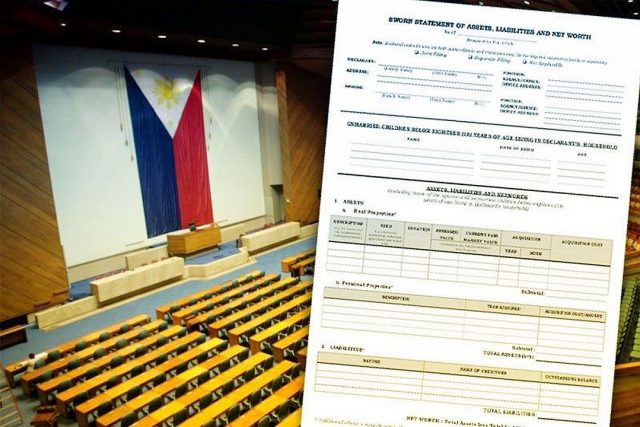
SENATOR and boxing legend Emmanuel “Manny” D. Pacquiao, Sr. on Wednesday said all government officials must disclose their net worth if he becomes president.

Officials and their immediately family members must waive their right to bank secrecy, the presidential aspirant said in a statement.

Mr. Pacquiao said public officials’ statement of assets, liabilities and net worth would be published, excluding private details.

“I am not the only one who will sign the waiver for bank secrecy,” he said in mixed English and Filipino. “Even my members in the government will be asked to sign the waiver before they can be appointed.”

“As public servants, we should be transparent and accountable,” he added.

President Rodrigo R. Duterte last disclosed his net worth in 2017, at P28.5 million. He has not disclosed his net worth despite his vow of transparency, the Philippine Center for Investigative Journalism reported in 2020.

Since the law requiring public officials to disclose their net worth was enacted in 1989, all five presidents before Mr. Duterte had disclosed their worth year on year without fail, it said.

Mr. Pacquiao declared a net worth of P3.19 billion for 2020.

The boxing champ vowed to adopt a zero-tolerance policy on corruption. Government officials must regularly undergo a performance audit, he said. 

He said his first executive action if elected is to issue an order creating a mega prison what will house corrupt officials. The prison will have its own hospital and a small hut to ensure no escape for those approved for hospital and house arrest.

“We have seen how they were able to manipulate the justice system so that they can still live comfortably and easily,” Mr. Pacquiao said.

Former leaders can’t use wheelchairs as props to fake an illness, he added, alluding to ex-President Gloria Macapagal Arroyo, whom critics have cited for her sympathy play. “All of that will be gone with our Mega Prison because it is already complete.”

Ms. Arroyo walked away from her plunder charge in July 2016 after the Supreme Court acquitted her, after almost four years under hospital arrest. — Alyssa Nicole O. Tan

Duterte orders deployment of cops in hotel quarantine facilities

PHILSTAR

PRESIDENT Rodrigo R. Duterte has asked the Interior department to deploy at least two police personnel in every hotel used as a quarantine facility to keep watch on and arrest those who will violate rules. 

Mr. Duterte said hotel owners do not have the authority to enforce health protocols and arrest those who cut quarantine. 

They “cannot be doing the police work of the government,” he said in a taped Cabinet meeting aired on Tuesday night. “We can maybe designate them, the hotel, but as to the enforcement, they cannot really enforce (the rules).”

Mr. Duterte, meanwhile, claimed that hotel owners and managers “cannot be in a position to legally stop” their guests from violating protocols. 

However, Justice Secretary Menardo I. Guevarra said Republic Act No. 11332 or the Mandatory Reporting of Notifiable Diseases and Health Events of Public Health Concern Act can penalize hotel management. 

“Sir, with due respect, I can see something in the existing law… there is a provision there on non-cooperation as part of prohibited acts,” he told the President at the meeting.

“It seems to me that non-cooperation on the part of certain entities, which are charged with a duty to respond to the pandemic, may also be punishable.”  

Still, the President insisted that hotel staff would be unable to physically stop guests from violating quarantine protocols. 

“If they fight back, that becomes a problem already,” Mr. Duterte said in Filipino. 

The order came after a returning Filipina from the United States skipped her quarantine in a hotel to attend a party in a luxurious hub in Makati City.

The Tourism department has temporarily suspended the accreditation of the hotel involved in the incident.

Meanwhile, the President ordered village captains to restrict the movement of unvaccinated people.

“Barangay captains, you’re put on notice and the order for you is to find out the persons who are not compliant with the laws, or their refusal to have the vaccines,” he said. “You can actually prevent them from leaving the house.”  

Cabinet Secretary Karlo Alexei B. Nograles said separately in a regular news conference on Wednesday that the imposition of stricter rules for unvaccinated people across the country is among the “possible topics” in a Cabinet meeting on Jan. 6.

Metro mayors recently signed a resolution asking them to pass local laws that will restrict the movement of unvaccinated residents. — Kyle Aristophere T. Atienza 

Tourism dep’t suspends accreditation, permit of hotel in quarantine breach case

THE TOURISM department has temporarily suspended the accreditation and revoked the multiple-use permit of the hotel where a guest violated quarantine protocol, later tested positive for coronavirus and infected contacts during the breach. 

“Berjaya Hotel Makati was also fined equivalent to twice the rack rate of its most expensive room,” the Department of Tourism (DoT) said in a press release on Wednesday. 

DoT said a copy of the decision has been served and Berjaya Hotel is given 15 working days to appeal the ruling.

The case involves Gwyneth Chua, a Filipino who traveled to the United States and returned to the Philippines on Dec. 22. She was booked for a mandatory five-day quarantine at the hotel until Dec. 27, but left 15 minutes after checking in and had social activities in the succeeding couple of days.

She went back to the hotel in Makati City on the night of Dec. 25 and underwent RT-PCR test on Dec. 26. Her result came out positive the next day.

DoT said the statements made by the hotel management and its public apology were “an admission of not just the facts of the incident but as well as their lapses in their responsibility as an accredited establishment of the Department of Tourism,” the decision states.

“In their letter dated 29 Dec. 2021, Berjaya even gave the assurance that quarantined guests ‘follow strict protocols’. However, Hotel Berjaya later apologized in news reports and social media for their failure to report the ‘quarantine skipping incident’ to the Bureau of Quarantine,” DoT said.

The department noted that investigation showed that hotel security nor front lobby personnel did not call the guest’s attention when she was obviously leaving after check-in. The hotel management also failed to report the incident to authorities.

The police has filed charges against Ms. Chua and several others for violating Republic Act 11332 or the Mandatory Reporting of Notifiable Diseases and Health Events of Public Health Concern Act. 

Among those included in the case are Ms. Chua’s parents as the police probe showed they were involved in her departure from and return to the hotel. — Marifi S. Jara

Senator pushes for passage of a bill strengthening anti-trafficking measures 

IACAT.GOV.PH

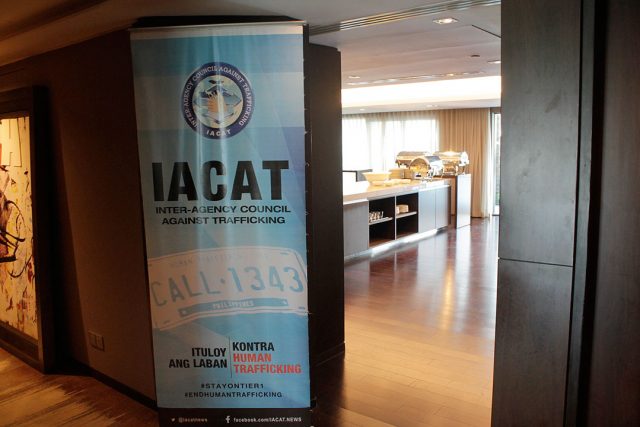
CONGRESS should swiftly pass the proposed law that will strengthen the country’s anti-trafficking measures to counter the rising incidence of online child sex abuse, a senator said on Wednesday. 

Senator Sherwin T. Gatchalian called for the passage of Senate Bill 2449 or the Expanded Anti-Trafficking Act, which aims to reinforce the current law under the amended Republic Act 9208 by providing standards and guidelines on surveillance, interception, investigation, and prosecution of different forms of human trafficking.

The Department of Justice said it received 2.8 million reports on online sexual abuse of children last year, more than double the 1.3 million reported in 2020. 

The department’s Office of Cybercrime said it launched an official investigation on 268 cases last year while most of the others were not actionable due to multiple submissions, misleading, or erroneously reported. 

Considering the increasing vulnerability of children to different forms of violence amid the pandemic, Mr. Gatchalian noted in a statement the urgency for Congress to amend the country’s trafficking laws to allow a stronger crackdown on said cases and on other forms of human trafficking.

“With the continued rise of cases of abuse using the internet, we need to provide further protection to our children and block these kinds of abuse,” Mr. Gatchalian said in Filipino. “It is time to amend our laws against human trafficking to fully stop these types of violence.” 

The bill is currently pending on second reading in the Senate, under special order since November last year. — Alyssa Nicole O. Tan

Solon pushes for approval of bill on tax holiday for creative, amusement industry

PHILIPPINE STAR/ MICHAEL VARCAS

A HOUSE of Representatives leader and chair of the creative industry committee called on colleagues to hasten the passage of a bill that will give tax relief as well as subsidies to the entertainment industry, which has been battered by coronavirus pandemic restrictions.

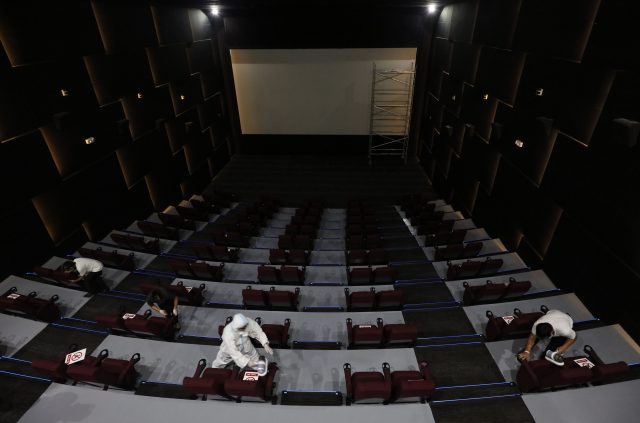
Deputy Majority Leader Christopher V.P. De Venecia said the proposed Film and Live Recovery Act would relax the 10% amusement tax placed on cinemas, which suffered 19 months of closure from March 2020.

Cinemas also saw a low turnout of moviegoers during the annual Metro Manila Film Festival in December last year.

“This additional tax burden (amusement tax) that is shared by film producers and cinema exhibitors, and therefore indirectly impact the rest of the industry,” Mr. De Venecia said in a statement on Wednesday. 

There are two kinds of amusement taxes under Philippine laws, one is collected by the national government while another could be imposed by local governments.

He also called on the Department of Trade and Industry (DTI) to fast-track the rollout of their ongoing study, which would help guide the film industry on the types of content consumers prefer locally and internationally. Mr. De Venecia also suggested that the government use a hybrid form of content distribution.

The DTI and the Film Development Council of the Philippines could support MMFF and other film festivals through greater marketing efforts, according to the lawmaker. — Jaspearl Emerald G. Tan