Home Blog Page 6988

Unvaccinated, minors barred from Consular Offices, passport off-site centers in Alert Level 3 areas

LAWRENCE RUIZ

UNVACCINATED individuals and minors are barred from Consular Offices and off-site passport service centers within shopping malls in areas under Alert Level 3, the Department of Foreign Affairs (DFA) announced Wednesday. 

The DFA, in a statement, said this was due to restrictions imposed by host malls. It called on those affected to reschedule appointments.

Areas under Alert Level 3 until Jan. 15 are Metro Manila and its neighboring provinces of Bulacan, Cavite, and Rizal. — Alyssa Nicole O. Tan

Manila Bay water quality improves — DENR

DENR

WATER QUALITY in parts of Manila Bay has improved with lower fecal coliform levels, according to the Department of Environment and Natural Resources (DENR).  

The Baywalk area, one of the main priorities in an ongoing rehabilitation project, registered a decrease in coliform level in all its nine key stations in the third quarter of 2021, DENR said in a press release on Wednesday. 

At the Dolomite Beach, where artificial white sand has been spread as an attraction, coliform level dropped to 1,700 mpn/100 mL (most probable number per 100 milliliters) from a geomean of 1.6 million mpn/100 mL in Sept. 2020. 

“It’s high time that we totally alter our habits on waste disposal as well as our attitude on taking responsibility for one’s actions. Our cleanup efforts will be in vain if these will not be sustained by the public, and especially by the new administration this 2022,” DENR Secretary Roy A. Cimatu said in a statement. 

In September, four key stations at the Baseco beach also reported a decrease in coliform level to 21,500 mpn/100 mL from an overall geomean of 145,000 mpn/100 mL in 2020.

DENR said the water quality improvement is due to solid waste management strategies, geo-engineering interventions, and compliance monitoring of establishments, among others, around the Manila Bay area. 

A total of 50,618.94 cubic meters of garbage was collected from shorelines, waterways, rivers, and beaches during cleanup activities conducted from January to Sept. 2021.

The department is aiming to have the Dolomite Beach area, which has been reopened to the public with restrictions, fit for swimming within this month. — Luisa Maria Jacinta C. Jocson

Bad news, London and New York: Finance hubs are becoming obsolete

JCOMP-FREEPIK

STAND on the steps of The Royal Exchange in the heart of the City of London and you can picture the churn of people 200 years ago or more in what was becoming the world’s preeminent financial hub. Stock jobbers, traders and financiers would stream between its great limestone columns with the Bank of England to one side and all surrounded by offices of bankers or trading houses and alleyways to the ever-busy coffee shops.1

The exchange was where transactions happened, but the coffee shops played an equally important role in the lifeblood of markets as information centers. People hung out there for refreshment and gossip but also all the details of supply and demand. “[T]he coffee men vied with each other in maintaining the supply of a wide variety of domestic and foreign newspapers, news-sheets, journals and bulletins, customs entry forms, auction notices, price-current lists, etc.,” according to David Kynaston’s City of London: The History.2

Today, London’s future as a global financial hub is under threat. In the popular discourse, that’s largely due to Britain’s exit from the European Union and the ongoing fights over trade and regulations. But Brexit is barely half the story, and New York faces similar threats. While, JPMorgan Chase & Co. is expanding its Paris office with new trading floors, Goldman Sachs Group, Inc. is doing the same in Miami and has been hunting for space in Dallas.

What links these moves is the ways technology and regulations have dramatically changed the flow of information in just the past couple of decades. The COVID pandemic showed just how little physical location now matters for many jobs and businesses in finance and gave executives confidence that more operations could be managed remotely.

Old hands barely recognize today’s world.

Until relatively recently, human voices were still the main vehicle for transactions on trading floors and the chatter was full of market information. Traders listened in on conversations and talked to each other and clients to absorb market color: that sense of whether investors were confident or fearful, who owned what and who was interested in selling or buying. Outside the office, deals, tips, and preferential treatment could be won in restaurants and bars in a way that is now far harder to implement.

The information in all these conversations has become ever more tightly regulated or automated in the 21st century, especially since the financial crisis of 2008. Scandals from insider dealing around takeovers, foreign-exchange trading, and the manipulation of the interbank lending rate known as Libor, have revolutionized trading and communication in banks.

Telephone calls, instant messages, and e-mails are all recorded for posterity. Personal communications are ever more tightly controlled: Credit Suisse Group AG is seeking access to employees’ personal devices, while JPMorgan was just fined $200 million for not recording everyone’s WhatsApp messages. Compliance is paramount as a deterrent and as a record of how and why everything was done.

But it’s not just about scandals — it’s also the rules designed to ensure investors get good prices and the regulations to make market-wide risk monitoring easier. The effect has been to push more trading to electronic platforms even in the least liquid securities such as corporate junk bonds.

That electronification has allowed banks to manage their own balance sheets more efficiently. Most big investment banks have been building central risk functions with algorithms and data systems that generate quick tallies of their inventories of stocks or bonds, what they can source from their clients at any given moment, and what clients are interested in buying: in other words, a smarter version of the old market color of a noisy trading floor.

Speed and risk mitigation are everything for banks in the post 2008-world of high transparency and low returns. Investment banks are becoming more machine-like and much less dependent on human capital, as Kian Abouhossein, analyst at JPMorgan, put it earlier this year.

Similarly, Mike Mayo, analyst at Wells Fargo & Co., has predicted that US banks could shed 100,000 to 200,000 jobs over the next decade as digital technology helps make efficiency, speed, and ease-of-use the main sources of competitive advantage.

The most complex transactions, like buying and selling whole businesses, will probably always need face-to-face negotiation, but the COVID pandemic showed how much could be done by video.

Banks like JPMorgan and Goldman still want staff back in the office, but that office doesn’t need to be in New York or London for everyone to know what’s going on. I suspect the desire to get people back is more about motivation, oversight, and control.

For team leaders, there are also human insights that can only be gained in the office. One head of credit trading I spoke to over the summer said the crucial thing they found hard to judge over Zoom calls was traders’ emotional states — whether they were overconfident, or fearful.

But a team and its leader could just as easily be in Dublin or Frankfurt, Palm Beach or Austin, as New York and London. European cities have some regulatory pull since Brexit, but that’s not their only attractions. Milan has great tax incentives as do Florida and Texas.

There might be lifestyle benefits, too: Cheaper housing, more accessible countryside, better schools maybe. And such comforts seem more important to a generation of younger finance workers, whose jobs often involve less risk taking and entrepreneurialism than in the past. They are compliance heavy and less exciting.

The money is still good, but working in technology might be more interesting, private equity might be higher paid and side hustles might even be viable as main careers. Goldman’s CEO David Solomon warned in November that New York needs to work hard to keep itself attractive. Like banks themselves, the great financial hubs face more competition for workers.

The main reason for major city hubs to endure might actually be for the benefit of workers: It is easier to switch jobs when competing offices and the individuals that might hire you are nearby (though this process is now being automated, too). The advantage for a large bank of having a campus where no other banks are based is that staff can’t jump ship without also having to move home.

Human networks and relationships are important for the dissemination of know-how and skills. But just because people of Generation X and older have always done this face to face says nothing about whether Gen Z will care to or need to.

The courtyard and walkways of the Royal Exchange were long ago converted into shops and restaurants. Around the world, open outcry trading pits and stock exchanges are mostly museum pieces. Now banks themselves have begun to split operations into smaller pods spread across countries and continents.

Location just doesn’t matter for transactions or information flows like it once did. Financial hubs are in the minds and smart phones and terminals of the participants. This is the real challenge for London and New York.

BLOOMBERG OPINION


1 The columns of the current Royal Exchange have only been there since it was rebuilt in 1844 after a fire, but illustrations show the entrance to the previous building also had grand pillars before the doors. An exchange has been on the site since 1566. The Bank of England, meanwhile, has been on the site across Threadneedle Street since 1734.

2 Kynaston is quoting from a 1963 study of London’s coffee houses.

Capsule offices

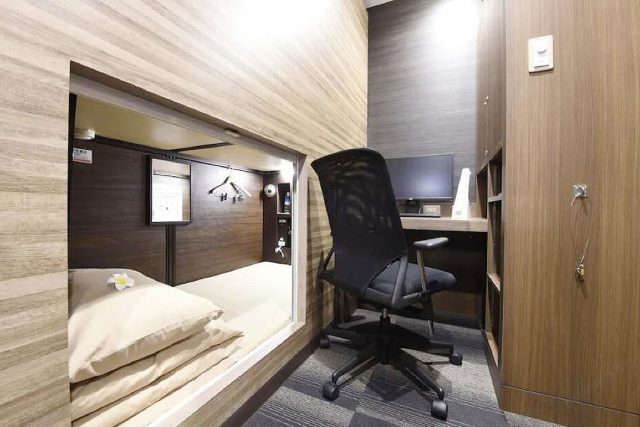
CAPSULE HOTEL Anshin Oyado in Nagoya, Japan

Capsule hotels are nothing new in densely populated urban areas like Tokyo. Low-cost but efficient capsule hotels offered sufficient lodging particularly for on-the-go customers who required no more than a bed for the night and a bath the next day. And with real estate costs high, capsule hotels were economical and practical travel solutions.

The same logic and system can apply to office spaces now, given the pandemic that started in 2020. Almost two years into this public health emergency, and most office spaces continue to remain only partly occupied, anyway. For businesses that haven’t taken advantage of the situation by cutting down on space, and thus reducing overhead cost, it is not too late.

The overall objective is to work better, and maintain if not boost workers’ wellness, efficiency, and productivity. This is despite periodic lockdowns, reduced capacities, and fluctuating number of COVID cases. Also for consideration are limitations on personal interactions, mobility and transportation, business travel, and social gatherings.

In this line, I believe “capsule” offices are worth pursuing. Imagine a cockpit, where all controls are within the pilot’s reach. Many pilots put into their hands the lives of hundreds if not thousands as they make life-or-death decisions in cockpits no bigger than two square meters. They work long hours in small spaces, where they make decisions that can save or lose lives.

As early as December 2019, just a few months before the pandemic hit full-blown proportions in March 2020, “capsule” offices were already introduced in Tokyo, for use of train commuters. These “cubes,” similar but bigger than the telephone booths of old, were put up by East Japan Railway Co. (JR East) for passengers who wanted to work in between train rides.

The enclosures — measuring 1.2 square meters each — were all equipped with a seat, desk, and power sockets. They were also soundproof, and, presumably, well-ventilated. The work booths were installed in JR East’s Tokyo, Shinjuku, and Shinagawa stations, and targeted commuters who wanted to work quickly and privately while commuting between places.

Customers must reserve the booths ahead of time, and unlock them via Quick Response codes issued by JR East. The capsules were seen as a good alternative to working in public spaces that are noisy and crowded. For local use, such booths should be equipped with air filters, and must be sanitized after every use, making them COVID-safe for users.

When the office capsules were first introduced in late 2019, they could be used by JR East commuters for free for up to 30 minutes. I am uncertain whether they are now used for a fee, and whether more booths have been installed since. But in early 2020, Mitsubishi Estate had targeted to install 1,000 similar booths called “Telecube” by 2023.

Mitsubishi’s Telecubes would be made by office furniture maker Okamura Corp. along with video-conferencing software vendor V-Cube, Inc., and Telecube, Inc. Telecube was to be a chargeable service that costs ¥250 for 15 minutes, while corporate subscribers could pay a monthly rate for a set number of hours. Telecube was working on the assumption that telecommuting could replace or support onsite work and could help reduce office and train congestion. Little did Mitsubishi realize at the time that the global pandemic would happen.

In late 2020, Japanese capsule hotel chain Anshin Oyado Premier in Tokyo’s Shinjuku neighborhood had already repurposed an entire floor of its sleeping compartments into rental workspace area. The chain converted capsule hotel sleeping slots into double-high office spaces with a chair, desk, power outlets (standard and USB), and free Wi-Fi. Users could also borrow wireless mics, wireless keyboards, headsets, smartphone chargers, and printers. Each capsule has interior lighting and an air purifier.

The capsule service also includes a bar with complimentary unlimited soft drinks at the facility’s third floor, and a convenience store that sells snacks and light fare. There is also a Japanese-style bath for male customers. Anshin Oyado charges ¥500 for one-hour work capsule rental. Two hours cost ¥1,000, while whole day rental from 9 a.m. to midnight was ¥3,000.

I believe now is the time for local developers to leverage on the office cube concept and consider something similar for the office environment. Office dividers and open cubicles can be replaced by enclosed booths or “cubes” that will not require a user to keep a mask on while in the office. The work cube can be made efficient, well-equipped, and well-ventilated, while allowing offices to reduce real estate space and cost.

Moreover, running a series of booths alongside each other provides workers with safe personal working space — at least during the time they are in the booth — while effective soundproofing allows them to converse and hold meetings without masks or headsets. Cubes can be equipped with auxiliaries and peripherals that will allow users to simply just plug in and log on.

Recirculating air vents with HEPA filters can be installed. The same vents can be used to “sanitize” the booths at the end of the day and make them ready for users the next working day. Older structures can be repurposed as work sites by simply installing office cubes in suitable areas, very much like trucking portable toilets into concert and events venues.

As an option, a series of three “office cube” units can be installed right beside a portable toilet to service the occupants of the three cubes. A set of four — three office cubes and one portable toilet — can be made modular, and supplied as plug-and-play units. These can allow real estate developers the ease of reconfiguring and repurposing unused residential or commercial spaces into office spaces.

The idea of working in a “box” can be intimidating. But just as pilots get used to cockpits, workers in search of comfortable but safe working environments can eventually get used to working in enclosed personal booths or cubes. In fact, affordable cubes can also be used in schools and other learning environments.

Personalized cubes can even be installed in suitable homes for work-from-home and school-from-home arrangements. This allows users the comfort and privacy of a personal workspace, even if they have to be right next to each other. Yes, the idea of having cubes in the house can be daunting. However, aesthetics and convenience will have to give way to function and safety as we deal with this pandemic.


Marvin Tort is a former managing editor of BusinessWorld, and a former chairman of the Philippine Press Council

matort@yahoo.com

And the spinning goes on

VECTORPOUCH-FREEPIK

In 1933, Adolf Hitler became Chancellor of Germany. A few years later, he had become an absolute dictator of extraordinary brutality. Consumed by and obsessed with his belief in Aryan supremacy, he led his country into the second World War in 1939 by invading neighboring territories. His occupation of other countries signaled the start of World War II in Europe.

Germany’s incursions into other territories, was preceded by establishing an iron grip over his country and the massacre of Jews and opposition to his dictatorship. Part of the scheme was to set up a spy network of unusual brutality that backed up a propaganda infrastructure. What propaganda failed to do in terms of capturing the hearts and minds and other parts of the human anatomy, the secret police came in to either “further convince” the hard-headed democrats or progressives and intellectuals. If the attempts to indoctrinate the “unbeliever” failed, one bullet through the head or the heart did the job.

Such was life in Nazi Germany, which found time to host the 1936 Berlin Olympics to demonstrate to the world in the concrete, Aryan Supremacy. Black American athlete Jesse Owens spoiled all that during the athletics/track and field events, the centerpiece of any Olympics or Olympic-type multi-sport event. Hitler had, however, worked his subjects into a frenzy, getting them to believe in the German destiny of unlimited conquest.

Alarmed by the ominous events in Europe and committed to the ideals of freedom and democracy, a number of Americans set up the Institute for Propaganda Analysis (IPA) in 1936. The IPA’s purpose was “to spark rational thinking and provide a guide to help the public have well-informed discussions on current issues, to teach people how to think [rather] than what to think.” The IPA focused on domestic propaganda issues that might become possible threats to the democratic way of life.

IPA was comprised of social scientists, opinion leaders, educators, and journalists. The IPA was created by, among others, Edward A. Filene, an American businessman who pioneered in credit unions, and Clyde Raymond Miller, an associate professor of education at Teacher’s College at Columbia University. Filene, Miller, and others, initiated the establishment of IPA “because of the general concern that increased amounts of propaganda were decreasing the public’s ability to think critically.” The IPA’s purpose, stated another way, was “to spark rational thinking and provide a guide to help the public have well informed discussions on current issues.”

For all intents and purposes, the IPA’s aim was to counter Nazism and its super-efficient, well-organized, and well-funded propaganda infrastructure that controlled all media and communications outlets in Germany. The IPA stood for democracy and freedom and pledged to fight Nazism, Communism, rightist extremists disguised as conservative anticommunists who intend to eventually seize the freedoms and rights of people. These elements would eventually shut down the institutions that ironically enabled these conservatives to take full control of government in the name of their fierce anticommunist position.

That IPA era in the late 1930s in the US could very well be mirrored in our present situation as a country. Propaganda, mainly through free-wheeling social media where people express themselves freely, promotes hate, anger, and division employing election-type propaganda tactics. These same tactics have long found their way into the different social media platforms.

Some are of the belief that propaganda is acceptable so long as it contains true and correct information. Others say that propaganda that claims to contain true and correct information is an oxymoron. The essence or nature of propaganda work is to consciously, deliberately, and repeatedly propagate and proliferate among as wide an audience as possible, misleading and one-sided information that are essentially half-truths. Its purpose is to get people to believe in the cause of the purveyor of propaganda.

Propagandizing is the work of PR agents and so-called influencers, especially during elections.

The work of propagandists is, however, not confined to elections, as we all know. Advertising is propaganda, although the advertising industry does a lot of self-regulation together with consumer groups and lawmakers resulting in laws promoting “truth in advertising” and a code of ethics. Such is not the case however in today’s freewheeling society that is fed with falsehoods, anger, hate, and revisionism by individuals who have suddenly found themselves in possession of platforms that do not issue strict editorial guidelines, codes, and rules of ethics and conduct. The lack of guidelines is, in effect, a license to vilify others with whom one does not agree. You see a lot of opinions which have no basis in fact. Statements without any kind of documented facts overwhelm sworn statements and affidavits simply because the later requires one to think in order to comprehend. These statements are uttered loudly and over wide audiences which are already biased to begin with.

Those of us who observe the work of propagandists and spin masters affirm the following propaganda techniques identified by Filene.

One of these techniques is declaration or assertion. Filene says that an assertion is an enthusiastic or energetic statement presented as fact: e.g., Martial Law years were the golden years of economic development; this particular sector of society has been traditionally neglected and exploited; the Aryan race is the supreme race. It is often “implied that such statements need no further back up with facts and should be merely accepted without question.”

Creation of the bandwagon effect is standard in any propaganda and advertising campaign. It is essentially an appeal to join the crowd because everyone is there and you’ll be left out if you don’t hook up with the mob.

One curious technique that Filene and others who continuously monitored propaganda saw, is the use of “Glittering Generalities” or “Motherhood Statements.” The use of such statements is really an appeal to pleasant and positive feelings like, “fight for flag and country,” “defend freedom and democracy.” When a person is asked or urged to do something like fighting for the honor of one’s country, people are likely to agree since these concepts are valuable constructs.

A choice between the lesser of two evils or the least among the many evils is always foisted on the electorate during elections. It tries to highlight the fact that people are faced with very difficult choices and a dilemmatic situation. Candidates with a lot of baggage will portray their adversaries as having the same or even more serious flaws, resulting in a choice between the lesser of evils.

While there are other techniques, we now deal with one of the lowest forms of propagandizing — name calling which comes usually in the form of ridicule. An opponent is associated with some concept or idea that the public dislikes, like being an opportunist.

As we start the new year and as the political campaign goes into higher gear, watch out for the use of these techniques. If you want however, a different menu altogether from political campaigning, observe closely how various issues are being presented to the public by mind benders and spin masters.


Philip Ella Juico’s areas of interest include the protection and promotion of democracy, free markets, sustainable development, social responsibility and sports as a tool for social development. He obtained his doctorate in business at De La Salle University. Dr. Juico served as secretary of Agrarian Reform during the Corazon C. Aquino administration.

Coaching the chief

FREEPIK

BEING an “executive coach” is a new profession. There are even certificates to authenticate one’s right to be called one. This is different from a confidant who gets to give solicited advise informally over drinks, and without a fee.

Coaching an individual used to be called mentoring, but executive coaching is a consulting job. This special consultant has for a client not a company but its CEO for “one-on-one” guidance, in private. This corporate trainer watches his client from the sidelines. He may attend some meetings and take notes without speaking up. (Don’t mind the stranger behind me.) He is a father confessor who doesn’t stop his penitent from sinning. He will give his advice later — wipe yourself afterwards.

Like a sports coach, he observes how the CEO undergoes fitness training, builds up team mates, makes foul shots, assists, trash talks, and slam-dunks — basically, how he wins (or loses) the game. Opposition research is part of the service — either the other teams or pushy subordinates. Also, how peers in other companies are making progress. The envy is analyzed.

The executive trainer is not part of the management team. Being in the loop may affect the advice he gives. The ideal coach is a retiree with a successful career behind him, maybe even residing in another country. He has no hidden agenda, has nothing to prove, and is independently well-off. Of course, he still gets paid for the coaching.

The presumption is that the CEO is too close to the game, and so needs the perspective of another person who has played this game, having been a CEO himself, sometimes in different companies.

Like a retreat master, he raises basic questions which the CEO can meditate on. The counseling sessions can take the form of Ignatian spiritual exercises, with a little corporate bent — are you a man for others?

The coach asks questions.

What role should the CEO play? This goes beyond a job description. It’s about purpose and the unique value the CEO brings to his organization. Is he a foreman who gives orders to lay bricks and build walls? Does he direct plays and cast the actors and evaluate their performance? Does he provide time for strategic issues in the hurly-burly of routine? Should the in-box dictate his priorities? What industry does he really belong to? Does he have an exit strategy with a developed succession plan?

Some questions deal with the company. Who does he report to? How much authority does he have? Where does he want to bring the organization in the next three years? What are his “posteriorities” — things he shouldn’t be bothering with?

Since the client of an executive coach is an individual, some questions relate to personal issues. How much time does the CEO devote to his personal growth? Does he read Dickens? Does he have a life outside work? What role does he play in the non-office setting, in his family or community? Who does he look up to?

The final report highlights the client’s strengths (he keeps long hours) and areas for improvement (he is never fully awake). It’s a diagnostic of the patient and what “maintenance medicine” he needs to take — you need to have an hour of non-activity. (Yes, you have to be alone.)

An executive coach is detached. Since he is not out to curry favor, he can tell his client what he honestly thinks. The next month, anyway, he will be taking a plane out, not expecting a job offer to be Chief Coaching Officer. His effectiveness lies in his being outside the loop with no intention of being in it.

The most important advice has to do with managing a life. A CEO needs someone to give unbiased pointers and raise questions subordinates do not care to bring up. Sometimes, a spouse (or mistress) plays this role. But here detachment is not possible. (You need to take more cruises with me.)

In ancient Rome, when a victorious general comes home for his triumph going around the amphitheater in his chariot, his charioteer whispers in his ear — sic transit gloria mundi. And so goes the glory of the world… this too shall pass. (Don’t get used to the adulation, Sir.)

The warning isn’t always heeded. Such whispered advice can be drowned out by the cheers of the crowd. Only afterwards is that voice finally remembered… amid the booing.


Tony Samson is chairman and CEO of TOUCH xda

ar.samson@yahoo.com

US posts nearly 1M COVID cases in a day, setting global record

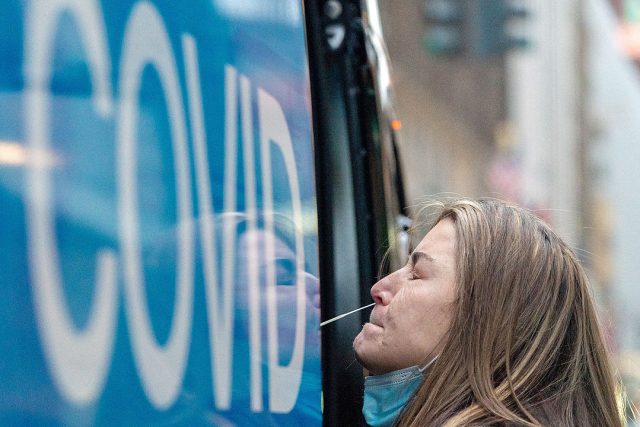
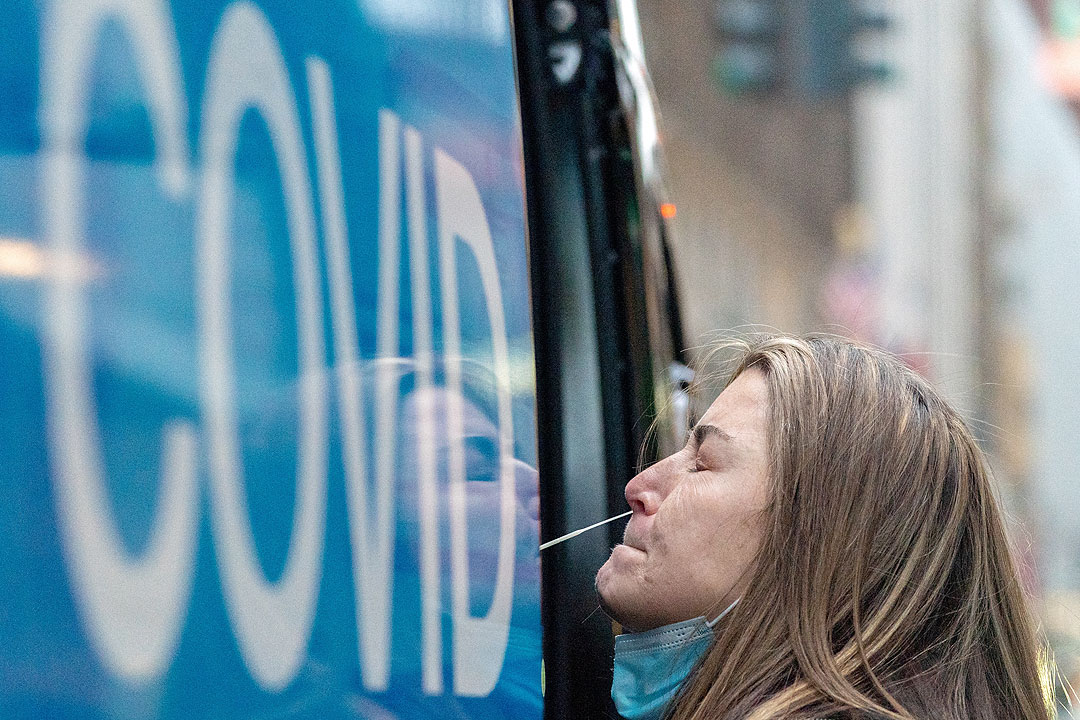
A woman takes a coronavirus disease test at a pop-up testing site as the Omicron coronavirus variant continues to spread in Manhattan, New York City, U.S., Dec. 27, 2021. — REUTERS
REUTERS

THE United States reported nearly 1 million new coronavirus infections on Monday, the highest daily tally of any country in the world and nearly double the previous US peak set a week ago as the spread of the highly contagious Omicron variant showed no signs of slowing.

The number of hospitalized coronavirus disease 2019 (COVID-19) patients has risen nearly 50% in the last week and now exceeds 100,000, according to data collected by Reuters, marking the first time that threshold has been reached in a year.

The latest surge, which forced waves of cancellations from commercial airlines flights to Broadway shows in recent weeks, was disrupting plans for public schools to welcome students back from winter vacation. In Chicago, union leaders were urging teachers in the nation’s third-largest school district to stay home as classrooms were reopening.

In Los Angeles County, the presiding judge of one of the country’s largest court systems ordered a general two-week postponement of criminal trials due to the latest wave of COVID-19 infections.

Nationally, the United States has seen a daily average of 486,000 new cases over the last week, a rate that has doubled in seven days and far outstrips that of any other country.

The 978,856 new infections documented on Monday included some cases tallied on Saturday and Sunday, when many states do not report.

The average number of US COVID-19 deaths has remained fairly steady throughout December and into early January at about 1,300 a day, according to a Reuters tally, though deaths typically lag behind case numbers and hospitalizations.

Omicron appears to be far more easily transmitted than previous iterations of the virus. The new variant was estimated to account for 95.4% of the coronavirus cases identified in the United States as of Jan. 1, the US Centers for Disease Control and Prevention (CDC) said on Tuesday.

The World Health Organization said on Tuesday that evidence thus far suggests Omicron is causing less severe illness. Nevertheless, public health officials have warned that the sheer volume of Omicron cases threatens to overwhelm hospitals, some of which are already struggling to handle a wave of COVID-19 patients, primarily among the unvaccinated.

Maryland Governor Larry Hogan declared a 30-day state of emergency on Tuesday and mobilized 1,000 National Guard members to pandemic response operations as COVID-19 hospitalizations in the state hit a record high of more than 3,000, up more than five-fold in the last seven weeks, Hogan said.

“The truth is that the next four to six weeks will be the most challenging time of the entire pandemic,” Hogan told reporters. He said projections show COVID hospitalizations could surpass 5,000, far higher than Maryland’s previous peak of 1,952 last year.

Delaware, Illinois, Ohio, Virginia and Washington, DC, also have reported record numbers of hospitalized COVID patients in recent days.

‘UNLIKE ANYTHING WE’VE SEEN’
In Kentucky, where Tuesday’s total of 6,915 new cases was the highest daily figure since the start of the pandemic, Governor Andy Beshear urged residents to get vaccinated and wear masks.

“Omicron is causing a surge unlike anything we’ve seen and at this rate our hospitals will fill up,” he wrote on Twitter.

The unrelenting surge has prompted more than 3,200 schools to close their buildings this week, according to the website Burbio, which tracks school disruptions. Schools that have remained open are facing staff shortages and renewed concerns about virus spread.

In Boston, where more than 54,000 students returned to class on Tuesday following the holiday break, Superintendent of Schools Brenda Cassellius told reporters there were 1,000 staff members out, including 461 teachers and 52 bus drivers.

“It does make for a difficult start to the day,” she said.

The governing body of the Chicago Teachers Union on Tuesday urged its members to stay out of the classroom and work remotely through Jan. 18, or until the city reaches minimum health-safety thresholds set last year as a condition for in-person learning, whichever comes first.

The union’s House of Delegates voted 88% in favor of the resolution, sending it to the 27,000 rank-and-file teachers and support staff to ratify by electronic ballot on Tuesday night.

The union has called for more rigorous COVID-19 safety protocols, including school-based coronavirus testing and mandatory student vaccinations.

District Chief Executive Officer Pedro Martinez said the school system would agree to further COVID-19 safety measures. But he said classes for Chicago’s 340,000 students would be canceled on Wednesday if teachers voted against reporting to work, with no remote instruction being made immediately available.

The union has cited data showing that vaccination rates remained especially low among minority students — with just 7% of Black youngsters and 13% of Latino children aged 5-11 fully inoculated.

But school officials said hospitalization rates of children are low and that distance learning has hit minority and poor students particularly hard, as many depend on school-based meals and have working parents with fewer childcare options.

Dr. Allison Arwady, Chicago’s public health commissioner, joined district officials and Mayor Lori Lightfoot in pressing to keep classrooms open. Arwady cited data showing Chicago averaging just seven pediatric COVID-19 hospitalizations a day out of 550,000 children who live in the city.

More than 325,000 COVID-19 cases among children were reported in the United States for the week ending Dec. 30, according to the American Academy of Pediatrics and the Children’s Hospital Association, a new high and almost double the count from the previous two weeks. — Reuters

North Korea fires suspected missile as South breaks ground for ‘peace’ railway

SEOUL — North Korea fired a suspected ballistic missile off its east coast on Wednesday, just hours before South Korean President Moon Jae-in attended a groundbreaking ceremony for a rail line he hopes will eventually connect the divided Korean peninsula.

The first launch since October underscored leader Kim Jong Un’s New Year vow to bolster the military to counter an unstable international situation amid stalled talks with South Korea and the United States.

The presumed missile was fired around 8:10 a.m. (2310 GMT) from an inland location over the east coast and into the sea, South Korea’s Joint Chiefs of Staff (JCS) said.

A few hours later, Moon visited the South Korean east coastal city of Goseong near the border with the North, where he broke ground for a new rail line that he called “a stepping stone for peace and regional balance on the Korean Peninsula.”

The apparent missile launch by the nuclear-armed North highlighted the challenges Moon faces in his push to achieve a diplomatic breakthrough before his five-year term ends in May.

Reconnecting the two Koreas by rail was a centerpiece of meetings between Kim and Moon in 2018, but those efforts went nowhere as talks aimed at convincing North Korea to surrender its nuclear weapons in exchange for easing international sanctions faltered in 2019.

Kim’s New Year speech made no mention of efforts by South Korea to restart stalled negotiations or offers by the United States to talk, though analysts noted that doesn’t mean he has closed the door on diplomacy.

South Korea’s National Security Council convened an emergency meeting, expressing concern the launch “came at a time when internal and external stability is extremely important” and calling on North Korea to return to talks.

Japan’s defense minister said the suspected ballistic missile had flown about 500 km (310 miles).

“Since last year, North Korea has repeatedly launched missiles, which is very regrettable,” Japanese Prime Minister Fumio Kishida told reporters.

United Nations Security Council resolutions ban all ballistic missile and nuclear tests by North Korea, and have imposed sanctions over the programs.

In state media summaries of a speech Kim gave ahead of the New Year, the North Korean leader did not specifically mention missiles or nuclear weapons, but said that national defense must be bolstered.

For several weeks North Korean troops have been conducting winter exercises, South Korean military officials have said.

“Our military is maintaining readiness posture in preparation for a possible additional launch while closely monitoring the situation in close cooperation with the United States,” the JCS said in a statement. Recent North Korean missile tests have often featured double or multiple launches.

Since the start of the coronavirus disease 2019 (COVID-19) pandemic, North Korea has become even more isolated, imposing border lockdowns that have slowed trade to a trickle and choking off any in-person diplomatic engagements.

It has also stuck to a self-imposed moratorium on testing its largest intercontinental ballistic missiles (ICBMs) or nuclear weapons. The last tests of ICBMs or a nuclear bomb were in 2017, before Kim met with then US President Donald Trump.

But Pyongyang has continued test firing a variety of new, short-range ballistic missiles, including one launched from a submarine in October, arguing it should not be penalized for developing weapons that other countries also wield.

“While the readout from North Korea’s recent plenary meetings may have prioritized rural development for the coming year, it doesn’t mean the country will halt its ballistic missile tests,” said Michelle Kae, deputy director of 38 North, a North Korea monitoring programme at Washington’s Stimson Center.

MISSILE DEVELOPMENT
In a report last month, the US government’s Congressional Research Service concluded North Korea continues to advance its nuclear weapons and missile programs despite United Nations Security Council sanctions and diplomatic efforts.

“Recent ballistic missile tests and military parades suggest that North Korea is continuing to build a nuclear warfighting capability designed to evade regional ballistic missile defenses,” the report said.

Just hours after the North Korean launch, Japan announced its foreign and defense ministers will hold talks with their US counterparts on Friday to discuss security issues.

The White House, Pentagon and US State Department did not immediately respond to requests for comment on Wednesday’s launch. At a regular news briefing on Monday, State Department spokesperson Ned Price reiterated the US desire for dialogue with North Korea, saying Washington had no hostile intent towards North Korea and was prepared to meet without preconditions. — Reuters

2021 ranks as 5th hottest year based on initial data

THE YEAR 2021 ended as the fifth hottest in records maintained by the European Union’s Copernicus Climate Change Service that go back to 1979. That finding comes from publicly available data analyzed by Zeke Hausfather, a climate scientist who posted his calculations on Twitter.

This is among the first readings of last year’s temperature data but it won’t be the last. Copernicus is expected to release its full results later this month. Additional global temperature data will be released from NASA, NOAA, the UK Met Office, and Berkeley Earth, which draw on records dating back to the 19th century. Officials from Copernicus did not respond to requests for comment on data posted to the agency’s website.

Hausfather, a research scientist at Berkley Earth, said in an e-mail it’s likely that other data sources will rank 2021 somewhere between the fifth- and seventh-hottest years on record.

Last year did set the highest-ever June-to-August average land temperature. But a La Niña event, which is an occasional cooling pattern in the Pacific Ocean, arrived in October and caused temperatures to dip. That pattern makes winter milder in the southern US and has been blamed for contributing to flooding in Indonesia and Australia.

It was enough to push 2021’s average temperature down closer to 2018 and 2015, according to Hausfather’s analysis of the Copernicus data. The last seven years are the hottest on record and 21 of the 22 hottest years have come since the year 2000, according to the Copernicus data. — Bloomberg

Hong Kong bans some inbound flights, tightens COVID-19 curbs

REUTERS

HONG KONG — Hong Kong announced a two-week ban on incoming flights from eight countries and tightened restrictions on Wednesday as authorities feared a fifth wave of coronavirus disease 2019 (COVID-19) infections.

The restrictions were announced as health authorities scoured the city for the contacts of a COVID-19 patient, some of whom had been aboard a Royal Caribbean ship that was ordered to cut short its “cruise to nowhere” and return to port.

Incoming flights from Australia, Canada, France, India, Pakistan, the Philippines, Britain and the United States, including interchanges, would be banned from Jan. 8 to Jan. 21, Hong Kong leader Carrie Lam told reporters.

Lam said the government would ban indoor dining after 6:00 p.m. from Friday, and close swimming pools, sports centers, bars and clubs, museums, and other venues for at least two weeks. Future cruise journeys would be cancelled.

“We’re yet to see a fifth wave yet, but we’re on the verge,” Lam said.

The global finance hub has stuck to a zero-tolerance strategy by largely isolating itself from the world and enforcing a draconian and costly quarantine regime.

On Dec. 31, a streak of three months without community cases ended with the first local transmission of the Omicron variant.

Since then, authorities have scrambled to track down and test hundreds of people who had been in contact with a handful of Omicron patients. One patient, however, had no known links, raising fears of a large outbreak.

“We are worried there may be silent transmission chains in the community,” Lam said. “Some confirmed cases had a lot of activities before being aware they got infected.”

Lam said the government would not suspend classes for the time being “for the benefit of children.”

In response to the outbreak fears, Standard Chartered Plc has started operating in split teams in Hong Kong, a bank spokesperson said.

DANCING CLUSTER
The latest contact tracing campaign was sparked by a patient who danced with some 20 friends in a central park on New Year’s Eve. Two of the fellow dancers, one of whom was a domestic helper, came up positive in preliminary tests.

The helper’s employer and eight other close contacts then went on a cruise on Jan. 2.

As part of its coronavirus restrictions, Hong Kong has restricted cruises to short trips in nearby waters, with ships asked to operate at reduced capacity and to only allow vaccinated passengers who test negative for the virus.

The “Spectrum of the Seas” ship, which returned a day early, had about 2,500 passengers and 1,200 staff on board. The nine close contact passengers were isolated from the rest of the people on board and preliminary tests taken during the journey returned negative results, authorities said.

“Spectrum of the Seas is taking appropriate measures under guidelines by the Department of Health,” Royal Caribbean told Reuters in a statement.

The nine close contacts were sent to a quarantine center, while the rest of the passengers and staff will have to undergo several tests, the government said.

Additionally, people who have been to dozens of places across Hong Kong around the same time as the close contacts of recent patients have been issued compulsory testing notices, the government said in a separate statement.

Victoria Park, in downtown Hong Kong, the newly opened M+ modern art museum, ferry piers, restaurants, stores, clinics were among the places listed.

Gabriel Leung, University of Hong Kong dean of medicine and a government adviser, told public broadcaster RTHK there were probably “five-to-10 invisible transmission chains” in the city.

“There’s no time to waste,” Leung said. “We need circuit-breaker measures.” — Reuters

Kazakhstan government resigns after violent protests over fuel price

ALMATY — Kazakh President Kassym-Jomart Tokayev accepted the government’s resignation on Wednesday, his office said, after violent protests triggered by a fuel price increase rocked the oil-rich Central Asian country.

Police used tear gas and stun grenades late on Tuesday to drive hundreds of protesters out of the main square in Almaty, the former Soviet republic’s biggest city, and clashes went on for hours in nearby areas.

The protests shook the former Soviet republic’s image as a politically stable and tightly-controlled nation — which it has used to attract hundreds of billions of dollars of foreign investment into its oil and metals industries over three decades of independence.

Tokayev declared a state of emergency in Almaty and the oil-producing western Mangistau province early on Wednesday and has said that domestic and foreign provocateurs were behind the violence.

The protests began in Mangistau province on Sunday following the lifting of price caps on liquefied petroleum gas, a popular car fuel, a day earlier, after which its price more than doubled.

Speaking to acting cabinet members on Wednesday, Tokayev ordered them and provincial governors to reinstate LPG price controls and broaden them to gasoline, diesel and other “socially important” consumer goods.

He also ordered the government to develop a personal bankruptcy law and consider freezing utilities’ prices and subsidizing rent payments for poor families.

He said the situation was improving in protest-hit cities and towns after the state of emergency was declared which effected a curfew and movement restrictions. — Reuters

Booker (33) helps Suns defeat Pelicans

PHOENIX SUNS guard Devin Booker (1) defended by New Orleans Pelicans forward Garrett Temple (41) and guard Josh Hart (3) in the second half at the Smoothie King Center. — REUTERS

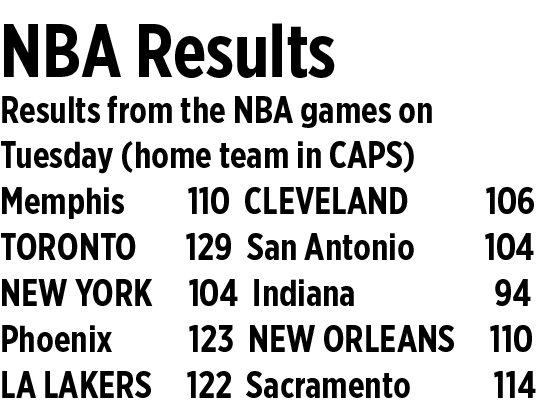
DEVIN BOOKER scored 33 points and Chris Paul had a double-double as the short-handed Phoenix Suns defeated the host New Orleans Pelicans (123-110) on Tuesday night.

Paul had 11 points and 15 assists, Mikal Bridges scored 23, Cameron Johnson added 18, Bismack Biyombo had 16 and Jalen Smith had 12.

The Suns overcame the absence of head coach Monty Williams, starters Deandre Ayton and Jae Crowder, and backups JaVale McGee and Abdel Nader, all of whom were in the health and safety protocols.

Devonte’ Graham scored 28, Jonas Valančiūnas had 25 points and 16 rebounds, Brandon Ingram scored 16 and Josh Hart had 15 points and 11 rebounds for the Pelicans.

The Suns held a double-digit lead for much of the first half, but Graham’s 3-pointer pulled New Orleans within 67-61 early in the third quarter.

Booker’s 3-pointer expanded the lead to 13, but the Pelicans crept within five on a dunk by Herbert Jones.

Paul had two baskets and two assists to help Phoenix rebuild the lead to 88-73.

Jones had five points as New Orleans got within 95-84 at the end of the quarter.

Graham made a 3-pointer and Ingram had two baskets to get the Pelicans within four, but Bridges answered with a basket and a 3-pointer.

Two more 3-pointers by Graham got New Orleans within two points, but Paul assisted on consecutive baskets by Biyombo and the Suns took a 109-101 lead and pulled away.

The hot-shooting Suns raced to a pair of 11-point leads during the first half of the first quarter.

Booker’s basket gave them their biggest lead of the period at 40-24, but Nickeil Alexander-Walker made a 3-pointer and Jose Alvarado made four free throws to trim the lead to 42-31 at the end of the quarter.

Garrett Temple’s 3-pointer helped New Orleans get within 44-40 before Paul had a basket and assisted on consecutive 3-pointers by Johnson that gave the Suns a 58-42 lead.

Hart scored five points and had an assist as the Pelicans trimmed the deficit to 64-54 at half time. — Reuters