Home Blog Page 6923

With eagles and elephants, Philippines lures public for ‘zoo jabs’

Image via Facebook/Manila Public Information Office

The Philippines opened a zoo on Wednesday as a makeshift vaccination center in the hope its elephants and eagles can attract young and elderly people hesitant about getting inoculated against coronavirus disease 2019 (COVID-19).

Manila Zoo was giving vaccinations to young people age 12–17 and the elderly and allowing recipients of jabs to spend time observing its elephant enclosure, peacocks, and more.

“Aside from being safe and also getting vaccinated, the kids can also enjoy the outdoors, the scenery, and the animals that are here inside,” said Joyce Pablo, mother of one of the children being inoculated.

The Philippines has so far fully inoculated about half of its population, but many areas outside the capital region are lagging far behind, complicating efforts to suppress fresh outbreaks of COVID-19.

Daily coronavirus infections have hit records several times this month, driven by the especially contagious Omicron variant, prompting a tightening of curbs on mobility, including a public transport ban for the unvaccinated.

The Philippines has had problems with vaccine hesitancy that pre-date COVID-19, particularly among children.

For his part, President Rodrigo R. Duterte has even threatened to arrest unvaccinated people.

Ray Salinel, a doctor, said the zoo was a great idea to encourage more people to be inoculated.

“After the vaccination of those aged 12–17 years, seniors, and those with multiple illnesses, they can go around the zoo,” he said. “Even if the zoo isn’t completely open, they can enjoy the sights, the peacocks, eagles, and Mali (elephant). They can relax and forget about their problems.” — Reuters

China drafts rules to give property developers more access to escrow funds — sources

CHINESE flags are seen near the logo of the China Evergrande Group on the Evergrande Center in Shanghai, China, Sept. 24, 2021. — REUTERS/ALY SONG

HONG KONG — China is drafting nationwide rules to make it easier for property developers to access funds from sales still held in escrow accounts in its latest move to ease a severe cash crunch in the sector, four people with knowledge of the matter said. 

Regulatory curbs on borrowing have driven the sector into crisis, highlighted by China Evergrande Group which was once China’s top-selling developer but is now the world’s most indebted property firm with liabilities of $300 billion. 

The new rules would help developers meet debt obligations, pay suppliers and finance operations by letting them use the funds in escrow that are currently controlled by municipal governments with no central oversight, the people said on condition of anonymity due to sensitivity of the matter. 

“An abrupt clampdown on escrow accounts by local authorities after Evergrande’s crash choked liquidity for some good quality names. A correction by the central government is much needed,” said Nan Li, associate professor of finance at Shanghai Jiao Tong University. 

Chinese developers are allowed to sell residential projects before completing them but are required to put those funds in escrow accounts. The cash held in escrow typically accounts for 50% to 70% of developers’ pre-sale funds, one of the people said, without giving an estimate on the amount held. 

Guided by the cabinet-level Financial stability and Development Committee, the sector’s main regulator the Ministry of Housing and Urban-Rural Development and other authorities are drafting the new rules, three of the people said. 

Beijing aims to roll them out as early as end of January in a push to prevent a wider crisis, the people said. 

The Hang Seng Mainland Properties index rose 1.6% in afternoon trading after the Reuters report and ended nearly 6% higher on Wednesday. Chinese property developers Shimao Group Holdings, Sunac China Holdings and Country Garden Holdings led the sector’s gains, closing up 11.3%, 7.6% and 8.3%, respectively. 

US dollar bonds issued by developers including Sunac and Country Garden also rose following the report. 

The property sector accounts for about a quarter of China’s economy, the world’s second-largest after the United States. 

The State Council Information Office and the Ministry of Housing and Urban-Rural Development did not immediately respond to requests for comment. 

CASH CRUNCH 

Many local governments curbed withdrawals from the escrow accounts in 2021 amid fears of contagion after news of Evergrande’s debt problems, leaving several projects across the country unfinished and worsening cash flow for developers. 

While some municipalities have eased withdrawal restrictions since late last year, one of the sources said that due to lack of nationwide rules on this front, local enforcement had already gone too far in several cities. 

The proposed new rules are aimed at allowing developers to use escrow funds to first complete unfinished buildings and then for other purposes, three of the sources said. 

The rules would also prioritise the repayment of onshore debt of developers with better credit profiles, the fourth source said. 

Nomura estimates that Chinese developers would need to meet onshore and offshore maturities of about 210 billion yuan ($33 billion) each in the first two quarters of 2022, compared with 191 billion yuan in the last quarter of 2021. 

In recent weeks, Beijing has taken steps to restore stability in the property sector including making it easier for state-backed developers to buy up distressed assets of indebted private firms, a source told Reuters this month. 

On Tuesday, a senior official at the People’s Bank of China (PBOC) said the central bank would maintain “continuity, consistency and stability” of property financial policies. 

Property sales and financing are gradually returning to normal, and market expectations are improving, Zou Lan, head of financial markets at the PBOC said. — Julie Zhu, Clare Jim and Xie Yu/Reuters

BW Insights | Evaluating Efficiency: Workplace Productivity in the New Normal

With the sudden rise of COVID-19 cases due to the omicron variant, companies are once again forced to shift to work-from-home setup. How has workplace productivity turned out in different organizations? What are the experiences learned to balance a healthy work environment while elevating work efficiency remotely?

Join BusinessWorld Insights together with experts in a discussion themed “Evaluating Efficiency: Workplace Productivity in the New Normal” LIVE and FREE on BusinessWorld’s and The Philippine STAR’s Facebook pages.

This session of #BUSINESSWORLDINSIGHTS is supported by Bank Marketing Association of the Philippines, British Chamber of Commerce of the Philippines, Management Association of the Philippines, Philippine Chamber of Commerce and Industry, People Management Association of the Philippines, and The Philippine STAR.

PHL seen to remain a laggard in ASEAN

PHILIPPINE STAR/ MICHAEL VARCAS
The Philippines is likely to see “substantial scarring” to economic output from the coronavirus pandemic. — PHILIPPINE STAR/ MICHAEL VARCAS

By Luz Wendy T. Noble, Reporter

THE PHILIPPINE ECONOMY is likely to be among the laggards in Southeast Asia this year as policy direction in pandemic management remains unclear, analysts said. 

At Fitch Ratings’ Credit Outlook Asia Pacific 2022 forum, the debt watcher said it will continue to monitor the country’s debt metrics and the fiscal policy of the upcoming administration.

“When you think about Indonesia, Thailand, the Philippines, these are countries that have been deeply hurt by the pandemic, and still don’t see any clear light as to how they will approach 2022, in opening up their economy, drawing foreign tourists to come back, which is such a critical component of their economy,” Taimur Baig, managing director and chief economist, Group Research at DBS Bank said at the virtual forum on Wednesday.

Mr. Baig said the Philippines, along with Thailand, Indonesia and Malaysia, will face “substantial scarring” to economic output from the coronavirus disease 2019 (COVID-19) pandemic.

“These countries in the last two decades have invested so much on tourism, high-end tourism, low-end tourism, mass Chinese tourism, fancy European and US tourism,” he said.

However, the continued surge in COVID-19 infections has dampened tourists’ interest in these markets, Mr. Baig said. He noted these countries, which heavily rely on international tourism, are missing Chinese tourists as China continues to keep its borders shut in line with its zero-COVID policy.

The Philippine economy contracted by a record 9.6% in 2020. For the first nine months of 2021, gross domestic product (GDP) grew by 4.9%. Economic managers raised their GDP growth forecast to 5-5.5% for 2021, after mobility curbs were eased and business capacity increased as COVID-19 cases fell.

Nomura Holdings, Inc. Chief ASEAN (Association of Southeast Asian Nations) Economist Euben Paracuelles said the Philippines and Indonesia would be “laggards” in the region as they continue to struggle to contain COVID-19 and face the threat of emerging variants.

“Vaccination is important. Healthcare infrastructure is important. And for Indonesia and Philippines, I think they’ve struggled a lot [in these areas],” Mr. Paracuelles said.

The Philippines has fully vaccinated more than 56 million Filipinos, based on data from the Department of Health. The government now aims to fully vaccinate 77 million people against COVID-19 by the end of March.

The Health department reported 22,958 new COVID-19 infections on Wednesday, bringing active cases to 270,728. It also confirmed the first local deaths caused by the highly infectious Omicron variant — two unvaccinated people with existing medical conditions.

EYE ON DEBT
The country’s debt levels and fiscal space will closely be assessed as the pandemic drags on, said Sagarika Chandra, director, Asia-Pacific Sovereign Ratings.

“There are certain concerns that we have about the recovery. And you know, whether the authorities will be able to stick to the fiscal policies, which we saw prior to the pandemic — it is something which is quite important for us,” Ms. Chandra said.

Over the course of the crisis, Ms. Chandra said the country’s debt ratio largely increased, although it is still below the median for its BBB-rated peers.

The country’s debt-to-GDP ratio stood at 63.1% as of end-September, based on data from the Bureau of the Treasury. This is the highest in 16 years or since the 65.7% seen in 2005.

In July 2021, the debt watcher revised its outlook for the Philippine investment grade “BBB” sovereign rating to “negative” from “stable,” which means there could be a downgrade in the next 12 to 18 months.

“The macro-policy framework, and how prudent the government is with respect to fiscal management, that’s an important driver of rating and the outlook for the Philippines, especially given the increase in debt levels,” she said.

Ms. Chandra said they will also await the outcome of the May presidential elections for clarity on the economic recovery outlook.

The ratings agency expects the GDP to grow by 6.8% this year, which is below the government’s 7-9% target.

“We’ll have to assess what the policy outlook is post-elections and what it means for overall fiscal as well as the recovery prospects for the Philippines,” she said.

BANK PROFITS
Separately, credit raters expect the local banking sector to recover this year as profits improve despite the pandemic and the likely increase in interest rates.

The gradual improvement of the economy this year will in turn improve prospects for the banking industry, said Tamma Febrian, associate director, and Willie Tanoto, director of the Asia-Pacific banking team of Fitch Ratings.

“The more supportive operating environment should buoy business and consumer demand, and drive credit costs lower for most banks, aiding their overall profitability,” the analysts said in an e-mail.

“Nonperforming loans (NPL) formation appears to have also slowed down in the last few months of 2021, owing to the opening up of the economy, and we expect it to stabilize in the near term,” they added.

The bad loan ratio in November stood at 4.35%, the lowest in eight months or since the 4.21% in March 2021, as the banks’ loan portfolio expanded.

It helped that the industry has ample capitalization which “provided cushion” for credit losses, S&P Global Ratings associate director Nikita Anand said.

“Banks’ disposal of NPLs to asset management companies could also bring down the level of stressed loans visible in the system,” Ms. Anand said in an e-mail.

On the other hand, Fitch’s Mr. Febrian and Mr. Tanoto said there is still a risk to asset quality due to pandemic uncertainties and the impending monetary policy tightening.

“If rising global interest rates were to also pull up domestic lending rates significantly later in the year, that could also dampen demand for credit and add to borrowers’ interest burden, which could pressure asset quality,” Mr. Febrian and Mr. Tanoto said.

The US Federal Reserve and many other central banks have started to raise interest rates. The BSP said it will still prioritize support for economic recovery, with Bangko Sentral ng Pilipinas Governor Benjamin E. Diokno saying a rate hike in the first half of 2022 is unlikely.

Central bank data showed the banking system’s total assets as of end-November rose by 7% year on year to P20.4 trillion.

Taxation, social protection gaps in online gig economy flagged

UNSPLASH

THE FLUID NATURE of online work has led to gaps in taxation and social protection, issues that have become more urgent with the increased adoption of remote work during the pandemic, a report from the Philippine Institute for Development Studies (PIDS) found.

In the report “Exploring Policies and Initiatives for Online Workers in the Philippines,” PIDS Senior Research Fellow Ramonette B. Serafica and Research Analyst Queen Cel A. Oren found that the overlapping classification of online workers has affected their tax payments to the Bureau of Internal Revenue (BIR).

“Even if Filipino online workers want to register with the BIR and pay their fair share, anecdotal evidence reveal confusion with respect to their proper category. The registration requirements and procedures could also be problematic,” the authors said.

Online workers are often freelancers hired on a per project basis, which means income is not always steady.

Some work depends on the availability of clients and contracts. They can fall under varying categories — entrepreneurs, part-time workers, freelancers, or independent contractors — at different times.

For instance, freelancers are not among the list of individuals who should file an income tax return (ITR) under the National Internal Revenue Code. But a freelancer can be classified as self-employed professional, mixed-income individual or sole proprietor, depending on their profession.

“Even if Filipino online workers want to register with the BIR and pay their fair share, anecdotal evidence reveal confusion with respect to their proper category,” PIDS researchers said.

Some online workers are not able to register at the BIR because they cannot submit a residence certificate without the required storefronts.

“Platform workers have a different perception of their employment status. Depending on the nature of their work, they may be recognized by the BIR as individual and non-individual taxpayers,” the authors said.

At the same time, freelance workers are able to tap social insurance programs, but they often fall into overlapping employment status categories.

“Online workers might find it challenging to make regular contributions or may not be motivated to voluntarily do so,” PIDS said. “Thus, the current social protection schemes will have to be reviewed and updated to be responsive to the needs of new types of workers and work arrangements.”

Social Security System and Pag-IBIG benefits have contribution-based eligibility rules, which means online workers that have not paid contributions over a certain number of months will not be able to avail of benefits.

The government should help simplify social protection registration processes and using online payment systems, the PIDS researchers said.

“Like the Universal Health Care Act, the government can consider providing universal social protection,” the authors said.

“Whether it is to design a social protection scheme suitable for online workers or a mechanism to increase tax compliance, field experiments could be conducted to determine the appropriate interventions that will encourage participation and reduce the informality of online work.”

The PIDS researchers expect online work to surge, with a third of the workforce partly or fully working remotely after five years.

“With the COVID-19 pandemic, the market for online work is believed to expand further with the increase in outsourced tasks and availability of workers due to job losses in other sectors.”

Several bills related to online workers are pending in Congress, including the Philippine Digital Workforce Competitiveness Act that would help improve digital training, and the Freelancers Protection Act that would give them the right to social welfare benefits and simplified tax registration. The National Digital Careers Act would roll out subsidies, scholarships, and incentives for digital work. — Jenina P. Ibañez

Only 5 FIST corporations set up since law signed in 2021

BW FILE PHOTO

ONLY FIVE Financial Institutions Strategic Transfer (FIST) corporations have been set up in the Philippines since a law allowing financial institutions to offload bad loans accumulated during the pandemic took effect in 2021, the Department of Finance (DoF) said.

The FIST Act, or Republic Act 11523, signed in February last year helps financial institutions clean their balance sheets by selling nonperforming assets to FIST corporations that are registered with the Securities and Exchange Commission (SEC).

The SEC in a report to the Finance department said the slow rollout of FIST corporations could be attributed to “the continuing strength of the Philippine banking system despite the pandemic.”

Two of the five FIST corporations in the country are 100% owned by Filipinos, while the others include the participation of Japanese and Swiss investors, the DoF said in a press release on Wednesday.

Both Philippine Equitable Recovery FIST-Asset Management Corp. and Philippine Recovery Co. FISTC-AMC, Inc. are 100% Filipino owned, while Argo Global Servicing Philippines (FIST-AMC), Inc. is under a Japanese corporation.

Collectius FISTC-AMC Private Ltd. Corp. is wholly owned by a Switzerland-based firm, while Resurgent Capital (FISTC-AMC), Inc. includes an investment banking subsidiary of China Banking Corp. among its incorporators.

“Unlike during the Asian (financial) crisis, in general, Philippine banks remain well-capitalized and liquid. Hence, there is less pressure for banks to liquidate nonperforming loans or nonperforming assets for cash,” the SEC said.

The SEC added that proponents of special purpose vehicles during the Asian financial crisis in the late 1990s were foreign investors looking into distressed Asian debt, including the nonperforming loans and assets of Philippine banks.

But the global effects of the coronavirus disease 2019 (COVID-19) pandemic meant that foreign investors did not need to go far to invest in distressed debt.

SEC said FIST corporations may need to turn to other Philippine credit granting institutions — including financing, lending, and microfinance companies — instead of banks.

The commission plans to discuss this with the Investment House Association of the Philippines and the Philippine Finance Association.

Bad loans as of November 2021 fell by 0.43% to P481.879 billion from P483.98 billion a month earlier. Still, this was 19% higher than the P404.687 billion logged in the same month in 2020.

This brought the November bad loan ratio to 4.35%, the lowest in eight months or since the 4.21% seen in March 2021, data from the Bangko Sentral ng Pilipinas (BSP) showed.

The central bank had earlier said the ratio could reach 5-6% by end-2021 before peaking at 8.2% by 2022.  Philippine banks are expected to offload at least P152 billion in nonperforming assets through the FIST law, the BSP said. — Jenina P. Ibañez

YouTube chef comes out with ‘super pretty’ kitchenware

SHEILLA Lopez, a fitness enthusiast and YouTube chef, has come out with her own line of kitchenware.

Ms. Lopez , who earned her Le Grande Diplome from Le Cordon Bleu Culinary Institute in London, has about 28,000 followers on her YouTube account. She’s been cooking for about a decade, but her YouTube account, where she shows her takes on both world cuisines and local fare, shows videos uploaded from up to four years ago.

She started her own line of kitchenware, consisting of silicone whisks, muffin pans, sifters, pans, and even her own handheld mixer (with her name emblazoned on the side), last year. In a message to BusinessWorld, she said, “I decided to put my name in my kitchenware essentials because Chef Sheilla is a brand. I’m just proud of what I have accomplished so far because I started from very humble beginnings.”

In her website, she describes cooking and baking for family and friends after receiving her Bachelor’s Degree in Hotel and Restaurant Management from Saint Paul University, and working for a hotel in Manila as its F&B Cost Controller.

Pastels play a huge part in Ms. Lopez’s aesthetics, if one were to judge from her videos of making ube (purple yam) ice cream, avocado-lime cheesecake, and fluffy matcha cake. Her favorite shades thus come out in the line: “The deal breaker is the products need to be in super pretty colors!” She added, “I’m biased with the colors. You can really see that the line has my personal touch. Pastel hues are my favorite and I think it’s really pretty and cool to the eyes.” Sure enough, the products come in soft powder blue and blush pink.

“I have a very high standard when it comes to the kitchen tools I use and with Chef Sheilla Kitchenware, I handpicked each piece,” she told BusinessWorld. “I tested their functionality and durability and made sure that they’re not going to be super expensive.”

She said that her reason for coming out with her own line were her own followers, who would ask her about the tools she uses in the kitchen. “I’m not going to lie: I have collected many branded kitchenware pieces over the years and they are quite pricey. Many of my followers get intimidated by this. They think they can only make these recipes using expensive tools. I always remind them that they can still create perfect dishes with affordable and reliable kitchenware, so I looked for suppliers that will be able to provide me with products that are multi-purpose, affordable, and have top-of-the-line quality.” The hand mixer, her favorite from the line, for example, costs P1,500. “I can whip creams and batters in small batches or large batches without using the stand mixer.”

The products are available on her website (www.chefsheilla.com), and through Lazada and Shopee. — Joseph L. Garcia

Wine and the best of nature at El Nido

The panoramic Small Lagoon where we did our kayaking

Prior to the latest surge anew of COVID-19 infections at the start of 2022, I was able to bring my family on a vacation to El Nido in Palawan. This was our first family vacation trip since end of 2019, and my first time to travel by air since escaping Milan in February of 2020 when COVID was about to devastate Italy and Europe.

El Nido was actually a third choice, as Boracay was my first preference but the Shangri-La hotel resort was fully booked and I had promised my family we would stay at the Shangri-La this time as we had been to Boracay multiple times but never stayed there. Siargao was my second choice (before Typhoon Odette’s cruel destruction) but I could not get the right flight, then finally it was El Nido.

To be honest, it was quite cumbersome to travel anywhere, including to local tourist spots. Aside from all the vaccination cards and vaccination certificates, you also need the S-Pass and the Travel Coordination Permits (TCPs), and also need fully paid bookings from airlines and hotels — but it was all good as we got time to fulfil all the requirements.

Then Typhoon Odette happened and at first, I thought our vacation would need to be postponed as Palawan was also badly damaged. Our flight via Philippine Airline (PAL) to Puerto Princessa enroute to El Nido was affected as roads leading to El Nido were initially deemed impassable, forcing me to look for another alternative and there was only one airline that flies direct to El Nido via the Lio Airport. So, we took Air Swift and paid a premium for the rush nature of the booking. As of this writing PAL has yet to agree to rebooking or even recrediting our flights which they should.

While this family trip was getting off to a more expensive and rockier start than anticipated, the view from the plane closing in on El Nido somehow changed all my initial concerns. Beautiful mountains, the turquoise water and white sands beaches were simply too breathtaking and soothing to feel bad. Air Swift was also a joy to ride in, with its on-time and simple no frills approach as my good first experience with them. Air Swift uses the ATR42-600 aircraft which can comfortably sit 50 passengers and is manned by two courteous flight attendants, and, I presume, two pilots. The runway at the Lio Airport is probably not that long so as passengers we felt the rocky landing and abrupt braking.

PROUDLY LOCAL
I have been to Bali, Indonesia; Phuket, Thailand; Da Nang, Vietnam and other places among our Southeast Asian counterparts. I do think El Nido, and even Boracay, are more beautiful and naturally more fascinating than any of them.

Perhaps I was being a prisoner of the moment, but my first trip to El Nido was nothing less than magical. Admittedly we were at El Nido during this pandemic period and had more of the beauty of the island to ourselves as visitors were very limited and even foreign tourist sightings were almost non-existent.

El Nido is the gateway to the spectacular Bacuit Archipelago which comprises of around 45 islands and islets. Our two-day island-hopping tour of a handful of these islands showed us how each island has its own rock formation and unique geological makeup. We visited the Big Lagoon, Small Lagoon, Secret Lagoon, Cadlao Lagoon, Seven Commandos Beach, Papaya Beach, and a few more. We did some hiking (a very steep hike in Cadlao Island), kayaking, swimming, snorkeling, and some sun-bathing and it was an amazing, paradise-like family bonding experience.

The weather was quite good, but the sea travel was very wave-y and slightly turbulent. We had to contract a private speed boat to get around, instead of the usual bangka boat — but even a speed boat was unable to get us to Shimizu Island as our boat captain called it too risky because of the rough waves.

After all the island tour adventures, nighttime was reserved for old-fashion peace and serenity. But locals were telling us that we missed the time when El Nido was bustling even through the wee hours of the morning, and that was not so long ago — barely 22 months, just prior to the COVID pandemic.

RESTAURANTS IN LIO BEACH
There were only a handful of restaurant choices within the Lio beach where our hotel was located… conspicuously closed with strategic beach front views were Manille Beach Bar, The Jungle Bar, and Bead Café. I also saw a closed The Red Crab restaurant (a familiar Manila restaurant name). Our choices for food during dinner (as normally we were out after breakfast) were limited to our hotel Huni Lio’s room service food, El Nido Grill, D’Factory, Punta Playa, and Globys Restaurant and if we crossed to the nearby Seda Hotel, then we added the Seda hotel restaurants.

Thankfully there are several restaurants in the city proper including in the Barangay Buena Suerte strip, just some 20 minutes through car rental or tricycle. This is where you can find ArtCafe, probably El Nido’s most famous restaurant and a favorite tourist dining spot.

THE EL NIDO WINE LISTS
Seda Hotel is a luxury hotel with its own enviable frontage of the Lio Beach, and yet their wine list is quite limited and thin. Their pouring wine is decent — the Renmano Chairman’s selection Chardonnay and Cabernet Sauvignon from Southeastern Australia — while there are only six wines sold by the bottle with two selections apiece for red, white and rosé.

For red, there is Italy’s Nero d’Avola, a peculiar grape for most, but actually Sicily’s proudest indigenous red grape varietal. The other red is even more obscure as it is a red wine from Rias Baixas, Spain — home of the delectable Albarińo white wine. This red from Rias Baixas is made from a blend of grapes including Mencia, which is more famous for this varietal in nearby Bierzo region, and another rarely heard of grape called Caińo (known as Boraccal in neighboring Portugal).

For white, there is the sweet-scented Grillo, also from Sicily Italy. Grillo is known more for being one of grape varietals used for the fortified wine Marsala. The other white wine is the French Pinot Gris, or more renowned as Pinot Grigio elsewhere from the Alsace region. If I had to go with Alsatian wines, my first pick would be a Riesling, and then a Gewurztraminer.

For rosé, they carry a Bordeaux and a Provence wine.

El Nido Grill and D’Factory do not serve wine at all. El Nido Grill is more about beers and D’Factory is a dessert place with delicious ice creams and crepes. On the other hand, Globys has a handful of wines, but they do have an all day-long Happy Hour “Buy 1 Take 1” offer on their cocktails. Twice in our four nights we had cocktails there.

Punta Playa, I found out, was actually the only restaurant that opened at Lio Beach during the pandemic period and started operations just three or four months ago. Punta Playa took over the former location of Shaka, a popular health food restaurant known for fruit smoothies and which has branches in Taguig, Siargao, Bohol, and Cebu, which but closed down the El Nido place because of the pandemic, like several other restaurants did too in Lio Beach. Punta Playa is a Mediterranean restaurant with more of a Spanish flair to it. The menu as well as the wine list have more Spanish entries. The restaurant is managed by a Spaniard, Marcos Olalla, who had a prior stint with the exclusive Cauayan Island Resort also in El Nido. Marcos also had experience in Metro Manila with his stint at Las Flores in Podium.

Punta Playa has a wine list with 17 selections, more than any establishment in the Lio Beach area, with nine of the 17 wines being Spanish. But I love the list because it has my favorite Spanish wines regions including Rioja, Ribera del Duero, Toro, Cava, and even Txakoli. Sadly because of Typhoon Odette, the waitstaff was telling me some of the wines were not available during our visit.

The top wine in the Punta Playa list is Macan Rioja, a wine collaborated on by the famed Vega Sicilia and Bordeaux royalty Benjamin Rothschild. This wine, priced at P5,800/bottle restaurant price, is pretty good given the pedigree of the wine, and could easily cost 30% higher when found in a Manila restaurant wine list.

The only other restaurant we tried in El Nido was the local and tourist favorite ArtCafe. This restaurant is often packed and even during our visit when travel was restricted, the place was busy. ArtCafe started in 1995 and was a joint venture between a Swiss woman, Judith, and a local guy, Tani (I read this in the menu). This second-floor restaurant has a clear view of the Buena Suerte Beach where the boats docked, and this is also where island-hopping tours start and end.

The restaurant’s wine list has close to 30 different items — probably the largest in selection among fellow restaurants, but they are mostly the commercially popular ones like Yellow Tail and Hardys from Australia, Gato Negro and Ventisquero from Chile, and these are the same wines available in their ground floor souvenir shop and grocery.

While obviously my journey to El Nido was mainly for vacation and holiday relaxation, I also thought that, like Bali or even Phuket, I could get a very good wine list and food and wine experience. El Nido is not quite there yet, but with so much beauty of landscape and natural geological blessings, the wine list should be the least of my concerns. Over time, when tourism can flourish again, I am betting that the restaurants in El Nido will be upgrading their wine list to world class standards, and I will be the happiest “Juan” when this happens.

The author is the only Filipino member of the UK-based Circle of Wine Writers. For comments, inquiries, wine event coverage, wine consultancy and other wine related concerns, e-mail the author at wineprotege@gmail.com, or check his wine training website https://thewinetrainingcamp.wordpress.com/services.


Megaworld to buy ‘prime’ Manila property for P1.89B

MEGAWORLD Corp. announced on Wednesday that it had forged a memorandum of agreement with Manila Jockey Club, Inc. to buy a 2.2-hectare property in Sta. Cruz, Manila.

In a disclosure filed with the stock exchange, the listed township developer described the property as “part of the historic 16-hectare San Lazaro Tourism and Business Park in the northern part of Manila.” It also said that the “prime” real estate would boost the company’s presence in the city.

In a separate disclosure, Manila Jockey Club told the exchange of the same agreement and disclosed the purchase price at P1,887,733,375.

The listed racetrack operator said it had agreed to sell, transfer and convey all of its rights, title and interest in “certain parcels of land,” which it placed at 22,143.50 square meters, to Megaworld.

“The definitive sale agreements shall be executed upon the submission of closing documents to the satisfaction of buyer,” it said.

Megaworld said it currently owns nearly 5,000 hectares of land across the country, with around 300 hectares located in Metro Manila, covering nine urban townships and lifestyle estates.

“Currently, our big projects in the City of Manila are concentrated in the Binondo district, particularly within our Lucky Chinatown project where we have a lifestyle mall, condominium towers, a cultural museum, and a hotel,” Megaworld Chief Strategy Officer Kevin L. Tan said in the disclosure.

“When we finalize the purchase of this land in San Lazaro, this will surely be part of our township portfolio expansion in Metro Manila,” he added.

The agreement comes after the board of Megaworld approved in December the sale of four prime buildings located in economic zones to MREIT, Inc. The purchase price of P9.116 billion will be paid by MREIT upon the execution of a deed of absolute sale on or before Dec. 29, 2021.

MREIT is a company designated by Megaworld to operate as a real estate investment trust (REIT). Megaworld is the listing sponsor and 62% owner of MREIT.

As of the third quarter of 2021, Megaworld posted an attributable income of P8.16 billion, up nearly 10% from P7.42 billion in the same period in 2020.

In contrast, Manila Jockey Club’s attributable net loss widened during the January-September period to P143.12 million from P128.33 million previously.

At the local bourse on Wednesday, Megaworld lost one centavo or 0.31% to close at P3.18 apiece. Shares in Manila Jockey Club fell by eight centavos or 3.36% to finish at P2.30. — M.C. Lucenio

What makes a vegan-friendly wine vegan? And how’s it different from conventional wine?

MAX TUTAK/UNSPLASH

CONSUMER interest in vegan wines is growing, with vegan-friendly wines showing up in many supermarkets and Google searches for “vegan wine” soaring in recent years.

But what makes a vegan-friendly wine vegan? And how’s it different to conventional winemaking techniques?

I’m an oenology and chemistry researcher; I’ve spent years studying wine and winemaking processes. To explain the difference between vegan and non-vegan wines, I first need to walk you through the basics of conventional winemaking.

So, top up your glass and let’s begin.

In conventional winemaking, for both red and white, the grape has a long and tortuous path from the vine to the bottle.

Red wine fermentation is carried out with the skin on the grape, as this is where the molecules that contribute to color are found.

Additions and manipulations can be extensive. Yeast is normally added in combination with diammonium phosphate, a source of nitrogen, to ensure a controlled and manageable fermentation.

Enzymes may be added, either to break down pectin (a fiber found in fruits) or to enhance flavor. Malo-lactic fermentation — where the grape’s malic acid is converted to lactic acid — is common in red wine and also used in some white wine styles.

Gross lees (waste yeast) can be removed by “racking” — which means moving wine from one vessel to another — while the smaller fine lees are removed by filtration.

Wines are routinely tasted prior to bottling. It’s often at this stage that a decision is made that the young wine may need adjustment to the palate structure.

For example, a wine may have an obvious drying effect in the mouth, known as astringency, or exhibit a slightly bitter aftertaste. This can happen when the amount of polyphenolic compounds — micronutrients that naturally occur in plants — are higher than preferred.

In red wine, polyphenolic compounds are commonly called tannins; these are macromolecules made up of carbon, oxygen, and hydrogen atoms. The molecules are much smaller in white wine and, in that context, are usually referred to simply as “phenolic compounds.”

Phenolic compounds interact with proteins. Think of putting milk into a cup of strong black tea to soften the taste and give a more rounded, less bitter taste.

Winemakers will add one of the permitted protein additives after setting up a tasting trial to assess the right amount of protein to be added. This process is known in the business as “fining.”

This is where things get problematic for vegans.

The commonly used proteins are gelatin sourced from cow or pig collagen, isinglass (from fish swim bladder), egg white, or skim milk.

Each protein tends to have specific fining ability, and winemakers make decisions on which to use based on experience or advice.

Australia has comprehensive rules regarding wine labelling, including the need to specify allergens.

This includes milk and eggs, but not the other animal-derived fining proteins. This can cause considerable uncertainty when selecting wines that are vegan-friendly.

Some wine labels now have a statement such as “this wine has been treated with fish product and traces may remain.”

Increasingly in Australia and especially in Europe, wines are now often labeled as “vegan-friendly” or “no animal products were used in the preparation of this wine.”

Proteins derived from plants would appear to be an obvious alternative but, for now, most work on plant proteins is still in the research stage. Only one from potatoes is commercially available.

Gluten from cereals is effective in red wine, but presents obvious problems for those with coeliac disease or gluten allergies.

Grape seed extract is perhaps the most effective plant-based protein that has been trialed but it’s not commercially available. Obtaining regulatory approval across international markets is a significant barrier to the commercialization of new products for use in wine.

Storing a wine on its fine lees (meaning the wine is aged in contact with its fine lees) after removal of the gross lees is one alternative to using animal proteins in winemaking. This can soften a wine and enhance the mouthfeel without the use of additives.

White wines can be stored on fine lees for nine months before bottling. Reds can take up to 18 months to obtain the desired mouthfeel.

Regular tasting during this ageing step is essential to ensure the wine is developing as desired. It is a somewhat expensive process as it ties up storage vessels and winery space.

At a recent tasting of organic and biodynamic wines, some I presented were made by the conventional method, while others met the vegan-friendly criterion. The general comment after the tasting was: I couldn’t tell the difference.

Pairing vegan-friendly wines with food is not restricted to vegan-friendly food. In one classic example, a vegan-friendly sweet wine from the Loire Valley in France was also described as “excellent with foie gras.”

My advice is to explore with an open mind and enjoy the new experience.


Geoff Scollary is an Adjunct Professor, Charles Sturt University.

PSE clears initial public offering of Citicore’s REIT

CITICORE Energy REIT Corp. (CREIT) has secured approval from the Philippine Stock Exchange (PSE) for its initial public offering (IPO) of shares worth about P10.1 billion for up to P3.15 apiece.

In a PSE notice posted on Wednesday, the exchange said it had given the green light to the initial listing of CREIT’s 6,545,454,004 common shares with a par value at P0.25 each.

Of these, 1,047,272,000 shares will be issued to the public under a primary offering, while 1,741,660,000 shares are allotted for a secondary offering, plus an overallotment option of up to 418,339,000 common shares.

The shares are priced for as much as P3.15 apiece. The final offer price will be determined based on a book-building process. The offer period will begin at 9 a.m. on Feb. 2, and end at 12 noon on Feb. 8, 2022. The target listing date is on Feb. 17.

CREIT’s IPO is said to be the country’s first energy-focused real estate investment trust (REIT). All of the offered shares will be listed on the main board of the stock exchange under the ticker symbol CREIT.

The proceeds from the primary offering will be used to buy properties in Bulacan and South Cotabato, while those from the secondary offering will be used by Citicore Renewable Energy Corp. and Citicore Solar Tarlac 1, Inc. for their future projects.

Citicore Renewable, a subsidiary of Citicore Power, Inc., is one of the company’s sponsors and is a part of the Citicore group of companies. It is said to be a pioneer of agro-solar social concept.

In a media release on Wednesday, CREIT President and Chief Executive Oliver Y. Tan said the business model “is cycle-resistant as solar power generation is an essential industry, further supported by government programs, and has a clear plan for long-term growth.”

“With the search for attractive returns, alongside a strong and effective environment, society, and governance (ESG) advocacy as criteria for a sound market investment, CREIT comes in as a practical alternative,” he added.

Sought for comment, analysts said the IPO might stimulate investor appetite, but whether the business model can be a template for future energy REITs remains to be seen.

Rizal Commercial Banking Corp. Chief Economist Michael L. Ricafort said renewable energy-related businesses would continue to benefit from ESG-related investment themes.

“Since this kind of REIT is relatively new, investors would look at future cash flows and overall valuations,” he told BusinessWorld in a Viber message.

Diversified Securities, Inc. Equity Trader Aniceto K. Pangan said in a text message: “Their focus on renewable energy is a good direction as it is where the demand is in the future.”

He added that demand would still depend on how stable the company’s income is, as it shares its profits through dividends, as well as its growth plans.

Meanwhile, COL Financial Group, Inc. First Vice-President April L. Tan said that with the favorable outlook on the power industry and the company’s structure, CREIT is a good REIT that could give stable cash dividends to shareholders.

However, Ms. Tan said the attractiveness of the offer would still depend heavily on its yield.

“At P3.15 per share, potential yield is at 5.66%. This might not be compelling enough since other REITs debuted with similar yields, but with more attractive near-term growth prospects,” she said.

Ms. Tan also noted that the potential for growth through acquisition in the near term is limited because the parent firm still has to build more plants that the company can acquire in the future.

“The fund manager’s role is to look for assets that fit the REIT company’s investment criteria and the easiest way to grow a REIT’s portfolio is by buying the assets of its REIT sponsor. However, if the sponsor doesn’t have assets that meet the REIT company’s investment criteria, then it might be difficult for the REIT to grow through acquisition,” she explained.

In its press statement, CREIT said the Citicore group has a pipeline of 1,500 megawatts of direct current (MWdc) solar plant capacity in the next five years with 120.5 MWdc underway. — Marielle C. Lucenio

Clark Marriott opens traditional Chinese restaurant

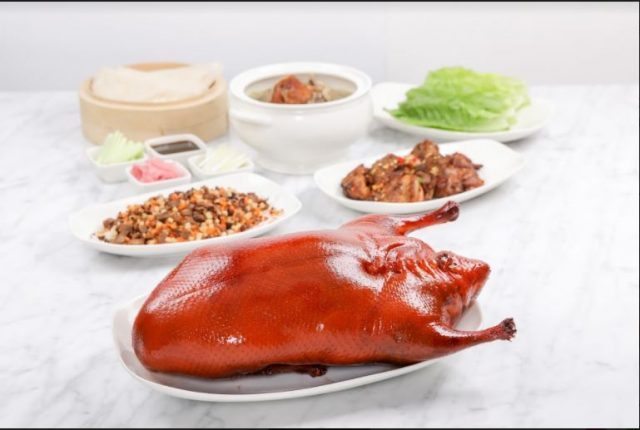
Wu Xing Peking Duck

THE CHINESE concept of Wu Xing, which puts the traditional five elements of Chinese philosophy (water, wood, fire, earth, metal) in order, had once been used to explain how the universe moves. Perhaps the concept is alive and well in Clark Marriott’s new restaurant, named Wu Xing (of course).

It’s not a stretch: the restaurant’s chef, Raymond Yeung, has 30 years of experience in Chinese cuisine. Mr. Yeung took a five-year course at the Chinese Cuisine Training Institute in Hong Kong, and was in the first batch of graduates of this course at the school. Mr. Yeung has also traveled across China to draw from the best regional styles. “We tried the different and popular dishes of Beijing, Shanghai, Sichuan, and Hong Kong, and got the best of them in developing the menu for Wu Xing,” he said in a release.

Beijing is well-represented in Wu Xing’s flagship product, its Peking Duck. The duck is marinated and roasted in a traditional Beijing oven using star apple firewood to help bring out the flavors and aroma of the duck. This makes the meat extra tender and the skin crispy. It’s served with cucumber, onion leeks, pickled ginger, special hoisin sauce, and rolled in a hot Chinese pancake.

Adding to his repertoire are Crispy soft tofu with hoisin sauce, Premium jelly fish with Treasure oil,  Ox tongue and tripe with Sichuan oil, Sliced pork belly with chili oil and garlic, Century egg with marinated pickled ginger, cucumber and black fungus in chili oil, Wok-fried snake beans with salted egg yolk, Clay pot braised spicy duck with beer sauce, Wok-fried sliced duck with black fungus, ginger and leek, Wok-fried duck intestine with black bean sauce, and Lotus leaf wrapped glutinous rice with duck meat.

Meanwhile, Clark Marriott General Manager Goeran Soelter said in a statement, “Wu Xing is poised to be the newest dining destination not only for northern Luzon diners but also for Metro Manila. We are bringing authentic and traditional Peking Duck to northern Luzon. We are already a destination for people to staycation coming out of Manila for the weekend. That was our bread and butter for the last 12 months and it really grew in comparison to the period pre-pandemic. Now people have more reasons to make the trip to Clark Marriott.”

Wu Xing is now open at Clark Marriot, Clark Freeport Zone in Pampanga. For inquiries and table reservations contact +6345-598-5000 or visit its official Facebook page Wu Xing by Clark Marriott. — JLG

ADVERTISEMENT
ADVERTISEMENT