Home Blog Page 6900

Luzon Island may experience blackouts twice after elections

THE ENERGY department on Tuesday said it expects rotating blackouts to happen twice in the Luzon grid within two weeks after elections this year.

These are expected to occur on May 16 and 23, Energy Director Mario C. Marasigan told an online news briefing, citing forced blackouts in the past.

“Basing on the last three years, we will have two red alerts immediately after the elections and four yellow alerts in the entire year,” he said.

A yellow alert signifies thinning power reserves below levels deemed safe. Once reserves fall below the power requirement, the alert level moves to red, which signals rotating blackouts.

The yellow alerts are expected on April 18 and 25 and May 30. The first yellow alert happened on Jan. 10. — Marielle C. Lucenio

Marcos tops presidential opinion poll

The son and namesake of the late dictator Ferdinand E. Marcos remained on top of a presidential opinion poll this month. 

A poll by the Issues and Advocacies Center showed that 51% of Filipinos would vote for former Senator Ferdinand “Bongbong” R. Marcos, Jr., its director Edu M. Malay said in a Facebook video streamed live on Tuesday.

Manila Mayor Francisco “Isko Moreno” M. Domagoso came in second with 14%, followed by Vice-President Maria Leonor “Leni” G. Robredo with 11%.

Senator Emmanuel “Manny” D. Pacquiao placed fourth with 10% of the votes, followed by Senator Panfilo “Ping” M. Lacson, Sr. with 8%.

The three presidential candidates at the bottom of the poll were Leodegario “Ka Leody” Q. de Guzman with 1%, while Norberto B. Gonzales and Ernesto C. Abella both got 0.25%, Mr. Malay said.

Meanwhile, Mr. Marcos said that if he becomes president, he would seek a dialog with China over its sea dispute with the Philippines.

The only way to settle the issue is by entering a bilateral deal with Beijing, he told DZRH radio. 

The Philippines under him would also seek the help of the United Nations and Association of Southeast Asian Nations to settle the dispute, he said. — Jaspearl Emerald G. Tan 

10 names make it to final list of presidential candidates

THE FINAL list of candidates for the May 9 elections was posted by the Commission on Elections (Comelec) on Tuesday, with 10 names making the cut for the country’s top seat.

The poll body’s spokesperson, James B. Jimenez, said they aim to feature all 10 presidential candidates and the nine vice presidential aspirants in the planned Comelec-organized debates between end-February to April.

“We’re entering the phase of candidate negotiation to show them the setup of the debates,” Mr. Jimenez told ABS-CBN News Channel. 

He said that the poll body plans to have three debates, with two having a single moderator while one will be a town hall meeting format. 

“An effort should be made to interview everyone who is running. There are 10 (presidential) candidates on the ballot and so far, we have only seen four or five, and that’s an imbalance,” he said.

Mr. Jimenez said candidates will have face-to-face debates while the audience will be participating virtually. 

“It’s very important for them (debates) to be face-face because the body language and mannerisms of candidates could be deciphered more and  

their true characters revealed,” Gerardo A. Eusebio, a political science professor at De La Salle University, said in a Facebook messenger chat. 

The presidential candidates are: 1) Ernesto C. Abella 2) Leodegario Q. de Guzman 3) Franciso M. Domagoso 4) Norberto B. Gonzales 5) Panfilo M. Lacson, Sr. 6) Faisal M. Mangondato 7) Ferdinand R. Marcos, Jr. 8) Jose C. Montemayor Jr. 9) Emmanuel Dapidran Pacquiao Sr., and 10) Maria Leonor G. Robredo. 

The final list also includes 64 candidates for senator and 177 party-list-groups. The May elections will also cover local officials, including governors, mayors, vice mayors, and council members. 

BARANGAY-SK ELECTIONS
In another election-related matter, a bill that seeks to postpone the December polls for village and youth leaders was filed by a lawmaker in the House of Representatives on Monday.

Valenzuela Rep. Westlie T. Gatchalian filed House Bill (HB) 10678, which proposes to move the barangay and Sangguniang Kabataan elections from Dec. 5, 2022 to May 5, 2024. 

This is intended to allow the new national and local officials, who will be elected in May this year, to continue the programs and projects started during the pandemic.

“If approved into law, the proposed postponement will provide stability and constancy in the programs at the grassroots level,” the bill states. 

The measure also seeks to lessen the burden of the Comelec from having to conduct two elections within the year. — John Victor D. Ordoñez and Jaspearl Emerald G. Tan 

Duterte to name ‘most corrupt’ presidential candidate

PCOO

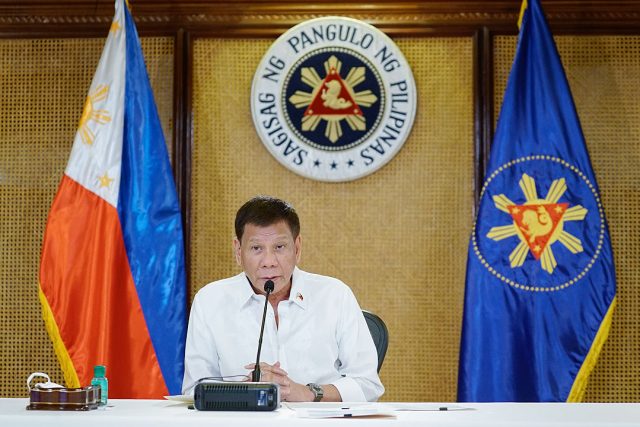
PRESIDENT Rodrigo R. Duterte said he will name the “most corrupt” presidential candidate for the May elections “in due time.” 

“I will personally name the candidates and maybe what’s wrong with them that the people need to know because you are electing a president, who is the most corrupt candidate,” the tough-talking leader said at a televised public address aired Monday night. 

He said Chinese businessmen who had transacted with the candidate were complaining that the person is too corrupt.

“People think the person is clean but those who transacted with him, including the Chinese, are complaining he is too corrupt,” he said in Filipino. 

The President said it is his obligation to reveal “what’s wrong” with presidential aspirants because “we are talking of our country and the next rulers.” 

“I am talking to you as your president. There are things you must know,” he said. “I get information from everybody, and also personal experience, observation.” 

Mr. Duterte’s party, the PDP-Laban which has been beset by infighting, does not have a presidential nominee. 

The outgoing leader, who is prohibited under the law to seek another term, said all presidential bets have issues except maybe for one, noting that there’s also a candidate who is unfit to assume the country’s highest post. 

Mr. Duterte’s information came from “a wide array of sources” and “intel reports at his disposal,” his acting spokesman Karlo Alexei B. Nograles said separately in a regular news conference on Tuesday. 

The President, whose daughter is running for the vice presidency, said last year that his administration will “stand neutral” during the May 2022 elections.

In November last year, Mr. Duterte tagged his daughter’s running mate, Ferdinand R. Marcos, Jr., as “a weak leader.” — Kyle Aristophere T. Atienza 

Labor leader’s economic platform best among presidential candidates — IBON Foundation

KA LEODY FB PAGE

THE ECONOMIC platforms of top presidential candidates, except that of a labor leader, will not foster growth for the Philippines, according to think tank IBON Foundation. 

“With the outlier of Leody de Guzman, among all the leading candidates, they collectively constitute a market-friendly agenda which will continue the trajectory of economic decline over the last four decades,” IBON Executive Director Sonny Africa said during the Pandesal Forum on Tuesday, citing a research conducted by the non-profit organization.

“Even though we had a huge expansion in foreign investments over the last four decades, we are not seeing the structural reforms, meaning stronger agriculture and especially a stronger industrial economy,” Mr. Africa said. 

If anyone among the current top runners win the elections, he said, “the real reforms needed to correct so many economic and political problems will be absent from… the administration’s next policy agenda.”

The IBON assessment, based on research and interviews of the aspirants, indicates that none of them has talked about large fiscal stimulus to spur economic recovery, new ideas to address persistent agricultural and industrial backwardness, or plans to solve structural income and wealth inequalities. 

None of the candidates, Mr. Africa added, spoke of national industrialization.

“On the contrary, most of the candidates speak of foreign investment as if it’s an end in itself, and they want to bend over backwards to attract foreign investment in a race with other ASEAN (Association of Southeast Asian Nations) countries,” Mr. Africa said. 

Mr. De Guzman, meanwhile, said in another venue that if he gets elected, he will identify “questionable” loans made by previous administrations before paying the P11.9-trillion debt of the country. 

“First, pay for those that clearly benefitted the people, then have a debate on the others,” he said in Filipino during an interview with DZRJ Radyo Bandido. “We can negotiate on a lighter payment based on our competence.”

He added that they have a coalition in charge of identifying which debt, beginning from the time of the late dictator Ferdinand E. Marcos, will be set aside for scrutiny. 

DYNASTIES
University of the Philippine professor Bobby M. Tuazon, also Center for People Empowerment in Governance director for policy studies, said at the Pandesal Forum that the May national and local elections remains dominated by political dynasties. 

“The coming May 2022 elections will further entrench the country’s ruling political dynasties, while on the other hand the Filipino people will continue to be marginalized from exercising their democratic rights to governance,” he said. 

Mr. Tuazon cited that of the 12 senatorial candidates leading in surveys, eight are members of political dynasties while an overwhelming majority of the country’s 81 provinces are ruled by political families. 

This shows, he said, that Philippine elections is not a level-playing field. — Alyssa Nicole O. Tan 

Senate OKs legislation ratifying 1961 Convention on the Reduction of Statelessness

UNHCR.ORG

THE SENATE on Tuesday unanimously passed on final reading a legislation ratifying the country’s accession to the 1961 Convention on the Reduction of Statelessness. 

Senate Resolution 964, which received 21 affirmative votes, establishes an international framework to ensure the right of every person to a nationality, requiring states to establish safeguards in their nationality laws to prevent statelessness at birth and later in life.

The United Nations multilateral treaty aims to prevent statelessness and reduce it over time, focusing primarily on statelessness among children, statelessness due to renunciation of nationality, statelessness due to deprivation of nationality, and statelessness in the context of State succession. 

“There was nothing changed in the treaty,” Senator Aquilino Martin “Koko” Pimentel III, who chairs the foreign affairs committee and the primary sponsor of the resolution, told BusinessWorld in a Viber message.

“Acceding to the 1961 Convention will complement and further demonstrate the commitment of the Philippines to its obligations under international human rights instruments, especially those that concern affirmation of the right of all individuals to a nationality,” he wrote in the resolution. — Alyssa Nicole O. Tan 

Binondo–Intramuros Bridge seen to benefit 30,000 vehicles daily starting Holy Week

DPWH

THE China-funded P3.39-billion Binondo–Intramuros Bridge project, which crosses the Pasig River, is set to open to motorists by Holy Week, set this year on the second week of April, the Department of Public Works and Highway (DPWH) said.

In an e-mailed statement on Tuesday, the department said the 680-meter bridge project is “nearly finished at 90%.” 

“The newest bridge in Manila… will benefit approximately 30,000 vehicles daily,” it noted. 

The Binondo–Intramuros Bridge is one of two China-funded bridge projects in Manila. The other is the Estrella-Pantaleon bridge, which connects the cities of Makati and Mandaluyong and was completed last year.

The governments of China and the Philippines broke ground for both projects in 2018. 

The two projects are among the 14 agreements signed during Chinese Premier Li Keqiang’s state visit to Manila in 2017. 

The Binondo–Intramuros Bridge “gives extra space for pedestrians and dedicated lane for bikers for improved safety and ease of traffic flow,” the DPWH said. — Arjay L. Balinbin

House probe sought on fish imports

PHILSTAR FILE PHOTO

PARTY-LIST group Bayan Muna filed a House resolution Monday seeking to investigate the effects of the government’s annual fish importation on the local industry.

House Resolution 2467 calls on the House committee on agriculture and food to look into the Department of Agriculture’s (DA) policy of allowing the entry of round scad, locally known as galunggong, to supposedly fill in supply gaps and stabilize market price. 

The resolution cited that there has been a huge jump in the importation of scad over the last four years, increasing from 17,000 metric tons (MT) in 2018 to 60,000 MT in 2021. 

The lawmakers said this increase in fish importation has become harmful to local fishermen and has even jacked up market prices.

The resolution also noted that agricultural groups such as the Pambansang Lakas ng Kilusang Mamamalakaya (PAMALAKAYA) and Kilusang Mambubukid ng Pilipinas have criticized this move by the DA and the Bureau of Fisheries and Aquatic Resources. 

Last week, Bayan Muna Rep. Carlos Isagani T. Zarate urged the DA to consider a price ceiling for round scad and other products as well as provide more relief to fisherfolk. — Jaspearl Emerald G. Tan

House approves bill establishing apex hospitals in all regions

BW FILE PHOTO

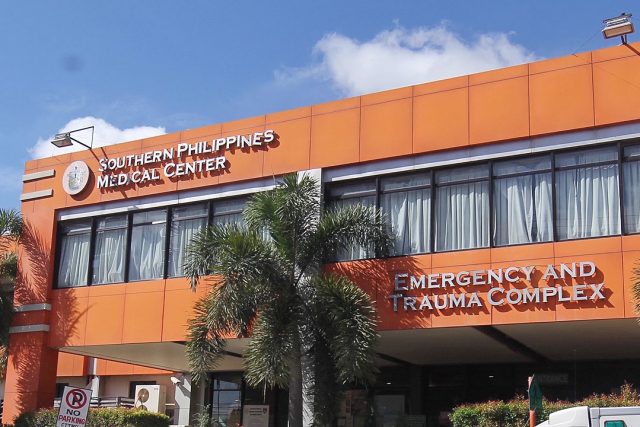
A PROPOSED law that seeks to set up apex hospitals in the country’s 17 regions was approved on second reading in the House of Representatives Tuesday.

House Bill 10650 or the Apex Hospital Act, sponsored by DIWA Rep. Michael Edgar Y. Aglipay, aims to improve the health service delivery system by upgrading existing and building new apex hospitals.

An apex hospital, as defined by the Department of Health, is a government-run medical institution that offers specialized services and is contracted by the Philippine Health Insurance Corp. (PhilHealth) as a stand-alone facility. 

Under the bill, the Health department will identify regional hospitals that will be turned into apex hospitals based on the Philippine Health Facility Plan.

The department will also be tasked to submit yearly reports on the regional hospitals to Congress once the bill is signed into law. — Jaspearl Emerald G. Tan 

A strategic plan for the Philippine economy

VECTORPOUCH-FREEPIK

(Last of a series)

A very crucial strategic move in the coming years to attain both improvement in the productivity of our farming and fisheries sector and to reduce poverty has to do with addressing the problem of the ageing of Filipino farmers whose average age is reaching 60 years.

Much attention and effort should be devoted to human resources development, both of existing farmers and future ones. The farmers of today should be helped to improve their individual knowledge and skills and to build strong producers’ organizations. There is no way agriculture will survive unless the spirit of cooperativism is widely developed. The Government, business, and civil society should put their resources together to give continuous education and training to farmers through nonformal and informal means of education. What are immediately needed are TESDA-type technical schools that can upskill, reskill, and retool potential young farmers outside of the formal educational system. There should be a campaign to convince those in their senior year of high school to choose agribusiness as a career path, eschewing the traditional route towards a college diploma which has resulted in a mismatch between the products of our tertiary educational system and the actual demand of the economy for industrial or agri-tech appropriate skills.

There should be a pause in the further fragmentation of land through agrarian reform. Without necessarily removing individual ownership of land from the beneficiaries of the agrarian reform program of the past, there should be a recognition that the failure of the Government to deliver the indispensable support to the small farmers, such as farm-to-market roads, irrigation facilities, post-harvest and other services, agrarian reform actually led to increasing poverty of the farmers who did not have the wherewithal to productively cultivate the small farms they received.

The reversal of the policy of land fragmentation and allowing free market forces to prevail are especially required in the sugar industry, which will not survive competition from Thailand, for example, as imports of sugar are increasingly liberalized under AFTA (ASEAN Free Trade Area) agreements. Different modes of reconsolidating land in the sugar industry must be found or else it will face extinction. It can be recalled here that the government of Taiwan, which had the strictest land redistribution program during the leadership of Chiang Kai-shek, had enough common sense to exempt the sugar industry from fragmentation.

One of the most cogent advocates for allowing free market forces in the utilization of farm lands is Calixto V. Chikiamko, a member of the board of Institute for Development and Econometric Analysis (IDEA). In his regular column in this paper (Aug. 2, 2021) entitled “Small Is Not Beautiful,” quoting hard evidence from recent international economic literature, he stressed the importance of recognizing that it should not be government law but the market that ought to determine the desirable allocation of land. As a specific example, he observes that the land market in the Philippines is distorted because of the land retention limit of five hectares. Successful farmers are prohibited from expanding via ownership of land beyond five hectares. He rightly observes that if farmers are not allowed to expand, they have no incentive to mechanize and increase efficiency. Because of the restrictions in land transfer, inefficient farms will forever be inefficient, condemning their owner-cultivators to perpetual poverty.

Another regular columnist in this paper, Andrew Masigan, whom I cited previously, echoed the views of Mr. Chikiamko and I quote, “The average farm size today is below one hectare with a maximum holding of five. The maximum size of land holdings must be increased to permit industrial farming. Budgetary support for the agricultural sector must also increase from 3% of GDP to 8%. Finally, the Government must lift its restrictions on the free flow of agricultural products, especially the badly considered rule that corn farmers cannot export unless the Department of Agriculture declares a surplus of the crop.”

Special efforts of the relevant government agencies should be exerted to attract private investments in agribusiness, with special emphasis on foreign investments that can bring in large amounts of capital required in commercial plantations (such as coffee and cacao) as well as technology, management, and expertise. Our experiences with Del Monte and Dole have been generally beneficial in which foreign capital dominated at the beginning but through the years, the Filipino partners, having benefited from technology transfer, have been able to eventually acquire majority ownership. The access to foreign markets was not an insignificant contribution of the foreign investors.

The agricultural sector should be a major component of any long-term strategic plan to combat the adverse impacts of climate change. Together with the mining sector, agribusiness should be subjected to the strictest compliance with sustainability reporting. An integrated environmental strategy among the farming, fisheries, and forestry sectors should aim at climate proofing the agricultural sector.

Another strategic measure suggested by Dr. Rolando Dy et al. has to do with “rationalizing the budget to move away from being rice-centric.” The long-term obsession with rice sufficiency should be replaced with a more realistic acceptance of the fact that the Philippines does not have the competitive advantage to produce all the rice its large population needs. It does not have the abundance of water that Vietnam and Thailand have where the Mekong River provides almost unlimited access to water which is an indispensable input in the production of rice. In this regard, despite continuing protest among some sectors still advocating 100% rice sufficiency, the rice tariffication law was a move in the right direction. Moving away from a rice-centric mentality, we may soon see a large increase in our exports of such high-value fruits like mangoes, avocados, coffee, cacao, and many other tropical fruits to the rich markets of Northeast Asian countries like China, Taiwan, South Korea, and Japan.

The final strategic measure recommended by Dr. Dy and his team can apply to other departments of the Executive branch of the Philippine Government. It has to do with installing a meritocratic and restructured bureaucracy. As we have written almost ad nauseam in previous articles, the key to success in economic development is institution building. Because of the primordial need for both technical and management expertise in the Department of Agriculture, it has to be treated with utmost care in the appointment of appropriate managers and technical experts. Fortunately, the present Secretary of the Department of Agriculture under the Duterte Administration epitomizes management ability and technical expertise combined. Secretary William Dar has decades of practical experience, not only within the Philippines, but also with prestigious institutions in many parts of the world. I can only hope that in one position or another, the next Administration can still make use of his services in the public sector.

I would like to end this compilation of views of experts on agricultural policy by seconding the recommendation of Ernesto Ordoñez, Agriwatch chair and former undersecretary of the Departments of Agriculture and Trade and Industry, that we have to demand more details from the “presidentiables” who made motherhood statements about their support for agriculture in recent interviews they gave to heads of five organizations representing different agriculture sectors. The agricultural issue must be kept alive all throughout the pre-election period, not only for the presidential aspirants but also for other national and local candidates.

As I have mentioned in previous parts of this series, we must find out from LGU heads if any of the extra funding they will receive as a consequence of the Mandanas-Garcia ruling will go to agriculture, and what for. As an example of what can be done at the LGU level to address the interconnected problem of low agricultural productivity and mass poverty, let me cite here a communication from a mayor in Ilocos Norte, Eddie Guillen, summarizing what he and fellow officials in the LGU unit of Piddig did to significantly improve farm productivity and reduce poverty in their community. Mayor Guillen was one of the graduates of the Strategic Business Economics Program of the University of Asia and the Pacific.

Based on the experiences of Piddig in improving farm productivity, the Consolidated Farming System project was a sustainable production system designed to provide productivity enhancement services. These included assistance in technology, capital investment, people’s participation through public-private partnership, farmer’s enterprise development, and better extension services. The pooled resources under the Convergence Initiative Program supported the LGU in its vital role in creating important enablers, i.e., physical infrastructures such as farm-to-market roads, farm machinery, processing facilities, strengthening and capability building of cooperatives and farmers’ technical education and skills improvement. Strengthening and capability building of cooperatives is of the utmost importance. Cooperatives are the most effective partners of the LGU in promoting peoples’ participation and in developing farmer’s enterprises. The Cooperative Development Authority must include among its functions, in addition to registration and regulation, the nurturing of entrepreneurial ability among the cooperatives.

The agricultural crisis has been with us for the longest time. It must be given the highest priority by our next public officials, whether at the national or local levels.


Bernardo M. Villegas has a Ph.D. in Economics from Harvard, is professor emeritus at the University of Asia and the Pacific, and a visiting professor at the IESE Business School in Barcelona, Spain. He was a member of the 1986 Constitutional Commission.

bernardo.villegas@uap.asia

Accelerating recovery with the private sector

VECTORJUICE-FREEPIK

The past five and a half years have been a volatile time for the private sector, not just in surviving the pandemic-triggered economic crisis but in terms of its relationship with the government. No less than the chief executive of the country has alternately acknowledged its contribution to nation building, sought its help, worked on numerous projects with it, but also derided it with alienating rhetoric, and presented no clear blueprint for public-private cooperation over the long term.

At best, this was an opportunity wasted.

Now that we are in the process of choosing our leaders for the next six years, and now that the daunting task of economic recovery amid the pandemic is upon us, we should include one important criteria in our scorecard: Capacity and willingness to engage and work with the private sector.

DOING MORE
In the past, we at Stratbase identified eight strategic initiatives where the private sector can help create a sustainable and inclusive economic recovery. These are: 1.) Addressing inequality and ensuring livelihood by creating jobs; 2.) Reducing the digital divide through digital acceleration; 3.) Addressing climate change and reducing greenhouse gas emissions; 4.) Strengthening the health system; 5.) Pushing for public-private collaboration driven by public interest; 6.) Focusing on and advocating stakeholder capitalism; 7.) Creating access to opportunity, quality education and social protection for all; and, 8.) Demanding transparency and accountability in governance by encouraging an entrepreneurial state and smart local governments.

The potential of a genuine, strategic, and sustained partnership is also not lost on the ordinary Filipino. We commissioned surveys by the top two polling companies and their findings on how citizens regarded the private sector mirror each other.

In October 2021, the Social Weather Stations (SWS) found that at least eight in 10 Filipinos believed that the growth of the Philippine economy would be accelerated if the government collaborated more actively with the private sector. Respondents to the same survey also said that the private sector can help boost the economy by creating jobs (65%), expanding livelihood opportunities (57%), and helping lift the lives of Filipinos out of poverty (46%).

Two months later, Pulse Asia Research also conducted a survey that revealed Filipinos thought the private sector can help create jobs (58%), lift Filipinos out of poverty (57%) and expand livelihood opportunities (52%).

In fact, 81% of the respondents agreed that the government should engage the private sector to invest in public infrastructure such as roads, bridges, and airports to save government funds for COVID-19 response.

We do not need to look any farther than the context of COVID-19. In 2020, when the lockdowns first brought a shock to the people, business groups pitched in to provide much-needed help, complementing government’s ayuda drive. The following year, when the vaccines were finally available, again corporations stepped up to the plate by having their own vaccination drives for workers and their families. Many companies also helped improve the delivery of online education, especially to children in poor communities and the provinces.

Much, much more can be done, not only in the context of the pandemic response, but in economic recovery and, eventually, sustainable economic development.

INVESTING IN TECH, INVESTING IN PEOPLE
Our experience with COVID-19 showed us that technology is crucial not only as it applies to our jobs — work-from-home arrangements, for example, that still allow access to company documents, collaboration with colleagues, and remote meetings — but also in our everyday, personal lives. Many of us discovered the convenience of online banking or delivery apps that allowed us some semblance of normalcy and productivity even when we were locked down at home. Our children learned their lessons through online platforms.

Unfortunately, the ability to do this is not shared by all Filipinos. The worker’s or the student’s experience in Metro Manila is starkly different from the experience of someone in the provinces.

It is here where the private sector, through investments in digital technology, can greatly help. And the public knows this, too. In the October SWS survey, 89% of respondents agreed that “the benefits of digital technology such as strong cell phone signals, fast e-banking and social media can greatly help create jobs and businesses.”

Of course, building the digital infrastructure is the responsibility of the government, primarily. But with the multitude of problems that our public officials are facing, the government needs help — help that is available and very capable.

Investments in technology — which include infrastructure and the upskilling of people — contemplate the future; they generate exponential benefits not only for today’s Filipinos but the next generation. There is a golden opportunity to realize this, if only through a more strategic plan to involve the private sector in all areas of development.

SEIZING THE OPPORTUNITY
We need a leader that acknowledges and comprehends the potential of a true partnership between the public and private sectors, and acts from that appreciation. Imagine if PPP were not just some clever acronym but a guiding principle that governs each stakeholder’s role in the process. Imagine a scenario where everybody knows the destination, what their role is based on their expertise, mandate, and resources. Imagine the principles of corporate governance at work in government transactions. Imagine inching closer to the goal — together.

This election, we can change the course of our country for the better. Let us not squander that opportunity.


Victor Andres “Dindo” C. Manhit is the president of the Stratbase ADR Institute.

No Vaccination, No Ride Policy: Are we traversing the right path?

PHILIPPINE STAR/ MICHAEL VARCAS

It has been about two years since the COVID-19 pandemic broke out. Just when it appeared that we were about to reach our desired destination of a COVID-free Philippines, the situation seemingly became worse than ever. After two years, the number of daily reported cases in the Philippines is higher than ever. Just recently, the Philippines recorded its all-time high number of COVID-19 cases at 39,004. It is difficult to believe that only a month ago, the Philippines recorded as low as 235 cases, the lowest reported number of new COVID-19 cases since May 19, 2020.

As a result, the National Capital Region and several other cities and municipalities have been placed again under Alert Level No. 3 until Jan. 31. This may possibly be extended depending on the COVID-19 situation by Jan. 31. If the healthcare utilization rate breaches 70%, both for total beds and ICU, these areas may even be placed under Alert Level No. 4.

The Government has since implemented measures to, at the very least, mitigate the surge of COVID-19 cases. Among the measures implemented by the Government is the so called “No Vaccination, No Ride Policy.” The Department of Transportation (DoTr) issued its Department Order No. 2022-001 to limit access to public transportation only to the portion of the population in the National Capital Region (NCR) which is fully vaccinated against COVID-19 when the region is placed under Alert Level No. 3 or higher.

Under the Department Order, when the NCR is placed under Alert Level No. 3 or higher, only fully vaccinated persons may use public transportation by land, rail, sea, or air. Public utility vehicle operators who violate the Policy may be penalized with a fine ranging from P1,000 to P10,000, or suspension or revocation of the PUV franchise, depending on the gravity of their offense.

To have a clearer picture of the number of people affected by the Policy, as of Jan. 19, the total number of administered COVID-19 vaccinations in the Philippines was 120,645,514. The number of fully vaccinated individuals is 56,027,759, while 59,255,237 have only been vaccinated with their first dose. (https://doh.gov.ph/covid19-vaccination-dashboard). As previously discussed, only those who have been fully vaccinated may use public transportation. Therefore, 59,255,237 Filipinos who have only been vaccinated with their first dose, in addition to the millions more who have not yet been vaccinated, or who have no intention to be vaccinated, may not use public transportation.

It now begs the question, is the issuance and implementation of the “No Vaccination, No Ride Policy” the proper path to take in hopefully reaching our desired destination? Legally speaking, is the Policy a valid exercise of the state’s Police Power?

The Supreme Court defined Police Power as the power of the state to promote public welfare by restraining and regulating the use of liberty and property. As ruled by the Supreme Court, to warrant such interference, two requisites must concur:

a.) the interests of the public generally, as distinguished from those of a particular class, require the interference of the state. This means that the activity or property sought to be regulated affects the general welfare; if it does, then the enjoyment of the rights flowing therefrom may have to yield to the interests of the greater number; and,

b.) the means employed are reasonably necessary to the attainment of the object sought to be accomplished, and not unduly oppressive upon individuals. Otherwise stated, there must be a concurrence of a lawful subject and lawful method.

By illustration, in the case of Lucena Grand Terminal v. JAC Liner, the city of Lucena issued several ordinances with the objective of relieving traffic congestion in the city. The Supreme Court ruled that the questioned ordinances were invalid because the means employed were unreasonable as the questioned ordinances prohibited the operation of all bus and jeepney terminals within Lucena, including those already existing, and allowed the operation of only one common terminal located outside the city proper.

Thus, in determining the validity of the “No Vaccination, No Ride Policy,” the questions which need be considered are whether its provisions are reasonably necessary for the accomplishment of its purposes, and whether they are unduly oppressive upon individuals.

On one hand, those who are for the Policy claim that it is necessary to address the exponential increase of COVID-19 cases in the Philippines, and to hopefully mitigate the situation. Further, they claim that the Policy is not unduly oppressive against unvaccinated individuals as the Policy is actually for their benefit because it protects unvaccinated persons from possibly being infected with COVID-19 as they are supposedly the most vulnerable.

On the other hand, those who are against the Policy opine that the issuance of the Policy restricts the exercise and enjoyment of fundamental rights. Worse, the Policy is allegedly anti-poor as it is the poor who are allegedly directly affected by the Policy since they cannot afford to have their own vehicles, and thus, have no choice but to use public transportation in their daily lives. As such, implementation of the Policy allegedly deprives these individuals their basic right to travel with the use of public transportation.

The seeming solution is a compromise of allowing workers to travel regardless of vaccination status, thus restricting the curtailment of travel to what might be considered as non-essential travel. Worldwide, there are efforts to use state influence to modify behavior which is deemed necessary for public health. In Singapore, there is an initiative to even restrict access of those who are unvaccinated to work places. In countries in Europe and the United States, there are some policies encouraging the use of masks, but with varying degrees of effectivity because of resistance from the population.

Legalities aside, however, it seems that the question involving this Policy is one of philosophy. Some sectors believe that incentivizing vaccination status instead of penalizing is the better approach. Some are obviously of the belief that it is with punishment that behavior is best shaped. Whatever the philosophy, one can only hope that policies are implemented seriously and fairly across all sectors so that the populace can be properly guided.

This article is for informational and educational purposes only. It is not offered and does not constitute legal advice or legal opinion.


Jonn Kenneth Laurence A. Gonzales is an associate of the Litigation and Dispute Resolution Department (LDRD) of the Angara Abello Concepcion Regala & Cruz Law Offices or ACCRALAW.

(632) 8830-8000

jagonzales@accralaw.com

ADVERTISEMENT
ADVERTISEMENT