Home Blog Page 6777

Vosotros, TnT beat Bolts, 29-19

TOP gunner Almond Vosotros delivered the killer blows as TnT rallied past Meralco, 21-19. — PBA IMAGES

To rule first leg of PBA 3×3  Second Conference

TOP gunner Almond Vosotros delivered the killer blows as TnT rallied past Meralco, 21-19, to rule the first leg of the Philippine Basketball Association (PBA) 3×3 Second Conference on Sunday at the Smart Araneta Coliseum.

Mr. Vosotros fired nine of his 10 points in the last 5:04, including the winning two-pointer, as TnT wiped out a 13-8 deficit en route to the pulsating leg win worth P100,000.

Samboy de Leon and debuting Mark Acuno chipped in four apiece while Lervin Flores added three as the Tropang Giga repeated over Meralco in a rematch of their showdown for the First Conference kickoff leg plum last November.

The feat made the Mau Belen-coached Tropang Giga only the second team after Limitless App, the maiden conference grand champion, to top two legs in the PBA 3×3 inaugural season.

“It’s tough because when the league had a one-month break, we felt the momentum stopped. But we practiced hard (when allowed), almost once a week lang ang pahinga during the preparations and luckily, it paid off,” said Mr. Belen.

Meralco’s Tonino Gonzaga, Alfred Batino, Joseph Sedurifa and Dexter Maiquez settled for the P50,000 runner-up purse.

Meanwhile, Barangay Ginebra’s new-look squad of pioneers Jollo Go and Denice Villamor and newbies Encho Serrano and Jayson David beat fancied Limitless, 21-17, for its first podium finish. The Gin Kings netted P30,000.

The Gin Kings swept their four assignments in Pool A then turned back San Miguel Beer, 21-14, to reach the semifinal stage for the first time. However, the Bolts stopped Ginebra on its track, 21-20 behind Sedurifa’s marginal free throw, to move on to the gold medal match against TnT, which ousted Limitless, 20-19, on a deuce by Mr. Vosotros. — Olmin Leyba

Firms from ‘profitable sectors’ to list in March

By Keren Concepcion G. Valmonte, Reporter

THREE companies from “profitable sectors” are planning to list at the Philippine Stock Exchange (PSE) in March, signaling investor confidence in the country’s economic recovery, analysts said.

“Generally, the banking, food, and power are among the profitable sectors in a growing economy like the Philippines,” Diversified Securities, Inc. Equity Trader Aniceto K. Pangan said in a text message on Saturday.

San Miguel Corp. subsidiary Bank of Commerce, renewable energy firm Raslag Corp., and Fruitas Holdings, Inc. unit Balai Ni Fruitas, Inc. are planning to conduct their initial public offerings (IPO) in March, with listing dates scheduled right after the other.

Philstocks Financial, Inc. Senior Research Analyst Japhet Louis O. Tantiangco said the PSE’s busy listing calendar may be seen as a “sign of confidence towards the economy’s outlook.”

“An increase in capital raising activities indicates that businesses are anticipating and are preparing for a stronger economy. Thus, the increase in the number of fund-raising activities can be taken positively by investors,” Mr. Tantiangco said in a Viber message of Friday.

Last week, the Securities and Exchange Commission (SEC) said it had “considered favorably” the P3.5-billion IPO of Bank of Commerce. The company’s registration statement has been rendered effective, subject to compliance with remaining requirements.

Bank of Commerce is planning to offer up to 280.6 million shares for up to P12.50 apiece. It plans to use net proceeds to fund its lending activities, the acquisition of investment securities, and fund its ATM fleet upgrades and its core banking system.

According to Bank of Commerce’s preliminary prospectus dated Feb. 17, the company is planning to conduct its offer period from March 7 to 15. Meanwhile, its listing at the main board of the PSE is tentatively set to March 23 under the stock symbol “BNCOM.”

Meanwhile, Pampanga-based solar energy firm Raslag filed with the SEC a registration statement for its P805-million IPO to fund its solar projects.

Raslag will sell as much as 350 million primary common shares for up to P2 each, while J Ten Equities, Inc. will sell 52.5 million secondary shares as an overallotment option. Raslag may raise up to P700 million from selling primary common shares and will not receive proceeds from the secondary share sale.

Raslag will use its net proceeds to fund the land payments for the 27-hectare property where it plans to build its Pampanga Solar Power Project Phase IV and for the project’s development and construction. The company will also use proceeds for the pre-development work of its pipeline solar projects and for general corporate purposes.

According to Raslag’s preliminary prospectus dated Dec. 20, 2021, the company plans to conduct its offer period from March 7 to 18. It is looking to list at the main board of the PSE on March 28 with ticker symbol “ASLAG.”

Meanwhile, Fruitas Holdings wants to maximize the growth opportunities of the bakery sector via a P309-million Balai Ni Fruitas IPO. Balai owns Balai Pandesal, Buko ni Fruitas, and Fruitas House of Desserts.

Balai Ni Fruitas will offer up to 325 million primary common shares, while Fruitas Holdings will be selling as much as 50 million secondary common shares and a 37.5 million overallotment option for up to 75 centavos per share.

Balai Ni Fruitas may raise up to P243.8 million in gross proceeds from selling its primary shares to the public. The company said in its preliminary prospectus dated Dec. 27, 2021 that it plans to use majority of the proceeds for its store network expansion to open 120 new stores this year, while it also plans to set up commissaries and acquire other brands.

The Fruitas Holdings unit plans to conduct its offer period from March 16 to 22, while its listing at the small, medium, and emerging board of the PSE is scheduled for March 30.

“The past performances of the company and management proven growth track record will serve as their acceptance among investors. Also, the price valuation will play a key role, especially in this volatile market,” Diversified Securities’ Mr. Pangan said.

Bank of Commerce and Raslag plan to set the price for their respective IPO shares on March 1, while Balai ni Fruitas will set its final IPO price on March 7.

“Some of our recent IPOs have [shown] good performances, at least in their first few days in the market,” Philstocks Financial’s Mr. Tantiangco said, referring to Solar Philippines Nueva Ecija Corp., Haus Talk, Inc., and Figaro Coffee Group, Inc.

“This may entice investors to take on IPOs. Now if further IPOs will also do well in the market, then this may help in strengthening investors’ confidence towards those raising capital in the market,” he added.

Meanwhile, Mr. Pangan said investors will continue to participate in the offerings as long as the PSE remains “conducive for investments.”

“As long as PSE will create a good atmosphere conducive for investments such as stabilization fund for every listing and avoid controversies that negatively affect the sentiment such as [the] Medilines Distributors, Inc. listing, cancellation of [the stock rights offering of] DITO CME Holdings Corp., etc., investors will continue to support the offerings,” Mr. Pangan said.

‘Bata’ Reyes, Biado lead Hanoi-bound pool squad

EFREN “BATA” REYES — PHILSTAR FILE PHOTO

THE Philippines will field in an all-star cast headed by ageless cue legend Efren “Bata” M. Reyes, reigning US Open titlist Carlo Biado and two-time world 10-ball champion Rubilen Amit in billiards and snooker in the Hanoi Southeast Asian Games (SEA) slated for May 12 to 23.

The 67-year-old Mr. Reyes, a 1999 World Nine-ball champion and pool icon, will see action in the one cushion carom where he is a four-time bronze medalist and three cushion carom where he snared another bronze in the 2011 Palembang edition while serving as the inspirational leader of the crack eight-member squad.

Mr. Biado, who topped the US Open last year, will represent the country in the 10-ball and nine-ball singles while Ms. Amit, a double-gold medal winner in the 2019 Manila SEA Games, is plunging into battle in the women’s 10-ball and nine-ball singles.

Also in the team are Chezka Centeno, who also had two mints in the 2019 SEA Games, in 10-ball and nine-ball singles, Johann Chua in men’s 10-ball and nine-ball singles, Alvin Barbero in men’s snooker singles, Jeffrey Roda in men’s snooker singles and six-red singles, and Francisco dela Cruz in one cushion and three cushion carom.

“After two years, will finally be competing again. I miss representing the Philippines,” said Ms. Amit, who is out to add another medal to her current nine-gold, five-silver and one-bronze haul in the biennial meet.

The Philippine national team is out to match, if not improve, on its four-gold, three-silver and five-bronze harvest in 2019. — Joey Villar

Medilines anticipates record year after booking P1-B orders

MEDILINES Distributors, Inc. is expecting another record year in 2022 after the company closed contracts to install P1-billion worth of cancer therapy equipment.

“The delivery and installation contracts of these machines already account for half of our 2022 full year revenue target putting us on track to hit another record year in sales,” Medilines Chairman Virgilio B. Villar said in a statement.

“We are committed to bring advanced cancer treatment into the country’s public and private hospitals through these machines,” he added.

Medilines said it would also deliver a linear accelerator, which is a new technology that is capable of delivering treatment doses accurately. The company distributes these machines by US-based Varian Medical Systems.

The company will deliver cancer therapy equipment to hospitals beginning the second quarter as soon as the sites are ready. The hospitals that will be receiving the machines include Legazpi City’s Bicol Regional Training and Teaching Hospital, Northern Mindanao Medical Center in Cagayan de Oro City, and the Philippine Children’s Medical Center in Quezon City.

Medilines is also set to complete cancer projects in Cebu and Davao.

Meanwhile, its cancer project at the Philippine General Hospital is also expected to be finished this year after the company finishes the bunker setting for the machine.

The company said last week that it ended the year with a 50% profit jump compared with the P103 million generated in 2020. It also logged a 10% top line growth to P1.6 billion in unaudited gross revenues.

Medilines shares at the stock market closed unchanged at P1.14 apiece on Friday. — Keren Concepcion G. Valmonte

At NY Fashion Week, bows, ‘boundless expression,’ and NFTs

FACEBOOK.COM/THEBLONDS

NEW YORK — The design duo that is The Blonds closed out New York (NY) Fashion Week on Feb. 16 with a runway show that sparkled with hand-sewn outfits covered in laser-cut crystals, glittering heels and jewelry.

The brand, which co-designer Phillipe Blond described as extremely over-the-top, sparkly and dangerous, found inspiration in vampires and the Matrix for its Fall 2022 collection.

“We have this techno romantic, sort of like Grace Jones vibe tonight,” said Mr. Blond.

The line was filled with a custom print created from a photo of a studded corset from the brand’s archives.

There were crystal embellishments and embroidered pieces on the dresses, pants and catsuits, and fun accessories including finger gloves took looks to the next level.

Phillipe and David Blond are known for creating fun moments in their shows. This season choreographer Parris Goebel performed on the catwalk, whipping a long braid around her.

‘CONCEAL AND REVEAL’
Veteran designer Michael Kors turned his inspiration of New York at night into reality for his New York Fashion Week runway show on Feb. 15.

Taking over live music venue Terminal 5, Mr. Kors, 62, said his Fall/Winter ’22 Collection is about stepping out at night and during the day after quarantining.

The line was filled with statement-making coats paired with something provocative underneath.

“To me, it’s all about this sort of conceal and reveal,” Mr. Kors said. “So you’re going to see tonight a lot of really impactful outerwear and jackets because I think in a city, it’s ultimately your calling card.”

Mr. Kors described the outerwear as high-octane featuring hues from bright tangerine orange to electric pink and knitted shearling coats to chocolate brown faux crocodile coats.

“The coat you put on really is your street fashion show,” Mr. Kors said. “Then when you arrive, whether you’re going to someone’s house for dinner or a restaurant, then there’s the reveal.”

Grammy-winning artist Miguel provided the soundtrack for the show, singing hits like his “Pineapple Skies” and Prince’s “Raspberry Beret.”

“I love live performance, and I love the energy of live performance, and I know that so many people have not really been fortunate enough to be able to get out and see an amazing performer with electricity, live. There’s nothing like it,” said Mr. Kors.

On Tuesday, Louis Vuitton, LVMH’s top fashion brand, announced it will raise prices globally as a result of increased manufacturing and transportation costs. Mr. Kors said he did not think customers would mind paying more for practical, sustainable quality pieces.

“It’s like anything, you know,” he said. “Do you want to have junk food every night? No, you’d rather say, alright, let me save up and have the best meal.”

BOWS, ’80s NOSTALGIA
Designer duo Mark Badgley and James Mischka turned back to their 1980s student days for their fall 2022 collection at New York Fashion Week on Feb. 15, presenting an array of elegant dresses adorned with large bows or detailed shoulders.

In a video release of their latest Badgley Mischka creations, models wore gowns with drooping sleeves. Suits sparkled with sequins.

The designers revisited their assignments undertaken as students, including at couturier Charles James’ exhibition at the Brooklyn Museum, Zandra Rhodes’ exhibition at Parsons School of Design, the Costume Institute at The Met as well as dressing fashion shows for New York designers.

“We went back to when Mark and I were first in New York and we were in Parsons at art school and were enthralled by all the costume history by Charles James, by all this Cecil Beaton photographs that we were studying at the time,” Mr. Mischka told Reuters.

“We … looked at that through our 1980s lens and overscaled some of the proportions and things for the season. … That was when … people really went out all the time … and so we wanted to bring those same sort of feelings of extravagance and grand gestures to this collection.”

Dresses had plenty of bows — decorating fronts, sitting on sleeves or adorning waistlines. One jumpsuit was tied at the neck.

Some frocks came ruffled at the front, others were one-shouldered, in chiffon or decorated with flowers.

The designers were inspired by pictures taken by British society photographer Beaton for colors, using shades of tobacco, blush, scarlet, olive, midnight blue and black. Fabrics mixed luxury with comfort.

Like other labels, Badgley Mischka has enjoyed the current wave of soaring demand for high-end goods as customers splash out following lockdowns.

“It’s the pent-up desire. … We’ve been in business for 35 years and we just came off our best month ever in the history of Badgley Mischka with special-occasion clothing,” Mr. Badgley said.

“Neiman Marcus is our number one … retailer and we just had … the most banner last few months, this last quarter, with them, which is so exciting and it just tells you that enough’s enough.”

SEIZING THE MOMENT
In his fifth year as creative director for Carolina Herrera, designer Wes Gordon continues to revamp the brand’s signatures — and at his latest show on Feb. 14 during New York Fashion Week, the focus was on the use of bows as embellishments, sashes, and even on accessories.

Mr. Gordon said the line is all about bravery and seizing the moment.

“The moment is right now for clothes that incorporate all of those elements. Our woman, I think, has stopped thinking of special occasions and then going to buy a dress for it. Instead she’s buying special clothes and clothes that can turn any moment into an unforgettable occasion,” explained Mr. Gordon.

Florals, fringe and ruffles were used delicately throughout the fall/winter 2022 collection on both ready-to-wear and evening looks.

Heart-shaped bodices on strapless gowns were a perfect fit for the Valentine’s Day show.

Hues were bright and inspiring while denim was given an upscale flair with gold embellishments.

Anna Wintour, editor in chief of Vogue magazine, was a fan of the collection.

“I think it’s wonderful to see such beautiful, dramatic and sensational evening clothes,” she said of the presentation.

DIGITAL RUNWAY
After closing all his stores, veteran fashion designer Tadashi Shoji said he has been able to keep his business afloat during the coronavirus disease 2019 (COVID-19) pandemic thanks to the success of e-commerce and custom sales.

The Los Angeles, California-based brand released its digital runway show online on Feb. 12 during New York Fashion Week.

Keeping costs low, the video was filmed in the company’s cafeteria with creative lighting and editing.

“Logistically it’s very hard, but it’s very fortunate for us because of COVID our e-com is increasing tremendously. That’s helping me to survive in this COVID time,” Mr. Shoji said.

“If we didn’t have this strong e-com infrastructure for us I think, I think our business went down,” he said.

Mr. Shoji said this season was inspired by “boundless expression” and has added different silhouettes to his normal body-con repertoire.

Menswear was the inspiration for many looks with stretch velvet, shimmer and slits providing femininity.

The designer’s signature draped tulle, lace and hand beading made the collection look familiar to his long-time fans.

Meanwhile, emerging talent Marrisa Wilson made her runway debut on Feb. 15 with a collection inspired by the explosion in popularity of digital spaces.

“I’m sure you’ve seen everything that’s going on. Metaverses and NFTs and, you know, all these things that kind of feel really far and out there,” she said, referring to non-fungible tokens (NFT), a type of digital asset.

“But I really wanted this collection to… create a space for women, in particular women of color, to be able to explore and participate in those spaces. Right now that space is really heavily dominated by white men,” she said.

The Fall 2022 line was filled with graphics and prints to evoke what she calls a “futurism aesthetic” and “excitement for the unknown.”

Her collection features silky jackets and pants in black, white and deep red.

“And then the last drop you’ll see will be this… explosion of the digital lavender,” she said, explaining that the designers “heavily leaned” into periwinkle, the Pantone color of the year.

“Purple, that’s a sense of like calming in these digital spaces,” she said.

During the show three NFTs, hand-drawn by Ms. Wilson, were displayed and available for sale. In addition, 10 limited-edition commemorative bomber jackets will link to a specific NFT.

New York Fashion Week ended on Feb. 16 with over 150 designers having presented their collections live or online. — Reuters


LANDBANK support to farm, fisheries industries tops P247 billion in 2021

LAND BANK of the Philippines (LANDBANK) said it provided P247.85 billion worth of loans, subsidies, and training programs to 3.2 million farmers and fishermen in 2021.

“We will continue to promote recovery and renewed growth for agri players and other development industries, as part of our expanded and holistic approach in serving the nation,” LandBank President Cecilia C. Borromeo said in a statement.

Of the total, 2.32 million or 72% of farmers and fisherfolk were assisted through regular loan programs, including lending programs administered for the Department of Agriculture (DA) and the Department of Agrarian Reform (DAR).

As of Dec. 31, the bank had released P11.95 billion to 296,636 farmers and fisherfolk via programs administered for the DA.

In partnership with the DAR, LANDBANK released P679.92 million to support 10,170 small farmers, agrarian reform beneficiaries and other smallholders under its credit assistance programs.

The bank also assisted a combined 796,311 beneficiaries under the DA’s Rice Farmer Financial Assistance and Financial Subsidy to Rice Farmers Programs, while 187,690 farmers and fisherfolk received capacity building training through the LANDBANK Countryside Development Foundation, Inc.

Loans were also allocated to small, medium, and large agribusiness enterprises, agri-aqua related projects of local government units and government-owned and -controlled corporations, and small farmers and fisherfolk, via cooperatives and farmers’ associations, rural financial institutions and other conduits. — Luisa Maria Jacinta C. Jocson

Treasury bill rates to climb as liquidity shifts to retail bonds

BW FILE PHOTO

RATES of Treasury bills (T-bills) may go up this week as the government’s ongoing retail bond offer continues to siphon off market liquidity.

The Bureau of the Treasury (BTr) will offer P15 billion in T-bills on Monday, or P5 billion each in 91-, 182- and 364-day securities.

Rizal Commercial Banking Corp. Chief Economist Michael L. Ricafort said T-bill rates could inch up as market liquidity is expected to continue to shift to the ongoing retail Treasury bond (RTB) offering.

“The ongoing RTB offering to fundamentally add to the supply of government securities in the market, thereby leading to lower prices and higher yields, some fund shifts to RTBs from other existing securities,” he said in a Viber message.

T-bill rates could also go up due to the Bangko Sentral ng Pilipinas’ (BSP) higher inflation estimates for 2022 and 2023, he added.

A trader in a Viber message said T-bill rates are expected to rise by 5 to 10 basis points (bps) as market liquidity is invested in the retail bonds.

The government last week raised an initial P120.764 billion at its rate-setting auction for its offer of five-year RTBs as tenders reached P183.44 billion, or more than six times the P30-billion plan. The retail bonds fetched a coupon rate of 4.875%.

The offer period for the peso-denominated debt will run from Feb. 15 to 28. There will also be a swap offer for bonds falling due on March 14 and July 4.

Meanwhile, the BSP raised its inflation forecast for 2022 to 3.7% from 3.4% previously, and hiked its 2023 estimate to 3.3% from 3.2%.

Inflation risks include pork and fish supply shortages, along with the effect of higher oil prices on transport fares, the central bank said.

At the secondary market on Friday, the 91- 182- and 364-day T-bills were quoted at 0.8118%, 1.0631%, and 1.5003%, respectively, based on the PHP Bloomberg Valuation Reference Rates published on the Philippine Dealing System’s website.

The government made a full award of P15 billion as planned via the T-bills it auctioned off last week as total tenders reached P41.23 billion, or close to three times the initial offer.

Broken down, the Treasury bureau raised P5 billion as planned via the 91-day securities from P13.57 billion in bids. The three-month debt papers fetched an average rate of 0.81%, rising by 10 bps from the 0.71% seen the previous week.

The BTr also borrowed the programmed P5 billion from the 182-day securities it offered on Monday from P14.79 billion in tenders. The average rate of the six-month T-bills rose by 4.4 bps to 1.066% from 1.022% previously.

Lastly, the government made a full P5-billion award of the 364-day debt papers as bids reached P12.874 billion. The average yield on the one-year instrument stood at 1.475%, up by 6.7 bps from 1.408% a week earlier.

Before it canceled the remaining two bond auctions for February, the BTr had planned to raise P200 billion from the domestic market this month, or P60 billion via T-bills and P140 billion from Treasury bonds.

The government borrows from local and external sources to help fund a budget deficit capped at 7.7% of gross domestic product this year. — J.P. Ibañez

Chooks FIBA 3×3 Manila Masters return on May 28-29

THE FIBA 3x3 World Tour Masters will make a return to the Philippines this year with two stops courtesy of 3x3 basketball patron Chooks-to-Go. — CHOOKS-TO-GO PILIPINAS FB PAGE

THE International Basketball Federation (FIBA) 3×3 World Tour Masters will make a return to the Philippines this year with two stops courtesy of 3×3 basketball patron Chooks-to-Go.

As announced by FIBA 3×3 over the weekend, the country will be home to two of 13 World Tour destinations starting with the Chooks-to-Go FIBA 3×3 Manila Masters on May 28 and 29.

The first-ever Chooks-to-Go FIBA 3×3 Cebu Masters will then follow suit on Oct. 1 and 2.

But more than that, the events featuring Chooks-to-Go Pilipinas teams will also be instrumental in the country’s quest for the 2024 Paris Olympics.

“Since 2019, the goals of Chooks-to-Go Pilipinas 3×3 is to expose the Filipino basketball player to world-class competition while bringing quality 3×3 basketball to the fans,” said Chooks-to-Go president Ronald Mascariñas.

“Two years before the Paris Olympics, we need to garner FIBA 3×3 points to qualify for the tournament or the Olympic Qualifying Tournament. By hosting the top-level tournaments, we get maximum points while also giving our players more experience and mileage in international 3×3.”

This will be the first stop of the World Tour Masters in the country since the Manila Masters in 2014 and 2015.

Manila West, led by Terrence Romeo, ruled the 2014 edition while the Calvin Abueva-bannered Manila North finished at second in 2015 to make the World Tour Finals in two straight years.

Utsunomiya, a city in France, Prague, Lausanne, Debrecen, Montreal, Chengdu, Jeddah, Hong Kong and Macau are the other World Tour stops with Abu Dhabi hosting the finals in December. — John Bryan Ulanday

ERC says SC affirms P480-M refund to Ilocos Norte power users

THE Energy Regulatory Commission (ERC) said on Sunday that the Supreme Court (SC) upheld the agency’s decision that ordered an electric cooperative in Ilocos Norte to refund P480 million to consumers instead of the smaller amount it sought for approval.

In a statement, ERC Chairperson and Chief Executive Officer Agnes VST Devanadera described the High Court’s decision as a victory not only for the commission “but more importantly a victory for the consumers.”

“This shows that our regulatory policies have the consumers’ welfare in mind — that is to protect their interests by ensuring that what was charged and collected from them are but reasonable and accurate rates,” she said.

The ERC said the SC in a 21-page decision released on Feb. 3 upheld the agency’s decision that stemmed from Ilocos Norte Electric Cooperative, Inc.’s (INEC) application for approval to refund over-recoveries from consumers.

In its decision, the ERC directed the electricity distributor to refund to its customers some P480 million representing over-recoveries in its power billings from 2004 to 2010.

INEC had sought the ERC’s approval to refund a total of some P8 million for the said period. But upon evaluation, the ERC computed the higher amount.

The ERC said INEC, upon the agency’s denial of its motion for reconsideration, filed a petition for review before the Court of Appeals (CA). However, the CA affirmed the ERC decision and denied INEC’s petition.

INEC then elevated the matter to the SC, which ruled and affirmed the ERC and CA’s respective decisions.

The ERC said the SC argued, among others, that findings of administrative or regulatory agencies on matters within their technical area of expertise are accorded not only respect but finality as these are supported by substantial evidence.

Furthermore, it said the SC ruled that the CA correctly decided that the electric cooperative cannot demand the ERC “to intricately explain” its decision “as long as it had sufficiently shown the bases and formulae used for computing the over-recoveries and provided INEC with ample opportunity to raise its objections thereto.”

Ms. Devanadera said: “We will always adhere to our mandate of protecting all consumers and promote public welfare as they are affected by the rates and services of Distribution Utilities and other providers of electric power, and that is consumer empowerment.”

BusinessWorld has reached out to INEC for comment on the decision, but was not able to receive a response immediately. — M.C. Lucenio

China plans to feed 80 million people with ‘seawater rice’

REUTERS

JINGHAI district in northern China is hardly a rice-growing paradise. Located along the coast of the Bohai Sea, over half of the region’s land is made of salty, alkaline soil where crops can’t survive. Yet, last autumn, Jinghai produced rice from 100 hectares.

The secret to the bountiful harvest is new salt-tolerant rice strains developed by Chinese scientists in the hope of ensuring food security that’s been threatened by rising sea levels, increasing grain demand and supply chain disruptions.

Known as “seawater rice” because it’s grown in salty soil near the sea, the strains were created by over-expressing a gene from selected wild rice that’s more resistant to saline and alkali. Test fields in Tianjin — the municipality that encompasses Jinghai  — recorded a yield of 4.6 metric tons per acre last year, higher than the national average for production of standard rice varieties.

The breakthrough comes as China searches for ways to secure domestic food and energy supplies as global warming and geopolitical tensions make imports less reliable. The nation has one-fifth of the world’s population, and that many mouths to feed, with less than 10% of the Earth’s arable land. Meanwhile, grain consumption is rising quickly as the country grows more wealthy. 

“Seeds are the ‘chips’ of agriculture,” said Wan Jili, a manager at Qingdao Saline-Alkali Tolerant Rice Research and Development Center, drawing a parallel between the crucial role semiconductors play in the development of new technologies and their role in the ongoing trade war between the US and China. Seawater rice could help improve China’s grain production in the face of an “extremely complicated situation regarding climate change and global food security,” she said.

China has been studying salt-tolerant rice since at least the 1950s. But the term “seawater rice” only started to gain mainstream attention in recent years after the late Yuan Longping, once the nation’s top agricultural scientist, began researching the idea in 2012.

Yuan, known as the “father of hybrid rice,” is considered a national hero for boosting grain harvests and saving millions from hunger thanks to his work on high-yielding hybrid rice varieties in the 1970s. In 2016, he selected six locations across the country with different soil conditions that were turned into testing fields for salt-tolerant rice. The following year, China established the research center in Qingdao where Wan works. The institute’s goal is to harvest 30 million tons of rice using 6.7 million hectares of barren land.

“We could feed 80 million more people” with salt-tolerant rice, Yuan said in a documentary broadcast in 2020. “Agricultural researchers like us should shoulder the responsibility to safeguard food security,” he told a local newspaper in 2018.

Climate change has made the task more urgent. China’s coastal waters have risen faster than the global average over the last 40 years, a worrying trend given the country’s deep reliance on its long and low eastern coast for grain production. Successfully growing salt-tolerant rice on a large scale would allow the country to utilize more of the increasingly salty land in the area.

According to the Intergovernmental Panel on Climate Change, sea levels around the world could rise as much as 59 centimeters by the end of the century if the planet warms by 2 degrees Celsius. Oceans surrounding the US will swell faster within the next three decades than they did in the past century, according to a report this week led by the National Oceanic and Atmospheric Administration.

President Xi Jinping has stressed in several recent meetings with top government officials that ensuring the supply of primary goods is a “major strategic issue” given climate and geopolitical pressures. “The food of the Chinese people must be made by and remain in the hands of the Chinese,” he said at a gathering of the Politburo Standing Committee meeting in December.

Chinese scientists are betting that land once dismissed as barren can be turned into productive grain-producing plots. About 100 million hectares of land in the country, about the size of Egypt, is high in saline and alkaline. Meanwhile arable land has decreased 6% from 2009 to 2019 because of urbanization, pollution and overuse of fertilizers.

To make use of salty soil, farmers traditionally dilute their fields with large amounts of fresh water. The approach is still commonly used in some coastal regions. But the method requires vast amounts of water and often doesn’t improve yields enough to make sense economically.

“China is looking at another method now, to develop grain varieties that can withstand the soil’s saltiness,” said Zhang Zhaoxin, a researcher with China’s agricultural ministry. While seawater rice has mostly been planted on trial fields so far, Zhang said he believes commercial cultivation will soon take off with the government’s support.

The research team in Qingdao said last October that it can meet the goal of growing 6.7 million hectares of seawater rice within ten years. In 2021, the group was put in charge of 400,000 hectares of land to expand production of seawater rice.

“If China can be more self-sufficient in staple foods, it would be a contribution to the world’s food security too,” said Zhang. “The less China imports, the more other countries will have.” — Bloomberg

From farm to table, literally

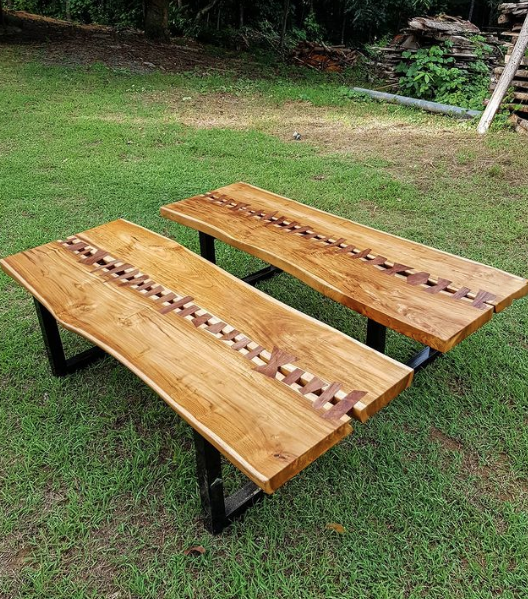
STITCHED teak benches

By Joseph L. Garcia, Reporter

ROOTS run deep in a family-owned tree plantation in Pangasinan. The plantation, owned by the Sebastian family, produces wood furniture straight from the trees planted on their own land, resulting in a product that is truly from farm to (a) table.

“The main advantage that we have is our farm-to-table — literally a table [chuckles] — setup; from planting to harvesting to production, everything is done in our own backyard. This eliminates a lot of the in-between costs that most production facilities incur,” said SustainablyMade Chief Operating Officer and Chief Designer Marco Sebastian in an interview with BusinessWorld.

SustainablyMade is the brand under which the family sells the furniture by its company, MARSSE Tropical Timber. Each piece is crafted, sanded, and finished by local farm workers who have been given woodworking skills training. These result in furniture, and kitchen and home accessories made with expressive wood grain that are sold in some of Manila’s most well-known trade fairs and stores (such as Manila FAME, ArteFino, and Rustan’s).

“The manufacturing processes for our standard items are broken down into simple steps that any person with a few weeks of training will be able to do. This has worked for us for the longest time since labor in our area consisted mostly of rice farmers,” Mr. Sebastian said about the training the artisans have received. “In the beginning, what we tried to do with our company is to simplify mostly tedious and complicated woodworking processes to allow our workers to output high-quality products with minimal skill and equipment.”

And as the company grew, so did the workers who have been with SustainablyMade since the beginning. They have shadowed myself and my brother as our apprentices and are now highly skilled and specialized artisans themselves.

EVERGREEN
While sustainability has become a marketing buzzword for products that purport to help the planet, Mr. Sebastian listed practices at the tree plantation that prove their point. They actively grow saplings, along with the natural passive growth of wildlings, and they harvest on a “first-in, first-out” basis ensuring the long-term sustainability of the wood resource. They do not keep a log pile (or a stock of fallen trees) to maximize the environmental benefits of a standing tree.

They only harvest when there is a job order, and they employ a “No Wood Wasted” policy where the entire fallen tree is used. The leaves are used as fertilizer for their seedlings. The small branches are made as firewood; the roots are made as sustainable charcoal.

“The advantage is that [the No Wood Wasted Policy] forced us to be creative with our design and production processes. Every piece of wood, in the form of big timber slabs, branches, or small unevenly cut scraps, is still wood; it can be shaped, molded, joined, and worked into any product as long as creativity, budget, and practicality permits. This allows us to make the most use out of the raw materials that we have heavily invested in for the past 30 years.”

Mr. Sebastian extolled the benefits of having their own tree plantation, which has been in the possession of the family for about 30 years. “Waking up to fresh air and less noise every day!”

On a more serious note, he said: “We are assured of our raw materials for our woodworking business since we are not reliant on others for this supply. Knowing that our supply is readily available and that it is propagated in a responsible manner gives us peace of mind.”

The advantages of being family-owned are numerous. Chief among them is that compared to businesses on leased government land or concessions, SustainablyMade is not as affected by policy changes that come around every six years.

“You also have security of tenure on your land, no fear of being evicted with the change of administrations; this gives a long-gestating project, such as tree farming, the proper time it needs to fully realize its potential,” he said.

“As a family, we have control on the direction of our company,” added Mr. Sebastian. “Decisions are made easy since communication between us siblings is always open and we generally have the same vision and mission when it comes to what we want to happen…of course, we still need the help and expertise of people who are more knowledgeable than us in things such as marketing, export, and other things pertaining to the ‘selling’ part of the business.”

The plantation is currently growing 130,000 trees, by Mr. Sebastian’s estimate. Will this number grant their promises of sustainability? “We harvest roughly 200 to 400 trees a year, which is less than one percent of the tree farm’s population. Due to our small scale and limited resources, we use selective harvesting to supply our timber business. We typically harvest the largest trees from a given area to give the smaller trees equal opportunity to sunlight and nutrients; this maintains a mean growth throughout the farm. This system also allows us a three-to-five-year harvest rotation per lot area in the farm, keeping the farm in an evergreen state.”

WOOD WITH PEDIGREE
The tree farm — and thus, the furniture and accessories made from it — contains tropical hardwood trees, mainly Honduras mahogany and other species like gmelina and teak, molave, and kamagong.

Asked what it’s like to work with woods of such pedigree, Mr. Sebastian replied: “We have had some instances of working with native and endemic hardwoods from the Philippines. My general impression is that these woods are of high quality and character and are mostly a joy to work with. However, due to these woods being either protected species or in the endangered lists, permits and licensing of these woods make it difficult to be the main crops of tree farms — at least for this generation.”

“That is why most of the wood that we plant and that we use in our woodworking business are foreign trees that are considered farming species, such as mahogany and teak. Their quality as timber is world-renowned and they generally grow faster as compared to some local species. Farm species are easier to get permits for as long as you have complete documentation,” he said. “This is not to discredit native and endemic trees since they are also of world renown and of high quality. It is just that they are not as easy to propagate due to their long maturity rate and possible harvest turnovers. We do also plant these trees, but they are left for our conservation areas.”

At the same time, he points to the reputation of mahogany as an invasive species in the Philippines (his knowledge comes from his degree in Environmental Science): “We know that mahogany has a bad reputation as a tree in the Philippines; it is invasive to our natural forests, drains up water supply, debilitates local wildlife, and is a vehicular hazard when it’s seed pods fall. All of these are true. However, this is mostly due to the improper use and placement of these trees in reforestation endeavors. In a controlled agro-forestry environment, these trees flourish and even sustain wildlife as can be seen in our farm. This has in-fact, raised the water tables in our area and resulted in the manifestation of springs within the farm. Each tree species has its own purpose.”

THE PRICE OF SUSTAINABILITY
With the way the world is, “sustainability” as a label has become a bare minimum for brands. Mr. Sebastian discusses how they maintain their own values, and how that translates into value for the consumer.

“Personally, I think that ‘sustainability’ is a privileged concept. We are an example of that privilege; if not for our parents’ time, money, and effort we would not have this farm that we can live on and develop timber practices that are responsible and sustainable. Likewise, we spend a lot of time, money, and effort to maintain the sustainability aspect. We had the resources and the knowledge to start moving, that is why we were able to achieve sustainability in our tree farm,” he said. “I think that is what people need to realize, that true sustainability right now comes at a price. This is why most products that practice and encourage sustainability are usually on the more expensive side.”

SustainablyMade’s products come in a range of prices: some of them, such as their mobile phone stands, can cost up to P240, while a laptop table costs P4,500.

“With more companies shifting to a greener business — restaurants shifting from plastic to paper and car companies starting to heavily invest on the electric future — true environmental sustainability may not be far-off. Hopefully, sustainability and a greener/more sustainable lifestyle become more available and affordable to the general community.”

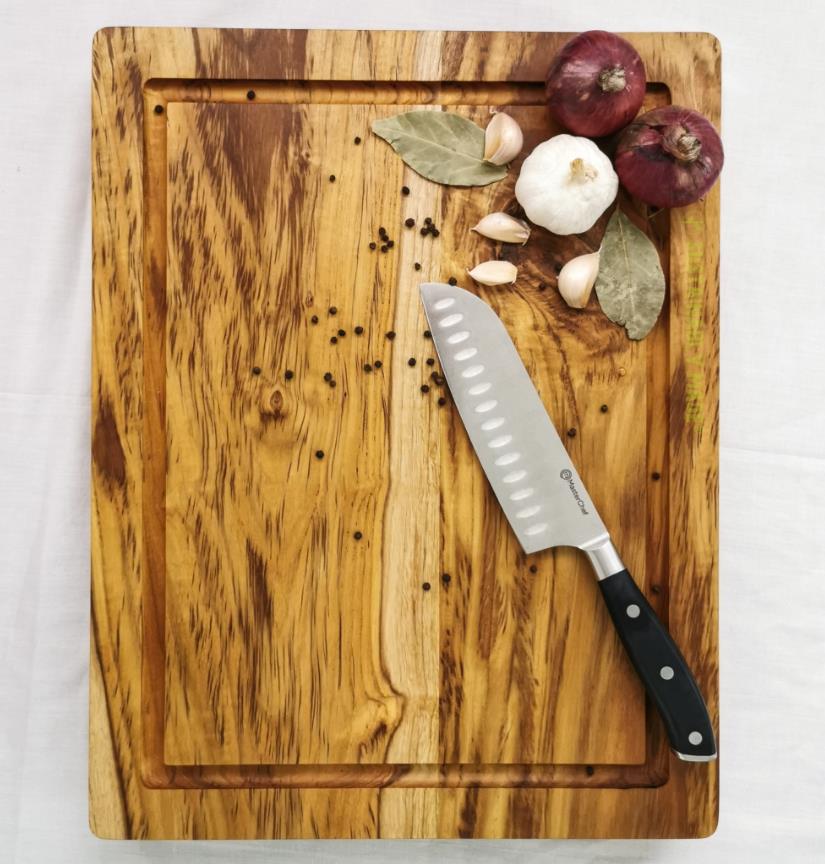
Suppose a more sustainable lifestyle does become more accessible to more people, Mr. Sebastian’s goals for the company aren’t too ambitious. It’s not to fill every home with a SustainablyMade cheeseboard (P500), extra-large teak butcher block (P8,000), or wine hat (P300).

“Our end goal is simply to get consumers to ask, ‘Where does your wood come from?’ If consumers become more conscious of the sources of the products that they buy, hopefully, manufacturers, small and large, can realign to be more environmentally sustainable and responsible with their practices.”

SustainablyMade products are available at www.sustainably-made.com, Rustan’s, Kultura, DTI-GoLokal!, HumanNature, CommonRoom, The Craft Central, and The Good Trade PH.

BSP sets limits on lenders’ outsourcing arrangements

THE BANGKO SENTRAL ng Pilipinas (BSP) has set new limits on lenders’ outsourcing arrangements to avoid disruptions to operations.

The BSP in Circular No. 1137 made changes to the rules on outsourcing and information technology risk management.

The regulator said banks are not allowed to outsource “inherent” banking functions, including taking deposits from the public, granting loans, managing risk exposure, and general management.

Some banks have “material” outsourcing arrangements, which means that disruptions or data breaches in outsourcing certain activities could significantly impact bank operations, finances, reputation, customers, and law compliance.

Only banks with a Supervisory Assessment Framework (SAFr) of at least “3” are allowed to have material outsourcing without its approval.

Otherwise, banks will need BSP approval for new outsourcing arrangements or changes to such arrangements that would affect operations.

“Periodic assessments shall be conducted to ensure that outsourcing risks, both on a contract-specific level and on an institution-wide level, are managed vis-a-vis the impact to the overall operations,” the BSP said.

Banks choosing service providers are responsible for checking the providers’ reputation and technical capabilities, along with identifying potential risks from data transfers.

BSP-supervised financial institutions (BSFI) must ensure that all confidential and sensitive data exposed to technology service providers are protected, the central bank said. These providers must follow appropriate data handling rules.

“BSFIs shall ensure that all data being handled, processed and/or stored through an outsourcing arrangement are included in its data inventory and data classification process.” — J.P. Ibañez

ADVERTISEMENT
ADVERTISEMENT