Home Blog Page 674

LTFRB fare hike position due with DoTr soon

PHILIPPINE STAR/MIGUEL DE GUZMAN

THE Land Transportation Franchising and Regulatory Board (LTFRB) is preparing to submit to the Department of Transportation (DoTr) its recommendation on outstanding fare hike petitions.

“We will submit our recommendations to our bosses over the weekend. Right now, we are drafting the inputs based on the arguments during the public consultations made for this specific purpose, which is the fare in-crease,” LTFRB Chairman Vigor D. Mendoza said in a statement on Wednesday.

The LTFRB ordered all its regional directors to hold consultation on fares for jeepneys, buses, and taxis, Mr. Mendoza said, adding that it hopes to submit its final position to the Transportation department by Nov. 17.

According to the LTFRB, about five major transport groups have filed petitions involving up to a P5 increase in the minimum fare, covering the first four kilometers, and at least P1 for every succeeding kilometer. They cited the rising cost of fuel, maintenance and other operational items.

“Today’s public consultations were fruitful (and we hope to) come up with a solution that is acceptable to everybody,” he said. — Ashley Erika O. Jose

World Cup parking prices astonish US fans as FIFA charges up to $175

NEW YORK — World Cup ticket holders can expect to spend big just to park their cars at next year’s tournament, with prices on FIFA’s official website reaching as much as $175 per parking pass.

First reported by the Athletic, the figures have astonished sports fans in the famously car-dependent United States, one of the tournament’s three hosts, along with Canada and Mexico.

A “general parking” pass for the July 14 semifinal in Dallas was listed at $175 on Tuesday, while the price for parking at a group-stage match was listed at $75.

Parking at a quarterfinal match in Kansas City on July 11 would cost ticket holders $125 while the price for group-stage matches was $75.

FIFA, which used dynamic pricing for the first phase of ticket sales for the tournament, had group-stage seats starting at $60.

Only a handful of the 16 World Cup venues across Canada, Mexico and the United States had parking passes listed for sale online as of Tuesday. — Reuters

PHL touts readiness to take on more aerospace work

THE PHILIPPINES is hoping to attract more US investment in the aerospace industry, according to the Department of Trade and Industry (DTI).

In a statement on Wednesday, the DTI said the Philippine Trade and Investment Center in New York met with major US aerospace manufacturers at the Aerospace Alley Tradeshow.

During the event, Trade Commissioner Alma F. Argayoso discussed possible partnerships with Sikorsky Aircraft, the helicopter unit of Lockheed Martin Corp. and Pursuit Aerospace.

The meeting was convened to pitch companies “to bring more aircraft parts production, engineering work, and maintenance, repair, and overhaul services to the Philippines,” she said.

According to Ms. Argayoso, the country is already supplying aircraft parts and engineering services to global manufacturers.

“(It) is ready to take on more projects because of its skilled workers, competitive production costs, and growing aerospace facilities,” she said.

“The DTI is pushing for more US investments to create jobs and strengthen the Philippines’ position in the global aviation supply chain,” she added. — Justine Irish D. Tabile

DITO CME’s Lim to lead MAP next year

THE Management Association of the Philippines (MAP) said on Wednesday that it elected a new set of officials and board governors for next year.

In a circular, the business group said DITO CME Holdings, Inc. President and Chief Operating Officer Donald L. Lim will serve as MAP president next year.

Also elected were CEO Advisors, Inc. Managing Director Marianne B. Hontiveros as vice-president and GT Capital Holdings Independent Director Gil B. Genio as secretary.

SGV & Co. Chair Wilson P. Tan and AC Health President and Chief Executive Officer (CEO) Paolo F. Borromeo were elected as treasurer and assistant treasurer, respectively.

The group also elected as governors Pepsi-Cola Products Philippines, Inc. Vice Chair Rafael M. Alunan III, SIKAL Makati International Chair Jaime J. Bautista, BPI Asset Management and Trust Corp. President and CEO Maria The-resa D. Marcial, and Metro Pacific Investments Corp. Director for Government and Public Affairs Michael T. Toledo. — Justine Irish D. Table

Clear purpose guides Ayala Group’s investment direction, JAZA says

ENTERPRISES need to clearly define their purpose to simplify the decision-making process, helping them navigate disruption and thrive, Ayala Corp. Chairman Jaime Augusto Zobel de Ayala (JAZA) said.

“We believe enterprises should take time to clarify their purpose, their role in their communities, and the goals that they want to achieve,” Mr. Zobel said in his closing keynote address at the Asian Institute of Management’s Asian Forum on Enterprise for Society on Wednesday.

He said corporate purpose remains core to the Ayala group’s operations.

“By clarifying this purpose, we gained a clearer picture of the investments we wanted to pursue and how we wanted to harness these opportunities. Such clarity in helping us zero in on our work to drive sustainability,” Mr. Zobel said.

He cited the importance of sustainability in long-term value creation and commercial resilience.

“We believe that businesses should inject as much scientific rigor, acumen, and rationality as possible into thinking about sustainability, much in the same way for other decisions like risk management, talent planning, or inter-nal auditing,” Mr. Zobel said.

Ayala Corp., the country’s oldest conglomerate, owns real estate, banking, telecommunications, and power businesses.

Mr. Zobel highlighted the move of ACEN Corp., the group’s listed energy platform, to retire its 246-megawatt coal plant by 2040, years before the end of its useful life.

“In 2012, our initial investments included thermal assets. We believe, however, that transitioning to renewable energy was crucial for more future Filipinos to thrive,” he said.

“Hence, we worked hard to become leaders in the just energy transition today with up to seven gigawatts of attributable renewable capacity,” he added.

Mr. Zobel added that the Philippines needed to transition to electric mobility and other new-energy vehicles to reduce carbon emissions and its general dependence on foreign oil.

“There was the opportunity to build a business that could provide value throughout the ecosystem of this transition, from the vehicles to the infrastructure to the services and digital platforms that connect everything,” he said.

Mr. Zobel also highlighted the country’s healthcare challenges, which AC Health is hoping to address with accessible, affordable and quality healthcare.

“I believe we need more partners and institutions contributing to this vital space, although, of course, there are many in this area already, but we need many more,” he said. — Sheldeen Joy Talavera

DILG says 25 local gov’t officials left Philippines during typhoons

DEBRIS from damage caused by Typhoon Kalmaegi, locally called Tino, covers the ground in Talisay, Cebu. — REUTERS/ELOISA LOPEZ

A total of 25 local government unit (LGU) officials departed the country in recent weeks amid catastrophic typhoons despite lacking proper travel approvals, the Department of the Interior and Local Government (DILG) said on Wednesday.

Quoting the department, Palace Press Officer Clarissa A. Castro told reporters over Viber that 18 officials left despite the cancellation of their travel authority, while seven others traveled abroad without a foreign travel authority.

Interior Secretary Juanito Victor C. Remulla on Wednesday said over DZMM TeleRadyo that the unnamed local officials may face charges of gross negligence, gross insubordination and abandonment of post for leaving the country despite a travel ban imposed before Typhoons Kalmaegi (Local name: Tino) and Fung-wong (Uwan) hit in the last two weeks.

Mr. Remulla said that officials should have stayed in their areas to lead the disaster response.

“If you have a conscience and care about your constituents, you should be here,” he said in Filipino.

Ms. Castro said Malacañang is leaving the matter entirely to the DILG’s discretion, noting that President Ferdinand R. Marcos, Jr. expects full accountability from local leaders during calamities.

Ms. Castro earlier said Mr. Marcos do not approve of leaders who are laid-back. “He doesn’t want leaders to be just taking it easy. Work should truly be for the people, because the public relies on the government — especially in situations and conditions like these,” she said in a briefing on Tuesday.

The Philippines remains under a state of calamity after the twin storms left extensive damage across several regions.

The country was still reeling from the effects of Tino, which claimed the lives of more than 200 individuals, when Uwan struck large parts of Luzon on Nov. 9.

Uwan, which reached super typhoon category, also left 27 dead and 2.4 million individuals displaced, with about 804,000 seeking refuge in evacuation centers.

ENOUGH FUNDS

Meanwhile, Finance Secretary Ralph G. Recto said the government has enough funds to respond to calamities, as it disbursed nearly P18 billion to support relief and rehabilitation efforts for communities hit by recent earthquakes and typhoons.

As of Nov. 9, the national government has already released P17.85 billion under the National Disaster Risk Reduction and Management Fund (NDRRMF), the Department of Finance (DoF) said in a statement on Wednesday.

“It is important that the government always has funds ready for immediate response to emergencies. As the national fundraiser, we at the Department of Finance ensure that we have sufficient funds and the capacity to promptly address the needs of every Filipino in times of calamity,” Mr. Recto said.

The NDRRMF annually appropriates funds for disaster prevention, risk reduction and preparedness activities, as well as immediate aid, relief, and rehabilitation services after a calamity.

As of Nov. 10, the DoF also said P13.96 billion went to Quick Response Fund, or the standby fund to support the aid, relief, reconstruction, and rehabilitation of calamity affected areas.

State-run firms such as the Government Service Insurance System and the Social Security System are offering emergency and calamity loans to qualified members and pensioners, it said.

Pag-IBIG Fund is also extending calamity loans and insurance claims to affected housing borrowers.

The Land Bank of the Philippines has facilitated salary loans for government and private employees in disaster-hit areas, and is offering recovery loans to farmers, small businesses, and utilities.

The Development Bank of the Philippines is also providing financial aid and loan rehabilitation to affected local government units and rehabilitation of loans and extended payment terms.

The Philippine Crop Insurance Corp. has also activated crop insurance for farmers hit by recent earthquakes.

In a separate statement, Budget Secretary Amenah F. Pangandaman is set to lead the inspection and relief operations in Dinagat Islands on Wednesday after twin typhoons Tino and Uwan devastated the area.

Dinagat Islands, particularly Loreto and Tubajon, are among the hardest hit areas of typhoon Tino, which prompted the region to be placed under a state of calamity.

Around 2,600 family food packs and 250 tents from Social Welfare department, and 397 non-food family packs will be distributed, the Department of Budget and Management said.

The Budget department is also expected to donate five Starlink internet units from the Department of Information and Communications Technology to provide affected residents with reliable internet connectivity. — Chloe Mari A. Hufana and Aubrey Rose A. Inosante

Marcos: New initiative could cut flooding by 60% in 2026

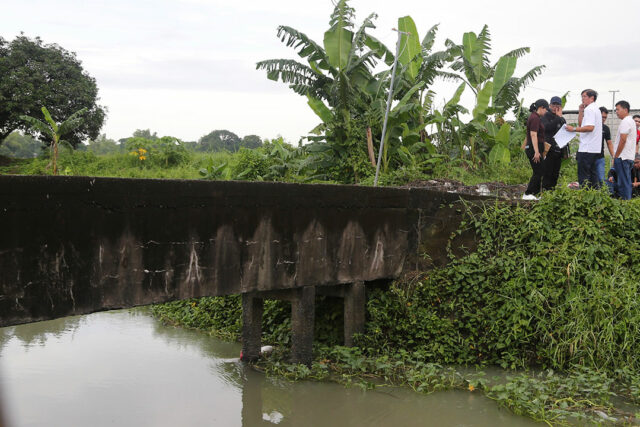
President Ferdinand R. Marcos, Jr. led the launch of a new flood mitigation initiative, Oplan Kontra Baha: Greater Metro Manila Waterways Clearing and Cleaning Operations, held at Balihatar Creek in Barangay San Dionisio, Parañaque City.

President Ferdinand R. Marcos, Jr. on Wednesday launched an initiative that could reduce flooding by 60% next year, as the country continues to suffer from widespread flooding that has exposed irregularities in government-led flood mitigation projects.

Speaking at the Balihatar Creek in Parañaque City on Wednesday, Mr. Marcos said the Greater Metro Manila Waterways Clearing and Cleaning Operations will serve as a template for similar projects in flood-prone provinces, including Cebu, Bacolod, Roxas City, Bulacan, Pampanga, Laguna, Davao and Cagayan de Oro.

“It’s the beginning of a very wide-ranging program to at least partially solve the problem of flooding, especially in the urban areas, especially in Metro Manila and the other highly urbanized cities and provinces,” he said.

The initiative, which sets up regular cleaning, dredging, and rehabilitation of waterways, marks the Marcos administration’s bid to overhaul the country’s aging and corruption-plagued flood control system through sustained maintenance and stricter oversight.

This comes as the country reels from the twin typhoons that hit in November, one of which is Typhoon Kalmaegi (Local name: Tino) which affected parts of Visayas, particularly submerging Cebu, where the highest death toll was recorded.

The first phase of the program will run for nine months from November 2025 to July 2026, focusing on clearing garbage, deepening spillways, and desilting creeks that have become too shallow.

Mr. Marcos said that in some areas, waterways have become so clogged that up to three meters of excavation are required to restore normal flow.

Initial studies estimated the cleanup could reduce flooding by as much as 60% once completed, he noted.

The Department of Public Works and Highways (DPWH) will later incorporate maintenance work into its regular operating budget to ensure continuous operations.

Mr. Marcos said the administration aims to transform Oplan Kontra Baha into a long-term, integrated flood management framework that includes watershed rehabilitation and upstream impounding systems to prevent floods before they reach urban centers.

“This is a long-term solution, and it is something that has been proposed for a very long time but somehow has never been implemented, and we are doing that now.”

“I am very optimistic that once we complete most of this, we will immediately feel by next year’s rainy season that flooding has been significantly reduced,” he added in Filipino.

The project draws on findings from Project NOAH, a nationwide flood risk assessment, and seeks to modernize the country’s flood management systems amid intensifying climate risks.

The Philippines is currently probing a controversial multibillion-peso flood control scam that has cast a shadow over the government’s infrastructure program, exposing alleged collusion between public officials and private contractors in the implementation of drainage and flood mitigation projects.

Investigators have flagged ghost contracts, overpriced materials, and substandard works that failed to deliver lasting protection against flooding — fueling public outrage and prompting Mr. Marcos to order a nationwide review of all ongoing and completed flood control projects.

Located along the Pacific Ring of Fire, the Philippines ranks among the world’s most disaster-prone countries.

Its position exposes it to frequent earthquakes, volcanic eruptions, and tsunamis, a geologic reality that has both shaped its terrain and continually tested its infrastructure, disaster readiness, and economic resilience. — Chloe Mari A. Hufana

ICI probe focuses on 80 ‘ghost’ projects

PRESIDENT Ferdinand R. Marcos, Jr. inspected an unfinished P55-million flood control project in Baliwag City, Bulacan province that government records had listed as completed. — PPA POOL/NOEL PABALATE

PHILIPPINE oversight agencies have intensified their scrutiny of the initially flagged 421 infrastructure projects, with particular focus on 80 initiatives involving 15 to 18 contractors earlier identified by President Ferdinand R. Marcos, Jr. for potential anomalies, officials said on Wednesday.

The Independent Commission for Infrastructure (ICI), along with the Office of the Ombudsman, Department of Justice (DoJ), National Bureau of Investigation (NBI), Department of Public Works and Highways (DPWH), Philippine National Police, and Armed Forces of the Philippines, held a high command conference to coordinate the probe into alleged irregular flood control and infrastructure projects.

The meeting aimed to align efforts and craft a unified action plan for investigating, gathering data, and prosecuting individuals and entities linked to anomalous infrastructure activities.

ICI special adviser General Rodolfo S. Azurin, Jr. said teams were deployed to monitor and validate the projects on the ground.

“Last week, we were in Davao. This week, we intend to go to the Ilocos region, and by Sunday, we hope to be in Cebu,” Mr. Azurin told reporters at Camp Crame.

He said investigators will focus on Central Cebu, including Cebu City, which suffered severe flooding due to Typhoon Kalmaegi, locally called Tino.

“We want to see why these projects failed despite significant funding,” he said, referring to the P26 billion reportedly disbursed for flood control projects that were either incomplete or substandard.

The ICI is working closely with the Criminal Investigation and Detection Group and the NBI for document collection, leveraging their subpoena powers. “We need to study the documents and monitor actual implementation,” Mr. Azurin said.

“All concerned agencies should have their own areas of inquiry,” he added, noting the Bureau of Internal Revenue, Department of Trade and Industry, and Bureau of Customs among others could contribute to the investigation.

He said the commission is prioritizing 80 projects linked to the 15 to 18 contractors identified by the President. “The goal is to build solid cases where violations are found,” he noted.

The ICI targets to complete its field assessments swiftly to ensure anomalies are addressed and accountability enforced. “Our teams will continue site visits, documentation reviews, and coordination meetings to fast-track the investigation,” Mr. Azurin said.

Public Works Secretary Vicencio B. Dizon stressed the need for a systematic approach, citing the participation of multiple agencies including the emergency management team, the NBI, DoJ, and other enforcement units.

“The purpose of this meeting is to expedite and expand coverage,” Mr. Dizon said. “There are thousands of projects, and we need to validate each one quickly and systematically.”

He said each team must have full access to DPWH documents to inspect and validate projects efficiently so that cases can be filed without delay. The participation of police and military personnel, he added, ensures on-ground validation and logistical support.

Mr. Dizon said several cases have already been filed with the Ombudsman, with about 40 individuals expected to face jail time once the non-bailable charges proceed.

Authorities are also reviewing a 2017 master plan to compare proposed and implemented projects. “We are assessing the discrepancies holistically with support from Project NOAH, the University of the Philippines, and the Department of Environment and Natural Resources,” he said.

MORE ‘GHOST’ PROJECTS

Meanwhile, the Commission on Audit (CoA) said it filed fresh fraud reports on P344 million worth of flood control projects in Bulacan, flagging irregularities to the ICI and exposing further corruption in public works.

In a statement on Tuesday, the state auditing body said that four riverbank projects across tributaries in the flood-prone province were “highly irregular,” with one structure flagged as complete despite being nonexistent.

State auditors said those involved with the projects could face graft and corruption charges, as well as malversation and falsification cases if found liable.

“These new filings are part of CoA’s continuing efforts to hold erring officials and contractors accountable for the misuse of public funds,” the auditing body said. “The public can expect additional reports to be submitted to the ICI as the agency’s audit investigation continues.”

Authorities have sped up probes into projects allegedly tied to a multibillion-peso kickback scheme involving politicians, state engineers and contractors, as public pressure for accountability continues to mount.

The scandal had struck a chord among Filipinos due to the scale of alleged collusion aimed at siphoning government funds from public works widely seen as essential in the flood-prone nation.

A province north of the Philippine capital, Bulacan has stood as the ground-zero of the unfolding public works scandal as its low-lying geography makes flood control projects a necessity for communities.

In its latest report, CoA revealed that a P74.15-million riverbank structure in Baliuag City north of Bulacan did not exist, despite being marked completed.

“No flood control structure was built by the contractor at the approved site,” state auditors said.

Another embankment structure worth P96.49 million in Baliuag City spanning 229-meters was a “redundancy” project, considering the public works contract involved a site with an existing flood control structure, which was already showing “several defects and cracks.”

In Balagtas municipality, state auditors flagged a project costing P96.49 million, which spanned 228 meters of the Balagtas River, as another redundant structure.

The agency also reported an incomplete flood control structure in Malolos City worth P77.19 million.

“CoA found a structure spanning 55 meters long at the approved location, which is 148.8 meters short of the agreed length,” state auditors said. “At the site pinpointed by the Department of Public Works and Highways, no flood control structure was seen by CoA despite the project being tagged as 100% complete.”

“The audit findings will aid the ICI in its investigation of irregularities in government infrastructure projects,” CoA said. — Erika Mae P. Sinaking and Kenneth Christiane L. Basilio


House committee opens Cha-cha talks as Senate resistance lingers

PHILIPPINE STAR /KJ ROSALES

By Kenneth Christiane L. Basilio, Reporter

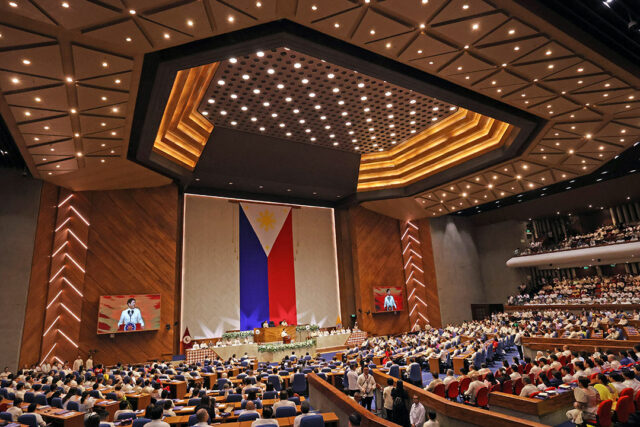
CONGRESSMEN on Wednesday opened discussions on amending the 1987 Philippine Constitution, a long-running political initiative pushed in the House of Representatives but one that has struggled to gain support in the Senate.

The House Constitutional Amendments Committee reviewed several Charter change (Cha-cha) proposals, ranging from easing foreign ownership and strengthening territorial claims in the South China Sea to lowering the minimum age for President and Vice-President and clarifying impeachment rules.

“All of these proposals that I have seen presented to the committee have great merit,” Deputy Speaker and Antipolo Rep. Ronaldo V. Puno told the panel. “Although there are different specifics in each of these resolutions, the general objective is the same.”

Moves to amend the Constitution have been a recurring theme in Philippine politics, but previous attempts have always faltered due to lack of support from the public and the Senate, driven in part by concerns about political motives.

“We should try to adopt a measure that will have a good chance of passing in the Senate,” said Mr. Puno.

The House passed a resolution in 2023 supporting a constitutional convention, and a year later, pushed joint discussions on amendments by both chambers of Congress. A signature drive to support Cha-cha also fizzled amid allegations that lawmakers were behind the initiative.

Lawmakers last year brought Cha-cha discussions to the full plenary under a Committee of the Whole, in a move that drew wide public attention and had marked the Marcos administration’s most extensive push for constitutional amendments.

Also on Wednesday, the National Unity Party said its members filed a measure seeking to convene a constitutional convention that would tackle amendments to the 38-year-old charter, which it described as lacking in “textual precision.”

The 43-member political party pushed for House Bill (HB) No. 5870 to offer a more “prudent, participatory and legitimate mechanism for reform” to pacify fears that lawmakers might politicize changes to the Constitution if they do it themselves.

“This measure seeks to fulfill — not discard — the 1987 Constitution: to correct its errors, complete its intent and reinforce its authority with clarity and coherence,” the office of Mr. Puno, who heads the second largest political party in the lower chamber, said.

The proposal calls for convening 150 delegates from the country’s administrative regions, with each region allotted three delegates and additional seats allocated by population to ensure balanced representation. Elections would take place on May 11, 2025, according to the bill.

“There will be no appointive delegates, unlike in previous conventions, to further insulate it from political influence,” it said, noting that delegates must be natural-born citizens, at least 25 years old, holders of college degrees and independent from political office.

The delegation would be required to wrap up Cha-cha discussions a year after being convened, according to the measure.

BREEDS CORRUPTION AND DYNASTIES

“We need to amend the Constitution because it breeds corruption and political dynasties,” Isabela Rep. Antonio T. Albano told the committee. “All the ills that you see now, in what is happening to the country, is because we have not amended a single iota of this Constitution.”

He said political dynasties had tightened their grip on the system, pointing to what he saw as weaknesses in the charter.

The Philippine Constitution prohibits political families but was never enforced due to a lack of enabling law. Dynasties have to be clearly defined to prevent curtailing the right to participation, said Mr. Albano. “How can you say that there is a political dynasty when they are voted into office?”

House Speaker Faustino “Bojie” Dy III had said the chamber will begin talks on an anti-dynasty bill as Congress is on the last leg of the session this year.

“We remain deeply skeptical,” a group of minority congressmen said in a separate statement. “History has shown us that political dynasties themselves have repeatedly blocked genuine reform.”

The Makabayan bloc urged the House leadership to fast-track their versions of anti-political dynasty bills, which it described as containing “clear and uncompromising provisions.”

“Is the promise real, or just another show?” Party-list Reps. Antonio L. Tinio, Renee Louise M. Co and Sarah Jane Elago said.

President Ferdinand R. Marcos, Jr. should consider anti-dynasty legislation as a legislative priority, former Party-list Rep. Carlos Isagani Zarate said in a separate statement.

Party-list Rep. Jose Manuel Tadeo I. Diokno said the Senate, too, should follow the House’s steps and consider passing a bill against political families.

“Filipinos have long awaited legislation against political dynasties,” he told reporters in Filipino. “In the House, we will strive to push the bill forward.

Enrile still in ICU, daughter says

PHILSTAR FILE PHOTO

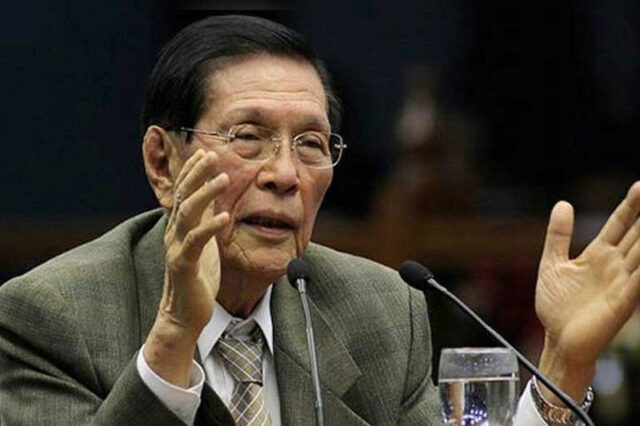
FORMER Senator Juan Valentin F. Ponce Enrile, Sr., who is currently the presidential chief legal counsel, is still confined in the intensive care unit (ICU), where he is being treated for pneumonia, his daughter said.

“He is under the dedicated care of his attending physicians and medical staff who are providing him the best possible treatment and attention,” Katrina Ponce Enrile said in a statement shared on her social media account on Wednesday.

“We are deeply grateful for the concern, prayers, and support extended to our family during this time.”

Senator Jose “Jinggoy” P. Estrada initially broke the news during Tuesday’s Senate plenary session, where he said the 101-year-old Mr. Enrile has “slim chances of surviving,” according to his “reliable source.”

This prompted the chamber to offer a short prayer, led by Senator Joel J. Villanueva.

Mr. Enrile also served President Ferdinand R. Marcos, Jr.’s father and namesake, as minister for justice and defense under the late President Ferdinand E. Marcos.

He also served as the 21st Senate President from 2008 to 2013, stepping down amid allegations of his involvement in the pork barrel scam.

He was later incarcerated, posting bail in 2015 based on humanitarian reasons. In October, an anti-graft court acquitted him of 15 graft charges. — CAT

Tropical Storm Uwan re-enters PAR

https://www.facebook.com/photo/?fbid=1287837450054572&set=pcb.1287846686720315

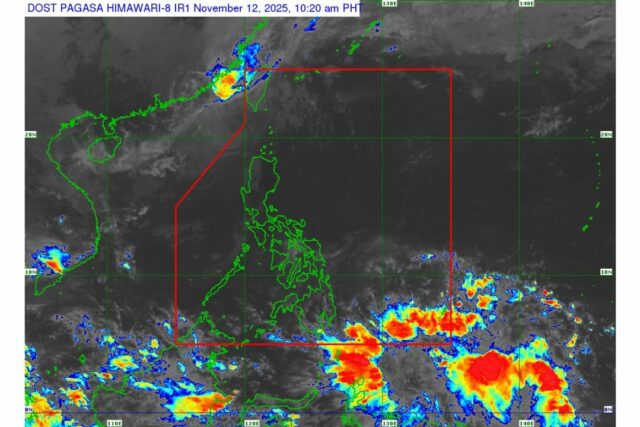
TROPICAL storm Fung-wong, locally known as Uwan, which re-entered the Philippine area of responsibility (PAR) on Wednesday evening, is expected to continue weakening due to unfavorable conditions and land interaction upon making landfall in Taiwan, the state weather bureau said.

In its 5 p.m. advisory, the Philippine Atmospheric, Geophysical and Astronomical Services Administration (PAGASA) said Uwan, which has maximum sustained winds of 75 kilometer per hour (kph) and gusts reaching up to 90 kph, is now approaching southern Taiwan.

It was last located 210 km northwest of Itbayat, Batanes.

Uwan claimed the lives of 27 people and injured 36, as of Nov. 12, according to the Office of Civil Defense (OCD).

Wind Signal No. 1 remains in effect over Batanes, where minimal to minor wind impacts are expected, PAGASA said. — Chloe Mari A. Hufana

IBPAP defends operations during typhoons

BW FILE PHOTO

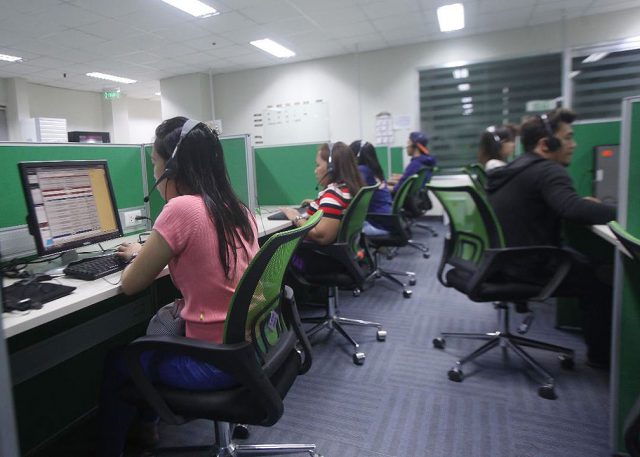
THE IT and Business Process Association of the Philippines (IBPAP) said that its member companies operate within the bounds of existing labor regulations and advisories even amid typhoons and other calamities.

“During the recent weather disturbance, companies implemented their respective business continuity plans to ensure the safety of employees while maintaining essential client operations,” the organization said in a statement on Wednesday.

Citing the memorandum circular issued by the Office of the President, the IBPAP said that the suspension of private sector work is left to the discretion of employers.

“Guided by this directive, IBPAP member companies continued operations as their global clients expected of them, doing much more than ‘business as usual’ for their employees,” it said.

“Management discretion always placed primacy on the health and safety of their employees and went beyond standard company processes and practices under normal conditions,” it added.

It said that employers considered internal risk assessments and provided additional benefits and conveniences to employees who opted to work on-site.

“In foreseen work disturbances due to typhoons or extreme weather, employers offered flexibility to work onsite or remotely, according to their employees’ preference and as conditions permitted,” it added.

The group stressed the importance of business continuity as the information technology and business process management (IT-BPM) industry supports mission-critical operations across healthcare, telecommunications, banking, and other essential sectors.

“The ability to sustain operations even during emergencies is part of the industry’s responsibility to both its employees and its clients, ensuring continuity of livelihoods and services that millions around the world depend on,” it added.

Further, the group stated that it has ongoing engagements with the Department of Labor and Employment (DoLE) to protect IT-BPM workers. — Justine Irish D. Tabile