Home Blog Page 6654

SEC plans to set up unit to check financing, lending firms

THE Securities and Exchange Commission (SEC) plans to create a financing and lending division to exclusively regulate lenders, the Department of Finance (DoF) said.

An SEC crackdown on abusive and illegal lending has led to the conviction of 76 individuals, based on eight cases on violations of the Lending Company Regulation Act (LCRA), the DoF said in a news release on Saturday.

The SEC revoked the registration of 2,081 firms.

The regulator has also issued cease-and-desist orders against 73 lending applications and cancelled the licenses of 36 financing or lending companies for violating the LCRA and other rules.

“We are also creating a financing and lending companies division within the SEC to focus exclusively on the regulation and monitoring of these entities,” SEC Chairman and Chief Executive Officer Emilio B. Aquino said.

Mr. Aquino said that the SEC has been rolling out a campaign on abusive lending companies after the commission received complaints from consumers about the firms’ collecting practices. Such practices include threats and insults against borrowers.

Meanwhile, the SEC and the Philippine National Police in February arrested 46 employees of Cashtrees Lending Corp. for violations of the Cybercrime Prevention Act and the LCRA.

The SEC said most of the company’s online applications, including Goodpocket, Easymoney, 365 Cash, and Rushloan, are unregistered.

“To date, we revoked over 2,000 certificates of registration of lending companies that failed to secure their requisite certificate of authority, pursuant to LCRA,” Mr. Aquino said.

“Our next step is to sustain this crackdown on unregistered and abusive collection practices of online lending applications.” — Jenina P. Ibañez

Who’s ready for ‘alt’ data?

OUR TEAM-FREEPIK

By Ana Olivia A. Tirona, Researcher

IN THE COMING YEARS, banking for the ordinary and the underbanked Filipino can be made easier and accessible even with minimal resources. The fast pace of digitalization in the banking sector calls for alterative ways and opportunities that consumers should be entitled to.

This could also mean that a regular smartphone can be a great tool for those who aim to up their credit game.

The central bank has laid out a six-year-long plan to extend the reach of financial inclusion to the vulnerable parts of the Philippines. Launched on Jan. 28, the Bangko Sentral ng Pilipinas (BSP) released its National Strategy for Financial Inclusion (NSFI) for 2022 to 2028.

“Financial inclusion is a state in which everyone, especially the vulnerable sectors, has effective access to a wide range of financial services,” the report said.

“Effective access means not only the availability of financial products and services, but that these products and services are appropriately designed, of good quality, and responsive to the varied needs of individuals and businesses — whether for saving, payments, financing, investing, or getting insured,” it added.

Thus, creating more options allows more interested Filipinos to become banking confident.

One of the initiatives to be prioritized by the central bank is the use of “alternative data” for credit evaluation.

In a webinar by the FinTech Alliance Philippines and TransUnion in January, BSP Governor Benjamin E. Diokno said one example that can benefit consumers for credit assessment is the use of alternative data.

The World Bank Group defines alternative data as information harnessed from modern data sources. These data are retrieved from social media, mobile data, utilities data, behavioral data, online transactions, geolocation data, and browser data, among others, usually not collected by the financial institutions.

In a paper authored by Peter Caroll and Saba Rehmani titled “Alternative Data and the Unbanked” from the American consulting firm Oliver Wyman, they cited that those who have no credit scores are called “credit invisibles.” These individuals may not be holding any credit file, or they currently hold one but do not have sufficient recent information to generate a credit evaluation.

Creditworthiness or credit score is a measure of one’s ability to pay back debt. This is where alternative sources of data can benefit the vulnerable sector of the country who wish to take out a loan.

“Traditionally, credit scoring factors in data which are stored in banks and credit bureaus, and includes payment history, credit utilization rate, length of history and credit mix among others. Potential borrowers, however, may have limited or zero credit history,” the BSP said in an e-mail to BusinessWorld.

The use of alternative data as a means of assessment is not new to the banking sector, the central bank said. Credit scoring firms in the US have been using nontraditional data to generate credit risk profiles for companies. However, this was not immediately taken in as a method by most firms.

“With the emergence of big data and machine learning technologies in the last decade, there is now an opportunity to harness alternative data to enhance credit evaluation,” the BSP said.

ALTERNATIVE DATA FOR THE UN(DER)BANKED
The 2019 Financial Inclusion Survey by the central bank cited that seven out of 10 Filipinos do not have a transaction account. This is equivalent to about 51.2 million adult Filipinos who are still unbanked.

“Financial inclusion necessitates financial products and services be appropriately designed according to the specific needs, capabilities, and context of individuals and businesses, especially those in the vulnerable sectors. The disadvantage of the unbanked and underserved Filipinos is that they have little or no financial transaction data, which is typically used as basis for developing a customer profile,” the BSP said.

Notably, the Bankers Association of the Philippines (BAP) fully supports the priority initiative of the central bank in terms of alternative data use.

“The use of alternative data in assessment for purposes of credit is on the table of discussions in the BAP. The BAP was supportive of this initiative when proposed in the House Committee on Banks in Congress. We contributed to the exploratory talks and was responsible in opening the eyes of Congress to the concept of Big Data as the technology that will drive behind alternative credit rating framework,” BAP told BusinessWorld in an e-mail.

“In this time of technological surge and various social media platforms, we are confident that the banks are building and incorporating their own alternative sources of data in their assessment of a borrower’s creditworthiness.  The use of which will still have to be consistent with regulatory requirements and international best practices,” it added.

In 2019, CIMB Bank Philippines partnered with Singapore-based fintech CredoLab for a more inclusive way of assessing an individual’s borrowing capability. The mobile application CredoApp was created for the purpose of streamlining loan applications through a smartphone’s metadata.

The app’s bank-grade algorithm enables a consent-driven analysis to form a predictive behavioral pattern, which can be instantly converted to a person’s creditworthiness.

More recent developments were carried out by Tonik Digital Bank Philippines by teaming up with alternative credit scoring company FinScore in 2021. The credit company used telco data by harnessing a device’s data and voice usage, top-up patterns, location, and SIM card age.

However, the adoption of alternative data for evaluation is still static.

In September last year, the BSP’s Financial Inclusion Office conducted a rapid survey distributed to 146 financial service providers (FSPs). One in four FSPs said alternative data was used to generate a person’s debt-paying ability score. The BSP noted that this was true among various financial institutions and nonbank lending companies. In spite of that, more than half of fintech firms are already utilizing alternative data.

“Despite the current low adoption of alternative data, 127 FSPs or 87% of all survey respondents believe that the local financial industry will use alternative data more extensively moving forward. Aside from using alternative data for credit scoring, future use cases include pricing of financial services, setting of credit limits, and fraud detection,” the BSP added.

RISKS AND POSSIBLE CONFLICTS
In terms of regulatory practices, for the use of alternative data to be deemed credible by financial institutions, the BSP shall maintain the strict implementation of guidelines on the credit risk management system.

“The principles and practices for sound risk management are expected to be embedded in the BSFI’s (BSP-supervised financial institution) credit scoring/evaluation process, which would cover the use of alternative data,” the central bank said.

“Any scoring model therefore should undergo regular review and back-testing by the BSFI, as well as validation by a third party which has the expertise to evaluate the accuracy and predictive ability of these models. The BSP reviews the results of the third-party validation and if needed, can challenge assumptions and comment on parameters used in the model,” the BSP said.

“The use of alternative data is also governed by regulatory expectations on consumer protection under Section 1002 of the MORB (Manual of Regulations for Banks). For instance, well-intentioned algorithms that inadvertently discriminate against specific groups of consumers must be avoided,” the BSP added.

However, the BAP flagged the possible risk against the Data Privacy Act of 2012.

“Proper mechanisms shall be in place to ensure that customer’s private information is not used for purposes against their interests. The customers should be educated and informed and must also consent on how their data is being used. More importantly, customers have opt-in and opt-out mechanisms if they decide to withdraw or modify the scope of their consent in the open finance ecosystem,” BAP said.

In other terms, the use of alternative data can be a conflict towards the data privacy act. As such, the BSP ensures all policies and regulations will be strictly administered in accordance to the protection of “fundamental human right of privacy, of communication while ensuring free flow of information to promote innovation and growth.”

EXPANDING INCLUSION
Latest available data from We Are Social’s Digital 2022 showed that about 98.8% of adults ages 16 to 64 own a smartphone. In an annual basis, its increment grew by 0.3%. Significantly, 27.9% use applications related to banking, investment, or insurance each month; 21.4% use payment services each month; and 19.4% own any form of cryptocurrency.

The continuous penetration of digitalization through smart devices and the internet generates alternative data that can be utilized for the user’s benefit.

“Over the years, the demand for alternative data has become increasingly prevalent and has undeniably transformed the global landscape — politically, socially, and economically. For instance, some financial institutions have resorted to data from social media engagements to facilitate a more comprehensive credit scoring analysis,” the BSP said.

With the vision “toward inclusive growth and financial resilience,” alternative data is just one of the priority initiatives BSP wishes to take on.

“Under the Open Finance Framework, the BSP envisions an ecosystem that will benefit from the use of alternative data, particularly in driving the development of more customer-centric financial products and services. Alternative data offers a different perspective in evaluating consumer preferences and activities, which allows deeper understanding of factors that affect behavior,” the BSP said.

Furthermore, the BSP ensures data collection process will follow through regulations and standards that are consumer-centered.

“The Open Finance Oversight Committee Transition Group, working alongside the BSP, will spearhead the development of these standards and protocols to ensure that the Open Finance ecosystem provides a safe, secure, and interoperable financial system,” the BSP said.

There are benefits to the use of alternative data. The Oliver Wyman paper said: “Having more data is only valuable if it results in real incremental benefits; in this case, the benefits of using alternative data in addition to traditional bureau data, beyond just technical improvements to the credit score, should flow to both consumers and lenders.”

Such benefits will affect both potential and existing borrowers. The chance for interested borrowers will more likely increase. Similarly, existing borrowers would be granted possible lower interest rates.

In the long run, the NSFI six-year plan will reap benefits and more opportunities for the unbanked and underserved.

The central bank dissecting the already-available resources or data most Filipinos now have, would highly increase the chances for better banking.

“Other use cases include statement sharing or account aggregation and direct debit payments or fund transfers. This data-sharing framework can also facilitate financial inclusion and MSME access to finance as it provides information to third-party financial service providers through application programming interfaces (APIs),” the BSP said.

“Existing regulations notwithstanding, the provision of regulatory guidelines specific to the use of alternative data for credit evaluation may further promote its adoption toward greater financial inclusion,” the BSP said.

Likewise, BAP commits to maintaining the practice of adopting policies and measures that could prevent consumer’s financial data to be at risk.

“The BAP understands that digitalization and technological innovation is key to expanding financial inclusion in the country. By providing every Filipino greater access to financial products and services — with savings accounts and personal loans as a starting point — will drive the economy to grow and recover from the crippling effects of the COVID-19 pandemic,” it said.

Menswear through the ages: V&A holds its first male fashion exhibition

WOOL coat and trousers, and silk top hat. — PHOTO FROM VAM.AC.UK

LONDON —  From 18th century billowing shirts to a blue Gucci suit worn by singer Harry Styles, London’s V&A museum is holding its first exhibition dedicated to men’s fashion.

Opening on March 19, “Fashioning Masculinities: The Art of Menswear” looks at menswear in different centuries, shining a light on designers, tailors and artists.

On show is underwear —  old and contemporary, lace and bubble wrap ensembles and plenty of suits.

Among designer items are an intricately embroidered black Dolce & Gabbana cape, an embellished green Fendi couture gown, a pink Thom Brown suit with ball-shaped shoes and a Gucci dress Mr. Styles wore for a Vogue magazine cover.

Alongside the outfits are pictures, paintings and sculptures.

“We wanted to do an exhibition about menswear because we wanted to celebrate its diversity ranging from the historical to the contemporary and the approach to the show was to look at both fashion and art,” Claire Wilcox, senior curator of fashion at the V&A, said.

“We start… with a male body and how that’s been shaped and fashioned over the years. We move into the central section, which deals with the exuberance of male fashion from the 18th century to the present… then the final section we look at the suit, how it’s been redressed, dissolved, remade and how (its) language… continues into the present day.”

The Gucci dress worn by Mr. Styles is among outfits that sparked online viral moments, including a black tuxedo ballgown by Christian Siriano worn by Pose actor Billy Porter. Another Porter outfit on show is a Randi Rahm grey suit and embroidered cloak with a hot pink lining.

The exhibition also features outfits seen on famous names like Marlene Dietrich, David Bowie, and Sam Smith as well as a Haider Ackermann black sparkly suit worn by actor Timothee Chalamet at the premiere of sci-fi movie Dune.

“Contemporary menswear is in a position of great strength at the moment,” Ms. Wilcox said.

“They’re drawing on a wide availability of ideas and fabrics and concepts and young designers such as Edward Crutchley, Harris Reed, Grace Wales Bonner… are really using the catwalk to challenge assumptions about what is masculine dress and what isn’t.” — Reuters

Lamborghini harvests int’l awards in 2021

IMAGE FROM LAMBORGHINI MANILA

AS AUTOMOBILI Lamborghini accelerates toward an electrified future (with 2022 the last year Lamborghini celebrates its purely gasoline combustion engines), super sports models from the House of the Raging Bull continue to collect acclaim worldwide.

In 2021, Lamborghini doubled the number of awards it received compared to the previous two years. Emerging as the models which received the most honors last year are the Lamborghini Urus super SUV and the Huracán STO super sports car.

The Urus confirmed its leading position among all Lamborghini models. It was voted by readers of the prestigious German publication Auto Motor und Sport as “Best car in the Large SUV Category” for the second consecutive year, and was named “Best SUV among Imported Cars” by the German magazine Sport Auto. International organization Off Road also recognized the Urus with its highest award in the “Luxury SUV” category.

Meantime, the Lamborghini Huracán STO bagged two accolades from Motorsport Magazine — “Sports Car of the Year” and “Best Engine 2021.” Further reinforcing the Lamborghini Squadra Corse-bred Huracán STO’s performance credentials was the “2021 Track Weapon” award conferred by online authority CarBuzz.

The Lamborghini Huracán EVO RWD was named “Sports Car of the Year 2021” by luxury authority Robb Report. The publication’s Singapore edition also cited the rear-wheel drive model as the “Best Convertible for 2021” in its Best of the Best competition. CarandBike magazine called the Huracán EVO RWD Sports Car of the Year as well.

Lamborghini’s first hybrid super sports car, the Sián, garnered its own attention when it was chosen by renowned automotive journalist Chris Harris as “Electric Car of the Year” during the Electric Awards of Top Gear magazine’s UK edition.

In 2021, Lamborghini bared its road map to decarbonization in a plan called “Direzione Cor Tauri.” The brand’s electrification program is divided into three phases, and outlines Lamborghini’s transition to hybrid power by 2024. The first fully electric Lamborghini is targeted to launch in the second half of the decade, with all Lamborghini models following this powertrain choice afterward. A fourth fully electric model is also set to be launched before 2030.

North Star Meat cites ‘affordability’ of products as top challenge in 2022

NORTH STAR MEAT

By Luisa Maria Jacinta C. Jocson

NORTH STAR Meat Merchants, Inc. said it considers keeping its products affordable to the public as its main management challenge in 2022 ahead of plans to expand production and a focus on sustainable power to mitigate rising costs and the carbon footprint of livestock raising.

“This year is unique as we will be focusing on efficiencies and what we can improve in our current operations. We are very much anchored to the growth of our clients,” North Star Chief Executive Officer Anthony Ng said in a virtual interview.

“The challenge is how North Star can make our products available to our consumers. If we look at demand, it will always be there. The only challenge we have is keeping the prices affordable to everyone, that’s the biggest challenge of this year,” he added.

In January, North Star announced that it tapped WEnergy Power Pilipinas, Inc. to provide a solar rooftop system for its cold storage complex in Bulacan.

“A few months back, we did not anticipate the energy shortages. We’ve shifted our sights to that facility and not just about how we sell the product, but about how we procure it, how we store it in our cold storage facilities, and how we deliver it to the stores,” Mr. Ng said.

“We store our meat in a fashion where we are also concerned with the environment and the planet. Obviously, raising pigs and cattle has a carbon footprint, so in our small gesture we want to be able to contribute to preserving the environment,” he added.

In December, North Star announced plans to put up distribution hubs in Iloilo, Puerto Princesa and Coron.

“We are located in several areas; however, Iloilo is something we’re looking at very closely. It will become the center for everything from Luzon, Bacolod, and Cebu, which is great for logistics. We’re looking at our possibilities in Iloilo,” Mr. Ng said.

“We will be looking at different locations again in Palawan, which is a strategic investment. Tourism is getting back on its feet there, and we see Palawan outgrowing Boracay in terms of tourism,” he added.

Mr. Ng said the company also recently signed a partnership with Gawad Kalinga.

“We are developing a meat concession for the Gawad Kalinga communities by using their production, then adapting it (to our) processes. We bring it back to them in a prepackaged frozen form for retail and long- and short-term storage,” he said.

With the outbreak of African Swine Fever, North Star is working with the Department of Agriculture (DA) to support affected hog farmers.

“The virus currently has no commercial vaccine yet, so until that happens you will have a supply and demand issue. We will be there to directly buy from them, cutting out the middle man in the process. That in turn should give us better pricing. But (right now), generally farmers are enjoying a relatively good price,” Mr. Ng said.

“Our expertise is the logistics part of operating the meat concessions. But the way we can help is provide farmers the venue to sell, especially the smaller ones by cooperating with the DA,” he added.

With the Russian invasion of Ukraine, Mr. Ng said the industry must brace itself for the impact of volatile commodity prices.

“We will be expecting our food prices to rise going forward for sure. Cost of production is going to be high and that will reflect in a few months from the purchases of the establishments and traders, as well as in feed inputs, transportation logistics, and the like,” he said.

He added that cooperation between the government, industry, and the private sector is necessary for the sector to recover from the crisis.

Mr. Ng said he hopes the next administration will further invest and focus on innovation in the livestock industry.

“What we can do as of now is to supplement or augment local production with our efficiencies, and use our scale to give them properly priced meat products. That will really be our solution, especially if you’re coming out of a pandemic as the average Filipino has lost a lot of (purchasing power). We want to provide each and every Filipino clean, safe, and most of all affordable products right now,” he added.

Lomotos is the new Ronda king

TEAM NAVY Standard Insurance — ERNIE PENAREDONDO

Navy Standard Insurance reigns supreme as team champs

By Joey Villar

BAGUIO CITY — Four years ago, it’s hard to imagine Ronald Lomotos winning the LBC Ronda Pilipinas title after he was disqualified due to drafting. But he rose from the ashes of the bitter past and emerged as the country’s newest hero.

Turning the short, 3.1-kilometer final stage criterium into a victory ride, Mr. Lomotos crowned himself the 11th LBC Ronda Pilipinas king and secured the cool P1-million top purse at the Burnham Park here.

The 27-year-old, San Felipe, Zambales native contented himself sticking with his chief rival — Navy Standard Insurance teammate and skipper Ronald Oranza — in the lap that traversed Session Road for the first team in Ronda history and checked in at 20th place with a group that clocked an hour, 17 minutes and 50 seconds.

It was all Mr. Lomotos needed in ruling the 10-stage event that started in Sorsogon City and entering Ronda’s history books as it’s 11th winner.

And Mr. Lomotos, a runner up in the last staging two years ago, wrapped it all up by coming through with a race of his life in Saturday’s Santiago-Baguio Stage Nine where he conquered the notorious ascents in the feared mountains of Kayapa and Bokod, Nueva Vizcaya.

After 10 backbreaking stages and more than 1,000 kilometers of paved and unpaved flat roads, rolling hills and mountain passes traveled, Mr. Lomotos came out on top of the world with an aggregate clocking of 35:31:38 and joined an elite group of fellow Navymen who reigned supreme in this annual spectacle — Mrsses. Oranza, Santy Barnachea, Jan Paul Morales and George Oconer.

“It still feels surreal,” said Mr. Lomotos moments after completing his feat.

Mr. Lomotos, however, had to claw his way back from the bottom after his disqualification four years ago.

“I learned from the past and I kept telling myself that will stand up every time I fall,” he said.

And he did.

Mr. Lomotos shed tears of joy when he reminisced of the hardships on his way to the apex of Philippine cycling.

“I took up cycling to help my mother (Zenaida) make ends meet because my father (Nicolas) died when I was seven years old,” said Mr. Lomotos.

Mr. Oranza, the 2018 winner, came short of his quest of a second crown as he wound up second overall in 35:31:59 but consoled himself with a runner-up purse worth P400,000 and a soothing visit from his whole family, who traveled from Villasis, Pangasinan to cheer him up.

The other top 10 finishers were Excellent Noodles’ Joshua Mari Bonifacio (35:51:46), Go for Gold’s Jonel Carcueva (35:53:57), Excellent Noodles’ Jan Paul Morales (35:55:23) and Joshua Pascual (35:56:34) and Team Nueva Ecija’s Marcelo Felipe (35:58:53).

The 1-2 finish highlighted what turned out a dominant effort by Navy Standard Insurance, which had three other riders ending up in the top 10 — El Joshua Carino (No. 3, 35:50:32), Jeremy Lizardo (No. 4, 35:50:43) and John Mark Camingao (No. 10, 36:12:17)—and sealing the team crown for the seventh time in 103.56.27.

It also hauled all but one special awards — Mr. Oranza (Twin Cycle Gear King of the Mountain), and Jeremy Lizardo (MVP Under-23 and Gogo Express Top Rookie).

Ironically, the only trophy Navy failed to take home was the award that its patron has sponsored — the Standard Insurance Sprint King honor.

It went to Mr. Felipe.

Excellent Noodles, a team owned by Alex Billan, for its part, did exceptionally on its first Ronda race as it finished second in the team race in 35:56:34 while coming through with 12 podium finishes including six stage triumphs that was capped by Ryan Tugawin’s victorious Stage 10 effort in 1:17:15.

Mr. Oconer was second with the same clocking while Go for Gold’s Ronnilan Quita was third in 1:17:16.

“Although we didn’t get the GC (general classification), it was still a blessing by having riders at the podium in all 10 stages and finishing second in the team,” said Mr. Billan.

This annual event that staked a total cash pot worth P3.5 million cash pot was made possible by LBC Express, Inc., MVP Sports Foundation, Quad X, Smart, Twin Cycle Gear, Standard Insurance, Print2Go, Elves Bicycles, Elitewheels, Orome, Maynilad, PhilHydro, Garmin, Petron, Boy Kanin, Green Planet Bikeshop, Prolite, Fujiwara, Black Mamba Energy Drink, Lightwater, LBC Foundation, PhilCycling and the Games and Amusements Board.

Central bank books higher net income on fee, FX gains

BW FILE PHOTO

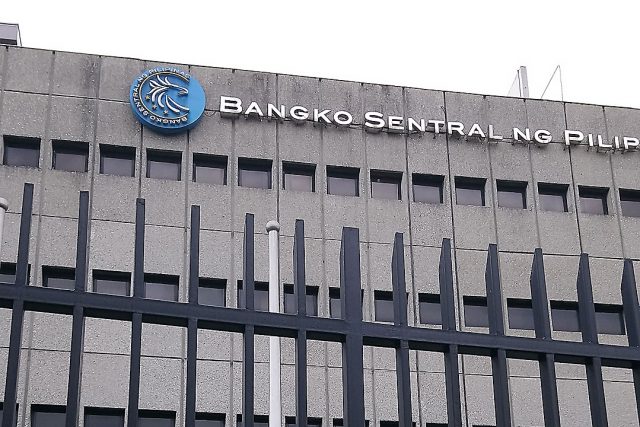
THE BANGKO SENTRAL ng Pilipinas (BSP) booked a higher net profit in 2021, backed by improvements in its interest and fee earnings as well as gains from foreign exchange (FX) rate fluctuations.

Data released on the BSP website showed the central bank’s net income rose by nearly a third (32.8%) to P42.11 billion in 2021 from the P31.71 billion booked a year earlier.

However, it was still lower by 8% than the P45.81 billion it recorded in 2019 prior to the pandemic.

The BSP’s revenues climbed by 41.3% to P166.98 billion in 2021 from P118.15 billion a year earlier.

Broken down, interest income increased by 35% to P115.43 billion from P80.58 billion in 2020.

Miscellaneous income, which include trading gains, fees, and penalties, improved by 58% to P51.55 billion from P32.72 billion a year prior.

Meanwhile, expenses expanded by 68.8% to P136.01 billion in 2021 from P80.58 billion the previous year.

The BSP’s interest expenses in 2021 increased by 30% to P60.34 billion from P46.44 billion in 2020. Other expenses more than doubled to P75.67 billion from P34.15 billion.

Meanwhile, the central bank gained P10.86 billion from foreign exchange
fluctuations in 2021. This is a turnaround from the P5.78-billion FX net loss it incurred in the prior year.

The BSP’s total assets rose by 7.1% to P7.576 trillion at end-2021 from P7.075 trillion a year earlier.

Total liabilities grew by 7.8% to P7.44 trillion from P6.904 trillion.

At end-2021, the BSP’s net worth stood at P136.14 billion, down by 20% from the P171.05 billion a year ago. — L.W.T. Noble

CREC to supply solar power to Toyota Motors Cebu

A UNIT of Citicore Renewable Energy Corp. (CREC) will supply renewable energy to a Toyota Motor Philippines Corp. franchisee in Cebu to step up the “acceleration of its customer diversification,” the company said.

In a media release sent over the weekend, CREC said it would supply solar energy for two years to Toyota Motors Cebu through its retail electricity supplier arm Citicore Energy Solutions, Inc., which is listed under the government’s Green Energy Option Program (GEOP).

GEOP allows end-users with 100-kilowatt power demand to opt for renewable energy supply from sources accredited by the Energy department.

“The pace at which renewable energy (RE) becomes so relevant among industry leaders and big energy consumers provides an excellent growth opportunity for the entire Citicore organization. Being one of the highly-integrated RE players in the country, we are in a unique position to take advantage of this surge, which we believe we are making significant inroads into,” said CREC President and Chief Executive Officer Oliver Y. Tan in a statement.

The company declined to disclose the contracted power supply, but said it sees the agreement as “a start in the automotive market.”

CREC earlier reported a 250% increase in its customer base from 2016 to 2021, bringing a total of 90 megawatts (MW) of contracted supply, including 5.1 MW of renewable energy supplied to partner facilities such as Tutuban Mall in Manila.

“This entry into the automotive industry is another testament to CREC’s capability to deliver reliable supply of energy to any areas and business, while being more always available and accessible to its potential customers,” Mr. Tan said.

CREC has earmarked P70 billion for capital expenditure projects spread in the next five years to add 1,500 MW of renewable energy to its portfolio. This year, it has set aside P3 billion for existing projects. — Marielle C. Lucenio

Data innovation to boost fintech: A Q&A with FinTech Alliance.PH

By Bernadette Therese M. Gadon, Researcher

THE FINANCIAL TECHNOLOGY (fintech) landscape in the Philippines has been growing despite the setbacks experienced due to the coronavirus disease 2019 (COVID-19). The rapid movement of digitalization in the past years paved the way for financial services to expand and be more convenient for the average Filipinos.

According to Philippines Fintech Report 2022, there are currently 222 fintech companies in the country, that focus on lending segment (27%), payments (20%), e-wallets (13%), blockchain and cryptocurrency (12%), and remittances (12%).

Amid the improvements in fintech, the Bangko Sentral ng Pilipinas’ (BSP) granted licenses to six digital lenders, making banking accessible to far-flung areas in the country, and tapping into the underserved and unbanked Filipinos.

FinTech Alliance.PH, a self-regulating organization that contributes about 90% of fintech-initiated transactions volume in the country, has been one of the leaders in expanding fintech in the Philippines. For this year, its goal is to continuously innovate and sustainably expand the digital finance system to improve the economy.

One of these is obtaining and sharing information in traditional data, big data, and alternative data to create a new and inclusive way of credit scoring.

FinTech Alliance.PH welcomes these improvements to be more inclusive to every Filipino, however, it is also aware of the risks and obstacles in using alternative data that are making other industries hesitant to jump into online finance.

To know more about the fintech landscape, BusinessWorld reached out to Angelito “Lito” M. Villanueva, founding chairman of FinTech Alliance.PH and executive vice-president and chief innovation inclusion officer of Rizal Commercial Banking Corp. (RCBC), via a video call interview regarding the country’s fintech condition, how they tackle certain issues, and their promotion for digital finance in the Philippines. Here’s the excerpt of the interview:

What are the challenges that FinTech Alliance.PH have encountered in implementing its projects/programs amid the pandemic? How did the organization overcome these?

Mr. Villanueva: I think launching, scaling, and sustaining innovation at the height of the pandemic have never been an easy task. We all know that. But if there is some advantage of the pandemic, it really accelerated the massive digitalization efforts of all the stakeholders, especially the push of the BSP. But there are definitely challenges. So, what are these challenges that we need to overcome?

Internet connectivity and infrastructure. We know for a fact that in the Philippines, the fundamentals of digital banking such as internet connectivity and infrastructure remain to be a challenge. And the good news is that the government has been paying great attention to this, especially during COVID-19. Last year, BSP came up with a push for what we called satellite broadband — that would now allow the far-flung areas with rugged terrains to be able to have access to data.

Cybersecurity threats. Another challenge that we all know has been a concern amongst not only for consumers but definitely the players in the industry, and we really need to address this, which loom large on digital banking or any digital financial service. Because of this, [FinTech] Alliance had to establish strong internal cybersecurity measures and this starts with partnering with the best and the most trusted fintech service providers and the best individual contributors when it comes to handling technology. With the guidance of the BSP [and] the necessary regulations pertaining to being cyber-resilient, especially at the height of massive digitalization. While we have seen the massive digital adoption, it’s directly proportional that we also see quite a number of cyber issues.

Lack of financial education amongst Filipinos. I think it’s really more on having to further promote financial education and digital literacy. And the most pressing hurdle that [FinTech] Alliance had to contend with is not really structural, but behavioral, or attitudinal hesitancy among Filipinos to go digital for their financial transaction remains to be a major challenge for the Alliance members. And this is rooted in the internalized misconception amongst Filipinos regarding the high-risk nature of digital finance transactions due to cybersecurity threats, the low rates of financial education also contributed to this perceived residency. That’s why we came up with our code of conduct and code of ethics to even police the ranks in the industry.

What notable projects has FinTech Alliance done in the past? What projects does your organization have this year that the industry should look out for?

Mr. Villanueva: [FinTech] Alliance played a very important role — especially last year — in our pursuit to help the BSP in further promoting digital payments. We know for a fact that BSP has its digital payments transformation roadmap that calls for the twin goals of having 50% of financial transactions to become digital and that 70% of Filipino adults will be part of the financial system [by next year] — enabling all these people to have transactional accounts. And the good thing here is that we were also tapped as a resource coming from the fintech industry by the Philippine Congress in coming up with insights, recommendations and other suggestions pertaining to some of the bills or proposed legislations. Aside from this, we also contributed to the crafting of the BSP’s two major circulars, particularly the digital bank licensing framework and also the Open Finance Framework, among other things. Plus, other regulations or circulars by other regulators such as from the Securities and Exchange Commission (SEC), the National Privacy Commission (NPC), and even from the Credit Information Corp. (CIC).

We also are supporting the Philippines Statistics Authority (PSA), which is the agency mandated to push for the Philippine Identification System (PhilSys) ID. And the recently relaunched BSP National Strategy for Financial Inclusion, which was held last [Jan. 28]. Those are the things that we’ve been busy with in the past year. And we are also continuously doing all these initiatives to make sure that we can really promote a sustainable and inclusive digital finance.

For this year, what we will be seeing would be the full operations of the six digital bank licensees… Because right now we have the Overseas Filipino Bank (OFBank) and Tonik Digital Bank that are already operational. What we will be seeing this year would be the operations of the other four digital bank licensees, such as the Maya Bank, the UNOBank, the TymeBank of Robinson’s and Tyme. And of course, lastly is the Union Digital Bank of UnionBank.

The second one would be the final composition of the Open Finance Oversight Committee (OFOC), because right now we have the OFOC transition group that are tasked to come up with the final implementing rules and regulations or the final framework that would govern the open finance regime in the Philippines.

The third is the voters’ education for the coming elections, which will be in collaboration with strategic partners.

The Bangko Sentral ng Pilipinas has touted the use of alternative data in assessing the capacity of the borrowers to pay their debt which could help unbanked and underserved Filipinos to gain access to financial services. What’s FinTech Alliance.PH’s stand on this? How would this be helpful in the financial services sector?

Mr. Villanueva: Yes, in fact, we are one of the staunchest supporters of this. BSP came up with a survey amongst some stakeholders as regards the use of alternative data for credit to finance. We know for a fact that even the CIC only utilizes traditional data. But we know for a fact that given the developments in digital technology with all of this credit scoring algorithm, alternative scoring, etc., you could come up with alternative data scoring to cover even the unbanked or underserved Filipinos or consumers. So that’s why this is a welcome development for the FinTech Alliance, especially for our unbanked and underserved Filipinos who will now have a greater chance of having to access responsive and responsible credit. The whole idea is on how we can protect our borrowers from predatory lenders and from illegal lenders as well.

As alternative data use information from various sources such as social media, utilities, behavioral, online transactions, etc., what will be the security implications on this for the consumers? How can we protect and secure consumer data for possible data breach?

Mr. Villanueva: Data security is a legitimate concern with a greater push for the use of alternative data. And this is something that the FinTech Alliance is working on to help the BSP ensure that possibilities of data breaches will be minimized, if not eliminated. Hence, we encourage our members and other financial institutions to employ what we call a data privacy by design strategy. And the Alliance, together with the BSP, the NPC, and even the CIC, is also working closely in developing a regulatory sandbox to ensure that these innovations are compliant with loss and to ensure that it complies with international data protection standards for the mutual benefit of all.

How will the use of big data and analytics benefit the Philippine financial industry?

Mr. Villanueva: We will benefit from this one big time. With a highly interoperable financial ecosystem that mostly runs in the cloud, data generation grows exponentially. That’s why I said that this is something really big for the country. In an article by Information Week, it was reported that people generated about 1.7 megabytes of data every second in 2020. And this corresponds to the flood of customer and user data available, especially with the emergence of more digital banks, cryptocurrencies, e-wallets and ecommerce platforms. With this massive network of generated data, big data analytics proves to be extremely helpful in mining or processing or interpreting data to better understand consumer profiles, behaviors, and needs in a macro scale. And the insight coming from these big data analytics can help fintech players and of course, other BSP-Supervised Financial Institutions to develop products and services that are more frictionless, agile, and responsive to the needs of our customers.

Do Philippine banks and fintech firms have the manpower and technical know-how to implement this? What could be the possible setbacks big data adoption on an industry level could present in the country?

Mr. Villanueva: I would describe year 2022 as the age of massive “coop-petition.” Because we talk about coop-petition, it’s really more about collaborating with everybody. And if you are to look at the industry right now, we could see that there is a demand for digital talent. We have seen quite a number of companies right now being victims of talent poaching, because you have seen quite a number of digital banks or fintech companies launching their businesses in the Philippines or some incumbents growing their digital initiatives. So hence, they need excellent digital talents. So that’s why, we could actually see movements in the digital talent space and I think the Philippines over the past years has become a hot spot for more digital hyperscalers. We are not just talking about talent poaching domestically amongst players in the Philippines but actually even companies from overseas. They would want to tap Philippine digital talents to build up their organization. And as the fintech industry continues to boom in the Philippines, so is the need for better technology and more skilled manpower. That’s why I’m saying that it’s more of a supply and demand nowadays. So, we really have to train or to have more digital talents because there’s so much demand already in the market.

But I think we also see some loss in the past before such as the innovations act that would now further encourage innovation in the fintech industry in the Philippines. So that’s why we think that the next item would be more about upscaling and continuous innovation.

[For this year,] I think we are ready. Definitely it’s [still] a work in progress. There’s no such thing as perfect. So, I think my short answer to that is we are ready but, we have to continuously build up all of these elements necessary to make it really sustainable.

How can the FinTech Alliance contribute to fast-track the use of data and data analytics in fintech space as well as the general banking industry?

Mr. Villanueva: I don’t think there is a drought or there is a huge shortage of technology or platforms when it comes to data or data analytics or big data in the industry. In fact, we have a surplus of platforms that would address any tech-related concerns may it be on payments, may it be on insurance, may it be on wealth tech, may it be on e-Know Your Client (eKYC), etc. Currently, you don’t need to set up an entirely new team or new group or hire more people like developers to build some of the digital products for your company because you could practically outsource. And there is an outsourcing regulation with the BSP. That’s why the mind-set now is that you don’t really need to create it from ground up, because if you have to create it by yourself, it will take you so much time and resources. That’s why you have quite a surplus, quite a number of all of these fintech players [or] platforms provider available in the market.

How can big data impact the lives of those unbanked Filipinos still yet to be connected to the internet?

Mr. Villanueva: Big Data can help map out the scale and degree of financial inclusivity in the country. Through this, we can better assess the needs of the unbanked or underserved, especially coming from the what we call the geographically isolated and disadvantaged areas. Artificial intelligence or AI has long been a cornerstone of any digital transformation but as technology continues to turn its wheels, AI has turned out to become smarter and more predictive year after year. With the wealth of data running in the cloud, it is now possible for industries to isolate, block out, and synthesize relevant data to come up with new designs, products, and even services. I think it’s [a] necessity in our businesses [and] our decision-making processes must be based on empirical data and we have to leverage and we have to optimize the value of big data especially in catering or servicing the unbanked members of the Philippines.

What programs/projects you have implemented to help bring unbanked Filipinos into the fold? Have you formed strategic partnerships with other financial institutions to realize this goal? What are these?

Mr. Villanueva: Of course, each member would have its own programs to push for financial inclusion. For example, GCash, PayMaya, Grab, etc. and for RCBC, at the height of the pandemic in July 2020, we launched the Philippines’ first and only Taglish and Cebuano financial inclusion super app known as Diskartech. And the whole idea is on how to make onboarding as simple as possible and frictionless, and how we can entice ordinary Filipinos to open or create accounts — transactional accounts that earns for them a very high interest rate of 3.25% per annum for their savings placements with Diskartech. And the good thing there is that with just one ID, there’s no required opening deposits or maintaining balance, no dormancy fees. So, this is within the context of the BSP’s definition of the basic deposit account.

Moreover, the FinTech Alliance members, in their own capacities, are also doing quite a number of partnerships, including also RCBC and Diskartech. And we know for a fact that the Filipinos are ready for the digital way, especially the micro, small, and medium enterprises (MSMEs), like partnering with the Department of Trade and Industry (DTI) and also in helping craft the DTI’s ecommerce roadmap, being championed by Secretary Ramon “Mon” Lopez. We have seen how the exponential growth of ecommerce, especially during the pandemic.

How does FinTech Alliance.PH stand to benefit from foreign fintech firms wanting to operate in the country?

Mr. Villanueva: Definitely, we welcome new players in the industry because you could see the dynamism of the market and with the foreign firms investing in fintech companies in the Philippines would be an indicator of how healthy and how robust the industry is right now. We have seen that with quite a number of rural banks being bought by some foreign entities, or having 40% equity into those rural banks bought by these players. We have also seen quite a number of the digital banks that have been given licenses to be backed up by foreign entities as well, and this is a good indication that the fintech industry is very dynamic and it’s really growing. So, the whole idea is on how we can enable, empower and engage the likes of rural banks, cooperatives, microfinance institutions to embrace digital without them having to invest heavily on the digital infrastructure. But with this initiative, we will be able to level the playing field, and enable all these small players in this industry to also provide digital services to their respective clients.

As the government plans to tighten taxation and regulation of fintech firms in the country, do you think this will stifle innovation in the industry in the long run?

Mr. Villanueva: I don’t think so. The good thing with the regulators right now is that there could be potential regulatory arbitrage given the fact that we have so many regulators and there could be potentially overlapping of regulated entities whatever in terms of all of these concerns, but the good thing here is that they came up with a sort of a clearing house of sorts. They have what we call the FSF — Financial Sector Forum — comprised of SEC, BSP, Philippine Deposit Insurance Corp. (PDIC) and Insurance Commission (IC) and the whole idea is how they can rationalize regulations… And that is actually something good with our regulators. We are looking for ways on how to further expedite the process and to how to provide businessmen or businesses more support in terms of having seamless transactions with government.

Anything else you would like to share with us?

Mr. Villanueva: Actually, I think FinTech Alliance is very lucky to have very dynamic, progressive, and aggressive regulators. If you are to look at other jurisdictions or other markets, the fintech players or digital players would have difficulty having to deal with their regulators. But in the Philippine setting, the regulators are the ones [who are] more aggressive, more excited in pushing all the players in the industry to do this, to do that in terms of having to cover as many [of the] Philippines as possible, and that is good. That’s why it’s very easy to have discussions with the regulators. We have this very open line with them. I think that would be the thing that I would want to highlight here. There is such a good partnership to really meet those goals, to benefit more Filipinos, especially in catering to the unbanked and undeserved market, because we have a very ambitious role that by end of 2023 — and in fact, we are very confident that we will be able to meet those roles even before 2023.

We are also launching quite a number of programs. This will include the open finance program, and industry sandbox initiatives, and of course, some initiatives pertaining to the promotion of alternative data, especially in catering to the new-to-credit individuals, and how we can further provide more access to finance to most Filipinos. Watch out for a series of our webinars. And FinTech Alliance will also have a collaboration with an international university to push for a sort of a fintech institute on how we can generate more digital talents.

Visit FinTech Aliance.PH’s website at https://www.fintechalliance.ph/ to learn more about its upcoming events.


BSB Junrose distributes Valeo wipers

IMAGE FROM BSB JUNROSE

WINDSHIELD WIPERS are the first line of defense when driving in the rain. The wipers also instantly get rid of small debris that might hinder one’s view when driving under any weather condition. Because road accidents usually happen due to poor driving visibility, windshield wipers are considered most vital for safe driving, along with lights.

BSB Junrose, distributor of Valeo wipers, shared in a release that, “When having your car washed, don’t overlook cleaning the windshield wiper blades as dirt stuck on those could cause trouble when you use the wipers. You may use soft cloth to wipe clean the wiper blades to avoid any possible problem.” The company suggested to inspect windshield wipers and their blades frequently. “Look out for several potential issues when doing so. Those include metal corrosion, a broken frame, or any visible damage appearing in the rubber part. When any or all of these are observed, get ready to replace the blades.”

Valeo is a European tech and automotive parts company which offers automotive wiper systems that include a complete range of windshield wipers. Its products are meticulously designed and manufactured to be efficient, attractive, and easily adaptable for any type of vehicle in the Philippines and even in the entire Southeast Asian region.

Valeo First carries the brand’s reputable wiper blades in the after-market segment. As an original equipment supplier, Valeo manufactures over 100 million wiper blades annually — distributed in 33 countries, including the Philippines.

“We are proud to distribute Valeo windshield wipers in the country,” said BSB Junrose President Benjamin Bangayan, Jr. “The brand’s promise to bring ‘Smart Technology for Smarter Mobility’ naturally aligns with BSB Junrose’s commitment to provide only the best automotive supplies to vehicle owners in the country.”

Check out Valeo Official Store page on Lazada, or follow the company on Facebook (VOSPH) for updates.

‘Beautiful hair starts with a healthy scalp’

COVERED with hair as it is, it’s easy to ignore your scalp. A press conference about scalp care earlier this month by Kérastase Philippines details how one should take care of their scalp, which is often ignored in favor of skincare and haircare.

“Beautiful hair starts with a healthy scalp,” said Kérastase Senior Education Manager Annadel de Leon during the press conference. The event was held to promote the launch of Kérastase Spécifique Potentialisté, a scalp serum. The serum works with the scalp’s microbiome to keep and restore the balance between the body and its microbes, as opposed to the former paradigm of eliminating them completely. The product is equipped with a combination of Bifidus Prebiotics and Probiotics, and an advanced Vitamin C-derivative with antioxidant properties. The addition of these ingredients to the serum’s formula is supposed to nourish the microbiome with each application, strengthening it against daily external stressors and restoring its optimal state as a protective barrier. With daily use, the serum is supposed to ensure that the scalp is hydrated, healthier, and revitalized. The brand is part of the L’Oréal Group Professional Products Division.

Ms. De Leon said that the scalp is four times more sensitive than the skin on our bodies, owing to the scalp having more sebaceous glands, blood vessels, and nerve endings. “We should really treat our scalp the same way we treat our face,” she said. “We see a hairdresser or we go to the doctor if we are already experiencing either itchiness, sensitivity, or dryness,” she noted, pointing out how the scalp is only paid attention to when there are already problems.

“Hair begins at its roots, or in the scalp.”

Ms. De Leon said that scalp (and thus, hair) problems are caused by external and internal aggressors. On external aggressors, she says, “We cannot really do anything about it; it’s there.” These include exposure to heat (including styling), the air, pollution, and water. Internal aggressors include one’s diet, stress levels, and hormonal changes. Untreated, these cause dryness, frizz, falling hair, and dandruff.

To deal with these aggressors, she gave a number of tips. They include using two shampoos (one that cares for the scalp, the other for the hair); exfoliating the scalp twice a month (a service available at Kérastase partner salons), and moisturizing and treating it (enter Kérastase Spécifique Potentialisté).

“It should be part of our skincare already,” said Ms. De Leon.

The serum will be available at the Kèrastase Official Store on Lazada starting March 27. — JLG

MinDA pitches agri logistics projects to European investors

By Marifi S. Jara, Mindanao Bureau Chief

LOGISTICS and transport connectivity projects that will strengthen the agriculture sector are among the biggest investment opportunities in the southern Philippines, the Mindanao Development Authority (MiNDA) told European businesses at a forum on Friday.

“What Mindanao has been able to demonstrate is a growth that is relatively better than the national average in the last 15 years,” MinDA Deputy Executive Director Romeo M. Montenegro said during the first Davao Business Conference co-organized by the Italian Chamber of Commerce in the Philippines.

Mr. Montenegro, who also heads the agency’s investment promotions and international relations team, cited as an example the southern Philippines’ outperformance with a 5.7% contraction in gross domestic product during the first year of the pandemic, while the national average was a 9.6% decline.

“This is on account particularly of its positive showing in the agriculture and fisheries sector… Our agri sector has been our glimmer of hope in demonstrating resiliency,” he said.

Mindanao is the country’s main producer of agricultural export commodities such as coconut, banana, pineapple, seaweed, rubber, and tuna.

“This gives Mindanao a rather interesting investment context as a leader in agri exports… that’s why moving forward, the need to focus in ensuring the link from production areas to the market centers,” he said.

MinDA is mainly tasked with coordinating development plans and programs across Mindanao.

It has been seeking to encourage economies of scale by coordinating production in each region and encouraging local specialization, he added.

Mindanao has also been positioning as a major producer and exporter of other high-value products such as cacao and coffee.

At this year’s Philippine Coffee Quality Competition (PCQC) which has in previous years been dominated by producers from Mindanao, the top 10 winners for the Arabica category were all from Davao del Sur and Bukidnon.

For Robusta, five of the top 10 winners were also from Mindanao, particularly Sultan Kudarat and Bukidnon. Ilocos Sur coffee farmer Mabini C. Ubuan, however, ranked first while two others from the northern province placed 6th and 9th. Farmers from Negros Occidental and Kalinga also made it to the top 10. 

With over 200 samples submitted this year, PCQC-Technical Working Group Chair Cherry Cruz said interest in the coffee sector, particularly for premium-grade varieties that command higher global prices, is booming across the country. 

“More regions since 2018 have been participating,” she said at the awarding ceremony held on Friday in Davao City.

Meanwhile, MinDA Chair Mabel Sunga-Acosta met last week with Zamboanga City Special Economic Zone Freeport and Authority Administrator Raul M. Regondola to drum up halal-related investments in the ecozone, located in Zamboanga City.

The overall direction for investment, Mr. Montenegro said, is rolling out more regional inter-linkages and logistics hubs, and facilitate bringing agricultural products up the value chain. 

He said investment programs are now grounded on “paying equal amount of attention to the interdependencies of water, energy, food and the climate” to ensure sustainability.

“If you think about investments and development, we think about… how we are laying down the future 30-40-50 years from now.”

The Davao business forum was held in partnership with the Davao, German, French, Dutch, Spanish, Nordic, and Austrian business chambers.

ADVERTISEMENT
ADVERTISEMENT