Home Blog Page 6536

BillEase raises $20 million to expand PHL BNPL services

BILLEASE secured $20 million through a funding round to expand its Buy Now Pay Later (BNPL) platform in the Philippines.

The debt facility was granted by UK-headquartered Lendable, which is an emerging market credit facility.

“This facility is a further validation of our business and the platform our team has built over the past few years and helps to firmly position BillEase as the leading BNPL brand in the Philippines,” Georg Steiger, chief executive officer and co-founder of First Digital Finance Corporation (FDFC), which operates the BillEase app, said in a statement.

“We share the same focus on creating financing solutions that serve the emerging consumer segment as the Lendable team and we are excited to work with them to further financial inclusion in the Philippines,” Mr. Steiger added.

The result of the latest funding round follows the $11 million raised in January through Series B equity, with investor participants including BurdaPrincipal Investments, MDI Ventures, and KB Investment, among others.

This brings the company’s total fresh funds to $31 million.

“BillEase has grown tremendously as a business and we are keen to continue supporting their growth trajectory by providing sustainable and better access to financial products,” said Hani Ibrahim, Lendable’s chief investment officer.

Mr. Steiger said the volume of transactions done on BillEase climbed by nearly five times in the first three months of 2021 from a year earlier.

BillEase also turned a profit last year, he added.

The company offers a one-stop platform that offers BNPL, installment schemes, low-cost loans, and e-wallet top-up services. It also provides retailers with payment solutions to attract and retain customers.

Mr. Steiger is bullish on prospects for fintech services in the Philippines amid the population’s rapid adoption of digital transactions during the lockdown and regulatory reforms to help more Filipinos have access to financial services.

“The population is young, tech savvy and largely underbanked. Several regulatory initiatives are coming together to significantly improve market infrastructure — instant retail payment networks, National ID, national credit bureau, digital banking licenses, just to name a few,” Mr. Steiger said.

The central bank wants 50% of all payments done online by 2023. — Luz Wendy T. Noble

Gov’t fully awards T-bills

BW FILE PHOTO

THE GOVERNMENT fully awarded the Treasury bills (T-bills) it offered on Monday as rates moved sideways amid strong demand for short-term debt papers and expectations of aggressive rate hikes from central banks due to growing inflation risks.

The Bureau of the Treasury (BTr) raised P15 billion as planned via T-bills at its auction on Monday as total tenders reached P54.12 billion, nearly four times as much as the program but lower than the P71.25 billion in tenders seen at last week’s auction.

Broken down, the BTr raised P5 billion as planned via the 91-day instruments as bids reached P26.23 billion. The average rate of the three-month T-bill went up by 2.1 basis points (bps) to 1.25% from 1.223% last week.

The government also made a full P5-billion award of the 182-day securities as the offer attracted P15.85 billion in bids. The average rate of the six-month tenor rose by 1.3 bps to 1.568% from the 1.555% fetched at the previous auction.

Lastly, the Treasury also raised P5 billion as programmed from the 364-day debt papers from P11.954 billion in tenders. The average rate of the one-year paper went up by 2 bps to 1.877% from 1.857% a week earlier.

At the secondary market prior to the auction, the 91-, 182-, and 364-day bills fetched rates of 1.2659%, 1.5051%, and 1.7997% respectively, based on the PHP Bloomberg Valuation Reference Rates published on the Philippine Dealing System’s website.

National Treasurer Rosalia V. de Leon in a Viber message to reporters said the BTr made a full award of its T-bill offer as there was strong demand for shorter tenors due to fears of aggressive tightening by the US Federal Reserve.

“Market [was] biased on the short end, with anticipated aggressive Fed actions with combined policy rate hikes and balance sheet runoff, as reflected in Fed minutes,” she said.

A trader said via Viber that demand was skewed towards shorter tenors “given rising concerns on inflation and global central banks’ monetary tightening.”

“We have entered in a cycle of monetary tightening, not just onshore but also globally — therefore, investors are still anticipating for interest rates to rise,” the trader said.

“While there’s still a need for central banks to hike their rates to quell inflation, short-end bonds will continue to be market’s preferred choice of outlet,” the trader added.

Central banks around the world have been tightening their monetary policies to temper inflation despite lingering risks to economic growth.

A Reuters poll last week showed analysts expect the Fed to raise rates by 50 bps each for its May and June review to respond to runaway inflation. These analysts also expect a 40% probability of recession by 2023.

US inflation surged to 8.5% year on year in March, the biggest gain in four decades but still in line with market expectations, amid record high fuel costs.

Minutes of the Fed’s March meeting, where the central bank hiked borrowing costs from near-zero for the first time since 2018, also showed they plan to raise rates several times this year and trim their asset holdings.

At home, the Bangko Sentral ng Pilipinas (BSP) kept benchmark rates untouched for the 11th straight meeting last month but warned it could begin unwinding its pandemic-driven easy policy due to inflation risks. BSP Governor Benjamin E. Diokno earlier said the policy rate could reach up to 2.75% by next year from the current 2%, which is a record low.

Headline inflation was at 4% in March, matching the upper end of the central bank’s 2-4% target. It was quicker than the 3% in February, showing the impact of the surge in oil prices caused by the Russia-Ukraine war.

Meanwhile, a second trader in a Viber message said the auction result came as expected, adding that “demand most likely came from scheduled T-bill maturities.”

The second trader added that yields moved sideways from last week’s auction as the market is still waiting for a “major catalyst.”

On Tuesday, the BTr is auctioning off P35 billion in reissued seven-year Treasury bonds (T-bonds) with a remaining life of six years and three months.

The first trader said demand for the bond offer may be muted compared to Monday’s T-bill auction as investors continue to prefer shorter tenors amid fears over looming Fed and BSP rate hikes and rising inflation.

The BTr wants to raise P200 billion from the domestic market in April, or P60 billion through T-bills and P140 billion via T-bonds.

The government borrows from local and external sources to help fund a budget deficit capped at 7.7% of gross domestic product this year. — T.J. Tomas with Reuters

Meralco Bolts go all out for the equalizer in Game 6, says Black

MERALCO Bolts import Tony Bishop scored 30 points and grabbed 15 rebounds in their 115-110 loss to Barangay Ginebra on Easter Sunday. — PBA IMAGES

By Olmin Leyba

FALLING to a precarious 3-2 situation against nemesis Barangay Ginebra further strengthened Meralco’s resolve to push harder and save its fourth attempt at a breakthrough Philippine Basketball Association (PBA) Governors’ Cup diadem.

“It takes four wins to win a championship and they only won three games so obviously, I’m not giving up, my players aren’t giving up,” said defiant Bolts coach Norman Black, whose troops go all out for the equalizer in tomorrow’s Game 6 at the Smart Araneta Coliseum.

“We still have a chance to tie the series so we’ll work hard the next couple of days to try to fix some of our mistakes (in Game 5).”

The Gin Kings pushed the Bolts to the brink with a 115-110 victory on Easter Sunday, following up on their series-tying 95-84 romp in Game 4 last Wednesday.

The Justin Brownlee-led crowd darlings fired a franchise record-matching 16 triples to gain the upper hand against the Bolts in the pivotal fifth match witnessed by a pandemic-high of 18,251 spectators.

“Amazing shooting game by Ginebra,” noted Mr. Black of their rivals’ 40-of-78 (51.3%) field goal clip and 16-of-34 (47.1%) three-point marksmanship.

“There were a lot of times when we actually played decent defense but they were still able to knock down their threes. It’s hard to beat a team that shoots like that.”

Mr. Black underscored the importance of executing their defensive rotations better next time if they want to extend the series to a do-or-die Game 7.

“We seemed to be one rotation late a lot of times against the offense of Ginebra. We really have to work on that,” he said.

Knowing fully well the Bolts’ fighting spirit and capabilities, the Gin Kings are staying on an even keel and firmly fixed on the task at hand.

“It’s very tough closing out games so for us, we won’t look back or look forward, focus lang sa Game 6 and we’ll see what happens,” said Ginebra star Scottie Thompson, who went a rebound shy of a triple-double in helping the team to its third win with his 19-9-11 outing in Game 5.

The best simulator on the market

Gran Turismo 7 — PLAYSTATION.COM

Video Game Review
Gran Turismo 7
Sony Playstation 5

Ghostwire Tokyo
PS5

Atelier Sophie 2: The Alchemist Of The Mysterious Dream
Nintendo Switch

IT’s a credit to the developers that even those outside of the intended audience find lots to appreciate about Gran Turismo 7. If nothing else, it brings gamers back to a simpler time, when simply basking in the thrill of fast cars roaming in picturesque countrysides could not but be the ultimate objective in and of itself.

In Gran Turismo 7, much of the core gameplay revolves around the speed and maneuverability of the cars you have at your disposal. Once you’re behind the wheel, it’s all up to you to reach your destination in the fastest time possible on whatever vehicle you feel comfortable steering. Each vehicle is unique, not only in looks, but also in handling — which is to say picking the right car is just as important as being able to drive it. With a wide array of vehicles to choose from and different ways to customize them, there are plenty of ways to experience each car as you desire, and to model it pretty much however you’d like it to look.

Once you’re done picking a car, it’s your job to race it. There’s a plethora of different races to enter in Gran Turismo 7, with varying amounts of payouts and rewards to earn for doing well, including cash investments to spend on acquiring a new vehicle, or on pumping up your current one with new attachments and upgrades that can boost its performance.

That really is most of what you’ll be doing with Gran Turismo 7. Race, buy cars, upgrade them, and repeat. With different circuits to run and different tracks to drive in, most of what you’ll be doing might not change, but the core gameplay loop is able to sustain itself just because of how good the game feels. With the hum of your vehicle in your ears and the drone of your engine as you go fast, Gran Turismo 7 gives you more than enough to keep you going. And going. And going. Most of the game revolves around it, and if you’re an avid car lover, there’s nothing better, what with the constant influx of unlocked cars, the myriad customization options, and, finally, the opportunities to test the products of your mind on the road.

Gran Turismo 7’s appeal doesn’t end there. For example, Music Rally pushes you to complete tracks before the songs end. Custom Mode enables you to race however you want to your heart’s desire, letting you tinker with race conditions and alter them as you please. And if you’re feeling a bit competitive, you can peruse the game’s multiplayer mode and test yourself against others online. The game is for you to enjoy as you please, and with it very much focusing on its racing aspects, it does deliver on that part extremely well.

That said, Gran Turismo 7 does have its flaws, mostly in regard to its backend. The game does look beautiful, yes, and it has a very atmospheric feeling when you’re playing it. However, it’s all the other side stuff that really drags it down. Unlocking new cars is difficult, making microtransactions less of an option and more of a solution for desperate players. Occasional server issues likewise spoil the appeal of online play.

Nonetheless, Gran Turismo 7 makes for an extremely enjoyable experience. It’s still the best simulator on the market by far — which is to say it lives up to its billing and more. Highly recommended.

THE GOOD:

• Outstanding graphics and sound design

• Deep selection of modes to play through, with myriad unlockables on tap

• Smooth interface

THE BAD:

• Grinding required for unlocks outside of microtransactions

• Progression system could be better

• Server issues resulting in downtime and progress loss

RATING: 9/10

POSTSCRIPT: Of all the things you can say about Ghostwire: Tokyo, you can’t go wrong with “unique.” After all, you find yourself awash in its potential given its capacity to combine aspects of an open world role-playing game with a mishmash of shooter and horror tropes to spice things up. And, wait, there’s more. Developer Tango Gameworks goes the extra mile with its presentation, throwing in some flashy visuals and setting it in one of Japan’s busiest cities, all while having ghosts and demons stalk you through its streets. It’s exhilarating, tense, and really, really fun.

In Ghostwrite: Tokyo, nightmares become reality as the streets of Shibuya are now steeped in fog and shadow. Playing as Akito, you have one job: to survive this literal ghost town and find your sister. You must dodge and defeat whatever ghosts stand against you, using the different elements at your disposal to dispatch as needed. You’ll scavenge for food in stores, exorcise restless spirits, and help wanting souls meet their maker. These concepts might sound a bit overwhelming, but they’re easy to digest as soon as you grab your controller. While it might seem strange, a lot of its mechanics are based on familiar concepts already present in other first person shooting adventure games.

For starters, combat in Ghostwire: Tokyo is mainly done through the use of elements. You have three at your disposal, and they all act like your standard first-person-shooter weapon roster. Wind, the first element, is your reliable, fast-firing pistol. It’s accurate and able to lay down a barrage of projectiles pretty reliably, and will be your main weapon. Water, the second element, is your high-powered shotgun, dealing incredible damage up-close, especially with upgrades that boost its range and base damage. Fire, the last element, is both your rocket launcher and rail gun, dealing explosive damage if charged up, and piercing regular enemies if fired.

In Ghostwire: Tokyo, you’ll be cycling between the three elements pretty often, and while there’s not much variety in the combat, there is at least a decent mix-up in how the battles play out. Enemies, depending on their type, are often quick on their feet, and fairly aggressive. While you can block their attacks, the damage they deal can get out of hand fairly quickly, and so you’ll be switching between the three elemental types in an effort to keep them at bay and expose their cores, which can be revealed only by dealing enough damage to them. These exposed cores allow for a channeled execution move. While these will dispatch without the expenditure of further elemental magic, however, the channel time leaves you exposed to other enemies, forcing you to always be aware of your surroundings. You’re not invincible while you’re doing it, and the channel time is often just long enough to leave you exposed and out of position, making combat feel like an interesting dance of fighting, repositioning, and executing ghosts at a safe distance.

Ghostwire: Tokyo also gives you the chance to sneak up on and take down your foes with some pretty by-the-books stealth mechanics. While these don’t add much depth to how you can approach battles, the game does account for situations where you want to go silent. The ability to use a bow to snipe enemies from afar or to use silent takedowns on unwary foes helps quite a bit in thinning down the Visitors’ numbers before things go awry.

All told, Ghostwire: Tokyo can be very charming once you get the hang of it, and while its combat pales in comparison to what something like Doom Eternal can offer, it makes up for the seeming shortfall with its excellent environmental designs. The streets of Shibuya are rendered fantastically by the game engine, showing off bright lights and colorful buildings made with much love and detail. In some ways, it feels like taking a virtual tour in one of Tokyo’s streets, and the open world aspect is able to make the explorable areas feel big enough for you to lose yourself in. There are lots of side activities to enjoy, and lots of side quests to take up your time. There are small stores to visit, upgrades to purchase, and collectibles to gather. It’s an open world experience set inside a colorful, neon-lit first-person shooter, and it does its job so well that it’ll hold your attention for hours on end. There’s even some minor verticality to be had with the exploration, with the game letting you grapple onto rooftops for some new side areas to explore.

Combine all these elements with the Japanese horror aesthetics and flashy design, and you have a very charming game with quite a bit of content on hand. The story’s excellent writing draws you in, and its set pieces are a great mix of flashy otherworldly experiences crossed with Japanese horror elements. The side quests and side activities you do help boost your character’s growth, and the ramping challenges you’ll face keep the game from being boring as newer and more dangerous types of enemies come to square off against you.

Sadly, while Ghostwire: Tokyo does a fantastic job at keeping you hooked, it still suffers from issues endemic to open-world RPGs. While the main campaign is just long enough to keep the mechanics feeling fresh, the rest of the side content slowly starts to bog the experience down. It’s not that they’re bad. For the record, they’re very, very good. It’s just that they eventually run out of new mechanics, encounters, and features to keep you going.

Where other games could keep your interest with stellar combat or good side quest design, Ghostwire: Tokyo’s main selling point is its visual flair. Its fancy lights, its creepy enemies, and its enchanting atmosphere are what spur you onward, but these don’t keep their novelty through all the side quests.

Make no mistake. Ghostwire: Tokyo’s main campaign is a blast to run through, and while it might feel a little short compared to other actioners, it’s still an experience that shouldn’t be missed. The visual spectacles it’s able to provide serve as ample attractions in and of themselves. Few games are willing to go through the lengths it does to mix bright, colorful environments with horrific creatures straight out of myth and legend. It’s a celebration of how seemingly disconnected and disjointed concepts can work in tandem with the right designs, and it should make gamers look forward to the inevitable sequel that improves on it.

THE GOOD:

• Excellent graphics, art and environmental design

• Superb combat, with some RPG and open-world elements to enjoy

• Decently long main campaign with lots of side activities to do

THE BAD:

• Combat can be repetitive after a while, with few weapons and options to really spice things up

• Side content gets mundane, especially as it doesn’t share the pacing of the main campaign

• Lack of variety in approaching scenarios

RATING: 9/10

The Atelier games have always exuded an aura of comfort that makes the franchise feel fresh and easy to pick up. Its colorful characters, interesting combat systems, and wholesome themes of family and friendship set it apart from other more melancholic JRPG offerings. True, recent releases in the series have started to delve into far more mature topics. That said, it has steadfastly remained true to its bloodline. Atelier Sophie 2: The Alchemist of the Mysterious Dream arrives with the promise and premise of its forebears, and it bears the weight of expectations brilliantly. It emulates the core experiences of its earlier predecessors, particularly Atelier Sophie: The Alchemist of the Mysterious Book, and more. It brings with it better combat mechanics, an expanded roster to play with, tons of items to use and create, and a strong sense of personality to anchor it to what it does best.

In Atelier Sophie 2: The Alchemist of the Mysterious Dream, the title character finds herself in the strange, alternate world of Erde Wiege, which is fully populated by peoples from different time periods. In order to escape her surroundings and reunite herself with her mentor Plachta, she must do what she does best: create items, and then search and explore nearby areas and dungeons for any materials and clues she can gather. Only by teaming up with others can she really find a way to return to her original world.

In a lot of ways, this concept that underpins Atelier Sophie 2: The Alchemist of the Mysterious Dream is pretty standard JRPG fare. Sophie’s own adventures along with the characters she encounters are all tropes that have been played out before. However, what makes the game shine isn’t the uniqueness of its story, but the sincerity in its writing. Its character moments may sometimes be hit or miss, especially for those who seem to be playing out their stereotypes, but the warm, relaxing pace of its story makes for some easy reading. The side quests you take serve to flesh out your companions, and characters you meet all have their own motivations and drive to them. The main quest serves to fill out the world, which itself feels like a fairy tale come to life, and the entire narrative is driven by its fantastical themes and whimsical moments. It’s almost like a carefully laid out fantasy, and while it’s not a perfect one to lose yourself in, it’s an experience that allows you to just chill and relax, basking in its wonderful art style and its addicting gameplay

In a nutshell, Atelier Sophie 2: The Alchemist of the Mysterious Dream is better than its older siblings. While its narrative might be playing safe, its gameplay has seen some much-needed improvements. The overworld and crafting parts, for instance, have seen improvements. Navigating the world map is easy, with plenty of fast travel points to use to get yourself from area to area at a moment’s notice. Sophie moves at a brisk pace to begin with, and the areas you explore might have their gimmicks, but they’re moderately sized so you won’t really be getting lost in them. You’ll be gathering lots of plants and materials, and these are brought to your Atelier, where you’ll use them to craft important items. You can even boost the crafted item’s quality through its own minigame, and the progression you take is always easy to follow due to the helpful recipe book to get you to find what item you need next.

Bottom line, though, Atelier Sophie 2: The Alchemist of the Mysterious Dream’s combat system is where it really is at its best. The battles themselves are generally fast-paced, but the addition of front row and back row characters as well as the use of Technical Points make them flow even smoother. In combat, your front row characters perform your attacks, while your back row characters support them. Every move you make earns Technical Points that can be used to great effect, from shielding allies to even taking combined turns to further boost your damage. These are small changes, but ones that really help with the pacing once you understand them, allowing you to breeze through your opponents and even letting you be fairly liberal with your skill and item usage. It’s a great combat system to juggle, and one that manages to keep up with enemies later in the game, where you’ll be exploiting weaknesses and bringing better damage types to bear, and having to find a way to deal with shields and elemental handicaps. It’s a deep combat system that isn’t typically present in titles from the Atelier franchise, and one that really pairs up nicely with the game’s visuals.

And then there are the outstanding graphics. No matter what system you play on, Atelier Sophie 2: The Alchemist of the Mysterious Dream looks pretty good. Its environments are fairly tame, ranging from rural farmsteads to ruins and grassy plains, but the art style and its aesthetic are what really catches the eye. Everything in the game just oozes color and charm, with the character and monster art, in particular, looking fantastic. The main characters are all easy to tell apart; they all have their own style so you won’t forget them. Monster design is exemplary. While golem-like beings, birds, and slimes are all pretty normal for a JRPG, developer Gust’s Atelier art style brings them to life in a very cutesy way that feels just at home in their colorful world. If there’s any fault with the aesthetics, it’s mostly in the non-playable characters and areas where the programmers figure you wouldn’t look too carefully. While its main cast and enemies are all brimming with life, supplementary characters don’t have as much attention given to them, and some pop-in does still does occur to ruin some of its visual feast

Overall, Atelier Sophie 2: The Alchemist of the Mysterious Dream does a great job of staying true to its roots, but, at the same time, improving upon them. It excels in areas that help its gameplay flow better while preserving the charm and feel of the Atelier series. It’s completely accessible to play — easy to understand and yet deep enough to be engaging. If nothing else, it proves you don’t need to subvert stories or create new genre-defying gameplay to make a great game. All you need is some heart, a standout art style, and efficient systems in place, and everything else will follow.

THE GOOD:

• Witty, charming, and entertaining characters

• Strong, solid gameplay loop with a lot of content on offer

• Engaging, relaxed fun, with some memorable moments and environments

THE BAD:

• Background NPCs feel lifeless

• Has some framerate and pop-in issues

• Tropey characters in its roster

RATING: 9/10

THE LAST WORD: The crossover action RPG Neptunia x SENRAN KAGURA: Ninja Wars is slated to launch this week on the Nintendo Switch, and in early May on the personal computer via Steam. The Switch eShop is offering a 20% discount for digital preorders. Meanwhile, the Limited Edition version is available on the IFI Online Store. The LE is comprised of a physical copy of the game, The Art of Ninjutsu Hardcover Art Book, an Ukiyo-e Wall Scroll, the official soundtrack, an exclusive trading card, and a steel game case.

Neptunia x SENRAN KAGURA: Ninja Wars is a single-player hack-and-slash RPG where two camps of martial arts disciplines, the Compa and the Honeypa, fight for supremacy in a ruthless competition. Originally released on the PS4 last year, the game’s Switch and PC iterations include an all-new difficulty setting and free Alternate Costume downloadable content.


Singapore aims to be Asia’s busiest international airport

TRAVELERS walk through the transit area at Changi Airport in Singapore. — BLOOMBERG

CHANGI Airport was crowned the world’s best aerodrome for 15 years straight prior to COVID based on its superior traveler offerings and high-tech customer service. Now it’s readying to welcome back visitors en masse, hoping improvements made during the pandemic will cement its status as Asia’s premier aviation hub.

Most of the shops at the two Changi terminals that are operating have reopened and business partners like Singapore Airlines Ltd. and ground handling and catering outfit SATS Ltd. are hiring in anticipation of a travel rebound, seeking to avoid the labor shortage-induced snarls of Australia and Europe. New technology is being applied that’s taking contactless service to the next level.

Such efforts could help Changi become the region’s busiest airport for international travel in 2022, a title that’s there for the taking considering the woes of Hong Kong International Airport, where air passenger traffic has slowed to a trickle under China’s COVID-Zero policy. Restoring Changi, which commands a certain spot in the nation’s psyche, is also vital to Singapore’s economy, with the aviation sector accounting for more than 5% of the city’s gross domestic product and providing around 200,000 jobs.

“Changi is the most liberal airport we have in Southeast Asia right now,” said Mohshin Aziz, director of the Pangolin Aviation Recovery Fund, which invests in aviation-related businesses. “We are in this situation where the difference in policies will determine whether an airport is in the 21st century or in the dark ages.”

Singapore was among the first in Asia to start easing travel restrictions by establishing so-called vaccinated travel lanes that ultimately allowed people from 32 countries to visit without quarantine. From April, the island was opened to anyone who is fully inoculated regardless of where they’re from.

While waiting for footfall pick up, Changi was making behind-the-scenes adjustments. Self check-in kiosks and baggage drops now operate when a person hovers their finger over a screen. Passengers use automated immigration gates that scan faces and irises if those biometrics are registered in a passport. Air conditioning and mechanical ventilation has been installed with hospital-grade filters and ultraviolet sanitization systems, and autonomous cleaning robots use misting to disinfect carpets.

Singapore itself has set aside almost S$500 million ($367 million) to spur a tourism revival.

And travelers are coming back, gradually. Changi handled 1.42 million passengers in the first two months of this year, a jump from 263,000 the same period 12 months ago. That compares with Hong Kong, which handled 157,000 passengers in January and February. South Korea’s Incheon International Airport, ranked No. 1 in Asia for international travel in 2021, processed 675,452 international passengers in the first two months of 2022.

The strict travel restrictions in Hong Kong have meant it’s ceased to function as an international aviation hub, the International Air Transport Association (IATA) said earlier this month. “It’s effectively off the map now, and I think it’s going to be difficult for Hong Kong to recover,” Willie Walsh, director general of IATA, said.

That’s in stark contrast to Changi, which even in the most difficult times kept its gates open to passengers traveling to destinations within Southeast Asia, when most direct flights from other regions had stopped. Transfer passengers — Singapore being a prime transit hub for travelers from Australia and New Zealand going onto Europe and the US or vice versa — accounted for as much as half of traffic at the airport last year, compared with about 30% pre COVID.

The airfield is seeing more travelers as Singapore reopens and is focused on serving them, Changi Airport said in an e-mailed response, declining to elaborate.

On a recent visit one weekday afternoon, around 65% of the shops in Changi’s transit area were open, rising to almost 90% in the public areas of Terminals 1 and 3. Lotte Duty Free, South Korea’s biggest duty free operator and one of the two biggest at Changi, is set to open one of its largest-ever stores at the airport shortly, while Singapore Airlines spent part of the pandemic completely refurbishing its business and first-class lounges at Terminal 3.

While Changi doesn’t have immediate plans to reopen Terminal 4, it plans to restore operations at Terminal 2 in phases later this year. Building works at the previously under construction Terminal 5 remain on hold.

There are still long stretches during the day and night when activity comes to a standstill because very few flights are landing. While 81 of the 91 carriers that used to fly into Changi have restored services, flight frequencies are just 37% of pre-Covid levels. Last year, the aerodrome handled 3.05 million passengers, a drop versus the 68 million in 2019 before countries closed their borders.

Some store operators haven’t been able to hold out. A few in the transit area have handed their operating licenses back to the airport and Changi will look for new retailers to take over the vacant spaces. Singapore’s government has also warned that stricter measures could return if the Covid situation worsens, even though now, more people can eat together at restaurants and masks aren’t mandatory outside anymore.

The government aims to restore passenger volume at Changi to at least 50% of pre-pandemic levels by later this year, up from 15% at the end of 2021. Singapore Tourism Board Chief Executive Officer Keith Tan said earlier this month that the number of short-term visitors more than doubled in March to about 120,000, from 57,000 in January.

An announcement in January that Singapore will resume hosting the Formula One Grand Prix for another seven years after a two-year hiatus was a positive signal, said Gary Bowerman, director of travel and tourism research firm Check-in Asia.

“That’s really given a boost to everybody showing that Singapore means that it’s staying open,” he said. “They’re being realistic. It’s going to take time to rebuild passenger demand.” — Bloomberg

SFA Semicon’s net profit surges to $12.8 million on increased production

SFA SEMICON Philippines Corp. (SSP) reported on Monday that its net income after tax increased by 133% to $12.8 million last year from $5.5 million in 2020, driven by increased production.

“SSP staged a breakthrough recovery in financial and operating results which validates its SFA group-based marketing strategy and takes advantage of its superior manufacturing efficiencies,” SSP Chairman and Chief Executive Joon Sang Kang said in a statement.

Meanwhile, full-year gross revenues rose 8% to $347.02 million from $322.66 million due to the rise in overall production output and orders and the increased volume contribution of non-Samsung end-customers.

“The company has gained stride in diversifying its client and product portfolio in 2021. SSP’s total production output breached the 1 billion mark on the back of incremental volume contribution from new customers,” Mr. Kang added.

Total production increased 9% to 1,082 million units from 994 million units.

Under contract with its parent company SFA Semicon Co. Ltd. of Korea, SSP expanded its production contract with Wireless Power Amplifiers Corporation for the assembly of non-memory power amplifier modules in Land Grid Array packages.

Total production of the modules amounted to nearly 90 million, which accounted for a share of 8% of the company’s total output.

Meanwhile, SSP’s output of multimedia flash cards were up 38% to 22 million from the 16 million units posted the previous year.

Production of dynamic random-access memory (DRAM) modules in various formats, which account for 82% of the total output, rose by 2% to 884 million last year from 863 million in 2020.

Ramos Technology of Korea, one of the company’s new customers, had production orders amounting to nearly 6 million units, which increased the company’s card output last year.

However, orders for component chips were down 22% to 86 million units in 2021 from the 110 million chips assembled and tested in 2020. This accounted for 8% of the 1,082 million units produced during the year.

“The global semiconductor industry is expected to continue its growth trajectory at a moderate pace of about 8% in 2022 in line with the growing memory requirements of data centers and the sustained demand for computing and automotive electronics,” SSP said.

“The company remains optimistic that SSP’s financial and operating performance will continue in line with its integrated global marketing strategy under its parent corporation,” the company added.

SSP is a global outsourced semiconductor assembly and test company whose facilities are located in the Philippines.

At the stock exchange on Monday, SSP shares rose by seven centavos or 6.67% to close at P1.12 apiece. — Luisa Maria Jacinta C. Jocson

Central bank raises P140 billion from 28-day securities

BW FILE PHOTO

THE CENTRAL BANK fully awarded the 28-day bills it offered on Monday as accepted rates went down after the government’s latest bond issuance.

The Bangko Sentral ng Pilipinas (BSP) awarded P140 billion in one-month bills as planned as its offer was oversubscribed, with demand hitting P158.525 billion. However, this was lower than the P186.385 billion in tenders seen on April 12.

The weekly auctions of BSP bills are usually held on Fridays. However, April 15 was a non-working day in observance of Good Friday.

Accepted rates for the one-month securities were from 1.89% to 1.94%, slightly narrower than the 1.89% to 1.9557% margin seen in the previous auction. This caused the average rate of the one-month bill to fall by 1.68 basis points to 1.9144% from 1.9312% previously.

The central bank uses its short-term securities and term deposit facility to mop up excess liquidity in the financial system and guide market rates.

Yields on the 28-day bills declined following the latest global bond issuance of the government, Rizal Commercial Banking Corp. Chief Economist Michael L. Ricafort said in a Viber message on Monday.

The government raised ¥70.1 billion or P29 billion through its multi-tranche offering of sustainable samurai or yen-denominated bonds last week.

The Bureau of the Treasury said proceeds from the issuance will fund climate change mitigation and sustainable development projects.

Mr. Ricafort said the seasonal rise in the government’s tax collections expected this April due to the deadline for filing income tax returns on Monday, which could reduce the need for local borrowings, was also factored in by investors and affected the rates of BSP bills. — L.W.T. Noble

Ateneo, UP eye repeat wins over UE and NU

THE UAAP

PACESETTERS Ateneo and University of the Philippines (UP) eye to utilize the much-needed break in sustaining its steady drive when they resume campaigns on Tuesday against different counterparts in the University Athletic Association of the Philippines (UAAP) Season 84 second round at the Mall of Asia Arena in Pasay City.

Recharged and refreshed coming off a week-long rest in observance of the Holy Week, Ateneo (8-0) is poised to dominate winless University of the East (UE) (0-8) anew at 4:30 p.m. while UP (7-1) seeks a repeat win over Far Eastern University (FEU) (3-5) in the opener at 10 a.m.

Other matches also offer crucial implications in the middle of the standings as second round heats up featuring third-running La Salle (5-3) against Santo Tomas (3-5) at 12:30 p.m. and No. 4 National University (NU) (4-4) against Adamson (2-6) in the main event at 7 p.m.

Both the Blue Eagles and the Fighting Maroons picked up from where they left off in the first phase and opened the second round on a high note with wins against La Salle and National University, respectively, to fortify their grips on the driver seats with sizzling streaks to show.

Reigning champion Ateneo boasts a 34-game spree since 2018 laced with three straight titles while UP is on a 7-game rampage this season for its best start since winning its last title in 1986.

The Blue Eagles dominated the Red Warriors in the first round, 94-72, while the Maroons bested the Tamaraws, 83-76. This time, both are bracing for a strong challenge from their oppositions.

“We worked hard to be in this situation, but we still have to be consistent. We still have rooms for improvement so we’re hoping for the break to fill those,” said Fighting Maroons coach Goldwin Monteverde, not wanting to rest on their laurels to stay lurking behind the untouched Blue Eagles.

The same goes for Ateneo, which made the most out of the break to polish their wings for a steadier flight this time after numerous scares in the first eight games.

“We’re having to fight to win rather than play to win (owing to the short offseason preparation due to the pandemic) so we’ll try to get back to basics (from the break) and and re-enforce some of the things that believe are really the foundation of our system,” noted coach Tab Baldwin.

Expected to banner their respective attacks are Ateneo’s Ange Kouame and UP’s Zavier Lucero, who have made it a narrow two-way race for the Most Valuable Player plum after eight games.

Mr. Kouame holds the lead with 68.0 statistical points (sps) buoyed by a league-best 2.38 blocks with Mr. Lucero just a razor-thin behind sporting 67.0 sps.

The 6-foot-10 Mr. Kouame is also registering a double-double of 12.13 points and 11.88 rebounds while the 6-foot-6 ace wingman Mr. Lucero has 15.38 points, 8.25 rebounds, 1.75 assists, 1.75 steals and 1.0 block.

La Salle’s Justine Baltazar (12.38 pts, 9.13 rebs) is at third with 58.0 sps while UP’s Carl Tamayo (13.13 pts, 7.5 rebs) and FEU’s Emman Ojuola (11.38 pts, 12.63 rebs) are tied at fourth with identical 57.0 sps.

Ateneo’s Dave Ildefonso is at No. 6 with 53.0 sps while Adamson’s Jerom Lastimosa, FEU’s RJ Abarrientos, UP’s Maodo Diouf and FEU’s Ljay Gonzales are knotted at seventh-10th spots with similar 50.0 sps. — John Bryan Ulanday

SotoGrande Hotel welcomes back guests

SotoGrande Hotel

THE SotoGrande Hotel Katipunan has reopened in Quezon City, according to Sta. Lucia Land, Inc.

“The reopening of SotoGrande Hotel Katipunan came at the most opportune time given the easing of alert levels, enabling guests to once again experience the luxury of having everything they need within easy reach. We see SotoGrande as Katipunan’s latest gem, providing guests not only the best views of the city but also a lifestyle centered on convenience and safety — something we all need in this new normal,” Sta. Lucia Land President Exequiel D. Robles said in a statement.

Tom B. Clemente III, general manager and chief operating officer of SotoGrande Hotel Katipunan, said the management is ensuring that top safety standards and health protocols will be followed at the hotel.

“Guests can feel secure with basic practices such as temperature check at the entrance and sanitation areas being made more accessible. The hotel staff themselves have been vaccinated against the coronavirus and follow physical distancing when interacting with guests,” Mr. Clemente said.

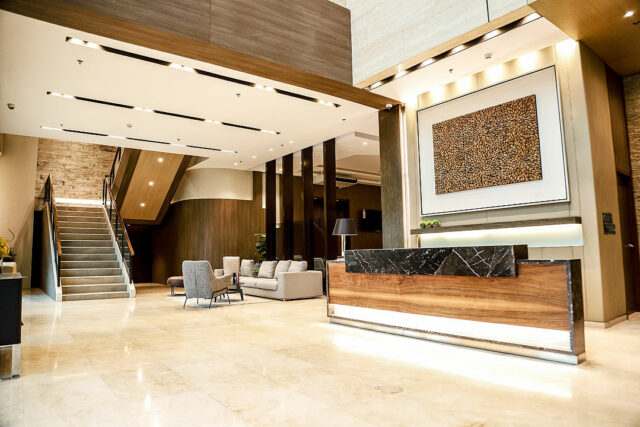
Located along Katipunan Avenue, the SotoGrande is near educational institutions, commercial establishments, leisure spots, and major thoroughfares such as EDSA, C5, Marcos Highway and Aurora Boulevard.

The 23-storey tower is designed by W.V Coscolluela & Associates.

A sky lounge and recreational bar can be found on the top floor, which boasts panoramic views of the city. It can also be used as an events venue.

The hotel also has a gym, Centro Fitness, that features an array of basic exercise and training equipment, lockers, open studio and steam room.

The SotoGrande Café and Restaurant serves classic Filipino dishes such as Kaldereta, Bangus Sisig and Sinigang, as well as American and Filipino breakfast selections.

“Whether you choose a standard room or a deluxe suite, all guests will get to experience hotel living at its finest here at SotoGrande but with a warmer, more cozy vibe — your ideal home away from home in the new normal,” Mr. Robles said.

Fantastic Beasts 3 opens to franchise-low $43 M

LOS ANGELES — Fantastic Beasts: The Secrets of Dumbledore, the third chapter in the Harry Potter spinoff series, collected a muted $43 million in its domestic box office debut.

In pandemic times, those ticket sales were enough to lead this weekend’s box office charts and land one of the biggest North American openings in 2022. But it’s also a sign that magic is in short supply for J.K. Rowling’s lucrative and ever-expanding Wizarding World. Dinged by mixed reviews and growing apathy for prequel series star Newt Scamander (Eddie Redmayne) and company, The Secrets of Dumbledore stands as the worst start for a Harry Potter-adjacent movie. (Its predecessors 2016’s Fantastic Beasts and Where to Find Them, launched to $74 million in North America, while the 2018 follow-up The Crimes of Grindelwald bowed to $62 million.)

The diminishing enthusiasm for Fantastic Beasts is problematic because witchcraft and wizardry does not come cheap. Warner Bros. shelled out $200 million to produce The Secrets of Dumbledore, and the studio spent tens of millions more to promote the film to audiences across the globe. Like its predecessors, The Secrets of Dumbledore will be reliant on the international box office to make money in its theatrical run. The first two Fantastic Beasts installments — which ended with $814 million globally and $650 million globally, respectively — made nearly 75% of revenues from foreign sales.

Fantastic Beasts 3, too, has been a bigger draw to overseas audiences. Since the film touched down in several foreign markets last weekend, The Secrets of Dumbledore has grossed $193 million globally to date. But the persistence of coronavirus disease 2019 (COVID-19) has cut into the box office in China, where 50% of movie theaters are closed, while Russia’s invasion of Ukraine has meant that country is not granted access to Hollywood’s films. Those limitations have been difficult for all blockbusters. Since the pandemic began in 2020, only five Hollywood movies have generated at least $500 million at the global box office.

Harry Potter veteran David Yates directed the third chapter in the prequel series, which follows the beloved Hogwarts professor Albus Dumbledore (portrayed by Jude Law). But he’s only one of a couple Dumbledores with “secrets,” as referenced in the movie’s title. In Fantastic Beasts 3, which was co-written by Ms. Rowling and another Potter alum Steve Kloves, a young(er) Albus and Scamander, a notable magizoologist, team up to thwart the dark wizard Gellert Grindelwald (Madds Mikkelson, replacing Johnny Depp) from igniting a wizarding world war. The cast also includes Ezra Miller, Dan Fogler, Alison Sudol, Callum Turner, and Jessica Williams.

Variety’s Peter Debruge called the film a “vastly improved sequel,” which isn’t saying much because fans were not particularly receptive to the last entry. The prequel saga, which predates the adventures of Harry, Ron, and Hermione, is intended to be a five-film franchise, but executives at Warner Bros. are waiting to see how The Secrets of Dumbledore is received by audiences before giving films four and five the greenlight. Fantastic Beasts 3 secured a B+ CinemaScore, the same grade as its predecessor. Fantastic Beasts and Where to Find Them landed higher marks, an A- score, from moviegoers.

Off-screen, Fantastic Beasts has been a controversy magnet. On top of declining box office ticket sales, the series has been subject to blowback over Rowling’s controversial views on sex and gender identity, as well as the domestic abuse allegations that forced Mr. Depp out of the franchise. And Mr. Miller, who has a key role in the latest film, was recently arrested for disorderly conduct and harassment, though the temporary restraining order against the actor has been newly dropped. Though moviegoers may not be aware of all the scandals plaguing Fantastic Beasts, internally at Warner Bros. it has become a headache, one that has become less and less pleasant to endure because the series isn’t exactly minting money in its theatrical run. The Wizarding World of Harry Potter, however, is much more than a film franchise. The fantastical universe has lent itself to profitable theme parks, live events, a Broadway play, as well as consumer products riches and success on home entertainment. — Reuters

Vitarich posts P89.4-M net income on higher sales

VITARICH.COM

VITARICH CORP. announced on Monday that its net income last year grew to P89.4 million from P9.3 million in 2020, driven by higher sales from all its business segments.

“2021 not only delivered new revenue records across segments, but also pointed to higher long-term volume growth. Our strategy to expand our capabilities has been validated by market trends toward rising consumption of meat products and convenience food,” Vitarich President and Chief Executive Ricardo Manuel M. Sarmiento said in a statement.

“This formed the basis of our recent capital investments in the business, and as a result, we have good revenue visibility going into 2022,” he added.

The company’s revenues were up 23% to P9.7 billion year on year, driven by growth in all three business segments, while operating income more than doubled to P184 million from P79 million.

Among its segments, revenues from the feeds segment went up 14% to P4.7 billion, which accounted for 48% of total sales.

The feeds segment produces and markets animal feeds, health and nutritional products, and supplements to various distributors, dealers, and end users nationwide.

Vitarich said that the volumes reached the highest levels ever for tie-up and commercial customers, such as distributors and direct farms.

Sales volume climbed 12% while average selling prices inched up by 3%.

In the fourth quarter of 2021, the company launched Vitarich Poultry Advantage to address the needs of backyard and general poultry farmers.

The company’s annual feed mill capacity increased 3% to 300,200 metric tons (MT) in 2021 from 290,800 MT in 2020, while production grew 8% to 226,900 MT from 209,700 MT.

Meanwhile, revenues from the foods segment, which accounted for 44% of the total, grew by 36% to P4.2 billion on the back of a 21% increase in sales volume and 12% increase in average selling prices.

The foods segment sells chicken broilers, either as live or dressed, to HRI customers, supermarkets, and wet markets.

During the year, the segment enhanced its Cook’s Premium Chicken products for hotels, restaurants, institutional clients.

Annual dressing plant capacity increased 5% to 79,000 MT from 75,500 MT, while production expanded 21% to 35,700 MT from 29,500 MT.

Lastly, revenues from the farms segment, which accounted for the remaining 8% of the total, increased by 19% to P778 million. Fair value adjustments on biological assets amounting to P55.1 million was recognized as part of revenues and P78 million as cost of goods.

The segment is involved in the production of day-old chicks and pullets.

Vitarich said the cost of goods increased 21% to P8.9 billion due to higher sales volume and increased prices of raw materials such as wheat, soybean, and corn, which rose by an average of 12% compared to the prior year.

“The cost inflation was due to several factors, including logistics challenges due to COVID-19 (coronavirus disease 2019), reimposed series of quarantine measures in the third quarter, as well as supply disruptions for soybeans in the fourth quarter due to high demand from China, increasing domestic use in the US, and lower output from Brazil and Argentina,” it said.

Capital expenditures totaled P117.7 million due to the construction of a new warehouse in Davao and for additional machinery and equipment in Bulacan, Iloilo, and Davao to upgrade bagging lines for automation.

“We continue to execute on the factors we can control, including new products, improved customer satisfaction scores, enhanced processes, and engaged stakeholder relationships. Looking ahead, we expect revenues to stay robust, but the ongoing challenges will temper the full impact of sales growth on our earnings,” Mr. Sarmiento said.

“Supply chain headwinds will persist and pressure our costs in raw materials and transportation. In view of these elevated input costs, we will continuously reconfigure our purchasing approach and explore new grain and protein sources to reduce dependency on corn, wheat, and soybean meal. We are positive that higher volumes, cost efficiency, and responsible price increases will help us meet our performance objectives while ensuring that our products remain affordable,” he added.

Vitarich shares went up by four centavos or 6.45% to finish at P0.66 each on Monday. — Luisa Maria Jacinta C. Jocson

Loyalty platform SoPa plans aggressive expansion in PHL

SINGAPORE-BASED e-commerce aggregator and loyalty platform Society Pass, Inc. (SoPa) is pursuing aggressive expansion plans in the Philippines to take advantage of the e-commerce boom.

The Nasdaq-listed company now has an office in Makati City overseen by Country Head Arbie Pagdaganan, SoPa said in an e-mailed statement.

This move comes on the heels of its recent purchase of Pushkart.ph, an online grocery delivery services application, for P50 million.

The company, which also operates in Indonesia and Vietnam, currently has more than 20 employees in the Philippines.

“[We] aim to grow this figure to over 100 by the end of 2022,” it said.

SoPa considers that Philippine market as a “cornerstone” of its acquisition strategy, said Dennis Nguyen, SoPa founder, chairman and chief executive officer.

“I am proud to appoint our vice-president of product design, Arbie Pagdanganan, as our country manager in the Philippines and look forward to her expert leadership in steering our operations to greater heights,” he noted.

“Also, this new office is part of our business strategy during this critical period of economic transformation for the Philippines. As we grow our Philippines business, we are confident that the SoPa ecosystem will nurture and accelerate the growing portfolio of brands.”

According to SoPa, its recently acquired Pushkart.ph now focuses on expanding on-demand grocery shopping services to more consumers and more retailers.

Its new plans for Pushkart.ph include adding more hubs in key cities and regions.

The company also targets to expand Pushkart.ph’s offerings to “more than double” its user base to “over 300,000” and boost application downloads to more than 150,000 this year.

It said local consumers will soon be able to use the Pushkart.ph app across 19 cities in the National Capital Region “with a guaranteed next day delivery service.”

“With increasing urbanization, a growing middle class, and a​ large and young population, the country’s economic dynamism is rooted in strong consumer demand supported by a vibrant labor market and robust inflow of capital. Philippine’s internet penetration rate reached 74% in 2021 and is expected to climb to 77% by 2025. This steep increase in the internet economy is underpinned by a 132% growth in e-commerce with the industry expected to reach $40 billion in 2025,” SoPa noted. — Arjay L. Balinbin

ADVERTISEMENT
ADVERTISEMENT