Home Blog Page 65

Semirara confident it can meet requirements for contract extension

SEMIRARAMINING.COM

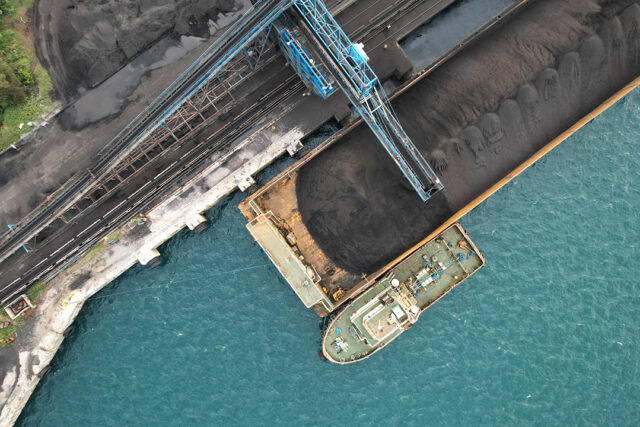
SEMIRARA MINING and Power Corp. (SMPC) said it is confident it can submit a mining plan that meets Department of Energy (DoE) requirements to extend its coal operating contract on Semirara Island.

“It’s not easy. The first time we went to the Semirara site, it failed — even the first attempt before we came in. Because once it reaches around 160 meters below sea level, water starts to enter and everything begins to slide. If you don’t know how to prevent the water from coming in, you cannot mine,” SMPC Chairman Isidro A. Consunji said at a briefing in March.

He added that Semirara is unique, noting that few coal mines worldwide operate below sea level.

“Assuming the policy of the DoE is to minimize disruption and optimize production, who’s qualified? Who’s got the track record to mine below sea level? Nobody in the country. Semirara’s the only mine below sea level,” he said.

SMPC, which has held the coal operating contract for nearly 50 years, said new operators would face technical and logistical challenges. These include hundreds of dump trucks, dozens of high-power water pumps, and specialized equipment such as diaphragm walls that extend more than 100 meters deep — far beyond standard systems.

“There are many challenges for any new operator, even experienced ones. If the goal is to improve the mine plan, it is difficult to outperform an existing operator — whether it’s Semirara, Atlas Mining, or others — because the one already operating has the advantage,” Mr. Consunji said.

The mine’s contract expires in July 2027, but the DoE is offering the area for bidding this year, along with other confirmed mineable reserves.

The auction covers 18 coal blocks across about 18,000 hectares, including 10 blocks on Semirara Island in Caluya, Antique.

Bidders must submit documents by April 28, the same day as the bid opening.

SMPC said uninterrupted coal production is critical, as Semirara supplies about 38% of the country’s baseload power. Any disruption could raise electricity costs, increase inflation, and require coal imports, potentially affecting energy security and foreign exchange reserves.

The company said its mining plan is designed to maintain continuous operations, prevent seawater intrusion, and mitigate potential economic, social, and political impacts from production disruptions.

Meralco PowerGen Corp. has expressed interest in partnering with SMPC if it participates in the auction, while San Miguel Corp. has reportedly explored government-offered coal sites, including the Semirara area. — Alexandria Grace C. Magno

PASIA Shared Services collaborates with Quotable AI to modernize SMEs

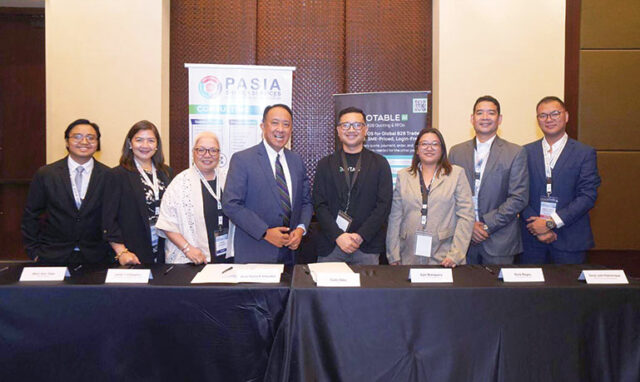
PASIA Shared Services, the solutions and services arm of the Procurement and Supply Institute of Asia (PASIA), has partnered with Quotable AI, an AI-powered operating system originally founded in the Philippines and now available globally.

The partnership aims to modernize how suppliers engage with SMEs in managing quotations and B2B engagements. Today, many suppliers are forced to coordinate through fragmented tools like spreadsheets, emails, and messaging platforms, which slow down response times and reduce visibility.

Quotable AI brings these interactions into a single system, enabling suppliers to submit quotations more efficiently, collaborate seamlessly with buyers, and gain clearer insight into operations status. By streamlining sourcing and communication, suppliers can strengthen relationships with SMEs, reduce administrative overhead, and position themselves as more responsive and competitive partners.

Charlie Villasenor, chairman and CEO of PASIA Shared Services said, “This partnership represents a major step forward in our mission to empower suppliers and SMEs with smarter and more efficient ways to modernize quotations. Through this collaboration with Quotable AI, we can deliver transformative solutions that reduce costs, improve compliance, and accelerate traditional workflows.”

Quotable AI enables companies to receive benefits ranging from centralized RFQ and quotation management, to frictionless supplier participation. The platform also offers universal parser for business documents and Quotable Wallet for B2B payments in the Philippines. Quotable AI connects with existing financial systems, allowing organizations to modernize supplier collaboration without replacing their ERP infrastructure.

Carlo Silva, co-founder & CEO of Quotable AI, said: “Suppliers often spend hours coordinating quotations and responses across email threads and spreadsheets. Quotable AI brings these workflows into one structured system so teams can move faster and operate with better visibility. Partnering with PASIA allows us to introduce these capabilities to organizations across Asia and beyond.”

Through this partnership, PASIA Shared Services will introduce Quotable AI to its network of procurement professionals, helping accelerate the digital transformation of business operations across the region.


SparkUp is BusinessWorld’s multimedia brand created to inform, inspire, and empower the Philippine startups; micro, small and medium enterprises (MSMEs); and future business leaders. This section will be published every other Monday. For pitches and releases about startups, e-mail to bmbeltran@bworldonline.com (cc: abconoza@bworldonline.com). Materials sent become BW property.

Converge reviews plan to create separate fiber unit

ONVERGE ICT SOLUTIONS, INC.

CONVERGE ICT Solutions, Inc. said its plan to carve out fiber assets into a new unit remains under review as the company continues to monitor industry developments.

“It is still on the study table. It takes a while because you need to make everything available including network sizing, automation and everything, the back end should also be ready,” Converge ICT Chief Executive Officer Dennis Anthony H. Uy told reporters on the sidelines of the company’s data center inauguration on March 20.

He said the plan could be beneficial if implemented alongside the Konektadong Pinoy Act, which emphasizes infrastructure sharing.

Maganda na sabay yan sa Konektadong Pinoy (It’s good that this goes hand in hand with the Konektadong Pinoy Act). The reason why you set up KP (Konektadong Pinoy) is sharing the infrastructure,” Mr. Uy said.

Converge said last year that it was studying the creation of a new unit for infrastructure co‑sharing, noting that its decision would likely depend on the rules under the Konektadong Pinoy Act.

Bloomberg previously reported that Converge plans to spin off its fiber business, valued at around $1 billion, and sell about a 40% stake in the new unit.

The Konektadong Pinoy Act, or the Open Access in Data Transmission Act, streamlines the licensing process for new entrants and aims to boost competition in data transmission.

The measure, which lapsed into law on Aug. 24, 2025, relaxes regulations to favor more entrants in the data transmission industry.

For 2026, the company set a capital expenditure (capex) guidance of P18 billion to P23 billion, following a 2025 period in which it used P17.7 billion in cash capex, despite an original budget of P25 billion.

The 2026 budget is primarily allocated for a network expansion program targeting the installation of 900,000 new ports in the Visayas and Mindanao regions, alongside investments to improve network reliability.

Mr. Uy noted that Converge is seeing rising demand from prepaid users in remote areas, which the company aims to capture as it expands its reach.

The listed fiber broadband and technology provider launched its P5-billion, 12-megawatt (MW) data center in Angeles, Pampanga last month.

Overall, the company has a total data center capacity of about 20 MW, including its Caloocan and Pasig facilities.

The Angeles data center, which sits on a 5,000-square-meter property, is scalable to 36 MW and is artificial intelligence-ready to meet growing demand for content and cloud services.

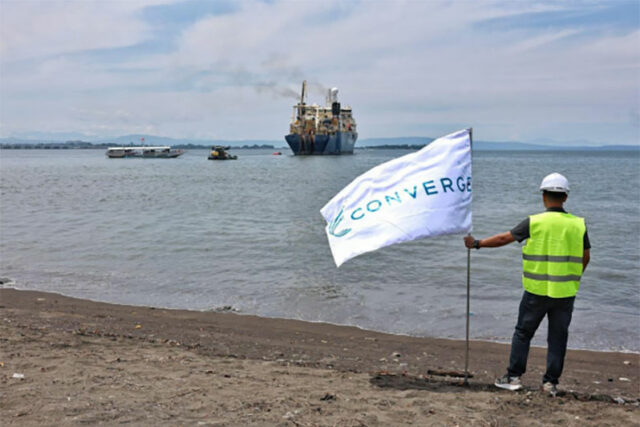
Converge is also strengthening its network by integrating the transpacific link Bifrost and the intra-Asia SEA-H2X cable system into its operations. — Ashley Erika O. Jose

RRHI shares rise on delisting plan

JGSUMMIT.COM.PH

By Pierce Oel A. Montalvo, Researcher

SHARES of Robinsons Retail Holdings, Inc. (RRHI) rose last week after its board approved a voluntary delisting and a P48.30-per-share tender offer, with analysts saying the price offers a premium to recent trading levels but remains below intrinsic value.

Data from the Philippine Stock Exchange (PSE) showed RRHI as the 11th most actively traded stock during the week, with 24.34 million shares valued at P457.93 million changing hands.

Shares of the retailer closed at P46.01 on Wednesday, up 18.2% from P38.95 previously. This outperformed the benchmark PSE index (PSEi), which rose by 0.4%, while the services sector index gained 0.1%.

Year to date, the stock has risen by 39.3%, outpacing the PSEi’s 0.9% decline and the services sector’s 14.4% increase.

Trading was suspended on Thursday and Friday due to the Maundy Thursday and Good Friday holidays.

On March 27, RRHI said its board had unanimously approved a voluntary delisting after receiving a notice of intent from JE Holdings, Inc., its largest shareholder with a 46.1% stake, to conduct a tender offer for all outstanding shares not held by the delisting proponents.

The tender offer price of P48.30 per share represents a 32.23% premium over the one-year volume-weighted average price of P36.5285 as of March 26. The price is supported by a fairness opinion from FTI Consulting Philippines, Inc.

RRHI reported net income attributable to equity holders of P5.71 billion, down 44.5% from P10.28 billion in 2024. Revenues rose by 5.7% to P210.42 billion from P199.17 billion.

“We think RRHI is pursuing a voluntary delisting due to management’s belief that its shares are undervalued,” said Adrian Geoffrey Go, an equity analyst at Sun Life Investment Management and Trust Corp., in an e-mail.

He added that “prior to the share price spike, RRHI was trading at a sub-10x price-to-earnings (P/E) ratio, which management likely viewed as an attractive level relative to RRHI’s underlying valuation.”

Mr. Go said both the P48.30 tender offer price and the P50 buyback price “represent a significant premium over its share price at the time,” but added that “both prices are still notably lower than its 2013 IPO price of P58 per share.”

He said current valuations may reflect “limited trading volume post index exclusion,” “investor perception on capital allocation decisions,” and “a broad de-rating seen across most Philippine industries.”

The voluntary delisting requires approval from shareholders representing at least two-thirds of RRHI’s outstanding shares at the annual stockholders’ meeting scheduled on May 12.

Votes against the delisting must not exceed 10% of total outstanding shares.

For the delisting to proceed, JE Holdings and other proponents must collectively own at least 95% of RRHI’s issued and outstanding capital stock after the tender offer, in line with the PSE’s amended voluntary delisting rules.

The transaction also requires approval from the Philippine Competition Commission.

“The gap could widen if the market loses confidence in the 95% threshold being met,” Mr. Go said.

He added that “we do not think that the gap should narrow further, as those positioning for the tender offer would require a decent return for the risk that they are taking.”

Mr. Go said that if the tender offer does not push through, “the market begins to value RRHI closer to the tender offer price, which is an indicative level where management may feel appropriate valuations should be,” though he added “this is unlikely as the company will be weighed down by its current yield at sub-5%, lower than comparable peers.”

Minority shareholders who choose not to tender their shares will retain ownership but may face constraints.

“Minority shareholders who choose not to tender will still retain their ownership of RRHI, but will be subject to less liquidity and difficulty selling since there is no more public market,” Mr. Go said.

He added that shareholders would also face “higher taxes in the form of capital gains tax and documentary stamp tax, versus just a stock transaction tax for publicly listed companies plus manual filing per transaction,” as well as “potential for less disclosure on company operations and results.”

Despite the premium, analysts said the tender offer may not fully reflect RRHI’s growth potential.

“We expect the company to grow its core earnings at a compound annual growth rate (CAGR) of 12% over the next five years through a combination of a high single digit CAGR for operating income and a gradual deleveraging from the debt taken on to fund its recent share acquisitions,” Mr. Go said.

He added that “the tender offer price of P48.30 per share implies a P/E ratio of around 9x, implying a P/E-to-growth ratio below 1, which we think is still too low for the company’s underlying prospects.”

Mr. Go said the broader implications of the delisting trend could point to shifting market dynamics.

“More frequent delisting discussions could imply that some companies are unhappy with their market valuations and feel that the extra cost of being a publicly traded company is not worth the valuation mismatch,” he said.

He added that “companies with the financial capability to do so may opt to take their companies private (as with Metro Pacific Investments Corp. before) and look for opportunities to receive improved valuations elsewhere (i.e. private markets, or a business spinoff).”

Looking ahead, Mr. Go said a sustained valuation re-rating for RRHI would require catalysts.

“Deleveraging the balance sheet is one example, though higher oil prices and other upside risks to inflation might affect the company’s flexibility to pay down and/or refinance debt at lower rates,” he said.

UST researchers honored for excellence at PhilAAST 74th Annual Convention

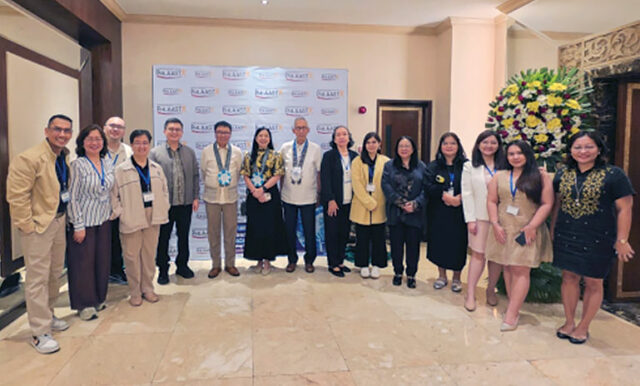
The University of Santo Tomas (UST) marked another milestone as its researchers were recognized at the 74th Annual Convention of the Philippine Association for the Advancement of Science and Technology (PhilAAST). With the theme “Embracing a Multifaceted Digital Culture: Moving Forward to Pagtanaw 2050,” the convention gathered leading scientists, educators, and innovators from across the country.

Representing the UST College of Science and the Research Center for the Natural and Applied Sciences (RCNAS), Acad. Prof. Emeritus Fortunato B. Sevilla III, Ph.D., was conferred a PhilAAST Fellowship in recognition of his distinguished career and lifelong contributions to the advancement of science in the Philippines.

Prof. Rey Donne S. Papa, Ph.D., Dean of the College of Science and academic staff of the Department of Biological Sciences, received the Gregorio Y. Zara Award for Basic Science Research for his pioneering work in freshwater science, zooplankton taxonomy, and limnology. Meanwhile, Prof. Karen S. Santiago, Ph.D., from the Department of Chemistry, was honored with the Francis Ferrer Award for Productivity through Technology for her research on smart polymers and nanomaterials, particularly their applications in chemical sensing, controlled delivery systems, and self-healing materials.

UST also earned recognition in the scientific poster category. A research team led by Assoc. Prof. Alan Rodelle M. Salcedo, Ph.D., of the Department of Chemistry, together with students Katrina Beatrice F. Panopio and Ian Joseph F. Halim, won Second Prize for Best Scientific Poster Presentation for their study titled, “Digital Image-Based Colorimetric Sensing of Lead(II) Using Dithizone and Smartphone Imaging.” In a separate distinction, Prof. Christina A. Binag, Ph.D., also from the Department of Chemistry, was elected as a member of the PhilAAST Board, further strengthening UST’s presence in national scientific leadership.


SparkUp is BusinessWorld’s multimedia brand created to inform, inspire, and empower the Philippine startups; micro, small and medium enterprises (MSMEs); and future business leaders. This section will be published every other Monday. For pitches and releases about startups, e-mail to bmbeltran@bworldonline.com (cc: abconoza@bworldonline.com). Materials sent become BW property.

Keeping the human touch

Lacquerware from Vietnam arrives in Rustan’s

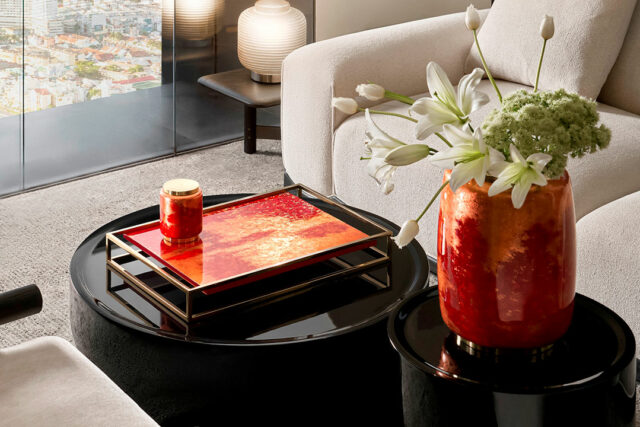
A DISPLAY of red lacquered vases stands in Rustan’s Makati. Gold-rimmed resin topped off with red lacquer and silver-leaf tinted red are polished to a gleam akin to a flame — this is the work of Hanoia, a new brand from Vietnam that recently joined Rustan’s.

We were told that Hanoia has been making commissions for luxury houses around the world since 1997, but they decided to make their own brand in 2016.

“We wanted to preserve this kind of craft,” Dinh Cong Tai, marketing and communications director of Hanoia, told BusinessWorld in an interview during the March 24 launch. “I think there’s no better way than to have the artisan that can live with that craft; with that job.” He added that in modern times, “Lacquer has become more a fine art medium rather than in the daily context.”

Lacquer, prized for thousands of years in East Asia, is a coating originally made from the sap of the Chinese lacquer tree (Toxicodendron vernicifluum). These items were prized by the aristocracy of Asia, then traded in Europe, where the Habsburg Empress Maria Theresa took special pride in her collection. These days, sap-based lacquer has become rare, replaced by synthetics, or else derived from insect-based shellac. Mr. Dinh said, “We follow the same process, but we use modern-day materials and also technology — to help the artisan to work.”

They have over 200 people in their workshop. “The young generation doesn’t want to follow this kind of craft anymore,” he says, though in recent years, they have managed to make artisanship an appealing career for young Vietnamese workers. “We help the artisan to continue to live with the jobs. That’s (how) we convinced the young generation to continue to learn lacquer.”

This is their first shop-in-shop concept abroad, and in choosing Manila as their first location abroad, Mr. Dinh emphasizes the friendship between Rustan’s president Anton Huang and Hanoia’s chief executive officer, Christian de Ruty. “It’s also a good opportunity and a good relationship,” he said. More importantly, “Manila in particular is a very cosmopolitan city.”

The vases we mentioned, we were told, were made within a period of two months. Perhaps that is what true luxury means, beyond labels and stories. Mr. Dinh said, “Luxury today is more about craftsmanship. What we value most is the time and skillfulness of the artisan — the touch of humans.” — Joseph L. Garcia

I watched Artemis II lift off — and witnessed the first humans venture to the Moon since 1972

NASA-UNSPLASH

By Gordon Osinski

EVEN from a distance of several kilometers, the Artemis II rocket looked huge.

Then, there was a moment that felt like an eternity, as around 2,600 metric tons of spacecraft lifted off.

I was honored to receive an invitation from the Canadian Space Agency to attend this historic launch at NASA’s Kennedy Space Center. I am a professor, an explorer, and a planetary geologist. As a member of the First Artemis Lunar Surface Science Team, I have been supporting NASA in developing the geology training for Artemis astronauts.

This launch was one of the most thrilling, but stressful few minutes of my life. Space missions are hard and can be dangerous, especially missions like this where there are so many firsts.

The final 10-second countdown seemed to come so quickly, and then at 6:35 p.m., EDT, on April 1, 2026, the NASA launch commentator uttered those famous words: “We have liftoff.”

I think everyone around me held their breath for those first few critical seconds, and then the significance of the moment sank in. We had just witnessed history in the making. This was the launch of the first crewed flight of NASA’s Artemis program, and the first time since 1972 that humans have ventured to the Moon.

Jeremy Hansen will be the first non-American to fly to the Moon and will make Canada only the second country in the world to send an astronaut into deep space.

Christina Koch and Victor Glover will also make history as the first woman and person of color to fly to the Moon.

THE BUILD UP TO LAUNCH
The first launch windows for Artemis II came and went earlier this year, following issues discovered during wet dress rehearsals. But this time felt different. NASA rolled out the SLS (Space Launch System) rocket on March 20 and decided to skip the wet dress rehearsal and go straight for launch.

You could sense the confidence building.

On the evening before launch day, the Canadian Space Agency held a reception for all the Canadian invitees, as well as several NASA guests. It was like a “who’s who” of the Canadian space program, including most of Canada’s retired astronauts.

There were some lighthearted moments — like when MDA Space CEO Mike Greenly announced there were the limited edition Tim Hortons “moonbits” for all — but you could tell there was also a lot of emotion in the room.

There were some tears as a video message from Jeremy Hansen’s son, Devon, was played. For me the moment came when I spoke with Jeremy’s parents, who I had met several years earlier. They still live in Ingersoll, not far from London, Ont., where Jeremy went to high school.

RETURNING HUMANS TO THE MOON
At the time of writing, the crew have now had their first sleep in Integrity, the name of their Orion spacecraft.

They are now in a high-Earth orbit, reaching a maximum of 74,000 km from Earth. This is already a huge distance when you consider the orbit of the International Space Station is only around 400 km.

During the first 24 hours, the crew are testing the environmental controls and life support systems, ensuring that everything they need to survive for the next 10 days in space works. If everything looks good, NASA will clear the crew to conduct the translunar injection, and send Integrity to the Moon.

While they won’t be landing, in addition to testing out the Orion spacecraft, the Artemis II crew will be conducting science. They will be working with scientists and engineers in a new science evaluation room in mission control at the NASA Johnson Space Center, to collaborate during operations in real time.

This builds on years of testing and simulations the teams have done together and lays the groundwork for the first surface Artemis mission.

Before the launch, NASA astronaut Christina Koch summed up the feelings of everyone I’ve met on the Artemis program: “It is our strong hope that this Artemis mission is the start of an era where everyone, every person on Earth can look at it and think of it as also a destination.”

I couldn’t agree more.

THE CONVERSATION VIA REUTERS CONNECTS

Seafood brand links Mindanao fisherfolk to premium markets

MINDANAW SEAFOOD

By Vonn Andrei E. Villamiel, Reporter

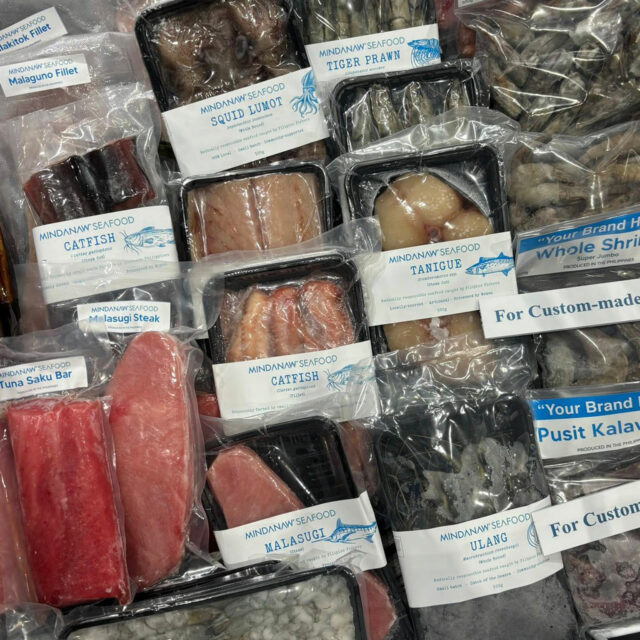
A SEAFOOD enterprise is working to connect fisherfolk from Mindanao to premium seafood markets, with the aim of raising fisherfolk’s incomes, promote high-quality products, and improve traceability.

Founded in 2022, MINDANAW Seafood has grown from a two-person startup operating out of a studio apartment into a 26-member organization supplying seafood to institutional buyers and retail markets.

MINDANAW Seafood now offers about 30 seafood products sourced from fisherfolk and aquaculturists across mainland Mindanao, the Sulu Archipelago, and Palawan. It primarily caters to institutional buyers such as hotels, restaurants, and catering businesses, particularly in the Greater Manila Area.

“That’s the market that traditional players from Mindanao find difficult to tap into,” Jerrhad H. Nadonza, co-founder and executive director of MINDANAW Seafood, told BusinessWorld.

Mr. Nadonza, a fisheries professional, said the company was established to unlock the potential of Mindanao fisheries, while addressing persistent challenges faced by producers, including low incomes and limited market access.

“It started both as a dream and as a protest,” he said.

While Mindanao supplies a significant share of the country’s seafood, he said it remains disconnected from its largest markets.

“We saw that there’s a greater potential for Mindanao seafood commodities,” he said. “If we look at the geography of our country, Mindanao is the farthest if we consider Metro Manila as the main market, which represents nearly three-quarters of the seafood demand.”

This gap has resulted in a long and costly supply chain, where seafood passes through multiple intermediaries before reaching consumers. According to Mr. Nadonza, this structure often erodes both product quality and producer earnings.

MINDANAW Seafood’s model focuses on improving this system by shortening the supply chain, strengthening post-harvest handling, and promoting traceability.

By linking fisherfolk and aquaculturists directly to buyers, the company reduces reliance on intermediaries, improves pricing for producers, and provides them with stable market access.

“For the longest time, many fall to predatory buyers,” Mr. Nadonza said. “Prices can be so low that they are sometimes even below production cost.”

He added that fisherfolk are often forced to sell quickly due to the perishable nature of their catch, leaving them with little bargaining power.

“Otherwise, their catch will spoil. And many are already tied to debt even before they go out to sea,” he said.

Mr. Nadonza said the brand’s approach is meant to challenge this system.

“It is a protest against that kind of system. We want to change it so that producers take the lead and receive a bigger share of the value,” he said.

Mr. Nadonza said the company also works to improve product quality, value addition, and shelf life through better post-harvest handling and basic processing, such as filleting and deboning.

At the community level, the company also encourages fisherfolk to organize into associations or cooperatives to consolidate supply.

“It’s difficult when it’s done in small volumes,” Mr. Nadonza said. “We encourage them to organize so they can achieve economies of scale.”

The company now moves about 80,000 kilos of seafood a month, all of which it says is locally sourced and traceable. Shrimp accounts for a significant portion of its volume, supported by a network of aquaculturists.

As operations scale up, Mr. Nadonza said MINDANAW Seafood has begun expanding beyond Metro Manila, with sales offices in North Luzon, Central Luzon, South Luzon, and Cebu.

But beyond its commercial operations, the company said it wants to be community-centered, with producers at the core of its business model.

“When we sell MINDANAW as a brand, we sell the stories of the communities we partner with. This is not about us. This is about the producers who are actually very dedicated to producing high-quality products,” Mr. Nadonza said.

Through its advocacy arm, Mapiya Mindanaw, the organization supports environmental protection, social inclusion, and research initiatives. These include programs for fishing communities, Indigenous Peoples, women, and LGBTQ+ groups.

Mr. Nadonza, who also serves as the social engagement head at Mapiya Mindanaw, said the advocacy arm is also funding research on seafood and new food systems.

As part of its environmental efforts, the company has also established a carbon sink and sequestration facility, planting about 17,000 trees as of the end of 2025, with a target of adding 10,000 more this year.

“Our goal is by 2030, we want to be the first net-zero seafood brand in the Philippines. We want to absorb more carbon than what we actually release,” Mr. Nadonza said.

Looking ahead, MINDANAW Seafood plans to expand into value-added products, including ready-to-eat seafood meals aimed at convenience stores and supermarkets.

Mr. Nadonza said the company also hopes to encourage more young Filipinos to enter the fisheries sector and adopt similar business models.

“We want to inspire more young entrepreneurs and startups to enter the seafood industry,” he said. “The Philippines is a large country with many producers and many mouths to feed. We cannot do this alone.”


Globe joins regional consortium to expand digital backbone

GLOBE.COM.PH

GLOBE TELECOM, INC. has joined the Candle Cable System consortium to strengthen the Philippines’ digital backbone by connecting the country to submarine cable links across Asia.

“Candle raises the bar for the country’s digital backbone… With the Nasugbu and Baler landings, we are giving enterprises a more resilient path for cloud workloads, AI (artificial intelligence) development, and global operations,” Globe Vice-President and Head of Globe Business Stella Christine D. Dizon said in a media release on Sunday.

Candle Cable is an 8,000-kilometer system linking Japan, Taiwan, Indonesia, Malaysia, Singapore, and the Philippines. It has 24 fiber pairs and a total capacity of 570 terabits per second (Tbps).

The consortium is a regional collaboration among Meta, Japan’s SoftBank Corp., IPS, Inc., NEC Corp., Telekom Malaysia Bhd. (TM), and Indonesia’s PT XLSmart Telecom Sejahtera Tbk.

Globe is joining the consortium as both an investor and a landing party, with the cable planned to land at its Nasugbu station in Batangas, complementing the Philippine landing in Baler.

The system is expected to begin operations by 2028, Globe said, adding that it is among the highest-capacity cable systems in the region.

“Together, the West and East coast landings strengthen national resilience against typhoons, earthquakes, and other natural hazards, reducing single points of failure and reinforcing business continuity,” Globe said.

Candle’s 24-fiber-pair configuration offers higher capacity and lower latency, supporting the rapid expansion of cloud computing, AI development, and enterprise digitalization.

“International capacity is only one part of the equation. The real advantage comes from integrating the Candle Cable System directly into our extensive domestic fiber network,” Globe Vice-President and Head of Strategy and Business Investments Raymond L. Policarpio said.

A direct route to Japan and Singapore also positions the Philippines closer to key AI and cloud hubs.

“By linking this international capacity into our nationwide infrastructure, we ensure that high-speed and low-latency connectivity supports enterprises, small businesses, and mobile and broadband customers across the archipelago,” he said. — Ashley Erika O. Jose

T-bill, bond rates may be mixed

BW FILE PHOTO

RATES of the Treasury bills (T-bills) and Treasury bonds (T-bonds) on offer this week could be mixed before the release of March inflation data that could show an uptick due to the oil price shock caused by the conflict in the Middle East.

The Bureau of the Treasury (BTr) will auction off P27 billion in T-bills on Monday, or P9 billion each in 91-, 182-, and 364-day papers.

On Tuesday, the government is targeting to raise up to P40 billion from a dual-tenor T-bond offering, or P20 billion to P30 billion each via reissued seven year T-bonds with a remaining life of three years and one month and reissued 25-year securities with a remaining life of eight years and seven months.

T-bill and T-bond auction rates could mirror the mixed week-on-week yield movements seen at the secondary market as headline inflation likely accelerated sharply last month amid higher energy prices, Rizal Commercial Banking Corp. Chief Economist Michael L. Ricafort said in a Viber message.

A trader said secondary market rates were mostly lower on Wednesday as a new month began and amid hopes for a de-escalation in the conflict involving the United States, Israel and Iran.

However, signals from all sides remain mixed, raising doubts on a near-term resolution.

Higher oil prices due to fuel trade disruptions amid the Middle East war and rising rice costs may have pushed Philippine inflation to its fastest pace in nearly two years, analysts said.

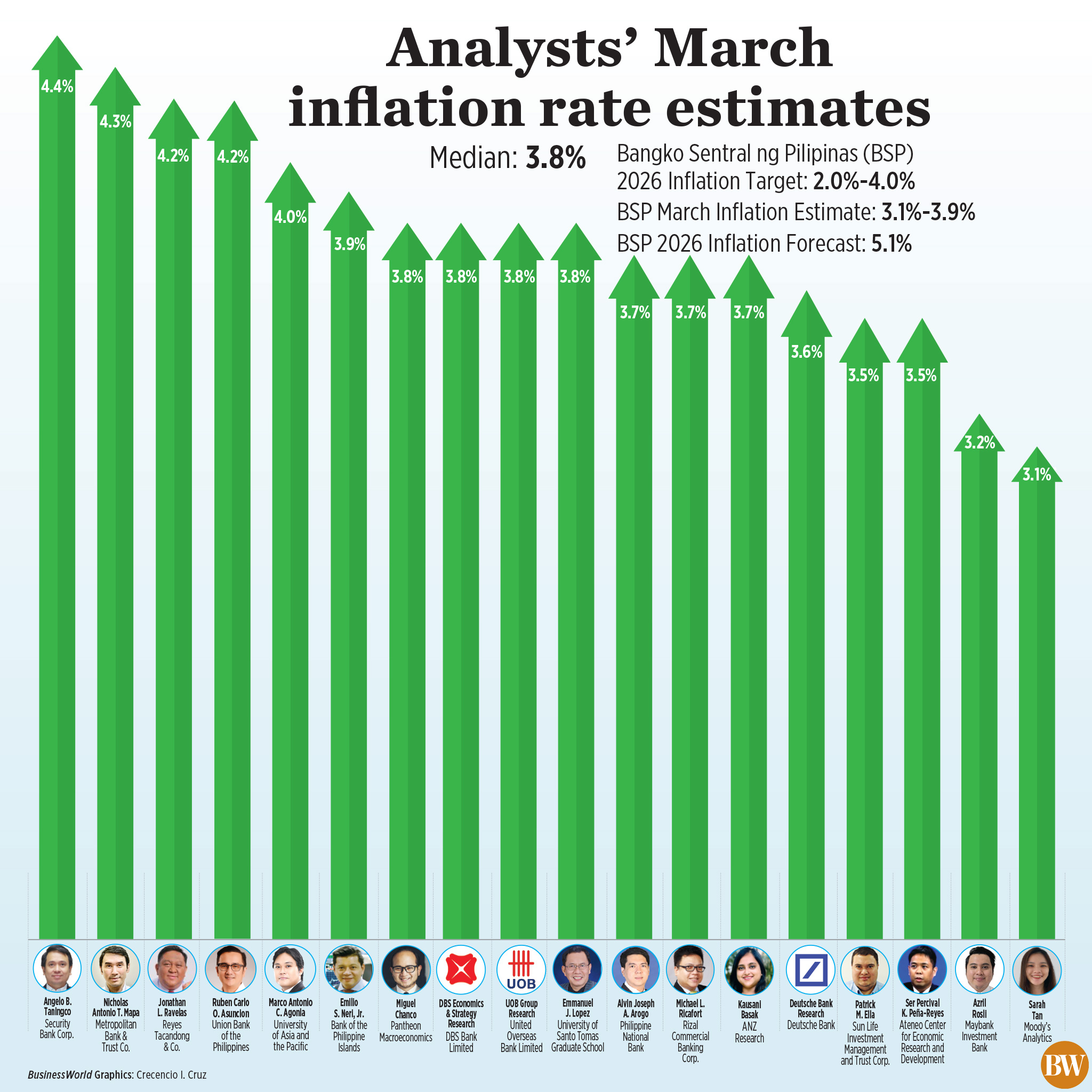
A BusinessWorld poll of 18 analysts yielded a median estimate of 3.8% for the March consumer price index, faster than the 2.4% in February and 1.8% a year ago.

This is near the upper end of Bangko Sentral ng Pilipinas’ (BSP) 3.1%-3.9% forecast for the month and its 2%-4% annual target.  The print would also be the quickest in 20 months or since the 4.4% seen in July 2024.

This would also mark the third straight month that inflation settled within the central bank’s target.

At the secondary market on Wednesday, yields on the 91- and 182-day T-bills rose by 0.42 basis point (bp) and 5.58 bps week on week to end at 4.9897% and 5.1253%, respectively, based on PHP Bloomberg Valuation Service Reference Rates data as of April 1 published on the Philippine Dealing System’s website. Meanwhile, the 364-day paper went down by 1.02 bps to close at 5.1803%.

For its part, the seven-year tenor fell by 12.28 bps week on week to yield 6.7919%, while the three-year bond, the closest to the remaining life of the shorter bonds on offer, eased by 7.53 bps to 6.2524%.

Meanwhile, the 25-year T-bond’s yield went up by 1.27 bps to 7.0168%, while the 10-year paper, the benchmark closest to the remaining life of the debt on auction, declined by 18.86 bps week on week to 6.8308%.

On March 23, the BTr raised only P19.2 billion via the T-bills it auctioned off, below the P27-billion program even as total tenders reached P36.78 billion.

Broken down, the government borrowed P9 billion as planned through the 91-day T-bills as demand for the tenor reached P16.613 billion. The three-month paper fetched an average rate of 5.004%, climbing by 10.4 bps from the yield seen in the prior week. Bids accepted had yields ranging from 4.945% to 5.004%.

The Treasury likewise raised the programmed P9 billion via the 182-day debt as tenders reached P13.83 billion. The average rate of the six-month T-bill was at 5.032%, rising by 8.4 bps from the previous auction. Tenders awarded carried rates from 4.999% to 5.125%.

Meanwhile, the BTr raised just P3.705 billion from the 364-day securities, below the P9-billion plan as bids totaled just P6.305 billion. The one-year paper’s average yield was at 5.166%, up by 10 bps week on week. Accepted bids had rates from 5.1% to 5.25%.

Meanwhile, the reissued seven-year T-bonds on offer this week were last awarded on Nov. 26, 2024, where the government raised P15 billion as planned at an average rate of 5.954%, below the 6.5% coupon rate. The papers were also auctioned off on March 24, but all bids were rejected by the Treasury.

On the other hand, the reissued 25-year notes up for auction this week were last sold on Dec. 9, 2022, where the government raised P35 billion as planned at an average rate of 7.189%, below the 9.25% coupon rate.

For April, the government is looking to raise P248 billion from the domestic market, or P140 billion via T-bills and P108 billion through T-bonds.

The government borrows from local and foreign sources to help fund its budget deficit, which is capped at P1.647 trillion or 5.3% of gross domestic product this year. — Aaron Michael C. Sy

Analysts’ March inflation rate estimates

SHARP OIL PRICE increases driven by supply disruptions from the Middle East war, along with pricier rice, may have pushed Philippine inflation to its fastest pace in nearly two years, analysts said. Read the full story

Dinosaur collagen used to create one-of-a-kind handbag

T. REX LEATHER BAG — ART ZOO MUSEUM OFFICIAL FACEBOOK ACCOUNT

AMSTERDAM — Scientists and designers unveiled on Thursday a handbag made with collagen derived from Tyrannosaurus rex fossils from the US in a unique creation intended to demonstrate the value of laboratory-grown leather.

The teal-colored bag will be displayed on a rock in a cage under a replica of a T. rex at Amsterdam’s Art Zoo museum until May 11 after which it will be auctioned, with a reported starting price of more than half a million dollars.

Scientists behind the initiative said the material was developed using ancient protein fragments extracted from dinosaur remains that were inserted into an unidentified animal’s cell to produce collagen that was turned into leather.

“There were a lot of technical challenges,” said Thomas Mitchell, chief executive officer (CEO) of The Organoid Company, one of three companies behind the so-called “T. rex leather” bag.

Genomic engineering firm Organoid and creative agency VML, another of the firms behind the project, previously collaborated on creating a giant meatball in 2023 by combining the DNA of a woolly mammoth with sheep cells.

Che Connon, CEO of Lab‑Grown Leather Ltd. that worked on producing the leather for the handbag from the engineered collagen, said the T. Rex origin gave it extra “oomph.”

“It’s not just about a green alternative to leather, it’s a technological upgrade,” Mr. Connon said of lab-grown leather.

SKEPTICISM
Some scientists outside the project have expressed skepticism about the term “T. rex leather,” saying material from other animals would be needed.

Dutch vertebrate paleontologist Melanie During, of the Vrije Universiteit Amsterdam, said collagen can persist in dinosaur bones only as fragmented traces that cannot be used to recreate T. rex skin or leather.

Thomas R. Holtz, Jr., a paleontologist at the University of Maryland, similarly said any collagen identified in T. rex fossils comes from inside bone, not skin, and that even perfectly matching proteins would lack the larger‑scale fiber organization that gives animal leather its distinctive properties.

“I would say that when you do something new for the first time, there is always criticism,” Mr. Mitchell said in response.

“And I think we’re really grateful for that criticism. It’s the bedrock of scientific exploration… I think this is the closest anyone has gotten and will probably ever get to create something that’s T. rex.” — Reuters

ADVERTISEMENT
ADVERTISEMENT