Home Blog Page 635

ICI-TWG drafting framework for asset recovery

The Bureau of Customs recovered 12 luxury vehicles linked to the Discaya family following a court-ordered search operation in Pasig City, Sept. 2, 2025. — BUREAU OF CUSTOMS

THE Independent Commission for Infrastructure (ICI) technical working group (TWG) on Monday said it is drafting a proposal to improve tracking of frozen and recovered assets.

“We have a draft proposal for a joint memorandum of agreement among member agencies, and we earlier presented a dashboard… and a database… Once operational, this framework will enable real-time tracking of both frozen and recovered assets, as well as the related legal cases,” Renato “Aboy” A. Paraiso, acting executive director of the Cybercrime Investigation and Coordinating Center (CICC), said.

Mr. Paraiso was appointed chair of the TWG, while Justice Undersecretary Deo L. Marco will serve as vice-chair, leading efforts on case build-up and asset recovery.

He added that collaboration with international authorities, including Singapore, is underway to manage overseas air assets linked to former congressman Elizaldy S. Co.

The TWG intends to meet every Tuesday to maintain momentum and monitor progress, Mr. Paraiso said.

It convened its third session on Monday amid continued push to recover more assets allegedly acquired through anomalous flood control projects.

“The demand is still very strong for people who are involved, they’d like to see them in jail,” said ICI Commissioner Rogelio “Babes” L. Singson, referencing the ongoing “one trillion rally.” He described the TWG as a platform for addressing non-legal avenues, including asset recovery and administrative remedies, while acknowledging that legal proceedings remain ongoing.

The TWG comprises key government agencies, including the Bureau of Customs (BoC), Bureau of Internal Revenue, Philippine National Police (PNP), Anti-Money Laundering Council, CICC, Civil Aviation Authority of the Philippines, and the Department of Justice, among others.

This subgroup within the ICI is tasked with tracing, freezing, and recovering wealth allegedly siphoned through questionable flood control projects.

During the session, the PNP-Criminal Investigation and Detection Group submitted documents from its technical field validation of suspected “ghost” flood control projects.

Meanwhile, the BoC reported it will adjust the floor price in bidding confiscated high-value assets, including luxury vehicles linked to government contractors Pacifico F. Discaya II and Cezarah Rowena C. Discaya.

To encourage competitive bidding, the BoC adjusted floor prices on several items: a Rolls-Royce was lowered to P36 million from P45 million, while a Toyota Sequoia was reset at P4.6 million.

Chris Noel Bendijo, deputy chief of staff at the BoC, said the agency is set to hold the second round of auctions for the Discayas-owned luxury vehicles on Dec. 5. Items include a 2023 Rolls-Royce Cullinan, 2022 Bentley, 2022 Toyota Tundra, and 2023 Toyota Sequoia.

Mr. Bendijo said that by lowering the price, “we are encouraging and enticing more bidders to participate, which would eventually lead to better competition.”

If there are no takers in the second or subsequent auctions, the BoC has the discretion to destroy the luxury vehicles.

“Remember that aside from disposition based on sale, we can resort to condemnation or just destroy those vehicles… So that is still an available option,” Mr. Bendijo said told a press briefing after the asset recovery meeting at the ICI. — Erika Mae P. Sinaking

Marcos orders review of Army’s disability discharge policy

PRESIDENT Ferdinand R. Marcos, Jr. speaks at the graduation ceremony for new commissioned officers of the Armed Forces of the Philippines at the Villamor Air Base in Pasay City, Dec. 1. — PHILIPPINE STAR/NOEL B. PABALATE

PHILIPPINE President Ferdinand R. Marcos, Jr. on Monday ordered an overhaul of the Armed Forces of the Philippines’ (AFP) Complete Disability Discharge (CDD) policy, aiming to ensure that soldiers injured in the line of duty continue to find meaningful employment despite their injuries.

The President tasked Defense Secretary Gilberto C. Teodoro, Jr., with reviewing the CDD policy to prevent future cases where injured soldiers are simply discharged, emphasizing recognition and continued support for their service.

“I have also instructed our Secretary of National Defense to review this policy so that situations like this do not happen again, where a soldier who is injured in the line of duty, while defending the Philippines, is simply discharged. That is not right. We will create a new CDD policy as soon as possible,” he said in Filipino via a video posted on his Facebook.

The announcement came after Captain Jerome J. Jacuba, 0-146467, was blinded by a combat-related explosion and initially slated for CDD, which would have ended his military service.

Mr. Marcos described the original discharge as “unjust” given Mr. Jacuba’s years of service and battlefield sacrifice.

He instructed Chief of Staff Romeo S. Brawner, Jr. to suspend Mr. Jacuba’s CDD, promote him to major and assign him to roles under “major adaptive duties,” allowing him to continue contributing to the military despite his disability.

“Even though he has lost his sight, there are still many ways a soldier can contribute,” Mr. Marcos said.

The AFP’s CDD is an official separation from military service granted to personnel who have a service-related physical disability that entirely prevents them from resuming duty.

This discharge enables affected members to apply for disability pensions and other entitled benefits. — Chloe Mari A. Hufana

Sri Lanka flood displaces Filipina

DEPARTMENT OF FOREIGN AFFAIRS FACEBOOK PAGE

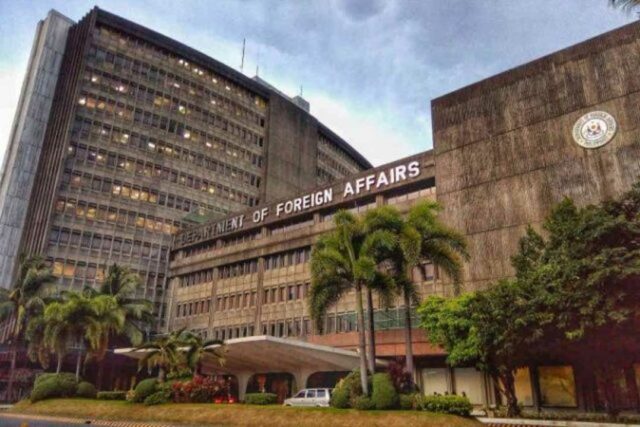
A FILIPINA in Sri Lanka was forced to flee following heavy rainfall, flooding, and landslides due to Cyclone Ditwah, the Department of Foreign Affairs (DFA) said on Monday.

“One Filipino in Negombo City is confirmed to have been displaced because of the floods,” the DFA said in a statement.

The agency said that the unidentified Filipina has received medical attention at a local hospital and is being assisted by the Honorary Consulate General.

The DFA said that it is closely monitoring the situation of all Filipinos in Sri Lanka after the onslaught of the storm, through the Philippine Embassy in Bangladesh and the Honorary Consulate General in Sri Lanka.

“The Embassy continues to coordinate with Sri Lankan authorities and stands ready to provide assistance to any Filipino who may have been affected by the calamity,” it added.

The DFA said that there are about 711 Filipinos working in Sri Lanka.

Sri Lankan authorities reported 330 people have died due to the onslaught of Cyclone Ditwah, with about 370 more missing after heavy rains lashed the country causing widespread landslides and floods. — Adrian H. Halili

PhilHealth expands outpatient HIV/AIDS coverage

PHILSTAR FILE PHOTO

THE Philippine Health Insurance Corp. (PhilHealth) has widened its outpatient treatment package for human immunodeficiency virus  or acquired immunodeficiency syndrome (HIV/AIDS) patients amid growing concerns over rising cases.

“The news that the number of PLHIV (people living with HIV) is getting younger is alarming, which is why we call on the parents of the youth to support and let them feel that they are not alone and that a future awaits them through early prevention and regular care under our YAKAP Clinics,” PhilHealth Acting President and Chief Executive Officer Edwin M. Mercado said in a statement on Monday.

Under the expanded outpatient HIV/AIDS treatment (OHAT) package, patients can avail themselves of up to P58,500 annual benefit, nearly double the P30,000 initial coverage.

According to PhilHealth, the package covers antiretroviral therapy for all individuals with confirmed HIV diagnosis from certified facilities, regardless of their clinical or immune system condition.

Patients can likewise access all necessary services required for effective HIV management.

The OHAT package is available in all 234 PhilHealth-accredited and Department of Health-designated HIV treatment hubs nationwide.

Mr. Mercado also urged HIV patients to get checked and treated, assuring them that PhilHealth will protect their personal data.

“This enhancement is consistent with President Ferdinand R. Marcos, Jr.’s directive to continually improve and sustain the health insurer’s healthcare benefits by ensuring adequate financial support to patients seeking medical treatment… To stem the tide, the strategic plan is to ensure early diagnosis and treatment, and ample testing sites and medications,” PhilHealth said.

In 2024, the state insurer disbursed a total of P1.66 billion for 176,819 OHAT benefit claims. — Katherine K. Chan

BTA sets December target for redistricting law

PHILSTAR FILE PHOTO

THE Bangsamoro Transition Authority (BTA) Parliament on Monday said it aims to finish the required districting law by December after missing the Nov. 30 deadline for its passage, a prerequisite for holding the first Bangsamoro parliamentary elections.

In a statement, BTA Parliament Floor Leader John Anthony “Jet” L. Lim, said the Parliament is working “with diligence, transparency, and broad public participation” on the districting measure. He said that the Parliament aims to complete and pass the law by December 2025, in line with the Bangsamoro Organic Law.

Alongside its work on the districting law, the Parliament is also deliberating the proposed Bangsamoro Autonomous Region in Muslim Mindanao (BARMM) 2026 budget bill, Mr. Lim added.

The missed deadline comes shortly after Commission on Elections Chairman George Erwin M. Garcia warned on Nov. 25 that it would be “difficult” for the agency to hold the first parliamentary elections in BARMM by March 31, 2026, if a new redistricting law is not enacted by the end of November.

Earlier, the Supreme Court struck down two Bangsamoro Autonomy Acts (Nos. 58 and 77), which were meant to create parliamentary districts, voiding the legal basis for the elections.

To date, six versions of the redistricting bill are being reviewed and consolidated by BTA committees, Mr. Lim said.

Public consultations for the districting law began Nov. 6 in Bongao, Tawi-Tawi, and scheduled to continue Dec. 4 in Special Geographic Area, Maguindanao del Sur, and Basilan, and Dec. 7 in Maguindanao del Norte, Lanao del Sur, and Cotabato City. — Erika Mae P. Sinaking

Stocks retreat as market eyes Nov. inflation data

PHILIPPINE STAR/KRIZ JOHN ROSALES

PHILIPPINE STOCKS dropped anew on Monday as players cashed in their gains before the release of November inflation data on Friday that could bolster expectations of another rate cut by the Bangko Sentral ng Pilipinas (BSP) next week.

The bellwether Philippine Stock Exchange index (PSEi) fell by 0.54% or 32.95 points to close at 5,989.29, while the broader all shares index decreased by 0.68% or 24.56 points to end at 3,543.78.

“The local bourse closed in red as investors locked in profits ahead of the release of key economic data on Friday. This decline came despite expectations of softer November inflation, supported by continued rice price deflation, which may give the BSP additional room to consider another rate cut,” Regina Capital Development Corp. Head of Sales Luis A. Limlingan said in a Viber message.

A BusinessWorld poll of 15 analysts yielded a median estimate of 1.6% for the consumer price index, within the BSP’s 1.1-1.9% month-ahead estimate.

If realized, this would ease from the 1.7% clip in October and the 2.5% logged in the same month a year ago. This would also be the slowest since the 1.5% print in August and would mark the ninth straight month that inflation fell below the central bank’s 2-4% annual target.

BSP Governor Eli M. Remolona, Jr. last month said they could deliver a fifth straight 25-basis-point (bp) cut at the Monetary Board’s Dec. 11 policy meeting to help support the economy amid weakening growth prospects. The central bank has reduced borrowing costs by 175 bps since it began its easing cycle in August 2024, with the policy rate now at 4.75%.

Michael L. Ricafort, chief economist at Rizal Commercial Banking Corp., said in a Viber message that the PSEi corrected slightly amid “healthy profit taking” following its recent rebound.

Weak manufacturing activity data released on Monday also affected market sentiment, he said. The Philippines’ Manufacturing Purchasing Managers’ Index (PMI) slumped to 47.4 in November, a reversal of the 50.1 in October, according to S&P Global. It said this was the “strongest deterioration in operating conditions across the Filipino manufacturing sector since August 2021.”

Most sectoral indices declined on Monday. Holding firms slumped by 1.87% or 91.25 points to 4,764.73; property decreased by 0.74% or 16.47 points to 2,202; financials went down by 0.28% or 5.7 points to 1,998.80; and industrials slipped by 0.02% or 1.92 points to 8,623.71.

Meanwhile, mining and oil surged by 2.47% or 338.81 points to 14,053.82, and services went up by 0.58% or 13.89 points to 2,389.20.

Advancers narrowly beat decliners, 99 to 97, while 65 names were unchanged.

Value turnover went up to P6.48 billion on Monday with 1.14 billion shares traded from the P5.52 billion with 1.53 billion issues exchanged on Friday.

Net foreign selling surged to P1.87 billion from P781.70 million on Friday. — Alexandria Grace C. Magno

PHL eyes more Australian tourists due to new direct flights 

LAURENTIU MORARIU-UNSPLASH

The Department of Tourism (DoT) on Monday said it expects more Australian visitors to boost the country’s tourism sector, as Jetstar Airways launched new direct flights between Perth and Manila. 

“This flight represents more than just travel,” Tourism Secretary Ma. Esperanza Christina G. Frasco said in a news release. 

“It symbolizes our commitment to offering opportunities for tourism and business, making it easier for travelers to fly to Manila and further connect the Philippines to the world,” she added. 

The newly launched flights, JQ80 and JQ81, will operate every week on Wednesday, Friday, and Sunday. Flight JQ80 will depart from Manila at 5:35 A.M. and arrive in Perth at 1:00 P.M., while the latter will leave Perth at 9:10 P.M. and arrive in Manila at 4:15 A.M. 

The department underscored that the launch of the new flights aligns with the Philippines’ National Tourism Development Plan, which aims to enhance the country’s global connectivity. 

In addition to direct flights to Manila, the airline will also open a new seasonal route connecting Brisbane to Cebu, to enhance the province’s global popularity and position the country as a “prime destination” for Australian visitors. 

According to the latest DoT Visitor Survey, 66% of Australian tourists visit the country for leisure, entertainment, and shopping. 58% of the population is also fond of buying Filipino delicacies during their stay. 

“The vision is clear, the Philippines is so much more than a destination measured by tourist arrivals,” Ms. Frasco said. 

“It is an experience that is all at once enriching, immersing, and sustaining through the air connectivity,” she added. “Further expanding opportunities for our people, enhancing the country’s competitive edge on the global tourism stage.” 

The DoT noted that 53% of Australians returned to the Philippines to explore other popular destinations such as Cebu City, Mandaue City, Lapu-Lapu City, Puerto Princesa City, and Boracay. 

Australia is the country’s fifth-largest inbound tourism market, with 271,207 or 5% of the overall tourist arrivals as of March 2025. — Almira Louise S. Martinez 

UNESCO: PHL has yet to have its “house in order” for AI adoption 

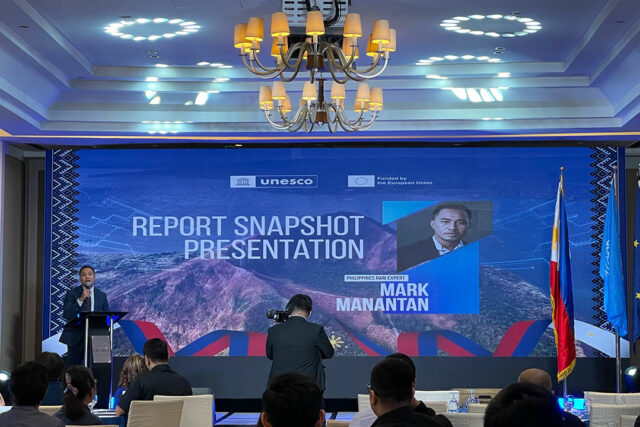
UNESCO AI Expert Mark F. Manantan presents the key insights of the Philippines’ Artificial Intelligence (AI) Readiness Assessment Country Report. — ALMIRA LOUISE S. MARTINEZ

The United Nations Educational, Scientific, and Cultural Organization (UNESCO) said on Friday that the Philippines does not have its “house in order” and is adapting slowly to artificial intelligence (AI) compared to other Southeast Asian countries. 

“The Philippines has yet to get its house in order, as I’ve mentioned in the report. If you compare it, stepping back to the Southeast Asian countries, we’re kind of left behind,” UNESCO AI Expert Mark F. Manantan told BusinessWorld at the sidelines of an event. 

“I wouldn’t say we’re running behind, but we’re slowly picking up. It’s patchy, but it’s trending upwards; the process is just slow,” he added. 

A report by the Worldwide Independent Network of Market Research (WIN) in August found that the Philippines, with 54.7 points out of 100, ranked 11th out of 38 countries globally, but placed fourth lowest among other Asia-Pacific nations. 

“When we compare ourselves to Singapore, Malaysia, Thailand, Indonesia, and Vietnam, they’re moving at a pace where they’re already pilot testing AI solutions,” Mr. Manantan said. 

“We are still kind of in the stage where we’re sorting out the fundamentals of our AI governance, our AI ecosystem,” he added. “I hope that we don’t see it as a competition per se, but also as an inspiration that we can learn from our neighbors.” 

According to the Philippines’ AI readiness assessment report by UNESCO, one of the prevailing issues contributing to the slow adoption of AI in the country includes “poor digital infrastructure, siloed policymaking, bureaucratic inertia, lagging investments in national research and development, outdated legal and regulatory frameworks and guidelines.” 

“It points to the lingering structural challenges that we have as far as infrastructure is concerned,” Mr. Manantan said. “All of those core fundamental elements that would really create an enabling AI environment.” 

Meanwhile, the Department of Science and Technology (DoST) Secretary Renato U. Solidum, Jr. underscored that the country’s AI adoption is “slightly above middle” compared to other neighboring countries. 

“We’re in the middle or slightly above the middle, compared to many other countries despite the fact that we are just starting in terms of having an integrated effort,” he told BusinessWorld in an interview. 

Mr. Solidum added that to reap the full potential of AI adoption, a multi-sectoral approach must be taken to upskill and reskill workers. 

“We need to put in more effort on the upscaling, reskilling of workers so that our current private sector industries can be more effective and efficient with the use of AI,” he said. 

“Definitely it is a team effort, other departments would need to be doing their thing,” he added. “We should approach the use of AI not with brute compute power, but how to develop innovative programs so that non-experts can still use AI.” — Almira Louise S. Martinez  

DoE hoping for EV sales of 50,000 units by year’s end

REUTERS

THE Department of Energy (DoE) said it is optimistic that the Philippines will end the year with electric vehicle (EV) sales of 50,000 units, noting that consumer acceptance of the new technology is growing.

“We’re very positive because of the numbers that we’ve seen at least as of end of September. We have more than 41,000 registered EVs,” Energy Utilization Management Bureau Director Patrick T. Aquino told reporters on Monday.

According to registration data from the Land Transportation Office, EV sales in the first nine months topped 41,000, well above the record 9,000 posted in 2024.

At present, EVs account for around 4% of the overall vehicle fleet. The Philippines is targeting nearly 312,000 units in EV sales by 2028.

“We’re optimistic that we will hit the midway point of the target through 2028, including the (target for) charging stations,” he said.

Republic Act No. 11697, or the Electric Vehicle Industry Development Act (EVIDA), authorizes the creation of the Comprehensive Roadmap for the Electric Vehicle Industry (CREVI). The roadmap seeks to lower the barriers hindering the EV industry.

EVIDA aims to promote the development and adoption of EVs by setting quotas for the share of EVs in corporate and government fleets, which is expected to generate more demand for EVs.

Under CREVI, the business-as-usual scenario target is a 10% EV fleet share by 2040. The clean-energy scenario target is at least 50%.

Mr. Aquino said the agency is set to conduct its midterm review of CREVI and produce an update on the progress on the EV industry.

“We are confident that with industry work and government policies, more electric vehicles and charging stations will come in next year,” Mr. Aquino said.

To fast-track the transition to electric mobility, the DoE has issued the Electric Vehicle Charging Infrastructure Development Plan Integration Circular, conducted consultations on mandatory EV charging station installation for designated establishments, and amended EV recognition guidelines, which are intended to streamline registration procedures. — Sheldeen Joy Talavera

Eastern Samar fastest-growing province in 2024

EASTERN SAMAR posted double-digit growth last year, making it the fastest-growing province, the Philippine Statistics Authority (PSA) said on Monday.

In 2024, all 82 Philippine provinces and 33 highly urbanized cities (HUCs) posted growth, with Eastern Samar’s economy growing 10.2% to P40.42 billion in gross regional domestic product, the PSA said in its Provincial Product Accounts (PPA) report.

Meanwhile, Puerto Princesa grew the fastest among HUCs, posting 9.8% growth last year.

“All provinces and HUCs show sustained positive economic performance,” Economy Undersecretary Carlos Bernardo O. Abad Santos said during the National Dissemination Forum on the 2024 Economic Performance of Provinces and Highly Urbanized Cities.

“Provinces with no major cities had (the) highest growth, (such as) Eastern Samar, Batanes, Dinagat, (which) may indicate positive rural development strategies,” he added.

Meanwhile, Quezon City accounted for a 6% share of 2024 gross domestic product (GDP) equivalent to P1.327 trillion in economic output.

Among provinces, Laguna had the top share of GDP last year at 4.9% or P1.081 trillion.

According to the PPA, 17 regions relied mainly on services for their growth, while one was mainly industrial. None of the regions has a predominantly agricultural economic structure.

“Agriculture requires further modernization and resilience measures,” the Department of Economy, Planning, and Development said, adding that agri-fishery value chains should be strengthened.

During the forum, Mr. Abad Santos also urged the PSA to release the PPA faster next year to help facilitate budget planning for local government units.

“As an important tool for policy analysis, the PPA allows us to measure policy effectiveness, see what’s working, and recalibrate strategies as needed,” he added. “And for risk management and resilience, it helps us in understanding sectoral dependence and helps us spot vulnerabilities and design strategies to make local economies more resilient.”

Assistant National Statistician Mark C. Pascasio said the PSA disseminated the PPA to various regional offices between Sept. 25 and Oct. 16. For next year, it aims to release the data by Aug. 28. 

The PPA will now be conducted and issued annually, following its institutionalization earlier this year. — Katherine K. Chan

BoI touts transformative potential of investing in clean technologies

INDUSTRIES need to invest in cleaner technologies to unlock potential new markets and create higher-value jobs, the Board of Investments (BoI) said.

BoI Industry Development Service Executive Director Ma. Corazon Halili-Dichosa said the green transition should not be a “trade-off between growth and sustainability.”

“It should lead to a transformation that can unlock new markets, attract green investments, and create decent jobs,” she said in a statement on Monday.

“By bridging industry and sustainability, we can position the Philippines as a leader in the green economy, driving competitiveness while safeguarding our people and our planet,” she added.

According to the BoI, a “just transition” ensures that workers, communities, and businesses are not left behind or worse off in the shift to a low-carbon economy.

“It also aligns with the industrial strategies of the Philippines, its climate commitments under the Paris Agreement, the implementation of the Energy Transition Plan, and the full realization of the Green Jobs Act’s promises,” it added.

The BoI is hoping to enhance its technical capabilities, increase engagement with industry, and align its programs and initiatives with the Just Transition Framework to help firms stay resilient and competitive.

BoI Industry Policy and Planning Services Director Sandra Marie S. Recolizado said these initiatives include better-designed programs, more informed industry dialogues, and coordinated efforts across government.

“The concept of Just Transition aligns with the Philippine strategy to position itself as the regional hub for smart and sustainable industries,” the BoI said.

“BoI recognizes the country’s strengths as a rich source of green and critical minerals and the potential for new value chains, markets, jobs, and technologies,” it added.

According to the BoI, the country has made significant progress in its Nationally Determined Contributions.

In 2021, the Philippines pledged a 75% reduction in greenhouse gas emissions and avoidance for the 2020 to 2030 period.

“Of this target, 72.29% depends on international support, such as climate finance, technology transfer, and capacity-building, while the remaining 2.71% will be achieved through the country’s own resources and efforts,” the BoI said. — Justine Irish D. Tabile

DTI asked to clarify trustmark scheme amid fears of duplicated rules 

DTI.GOV.PH

ONLINE SELLERS are asking the Department of Trade and Industry (DTI) to provide clear guidance on the rules governing the e-commerce trustmark, citing the possibility that the trustmark will duplicate the requirements of previous laws in place to ensure product safety and authenticity.

“Micro, small and medium enterprises (MSMEs) and online platforms continue to be confused because there is still no clear direction on what exactly should be followed regarding the trustmark policy,” Anna C. Magkawas, lead convenor of the Online Negosyo Empowerment Community, said in a statement on Monday.

“We call on Secretary Cristina A. Roque and the DTI to issue an immediate and clear decision — one that truly reflects the voice of the majority of online sellers,” she added.

Ms. Magkawas described the e-commerce trustmark as redundant, noting the Bureau of Philippine Standards’ enforcement of national product standards, including the Philippine Standard Quality or Safety Mark and Import Commodity Clearance.

Other agencies, she said, that monitor counterfeit and dangerous products are the Food and Drug Administration and the Intellectual Property Office of the Philippines.

“If these systems already exist, why is there a need for a new requirement that might duplicate processes and further burden small sellers? What MSMEs need now is clarity, not further confusion; support, not additional burdens,” she said.

“A swift and consultative decision from the DTI will help stabilize the industry and allow online businesses to focus on growth and responsible entrepreneurship,” she added.

In October, the DTI extended the voluntary registration for the E-Commerce Philippine Trustmark until the end of the year following consultations.

After the voluntary phase, the DTI will be conducting a review to determine whether registration should remain voluntary.

In an interview last week, Ms. Roque said that it is open to keeping the registration voluntary.

“The problem is there are so many problems in the e-commerce space, kawawa naman ang mga consumers (consumers are suffering). It is the consumers who are telling us,” she said.

Ms. Roque said that the department will need more time to assess whether registration will stay voluntary but noted that a decision will come out before the end of the year.

The DTI is also set to meet with e-commerce platforms this week to address fraudulent items being sold online and discuss other issues such as platform fees. — Justine Irish D. Tabile