Home Blog Page 634

Peso seen range-bound as traders await cues  from Federal Reserve

BW FILE PHOTO

THE PESO could trade sideways against the dollar this week as players await signals on the US Federal Reserve’s easing path.

On Friday, it closed at P58.855 a dollar, rising by 21 centavos from its P59.065 finish on Thursday, according to Bankers Association of the Philippines data posted on its website. Week on week, the peso also gained 21 centavos.

“The dollar-peso closed lower after mixed US employment data gave no clear direction on the Fed’s path, which weighed on the dollar,” a trader said by telephone.

The peso also drew support from softer global crude oil prices, Michael L. Ricafort, chief economist at Rizal Commercial Banking Corp., said in a Viber message.

Both Mr. Ricafort and the trader expect the peso to move between P58.60 and P59.10 a dollar this week.

The dollar weakened against the yen on Friday after Japanese officials stepped up verbal intervention to stem the currency’s decline, even as the greenback was broadly headed for its biggest weekly rise in six weeks.

Against other major currencies, the US unit was well-bid, with the dollar index hitting its highest since late May.

The yen popped higher after Japanese Finance Minister Satsuki Katayama said intervention was a possibility to deal with excessively volatile and speculative moves, leaving traders on alert for signs of yen buying from Tokyo.

Meanwhile, remarks from New York Fed President John Williams that the US central bank could still cut interest rates “in the near term” without putting its inflation goal at risk also helped cap the dollar’s strength.

“That pretty much was the linchpin that moved the market,” said Michael Boutros, senior technical strategist at StoneX. “He carries a lot of weight, obviously.”

In afternoon trading, the Japanese currency was up 0.63% at ¥156.549 a dollar. It hit an almost 10-month low of ¥157.90 on Thursday and was still on track for a 1.2% loss for the week.

John Velis, head of Americas macro strategy at BNY Markets, said the yen has been kept in check because intervention threats are losing some credibility.

“And there is still this expectation of a decent shot of the Bank of Japan raising rates this year, if not early next year. So, that has kind of mitigated the yen’s movement,” he added.

The currency, pressured by concerns over Japan’s worsening fiscal position, has fallen about 6% since Prime Minister Sanae Takaichi was elected leader of her party on Oct. 4. His Cabinet approved a ¥21.3-trillion ($135.4-billion) economic stimulus package on Friday.

Tokyo spent ¥5.53 trillion, or almost $37 billion, in July 2024 to intervene in the foreign exchange market to haul the yen away from 38-year lows.

Against the euro, the yen was pinned near its lowest since the introduction of the single currency, although the euro was last down 0.83% at ¥180.01.

FED RATE CUT BETS PICK UP
In the broader market, the dollar was set for a weekly gain, and markets are now betting the Federal Reserve will cut rates again next month.

The release of a delayed US nonfarm payrolls report on Thursday painted a mixed picture of the labor market and did little to alter expectations about a Fed rate cut in December, as policymakers continue to navigate through an economic fog brought about by the US government shutdown.

Mr. Williams’ comments boosted market expectations of a rate cut but some Fed policymakers diverged from his views. Boston Fed President Susan Collins said on Friday that monetary policy is in the right place amid a resilient economy, and the Dallas Fed’s Lorie Logan called for holding rates “for a time” to assess how much of a brake the current level of borrowing costs is putting on the economy.

Fed funds futures traders are now pricing in a 71% chance of a December cut, up from 39% on Thursday, according to the CME Group’s FedWatch Tool.

The euro fell 0.16% to $1.1511 and was on track for a 1% weekly decline.

It held steady after preliminary purchasing managers’ index data showed euro zone business activity grew this month, even as manufacturing activity slipped into contractionary territory.

Sterling was down 0.27% at $1.3105 as investors awaited Britain’s budget, with data showing the economy struggled before next week’s major test for the currency and bond market. The pound was set to lose 0.5% for the week.

The dollar index, which measures the greenback against a basket of other major currencies, flirted with a five-and-a-half-month peak and last stood at 100.19.

In cryptocurrencies, bitcoin BTC= fell to a seven-month low and was last down 3.52% at $84,146.2. — Aaron Michael C. Sy with Reuters

US will soon announce details of farmer payments

REUTERS

WASHINGTON — The administration of President Donald Trump will soon announce details of payments to farmers hurt by low crop prices and trade disputes, Agriculture Secretary Brooke Rollins said.

US farmers have been saddled this year with record harvests and lost billions of dollars in soybean sales to China when the nation turned to South American suppliers this fall during stalled trade talks.

The administration had been expected to announce a farm bailout totaling as much as $15 billion in October. Ms. Rollins previously said the 43-day federal government shutdown delayed the rollout.

“There’s no doubt that the farm economy for a lot of reasons is really, really struggling right now,” Ms. Rollins said on NewsNation, adding that resumed soybean purchases from China and other agricultural trade deals have improved conditions.

“We’ll soon be announcing a potential bridge payment for those who are still facing losses,” Ms. Rollins said.

Stephen Vaden, the United States Department of Agriculture’s (USDA) deputy secretary, told reporters in a call on Monday that the agency is in the process of calculating how recent trade deals with countries including Pakistan and Japan could affect the farmer payments.

Bloomberg reported on Wednesday that details of the payments will be announced in early December, citing an interview with Ms. Rollins. The USDA did not immediately respond to questions about the timing.

Ms. Rollins also said on NewsNation that the USDA will be making an announcement about “structural changes” to the Supplemental Nutrition Assistance Program (SNAP), also known as food stamps, the week after Thanksgiving.

Ms. Rollins has said all SNAP recipients will need to reapply to the program to ensure the benefits are going to eligible recipients as part of an agency effort to address fraud in the program.

The country’s nearly 42 million SNAP recipients are already required by federal law to regularly recertify their eligibility with state agencies, typically every 6 to 12 months.

During the shutdown, SNAP benefits lapsed for the first time ever, forcing recipients to make sacrifices like forgoing medication to afford groceries.

A USDA spokesperson said that since February 2025, the agency has made 127 arrests for SNAP fraud, which resulted in 63 convictions and more than $16.5 million in fines and fees. The agency did not provide further details of the arrests or charges. — Reuters

PHINMA Education sees no immediate need for IPO

STJUDE.EDU.PH

PHINMA Education Holdings, Inc. (PEHI) continues to consider an initial public offering (IPO) as a potential funding option but is delaying the move due to soft market conditions and the availability of private investment.

“The market is really soft, so it may not be a conducive time for us to raise the money. Secondly, we still receive interest from private investors. So that tells us that we can get better valuations from private equity investors. Thirdly, we have yet to fully deploy the funds that we receive from KKR,” PHINMA Corp. Vice-President and Treasurer Nanette P. Villalobos said at a briefing last week.

“We’re focusing our efforts on deploying and putting that investment to good use. We are scheduled to receive the balance of the KKR investments, I believe, next year. So we still have funds at this point and don’t see the need to go for an IPO right now,” she added.

In August, PEHI secured a P825-million investment from Rise Edu Pte. Ltd., an investment vehicle managed by the education-focused private equity fund Kaizenvest III. The remittance, received on Aug. 13, is part of an investment agreement signed last May by PHINMA Education, Kaizenvest III, and Phoenix Investments II Pte. Ltd.

The agreement’s primary transaction involved the issuance of P4.5 billion in new PHINMA Education shares. Under the secondary transaction, KKR-managed funds purchased all PHINMA Education shares previously held by the Asian Development Bank, Nederlandse Financierings-Maatschappij voor Ontwikkelingslanden N.V., and Kaizen Private Equity II Pte. Ltd., which had invested in the company in 2019.

Following the P825-million remittance from Kaizenvest III and the P2.52 billion received from KKR in October last year, PHINMA Education now holds 75% of the total investment.

PHINMA Chief Financial Officer EJ A. Qua Hiansen said that the partnership with KKR goes beyond financial support. “There was also a large strategic benefit that KKR brought. As I mentioned, we do like bringing in partners for other reasons, beyond just the financial, because they can really help us grow the business.”

PHINMA Senior Portfolio Manager Andre F. Ramirez highlighted KKR’s active role in initiatives to improve student outcomes. “I think one of the key strengths with the partnership with KKR [is] we have a lot of open dialogue with them and they have been crucial in actually a lot of the things we’ve been doing in terms of building up our capabilities, especially since they’ve come in.”

“What we want to do is we really want to improve the survival rate of our students. Because right now, for every batch that comes in, only about 30%-40% of them actually graduate. So, we’re losing about 60% of our students through the time. And we’re really focusing on fixing that and then trying to raise that number so that we can get more students through the door, to their diplomas, to the jobs that are out there, and really create that social mobility. I think that they’ve been crucial in figuring out how to tackle these things, how to take a look at it from different angles, and giving us strategic support to do what we need to do in terms of that,” he said.

PHINMA shares were last traded on Nov. 19, unchanged at P16.38 per share. — Alexandria Grace C. Magno

Style (11/24/25)


Trade-in of old appliances for Dyson products

FROM Nov. 25 to 28, visit the 2/F Atrium of SM Podium for Dyson’s Trade to Upgrade event — a limited-time opportunity to upgrade old machines and experience Dyson’s latest innovations. Get up to 30% off when trading in a working or non-working purifier, vacuum, or hair tool of any brand (within the same category) and enjoy up to 30% off on a Dyson upgrade. The promo is valid on straight payment transactions only and is not valid in conjunction with other discounts or promotions, and not applicable on installment terms. Flexible payment options are available: 0% installment for up to 24 months on all Dyson machines, including the Airwrap Co-anda 2X and Amber Silk finish (outside of the Trade-In promo).


Uniqlo holds Thank You Festival

UNIQLO gives back to its customers for their patronage through the annual Thank You Festival, a week-long celebration of LifeWear and the people who make it part of their everyday lives. This year’s festivities are ongoing until Nov. 27. The Thank You Festival is held twice a year. Throughout the entire week, over 50 LifeWear items are available at special prices, with some pieces going as low as P390. The discounted pieces include the Zip Up Short Jacket (now P1,990 from P2,490) for women, as well as the clean and sleek Washable Milano Ribbed Crew Neck Sweater (now P1,490 from P1,990) for men. Aside from the marked down items, customers can also enjoy special surprises and promotions. Shoppers will receive a free Uniqlo Luggage Tag with a minimum single-receipt purchase of P3,500 from Nov. 24 to 27. There are interactive setups like free luggage tag engraving at the following key stores: Uniqlo Manila Flagship Store, Uniqlo Mall of Asia, Uniqlo SM Megamall, Uniqlo SM North EDSA, Uniqlo Greenhills, Uniqlo Ayala Center Cebu, and Uniqlo Davao Roadside Store, as the newly reopened Uniqlo BGC High Street store. Uniqlo has also come out with its special UTme! collaboration with Del Monte, which celebrates its 100th anniversary next year.


Cetaphil launches new Cica range

CETAPHIL unveils its latest innovation: Cetaphil Soothing & Comforting Cica, a new line specially formulated to reduce redness, soothe irritation, and restore the skin’s protective barrier. Cica (Centella Asiatica extract) is an ingredient celebrated for its soothing and healing properties. Meanwhile, its other ingredients, pentavitin and allantoin, help to deeply hydrate, repair, and protect redness-prone, sensitive skin. These make up Cetaphil’s Power Trio Blend — delivering instant soothing relief while working to reduce visible redness and protecting the skin barrier for up to 24 hours. The Cica line is made up of a Restoring Serum, Balancing Toner, and Calming Face Cream. The new range is now available at leading drugstores, supermarkets, and e-commerce platforms nationwide.


HOKA launches F25 Koshi Tan-Tan Capsule

HOKA announces the arrival of the F25 Koshi Tan-Tan Capsule, a limited-edition collection created for runners. The capsule features road and trail footwear and performance apparel in a black-and-gold colorway, designed for athletes. The Koshi Tan-Tan Capsule pays tribute to the Japanese ekiden, a long-distance relay race in Japanese culture. The HOKA F25 Koshi Tan-Tan Capsule is now available at HOKA exclusive stores in One Ayala Mall, GH Mall, SM Aura, Ayala Malls Manila Bay, and the newly opened TriNoma branch. HOKA products are also available at select branches of Foot Locker, Commonwealth, Sole Academy, Planet Sports, Runnr Stores, Toby’s Sports, REV, The SM Store at SM Mall of Asia and SM Megamall, and R.O.X. in Bonifacio High Street.


Uptown Bonifacio unveils Michael Leyva Christmas tree

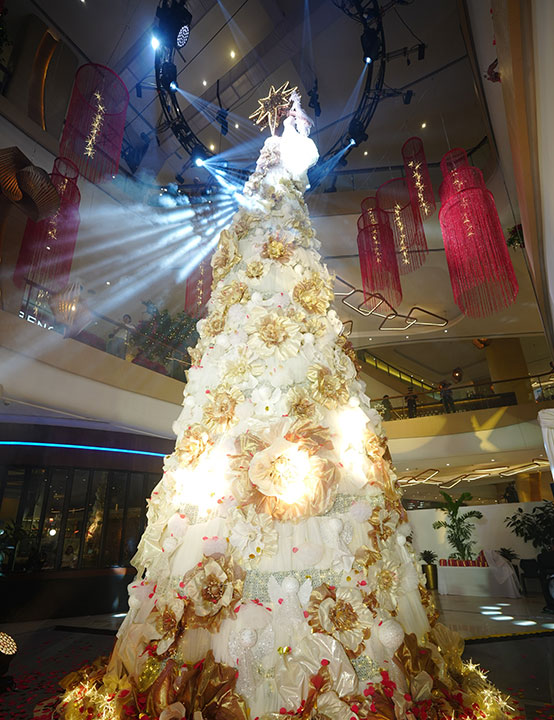
UPTOWN BONIFACIO welcomed the holiday season with this year’s centerpiece, created in collaboration with fashion designer Michael Leyva. Excess fabrics and leftover materials from Mr. Leyva’s previous couture collections were used in an ethereal 30-foot Christmas tree that departs from traditional décor while preserving its iconic silhouette. Draped in layered fabrics and sculptural details, the installation mirrors Mr. Leyva’s signature romantic aesthetic. Surrounding angel forms, also adorned in reimagined materials, extend the narrative of renewal while adding a celestial touch to the installation. The launch was led by Taguig City Mayor Lani Cayetano, Megaworld President and CEO Lourdes Gutierrez-Alfonso, First Vice-President and Head of Megaworld Lifestyle Malls Graham Coates, Cluster General Manager Camille Elviña, and Mr. Leyva during the unveiling of the installation at Uptown Mall. The celebration continues all season long with the Uptown Run Club’s indoor Mall-a-thon on Dec. 6 and Door Dash Run in partnership with participating restaurants on Dec. 11, Christmas quartet performances on Dec. 24 and 31, and a Santa Meet and Greet on Dec. 23 and 25. Visit megaworld-lifestylemalls.com or call (02) 8462-8888 for updates.


Gap reveals holiday collection

GAP’s holiday collection is designed to feel as good as it looks. CashSoft, the brand’s proprietary, machine-washable knit, has become a modern staple since its debut just two years ago. This season, CashSoft is reimagined in new silhouettes and textures, with the same cashmere-soft and super plush feel to bring luxe into everyday outfits. Gap’s heritage fleece and sweats are also available in upgraded weights and finishes that elevate the brand’s most recognizable icon hoodie made for gifting and self-gifting alike. Shop online at gap.com.ph or in-store at its various locations including SM Mall of Asia, SM Megamall, TriNoma, Evia Lifestyle Center, Rustan’s Makati, Shangri-La Mall, and Alabang Town Center.

The road to redemption

Is the auto industry slowing down? — PHOTO BY KAP MACEDA AGUILA

This despite challenges natural and man-made

THE SUCCESSIVE earthquakes in early October spawned a wave of “end of the world” predictions. The leaders of our Holy Catholic Church called for a return to prayer and made a plea for mercy. After all, the quakes were most definitely of significant intensity — enough to shake not only the ground and edifices but also our faith. These quakes came in the wake of a series of strong typhoons in July and September and presaged even stronger storms just this November. The damage to life and property has been truly devastating.

I am tempted to say that these natural calamities are the physical manifestation of the extraordinary exposés that have drawn the ire of the nation in the past 100 days or so. Reportedly extensive and deeply rooted irregularities within the halls of government have shaken the trust of people in the very institutions that are supposed to look after our welfare and the public interest.

Indeed, for those whose love of country is paramount, the revelations of supposed widespread abuses are resulting to much agony and hurt.

Public opinion continues to crest on all the possible unintended fallout of recent events. While this may result to heightened levels of uncertainty in the business community, I am encouraged by the still relatively strong showing of the economy. Admittedly, gross domestic product (GDP) growth in the third quarter of the year was reported at 4%, lower than the previous quarter’s growth of 5.3% and the lowest since 2021. While disturbing, this is not surprising due to the erosion of public trust. This may have led to slower personal consumption and (government) investment spending. I take comfort in that this was triggered mainly by political events than any real erosion of economic fundamentals — save for those wrought by the spate of natural calamities.

In itself, the drop in GDP growth might seem disconcerting. However, a recent report by Nikkei Asia cited that “four of the six largest economies in Southeast Asia have reported slower year-on-year growth in the July-to-September period.” Thailand’s GDP dropped to 1.2% in the third quarter from 2.8% in the previous quarter. Singapore slid to 2.9% from 4.5% in the second quarter. For Thailand and Singapore, slow manufacturing output was seen as a key factor in the deceleration of economic growth. In Indonesia and the Philippines, a slowdown in private consumption was a significant contributor to slower GDP growth. Indonesia GDP fell slightly to 5.04% from 5.12%.

Malaysia’s GDP growth, though, accelerated in the third quarter to 5.2% against 4.4% in the prior quarter. This was triggered by a rise in mineral resource exports. It is worth noting, however, that private consumption dropped to 5% from 5.3%. Vietnam remains as the strongest economy in the region, sustaining growth of 8.2%, up from 8.0% in the second quarter. Its economy has been firing on all fronts — manufacturing, construction, and service.

To my mind, a 4% GDP growth for the Philippines in the third quarter is, after all, still quite respectable and strong. The hope is that the political strife will be resolved sooner rather than later so that our solid fundamentals can get the economy back on track.

Undoubtedly, the automotive sector is not immune from the slowing economic activity. Mainly, however, this is more directly attributable to the deferment of consumer durable purchases wrought by climate disturbances. Short work weeks resulting from typhoons and the reprogramming of government spending towards relief activities have weighed on car sales in the affected months and areas.

In fact, the latest sales report by the Chamber of Automotive Manufacturers of the Philippines, Inc. (CAMPI) showed that sales of 40,014 units in October grew by 4.8% versus September. This is a welcome sign that demand for vehicles is still resilient. As we head into the yearend holidays, car purchases are expected to experience a seasonal bump from increased remittances from overseas, a rise in consumer spending, and aggressive sales promotions from auto retailers. Hopefully, political anxieties will abate with a focus on reform and the longer-term outlook.

On a year-to-date basis, CAMPI announced sales of 384,566 units, a flat performance versus the same period last year. Five of 12 member-companies reported flat or better sales — including Kia (up 31%), Suzuki (up 9%), Honda (up 5%), Toyota (up 4%), Isuzu (up 3%) and MG (up 2.5%). Mitsubishi reported flat growth.

If non-CAMPI car companies are included for the January-to-October period, it is estimated that some 20,000 units will be added to total market sales, resulting to a growth of around 4%. This reflects the underlying strength of motorization especially in the provincial areas where sales expansion outpaces the National Capital Region (NCR). It also captures the rise in demand for electrified vehicles.

It is heartening that our economic fundamentals remain solid. Some say not for long, but I sense that we may be underestimating our demographic and inherent strengths as a country. If there is one word that has described our economy through every disruption — natural calamity, political upheaval, global or regional contagion — it would be “resilient.” Yes, as a nation we thankfully have an uncanny ability to bounce back.

SEC, Cambodia’s SERC partner to strengthen capital markets

SEC.GOV.PH

THE Securities and Exchange Commission (SEC) and Cambodia’s Securities Exchange Regulator Commission (SERC) have agreed to collaborate on supervision, enforcement, capacity building, and technical projects, with a focus on sustainable finance, fintech, and digital market transformation.

The memorandum of understanding, signed on Nov. 4, establishes a framework for the two agencies to share information, provide mutual support, and work together on regulatory issues affecting both markets to strengthen their institutions.

“We aim to enhance investor protection, uphold market integrity, and promote innovation and responsible growth. This partnership also reflects our broader ASEAN vision — to build fair, efficient, and resilient capital markets that inspire investor confidence and contribute to sustainable development across our region,” SEC Chairperson Francisco Ed. Lim said in an e-mailed statement over the weekend.

He added that the partnership could bolster investor confidence and facilitate deeper integration of ASEAN financial markets amid globalization and advances in digital technology.

“This partnership is a testament to our belief that by working together, we can achieve far more than we can alone. We can create a more secure environment for investors, build greater confidence in our respective markets, and contribute to the financial integration and prosperity of the entire ASEAN region,” SERC Director General Sou Socheat said.

ASEAN CAPITAL MARKETS FORUM
The SEC formally assumed chairmanship of the ASEAN Capital Markets Forum (ACMF) in Kuala Lumpur, succeeding the Securities Commission Malaysia.

The commission said it will focus on improving integrity, enhancing coordination in supervision, enforcement, and corporate governance, and promoting responsible use of artificial intelligence to build trust in regional capital markets.

These priorities reflect the ACMF 2026 Chairship theme, “Navigating Our Future, Together.”

The commission said it will also advance sustainable finance initiatives, including developing the first phase of the mitigation co-benefit and adaptation for resilience (mARs) guide and creating a code of conduct for external reviewers of sustainable finance products.

“The SEC Philippines will further support the development of the Capital Market Financial Literacy Toolkit to serve as a common reference for implementing targeted education initiatives that are regionally aligned yet responsive to the needs of the individual ASEAN member states,” the commission said.

Mr. Lim said the handover renews the commitment to ASEAN’s core principles of consultation, consensus, and cooperation.

Under Malaysia’s stewardship, the ACMF advanced sustainability and inclusivity through the ACMF Action Plan 2026-2030, the ASEAN ESG disclosure guide for SMEs, the ASEAN voluntary carbon market, and the mARs whitepaper supporting the ASEAN taxonomy.

“As we embark on this new chapter, let us reaffirm the founding spirit of ASEAN — cooperation, harmony, and shared prosperity. Let us move forward as one, building capital markets that are trusted by investors, resilient in crisis, and rooted in the values that make ASEAN a community of hope and strength,” Mr. Lim said.

Established in 2004, the ACMF is a regional forum of ASEAN capital market regulators aimed at developing a deep, liquid, and integrated regional capital market. — Alexandria Grace C. Magno

Expired medicines: A public health and environmental issue we can solve together

FREEPIK

Every year, millions of Filipino households accumulate expired medicines such as forgotten pain relievers, half-used bottles of children’s vitamins, or leftover antibiotics. While these items may seem harmless, their improper disposal poses real risks to public health, community safety, and the environment.

According to Josefino Tapia, Vice-President for Operations of Zuellig Pharma, expired or unused medicines should never be flushed down the toilet, thrown directly into household trash, or burned unless no other safe disposal options are available. These common but harmful practices can lead to long-term environmental damage and unsafe community conditions.

Flushing medications into the sewage system can contaminate waterways, harm aquatic life, and jeopardize drinking water quality. Unlike the US Food and Drug Administration (FDA), the Philippine FDA does not maintain a “flush list” of medicines allowed for toilet disposal. This is because wastewater treatment systems in the Philippines are not designed to filter out pharmaceutical compounds, allowing residues to enter rivers, lakes, and marine ecosystems. Over time, these substances can accumulate in the food chain, threatening biodiversity and potentially affecting human health.

Throwing medications into the trash also carries risks. Discarded medicines, especially controlled substances, may be retrieved and misused, contributing to substance abuse in both urban and rural communities. Meanwhile, burning expired medications with household waste can release toxic fumes and violates environmental regulations.

Improper disposal is also prohibited under various environmental laws, which classify pharmaceutical waste as hazardous and mandate proper segregation and treatment. These include Republic Act 6969 (Toxic Substances and Hazardous and Nuclear Waste Control Act), RA 9003 (Ecological Solid Waste Management Act), RA 9275 (Clean Water Act), and RA 8749 (Clean Air Act).

Keeping expired medicines at home can also result in accidental ingestion, especially among children and the elderly. Sharing unused medications may lead to incorrect dosing, allergic reactions, or dangerous drug interactions. Environmental exposure to antibiotic residues can contribute to antimicrobial resistance by allowing bacteria in soil and water to develop potentially harmful resistance traits.

Mr. Tapia recommends disposing of expired medicines through authorized take-back programs. Some hospital pharmacies or local government units (LGUs) accept expired medicines during special collection drives or community health campaigns. These are typically coordinated with the Department of Health (DoH) or waste handlers accredited by the Department of Environment and Natural Resources (DENR).

However, Mr. Tapia noted that most pharmacies and drugstores in the Philippines are unable to accept expired medicines for disposal due to regulatory limitations. Only select institutions participate in take-back activities, and these efforts remain limited and not yet standardized nationwide.

When no official disposal program is available, households are encouraged to follow safe, DoH- and DENR-aligned disposal practices. Without crushing tablets or capsules, expired medicines should be mixed with undesirable solid waste such as coffee grounds or sawdust. The mixture should be placed inside a sealed container to prevent leakage and then disposed of with household trash. Personal information on prescription labels must be removed before discarding packaging to protect privacy.

The research-based pharmaceutical industry supports responsible medicine disposal as an essential practice to safeguard public health, protect the environment, and ensure compliance with national waste management laws.

Zuellig Pharma, a member of the Pharmaceutical and Healthcare Association of the Philippines (PHAP), complies with applicable regulations on product recall and disposal. The company provides disposal services for supply chain partners, including expired medicines from hospitals, pharmacies, and healthcare providers but does not operate consumer take-back programs due to regulatory constraints.

It disposes of expired medicines through DENR-accredited treatment, storage, and disposal (TSD) facilities. These facilities use methods such as high-temperature incineration to safely destroy expired drugs. The process involves secure quarantine of expired products, proper labeling and inventory for regulatory reporting, transport by licensed haulers, and documentation through waste manifests and certificates of destruction. Strict chain-of-custody protocols prevent diversion or misuse. All disposal activities are reported to the DENR Environmental Management Bureau and FDA, with regular internal and third-party audits to ensure compliance.

By disposing of expired medicines responsibly, we protect people, communities, and the environment. This protection begins with small, deliberate actions. The next time we clean out our medicine cabinet, let us choose the path that keeps everyone safer. Our everyday choices matter more than we know.


Teodoro B. Padilla is the executive director of Pharmaceutical and Healthcare Association of the Philippines, which represents the biopharmaceutical medicines and vaccines industry in the country. Its members are at the forefront of developing, investing and delivering innovative medicines, vaccines and diagnostics for Filipinos to live healthier and more productive lives.

Philippine bond yields end mixed as markets position for possible BSP cut

YIELDS on Philippine government securities were mixed last week as traders positioned for a possible rate cut by the Bangko Sentral ng Pilipinas (BSP) in December.

Short-term Treasury bill rates slipped, reflecting expectations that the Monetary Board could lower borrowing costs at its Dec. 11 meeting. Moves across the rest of the curve were uneven, with some medium- and long-tenor bonds drifting higher as investors factored in inflation risks linked to a softer peso.

“The declines on the short end reflected market expectations of continued BSP rate cuts in December and in 2026,” a bond trader said.

Governor Eli M. Remolona, Jr. said earlier this month that a reduction is possible and would likely come in a quarter-point step. The central bank has lowered policy rates several times since mid-2024 as growth momentum cooled and inflation stayed subdued.

Investor sentiment remains fragile following revelations of irregularities in state flood-control spending, which some economists say may drag public outlays and slow expansion. Former Finance Secretary Ralph Recto recently said full-year growth might settle below 5%, adding to expectations of a rate reduction.

Inflation held steady in October while staying within target, according to data from the Philippine Statistics Authority. Still, pressure from the weaker peso has kept some medium- and long-tenor yields slightly elevated as markets assess potential pass-through to consumer prices.

The peso softened against the dollar late last week, with trading volumes thinning as investors awaited delayed US economic releases following the government shutdown.

Despite the mixed performance across the curve, traders said the broader backdrop still favors lower yields.

“The fundamental case for lower yields remains intact,” the trader said. “We have below-target inflation, subdued growth momentum and a favorable bond supply calendar. Given this environment, the balance of risks for peso government security yields is clearly skewed to the downside.”

A second trader said any further softening in US data could strengthen the case for a Federal Reserve rate cut in December, easing pressure on the BSP and supporting a domestic policy move. Markets are also watching speeches from Fed officials for fresh guidance ahead of next month’s meeting.

Bond turnover for the week was slightly lighter, with participants taking smaller positions as they waited for clearer signals from both the Fed and the BSP.

Overall, traders expect yields to continue drifting lower, barring any surprise from global data releases or sudden shifts in currency sentiment. — Heather Caitlin P. Mañago

Japanese seafood caught up in escalating diplomatic dispute with China 

STOCK PHOTO | Image from Freepik

TOKYO/BEIJING — China has indicated it will ban all imports of Japanese seafood, two government officials in Tokyo said, in what appears to be the latest salvo in an escalating diplomatic dispute between Asia’s top two economies.

Tensions between the two countries ignited after new Japanese Prime Minister Sanae Takaichi said this month that a Chinese attack on Taiwan threatening Japan’s survival could trigger a military response.

China has demanded she retract the remarks and urged its citizens not to travel to Japan, resulting in mass cancellations that could deal a sizable blow to the world’s fourth-largest economy.

Asked about the seafood restrictions at a press conference, China’s foreign ministry spokesperson Mao Ning said: “Under the current circumstances, even if Japanese seafood were to be exported to China, it would find no market.”

She reiterated that if Takaichi did not retract her remarks, China would have to take “stern and resolute” countermeasures.

Japan’s Chief Cabinet Secretary Minoru Kihara told reporters Tokyo had not received any official notification from the Chinese government about a ban on seafood.

Beijing just months ago partially eased restrictions on Japanese seafood that had been imposed due to Tokyo’s decision two years ago to release treated wastewater from its Fukushima power plant, the site of a 2011 nuclear meltdown that followed a massive earthquake and tsunami.

China informed Japan’s ministry of agriculture, forest and fisheries on Wednesday that current import procedures were not sufficient, indicating a likely re-imposition of the blanket ban, Japanese government officials said, requesting anonymity due to the sensitivity of the matter.

China said the move was due to concerns about Japan’s screening method, the officials said, adding they believe it was likely further retaliation for Takaichi’s remarks.

Facing a wave of vitriolic responses by a Chinese diplomat in Japan and Chinese state media aimed at Takaichi, Japan warned its citizens in China to step up safety precautions and avoid crowded places.

Tokyo has said Takaichi’s remarks in parliament are in line with the government’s position, suggesting no breakthrough is imminent.

China said in June that it would resume importing Japanese seafood products from all but 10 of Japan’s 47 prefectures.

The re-imposition will be a painful blow for many companies eager to re-enter a market that previously accounted for more than a fifth of all Japan’s seafood exports.

Nearly 700 Japanese exporters had applied to re-register for shipments to China, Agriculture Minister Norikazu Suzuki told reporters on Tuesday. However, only three had been approved to date.

Before the 2023 ban, China was Japan’s top scallop buyer and a major importer of sea cucumbers.

More immediately, China’s travel boycott could have far-reaching consequences for Japan’s shaky economy.

Tourism accounts for around 7% of Japan’s overall gross domestic product, according to the World Travel & Tourism Council, and has been a major driver of growth in recent years.

Visitors from mainland China and Hong Kong account for around a fifth of all arrivals, official figures show.

More than 10 Chinese airlines have offered refunds on Japan-bound routes until Dec. 31, with one airline analyst estimating that around 500,000 tickets have already been canceled.

A person at a state-owned Chinese bank said staff were informally told by managers that requests to travel to Japan would not be approved for the time being. The person declined to be named due to the sensitivity of the matter.

An annual meeting of academics from both countries in Beijing has been postponed, China’s foreign ministry said, citing the political fallout.

Another event promoting Japan–China friendship in the western Japanese city of Hiroshima has also been canceled.

Japanese artists have  been caught up in the furore.

Performances by Japanese comedians at an upcoming festival in Shanghai have been canceled due to “unavoidable circumstances,” entertainment firm Yoshimoto Kogyo said.

Screenings of upcoming Japanese films in China have also been suspended, while a Japanese boy band canceled a fan event in Guangzhou earlier this week citing “force majeure.”

Other Japanese celebrities popular in China have tried to head off potential backlash with messages showing their support for China.

“China is like my second homeland to me and all my friends in China are my cherished family — I will always support One China,” Japanese singer MARiA wrote on Weibo. — Reuters

Dyed hair and nail art ok! More Japanese firms relax rules in tussle for workers

STOCK PHOTO | Image by kazuend from Unsplash

TOKYO — When 22-year-old Hinako Mori moved to Tokyo last year, she chose to work part-time at Don Quijote, a major discount retailer, for one main reason — it doesn’t care what color her hair is.

Sporting ash blonde locks with light and dark blue streaks when interviewed, Ms. Mori likes to dye her hair different colors every six weeks.

It was very different when she worked at a major Japanese convenience store chain that mandated black or dark brown hair.

“One time, I dared to dye my hair blonde. But the next day, I was told to either wear a wig or use spray-on color,” said Ms. Mori. “It was very stressful.”

RETAILERS RELAX RULES
Squeezed by Japan’s tight labor market, more companies are this year following in the footsteps of Don Quijote, a Pan Pacific International group company. It relaxed its rules around hair and nail polish three years ago and says nearly a quarter of its employees now have brightly colored hair. When brown is included, 55% of its employees have non-black hair.

Drugstore chain Fuji Yakuhin, for example, has done away with a plethora of rules for non-pharmacist employees. It now allows any hair color, nail art, heavy makeup, as well as all kinds of rings, whereas previously only wedding rings were permitted. Similarly, the operator of Tokyu Store supermarkets has dialed back restrictions on hair colors, hair styles, accessories, nail polish, and piercings.

Japan, Inc. has been gradually relaxing its dress codes over the past two decades. The catalyst was a 2005 Ministry of Environment “Cool Biz” campaign that encouraged the ditching of jackets and ties to cut down on air conditioning costs during summer.

Since then, summer dress codes have become more casual, uniforms are no longer mandated for many department store employees and white gloves for taxi drivers were made optional.

The newest changes around hair color, nail polish, and accessories are predominantly taking place at smaller companies facing more acute labor shortages than bigger firms and don’t have as much leeway to offer competitive wages.

But some big listed firms have relaxed dress codes this year. Japan Airlines last week joined subway operator Tokyo Metro and domestic budget carrier Skymark Airlines in allowing staff to wear sneakers to work.

LABOR CRUNCH PRESSURE
Japan, a rapidly ageing country with limited immigration, has seen its working-age population tumble 16% since a peak in 1995, according to OECD data. That’s set off fierce competition for staff.

Two-thirds of Japanese firms have said the labor shortage is having a serious business impact, a Reuters survey shows. It was the leading cause of Japanese bankruptcies in April-September, with the number of failures hitting their highest level in 12 years for a first-half period, according to Tokyo Shoko Research.

That’s given young people more power, at least with regard to part-time work.

Two-thirds of students believe they should be able to choose their appearance when working part-time, according to an April survey by job information and recruitment firm Mynavi. One-third said they had withdrawn job applications because of dress codes at potential employers.

“Students aren’t just looking for work experience or to earn money; they seem to be seeking something more in their jobs — a sense of freedom or comfort,” said Shota Miyamoto, a researcher at Mynavi. But he added they did not expect the same of full-time work.

While Japan may be loosening up, some aspects of personal appearance that have become common in the West, like multiple or facial piercings, are still a bridge too far for many companies. Workers with tattoos — art traditionally associated with the yakuza in Japan — are generally asked to conceal them so as not to intimidate customers.

The latest changes have also yet to permeate many traditional big-name Japanese companies. Sumitomo Mitsui Banking Corp, for example, says it doesn’t have policies about hair or nail polish, but it’s generally understood among employees that their personal appearance shouldn’t create waves. — Reuters

Moving up

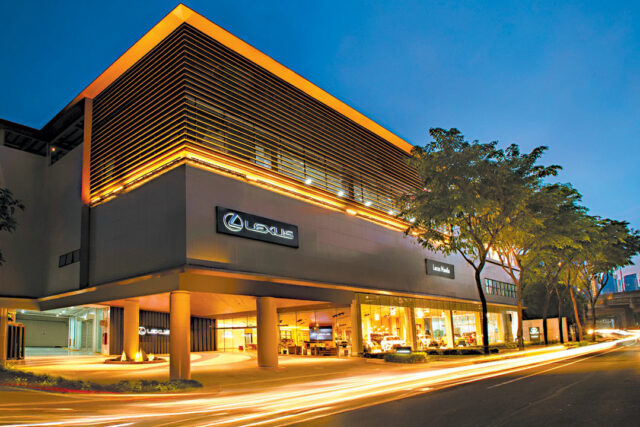
Lexus Manila Gallery is on 8th Avenue Cor. Col. Santos Street, Grand Central Park, North Bonifacio Global City, Taguig. — PHOTO FROM LEXUS PHILIPPINES

Lexus Manila Gallery is the new home befitting the country’s leading premium auto brand

LEXUS in the Philippines recently moved into its new home — a multi-storey facility that’s not just reflective of the auto brand’s premium nature but truly befitting its luxury-segment leadership here.

What a difference 16 years can make.

Not too long ago, it seemed that Lexus was more of an experiment than anything — a bold move by Toyota Motor Philippines to bring in the brand, and during a period of global economic uncertainty, no less. Rising on a 4,000-sq.m. lot on the corner of 8th Avenue and 34th Street in Bonifacio Global City, Lexus Manila remained the marque’s showroom and facility in the country. Three floors and 10,000 sq.m. of everything Lexus — which at the outset had as its centerpiece an atrium garden with real balete trees and mint plants underneath a skylight — was eventually outgrown by the brand’s success. Underscored Lexus President Masando Hashimoto in a speech at the recent inauguration of the facility, “When we opened our… showroom that year, we sold 172 units.”

This makes its segment dominance — first attained in 2023 and repeated last year (with 53.5% market share to the tune of 2,263 units) — an even more noteworthy achievement. Word has it that Lexus is set to do a “three-peat” by the time 2025 is done and dusted.

With total cumulative sales breaching 12,000 vehicles since its humble beginnings, Lexus Philippines (through Lexus Manila) made an easy choice to pack bags for a more appropriate location. “The decision to move to a bigger and better facility is intended to cater to the enhanced lifestyle of luxury customers,” said Lexus Philippines in release.

The growth, continued Mr. Hashimoto, is also mirrored in the expansion of the model line from five to 12. “With each vehicle built in Japan at our Tahara, Motomachi, Miyata, and Iwate plants, every Lexus delivered to our customers carries the finest ‘made in Japan’ craftsmanship and quality,” he stated.

And Lexus Manila Gallery, as the dealership facility is now called, is just further down 8th Avenue from its original location — and, while we’re at it, right after the “semi-permanent” Lexus at Mitsukoshi brand space.

Lexus Manila Gallery isn’t just defined by the design and elements that go into the physical structure. Averred Lexus Philippines Chairman Alfred Ty: “In Lexus, our philosophy is to treat each customer as we would a guest in our own home. It is what we call the omotenashi spirit. Our goal is to provide number-one quality in every vehicle and deliver the omotenashi experience to every single guest.”

Mr. Ty maintained to guests at the inauguration, “In the past 16 years, our team has tried to craft a personal relationship with each one of you, or as personal as you would allow us to be, because we believed this was how we could provide the best service possible. Whether it would be pocket events about coffee making and appreciation, calligraphy basics or bonsai making.”

The executive looks fondly upon the old location, describing it as one his late father (business magnate George SK Ty) loved. “It was intimate and personal. It had allowed the outdoor feature to come inside with an indoor garden. It is also where we were able to welcome late Honorary (Toyota Motor Corp.) Chairman Dr. Shoichiro Toyoda and also current Chairman Akio Toyoda.

But the four-storey facility, which stands on 4,200 sq.m. of prime real estate, of course ticks important boxes — particularly by enhancing the service capacity of the brand by “at least 50% of the original for both productive bays and holding stalls,” reflecting a meaningful capacity scaleup. It gets 12 service bays, and is also 40% larger than the original location (which, for now, is retained as a used-car showcase/depot).

Lexus Manila Gallery, with a total floor area of around 10,000 sq.m., boasts a sprawling eight-car showroom on the ground floor, with an additional pocket showroom on the third floor that also doubles as a lounge complete with Ogawa massage chairs and even a golf simulator.

As in the previous facility, Lexus Manila Gallery is imbued with an unmistakably warm, homey, and inviting ambience, obviously in keeping with its aforementioned omotenashi vow. Generous use of wood also lends a decidedly Lexus character as in other Lexus facilities — particularly Intersect locations. Artworks featuring stylized Lexus vehicles on canvas tastefully dot the location, as well as a delightful mélange of merchandise, brand and dealership achievements, and even a kiddie LX 570 in the showroom.

Just before the elevator on the left side of the ground floor — just past the huge service reception lounge with comfortable couches — is a bar where signature coffee blends are served using Lexus Crafted in-house sumiyaki beans (not for sale, unfortunately) which are charcoal-roasted using a Japanese technique. Other offerings include mocktails, juices, desserts, cookies, and brownies.

At its core, the raison d’être for new dealership is simple: To reflect the vision of what Lexus is as it evolves for the future. “This vision is echoed by our global chairman Akio Toyoda, who recently said: ‘Lexus is now poised to evolve further. The keyword is discover. Lexus doesn’t imitate anyone.’ Guided by this, we will continue to deliver unique products and experiences to customers in the Philippines,” concluded Mr. Hashimoto.

The Lexus Manila Gallery is located on 8th Avenue Cor. Col. Santos Street, Grand Central Park, North Bonifacio Global City, Taguig. It is open from 8 a.m. to 7 p.m. Mondays through Saturdays, and 10 a.m. to 6 a.m. on Sundays. After-sales service reception is from 7:30 a.m. to 5:30 p.m. Mondays through Saturdays.

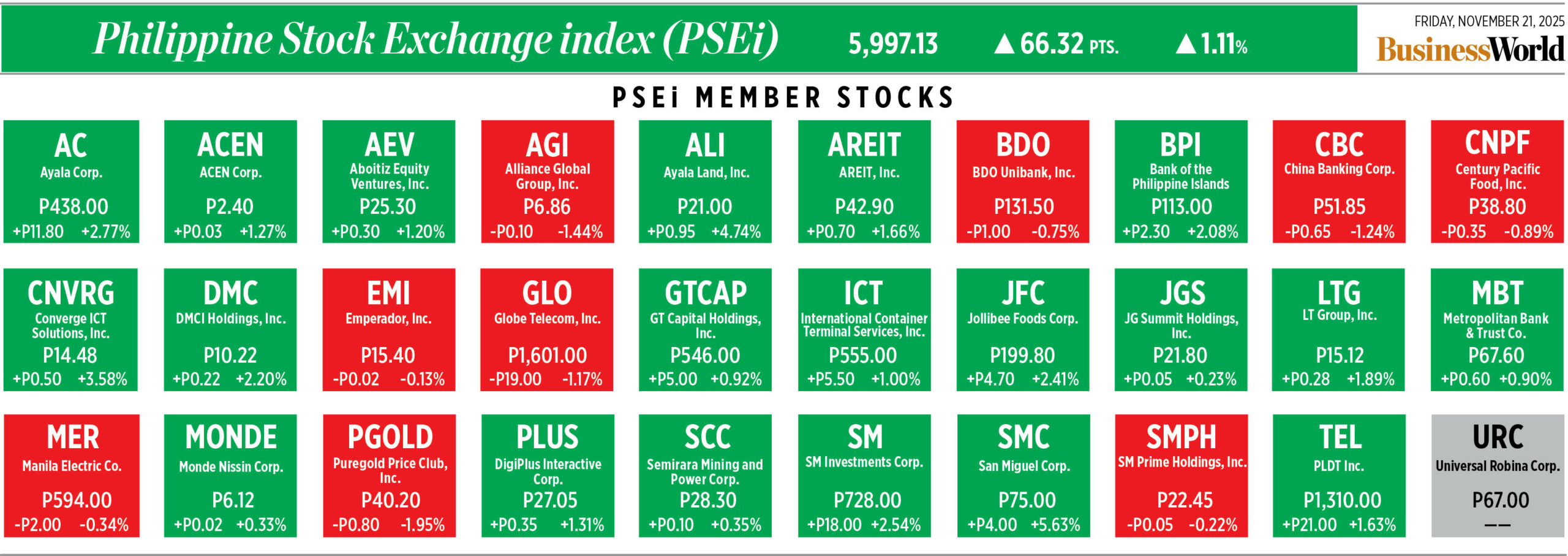
How PSEi member stocks performed — November 21, 2025

Here’s a quick glance at how PSEi stocks fared on Friday, November 21, 2025.