Home Blog Page 6315

French smartphone brand Wiko now in the Philippines

FRENCH smartphone brand Wiko Mobile is now in the Philippines and last week launched the Wiko T50 to mark its entry into the market.

The T50, priced at P11,999, is the latest release from its T-series line and has a design “based on elegant French aesthetics, and innovative advanced display, camera and performance features into the hands of its young users,” Wiko said in a statement last week.

“Wiko wants to make smartphone technology accessible to all. Our users all around the world tell us that they love the French design aesthetic of our phones which help them make a personal statement about their aspirations for simplicity, elegance, comfort, innovation, freedom, and enthusiasm,” said Violetta Jovanovic, global marketing director of Wiko Mobile.

“I am sure that the new generations in Southeast Asia who love gaming and photography, sharing their lives and experiences on social media will enjoy this device,” added Ms. Jovanovic.

The T50 offers a “superlative” photography experience as it features triple AI cameras. The rear array is made up of the main 64-megapixel (MP) high resolution camera, an 8-MP ultra-wide angle lens, and a 2-MP macro camera.

The main camera has an aperture of f/1.9 and a 1/1.7-inch sensor that can produce photos with dimensions as high as 9216 x 6912 pixels, while the wide-angle lens has a 120-degree field of view. Meanwhile, the macro camera has an aperture of f/2.4.

As for its front camera, the T50 has a 16-MP selfie lens that can also use AI to enhance portraits and shoot wide-angle shots.

The phone has an edgeless 6.6-inch LCD display with an FHD+ 2400 x 1080-pixel resolution.

“The slim 20:9 aspect ratio makes it comfortable to hold when making calls, taking photos and videos, and typing messages. The bezels around the Wiko T50’s display are so narrow that the screen appears edgeless, with an incredibly high screen ratio of more than 94%,” Wiko said.

The T50 also supports 40-watt fast charging, with its battery having a capacity of 4,000mAh.

The phone runs on Android 11 and has a storage capacity of 128GB. The Wiko T50 is available in three colors: Aqua Green, Lively Pink, and Midnight Black. It is now available on Wiko’s official Shopee and Lazada stores.

Wiko was founded in 2011 in France. The company said its strength lies in its “deep understanding of its target audience — combining the latest technologies and sense of lifestyle, packaged in an easy-to-use form that is trendy yet designed to look sensuous and appealing at the same time.”

“Having positioned itself to target the Gen Z market segment, Wiko continues to invest in R&D to offer best-in-class quality smartphones. With a DNA of high performance and long-lasting batteries, Wiko has gained the recognition of more than 30 million users in 35 markets, emerging as one of the top smartphone brands in the European market and now arriving to Latin America,” the company said.

Wesley So suffers disastrous 7th round defeat to Vachier-Legrave

US chess player Wesley So — FIDE.COM

SOMEWHERE down the road, Wesley So will have to find ways to solve the Maxime Vachier-Lagrave puzzle if the Philippine-born American would want to realize his dream of becoming world classical champion.

The 28-year-old Mr. So continued to fall under Mr. Vachier-Lagrave’s spell and suffered a disastrous seventh-round defeat in standard on Wednesday that may have cost him his title bid in the Norway Chess in Stavanger.

Looking in control with the black pieces after employing his pet Berlin of the Ruy Lopez, Mr. So suddenly played an errant knight move that allowed Mr. Vachier-Lagrave to gain a precious tempo and a winning pawn edge that he easily converted into a win and the full three points.

Because of the catastrophic setback, Mr. So fell down to fifth place with 10 points and may have kissed his title aspiration goodbye.

In contrast, it sent Mr. Vachier-Lagrave up to a share of No. 3 with Shakhriyar Mamedyarov of Azerbaijan with 11.5 points apiece behind only Magnus Carlsen — the reigning world champion — with 13.5 points and Vishwanathan Anand of India with 13.

It also hiked Mr. Vachier-Lagrave’s head-to-head tally with Mr. So in classical at 6-1 and 19 draws.

Besides Messrs. Vachier-Lagrave, Carlsen also owns a winning record over Mr. So in standard at 5-1.

But Mr. So had already conquered Mr. Carlsen twice — first in the blitz section and the other in the second round of this same tournament that is now on its 10th edition — to somehow lift the curse.

The only thing left for Mr. So now to clean up the road to a potential world championship trip in the future is to remove another barrier named Mr. Vachier-Lagrave, who keeps haunting him in his dreams. — Joey Villar

Reserve Bank of India hikes key interest rate, drops ‘accommodative’ from policy signaling

COMMONS.WIKIMEDIA.ORG
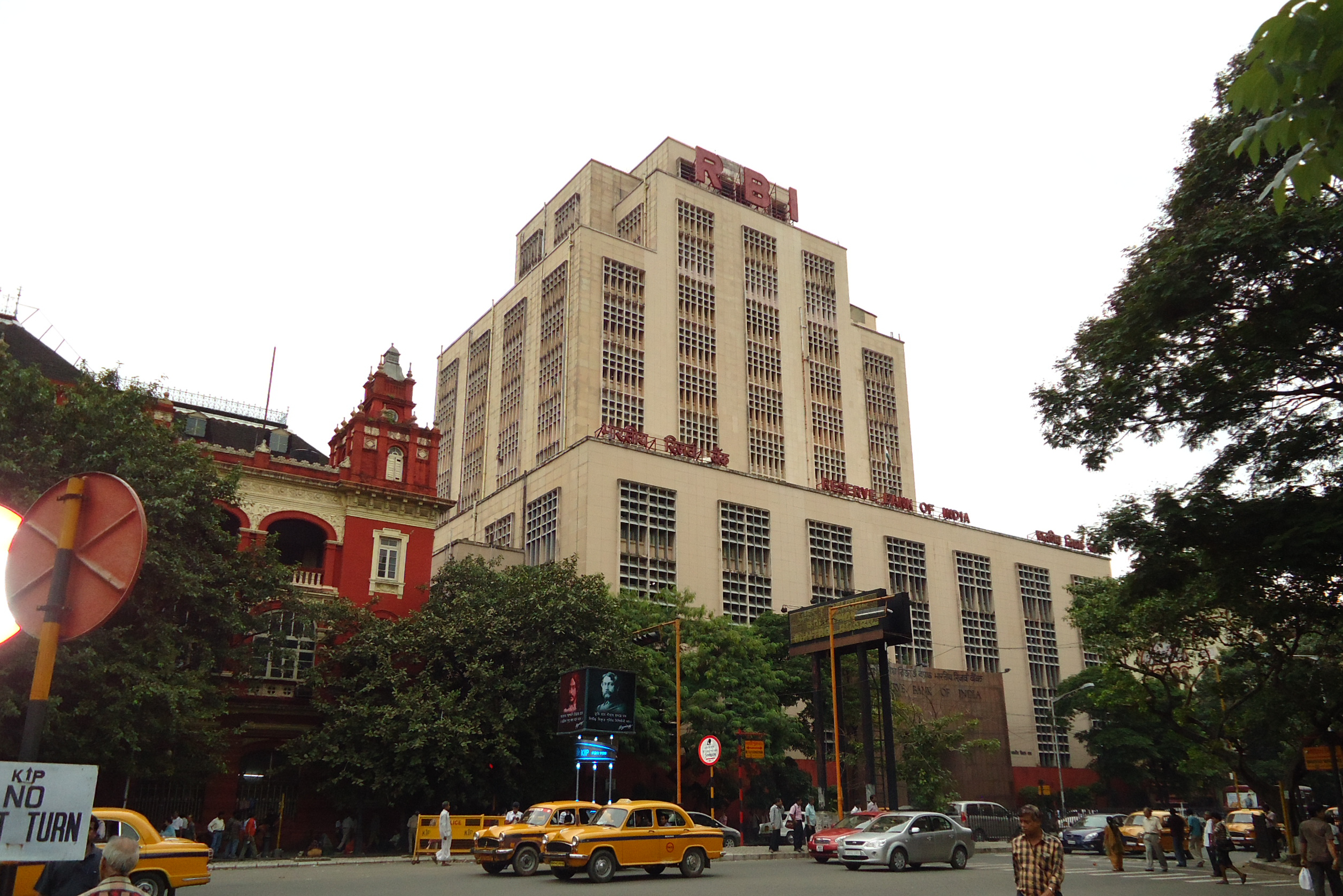
THE RESERVE BANK of India raised its key interest rate by 50 basis points on Wednesday. — COMMONS.WIKIMEDIA.ORG

MUMBAI — The Reserve Bank of India’s (RBI) key interest rate was raised by 50 basis points (bps) on Wednesday as widely expected, the second hike in as many months, in a bid to cool persistently high inflation in Asia’s third-largest economy.

The central bank also dropped the long-standing phrase that future policy would remain “accommodative,” reinforcing expectations of further rate hikes and other forms of tightening in coming months as fighting inflation becomes its main focus.

“Upside risks to inflation as highlighted in last policy meetings have materialized earlier than expected,” RBI Governor Shaktikanta Das said after the policy decision.

The Monetary Policy Committee (MPC) raised the key lending rate or the repo rate by 50 bps to 4.90%. The Standing Deposit Facility rate and the Marginal Standing Facility Rate were adjusted higher by the same quantum to 4.65% and 5.15%, respectively.

Das had said earlier that a June 8 move was a “no brainer”. But analysts polled by Reuters had been divided over how much it would hike, with forecasts ranging between 25 and 75 bps.

Wednesday’s increase follows a 40-bp rise in early May at an unscheduled meeting that kicked off the central bank’s tightening cycle, which economists expect to be relatively short.

“The more hawkish tone on inflation suggests to us that the MPC will continue to frontload policy tightening over the coming months, perhaps with another 50-bp hike in the next scheduled meeting in August,” said Shilan Shah, senior India economist at Capital Economics.

PRICE PRESSURES INTENSIFYING
Mr. Das said inflation will likely remain above the RBI’s upper tolerance band in the first three quarters of the financial year that started on April 1.

“The MPC also decided to remain focused on withdrawal of accommodation to ensure that inflation remains within the target going forward, while supporting growth,” Mr. Das said.

Retail inflation in April accelerated to 7.79% from a year earlier, above the RBI’s tolerance band for inflation of 2% to 6% for a fourth month in a row, and a further rise in global prices of crude oil, food and other commodities is expected to keep up the upward pressure.

The price spikes have hammered consumer spending and darkened the near-term outlook for India’s economic growth, which slowed to the lowest in a year in the first three months of 2022.

The RBI raised its inflation projection for 2022/23 to 6.7% from 5.7% earlier, while maintaining its growth projection at 7.2%.

The central bank had slashed the repo rate by a total of 115 bps since March 2020 to soften the blow from the COVID-19 crisis.

India’s 10-year benchmark bond yield fell to a low of 7.43% from the day’s high of 7.56% after the policy decision, while the rupee was little changed at 77.69 per dollar.

“The comment on the orderly completion of the government borrowing program has served to cool the 10-year G-sec yield,” said Aditi Nayar, chief economist at rating agency ICRA.

India’s NSE share index and the BSE index both recouped losses to trade up 0.2% each.

“We were expecting a cash reserve ratio (CRR) hike of 50 bps which did not happen,” said Vivek Kumar, economist at research firm QuantEco.

“However, we would still expect some sort of a liquidity action in line with the assumption of guiding the overall surplus lower. This can happen via CRR route or via increased FX intervention (dollar sales) by the RBI,” he added. — Reuters

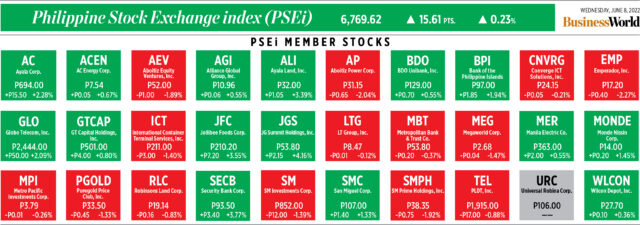
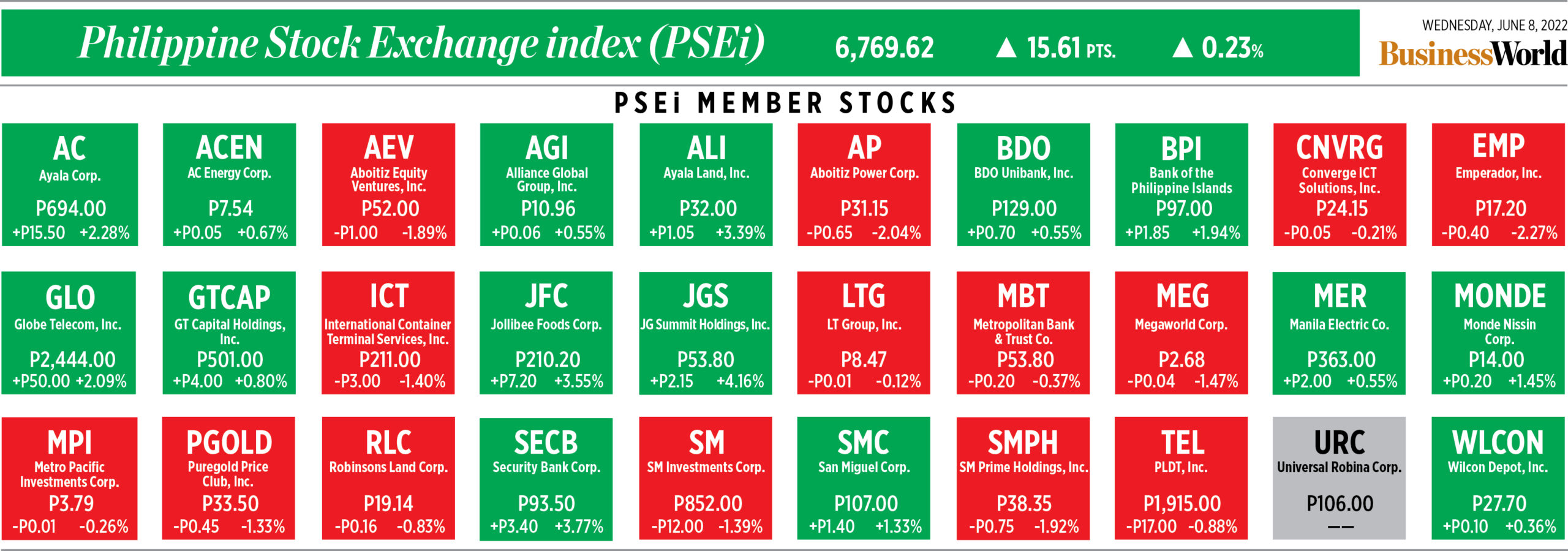
How PSEi member stocks performed — June 8, 2022

Here’s a quick glance at how PSEi stocks fared on Wednesday, June 8, 2022.


Peso climbs on rate hike hints, stock market gains

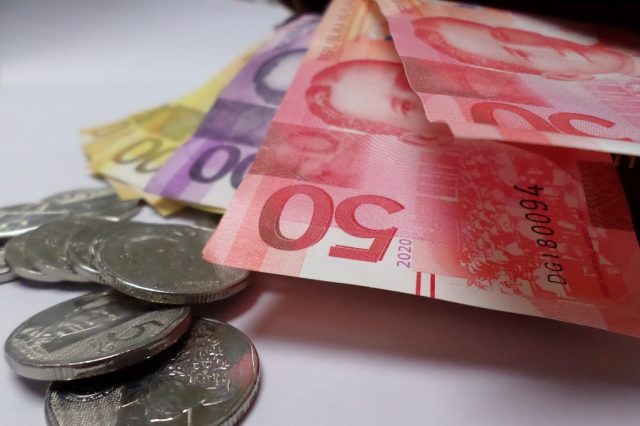
THE PESO strengthened versus the greenback on Wednesday as the incoming Bangko Sentral ng Pilipinas (BSP) chief hinted at rate hikes this month and in August and following gains at the stock market.

The local unit closed at P52.915 on Wednesday, rising by 3.5 centavos from its P52.95 finish on Tuesday, Bankers Association of the Philippines data showed.

The peso opened Wednesday’s session at P52.90 against the dollar. Its weakest showing was at P52.935, while its intraday best was at P52.85 versus the greenback.

Dollars exchanged declined to $635.56 million on Wednesday from $745.17 million on Tuesday.

The peso strengthened after Monetary Board member and incoming BSP chief Felipe M. Medalla hinted at rate increases in their June 23 and Aug. 18 meetings, a trader said.

The peso appreciated against the dollar after gains at the stock market and latest inflation data, Rizal Commercial Banking Corp. Chief Economist Michael L. Ricafort said.

He also said that the possibility of rate hikes also supported the local unit’s climb.

On Tuesday, Mr. Medalla said in a Bloomberg interview that they are “almost” sure to hike at their June 23 meeting and there is also a “90% chance” of another increase at their subsequent review on Aug. 18.

Mr. Medalla said the real question is if an August hike would be the last one for the year and noted decisions beyond this would be data dependent.

Increases worth 25 basis points (bps) in the Monetary Board’s June and August meetings would bring the benchmark rate to 2.75% from 2.25% currently following a hike of the same magnitude at its May 19 review.

Inflation quickened to its fastest pace in over three years in May due to higher food and transport costs, preliminary data from the Philippine Statistics Authority released on Tuesday showed.

Headline inflation in May surged by 5.4% year on year from 4.9% in April and 4.1% a year ago. This matched the 5.4% median estimate in a BusinessWorld poll conducted late last week, which was the midpoint of the 5-5.8% outlook range given by the BSP for that month.

May’s headline print was also the fastest since the 6.1% seen in November 2018.

Year to date, inflation has averaged 4.1%. This is lower than the central bank’s 4.6% forecast but above its 2-4% target for the year.

Meanwhile, Philippine shares continued to rise on Wednesday on sustained bargain hunting and Wall Street’s rally and despite higher oil prices and the World Bank’s dampened global growth outlook.

The benchmark Philippine Stock Exchange index rose by 15.61 points or 0.23% to close at 6,769.62 on Wednesday, while the broader all shares index went up by 6.33 points or 0.17% to 3,604.84.

The trader said the peso may appreciate further on the back of likely strong Eurozone gross domestic product growth.

For Thursday, Mr. Ricafort sees the peso moving between P52.80 and P52.95, while the trader expects the local unit to range from P52.80 to P53 against the dollar. — TJT

PSE index ends higher, tracking Asian, US markets

BW FILE PHOTO

SHARES continued to rise on Wednesday on sustained bargain hunting and Wall Street’s rally and despite higher oil prices and the World Bank’s dampened global growth outlook.

The benchmark Philippine Stock Exchange index (PSEi) rose by 15.61 points or 0.23% to close at 6,769.62 on Wednesday, while the broader all shares index went up by 6.33 points or 0.17% to 3,604.84.

“The local bourse climbed further this Wednesday on the back of bargain hunting. The positive cues from Wall Street also helped in Wednesday’s climb, backed by the decline in long-term bond yields,” Philstocks Financial, Inc. Senior Research Analyst Japhet Louis O. Tantiangco said in a Viber message.

“Philippine shares rose for a second consecutive day as global markets shrugged off some signs of an economic slowdown ahead of a key inflation reading,” Regina Capital Development Corp. Head of Sales Luis A. Limlingan said in a Viber message.

“Oil prices notched higher yesterday as the market tried to juggle risk sentiment and tight supply concerns,” he added.

Mercantile Securities Corp. Analyst Jeff Radley C. See said that factors like oil prices and weakening of the peso pose a “great impact” to the country since we are a net importer.

Asian stocks rose on Wednesday, encouraged by a rally on Wall Street for the second straight day as technology and energy shares gained, Reuters reported.

The S&P 500 technology index rose 1% and gave the benchmark index its biggest boost.

Brent crude futures for August had risen 59 cents or 0.48% to $121.15 a barrel by 0533 GMT while US West Texas Intermediate crude for July was at $120.09 a barrel up 66 cents or 0.55%.

Regina Capital’s Mr. Limlingan said investors also priced in the World Bank’s latest report, where it slashed its global growth forecast to 2.9% from its initial projection of 4.1% earlier this year on surging commodity prices and uncertainties brought by the dragging pandemic.

Meanwhile, it retained its 5.7% gross domestic product growth forecast for the Philippines for this year. This is below the government’s revised full-year growth target of 7-8%.

Sectoral indices were split on Wednesday. Financials climbed by 13.66 points or 0.84% to 1,625.17; industrials gained 63.14 points or 0.69% to end at 9,195.36; and holding firms rose by 14.04 points or 0.22% to 6,274.53.

Meanwhile, services fell by 8.77 points or 0.47% to 1,847.69; mining and oil declined by 9.06 points or 0.07% to 12,422.28; and property gave up 1.35 points or 0.04% to close at 3,180.99.

Advancers outnumbered decliners, 109 versus 78, while 46 names ended unchanged.

Value turnover grew to P5.37 billion with 744.91 million shares changing hands from the P4.96 billion with 877.07 million issues seen on Tuesday.

Net foreign selling dropped to P156.68 million from the P512.12 million seen the previous trading day. — Luisa Maria Jacinta C. Jocson with Reuters

‘Not yet possible’ to bring rice prices down to P20, Dar says 

PHILIPPINE STAR/ MICHAEL VARCAS

AGRICULTURE Secretary William D. Dar said on Wednesday that bringing down the price of rice to P20 per kilogram, as promised on campaign by President-elect Ferdinand R. Marcos, Jr., is not achievable unless the government brings down production costs. 

Mr. Dar, who leaves office at the end of the month, estimated the production cost of palay, or unmilled rice, has soared to P14.80 per kilo from P11.50 per kilo after Russia’s invasion of Ukraine raised fertilizer and fuel prices.

“The farmgate price, or when you buy the palay at 14% moisture content, is at P19 per kilo,” he told ABS-CBN’s TeleRadyo. As a result, he said, P20 rice is “not yet possible.”

Mr. Dar, who served a previous term as Agriculture Secretary between 1998 and 1999, said the government’s P3-billion subsidy for fertilizer is also not enough.

During the campaign, Mr. Marcos made his promise on rice prices, which he later described as “aspirational.” Economists said such a program could swell the national debt if carried out. Farmer groups and other stakeholders said they were not consulted on that electoral promise. 

Albay Rep. Jose Maria Clemente S. Salceda has said that P20 rice is only possible if the Philippines imports rice from Vietnam and removes all taxes.

Mr. Dar said that the production cost has to be lowered to achieve the ambitious goal.

The cost of palay production is currently at P8 per kilo in Thailand and P6 per kilo in Vietnam, he added.

“The aspiration of our President-elect is a good sign,” Mr. Dar said. “All of our endeavors should be planned so we can achieve that level of price for rice at P20.”

“One way to really reduce the price of rice is to reduce your cost of production,” he added.

The Philippine Confederation of Grains Associations earlier said Mr. Marcos’ promise, which analysts have described as populist, is only possible with subsidies. — Kyle Aristophere T. Atienza

BPO sector surpasses revenue, employment targets set for 2022

THE business process outsourcing (BPO) industry has hit the employment and revenue growth targets it set for itself this year, the industry association said.

The IT and Business Process Association of the Philippines (IBPAP) said in a statement on Wednesday that it is ahead of schedule on its targets, having already exceeded the 2022 goals of 1.43 million full-time employees (FTEs) and $29.1 billion worth of revenues.

“The number of FTEs in the country increased by 120,000 in 2021, bringing the sector’s total headcount to 1.44 million and registering growth of 9.1% compared to 2020. The industry also recorded revenue of $29.49 billion in 2021 or a 10.6% jump from the previous year,” the IBPAP said.

“Not only did the 2021 figures exceed the forecasted growth for the year, but it also eclipsed the recalibrated 2022 targets of 1.43 million FTEs and $29.1 billion in revenue…The upsurge can be attributed to pent-up demand from global customers, higher confidence in work-from-home (WFH) setups by clients of contact centers and business process services, and growth in emerging sub-segments like e-commerce, financial technology, healthcare, and technology,” it added.

According to IBPAP President Jack Madrid, the industry’s performance in 2021 “marks a resurgence” for the industry.

“Preserving jobs, driving investment, stimulating countryside development, and creating demand for real estate — these are the unequivocal contributions of the industry,” Mr. Madrid said. 

Mr. Madrid added that more organizations involved in global business services are also integrating offshoring and outsourcing into their strategic initiatives to optimize costs across various countries.  

“This will spill over into 2022 and continue to boost demand for IT-BPM services across the world. We should not miss out on this opportunity to capture a bigger slice of the global market,” Mr. Madrid said.

According to the IBPAP, the industry needs to make the most out of the country’s growth potential and support its global competitiveness.

The association expects the integration of hybrid work models in business to be more prevalent, as companies leverage alternative locations and implement small-scale centers or microsites as part of their business continuity planning and ensure continued access to talent.  

“Supply chain resilience from a talent standpoint will be critical amid the intensifying talent war that’s exacerbated by higher attrition rates and growing requirements for emerging and niche skills such as automation, cloud, data and analytics, and cybersecurity,” the IBPAP said.

Separately, the IBPAP announced that it is set to publish the Philippine IT-BPM Industry Roadmap 2028 this year, which will lay out the industry’s priorities in digitization, talent retention, policy shaping, infrastructure, and country branding over the next six years.

It said the roadmap will list legislative goals such as achieving mainstream acceptance of hybrid work, following its broad adoption by competitors like India, Poland, and Malaysia.

“Although more recent efforts have been on facilitating a smoother transition back to the office through the extension of work-from-home (WFH) arrangements until Sept. 12, 2022, crucial work has been put into ensuring that the new administration understands why work-from-anywhere is essential to the country’s enduring competitiveness and readiness for higher global market share,” the IBPAP said. — Revin Mikhael D. Ochave

Duterte signs EO implementing coconut industry dev’t plan

PHILSTAR FILE PHOTO

PRESIDENT Rodrigo R. Duterte has signed an executive order (EO) that will implement the Coconut Farmers and Industry Development Plan (CFIDP).

The development plan sets the direction for national programs establishing community-based enterprises and providing social protections for coconut farmers, farm workers, and their families.

According to the EO, the government must “consolidate the benefits due to coconut farmers, especially the poor and marginalized, under various statutes, and expedite the delivery thereof, to attain increased incomes for coconut farmers, alleviate poverty, and achieve social equality.”

“The Philippine Coconut Authority (PCA) consulted concerned government agencies, coconut farmers, including their organizations, industry associations, civil society groups, the academe, and other stakeholders in the formulation of the plan,” according to the order, signed on June 2 and made public on June 8.

In a separate statement, the Department of Agriculture (DA) said that the approval of the plan represents the “next step” in the coconut industry’s rehabilitation, modernization, and industrialization.

“Overall, the CFIDP is expected to alleviate poverty and achieve the twin goals of rehabilitating and modernizing the coconut industry to attain social equity,” the DA said.

The EO sets in motion future disbursements to the Coconut Farmers and Industry Trust Fund. The fund consists of coconut levy assets, which were declared state property by the Supreme Court.

The trust fund will receive P75 billion over the next five years and will be distributed in accordance with the CFIDP. The initial allocation to the trust fund is set at P10 billion.

“After more than four decades of waiting, the law for the management and utilization of the coco levy fund that was enacted last year will now be finally implemented in fulfillment of Mr. Duterte’s campaign promise to our coconut farmers,” PCA Administrator Benjamin R. Madrigal, Jr. added. — Luisa Maria Jacinta C. Jocson

PHL, Israel sign investment promotion deal

REUTERS

THE PHILIPPINES and Israel signed an investment promotion and protection agreement (IPPA) on June 7, the Department of Trade and Industry (DTI)  said.

In a statement on Wednesday, the DTI said Trade Secretary Ramon M. Lopez and Israeli Finance Minister Avigdor Lieberman signed the IPPA in Jerusalem.

“The IPPA with Israel provides a key opportunity to tap into the industries of agro-tech, life sciences and healthcare, water technologies, high-technology and semiconductors, cybersecurity, financial technology, defense industry, smart transportation, clean technology, smart manufacturing, and the diamond industry,” the DTI said.

Philippine Ambassador to Israel Macairog S. Alberto said the deal sets the framework for a closer investment relationship between the two countries.

Mr. Lopez said: “The Philippines eyes Israel’s expertise on innovation, especially in new and smart technologies that will bring about more competitive and efficient products. On the other hand, Israeli investors expressed interest in investing in the infrastructure, agriculture and water, and business process outsourcing (BPO) sectors in the Philippines,” Mr. Lopez said.

According to the DTI, Israel is the Philippines’ 34th largest trading partner, 39th largest export market, and the 31st largest source of imports in 2020.  Revin Mikhael D. Ochave

DoLE June 12 job fair to offer over 120,000 jobs

THE Department of Labor and Employment (DoLE) said that 999 employers will be offering over 120,000 positions at its job fair on June 12, Independence Day.

In an online briefing on Wednesday, DoLE’s Information and Publication Service Director IV Raul M. Francia said there will be 25 job fair sites nationwide, with the Philippine Arena in Bulacan set as the main venue.

“Even if you fail to apply for a job at the June 12 job fair, you can still check vacancies online, so we appeal to our job seekers to check our websites regularly,” Mr. Francia said.

DoLE said as of midday Wednesday, there be 95,476 local job openings and 27,509 openings overseas. The top five participating industries are manufacturing, business process outsourcing, the finance industry, and construction.

The Middle East topped the list of overseas destinations for jobseekers.

Mr. Francia added that vaccination for applicants will be available at the various job fair locations, though details have yet to be finalized.

Separately, the Philippines signed two labor cooperation agreements with Germany covering the deployment of Filipino professionals and skilled workers.

The DoLE said in a statement that the German Federal Employment Agency will assist in the recruitment, deployment, and employment of electrical mechanics, hotel receptionists, waiters, and plumbers from the Philippines.

Labor Secretary Silvestre H. Bello III and German Minister of Health Karl Lauterbach also signed a separate Memorandum of Understanding to step up the recruitment of Filipino healthcare professionals in coordination with private recruitment agencies.

DoLE said the agreement will open up work opportunities for biomedical scientists, physiotherapists, and other healthcare specializations.

In April, Mr. Bello said that since 2013, about 1,811 nurses were deployed to Germany under the Triple Win Program, a prior arrangement that aided the recruitment of Filipino nurses to Germany. — John Victor D. Ordoñez

DTI studying possible tax relief for basic commodity manufacturers

PHILSTAR FILE PHOTO

THE Department of Trade and Industry (DTI) said it is studying how to reduce expenses for manufacturers of basic necessities and prime commodities (BNPCs), including taxes, to help them hold the line on price as they experience pressure from higher raw material costs.

“We’re also looking at some taxes or maybe some charges that will be minimized, at least, on basic necessities and prime commodities (BNPCs) so that manufacturers will be able to keep the prices of these products low,” Trade Undersecretary Ruth B. Castelo said in a television interview on Wednesday.

“Manufacturers pay a lot of charges when they send the products to retailers, whether they are supermarkets or groceries or the distributors. These costs, maybe, we can look into minimizing or exempting, at least for BNPCs,” she added.

According to Ms. Castelo, the proposal allows manufacturers more breathing room as their bills for raw materials rise.

“If we are able to reduce that, manufacturers will… be able eventually to (keep retail prices steady),” Ms. Castelo said.

When contacted for comment by BusinessWorld after her television interview, Ms. Castelo gave no details of the taxes and charges the DTI may exempt manufacturers from.

“We actually discussed this with (incoming) Trade Secretary Alfredo E. Pascual initially, but the details will be (determined) later on,” she added.

The DTI has said that it has formally received price increase requests from three manufacturers making canned goods, bread, and detergent bars.

Ms. Castelo said that the DTI is still studying the price hike proposals, adding that it takes four to six weeks to evaluate them.

“We wait for week-on-week and month-on-month data so we will have an accurate view of what’s really happening on the prices of raw materials,” Ms. Castelo said.

On May 11, the DTI issued its latest suggested retail price (SRP) list, which raised prices on 82 BNPCs, while prices of 136 BNPCs were held steady from the levels set in the SRP bulletin released on Jan. 27.  — Revin Mikhael D. Ochave 

ADVERTISEMENT
ADVERTISEMENT