Home Blog Page 631

MNLF founder pits candidates for BARMM parliament

COTABATO CITY — Followers from across Central Mindanao of the Moro National Liberation Front (MNLF) endorsed candidates running for the Bangsamoro parliament in the regional polls on Oct. 13.

Two ranking MNLF officials who are both members of the Bangsamoro parliament, lawyer Randolph C. Parcasio and Nur Misuari’s daughter, Nurredha I. Misuari, separately told reporters, during a dialogue at the campus of the Cotabato City State University on Sunday morning, that their regional party, Mahardika, is keen on fostering interfaith solidarity among Muslims, Christians and the indigenous non-Muslim communities.

“We are also focused on socio-economic programs meant to boost the productivity of residents of the autonomous region,” said Ms. Misuari, a representative to the 80-seat Bangsamoro parliament of the MNLF, which her father helped establish as an armed secessionist group in 1972.

The Bangsamoro Autonomous Region in Muslim Mindanao (BARMM) covers the provinces of Maguindanao del Sur, Maguindanao del Norte, Lanao del Sur, Basilan and Tawi-Tawi and the cities of Lamitan, Marawi and Cotabato.

Mr. Parcasio and Ms. Misuari and a senior MNLF official in Maguindanao del Sur, Yahodza S. Simpal, had separately told reporters that their Mahardika Party also aims to help address peace and security issues besetting far-flung areas in BARMM via cross-section peacebuilding initiatives.

Mr. Parcasio said the MNLF is also trying its best to have the island province of Sulu returned to the core territory of BARMM after the Supreme Court took it out via a ruling in 2024 based on a petition for its separation from the autonomous region by then Sulu Gov. Hadji Abdusakur M. Tan, Sr.

Mr. Tan, who is touted as Sulu’s “political kingpin,” was elected vice-governor of the province during the May 12 elections.

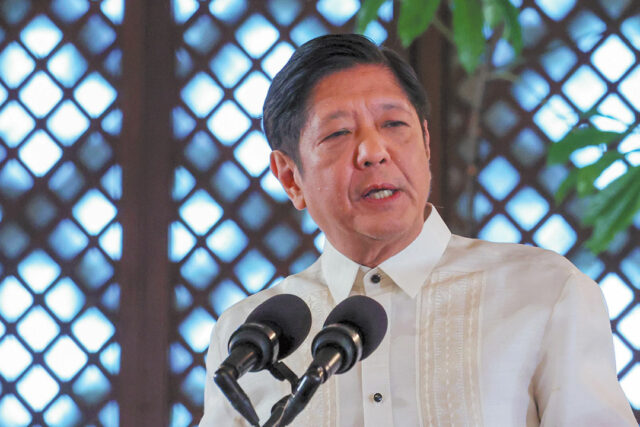
President Ferdinand R. Marcos, Jr. had recently issued an order fusing Sulu with Administrative Region IX, which groups together four cities and three large provinces in the Zamboanga peninsula.

“Certain members of the Bangsamoro parliament had drafted resolutions like knocking on the hearts of the members of the House of Representatives to help us work out Sulu’s return to the Bangsamoro autonomous region via a plebiscite,” Mr. Parcasio said.

He said Sulu, historically, is the birthplace of the MNLF that waged a long-time uprising for self-governance by Southern Moro communities in the context of Philippine sovereignty, via an autonomous regional government.

“We are for the return of Sulu to the Bangsamoro region,” Mr. Parcasio said. — John Felix M. Unson

Two Powerball players win $1.8 billion jackpot, second-largest in US history

TIMIS ALEXANDRA-UNSPLASH

Two Powerball players in Missouri and Texas have won a combined jackpot of about $1.8 billion, the second-largest in US lottery history, the game’s website said early Sunday.

The winning numbers drawn late Saturday were white balls 11, 23, 44, 61, 62 and the red Powerball 17.

The prize will be split between the two ticket holders, whose identities were not disclosed. Each winner can choose between an annuitized cash payout of $893.5 million or a lump-sum of $410.3 million.

The annuitized prize is paid in installments over 30 years, while the lump sum offers a reduced, one-time payout upfront, before taxes are deducted.

Saturday’s drawing was the 42nd since the last jackpot was won on May 31, a new record for the longest run in Powerball history. The odds of winning the jackpot are 1 in 292.2 million, and the lottery is drawn three times a week.

The $1.787 billion prize falls just short of the record $2.04 billion jackpot won by a single ticket in California in November 2022.

Powerball tickets, which cost $2, are sold in 45 states, the District of Columbia, Puerto Rico and the U.S. Virgin Islands. — Reuters

Trump’s short list for Fed: Hassett, Warsh and Waller

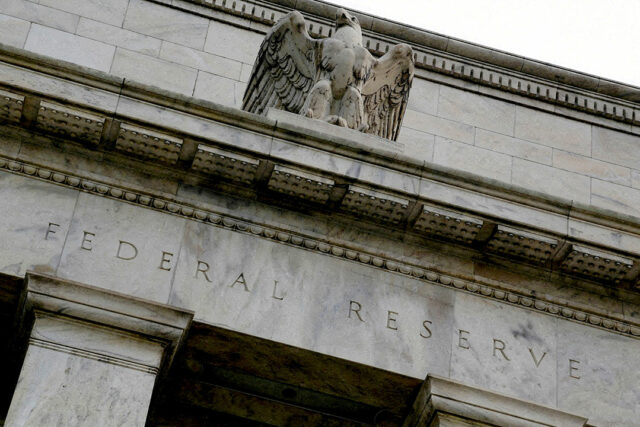
An eagle tops the US Federal Reserve building’s facade in Washington, July 31, 2013. — REUTERS/JONATHAN ERNST/FILE PHOTO

WASHINGTON — US President Donald Trump’s short list of candidates to succeed Jerome Powell as chair of the Federal Reserve now includes his aide Kevin Hassett, former Fed Governor Kevin Warsh and current Fed Governor Christopher Waller.

Trump told reporters at the White House that the three men were the finalists for appointments to the Fed, adding he would consider Scott Bessent, too, but that the Treasury secretary was not interested.

Bessent, who was with the president in the Oval Office, confirmed his lack of interest.

“I had four,” Trump said. “Now I’m talking about three. He (Bessent) told me: ‘I’m not leaving’.”

The president has made clear he intends to install a Fed leader more aligned with his push for rapid interest-rate cuts, browbeating Powell for being “too late” to act on borrowing costs and for hurting home buyers with higher mortgage rates.

Powell’s Fed has kept rates on hold all year on concern that Trump’s tariffs could reignite inflation, although recently his concerns have shifted to center more on the slowing labor market.

The choice of a Fed chair will carry high stakes for financial markets, which closely watch Fed leadership changes for clues about the direction of interest rates, inflation policy and the central bank’s independence.

U.S. job growth weakened sharply in August and the unemployment rate increased to nearly a four-year high of 4.3%, the Labor Department said on Friday, confirming that labor market conditions were softening.

Powell last month noted downside risks to the labor market that “may warrant” a careful policy adjustment, remarks that financial markets and analysts took to mean he would likely support a quarter-point interest-rate cut in September.

That’s far short of the several percentage points of cuts that Trump has demanded.

Hassett, the director of the National Economic Council, has been a reliable advocate for Trump’s tariffs and other policies, and agrees with Trump that the Fed has kept rates inappropriately high.

Warsh has repeatedly called for “regime change” at the Fed.

Waller, who ran the St. Louis Fed’s research department before Trump picked him to be Fed governor in 2020, would be an institutionalist pick.

Bessent released a barrage of criticism against the Fed on Friday and called for a full review of the central bank’s operations, from staffing to research to monetary policy. — Reuters

Microsoft says Azure cloud service disrupted by fiber cuts in Red Sea

REUTERS

Microsoft said on Saturday that its Microsoft Azure users may experience increased latency due to multiple undersea fiber cuts in the Red Sea.

In an updated status message for its Azure system, the company said its users may experience service disruptions on traffic routes through the Middle East.

“We do expect higher latency on some traffic that previously traversed through the Middle East. Network traffic that does not traverse through the Middle East is not impacted. We’ll continue to provide daily updates, or sooner if conditions change,” Microsoft said.

As a result of the disruption, Azure, the world’s second largest cloud provider after Amazon’s AWS has rerouted traffic through alternate network paths and network traffic is not interrupted. — Reuters

Trump signs order offering some tariff exemptions to countries with US trade deals

REUTERS

US President Donald Trump signed an executive order offering some tariff exemptions as soon as Monday to trading partners who strike deals on industrial exports such as nickel, gold and other metals, as well as pharmaceutical compounds and chemicals.

Trump has spent his first seven months in office building up massive tariff increases to reorder the global trading system, cut US trade deficits and extract concessions from trading partner countries in negotiations.

His latest order identifies more than 45 categories for zero import tariffs from “aligned partners” who clinch framework pacts to cut Trump’s “reciprocal” tariffs and duties imposed under the Section 232 national security statute.

Friday’s order brings US tariffs in line with its commitments in existing framework deals, including those with allies such as Japan and the European Union.

The exemptions for countries with US trade deals are set to begin at 12:01 a.m. EDT/0401 GMT on Monday, it said.

In the order, Trump says his willingness to reduce tariffs depends on the “scope and economic value of a trading partner’s commitments to the United States in its agreement on reciprocal trade” and US national interests.

The cuts cover items that “cannot be grown, mined, or naturally produced in the United States” or produced in sufficient volume to meet domestic demand.

A White House official said it also creates new carveouts for some agricultural products, aircraft and parts, and non-patented articles for use in pharmaceuticals.

In situations where a country has struck a “reciprocal” trade deal with the United States, this will allow the US Trade Representative, the Commerce Department and customs to waive tariffs on covered imports without a new executive order from Trump, the official said.

The zero-tariff items identified in the order include graphite and various forms of nickel, a key ingredient in stainless steel manufacturing and electric vehicle batteries.

Also covered are compounds used in generic pharmaceuticals, including the anesthetic lidocaine and reagents used in medical diagnostic tests.

The order encompasses various types of gold imports, from powders and leaf to bullion, a key import from Switzerland, which is struggling with US tariffs of 39% as it has not yet reached a trade deal. 

The order also permits tariffs to be scrapped on natural graphite, neodymium magnets, light-emitting diodes (LEDs) and eliminates previous tariff exemptions on certain plastics and polysilicon, a key component of solar panels. — Reuters

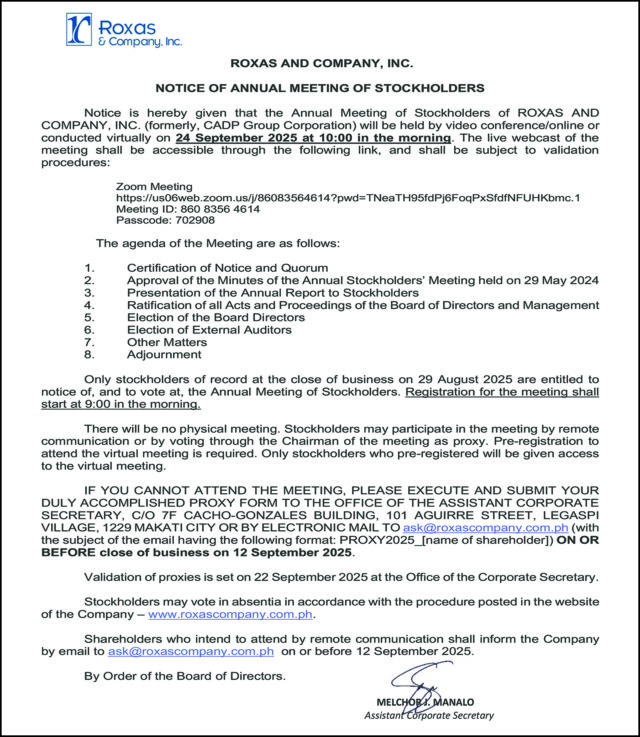
Roxas and Company, Inc. to conduct 2025 Annual Meeting of Stockholders virtually on Sept. 24


Spotlight is BusinessWorld’s sponsored section that allows advertisers to amplify their brand and connect with BusinessWorld’s audience by publishing their stories on the BusinessWorld Web site. For more information, send an email to online@bworldonline.com.

Join us on Viber at https://bit.ly/3hv6bLA to get more updates and subscribe to BusinessWorld’s titles and get exclusive content through www.bworld-x.com.

Mapping marine plastics: Circular Explorer’s contribution to environmental research

“The Circular Explorer is a solar-powered aluminum catamaran that was brought to the CCP Complex in 2023 in partnership with Holcim Philippines, Inc. While the boat is capable of collecting trash, it is also used for research on plastics waste, which helps inform government policy on marine environmental issues.

Interview by Patricia Mirasol
Video editing by Jayson Mariñas

#ScienceForPolicy
#CleanSeasInitiative
#EnvironmentalResearch
#CorporateSustainability
#BWorldPH “

New law allows foreign investors to lease land in the Philippines for up to 99 years

The House of Representatives and the Senate last week approved separate bills allowing foreigners to lease land up to 99 years from the current 75 years. — PHILIPPINE STAR/NOEL PABALATE

President Ferdinand R. Marcos, Jr. signed into law a measure that allows foreigners to lease land in the Philippines for up to 99 years.

Republic Act (RA) No. 12252 amends RA No. 7652 or the Investors’ Lease Act by further liberalizing the lease of private lands by foreign investors.

“It is the policy of the State to ensure the reliability of investors’ lease contracts to provide a stable environment for foreign investments,” the law read.

The law extends the term of foreign investors’ land leases to 99 years from the current 75, putting the country in line with policies of Singapore, Malaysia, and Indonesia.

Under the law, the President, upon the recommendation of the Fiscal Incentives Review Board (FIRB) or other agencies, can impose a shorter lease period for foreign investors in sectors considered as “critical infrastructure” in the interest of national security.

The law allows long-term land lease for “the establishment of industrial estates, factories, assembly or processing plants, agro-industrial enterprises, land development for industrial or commercial use, tourism, agriculture, agro-forestry, ecological conservation and other similar priority productive endeavors.”

In the case of tourism projects, the 99-year lease is limited to projects with an investment of not less than $5 million, 70% of which will be invested in the project within three years.

Under the law, foreign investors that violate the lease contracts face a fine of between P1 million to P10 million or imprisonment of up to six years.

The lease contract can be terminated if the foreign investor fails to start the investment project within three years of the signing.

This measure was a priority by Legislative-Executive Development Advisory Council for passage before the 19th Congress adjourned.

Mr. Marcos signed the law on Sept. 3, but a copy of the law was uploaded on the Official Gazette website on Sept. 4.

The law takes effect 15 days after it has been published in the Official Gazette or a newspaper of general circulation. – CRAG and EAAE

Philippine banks’ NPL ratio rises to 8-month high in July

BW FILE PHOTO

By Katherine K. Chan, Reporter

The Philippine banking sector’s nonperforming loan (NPL) ratio rose to an eight-month high in July, Bangko Sentral ng Pilipinas (BSP) data showed.

Data from the BSP showed banks’ gross NPL ratio stood at 3.4% in July, up from 3.34% in June but lower than the 3.58% in the same month last year.

This was the highest bad loan ratio in eight months or since the 3.54% in November 2024.

Loans are considered nonperforming once they are unpaid for at least 90 days after the due date. These are deemed as risk assets since borrowers are unlikely to pay.

The amount of nonperforming loans inched up by 0.97% to P535.45 billion in July from P530.29 billion in June. Bad loans also climbed by 5.38% year on year.

The total loan portfolio of the banking system fell to P15.77 trillion in the first seven months, 0.71% down from the P15.88 trillion at end-June but up 11% from the P14.21 trillion a year earlier.

“The uptick in the gross NPL ratio to 3.40% reflects lingering stress in certain sectors — especially SMEs and consumer loans — as households and businesses continue to adjust post-pandemic/global uncertainty arising from tariff uncertainty which slowed growth globally,” Jonathan L. Ravelas, senior adviser at Reyes Tacandong & Co., said in a Viber message.

“Lower interest rates may be encouraging borrowing, but not all borrowers are equally resilient,” he added.

Meanwhile, past due loans grew by 2.5% to P687.6 billion in July from P670.5 billion in June. It likewise rose by 9.9% year on year.

Past due loans as of July made up 4.36% of the system’s total loan portfolio, higher than the 4.22% in the previous month but lower than the 4.4% last year.

On the other hand, restructured loans went up by 5.6% to P329.64 billion in July from P312.03 billion in June and by 13.2% from P291.08 billion in the same month 2024.

It had a higher share in the industry’s total loan portfolio at 2.09% from 1.96% at end-June and 2.05% a year earlier.

Banks’ loan loss reserves increased by 1.2% to P512.06 billion in July from P505.91 billion the previous month and by 6.8% from P479.24 billion in the comparable year-ago period.

Loan loss reserve ratio in July stood at 3.25%, higher than 3.19% in June but below the 3.37% in the same month in 2024.

Meanwhile, lenders’ NPL coverage ratio, which gauges the allowance for potential losses due to bad loans, expanded to 95.63% in July, from 95.4% in June and 94.32% last year.

Mr. Ravelas said banks’ bad loans are projected to remain high in the near term as the effects of the central bank’s rate cuts take time to materialize.

“But if consumer confidence and job creation pick up, we could see stabilization by year-end,” he added.

The Monetary Board has so far slashed borrowing costs by 150 basis points (bps) since August 2024. The central bank’s target reverse repurchase rate is currently at 5%, the lowest in nearly three years or since November 2022.

Marcos eyes stronger trade, investment ties with Cambodia

PRESIDENT FERDINAND R. MARCOS, JR. — PHILIPPINE STAR/KJ ROSALES

Philippine President Ferdinand Marcos Jr. will seek to strengthen the country’s trade and investment ties with Cambodia during his upcoming state visit.

Department of Foreign Affairs (DFA) spokesperson Angelica C. Escalona said in a Palace briefing that Mr. Marcos will have a meeting with Filipino and Cambodian business leaders to strengthen trade and investment relations between the two countries.

“The visit is expected to result in agreements and initiatives that will expand cooperation and bring tangible benefits to both Filipinos and Cambodians,” Ms. Escalona said.

Mr. Marcos is scheduled to go on a three-day state visit to Cambodia from Sept. 7 to 9.

Mr. Marcos is expected to seek potential investors for Filipino exports, including food and beverages, pharmaceutical products, and franchising, as well as entice Cambodian tourists to visit the country, Ms. Escalona said.

The DFA spokesperson said the state visit also aims to ensure stronger cooperation between the two countries in addressing transnational crimes and to seek Cambodia’s support for the Philippines’ chairmanship of the Association of Southeast Asian Nations (ASEAN) in 2026.

The two countries will also sign agreements on combating transnational crimes, supporting higher education, and enhancing air services.

The state visit to Cambodia is the first by a Philippine president since 2016 and is in response to the invitation of King Norodom Sihamoni. It is also a reciprocation of the official visit to the Philippines by Cambodia’s Prime Minister Hun Manet in February.

Mr. Marcos will be received by Cambodia’s Senate President Hun Sen on behalf of the King. He will be accompanied by his Cabinet secretaries from the Departments of Foreign Affairs, Agriculture, Trade and Industry, and Migrant Workers.

The President is also expected to meet with members of the Filipino community in Cambodia, which is home to about 7,500 Filipinos. — Edg Adrian A. Eva

Siquijor power crisis ‘solved,’ says NEA

President Ferdinand R. Marcos Jr. leads the ceremonial switch-on for the New Siquijor Diesel Power Plants, Sept. 5. / Presidential Communications Office Facebook page

The National Electrification Administration (NEA) on Friday said the power crisis in Siquijor has been “solved,” as President Ferdinand R. Marcos, Jr. led the ceremonial switch-on of the 17.8-megawatt (MW) New Siquijor Diesel Power Plants.

“At exactly 4:30 on August 29, we officially conveyed to Governor Jake Villa and the provincial government of Siquijor that the power crisis is solved,” NEA Administrator Antonio Mariano C. Almeda said on Friday during the event.

Mr. Marcos, who mentioned the Siquijor power crisis in his State of the Nation Address, said the power supply on the island is now sufficient.

“It’s good that upon our return to Siquijor, we can guarantee that we have more than enough electricity supply… I am now confident to say that we have enough supply; we just need to fix our system,” he said.

“If there’s an outage in one area, we now have a system that can shift the supply source from the other power plants,” he added.

The three power plants have a total installed capacity of 17.8 MW, with a guaranteed dependable capacity of 12.25 MW and an N-1 reserve of 1.7 MW.

One 4.4-MW power plant is located in Larena, while another 6.6-MW plant is in Lazi. A 6.8-MW power plant is located in Siquijor. These three plants are expected to provide sufficient power against Siquijor’s 9 MW peak demand.

The government had expedited the development of the three power plants after the Energy Regulatory Commission (ERC) revoked the authority of Villar-owned Siquijor Island Power Corp. (SIPCOR) to operate due to multiple violations amid continued power supply problems.

“We had to take over the operations of SIPCOR for the simple reason that we cannot see any improvements in how they provide electricity supply,” Mr. Marcos said.

“The government and the PROSIELCO (Province of Siquijor Electric Cooperative) took over the operations to ensure that we can provide what is needed,” he added.

In his SONA last July, Mr. Marcos ordered the restoration of normal electricity service in Siquijor, which was placed under a state of calamity last June due to power interruptions. – Almira Louise S. Martinez

With diplomatic tour de force, China’s Xi shows he’s ‘totally in charge’

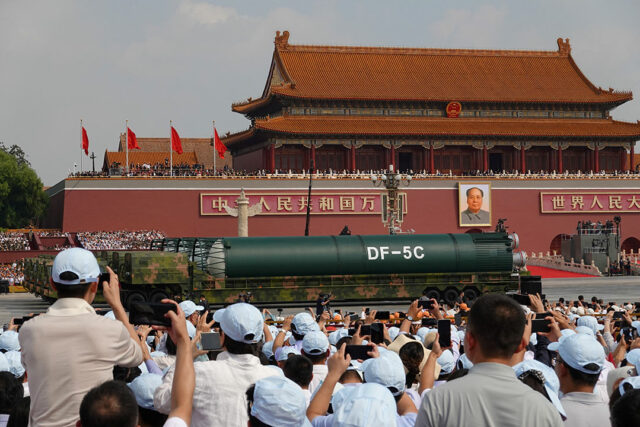
THE DF-5C liquid-fueled intercontinental strategic nuclear missiles are displayed during a military parade to mark the 80th anniversary of the end of World War II in Beijing, China, Sept. 3. — REUTERS/GO NAKAMURA

HONG KONG/BEIJING – When Chinese leader Xi Jinping organized his first parade to mark the anniversary of the end of World War Two, in 2015, he placed his two predecessors by his side in a show of respect and continuity of leadership.

Ten years on and having eliminated domestic opposition as he serves an unprecedented third term as president, Xi was flanked on Wednesday at the 80th anniversary parade by Russia’s Vladimir Putin and North Korea’s Kim Jong Un.

Chinese Communist Party leaders were interspersed among overseas guests.

The parade followed Xi’s high-profile summit with Indian Prime Minister Narendra Modi at a weekend meeting of the Shanghai Cooperation Organization (SCO) in Tianjin, and the Chinese leader’s rare visit to Tibet last month.

This display of diplomatic clout, stamina and geopolitical ambition has helped quell concerns among some China observers about the 72-year-old president’s vitality, linked to sporadic absences and – so far unknown – succession plans. It has also helped divert domestic attention from slowing growth, experts say.

Longevity was on the leaders’ minds as they walked up to the rostrum at Beijing’s Tiananmen Square – Xi and Putin were caught in a hot mic moment discussing organ transplants and the possibility that humans could live to 150 years old.

“This week of triumphant diplomacy for Xi shows that he remains totally in charge of the elite politics of the Communist Party,” said Neil Thomas of the Asia Society, a New York-based think tank. Unable to get the same legitimacy from economic growth as his predecessors, Xi has turned toward nationalism “to try and make up for it”, Thomas said.

“It’s a way to divert attention from economic challenges and to make his citizens proud to be Chinese, even if it’s harder to feel that from the day-to-day experiences of unemployment, falling house prices and stagnant wages.”

Xi underscored his elder statesman image with fashion choices: a grey suit in the style of those worn by Mao Zedong, matching his greying hair, in contrast to the black suits of his counterparts and his own black attire from a decade earlier.

His number two, Premier Li Qiang, whose role has diminished at home, was charged with relatively minor meetings with leaders of Malaysia and Uzbekistan. High-profile engagements with Kim, Modi, Turkish President Tayyip Erdogan and several others fell to Cai Qi, who heads the party’s Central Secretariat, responsible for its sprawling administration.

In response to a Reuters request for comment, China’s foreign ministry referred to news conference transcripts related to the recent diplomatic events, showcasing China’s partnerships with developing nations and positioning Beijing as committed to peaceful development and international cooperation.

Many countries that sent their leaders to China in the past week have been hit by U.S. President Donald Trump’s trade tariffs this year, including India, which remains a significant buyer of Russian oil, hit by sanctions over Putin’s invasion of Ukraine.

In one of the most memorable moments in the flurry of diplomatic encounters, Modi and Putin walked over for a chat with Xi while holding hands, underscoring personal tensions between Trump and Modi, as well as Washington’s failure to draw historically non-aligned India in to counter Russia and China.

“Ultimately one of the biggest driving factors of the SCO show of solidarity has been US policy,” said Even Pay, a director at strategic advisory firm Trivium China.

Trump, who called the military parade “beautiful” and “very, very impressive”, made a barbed post on social media saying China was working with Putin and Kim to “conspire against The United States of America”.

The Kremlin responded that they were not conspiring and suggested Trump’s remarks were ironic.

HIT BY TRUMP, WELCOMED BY XI
Analysts say Xi’s whirlwind of activity underscores China’s ambition in presenting itself as a reliable partner to developing nations on the global stage, offering advantages like investment opportunities and even a new development bank – a major step forward for the SCO, which has expanded markedly over past decades to also include India, Pakistan and Iran.

“China’s message as a more reliable, stable alternative to the United States is resonating with large swathes of the world, particularly across Asia, which sees the United States as an increasingly belligerent force in world affairs,” said Eric Olander, editor-in-chief of the China-Global South Project, a research agency.

“A lot of developing countries and middle-power states may still be a bit ambivalent about what China’s proposing with its new governance and development initiatives, but at least what China is talking about is forward-looking, which is crucial for economies with large populations of young people looking for better employment opportunities,” Olander said.

Xi faces considerable challenges in managing this large and often fractious coalition as he eyes a potential fourth term of office in 2027 to further cement his legacy as the most powerful Chinese leader since Mao.

Entrenched Chinese foreign policy positions, including territorial disputes and industrial subsidies that have flooded foreign markets with cheap exports, will likely remain friction points, experts say, while India’s deep distrust of China will not dissipate because of one brief meeting.

“It’s not necessarily a big-picture shift towards a more China-led international order,” said the Asia Society’s Thomas. — Reuters