Home Blog Page 63

Maharlika’s top exec says investment plans on track

By Justine Irish D. Tabile, Senior Reporter

MAHARLIKA INVESTMENT Corp. (MIC) said capital deployment will remain on track and focused on its core pillars even as global uncertainty remains high amid the ongoing war involving the US, Israel, and Iran.

“We are not slowing down. The current geopolitical headwinds and volatile currency fluctuations, in fact, validate exactly what we were built to do,” MIC President and Chief Executive Officer Rafael D. Consing, Jr. told BusinessWorld.

“Rather than pulling back, we are responding with highly strategic and calibrated capital deployment,” he added.

The Philippines has been under a one‑year state of national energy emergency since March as it faces heightened risk of fuel supply disruptions due to the war in the Middle East.

Mr. Consing said the sovereign wealth fund will be anchoring its investments in energy, infrastructure, agriculture, and mineral extraction and processing to build natural hedges for the Philippine economy.

“The current market volatility presents us with unique opportunities to acquire high-value, critical assets at reasonable valuations,” he said.

Mr. Consing said the MIC views the critical mining sector as a vital sovereign hedge and has already earmarked specific investment amounts for opportunities under evaluation.

“We recognize how indispensable copper is to the global energy transition and the growth of artificial intelligence,” he said.

“We are actively evaluating a pipeline of critical mineral projects, and we will share specific project and company details once binding agreements are signed,” he added.

Meanwhile, the MIC is looking to finalize its acquisition in Synergy Grid & Development Phils., Inc. (SGP), following its acquisition of a stake in Asian Terminals, Inc. (ATI).

On March 17, MIC announced the completion of its acquisition of 101.19 million common shares in ATI, securing a stake in the port and logistics operator.

This is after the settlement of the tender offer, which resulted in the acquisition of 177.61 million shares, was completed.

“Our immediate priority is finalizing our acquisition in SGP to lock in our stake in the National Grid Corp. of the Philippines,” Mr. Consing said, citing a P19.7-billion investment deal to acquire a 20% stake in SGP.

Asked for the timeline, he said: “I have to defer to SGP’s own disclosures, since they are a publicly traded company.”

In a disclosure dated Dec. 3, 2025, SGP said that although a binding term sheet was executed between the two “the parties are in the negotiation and due diligence stage.”

SGP previously said there is no set date of closing, citing the scale and strategic nature of the investment.

Meanwhile, Mr. Consing said that the MIC is also making headway on joint initiatives in agriculture and sustainable energy “as we aggressively transition into the active capital deployment mode.”

For 2026, he said that the outlook on MIC’s financials remains optimistic.

“This year marks a pivotal shift for MIC as foundational investments like ATI begin to generate resilient cash flows,” he said.

“[The year] 2026 will be defined by robust capital deployment, risk-adjusted returns, and measurable socioeconomic impact,” he added.

BoI-approved investment pledges up 27% in Feb.

BW FILE PHOTO

By Beatriz Marie D. Cruz, Senior Reporter

THE BOARD of Investments (BoI) approved P36.5 billion worth of investment pledges in February, mainly driven by investment commitments in the renewable energy (RE) sector.

In a statement on Sunday, the BoI said February approvals were 27.2% higher than the P28.7 billion recorded in the same month last year.

The number of approved investment projects in February jumped to 21 from the six projects recorded a year earlier.

The BoI greenlit P20.4 billion worth of investment pledges in the RE sector, accounting for 55.9% of the total approved pledges.

By location, P21.5 billion worth of investments will go to Central Luzon, followed by the National Capital Region with P4.2 billion, and the Ilocos Region with P3.5 billion.

In the first two months of the year, the BoI approved 35 projects worth P47 billion, up from the eight projects approved in the same period last year.

Foreign investments during the period surged by 943.4% to P3.1 billion from P300 million recorded last year, which the BoI said signaled “growing investor interest” in the country.

Singapore was the top source of foreign investments as of end-February, accounting for P1.8 billion or 55.2% of the total. This was mainly driven by the 85% Singaporean-owned Intramuros Solar Energy Corp., which pledged P1.7 billion worth of investments.

It was followed by China at P500 million (16.8% of the total pledges), while Canada (6.5%), Australia (6.3%), and the United States (5%) each contributed around P200 million.

The energy sector, which includes RE, accounted for the largest share of approved investments at P22.4 billion or 47.7% of the total in the January-to-February period.

Accommodation and food service activities attracted P7.6 billion in investment approvals, followed by real estate activities (mass housing) with P6.4 billion, manufacturing with P5.3 billion, and transportation and port storage with P3 billion.

Central Luzon received the largest share of approved investments with P21.5 billion as of end-February. This included a P16.4-billion solar power project of Aboitiz-led Cleanergy 2 Power, Inc.

The second-largest recipient of investment pledges was Central Visayas (P8.2 billion), followed by the National Capital Region (P4.5 billion), Ilocos Region (P3.7 billion), and Mimaropa (P2.9 billion).

“The strong increase in BoI-approved projects reflects growing investor confidence in the Philippines and the continued inflow of high-value investments that support our economic priorities,” Trade Secretary and BoI Chairman Ma. Cristina A. Roque said in a statement.

She noted that the uptick in energy-related investments align with the need to boost energy security amid uncertainties in the global oil supply.

“Notably, the significant investments in renewable energy will play a crucial role in strengthening our energy security amid current challenges, while accelerating the country’s transition to a more sustainable and resilient energy future,” Ms. Roque said.

RE accounts for 25% of the country’s energy mix. The Philippines is looking to raise the share of renewables in the power generation mix to 35% by 2030 and 65% by 2050.

BoI Investments Promotion Services Executive Director Evariste M. Cagatan said the latest approvals reflect confidence in the Philippines as an investment destination.

“The increase in BoI-approved projects reflects strong investor confidence in the country’s evolving investment environment, driven by CREATE MORE (Corporate Recovery and Tax Incentives for Enterprises to Maximize Opportunities for Reinvigorating the Economy, and our efforts to build a greener and more competitive economy,” she said.

Rizal Commercial Banking Corp. Chief Economist Michael L. Ricafort said RE‑related investments are expected to account for a bigger share of the country’s investment pledges in the future.

“RE-related pledges have been among the largest foreign investments into the country over the past two years and could still continue, as there is greater imperative for more RE supply to further reduce reliance on imported petroleum products,” he said in a Viber message.

PLDT builds infrastructure to prepare Filipino youth for AI future

Blums Pineda, senior vice-president and head of Enterprise Business Group at PLDT and Smart, and PLDT Group AI Business lead

PLDT, Inc. is expanding its digital infrastructure and training programs to prepare Philippine universities and the local workforce for the integration of artificial intelligence.

During a forum for the Mendiola Consortium at Centro Escolar University in Manila, Blums Pineda, senior vice-president and head of Enterprise Business Group at PLDT and Smart, and PLDT Group AI Business lead, said universities will play a central role in preparing the workforce for an economy increasingly shaped by machine-assisted decision-making.

“Artificial intelligence is not just another technology cycle,” Mr. Pineda said. “It’s a general-purpose technology like electricity or the internet — one that changes how entire industries operate and how professionals do their work.”

The shift carries particular weight for the Philippines, whose economy is closely tied to global services and knowledge-based work. Global research show that roughly 25% to 35% of jobs may be exposed to AI at the level of individual tasks, while only 3% to 5% face a high risk of full displacement.

Instead, the more common outcome is job transformation. That is already visible in the Philippines’ IT-BPM industry, which employs nearly two million workers, where AI supports tasks such as summarizing interactions and retrieving information, allowing workers to focus on more complex and value-driven roles.

“What we’re seeing is not the disappearance of human roles,” Mr. Pineda said. “AI handles repetitive tasks, while people focus on decision-making, relationships, and solving more complex problems.”

For universities, the implications go beyond adding new technology courses. Students graduating today will enter a workforce where machines can assist with writing software, analyzing markets, and supporting medical diagnoses.

“Every technological revolution eventually walks into a classroom,” he said. “The difference with AI is that it didn’t politely wait for curriculum committees. It has already arrived.”

The shift is influencing how universities design courses, conduct research, and manage administrative operations, with AI increasingly supporting teaching and analytics. At the same time, institutions are navigating challenges around academic integrity, bias, and responsible AI.

In this space, PLDT Enterprise and ePLDT have also been working closely with universities to support early-stage adoption. One example is an ongoing engagement with De La Salle University (DLSU), where the team is exploring the ePLDT SwiftStart AI Program. Designed as an immersive introduction to generative AI, SwiftStart enables institutions to understand foundational concepts such as prompt engineering, while experiencing practical applications using tools like Google Workspace with Gemini.

For the PLDT Group, the critical enabler of AI adoption lies in infrastructure — particularly high-performance computing, connectivity, and secure data environments.

Through its corporate business arm PLDT Enterprise and subsidiaries ePLDT and VITRO, Inc., which deliver integrated digital, connectivity, and ICT solutions to public and private institutions in the Philippines and abroad, the PLDT Group has been investing in hyperscale data centers capable of supporting AI workloads.

Among them is VITRO Sta. Rosa, the country’s first hyperscale data center designed for AI applications. The facility hosts Pilipinas AI, a sovereign AI solutions stack that allows organizations to run AI workloads while keeping data within Philippine borders.

“The invisible infrastructure behind AI — fiber networks, computing power, and data centers — will determine how quickly institutions can innovate,” Mr. Pineda said.

Beyond infrastructure, PLDT and Smart are expanding access to AI through initiatives such as AI-in-a-Box, which provides literacy training, connectivity, and practical tools for institutions. “Technology only transforms society when ordinary institutions can use it,” Mr. Pineda said.

Ultimately, preparing students for an AI-driven economy will require not only technical knowledge but also skills that machines cannot easily replicate, including critical thinking, ethical judgment, and interdisciplinary problem-solving.

“The future of AI in education won’t be determined by how quickly we buy new tools,” Mr. Pineda said. “It will be determined by how carefully we build the systems behind them.”

The PLDT Group’s efforts support its commitment to inclusive innovation, quality education, and workforce development aligned with the United Nations Sustainable Development Goals.


SparkUp is BusinessWorld’s multimedia brand created to inform, inspire, and empower the Philippine startups; micro, small and medium enterprises (MSMEs); and future business leaders. This section will be published every other Monday. For pitches and releases about startups, e-mail to bmbeltran@bworldonline.com (cc: abconoza@bworldonline.com). Materials sent become BW property.

UP to hold first innovation summit, launch system research and innovation office

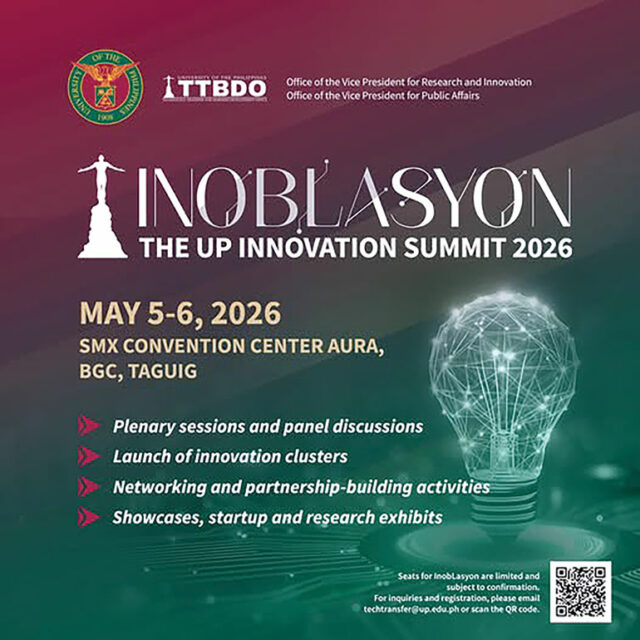
The University of the Philippines (UP) will bring together researchers, entrepreneurs, government officials, and industry leaders for its first Innovation Summit on May 5-6 at the SMX Convention Center Aura in Bonifacio Global City.

The summit will feature plenary sessions and panel discussions focused on how research and collaboration can address national challenges, and on ways to strengthen science, technology, and innovation to support national development goals.

Dubbed “Inoblasyon: The UP Innovation Summit,” the two-day event will also mark the formal launch of the UP System’s Office of the Vice-President for Research and Innovation, which will help coordinate the university’s systemwide technology development and partnerships aimed at supporting national priorities.

Eight innovation clusters focused on research priority sectors will also be launched. These are (a) health, biotech, and biomedical systems; (b) agri-aqua biotechnology and smart food systems; (c) functional foods and nutraceuticals; (d) climate, energy, and environmental technologies; (e) sustainable materials, circular economy, and green manufacturing; (f) creative industries and cultural enterprises; (g) digital governance and public sector innovation; and (h) education and human capital technologies.

The summit will also feature technology showcases, startup and research exhibits, and networking opportunities to foster and deepen partnerships among academia, government, industry, and investors — including the signing of collaborative agreements to accelerate the transfer, adoption, deployment, and scaling of UP-developed technologies.

The event is spearheaded by the OVPRI, the Technology Transfer and Business Development Office, and the Office of the Vice-President for Public Affairs. Seats for the summit may be limited due to venue capacity and event arrangements.

Interested parties may inquire at techtransfer@up.edu.ph or follow the summit’s official Facebook page at facebook.com/Inoblasyon.UPInnovationSummit.


SparkUp is BusinessWorld’s multimedia brand created to inform, inspire, and empower the Philippine startups; micro, small and medium enterprises (MSMEs); and future business leaders. This section will be published every other Monday. For pitches and releases about startups, e-mail to bmbeltran@bworldonline.com (cc: abconoza@bworldonline.com). Materials sent become BW property.

SEC move to end freeze on new online lending firms draws cautious support

SEC.GOV.PH

By Alexandria Grace C. Magno, Reporter

THE Securities and Exchange Commission’s (SEC) move to lift its 2021 moratorium on new online lending platforms (OLPs), alongside proposed stricter capital and compliance requirements, is drawing cautious support from industry players, amid concerns over enforcement and regulatory consistency.

Global Dominion President and Chief Executive Officer Patricia Poco-Palacios said the moratorium addressed earlier concerns about lending practices, and lifting it with stricter requirements could help strengthen industry regulation and consumer protection.

“I think the intent behind lifting the moratorium, paired with strong regulatory safeguards, reflects an advancing approach to financial regulation in the Philippines — and that is a welcome development,” she told BusinessWorld in an e-mail.

“What really matters is that the requirements are applied consistently and that new entrants are held to the same standards from day one,” she added.

The SEC imposed the moratorium in November 2021 on the registration of new online lending platforms run by financing and lending companies as it worked on rules to curb predatory lending and abusive debt collection practices.

This year, the SEC is moving to lift the moratorium and sought public feedback, which ended on March 25, on a proposed framework requiring up to P100 million in capital for the largest operations and a three-year compliance period for existing firms.

Published on March 11, the SEC’s draft circular seeks to lift the moratorium on new OLPs and introduce a “pay-to-scale” framework aimed at enhancing consumer protection and market stability.

Moritz Gastl, general manager at Tala Philippines, said stronger enforcement against unregistered lenders, copycat applications, and abusive collection practices will be needed once the moratorium is lifted.

“Social impact-driven fintech companies, like Tala, and regulators must work hand in hand to balance responsible innovation and consumer protection, so new players should be strictly screened to ensure their operations will truly improve Filipinos’ quality of life beyond access to credit,” he told BusinessWorld in a separate e-mail.

On the proposed capital threshold, Mr. Gastl said higher capital requirements indicate a maturing industry and may help filter out bad actors, but he added that stricter oversight of collection agencies and broader coordination on borrower protection will also be needed to improve trust.

He also noted that rising living costs and stagnant incomes are driving demand for reliable credit, adding that transition measures should ensure continued supply.

“Clear and predictable regulations allow us to factor them into our business and focus on providing credit to underserved Filipinos,” he added.

“As long as new rules do not impose disproportionate administrative burdens on reputable companies nor disrupt legitimate business operations, Tala will gladly satisfy capitalization requirements,” Mr. Gastl said.

“We also hope that processing times and licensing fees are in line with our Southeast Asian neighbors to ensure regional competitiveness.”

The draft circular links the right to operate digital platforms directly to a company’s paid-up capital.

For financing companies, the requirements are graduated based on the number of apps they manage: P30 million for one OLP, P60 million for two to five, and P100 million for the maximum allowable limit of 10 platforms.

Lending companies face a similar but lower-scaled requirement, topping out at P50 million for 10 platforms.

The Commission will also grant existing financing and lending companies a three-year transition period to comply with revised paid-up capital requirements and require affected entities to submit a compliance plan within 60 days of the circular’s effectivity.

Ms. Poco-Palacios said stricter requirements could help level the playing field, adding that the three-year transition period for capital increases appears manageable for operators.

“At the end of the day, those of us who have invested in compliance, in people, and in responsible lending practices should welcome a higher bar because it distinguishes us from those who are exploiting regulatory gaps,” she said.

“Ultimately, more responsible players in the online lending space mean more Filipinos gaining access to credit. And access to credit, when delivered responsibly, is transformative,” Ms. Poco-Palacios noted.

Semirara confident it can meet requirements for contract extension

SEMIRARAMINING.COM

SEMIRARA MINING and Power Corp. (SMPC) said it is confident it can submit a mining plan that meets Department of Energy (DoE) requirements to extend its coal operating contract on Semirara Island.

“It’s not easy. The first time we went to the Semirara site, it failed — even the first attempt before we came in. Because once it reaches around 160 meters below sea level, water starts to enter and everything begins to slide. If you don’t know how to prevent the water from coming in, you cannot mine,” SMPC Chairman Isidro A. Consunji said at a briefing in March.

He added that Semirara is unique, noting that few coal mines worldwide operate below sea level.

“Assuming the policy of the DoE is to minimize disruption and optimize production, who’s qualified? Who’s got the track record to mine below sea level? Nobody in the country. Semirara’s the only mine below sea level,” he said.

SMPC, which has held the coal operating contract for nearly 50 years, said new operators would face technical and logistical challenges. These include hundreds of dump trucks, dozens of high-power water pumps, and specialized equipment such as diaphragm walls that extend more than 100 meters deep — far beyond standard systems.

“There are many challenges for any new operator, even experienced ones. If the goal is to improve the mine plan, it is difficult to outperform an existing operator — whether it’s Semirara, Atlas Mining, or others — because the one already operating has the advantage,” Mr. Consunji said.

The mine’s contract expires in July 2027, but the DoE is offering the area for bidding this year, along with other confirmed mineable reserves.

The auction covers 18 coal blocks across about 18,000 hectares, including 10 blocks on Semirara Island in Caluya, Antique.

Bidders must submit documents by April 28, the same day as the bid opening.

SMPC said uninterrupted coal production is critical, as Semirara supplies about 38% of the country’s baseload power. Any disruption could raise electricity costs, increase inflation, and require coal imports, potentially affecting energy security and foreign exchange reserves.

The company said its mining plan is designed to maintain continuous operations, prevent seawater intrusion, and mitigate potential economic, social, and political impacts from production disruptions.

Meralco PowerGen Corp. has expressed interest in partnering with SMPC if it participates in the auction, while San Miguel Corp. has reportedly explored government-offered coal sites, including the Semirara area. — Alexandria Grace C. Magno

PASIA Shared Services collaborates with Quotable AI to modernize SMEs

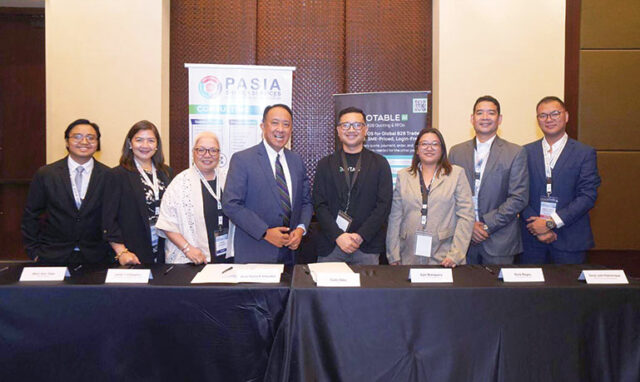
PASIA Shared Services, the solutions and services arm of the Procurement and Supply Institute of Asia (PASIA), has partnered with Quotable AI, an AI-powered operating system originally founded in the Philippines and now available globally.

The partnership aims to modernize how suppliers engage with SMEs in managing quotations and B2B engagements. Today, many suppliers are forced to coordinate through fragmented tools like spreadsheets, emails, and messaging platforms, which slow down response times and reduce visibility.

Quotable AI brings these interactions into a single system, enabling suppliers to submit quotations more efficiently, collaborate seamlessly with buyers, and gain clearer insight into operations status. By streamlining sourcing and communication, suppliers can strengthen relationships with SMEs, reduce administrative overhead, and position themselves as more responsive and competitive partners.

Charlie Villasenor, chairman and CEO of PASIA Shared Services said, “This partnership represents a major step forward in our mission to empower suppliers and SMEs with smarter and more efficient ways to modernize quotations. Through this collaboration with Quotable AI, we can deliver transformative solutions that reduce costs, improve compliance, and accelerate traditional workflows.”

Quotable AI enables companies to receive benefits ranging from centralized RFQ and quotation management, to frictionless supplier participation. The platform also offers universal parser for business documents and Quotable Wallet for B2B payments in the Philippines. Quotable AI connects with existing financial systems, allowing organizations to modernize supplier collaboration without replacing their ERP infrastructure.

Carlo Silva, co-founder & CEO of Quotable AI, said: “Suppliers often spend hours coordinating quotations and responses across email threads and spreadsheets. Quotable AI brings these workflows into one structured system so teams can move faster and operate with better visibility. Partnering with PASIA allows us to introduce these capabilities to organizations across Asia and beyond.”

Through this partnership, PASIA Shared Services will introduce Quotable AI to its network of procurement professionals, helping accelerate the digital transformation of business operations across the region.


SparkUp is BusinessWorld’s multimedia brand created to inform, inspire, and empower the Philippine startups; micro, small and medium enterprises (MSMEs); and future business leaders. This section will be published every other Monday. For pitches and releases about startups, e-mail to bmbeltran@bworldonline.com (cc: abconoza@bworldonline.com). Materials sent become BW property.

Converge reviews plan to create separate fiber unit

ONVERGE ICT SOLUTIONS, INC.

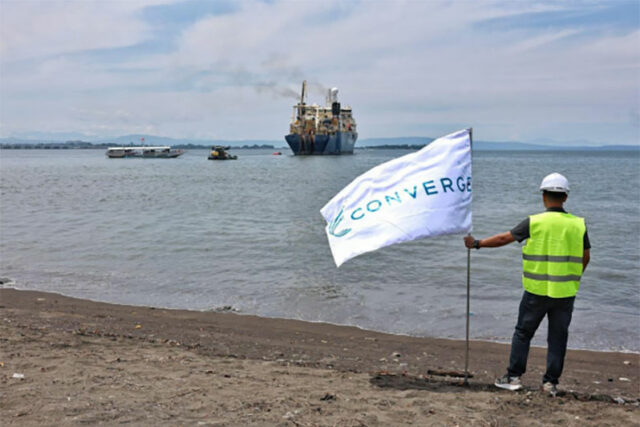
CONVERGE ICT Solutions, Inc. said its plan to carve out fiber assets into a new unit remains under review as the company continues to monitor industry developments.

“It is still on the study table. It takes a while because you need to make everything available including network sizing, automation and everything, the back end should also be ready,” Converge ICT Chief Executive Officer Dennis Anthony H. Uy told reporters on the sidelines of the company’s data center inauguration on March 20.

He said the plan could be beneficial if implemented alongside the Konektadong Pinoy Act, which emphasizes infrastructure sharing.

Maganda na sabay yan sa Konektadong Pinoy (It’s good that this goes hand in hand with the Konektadong Pinoy Act). The reason why you set up KP (Konektadong Pinoy) is sharing the infrastructure,” Mr. Uy said.

Converge said last year that it was studying the creation of a new unit for infrastructure co‑sharing, noting that its decision would likely depend on the rules under the Konektadong Pinoy Act.

Bloomberg previously reported that Converge plans to spin off its fiber business, valued at around $1 billion, and sell about a 40% stake in the new unit.

The Konektadong Pinoy Act, or the Open Access in Data Transmission Act, streamlines the licensing process for new entrants and aims to boost competition in data transmission.

The measure, which lapsed into law on Aug. 24, 2025, relaxes regulations to favor more entrants in the data transmission industry.

For 2026, the company set a capital expenditure (capex) guidance of P18 billion to P23 billion, following a 2025 period in which it used P17.7 billion in cash capex, despite an original budget of P25 billion.

The 2026 budget is primarily allocated for a network expansion program targeting the installation of 900,000 new ports in the Visayas and Mindanao regions, alongside investments to improve network reliability.

Mr. Uy noted that Converge is seeing rising demand from prepaid users in remote areas, which the company aims to capture as it expands its reach.

The listed fiber broadband and technology provider launched its P5-billion, 12-megawatt (MW) data center in Angeles, Pampanga last month.

Overall, the company has a total data center capacity of about 20 MW, including its Caloocan and Pasig facilities.

The Angeles data center, which sits on a 5,000-square-meter property, is scalable to 36 MW and is artificial intelligence-ready to meet growing demand for content and cloud services.

Converge is also strengthening its network by integrating the transpacific link Bifrost and the intra-Asia SEA-H2X cable system into its operations. — Ashley Erika O. Jose

RRHI shares rise on delisting plan

JGSUMMIT.COM.PH

By Pierce Oel A. Montalvo, Researcher

SHARES of Robinsons Retail Holdings, Inc. (RRHI) rose last week after its board approved a voluntary delisting and a P48.30-per-share tender offer, with analysts saying the price offers a premium to recent trading levels but remains below intrinsic value.

Data from the Philippine Stock Exchange (PSE) showed RRHI as the 11th most actively traded stock during the week, with 24.34 million shares valued at P457.93 million changing hands.

Shares of the retailer closed at P46.01 on Wednesday, up 18.2% from P38.95 previously. This outperformed the benchmark PSE index (PSEi), which rose by 0.4%, while the services sector index gained 0.1%.

Year to date, the stock has risen by 39.3%, outpacing the PSEi’s 0.9% decline and the services sector’s 14.4% increase.

Trading was suspended on Thursday and Friday due to the Maundy Thursday and Good Friday holidays.

On March 27, RRHI said its board had unanimously approved a voluntary delisting after receiving a notice of intent from JE Holdings, Inc., its largest shareholder with a 46.1% stake, to conduct a tender offer for all outstanding shares not held by the delisting proponents.

The tender offer price of P48.30 per share represents a 32.23% premium over the one-year volume-weighted average price of P36.5285 as of March 26. The price is supported by a fairness opinion from FTI Consulting Philippines, Inc.

RRHI reported net income attributable to equity holders of P5.71 billion, down 44.5% from P10.28 billion in 2024. Revenues rose by 5.7% to P210.42 billion from P199.17 billion.

“We think RRHI is pursuing a voluntary delisting due to management’s belief that its shares are undervalued,” said Adrian Geoffrey Go, an equity analyst at Sun Life Investment Management and Trust Corp., in an e-mail.

He added that “prior to the share price spike, RRHI was trading at a sub-10x price-to-earnings (P/E) ratio, which management likely viewed as an attractive level relative to RRHI’s underlying valuation.”

Mr. Go said both the P48.30 tender offer price and the P50 buyback price “represent a significant premium over its share price at the time,” but added that “both prices are still notably lower than its 2013 IPO price of P58 per share.”

He said current valuations may reflect “limited trading volume post index exclusion,” “investor perception on capital allocation decisions,” and “a broad de-rating seen across most Philippine industries.”

The voluntary delisting requires approval from shareholders representing at least two-thirds of RRHI’s outstanding shares at the annual stockholders’ meeting scheduled on May 12.

Votes against the delisting must not exceed 10% of total outstanding shares.

For the delisting to proceed, JE Holdings and other proponents must collectively own at least 95% of RRHI’s issued and outstanding capital stock after the tender offer, in line with the PSE’s amended voluntary delisting rules.

The transaction also requires approval from the Philippine Competition Commission.

“The gap could widen if the market loses confidence in the 95% threshold being met,” Mr. Go said.

He added that “we do not think that the gap should narrow further, as those positioning for the tender offer would require a decent return for the risk that they are taking.”

Mr. Go said that if the tender offer does not push through, “the market begins to value RRHI closer to the tender offer price, which is an indicative level where management may feel appropriate valuations should be,” though he added “this is unlikely as the company will be weighed down by its current yield at sub-5%, lower than comparable peers.”

Minority shareholders who choose not to tender their shares will retain ownership but may face constraints.

“Minority shareholders who choose not to tender will still retain their ownership of RRHI, but will be subject to less liquidity and difficulty selling since there is no more public market,” Mr. Go said.

He added that shareholders would also face “higher taxes in the form of capital gains tax and documentary stamp tax, versus just a stock transaction tax for publicly listed companies plus manual filing per transaction,” as well as “potential for less disclosure on company operations and results.”

Despite the premium, analysts said the tender offer may not fully reflect RRHI’s growth potential.

“We expect the company to grow its core earnings at a compound annual growth rate (CAGR) of 12% over the next five years through a combination of a high single digit CAGR for operating income and a gradual deleveraging from the debt taken on to fund its recent share acquisitions,” Mr. Go said.

He added that “the tender offer price of P48.30 per share implies a P/E ratio of around 9x, implying a P/E-to-growth ratio below 1, which we think is still too low for the company’s underlying prospects.”

Mr. Go said the broader implications of the delisting trend could point to shifting market dynamics.

“More frequent delisting discussions could imply that some companies are unhappy with their market valuations and feel that the extra cost of being a publicly traded company is not worth the valuation mismatch,” he said.

He added that “companies with the financial capability to do so may opt to take their companies private (as with Metro Pacific Investments Corp. before) and look for opportunities to receive improved valuations elsewhere (i.e. private markets, or a business spinoff).”

Looking ahead, Mr. Go said a sustained valuation re-rating for RRHI would require catalysts.

“Deleveraging the balance sheet is one example, though higher oil prices and other upside risks to inflation might affect the company’s flexibility to pay down and/or refinance debt at lower rates,” he said.

UST researchers honored for excellence at PhilAAST 74th Annual Convention

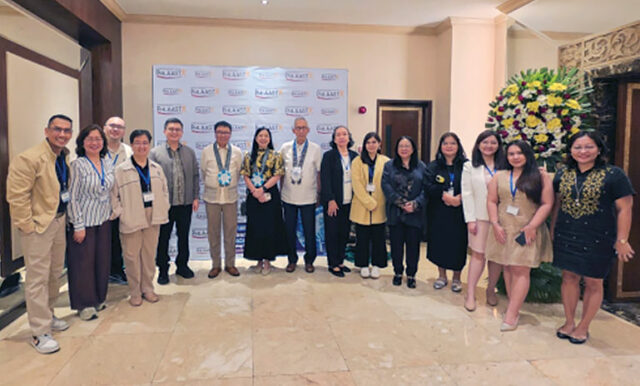
The University of Santo Tomas (UST) marked another milestone as its researchers were recognized at the 74th Annual Convention of the Philippine Association for the Advancement of Science and Technology (PhilAAST). With the theme “Embracing a Multifaceted Digital Culture: Moving Forward to Pagtanaw 2050,” the convention gathered leading scientists, educators, and innovators from across the country.

Representing the UST College of Science and the Research Center for the Natural and Applied Sciences (RCNAS), Acad. Prof. Emeritus Fortunato B. Sevilla III, Ph.D., was conferred a PhilAAST Fellowship in recognition of his distinguished career and lifelong contributions to the advancement of science in the Philippines.

Prof. Rey Donne S. Papa, Ph.D., Dean of the College of Science and academic staff of the Department of Biological Sciences, received the Gregorio Y. Zara Award for Basic Science Research for his pioneering work in freshwater science, zooplankton taxonomy, and limnology. Meanwhile, Prof. Karen S. Santiago, Ph.D., from the Department of Chemistry, was honored with the Francis Ferrer Award for Productivity through Technology for her research on smart polymers and nanomaterials, particularly their applications in chemical sensing, controlled delivery systems, and self-healing materials.

UST also earned recognition in the scientific poster category. A research team led by Assoc. Prof. Alan Rodelle M. Salcedo, Ph.D., of the Department of Chemistry, together with students Katrina Beatrice F. Panopio and Ian Joseph F. Halim, won Second Prize for Best Scientific Poster Presentation for their study titled, “Digital Image-Based Colorimetric Sensing of Lead(II) Using Dithizone and Smartphone Imaging.” In a separate distinction, Prof. Christina A. Binag, Ph.D., also from the Department of Chemistry, was elected as a member of the PhilAAST Board, further strengthening UST’s presence in national scientific leadership.


SparkUp is BusinessWorld’s multimedia brand created to inform, inspire, and empower the Philippine startups; micro, small and medium enterprises (MSMEs); and future business leaders. This section will be published every other Monday. For pitches and releases about startups, e-mail to bmbeltran@bworldonline.com (cc: abconoza@bworldonline.com). Materials sent become BW property.

Keeping the human touch

Lacquerware from Vietnam arrives in Rustan’s

A DISPLAY of red lacquered vases stands in Rustan’s Makati. Gold-rimmed resin topped off with red lacquer and silver-leaf tinted red are polished to a gleam akin to a flame — this is the work of Hanoia, a new brand from Vietnam that recently joined Rustan’s.

We were told that Hanoia has been making commissions for luxury houses around the world since 1997, but they decided to make their own brand in 2016.

“We wanted to preserve this kind of craft,” Dinh Cong Tai, marketing and communications director of Hanoia, told BusinessWorld in an interview during the March 24 launch. “I think there’s no better way than to have the artisan that can live with that craft; with that job.” He added that in modern times, “Lacquer has become more a fine art medium rather than in the daily context.”

Lacquer, prized for thousands of years in East Asia, is a coating originally made from the sap of the Chinese lacquer tree (Toxicodendron vernicifluum). These items were prized by the aristocracy of Asia, then traded in Europe, where the Habsburg Empress Maria Theresa took special pride in her collection. These days, sap-based lacquer has become rare, replaced by synthetics, or else derived from insect-based shellac. Mr. Dinh said, “We follow the same process, but we use modern-day materials and also technology — to help the artisan to work.”

They have over 200 people in their workshop. “The young generation doesn’t want to follow this kind of craft anymore,” he says, though in recent years, they have managed to make artisanship an appealing career for young Vietnamese workers. “We help the artisan to continue to live with the jobs. That’s (how) we convinced the young generation to continue to learn lacquer.”

This is their first shop-in-shop concept abroad, and in choosing Manila as their first location abroad, Mr. Dinh emphasizes the friendship between Rustan’s president Anton Huang and Hanoia’s chief executive officer, Christian de Ruty. “It’s also a good opportunity and a good relationship,” he said. More importantly, “Manila in particular is a very cosmopolitan city.”

The vases we mentioned, we were told, were made within a period of two months. Perhaps that is what true luxury means, beyond labels and stories. Mr. Dinh said, “Luxury today is more about craftsmanship. What we value most is the time and skillfulness of the artisan — the touch of humans.” — Joseph L. Garcia

I watched Artemis II lift off — and witnessed the first humans venture to the Moon since 1972

NASA-UNSPLASH

By Gordon Osinski

EVEN from a distance of several kilometers, the Artemis II rocket looked huge.

Then, there was a moment that felt like an eternity, as around 2,600 metric tons of spacecraft lifted off.

I was honored to receive an invitation from the Canadian Space Agency to attend this historic launch at NASA’s Kennedy Space Center. I am a professor, an explorer, and a planetary geologist. As a member of the First Artemis Lunar Surface Science Team, I have been supporting NASA in developing the geology training for Artemis astronauts.

This launch was one of the most thrilling, but stressful few minutes of my life. Space missions are hard and can be dangerous, especially missions like this where there are so many firsts.

The final 10-second countdown seemed to come so quickly, and then at 6:35 p.m., EDT, on April 1, 2026, the NASA launch commentator uttered those famous words: “We have liftoff.”

I think everyone around me held their breath for those first few critical seconds, and then the significance of the moment sank in. We had just witnessed history in the making. This was the launch of the first crewed flight of NASA’s Artemis program, and the first time since 1972 that humans have ventured to the Moon.

Jeremy Hansen will be the first non-American to fly to the Moon and will make Canada only the second country in the world to send an astronaut into deep space.

Christina Koch and Victor Glover will also make history as the first woman and person of color to fly to the Moon.

THE BUILD UP TO LAUNCH
The first launch windows for Artemis II came and went earlier this year, following issues discovered during wet dress rehearsals. But this time felt different. NASA rolled out the SLS (Space Launch System) rocket on March 20 and decided to skip the wet dress rehearsal and go straight for launch.

You could sense the confidence building.

On the evening before launch day, the Canadian Space Agency held a reception for all the Canadian invitees, as well as several NASA guests. It was like a “who’s who” of the Canadian space program, including most of Canada’s retired astronauts.

There were some lighthearted moments — like when MDA Space CEO Mike Greenly announced there were the limited edition Tim Hortons “moonbits” for all — but you could tell there was also a lot of emotion in the room.

There were some tears as a video message from Jeremy Hansen’s son, Devon, was played. For me the moment came when I spoke with Jeremy’s parents, who I had met several years earlier. They still live in Ingersoll, not far from London, Ont., where Jeremy went to high school.

RETURNING HUMANS TO THE MOON
At the time of writing, the crew have now had their first sleep in Integrity, the name of their Orion spacecraft.

They are now in a high-Earth orbit, reaching a maximum of 74,000 km from Earth. This is already a huge distance when you consider the orbit of the International Space Station is only around 400 km.

During the first 24 hours, the crew are testing the environmental controls and life support systems, ensuring that everything they need to survive for the next 10 days in space works. If everything looks good, NASA will clear the crew to conduct the translunar injection, and send Integrity to the Moon.

While they won’t be landing, in addition to testing out the Orion spacecraft, the Artemis II crew will be conducting science. They will be working with scientists and engineers in a new science evaluation room in mission control at the NASA Johnson Space Center, to collaborate during operations in real time.

This builds on years of testing and simulations the teams have done together and lays the groundwork for the first surface Artemis mission.

Before the launch, NASA astronaut Christina Koch summed up the feelings of everyone I’ve met on the Artemis program: “It is our strong hope that this Artemis mission is the start of an era where everyone, every person on Earth can look at it and think of it as also a destination.”

I couldn’t agree more.

THE CONVERSATION VIA REUTERS CONNECTS