Home Blog Page 6280

Facing deadlock, WTO negotiations grind on despite Indian defiance

WORLD TRADE ORGANIZATION

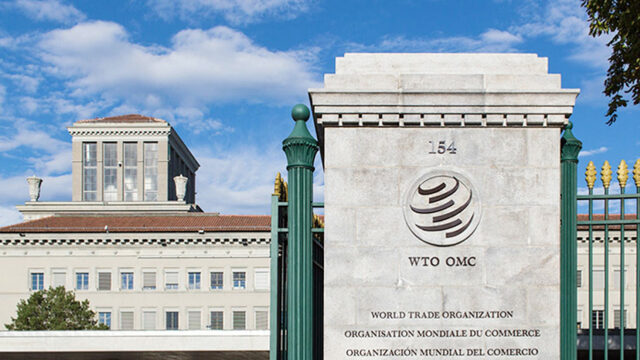
GENEVA — The World Trade Organization (WTO) negotiations on food, fisheries, and vaccines stretched into the early hours on Thursday amid growing doubts that tough bargaining could deliver deals in the face of Indian intransigence. 

During the WTO’s ministerial conference this week, its first major meeting in over four years, the 164-member body is seeking to agree a response to the coronavirus disease 2019 (COVID-19) pandemic, a reduction of fishing subsidies, food security pledges and the launch of internal reform in a package of deals badly needed to prove the body’s relevance. 

“There’s not a single outcome yet,” said a source involved with the talks that are ongoing in the “Green Room” of the WTO’s Geneva headquarters. Pakistan Commerce Minister Syed Naveed Qamar earlier told Reuters he thought the WTO was heading towards a “no-result ministerial.” 

A WTO spokesperson was more upbeat, saying there had been significant progress and that it was not far from agreements. 

WTO Director-General Ngozi Okonjo-Iweala told the more than 100 ministers present that time was running out and that they should “go the extra mile.” The June 12–15 conference has already been extended by an extra day into Thursday. The US trade representative Katherine Tai leaves in the morning, a US official confirmed, adding pressure to strike deals in the coming hours. 

The WTO takes decisions by consensus, so just one objection can sink a deal. 

Delegates said India, which has a history of blocking multilateral trade deals, appeared far from ready to compromise. That view was supported by comments Indian Commerce Minister Shri Piyush Goyal made in closed sessions and which New Delhi chose to publish. 

India and South Africa and other developing countries have sought a waiver of intellectual property rights for vaccines, treatments and diagnostics for over a year, but faced opposition from several developed nations with major pharmaceutical producers. 

A provisional deal between major parties — India, South Africa, the United States and the European Union — emerged in May, but drew criticism from campaign groups that it fell short of what is needed. 

Activists staged a “die-in” protest at the WTO building on Wednesday, coughing and pretending to drop dead to the floor to highlight the deaths they say are caused by the absence of a broad intellectual property waiver. 

Mr. Goyal echoed that view. 

“My own sense is that what we are getting is completely half baked and it will not allow us to make any vaccines,” he said. 

The WTO has also pushed hard for a global deal to cut fishing subsidies, which would be only the second multilateral agreement since its creation 27 years ago and a demonstration of its relevance in an era of growing trade tensions. 

Mr. Goyal, in comments to delegates, said India was a strong advocate of sustainability, but its fishing industry did not operate huge fleets and relied on small-scale and often poor fishers. 

The minister said India and similar countries should be granted a 25-year transition period to phase out fishing subsidies, far longer than what most other WTO members have suggested. 

“It’s not yet clear though that there is a deal to be had…. with the Indians throwing in even more objections to texts,” one diplomat close to the talks said. 

However, civil society groups said it was rich nations, with inflexibility towards the needs of the developing world, that were responsible for the impasse. — Philip Blenkinsop and Emma Farge/Reuters

More than 80% of Japanese firms back nuclear restart, tourism resumption

International Atomic Energy Agency (IAEA) experts visit Fukushima Daiichi Nuclear Power Station in Japan in November 2013. — Greg Webb / IAEA

TOKYO — A large majority of Japanese companies support both restarting idled nuclear reactors and this month’s resumption of foreign tourism, a Reuters survey showed, highlighting broad approval for two measures seen as likely to ease strain on the economy. 

Results of the monthly Reuters Corporate Survey are among the strongest signs yet of Japan Inc.’s endorsement of a return to nuclear power, as higher global energy prices and a tumbling yen drive up input costs for manufacturers and squeeze households. 

Nuclear power remains a sensitive issue in Japan after a devastating earthquake and tsunami in 2011 crippled the Fukushima Daiichi plant and caused the world’s worst nuclear accident since Chernobyl. But rising energy prices from the Ukraine crisis appear to be turning public opinion on the issue. 

“Until we get new energy sources, such as hydrogen, economic activity won’t move forward without restarting nuclear reactors,” a manager at a paper and pulp company wrote. 

Japan idled the bulk of its nuclear reactors — more than 40 — in the aftermath of the Fukushima disaster, leaving it with around 10 operational now. 

Overall, 85% of firms were in favor of restarting nuclear reactors if safety requirements were met, according to the poll of 500 large and mid-size non-financial firms conducted from June 1 to 10 by Nikkei Research for Reuters. Around 240 firms responded. 

Their comments showed economic concerns playing a prominent role in consideration of nuclear power. 

“Structural power shortages have a big impact on the economy, making nuclear power restart essential,” wrote a manager at a wholesaler. 

The results compared with those of the April survey, in which almost 60% of firms said the government should move “quickly” to restart reactors. The latest survey did not ask about timing of a restart, however, so direct comparison is difficult. 

A public opinion poll by the Nikkei newspaper in March showed 53% of voters believed the government should restart reactors. 

WELCOME BACK
Similarly, the survey showed 89% of firms welcoming the government’s decision to again permit limited inbound foreign tourism. Many firms expected the move would aid in the recovery from the pandemic —  though it suggested they did not want border limits to be fully relaxed until 2023. 

Since June 10, the government has allowed a limited number of foreign tourists to enter on package tours. This is a first phase, after two years of coronavirus disease 2019 (COVID-19) curbs. 

Policymakers have faced the difficult task of trying to balance the economic benefits of tourism with concerns that travelers would trigger a COVID resurgence. 

An industry executive said local governments remained worried that foreign tourists might spread the virus, which would make it hard to open the country fully. 

About a quarter of firms said the government should bring the number of foreign visitors back to pre-pandemic levels this year, while 58% said it should wait until 2023 before doing so. 

“You cannot rule out the possibility (a re-opening) could trigger resurgence of infections,” a manager at a ceramics company wrote in the survey on condition of anonymity. “However, vaccines are keeping infections from becoming worse. Even considering the risk, merits stemming from inbound demand outweigh demerits.” 

Before the COVID-19 outbreak, tourism was a rare bright spot for Japan, with a record of about 32 million foreign tourists spending 4.81 trillion yen ($35.80 billion) in 2019. The government aims to bring in 60 million tourists a year by 2030. 

Japan imposed some of the strictest border controls in the world during the pandemic, banning the entry of almost all non-residents and causing tourism demand to plunge. 

Seven out of 10 firms in the survey expected that, upon easing of border measures, inbound tourism would help boost economic growth “somewhat” this fiscal year, while 18% saw it “greatly” contributing to growth. — Tetsushi Kajimoto/Reuters

Ancient DNA solves mystery over origin of medieval Black Death

Yersinia pestis bacteria. — Centers for Disease Control and Prevention/ Dr. H.E. Stark

Ancient DNA from bubonic plague victims buried in cemeteries on the old Silk Road trade route in Central Asia has helped solve an enduring mystery, pinpointing an area in northern Kyrgyzstan as the launching point for the Black Death that killed tens of millions of people in the mid-14th century. 

Researchers said on Wednesday they retrieved ancient DNA traces of the Yersinia pestis plague bacterium from the teeth of three women buried in a medieval Nestorian Christian community in the Chu Valley near Lake Issyk Kul in the foothills of the Tian Shan mountains who perished in 1338–1339. The earliest deaths documented elsewhere in the pandemic were in 1346. 

Reconstructing the pathogen’s genome showed that this strain not only gave rise to the one that caused the Black Death that mauled Europe, Asia, the Middle East and North Africa but also to most plague strains existing today. 

“Our finding that the Black Death originated in Central Asia in the 1330s puts centuries-old debates to rest,” said historian Philip Slavin of the University of Stirling in Scotland, co-author of the study published in the journal Nature

The Silk Road was an overland route for caravans carrying a panoply of goods back and forth from China through the sumptuous cities of Central Asia to points including the Byzantine capital Constantinople and Persia. It also may have served as a conduit of death if the pathogen hitched a ride on the caravans. 

“There have been a number of different hypotheses suggesting that the pandemic may have originated in East Asia, specifically China, in Central Asia, in India, or even close to where the first outbreaks were documented in 1346 in the Black Sea and Caspian Sea regions,” said archaeogeneticist and study lead author of the University of Tübingen in Germany. 

“We know that trade was likely a determining factor to the dispersal of plague into Europe during the beginning of the Black Death. It is reasonable to hypothesize that similar processes determined the spread of the disease from Central Asia to the Black Sea between 1338 and 1346,” Ms. Spyrou added. 

Pandemic origins are hotly contested, as evidenced by the debate over the current coronavirus disease 2019 (COVID-19) pandemic’s emergence. 

The Black Death was the deadliest pandemic on record. It may have killed 50% to 60% of the population in parts of Western Europe and 50% in the Middle East, combining for about 50–60 million deaths, Mr. Slavin said. An “unaccountable number” of people also died in the Caucasus, Iran and Central Asia, Mr. Slavin added. 

“Already in medieval times we see the high mobility and fast spread of a human pathogen,” said archaeogeneticist and study co-author Johannes Krause, director of the Max Planck Institute for the Science of Human History in Germany. “We should not underestimate the potential of pathogens to spread around the world from rather remote locations, likely due to a zoonotic event” — an infectious disease jumping from animals to people. 

The researchers analyzed teeth, a rich source of DNA, from seven people buried in cemeteries of communities called Burana and Kara-Djigach, obtaining plague DNA from three in Kara-Djigach. 

The cemeteries, excavated in the 19th century, included headstones attributing deaths to “pestilence” in the Syriac language. Objects like pearls, coins and clothing from far-flung locales indicated that the towns were involved in international trade, perhaps offering stop-and-rest services for long-distance caravans. 

Bubonic plague, untreatable at the time but now curable using antibiotics, caused swollen lymph nodes with blood and pus seeping out, with the infection spreading to the blood and lungs. 

In Europe, it was transmitted mainly through bites of fleas carried on infected rats. The pandemic originated in wild rodents, most likely marmots, a type of ground squirrel, Slavin said. Rodents tagging along in caravans may have helped spread it, but other transmission mechanisms may have included human fleas and lice. 

“We found that the closest living relatives of that Y. pestis strain that gave rise to the Black Death are still found in marmots in that region today,” Mr. Krause said. — Reuters

How crypto lender Celsius stumbled on risky bank-like investments

PIXABAY

Celsius Network, the retail crypto lending platform whose liquidity problems have sent cryptocurrencies plunging, stumbled on complex investments in the wholesale digital asset market in what analysts say was akin to a traditional bank run. 

Citing extreme market conditions, New Jersey-based Celsius this week froze withdrawals and transfers between accounts “to stabilize liquidity.” In a video on Friday, the company’s finance chief said Celsius, along with the industry, had seen redemptions rise following the collapse of cryptocurrency TerraUSD in May. 

Cryptocurrencies have since lost over $400 billion in value. 

Similar to a bank, Celsius gathers crypto deposits from retail customers and invests them in the equivalent of the wholesale crypto market, including “decentralized finance” or DeFi sites that use blockchain technology to offer services from loans to insurance outside the traditional financial sector. 

Unlike banks, Celsius promises retail customers huge returns, sometimes as much as 18.6% annually. The lure of big profits has led individual investors to pour assets into Celsius and platforms like it. Its CEO Alex Mashinsky said in October Celsius had $25 billion in assets, although that had fallen to around $11.8 billion as of last month, its website showed. 

Celsius appears to have stumbled on its wholesale crypto investments, according to public blockchain information and analysts who track such data. As those investments soured, the company was unable to meet redemptions from customers fleeing amid the broader crypto market slump, analysts said. 

“This is the closest we’ve seen to a bank run” in the cryptocurrency sector, said Noelle Acheson, head of market insights at Genesis, a digital currency prime brokerage. 

Mr. Mashinsky and a representative for Celsius did not respond to requests for comment. The company said on Sunday it was taking steps to meet redemptions but “there may be delays.” 

Celsius’ problems date back to at least December when, at the hands of hackers, it lost $54 million worth of bitcoin it had invested with DeFi platform BadgerDao, according to public blockchain data. At the time, Mr. Mashinsky said Celsius lost money, but did not disclose how much. 

Celsius had also invested in the Anchor protocol which offered up to 20% returns on deposits of TerraUSD. As TerraUSD fell, Celsius pulled more than $535 million in crypto assets from Anchor, according to public blockchain data. 

Mr. Mashinsky said in a May interview that its exposure to TerraUSD was small relative to its assets but did not say if the company had lost money. 

The company’s biggest misstep, though, appears to have been its decision to invest customers’ ether tokens with Lido Finance, a DeFi platform offering investors the chance to profit from a new version of ether that is in development. The investments are known as “staked” ether, or stETH. 

Celsius promised customers between 6% and 8% returns on ether deposits. It had at least $450 million in stETH in its primary DeFi wallet, but likely has more stored elsewhere, according to Andrew Thurman, an analyst at analytics firm Nansen, which tracks blockchain data. 

While one stETH is supposed to be redeemable for one ether, stETH’s price has dropped compared to ether in recent weeks as the crypto market fall prompted holders to dump their stETH. 

That discrepancy will have made it difficult for Celsius to convert its stETH back to ether to meet customer withdrawals, said analysts. 

“Everybody … could see that they had positions that were significantly under risk,” said Mr. Thurman. 

The slump in bitcoin, which has shed about half its value this year, has also pressured Celsius. It pledged crypto assets pegged to bitcoin as collateral against a loan of other cryptocurrencies, according to Mr. Thurman. As bitcoin fell, Celsius had to top up that collateral, said Mr. Thurman. 

In 2019, Mr. Mashinsky told the Financial Times that Celsius had crypto loans collateralized with bitcoin. 

“The whole thing is just mispriced risk,” Cory Klippsten, CEO of crypto investment platform Swan Bitcoin, said of Celsius’ business model. 

CONTAGION WORRIES 

Celsius has hired restructuring lawyers, the Wall Street Journal reported Tuesday. Its problems have sparked fears that other crypto lending platforms may be at risk of investor runs. 

On Tuesday, the chair of the US Securities and Exchange Commission said such platforms operate a bit like banks and that promised high returns might be “too good to be true.” 

Celsius’ peers have been quick to distance themselves from stETH. On Monday, New Jersey-based BlockFi tweeted it does not hold any stETH principally or as collateral. Voyager Digital, also New Jersey-based, tweeted it has never engaged in DeFi lending activities and has no exposure to stETH. 

But according to Mr. Thurman, several other crypto lending platforms, such as Aave, invest in stETH and pledge it as collateral. If it continues to drop relative to ether, there is a “risk of pretty significant liquidations.” 

Aave did not respond to requests for comment. — Hannah Lang, Carolina Mandl and Elizabeth Howcroft/Reuters

K-pop pioneers BTS’s time-out leaves fans tearful, investors irate

BTS in 2019 Clockwise from left: Jin, RM, Jungkook, J-Hope, Suga, V, and Jimin — DISPATCH/EN.WIKIPEDIA.ORG/

SEOUL — K-pop pioneers BTS faced tears and sympathy from fans but anger from shareholders in their management company on Wednesday, a day after the band, pleading exhaustion, announced a break from group musical activities to pursue solo projects. 

Many in South Korea reacted with shock and dismay at Tuesday’s news that, with some of its seven members approaching military service age, also triggered speculation about the future of a band whose upbeat hits and messages of youth empowerment have turned them into global stars. 

“I could relate to them as they shed tears and honestly told us how they felt,” fan Nini Lee told Reuters from a café in Seoul where she had gathered with other fans. 

“Their voice gave me huge strength when I had tough times, and I’m no longer afraid of such headwinds … Now I want to give my voice of courage to them.”

Kim Young-sun, who runs the cafe, said she felt sorry that she as a fan had only wanted more from BTS at a time when they were struggling, wishing them a well-deserved break to recharge their batteries. 

BTS Leader and rapper RM, in a tearful video released on Tuesday on the ninth anniversary of a group that last year became the first Asian band to win artist of the year at the American Music Awards, said he had “felt guilty and afraid” to ask for the rest that he desperately needed. 

Singer Jimin said they were struggling to find their identity in what he called an “exhausting process,” while RM also lamented that the K-pop industry could not provide young artists with “time to mature.” 

On social media, some other fans blamed BTS’ management group HYBE for relentlessly pushing for new albums and other moneymaking opportunities. 

The company did not immediately respond to a request for comment. 

“The K-pop and idol industry had long been running on a profit-making system where the stars cannot take a rest even when they burned themselves out,” said Jung Duk-hyun, a South Korean cultural critic. 

SHAREHOLDER ‘DYNAMITE’ 

Tuesday’s unexpected announcement fueled anger among investors in HYBE, which went public two years ago and whose shares plunged 25% on Wednesday, wiping nearly 2 trillion won ($1.55 billion) off its market value. 

“They’ve planted ‘dynamite’ in the hearts of shareholders,” one wrote on a Samsung Securities stock trading platform, referring to one of the group’s hit songs. 

HYBE shares had performed relatively poorly in recent months, and the company’s chief executive and some BTS members unloaded stock totaling 10 billion won ($7.75 million) in December. 

All able-bodied South Korean men are subject to about two years of military service, and the oldest member of BTS, Jin, is required to begin his duty next year. 

A bill pushing for providing military exemptions to globally renowned artists is pending in parliament, amid prolonged debate over whether BTS deserves similar benefits that sport athletes enjoy. 

Lee Ki-hoon, an analyst at Hana Financial Investment Co. Ltd., wrote in a report that BTS’ lack of public activity including the impact of military service could result in a 750 billion won revenue loss in 2023. — Reuters

Fed rolls out biggest rate hike since 1994, flags slowing economy

REUTERS

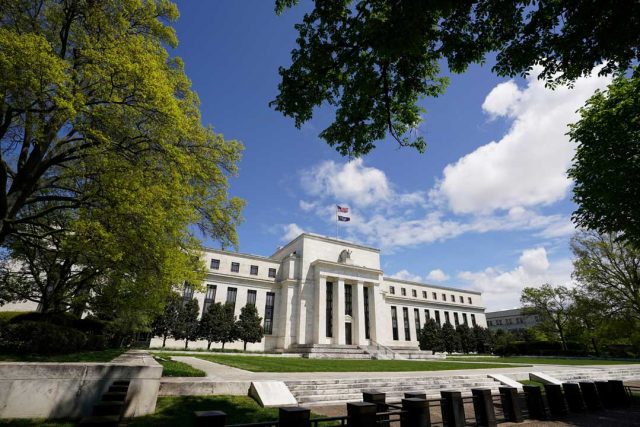
WASHINGTON – The Federal Reserve on Wednesday approved its largest interest rate increase in more than a quarter of a century to stem a surge in inflation that U.S. central bank officials acknowledged may be eroding public trust in their power, and being driven by events seen increasingly out of their hands.

The widely expected move raised the target federal funds rate by three-quarters of a percentage point to a range of between 1.5% and 1.75%, still comparatively low by historic standards.

But the Fed’s hawkish commitment to controlling inflation has already touched off a broad tightening of credit conditions being felt in U.S. housing and stock markets, and likely to slow demand throughout the economy – the Fed’s intent.

Officials also envision steady rate increases through the rest of this year, perhaps including additional 75-basis-point hikes, with a federal funds rate at 3.4% at year’s end. That would be the highest level since January 2008 and enough, Fed projections show, to slow the economy markedly in coming months and lead to a rise in unemployment.

“We don’t seek to put people out of work,” Fed Chair Jerome Powell said at a news conference after the end of the Fed’s latest two-day policy meeting, adding that the central bank was “not trying to induce a recession.”

Yet the Fed chief’s remarks were among his most sobering yet about the challenge he and his fellow policymakers face in lowering inflation from its current 40-year high, to a level closer to its 2% target, without a sharp slowdown in economic growth or a steep rise in unemployment.

“Our objective really is to bring inflation down to 2% while the labor market remains strong … What’s becoming more clear is that many factors that we don’t control are going to play a very significant role in deciding whether that’s possible or not” Powell said, citing the war in Ukraine and global supply concerns.

“There is a path for us to get there … It is not getting easier. It is getting more challenging,” he told reporters, noting that the rate hikes announced last month and in March so far had not only failed to slow inflation, but allowed it to continue accelerating to a level that recent data indicates have begun to influence public attitudes in a way that could make the Fed’s job even harder.

‘EYE-CATCHING’

A survey released on Friday showed consumer inflation expectations jumped sharply in June, a result Powell called “quite eye-catching,” and enough to tilt policymakers towards a larger 75-basis-point hike in hopes of making faster progress on the inflation front and retaining public trust that price increases will slow.

“This is something we need to take seriously,” Powell said of the change in consumer inflation expectations. “We’re absolutely determined to keep them anchored.”

The faster pace of rate hikes outlined by officials on Wednesday more closely aligns monetary policy with the rapid shift that took place this week in financial market views of what it will take to bring price pressures under control.

Bond yields fell after the release of Fed projections on Wednesday that showed economic growth slowing to a below-trend rate of 1.7%, and policymakers expecting to cut interest rates in 2024. Stocks on Wall Street ended the day higher.

Interest rate futures markets also reflected about an 85% probability that the Fed will raise rates by 75 basis points at its next policy meeting in July. For September’s meeting, however, the greater probability – at more than 50% – was for a 50-basis-point increase.

Powell, departing from the firmer guidance he has previously given about future rate increases, made no promises on Wednesday.

Given an unexpected jump in a monthly inflation report on Friday and the jump as well in expectations, “75 basis points seemed like the right thing to do at this meeting, and that’s what we did,” he said.

But he said rate hikes of that size were not likely to “be common,” and that when Fed policymakers gather in July an increase of either half a percentage point or three-quarters of a point would be “most likely.”

NOT A ‘VOLCKER MOMENT’

The tightening of monetary policy was accompanied by a downgrade to the Fed’s economic outlook, with the economy now seen slowing to a below-trend 1.7% rate of growth this year, unemployment rising to 3.7% by the end of this year, and continuing to rise to 4.1% through 2024.

While no Fed policymaker projected an outright recession, the range of economic growth forecasts edged toward zero in 2023 – with an index of Fed opinion showing officials almost unanimous in thinking risks were for growth to be slower, and inflation and unemployment higher, than expected.

Analysts, many of them critical of Fed projections in March that saw inflation easing with modest rate hikes and no increase in the unemployment rate, said the new outlook was more realistic.

“The Fed is willing to let the unemployment rate rise and risk a recession as collateral damage to get inflation back down. This isn’t a Volcker moment for Powell given the magnitude of the hike, but he is like a Mini-Me version of Volcker with this move,” said Brian Jacobsen, senior investment strategist at Allspring Global Investments, referring to former Fed Chair Paul Volcker, whose battle with inflation in the early 1980s involved sharp and unexpected rate increases of as much as four percentage points at a time.

Even with the more aggressive interest rate measures taken on Wednesday, policymakers nevertheless see inflation as measured by the personal consumption expenditures price index at 5.2% through this year and slowing only gradually to 2.2% in 2024.

Inflation has become the most pressing economic issue for the Fed and begun to shape the political landscape as well, with household sentiment worsening amid rising food and gasoline prices.

Kansas City Fed President Esther George was the only policymaker to dissent in Wednesday’s decision, preferring a half-percentage-point rate hike. — Reuters

Medalla signals gradual tightening

FELIPE M. MEDALLA / COURTESY OF BANGKO SENTRAL NG PILIPINAS

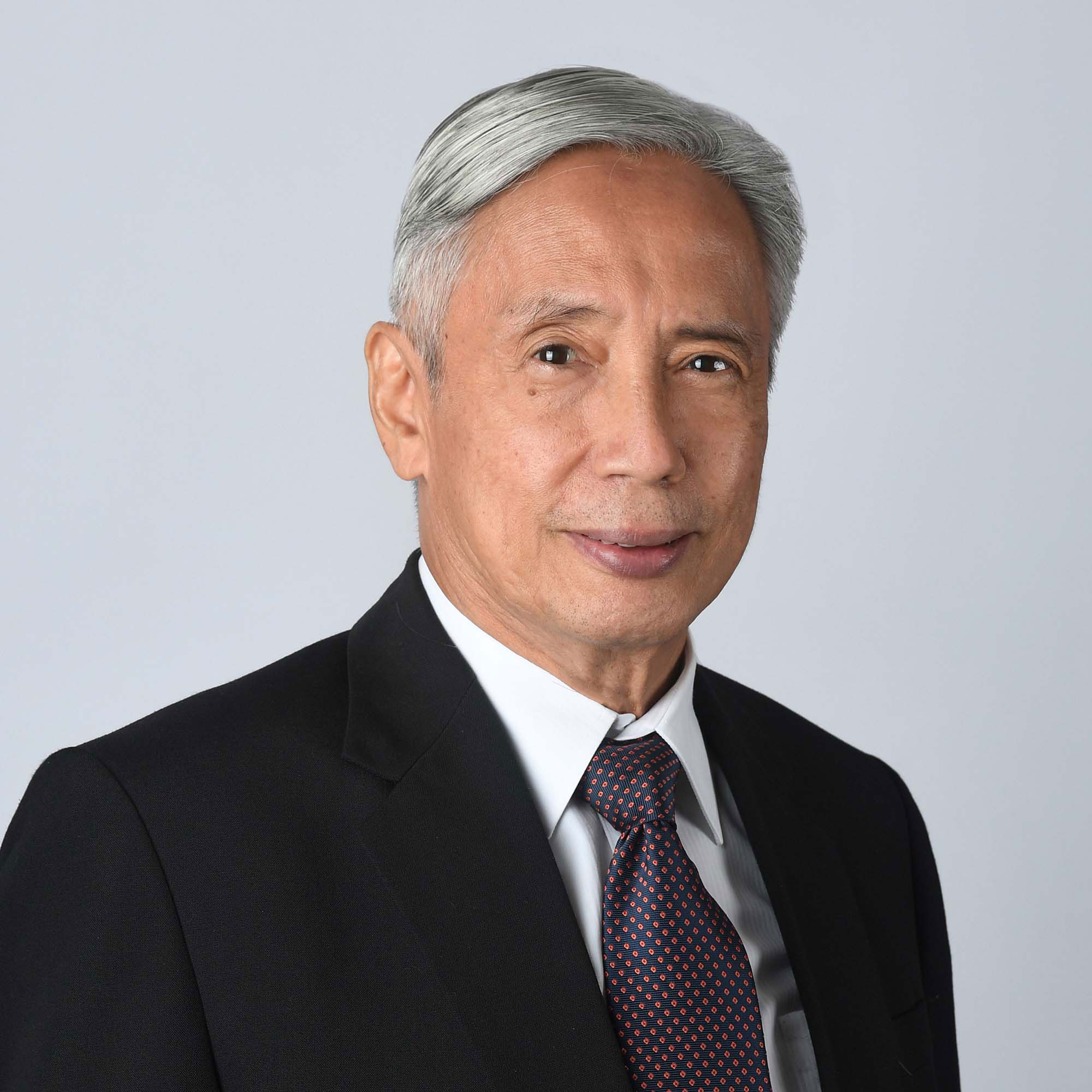
THE PHILIPPINE central bank is likely to raise its key interest rate at its next two meetings to curb inflation, but the pace of subsequent tightening will be gradual as its incoming chief ruled out hikes bigger than 25 basis points (bps).

“We have already signaled that it’s a sure thing that we will raise policy rates next week (June 23) and that we’ll likely to follow that up with a policy rate increase by August,” incoming Bangko Sentral ng Pilipinas (BSP) Governor Felipe M. Medalla said during a virtual roundtable discussion with BusinessWorld editors on Tuesday.

Mr. Medalla, who is currently a member of the Monetary Board and will serve the remaining term of BSP Governor Benjamin E. Diokno starting July 1, said any rate hikes after the Aug. 18 meeting will be data dependent.

“Depending on the data, it can be four or five more. Depending on the data, some more in 2023,” he added.

There are five more Monetary Board meetings scheduled this year — June 23, Aug. 18, Sept. 22, Nov. 11, and Dec. 15.

Asked if the BSP will consider rate hikes above 25 bps, he said: “Personally, I do not like 50 basis points. It signifies that we know something bad that you don’t know. It could be misread, as ‘wow, what does the central bank know that we don’t know?’”

Mr. Medalla said the BSP still has the “luxury of time and large reserves.”

“If the markets think we’re behind the curve, they will attack the peso,” he said. “Fortunately, the need to look more hawkish than we should be is not there. Right now, we’re trying to balance to ensure that we don’t miss our inflation targets next year, given the supply shocks.”

The Monetary Board kicked off its tightening cycle by raising the policy rate, the yield on the BSP’s overnight reverse repurchase facility, by 25 bps to 2.25% during its May 19 meeting to temper rising inflation. Interest rates on the overnight deposit and lending facilities were also hiked to 1.75% and 2.75%, respectively.

This was the first increase in borrowing costs since 2018 and followed cuts worth 200 bps in 2020 as the BSP moved to support the economy amid the coronavirus pandemic.

Inflation accelerated by 5.4% in May, the highest in three and a half years and above the BSP’s 2-4% target range.

The BSP last month raised its average inflation estimate to 4.6% this year, higher than the previous estimate of 4.3%. In 2023, inflation is projected at 3.9%, also higher than the previous estimate of 3.3%.

“(Based on) our calculation the probability it will exceed target of 2-4% next year is 47%, then that’s unacceptable. We are an inflation-targeting central bank. We cannot cure what has already happened, the price shocks… (But) we will do our best (to ensure) that demand is not excessive and inflationary expectations are not disanchored,” Mr. Medalla said.

Mr. Medalla also downplayed concerns that policy tightening will dampen the Philippine economy’s recovery from the pandemic.

“Now the question is will it kill growth? My answer is no. Because when your expected inflation is higher than 3% and policy rate is below 3%, in real terms that’s still very low interest rates,” he said.

Economic managers are targeting a 7-8% gross domestic product (GDP) growth this year.

“2022 will be a high-growth year, simply because of the huge pent-up demand. What’s going on in the Philippines is the relaxation of all those restrictions in people’s movements is more powerful than any stimulus you could think of,” Mr. Medalla said.

Most regions in the Philippines have been under the most relaxed coronavirus alert level since March.

However, health experts have warned daily coronavirus infections in Metro Manila and nearby areas can hit as much as 500 by the end of June.

The full video of the roundtable with Mr. Medalla will be shown on BusinessWorld’s Facebook page at 11 a.m. on June 20. Keisha B. Ta-asan

Remittances rise in April

ALEXANDER MIL-UNSPLASH

By Keisha B. Ta-asan

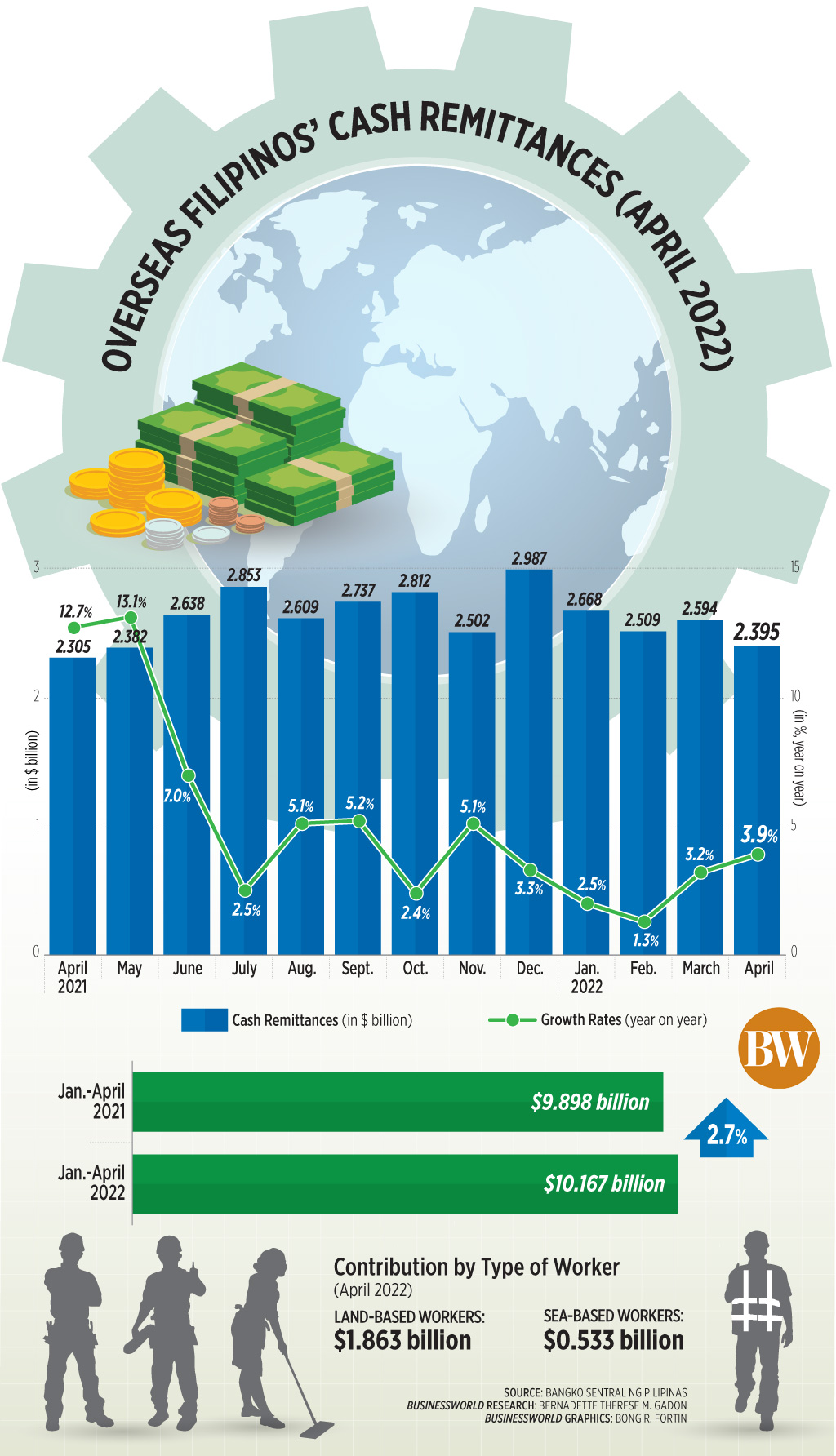
CASH REMITTANCES sent home by overseas Filipino workers (OFWs) jumped by 3.9% in April as many countries further reopened their economies and eased travel restrictions amid the ongoing pandemic.

Data from the Bangko Sentral ng Pilipinas (BSP) showed cash remittances through banks stood at $2.395 billion in April, higher than the $2.305 billion in the same month in 2021.

The growth in remittances was the fastest since 5.1% in November last year.

Overseas Filipinos’ cash remittances (April 2022)However, the amount of cash sent home by migrant Filipinos was the lowest in 11 months or since the $2.382 billion in May 2021.

“The expansion in cash remittances was due to the growth in receipts from land-based and sea-based workers,” the BSP said.

More Filipino workers have been deployed overseas as many countries relaxed travel restrictions and increased economic activity amid the pandemic.

Land-based OFWs sent $1.863 billion in April, up by 4.7% from $1.779 billion in the same month last year. Remittances from sea-based workers, on the other hand, rose by 1.4% to $533 million in April from $526 million a year ago.

“Growth was expected as (the Philippine peso) continues to depreciate. OFWs see higher nominal exchange rate number as more attractive,” UnionBank of the Philippines, Inc. Chief Economist Ruben Carlo O. Asuncion said in a Viber message.

Filipino migrants may have been encouraged to send home more money as the peso further weakened against the US dollar.

The peso fell to an over three-year low on Monday after it closed at P53.30 against the dollar.

This was the peso’s weakest close in over three years or since its finish of P53.59 against the greenback on Oct. 30, 2018.

For the first four months of the year, cash remittances increased by 2.7% year on year to $10.167 billion.

The expansion in cash remittances during the January to April period was driven mainly by inflows from the United States, Saudi Arabia, Japan, Taiwan, and Singapore.

Nearly half or 41% of the overall remittances came from workers in the United States, followed by Singapore, Saudi Arabia, Japan, the United Kingdom, the United Arab Emirates, Canada, Qatar, South Korea, and Taiwan.

Remittances from the top 10 countries accounted for 79% of the total during the four-month period.

Meanwhile, personal remittances, which include inflows in kind, went up by 3.8% year on year to $2.671 billion in April.

This brought personal remittances 2.6% higher to $11.317 billion in the first four months of the year.

“We continue to expect remittance inflows growth in the coming months even amidst the backdrop of protracted geopolitical risks and threat of a global economic slowdown,” Mr. Asuncion said.

The BSP expects remittances to grow by 4% this year.

Historians step up fight as Marcos returns to Palace

A woman reads a book on martial law under the late dictator Ferdinand Marcos, at the Bantayog ng mga Bayani, in Quezon City, Philippines, May 21, 2022. — REUTERS/LISA MARIE DAVID

By Kyle Aristophere T. Atienza, Reporter

MARLON TOBIAS, 33, rushed to buy a book about the late dictator Ferdinand E. Marcos and his martial rule after his son and namesake won the presidential election by a landslide on May 9.

“Three days after the election, I rushed to buy the book The Conjugal Dictatorship of Ferdinand and Imelda Marcos because I was afraid that it might get banned by the incoming government,” the construction worker said in a Facebook Messenger chat.

Academics and historians said civil society and media will play key roles in preserving the country’s history on Martial Law under the presidency of Ferdinand “Bongbong” R. Marcos, Jr.

“The collaboration between the academe, civil society organizations and the media is very important in these times,” said Ian Jason Hecita, who teaches political science at De La Salle University.

He said civic organizations should lead the fight against disinformation, while strengthening partnership with the academe and media “in upholding knowledge and protecting facts.”

“They should amplify and popularize through social media the works of historians, sociologists and social scientists to counter the revisionist narrative,” Mr. Hecita said.

The younger Mr. Marcos in 2020 sought a revision of textbooks on his father’s martial rule, citing their propensity to paint his family as bad people.

His father on Sept. 23, 1972 announced on national television that he had placed the country under Martial Law, citing an alleged communist threat.

Proclamation 1081, which was dated two days earlier, abolished Congress and allowed him to consolidate power by extending his tenure beyond the two presidential terms allowed by the 1935 Constitution.

More than 70,000 people were jailed, about 34,000 were tortured and more than 3,000 people died under martial rule, according to Amnesty International.

Mr. Marcos ended Martial Law in January 1981, but it wasn’t until five years later that he was toppled by a popular street uprising that sent him and his family into exile in the United States.

Civic groups have said the truth about Martial Law is at risk of being further buried after Mr. Marcos chose incoming Vice-President Sara Duterte-Carpio, daughter of outgoing populist leader Rodrigo R. Duterte, as Education chief.

An official Presidential Palace website that stores historical records of Mr. Marcos’ Martial Law regime remained inaccessible as of June 12, or almost a month after the incident was first flagged on May 16. Books sanitizing the late dictator’s martial rule are also now being sold on Facebook.

“Our minds were poisoned for a long time by textbooks about the history of the Marcoses,” Jay-ar Castillo Dinglasan, one of the book’s sellers, said in a Facebook post. “Let’s not let this happen for the next generation.”

“While many Filipinos may have succumbed to this authoritarian nostalgia, there are many others who are pushing back,” said Jayeel S. Cornelio, director of the Development Studies Program at the Ateneo de Manila University.

“They are in the academe, media, religious sector, urban poor communities, we can go on and on,” he said in a Messenger chat. “Marcos Jr.’s victory will not erase our collective memory. Our history has shown us time and again that Filipinos have ingenious ways of subverting oppression.”

More than 1,000 Filipino scholars recently signed a manifesto expressing their commitment to fight what they see as efforts to distort history and sanitize the Marcos narrative, and oppose censorship of Martial Law truths.

This came after authorities tagged as communist a children’s book publishing house that sells five titles about Martial Law under a bundle called “#NeverAgain!” — the battle cry of thousands of Filipinos who joined a popular uprising that sent the Marcos into self-exile.

Carlos Quijon, Jr., an art historian and critic, expects more artists to join their cause to educate people about Martial Law and preserve memories of the dictatorship. He added that a number of collective endeavors against martial law disinformation were being planned.

“The strength of these collective endeavors is that these are composed of not just artists but also curators, writers and historians,” he said in a Messenger chat.

“The hope is for the histories surrounding Marcos’ dictatorship and Martial Law not only to be used as themes in artworks but also as material for more engaging public programs and historical research writing.”

“We must not forget that the task of rehabilitating the Marcos brand entailed the mobilization of a huge amount of capital to fund social media propaganda,” said Michael D. Pante, who teaches history at De La Salle University.

“It needed funding to pay multinational consultancy firms and hire an array of influencers to carry out a complex public relations project that stretched for years,” he said in a Messenger chat.

‘MESSIAH’
The analysts noted that among the things being used by some quarters to rebrand the former first family and discredit serious allegations against them is the government’s failure to collect their unpaid estate tax that has ballooned to more than P200 billion due to interests and other penalties.

“The Marcos camp has used precisely that failure to cast doubt on their accountability,” Mr. Cornelio said. “Marcos Jr. has mastered the art of evading his family’s accountability by simply questioning these claims and leaving it to the lawyers.”

“His supporters are then convinced that this is just another attempt to malign and discredit him,” he added.

Nestor T. Castro, who teaches anthropology at the University of the Philippines, said there’s a popular mindset among Filipinos that if someone’s not arrested or jailed for any wrongdoing, “then probably he or she is not guilty after all.”

“The same is true when someone gets imprisoned while on trial. “People believe that the person must be guilty,” he said in a Messenger chat.

Mr. Castro, 62, was among the thousands of activists and ordinary people imprisoned during Martial Law.

“I was imprisoned by Marcos in 1983 but a year later, the court cleared me,” he said. “I shared my experience on TikTok but many pro-Marcos apologists, or probably trolls, still judged me as guilty.”

Mr. Castro said the country’s weak justice system had allowed attempts to sanitize the Marcos family’s records.

“Many Filipinos will be influenced by the government’s actions and take it as what is legally accepted,” he said. “This is because many Filipinos are unfamiliar with the laws of the land.”

Mr. Cornelo, who has extensively published on religion in the Philippines, said the messianic theme in local politics and culture had allowed the return of the Marcoses to power.

“Marcos Jr. has always been presented as a messiah,” he said. “The discourses about him being the Tiger of the North and the one who will reclaim our greatness are all messianic.”

He said ordinary people might have likened Mr. Marcos’ election victory to the resurrection of Jesus Christ, who conquered death after being persecuted by the Jews.

“The Marcoses died, metaphorically speaking, and now they are coming back to life and many Filipinos are pinning their hopes on the son,” he said.

Mr. Cornelio noted that under a Marcos presidency, the future of Philippine politics and history would heavily depend on civil society.

“It all boils down to how brave and creative we can be,” he said. “My only hope is that we will learn to navigate the next six years to raise a new generation of Filipinos who will not only honor our history but also demand accountability.”

Liza L. Maza, a Martial Law survivor, said the fight against historical revisionism heavily relies on the young generation.

“The youth should be at the forefront of the struggle against historical revisionism,” she said in a Messenger chat. “They have much energy and mobility, as well as skills in information technology to fight disinformation.”

The fight for the truth continues, she said. “It’s not enough that we change the leaders. We should change the system.”

Mr. Tobias, the building worker, said he would share his Martial Law book with others. “Just to prevent the distortion of history and other disinformation attempts, I am willing to lend my book for free.”


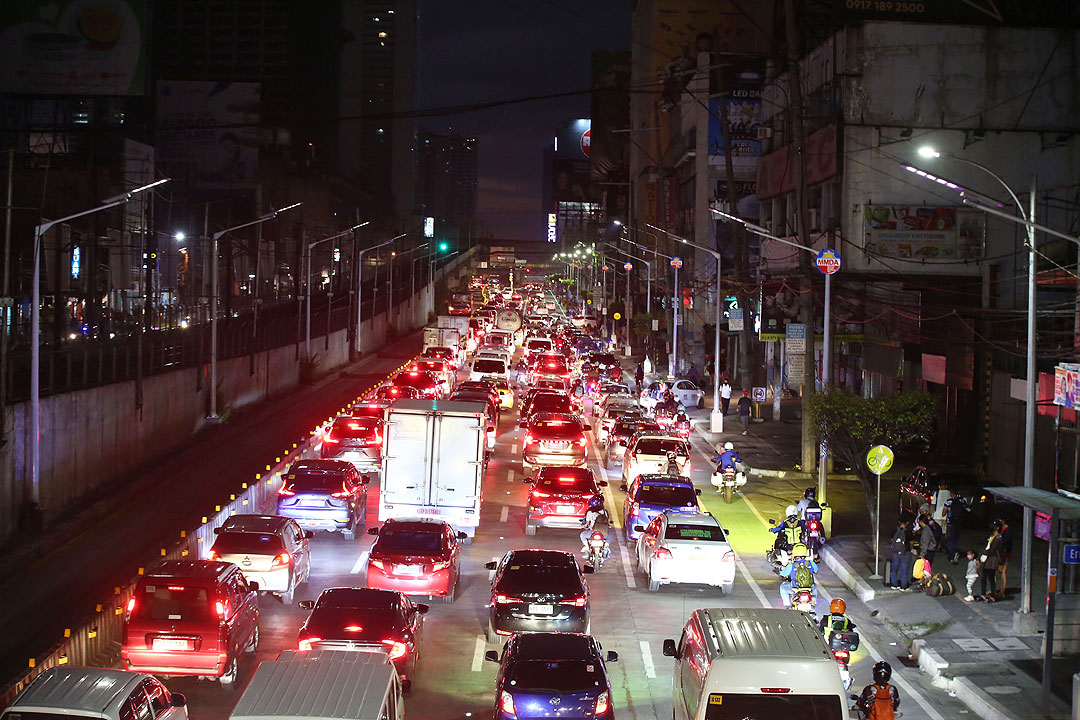
Vehicle sales jumped 19.5% in May — CAMPI

PHILIPPINE STAR/ MIGUEL DE GUZMAN
HEAVY TRAFFIC is seen along the southbound lane of EDSA in Quezon City. — PHILIPPINE STAR/ MIGUEL DE GUZMAN

THE PHILIPPINE automotive industry is confident that recovery is underway after vehicle sales rose by 19.5% in May.

Vehicle sales stood at 26,370 units in May, compared with 22,062 units sold in the same period in 2021, a joint report by the Chamber of Automotive Manufacturers of the Philippines, Inc. (CAMPI) and Truck Manufacturers Association (TMA) showed.

Month on month, car sales increased by 4.9% from April’s 25,149.

“Based on our data, the industry has already recorded double-digit percentage growths for three consecutive months on a year-over-year basis, indicating that recovery is underway,” CAMPI President Rommel R. Gutierrez said in a statement.

Year-to-date sales figures showed that the industry sold 126,273 units, 14.6% higher than the 110,217 units sold in the similar period last year.

The auto industry’s growth reflected the pickup in economic activity after the further loosening of mobility restrictions. Most parts of the country have been under the most relaxed coronavirus alert level since March.

“The economic recovery from the ripple effects of the pandemic and the overall robust domestic demand are major contributing factors to the continued improvement of the automotive sales performance recorded in May,” Mr. Gutierrez said.

Commercial vehicle sales surged by 34% to 19,406 units in May, bringing total sales 26% higher to 94,727 units in the first five months of 2022.

However, passenger car sales dropped by 8.4% to 6,964 units in May. Year to date, passenger car sales slid by 9.9% to 31,546 units.

“The industry is optimistic for a sustained economic growth anchored on domestic demand amid the continued containment of the pandemic — all-important to the full recovery of the industry,” Mr. Gutierrez said.

Toyota Motor Philippines Corp. has the highest market share for the month at 55.83% or 14,723 units sold, followed by Mitsubishi Motors Philippines Corp. at 11.15% or 2,939 units sold.

Nissan Philippines, Inc. had a 7.53% market share after selling 1,985 units, followed by Suzuki Phils., Inc with a 7.08% market share after selling 1,868 units. — Arjay L. Balinbin

PSE may allow more shares for local small investors

BW FILE PHOTO

THE Philippine Stock Exchange (PSE) has been authorized to increase the maximum subscription amount for each local small investor to more than P100,000 on a case-to-case basis to correspond with the size of the share offering.

In a circular, the exchange announced that the Securities and Exchange Commission had approved the amendments to the rules for local small investors (LSIs), or those who are willing to subscribe to a minimum board lot and whose subscription does not exceed P100,000.

The authority given to the PSE to increase the maximum subscription amount is aimed at “facilitating and achieving maximum participation and subscription to the LSI allocation.”

The PSE said the allocation to LSIs will be at least 10% of the entire initial public offering (IPO), which will be offered only after the effectivity of the registration statement and during the formal offering period.

“In the event of an over or under subscription in the 10% offer, a ‘clawback’ or a ‘clawforward’ mechanism shall be implemented,” the PSE said, referring to a provision relating to the reallocation of the offer shares.

In a separate circular, the exchange also released amendments to listing rules for real estate investment trusts (REITs) relating to lock-up exemptions for REIT sponsors, as well as regarding the shareholder equity requirement.

“To enable a secondary offering of REIT shares during the IPO, even in cases where the actual issuance of REIT shares to the sponsors or promoters in exchange for their contributed properties at a price lower than the IPO price may take place within the 180-day period before the IPO due to pending regulatory approvals, such shares issued to sponsors or promoters shall be exempted from the application of the lock-up rule,” the PSE said.

An amendment was also introduced that states that a newly formed REIT is not prohibited from undertaking a secondary offering of shares during an IPO, among others.

In another circular, the PSE also announced amendments to the lock-up rule section for the main board and the small and medium enterprises (SME) board.

“The amended lock-up rule allows alternative investment funds (AIFs) or their investment vehicle with demonstrated track record in private equity investments to sell during the IPO the shares that they acquired within 180 days prior to the IPO at a price lower than the IPO price, subject to the conditions set out in the rules,” the exchange said.

An alternative investment fund is an investment vehicle established for the purpose of raising capital from different investors and investing the pooled funds in alternative investments such as private equity, venture capital, and real estate.

The circular also detailed specific guidelines for listings on the main board and the SME board, among other amendments. — Luisa Maria Jacinta C. Jocson

VistaREIT shares remain unchanged on market debut

(FROM LEFT) VREIT President and CEO Manuel Paolo A. Villar and PSE President and CEO Ramon S. Monzon; VREIT Chairperson Jerylle Luz C. Quismundo, Vista Land and Lifescapes, Inc. Chairman, Former Senate President Manuel B. Villar, Jr., PSE Chairman Jose T. Pardo and PSE COO Atty. Roel A. Refran; China Bank Capital Corporation President Ryan Martin L. Tapia, VREIT CFO Melissa Camille Z. Domingo, Securities Clearing Corporation of the Philippines COO Renee D. Rubio and PSE Issuer Regulation Division Head Atty. Marigel B. Garcia

By Luisa Maria Jacinta C. Jocson, Reporter

VISTAREIT, Inc. (VREIT), the commercial real estate investment trust of integrated property developer Vista Land & Lifescapes, Inc., saw its share price finish unchanged on its debut on the Philippine Stock Exchange (PSE) on Wednesday.

The REIT shares closed at their initial public offering (IPO) price of P1.75 apiece. The stock will trade under the ticker VREIT.

“We are truly excited to bring VistaREIT to the public. What we offer is an elevated mall experience coming from our high-quality and world-class tenants. We believe that Filipinos deserve an experience that is at par with the best of the world and this IPO helps us to do just that,” Vista Land Chairman Manuel B. Villar, Jr. said in a statement.

The firm said it is anchoring its solid expansion program on the “robust, geographically-diverse pipeline of the profitable assets of Vista Land.”

VistaREIT President and Chief Executive Manuel Paolo A. Villar said the company is aiming to be among the leading diversified commercial REITs in the Philippines in terms of portfolio, profitability, growth, sustainability and dividend yield.

“We are optimistic about the prospect of a reinvigorated economy due to the easing of the restrictions, VistaREIT sees a robust foundation, its synergies with Villar-group retail ecosystem,” he added.

Analysts said that VistaREIT’s performance was mainly affected by dampened investor sentiment amid rising inflation and the ongoing Russia-Ukraine crisis, among other catalysts.

“VistaREIT had a lukewarm reception during its listing and would have finished much higher if not weighed by market sentiment as a whole, with the PSE index already drifting towards oversold territory,” Regina Capital Development Corp. Head of Sales Luis A. Limlingan said in a Viber message.

Diversified Securities, Inc. Equity Trader Aniceto K. Pangan said that rising inflation rates might trigger further interest rate hikes that could affect demand for REITs as the yield’s attractiveness goes down when lending rates move up.

“Aside from this, economic activity slows down when [a] rate hike is implemented to contain inflation but as long as yields are higher than [the] inflation rate, the demand remains attractive,” Mr. Pangan added in a text message.

Rizal Commercial Banking Corp. Chief Economist Michael L. Ricafort also noted that while the VistaREIT stock closed unchanged, it defied its intraday low of P1.59.

VistaREIT is the flagship mall and office REIT of Vista Land. The company has a portfolio of 10 community malls and two PEZA-registered office buildings with an aggregate gross leasable area of 256,404 square meters.

The malls are located in the cities of Las Piñas, Bacoor, General Trias, Imus, Antipolo, San Jose Del Monte, San Fernando, and Talisay as well as the municipality of Tanza in Cavite. The office buildings are located in Taguig City and Bacoor City.

ADVERTISEMENT
ADVERTISEMENT