Home Blog Page 6224

Desktop-as-a-service to ease remote work security fears

UNSPLASH

Technology leaders are urging organizations to use desktop-as-a-service (DaaS), citing security, manageability, cost efficiency, and speed to market as its advantages.

DaaS, a cloud computing service that offers virtual desktops via the Internet, allows end users to access their data regardless of the device they use or the location they log in from. Data stored securely in the cloud when they log off the system.

“Most of our outsourcers have their own equipment wherever they are in the world. They connect to DaaS, where … everything they do is recorded, so if an incident happens, we are able to see exactly what’s happening,” said Pierre Passin, deputy chief information officer of Asian Development Bank, in a June 21 event organized by Economist Impact and sponsored by Citrix, a cloud computing and visualization technology company out of Florida.

The rise of flexible work arrangements has increased the demand for DaaS. In a survey conducted by Citrix between February and March, 57% of the information technology (IT) leaders said they would consider DaaS as a solution for the facilitation of bring-your-own-device (BYOD) policies, and also for the simplification of IT administration tasks. More than half (55%) also said it was useful for providing system access to contractors or seasonal workers. 

Maintenance overheads are reduced with DaaS, according to Connor Hughes, chief technology officer of Artesian (Alternative Investments), an alternative investment management firm in New South Wales. 

“The cost associated with provisioning PCs [personal computers] for geographically disparate teams is quite big,” he said at the same event. “Security overhead is [also] reduced by having a managed capability which can be patched, tended to, and updated without any user involvement — and all can be done remotely.” 

Over the pandemic, Takeda, a pharmaceutical company in Tokyo, had to purchase laptops and ship the devices to remote places. “With our service now, the outsourced already has laptops we can manage securely … Anything we can manage centrally and have a level of control of is much better from a security and risk perspective,” said Danielle Bateman, head of commercial and digital IT, growth, and emerging markets at Takeda.

The global DaaS market is expected to reach a revenue of $10.7 billion in 2023. — Patricia B. Mirasol

A good start for Philippine real estate this year

By Adrian Paul B. Conoza, Special Features Assistant Editor

In spite of several challenges impacting both global and local economies, the Philippine real estate sector had a good start this 2022. In its most recent reports, professional services and investment management company Colliers Philippines observed optimism across property segments.

Within the residential segment, Colliers recorded demand having increased by 640 units in the first quarter (Q1) of the year. Demand is projected to reach 9,610 units for the whole year. While only 560 units were recorded for the same quarter, which is down 86% year-on-year (YOY), supply is expected to pick up by 20% with the delivery of 10,500 units by the end of 2022.

Colliers also found that rents declined by 0.2% quarter-on-quarter (QOQ), but it forecast rents and prices to increase by 1.5% and 2.7%, respectively, for the entire 2022. Vacancy, meanwhile, reached 17.8%, and is expected to further recede to 17.2% by the end of 2022.

Overall, the residential market is marked with optimism as economic sectors are opening up and returning to on-site work is being encouraged, Joey Roi Bondoc, Colliers Philippines’ associate director for research, observed.

“This, coupled with the return of more foreign employees should have a positive impact on residential leasing. Hence, we are projecting a gradual recovery in rents and prices which should extend beyond 2022,” Mr. Bondoc wrote in a report published last April. “Business and consumer confidence should spillover to the pre selling market. Hence, we project a recovery which should start by the second half of 2022.”

Optimism is likewise seen within the mass housing market, even amid the coronavirus pandemic, as Pammy Olivares-Vital, president of real estate developer Ovialand, noted.

“The home-buying market realized early on during the pandemic that a house and lot investment is more convenient, comfortable and long-term, that’s why it has been a very busy time for us since 2020,” Ms. Vital told BusinessWorld in an e-mail.

She shared that Ovialand’s revenues grew 91% in 2021, attributing such growth to the developer’s edge in swiftly building and turning over homes to its clients. It projects to grow by 35% to 40% this year.

“Even as we see signs of returning to pre-pandemic mobility, we still see a strong demand for our housing product as many Filipinos are choosing the option of living outside Metro Manila,” Ms. Vital continued.

Ovialand’s developments, which cater to the premium affordable category, are currently centralized in the Southern Luzon region, particularly in San Pablo, Laguna; Sto. Tomas, Batangas; and Candelaria, Quezon.

For Ms. Vital, the location of their developments matches very well with the increasing infrastructure and transport options in the said area. This, in turn, allows more Filipino homebuyers to explore their options outside Metro Manila.

The Ovialand president thus hopes that the incoming administration will continue ongoing infrastructure and transportation plans, “as the connectivity of towns and cities allow developers to find new areas of development rather than be limited to progressive areas already where land prices are no longer feasible for affordable house and lot.”

“We are looking forward to the rehabilitation of the PNR Train Systems as well, allowing the Makati CBD to be only a train ride away from our areas of development,” she added.

Building costs

One of the challenges the real estate sector has been dealing with recently is the increase in prices of building materials.

Reported earlier in June, preliminary data from the Philippine Statistics Authority showed that retail prices of construction materials in the National Capital Region last February grew to its fastest pace in more than five years. Metro Manila’s construction materials retail price index increased from 3% in January to 3.3% in February, up by 1.1% YOY.

Feeling the impact of these increased prices, Ovialand responded by securing bulk supply with suppliers and committing to its fast building of houses.

“Our speed and efficiency is one way for us to combat the rising prices. By selling houses closer to the date of procurement of materials, we are able to price our house and lot products accordingly,” Ms. Vital said.

Office segment

A positive picture was also seen in the office segment, with Colliers having tallied a positive net take-up in Q1 2022 after seven consecutive quarters of negative absorption. About 146,100 square meters (sq. m.) of office deals were recorded in Q1 2022, more than the 134,100 sq. m. in the fourth quarter (Q4) of 2021. 306,100 sq. m. of new office space was added to the market’s supply, more than double the 114,300 sq. m. from Q4 2021.

“Traditional and outsourcing companies continue to dominate demand as they take advantage of the rental correction and availability of new office buildings in major business districts,” Colliers’ report explained. “Companies’ return to office mandates should also support office absorption over the next 12 months.”

Office rents declined by an average of 3.1% QOQ in Q1, and it is projected to drop by about 5% this year before a recovery starts next year. Office vacancy, meanwhile, increased to 17.3% in Q1 from 15.7% in Q4 2021. With the projected completion of about 821,900 sq. m. of new supply, Colliers revised its year-end forecast to about 18.2% from 18.9%.

Retail market

The retail market is also seeing a good start this year as consumer confidence improves and malls get more foot traffic recently.
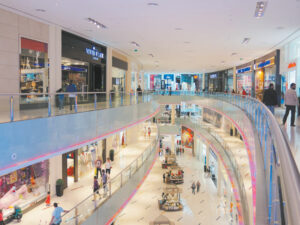
Demand for retail space, which Colliers tallied at an increase of 74,000 sq. m., is expected to be led by food & beverage retailers for the remainder of this year, although clothing segments are also seen to be picking up demand. Also, from Q4 2021 to Q1 2022, 130,000 sq. m. of new retail space was completed, and a total of 409,000 sq. m. is expected to be completed in 2022.

Retail rents, meanwhile, have dropped by 15% compared to levels before the pandemic, but a slow recovery is forecast as the rise in household spending and consumer traffic influences rents starting in the second half of 2022.

Retail vacancy, on the other hand, continued to rise in Metro Manila at 15.2% in Q1 2022 from 14.8% in the third quarter of 2021. It is seen to reach 16% by the end of 2022.

“Aside from revenge shopping and dining which we project to kick in starting Q2 (second quarter) 2022, we see more opportunities in the market given mall operators’ and retailers’ propensities to innovate amid a liberalized playing field. Consumer confidence abounds and this should have a positive impact on mall space absorption and rents in 2022,” Colliers explained in a separate report.

Cause for discernment

While positive performances and outlooks have largely characterized property segments in the country for the first three months, global challenges such as the war between Russia and Ukraine and the inflation in the United States bring a cause for discernment among investors.

“These global challenges will definitely have direct impacts on us locally — and while I believe this will not slow down the real estate industry — it will make the market more discerning and astute when it comes to their investments,” Ms. Vital of Ovialand said.

“Developers and business owners alike must be in tune with their market to understand the changing needs of the people,” she added.


Worthy investment choices await at Grand Hyatt Manila Residences

By Allyana A. Almonte

Luxury residences offer high-end investment seekers and buyers very worthwhile options at present, especially as the Philippine real estate market is expected by many property services firms to stay resilient this year. With high demand for luxury condominium units seen to remain stable, there are many opportunities for investors to update their portfolios with resilient and exceptional spaces managed and backed by revered local and international brands that make living inside the city’s concrete walls truly grand.

These are the kinds of spaces that Grand Hyatt Manila Residences South Tower a signature project of premier real estate developer Federal Land, Inc. has in store. As it binds secure homes, accessible amenities, and finer lifestyles into a prime location, Bonifacio Global City (BGC), the tower is set to be the next prime investment choice in the luxury market.

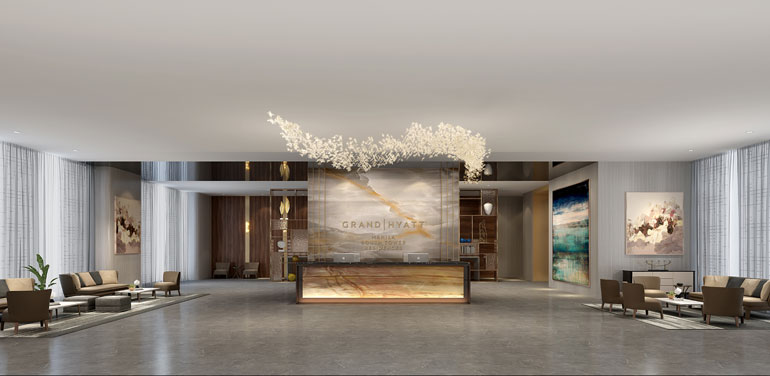
Grand Hyatt Manila Residences South Tower’s Lobby (artist’s perspective)

Marking its 50th year in the industry, Federal Land continues to revolutionize luxury living in the country with Grand Hyatt Manila Residences South Tower. The first Grand Hyatt branded residence in Southeast Asia, the tower offers hotel-like living at its finest that fuses well-built living spaces of Federal Land with the exceptional hospitality of Grand Hyatt. The tower is developed by North Bonifacio Landmark Realty and Development, Inc., a joint venture between Federal Land and ORIX Corp. of Japan to deliver grand experiences every day.

A fitting portfolio entry

Grand Hyatt Manila Residences South Tower opening its doors comes in time with the observed and projected recovery of the country’s residential sector, as well as the resilience of the luxury segment.

The most recent Residential Real Estate Price Index of the Bangko Sentral ng Pilipinas, which increased year-on-year (y-o-y) by 4.9% in the fourth quarter (Q4) of 2021, showed that prices continued to rise due to the sustained demand, particularly for townhouses and condominium units. The index also showed that residential property prices in the National Capital Region increased by 5% y-o-y, and the prices of condominium units rose y-o-y by 10.4%.

Colliers Philippines, meanwhile, notes in its latest report that while average rents dropped by 0.2% in first quarter (Q1) of 2022, it is projected to pick up by the second half of 2022, as office leasing activities recover and with foreign nationals returning, and thusly so will increase by 1.5% by the end of the year.

Furthermore, a latest report from online property marketplace Lamudi showed that across central business districts (CBDs), including BGC, demand for residential rentals within upscale segments continued to increase from Q4 2021 to Q1 2022.

The research added that Taguig, where BGC is situated in, exhibited the largest increase in leads for rentals in upscale and luxury segments, which it says reflect the return of expats and C-level executives amid an improving business environment.

Vacancy, meanwhile, is projected to ease to 17.2% this year, with the return of the workforce to office settings seen to anchor leasing recovery in Metro Manila. Colliers sees this as an opportunity for developers with a substantial number of ready for occupancy and soon to be handed over units within CBDs to offer attractive leasing terms.

A grand location

In sync with these positive outlooks in the residential market, Grand Hyatt Manila Residences’ prominent location on one of the most highly sought-after business and residential addresses in Metro Manila further makes it a prime investment worth considering.

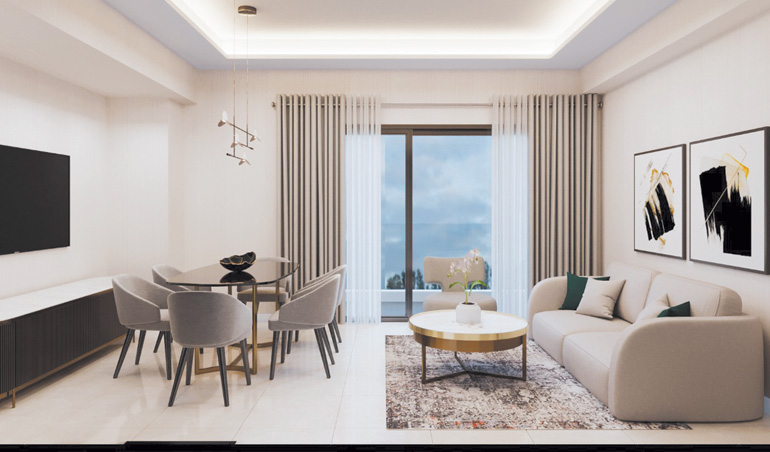
Living Room of Two-Bedroom Unit (artist’s perspective)

According to Colliers as of Q1 2022, BGC has over 40,000 of Metro Manila’s approximately 142,000 condo stock, as well as 2.5 million square meters (sq.m.) of office space. The thriving district is also home to some of the country’s best schools, hospitals, corporate headquarters, and lifestyle and dining destinations.

The two-tower Grand Hyatt Manila Residences sits in Federal Land’s 10-hectare internationally-inspired masterplanned community Grand Central Park along 8th Avenue. The address serves as a new gateway to the city with more convenient mobility options via major infrastructure developments such as the BGC-Ortigas Road Link, Metro Manila Subway System, BGC-NAIA Bus Rapid Transit System, and the Skytrain — all of which are expected to bring an optimistic rise in the value of the prestigious tower.

A new and highly anticipated lifestyle destination will also open soon in the Grand Central Park district. MITSUKOSHI, the first Japanese-inspired mall in the Philippines, is expected to bring new and elevated retail experiences for Filipinos, with a merchant selection ranging from designer labels to the best global and local retail names.

Ready-to-enjoy bespoke spaces

What makes the tower a worthwhile place to invest and live in is its premium on space as it gives plenty of room for individuals and families to thrive and enrich their lifestyles. Grand Hyatt Manila Residences South Tower offers 188 residential suites that come in spacious two-bedroom, three-bedroom, and three-bedroom with den configurations, ranging from 120 sq.m. to 394 sq.m.

Federal Land even makes it easier for investment seekers to take a unit with its turnkey offering. Instead of moving into a blank slate, a buyer can immediately move into or lease-out fully-furnished turnkey units that come in sophisticated design options and opulent pieces. Offering better investment returns, turnkey units is a hassle-free preamble to luxury living delivered by the experience of Federal Land, the exacting standards of Grand Hyatt, and the expertise of some of the leading designers in the country.

Available for a limited time, the turnkey units are masterfully designed by three renowned designers: Asuncion-Berenguer, Inc., known for creating powerful and memorable architectural and interior design solutions; D3ID, which turns dream spaces into livable works of art; and Empire Designs, which is best known for ‘understated luxury.’

True grand living

Bearing the reputable Grand Hyatt brand, Grand Hyatt Manila Residences offers prospective buyers not only a trophy address but also the distinguished Grand Hyatt lifestyle.


In addition to the curated spaces at Grand Hyatt Manila Residences, residents are also welcome to live the hotel guest experience every day at the adjacent Grand Hyatt Manila. Homeowners enjoy access to the seven dining concepts and order from a selection of culinary delights.

In true Grand Hyatt style, hotel a la carte services are seamlessly incorporated to cater to resident requests at any given time. Even within the comforts of their own residential suites, homeowners have a direct line to the hotel services, such as in-residence dining, private chef rental, errand runner, housekeeping, floral arrangements, laundry, dry cleaning, transportation services, and more.

Topping it all off, every unit owner is automatically granted a highly-coveted, two-year Globalist membership, the highest level in the World of Hyatt loyalty program, which allows privileges with Hyatt hotels and resorts worldwide.

A timely investment

With this newest idyllic concept of home, Federal Land finds itself continuing the legacy of its well-received and highly demanded residential properties; and now, with Grand Hyatt Manila Residences, it promises a new generation of distinguished homeowners and investors the same distinctly curated lifestyle.

With construction on time to finish by 2023, discerning investors can start including the prestige development into their portfolios by considering the towers’ pre-selling units to lock-in acquisition price at the lowest cost, while being close to the turnover of those units.

For inquiries and to know more about Grand Hyatt Manila Residences, email invest@federalland.ph or visit www.grandhyattmanilaresidences.com.ph. Contact (02) 8551-1212 to schedule a private viewing at the showroom of Grand Hyatt Manila Residences South Tower, located at 8th Ave. cor. 35th St., Grand Central Park, Bonifacio Global City.


Spotlight is BusinessWorld’s sponsored section that allows advertisers to amplify their brand and connect with BusinessWorld’s audience by enabling them to publish their stories directly on the BusinessWorld Web site. For more information, send an email to online@bworldonline.com.

Join us on Viber to get more updates from BusinessWorld: https://bit.ly/3hv6bLA.

Leisue upgrades businesses’ queue management system with Kyoo

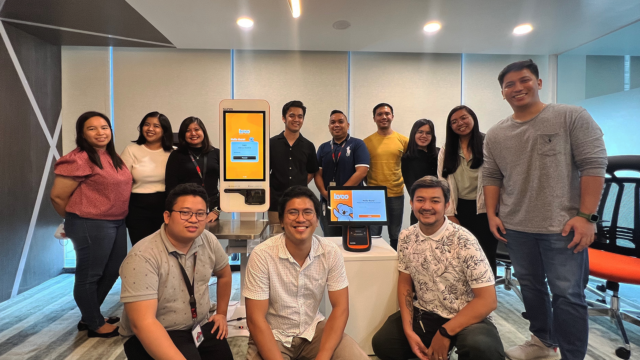
The in-person Leisue team, along with those working from home, is behind Kyoo’s top-notch digital queueing system.

Many people have probably experienced the struggle of having to line up and wait in long queues to pay for services like utility companies and government agencies. Digitalizing this process should make the experience at least less struggling and be more convenient for customers.

Leisue, which focuses on the digital transformation of micro, small, and medium enterprises in the Philippines and across Southeast Asia, seeks a better customer experience and assists service providers with its flagship queueing management system, Kyoo.

And this 2022, Leisue will release the latest version of Kyoo in the country to further level up the queuing experience.

Five years into the industry, Leisue has provided excellent and helpful digital products to various sectors, including utilities, local governments, healthcare, automotive, and food and beverage. With Kyoo, Leisue allowed different businesses to efficiently manage long lines by letting customers queue virtually through remote queueing or with a contact-free queuing system on the site. Such a solution helped reduce waiting time and improve employee productivity and customer satisfaction.

With the changing demands of today’s consumers, Leisue is proud to be part of Toyota’s success in improving its digital systems and business operations through its efficient queueing management system, Kyoo. The company is currently servicing three of its branches – Toyota Pasig Group, Toyota Shaw Inc. and Toyota Taytay Rizal, Inc., and has since stayed true to its promise of delivering the best queueing service and experience to clients.

Client using Kyoo’s Queueing Management System at Toyota Pasig

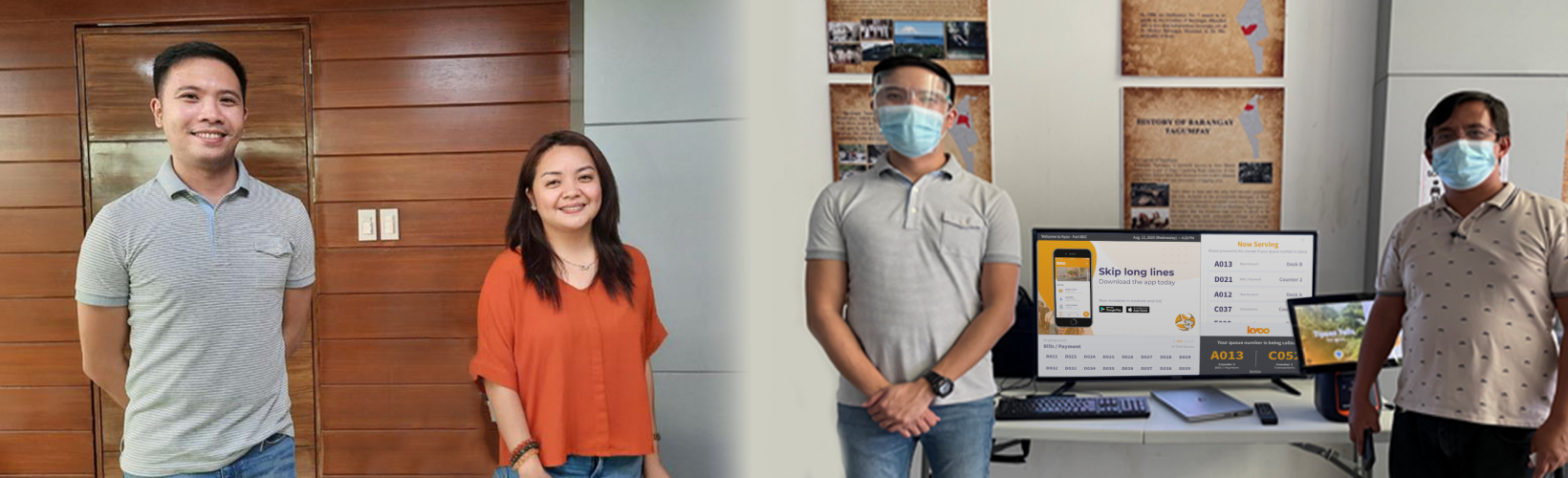
Aside from this, the local government of Real Quezon has also been part of the high-level client roster of Leisue where Kyoo helped the municipality in achieving its “service first” commitment to its citizens through the implementation of a digital queueing system especially made for to ensure easy and fast service.

Kyoo – Queueing System Project with Real, Quezon headed by Mayor Bing Diestro-Aquino & Mr. Reuben Friginal of Municipal General Services Offices (MGSO)

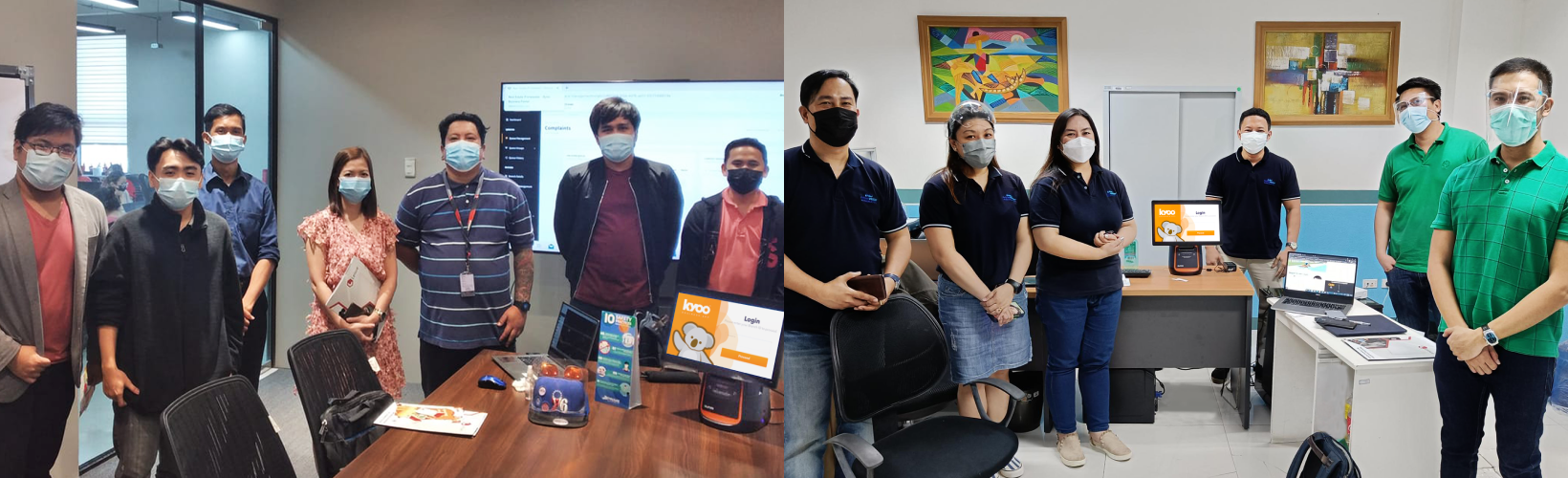
PrimeWater Infrastructure Corporation, a water utility company, is also among the providers helped by Leisue’s Kyoo. PrimeWater needed a solution to manage traffic at its branches, especially during peaks. With the support of Kyoo, PrimeWater was able to cut the average waiting time of customers by nearly 48% to 25 minutes from 48 minutes. It also saw a 26.46% upturn in customer service rate.

Implementation of Kyoo’s Queueing System for Primewater’s 36 Business Centers

Now, with the new Kyoo Version 3.0, Leisue aims to help more companies and industries.

This will be a self-service SaaS (software as a service) model, as the new version seeks to deliver an easier and better service, which Customers can now register, sign up, log in on their own, and use the queueing system immediately right after the set-up. This could lessen the friction between the client and the customer success team as they can easily learn and use the system, and eventually complete the transactions faster.

Among the features of Kyoo that could improve customer experience include virtual queueing; a self-service kiosk, which could help reduce staff’s workload; a TV Display to show the queue status; web queue slip; SMS notifications for visitors; and a multilingual UI so the staff and visitors can use their preferred language options.

Kyoo could also aid businesses in several ways, such as staff could check their performance and managers could check how the branch is doing for the day. The queue workspace, an all-in-one queueing space for the staff, underwent a major experience upgrade for the new version. Kyoo also enable the management of teams across branches, as well as generate branch reports.

In addition, the new version of Kyoo offer more options for businesses to settle their payments, including subscription-based payments and monthly or yearly payments on the product or service availed.

Leisue also made Kyoo accessible over an internet network, remotely from any device and location, therefore allowing more flexibility and opportunities both for small and large enterprises to avail Kyoo.

Service providers, by the implementation of the SaaS model with Kyoo, could reduce their operational costs, increase accessibility and scalability, and improve customer experience and satisfaction.

Leisue has been helping different organizations through an efficient queueing management system with Kyoo. The company aims to provide efficiency, flexibility, and global domination with its new product versions and systems, with its presence in Japan, Singapore, and other countries in Southeast Asia.

If you want to know more about Kyoo’s efficient queueing management system and services, they offer FREE demo presentation. Just book a schedule with their queueing experts through info.kyoo.com/demo or visit them at info.kyoo.com

Facebook: https://www.facebook.com/kyooph
Instagram: https://www.instagram.com/kyooph/
Contact Number: +63 920 948 7451; (02) 8824 – 9106


Spotlight is BusinessWorld’s sponsored section that allows advertisers to amplify their brand and connect with BusinessWorld’s audience by enabling them to publish their stories directly on the BusinessWorld Web site. For more information, send an email to online@bworldonline.com.

Join us on Viber to get more updates from BusinessWorld: https://bit.ly/3hv6bLA.

A look at the Asia Pacific real estate market

The Asia-Pacific real estate market looked at 2022 with optimism. But the first quarter of the year saw weaker leasing activity in some markets and segments. Nonetheless, investment in the region remained strong during the same period.

CBRE has a bright outlook for the APAC real estate market this year. The commercial real estate services and investment firm expected leasing demand to recover, which would end the downward rental cycle in the office and retail segments, and another strong year of growth for the logistics sector.

However, as of CBRE’s data for Q1 2022, weaker leasing activity was seen in the office and retail sectors.

The regional net absorption of the office segment dropped from 15.4 million in the last quarter of 2021 to 11.8 million sq. ft. NFA in Q1 2022, primarly dragged by China’s weaker leasing activity, where net absorption in tier I cities decreased 46% quarter-on-quarter (q-o-q).

Yet, other markets did well in this sector, such as Seoul and India’s major markets. There was also an improved sentiment across the Pacific region over the quarter, as many smaller tenants committed to expansion.

On the supply side, new Grade A supply contracted to 6.4 million sq. ft. NFA, since the start of the year is usually a quiet period for new project delivery, explained CBRE. Meanwhile, regional rents grew 0.3% q-o-q.

The retail sector also saw a slightly weakened leasing volume in Q1 amid the surge of COVID-19 infections and economic uncertainty. The impact of China’s strict pandemic measures made it the weakest performer, while North Asia and India nonetheless maintained a solid leasing activity. 

The sector recorded a limited new supply in Q1, with 1.39 million sq. ft. of stock added, and rents dropped by 1.2% q-o-q.

Meanwhile, logistics kept a healthy leasing momentum in Q1, though pulled back from the peak in the quarter prior as availability of high-quality logistics space became limited, according to CBRE. The firm’s data showed major markets in Asia logging 10.8 million sq. ft. net absorption, a 27% year-on-year (y-o-y) fall yet comparable with pre-pandemic levels. Meanwhile, Australia’s slowdown in new supply hampered leasing activity, seeing a 60% y-o-y decline in gross leasing volume to 5.0 million sq. ft.

New logistics supply in APAC is expected to rise by 23% y-o-y this year. Meanwhile, CBRE Asia Pacific Logistics Rental Index recorded a 2.1% q-o-q increase in Q1.


Q1 leasing activity and sales in the residential market were also challenged, mainly due to the COVID-19 resurgences that suspended free-flowing mobility of people within and between cities and across international borders, according to JLL. 

“Against the backdrop of anticipated pent-up demand release, both sales and leasing markets are expected to see healthy revival,” Roddy Allan, chief research officer – Asia-Pacific at JLL, said in the real estate services firm’s Asia Pacific Residential Digest  1Q 2022. “This should offset the downward pressure from the large influx of supply and potential increase in vacancy rate.”

APAC real estate investment nonetheless remained to be strong in Q1 2022. 

According to CBRE, the region’s commercial real estate investment volume was US$ 31.2 billion, declining 24% q-o-q but a 15% y-o-y growth. 

“Property companies, private equity funds, and REITs (real estate investment trust) were among the major sources of capital this quarter,” the firm noted.

CBRE said transactions slowed considerably in China and Hong Kong on q-o-q basis, amid the disruption due to the pandemic. While Singapore and Australia were the upbeat markets, registering an uptick in investment volume attributed to some big-ticket transactions.

“With the reopening of state and international borders, major Australian cities witnessed a pick-up in demand from both occupiers and investors, and are expecting a significant increase in transaction volumes in the coming quarters,” Colliers echoed in its Q1 2022 APAC market snapshot.

The real estate services firm also recorded that investments in Singapore increased by 34.4% q-o-q to US$7.8 billion.

CBRE saw Australia, Singapore, and Korea as the most popular office markets in APAC. The region’s office investment volume reached US$14.8 billion, comparable to the same period in the previous year.

According to the said Colliers report, the closure of deals in Sydney and Melbourne’s office sector has a combined value of over US$1 billion. While Seoul’s office market transaction volumes reached US$3.6 billion.

Investment volume in the industrial sector was up by only 3.0% y-o-y to US$ 5.4 billion, primarily because of the decline in the number of major portfolio transactions after a dynamic 2021, according to CBRE.

Q1 retail transactions reached US$4.0 billion, a 46% y-o-y increase, supported by border relaxations.

Hotel transactions also increased by 47% q-o-q to US$2.5 billion.

Colliers further showed the strong investments in some APAC markets in Q1.

“In Japan, REITs invested actively in large office and logistics properties while the industrial and hotel segments also attracted significant interest,” the firm said.

“In Thailand too, where investments in the hotel and industrial sectors remained strong, REITs played a significant role acquiring three new assets worth a combined USD185 million.”

The firm also highlighted that India’s Q1 residential sales exceeded pre-pandemic levels.

Colliers also mentioned the Philippines’ easing of travel restrictions has boosted consumer spending and sentiment and encouraged employees’ return to offices. “Together, these factors should anchor recovery in the country’s residential, office, and retail sectors in 2022,” the firm said. — Chelsey Keith P. Ignacio

Emerging trends in the country’s property sector

At the onset of the pandemic, the property sector took most implications in growing consumer and business confidence. As one of the key industry players in the global and local economic recovery and development, the industry is set to bounce back this year, according to consultancy firms.

In the latest report of a global real estate services firm Cushman & Wakefield, it noted that during the first quarter of 2022, the Philippine economy exhibited a faster-than-expected expansion as the government loosened the restrictions that significantly encouraged consumer activities, along with the increase in election-related spending.

The real estate market is also expected to move with cautious optimism amid more relaxed travel regulations and the country’s low count of COVID-19 infections which have boosted the performance of accommodation establishments driven by the restored mobility confidence of both domestic and foreign leisure travelers.

Experts in the industry now share assurance on the trajectory of the Philippine property sector in the next few years. They observed that aside from the transformed buying behavior of consumers, the market is conditioned by a handful of emerging trends for developments to stay afloat and relevant to the current impact of the global crises.

The residential market would possibly reap the benefits of major infrastructure developments especially in Central and North Luzon for these infrastructural improvements are projected to increase the housing market values and home prices outside of the capital region. According to market analysts, Bulacan will most likely be an appealing residential investment location as large infrastructure projects such as the Bulacan Airport or the New Manila International Airport and MRT-7 near completion.

Due to the growing demand for residential spaces, real estate companies also increased the supply of condominium units. High-rise condos populate business districts and areas near the metropolis to address the need for living spaces for young professionals and starting families but the high demand for housing has led to significant price increases.

However, economic uncertainty has been a major concern for home buyers over the past years since COVID-19 struck. Market analysts noted how people have become more frugal and look for housing options with the most flexibility, convenience, and affordability. But the fast-rising prices and taxes of ready-for-occupancy spaces and cost of home construction have filtered out undecided first-time buyers, they added.

Despite the prevailing presence of the pandemic in the country, the retail segment makes the fastest rebound in property market’s effort to gradually return to its pre-pandemic levels, according to Colliers Philippines, a market intelligence company.

As Colliers noted, outsourcing companies keep on looking for office spaces in spite of the employees’ work-from-home setups. With the rising trend of co-working arrangements, companies look to lease more spaces, complementing their headquarters with satellite offices near their employees’ homes. This departure from the traditional office arrangement into a more flexible option can influence workers’ drive to go back to the crowded central business districts when the pandemic is over, they predict.

Since people turned to alternative, practical and convenient ways of living, the concept of microcities emerged. As per property builders, these concentrated urban zones are “cities within cities” designed for home living and access to outdoor activities, all within proximity of the residents’ workplaces.

This demand for integrated communities — having smart homes, workplaces, malls, and schools within a community — meets the need for mobility and convenience, especially for the millennials or the newest real estate market, according to property experts.

They added that microcities also promote health and well-being as these locations are master-planned communities with lush greens, bike trails, multi-purpose spaces, and walkable paths in a less crowded environment which have become top considerations for homebuyers at the height of the pandemic.

Furthermore, as the BSP recorded a 3.9% increase in remittances in April 2022, market analysts project more OFWs engaging in real estate via acquiring a condominium or owning a provincial house and lot.

Meanwhile, business process outsourcing (BPO) firms will continue to be the leading real estate investors, since the industry, as reported by the Philippine Economic Zone Authority (PEZA), continues to expand in the country amidst the threat of a global recession. With these growing numbers, real estate developers look at higher purchase and lease rates in the property sector this 2022.

Aside from the continued demand for safety and security, the market yearns for greener and sustainable spaces. Property investments and management firms anticipate that about 37% of the new buildings that will operate in the next few years will be wellness-certified structures.

The market sentiment is improving, but a mixed outlook remains. Yet, despite the rising taxes and building materials cost, with both the public and private sectors gradually advancing their infrastructural projects to usher economic recovery, local real estate experts poised the property industry to see sustained growth in the coming years. — Allyana A. Almonte

Electronics sector hurting — SEIPI

REUTERS
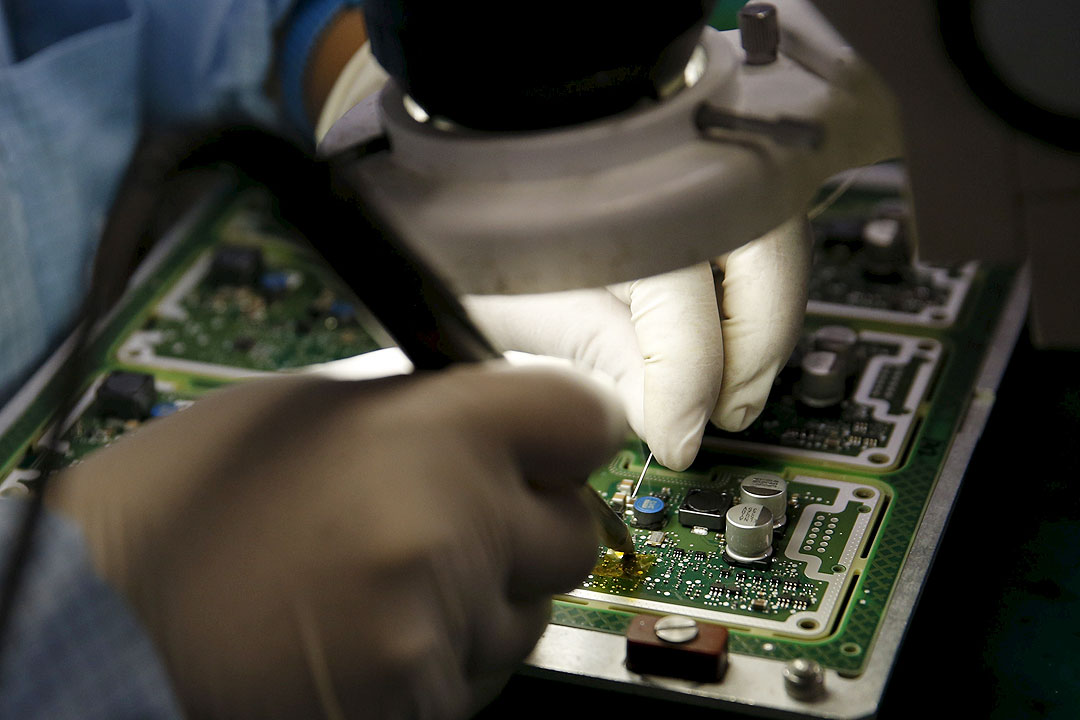
A worker of Ayala Corp’s Integrated Micro-Electronics Inc. (IMI) solders an automotive computer component part at an electronics assembly line in Binan, Laguna south of Manila, Philippines April 20, 2016. — REUTERS/ERIK DE CASTRO

SPIRALING COSTS brought by Russia’s invasion of Ukraine are hampering the operations of the local electronics industry in spite of increased competitiveness due to the weak peso, according to the largest group of foreign and local electronics companies in the Philippines.

“We are seeing increases in our cost of operations,” Danilo C. Lachica, president of the Semiconductor and Electronics Industries in the Philippines Foundation, Inc. (SEIPI) told BusinessWorld Live on One News channel on Tuesday.

“Some suppliers of power have increased their prices as well in response to the shortage of coal,” he said. “It’s really very painful right now. We’re still trying to recover from the impact of the pandemic and yet these factors, notwithstanding the devaluation to the peso, is just creating havoc.”

Mr. Lachica cited “a confluence of effects or factors” — the Russia-Ukraine war which has upset the applecart in terms of fuel supply and a coronavirus pandemic that has led to increased logistical costs.

Mr. Lachica said the local electronics industry is trying to absorb costs to protect consumers, adding that demand for electronics remains strong even if their margins get hit.

“We expect a 10% increase in our export performance this year, but then again, the margins will be smaller because of the higher costs,” he said.

“Even during the pandemic, the demand was always there,” he said. “It was really a matter of being able to come up with the supply especially in the context of the shortage of semiconductor wafers. We really have to manage those margins and to the point that we, the companies have to absorb a lot of these costs.”

Mr. Lachica said semiconductors would drive the sector’s export growth this year.

“The driving factors would be mostly from semiconductors, the components and also demand for medical electronics, telecommunications, industrial products, which are really spurred by the use of data computing, big data, artificial intelligence, Internet of Things and Industrial Revolution 4.0,” he added.

He said they were lining up meetings with incoming President Ferdinand R. Marcos, Jr. and his Cabinet to explain the situation and the threats that the industry faces.

Philippine electronics exports rose by 12.9% to a record $45.92 billion last year, SEIPI said in February.

For December alone, the country’s electronics exports went up slightly to $3.92 billion from $3.9 billion a year earlier.

Telecommunication exports rose almost three times, automotive electronics increased by 39%, office equipment went up by 29.7% and semiconductors inched up by 1.61%.

Hong Kong, the United States, China, Singapore and Japan were the top destinations for Philippine electronics exports in December. — Revin Mikhael D. Ochave

Government to borrow P200B locally in July

MARI GIMENEZ-UNSPLASH

THE NATIONAL Government plans to borrow P200 billion from the domestic market in July, the Bureau of the Treasury (BTr) said on Tuesday.

July’s borrowing plan is 20% lower than its P250-billion program for June, when it only managed to raise P151.31 billion from the local market.

The bureau is expected to hold auctions for P60 billion of Treasury bills (T-bills) weekly. Treasury bond auctions are projected to raise P140 billion.

The Treasury bureau said it would offer P5 billion worth of 91-day, 182-day and 364-day T-bills on July 4, 11, 18 and 25.

For the long-term tenors, the Treasury is expected to raise P35 billion in four-year T-bonds on July 5; P35 billion in seven-year instruments on July 12; P35 billion in 10-year debt on July 19; and in 14-year bonds again on July 26. 

The 14-year bond would be offered due to “lack of longer tenors,” National Treasurer Rosalia V. de Leon told reporters in a Viber message.

Bond traders said the borrowings for July might have been cut due to fewer auction dates.

The smaller offering was brought about by government “front loading” before the national elections, Michael L. Ricafort, chief economist at Rizal Commercial Banking Corp., said in a mobile phone message.

The government is also taking measures to improve the country’s fiscal performance by focusing on tax collections as it reopens the economy amid a coronavirus pandemic, he said.

In May, the National Government’s budget deficit narrowed by 26.72% to P146.8 billion from a year earlier.

Revenues rose by 18.9% from a year earlier to P304.9 billion, while expenditures fell by 1.1% to P451.7 billion.

“I think the general sentiment is curious especially with the choice to issue an off-the-run series to start the month, as well as to issue a 14-year tenor in the week we expect the US Federal Reserve to hike by 75 basis points,” a bond trader said in a Viber message. 

At its latest meeting in June, the Fed increased the benchmark interest rate by 75 bps, the biggest since 1994, to battle inflationary pressures.

The government borrows from local and external sources to help fund a budget deficit capped at more than 7% of the gross domestic product for 2022.

The National Government has a gross domestic borrowing program of P1.91 trillion this year. Of this amount, T-bills are expected to bring in P52 billion, while the fixed-rate T-bonds are estimated to raise P1.86 trillion. — Ana Olivia A. Tirona

Foreign investment negative list updated

SCOTT GRAHAM-UNSPLASH

PHILIPPINE PRESIDENT Rodrigo R. Duterte has signed an order updating the list of investment areas where foreign ownership is limited or barred.

The executive order on the 12th Foreign Investment Negative List no longer includes the manufacture and distribution of products requiring clearance from the Defense department.

On the previous list issued by Mr. Duterte in 2018, these products including guns and ammunition for warfare, military ordnance, guided missiles, tactical aircraft, space vehicles and military communication equipment were limited to 40% foreign equity.

The order, signed on June 27, largely maintained the status quo, which bars foreign equity in mass media except recording and the internet business.

It also reserves to Filipinos the practice of professions, cooperatives, small-scale mining, operation of private detective, watchmen, or security guard agencies, the use of marine resources in archipelagic waters, and small-scale use of natural resources in rivers, lakes, bays and lagoons.

Also reserved to locals is the ownership, operation and management of cockpits; manufacture, repair, stockpiling and distribution of biological, chemical and radiological weapons and anti-personnel mines; and manufacture of firecrackers and other pyrotechnic devices.

It also prevents foreign equity in retail trade enterprises with a paid-up capital of less than $25 million, which is way higher than the previous required paid-up capital of $2.5 million.

The order allows 25% foreign equity in private recruitment, whether for local or overseas employment, and contracts for the construction of defense-related structures.

A 30% foreign equity in advertising was kept. It also allows 40% foreign equity in infrastructure projects; exploration, development and use of natural resources; ownership of private lands; operation of public utilities; educational institutions other than those established by religious groups and mission boards.

The culture, production, milling, processing, trading except retailing of rice and corn will also be limited to 30% foreign equity.

The order also kept a 40% foreign equity in contracts for the supply of materials, goods and commodities to government corporations and agencies; operation of deep-sea commercial fishing vessels; ownership of condominium units; and private radio communication networks.

The amended Foreign Investment Act of 1991 calls for updates to the foreign investment negative list, which shows which activities are open to foreign investors and are reserved to Filipinos. — Kyle Aristophere T. Atienza

Wholesale prices of building materials hit 10-year high

ETIENNE GIRARDET-UNSPLASH

WHOLESALE PRICES of building materials in Metro Manila jumped to their highest in more than a decade in May as construction activities resumed amid decreasing coronavirus infections.

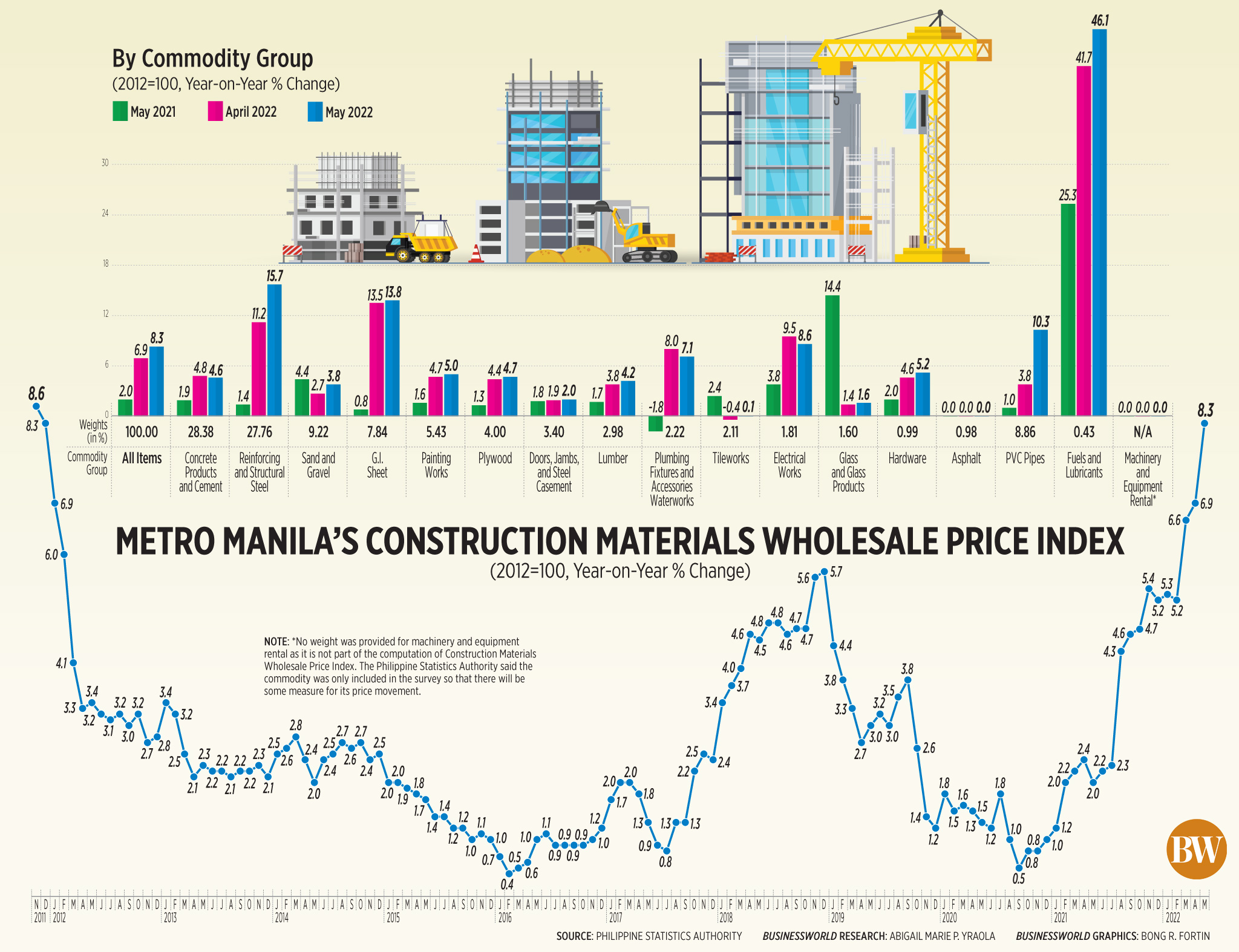
The wholesale price index for construction materials in the capital region rose to 8.3% from 6.9% in April and 2% a year earlier, according to preliminary data from the Philippine Statistics Authority.

The May index matched the rate in December 2011 and was the fastest since the 8.6% growth in November 2011. Bulk building prices have risen by 6.5% this year, faster than 2% a year earlier.

Metro Manila's construction materials wholesale price index

Economic reopening and the revival of construction activities might have boosted prices, Nicholas Antonio T. Mapa, senior economist at the ING Bank N.V. Manila Branch, said in an e-mail.

“Supply chain issues and bottlenecks may have also led to the delay in the delivery of key equipment and materials from abroad, which in turn pushed up costs onshore,” he said. “On the demand side, increased activity compared with last year will drive up prices as the economy remains relatively open.”

Fuel and lubricant prices jumped by 46.1% in May from 41.7% a month earlier. Reinforcing and structural steel prices increased by 15.7% from 11.2% in April.

Meanwhile, prices of galvanized iron sheets rose by 13.8% from 13.5% in April, while prices of PVC pipes increased by 10.3% from 3.8%. Prices of hardware (5.2% from 4.6%), painting works (5% from 4.7%), plywood (4.7% from 4.4%), lumber (4.2% from 3.8%), sand and gravel (3.8% from 2.7%), doors and jambs (2% from 1.9%) and glass (1.6% from 1.4%) also rose.

Bulk prices of tileworks inched up by 0.1%, a turnaround from a 0.4% decline in April.

On the other hand, the price increase in electrical works slowed to 8.6% in May from 9.5% in April, as did plumbing fixtures and accessories/waterworks (7.1% from 8%) and concrete products and cement (4.6% from 4.8%).

A sustained pickup in prices would probably continue for the rest of the year, Mr. Mapa said. “Prices of construction materials may remain on the uptrend as both supply and demand side pressures extend into 2023,” he said.

“However, we see the possibility of a less pronounced demand side pressure as construction outlays slow down from the pace in the first half. Demand side pressures will stay the same or may even accelerate,” he added. — Abigail Marie P. Yraola

Maynilad to start distributing ‘new water’ in July

MAYNILAD Water Services, Inc. targets to distribute starting in July up to 10 million liters per day (MLD) of its “new water” or treated used water from households that passes through a rigorous purifying process to make it potable.

“We’re still doing some pipe-laying in Sucat, and we’re still waiting for our permit to operate from the Department of Health, but once we get it, maybe next month we can already distribute 10 MLD,” Maynilad Chief Operating Officer Randolph T. Estrellado said partly in Filipino during a virtual press briefing on Tuesday.

He said the company’s target eventually is to use all the wastewater in Metro Manila to be purified into new water. He said 80% of the water produced in its concession area comes back as wastewater.

The treated water will come from its modular treatment plants or ModTPs that will get raw water from the Parañaque Water Reclamation Facility.

The initial 10 MLD will be flowed into the distribution system for blending with the standard drinking water produced by Maynilad’s La Mesa treatment plants.

The blended supply will then be conveyed to barangays San Dionisio and San Isidro in Parañaque City, which are the areas nearest to the ModTP location. The two barangays will benefit from the additional supply, as it will improve water availability in the area.

Maynilad said it had been holding a series of social acceptability tests and public consultations with residential and commercial customers, local government units, and government agencies such as the DoH, Department of Environment and Natural Resources, Metropolitan Waterworks and Sewerage System (MWSS), and National Water Resources Board.

The consultations are meant to ensure that the new water will be acceptable to consumers.

Maynilad said that based on the results of its initial social acceptability test, its residential and commercial customers have expressed willingness to use new water after seeing it and understanding the process behind it.

Mahaba ang pinagdaanan na journey ng Maynilad bago kami nakarating dito (Maynilad’s journey has been long before we got here),” Maynilad President and Chief Executive Officer Ramoncito S. Fernandez said.

“We will ensure that periodic tests will be done,” he added.

Maynilad said the new water will have no impact on customers’ water bill. The standard water tariff rates will apply whether raw water is sourced from Angat Dam, Laguna Lake, or treated used water.

The initiative is part of Maynilad’s move toward potable water reuse, which is aimed at boosting available supply in view of the growing demand for water. It is also in response to the strain on existing raw water sources due to the impact of climate change, the company said.

At present, used water from households is collected, cleaned in sewage treatment plants, and discharged into bodies of water. But with potable water reuse, treated used water goes through a second treatment plant for a more rigorous purification process. The new water output can be used for drinking, having passed the Philippine National Standards for Drinking Water.

Maynilad officials said treated water reuse for drinking is already done in other countries.

Since 2019, Maynilad has been looking into potable water reuse when a water crisis hit Metro Manila, prompting the company to tap alternative sources, including Laguna Lake, apart from Angat Dam.

Maynilad is a private concessionaire of the MWSS. It is the water and wastewater services provider for the 17 cities and municipalities that comprise the west zone of the greater Metro Manila area.

Maynilad sources 91% of its supply from a single source — Angat Dam, which also supplies another water concessionaire, a hydroelectric plant, and the needs of farmers for irrigation.

Metro Pacific Investments Corp., which has a majority stake in Maynilad, is one of three Philippine units of Hong Kong-based First Pacific Co. Ltd., the others being Philex Mining Corp. and PLDT, Inc.

Hastings Holdings, Inc., a unit of PLDT Beneficial Trust Fund subsidiary MediaQuest Holdings, Inc., has an interest in BusinessWorld through the Philippine Star Group, which it controls. — Victor V. Saulon

COVAX failed, regional pandemic response is key — MSF

COURTESY OF US EMBASSY IN THE PHILIPPINES

By Patricia B. Mirasol, Reporter 

THE failure of the COVAX facility to deliver equitable vaccine access showed the importance of building capacity at the regional level for funding, research, and delivery of resources, said a Doctors Without Borders (Médecins Sans Frontières or MSF) official.   

“What is important is providing capacity in the regions and making sure institutions and countries have access to these tools,” said Nathalie Ernoult, deputy head of policy and advocacy of MSF’s Access Campaign, in a June 20 video call. “There is a way to have different models of response. Let’s work with that diversity of capabilities — rather than trying to have a one-size-fits-all model.”   

The COVAX Facility (COVAX), envisioned as a global vaccine procurement facility that would share access to COVID-19 vaccines to every country regardless of income, failed to deliver on its promise, MSF said in December 2021.   

“The rapid rate at which scientists produced multiple highly effective COVID-19 vaccines was an epic public health achievement. Yet as the data reflect, efforts over the past year to equitably distribute those vaccines have been a failure,” MSF said in its report. 

Differing national interests make it difficult to formulate a centralized response despite facing a common threat, Ms. Ernoult added. “It [COVAX] didn’t work. It’s not going to work tomorrow. Let’s take it for granted it’s not coming together,” she said. “If you have a lot of political and financial power, you are always better placed to decide what equity means for you … I think, in a way, it [COVAX] was kind of a failure in multilateralism.” 

LOCAL DIAGNOSTICS
Self-reliance in meeting health needs includes increasing the production of diagnostic products at both the local and regional levels. 

These include Ateneo de Manila University’s Integrated Protein Research Development Center under the Department of Science and Technology, which will develop the technology required for the production of proteins used in the biomedical and food industries.  

“We’re developing local diagnostics so we can bring them to the places that do need them,” said Ricardo Jose S. Guerrero, research fellow at Ateneo Research Institute for Science and Engineering, in a November 2021 event by MSF. 

Another is the Virology Institute of the Philippines. Scheduled to open between 2023 and 2024, it will conduct research and development on diagnostics, vaccines, and therapeutics. 

Highlighting the need for regional production, Ms. Ernoult shared that MSF identified hundreds of suppliers that could have received the technology to produce mRNA vaccines. 

“Some are in Bangladesh, China, Thailand, Malaysia, Indonesia — but there was no willingness to share the know-how to manufacture [these mRNA vaccines],” she said.  

“How do you share know-how during a pandemic? How do you remove intellectual copyright?” she asked. “In [a] pandemic, you need timely response. You need manufacturers in different places.” 

GLOBAL ACCORD
The World Health Assembly in December 2021, kickstarted a process to develop a global accord on pandemic prevention, preparedness, and response.  

Dr. Tedros Adhanom Ghebreyesus, director general of the World Health Organization, said the decision represented a once-in-a-generation opportunity to strengthen the global health architecture for the well-being of all. 

“The COVID-19 pandemic has shone a light on the many flaws in the global system to protect people from pandemics: the most vulnerable people going without vaccines; health workers without needed equipment to perform their life-saving work; and ‘me-first’ approaches that stymie the global solidarity needed to deal with a global threat,” said to Dr. Tedros in a press statement. 

“But at the same time, we have seen inspiring demonstrations of scientific and political collaboration, from the rapid development of vaccines, to today’s commitment by countries to negotiate a global accord that will help to keep future generations safer from the impacts of pandemics,” he said. 

ADVERTISEMENT
ADVERTISEMENT