Home Blog Page 6220

PEZA to propose big push for innovation zones

THE Philippine Economic Zone Authority (PEZA) said it hopes to establish more knowledge, innovation, science, and technology (KIST) parks and special economic zones (SEZ) institutes when the new administration takes over.

PEZA said in a statement that various private universities are interested in setting up KIST parks geared towards upgrading the know-how of the future workforce.

The country’s first KIST Park was set up in Batangas State University, which was designated a PEZA-registered SEZ under Proclamation No. 947 signed by outgoing President Rodrigo R. Duterte on May 22, 2020.

“De La Salle University, Don Mariano Marcos State University, and the University of Perpetual Help are among the private universities proclaimed and will soon start their operations as KIST parks. Meanwhile, Catanduanes State University was approved by the PEZA Board as a KIST Park in October 2021 and is currently awaiting its Presidential Proclamation,” PEZA said in a statement on Wednesday.

According to PEZA Director General Charito B. Plaza, “The goal of KIST parks is to leverage engineering and other much-needed courses required by various industries. It means we facilitate or ensure that the skills and jobs needed by industries are matched to those offered by the academe.”

“KIST parks will enable universities to partner with foreign universities (and) attract foreign students (to) make the Philippines not just an investment destination but also as an education hub of Asia,” she added. — Revin Mikhael D. Ochave

‘Masagana-inspired’ program seen boosting rice yields to 7.5 tons per hectare

PHILSTAR

The Department of Agriculture (DA) said a proposal to boost rice production inspired by an initiative from the term of the late President Ferdinand E. Marcos, Sr. holds the potential to bring yields to 7.5 tons per hectare from fields planted to inbred rice.

The so-called Masagana 150 program is also expected to bring production costs down to P7.82 per kilogram, with farmers earning a net profit of at least P70,000, assuming a market price of P27.50 per kilogram.

“We are now drawing from the Masagana 99 program of late President Ferdinand E. Marcos, but this time heeding the call of the times,” Agriculture Secretary William D. Dar said at a virtual press conference on his last full day in office.

Mr. Dar will be succeeded by President-elect Ferdinand R. Marcos, Jr., who will serve as his own government’s Agriculture Secretary.

Mr. Dar also outlined a Masagana 200 program which has even more ambitious yield target of 10 tons per hectare on fields planted to hybrid rice.

Masagana 99 was launched in 1973 by President Ferdinand E. Marcos, Sr. to boost rice production.

“As I step down… I am sincerely, genuinely happy to leave a solid foundation for Philippine agriculture in the next 10 years, and I earnestly hope that this incoming administration will continue the DA’s current programs guided by the OneDA Reform Agenda,” Mr. Dar said. — Luisa Maria Jacinta C. Jocson

German businesses have positive outlook on PHL, survey reveals

PHILSTAR FILE PHOTO

The German business community has a positive outlook on the Philippines, according to the German-Philippine Chamber of Commerce and Industry (GPCCI).

Citing the AHK World Business Outlook Survey for Spring 2022, the GPCCI said 87 companies participated in the study, with 55% of respondents expecting business conditions to improve within the next 12 months.

It added that 47% of the respondents reported that they are seeing better business conditions while 43% described their situation as satisfactory.

The respondents were from the manufacturing and construction (31%), trade (18%) and services (50%) industries.

“The improving situation of the pandemic in the Philippines is evident with the low case reports and relaxed business restrictions. These are felt by the German business community in the country. We also have observed an uptick in investment interest which shows the optimism of companies involved in German-Philippine business relations,” GPCCI Executive Director Christopher Zimmer said in a statement on Wednesday.

Some 44% of respondents expected investment to pick up in the next 12 months, 48% said they plan to keep headcount steady, while 46% said they are considering expanding their workforces.

The survey revealed that respondents view energy prices to be the top source of risk, followed by the price of raw materials and exchange rates.

It added that 78% of respondents expect the cost of energy, raw materials, and intermediate goods to rise as a result of the Ukraine crisis, while 61% said they expect logistics to be disrupted as a result.

“Most businesses are reeling from the impact of the Russia-Ukraine war since many European countries are heavily dependent on Russian energy imports. The sanctions that have been imposed have resulted in significant energy price increases and supply chain disruptions globally,” GPCCI President Stefan Schmitz said.

“We look forward to working with the incoming administration to address these issues and to partner in fostering economic growth in the Philippines,” he added. — Revin Mikhael D. Ochave

Simplifying tax administration

Today, a new administration takes over, inheriting an economy still feeling the effects of the pandemic. One of its pressing tasks is to find new ways for the economy to recover. The outgoing Finance Secretary has proposed to press on with various tax reform packages, which he billed as our best option if the new government is to continue spending to sustain recovery and spark growth. These reforms include the expansion of the VAT base, the imposition of VAT on digital service providers, passage of the Passive Income and Financial Intermediary Taxation bill, taxing cryptocurrencies, and the establishment of a carbon tax. Overall, the message seems to be to keep government in a position to revive the economy through taxation.

This may be achieved not just with new taxes or restricting tax exemptions, but by improving tax administration, such as through the encouragement of greater tax compliance. Such is expected from the proposed Ease of Paying Taxes Act.

The proposed law focuses on safeguarding the rights and welfare of taxpayers and improving the efficiency and effectiveness of tax administration.

Specifically, it proposes to establish special units to cater to all classes of taxpayers, including the small and medium category, while simplifying tax returns and processes for small taxpayers. Some of the specific proposals for achieving these goals are:

  • Remove restrictions on the venue for tax return filing and payment, remove annual registration fees, and relax the rules on business style in invoicing;
  • Allowing the payment of taxes even before filing the tax return;
  • Simplify VAT tax administration of VAT by removing the difference in the time of reporting the tax and the document supporting local transactions;
  • Set criteria for adjusting the VAT exemption threshold; and
  • Establish a taxpayer’s advocate office.

Some consider these measures as long overdue. But no matter how late, they will be welcomed by taxpayers. Specifically, they will welcome the simplification of the rules on time of VAT reporting and documentation.

Currently, the time of VAT reporting depends on the type of transaction. For sale of goods, VAT is reported upon consummation of the sale, as reflected in an invoice. On the other hand, VAT on the sale of services is reported upon payment, supported by an official receipt.

This rule has caused a lot of confusion among taxpayers. The proposed reforms will require taxpayers to monitor only the timing of the consummation of the sale, accompanied by one supporting document (the invoice) for any type of transaction.

The other changes are also much needed, as they ease the process of tax filing and payment and will help generate more revenue as compliance improves.

Having a taxpayer’s advocate office will also help ensure the protection of taxpayers’ fundamental rights.

Since the proposed bill is still being legislated, I am hoping there might still be room to cover other opportunities for efficiency by addressing some common sources of non-compliance.

TIME OF WITHHOLDING TAX

Under current rules, the obligation to withhold tax arises under the following scenarios, whichever comes first: a) when the expense is paid, b) when it becomes payable, or c) when it is accrued/recorded as an asset or ex-pense in the books. One of the most common compliance issues is the failure to pay withholding tax upon accrual. It is difficult for taxpayers to comply, especially for those transactions incurred at year-end, because the ex-act amounts may not yet be known. However, since these are incurred expenses, they must be recorded for accounting purposes.

Except for over-withholding of compensation tax, offsetting of over- or under- withholding of tax across different periods is not allowed. Thus, withholding the tax based only on reasonable estimates could result in penal-ties in case of under-withholding, and money getting tied up in case of over-withholding since recovering through a tax refund is a tedious process. Thus, taxpayers generally forego this option.

This results in situations where taxpayers may be willing to comply but are discouraged because of the difficulty in implementing tax processes. My view is to set only one period for withholding tax, which should be upon pay-ment, since the amounts are already in place and it is easier to monitor and check, not just for taxpayers but likewise for the BIR. It would also be a more accurate way of applying the withholding tax as it should be “withheld,” not paid in advance by the payor.

WITHHOLDING TAX POLICY ON BUSINESS EXPENSES

Certain types of business expenses are subject to withholding tax. As evidence of tax withheld, the buyer must issue a creditable withholding tax (CWT) certificate. In the case of those considered large taxpayers or top withholding agents, almost all of their expenses are subject to withholding tax. However, most taxpayers cannot comply with this requirement for those expenses initially paid by employees because some are relatively small amounts, thus making it impractical to withhold tax. Also, most sellers that use point of sale or POS machines have no capability to reflect the tax withheld by buyers, much less to accept CWTs instead of cash. My suggestion is for the BIR to set a reasonable threshold amount for withholding tax to apply.

Crucial in a society’s development are well-crafted policies diligently observed to maintain order and harmony. Many factors, however, cause taxpayers to be noncompliant, including instances when they think they will not get caught. Even corporations with strict governance systems likewise experience difficulty implementing processes to fully comply with tax requirements because of the complicated, confusing, and inefficient tax policies.

I hope our tax legislation and processes continue on this trajectory of taxpayer-friendly amendments or improvements that will help the Philippines generate more revenue without imposing additional burdens on taxpayers. In today’s uncertain times, the government must achieve its financial goals to enable expenditure and ensure economic recovery. The last thing we want is complex rules that punish those that attempt to comply and in turn encour-age circumvention of the tax rules, leading to the non-payment of correct taxes.

The views or opinions expressed in this article are solely those of the author and do not necessarily represent those of Isla Lipana & Co. The content is for general information purposes only, and should not be used as a substitute for specific advice.

SAMANTHA JOY H. ORETA is a senior manager with the Tax Services group of Isla Lipana & Co., the Philippine member firm of the PwC global network. samantha.joy.h.oreta@pwc.com


Head state auditor named; other Cabinet picks remain unknown

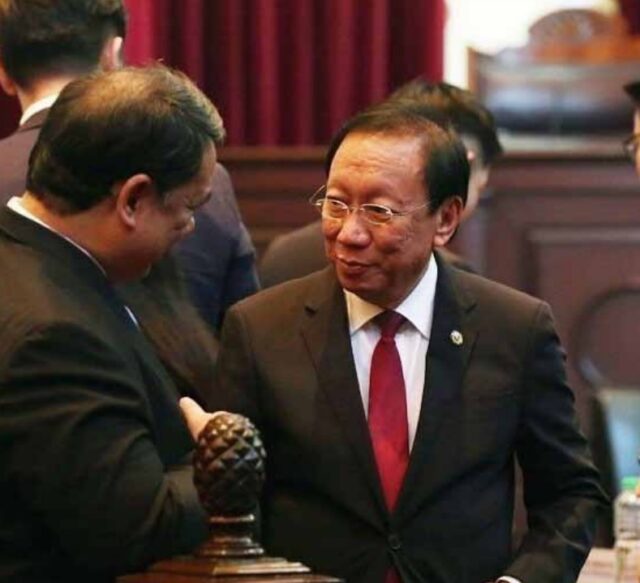
OUTGOING chief state lawyer Jose C. Calida will head the Commission on Audit, which is in charge of scrutinizing the financial reports of all government agencies. | THE PHILIPPINE STAR/MIGUEL DE GUZMAN

A day before his six-year term begins, President-elect Ferdinand R. Marcos, Jr. has yet to name those who will lead key agencies that have crucial roles in the Philippines’ post-pandemic recovery.

Mr. Marcos has yet to announce his secretaries for the Department of Health, Department of Environment and Natural Resources, and Department of Energy.

Other agencies whose chiefs have yet to be nominated are the Department of Foreign Affairs and the Department of Human Settlements and Urban Development.

On Wednesday, incoming Press Secretary Trixie Cruz-Angeles announced that outgoing chief state lawyer Jose C. Calida will head the Commission on Audit, which is in charge of scrutinizing the financial reports of all government agencies.

Mr. Calida did not come from the ranks of Philippine auditors. He served as undersecretary of the Department of Justice during the administration of former President Gloria Macapagal-Arroyo from 2001-2004.

He has been criticized for supposedly using his capacity as state lawyer to go after perceived government critics, including former Chief Justice Maria Lourdes Sereno who was ousted through the concurrence of Supreme Court justices to his petition to unseat her.

Ms. Cruz-Angeles also announced that Jose Arnulfo “Wick” A. Veloso will head the Government Service Insurance System (GSIS), which covers public sector workers.

Mr. Veloso currently serves as president and chief executive officer of the Philippine National Bank (PNB).

Mr. Marcos Jr. who will assume office as the country’s 17th president by noon of June 30, is facing challenges brought about by a coronavirus pandemic, the global impact of the Russia-Ukraine war, and cope with the increasingly urgent need to shift to green energy to mitigate the climate crisis.

He is also expected to implement policies and measures that will improve the Philippines’ performances in various sectors, including debt management and trade.

With old names being tapped to be part of Mr. Marcos’ Cabinet, economists and political analysts worry that the incoming administration might not be dynamic enough and able to respond to emerging needs.

“It seems that the basis for choosing the member of the Cabinet is one’s proximity to the people in power,” Arjan P. Aguirre, who teaches political science at the Ateneo De Manila University, said in a Messenger chat.

“The closer or more loyal you are to the president the higher you get into the political ladder,” he added. — Kyle Aristophere T. Atienza

P11-P13 minimum jeepney fare takes effect July 1 nationwide

PHILSTAR

MINIMUM fare will be P11 for traditional jeepneys and P13 for modern jeepneys starting July 1 nationwide, the Land Transportation Franchising and Regulatory Board (LTFRB) announced on Wednesday.

“The board is mindful of the present economic state of every Filipino brought about by the continuous rise in oil prices in the world market and the reeling effects of the pandemic,” the LTFRB said in its seven-page decision on the petition for jeepney fare increase.

Traditional public jeepneys nationwide are allowed to provisionally increase the minimum fare to P11 from P9 and P10, depending on the region.

Modern public jeepneys nationwide are authorized to increase fare to P13 from P12 currently for the first four kilometers.

Transport groups that petitioned for another fare increase have pointed out that while the transport regulator on June 8 granted a P1 provisional increase to the minimum fare for traditional jeepneys in three regions, increasing it to P10 from P9 for the first four kilometers, the cost of diesel was already P81.25 per liter.

The P1 increase took effect in the National Capital Region, Region III (Central Luzon), and IV (Calabarzon).

The petitioners include 1-United Transport Koalisyon, Pangkalahatang Sanggunian Manila and Suburds Drivers Association Nationwide, Inc., Alliance of Transport Operators and Drivers Association of the Philippines, and Alliance of Concerned Transport Organization.

They also questioned the implementation of the said increase in just three regions.

They said the increase is “grossly insufficient” and can “hardly be felt” by jeepney operators.

“The increase of P3.10 on June 21 in the price of diesel… will sum up the price to P88.65 per liter,” they said in their omnibus motion.

Oil companies on June 27 announced another round of hikes, P0.50 per liter for gasoline and P1.65 per liter for diesel. Since the start of 2022, per-liter prices of gasoline, diesel, and kerosene have gone up by P28.70, P41.15, and P37.95, respectively, as of June 14.

“There is great urgency for another provisional increase of the jeepney minimum fare to P1,” the petitioners said. The increase previously implemented in some regions and another fare adjustment to be granted by the LTFRB should also be “implemented in all other regions,” they added.

The LTFRB said in its decision that all jeepney operators and drivers should grant to qualified senior citizens their services a fare discount of not less than 12% of the approved fare upon the presentation of their senior citizen identification cards.

Students are entitled to a discount of not less than 20% of the approved fare. The same discount applies to disabled persons. — Arjay L. Balinbin

News company Rappler to appeal shutdown order

PHILSTAR

By Kyle Aristophere T. Atienza, Reporter

The Securities and Exchange Commission (SEC) has upheld an earlier decision ordering the closure of Rappler, Inc., which was founded by veteran journalist Maria A. Ressa.

In a statement on Wednesday, the regulatory agency confirmed that it issued an order on June 28 “affirming the revocation” of the certificates of incorporation of Rappler and its parent organization, Rappler Holdings Corp. (RHC), for supposedly violating the restrictions on foreign ownership in mass media.

Ms. Ressa first announced the closure order in a media conference in Hawaii.

The overseer of the Philippine corporate sector said the latest order “merely puts in effect its earlier decision and those of the Court of Appeals.”

“The contentions raised by Rappler and RHC have been squarely and adequately addressed by the SEC and the CA in their respective decisions, resolutions and orders, including the latest issuance from the Commission.”

The SEC first decided to revoke Rappler’s registration in January 2018. However, the news outfit has continued its operations despite the state move, which domestic and international groups consider as a form of harassment.

The newsroom’s parent firm “intentionally created an elaborate scheme” to cover an investment from foreign source Omidyar Network, the SEC alleged at the time. The organization is a “mass media entity that sold control to foreigners,” it as-serted.

The Philippine constitution does not allow foreign ownership in mass media and several attempts of pro-market liberal and conservative legislators to change the rule have failed.

In its latest decision, SEC asserted that Rappler violated the Constitution when it granted Omidyar, an investment vehicle created by eBay founder Pierre Omidyar, control through Philippine Depositary Receipts (PDRs).

“We were notified by our lawyers of this ruling that effectively confirmed the shutdown of Rappler,” the media outfit said in a statement.

Rappler said it will appeal the decision, “especially since the proceedings were highly irregular.”

Its legal counsel Francis Lim expressed confidence that the media network will “prevail” in the legal arena.

Rappler stands firm that the issuance of PDRs, which are financial instruments used by foreign investors to invest passively in a Philippine firm, does not equate to ownership or equity interest in the news company and its parent organiza-tion, Mr. Lim told a virtual news conference.

“There is a very big difference between depositary receipts and shares of stocks. That’s one area of contention.”

Mr. Lim said Rappler has 15 days to file a petition for review before the appeals court.

SEC cannot implement the order against the outfit “while we appeal,” he added.

Media groups and members of Philippine civil society consider the order as an attack on the free press.

The National Union of Journalists of the Philippines, the Philippines’ oldest media group, noted that the order to shut Rappler down “comes on the heels” of a move by the Philippine telecommunications regulator to block al-ternative news sites that have been critical of the government.

“It contributes more uncertainty to the media landscape in the Philippines,” it said in a statement.

The latest SEC order came after President Rodrigo R. Duterte on Monday night admitted in a public event that he had used presidential powers against ABS-CBN Corp., the country’s largest media network.

ABS-CBN, which survived the Martial Law regime of the late dictator Ferdinand E. Marcos, was forced off air in May 2020 after Mr. Duterte’s allies in Congress denied its franchise renewal bid.

The late dictator’s son Ferdinand R. Marcos, Jr., who is set to take oath as the 17th Philippine president on June 30, has said he would let Congress decide on the fate of ABS-CBN’s franchise.

Rappler, whose founder won a Nobel Peace Prize for supposedly defending press freedom under the Duterte administration, has published stories critical of the Marcoses.

Danilo A. Arao, a journalism professor at the University of the Philippines, said the SEC order would likely create a climate of self-censorship and would push outfits to toe the Marcos government’s line.

“Various news media organizations have toned down their reportage from time to time even if we should give credit to some brave journalists in the dominant media who still hold the line and sharpen the line,” he said in a Messenger chat.

“While we should constructively criticize many media owners and some journalists for compromising, we should also understand where they are coming from,” he added. “The fault lies directly with the powers that be for cre-ating an atmosphere that is inherently repressive.”

Mr. Arao said mainstream media outfits are inherently prone to internal and external pressures coming from owners, advertisers and other interest groups.

The academic hopes that mainstream outfits would still “defend press freedom” by observing the highest normative standards.”

Media freedom is being considered by investors in their investment decisions, according to economists who value international norms.

“Press freedom is an indicator of stability, lower asymmetric information, and democratic systems are functioning,” John Paolo R. Rivera, an economist at the Asian Institute of Management, said in a Viber message.

“It means that info is flowing well,” he said. “It can be a metric of a good working environment for people and investments in a country.”


Gov’t delivers cash aid in response to hike in oil prices, basic goods

Ed Gumban, PhilStar Life

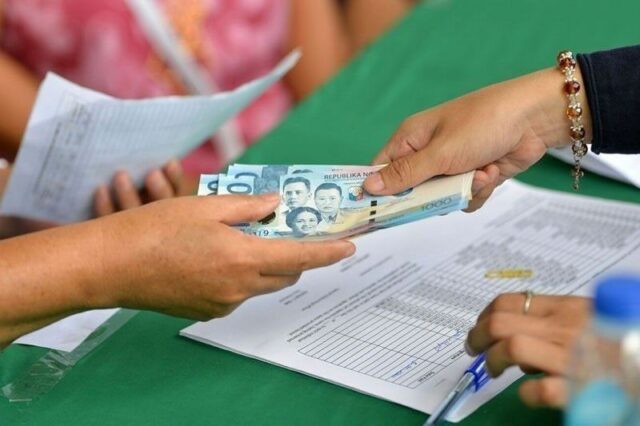
Distribution of the first batch of cash aid intended for an initial 1.2 million Filipino households amid the rising costs of fuel and other commodities started Wednesday, the Department of Social Welfare (DSWD) announced.

The subsidy under the Targeted Cash Transfer (TCT) program amounts to P500 per month for six months.

It will cover a total of 12.4 million households.

DSWD said the first tranche was aimed at the bottom 50% of beneficiaries, with P1,000 released for each household.

It includes those with existing cash cards and in the list of the government’s conditional cash transfer program known as Pantawid Pamilyang Pilipino Program (4Ps). The first batch also includes some former recipients of the unconditional cash transfer program from 2018 to 2020.

There are also “2.4 million households in the database of Listahanan that fall within the first to fifth income decile, or other poverty data sources of the DSWD,” the Department of Finance (DoF) said.

The TCT program is anchored on Joint Memorandum Circular No. 1, series of 2022, signed by the DSWD, the DoF, Department of Budget and Management, and the National Economic and Development Authority.

State-owned Land Bank of the Philippines (LANDBANK) is responsible for distributing the cash subsidy through various mediums, including cash cards, other banks, electronic money issuers, and remittance centers.

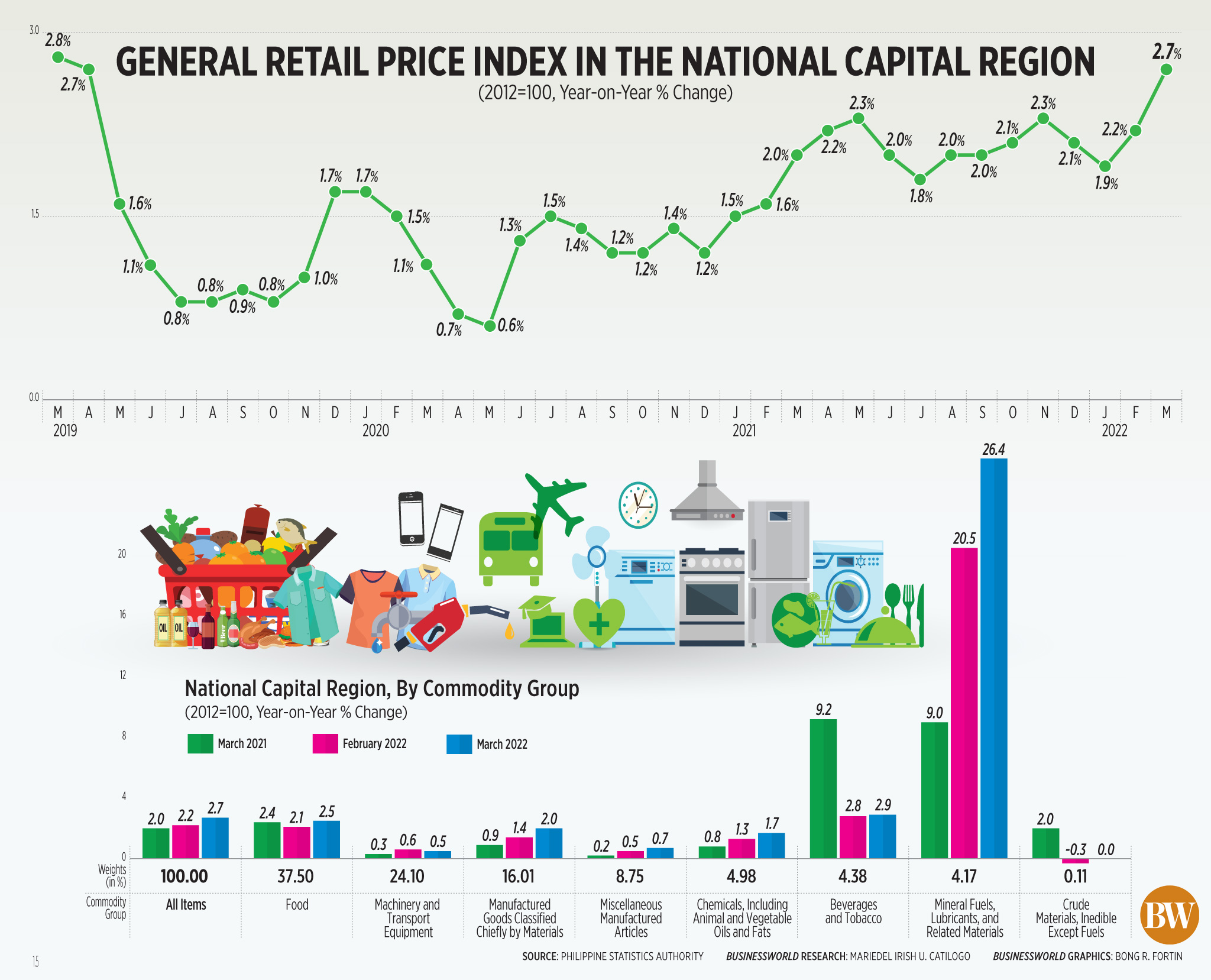
Inflation averaged 4.1% in the first five months of the year, exceeding the Philippine central bank’s 2%-4% target after quickening to a three-and-a-half-year high of 5.4% in May.

Pump prices of diesel, gasoline, and kerosene had gone up by P41.15, P28.70, and P37.95, respectively, from the start of the year to June 14. — Diego Gabriel C. Robles

Lawyers’ group urges Marcos gov’t to cooperate with drug war probe

FACEBOOK.COM/BONGBONGMARCOS

A lawyers’ group on Wednesday called on the incoming administration of President-elect Ferdinand R. Marcos, Jr. to cooperate with the International Criminal Court (ICC) should it continue its probe into the Duterte government’s war on illegal drugs.

In a statement, Center for International Law Philippines (CenterLaw) said it supports ICC Prosecutor Karim Ahmed Khan’s request to reopen the investigation months after it was suspended upon the Philippine government’s request.

“The Filipino people deserve much more than empty words and false promises,” the group said. “As President Rodrigo R. Duterte’s term comes to a close, CenterLaw calls on the next administration to cooperate with the investigations of the Office of the Prosecutor and to put an end to the senseless drug war.”

It stressed the Philippine government has failed to investigate the thousands of lives claimed by Mr. Duterte’s anti-illegal drug campaign.

CenterLaw disagreed with Justice Secretary Menardo I. Guevarra’s claim that the war on drugs was largely successful despite “excesses” committed by rogue cops.

“Contrary to the Duterte administration’s claims, the drug war is no success,” the group said. “Not only did it fail to deliver on Duterte’s false promise to eradicate the illegal drug trade; it claimed an estimated 12,000 and 30,000 lives along the way.”

Hansley A. Juliano, a former political science professor studying at Nagoya University’s Graduate School of International Development in Japan, said it remains to be seen “to what extent will the Marcos Jr. administration be well disposed to the ICC.”

“We do not expect it to be cordial in any way, especially since the presence of incoming Vice-President Sarah Z. Duterte-Carpio is presumably for that kind of continuity,” he said in a Facebook Messenger chat.

Ms. Duterte is the outgoing president’s daughter.

Data from the Philippine government released in June 2021 showed that at least 6,117 suspected drug dealers had been killed in police operations as of April 2021. Human rights groups estimate that about 30,000 suspected drug personalities have been killed.

Incoming Justice Secretary Jesus Crispin C. Remulla earlier said he would look into the Justice department’s initial review of the anti-illegal drug campaign. — John Victor D. Ordoñez

Sotto defends list of agri smugglers and protectors

source: senate.gov.ph

The outgoing Senate chief has defended the list of alleged smugglers of agricultural goods and their protectors provided under the chamber’s committee of the whole report, after the government’s intelligence arm said it did not match with their list.

“I will release it all. I didn’t want to but if they tell me that the list that reached me is different, that’s different,” he said in Filipino during an interview with DZBB Super Radyo on Wednesday.

“Just say you made a mistake, half of the names there are wrong, but don’t say that the list I submitted to the comrep is different,” he added.

This comes after the National Intelligence Coordination Agency (NICA) released a statement saying the list did not come from them.

“In fact, (if you will look at the) committee of the whole report, there was no mention that it came from NICA,” agency director Edsel T. Batalla said.

“We do have our own list, but it is different from the one that was published by the committee,” he added, citing one of the accused mayors.

The 63-page committee of the whole report, filed on June 1, named officials from the Agriculture department, Customs bureau, and local governments as well as private individuals.

The report indicated that around P667.5 million worth of agri-fishery products were “technically smuggled” into the country from 2019 to 2022.

Mr. Sotto said he had already sent the chamber’s full report to the Ombudsman for possible prosecution of those involved in the smuggling activities. — Alyssa Nicole O. Tan

Heavy rainfall alert raised over western PHL but tropical depression not seen to intensify

Tropical Depression Caloy

Heavy rainfall warnings were raised in western parts of the country Wednesday as tropical depression Caloy enhanced the southwest monsoon, state weather bureau PAGASA reported.

Caloy, the third typhoon to enter the country this year, is not expected to intensify until it exits by Wednesday evening or Thursday, the Philippine Atmospheric, Geophysical and Astronomical Services Administration (PAGASA) said in an advisory.

Fishermen, especially those using small boats, and other mariners were warned of rough seas over the seaboards of northern Luzon and the western seaboards of central and southern Luzon.

“The large overall circulation and disorganized structure of Caloy suggest a slow pace of intensification in the near term,” PAGASA said.

“It is forecast to remain a tropical depression in the next 48 hours, then slightly intensify and reach tropical storm category by Friday afternoon” as it moves towards southern China.

As of Wednesday 10 a.m., the center of tropical depression Caloy was located 375 kilometers (km) west of Iba, Zambales.

It was moving westward slowly or “almost stationary,” PAGASA said, with maximum sustained winds of 45 km per hour near the center and gustiness of up to 55 km/h.

Meanwhile, light to moderate rains are expected over Metro Manila on June 30, but a dry period is possible between 9 a.m. to 12 noon when President-elect Ferdinand “Bongbong” R. Marcos is scheduled to take his oath in the capital, according to PAGASA Weather Division head Juanito S. Galang.

“We see a window that the weather will be fair between 9 a.m. and 12 noon,” he said during a press briefing on Wednesday. — MSJ