Home Blog Page 6218

Building safe havens

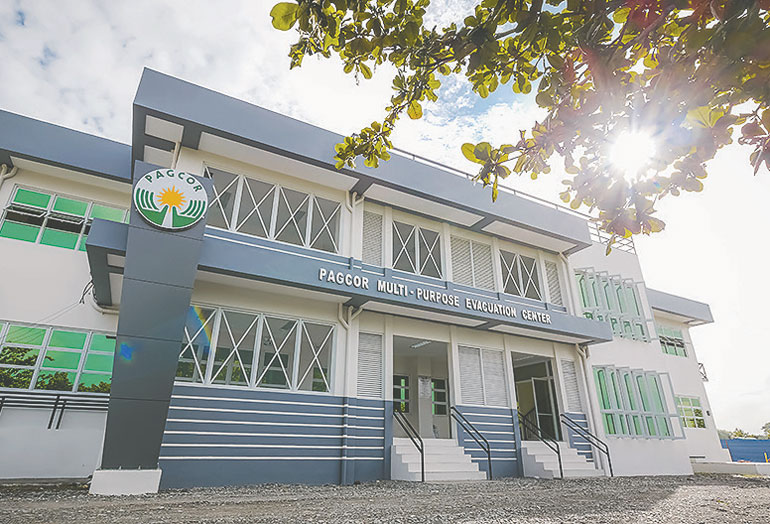
PAGCOR Chairman and CEO Andrea Domingo (right) and La Paz Mayor Venustiano Jordan unveil the marker of the newly built Multi-Purpose Evacuation Center.

PAGCOR allots more than P4 billion for the construction of disaster-resilient structures nationwide

Being situated within the Pacific Ring of Fire makes the Philippines vulnerable to volcanic eruptions and earthquakes. As if this is not enough, the country also sits on the western rim of the Pacific Ocean, where destructive tropical cyclones develop.

Hence, thousands of Filipinos who are at the mercy of these devastating natural disasters often risk losing their properties and even lives.

PAGCOR Chairman and CEO Andrea Domingo (left) congratulates the people of La Paz town in Tarlac for the swift completion of their Multi-Purpose Evacuation Center.

To help mitigate the impact of natural calamities and support the government in providing comfortable, disaster-resilient establishments to vulnerable communities, the Philippine Amusement and Gaming Corporation (PAGCOR) released a total of P4.68 billion from 2016 to 2022 for the construction of typhoon-resilient structures in various sites nationwide.

In November 2020, PAGCOR launched its Multi-Purpose Evacuation Centers (MPEC) project, which aims to build permanent edifices in vulnerable communities mainly to serve as evacuation centers to mitigate the loss of lives during calamities.

The agency has allotted P3.50 billion for the construction of 77 MPECs in provinces that are frequently hit by typhoons.
Locations include Mountain Province, Kalinga, Benguet, Ilocos Sur, Pangasinan, Isabela, Cagayan, Aurora, Bataan, Bulacan, Pampanga, Tarlac, Zambales, Cavite, Batangas, Laguna, Quezon, Occidental Mindoro, Oriental Mindoro, Romblon, Albay, Camarines Norte, Camarines Sur, Catanduanes, Capiz, Leyte, Eastern Samar, Northern Samar, Southern Leyte, Zamboanga del Sur, and Davao de Oro.

When the MPECs are not being used as evacuation centers, they may be utilized by recipients for other purposes and community activities such as sports meets, vaccination drives and seminars.

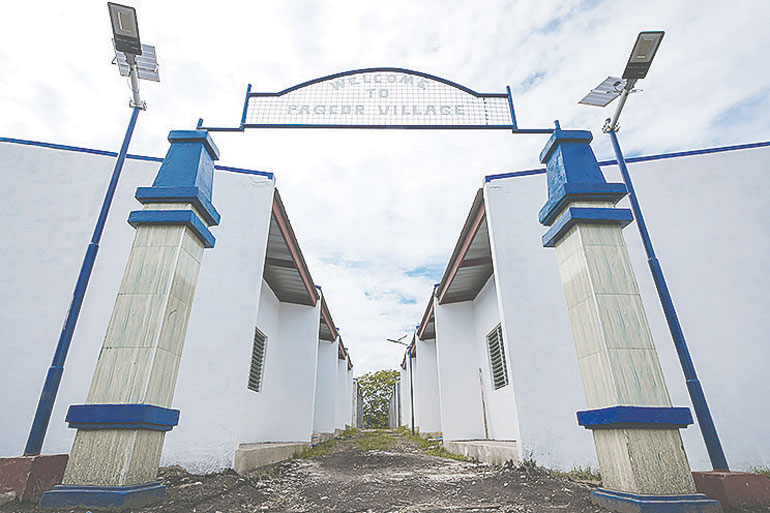
Meanwhile, the state-run gaming firm also unveiled in 2021 the “PAGCOR Village”, a charitable project that seeks to safeguard the living conditions of families displaced by the eruption of Taal Volcano in Batangas in 2020.

This project, with a funding of P150 million, will benefit the towns of Agoncillo, Lemery, Balete, Mataas na Kahoy and Taal. Said towns are all in close proximity to Taal Volcano’s danger zone.

Moreover, PAGCOR also granted a total of P1.03 billion assistance to some LGUs and organizations from 2016 to 2022.

Among them is the P11-million donation to the provincial governments of Ilocos Norte, Ilocos Sur, Cagayan, Isabela, Kalinga, Apayao and Mountain Province for the rehabilitation of various infrastructure damaged by typhoon Lawin in 2016.

PAGCOR also donated P50 million to the City of Marikina for the construction of two covered courts.

Apart from the communities, PAGCOR provided financial support to Veterans Memorial Medical Center (P123.65 million) and V. Luna Medical Center (P53.22 million) for the construction of dormitories which will serve as a halfway house for the families and watchers of patients confined in the hospital.

The impact of disasters on the lives and well-being of affected families is real. But by bankrolling long-term infrastructure projects, PAGCOR is helping build safe communities for more Filipinos — improving their disaster-preparedness and mitigating the loss of lives.


Spotlight is BusinessWorld’s sponsored section that allows advertisers to amplify their brand and connect with BusinessWorld’s audience by enabling them to publish their stories directly on the BusinessWorld Web site. For more information, send an email to online@bworldonline.com.

Join us on Viber to get more updates from BusinessWorld: https://bit.ly/3hv6bLA.

Cabinet members, economic team joining the Marcos administration

In photo (clockwise from top left) are Vice President-elect Sara Z. Duterte-Carpio, Benjamin E. Diokno, Arsenio M. Balisacan, Amenah F. Pangandaman, Felipe M. Medalla, and Alfredo E. Pascual. — Photos from facebook.com/davaocitygov/, DBM | WIKIMEDIA COMMONS, University of the Philippines | WIKIMEDIA COMMONS, and facebook.com/DBMgovph

President-elect Ferdinand “Bongbong” Marcos, Jr., who will be inaugurated as the 17th president of the Philippines today, has named certain appointees who will be part of the incoming administration.

So far, there are 25 names officially announced for the Marcos, Jr. Cabinet as of June 23. Most of the appointees are still subject to confirmation of the Commission on Appointments.

Vice President-elect Sara Z. Duterte-Carpio, the outgoing mayor of Davao City and daughter of President Rodrigo R. Duterte, was announced to head the Department of Education last May 11. She has taken her oath as the 15th Vice-President of the Philippines last June 19 in Davao City.

On May 13, Benjamin “Benhur” Abalos, Jr. was announced as the next Secretary of the Department of Interior and Local Government. Mr. Abalos served as the chairman of the Metropolitan Manila Development Authority from 2021 to 2022 and Marcos, Jr.’s campaign manager for the 2022 presidential elections.

Jesus Crispin “Boying” Remulla, currently Cavite 7th District Representative, will be the next secretary of the Department of Justice, as announced last May 23.

Former Labor secretary Bienvenido “Benny” Laguesma, who served the department from 1998 to 2001 during the Estrada administration, was also announced to return and lead the Department of Labor and Employment.

Susan “Toots” Ople was assigned to head the newly-created Department of Migrant Workers (DMW). Ms. Ople was a Labor undersecretary under the Arroyo administration.

Bangko Sentral ng Pilipinas (BSP) Governor Benjamin E. Diokno will lead the Department of Finance, announced last May 26. Economist Felipe M. Medalla will be the next central bank governor.

Manuel “Manny” Bonoan, president and CEO of SMC Tollways, will lead the Department of Public Works and Highways, as also announced last May 26.

The Department of Trade and Industry’s incoming secretary will be Alfredo E. Pascual, president of the Management Association of the Philippines.

On May 30, BSP Assistant Governor Amenah F. Pangandaman accepted the President-elect’s invitation to be the next Department of Budget and Management secretary.

IT expert Ivan John Uy will be the incoming Secretary of the Department of Information and Communications Technology.

Television and radio broadcaster Erwin Tulfo was named by the President-elect to head the Department of Social Welfare and Development.

Christina Frasco will be the next Department of Tourism secretary. The Liloan, Cebu mayor is also the spokesperson of Vice President-elect Sara Duterte-Carpio.

The incoming Department of Agrarian Reform Secretary is Abono Party-list representative Conrado Estrella III, as announced last June 8.

Retired Gen. Jose Faustino, Jr., former chief of staff of the Armed Forces of the Philippines, was chosen to be the next Department of National Defense officer-in-charge.

Last June 20, President-elect Marcos, Jr. said he will be the Department of Agriculture chief “for now.”

Jaime Bautista was announced to be the next Department of Transportation (DoTr) secretary last June 23. He was the former president of Philippine Airlines.

Arsenio M. Balisacan will return to the National Economic and Development Authority (NEDA), who has served as the NEDA director-general and Socioeconomic Planning Secretary from 2012 to 2016 under the Aquino administration.

Outgoing Justice Secretary Menardo Guevarra will be the next Solicitor General.

Retired Philippine National Police Deputy Director-General Ricardo de Leon was chosen to be the next director-general of the National Intelligence Coordinating Agency.

President-elect Marcos, Jr. chose his spokesperson Atty. Victor Rodriguez as his executive secretary. Former Senate President Juan Ponce Enrile was announced to be the chief presidential legal counsel. Retired political science professor Clarita Carlos will serve as Marcos, Jr.’s national security adviser. Antonio “Anton” Lagdameo, Jr., former Davao del Norte 2nd District Representative, will be the Special Assistant to the President. Maria Zenaida Angping will head the Presidential Management Staff. Rose Beatrix “Trixie” Cruz-Angeles, a lawyer and vlogger, is chosen to be the next Presidential Communications Operations Office (PCOO) secretary.

The economic team

“The first priority is always going to be the economy. That’s why we have been very careful in choosing the economic team. It’s still down to jobs, the increasing prices of commodities, some relief for the business community. We have to streamline the operations of government,” Mr. Marcos was quoted saying in a May 27 BusinessWorld report.

The President-elect had a meeting with his economic team earlier this month — attended by incoming executive secretary Mr. Rodriguez, incoming Finance Secretary Mr. Diokno, incoming Budget Secretary Ms. Pangandaman, incoming Socioeconomic Planning Secretary Mr. Balisacan, incoming Labor Secretary Mr. Laguesma, and incoming Public Works and Highways Secretary Mr. Bonoan — to discuss “priorities” and gave orders with the aim for the country’s economic recovery from the COVID-19 pandemic.

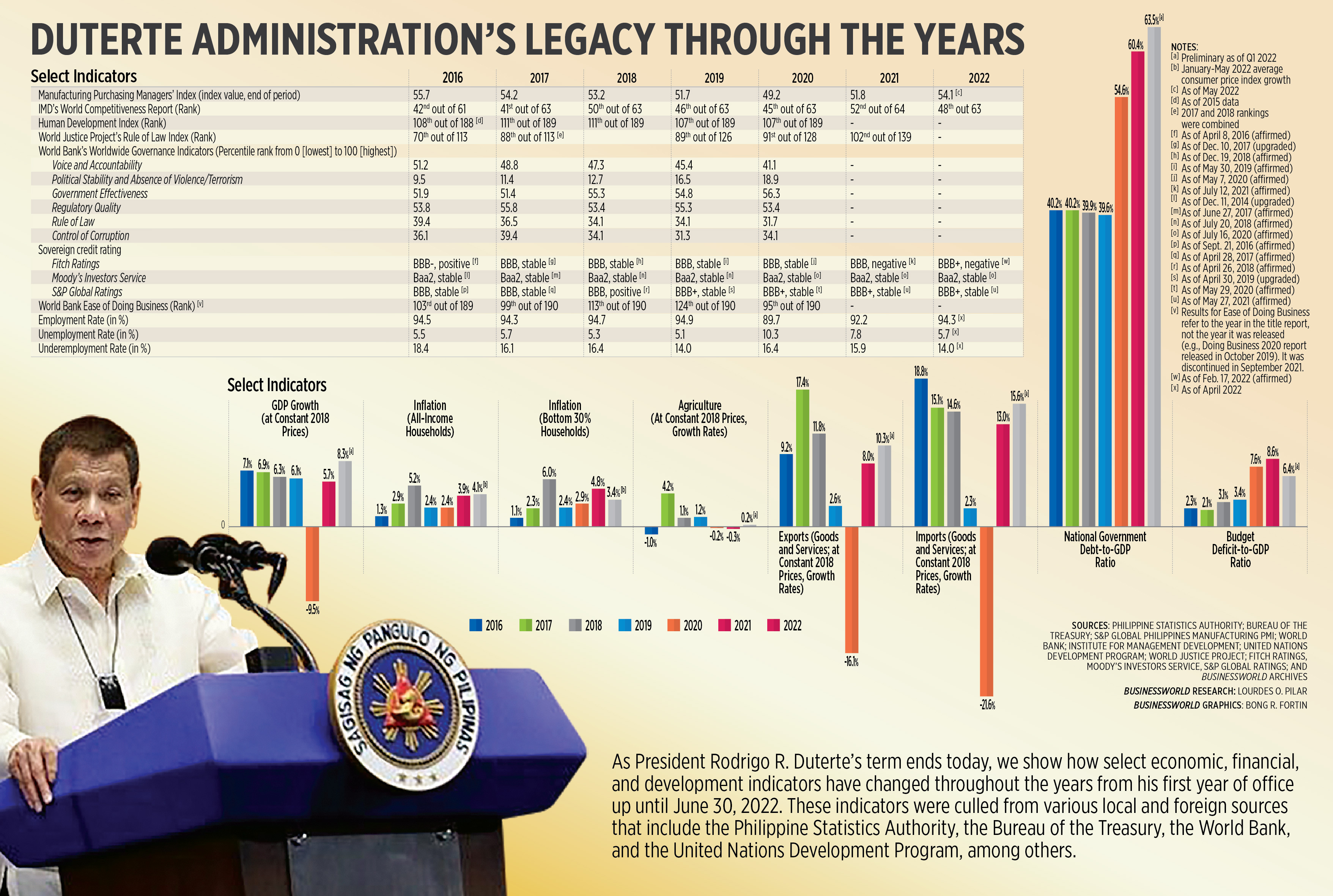
After the country’s gross domestic product (GDP) contracted 9.5% in 2020 amid the pandemic, the Philippine economy improved by 5.7% in 2021 and posted an 8.3% growth in the first quarter of 2022, according to the Philippine Statistics Authority.

Despite such growth, the country still faces external headwinds from growing world inflation, said S&P Global.

In addition, the government’s debt reached P12.76 trillion as of end-April, according to the Bureau of the Treasury. As of the end of the first quarter, the country’s debt-to-GDP ratio is at 63.5%, which is over the 60% threshold that multilateral lenders deemed manageable for developing economies. — Chelsey Keith P. Ignacio

Duterte administration’s legacy through the years

As President Rodrigo R. Duterte’s term ends today, we show how select economic, financial, and development indicators have changed throughout the years from his first year of office up until June 30, 2022. These indicators were culled from various local and foreign sources that include the Philippine Statistics Authority, the Bureau of the Treasury, the World Bank, and the United Nations Development Program, among others.

Duterte administration's legacy through the years

Manila falls 44 places in costliest city list for expats

TempA3

The cost of living in Metro Manila became relatively cheaper for employees working abroad, based on Mercer’s 2022 Cost of Living Survey. The Philippines’ capital city was tagged the 122nd most expensive city out of 227 localities, down 44 spots from the previous year’s ranking of 78th out of 209. The study looks at the comparative cost of more than 200 items in each location, including housing, transportation, food, clothing, household goods, and entertainment. Cost of living and rental accommodation cost comparisons were derived from a survey conducted in March this year. Read the full story here.

MANILA FALLS 44 PLACES IN COSTLIEST CITY LIST FOR EXPATS

Peso sinks to 16-year low vs dollar

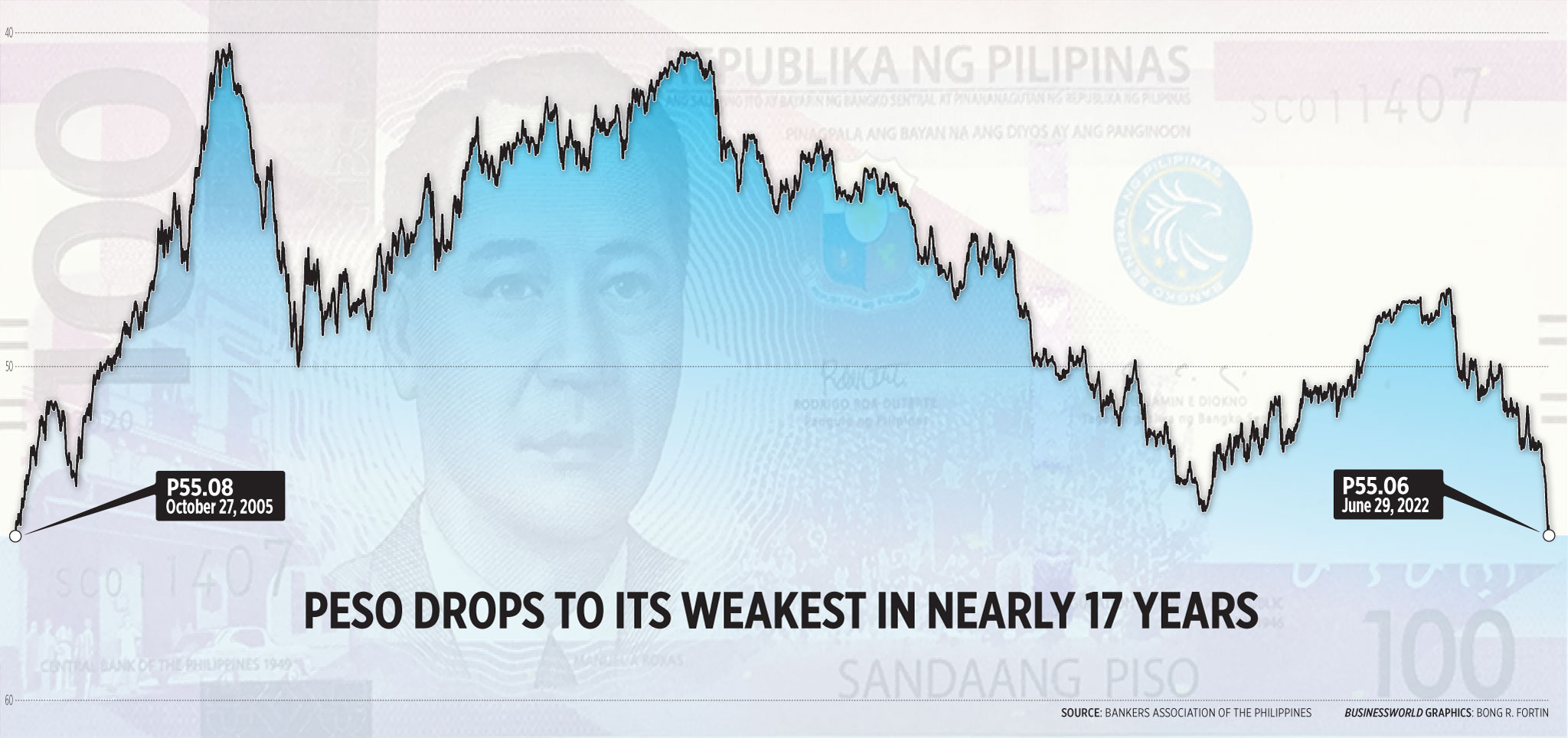
THE peso sank to the P55-a-dollar level on Wednesday — its weakest in more than 16 years — amid fears of a recession in the United States and after officials of the US Federal Reserve said they would try to bring inflation within target.

The local currency closed at P55.06 a dollar, weakening by 29 centavos from its P54.77 close on Tuesday, according to data from the Bankers Association of the Philippines posted on its website. It was its weakest level since it closed at P55.08 on Oct. 27, 2005.

The Bangko Sentral ng Pilipinas (BSP) might consider bigger interest rate hikes to support the peso, though it would not be obliged to match policy tightening by the US Fed, incoming Governor Felipe M. Medalla told a news briefing.

“If we see that the exchange rate is overshooting too much and that selling forex will not make the problem go away we would consider maybe increasing policy rates more than our planned 25-basis-point hike,” he said.

The peso opened the session at P54.90 a dollar and weakened to as much as P55.10. It rose to as much as P54.88 a dollar during the day. Volume went down to $1.27 billion from $1.65 billion a day earlier.

Zeno Ronald R. Abenoja, managing director of the Philippine central bank’s Department of Economic Research, traced the peso’s weakening to normalized monetary policy rates in the US and other advanced economies.

“Investors move their money to the US when interest rates there increase,” he told One Balita Pilipinas in Filipino. “As the dollar strengthens, other currencies weaken.”

The US Federal Reserve hiked its benchmark policy rate by 75 basis points (bps) and has signaled more increases at its future meetings to cool down inflation.

The US consumer price index rose by 8.6% in May, the fastest since December 1981. This caused renewed concerns that the Fed’s aggressive action could dampen growth prospects for the world’s largest economy.

Michael L. Ricafort, chief economist at Rizal Commercial Banking Corp. said the peso depreciated as New York Fed President John T. Williams and San Francisco Fed President Mary C. Daly promised further interest-rate hikes on Tuesday.

“We need to move expeditiously,” Mr. Williams told CNBC. “In terms of our next meeting I think 50 (bps) or 75 is clearly going to be the debate.”

Ms. Daly said she expects the economy to slow but not stop growing.

“Many are worried that the Fed might be acting too aggressively and maybe tip the economy into recession,” Ms. Daly said in an interview on LinkedIn. “We are working towards that as quickly as we possibly can, and hopefully Americans everywhere will start to see some relief in their pocketbooks.”

“The peso weakened as recession concerns prevailed following the sharp decline in the US consumer sentiment report,” a trader said in an e-mail.

US consumer sentiment hit a new record low in June amid growing concerns about inflation, according to a closely followed University of Michigan survey released on Friday.

Inflation remained the biggest concern for consumers, with 47% of them blaming the rising prices for their worsening living standards.

“The local currency might weaken further ahead of Fed Chairman Jerome H. Powell’s speech tonight,” the trader added.

Mr. Ricafort expects the peso to trade at P54.85 to P55.10 on Thursday. — Keisha B. Ta-asan with Reuters

Q2 office demand more than doubles

THE demand for Philippine office spaces more than doubled to 255,000 square meters (sq.m.) this quarter from end-March, the highest since the coronavirus pandemic forced workers to stay and work from home in 2020, according to Leechiu Property Consultants.

“The office segment remains resilient,” Mikail C. Barranda, director for commercial leasing at the property firm, told an online news briefing on Wednesday. “We have a healthy pipeline of live transactions of 451,000 sq.m.”

Lease transactions have reached 379,000 sq.m. this year, almost 70% of the full-year take-up in 2021, Leechiu said in a report.

Outsourcing companies drove the demand for office spaces this quarter, accounting for 42% or 107,000 sq.m., Mr. Barranda said.

A number of outsourcing companies shed office spaces at the height of the pandemic that has killed 6.4 million people worldwide, as workers shifted to working from home.

Office demand in 2020 sank to 381,000 sq.m. from 1.7 million sq.m. in 2019 when the world was still coronavirus-free, according to data from Leechiu. Last year, it was 539,000 sq.m.

Leechiu earlier said office space demand would pick up as lockdown restrictions ease and many companies issue back-to-office orders.

The business process outsourcing industry was worth $361 billion in 2020, according to the World Bank.

The sector contributes almost $30 billion to the economy each year, and about 1.3 million Filipinos were employed in more than 1,000 outsourcing companies in 2019, according to Nexford University.

The Philippines holds 10-15% of the global BPO market and its services are oriented to its former colonial power, the US, and also serve Europe and nearer neighbors Japan, New Zealand and Australia, it said.

“All the leasing activities in the past three months, from many new captives and companies doing business here for the first time, tell us that outsourcing to the Philippines continues to be a reliable solution for companies in the West fighting an impending global recession,” he added.

On the other hand, vacant office spaces rose by 63% to 170,000 sq.m. as a number of Philippine Offshore Gaming Operators (POGOs) — mostly Chinese gambling companies that operate online — were shuttered. These companies used to occupy 64,000 sq.m. of these spaces, Leechiu said.

“Continued POGO contractions indicate fluidity in this industry,” Mr. Barranda said.

He said 18% of office spaces in Manila, the capital and nearby cities were vacant, with Bonifacio Global City (BGC) in Taguig and Makati City both having “manageable vacancies” at 12% and 14%, respectively.

Meanwhile, capital values and interest in key business districts increased past pre-pandemic levels, particularly in BGC and Filinvest City in Muntinlupa.

Filinvest City reported the highest growth rate among business districts in the capital region with a compound annual growth rate (CAGR) of 20% over a six-year period.

In the residential segment, condominium sales rose by 54%.

“Demand for most segments posted significant growth as developers offered extended and flexible payment terms and investors purchased residential units to lock in current prices,” Roy A. Golez, director for Research and Consultancy at Leechiu, told the same briefing.

He added that with rising consumer prices, interest rates are likely to increase and affect the market.

“Such a development may impact not only the lower middle residential condominium segment but also the middle-income category, which is now also being confronted by looming economic headwinds,” Mr. Golez said.

“This chain of events, nevertheless, has not dented residential lot prices, especially Southern Mega Manila properties which have become more accessible through new expressways and other infrastructure,” he added.

Leechiu said Philippine real estate would continue to grow amid healthy capital values, avid residential investors and an office market firmly supported by the information technology-business process outsourcing sector.

“As the economy opens up, we are confident that transactions especially in the office sector will pick up, driven by firms that will use outsourcing in tough times,” Mr. Barranda said.

“The IT-BPM sector is the unique Philippine industry that does well when everyone else in the world is challenged to remain viable,” he added.

EXPENSIVE CITIES

MANILA FALLS 44 PLACES IN COSTLIEST CITY LIST FOR EXPATS

In a related development, Manila was the 122nd most expensive city in the world for expatriates, according to Mercer’s 2022 Cost of Living Survey, down 44 places from 78th a year earlier.

The Philippine capital was in the lower half among 227 cities in the survey, which compares the cost of more than 200 items in each location such as housing, transportation, food, clothing, household goods and entertainment.

“Manila was ranked 122nd in this year’s ranking primarily due to higher inflation/prices in the Philippines and also a weaker peso, that weakened against the US dollar,” Mercer Asia-Pacific Regional Mobility Leader Tracey Ma said in an e-mail interview with BusinessWorld.

Four of the top 10 most expensive cities were in Asia — Hong Kong (1st), Singapore (8th), Tokyo (9th) and Beijing (10th).

Mercer said this year’s survey included new items such as smartwatches, tablets, computers and smartphones, while nonrelevant items such as music CDs and video movie rentals were removed as part of efforts to stay up to date with the spending patterns of the expatriate workforce.

“Despite the relatively lower inflation in Asia compared to the rest of the world, high prices and strong currencies with the exception of Japan and Korea continue to propel Asia as one of the most expensive regions for international employees,” Ms. Ma said in a statement.

“In the past months, the strength of the Chinese Yuan has also made Mainland China pricier to live in,” she said. “Six of the main cities — Beijing, Shanghai, Shenzhen, Guangzhou, Qingdao and Nanjing — are among the top 10 most expensive cities in Asia. In contrast, Japanese and Korean cities have become relatively more affordable due to a weaker Japanese yen and Korean won,” she added.

Manila’s lower ranking was probably due to falling property prices, said Michael L. Ricafort, chief economist at Rizal Commercial Banking Corp.

“This may largely reflect the downward correction in property prices and rental rates since the pandemic as the country experienced one of the longest lockdowns and some Philippine Offshore Gaming Operators exited the country due to the pandemic and also due to higher taxes and increased regulation,” he said in a Viber message.

“The lockdowns resulted in some business closures and some job losses, leading to lower property prices and lower rental rates especially at the height of the pandemic,” he added.

Ms. Ma said economic and political uncertainties have resulted in higher living costs even in developed and stable markets across Asia.

“While the onus is on employers to act quickly to attract and retain key talent, they need reliable data and clear strategies to navigate mobility packages in times of uncertainty,” she said. “This will help to ensure their employees’ financial well-being as well as business efficiency and equity.”

Mercer said the 2022 survey was affected by rising inflation in developed economies, adding that companies were now facing the challenge of ensuring that the spending power of mobile employees were unaffected as travel and international mobility resume. — Luisa Maria Jacinta C. Jocson and Revin Mikhael D. Ochave

Gov’t awards port projects in Palawan, Leyte and Batangas

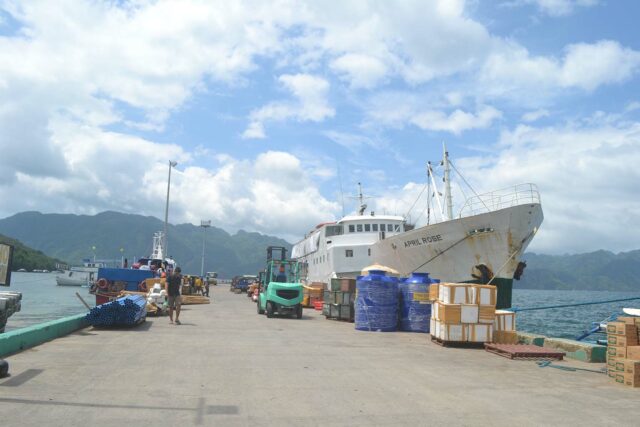
THE Philippine Ports Authority (PPA) has awarded more port projects, including the construction of a cruise ship port in Coron, Palawan province southwest of the Philippine capital.

PPA General Manager Jay Daniel R. Santiago issued a notice of award on June 6 to Makati City-based Premium Megastructures, Inc. for the P418.15-million cruise ship port, documents from the agency’s website showed.

PPA said the port projects are part of the Duterte government’s goal of improving connectivity and mobility across the Philippine archipelago, mainly for trade, investment, tourism and economic growth.

A notice of award was issued on the same day to Batangas-based Great Swiss Metal Builders Corp. for the P145.99-million construction of a wharf and port in the town of San Juan.

Meanwhile, Ormoc City-based MAC Builders got the contract for the P127.09-million construction of the operational area of the Port of Guadalupe in Maasin City, Southern Leyte in central Philippines.

The agency also issued a notice to the Pasig City-based joint venture of GlobalPort Terminals, Inc. and GlobalPort Ozamis Terminal, Inc. to proceed with the management of Sasa Port in Davao. The management contract involves a concession fee of P8.64 billion.

A notice was issued on May 26 to the Agusan del Norte-based joint venture of Equi-Parco Construction Co. and EvenPar Construction and Development Corp. to proceed with the P230.99-million upgrade of the Port of Opol, Misamis Oriental.

PPA said it had completed 600 commercial and social tourism port projects as of May.

Among the ports completed under the Duterte administration were the Port of Salomague in Ilocos Sur as well as the ports of Puerto Princesa, San Fernando, Bataraza and Borac in Palawan, the agency said in a statement.

In the Visayas, the agency finished the ports of Tagbilaran, Maribojoc, Jagna and Dumaguete. In Mindanao, there is the upgraded Port of Cagayan de Oro, Port of Babak in Davao del Norte and Makar Wharf or the General Santos Port.

Some big-ticket seaport projects have started, including the Port of Calapan, which will have a capacity of 3,500 passengers at any given time, and the Port of Zamboanga, which is expected to accommodate 4,000 passengers. — Arjay L. Balinbin

World Bank: More than half of Filipinos have bank accounts

MORE Filipinos opened their own bank accounts at the end of last year, as many of them were forced to pay for services online amid a coronavirus pandemic.

“The digital revolution has catalyzed increases in the access and use of financial services across the world, transforming ways in which people make and receive payments, borrow, and save,” World Bank Group President David Malpass said in a statement on Wednesday.

Based on the multilateral bank’s Global Findex 2021 database, 51% of Filipinos now have bank accounts, up from 34% in 2017.

Globally, 76 % of adults had an account at a financial institution or through a mobile money provider in 2021, up from 68% in 2017 and 51% in 2011.

“The pandemic has also led to an increased use of digital payments,” according to the World Bank report. “In low and middle-income economies (excluding China), over 40% of adults who made merchant in-store or online payments using a card, phone, or the internet did so for the first time since the start of the pandemic.”

But there are still gaps in financial services for underserved sectors such as women, the poor and less educated, it said.

In the Philippines, even if account ownership had grown significantly in the past decade, 57% of unbanked adults found opening accounts too expensive.

About 41% of Filipino workers in the private sector got their salaries through a payroll account, according to the report. The rest got their wages in cash and through other methods.

“In Cambodia and the Philippines, about 20% of unbanked adults — or about 10% of all adults — received government transfer payments in cash,” according to the report. “More than 80% of the unbanked receiving such payments in these economies have a mobile phone.”

Meanwhile, three of four Filipinos who bought something online paid for these in cash.

Globally, 78% of men and 74% of women had bank accounts.

“The growth or decline of the gender gap adheres to different patterns, depending on the economy,” according to the report. “No single set of circumstances drives gender equity in relation to account growth overall.”

About two of three Filipino adults were very worried about medical expenses, while more than half were worried about old age.

“Not surprisingly, poor adults worry more than higher-income adults about having enough money to pay monthly bills,” it added.

The Global Findex database, which surveyed how people in 123 economies use financial services throughout 2021, is produced by the World Bank every three years in collaboration with Gallup, Inc.

It is a comprehensive data set on how adults save, borrow, make payments, and manage risk.

The interviews in the Philippines were conducted from Sept. 20 to Nov. 15, 2021, with one thousand interviews conducted through calls.

The 2021 edition was authored and led by Asli Demirgüç-Kunt, Leora Klapper, Dorothe Singer, and Saniya Ansar. — Keisha B. Ta-asan

Meralco unit, Korean firms tie up for clean energy R&D

Sebastian Ganso / Pixabay

A unit of Manila Electric Co. (Meralco) has partnered with a Korean company for a research and development project in the Philippines on how the use of clean energy technologies can drive sustainability.

Meralco Industrial Engineering Services Corp. (Miescor) and Seochang Electric Communication Co. Ltd. will put up an on-grid hybrid power service through a research grant from the Korea Institute of Energy Technology Evaluation and Planning.

“We are honored to partner with Seochang and other Korean companies in this initiative as we all share a common goal of bolstering the use of clean energy,” said Miescor President and Chief Executive Officer Ronnie L. Aperocho in a media release on Wednesday.

The project will set up a 50-kilowatt peak solar photovoltaic (PV) system and a 300-kilowatt-hour energy storage system (ESS) that will serve a Gawad Kalinga community in Cavite. It is aimed to benefit about 200 households in Brgy. Hugo Perez, Trece Martires City.

It will power commonly used facilities such as street lights as well as the community’s multi-purpose hall and development center. It will also serve as a potential energy source for electric vehicles.

“This project does not only support One Meralco Group’s sustainability goals, but also, this project most importantly, contributes to a cleaner and more eco-friendly environment, provides electricity to the community, and creates livelihood opportunities,” Mr. Aperocho said.

Project construction is set for September for completion in November 2022. Before full operations in the third quarter of next year, a performance evaluation and maintenance system will be in place.

The groups involved in the project aim to develop a sustainable energy network by using and optimizing used electric vehicle (EV) batteries that are suitable for local electric distribution facilities. They will also find ways to provide clean and reliable electricity service to communities.

“We in Seochang, are happy that Miescor partnered with us in this undertaking as we have been looking for the most appropriate and sustainable project that we can be a part of in our Asian neighbors,” said Seochang President Alika Yoon.

“And this project in the Philippines is, in our opinion, the most deserving one,” the official said, adding that the group is looking forward to expanding further to other areas in the Philippines.

Based in South Korea’s Daegu, Seochang specializes in advanced metering infrastructure (AMI) and the construction of various ESSs. It has been supplying watt-hour meters to Meralco for more than 10 years.

Miescor offers engineering, procurement, and construction services across power infrastructure, renewable energy, electromechanical works, telecommunication infrastructure, and general construction projects.

Other South Korean entities PMGROW Corp., Korea Testing Laboratory, and Korea Energy Convergence Association are also supporting the project. — VVS

BHI to upgrade Boracay resort

Koala Cruz / BW file photo

Boulevard Holdings, Inc. (BHI) is tearing down the rooms in Fridays Boracay and renovating the resort to upgrade its amenities and reposition it to an upscale market segment.

“We won’t open up Fridays Boracay if BHI is just going to earn a run-of-the-mill return based on cutthroat room rates,” the firm said in a disclosure on Wednesday, citing the P5,000 to P8,000 per night market segment.

The announcement was made in response to reports from stockholders who had been to Boracay and seen the closed-down Fridays resort in spite of the full-occupancy status of the island.

BHI said that it is allocating capital from recent sales proceeds to reposition its market segment within the P12,000 to P20,000 a night clientele.

“This means we are currently tearing down all the 50 rooms to the foundation poles and spending on new fixtures, furniture and fittings, new elevators to handle clients coming in from the mountain behind us, brand new plumbing system, new employee housing and dining facilities, new landscaping and lighting schemes, and two new restaurants at the beach front,” the company said.

BHI said it is spending to develop the resort to compete in the Boracay “super-premium market.”

“From these activities, BHI expects free cash flow upwards of 9 million a month after fixed and working capital reinvestment. We look forward to definitely opening at the end of September this year,” the firm said.

“Please be assured we are laying the basis for earnings growth in the medium term derived from solid tourism and property opportunities,” it added.

BHI noted that foreign visitors to Boracay are expected to return in the last quarter of the year.

It cited figures from the Malay Tourism Office showing a total of 150,597 mostly domestic tourists visited the island in March 2022 alone, exceeding the “normal” March 2019 figure of 145,204 that counted the combined foreign and local visitors.

The company said that netting out the marginal foreign visitors for 2022, the number of visitors in March this year “spells out an unseasonal adjusted-growth rate of 102.9%. It is in this environment, FHI (Friday’s Holdings, Inc.) hopes to grow its resort revenues.”

Earlier this month, BHI reported that its 12-month sales ending in May 2022 surged to P18.57 million from just P665,027.92. It said the figures cover only its resort in Puerto Galera.

Aside from FHI, the company’s subsidiaries are Fridays Puerto Galera, Inc. and Crown One Land, Inc. The group primarily operates in segments of providing hotel and resort amenities and investment holding.

On Wednesday, BHI shares dropped by 4.65% or P0.004 to close at P0.082 at the stock exchange. — Luisa Maria Jacinta C. Jocson

PLDT Enterprise expects services to benefit more China entities via new partner

PLDT Enterprise, the business-to-business arm of fully integrated telecommunications provider PLDT, Inc., said it recently signed a partnership deal with edge cloud service provider BaishanCloud to enhance the global company’s capabilities.

The partnership, according to PLDT Enterprise, will help BaishanCloud, an independent edge cloud service provider rooted in China, provide services to its users globally.

“Through this proposed partnership, more companies, especially Chinese enterprises, will benefit from PLDT’s services in the country,” PLDT Enterprise said in an e-mailed statement.

The partnership is seen to diversify the local cloud landscape, as it expands PLDT Enterprise customers’ infrastructure and service alternatives.

The company noted that BaishanCloud is providing services and solutions in over 250 cities globally.

“With VITRO as Philippines’ biggest data center provider, this partnership will add diversity to our portfolio in serving a wider range of customers, on the way to making the Philippines as Asia’s next technology hub,” said Victor S. Genuino II, president and chief executive officer of ePLDT, the information and communications technology arm of PLDT Enterprise.

For his part, Albert Villa-Real, PLDT Global president and chief executive officer said: “We both aim to serve the discerning digital infrastructure standards of global customers in the Philippines.”

“A partnership with PLDT Enterprise will provide us with more leverage in terms of network and resource capabilities which will enable us to better serve our clients in the country,” said Yuankai Guo, general manager of BaishanCloud (Singapore).

Hastings Holdings, Inc., a unit of PLDT Beneficial Trust Fund subsidiary MediaQuest Holdings, Inc., has a majority stake in BusinessWorld through the Philippine Star Group, which it controls. — Arjay L. Balinbin

SuperWorld sees opportunities for virtual real estate in PHL

SuperWorld Screenshot

The rise of play-to-earn gaming in the Philippines offers opportunities for SuperWorld, a virtual world in augmented reality (AR), its top official said.

“The Philippine audience is very interesting for us, and play-to-earn is a very important mechanism in that part of the world, and we’re creating live-to-earn, and so it is something that we hope to really build out in the Philippines,” Hrish Lotlikar, co-founder and chief executive officer of SuperWorld, told BusinessWorld at the recent South Summit 2022, a global business summit in Madrid co-organized by the IE University.

“We have team members in the Philippines. It’s a very important part of our strategy, so I’m very excited about it,” he added.

SuperWorld allows its users to sell virtual real estate in the metaverse, a virtual world that relies on technologies like artificial intelligence and blockchain, the technology behind cryptocurrencies.

“SuperWorld is a virtual world mapped on top of the real world. It’s all around us. We’re in it right now. It’s in augmented reality,” said Mr. Lotlikar, who is known as among the most influential people in the metaverse.

The company, which was founded in 2017, divided the surface of the Earth into 64 billion virtual blocks of land, each of which is a unique digital asset. SuperWorld users can buy virtual properties via the company’s platform using a crypto-wallet.

According to SuperWorld’s website, each plot of unowned virtual real estate is currently priced at 0.1 ETH (Ethereum), or P6,702 as of June 28.

“You can buy a place in Manila, Cebu, London, Tokyo, New York, anywhere in the world,” Mr. Lotlikar said.

“Once you have it, you can reprice it to whatever you want. Someone else can buy it for that price or give you another bid, but the point is it’s your asset. The ownership of that asset allows you to benefit from all of the activities in that location from everyone.”

He said the platform’s average paying user does about 10 to 15 transactions and spends about $4,000 in the first month.

Currently, SuperWorld is focused on what customers do when they come to the platform.

“When I talk to customers, the first thing I hear is that they are excited and galvanized about the opportunity to create, discover, and monetize anything anywhere in the real world,” Mr. Lotlikar said.

“People talk about it because they love talking about the places they love in the world.”
On why people should care about virtual real estate today, he said: “Our lives are going much more virtual whether you like it or not.”

“You are definitely doing more Zoom calls. You are probably watching more movies on Netflix. You are doing more online activities. Maybe you’ve started getting into crypto. People have become more digital.”

“Now, the opportunity to start owning these places is available, and if you are a forward-thinker, if you understand that people’s lives are going digital, and you see trends like Pokémon GO doing things in real-world locations, you know that these spatial computing environments will be where we spend a lot of our time, even in the physical world,” he added.

ADVERTISEMENT
ADVERTISEMENT