Home Blog Page 6203

PSEi inches up ahead of June inflation report
BW FILE PHOTO

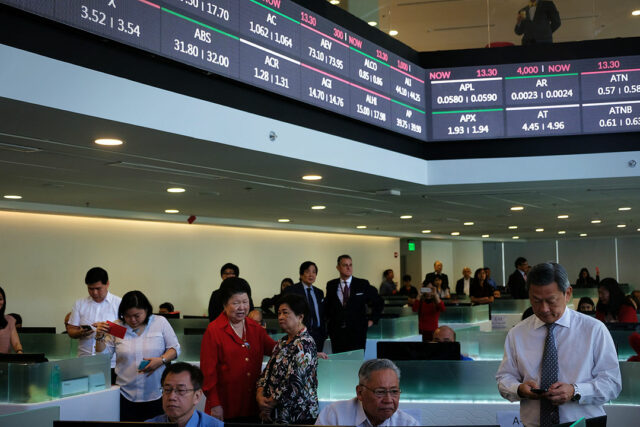
PHILIPPINE SHARES inched up on Monday on bargain hunting and hopes that the Bangko Sentral ng Pilipinas (BSP) will hike rates more aggressively as headline inflation is seen to have hit a near four-year high in June.

The benchmark Philippine Stock Exchange index (PSEi) rose by 18.27 points or 0.29% on Monday to close at 6,183.62, while the broader all shares index went up by 8.34 points or 0.25% to 3,348.46.

“The local bourse extended its climb this Monday… This came as bargain hunters took opportunities from the market which has already declined for four consecutive weeks,” Philstocks Financial, Inc. Senior Research Analyst Japhet Louis O. Tantiangco said in a Viber message.

First Metro Investment Corp. Head of Research Cristina S. Ulang said in a Viber message that the market was “lifted by hopes that BSP has strong resolve to control inflation if indeed the data for last month come out way above consensus expectations.”

“Philippine shares were quietly bought up as the US was on holiday to celebrate its Independence Day,” Regina Capital Development Corp. Head of Sales Luis A. Limlingan said in a Viber message.

Mr. Limlingan added that Philippine inflation data to be released on Tuesday will be monitored by the market, as well as the publication of the minutes of the US Federal Reserve’s June meeting and US jobs data this week.

The Philippine Statistics Authority will release its June inflation report on Tuesday, July 5. A BusinessWorld poll of 16 analysts last week yielded a median estimate of 6% for June headline inflation, within the 5.7-6.5% forecast given by the central bank.

If realized, this would be well above the BSP’s 2-4% target and 5% forecast for the year and would also be faster than the 5.4% print in May and 3.7% in June last year.

This would also be the quickest headline print since the 6.1% seen in November 2018.

BSP Governor Felipe M. Medalla last week said the central bank may consider a more aggressive rate hike at its Aug. 18 meeting if inflation maintains its upward momentum, but noted the decision will remain data-dependent.

Sectoral indices were split. Financials climbed by 23.14 points or 1.59% to 1,474.58; holding firms gained 45.90 points or 0.80% to finish at 5,768.04; and industrials went up by 7.22 points or 0.08% to 9,060.23.

Meanwhile, mining and oil lost 146.50 points or 1.29% to close at 11,176; property went down by 23.53 points or 0.82% to 2,814.68; and services declined by 4.50 points or 0.27% to 1,657.11.

Value turnover increased to P3.85 billion on Monday with 499.98 million issues switching hands from the P3.71 billion with 508.22 million shares seen on Friday.

Decliners outnumbered advancers, 111 against 69, while 50 names closed unchanged.

Net foreign selling increased to P613.26 million from the P226.60 million recorded the previous trading day. — J.I.DP. Tabile
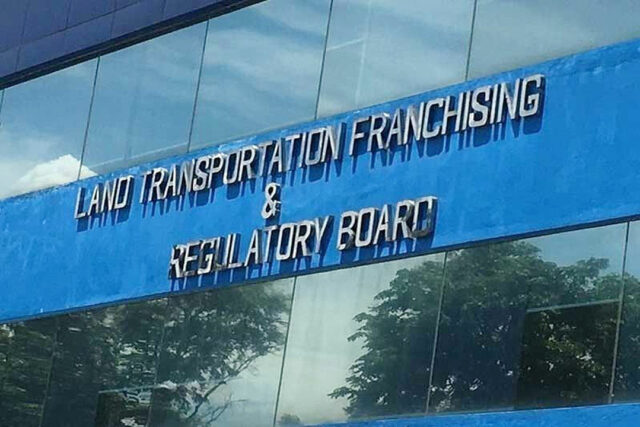

LTFRB told to focus on ease of doing business, aiding drivers

PHILSTAR FILE PHOTO

PRESIDENT Ferdinand R. Marcos, Jr. has ordered the Land Transportation Franchising and Regulatory Board (LTFRB) to streamline permit processing and to ensure the prompt delivery of aid to transport workers, the agency’s new chairperson said.

Tatlo lamang ang utos sa atin ng ating Pangulo para sa ating ahensya: padaliin ang proseso dito sa LTFRB, siguraduhin ang agarang pagbibigay sa ating mga driver ng anumang tulong ibibigay sa kanila at isaalang-alang palagi ang kapakanan ng ating mananakay (We have been given three directives: to streamline processes, to ensure aid is delivered to drivers, and to look after commuter welfare),” LTFRB Chairperson Cheloy Velicaria-Garafil said in a statement.

Republic Act No. 11032, or the Ease of Doing Business and Efficient Government Service Delivery Act of 2018, requires government agencies to simplify procedures to reduce red tape and expedite all transactions.

Ms. Garafil, a lawyer and a former journalist, said the LTFRB “will listen, study, and work with everyone here and also our stakeholders on how we can better improve our services.”

“We will strive to find that balance and that win-win solution. Maraming trabaho ang gagawin natin (much work needs to be done) and the days will be long but I promise you I will make it easy and exciting for everyone,” she added.

Transportation Secretary Jaime J. Bautista told reporters in a televised chance interview that his department will prioritize road transport.

“’Yung transportasyon, napakalaking agency. But sa nakikita namin ngayon, ang bibigyan natin ng prayoridad ay ang road transport (Transportation is a big agency, but right now we are inclined to prioritize road transport),” he said.

Nakikita ko na ang malaking problema ay nandito sa road transport (It’s the segment of transportation that has big problems),” he added.

He said he will be reviewing the programs of the LTFRB to be in line with this goal.

“It’s about time that we act as fast as possible so that we can address the problems and issues of road transport,” he added.

He also noted that the Department of Transportation under the Marcos administration aims to transform the transport industry and make it conform to global standards.

“We must focus on innovative ways of moving passengers and goods. Our mantra shall be accessible, affordable, comfortable and safe transport service throughout the country.”

“With critical transport issues mounting every day, we will be under close scrutiny (as to whether) we can provide immediate solutions. And LTFRB, among others, is at the frontlines of providing solutions.”

The LTFRB is currently fielding petitions from public utility vehicle operators and drivers for fare hikes due to the fuel crisis and the implementation of the jeepney modernization program. — Arjay L. Balinbin

DoT’s Frasco signals major push to highlight neglected destinations

PHILSTAR FILE PHOTO

TOURISM Secretary Ma. Esperanza Christina G. Frasco said her department will reach out to every corner of the country to ensure the promotion of destinations and attractions that have not received their due attention thus far.

The Department of Tourism (DoT) “(will) reach out to all of the regional offices, to all of our partners in the local government units in the 81 provinces, over 140 cities, and over 1,400 municipalities across the Philippines, (and) to extend to them the hand of collaboration from the DoT and to send across the message that we are here to help, we are here to help the industry arrive and recover,” Ms. Frasco said during a DoT flag ceremony on Monday at Makati City. 

“We foresee a DoT that is not only focused on the crafting of national policy, but more importantly, to be in touch with the realities on the ground, (and) to give attention to sites, peoples, products that have not been necessarily given equal opportunity to be developed,” she added.

“This week, I will be starting my listening tour as the Secretary of the DoT to see for myself, and to hear the challenges faced by our regional offices and tourism stakeholders across Luzon, the Visayas, and Mindanao. The objective being to be (made aware of) the prevailing issues that need to be addressed and craft solutions that will ensure the full rehabilitation and recovery of the tourism industry,” Ms. Frasco said.

Ms. Frasco was recently re-elected as mayor of Liloan, Cebu. She is the daughter of Cebu Governor Gwendolyn F. Garcia.

According to a recent report issued by the DoT and the Philippine Statistics Authority, employment in the tourism industry rose 4.6% to about 4.9 million people in 2021, accounting for 11.1% of overall employment.

The report also found that trips by domestic tourists rose 38.16% to 37.28 million, while foreign tourist arrivals dropped by 88.95% to 163,879. — Revin Mikhael D. Ochave

Senate bill sets $80 Dubai crude as trigger to freeze fuel excise tax

PHILIPPINE STAR/KRIZ JOHN ROSALES

A BILL calling for the automatic suspension of value-added tax (VAT) and excise taxes on fuel products has been refiled in the Senate, setting as a trigger event the Dubai crude oil benchmark exceeding $80 per barrel.

The trigger for Dubai prices will be the Singapore Mean of Platts reference, which sets the benchmark for Asian fuel prices.

The bill, a reconciled version of Senate Bill (SB) 2320 and 2445 which were filed in the 18th Congress but remained pending in the Senate committee after that Congress ended, is among the 10 priority bills Senator Aquilino L. Pimentel III filed on Monday.

The senator did not include a provision in SB 2320 that allows the President, through an executive order (EO), to lower the rate or suspend the VAT tax on oil products during national emergencies or states of calamity for one year.

Senator Maria Imelda Josefa Remedios R. Marcos filed a separate bill allowing the suspension by EO, also on Monday.

The main targets for amendment contemplated in the bills are Sections 106, 107 and 148 of the National Internal Revenue Code of 1997.

A suspension of the excise tax on fuel products is unlikely under the new government, which was sworn in last week, Finance Secretary Benjamin E. Diokno has said.

He added that reversing such a suspension would be “very difficult.”

President Ferdinand R. Marcos, Jr. has said that he will seek other options to address spiraling fuel costs, noting that a suspension of excise taxes will lower government drastically.

The Finance department has said that a suspension may result in as much as P131.4 billion in foregone revenue in 2022, the loss of which will potentially hinder the economic recovery.

Mr. Pimentel also proposed a measure abolishing the travel tax on Filipinos and nationals of the Association of Southeast Asian Nations (ASEAN) traveling to other ASEAN countries.

Meanwhile, Ms. Marcos listed among her priority bills measures calling for the emancipation of tenants, a New Omnibus Election Code, and a Young Farmers Challenge Act, the Pandemic Protection Act.

She also proposed a bill exempting migrant workers from paying PhilHealth premiums.

Senator Lorna Regina B. Legarda’s priorities included a measure supplying public school students at all levels with tablet computers.

Senate Bill 1 is known as the proposed One Tablet, One Student Act. A version was filed in the 18th Congress but had not got past committee level when that Congress ended.

She also proposed a Magna Carta for Public School Teachers, a Magna Carta for Private School Teachers, and a measure raising the salaries of public school teachers and personnel.

Senator Jose P. Estrada, Jr. listed among his priorities a measure amending the Labor Code to appoint the Secretary of Trade as vice-chairman of the National Wages and Productivity Commission. The amendment is intended to guide the commission on business and investment conditions before any wage action is undertaken.

He also refiled a bill transitioning informal workers into the formal economy and proposed a measure condoning penalties on household employers failing to pay social security benefits.

Senator Juan Edgardo M. Angara filed the proposed Exports and Investments Development Act, which seeks to develop higher-value and diversified export products.

Senator Emmanuel Joel J. Villanueva said his focus was on “job opportunities and job security” with a view towards reducing poverty, he said in a statement.

He proposed to institutionalize the National Employment Recovery Strategy as the blueprint for job creation, and the Security of Tenure Act for workers in the private sector. The latter was also filed by Senator Ana Theresia N. Hontiveros-Baraquel.

Ms. Hontiveros also filed the proposed Philippine Rise Marine Resource Reservation Act which declares a portion of the Philippine Rise (international name: Benham Rise) as a protected area, prohibiting the destruction of wildlife therein, and lays down a conservation and management regime.

Senator Manuel M. Lapid proposed measures calling for a monthly social pension for indigent persons with disabilities, the waiving of fees for professional examinations, and a requirement for tourism professionals to take a qualifying examination. — Alyssa Nicole O. Tan

Mines bureau, planetGOLD plan mercury-free processing center

WWW.PLANETGOLD.ORG

THE Mines and Geosciences Bureau (MGB) and planetGOLD Philippines said they are collaborating to establish a Mercury Free Processing System (MFPS) in Paracale, Camarines Norte, targeted for use by small-scale miners.

Intended users are small-scale miners (SSMs) prospecting for gold in a 26.5-hectare Minahang Bayan site in Sitio Maning in the Paracale barangay of Casalugan.

“This is in response to the various requirements for the construction and installation of the MFPS facility such as the building permit, and one of the requirements for the building permit is the conduct of community consultation,” the MGB said in a statement.

MGB and planetGOLD, which focuses on artisanal miners, said they organized a presentation to members of the community on the harmful effects of mercury used in processing ore, and on the details of the proposed facility, including safety protocols on the use of chemicals and tailings management.

“This facility is an alternative to the traditional amalgamation process employed by the artisanal and small-scale gold mining (ASGM) sector in the province. Through this facility, planetGOLD Philippines hopes to reduce the devastating effects of traditional ASGM practices which destroy the environment and introduce adverse health impacts,” it added.

“In Paracale, mercury has been used for decades as an inexpensive and easy way to collect gold despite its harmful effects, not only to the miners but also to their communities, and environment,” the MGB said. — Luisa Maria Jacinta C. Jocson

Marcos lists increased rice, corn output as DA priority

REUTERS

PRESIDENT Ferdinand R. Marcos, Jr. said he took on the Department of Agriculture (DA) post to prepare the agency for an impending food crisis, and signaled his intent to raise domestic output of rice and corn.

“We have to attend to the impending food crisis that, it seems, will be visiting us in the next two quarters,” he said in a closed-door meeting with DA officials in a video released by state media.

“We are already in a disadvantageous position in terms of supply,” he added. “We should really pay close attention to what we can do.”

Mr. Marcos said his priority is to boost domestic production of rice and corn “at least” and address issues holding back the livestock sector.

“We have to think hard about making sure that people have sufficient food and they can afford the price.”

He called for a “multilayered plan” to improve the agriculture value chain, which came under strain during the pandemic, resulting in surpluses not being effectively transferred to areas experiencing shortages.

In extreme cases, farmers who were unable to bring their harvest to market resorted to dumping their crops by the side of the road.

“We really have to reconstruct our value chain starting from our scientists and our researchers,” he said. “We have to remake that model.”

“We have a good model that was from a previous administration but it is a very different world out there,” he added. “Although the concept will be very similar, we have to come up (with a new one) — from 2022 to 2028 to 2030.”

Mr. Marcos also asked his DA team to assess the Rice Tariffication Law and submit a cost-benefit analysis of the Regional Comprehensive Economic Partnership (RCEP).

The Senate in the previous Congress failed to ratify RCEP, a trade agreement involving Australia, China, Japan, South Korea, New Zealand, and the 10 members of ASEAN.

Mr. Marcos has said he would ensure that the trade deal would not be detrimental to domestic industries.

Aside from the Philippines, only two other countries have not yet ratified RCEP — Indonesia and Myanmar. — Kyle Aristophere T. Atienza

DTI’s Pascual calls on subordinates to improve internal information-sharing 

THE Department of Trade and Industry (DTI) needs to develop more agile methods of performing its work, with bureaus called on not to confine themselves to “silos” in their own areas of specialization, Trade Secretary Alfredo E. Pascual said.

Addressing the department at a flag ceremony on Monday on the new government’s first full week in office, Mr. Pascual said the DTI’s component parts need to work better together.

“We need to share information. We need to dismantle silos and break down walls that divide offices in our department and its attached agencies and government-owned and -controlled corporations. That is the best way I believe we can harness the capabilities of our officials and staff in DTI to address problems that come our way,” Mr. Pascual said.

“Going forward… I want us to have the agility and the readiness to organize teams, task forces, and small working groups as we respond to the country’s changing needs and priorities,” he added.

“Many challenges lie ahead as we all know with the ongoing pandemic which continues to threaten the lives and livelihoods of many of our fellow Filipinos; the war in Ukraine that has resulted in the soaring prices of fuel and gasoline, increasing the cost of basic goods and necessities; and rising inflation, which causes further distress to our fellow consumers and struggling businesses,” he said.

Mr. Pascual promised to help businesses to become profitable in a sustainable way.

“We will continue to help businesses do well, so they can make profits and become sustainable. We will encourage businesses to do good as well, so they can share the prosperity with our countrymen as all stakeholders,” Mr. Pascual said.

Mr. Pascual succeeded Ramon M. Lopez. He is a former president of the University of the Philippines and the Management Association of the Philippines. — Revin Mikhael D. Ochave 

Plastics importers call for review of safeguard measures ruling on polyethylene product 

HTTPS://JGSPETROCHEM.COM/

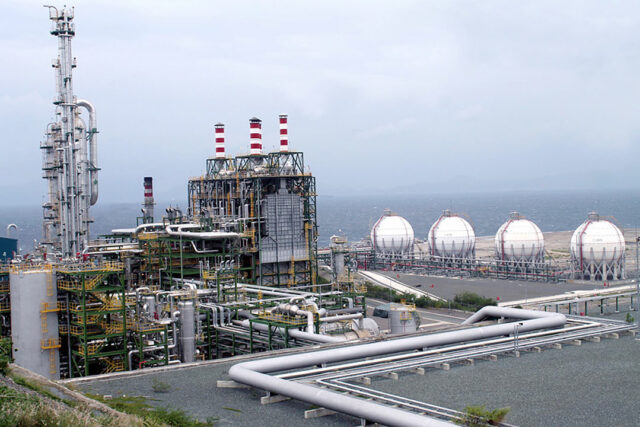
IMPORTERS of plastics raw materials called on the Tariff Commission (TC) to review its recommendation to impose safeguard duties on high-density polyethylene (HDPE) imports, saying the decision unduly benefits a domestic producer.

The Philippine Plastics Industry Association, Inc. (PPIA), in a statement on  Monday, “implored” the commission to “reconsider its position” and asked the Department of Trade and Industry (DTI) “not impose safeguard duties on HDPE resin.”

“To extend protection to benefit a sole producer, at the expense of the downstream manufacturing industry dominated by micro, small, and medium enterprises (MSMEs) and employing hundreds and thousands of Filipinos, increase the cost of packaging materials and plastic products and add to the increasing inflation… will also result in tariff distortion (in which) cheaper imported finished products will continue to proliferate,” it added.

The commission said in a final report dated June 27 that it recommends the imposition of an ad valorem safeguard duty of 2% on imported HDPE pellets and granules for three years.

HDPE resin is used in consumer and industrial packaging.

According to the report, the commission found the “existence of a causal link between the imminent threat of serious injury to the local HDPE industry in the near future and increased imports of HDPE.”

The TC’s investigation on the safeguard measures for HDPE imports began last year following a petition from the petrochemical industry, represented by JG Summit Olefins Corp. The company is the sole domestic producer of HDPE.

“To grant safeguard for a period of three years to benefit a single entity for the imminent occurrence of serious injury despite clear evidence of (the company) posting a healthy net income during the investigation period and embarking on expansion programs is not fair to the downstream industry, (which is) expected to suffer from any decision favoring the request,” the PPIA said.

The commission’s recommendation on HDPE has been forwarded to the DTI.

The implementing rules and regulations of Republic Act 8800 or the Safeguard Measures Act gives the Trade Secretary within 15 calendar days from receipt of the report to rule on the recommendation.

BusinessWorld asked the commission to comment on the PPIA statement but it had not replied at the deadline. — Revin Mikhael D. Ochave 

Bids solicited for P1.80-billion PNR track relocation project

PHILSTAR

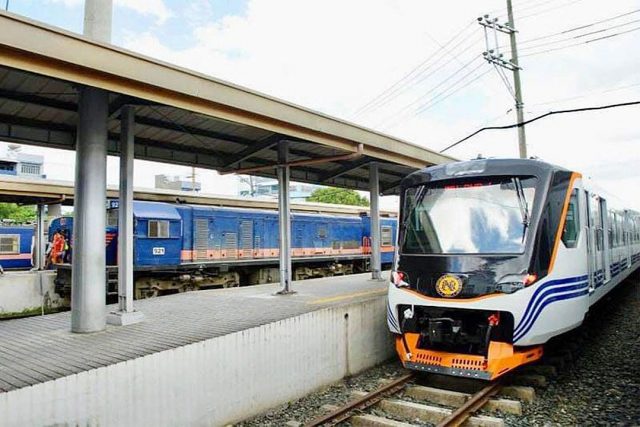
THE GOVERNMENT has started seeking bidders for a P1.80-billion design-and-build contract to relocate track on the Solis-Sucat segment of the North South Commuter Railway Extension (NSCR-EX) project.

The contract will involve works along the segment including pocket tracks, stations, box culverts, and other civil works.

“Bids must be received by the Bids and Awards Committee on or before Aug. 18 this year,” Philippine National Railways (PNR) Bids and Awards Committee Chair Celeste D. Lauta said in the bid invitation posted on the PNR website.

The procuring entity will award a single contract for the engineering design and construction to a single company, partnership, corporation, joint venture or consortium.

According to the PNR, the proposed NSCR-EX project addresses the deteriorating public transport system and the rapid urbanization of Metro Manila and neighboring provinces, ultimately providing more convenient connectivity for commuters in and out of Metro Manila.

The double-track segment runs between Solis Station in the city of Manila to Calamba, Laguna.

“The project will be approximately 56.5 kilometers using the existing right of way of the PNR and will run on mostly elevated railway viaduct structures that will implement standard gauge track,” it added.

The existing PNR line will be relocated to a single track to give way and implement the new NSCR-EX project.

“Before the actual NSCR EX project works commence… most of the existing PNR tracks servicing south of Solis Station must be shifted/relocated, and an operations strategy shall be developed during construction,” it said. — Arjay L. Balinbin

DPWH announces completion of Eastern Samar seawall; bridge to follow

DPWH

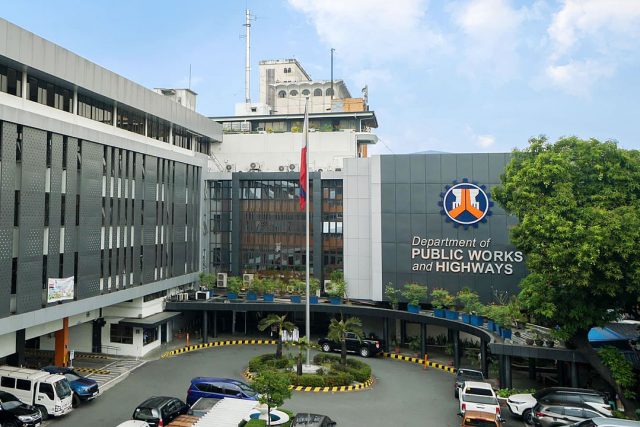
THE Department of Public Works and Highways (DPWH) said on Monday that it completed a seawall project in Eastern Samar to protect residents hit by Typhoon Yolanda (international name: Haiyan), with the first phase of the Pagnamitan Bridge project also due to be implemented this year.

The bridge is expected “to provide better accessibility along the Guiuan-Sulangan Peninsula Road and widen the waterways to reduce flooding in the area,” the department said in a statement.

The DPWH said the seawall protects residents of Barangay Pagnamitan in Guiuan from storm surges and flash floods.

“The construction of a seawall is deemed a priority to ensure that residents in the area no longer experience the destruction caused by Typhoon Yolanda in 2013,” it said.

“With a total cost of P29.64 million, the project involved the construction of a 252-meter seawall that safeguards around 237 families, government buildings, and nature reserves or protected areas,” it added.

Separately, the DPWH said it completed the final phase of construction on the Ibajay Bypass Road Widening Project, which is aimed at improving connectivity between Kalibo and neighboring towns in Aklan.

“The project involved widening of the 1.69-kilometer section of Ibajay Bypass Road as well as the installation of 165 units of LED solar streetlights,” it said.

“With the newly-widened section, the 5.49-kilometer road now better decongests the stream of vehicles along the national highway to ensure smooth commuter traffic as it serves as an alternate route going to and from the town of Kalibo,” the DPWH added.

The DPWH said the road widening cost P38.3 million and was funded by the 2021 General Appropriations Act. — Arjay L. Balinbin

MAP urges Marcos to actively adopt PPP mode for infrastructure projects

PHILIPPINE STAR/ MICHAEL VARCAS

THE Management Association of the Philippines (MAP) said on Monday that the new administration must focus on public-private partnerships (PPPs) in its infrastructure program.

President Ferdinand R. Marcos, Jr.’s infrastructure program will be challenged by much tighter fiscal constraints, which should prompt the government to resume the active pursuit of PPPs, the association said in its wish list for the new government.

The government must “rectify overly stringent” Material Adverse Government Action (MAGA) provisions that discourage PPP investment due to high regulatory and political risks, as well as honor the sanctity of contracts through good-faith adherence to PPP contract terms and decisions of international arbitration tribunals, it said.

It called for the expansion and extension of current PPPs to ensure sustainability of services and encourage current PPP partners to further invest in technical infrastructure for the long term, it added.

MAP also asked the government to draft industry roadmaps for key sectors “with the greatest strategic importance and/or potential for massive job generation.”

In the wish list, MAP also urged the government to improve its tax collection.

Mr. Marcos must “institute measures to improve tax collection efficiency, curb tax evasion, and eliminate unwarranted tax exemptions,” it said.

Improved tax administration is one of the fiscal and financial policies that MAP recommended to the Marcos administration. It also called for a “review (of) the tax regime for micro and small enterprises to help their viability and thereby expand the tax base.”

“Fiscal and financial policies must be supportive of business enterprises, especially MSMEs, to promote wider job generation,” MAP said.

MAP said the new government must move to tax profitable digital transactions that are “still outside the tax net.”

It urged the Marcos administration to properly implement the intent and letter of Executive Order No. 2, s. 2016, which operationalizes the Constitutional provisions on the right to information and restore and strengthen faith in institutions “through increased transparency in government and just and consistent prosecution of erring public servants.”

MAP also recommended reforms for the agriculture sector, encouraging the government to foster scale economies through the consolidation of management of smallholder farms, declare the completion of agrarian reform, and lift land ownership ceilings on farm land.

It must also improve food value chains through upgraded transport and logistics, increase community-level value-adding, and enable local government market matching, while addressing food waste, it added. — Kyle Aristophere T. Atienza

On tax compliance and digitalization

With the change of government, we should certainly expect changes; for taxpayers, new tax policies, programs, and rules are also anticipated.  Some taxpayers are excited, others skeptical, a few may be worried. But whatever emotions we have right now, we will not go wrong if we know how to comply with the rules and fulfil our obligations.

“Give to Caesar what is Caesar’s, and to God what is God’s.” This was what Jesus told the Pharisees after being asked whether it is lawful to pay taxes to Caesar or not. Scholars have written that this episode from the Bible commands people to respect authority and to pay the correct taxes the government demands of them.

As the government will not be able to function without the taxes paid to it, it is incumbent upon taxpayers to pay the correct taxes. The funds are needed for infrastructure, education, and relief from crises, among others.

We might have heard the argument, “Why would we pay the correct taxes if others are not doing so?” Or perhaps, “If we pay taxes, the money will just be wasted or be put into the pockets of unscrupulous individuals.”  While there may be truth to these statements, being affected by such negative thoughts does not help in any way, as we ourselves have our own obligations.  Paying the correct taxes is a duty that is legal, moral, and perhaps, even spiritual.

It has also been said that the Philippines has numerous and more complex tax laws than those of other countries. Sometimes, we even hear foreigners weigh in on how our tax laws are too stringent, difficult, and complicated. Unfortunately, there is no substitute but to really gain ample knowledge about Philippine tax laws.

Clearly, our compliance with tax rules must be sustained, particularly now. We are living in a tech savvy era. This was further heightened by the impact of the COVID-19 pandemic that restricted movement, and which has consequently led the people to resort to technology to connect with one another and to do most of their work.

The BIR is likewise continuing to go digital to cope with the changing times. At the beginning of this year, the BIR’s Priority Programs and Projects included a Digital Economy Policy, which seeks to gear tax rules and regulations to better capture the digital economy. Included also in the priorities were the reconfiguration of the filing system/facility, and the enhancement of taxpayer services through a Taxpayer Registration Database Management System, among others.

Just last week, the BIR issued Revenue Regulations (RR) No. 08-2022, prescribing policies and guidelines on the use of the electronic invoicing/receipting system (EIS). This regulation required the following to use EIS: (a) taxpayers engaged in the export of goods and services; (b) taxpayers engaged in electronic commerce (e-commerce); (c) and taxpayers under the Large Taxpayers Service.

RR No. 08-2022 directs certain taxpayers to comply with: (a) issuance of e-Receipts/e-Invoices to their customers/buyers, in lieu of manual receipts/invoices; (b) registration of their Computerized Accounting System (CAS) generating e-receipts/e-invoices and/or Cash Register Machines (CRM)/Point-of-Sales Systems and Certification of Sales Data Transmission System; and (c) transmission of the sales data covered by the e-receipts/e-invoices using their Sales Data Transmission System into the EIS of the BIR.

Moving forward, some are anticipating that additional guidelines related to CAS may also be forthcoming. Others believe, that perhaps, the e-mail platform will be the more frequent mode of communication and submission of applications with the BIR (e.g., filing of applications for BIR ruling, filing of replies/protest letters in tax assessments, or filing of tax refund applications). Moreover, the guidelines and extent of the use of electronic signatures might also be further expanded. These anticipated changes are mere surmises, and we will have to watch out for the issuances by the current BIR administration.

While we are in the present digital era and given the ever-evolving landscape of Philippine taxation, taxpayers must be able to adapt to change. We have to keep abreast of the tax developments, read and understand the issuances of the BIR and the decisions rendered by the courts on tax cases that are released from time to time, and attend tax training seminars for updates; particularly now that more changes are anticipated as tax administration is passed on to a new set of leaders.

Let’s Talk Tax is a weekly newspaper column of P&A Grant Thornton that aims to keep the public informed of various developments in taxation. This article is not intended to be a substitute for competent professional advice.


Olivier D. Aznar is the head and partner of the Tax Advisory & Compliance division of P&A Grant Thornton, the Philippine member firm of Grant Thornton International Ltd.

pagrantthornton@ph.gt.com.

ADVERTISEMENT
ADVERTISEMENT