Home Blog Page 6188

Diokno wants local gov’t units to tap Mandanas funds for agriculture
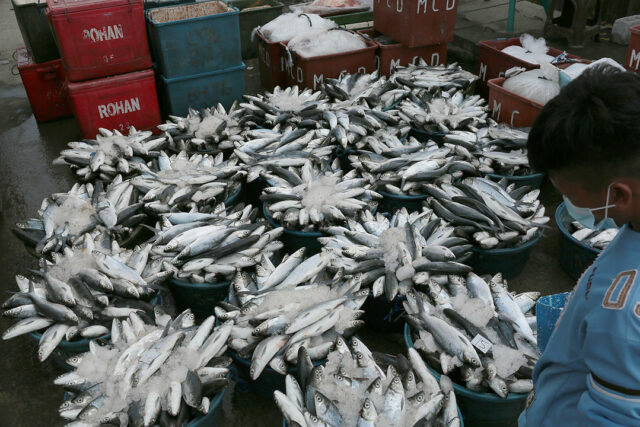
PHILIPPINE STAR/ MICHAEL VARCAS

THE NATIONAL Government is hoping local government units (LGUs) will channel their expanded budgets into raising agricultural output, Finance Secretary Benjamin E. Diokno said.

Mr. Diokno said in an interview with ANC on Wednesday that LGUs “incidentally have a lot more money now because of the Mandanas ruling,” referring to a Supreme Court (SC) decision that ordered the National Government to make bigger transfers to local governments.

In effect, “there will be a friendly competition among LGUs to boost agricultural products,” Mr. Diokno added.

The Supreme Court’s Mandanas-Garcia ruling granted LGUs a larger share of the national taxes after the SC liberally interpreted the Local Government Code in the LGUs’ favor. The Code requires that any doubt in interpretation must be resolved in favor of more decentralization.

The National Government’s old interpretation of the Code was that LGUs were entitled to 40% of the National Government’s “internal revenue,” which is reflected in the old name of the fund transfers from the National Government to LGUs, the “Internal Revenue Allotment (IRA).”

The Supreme Court ruled that LGUs are entitled to a share of all national taxes, including customs duties, and not just the collections generated by the Bureau of Internal Revenue (BIR). As a result, the IRA is now known as the National Tax Allotment (NTA).

Mr. Diokno added that the policy of importing food to address domestic shortages would continue even after the president said the government would exert greater effort in boosting rice and corn production.

“We will continue to import if demand exceeds supply… for our food requirements and that’s to keep the prices reasonable and affordable for ordinary people.”

“Simultaneously, we plan to increase production, to increase efficiency and planting more — that’s why (President Ferdinand R. Marcos, Jr.) accepted the Agriculture post; he wants to focus on production and he will do that through more sustained productive activity and increasing productivity in the sector.”

Inflation accelerated to 6.1% year on year in June, exceeding the Bangko Sentral ng Pilipinas’ (BSP) 2-4% target for a third straight month. In May, inflation was 5.4%. The year-earlier level was 3.7%.

Food accounts for about 39% of the CPI basket, giving food prices an outsized impact on the movement of the indicator. Food tends to command a bigger share of household budgets in poor countries.

Mr. Diokno described Philippine agriculture as a laggard.

“Industry has been growing, services have been growing but the agriculture sector has been in and out of recession,” he said.

Even if “there’s a budget for the Department of Agriculture, that should not be equated to how much the economy will need to increase agricultural production,” he said.

“As you know, the government is not doing agriculture; it’s the private sector.”

Mr. Diokno also said Mr. Marcos would look into each of the individual subsectors in agriculture — crops, rice, corn, high-value crops and fish.

In June, Mr. Marcos appointed himself Agriculture secretary to address the severe problems facing the farm sector. — Diego Gabriel C. Robles

Businesses concerned over rising electricity rates

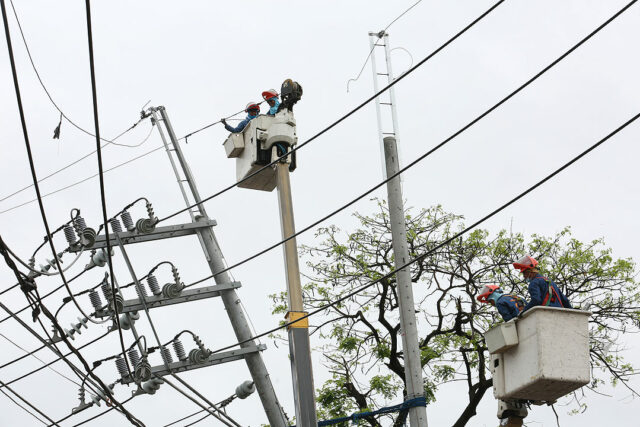
WORKERS fix an electric line in Payatas, Quezon City, March 13. — PHILIPPINE STAR/ MICHAEL VARCAS

THE MARCOS administration should immediately address power supply shortages and high electricity rates, which are affecting businesses in the country, the Philippine Chamber of Commerce and Industry (PCCI) said.

In a statement, PCCI President George T. Barcelon said businesses are concerned over the continued increase in electricity rates and the power supply shortages especially during the summer months.

“But a more pressing concern is our power rate. Industries such as steel, cement and glass have expressed their apprehension to us over how much electricity rates are forecast to increase as supply for reliable baseload like coal, oil and liquefied natural gas (LNG) are becoming scarce commodity,” he said.

Global oil prices soared this year due to the Russia-Ukraine war and tight global supply. LNG prices have also recently jumped.

Mr. Barcelon noted that electricity rates in the Philippines are already much higher than other Southeast Asian countries.

“Studies have shown that electricity rates for residential, commercial and the industrial sectors in the Philippines have been significantly higher from between 25% to as high as 87% than its Association of Southeast Asian Nations (ASEAN) neighbors, namely Malaysia (87.5%), Indonesia (87.5%), Vietnam (50%) and Thailand (36%),” the PCCI said.

Only Japan and Singapore have higher power rates than the Philippines.

Mr. Barcelon said soaring power rates have affected manufacturing industries, who say that fuel and power costs account for 60% of their operational expenses.

The government should ensure that there is “reasonably priced” and steady power supply to be able to attract foreign investments that will create more jobs, the PCCI said.

“For legislation such as CREATE (Corporate Recovery and Tax Incentives for Enterprises) and the amendments to the Public Service Act and Foreign Investment Act to succeed in their intended results to bring back a dynamic production/manufacturing sector, we must effectively solve that ‘high cost of electricity’ impediment soonest, and ensure that there is enough supply to support businesses and industries,” PCCI Chairman for Energy and Power Jose S. Alejandro said.

Mr. Marcos had included energy as one of his administration’s main priorities, along with agriculture, digital infrastructure, and the “Build, Build, Build” program.   

“This is a good platform to start taking actions to carve out recovery in new and better than light manufacturing industries for foreign and local investments,” PCCI Director for Energy and Power Franklin A. Carbon said.

The PCCI also urged the Marcos administration to consider renewable energy sources that have “higher proven and acknowledged availability, known technology, no subsidy requirement from either government or consumer to meet reasonable cost to consumers, and can deliver quality, reliable supply to industries.” 

The business group also recommended the conservation, rehabilitation, and upgrade of hydropower, geothermal power, and LNG, and to accelerate the approval for new plants that can power industries at affordable costs.   

“Addressing the country’s power woes is a big challenge that needs a concrete agenda, commitment and the concerted effort and support of all stakeholders,” the PCCI said.

Mr. Marcos has yet to announce his pick for Energy secretary. — RMDO

Meralco ‘will comply’ with ERC’s refund order

PHILSTAR FILE PHOTO

MANILA Electric Co. (Meralco) has confirmed receipt of an order from the Energy Regulatory Commission (ERC) directing the country’s largest power distribution utility to refund distribution-related charges amounting to P21.8 billion or 87 centavos per kilowatt-hour (kWh) for residential customers.

“We will comply with the ERC’s directive. We are currently studying the order so we can start reflecting this in the power bills this month,” said Joe R. Zaldarriaga, Meralco vice-president and head of corporate communications.

“While we have yet to receive suppliers’ billings, there is a possibility that the refund can offset the expected increase in generation charge and lead to a reduction in the overall power rates for July,” he added.

His comments come after the ERC came out with an order on Wednesday calling for the refund. The regulator placed an average refund rate of 48 centavos per kWh.

Meralco used the residential rate for the amount it plans to refund, while the ERC used the average refund rate.

In its order, the regulator said the amount covers the period from July 2015 to June 2022, and that it will be implemented in the next billing cycle from Meralco’s receipt of the order.

“The Commission has carefully evaluated the case at hand of [Meralco] and considered the views and concerns of the various stakeholders. We are confident that our decision exercised fairness, and promoted the interests of the consuming public who bears the brunt of all these electricity charges,” ERC Chairperson and Chief Executive Officer Agnes VST Devanadera said.

The latest derivative, which was dated on June 16, will be the fourth since January 2021: the first at P13.9 billion was on Jan. 21, 2021; followed by P4.8 billion on Feb. 23, 2022; and P7.7 billion on March 8, 2022.

The ERC further directed Meralco to execute the refund in approximately 12 months or until the amount is fully refunded to its customers.

It also directed the company to include the refund rate as a separate line item in the bills of Meralco’s customers during the refund period.

Adding the latest amount of P21.8 billion, residential consumers now have a P1.80 per kWh of refund.

Meralco is the Philippines’ largest electric power distribution company, with a franchise area covering 9,685 square kilometers.

It provides power to almost 7.3 million customer accounts in 36 cities and 75 municipalities, which include Metro Manila, all of the provinces of Rizal, Cavite, and Bulacan, and parts of the provinces of Pampanga, Batangas, Laguna, and Quezon.

In its first-quarter financial report, Meralco recorded an increase in net profit of 29.9% to P5.66 billion from P4.36 billion in the same period last year.

At the stock exchange, Meralco shares ended lower by P1.00 or 0.28% to P358 apiece on Wednesday.

Meralco’s controlling stakeholder, Beacon Electric Asset Holdings, Inc., is partly owned by PLDT, Inc. Hastings Holdings, Inc., a unit of PLDT Beneficial Trust Fund subsidiary MediaQuest Holdings, Inc., has interest in BusinessWorld through the Philippine Star Group, which it controls.— Justine Irish DP. Tabile

ACEN plans P30-B bonds, readies 458-MW solar farms

AC ENERGY Corp. (ACEN) is planning a P30-billion debt securities program to be shelf-registered with the corporate regulator, with a P10-billion first tranche allocated for three solar projects with a combined capacity of 458 megawatts (MW).

In a regulatory filing, the Ayala-led renewable energy (RE) company said that its executive committee in a meeting on Wednesday authorized the debt securities to be offered and issued in one or more tranches.

“All (three solar farms are for) completion next year,” Eric T. Francia, ACEN president and chief executive officer, separately told reporters partly in Filipino after the meeting.

ACEN identified the projects as the expansion of its 72-MW Arayat-Mexico, Pampanga solar farm by another 42 MW; the first phase 133-MW solar farm in Lal-lo, Cagayan; and the first phase 283-MW solar farm in San Marcelino, Zambales.

“Arayat is the only expansion, ‘yung dalawa bago (the other two are new),” Mr. Francia said.

In its filing, ACEN said the P10-billion initial tranche would be peso-denominated ASEAN green fixed-rate, five-year bonds that would be applied for listing with the Philippine Dealing & Exchange Corp.

The company’s executive committee authorized Mr. Francia, Chief Finance Officer Maria Corazon G. Dizon, and Deputy Chief Finance Officer Juan Martin L. Syquia to jointly determine and finalize the terms and conditions for the bonds and the debt securities program.

It also approved the total transaction costs related to the bond issuance of up to 1.4% of the issue size.

The Pampanga solar farm expansion comes after ACEN unit ACE Endevor, Inc. entered into a “framework agreement” in February 2020 for the joint development, ownership and operation of solar and other power plants in the Philippines.

Under the agreement, Citicore Renewable Energy Corp. and ACE Endevor are to be shareholders in a company — Natures Renewable Energy Development Corp. — incorporated to own and undertake the development of the solar farm in Arayat and Mexico.

In March this year, ACEN set up a joint venture with CleanTech Renewable Energy 4 Corp. to start building the 133-MW solar farm and transmission line in Lal-lo.

Late last year, it disclosed that it had agreed to subscribe to the shares of subsidiary Santa Cruz Solar Energy, Inc., which is developing the 283-MW solar farm in San Marcelino.

ACEN aims to become the largest listed renewables platform in Southeast Asia. It is also committed to achieving net-zero greenhouse gas emissions by 2050.

Earlier this year, ACEN said it had invested more than $200 million in what it calls “priority markets,” namely: Australia, Vietnam and Indonesia. It targets to add renewable capacity in the United States to its portfolio ahead of its goal of installing 5,000 MW of renewables by 2025.

Thus far, the company has an attributable capacity of 3,800 MW in the Philippines, Vietnam, Indonesia, India, and Australia. Of this figure, renewables account for 87%, which it claims to be the highest in the region.

Mr. Francia said the company is set to disclose next month a new target installed capacity for completion by 2030. — VVS

PCC targets to finish six cartel cases by end-2022 

By Revin Mikhael D. Ochave, Reporter

THE Philippine Competition Commission (PCC) is aiming to finish by the end of 2022 the investigation of six cases related to cartels or abuse of dominant position.

According to the PCC, it is targeting within the year to rule on all competition cases submitted for decision, including the six cartel cases, apart from investigations that have been pending for at least two years.

“[We are targeting] for six statements of objections or show-cause orders or some form of remedy or conclusion to any investigation that is ongoing, whether two years old or more, or less than two years, to be concluded. Six cases [are] to be concluded before the end of the year,” PCC Officer-in-Charge (OIC) Chairperson Johannes Benjamin R. Bernabe told reporters during a virtual press conference on Wednesday.

Mr. Bernabe disclosed that the PCC has a two-year limit that is internally imposed when it comes to the investigation of cases. However, he said that there are exceptions to the limit due to difficulties experienced during the investigation such as challenges in finding evidence.

“[We want] to make sure that whatever cases that are still pending before the enforcement office, particularly those which have been ongoing for more than two years in terms of investigation will be concluded by our enforcement office either by termination or archiving, by filing statements of objections when warranted, or pursuing some form of non-adversarial remedies to put a stop to any anti-competitive practice,” Mr. Bernabe said.

Mr. Bernabe became the PCC’s top official after former PCC chairperson Arsenio M. Balisacan was tapped by President Ferdinand R. Marcos, Jr. as the new Socioeconomic Planning secretary.

As a result, Mr. Bernabe will serve the remaining term of Mr. Balisacan in the PCC, which is until the first week of January next year.

According to Mr. Bernabe, the PCC’s enforcement office has four cases currently under investigation.

“Right now, there are four statements of objections arising from investigation by our enforcement office before the commission for our final ruling. These involve various sectors ranging from tourism, medical services, trade associations, and property development arrangements with internet service providers (ISPs),” he said.

“We would like to see that all these cases being investigated by the enforcement office are concluded one way or another,” he added.

Aside from the conclusion of cases, the PCC is also eyeing to initiate two motu proprio un-notified or anti-competitive merger cases, codify all PCC rules and procedures, and roll out the national competition policy in the public sector.

Meanwhile, Mr. Bernabe said that there will be a revision in the thresholds for the compulsory notification of mergers and acquisition (M&A) deals to go under the PCC’s review.

Currently, there is an increased threshold of less than P50 billion as provided under Republic Act No. 11494 or the Bayanihan to Recover as One Act (Bayanihan II). The law is set to expire in September this year.

Once the law expires, firms whose parent company assets exceed P6 billion and whose M&A transactions exceed P2.4 billion will once again be required to notify the PCC.

“Given the adjustment in the inflation rates and the adjustment of other economic indicators, you may see that these thresholds that we applied prior to Bayanihan II will be revised as well,” Mr. Bernabe said.

However, Mr. Bernabe said that the PCC has yet to determine the final adjusted thresholds, adding that the commission will “come up with the appropriate computation closer to September.”

“We normally make these adjustments in March of the calendar year. In March of this year, we didn’t really make an estimation because we thought that it would be more appropriate to compute that threshold come September,” Mr. Bernabe said.

“We will have to reckon in a couple of months what these new thresholds will be. There are adjustments on the nominal gross domestic product (GDP) growth from the previous year. As you know, because of various geopolitical factors, because of the pandemic, this has fluctuated with some degree of unpredictability,” he added.

SEC flags Wellcons anew on investment scheme

THE Securities and Exchange Commission (SEC) has ordered Wellcons Unlimited Systems, Inc. once again to stop offering investment packages to the public without the necessary license from the commission.

The SEC’s order dated July 5 comes after the commission on June 23 directed Wellcons to immediately cease engaging in the unlawful solicitation, offer, and sale of securities until it has filed the required registration statement and secured the necessary approval from the commission.

Wellcons and all the people and subsidiaries involved under the name have been ordered to stop their investment solicitation activities and immediately cease their internet presence related to the unauthorized investment scheme.

They have also been prohibited from transacting any business involving funds in Wellcons’ depository banks, and from transferring, disposing, or conveying any related assets to ensure the preservation of the assets of the investors.

The cease-and-desist order was issued after the SEC’s Enforcement and Investor Protection Department found that Wellcons has been offering investment packages worth P2,500 to P13,890 with guaranteed returns of up to P9,000 to P32,000 per day.

Members who availed of investment packages can further earn through Wellcon’s Pangkabuhayan Program, where they can supposedly double their money within six months based on investment packages worth P1,500 to P5,000.

Aside from these investment packages, Wellcons also promised leadership bonuses and referral fees to its members.

“[I]t is clear that Wellcons’ business model which promises high return of investments is not sustainable, and can only be carried out as long as new investors continue to come in,” the commission en banc said.

The scheme involves the sale and offer of securities to the public in the form of investment contracts, whereby a person invests money in a common enterprise and is led to expect profits primarily from the efforts of others.

SEC finds this scheme a violation of Section 8 of the Securities Regulation Code (SRC) because Wellcons has no license to carry out sales or offers of securities. Although the company is a duly registered corporation, it has never secured a secondary license from the commission to operate as a broker or dealer of securities, nor is it a registered issuer of any securities.

The SRC provides that securities should not be sold or offered for sale or distribution within the Philippines without a registration statement duly filed with and approved by the SEC.

“This is a fraudulent scheme which will likely cause grave or irreparable injury or prejudice to the investing public. Thus, we hold that the act of Wellcons in selling/offering unregistered securities operates as a fraud to the public which, if unrestrained, will likely cause grave or irreparable injury or prejudice to the investing public,” the commission added.

As early as Feb. 2, the SEC sent an advisory to Wellcons in order to warn the public against investing in the group and similar entities.

Wellcons registered with the commission on April 19, 2021 with a primary purpose of distribution of products through multi-level marketing, buying and selling, and marketing through online channels, as permitted by law, goods and merchandise that primary target the basic needs of individuals and households.

BusinessWorld tried to reach out to Wellcons via Facebook pages under its name and a phone number attached to one of the pages but has not received a reply as of press time. — Justine Irish DP. Tabile

PHL AirAsia: Kota Kinabalu looks to Filipino visitors for tourism recovery

NEWSROOM.AIRASIA.COM

PHILIPPINES AirAsia, Inc. said it is working with Malaysia’s Sabah Tourism Board (STB) to fly more Filipino tourists to Kota Kinabalu, the capital of Sabah.

This partnership is part of the low-cost airline’s efforts to “restart” its operations in Southeast Asia and the “eventual expansion” of its international route network, Philippines AirAsia said in an e-mailed statement on Wednesday.

The STB promotes Kota Kinabalu, which is home to cultural sites and white-sand beaches, as a “preferred tourist destination among Filipinos,” according to the airline.

Under this collaboration, (Philippines AirAsia) actively promotes eco-tourism adventures through flights and hotel partnerships, airline representatives said.

The airline resumed its flights to Kota Kinabalu in June.

The resumption “has reopened this important border not only for Filipino traders and travelers, but also for Malaysians here in Sabah who would like to visit their friends and relatives in Manila,” Philippines AirAsia Chief Executive Officer Ricardo P. Isla said.

“This also opens the opportunity for tourism for the two sides to prosper, as both destinations have an array of exciting offerings for first-time and seasoned travelers,” he added.

For his part, Datuk Jafry Ariffin, the minister of Tourism Culture and Environment, said:  “With… AirAsia, we can re-establish collaborations on new access into Sabah.”

“I am looking forward to more connections AirAsia may bring from the island nation of the Philippines,“ he added.

The budget carrier flies to Kota Kinabalu weekly every Tuesday and Saturday.

“Guests visiting Kota Kinabalu are required to download the MySejahtera app and fill out the pre-departure form and verify their digital COVID-19 (coronavirus disease 2019) vaccine certificate via the ‘Traveler’ icon,” the airline said. — Arjay L. Balinbin

Cebu Pacific says fares still lower vs pre-pandemic despite higher fuel surcharge

First A330neo delivery to Cebu Pacific

CEBU Pacific, operated by Cebu Air, Inc., said it is keeping its fares cheaper this year than they were in 2019, or before the pandemic, in an effort to sustain its recovery by increasing passenger volume and flight frequencies.

The Civil Aeronautics Board approved the budget carrier’s application for a higher fuel surcharge at Level 11 in July, up from Level 7 in June, according to airline representatives.

Cebu Pacific domestic fares were 26% cheaper in the second quarter of 2022 than they were in the same period in 2019, or prior to the pandemic, Candice A. Iyog, vice-president for marketing and customer experience, told reporters on Wednesday.

In comparison to the same month in 2019, she said, July domestic fares are down by 9%.

Asked how the airline manages to keep its fares lower despite the higher fuel surcharge, Cebu Pacific Chief Financial Officer Mark V. Cezar said they absorb some of the costs. “We have to subsidize.”

Under Level 11, the fuel surcharge per passenger ranges from P335 to P1,038 for domestic flights and from P1,172.07 to P8,714.84 for international flights.

“We remain committed to offering the lowest fares across our network, and we are encouraged by past seat sale success rates so we will continue to stimulate travel through our promo fares,” Cebu Pacific Chief Commercial Officer Xander Lao said.

The airline fully restored its pre-pandemic domestic capacity in April, its officials said. “The airline surpassed its December 2019 level for domestic capacity, as it (registered) 109% restoration in (the first week of) July 2022.”

Mr. Lao said this development has also boosted Cebu Pacific’s cargo service.

The budget carrier currently operates an average of 340 flights a day, covering 34 domestic and 18 international destinations. This is equivalent to around 64,000 seats offered in a day, the airline said.

The airline also announced on Wednesday a “special 7.7 sale” from July 7 to 11. One-way domestic flights are offered for as low as P188. Travel period is from Sept. 1, 2022, until Jan. 31, 2023.

Its international seat sale for the same travel period starts at P499 one-way. Destinations include South Korea, Singapore, Hong Kong, Taipei, Hanoi, Ho Chi Minh, and Bangkok. — Arjay L. Balinbin

Experientialist or foodiversalist: Which of the five food personas are you?

CHRISTOPHER JOLLY-UNSPLASH

FIVE food personas will inform how consumers will purchase food in 2024, according to a study by research agency WGSN and Sysu International, Inc., importer and distributor of premium food brands such as Clara Olé, Lee Kum Kee, and McCormick.

The mindful nurturist, the conscious curator, the collective guardian, the experientialist, and the foodiversalist “will have adjusted priorities that brands need to know now in anticipation of their evolved food and drink demands,” according to WGSN.

Mindful nurturists make up the biggest group and they cut across generational cohorts: Gen Z, Millennials, Gen X, and Baby Boomers. They value their physical being, prioritize wellness over work, and care a lot about their community.

“They want to consume food that would really add value to their health and holistic well-being. The products that would appeal to them are the ones that actually champion sustainability and taking care of the planet,” said Sandy Cu, Sysu International product and business development head, at the company’s Tastesetters Workshop 2022, a hybrid event held in Quezon City’s Novotel and streamed live on Facebook on June 29.

Mindful nurturists are interested in “everyday care,” healthier snacks, and alcohol-free drinks. “During the pandemic, the snacking consumption grew so much that we cannot not care about this segment,” she said. To corner this market, brands can launch diet-friendly and healthy products that have an Asian or modern twist.

Conscious curators value the environment and have “maximum control” of their lives. “Maybe they’re juggling a lot of roles in a day,” said Ms. Cu. “They really like to use technology to ease whatever they’re doing.” Mostly Millennials and Gen Z, these customers have conveniences like food subscriptions and appliances that ease food preparation and household management.

“[They] are more techie,” she said. “We have to be able to give them solutions that are very simple, streamlined,” she said. While meals should be easy to access (think ready-to-eat meals), they should also be environmentally friendly, particularly when it comes to packaging and waste management.

Collective guardians prioritize culture and culinary identity, putting power in the hands of the marginalized. They support local and prefer products that are curated by in-demand names and small businesses in the community, “where makers are stories that are actually meaningful.”

They support brands and dishes “outside of traditional power structures” and “unprecedented voices.” Composed of Millennials and Gen Z, they value inclusivity, said Ms. Cu.

Experientialists, meanwhile, are future-forward when it comes to innovation. “Food consumption … has to break a lot of barriers,” said Ms. Cu.

Millennials and Gen Z who belong to this category seek multi-sensorial experiences. “They would want to make sure that even their soul is satisfied when they eat,” she said. To attract this market, businesses should make technology part of innovative culinary experiences, explore digital experiences, and champion disruptor brands.

Finally, the foodiversalist is particular about food that is natural. They consume a lot of whole foods; mushrooms and other fungi are part of their dietary habits. “We have to think of ways on how we can reinvent these mushrooms, and make it more palatable to a lot of our Filipino consumers,” she said.

This persona is a little older, spanning Millennials, Gen Xers, and Baby Boomers. They are attracted to climate-friendly ingredients and invest in fermentation (since whole foods don’t usually have long shelf lives). They also value sustainability and carbon positivity (contributing positively to the environment). This segment needs moments that matter and wants food to bring people together.

“We here in the food service industry have to unite and redefine our food culture so that we can be globally ready,” said Ms. Cu. — Joseph L. Garcia

Digitalization benefits ESG-related communities, entities — report

THE acceleration of digitalization helps boost environment, social, and government (ESG) related communities and businesses in the Philippines amid the ongoing coronavirus pandemic, according to research firm ESG Intelligence.

According to the report, almost two-thirds of new digital consumers came from non-metro areas in the first half of 2021. Filipino consumers use twice as many digital services as before the pandemic.

The Philippines’ internet economy is also expected to double in value by 2025, the fastest projected growth in Southeast Asia.

“Protracted lockdowns and containment measures across the Philippines during the COVID-19 (coronavirus disease 2019) pandemic encouraged consumers to turn to digital tools for the fulfillment of daily tasks, as well as for work, education and social connection,” it stated.

ESG Intelligence reported that technology also helped micro, small and medium enterprises (MSMEs) maintain operations over the pandemic.

“In this way, increased digitalization can enable equitable development across the archipelago, and looks set to present a sizable growth opportunity over the coming years,” it added.

The report also said that digital finance can enhance process efficiency and widen financial inclusion. “Digital payments can offer greater security, efficiency and revenue opportunities for merchants,” it added.

With regards to consumers, digital payments are seen as a tool to raise financial inclusion, the report stated, citing a study by the Bangko Sentral ng Pilipinas. The central bank also aims for 50% of total retail transaction volume to be digital by 2023.

“Nevertheless, challenges remain. Among these, digital lending options from financial institutions can be limited, with high minimum requirements. Strengthened digital finance infrastructure, including credit risk evaluation as well as rules and regulations, could help overcome this and unlock the ESG-related benefits of digital finance for all stakeholders,” it added.

Apart from increasing the use of digital payments, the pandemic also triggered a review of digital regulation and taxation in the Philippines.

“The pandemic triggered a reevaluation of the cross-border e-commerce tax system. The COVID-19 pandemic increased the use of e-commerce, including for products from overseas. With a relatively high exemption threshold, reducing or abolishing this could help preserve the Philippine VAT base amid VAT and customs-free competition from overseas,” it added. — Luisa Maria Jacinta C. Jocson

Gilas men’s and women’s open Asia Cup campaign in Singapore

GILAS men’s team to FIBA Asia Cup in Singapore — SBP

GILAS Pilipinas begins its redemption tour in the 3×3 circuit when it dukes it out in both the men’s and women’s division of the 2022 FIBA Asia Cup starting on Thursday in Singapore.

After getting dethroned in the Southeast Asian (SEA) Games 3×3 tilt, the Nationals hope to regain their bearings in the Asia Cup slated until Sunday to boost their 3×3 development in the international stage.

The mission, however, will not be a walk in the park as Gilas still needs to go through the qualifying rounds to get in the main competition featuring the continent’s finest 3×3 federations.

Gilas men’s team is slotted in Qualifying Draw C with Indonesia and Jordan while the women’s team is bracketed in Qualifying Draw B with Jordan and SEA Games gold medalist Thailand.

Led by PBA 3×3 stalwarts, the Filipino cagers take on Jordan at 10:50 a.m. (Manila time) on Thursday before going up against Indonesia later at 8:45 p.m. The Filipinas, meanwhile, battle Jordan and Thailand at 3:20 and 6:50 p.m., respectively.

Only the No. 1 team from each pool will get a ticket to the main draw featuring 12 teams apiece in the men’s and women’s divisions.

Almond Vosotros, Lervin Flores, Samboy de Leon and Joseph Eriobu make up the Gilas men’s while national team veterans Afril Bernardino, Khate Castillo, Camille Clarin and Katrina Guytingco comprise the women’s team.

Gilas women’s finished eighth in the 2019 3×3 Asia Cup edition held in China while the men’s team failed to advance in the group stage at 16th place, making it a golden chance to display better outings.

But more than that, the Philippines is hoping to atone for its dismal showing in the SEA Games 3×3 two months ago as then reigning champion after its men’s team settled for a bronze medal while the women’s team placed at fourth. — John Bryan Ulanday

Philippines must work with neighbors to build cyber-resiliency — Kaspersky

TRUSTPAIR.COM

By Arjay L. Balinbin, Senior Reporter

INTERNET SECURITY company Kaspersky said the Philippines needs to boost collaboration with its neighbors in the region as well as partner with more private companies to build cyber-resiliency in the country.

To improve the country’s cybersecurity, there must be “public-private partnerships (as well as) regional and international cooperation,” said Genie Gan, head of Kaspersky’s public affairs and government relations for Asia Pacific and Middle East, Turkey and Africa, during a briefing on Wednesday.

“We encourage the government regulators to begin boosting its cyber capacity-building and cooperation efforts. These two are basically the building blocks of cybersecurity,” she added.

The company noted that web threat attempts against Filipino users increased 432.75% to 50,544,908 in 2021 from 9,487,775 in 2017.

The Philippines also climbed to fourth place from the 30th spot in Kaspersky’s global ranking of most attacked countries.

Kaspersky saw mobile malware attacks in the Philippines from 2019 to 2021 decrease by 69%.

“But there are indications that Trojans are injected into third-party ad modules and new Trojans are being discovered —proof that cybercriminals have become creative and sophisticated in their approach.”

Ms. Gan described the Philippines’ cybersecurity readiness as “intermediate.”

“Intermediate-level countries are those that have identified cyberattacks as areas they need to look into and have attempted to make some inroads. The goal is to have the country move to the Advanced stage where we hope to see it doing more in terms of development,” she said.

The country’s cybersecurity landscape is interconnected with its regional neighbors, she stressed.

The government and the private sector, Ms. Gan said, should continuously promote security awareness and digital education for more than 76 million internet users.

The Philippines should also grow its pool of cybersecurity talents.

“Cyber threats are here to stay as it is parallel with the digitalization drive in the Philippines. A latest study even projected a P5-trillion digital economy in 2030, a huge opportunity that will be realized best if digitalization efforts are built upon trusted and transparent cybersecurity foundations,” said Yeo Siang Tiong, general manager for Southeast Asia at Kaspersky.

“Organizations, industries, and governments will always be lucrative targets for cybercriminals but through collaborative multi-stakeholder efforts, we can explore strategies and expand our cybersecurity implementation as we enhance our confidence and trust in technology. When a country achieves cyber-resiliency, the digital future no longer becomes a scary unknown realm but a place with endless opportunities for growth,” he added.