Home Blog Page 6187

Time for more aggressive monetary action

BW FILE PHOTO

It’s good to connect two seemingly unrelated pieces of news from the broadsheets.

The first is from the ASEAN + 3 Macroeconomic Research Office (AMRO) based in Singapore which upgraded its growth forecast for the Philippines from 6.5% to 6.9% this year. The second is that the Bangko Sentral ng Pilipinas (BSP), after advancing the implementation of its monetary policy exit plan from the 3rd or 4th quarter this year to as early as May 19, announced that it was prepared to adjust its policy rate more than the usual 25 basis points.

AMRO’s reasons for the upgrade actually provide the link. First, the first quarter growth was spectacular at 8.3% due to the broad reopening of the economy. This would be a good foundation not only for future growth but also for resiliency against future shocks. Second, because of this, AMRO believes that “growth is self-sustaining (and) it’s prudent for the BSP to raise rates now in order to create more head room for the economy in case there’s another shock and they need to lower the rates.”

Creating monetary space is growth-positive, something that justifies ending patience in the conduct of monetary policy. For the dovish at heart, AMRO assured that “we don’t think that the increase in the interest rate or policy rate will have a significant impact on growth this year or next year.”

What is AMRO trying to say here?

The Philippines is poised for some good recovery starting in the first quarter of the year. Even if the BSP should decide to tighten monetary policy to gain more traction in the event of another shock, the economy is robust enough to withstand more aggressive monetary action. AMRO could only cite potential risks to growth in the ASEAN including the sustained rise in energy and food prices, supply chain disruptions, sharper-than-expected China slowdown, aggressive monetary tightening in the US, and resurgence of the pandemic.

In short, an appropriate monetary tightening is not inconsistent with economic recovery and sustained growth in the Philippines.

In theory, monetary policy tightening is imperative in the Philippines today because the supply shocks coming from high fuel prices and supply disruptions have already produced second-round effects. The evidence is clear that wage increases have been approved and implemented in nearly all regions in the Philippines. This is a continuing threat to price stability; more petitions for higher wages are forthcoming. Transport fares have also risen. With higher wages and transport costs, inflation is getting more entrenched. Cautious monetary policy is also necessary to promote financial stability and help prevent the peso from a free fall. Excessive volatilities of the peso could further firm up inflation.

AMRO argued, and we agree, that monetary tightening will not necessarily impede economic activities in a big way. The theory here is provided by the recently estimated flattening of the Phillips curve in the Philippines: a demand shock like a sharp reduction in the BSP’s policy rate is not expected to produce significant inflation. That was what happened in the two years of the pandemic. The sharp reduction in the policy rate and the phenomenal injection of excessive liquidity into the system produced little inflation partly because demand conditions were rather muted.

On the downside, however, if inflation exceeds the target, shepherding it back would require a greater tradeoff. Output could show a precipitous decline. The Philippines is precisely at that point where the first half 2022 average inflation at 4.4% has already exceeded the target. Forecasts for both 2022 at 5.0% and 2023 at 4.2%, are also in breach of the target. Normalizing monetary policy early on could have avoided “adding a layer” of complication to supply shocks and playing catch-up.

With the gathering momentum of domestic inflation, it was correct for BSP Governor Felipe “Philip” M. Medalla to abandon the gradualist approach and embrace a more aggressive monetary policy. If the exchange rate volatilities should persist, nothing prevents the BSP from implementing some macro-prudential measures. But more crucial is the possible bigger-than-usual policy rate adjustment of more than 25 basis points. As the BSP chief clarified on Monday: “We are a lot more concerned about the inflation effects of a more depreciated peso given that we already have very high inflation.”

Yes, the exchange rate pass-through after the BSP’s switch from monetary aggregate targeting to flexible inflation targeting (IT) in 2002 has been found to have dropped. Part of the reason is the BSP’s increasing ability to deliver on its price stability objective and firmly anchoring inflation expectations. Thus, the signal value of the exchange rate has been reduced, with the market perceiving exchange rate shocks as merely transitory. Firms then tend to moderate the exchange rate-induced increase in output cost that they pass on to selling prices to protect their market shares. Another interesting empirical evidence is the asymmetrical effects of the exchange rate on inflation. Prices tend to adjust more slowly to currency appreciation but much faster when it depreciates.

Today, we have a situation in which actual and projected inflation rates are breaching the official target of 2–4%. Simultaneously, the peso has depreciated by nearly P3 in less than 30 days. Yet our real effective exchange rates (REER), whether overall, against our major trading partners or against developing country competitors, continue to trend up suggesting a weakening of our external competitiveness. It’s not enough to have a weak currency, it’s also important to maintain low and stable inflation.

Governor Philip also mentioned the need to re-anchor inflation expectations. The rate at which economic agents like consumers and businesses expect prices to increase in the future, inflation expectations are important because actual inflation is also partly driven by our own view.

Based on the results of various surveys of consumer and business sentiments, economists and forecasters, inflation expectations can be influenced by both central bank monetary action, especially if appropriate and decisive, and more recently, central bank communications. Keeping inflation expectations anchored means the public normally ignores short-term shocks even upward blips in actual inflation. If successful, it allows the monetary authorities to respond appropriately to inflationary demand shocks without motivating the so-called wage-price spiral.

In the Philippines, we have observed that inflation expectations after 2002 have become more forward-looking. In our previous research, this means the impact of previous inflation has declined relative to that of expected inflation. Forecasts and expectations have become important while central bank communications could help either anchor or de-anchor inflation expectations. Based on this, the recent BSP forecasts indicating overshooting of the inflation target could lead to de-anchoring of inflation expectations away from the target. However, Governor Philip’s strong statement should be able to recast them into conditional propositions: the BSP will do what it takes to bring inflation back within target.

Which brings us back to our column of April 7 (“Ensuring orderly inflation expectations,” BusinessWorld). We quoted there the eminent London School of Economics and Political Science economist Charles Goodhart and Manoj Pradhan of Talking Heads Macroeconomics (“What may happen when central banks wake up to more persistent inflation?” Center for Economic Policy Research, October 2021) who suggested that although necessary “a sudden policy reversal could lead to severe downturns in financial markets and significantly damage public sector balance sheets.”

The way out of such a dilemma is precisely to prepare the public by way of one, symbolic tiny steps in monetary tightening and two, convince the market “that an orderly evolution is not just possible, but likely.”

The BSP that we are seeing today has taken those baby steps, communicated its policy intent that is conditional to sustained price increases and exchange rate volatilities, and conveyed that it’s now on a warpath against inflation.

It’s about time.


Diwa C. Guinigundo is the former deputy governor for the Monetary and Economics Sector, the Bangko Sentral ng Pilipinas (BSP). He served the BSP for 41 years. In 2001-2003, he was alternate executive director at the International Monetary Fund in Washington, DC. He is the senior pastor of the Fullness of Christ International Ministries in Mandaluyong.


Big data’s past is messing with our future

FULLVECTOR-FREEPIK

THERE is an inconvenient open secret that lurks behind many decisions we make every day. We live in a data-empowered era. When we plan a trip, Google estimates our travel time and recommends routes based on both current and past traffic data. Netflix suggests movies and shows we might like based on its data from people with similar taste. The Federal Reserve uses market and macroeconomic data to make projections about inflation and what it should do about interest rates.

The open secret is that data makes us slaves to the past. And when the world changes, data no longer tells us as much about the future, and we can end up making worse decisions. Coming out of the pandemic has caused significant chaos and changed many things about our lives. How it affects the data we use to make future decisions will matter for years to come.

To some extent, we have always relied on data to predict the future. Even when we were fully analogue, our past experiences — our personal “data” — drove how we perceived risk and made choices. But during the last century, computing power meant everyone’s past experience, in the form of large data sets, started influencing our lives. This was especially true in finance, which took securities prices from markets to make projections about where prices would go in the future and how to hedge or insure against risk.

Data meant we could make decisions more scientifically, based on many more experiences than just our own. It offered great promise and more accuracy. Many aspects of our lives became more predictable and efficient. We not only were told the best route for our road trip, our computer knew which shoes we wanted to buy before we did. Companies could better predict demand and spend less maintaining inventories, and airlines could sell more seats because they had a better sense of who would show up.

But this process was always less scientific than we told ourselves.

About 10 years ago, I was tasked with projecting future interest rates for a pension risk model. This problem raised many challenges. Normally in finance we take data from the past; when you look at a fund prospectus it tells you its past average return and volatility. But by 2011, interest rates had been falling for decades, and odds were such a period wouldn’t happen again since a repeat would mean rates would go very negative. Economists normally assume rates go back to their historical mean, but there was no sign that was going to happen anytime soon either. The world had changed, it was more global and there was more demand for US bonds, which drove rates down.

All of these concerns made me question if I could use historical rate data, and if so, what history? If I started in the 1980s, I’d bake into my model a bull bond market that would probably not happen again. If I used data going back to the 1970s, I’d assume rates would go to a higher level — that probably won’t happen, either. In the end, after much debate with senior leadership, we decided to use as much history as possible and worked out a process to update with new data frequently. It was the more conservative choice, but it was a hard call.

Data isn’t a replacement for wisdom. Without good judgment, data will fail you because it ties you to the past. Assuming housing prices wouldn’t fall, simply because they hadn’t in a long while, was a big contributor to the financial crisis. More recently, poor data judgment was one reason why the Fed was so certain inflation was transitory. Fed economists use mean-reversion models that, with the last 40 years of data, predicted inflation would quickly go away on its own. Changing data is one reason why Google searches aren’t as useful as they used to be.

Today, the practice of letting data guide us has become a bigger danger because our lives have become more data-driven. Our online lives generate more data than ever before. And greater computing power and technology enabled use of that data. Suddenly every trip we took, everything we bought and every website we visited added to data’s predictive power and guided our decisions — even if it was all a little creepy.

But even big powerful data is from the past. And now the world has changed and all that data isn’t so predictive anymore. Inflation is back and changing how and what we buy. Interest rates are going up, changing how we save, invest and buy homes. And it’s not just the economy. Traffic patterns from 2019 — when people went to work five days a week — are no longer as useful, nor are projections on what clothes we will need. We watch more movies at home and eat out earlier. Leisure travel is up, but there is still less business travel, which makes it harder for airlines to know how many seats to sell.

Today’s economy is chaotic for many reasons — primarily supply and labor shortages — so it’s hard to know how much our data-powered algorithms are failing us. If the world has truly changed, it may take years to have meaningful data to power our decisions again. Or, if it goes back to normal, which pandemic years should we use going forward?

It’s unusual for the world to change so much in such a short amount of time, but it offers a valuable lesson that we will probably forget: Data is only a guide, and never a replacement for our own judgment. Going forward, we’ll have to take all the predictions, big and small, with some skepticism and balance them with our own personal experience.

BLOOMBERG OPINION

Abortion and the best Pride Month ever

It started June 23, with the US Supreme Court upholding the right to “keep and bear arms,” as provided for in the US Constitution’s 2nd Amendment. The Court followed that up by ruling against bureaucratic overreach, cutting down the Environmental Protection Agency’s attempt to curb emissions imperiously at the federal level. Then, before June ended, it ruled that a public high school football coach had the right to pray publicly.

If only for that, those three rulings already went a long way to reestablishing fundamental individual rights and constraining governmental power. But it was on June 24 that perhaps, without possibility of understatement, the greatest and most important ruling by any court in any country was issued.

Public Discourse, an online publication of the conservative think tank Witherspoon Institute, had this to say:

“Dobbs may be the most important, magnificent, rightly decided Supreme Court case of all time. It is restorative of constitutional principle. It upholds the values of representative, democratic self-government, and the rule of law, at the same time that it supports the protection of fundamental human rights. It is literally a matter of life and death. It is potentially transformative of American society, for the better. It is a rare act of judicial courage and principle. In every way, Dobbs is a truly great decision.” (“The Magnificence of Dobbs,” Public Discourse, June 2022)

Because what the Supreme Court did in Dobbs v. Jackson’s Women’s Health Organization was to, simply put, kill Roe v. Wade.

Roe, of course, is indubitably the worst, most disastrous, single decision ever made by any court in any jurisdiction. No ruling by a Philippine court could match the tragic consequences of Roe. Not even the US case of Dred Scott, which arguably led to 620,000 Civil War deaths.

For in 1973, the US Supreme Court, along with Roe’s companion case Doe v. Bolton, as well as 1992’s Planned Parenthood v. Casey, effectively grabbed unilateral legislative power and crafted a judicially mandated national abortion regime, conjuring from out of nowhere a “right” for pregnant women to abortions without government interference. Abortion on demand.

Within the 49 years, 5 months, and 2 days that Roe reigned saw the murder of more than 62 million unborn babies. One study tracked it at a million aborted babies a year from 1975 to 2012. That’s far more than the 1.02 million alleged COVID deaths in the US. Or the 6.34 million alleged COVID deaths worldwide.

All this under the cover of legal frauds: “the living constitution,” of “substantive due process,” and of “penumbras, formed by emanations” so beloved by legal academia, including supposed “prestigious” Metro Manila law schools.

“Roe v. Wade will go down as a bloody revolution imposed on the people by a judicial elite. Its assertion of a right to abortion had no basis in the text of the Constitution or the history of the country. It was a bogus right invented out of thin air. A majority of states at the time of the Roe ruling had laws against abortion. The preposterous claim of the court’s majority — that abortion is an unenumerated right found in a “penumbra” of the 14th Amendment — was contradicted by the fact that most of the states banned abortion completely at the time of that amendment’s passage. Justice Byron White, one of the original dissenters to Roe, called it “an exercise in raw judicial power.” (“The Collapse of Roe v. Wade,” The American Spectator, June 2022)

The ruling in Roe was so egregious, so mistaken, so wrong, that even a constitutional scholar and Stanford Law Dean John Hart Ely famously wrote of it being completely untethered to the text, structure, and understanding of the US Constitution. That it was “not constitutional law and gives almost no sense of an obligation to try to be” (“The Wages of Crying Wolf: A Comment on Roe v. Wade,” The Yale Law Journal 82, no. 5 (1973): 920–49).

Unfortunately, some judges are seemingly of the view that the judiciary should step in should Congress be “too slow,” that “judicial restraint” is passé, and that our judiciary must lead in progressive societal reengineering. Such a mindset is downright misguided, arrogant, despotic, and fascistic.

As political commentator George Neumayr puts it: democracy is “of, by, and for the people.” It was never intended “for a handful of judges to deprive the people of control over the moral direction of their own country. Yet the revolutionary jurisprudence underlying Roe v. Wade took that judicial despotism for granted. The Dobbs ruling represents a welcome return to judicial restraint.”

Dobbs thus repudiates “the living constitution” theory and brings constitutional interpretation to where it should be: a constitution’s text and its original understanding thereof (particularly as expounded quite articulately by the late great US Supreme Court Justice Antonin Scalia).

Upholding individual rights, lesser government, sane constitutional interpretation, and saving the lives of millions of future babies all in a single term — a job well done by the US Supreme Court.

And so what’s next? Justice Clarence Thomas (in his concurring opinion) states it best: “In future cases, we should reconsider all of this Court’s substantive due process precedents, including Griswold [on supposed right contraceptives], Lawrence, and Obergefell [on supposed right to same sex marriage]. Because any substantive due process decision is ‘demonstrably erroneous,’ we have a duty to ‘correct the error’ established in those precedents.”

The same could be said for Philippine jurisprudence.


Jemy Gatdula is a senior fellow of the Philippine Council for Foreign Relations and a Philippine Judicial Academy law lecturer for constitutional philosophy and jurisprudence.

https://www.facebook.com/jigatdula/

Twitter @jemygatdula

ACEMC – Tacloban to conduct annual stockholders’ meeting on July 25

Isla Lipana & Co. celebrates 100 years of trust, values-grounded service

The partners and principals as of July 1, 2022

The year 2022 marks a significant year for the country’s accounting and professional services industry as Isla Lipana & Co., the Philippine member firm of the PricewaterhouseCoopers (PwC) network, celebrated its centennial anniversary on July 1 at the Marriott Hotel Grand Ballroom in Pasay City.

The firm’s partners and staff, as well as former executives, celebrated this momentous event with its clients, among them government agencies and leading corporations.

Roderick M. Danao, the firm’s chairman and senior partner, showed his appreciation to the firm’s clients for their long-standing trust in the firm.

“This once-in-a-lifetime milestone would not be perfect without you, clients and stakeholders,” Mr. Danao said during the event. “I would like to express my gratitude to you for sticking out with us through ups and downs. Thank you for the trust. Thank you for the support.”

The senior partner credits the firm’s resilience amid economic disruptions, wars, and political upheavals in the last 10 decades to its firm hold to the values handed down by its predecessors.

“These values remain true today as PwC values of active integrity, making a difference, care, working together, and reimagining the possible,” he said.

Acknowledging that the future is being shaped by numerous disruptions such as eroding trust in institutions, Mr. Danao continued, PwC launched The New Equation strategy in 2021, which focuses on two interconnected needs of clients, namely building trust and delivering sustained outcomes.

“We believe that success in organizations of the future will be the ones that create a virtuous circle of building trust and delivering sustained outcomes,” Mr. Danao said. “Our dear clients and stakeholders, we look forward to working with you to create a better future and a better country for our people and our society.”

The three former senior partners (front and center) Tammy Lipana, Corazon de la Paz-Bernardo and Judith Lopez join the current partners and principals for the ceremonial toast.

Echoing those statements, Corazon S. de la Paz-Bernardo, who served as the firm’s chairman and senior partner from 1981 to 2001, emphasized in her keynote address that values will continue to drive the firm forward, as it did from the start.

“What does it take to reach 100 years for a public accounting firm in the Philippines? Strict compliance to our code of professional ethics is a must: Integrity, high-quality service, independence, continuing innovation and professional development, and care for individuals are values that are critical in achieving the continued respect of its people, clients, and the public,” Ms. de la Paz-Bernardo said.

The importance of the firm’s partnership with PwC was further stressed by Deals & Corporate Finance Managing Partner and Markets Leader Mary Jade T. Roxas-Divinagracia.

“Our firm is strengthened by our relationship with PwC, observing traditions while inspiring innovations. It allows us to bring to the market relevant services backed by deep experience and capability,” Ms. Divinagracia highlighted while sharing the numerous programs the firm has been and will be offering to clients as a member of the PwC network.

Centennial projects

A main highlight of the celebration was the showcase of the several projects Isla Lipana & Co. has in place for its centennial year, which were introduced by Atty. Alexander B. Cabrera, the firm’s chairman emeritus and ESG leader.

More than transforming its strategies, Atty. Cabrera started, the firm has transcended its profession by going beyond its services and bringing meaningful initiatives that will greatly benefit stakeholders. “It’s really about doing good and taking care of our stakeholders,” he pointed out.

One of the firm’s first initiatives for its centennial is the “100 Days of Christmas” feeding program, which benefitted more than 10,500 Filipinos, mostly children. Atty. Cabrera vows to continue this program in the following Christmas seasons.

Another important project from the firm is the “Our Values” project, which features winning entries from a photo story contest, with each photo reflecting timeless Filipino values.

First Asia’s Got Talent champions El Gamma Penumbra reinterpreted the photos in an artistic shadow play performance, which was first introduced by Veronica R. Bartolome, Consulting managing principal at Isla Lipana & Co.

“Through photos and images that connect the eyes, the minds and, most importantly, the heart, the photo project illustrates that values are the real treasures that we can leave to our children. Thus, PwC Philippines’ photo story project is aimed at educating the youth,” Ms. Bartolome shared.

Also, Atty. Cabrera said that the photos will be used for digital modules that teachers nationwide can download and use. The first leg of the project, so far, received 6,000 downloads from public school teachers.

Another project concerning education encouraged the firm’s staff to “think and act like little children” in creating educational games centered on Math, Science, and English subjects, Atty. Cabrera added.

Isla Lipana & Co. is also undertaking a project that seeks to inspire and empower the business community through the wisdom of Philippine companies and institutions that are as old or older than the firm.

“The Centenarian: In the Mind of the CEO” series, coupled with the Philippine Centennial Club, gathers executives from organizations that are a hundred years or older to share the lessons and values they have learned from the organization they currently lead.

“100 Voices for 100 Years” live song performance by 50 partners and staff with pre-recorded part by 50 more from other offices

“As of today, fewer than 100 companies in the Philippines were able to breach successfully the centennial barrier, each with a unique story of success and of struggles,” Aldie P. Garcia, the firm’s Assurance Managing Partner and VisMin Business Leader, shared.

“And what better way to celebrate the firm’s 100th year than to gather these organizations and share the lessons for everyone to learn from, bringing out experiences, both good and bad; the values; the visions; and the strategies for every Filipino business, especially the MSMEs (micro, small, and medium enterprises), to use,” he continued.

The firm also has set up a Healthcare Heroes Fund for medical frontliners. Funded at first by Isla Lipana & Co. Foundation and in partnership with BPI, the plan is to give a grant in the form of a unit investment trust fund initially valued at P100,000, and is expected to mature in five years. Isla Lipana Foundation is looking forward to partnering with other Foundations, corporate supporters and individuals who feel the same gratefulness to our healthcare frontliners.

Celebrating the firm’s people

The celebration also paved the way for a tribute to Jose C. Florento, formerly the chairman and senior partner of Isla Lipana & Co. from 1970 to 1981. Mr. Florento passed away last month at the age of 101, having lived as long as the firm. Malou P. Lim, currently the firm’s vice-chairperson and tax managing partner, led the tribute.

The 100 arch that welcomed guests at the foyer

Capping off the celebration was the introduction of new and existing partners and principals from assurance, tax, consulting, deals and corporate finance, and affiliate member firms, led by those in the executive leadership team.

The new assurance partners are Aira Regina S. Arboleda, Justo Jesus S. Namuco, Vergel E. Pabillon Jr., Dexter DJ V. Toledana, while Jimmy D. Disquetado is the new Business Services Partner.

The new tax partners are Chiara Feliz C. Gutierrez and Joel Roy C. Navarro; the new Tax-Client Accounting Services Partner is Floredee T. Odulio; the new Deals and Corporate Finance Partner is Catherine H. Lipana-Gomez; and the new Japanese Business Development Principal is Kentaro Tojo.

A ceremonial toast was shared by all partners and principals, together with former chairwomen and senior partners Ms. Bernardo; Tammy H. Lipana (2006 to 2009); and Judith V. Lopez (2009 to 2013). Ms. Lopez led the toast.


Spotlight is BusinessWorld’s sponsored section that allows advertisers to amplify their brand and connect with BusinessWorld’s audience by enabling them to publish their stories directly on the BusinessWorld Web site. For more information, send an email to online@bworldonline.com.

Join us on Viber to get more updates from BusinessWorld: https://bit.ly/3hv6bLA.

Sri Lanka c. bank raises rates to 21-year high to contain inflation

The Central Bank of Sri Lanka (CBSL) raised its key rates by a full percentage point on Thursday to tackle record high domestic inflation and to contain any build-up of underlying demand, it said.

The Standing Lending Facility LKSLFR=ECI rate was raised to 15.50% while the Standing Deposit Facility Rate LKSDFR=ECI rose to 14.50%, the highest in 21 years.

Inflation touched a record 54.6% year-on-year in June while food inflation accelerated to 80.1%. Read full story

“The Board was of the view that a further monetary policy tightening would be necessary to contain any build-up of adverse inflation expectations,” CBSL said in a statement.

The policy adjustment would help guide inflation expectations to be anchored around the targeted 4-6% level over the medium term and curtail any build-up of underlying demand pressures in the economy, it said.

The island of 22 million people is wilting under a severe foreign exchange shortage that has it struggling to pay for essential imports of fuel, fertilizers, food and medicine. Read full story

The CBSL had raised rates by a massive 700 basis points in April but held them steady at its previous policy meeting in May.

The central bank said domestic economic activity during the second quarter of 2022 is expected to have been severely affected by the continued supply side disruptions, primarily due to the shortages of power and energy.

There has been significant progress made in the negotiations with the International Monetary Fund for a credit facility while negotiations are on with bilateral and multilateral partners to secure bridge financing, the CBSL said.

“Bond yields shot up on Wednesday on the expectations of about a 500 basis point increase but what is interesting is the central bank is anchoring it’s decision on Sri Lanka seeing dis-inflation in the second quarter of 2023,” said Udeeshan Jonas, chief strategist at equity research firm CAL.

“Given the global changes, including oil prices trending downwards, is clear the central bank is taking a measured approach and focusing on real interest rates and not matching cost-push inflation,” he added.Reuters

Pope to give women a say in appointment of bishops

REUTERS

Pope Francis said he wants to give women more top-level positions in the Holy See and disclosed that for the first time he would name women to a previously all-male Vatican committee that helps him select the world’s bishops.

The role of women in the Vatican hierarchy was one of the many Church and international topics the 85-year-old pontiff discussed in an exclusive interview with Reuters in his Vatican residence on July 2. Read full story

A new constitution for the Holy See’s central administration that came into effect last month allows any baptized Catholic, including lay men and women, to head most Vatican departments. Read full story

“I am open to giving (women) an opportunity,” he said in the part of the 90-minute interview that discussed the new constitution for the central administration, known as the Curia.

He mentioned that last year, for the first time, he named a woman to the number two position in the governorship of Vatican City, making Sister Raffaella Petrini the highest-ranking woman in the world’s smallest state.

“Two women will be appointed for the first time in the committee to elect bishops in the Congregation for Bishops,” he said.

The move, which has not been officially announced, is highly significant because women will for the first time have a say in the appointment of the world’s bishops, who are all men.

“This way, things are opening up a bit,” he said.


NEW CONSTITUTION

Francis did not name the women or say when their appointment would be announced officially.

Members of the committee, which is now made up cardinals, bishops and priests, usually meet twice a month in Rome.

Last month, Irish-American Cardinal Kevin Joseph Farrell, Prefect of the Dicastery for the Laity, the Family and Life, joked that with the promulgation of the new constitution, he may likely be the last cleric to head that department.

Asked which other Vatican department conceivably be headed by a lay man or woman, Francis suggested that they could include the department for Catholic Education and Culture and the Apostolic Library. They are currently headed by male clerics.

Francis has already named a number women, both nuns and lay women, to Vatican departments.

Last year, he named Italian nun Sister Alessandra Smerilli to the number two position in the Vatican’s development office, which deals with justice and peace issues.

In addition, Francis has named Nathalie Becquart, a French member of the Xaviere Missionary Sisters, as co-undersecretary of the Synod of Bishops, which prepares major meetings of world bishops held every few years.

Lay women already holding top jobs in the Vatican include Barbara Jatta, the first female director of the Vatican Museums, and Cristiane Murray, the deputy director of the Vatican Press Office. Both were appointed by Francis. – Reuters

Apple to release new ‘Lockdown Mode’ as it battles spyware firms

STOCK PHOTO | Image by matcuz from Pixabay

Apple Inc AAPL.O on Wednesday said it plans to release a new feature called “Lockdown Mode” this fall that aims to add a new layer of protection for human rights advocates, political dissidents and other targets of sophisticated hacking attacks.

The move comes after at least two Israeli firms have exploited flaws in Apple‘s software to remotely break into iPhones without the target needing to click or tap anything. NSO Group, the maker of the “Pegasus” software that can carry out such attacks, has been sued by Apple and placed on a trade blacklist by U.S. officials.

“Lockdown Mode” will come to Apple‘s iPhones, iPads and Macs this fall and turning it on will block most attachments sent to the iPhone’s Messages app. Security researchers believe NSO Group exploited a flaw in how Apple handled message attachments. The new mode will also block wired connections to iPhones when they are locked. Israeli firm Cellebrite has used such manual connections to access iPhones.

Apple representatives said that they believe sophisticated attacks the new feature is designed to fight – called “zero click” hacking techniques – are still relatively rare and that most users will not need to active the new mode.

Spyware companies have argued they sell high-powered technology to help governments thwart national security threats. But human rights groups and journalists have repeatedly documented the use of spyware to attack civil society, undermine political opposition, and interfere with elections.

To help harden the new feature, Apple said it will pay up to $2 million for each flaw that security researchers can find in the new mode, which Apple representatives said was the highest such “bug bounty” offered in the industry.

Apple also said it is making a $10 million grant, plus any possible proceeds from its lawsuit against NSO Group, to groups that find, expose and work to prevent targeted hacking. Apple said the grant will go to the Dignity and Justice Fund established by the Ford Foundation, one of the largest private foundations in the United States. – Reuters

IMF chief says ‘cannot rule out’ possible global recession

REUTERS

The head of the International Monetary Fund (IMF) on Wednesday said the outlook for the global economy had “darkened significantly” since April and she could not rule out a possible global recession next year given the elevated risks.IMF Managing Director Kristalina Georgieva told Reuters the fund would downgrade in coming weeks its 2022 forecast for 3.6% global economic growth for the third time this year, adding that IMF economists were still finalizing the new numbers.The IMF is expected to release its updated forecast for 2022 and 2023 in late July, after slashing its forecast by nearly a full percentage point in April. The global economy expanded by 6.1% in 2021.“The outlook since our last update in April has darkened significantly,” she told Reuters in an interview, citing a more universal spread of inflation, more substantial interest rate hikes, a slowdown in China’s economic growth, and escalating sanctions related to Russia’s war in Ukraine.“We are in very choppy waters,” she said. Asked if she could rule out a global recession, she said, “The risk has gone up so we cannot rule it out.”Recent economic data showed some large economies, including those of China and Russia, had contracted in the second quarters, she said, noting the risks were even higher in 2023.“It’s going to be a tough ’22, but maybe even a tougher 2023,” she said. “Recession risks increased in 2023.”Investors are growing increasingly concerned about recession risks, with a key part of the U.S. Treasury yield curve inverted for a second straight day on Wednesday, in what has been a reliable indicator that a recession is looming. Read full storyFederal Reserve Chair Jerome Powell last month said the U.S. central bank was not trying to engineer a recession, but was fully committed to bringing prices under control even if doing so risked an economic downturn. Read full storyGeorgieva said a longer-lasting tightening of financial conditions would complicate the global economic outlook, but added it was crucial to get surging prices under control.The global outlook was more heterogeneous now than just two years ago, with energy exporters, including the United States, on a better footing, while importers were struggling, she said.Slower economic growth may be a “necessary price to pay” given the urgent and pressing need to restore price stability, she said.Georgieva cited a growing risk of divergence between fiscal and monetary policies, and urged countries to carefully calibrate those actions to avert any chance of fiscal support undermining central bankers’ efforts to control inflation.“We need to create the same strong level of coordination between central banks and finance ministries so they provide support in a very targeted way … and don’t weaken what monetary policies are aiming to achieve,” she said. — Reuters

Meme stock GameStop jumps on share split bandwagon

TRUSTPAIR.COM

GameStop Corp’s GME.N board has approved a four-for-one stock split that will make it more affordable for investors to own shares of the video-game retailer at the center of last year’s “meme stock” trading frenzy.

Shares of the company shot up 5.8% to $124.49 in extended trading on Wednesday after the announcement.

Several major U.S. companies have opted for stock splits over the past two years, including Apple AAPL.O, Tesla TSLA.O and Amazon.com AMZN.O.

A stock split makes shares more affordable for individual investors by lowering the price without affecting the company’s valuation.

Shares of GameStop skyrocketed more than 680% in 2021 thanks to retail traders on social media platforms such as Reddit who snapped up heavily shorted stocks in a bid to squeeze out hedge funds betting against them.

GameStop management knows that they have a 100% retail shareholder base and so, they are catering to them,” said Wedbush Securities analyst Michael Pachter.

“It (the stock split) is also a distraction because the NFT market is dead, and that was the last thing that they did that tried to get people excited.”

This year, the video-game retailer’s shares have wound down roughly 20% as the Ukraine crisis and fears of a global recession clouded sentiment.

The company said in March it would seek shareholder approval for the split which would increase its outstanding Class A common shares to 1 billion from 300 million.

Under the split, shareholders will receive a stock dividend of three additional shares of GameStop‘s Class A common stock for each share held. Read full storyReuters

US counterintelligence warns of China stepping up influence operations

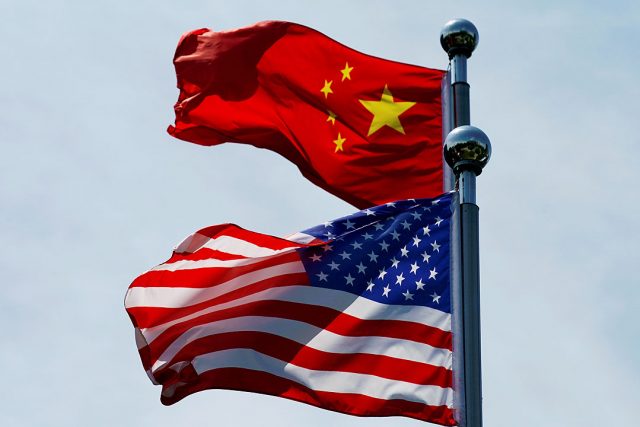
CHINESE AND US flags flutter near The Bund in Shanghai, China July 30, 2019. — REUTERS

A US counterintelligence agency on Wednesday warned state and local officials that China is intensifying influence operations aimed at manipulating them into pressing the federal government to pursue more Beijing-friendly policies.

China “understands that US state and local leaders enjoy a degree of independence from Washington and may seek to use them as proxies to advocate for national US policies Beijing desires,” the National Counterintelligence and Security Center said in a bulletin sent to state and local officials.

The warning comes amid sharp tensions between Washington and Beijing over a raft of issues. They span from US arms sales to Taiwan and China‘s human rights record to Beijing’s military activities in the South China Sea and alleged espionage operations against the United States.

The Chinese embassy did not respond immediately to a request for comment

US President Joe Biden’s administration views China as a strategic competitor. But it says it is determined to avoid conflict and seeks Beijing’s adherence to international rules and institutions on peace and security.

The new counterintelligence bulletin said that Beijing is using a variety of means to manipulate state and local officials into pressing Washington for policies that are more friendly to China.

“PRC (Peoples Republic of China) influence operations can be deceptive and coercive, with seemingly benign business opportunities or people-to-people exchanges sometimes masking PRC political agendas,” it said.

China‘s approaches include using front groups like the Chinese People’s Association for Friendship with Foreign Countries, which cultivates “sister” relationships between Beijing and US localities, the bulletin said.

Another group, the National Association for China‘s Peaceful Reunification, promotes Sino-US friendship, but advocates Beijing’s views on Taiwan in letters to members of Congress and others, it continued.

The Chinese communist government says it seeks “peaceful reunification” with democratic Taiwan. But it reserves “other options” for the island that it regards as a Chinese province. – Reuters

anello marks 5th anniversary, celebrates Japanese and Filipino cultures

Bags can mean different for different kinds of people. A student needs one that can carry all their essentials, while a professional opts for something that can help them look the part. For travelers, the bag has to suit their lifestyle and needs.

Indeed, gone are the days when bags were just a mere accessory. Today, a bag speaks volumes of someone’s personal style. And when it comes to stylish, versatile, and functional bags, only one brand comes to mind: anello.

Taking Japan by storm with Kuchigane Design Rucksack

Introduced in 2005, anello is a Japanese brand with an Italian name that means “annual ring.” The unique bag design comes in a variety of shapes and sizes that are all stylish yet functional. Its most iconic design, the Kuchigane, which is a Japanese word that means “wide mouth opening” offers a huge amount of space when opened, making anello bags ideal for daily use since they can fit all of one’s essentials. It is also surprisingly lightweight and suitable for different kinds of lifestyles.

anello’s Kuchigane design backpack and its succeeding collections have undeniably taken Japan by storm. Its popularity grew massively not only in Japan but also in its neighboring Asian countries, the Philippines included.

Becoming the go-to backpack brand in the Philippines

Everyone was hyped over these Japanese cult favorite bags when the brand reached the Philippine shores in 2017 and opened its first store in SM Megamall. Soon enough, Filipinos would be seen casually slinging their anello backpacks over one shoulder and strutting them on the streets. These trendy bags are everywhere, they’re almost ubiquitous. Opening stores almost every month, the brand now has 57 branches in the Philippines. anello has also launched various collaborations such as the anello x Mickey Mouse and the anello x Winnie The Pooh in 2021.

Just like that, anello bags have become the must-have bag of the moment.

Five years since it launched in the Philippines, the world-renowned Japanese brand continues to showcase its craftsmanship and style, with each bag carrying anello’s signature structured silhouettes. anello has indeed made its mark in the Philippine fashion world as the go-to brand for chic, minimalist, and functional bags.

The popularity of anello bags in the Philippines has also enabled the introduction of Japanese culture among its Filipino consumers. So on the brand’s 5th anniversary in the Philippines, the celebrations will be marrying the best of both Japanese and Filipino cultures.

Celebrating the beauty of two cultures

To celebrate the beauty of the Japanese brand and the creativity of Filipinos, anello is having a Paint-Your-Bag contest starting June 25 until July 9, 2022 at the @Tokyo Store in Uptown Mall in BGC.

In partnership with one of the best art schools in the Philippines, Global Knowledge College, anello’s Paint-Your-Bag Contest is the first-ever bag painting competition in the brand’s history as well as in the Philippine art scene. The competition aims to highlight the Philippine culture and the talent of aspiring Filipino artists merged with the functionality and subtle elegance of anello. Open to all aspiring local artists and bag enthusiasts, participants are urged to create their own designs inspired by the country’s beautifully diverse flora and fauna as well as its colorful festivities.

anello’s Paint-Your-Bag contest will be judged by multi-awarded Filipino Fine Artist, Professor Aladin Antiqueño, as well as representatives from Global Knowledge College’s Fine Arts Department, United Fine Artists of the Philippines and Philippine Art Restorers Society of the Philippines and Asia.

anello’s Creative Director, Mr. Hiroshi Takemoto will also be joining the list of judges.

Participating local artists will get a chance to win any of the amazing prizes below:

  • Grand Prize – 50K + 100% Scholarship Grant (2-Year Fine Arts degree)
  • 2nd Place – 25K  + 50% Scholarship Grant (2-Year Fine Arts degree)
  • 3rd Place – P15K  + 25% Scholarship Grant (2-Year Fine Arts degree)
  • 10 Consolation Prize Winners – P2k anello Gift Vouchers

All participants will get a Certificate of Participation and Training Discount Vouchers at GK College of Fine Arts. Winners will be announced on July 29, 2022. To know more about the competition, click this https://tinyurl.com/anello-Paint-Your-Bag-contest to read about the mechanics.

More reasons to visit anello stores

If you’re thinking about getting a new anello bag, this is your sign! Get your hands on these unique, hand-painted anello bags made by our aspiring artisans when you visit anello’s art exhibit from July 29 to 31, 2022 at @Tokyo Store, Uptown BGC. Or treat yourself to a new anello bag when you visit one of these stores below:

Metro Manila Branches and Outlets:

  • @Tokyo ATC
  • Ayala Malls Feliz
  • @Tokyo Ayala Bay
  • Circuit Makati
  • @Tokyo Century
  • Festival Mall
  • @Tokyo Eastwood
  • Glorietta 3
  • @Tokyo Estancia
  • Greenbelt 5
  • @Tokyo Evia Mall
  • Landmark TriNoma
  • @Tokyo SM Mall of Asia
  • Newport Mall
  • @Tokyo Market Market
  • Robinson’s Ermita
  • @Tokyo Okada
  • SM Aura
  • @Tokyo Podium
  • SM Fairview
  • @Tokyo Promenade
  • SM Megamall
  • @Tokyo Robinson’s Antipolo
  • SM North Edsa
  • @Tokyo Robinson’s Galleria
  • SM San Lazaro
  • @Tokyo Robinson’s Magnolia
  • SM Southmall
  • @Tokyo Shangri-La
  • Southwoods
  • @Tokyo SM Manila
  • TriNoma
  • @Tokyo SM Sucat
  • Vertis North
  • @Tokyo UP Town Center
  • @Tokyo Uptown BGC

Provincial Branches and Outlets:

  • @Tokyo Ayala Abreeza
  • Ayala Malls Cebu
  • @Tokyo SM Baguio
  • Fora Tagaytay
  • @Tokyo SM Daet
  • SM Mindpro Zamboanga
  • @Tokyo SM Iloilo
  • SM Bacoor
  • @Tokyo SM Lanang
  • SM CDO
  • @Tokyo SM Lipa
  • SM Cebu
  • @Tokyo SM Naga
  • SM Clark
  • @Tokyo SM Olongapo
  • SM Dasmariñas
  • @Tokyo SM Roxas
  • SM Legazpi
  • SM Pampanga
  • SM Telabastagan
  • SM Valenzuela

Stay updated on the latest information when you log on to anello Philippines’ official Facebook page www.facebook.com/anellophilippinesofficial or visit the @Tokyo website https://attokyo.com.ph/collections/anello.

#anellophilippinesofficial

#anello5years

#anellobagart


Spotlight is BusinessWorld’s sponsored section that allows advertisers to amplify their brand and connect with BusinessWorld’s audience by enabling them to publish their stories directly on the BusinessWorld Web site. For more information, send an email to online@bworldonline.com.

Join us on Viber to get more updates from BusinessWorld: https://bit.ly/3hv6bLA.

ADVERTISEMENT
ADVERTISEMENT