Home Blog Page 6162

Stocks drop further ahead of US inflation report

PHILIPPINE STAR/KRIZ JOHN ROSALES

STOCKS slid on Wednesday ahead of the release of the June US Consumer Price Index (CPI) report, which is expected to give the Federal Reserve another reason to continue hiking rates aggressively.

The benchmark Philippine Stock Exchange index (PSEi) went down by 94.57 points or 1.48% to close at 6,255.37 on Tuesday, while the broader all shares index retreated by 35.34 points or 1.03% to 3,374.57.

“Philippine shares slid as investors braced for the June CPI report,” Regina Capital Development Corp. Head of Sales Luis A. Limlingan said in a Viber message.

Mr. Limlingan said the report due overnight likely showed that US inflation picked up further last month.

“The likely hot reading could prompt the Fed to hike another 75 bps (basis points) during this month’s meeting,” he said.

“Sentiment was also dragged as the US tumbled on Tuesday as worries over global economic growth dented investor appetite for risk assets and Wall Street braced for June inflation data. Investors appeared to favor traditional safe havens,” Mr. Limlingan added.

“The local bourse dropped… as the market digests the weakening peso while waiting for the US inflation rate,” Philstocks Financial, Inc. Research Analyst Claire T. Alviar said in a Viber message.

“Almost all markets globally await the inflation print in the US as it will greatly influence the decision of the Federal Reserve regarding interest rates which will have a negative impact on almost all currencies once the US dollar gets stronger if the Fed will be more aggressive in monetary tightening,” Ms. Alviar added.

The peso rebounded on Wednesday, closing at P56.26 per dollar, rising by 11 centavos from its P56.37 finish on Tuesday, which was a near 18-year low.

Still, year to date, the local unit has weakened by 10.31% or by P5.26 from its close of P51 versus the dollar on Dec. 31, 2021.

The majority of sectoral indices ended in the red on Wednesday except for mining and oil, which climbed by 26.42 points or 0.23% to 11,122.59.

Meanwhile, holding firms dropped by 116.26 points or 1.95% to 5,826.17; property retreated by 55.24 points or 1.92% to 2,820.22; financials went down by 29.44 points or 1.92% to 1,496.64; services decreased by 9.91 points or 0.59% to 1,658.37; and industrials lost 14.21 points or 0.15% to end at 9,357.77.

Value turnover went up to P5.55 billion on Wednesday with 1.28 billion shares changing hands from the P4.19 billion with 955.85 million issues seen the previous trading day, PSE data showed.

Decliners outnumbered advancers, 139 versus 44, while 49 names closed unchanged.

Net foreign selling climbed to P706.88 million on Wednesday from the P323.17 million seen the previous trading day.

Regina Capital’s Mr. Limlingan placed the PSEi’s support at 6,200 and resistance at the 6,450 area. — J.I.DP. Tabile
Diokno says ‘too early to tinker’ with TRAIN, CREATE reforms

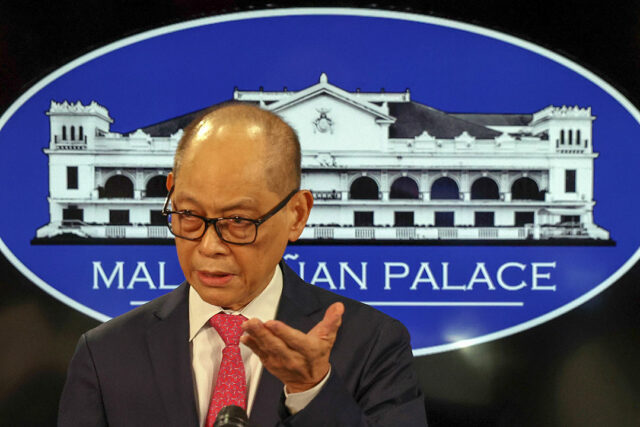
Finance Secretary Benjamin E. Diokno — PHILIPPINE STAR/KRIZ JOHN ROSALES

FINANCE Secretary Benjamin E. Diokno said it is too early to make adjustments to recent tax reform laws, signaling his reluctance to back a House Bill seeking to provide tax relief for the poor and middle class.

“We just amended both personal income tax and corporate income tax. Let’s give the new tax system a chance to operate. Too early to tinker with it,” Mr. Diokno told reporters on Wednesday.

He was reacting to the proposed Tax Reform Act for the Masses and the Middle Class (TRAMM), which hopes to “correct” the previous government’s two major tax measures, the Tax Reform for Acceleration and Inclusion (TRAIN) law and the Corporate Recovery and Tax Incentives for Enterprises (CREATE) law.

ACT Teachers Representative France Castro filed the TRAMM bill to address the “imbalances brought by regressive tax reform laws such as TRAIN and CREATE that offer little benefit to poor and middle-class families.”

The TRAMM bill sets a 20% maximum personal income tax rate for individual citizens, with their first P400,000 exempt from tax.

It seeks exemptions for senior citizens and persons with disabilities and raises the cap for tax-free bonuses to P150,000.

If signed, TRAMM will require the Bureau of Internal Revenue to “set up a progressive, 10-bracket (in the minimum) personal income tax schedule.”

The TRAIN law was Package 1A of the tax reform program, while the CREATE law was Package 2 of the previous government’s Comprehensive Tax Reform Program.

Under TRAIN, individual taxpayers earning over P250,000 but not more than P8 million pay tax rates of 15-30% starting Jan. 1, 2023.

It also allows the self-employed and professionals earning P3 million or less to avail of an optional 8% tax in lieu of the graduated personal income tax and percentage tax.

It also exempts from income tax the first P250,000 earned by individual taxpayers, and reduced the Donor’s and Estate Taxes were reduced to a fixed rate of 6%.

The CREATE law, billed as a pandemic relief measure for businesses, reduced the corporate tax from 30% to 20% for small businesses with taxable income not exceeding P5 million and total assets excluding land not exceeding P100 million, and 25% for all other corporations, both domestic and foreign.

“Rising prices and untamed inflation rates in the past few years all the more justify the need for a tax reform package that would reduce the income tax rates of overburdened Filipino working-class families. Reducing income tax rates for working families will not only improve their way of life, but also strengthen their purchasing power which will boost overall domestic demand for consumer goods,” Ms. Castro said in a statement on Tuesday.

Headline inflation hit 6.1% in June, the highest in nearly four years. This brought the first-half inflation average to 4.4%, above the central bank’s 2-4% target range. The year-to-date average is still lower than the official 5% forecast for the year. — Diego Gabriel C. Robles

Transport coalition calls on DoTr to freeze route rationalization plan

PHILIPPINE STAR/ MIGUEL DE GUZMAN

By Arjay L. Balinbin, Senior Reporter

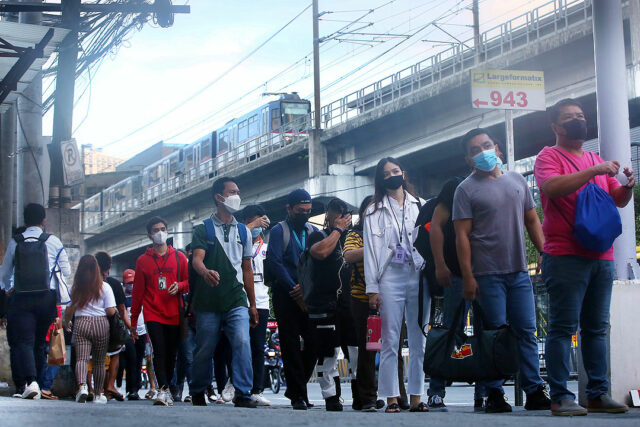
A TRANSPORT association said on Wednesday that the Department of Transportation (DoTr) must focus on streamlining the regulatory processes at the Land Transportation Franchising and Regulatory Board (LTFRB) instead of its current plan to rationalize routes, saying that such a measure would inconvenience commuters.

“What they want to do is rationalize the routes. For example, as a passenger, if I’m traveling from San Jose del Monte, Bulacan, to Makati or Taguig, I’ll have to transfer from one PUV to another up to three times instead of taking a direct ride,” Mar S. Valbuena, chairman of the transport coalition Manibela, told BusinessWorld in a phone interview.

He said streamlining the LTFRB’s approval process would expedite the entry of more public utility vehicles (PUVs) to meet rising demand.

The LTFRB has been pushing for route rationalization to optimize the number of vehicles servicing each route in response to prevailing demand levels.

Transport groups said in a joint statement on Wednesday the DoTr bid out the Metro Manila Urban Transportation Integration Study Update and Capacity Enhancement Project, or the Route Rationalization Study, in 2018. 

“Results of the study have not been released to the public, even if changes and public transport services have already been introduced,” Move Metro Manila, Move As One Coalition, Manibela, and Komyut transport groups said in a joint statement.

Transport Secretary Jaime J. Bautista said at a Palace briefing on Monday that a full study on a “fleet rationalization” plan is ongoing.

He said the study should be completed before face-to-face classes resume in August.

Kailangan natin ng mga tamang information kung anu-ano iyong mga availability nitong mga sasakyan na gagamitin natin and ano ang ating mga puwedeng gawin (We need accurate information on vehicle availability before we can take any steps),” he said.

Since the reopening of the economy, the LTFRB has been gradually opening routes and issuing permits to PUV operators.

Marami sa amin ang gustong bumiyahe at makapagserbisyo sa publiko kasi hanapbuhay namin ang makapagbiyahe, kaya lang parang dadaan ka sa butas ng karayom sa napakaraming requirements ng LTFRB (The LTFRB has been making it difficult for us even though we want to ply our routes to serve commuters, because that is our livelihood),” Mr. Valbuena said.

Ang daming gagastusin muna para mabigyan kami ng temporary permit. Baka imbes na i-prioritize ni Secretary Bautista ang rationalization of routes, unahin nya ang rationalization ng mga proseso sa LTFRB (The LTFRB charges a lot of fees just for a temporary permit. Maybe Secretary Bautista should rationalize the agency instead of routes),” he added.

LTFRB Chairperson Cheloy Velicaria-Garafil has said that President Ferdinand R. Marcos, Jr. ordered the agency to streamline permit processing and to ensure the prompt delivery of aid to transport workers.

“We have been given three directives: to streamline processes, to ensure aid is delivered to drivers, and to look after commuter welfare,” she said in a statement.

Ms. Garafil, a lawyer and a former journalist, said the LTFRB “will listen, study, and work with everyone here and also our stakeholders on how we can better improve our services.”

Move Metro Manila convenor Grace Gorospe-Jamon said Mr. Bautista seems to be paying attention to the right problems, citing the initial directives and acts of the new Secretary, a former top official of Philippine Airlines.

“Mr. Bautista’s commitment to providing accessible, affordable, comfortable, and safe transport service is reassuring,” she said in a statement.

“He is practically resetting the agency’s performance metrics to be centered on the commuter experience, very unlike the previous leadership’s emphasis on infrastructure progress,” she added.

The transport groups took note of Mr. Bautista’s observation tour of the MRT, which he rode alongside everyday commuters.

“Mr. Bautista’s latest directive to fully deploy 550 buses on the EDSA Busway is a sign that the transport chief recognizes the public transport supply shortage,” Robert Y. Siy of the Move As One Coalition said.

A commuters’ group said that Mr. Bautista should ensure accessibility of transport service.

Kaming mga komyuter ay umaasa na sisiguruhin at uunahin ni Secretary Bautista ang accessibility ng transport service. Ang kilo-kilometrong pila sa sakayan, ang araw-araw na maniningil sa kanya at sa kanyang mga pangako sa mananakay (We commuters are hoping that Secretary Bautista focuses on transport accessibility. We will hold him to his commitments every day we see commuters having to endure long queues for rides),” Toix Cerna of Komyut, an online community of commuters, said.

Asked to comment, Mr. Bautista said in a statement: “At the onset of my term as Transport Secretary, I announced my plan to transplant the thrust of Philippine Airlines to constantly focus on enhancing passenger experience at all stages of their journey.”

“Today, at the Department of Transportation, our utmost priority is extending safe, comfortable, affordable and accessible travel to all passengers. I am inspired by the reaction of urban mobility groups who believe we are on the right track. Suggestions and criticisms provide vital inputs how we are to proceed in effecting significant change in this sector which is critical to the country’s economic rebound,” he added.

June WESM prices rise to P9.01/kWh amid thin supply

BW FILE PHOTO

THE Independent Electricity Market Operator of the Philippines (IEMOP) said the Wholesale Electricity Spot Market (WESM) price averaged P9.01 per kilowatt hour (kWh) in June, up from P6.42 a month earlier, due to thinning supply.

“WESM is… largely dependent on the supply-demand situation and in our presentation earlier we have shown you na nagkaroon po tayo ng (that there was a) decrease in terms of the supply margin because of forced and planned outages (during the) June billing period,” IEMOP Corporate Communications OIC Manager Josell F. Co said.

WESM trades electricity not otherwise committed to power distributors and is tapped in the event these distributors experience a shortfall in their contracted power. The spot price charged to these buyers is typically higher than the power supplied under long-term contracts. A rising WESM price indicates a tightening in the market for contingent power, and points to underlying problems in the market for contracted power.

IEMOP, in an online media briefing on Wednesday, said that in the May 26 to June 25 period, it recorded average supply of 15,214 megawatts (MW), average demand of 11,325 MW and an average supply margin of 3,889 MW.

Month on month, average supply dropped by 192 MW or 1.25%, average demand rose 66 MW or 0.59% while the supply margin decreased 258 MW or 6.22%.

Aside from thinning supply, IEMOP also noted the rise in prices of fuels such as oil, coal and liquefied natural gas, which drove the spot price beyond the P9 mark.

“As a result, the Secondary Price Cap Mechanism (SPC), which was set in place to protect consumers against sustained high WESM prices, was also applied 35.17% of the time in the June billing month,” the company said in a statement.

Recently, Nord Stream 1, the biggest single pipeline carrying Russian gas to Germany, began annual maintenance on Monday, with deliveries scheduled to halt for 10 days, tightening the gas market.

IEMOP’s Head of Corporate Strategy and Communications Isidro E. Cacho, Jr. said that this event could also cause coal prices to rise as Europe restarts shuttered coal-fired plants to reduce its dependence on Russian energy.

He also added that although prices of some fuels have softened, coal is still up about 200% on its pre-Ukraine war price.

In terms of volume, the high spot market price deterred purchases, leaving the share of spot energy in the power market at 9.1% in June. IEMOP reported that the volume of energy purchased on WESM in June was the lowest in the second quarter.

Mr. Co said that in early July IEMOP expects the secondary price cap to be triggered frequently as daily spot prices range from P7 to P9. — Justine Irish D. Tabile

Revilla files bill giving gov’t 5% cut of movie theater gross income

PHILSTAR

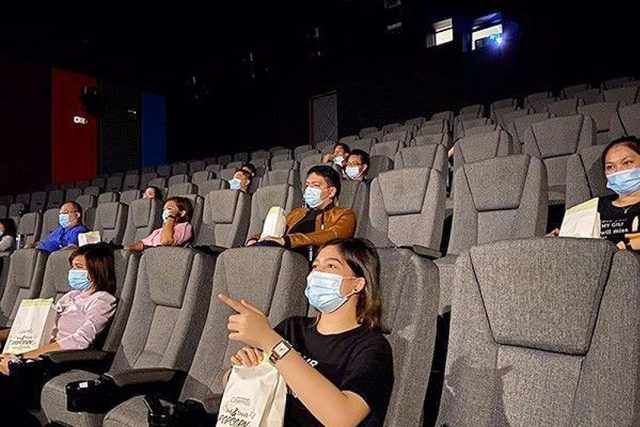
A BILL seeking to exempt the movie theater industry from income tax, excise tax, value-added tax and amusement tax in exchange for a 5% share of the gross income generated has been refiled at the Senate.

Senate Bill 28, introduced by Senator Ramon B. Revilla, Jr., was touted as a measure designed to revive the industry by providing tax breaks to proprietors, lessees, and operators of theaters and cinemas. If passed, they will only be liable to pay real property tax.

The bill proposes that of the 5%, 3% will go to the National Government, and 2% to the local government hosting the theater.

Mr. Revilla said the industry was severely affected by the coronavirus disease 2019 (COVID-19) pandemic. As restrictions were placed on moviegoers, it became increasingly difficult to produce and market Filipino movies, affecting film producers, movie theater operators, and patrons.

“We have nursed many businesses and establishments back to life in the last few years. And as we do so, we should not forget the movie industry and the thousands in its employ who have been so badly hit by the pandemic,” he said in a statement on Wednesday.

In spite of the recent reopening of cinemas, moviegoers are still reluctant to watch films in cinemas because of the perceived safety risk of sitting in an indoor venue alongside crowds. Movie ticket sales have also been under pressure from streaming services.

“For this industry and its art to keep living and thriving, we must offer swift assistance,” he said. — Alyssa Nicole O. Tan

DENR to link land database with LRA’s to streamline titling

DENR FACEBOOK PAGE

THE Department of Environment and Natural Resources (DENR) said it has entered into a partnership with the Land Registration Authority (LRA) to improve access to information on land and make land-related transactions easier for the public.

The resulting system for land data hopes to ease the processing and approval of survey plans, the verification of lot status, and the issuance of patents and registration by integrating the two agencies’ fragmented data.

DENR Land Management Bureau Director Emelyne V. Talabis said that the partnership will result in a more coordinated, accurate, and accessible public-facing land information system.

Former DENR Officer-in-Charge Joselin Marcus E. Fragada said the tieup is a “progressive step in addressing the fragmented system of land administration and management in the country for a more secure, credible, and streamlined titling processes.”

“We have several land title-issuing authorities in the country, and these agencies have their own separate land information databases. With this fragmented setup of titling and registration, double-titling is prone to happen. This innovation will solve such problems and improve public service delivery,” he added.

The system software will access land information databases such as maps, survey plans, patents, and lot statuses of the DENR and LRA in aid of processing land-related transactions.

This will allow land processors to eliminate discrepancies and do away with the need for applicants to personally acquire clearances and certifications from the DENR and LRA offices.

“Plans for full digitization of land processes are in the works and plans for implementing electronic patents or e-patents to replace the manual judicial form,” Ms. Talabis added.

The system will first be piloted in Region IV-A, Region VII, Region X, and the National Capital Region.

“A real honest-to-goodness whole-of-government approach with an interagency task force that will dovetail our undertaking would be very ideal… Someday, all land title-issuing agencies will be our partners,” LRA Administrator Robert Nomar V. Leyretana added. — Luisa Maria Jacinta C. Jocson

UP economist warns against ‘risky’ programs that require gov’t subsidies

UPSE FB PAGE PHOTO

THE GOVERNMENT must avoid programs that are likely to generate a large subsidy bill in light of its limited resources and high debt load, a University of the Philippines (UP) economist said.

“It may best to adopt a conservative economic strategy to spend for enhancing productivity and future growth; (and) avoid fiscally risky programs and gambles that will require large state public subsidies,” UP School of Economics Associate Professor and Director for Research Dr. Renato E. Reside, Jr. said.

Speaking at a webinar on the economic recovery, Mr. Reside said that the government must spend some time to restore its fiscal room to maneuver.

“Basically, to rebuild a fiscal space that was lost because of the crisis. As you can see, it took a lot to eliminate the fiscal space that we have built over the years. So, we need to regain some of that in order to make us more resilient because there will be future crises for sure,” he said.

Mr. Reside said a growth strategy could eventually shrink the share of debt in the economy, while generating demand for sovereign bonds, the issuance of which “will also lower interest rates and support existing credit ratings. This strategy will also attract foreign and domestic investment, which will support aggregate demand.”

Mr. Reside advised the government to look for wins in tax administration and tax reforms with the potential to raise gross domestic product (GDP) growth by a quarter to half a percent a year.

He also backed a proposal of the Department of Finance to impose excise taxes on single-use plastics and electronic and digital services while recommending that the government manage its pension commitments to military and uniformed personnel (MUP).

“Raising (revenue) doesn’t always have to be about raising taxes; it can also be saving. Current annual expenditures to fund MUP pensions are more than half a percent of GDP,” he said.

The webinar, “Atin ‘to: Sustaining the economic recovery for all Filipinos,” was the last session of the Ayala-UPSE Economic Forum. — Keisha B. Ta-asan

Proposed tax reforms for resource mobilization

Times are downbeat. In the last few years, the Philippines has been impacted successively by global crises, starting with the pandemic followed by the Russia-Ukraine War. The light at the end of the tunnel that signals national recovery is still out of sight. As such, the government is looking to modify our tax landscape as a key in addressing these challenges.

Our tax system underwent major reform in the last few years with the passing of the TRAIN and CREATE laws, which generally reduced tax rates and rationalized tax incentives. However, the needs of the day prompted the government to seek additional sources of revenue to pay off the national debt and to finance its projects. This much was evident when the Department of Finance (DoF), under the leadership of former Secretary Carlos G. Dominguez III, released the 2022 Fiscal Consolidation and Resource Mobilization Plan, which aimed to modify and supplement existing tax laws for more effective and efficient revenue collection. Some of the salient points of the plan include the following:

1. Deferment of the TRAIN personal income tax reduction by retaining the currently imposed tax rates under the TRAIN Law and by deferring the second tranche of graduated income tax rate reductions of 15% to 35% until 2025.

2. Modifications to the Value-Added Tax (VAT) system

• Expansion of the VAT base by making some previously VAT-exempt or VAT-zero rated items subject to the 12% VAT. Nevertheless, exemptions for the education, agriculture, health, finance, and raw food sectors will be retained.

• A possible VAT reduction from 12% to 10%.

• Reimposition of the VAT input tax amortization on capital goods valued at more than P1 million for a period not exceeding 60 months.

• Imposition of 12% VAT on the digital economy including online advertisements, digital services, and the supply of other electronic and online services.

3. Additional excise taxes on motorcycles and pickups, petroleum and coal, single-use plastics, and expansion of the coverage of excisable luxury goods.

4. Reforms to health/sin taxes by taxing alcopops the same as fermented liquor, increasing the excise tax on cigarettes and e-cigarettes, and adopting a higher unitary rate for sweetened beverages.

5. Admission charges for casinos and a gaming tax on electronic betting.

6. Carbon emissions and cryptocurrency taxes which are still undergoing further study.

7. Strengthening tax administration including the taxation of social media influencers and the conduct of BIR transfer pricing audits.

Aside from the propositions above, the former DoF leadership also recommended the passage of the remaining packages of the previous administration’s Comprehensive Tax Reform Program (CTRP), which include a motor vehicle user charge, the rationalization of the mining fiscal regime, a proposed Passive Income and Financial Intermediary Taxation Act and a Real Property Valuation and Assessment Reform Act. All in all, these proposed reforms are expected to generate an annual average of P349.3 billion in additional revenue and should greatly help in minimizing the need to take on debt to finance the government’s programs.

The new Finance Secretary has declared a preference for improving tax administration over imposing new taxes. Thus, the new administration plans to increase tax effort and make the economy grow at a more ambitious pace to address our current challenges. That said, news reports indicate that he is eyeing carbon taxes, an excise tax on single-use plastics, and digital taxes, the latter estimated to generate at least P13.2 billion in incremental revenue annually, as well as the passage of the remaining packages of the CTRP, which would simplify the tax system and result in the more efficient and effective collection of real property, passive income, and financial intermediary taxes.

As the lifeblood of the government, taxes fund services and projects aimed at the betterment of the nation. Thus, the government may impose certain taxes to raise revenue and regulate activities to attain its social or economic objectives. While the proposed tax laws have the potential to help the country address our current problems, we should equally remain vigilant and cautious in their enforcement lest they fuel poverty, with consumers absorbing the taxes passed along by businesses. Of what use are resources mobilized to swell the public treasury if citizens are burdened to death by inflation, unemployment, and taxes?

The views or opinions expressed in this article are solely those of the author and do not necessarily represent those of Isla Lipana & Co. The content is for general information purposes only, and should not be used as a substitute for specific advice.


James Arvin E. Ronquillo  is an associate at the Tax Services Department of Isla Lipana & Co., the Philippine member firm of the PwC network.

+63 (2) 8845-2728

james.arvin.ronquillo@pwc.com

Philippines lifts ban on nursing programs after thorough review

PHILIPPINE STAR/ MICHAEL VARCAS

By Kyle Aristophere T. Atienza, Reporter

THE PHILIPPINES’ higher education commission has lifted a 2011 policy that banned the opening of new nursing undergraduate programs amid an oversupply that left graduates jobless.

“After a very thorough review and study of the moratorium on nursing, the commission en banc yesterday decided to lift the moratorium based on an exhaustive discussion,” Commission on Higher Education Chairman Prospero E. De Vera III told a virtual news briefing that was streamed live on Facebook on Wednesday.

The ban was reviewed at the height of the coronavirus pandemic in 2021.

If the policy was immediately lifted, “we might go back to the same situation before 2011 and that situation was of crisis proportions at that time,” Mr. De Vera said. “We must ensure the problems encountered before will not happen anymore now.”

Meanwhile, private sector groups asked the Marcos government to prioritize nutrition and education after a coronavirus pandemic shut down schools for years.

Increased investments in education and nutrition would solve poor learning outcomes among young Filipinos, the groups led by the Philippine Business for Education (PBED) said in a statement.

“For decades, our human capital has been neglected,” the groups said. “One in every three children and below are stunted. Nine out of 10 learners are not able to meet minimum reading skills.” 

“Focusing on nutrition and education will increase human capital,” said the groups, which also include the Makati Business Club and Philippine Business for Social Progress. “It will drive economic growth and development and allow Filipinos to lead comfortable and productive lives.”

The groups asked the government to develop nutrition-specific solutions that are accessible for mothers and children who are at risk.

The state should also promote public-private partnerships for nutrition-centric governance at the local levels, they said. It must strengthen safety nets for vulnerable households through continued access to safe, affordable and nutritious food.

The government should likewise empower farmers by providing them with climate-smart resources and technology, the groups said. 

To address learning conditions, the government must ensure that children are sent to quality pre-kindergarten and Grade 3 education and developmental programs.

Agencies should use the lens of lifelong learning in workforce development and strengthen the autonomy of school leaders while ensuring accountability, they added. 

Investment in human capital should be among the first orders of business of the new government, PBED Chairman Ramon R. del Rosario told a briefing later in the day. “We implore our new administration to make effective learning a serious goal in its first 100 days.”

“There is mounting evidence that unless this country strengthens its human capital, it cannot achieve sustained inclusive economic growth,” he said, citing a 2019 World Bank report.

“We will not have a workforce prepared for the more highly skilled jobs of the future, and we will not compete effectively in the global economy,” Mr. Del Rosario said. “It is our inadequacies in human capital development that is holding us back from achieving true progress as a nation.”

Mr. Del Rosario cited the experience of South Korea, which he said progressed by improving its educational system. “Now, they are reaping the returns.”

“Not only has South Korea achieved universal literacy today, but its students also perform at the highest levels in international learning assessments,” he said. “The answer is there. Make education and learning a priority. Invest in the lifelong learning of our people.”

He asked the government to convene the Second Congressional Commission on Education so it can assess the country’s educational system. Congress ratified the bicameral conference committee report on the creation of the commission in May.

The commission is expected to recommend targeted and timebound solutions to allow educational agencies to improve their performance. 

“With proper education reforms under [the commission], we can achieve shared prosperity within this generation, hopefully,” Mr. Del Rosario said. “While it is not the only solution, this is the critical first step towards it.”

Philippine schools were shuttered after a hard lockdown was imposed in 2020 to contain a coronavirus pandemic.

Coronavirus infections spurred by more contagious Omicron subvariants have increased in the past week, according to the Health department.

House bill to raise legal drinking age to 21 years

THANH SERIOUS

A BILL that seeks to ban young people under 21 from drinking alcoholic drinks has been filed at the House of Representatives.

Under House Bill 1753 filed by Davao City Rep. Paolo Z. Duterte and Benguet Rep. Eric G. Yap, the ban will also cover people with disabilities or a mental illness.

“The youth have a vital role in nation-building and it’s the duty of the state to promote and protect their physical, moral, spiritual, intellectual and social well-being,” Mr. Duterte said in a statement on Wednesday.

“The state shall undertake efforts to eliminate alcohol abuse and reduce underage drinking by prohibiting unqualified individuals’ access to alcohol,” he added.

The proposed Anti-Underage Drinking Act will penalize people or companies that sell alcohol to unqualified people. Violators will be fined P50,000, jailed for at most three months, or both. A company’s business license could also get revoked.

Under the bill, unqualified people refer to those under 21 years old, or 21 years old but can’t fully take care of or protect themselves from abuse, neglect, cruelty, exploitation or discrimination because of a physical or mental disability.

The legal drinking age in the Philippines is 18, but children can easily buy alcoholic drinks in stores.

More than half of Filipinos aged 20 to 59 drink alcoholic drinks excessively, according to the Food Nutrition and Research Institute’s health survey. It also said 15% of Filipinos aged 10 to 19 use alcohol, and 37% of them are underage drinkers.

Minors who violate the proposed law must attend, together with their guardian, two straight counselling sessions conducted by the local village council. The Social Welfare department will deal with them if they fail to do so.

The most senior officers of a corporate violator will be held liable. Public officials tasked to enforce the measure who block the enforcement of the law will be punished with suspension and a jail term of up to six months.

Alcohol use kills 2.5 million people yearly, including 320,000 peopled aged 15 to 29, Mr. Duterte said, citing data from the World Health Organization. “It is the third leading risk factor for poor health globally, and responsible for almost 4% of all deaths in the world, according to 2004 estimates.”

A 2021 study by Movendi International, a global social organization promoting alcohol prevention, found that one of three Filipinos consumed at least six alcoholic beverages in one sitting.

In the Philippines, household spending on alcoholic beverages and tobacco rose fourfold to P226.5 billion in 2020, according to Statista. — Alyssa Nicole O. Tan

Marcos recovers from coronavirus, no longer showing symptoms

President Ferdinand Marcos Jr. answers questions from the media after his first Cabinet meeting in Malacañan Palace, July 5, 2022. — PHILIPPINE STAR/KRIZ JOHN ROSALES

PRESIDENT Ferdinand R. Marcos, Jr. has recovered from the coronavirus and no longer showed any symptoms, his press chief said on Wednesday.

His physician visited him at his house and gave him a thorough examination, Press Secretary Trixie Cruz-Angeles said in a statement.

The doctor gave the “happy news” that the Philippine leader was now free from the virus, she added.

Ms. Angeles said the president had finished all his medications and could go back to his face-to-face engagements after completing his seven-day isolation required by the Health department.

“The president’s  vital signs are all within normal limits,” she said. “He has no signs of respiratory distress and is very comfortable,” she added, citing the Mr. Marcos’ medical bulletin.

The doctor said Mr. Marcos, 64, could be released from isolation on Friday “if there is no reappearance of any sign and symptoms related to COVID-19, and provided further that he has no fever” for the next 24 hours, according to the palace statement.

Meanwhile, Mr. Marcos on Tuesday cited the need to improve policies and infrastructure to strengthen the tourism industry, according to the presidential palace.

“In a Cabinet meeting that he presided virtually, Marcos noted how Singapore fared in the tourism sector even with limited natural resources,” it said in a statement. 

 “That means that it can be done,” the president told his Cabinet. “We just have to support the plan to develop all of these enabling environments — the policy, conditions and infrastructure.”  

At the meeting, Mr. Marcos also discussed how healthcare facilities in big tourist destinations could be improved, citing the arrangement implemented in beaches in Hawaii and Thailand, according to the statement.

The Philippines started reopening its door to foreign tourists in April, as its embassies and consulates resumed visa services.

The country had postponed plans to allow the entry of foreign tourists as it dealt with coronavirus surges that killed thousands.

Restaurants and hotels account for 20.4% of an average Filipino household’s total spending, while transport makes up 16.5%, according to data from the Philippine Statistics Authority (PSA).

Inflation climbed to its highest level in nearly four years in June. — Kyle Aristophere T. Atienza

Court denies news website’s plea to stop website ban

A QUEZON City trial court on Wednesday denied Bulatlat.com’s plea to stop the National Telecommunications Commission (NTC) from blocking its news website.

In a two-page order, Judge Dolly Rose R. Bolante-Prado said the website could still be accessed by its readers and Bulatlat had been able to update the site with new articles and commentaries.

“Its website is still accessible to the public, hence, there is clearly no suppression of the constitutionally guaranteed right to free speech,” she said. “Consequently, there is no irreparable damage, as defined by law, to speak of.”

Bulatlat.com can still be accessed using a virtual private network (VPN).

The news website sued NTC on July 8 and sought a temporary restraining order against the agency, which ordered local internet service providers to block access to more than 20 news websites identified with the Maoist movement.

The court gave the parties until July 18 to submit their memoranda. A hearing was set for Aug. 2 on Bulatlat’s plea for an injunction.

“Its denial [of the restraining order plea] does not affect the main case or the merits of it,” Minerva F. Lopez, Bulatlat’s lawyer, said in a Viber message.

Last month, the country’s telecommunication regulator issued an order to block 26 websites supposedly “affiliated to and are supporting” the Communist Party of the Philippines, New People’s Army and the National Democratic Front. The directive was issued upon the request of former National Security Adviser Hermogenes C. Esperon, Jr.

The Anti-Terrorism Council has labeled these as terrorist groups.

Justice Secretary Jesus Crispin C. Remulla told reporters in a Viber message they would look into the NTC order.

In its complaint, Bulatlat said it was not associated with terrorist groups and is only engaged in delivering the news.

It added that NTC does not have the power to block the websites, accusing it of violating freedom of expression.

Bulatlat Managing Editor Ronalyn V. Olea earlier said they were never notified of the ban.

Global rights watchdog Human Rights Watch earlier called on civil society and the international community to “publicly condemn this latest attempt to suppress freedom of expression in the Philippines.” — John Victor D. Ordoñez

ADVERTISEMENT
ADVERTISEMENT