Home Blog Page 6097

Winning consumers with a future-fit operating model

(First of two parts)

Chief executive officers of global consumer product companies face the challenge of transforming their organizations at a rapid pace to ensure they stay relevant to evolving consumers. Part of this challenge entails strategizing and delivering multiple business models and propositions swiftly, but due to time and cost constraints, CEOs cannot build a new operating model from scratch every time something new has to be done.

This calls for more agile, responsive and resilient ways of working that will allow consumer companies to pivot overnight when necessary. In fact, according to a recent global C-Suite survey commissioned by EY from MIT SMR Connections, Becoming Future Fit: Challenges and Opportunities for Today’s Consumer Products Companies, 86% of the surveyed C-Suites said transformation was essential to become future ready. However, the study also revealed that there was great uncertainty in whether leaders are keeping the process of continual change in their organizations on the right track.

How products, services and experiences are valued is dictated by evolving consumer perspectives, while technology is key to enabling new ways of purchasing and engaging with products. Technology is also what redefines the kind of value propositions that companies can offer consumers, as well as how these propositions are delivered. There are increasingly more options in how companies can design, create, market, combine, package, and deliver their products and experiences to get them closer to the consumer than ever, enabled by technological capabilities in data and analytics.

CEOs will need to apply a transformation mindset and create a C-Suite agenda reflecting the new reality of things. With the pandemic bringing to light uncertainty and the urgent need for technological change, these and more factors have already changed every aspect of a consumer’s life and will continue to do so. Their needs, expectations and behaviors have shifted in ways that put the old ways of working and the companies that propagate them at risk.

The current times require companies to be agile, responsive, and resilient. These characteristics can be built into a business by applying five interconnected design principles that CEOs must follow to lead systemic transformation and become future-ready.

The first of this two-part article will discuss the first two principles: becoming part of dynamic business ecosystems and building upon data and analytics with data fabric.

BECOME PART OF DYNAMIC BUSINESS ECOSYSTEMS
Companies that harness dynamic business ecosystems are better positioned to drive capital efficiency and innovation that creates long-term customer value. It becomes imperative to have a good understanding of ecosystems to stay ahead of the pace of change, especially in anticipation of potential disruptors.

Those who participate in business ecosystems are more likely to create increased value in a group than they would individually, putting companies who are unable to adapt at the risk of falling behind. By building ecosystem models into the structure of their value creation strategy, consumer companies can more effectively navigate the digital space and more quickly generate customer value.

A previous Suits the C-Suites article, How to win Asia-Pacific consumers in the new era, found that digital business ecosystems have emerged in recent years to allow companies to complement each other and offer interconnected products and services in a singular integrated experience. This is already seen in the super apps that consumers are familiar with today, with local examples such as ride-sharing apps with expanded services that include on-demand purchase assistance, food delivery, and even bill payment functions.

BUILD UPON DATA AND ANALYTICS WITH DATA FABRIC
Companies are facing more pressure than ever to become data-driven as leaders understand the value of data and use it to generate valuable insights. While a listening organization that is built on data and analytics allows CEOs to make timely, informed decisions, simply prioritizing analytics is not enough. Data fabric, a set of independent services put together to provide a single, focused view of data relevant to business across all sources, will be necessary for many large enterprises to operationalize data in order to address specific challenges as well as innovate.

Digital networks and their data flows serve as the connective tissue and nervous system that lets the body of the ecosystem function by integrating disparate data sources. Data fabric connects the threads of information across an enterprise, delivering value in the short term with a long-term transformation strategy. It is not designed to collect and store information, as opposed to data warehouses, and there is no need to replicate data or start from scratch when searching and aggregating it.

By utilizing the data fabric approach, data is integrated into useful formats that allow for maximum reuse. It enables sharing, portability and governance by intertwining threads of structured and unstructured data to form a consolidated view made available to users in formats they can use and in terms they can understand.

In the second part of this article, we discuss the remaining three key design principles necessary to drive agility, responsiveness and resilience: encouraging talent flexibility, innovating at scale, and embedding a purpose-led strategy into every facet of the organization.

This article is for general information only and is not a substitute for professional advice where the facts and circumstances warrant. The views and opinion expressed above are those of the author and do not necessarily represent the views of SGV & Co.


Maria Kathrina S. Macaisa-Peña is a business consulting partner and the consumer products and retail sector leader of SGV & Co.

Comelec assured of steady power until May 20

PHILIPPINE STAR/ RUSSELL PALMA

By John Victor D. Ordoñez

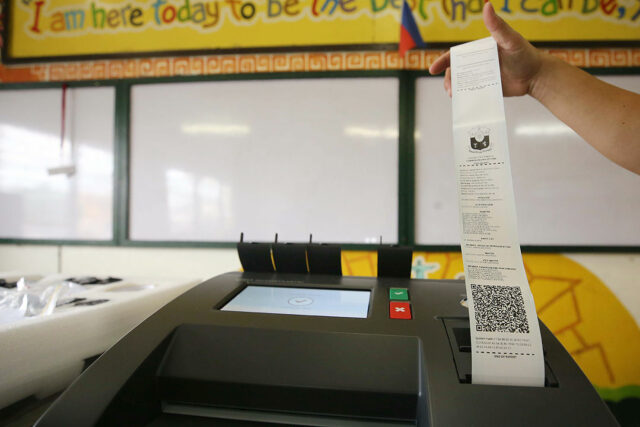
THE COMMISSION on Elections (Comelec) has borrowed about 1,000 generator sets from the Energy department to ensure continuous power as Filipinos vote for a new president on May 9, according to the election body.

The Department of Energy has also assured Comelec there won’t be any blackouts until the third week of May, Election Commissioner George Erwin M. Garcia told an online news briefing on Sunday.

More than 18,000 national and local positions from president to village councilors are up for grabs in Monday’s elections.

During the 2019 elections, Comelec experienced a seven-hour delay in the transmission of votes to its server because of a power failure.

He told an online forum last week Comelec has contingencies in place in case of technical errors, which he said was unlikely.

“The problem with the seven-hour glitch was due to the Comelec transparency server being overloaded with information,” Mr. Garcia said. Comelec fixed the problem by allowing its server to transmit data to media servers in bulk, he added.

He said 633 of 805 defective vote counting machines had been repaired as of Sunday.

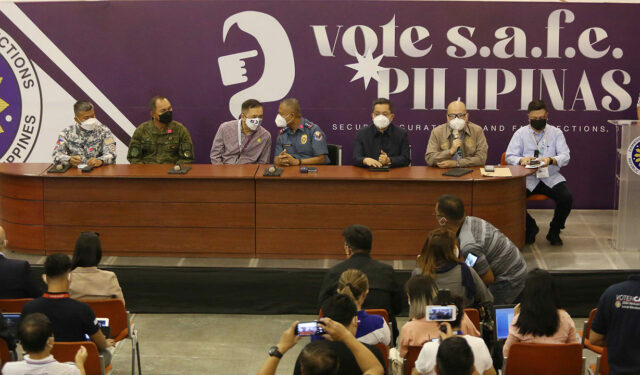
Comelec and its partner agencies are ready for Monday’s national and local elections, its chairman Saidamen B. Pangarungan told the same news briefing.

“We have repeatedly stated the principle of the Commission on Elections to protect the sanctity of the vote in whatever circumstances,” he said. “Together with our partner agencies, the Philippine National Police, Armed Forces of the Philippines and the Department of Education, we are going to pursue this to the end.“

“We sincerely hope that there will be no power outages nationwide as the automated election system is heavily dependent on electricity, especially the transmission aspect,” Danilo A. Arao, lead convenor of election watchdog Kontra Daya, said in a Facebook Messenger chat.

“We have demanded full transparency and accountability in the past on several election-related issues,” he added.

Mr. Arao cited the Comelec’s lack of transparency and accountability during election preparations.

Maria Ela L. Atienza, who teaches political science at the University of the Philippines, said the election body had been slow in deciding election disputes.

“The rank-and-file personnel of the Comelec are used to the process of preparing for elections, however, half of the commissioners are new to the job and not yet confirmed by Congress,” she said in a Viber message.

President Rodrigo R. Duterte appointed three of the seven Comelec officials including the chairman in March after their predecessors retired.

Comelec has yet to resolve cases on appeal with the en banc seeking to disqualify former Senator Ferdinand “Bongbong” R. Marcos, Jr. from the presidential race.

Comelec Chairman Saidamen B. Pangarungan said the lawsuits would be resolved by Tuesday.

Mr. Garcia earlier said the lawsuits would be resolved by end-April.

Mr. Arao said Comelec should show more transparency and accountability in its probe of vote-buying, harassment and intimidation cases.

In a statement on Saturday, Comelec said it was looking at 10 complaints of vote-buying, with at least one complainant having submitted evidence and an affidavit.

Comelec “shortcomings” include the lack of transparency in the printing of ballots and weak public education on safeguards to inspire confidence in the elections, Carlo Africa, a policy specialist for election watchdog Legal Network for Truthful Elections (LENTE) said in a Facebook Messenger chat.

Comelec in March randomly examined ballots upon the request of lawyer Romulo B. Macalintal, who said the agency had disallowed observers during ballot printing.

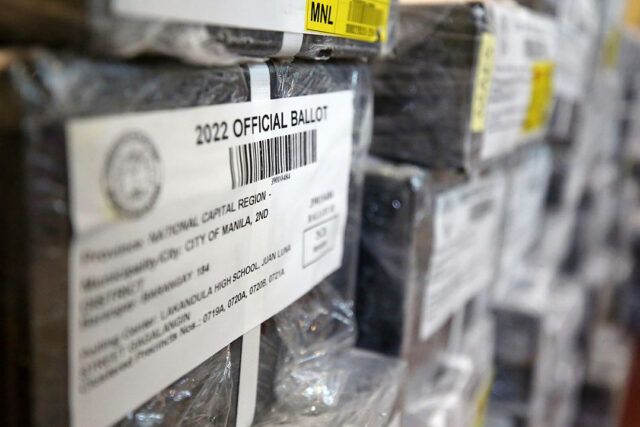
The election body on Saturday destroyed almost a million defective ballots in front of media, members of citizens’ arms and political party representatives at the National Printing Office in Quezon City.

On the other hand, Mr. Africa said Comelec has put health protocols in place to protect voters from the coronavirus.

The agency last week held a demonstration of health protocols for voters who show coronavirus disease 2019 (COVID-19) symptoms. Under the rules, voters with coronavirus symptoms may vote inside isolated polling areas.

Election Commissioner Aimee Torrefrance-Neri, who heads Comelec’s new normal committee, earlier said they would create their own medical advisory board to help develop more timely policies and guidelines.

Comelec will also set up medical desks at election precincts to attend to voters with health-related concerns on election day.

Mr. Garcia earlier said face shields, vaccination cards and negative RT-PCR test results would not be required during the elections.

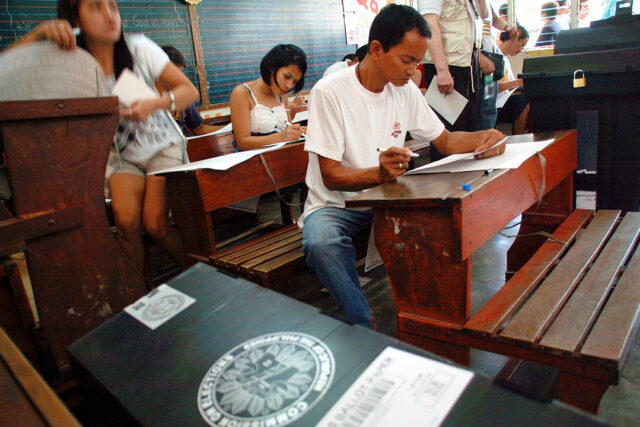
More than 37,000 public schools will host 106,439 voting precincts nationwide on election day, Education Secretary Leonor M. Briones told a televised new briefing last week. More than 65 million Filipinos have registered to vote.

Watch elections for rights violations, global media told

BW FILE PHOTO

A GLOBAL human rights watchdog has called on international media to monitor the Philippine elections on May 9.

“We urge the international community, including global media outlets, to monitor these closely, to recognize the Filipino people’s effort to assert their civil and political rights in this election period,” the International Coalition for Human Rights in the Philippines said in a statement on Sunday.

They cited the need to ensure that the crimes committed under the dictatorship of the late Ferdinand E. Marcos are not repeated.

In February, the group started the International Observer Mission, a campaign that seeks to record instances of election-related violence, red-tagging and vote-buying during the election period.

The watchdog also started a campaign to sanction human rights violators in the country, specifically the so-called architects of President Rodrigo R. Duterte’s war on drugs.

“Even the possibility of a return of the Marcos family to power exposes the negligence of national and international institutions to hold accountable perpetrators of crimes against humanity, and by extension their complicity in the human rights crisis in the Philippines,” Peter Murphy, the group’s Global and Council head, said in the statement.

“After these elections, all democratic governments and organizations including the labor movement and faith communities need to radically increase their support for Filipino democracy and the Filipino people who passionately want to restore it,” he added.

The group earlier said the International Observer Mission (IOM) would provide independent monitoring of the May 9 elections to inform the international community about the election situation in the country.

The monitoring started in February and will end once elected candidates are confirmed by June. — John Victor D. Ordoñez

May 9 vote: What will the ballots say of the pre-election polls? 

PHILIPPINE STAR/ RUSSELL PALMA

VOTERS in the Philippines head out on Monday to cast their ballots for the countrys next leaders, and the results would either confirm or debunk pre-election opinion polls that have themselves been a hot issue during the campaign period.  

Maria Ela L. Atienza, a political science professor from the University of the Philippines, said while the polls have indicated a clear majority win for frontrunner Ferdinand BongbongR. Marcos, Jr., there were deficiencies this year compared to the survey scene in previous presidential elections.    

SWS did not conduct election polls this year and Pulse Asia has fewer surveys than in 2016,she told BusinessWorld in a Viber message, referring to research institution Social Weather Stations and Pulse Asia Research, Inc.   

They (Pulse Asia and other opinion polling groups) did not have a survey at the end of April.  So, as surveys are snapshots of the voters’ preferences as represented by the sample, we have not captured the last few weeks of the campaign,she said, noting that 45% of voters decide between April to the actual national election day set on the second Monday of May.   

As such, the results of the May 9 elections this year will show if the last few weeks of campaigning, particularly on the ground by volunteers of Vice President Maria Leonor LeniG. Robredo, made a significant impact, Ms. Atienza said. 

The latest survey conducted by independent pollster Pulse Asia in mid-April showed 56% of 2,400 respondents said they would vote for Mr. Marcos if the election was held during that period, while Ms. Robredo was at a distant second with 23%.  

Senator and retired boxing champion Emmanuel MannyD. Pacquiao overtook Manila City Mayor Francisco IskoM. Domagoso with 7%, gaining a point. The mayor lost 4 points to 4%. Senator Panfilo PingM. Lacson remained in fifth place with 2%.   

Pulse Asia and SWS have faced allegations that opinion polls have been rigged.   

Those who make these unfair and unjust criticisms bear the responsibility for their baseless accusations feeding into the spiral of disinformation and malinformation that afflicts our society,Pulse Asia President Ronald D. Holmes said in a statement released on May 2  

These false accusations only further deepen polarization and distrust and contribute to the continuous erosion of an already extremely feeble democratic order,he added. 

The Marketing & Opinion Research Society of the Philippines has expressed support for SWS and Pulse Asia, noting their consistency and reliability to provide public opinion representative of any population of interest.”  

We have always resolved to uphold the highest professional standards in delivering the most precise and representative feedback and insights decision-makers and stakeholders require for either making informed decisions or reflecting on prevailing public opinion,it said on its website.  

Froilan C. Calilung, campaign expert and political science professor at the University of Santo Tomas, also said that certified surveys remain the most accurate barometer of a candidates performance.  

He cited that in 2010, the late President Benigno NoynoyAquino III reached 42% in pre-election surveys, and won with about the same percentage. In 2016, President Rodrigo R. Duterte received 33% in voter preference polls, and won with 38%. 

The results may not necessarily be a 100% correct, however, their effect on people is very real,University of the Philippines Associate Professor Perlita M. Frago-Marasigan told BusinessWorld in a Viber message, noting its influence on peoples perceptions.  

Outside of the surveys, Ms. Robredo and Mr. Marcos received more attention from voters because they represented two clear opposites, said Ms. Atienza. 

Marcos represents continuity of not only the Duterte policies but revival of martial law nostalgia and revision of Philippine history while Robredo represents the more inclusive governance, equitable development and strengthening of democratic institutions and processes, and a repudiation of Duterte politics of fear, violence and lack of respect for rights,she said. Alyssa Nicole O. Tan 

It’s fake, says Comelec on resolution about disqualified party-lists

PHILIPPINE STAR/ RUSSELL PALMA

AN ELECTION Commissioner on Sunday debunked a resolution circulating online on the supposed disqualification of several progressive party-list groups and a senatorial candidate.   

“These are all fake resolutions, we haven’t disqualified any party-list (at this point) and we do not put whereas in these resolutions,” Election Commissioner George Erwin M. Garcia said in an interview over DZBB radio.   

He reminded voters to refer to the Commission on Elections (Comelec) official pronouncements as well as reports by legitimate media organizations for correct information.    

“Do not believe in fake news spreading on social media,” Mr. Garcia said in Filipino during a news briefing on Sunday. “We should just rely on traditional media as they give truthful and genuine news.”  

The subjects of the fake resolution called on the poll body to take action against the perpetrators.  

“We appeal to the Comelec to prosecute this and the conspirators because of their grave crime of using the commission’s logo and letterhead on fake documents and acting like them,Anakpawis Party-list National President Ariel B. Casilao said in Filipino in a statement on Sunday. 

Their mission is really to deceive the voters, and sabotage the candidacy of progressive party-lists and (senatorial candidate) Neri Colmenares,he added.  

The fake document cited the disqualification of the following: Bayan Muna, Anakpawis, Kabataan, Alliance of Concerned Teachers, and Gabriela. It said Mr. Colmenares, a human rights lawyer, along with the parties have been involved with terrorist groups and activities. 

This is nothing but a pathetic desperate act by anti-democratic and fascist minions of NTF-ELCAC (the National Task Force to End Local Communist Armed Conflict),said House Deputy Minority leader and Bayan Muna Rep. Carlos Isagani T. Zarate in a statement.  

Mr. Zarate challenged the poll bodys commissioners to denounce and investigate the forgery of their signatures as this undermines the credibility of their respective offices.  

Makabayan said it will take legal action against those behind the posting. John Victor D. Ordoñez and Alyssa Nicole O. Tan 

Lagonoy fishing communities ‘build back better’ boats with WWF

MARK BAUTISTA VIA WWF

FISHERFOLK around Lagonoy Gulf, a rich tuna fishing ground in the central-eastern part of the Philippines, have been working with environmental non-government organization World Wide Fund (WWF) for Nature Philippines since 2011 and they have a global certificate to show for their sustainable operations.   

The year 2020, however, proved to be particularly challenging for these small-scale fishers, not so much because of the coronavirus pandemic but due to three strong typhoons that devastated their homes and boats.   

Joann P. Binondo, WWF-Philippines project manager of the sustainable tuna partnership program, said this underscored the importance of resilience among fishing communities amid the climate crisis.     

As part of the program, WWF-Philippines initiated the Build Back Betterproject aimed at fabricating boats that will better withstand increasing extreme weather conditions while maintaining sustainable practices.   

The main objective, Ms. Binondo said during the project launch last week, is increasing resilience of handline fishers in the project regionagainst poverty and disasters.”  

Industrial designer Mark Victor Bautista and the tuna fishermen combined traditional and technological expertise to design a boat that is tougher against the elements as well as support the communitiesMarine Stewardship Council (MSC) certification, a global eco-label for sustainable seafood.  

Yellowfin tuna catch from the Lagonoy Gulf are sold locally and to European companies that support the MSC.   

Three new boats have been turned over to the Gulf of Lagonoy Tuna Fishers Federation, Inc. and WWF-Philippines is looking to raise at least P21 million to build 27 more of the prototype vessels to help more fishers around the gulf.   

Each boat is equivalent in capacity to three traditional fishing boats, and the project will benefit 200 families in 15 towns.   

Our experience working with the Lagonoy Gulf fishers validates a model for sustainable fishing that has improved community livelihood,WWF-Philippines Executive Director Katherine Custodio said at the project launch.   

Knowing what already works, she said, we are hoping to seek more supportWe hope that many more people, companies, and organizations join in this Build Back Better campaign.” 

Ms. Custodio said that apart from funding, they also need assistance in terms of logistics such as sourcing appropriate engines for the boats.  

WWF-Philippines Ambassador Pia Wurtzbach and her partner WWF-USA Ambassador Jeremy Jauncey, who visited the Lagonoy communities in April, are supporting the campaign.  

This trip to the Lagonoy Gulf has not only been educational for me and Pia but also affirming for us. One boat at a time, we can help change the lives of several fishers and their communities through the Build Back Bettercampaign,said Mr. Jauncey.   

Elizaldy Boboyo, an official of the fishers federation, said they have come a long way from an attitude of to each his ownto working together and doing what is right for fisheries.” 

Ms. Custodia said the Lagonoy communities stand as a model of how fishers can be stewards, not abusersof marine resources. Marifi S. Jara 

Walang imposible

RAFFY LERMA

Leni’s miting de avance (final campaign rally) was a fitting climax to a stunning, inspiring, dramatic, and earth-shaking campaign. All roads led to Ayala Avenue. One million people participated in the manifestation. A bigger number of kababayans (countrymen) followed the event online.

All the social influencers, barring the politicians, were there. Celebrities who have a big following, especially among the masa (masses). Iconic musicians, Miss Universe, Megastar, the three Darnas, Vice Ganda, to name some. They all appeal to the baby boomers, Gen X, millennials, and Gen Z.

Public intellectuals, educators, scientists, technocrats, health professionals, captains of industry, and the culturati were present. The intelligentsia might not have the mass following, but the power of their ideas affects everyone.

But really, the stars of Leni’s campaign are the people. They are the vanguard. Those who attended Leni’s rallies and miting de avance, those who volunteered for the campaign and performed multi-faceted tasks, those who showed boundless energy, those who welcomed the campaigners and received Leni’s message warmly.

And they come from all socio-economic classes. This is not elitista (elitist), as claimed by trolls. Megastar Sharon Cuneta said it well: The people supporting Leni, regardless of socio-economic standing, have “class.” For they embrace what Leni stands for. They seek kindness, care, justice and truth. For they and Leni have faith in the people. For they and Leni demonstrate in words and deeds pagibig sa kapwa’t bayan (love for neighbor and country).

They were at the miting de avance for a great, noble cause. They didn’t mind the trouble and sacrifice of being in a massive crowd despite the intense heat of summer and the risk of COVID-19. Being there was an act of both collective fulfillment and self-fulfillment — an act of liberation.

What we have is a big, spontaneous movement. It is the 21st century edition of People Power.

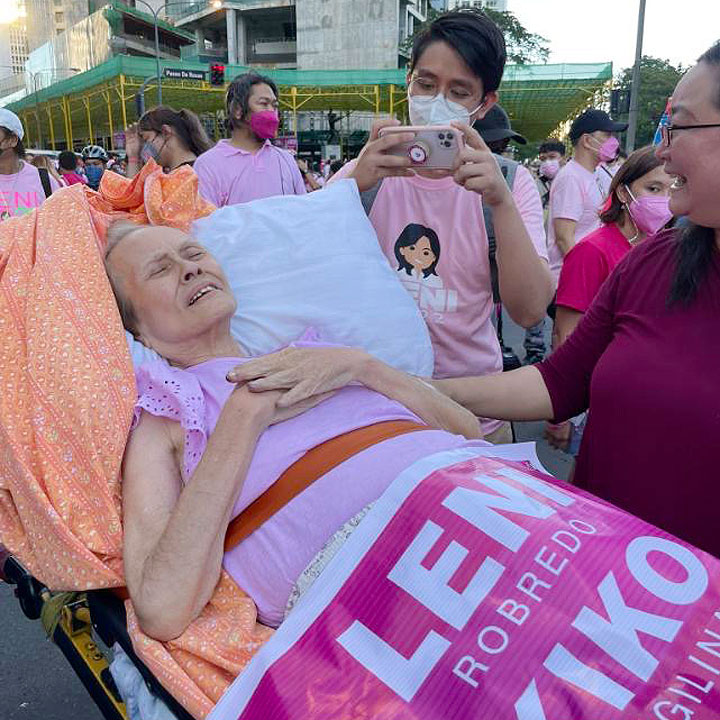
One photo best captures such an act of fulfillment and liberation, of devotion, courage, and radikal na pagmamahal (radical love). This is the photo (credit to the owner) of Mrs. Evelyn, 77-years-old, afflicted with metastatic cancer, lying on a gurney while attending Leni’s miting de avance. Her husband died of cancer recently. She thus endures so much physical and emotional pain. But because of the light scattered by Leni’s campaign and the people’s movement, she radiates equanimity, bliss, and blessedness.

Despite mortality’s inevitability, Mrs. Evelyn is assured that the krusada (crusade) will live and prevail. Observe that this movement has the commitment and capacity to fight for the long haul and to win. It is a movement driven by the youth of the 21st century — coming of age, possessing intelligence, vigor, perseverance, passion, and idealism.

Rizal and the first propaganda movement and the Katipunan demonstrated the youth’s historical role in transforming society. And Rizal’s words are timeless: “The youth is the hope of the future.”

I have seen closely the youth do their part for the Leni-led people’s movement. Alexa, has not yet reached voting age, but she expresses her support by doing an upbeat video for Leni and participating in a fashion show to raise funds for the campaign. Felicia, encouraged by her mom (not exactly a fan of Leni) to make an independent voter’s choice, has chosen Leni and has appeared in a video of the UP Dance Ensemble dancing for Leni-Kiko. This makes her mom proud, notwithstanding their different choices.

And there are my young colleagues, my nieces and nephews, the daughters of family friends, and new-found friends among the young — too many of them to name — that have given invaluable service to the krusada.

Even children like bubbly Danum — who marches around the sprawling family compound, chanting “Leni!” — and pretty Belle and Bianca — who join their mom to display support for Leni — and toddler Charlie — who has been told stories by Lola Nina about this extraordinary time when Lola actively campaigned for Leni — are part of this narrative.

It is this explosion of people power, including youth power, that makes me say that Leni, as well as the movement she leads, has won. To echo Leni’s moving, momentous speech at the miting de avance: walang imposible! Nothing is impossible!

It is likewise the explosion of people power that has energized Leni, that has steeled her, and that will sustain her in leading our beloved country.

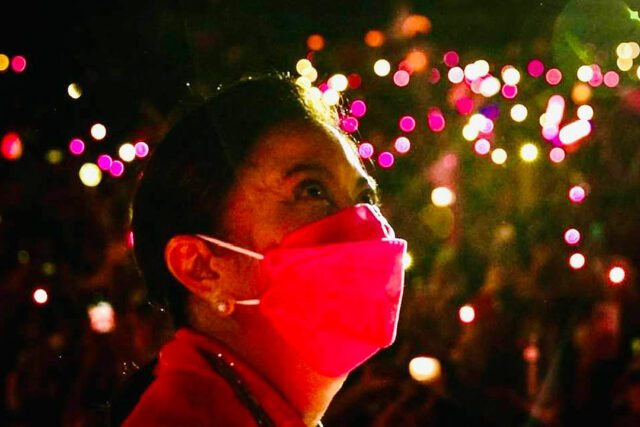
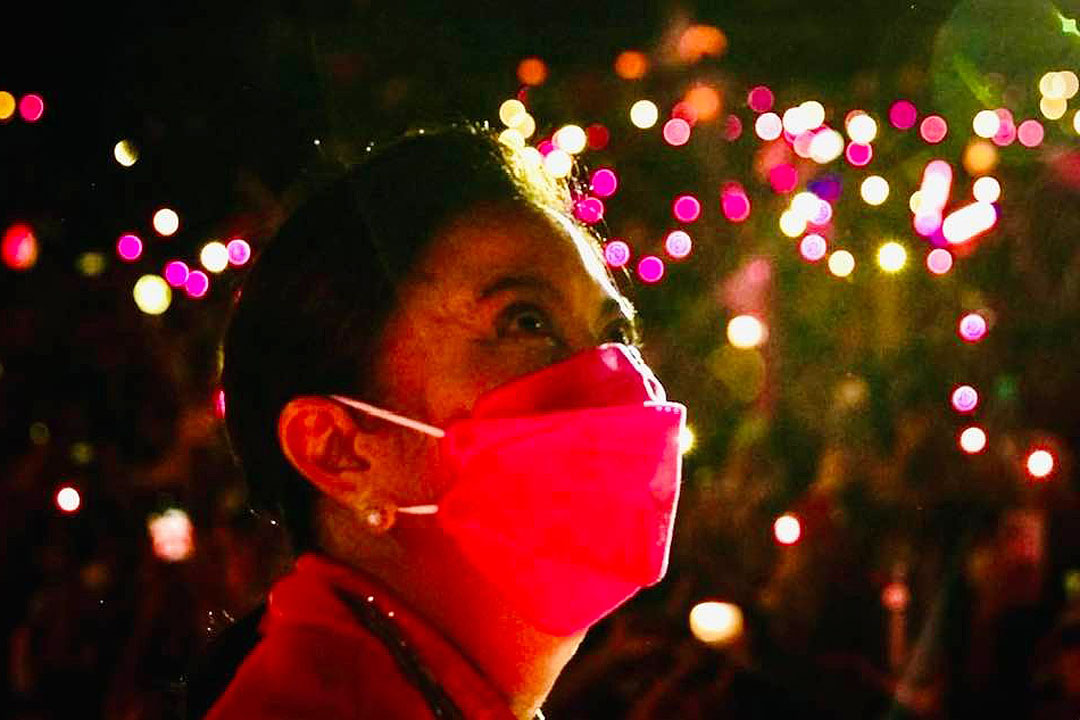
Another photo worth keeping is the one taken by renowned photo-journalist Raffy Lerma. I grabbed the photo from a post of Karina Bolasco, and I likewise quote her annotation:

“Raffy Lerma took her picture as she watched the fireworks of the Dagupan rally. I think she was looking at the stars, humbled by their configuration, and accepting what they have set out for her and our nation.”

What Karina said reminds me of a statement from the motivational speaker Les Brown: “Shoot for the moon. Even if you miss, you’ll land among the stars.”

Maraming salamat (thank you), Leni for leading us, for inspiring and moving the people. Magwawagi tayo (We will win)!


Filomeno S. Sta. Ana III coordinates the Action for Economic Reforms.

www.aer.ph

PPPs — Partnerships towards a Progressive Philippines

BW FILE PHOTO

(Part 2)

I point to two critical challenges, which can gain so much from a well-structured and implemented public-private partnerships (PPPs) environment:

1.) Boosting healthcare: Significantly adding healthcare capacity should be a top priority. We need both “beds” and “heads” — hospitals and healthcare practitioners — if we truly want to future-proof our healthcare system. With around 100,000 beds, our bed-to-population ratio of 1.0 remains under the World Health Organization (WHO) standard of 3.0. To reach a ratio of at least 1.25 by 2025, the country needs to increase its capacity by at least 54,000 beds. This is a massive undertaking that government cannot do alone. If we want to increase hospital bed capacity, we need to attract more private sector investments, through incentives and other mechanisms such as PPP arrangements, so we can entice more private players to be involved.

However, the other half of the challenge is the glaring gap in the country’s pool of doctors, nurses, and allied professionals. For example, we have around 0.4 doctors per 1,000 population, well below the WHO-prescribed standard of 1:1,000. The next generation should be encouraged to pursue training in healthcare-related fields. The government should explore incentivizing universities and medical schools to lower tuition costs and increase class sizes. PPPs can also be harnessed to establish more medical schools and training facilities, further empowering Filipinos all over to take on the call of service as healthcare providers.

Part and parcel to the government’s plan of strengthening Philippine healthcare is the implementation of Universal Health Care (UHC). Private healthcare providers should be encouraged and incentivized to establish primary healthcare facilities, in coordination with LGUs, to support the roll out of UHC. Furthermore, as the private sector continues to innovate with new mechanisms in line with UHC, the government should also be flexible in its regulations, able to adapt and evolve with these new business models. The private sector is eager to support UHC and, like how we dealt with the pandemic, cooperation and collaboration with the government are key if we want to see UHC through.

Finally, PhilHealth plays a vital role. To ensure PhilHealth’s future success and build resilience in the healthcare system against the future unpredictability with the pandemic, there are clear opportunities that should be addressed now, particularly on improving technology and systems for claims processing, fraud detection, and collections and reimbursements. The private sector can help by lending its collective wealth of technical knowledge and experience with global best practices. Should PhilHealth need to outsource certain functions or consult on what are the best strategies as it reforms, the private sector is readily available to help and provide support where needed.

2.) Addressing our learning crisis: The pandemic has aggravated a Learning Crisis that has been creeping upon us for decades but has been highlighted in recent years with our dismal placings in several international assessments of learner competencies, and, most recently, with the World Bank’s staggering data showing us at the bottom of the heap in almost all categories. Using data from PISA, TIMSS, and SEA-PLM (Program for International Student Assessment, Trends in International Mathematics and Science Study, and Southeast Asia Primary Learning Metrics) the World Bank (2021) estimates that 90% of 10-year-olds cannot read a simple story.

There are three areas with great opportunities for a strong Public Private Partnership to make a difference:

A. Improving the voucher system to accelerate school opening and learning recovery: The government has been successfully running large scale education subsidy programs in high school. In SY 2021-22, about a million private junior high students are ESC grantees while in senior high, about a million students are voucher recipients.

The positive impact is clear cut. In August 2020, an ADB study concluded that the programs promote the efficiency of the mixed public-private education system, enable greater choice, empower the parents and the learners, and promote diversity of providers.

But there is much more potential to expand and refine these programs such as (1.) increasing high school slots; (2.) redesigning programs towards the adoption of a universal voucher across eligible grade levels; (3.) adding grades 1-6; (4.) differentiating the grant amount using parameters such as socio-economic status, school location, SHS tracks or strands; (5.) quality assuring all participating schools and (6.) prioritizing disadvantaged students such as children with disabilities and indigenous peoples.

In higher education, the government is spending massively by subsidizing state colleges and universities offering free tuition for all. As has been pointed out by the Philippine Institute for Development Studies (PIDS), the government’s think tank, this is sub optimal: there is not enough financial support for the truly needy students (tuition is only a portion of the cost), leakages to the non-poor, and inimical effects on private institutions, many of which are much more efficient in providing education than their public counterparts. To address these shortcomings, a PPP model wherein a portable voucher is provided exclusively to the poor that would allow them to enroll in the post-senior high school of their choice, whether public or private, can be adopted. This is more efficient in using taxpayer money, and by empowering students to choose, provides a market test of the quality of public provision.

Additionally, vouchers need not be limited to college, but can also be deployed for other post-senior high school training programs more attuned to the needs of our country, e.g., digital skills.

B. Improving digital connectivity and 21st century teaching and learning: Improved availability of good digital connectivity in urban centers has partially addressed the inability to do face to face classes in the last two years. However, this has widened the digital divide in terms of access to remote education platforms.

A possible PPP solution to this would be for the government to tap the technological and management expertise of telcos to expand their reach into those areas. Financially supporting their infrastructure and facilities roll out in areas that would not otherwise be commercially viable and providing subsidies to poor users using, for example, the CCT (conditional cash transfer) mechanisms would help solve this pressing problem.

But technology alone cannot solve the learning crisis. Guidance by trained and well-supported teachers is also needed for students to maximize the benefits of digital connectivity.

C. Education Commission 2: If Education Commission 2 is passed into law, it would be a golden opportunity for the public and private sectors to work together to reboot our educational systems.

Ideally, the reboot should be informed by a holistic, data-driven assessment led by PIDS, the government’s think tank. Its review should cover legislative, policy, and administrative gaps, including the assessment of budgetary requirements to support public and private education sectors equally. The private sector could take the lead in providing technical assistance for a truly reimagined education system focused on improved learning for all.

Healthcare and education are just two areas that can flourish and create meaningful social impact through PPPs that are designed properly and implemented under the right enabling environment. I remain steadfast in my belief that there is a golden opportunity for us to build on the trust and collaboration gains created between government and the private sector during our collective response to COVID’s challenges, and channel these towards structured, well-designed, and longer-term contractual PPPs.

However, unlike the partnerships done during the pandemic — which are one-shot endeavors — contractual PPPs typically require long-term commitments, including significant capital from proponents and financiers. Thus, given the complex nature of such arrangements, such contractual PPPs need to be commercially viable, sustainable, and predictable.

Allow me to provide some recommendations to ensure that such a vibrant environment for contractual PPPs will emerge:

1. Institutionalize Public-Private dialogues for each of the government’s priority sectors, and supplement these with a Steering Committee, Secretariat, and regular cadence. While these may sound mundane, a continuous series of regular monthly dialogues with clear accountabilities and next steps will be much more effective than the current approach of ad hoc and irregular meetings when crises arise. The T3 (Task Force T3 [Test, Trace, Treat]) experience validates this arrangement.

2. Place the spirit of partnership and collaboration at the center of joint initiatives. Partners should recognize the strength of the private sector and the limitations of government, and vice versa, and seek to bridge these gaps through cooperation. We note that the government has had difficulty in the building and operation of projects, especially those that are complex and require high levels of technical expertise (e.g., IT projects, massive infrastructure initiatives, etc.). The private sector can certainly fill in these gaps, but under the appropriate environment of trust and genuine partnership.

3. Respect the basic principle of risk allocation. Parties that can best manage particular risks should be the primary ones to carry these. Thus, on the issue of Material Adverse Government Action (MAGA), such risks should not and cannot be borne by the private sector, as this may result in unviable projects that do not generate interested qualified bidders.

4. Respect the sanctity of contracts. Business thrives in an environment of predictability and consistency, with internationally recognized mechanisms existing to resolve disputes between parties. Robust PPP arrangements would greatly benefit from this environment of respect for private partners, their contracts, and the decisions of international arbiters in cases of disputes.

5. Design globally competitive PPP contracts. Connected to the above, arrangements that are investment-friendly attract the highest quality local and global players that can best meet the requirements of government and the public at the least cost, while promoting healthy competition. The amendments to the Public Services Act that allows 100% foreign ownership in key infrastructure projects are a step in the right direction. However, the proposed amendments to the BOT (build, operate, transfer) Law’s Implementing Rules, covering exclusions to what constitutes MAGA, uncertainty in determining “reasonable” rates and returns, and removing arbitration as a dispute-settlement mechanism, among others, are a worrying development.

To close, the COVID-19 pandemic appears to have ushered in unprecedented levels of trust and a much tighter partnership within the private sector, and between the private sector and the government — the bayanihan spirit coming to life. I believe that there is no other more opportune time than this post-pandemic period to build on these gains and create an environment where public-private partnerships, broadly defined, become a critical vehicle for addressing our several development challenges in the delivery of needed public services and infrastructure, both hard and soft. The government’s limited fiscal resources at this time require that it spend these more wisely, and leverage the same with private financial resources, and technical and management know-how.

I am grateful for valuable inputs from Fred Ayala, Paolo Borromeo, Bill Luz and Paolo Monteiro. Mistakes all mine.


Romeo Bernardo served as finance undersecretary during the President Cory Aquino and President Fidel Ramos administrations. He currently sits on the boards of the Foundation for Economic Freedom, the Management Association of the Phil. and the FINEX Foundation.

romeo.lopez.bernardo@gmail.com

The irony of the D&E electoral choice

PHILIPPINE STAR/ RUSSEL PALMA

Isn’t it ironic that the D&E socioeconomic classes, the very sector that needs social and economic reforms the most, are the stronghold of the Marcos and Duterte UniTeam.

We all know that the Marcoses and Dutertes are political dynasties. They are supported by the Arroyos, the Estradas, and the Romualdezes, all of whom are dynasties too. And since Marcos and Duterte have the lead in the polls, numerous dynasties across the archipelago have pledged their support for their political survival.

Given the composition and background of the UniTeam, it is highly unlikely that reforms to democratize wealth will be realized. Political dynasties will do what they have always done — consolidate influence for the family even at the expense of vital reforms. I reckon the future, under the UniTeam, will be a status quo situation where the narrow elite control the power and wealth of the land while the majority are given just enough not to revolt.

Why then is Marcos-Duterte tandem the seemingly preferred candidate for the D&E classes? The answer lies in the shortcomings of post-EDSA reforms.

However, sweeping the Aquino and Ramos reforms were to re-establish democracy and re-boot the economy, it fell short when it came to uplifting the lives of the poor. The majority of those who were poor in 1986 remain poor today.

Consider these statistics. Despite the economy expanding by 13.5 times its size in 1986, the wealth of the nation remains concentrated with just 143,000 households or a mere 0.6% of the population. According to the Philippine Institute for Development Studies, this razor-thin elite enjoy incomes of between P2.5 million to several billion pesos annually. Meanwhile, 5.6 million households live below the poverty line, earning less than P10,481 per month. Nine million households live from hand to mouth, earning between P10,481 to P20,962 per month. The middle class, or those who earn between P20,962 and P208,000 a month, comprise the balance of households.

Acute income inequality has led to widespread discontent among the masses. And this, dear reader, is the reason why the Marcos-Duterte tandem is immensely popular. For those that live below or slightly above the poverty line, a vote for Marcos Junior is a rebellion against the status quo. It is a clamor for radical change since the reforms enacted by the revolutionary government failed, as far as they are concerned. Again, its ironic.

In fact, the sentiments of discontent triggered by income inequality were already apparent as far back as 2016. Despite record economic growth fostered by the former President Noynoy Aquino, the masses gravitated to Rodrigo Duterte and his invective-laced battle cries. Mr. Duterte’s foul mouth reflected the anger of the disenfranchised masses.

There are a multitude of reasons why income has not trickled down to the masses despite the seeming success of the Aquino- Ramos reforms. For expediency and lack of space, let me distill them to three.

The first is a failure of the Local Government Code of 1991. The author of the law, Senator Nene Pimentel, had good intentions. The idea was to devolve the powers of the national government to the local governments. This way, they could be the masters of their own fate as far as economic development, environmental protection, healthcare and social services are concerned.

Unfortunately, 31 years after the enactment of the law, most LGUs remain poor and dependent on the national government for their sustenance. Poverty remains rampant and the delivery of social services remains wanting. Worse, the absence of an Anti-political dynasty law led to local government officials cornering political and economic powers within their respective bailiwicks.

Political dynasties are at the heart of income inequality. In the Senate, 16 out of the 24 members belong to dynasties as are 70% of the members of Congress. Among local governments, 73 out of 80 provinces are controlled by dynasties.

Statistics show that the average incidence of poverty in provinces controlled by dynasties is a staggering 29.15% while those not under dynastic control stand at only 18.91%. Abject poverty is at 2.31% in dynastic bailiwicks and only 1.96% in non-dynastic localities.

Most dynasties are ineffective. Why? Because when members of the same family occupy multiple positions within a city or municipality, most are likely to consolidate power in a pseudo monarchial manner. In such a setup, the preservation of power becomes the priority, even more important than social and economic development itself. Painful but necessary reforms are avoided as they erode political equity. Adoption of populist policies becomes the norm at the cost of stunted development.

The second is the failure of the Comprehensive Agrarian Reform Program (CARP). While CARP succeeded on a political level, it failed to arrest the continued drop in agricultural output.

CARP resulted in an average farm size of one hectare with a maximum holding of five. Worsened by an inefficient cooperative system and expensive farm inputs (seeds, fertilizers, machinery), farmers were relegated to subsistence farming characterized by low output, low income, and zero bandwidth for expansion.

The third failure is the protective economic provisions of the 1987 constitution. Stiff restrictions on foreign investments have deprived our people of a vibrant manufacturing sector that could have provided high-income jobs, complete with benefits and security of tenure.

All this is not to say that the Cory and Ramos governments were not successful. It was Cory who dissolved the Marcos-controlled Batasan Pambansa and replaced it with a bi-cameral legislature, duly mandated by a brand-new constitution. Human rights were upheld anew and enshrined in the constitution. Mass media and freedoms of speech, expression, and assembly were re-established. Thanks to her, we now have the right to due process if arrested, the rights to privacy, to information and to protection under the law, among others.

For his part, Ramos succeeded in breaking down monopolies and opening up industries to competition. He embarked on a massive privatization program that allowed us to enjoy relatively reliable electric power, water, air transport, and telecommunications today. He restored economic competitiveness through a series of reforms under the Philippines 2000 agenda.

But all these do not matter to the sector that still lives from hand to mouth.

The Marcos-Duterte campaign spent billions to associate their greatest rivals, the Robredo-Pangilinan tandem, with the post-revolution governments of Cory Aquino, Fidel Ramos, and Noynoy Aquino. By association, the poor blame the “pinks” for their misery.

But unbeknownst to the D&E, it is Robredo-Pangilinan who has articulated their intent to disrupt the status quo. They vowed to enact the Anti Political Dynasty Bill, the Freedom of Information Bill, the Full Disclosure Policy Bill, the People Empowerment Bill, and the Participatory Budget Process Bill. These bills are game-changers that will redistribute wealth, allow more participative governance, and espouse transparency.

As we cast our votes today, let us hope that the D&E classes get what they truly deserve — a government that will raise them up from poverty and narrow the chasm that exists between the elite and the poor.


Andrew J. Masigan is an economist

andrew_rs6@yahoo.com

Facebook@AndrewJ. Masigan

Twitter @aj_masigan

The Collective Conscience speaks

FREEPIK

Today, May 9, 2022 is General Election Day. The day when eligible voters will elect 18,180 new officials for the executive and legislative branches of the government — 77 national posts and 18,103 provincial and local positions, except for the barangay officials.

According to the Commission on Elections (Comelec), of the country’s total population of 110 million, there are 65.7 million registered local voters (61%) who are expected to go out and vote today, aside from the 1.8 million overseas voters who have had the opportunity to vote earlier.

Tempering expectations to a voter turnout of about 82%, like at the 2016 General Elections, that would mean about 55.35 million Filipinos would vote today to choose their leaders for the next six years (for President, Vice-President, and Legislators) and three years (for local governments). A difficult decision.

Today, the Collective Conscience will speak. Whether the good and deserving or the bad and undeserving win or lose, the Collective Consciousness will have chosen. And whichever candidates have won or lost in this perhaps most virulent, ugliest, and brusquely contentious fight for jealous suffrage in decades, they might not have won on pure merit but on the perception of the voters of their capacities to deliver the expectations from such office. It is not even morality or spirituality that will raise the winners, for how can it be explained that even deeply religious and upright people have tenaciously supported the candidates of obvious moral lack and utter dearth of character?

The popularity surveys that proliferated in this most vulnerably impressionable time before elections have insinuated into the collective consciousness, whether they were believed or not, causing mixed emotions of fear or reinforcement. Those who opposed and doubted surveys have brought up concerns about “mind conditioning,” where the repetitive reinforcement of supposedly scientifically derived conclusions convinces the target audience that they should likewise approve of the candidate like those randomly selected interviewees in the surveys. But despite the cynicism about the accuracy of surveys (perhaps more by those whose preferred outcomes are not validated), surveys do call to the bandwagon effect, either positively (join!) or negatively (go for the underdog). Information is always absorbed and processed, consciously or instinctively, by the collective mind — that is what collective consciousness is.

“A lie repeated often enough becomes the truth,” as the infamous Nazi spokesperson Goebbels espoused. Fake news and disinformation have clouded the collective consciousness in this critical time, amidst political and social insecurities exacerbated by the lingering anxieties of the COVID pandemic that would not go away yet. Perhaps the intermittent isolation/restrictions and gradual relaxation — made more confusing with the insistent new variants of the virus — have dissipated suspicion of fake news for want of excitement and novelty in day-to-day living. The internet and its seemingly unlimited information might have surreptitiously taken the lead in molding the collective consciousness, especially of the young, who are more “techie” and more adaptive to new technologies.

The “Young” (those between the ages 18 and 41 as defined by Comelec) are 37 million (about 56%) of the 65.7 million voters in the country — a “prime mover” of the May 2022 election results, Comelec said (CNN Philippines, Feb. 8, 2022). The turnout of the youth in the 2016 election was about 30%, but the turnout this year is projected to be much higher, according to Comelec spokesperson James Jimenez. This might be because the young are more aware of their rights, and of issues about these rights and freedoms — thanks to the accessibility and exchange of information and communication on social media.

Perhaps the biggest challenge facing young volunteers (campaigners) has been the wave of disinformation that has lionized the Marcos era and vilified Ms. (Leni) Robredo as a communist… Tsek.ph, an independent fact-checking project in the Philippines, found that Mr. Marcos (Jr.) has benefited the most from disinformation this year, while Ms. Robredo has been its biggest victim so far. The group said that of more than 200 election-related posts it analyzed, 94% targeted Ms. Robredo; only 10% went after Mr. Marcos Jr.” (nytimes.com, May 1, 2022).

The sinister, selective bashing in social and mass media of the more instinctively liked candidates who have no history of wrong-doing is revising history itself. How can the collective consciousness erase in its mind and soul what history taught it by experience to be the ideals and values for living in peace and harmony in life? Historical revisionism is the betrayal of the collective conscience. “Never again!” is the battle cry of the collective conscience to always remember what the Filipino soul fought for at the EDSA People Power Revolution in February, 1986 — when the dictator Ferdinand Edralin Marcos (Sr.) was ousted after 14 years of bloody martial law that trampled and stole the people’s life, rights, and wealth. “Tama na, sobra na!” Enough is enough!

It turns the knife in the wounded soul of the collective consciousness to now reduce the EDSA Revolution to a fight between “the Yellows” (anti-Marcos) and the pro-Marcos (those who think Marcos did nothing wrong, and even did good for the country back then). The reversal and re-assignment of moral roles — with the Yellows as the bad ones and Marcos as the good one — was a most blatant and despicable mental bullying of the collective soul by present-day pro-Marcos campaigners.

After the counting of votes by the Comelec Board of Canvassers, it will be known who the winners are for the positions to be filled. It will be known if the surveys were right; it will be known if social media was true or false; it will be known if the euphoria of those pre-election rallies of hundreds of thousands for “the good one” (the morally and ethically upright candidate) was premature and naïve. What if the consistent top-notcher (“the other one”) in the popularity surveys wins as President despite moral and ethical doubts on his character?

The moral considerations in choosing whom to vote for in this election have roused the religious (the Catholic clergy) to unprecedented direct involvement in the campaign. Five days before the elections, the Clergy for the Moral Choice (CMC) with over 1,200 (now 1,500) priests, bishops, and deacons, officially endorsed the candidacy of Leni Robredo and her running mate Senator Francis “Kiko” Pangilinan. The CMC reminded Catholic Filipinos (who make up 86% of population) of “their sacred duty… to vote and to vote only for the right leaders of this our beloved country, the Philippines, to choose and to elect true servant-leaders whose hearts are really after the heart of the Good Shepherd” (Rappler, May 4, 2022).

On Teleradyo on May 5, hosts Tony Velasquez and Danny Buenafe asked Fr. Francis Lucas, President of the Catholic Media Network and Director of the Catholic Bishops Conference of the Philippines (CBCP) if the active voice of the Catholic clergy in the elections was a transgression of the constitutional separation of Church and State and against the prohibition in Canon Law for the clergy to be political. Fr. Francis clarified that the endorsement by a group of Catholic clergy was not an institutional endorsement by the Catholic Church, and thus did not violate the Constitution nor Canon Law.

The indigenous religious sect Iglesia ni Cristo (INC) publicly (institutionally) endorsed candidates Bongbong Marcos and Sara Duterte and 12 Senatorial bets for election. “INC requires its members (who make up 2.3% of population) to vote as one, in accordance with the church’s beliefs and the importance it places on unity” (ABS-CBN, May 5, 2022.) The endorsement of certain candidates by the “Moral choice” Catholic clergy was far from being a directive to vote for those endorsed — there is no buying or bribing; no quid pro quo, no forcing, no threats.

Fr. Francis reinforced the concern of the CMC that the collective conscience must make a moral choice on who should lead our country. He prayed: “Panginoong Diyos, mahilom nawa ang mga mali naming pananaw sa buhay; ang pagsalanta namin sa Iyong mga batas at sa Iyong adhikain sa aming ikabubuti.” (Lord God, may our wrong views on life, our disruption of Your laws and Your cause for our good be silenced.)

Heal our collective conscience that has lowered our moral standards by our own disrespect of Your laws, Oh God, and our selfish disregard of Your guidance on what is good for us all.


Amelia H. C. Ylagan is a doctor of Business Administration from the University of the Philippines.

ahcylagan@yahoo.com

HK’s next leader endorsed by pro-Beijing elites

REUTERS

HONG KONG — Hong Kong’s  (HK) leader-in-waiting, John Lee, was endorsed for the city’s top job on Sunday by a committee stacked with pro-Beijing loyalists, as the financial hub attempts to relaunch itself after several years of political upheaval.

Mr. Lee, the sole candidate, received the votes of 1,416 members of a pro-Beijing election committee on Sunday morning, granting him the majority required to anoint him as Hong Kong’s next leader. Eight voted to “not support” him.

Few of the city’s 7.4 million people have any say in choosing their leader, despite China’s promises to one day grant full democracy to the former British colony, which returned to Chinese rule in 1997.

Security was tight around the venue, with police preventing a small group of protesters from approaching.

“We believe we represent many Hong Kong people in expressing opposition to this China-style, single-candidate election,” said Chan Po-ying, a protester with the League of Social Democrats, holding up a banner demanding full democracy.

Mr. Lee, a former Hong Kong secretary for security, has forcefully implemented China’s harsher regime under a national security law that has been used to arrest scores of democrats, disband civil society groups and shutter liberal media outlets, such as Apple Daily and Stand News.

He has pledged to relaunch Hong Kong as an international city and bolster its competitiveness, amid concerns among some Western governments, including the United States, that freedoms and the rule of law have been undermined by the security legislation that was imposed by Beijing in 2020.

Chinese authorities say the law is necessary to restore stability after protracted pro-democracy protests in 2019.

Some critics say Mr. Lee’s attempts to relaunch Hong Kong internationally could be affected by sanctions imposed on him by the United States in 2020 over what Washington said was his role in “being involved in coercing, arresting, detaining, or imprisoning individuals” under the security law.

YouTube owner Alphabet, Inc. has said it took down the Lee campaign’s YouTube account to comply with US sanction laws.

Mr. Lee, who says enacting more national security laws for Hong Kong will be a priority, has often said Hong Kong is a law-abiding society and that everyone must act in accordance with the law.

Among his other priorities, Mr. Lee has said he will restructure the government to bolster policy-making and try to boost housing supply in one of the world’s most expensive housing markets. — Reuters

Sinn Fein calls for united Ireland debate after historic election win

THE TITANIC BUILDING and Harland and Wolff cranes are seen in Belfast, Northern Ireland, April 29, 2022. — REUTERS

BELFAST —  Sinn Fein, the former political wing of the Irish Republican Army (IRA), hailed its first victory in a Northern Ireland Assembly election as a “defining moment” for the British-controlled region and called for a debate on a united Ireland.

Sinn Fein was ahead of the pro-British Democratic Unionist Party (DUP) by 27 to 24 seats with two left to declare, making it the first Irish nationalist party to become the largest in the devolved assembly.

“Today represents a very significant moment of change. It’s a defining moment in our politics and for our people,” said the head of Sinn Fein in Northern Ireland, Michelle O’Neill, whose party secured 29% of first-preference votes to the DUP’s 21.3%.

She said there should now be an “honest debate” around the party’s goal of unifying the territory with the Republic of Ireland.

The victory will not change the region’s status, as the referendum required to leave the United Kingdom is at the discretion of the British government and likely years away.

But the symbolic importance is huge, ending a century of domination by pro-British parties, supported predominantly by the region’s Protestant population.

The DUP, a leading proponent of Britain’s exit from the European Union, saw support undermined in part due to its role in post-Brexit talks between London and Brussels that resulted in trade barriers between Northern Ireland and the rest of the United Kingdom.

‘HISTORIC RESULT’
Scottish First Minister Nicola Sturgeon, who is also leading a campaign to secede from the United Kingdom, was among the first to congratulate Sinn Fein in a Twitter post that hailed a “truly historic result.”

While the largest party has the right to put forward a candidate for First Minister of Northern Ireland’s compulsory power-sharing government, disagreements with the DUP mean such an appointment could be months away.

Asked by a journalist if she expected to become the region’s first Irish nationalist First Minister, Ms. O’Neill said: “The people have spoken.”

DUP leader Jeffrey Donaldson said his party would not join the government unless the protocol governing Northern Ireland’s trade with the rest of the UK following its exit from the European Union was totally overhauled.

The DUP’s campaign focused on a promise to scrap what it calls a border in the Irish Sea.

Mr. Donaldson said he would see what British Prime Minister Boris Johnson says on the topic in a speech next week before deciding his next move.

The British government’s minister for Northern Ireland Brandon Lewis in a statement called on the parties to form an executive as soon as possible.

Sinn Fein was long shunned by the political establishment on both sides of the Irish border for its links to Irish Republican Army violence during three decades of fighting over Northern Ireland’s place within the United Kingdom that ended with a 1998 peace deal.

Since then it has reinvented itself to become the most popular party in the Republic of Ireland, where it has carved out a successful base by campaigning on everyday issues such as the cost of living and healthcare.

It followed a similar path in the Northern Irish elections, where it focused on economic concerns rather than Irish unity to appeal to middle-ground voters.

The election follows demographic trends that have long indicated that pro-British Protestant parties would eventually be eclipsed by predominantly Catholic Irish nationalist parties who favor uniting the north with the Republic of Ireland. — Reuters