Home Blog Page 6076

Supreme Court cancels past permits for use of SC seal on vehicles 

PHILSTAR FILE PHOTO

THE SUPREME Court (SC) has ordered the cancellation of all permits issued on the use of the tribunals official seal on vehicles.   

In a statement on Wednesday, the High Court warned that violators may be held liable for indirect contempt of court and may be criminally prosecuted.  

“The court ordered the revocations of previously-issued authorizations for said displays of the official seal,” said the court.  

Security plates of former court officials and judiciary members will no longer be valid authorizations, it said.    

It added that vehicle owners must apply for new authorizations to use the Supreme Court seal.  

The new rules are consistent with previous directives prohibiting unauthorized items bearing the SC seal. It will take effect following its publication in two local newspapers.  

The tribunal also directed the Office of the Court Administrator to issue a memo on the new measure for lower courts. John Victor D. Ordoñez

US says Beijing’s South China Sea ‘provocations’ risk major incident

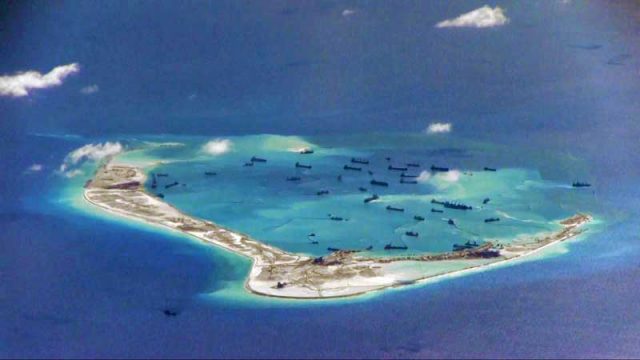
US NAVY/HANDOUT VIA REUTERS/FILE PHOTO

WASHINGTON — The United States on Tuesday accused China of increased “provocations” against rival claimants in the South China Sea and said its “aggressive and irresponsible behavior’ meant it was only a matter of time before a major incident or accident.

Jung Pak, deputy assistant secretary for East Asia at the State Department, told a US think tank there was “a clear and upward trend of PRC provocations against South China Sea claimants and other states lawfully operating in the region,” referring to the People’s Republic of China.

She told the Center for Strategic and International Studies Chinese aircraft had increasingly engaged in unsafe intercepts of Australian aircraft in international airspace above the South China Sea and in three separate incidents in the last few months had challenged marine research and energy exploration activities within the exclusive economic zone of the Philippines.

Speaking later at the same event, Ely Ratner, assistant secretary of defense for Indo-Pacific Security Affairs, said there had been “dozens” of incidents in the first half of the year involving the Chinese military in the South China Sea, a sharp increase over the past five years.

“Beijing is systematically testing the limits of our collective resolve,” he said.

“In my view, this aggressive and irresponsible behavior represents one of the most significant threats to peace and stability in the region today, including in the South China Sea. And if the PLA continues this pattern of behavior, it is only a matter of time before there is a major incident or accident in the region,” he said, referring to China’s armed forces.

The comments came ahead of an anticipated call between President Joseph R. Biden and Chinese President Xi Jinping this week, which is expected to focus on ways to prevent the growing US-China strategic rivalry veering into conflict, particularly over the self-ruled Chinese-claimed island of Taiwan.

They also came ahead of meetings of Southeast Asian foreign ministers and partners, including the United States, next week in Cambodia.

China claims nearly all of the South China Sea and Ms. Pak called the claims “expansive and unlawful.”

She added that China’s “provocative actions” to implement such claims “contribute to regional instability, damage the economies of other claimant states, undermine the existing maritime order, and threaten the rights and interests of all nations that rely on or operate in this vital waterway.”

Ms. Pak said Washington had a “very complicated relationship with Beijing” was not trying to counter everything it was doing in Southeast Asia and the rest of the developing world.

“We want to make sure that countries, as they have their relationships with Beijing, have the tools and the power, and the ability to stand up for their autonomy and their sovereign decision making,” she said. — Reuters

Singapore extends stay of Sri Lanka’s Rajapaksa

GOTABAYA RAJAPAKSA — CS.WIKIPEDIA.ORG

COLOMBO/SINGAPORE — Singapore has permitted former Sri Lankan president Gotabaya Rajapaksa to stay in the island republic for an additional 14 days, two sources familiar with the matter told Reuters on Wednesday.

A short-term visit pass issued when Mr. Rajapaksa arrived on a private visit two weeks ago has been extended, two separate sources in Colombo and Singapore, both with knowledge of the matter, told Reuters.

Mr. Rajapaksa is now able to stay in Singapore until August 11.

The Immigration and Checkpoints Authority in Singapore did not respond to a request for confirmation on the extension of stay.

Mr. Rajapaksa landed in Singapore on July 14, a day after fleeing his crisis-ridden country via Maldives and following a popular uprising that forced him to resign as president.

At the time, the Singapore government said he had not been granted asylum, and was in the country on a private visit.

“It is my belief he may eventually consider returning to Sri Lanka but there is no definite political or other stance on this,” Sri Lankan government spokesperson Bandula Gunwardena said on Tuesday.

Six-time prime minister Ranil Wickremesinghe took over as president following a victory in a parliamentary vote after Mr. Rajapaksa fled the country and resigned.

The country of 22 million people has been crippled by a devastating economic crisis for several months, with shortages of fuel, food and other necessities as foreign exchange reserves needed for essential imports dropped to record lows. — Reuters

Monkeypox emergency may last months

A SECTION of skin tissue, harvested from a lesion on the skin of a monkey, that had been infected with monkeypox virus. — CENTERS FOR DISEASE CONTROL AND PREVENTION

LONDON — Scientists advising the World Health Organization (WHO) on monkeypox say the window is closing to stop its spread, with cases currently doubling every two weeks, raising concerns that it will take several months for the outbreak to peak.

WHO Europe has forecast just over 27,000 monkeypox cases in 88 countries by Aug. 2, up from 17,800 cases in nearly 70 countries at the latest count.

Making predictions beyond that is complex, scientists around the world told Reuters, but there is likely to be sustained transmission for several months and possibly longer, they said.

“We have to get in front of this,” said Anne Rimoin, an epidemiology professor at the University of California, Los Angeles.

“It’s clear the window of opportunity for doing so is closing,” added Ms. Rimoin, a member of the WHO expert committee on monkeypox that met last week to determine whether the outbreak constituted a global health emergency.

A majority of committee members voted against the move and, in an unprecedented step, WHO Director-General Dr. Tedros Adhanom Ghebreyesus declared an emergency anyway.

Action stemming from that declaration needs to be urgent, including increased vaccination, testing, isolation for those infected and contact tracing, global health experts said.

“Transmission is clearly unchecked,” said Antoine Flahault, director of the Institute of Global Health at the University of Geneva, who chairs the WHO Europe advisory group.

Jimmy Whitworth, a professor at the London School of Hygiene and Tropical Medicine, said he expected that cases would not plateau for at least the next four-to-six months, or until the those at highest risk of infection have been either vaccinated or infected. Sexual health organizations in the UK recently estimated that could be around 125,000 people.

Monkeypox has been a globally neglected public health problem in parts of Africa for decades, but cases began to be reported outside countries where it is endemic in May.

It generally causes mild to moderate symptoms, including fever, fatigue and the hallmark painful skin lesions, that resolve within a few weeks. Five people have died in the current outbreak, all of them in Africa.

Beyond Africa, monkeypox is spreading chiefly in men who have sex with men, putting sexual health clinics on alert for new cases.

“I remember clearly … saying that ‘I think I’m going to die,’ because I can’t eat, I can’t drink. I can’t even swallow my own spit,” said Harun Tulunay, 35, a sexual health advocate who was hospitalized with monkeypox in London earlier this month but has since recovered.

‘SUSTAINED TRANSMISSION’
While monkeypox is not causing large numbers of deaths globally, an unpleasant virus establishing itself in new populations is still bad news, scientists said.

Mr. Flahault’s group has modeled three scenarios for the coming months, all of which include “sustained transmission,” either between men who have sex with men; beyond these groups and possibly into more vulnerable populations, like children, or between humans and animals.

The latter scenario risks the establishment of a monkeypox reservoir in animals in new countries, as it has in parts of west and central Africa, said Mr. Flahault.

Ongoing transmission could also lead to mutations that make the virus more efficient at spreading in humans, scientists said.

On Tuesday, German scientists released a study ahead of peer review that found mutations in one of the 47 cases they sequenced that could help monkeypox spread in people more easily.

“The alarm bell was going off (in Africa) but we kept hitting the snooze button. Now it’s time to wake up and do something about it,” Ms. Rimoin said. “An infection anywhere is potentially an infection everywhere.” — Reuters

Warrior and role model: Lydia de Vega

LYDIA de Vega-Mercado — BW FILE PHOTO

Like many fans of athletics and track and field in Asia, and the Philippines in particular, we were saddened by the news that Asia’s legendary former sprint queen and fastest woman, Lydia “Diay” de Vega is in critical condition at the Makati Medical Center after brain surgery several days ago. Although her vital signs are stable, according to knowledgeable sources her situation remains iffy and she is under constant monitoring by a team of doctors who are renowned specialists in their respective fields.

Diay was diagnosed with breast cancer as early as 2018. She and her family opted, however, to keep her illness private. I had spoken to her several times and she did not even hint at any difficulty.

Diay appeared at the finals of the 100-meter women’s race at the 2015 Singapore SEA Games to watch and congratulate the winner, Kayla Richardson. The Richardson family and track and field fans were thrilled to see her. She had deservedly become a byword in Philippine sports and gained so much popularity and respect without any need for foreign and local high-powered PR groups, so-called social influencers, and moneyed patrons.

What endeared Diay to fans and media was, first and foremost, her simplicity. She came from modest beginning in Meycauayan, Bulacan. Like most athletics talents in the mid- and late-1970s, Diay emerged from the Palarong Pambansa and was promptly recruited by the Far Eastern University for the UAAP (University Athletic Association of the Philippines). She then became part of Michael Keon’s Gintong Alay program which benefitted from extraordinary government support, Keon being the nephew of strongman Ferdinand Marcos, Sr. The support was fortunately put to good use as the program, which was focused solely on athletics, produced the likes of Reynato “Nonoy” Unso (presently the training director of Philippine Athletics Track and Field Association or PATAFA,  and Director of the Federation’s Masters Sports program), Isidro del Prado, Elma Muros, Hector Begeo, and a host of other Asian-level talents.

Diay’s entourage — or what elite athletes or superstars call their “team” — was comprised solely of her father-coach, ex-policeman Tatang de Vega, who hovered 24 hours a day over his pretty and statuesque daughter and stuck to her like a T-shirt. Tatang was her PR, masseur, therapist, and sports psychologist. Later, Claro Pellosis, ex-Olympian Santos Magno, and Australian Anthony Benson joined the team.

For all intents and purposes, Tatang’s word was the law. Veteran sports editors like Lito Tacujan, Jun Engracia, Ernie Gonzalez, Iking Gonzalez, Tony Siddayao, Manolo Iñigo, Gus Villanueva, Tito Tagle, and several other journalists all had anecdotes about how Tatang aggressively managed and controlled Diay’s career.

It will be recalled that Diay excelled in the 100- and 200-meters, both sprint events. She was also doing the long jump, an event to which quite a number of sprinters, like Muros, gravitated. Lost in all the praises for Diay’s victories in the sprints was the fact that she was also a 400-meter runner and privately expressed the desire to specialize in the strength-sapping event that required speed and stamina. Tatang, however, put his foot down on that one and insisted that Diay concentrate on the sprints. Tatang felt, rightly, that the sprints were more high profile and offered more opportunities for possible sponsorship deals, according to the grapevine.

Despite the focus on the sprints, the 400 did play a prominent part in Diay’s career. She bagged a total of 24 medals in international competitions throughout her career, which spanned 14 years, from 1980 to 1994. She retired in 1989 and went back into active competition in 1991. In between those years, Diay got married to Paulo Mercado, then a Meralco engineer.

Fifteen of those 24 medals were gold while six were silver and three bronze. Five of the 24 were from the individual 400-meters and 4 x 400 relays. Diay, now 57, having been born on Dec. 26, 1964, had podium finishes in a wide variety of Asian competitions: Asian Athletics Championships, the Asian Games, and the Southeast Asian Games. She competed in two Summer Olympics: 1984 in Los Angeles and 1988 in Seoul.

Filipino fans first got to know her during the 1981 SEA Games where she won the gold medal in the 100-meters and 400-meters. Diay bagged the gold in the 1982 Asian Games in New Delhi, beating local bet PT Usha. She successfully defended her title as Asia’s fastest woman in 1986 at the Seoul Asian Games with a time of 11.53 seconds. Diay would later clock 11.28 — a record that would stand for more than three decades until Florida-based Filipina, Kristina Knott, would finish first with a time of 11.26 in a meet in the US in 2020. Knott would later break another decades-old record held by Diay in the 200 meters.

Diay accomplished all her record-breaking performances with a modest budget provided by the government and PATAFA. Her expenses did not run into the millions and the only foreign training that she had, if our memory serves us right, was at Mt. San Antonio College in Walnut, California. The training, spiced up by competitions, was for several months, the cost of which certainly did not run into the millions of pesos. Nowadays, the Philippine Sports Commission has received requests for training and competitions running into a mind-boggling sum of more than a quarter of a million pesos. Almost all of these funds will end up in foreign hands and economies.

During her retirement and in recognition of her impact on Philippine sports, we invited Diay to be co-host of a weekly sports program on IBC 13 called Double Team sometime in 2003-2004. The show was on the air for about a year until Diay started preparing for her eventual coaching stint in Singapore in 2005. The show aired on a weekend and taping was on a Wednesday or Thursday evening. Diay’s husband, Paolo, was around during the taping and he patiently waited until it’s end.

Friday, last week we had the honor of organizing a healing Mass for Diay via Facebook, presided by the “Running Priest” Fr. Robert Reyes. The choice couldn’t have been more appropriate. Both are runners: he is into semi marathons for physical fitness and she is into sprints at the international level. He was parish priest in Project 4, Quezon City, when Diay’s second child, John Michael, was run over in 2001 by a passenger jeep outside their home. John Michael would have been 25 today had he lived. His mother also served as an elected Councilor of Meycauayan.

Fr. Robert lifted up Diay and her family in prayer and exhorted everyone to “run the race towards one’s earthly goals at the same time as one runs the race to our heavenly destination.” He added, “One cannot leave the race for heaven behind because one is so preoccupied with the race for one’s earthly goals.” He praised Diay for serving as an inspiration to a country in bad need of role models.

Prayers continue for Diay’s well-being. A fundraising project called “Heal Warrior Diay” has been launched.


Philip Ella Juico’s areas of interest include the protection and promotion of democracy, free markets, sustainable development, social responsibility and sports as a tool for social development. He obtained his doctorate in business at De La Salle University. Dr. Juico served as secretary of Agrarian Reform during the Corazon C. Aquino administration.


Crypto breaks the rules. That’s the point.

JEREMY BEZANGER-UNSPLASH

ONE of the most common criticisms of cryptocurrency is that it is just a way to get around financial rules and regulations. That criticism is not entirely wrong — but with crypto, as with many other innovations, regulatory arbitrage is a feature, not a bug.

Very often, regulatory arbitrage is most successful when the innovation improves on some aspects of the older methods. The arbitrage conveys the message that the old regulations need to change.

Consider a concrete example. Many crypto institutions issue tokens, which to many regulators possess the properties of securities and ought to be regulated as such. But they aren’t, at least not uniformly. So, if you issue a crypto token, but don’t have to register it as a security and go through the process of satisfying securities laws, you are engaging in regulatory arbitrage.

It is worth thinking through why some of the regulations ought to change in this new context. In the pre-crypto world, issuing a security involved a host of institutional preparations and investments and legal planning, even apart from whatever regulatory constraints needed to be met. Issuing crypto tokens is usually easier and quicker, and quite immature institutions have done so. Software and blockchains do much of the work that once required offices, personnel, and a lot of hands-on management.

There could be software that automatically issues crypto tokens, based on smart contracts that specify conditions for issuance. This very possibility is a sign of how much things have changed.

Standard US regulatory practice typically focuses on regulating host firms and intermediaries, rather than software. Yet once a blockchain is verifying, storing, and communicating information, it is hard for regulators to step in and make a meaningful difference. Thus, the old regulatory model no longer applies to a significant part of the crypto experience.

And the lower costs of token issuance mean that the issuing intermediaries can be quite thinly capitalized. Often they are either not able or not incentivized to meet a lot of regulations. In addition, an institution can participate fully in the crypto space without being based in the US or being tied to any specific nation-state.

You can inveigh against those features of the market. Regardless, they are going to mean a radically different set of regulatory constraints. They also mean that some kinds of securities (if it is appropriate to call them that) can be issued far more cheaply than before.

Given this reality, shouldn’t regulations be changed — and substantially? This may include some areas where regulation is even tighter, though overall regulations will likely become looser. The regulators will have to learn to live with a more decentralized market structure that has lower costs and is harder to control. It is common sense that when software can substitute for major capital investments, regulations ought to change, even if observers disagree over how.

Unfortunately, the regulatory process is static and typically slow to change. Regulatory agencies often stick with the status quo until it is no longer tenable. One of the benefits of regulatory arbitrage is that it forces their hand and brings about a new equilibrium.

Even if you think the current regulations are appropriate, you should acknowledge that they too are the product of earlier episodes of regulatory arbitrage: In the 1980s, for example, junk bonds helped bypass some regulations on equity. Regulatory arbitrage has long been a means by which regulations are kept at least somewhat up to date.

To get back to the example at hand: It is true that many crypto token schemes are marketed under false pretenses or are part of a “pump and dump” strategy. These negative aspects of the token phenomenon should not blind us to their possible benefits as a new method of raising funds or using markets to value projects. Many valuable innovations — the railroads and the internet come to mind — were also plagued by investor fraud early on.

The argument is not, to be clear, that regulatory arbitrage always is good. It can lead to regulatory overreaction or, conversely, to regulatory holes that remain for too long and allow persistent fraud or systemic risk. The argument is that, fundamentally, regulatory arbitrage is part of a process that leads to lower costs, greater innovation and better rules.

People often ask me what crypto is good for. It’s good for a lot of things, and I am happy to recite some, but surely one of its more underappreciated benefits is that it is a form of regulatory arbitrage.

BLOOMBERG OPINION

Moving for a collective impact

GUILLAUME DE GERMAIN-UNSPLASH

More and more companies are seeing a clear connection between social progress and business success. Not a day passes without hearing companies trumpet their triple-bottom approach to conducting business. These stories are being chronicled in sustainability reports that the Securities and Exchange Commission will reportedly mandate for all listed companies by 2023. Recent data shows that while this requirement is still on a comply or explain basis, the compliance rate among listed firms in the local bourse has been over 90% for the past two or three years. Indeed, local firms have gone a long way in implementing and chronicling their efforts to manage business impacts on people, profit, and the planet. Even without an expressed admission, companies are now fast becoming agents of social change.

And this is something we should all welcome. Seeing businesses influence community development, nation-building, and overall social amelioration is indeed a positive development. These days we are feeling the impact of shared values i.e., pursuing business success that promotes societal benefits.

We have heard and seen for decades how the global community has called into question how businesses are being conducted — where even the legitimacy of enterprises is put into question primarily because of their adverse impact on society. Thankfully, all stakeholders realize that the seeming antagonistic relationship between companies and communities is not the solution to huge problems such as environmental degradation and climate change. We are seeing several steps toward a more concerted approach to better sustainable business practices. Businesses realize they cannot work in silos as they exist in an ecosystem that involves the broader society — impact communities, suppliers, distributors, consumers, non-government organizations (NGOs), people’s organization (POs), and state entities, i.e., national and local governments.

Hence, in pursuing shared value initiatives, we are seeing a positive theme called “collective impact,” which is fast becoming a “movement.”

As some management literature posits, a collective impact presupposes that social malaise is brought about by a complex combination of actions and omissions by stakeholders in any given situation; hence can be solved and managed only through careful, strategic, and coordinated efforts of all the stakeholders — the businesses, government, NGOs and POs, and the impact communities.

Indeed, a collective impact is an imprimatur for systemic changes. By bringing together relevant stakeholders — armed with appropriate data — the collective impact can foster a common understanding of the problem, eventually leading to developing and implementing mutually agreed upon solutions to social problems.

And businesses can bring so much to the table. They bring expertise in problem-solving within an understanding of time and budget. They embrace change management, pragmatism, and accountability, and have the ability to weave through ideological disagreements that sometimes affect governments and NGOs. Ultimately, motives can drive businesses to participate in collective impact initiatives because their growth and resilience can be affected if and when social problems distress their businesses.

A clear example of a successful collective impact initiative is the Net Zero program being implemented by a global firm in the Philippines. Characterized as bold and yet realistic, this firm commits to: 1.) reduce greenhouse gas (GHG) emissions by 30% in their operations by 2025 and achieve net-zero by 2050 at the latest; 2.) collect and divert 26,000 metric tons of plastic waste annually away from landfills and the ocean; 3.) reduce the use of virgin plastics by a third by 2025 and 100% of packaging to be recyclable or reusable; and, 4.) switch to 100% clean and renewable electricity in all its factories.

Early on, the company already realized that it could not achieve these targets alone. Thus, it has forged several strategic partnerships and collaborations with several organizations. It partnered with EcoPlanet Bamboo and One Tree Planted to help plant 2.5 million bamboo clumps and 1 million trees in Mindanao over the next three years.

It is also collaborating with the Climate Change Commission (CCC) to engage the youth in developing workable solutions to address issues and challenges linked to climate change through its innovation hub — Klimathon: Our Race Towards a Net Zero Reality. It is also in strategic alliance with the University of the Philippines – Los Baños (UPLB) to develop a program for its Department of Agribusiness Management and Entrepreneurship (DAME) to harness the youth’s potential for climate action through the “Net Zero Nation” competition.

Another company at the forefront of collective impact initiatives is one of the leading energy companies in the Philippines, which, for over 40 years, has been generating power from geothermal sources. It has earned its reputation as the Philippines’ leading renewable energy producer and the world’s largest vertically integrated geothermal producer.

Given its responsibility to carefully manage its impact on where it operates, this company has adopted a revolutionary framework that calls for regenerative development. It is particularly welcoming to hear its senior executives profess and commit action towards arresting the negative impacts of climate change.

This renewable energy firm has realigned its business, resources, and capabilities to fulfill a new chosen purpose: to forge collaborative pathways for a decarbonized and regenerative future. Embarking on this path, the company seeks to elevate the environment, its employees, communities, customers, other co-creators, and shareholders to create a broader, more positive impact on the planet.

As we continue to reel from the impact of COVID-19 amidst our battle against a number of social ills and the harmful effect of climate change, a new social mandate should be adopted by all businesses: a collective impact should be the new normal. More than a clarion call, a battle cry, or a mission, the collective impact should be a movement — a shared value for all. Only when a concerted and unified effort addresses social problems can we mitigate the bad, and, most importantly, grow and expand the good.


Ron F. Jabal, APR, is the chairman and CEO of PAGEONE Group www.pageonegroup.ph and founder of Advocacy Partners Asia www.advocacy.ph

Whiskey Business: A masterclass in malt and digital transformation

Globe Business ornately decorated its exclusive Whiskey Business event for CIOs to dine, unwind, and have fun.

In the fast-paced world of information technology and digital transformation, it pays for all the leaders behind tech-led enterprises to take it slow after a long, tiring day. And what better way to wind down than savoring the finest whiskeys in existence?

For these tech moguls, Globe Business hosted its first-ever ‘Whiskey Business,’ a masterclass in malt, laced with a grand prix in ICT solutions. A speakeasy-themed social event, sponsored by Zoom, Whiskey Business raised a toast to CIOs and innovation enablers to empower them with the best of ICT solutions as they propel their enterprises forward.

Tania Gil-Padilla, Globe Business Vice President for Enterprise Sales, gave a warm welcome to the guests.

The whiskey tasting segment was opened by Tania Gil-Padilla, Vice President for Enterprise Sales for Globe Business, who shared, “The pandemic has driven digital transformation in the past couple of years, and CIOs have become instrumental in leading their organizations through those times. But this night is a celebration of the successes amidst the challenging times, and a chance to take a break from online platforms and make more meaningful connections in person.”

Whiskey connoisseur, Francis Hasegawa, entertains CIOs with a Whiskey 101 session.

It was all fun, laughter, and a bit of friendly competition done through a quick round of games where Globe Business introduced their ICT solutions as they dove deeper into tasting whiskey notes.  Mr. Francis Hasegawa, one of Manila’s best whiskey connoisseurs, showcased the unique taste of the whiskey flights with that of the distinctive attributes of Globe’s partners, Zoom, Cascadeo, Genesys, and Third Pillar.

The first to be mentioned was the similarities between a Suntory Kakubin Yellow Label and Cascadeo—Globe’s cloud services delivery arm, which partners with the biggest players in the cloud business. Cascadeo pairs well with companies, no matter where they are on their cloud journey, and is the best choice for enterprises when it comes to building, migrating, and optimizing their cloud initiatives.

From there, the next topic transitioned to what makes a whiskey perfect. Likened to the Kirin Fuji Sanroku Signature Blend’s symphony of flavors, another partnership highlighted that night was Genesys, a leader in cloud customer experience and contact center solutions; and Zoom, the mainstay platform for video communications and meeting solutions that can integrate over a thousand applications for seamless workflows.

Then, the last stop was a discussion on the parallel attributes between Mars Iwai Tradition and Third Pillar, a supportive partner with strengths in customer relationship management, particularly in Salesforce Service, Sales, and Marketing cloud.

“The demands of businesses and their customers have shifted so much that we constantly need to innovate and introduce best-in-class ICT solutions where they are needed. Our objective remains clear—to be the top provider and best partner in bringing companies to the future by going beyond transactional conversations, seeking stronger partnerships, and accompanying them in their digital transformation journey,” shared Raymond Policarpio, Vice President for Product Management and Marketing at Globe Business, Enterprise Group.

CIOs across different industries made connections and shared some laughs as they were entertained throughout the event.

Indeed, like the finest whiskeys that offer malt enthusiasts some genuine delight, Globe Business helps enterprises drive their companies towards a better future.

Globe strongly supports the United Nations Sustainable Development Goals, particularly UN SDG No. 9, which highlights the roles of infrastructure and innovation as crucial drivers of economic growth and development. Globe is committed to upholding the 10 United Nations Global Compact principles and 10 UN SDGs.


Spotlight is BusinessWorld’s sponsored section that allows advertisers to amplify their brand and connect with BusinessWorld’s audience by enabling them to publish their stories directly on the BusinessWorld Web site. For more information, send an email to online@bworldonline.com.

Join us on Viber to get more updates from BusinessWorld: https://bit.ly/3hv6bLA.

Proper attire for the job

KAI PILGER-UNSPLASH

THE MILITARY and the Church have the edge in determining the proper attire for the job, especially for formal occasions. Their designated uniforms are unique and have a long tradition. Colors, coats, capes, stripes, accessories, and medals indicate status, including how to address the wearer properly.

Uniforms require subjects in a particular group to look the same in their attire. In sports like basketball, players wear uniforms made up of undershirts and shorts with numbers on them, and a predetermined color. This look identifies teammates and allows peripheral vision to determine ball movement. The job of putting a ball through the hoop, or preventing it from getting there, entails large salaries, considering a television audience in the millions around the world.

Three referees too have their own uniforms of shirts with short sleeves paired with long pants and whistles to keep the game under control. They are definitely paid much less than the burly guys in shorts.

In the office, the prescribed uniform is giving way to a less formal dress code.

The dot-com companies and their newly minted billionaires (after their IPOs and before a declared interest in buying them fizzles out) have made casual attire indicative of a 10-figure net worth.

Even bankers now sport casual wear, especially when they’re pivoting to the digital space, beyond ATMs and online banking. Financial technology (fintech) encompasses startups that don’t even pretend to be in banking but in payment systems. They are entitled to their own casual dress code — black turtlenecks are passé.

“Smart casual,” even at evening parties of moguls, is now acceptable office attire, even in large companies. Long-sleeved shirts, whether plain or with tiny checks (and no brand logos of scooters or pizzas) paired with denim pants are considered office-appropriate, even if it’s not a Friday.

Thick denim jackets, when trimmed with fake fur and patches of stars and stripes, send a different message. The all-denim look is associated with overseas workers coming home for a visit with long hair and accompanied by three big cartons at the airport. The swagger is inversely proportional to the strength of the peso.

Even denim pants with ripped thighs sections (but not where the zipper is) are making the scene, although mostly for social occasions. This ripped look can go with pointed boots and motorized skateboards. This attire is a declaration of radical chic, especially when accessorized with a key chain dangling from the belt strap for keys to the warehouse. What jobs are associated with this attire? Maybe BPOs in the night shift, boutique studios, bloggers and troll farm hands, and consultants for digital transformation — today we’ll talk about firewalls.

The casual look projects nonchalance and liberates the wearer from concerns about matching colors. (Am I on the right floor?) Even TV news anchors have dispensed with ties. Still, casual attire should provide clues to status. The chairman in short sleeves should be distinguishable from a collection clerk wearing fake signature brands. (Take a look at the watch.)

Showing up at a business lunch looking like a journalist or advertising copywriter (Were they ahead of their time?) should not raise eyebrows. The moment is saved from being awkward when bankers in charge of loan restructuring show up wearing magenta pants.

Casual wear does not cover all fields of social interaction.

There are still old-fashioned rules applied to those running a country. Proper attire is a declaration of how seriously one is taken by peers from the region. Will other heads of state recognize the presence of a sloppy gatecrasher? Is the waiter serving drinks skipping one head of state nobody is talking to?

It escapes no one’s notice that in terms of attire, the present leader is a vast improvement over his predecessor. There are no more rolled up sleeves, open first or second buttonholes for the traditional formal attire.

Always natty in a jusi barong (long or short sleeves) the incumbent leader exudes confidence and invites respect. And for a man of a few words, this properly attired presence is a refreshing change.

What about his casual attire for intimate social gatherings? Are there Hawaiian shirts in his closet? Maybe, these bring some unpleasant associations? Like formal attire, clothes for this leader may not be too colorful, loose fitting, and carefree.

For sure, proper attire for the job must be cut… and cut cleanly.


Tony Samson is chairman and CEO of TOUCH xda

ar.samson@yahoo.com

MPIF’s Bayan Tanim! named LCF’s Outstanding CSR Project in Disaster Resilience

MPIF President Melody del Rosario (2nd from left) and her team accept the LCF CSR Guild Award for Outstanding CSR Project in Disaster Resilience for Bayan Tanim!.

Bayan Tanim!, Metro Pacific Investments Foundation, Inc. (MPIF)’s community gardening initiative for sustainable living and food security, was recognized by the League of Corporate Foundations (LCF) as the Outstanding Corporate Social Responsibility (CSR) Project in Disaster Resilience during its LCF CSR Guild Awards last July 7, 2022.

The program, initially developed and mobilized to address food scarcity resulting from the pandemic, provided beneficiaries with the means to start their own backyard and community gardens. Planting kits containing basic cultivation essentials such as seeds, seedlings, fertilizer, soilless potting mix, were distributed along with freshly harvested vegetables.

Being well-received by communities as it promoted the values of Bayanihan, Bayan Tanim! was one of eight programs lauded among entries from 20 member organizations of the LCF. With the initial target to distribute 1,000 planting kits, the program largely surpassed its goal due to donations received by the MPIF, totaling to 2,905 planting kits provided to benefit 3,004 families from 31 communities.

With the idea of recovery in mind, MPIF President Melody del Rosario said, “We at MPIF decided to move past relief assistance and pivot towards a more sustainable program for our beneficiaries, even after the pandemic. Bayan Tanim! is a program that not only focuses on resilience and recovery, but also centers on reigniting the spirit of Bayanihan, while contributing to the community’s health, well-being and self-sufficiency.”

As of this year, Bayan Tanim! has benefitted approximately 4,014 families in 43 communities in Manila, Quezon City, Caloocan, Pasay, Taguig, Cavite, Mandaluyong, Muntinlupa, Parañaque, Pampanga, and Tarlac, raising a total of P1.392 million in donations.

A True Community Effort

The LCF CSR Guild Awards is a recognition program that bestows a seal of excellence in corporate citizenship to the most reputable and premier organizations implementing initiatives for social good with meaningful and sustainable impact to the communities and institutions. The accolade also acknowledges the importance of collaboration in achieving greater positive change for the benefit of more people.

Partnerships were key in ensuring Bayan Tanim!’s success, generating interest primarily from MPIF’s kapatid companies under the MVP Group of Companies, the conglomerate chaired by Mr. Pangilinan. Fundamental to the program’s mobilization and resulting impact is the support from Alagang Kapatid Foundation, Inc. (AKFI), who provided the needed resources to reach even the most far-flung communities.

First Pacific Co. Ltd. and Light Rail Manila Corp. provided the initial donations for the program, with Maynilad Water Services, Inc. and CAVITEX, a Metro Pacific Tollways Corp. subsidiary, providing constant financial support until this year.

MPIF signed a tri-partite agreement with the Department of Agriculture and Agrea Agricultural System International, Inc. to further strengthen their shared advocacy for food sustainability in the Philippines. Throughout its one-year run, MPIF sourced all planting kits, including fresh produce, from Agrea and Duran Farms — concurrently supporting local farmers’ cooperatives in their networks whose livelihoods were jeopardized by the strict lockdowns.

Individual donors were also integral in achieving Bayan Tanim!’s initial goals. Aside from MPIC group executives and employees, MPIF also launched a Department of Social Welfare and Development-credited public fund raising via its social media platforms.

Bayan Tanim! is aligned with Gabay Komunidad, one of the MVP Group’s Gabay Advocacies for a Sustainable Philippines. It is also in line with MPIC’s efforts to contribute to the United Nations Sustainable Development Goals (SDGs), particularly SDG 2 for Zero Hunger, SDG 3 for Good Health and Well-being, and SDG 17 for Partnerships for the Goals.

The recognition of this program bolsters MPIF’s role alongside MPIC, as the largest catalyst for a Sustainable Philippines, aimed to improve the lives in the country through providing essential services and mobilizing advocacies that uplift the quality of life of all Filipinos.


Spotlight is BusinessWorld’s sponsored section that allows advertisers to amplify their brand and connect with BusinessWorld’s audience by enabling them to publish their stories directly on the BusinessWorld Web site. For more information, send an email to online@bworldonline.com.

Join us on Viber to get more updates from BusinessWorld: https://bit.ly/3hv6bLA.

IMF sees slower growth for PHL in 2023

PHILIPPINE STAR/ MICHAEL VARCAS

The International Monetary Fund (IMF) raised its gross domestic product (GDP) forecast for the Philippines to 6.7% this year, but expects slower growth in 2023 amid global uncertainties.

IMF Representative to the Philippines Ragnar Gudmundsson said the GDP projection for the Philippines was hiked to 6.7% from 6.5% previously. This is within the government’s revised 6.5-7.5% target band for this year. 

At the same time, the IMF lowered the Philippine GDP forecast to 5% for 2023, from 6.3% previously, due to global shocks.

In its latest World Economic Outlook (WEO) released on Tuesday, the multilateral lender maintained its 5.3% growth outlook for the five Association of Southeast Asian Nations (ASEAN) member countries this year.

The IMF downgraded the GDP growth for the ASEAN-5 to 5.1% next year, from the 5.9%  forecast given in April.  

In a press conference announcing the release of WEO on Tuesday evening, Division Chief of the IMF Research Department Daniel Leigh said the region’s outlook for 2022 reflects a big recovery from only 3.4% in 2021. 

“And that owes to the success of the vaccination campaigns and strong labor markets in a number of these countries,” Mr. Leigh said. “But the slowdown in 2023 is a sharper one than what we had expected in April, we marked down 2023 by 0.8 percentage points.”

Mr. Leigh said growth outlook remains clouded by uncertainties caused by the slowdown in major economies such as the United States and China, and tightening monetary policy to fight rising inflation.

“Inflation is also rising in these economies as in many countries. For 2022 we have a 3% to 7% forecast depending on the country due to the various external shocks including the currency depreciation which is passing through in the cost of many items,” Mr. Leigh said. 

Inflation rose by 6.1% year on year in June, the fastest in nearly four years and exceeded the central bank’s 2-4% target band for a third straight month. The average inflation rate in the first six months is 4.4%, still below the BSP’s full-year forecast of 5%.

The Bangko Sentral ng Pilipinas has raised benchmark interest rates by a total of 125 bps so far this year to tame inflation. On Tuesday, BSP Governor Felipe M. Medalla signaled an interest rate hike of less than 75 basis points (bps) at its next meeting in August 18.

Meanwhile, the IMF slashed the global GDP growth outlook to 3.2%, from 3.6% for this year and to 2.9%, from 3.6% for 2023.

“We know all ASEAN economies are very dependent on the external sector and in an environment in which the global economy is slowing down, this is going to have an impact on all ASEAN economies,” IMF Chief Economist Pierre-Olivier Gourinchas said. — K.B.Ta-asan

During the holiday season, majority of Filipinos shopped on social platforms

PIXABAY

Almost 7 out of 10 Filipino shoppers discovered and shopped on social platforms during the holiday season, according to a survey commissioned by global tech firm Meta. 

Personalized ads were a huge driver for sales, with 80% of Filipino respondents saying they purchased products after seeing them in ads.  

“Brands need to start building for discovery and being part of the consideration well ahead of Mega Sale Days,” said John Rubio, Meta Philippines’ country director, in a statement. 

YouGov, the market research firm that conducted the survey, gathered insights from nearly 2,000 shoppers in the Philippines aged 18 and up from December 1 to 24, 2021. 

Released in July 2022, the survey also found that 92% of Filipino shoppers made a spontaneous discovery while shopping online. 

The main social media discovery drivers were personal connections and recommendations (78%), sponsored content (68%), and video content (64%).  

Mr. Rubio said that Filipinos’ online shopping habits continue even as they return to physical stores for Mega Sale Days: 67% of shoppers surveyed made purchases in-store, but 79% did online purchases.  

“Brands need to be social and mobile-first and deliver personalized ads experiences,” he said.  

Other findings include:    

  • Ninety-four percent of year-end shoppers surveyed are likely to try new brands in the food, apparel and fashion, and electronics categories.
  • Around 90% bought something during 12.12 and 11.11 Mega Sale Days, each of which respectively had 24% and 44% of the surveyed shoppers participate.
  • Of those who shopped on social platforms, 76% were Gen Z and Millennials.
  • Entertaining and immersive experiences are a huge influence, with 81% of social shoppers surveyed saying they’ve watched or are open to a live shopping event online. Of these, 88% believe augmented reality (AR) technology can influence their decisions.

“Brands need to create immersive experiences through AR, live shopping, and trusted creators,” Mr. Rubio said. “They need to find creative ways to communicate your brand values and purpose.” — Brontë H. Lacsamana