Home Blog Page 6058

Fernando Alonso

The dominoes fell, but definitely not in the way Alpine envisioned. For a while there, the Formula One constructor appeared to have an enviable talent depth, what with two-time champion Fernando Alonso and promising Esteban Ocon occupying seats and upstart Oscar Piastri waiting in the wings. Amid all the uncertainty surrounding the 2023 season, however, the Groupe Renault-owned team has found itself in dire straits; all too suddenly, it no longer has a second driver it can confidently look to as a vital cog in its push for competitiveness.

Timing — or, to be more precise, bad timing — played a role. Armed with an expiring contract and unable to view the medium term with favor, Alonso went about exploring his options elsewhere. He might well have refrained from engaging in wanderlust had he been offered a deal longer than the single guaranteed year that principal Otmar Szafnauer was willing to make. In any case, he knew that his days with Alpine were numbered, what with Piastri ready to make the jump to the big show. Meanwhile, the latter could not wait for confirmation of an assured seat, and thus surveyed the horizon.

Given the benefit of hindsight, Alpine may well have acted differently and given the slot to Piastri outright. Forget that the move would have painted it as cold-hearted and unmindful of motorsport history. After all, Alonso was himself not wary of negotiating behind the scenes, as history has shown more than once, and as his latest course of action again underscored. Instead, it hedged its position, playing both sides supposedly for minimum risk, only to wind up losing everything it had. The fact that it hitherto spent a lot hosting its top prospect in its Driver Academy serves to rub even more salt on its wounds.

It’s bad enough that Alpine will lose Piastri. What’s worse is that McLaren — with which it is currently locked in battle for fourth in Constructors Championship standings — appears to be getting him. To be sure, the operative word is “appears,” because, all things considered, the courts may well decide outcomes. Except is, for Alonso, celebrating a transfer to Aston Martin while vacationing in the Greek Isles, and after having left all and sundry in the dark.


Anthony L. Cuaycong has been writing Courtside since BusinessWorld introduced a Sports section in 1994. He is a consultant on strategic planning, operations and Human Resources management, corporate communications, and business development.

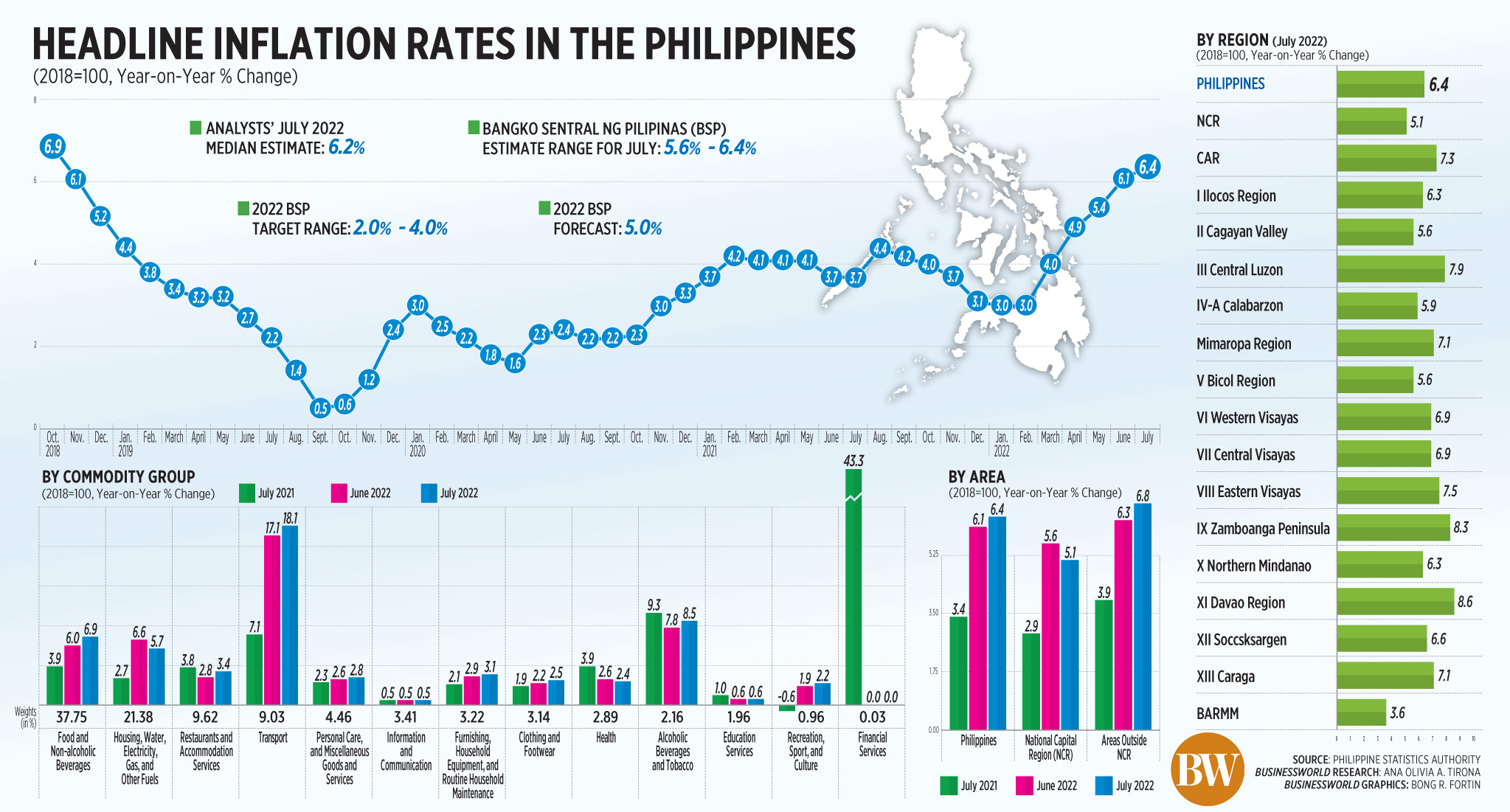
Headline inflation rates in the Philippines (July 2022)

Headline inflation quickened to its fastest pace in nearly four years in July, mainly due to soaring prices of food and higher transport costs.  Read the full story.

Headline inflation rates in the Philippines (July 2022)

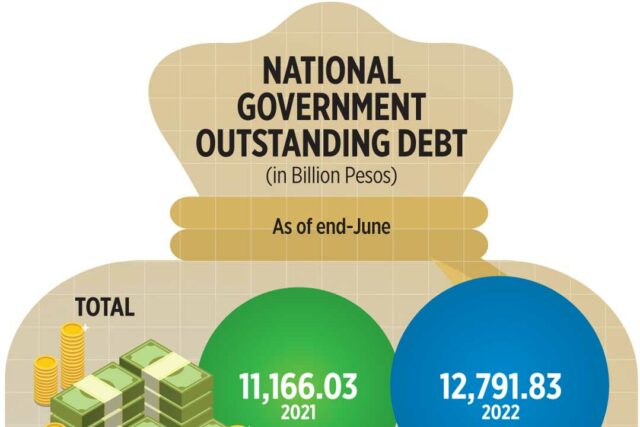
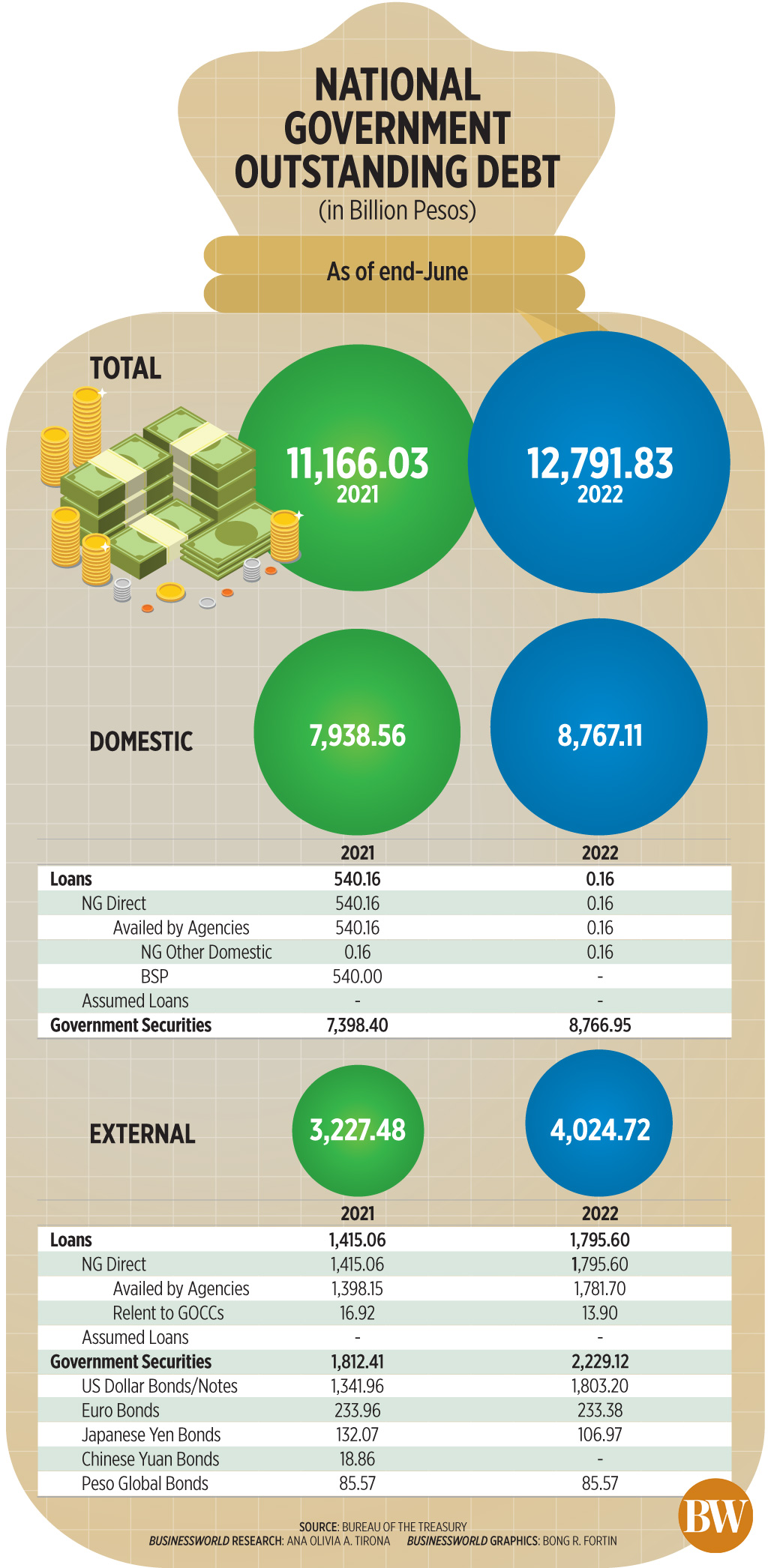
National Government outstanding debt

The National Government’s (NG) outstanding debt rose to a record-high P12.79 trillion at the end of June, beating the previous high of P12.76 trillion in April. Read the full story.

National government outstanding debt

Tourism service norms for micro businesses set for major upgrade

VILMA UY FACEBOOK PAGE

THE Department of Tourism (DoT) said it is planning to upgrade service standards for micro-sized companies in the industry with the aid of other agencies.

Tourism Secretary Maria Esperanza Christina G. Frasco said in a statement over the weekend that a technical working group (TWG) is currently working on a plan to improve the capacity of micro entrepreneurs engaged in tourism.

“We are facilitating this TWG for the purpose of commencing discussions on the implementation of standards to ensure high quality of tourism services which include regulations on accommodations, services, and pricing standards,” Ms. Frasco said.

Ms. Frasco proposes to include in the TWG the Departments of Trade and Industry (DTI), Interior and Local Government (DILG), and Agriculture (DA), as well as the Bureau of Fisheries and Aquatic Resources (BFAR).

She said the DoT is offering training sessions under the Filipino Brand of Service Excellence (FBSE) umbrella.

The FBSE program aims to “enhance and uplift the quality of services aimed at fostering excellent service to tourists as part of our distinct Filipino brand.”

The FBSE program offers modules in service excellence, understanding and engaging customers, and complaint handling.

“The training for the tourism community in Virgin Island, Bohol will commence next week,” Ms. Frasco said, following an incident of alleged overcharging by food vendors there.

The trainings “will be open to all interested tourism stakeholders, and will be facilitated by the DoT Office of Industry Manpower Development together with the DoT Region 7 Office in coordination with the local government units,” she added. — Revin Mikhael D. Ochave

Threat of Sri Lanka-style crisis seen diminishing if gov’t boosts agri output

REUTERS

THE expansion of domestic food production and manufacturing output are expected to steer the Philippines away from falling into a Sri Lanka-type crisis, a bank economist said.

Rizal Commercial Banking Corp. Chief Economist Michael L. Ricafort said in a Viber message that the government needs to “reduce reliance on imports by improving productivity of the agricultural sector to… help ease food prices and lower inflation.”

“Increasing the productivity of both agriculture and manufacturing will create more jobs and other (boost) economic activity,” Mr. Ricafort said.

He said agricultural and manufacturing account for at least 40% of the work force.

“Also, by boosting the productivity of the industrial sector (the Philippines can) reduce reliance on imports,” he added.

Maria Ela L. Atienza, a political science professor at the University of the Philippines, said in a text message that the government needs to focus on strengthening small businesses while avoiding excessive tax burdens on working-class families.

“Taxation should target big business and not middle and low-income families,” Ms. Atienza said. “While foreign investment is needed, we should not be totally dependent on them so that we are prepared during economic crises.”

Mr. Ricafort said the government should spend effectively and minimize corruption and “leakage” of public funds, which are critical in stimulating the economy.

Ms. Atienza also called for stronger institutions like the justice system, expanded people’s participation in governance, a reduction of red tape, and a resolution to long-standing threats to peace following the rule of law.

“There is also a need further to diversify (away from) structural dollar revenue sources such as exports, OFW remittances, BPO revenues, foreign tourism, as well as foreign investment/FDI to create more employment,” Mr. Ricafort said. — Matthew Carl L. Montecillo

Subsidies to gov’t firms rise 47.82% in June

SUBSIDIES provided to government-owned and -controlled corporations (GOCCs) rose 47.82% year on year to P12.328 billion in June, the Bureau of the Treasury (BTr) reported.

Budgetary support to GOCCs also rose 54.72% compared to the May total. Subsidies amounted to P44.687 billion in the year to date, according to preliminary data from the BTr.

Subsidies are extended to GOCCs to cover operational expenses not supported by their revenue.

The National Housing Authority (NHA) was the top recipient, taking in P5.747 billion or 46.62% of all subsidies in June.

The NHA received no subsidies the previous month but was the top beneficiary in March, when it received P2.979 billion.

The National Irrigation Administration (NIA) received P3.083 billion in June. It was the top beneficiary the previous month when it was given P6.262 billion.

The National Food Authority (NFA), the National Privacy Commission, and the Local Water Utilities Administration were among the major nonfinancial GOCCs that did not receive subsidies.

The National Electrification Administration received P877 million, against zero the preceding month.

Meanwhile, the Light Rail Transit Authority received P4 million, down 33.33% from a month earlier.

Other top recipients in June were the Philippine Fisheries Development Authority (P863 million), the Civil Aviation Authority of the Philippines (P367 million), the National Home Mortgage Finance Corporation (P205 million), the Philippine Heart Center (P147 million), and the Philippine Children’s Medical Center (P122 million).

Other GOCCs that were given more than P50 million were the Philippine Coconut Authority (P118 million), the National Kidney and Transplant Institute (P107 million), the National Dairy Authority (P100 million), Subic Bay Metropolitan Authority (P94 million), the Small Business Corp. (P67 million), the Philippine National Railways (P63 million), and the Lung Center of the Philippines (P58 million).

GOCCs that received no subsidies during the month were the Bases Conversion Development Authority and the Philippine Crop Insurance Corp.

The year-to-date subsidy total was down 49.38% from a year earlier. The top recipient year to date was the NIA, which was given P18.346 billion, accounting for 41.05% of all subsidies.

This was followed by the NHA and the NFA, which got P8.941 billion and P3.243 billion respectively.

Government subsidies to GOCCs totaled P184.77 billion in 2021, a 19.3% decline from the previous year. In 2021, the Philippine Health Insurance Corp. received P80.98 billion, nearly 44% of the total. — Diego Gabriel C. Robles

Gov’t urged to review role of gas in energy transition

BW FILE PHOTO

THE role of gas in the Philippines’ energy transition must be reviewed in light of the unreliability of supply from the Malampaya field and the drastic tightening of the market following the Russian invasion of Ukraine, a think tank said.

Avril de Torres, deputy executive director of Center for Energy, Ecology, and Development (CEED), said during an online forum on Friday that securing renewable energy (RE) has been a recurring problem in the Philippines since 2016, especially for the Luzon grid.

“Since 2016, we have been experiencing annual red and yellow alerts, especially in the Luzon grid, most frequently during the summer,” said Ms. De Torres, referring to periods when power reserves fall to near or below their minimum safety levels.

Gas has been billed as a relatively clean “transition” fuel for the energy industry pending the establishment of renewable capacity, and a significant portion of the Luzon grid’s power plants depend on gas piped in from northern Palawan to Batangas.

The imminent depletion of Malampaya has set into motion plans for the Philippines to rely on imported gas, the market for which has since been disrupted by Europe’s efforts to wean itself away from Russian energy.

According to Ms. De Torres, the yellow and red alerts are mainly due to coal-fired plants and gas-fired plants reporting shutdowns or undergoing derating due to Malampaya gas restrictions.

“Every time there is a Malampaya gas restriction, more often than not a yellow alert will soon follow,” Ms. De Torres said.

The Department of Energy (DoE) estimates that the Philippine power mix is 47% coal-fired. Natural gas accounts for 22% and renewables for 24%, including hydro, geothermal, wind, and solar. Oil-based sources account for 6.2%.

The government should “rationalize energy sources that will allow the Philippines to meet the 1.5°C temperature goal under the Paris agreement,” Ms. De Torres said. — Ashley Erika O. Jose

Resolution to PEZA leadership row up to Palace now, former head says

CHARITO B. Plaza, the former director-general of the Philippine Economic Zone Authority (PEZA), said the dispute over the agency’s leadership is in the Palace’s hands and promised to abide by its decision.

Ms. Plaza told BusinessWorld via mobile phone that President Ferdinand R. Marcos, Jr. has the final say on whether she is to retain her post, for which an officer-in-charge (OIC) was named after the previous government stepped down.

“I am glad (that) the Palace will finally come in to resolve the leadership row,” Ms. Plaza said.

“My appointment papers (issued by) then-President Rodrigo R. Duterte say that I am covered by the Civil Service Commission’s (CSC) rules; hence, my security of tenure will depend on the President,” she added.

Press Secretary Rose Beatrix L. Cruz-Angeles has said that the resolution of the PEZA leadership dispute is subject to the “usual procedures.”

“Once received, the Office of the Executive Secretary will immediately act on it either by studying the matter… or if the answer is clear already, then they will simply make the recommendations right away,” Ms. Cruz-Angeles said in a televised news briefing on Aug. 5.

On Aug. 2, Trade Secretary Alfredo E. Pascual issued Department Order No. 22-68 that affirmed PEZA Deputy Director General Tereso O. Panga’s term as PEZA OIC until Dec. 31 or until a replacement is appointed.

The order followed Memorandum Circular (MC) No. 3 issued by Executive Secretary Victor D. Rodriguez on July 27, which extended the term of OICs of government agencies under the Executive branch until the end of the year, or until a replacement has been appointed.

MC No. 3 supplements MC No. 1 issued on June 30, which had ordered officeholders to remain in place until July 31 or until a replacement has been appointed, whichever comes first.

The DTI issued a statement on Aug. 4 saying that the PEZA Director-General position is deemed vacant as provided in the MCs issued by Malacañang.

“Being a Presidential appointee without a fixed term of office, the position of PEZA Director General clearly falls under the mandate of MC Nos. 1 and 3,” Trade Undersecretary Herminio C. Bagro III said.

Mr. Bagro also defended the department order issued by Mr. Pascual, saying that it was part of his mandate as Trade Secretary.

“With due respect to the former PEZA Director General, as Chairman of the PEZA Board and under whose department the PEZA is attached, Secretary Pascual was not interfering but was merely exercising his duties and functions in issuing the Department Order to address the controversy occasioned by your actions,” Mr. Bagro said. — Revin Mikhael D. Ochave

Consumer values in a world in crisis

Second of three parts

The most recent edition of the EY Future Consumer Index reveals how accustomed people are to living in a constant state of crisis and uncertainty. As consumers continue to express concern about the future, they prioritize ideals that focus on more control over their finance and sustainable practices.

In the first part of this three-part article, we discussed three key shifts in play that differentiate the current crises with previous ones. Consumers now have greater control over how they organize their time due to the rise in remote working, but they also want more control over other aspects of their lives including how they spend their money and disclose their personal information.

In this second part, we discuss the key trends in consumer behavior that were identified in the Index.

KEY TRENDS IN CONSUMER BEHAVIOR
Leaders must adapt since it is obvious that consumer beliefs and habits are continuing to change rapidly on many fronts. How effective is a “Sell more items” strategy when many customers claim they wish to make smaller purchases? There are four imperatives that leaders will have to take into account, starting with some of the key trends that the most recent Index has shown.

Cost cutting: Consumers are substituting but not sacrificing

Currently, the “Affordability first” consumer category is the dominant one, but the cost of living is a concern for all consumers: 79% of respondents express concern about their financial situation; 35% worry about having enough money for expenses other than basic necessities; 66% are concerned with getting value for their money.

Many consumers would consider buying private label packaged food (49%), while 48% are purchasing cheaper alternatives. Consumers are, in many respects, returning to what worked for them in the last two years when they were able to save money by working from home, spending more time at home, cooking their own meals, and not feeling the need to buy new clothes or use cosmetics regularly. For many brands, this creates a challenging environment.

People typically reduce their expenditures in a limited number of categories when money is tight while still rewarding themselves with “treats.” However, customers are now using their money-saving strategies in all areas. For instance, there is a thriving social media culture in the cosmetics industry where influencers share “dupes” — cheaper versions of luxury goods that, in their opinion, perform just as well and offer better value.

The findings from the study demonstrate that this isn’t only about cutting back on spending; rather, it’s a continuation of pandemic-era habits. Some of the brand attributes that have historically conveyed prestige no longer appeal to customers as much. A deep-seated yearning to live and spend more “authentically” exists. Instead of replacing things, more people are committed to mending them. Seasonal fashion trends are less popular, with 79% of “Affordability first” shoppers and 55% of the more hedonistic “Experience first” consumers ignoring them.

Sustainability: People are clinging to their principles

Many consumers struggle to balance their desire to live more sustainably with their need to live more inexpensively, especially as many believe sustainable goods to be expensive, with 67% of consumers claiming that the high cost considerably discourages them from purchasing sustainable items. However, resistant shoppers are looking for more affordable ways to achieve their goals of sustainable living rather than simply giving up on them.

Many claim they are working harder to reduce trash and purchase used goods. By maximizing for both economic and environmental benefits, consumers are taking charge. As much as 87% are attempting to reduce food waste and 85% are attempting to reduce their energy use. Meanwhile, 36% report increasing their use of used goods, while 24% have either ceased buying or have bought less from a company that is not doing enough to protect the environment.

This shows that attitudes toward sustainable goods and products have changed for the better. Not as many consumers still believe these products to be of poor quality or lacking in durability. Importantly, people place more and more faith in the information they receive about sustainable products from the manufacturers.

Customers do not believe information from just any sources. They look for information that they believe to be trustworthy and transparent, and they value ways to filter and personalize the information they are exposed to. This broader trend can be seen playing out regarding sustainability, with over a third of customers having registered for an app or service that tracks aspects of their carbon footprint or environmental impact. Consumers are increasingly seeking reliable sources to help them make informed judgments about the things they buy.

Consumer-facing businesses are also searching for reliable suppliers because they are applying “sustainability tech” to enhance their products. Many already collaborate with sustainability tech firms to gain access to data and insights that bring them closer to the consumer. New consumer insights are being produced by these relationships, which aid businesses in interacting with customers, promoting sustainable innovation, and achieving sustainability objectives.

Digital: Customers value alternative experiences and products more and more

A small but expanding segment of customers is interested in investigating cutting-edge technologies and digital platforms, according to the Index. The metaverse, digital currency, or buying virtual goods have all been used by almost one in 10 consumers. It’s interesting to note that this baseline level roughly corresponds to where e-commerce was in 2005. Its 10% retail market share from 2017 has since doubled. Some analysts predicted the demise of high street shopping at that level of retail penetration. Could the retail sector be reaching a similar turning point?

Due to the pandemic, many aspects of daily life are now “digital first.” Consumers are once more turning to digital as they want greater financial control. For instance, people are substituting lifestyle choices rather than making lifestyle sacrifices by balancing digital and physical experiences.

The use of more recent digital products and services opens up new business options for firms. It becomes a question of whether they can invest in digital in ways that distinguish their brand experience, foster creativity, gather more customer data, allow for digital product line creation, and promote innovation.

Trust will be a critical factor, as consumers express great concern about who they share their data with. They want to know how it will be used and protected, expanding their post-pandemic, always-on emergency posture to include a safety-first component.

In the last part of this article, we will discuss four imperatives that consumer companies must consider to meet the needs of consumer values that have shifted during the pandemic experience.


Maria Kathrina S. Macaisa-Peña is a Business Consulting Partner and the Consumer Products and Retail Sector Leader of SGV & Co.


July 27 earthquake infrastructure damage hits P1.6B

A DEPARTMENT of Public Works and Highways heavy equipment clears a blocked section of the Baguio-Bontoc road along Mt. Data cliff. — DPWH-CORDILLERA ADMINISTRATIVE REGION

DAMAGE to public and private infrastructure from the magnitude 7 earthquake in northwestern Luzon on July 27 has reached more than P1.59 billion, based on the national disaster councils report as of Sunday.   

Most of the damage were recorded in school buildings, roads, and public health facilities, according to the National Disaster Risk Reduction and Management Councils (NDRRMC) collated information.   

The Education department reported 427 affected schools as of last week, mostly in the Cordillera Administrative Region composed of the provinces of Abra, the tremors epicenter, Apayao, Benguet, Ifugao, Kalinga, and Mountain Province, and the independent city of Baguio.  

Of the 170 road sections and 11 bridges affected, only one remains impassabale, a section of the Baguio-Bontoc road along Mt. Data cliff, according to the Department of Public Works and Highwaysregional office.  

Clearing operation is still on-going with blasting to resume when needed,the agency said in a Facebook post on Sunday.

Blasting operations are needed to break down huge rock materials that are blocking the road following a landslide triggered by the earthquake, it said. 

AGRI DAMAGE
In agriculture, damage estimate has climbed to P287 million, according to the Department of Agriculture (DA).   

Damage and losses have been reported primarily in the regions of Cordillera and Ilocos. 

These include irrigation systems, farm-to-market roads, farm structures, fisheries, livestock and poultry.   

“No damage and losses on crops have been reported as of this time,” the department said.   

According to the latest DA bulletin, a total of 120 agricultural infrastructures were damaged due to landslides and cracks on concrete. These include 90 irrigation systems, six farm-to-market roads, and 24 farm structures.  

Losses were also reported in livestock and poultry with a total of 129 animal heads that were either buried alive or had premature delivery.  

Meanwhile, the National Irrigation Administration reported two national irrigation systems (NIS) and 24 communal irrigation systems (CIS) damaged in Cordillera, as well as 4 NIS and 24 CIS damaged in Ilocos.  

Furthermore, no damage was reported in Pantabangan and Magat dam based on initial assessment,the agency added.  

The DA is providing assistance to affected farmers and fishers, which includes 126,045 bags of rice seeds, 20,454 bags of corn seeds and 3,379 kilograms of assorted vegetable seeds in the regions of Cordillera, Ilocos, Cagayan Valley, and Central Luzon.  

Vitamins, antibiotics, vaccines, and de-wormers will also be available for livestock and poultry in Cagayan Valley.  

DA said it will also fast-track the release of fuel subsidy and Rice Farmers Financial Assistance to affected regions and pull funds from the Agricultural Credit Policy Council and Quick Response Fund for the rehabilitation of affected areas.  

DEATH TOLL
The number of confirmed dead has increased to 11 from 10 last week, while 574 were injured, the NDRRMC reported.  

The number of people affected has also gone up to more than half a million following continued validation. Of the 502,462 affected, over 10% have been displaced, although majority are staying outside evacuation centers.  

Totally destroyed private houses were 628 while 34,699 were partially damaged.  

NDRRMC said almost P120 million worth of assistance mostly from the national and local governments along with donated goods —   had been distributed, including food packs and temporary shelter materials. Marifi S. Jara and Luisa Maria Jacinta C. Jocson 

House buckles down for budget proposal, almost 2,900 bills filed 

House Speaker Ferdinand Martin G. Romualdez — PHILIPPINE STAR/KRIZ JOHN ROSALES

THE HOUSE of Representatives is ready to work on the national budget, which is expected to be submitted by Malacañang within the month, and 2,877 bills have been filed, Speaker Martin G. Romualdez said on Sunday. 

Mr. Romualdez, who represents Leytes 1st District, said the chamber is buckling down to legislative work as chairpersons and members of most committees have already been elected. 

The Committee on Appropriations, headed by Ako Bicol Party-list Rep. Elizaldy S. Co, will be one of the busiest as it will be the main panel that will evaluate the proposed national budget. 

The National Expenditure Program is expected to be submitted by Malacañang to the House of Representatives on the third week of August. 

“Rest assured that the House will act immediately on the budget,” Mr. Romualdez said in a press release.

Press Secretary Trixie Cruz-Angeles announced on July 29 that the administration is planning to submit the 2023 budget to Congress on Aug. 22. The expenditure plan is expected to be not much higher than this years P5.02 trillion budget. 

Mr. Romualdez also announced that 50 out of the 64 standing committees and 10 of 15 special committees have been designated their respective chairperson. All but one committee also have member-lawmakers designated to them. 

Once constituted, House committees will hold hearings on filed bills and other measures. Matthew Carl L. Montecillo 

SC fines regional court judge for neglect of duty 

PHILSTAR FILE PHOTO

THE SUPREME Court (SC) has ordered a regional court judge to pay a fine of P17,500 for failing to act on a litigant’s motion to authenticate video evidence for forensic examination and enhancement.  

In a resolution dated April 26 and made public on August 5, the court’s first division found Talisay City Regional Trial Court Branch 1 Presiding Judge Mario V. Manayon guilty of simple neglect of duty, which is a lesser offense than the Judicial Integrity Board’s (JIB) initial recommendation to fine him for undue delay in rendering an order.  

The tribunal added the trial court judge failed to “give proper attention to a task expected of an employee resulting from either carelessness or indifference.”  

Under SC rules, magistrates found guilty of simple neglect of duty are liable to a fine of more than P35,000 but not exceeding P100,0000 and suspension from office for up to six months.  

The High Court noted that it decided to impose a lesser fine since this was the judge’s first offense, as the rules allow the court to impose a fine of not less than half of P35,000.  

“Considering that this is respondent judge’s first infraction, the penalty of suspension from office for a period not less than one month nor more than six months; or the imposition of a fine of more than P35,000.00 but not exceeding P100,000 is a bit harsh,” it said.  

The tribunal sternly warned Mr. Manayon of a more severe penalty should he repeat the offense or commit a similar violation. 

The fine stemmed from a disbarment complaint from Cristhyn R. Abing, a private litigant who claimed the judge showed bias towards a witness during a criminal case as the judge repeatedly intervened during cross-examinations to answer questions for the witness. 

Ms. Abing’s complaint accused the judge of obstruction of justice by failing to act on her request to authenticate video evidence and the supposed bias during the case hearings.  

The National Bureau of Investigation’s (NBI) regional anti-cybercrime unit told her that they could only conduct a forensic examination on the video but not authenticate it. 

Mr. Manayon argued that he only intervened during the witness’ cross-examination because he said the questions were vague or misleading.   

“While judges should as much as possible refrain from showing partiality to one party and hostility to another, it does not mean that a trial judge should keep mum throughout the trial and allow parties to ask the question that they desire, on issues which they think are the important issue,” said the High Court.  

The magistrate added that he had previously issued an order for the authentication of the video, but the prosecution opposed Ms. Abing’s additional motion to enhance the video, saying it would tamper with the evidence.   

He added that the complainant agreed to return to the NBI to explain how the video was to be examined.  

The High Court affirmed the JIB’s report that the judge’s inaction in resolving the complainant’s motion made him liable for neglect of duty.  

“Judges shall perform all judicial duties, including the delivery of reserved decisions, efficiently, fairly, and with reasonable promptness,” it said, citing the New Code of Judicial Conduct. John Victor D. Ordoñez

ADVERTISEMENT
ADVERTISEMENT