Home Blog Page 6048

Philippines Q2 GDP grows 7.4% year on year

STOCK PHOTO | Image Dmitry Berdnyk from Unsplash

MANILA – The Philippine economy expanded less than expected in the second quarter, but at pace still in line with the official 2022 growth target, giving the central bank leeway to further tighten monetary policy to curb red-hot inflation.

The Southeast Asian country’s gross domestic product was 7.4% higher in the June quarter than a year earlier, growing more slowly than the downwardly revised 8.2% annual rate seen in the previous quarter and the median 8.6% forecast in a Reuters poll.

It was the slowest growth in three quarters but the second-fastest so far in Asia for the second quarter, Economic Planning Secretary Arsenio Balisacan said.

The Bangko Sentral ng Pilipinas (BSP) has flagged the possibility of raising key interest rates further by 50 basis points at its Aug. 18 policy meeting, confident the economy can withstand a less accommodative policy.

It has raised interest rates by a total 125 basis points since the start of the year to tame inflation, which soared to its fastest pace in nearly four years in July.

Mr. Balisacan attributed the second-quarter growth rate to strong construction and household consumption, among other factors.

He said the country’s economic recovery remained strong, with the second-quarter performance in line with this year’s growth target for full-year GDP of 6.5% to 7.5%.

The administration of President Ferdinand Marcos, whose six-year term began on June 30, is further targeting growth in full-year GDP of 6.5%-8.0% annually from 2023 to 2028.

Marcos, who is concurrent agriculture secretary, has vowed to turn the long-neglected farm sector into an engine of growth and to focus on fiscal management and infrastructure upgrades to sustain the economy’s rebound from the pandemic. — Reuters

Basic Energy Corporation to conduct annual stockholders’ meeting via remote communication on August 31

Click to enlarge.
Click to enlarge.


Spotlight is BusinessWorld’s sponsored section that allows advertisers to amplify their brand and connect with BusinessWorld’s audience by enabling them to publish their stories directly on the BusinessWorld Web site. For more information, send an email to online@bworldonline.com.

Join us on Viber to get more updates from BusinessWorld: https://bit.ly/3hv6bLA.

YCH Group: Serving world-class customers for more than 60 years

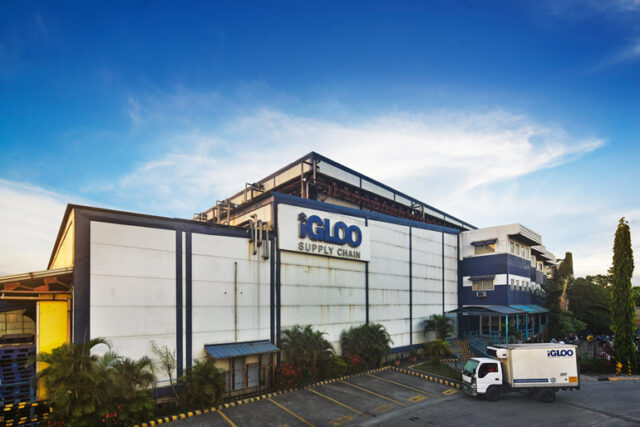
YCH Group, Asia’s leading supply chain and logistics provider has been in the business, serving world-class customers for more than sixty years. Supply Chain City© (SCC), YCH’s flagship facility in Singapore, was officially launched on Sept. 22, 2017 by Prime Minister of Singapore Lee Hsien Loong. Serving as Asia’s nexus for supply chain excellence, SCC is strategically located in the heart of Jurong Innovation District, with more than $200 million in building investment and covering more than 6.5 hectares of land. It features the world’s first patented Fusionaris® — a fusion between conventional and digital warehousing capabilities made up of Automated Storage and Retrieval System (ASRS) and Ramp up Integrated Solution and manual warehousing facilities. Standing at 50m in height, the ASRS is the tallest in Southeast Asia, designed for scalability and operations around the clock, 24/7 for 365 days.

A key focus of SCC is to add fresh impetus to the industry in terms of innovation and collaboration and to refine the standards of supply chain excellence through its one-of-a-kind LEARN™ ecosystem. The five elements of the LEARN™ ecosystem are Living Supply Chain, Experiential Workplace Learning, Asia’s Network of Supply Chain Thought Leaders, Reinvent Tomorrow, and Nurturing Disruptive Innovators.

The SuperPort™ vision emerged to strengthen logistics and supply chain connectivity in the Asia-Pacific region through technology and innovative solutions. Originated from the ASEAN Business Advisory Council (ASEAN-BAC)’s Smart Growth Connect (SGConnect™) project in 2018, the member states hope to enable cities to grow without growing pains. The launch of the ASEAN Smart Logistics Network (ASLN) in November 2022 further strengthened this project. The ASLN supports the ASEAN Connectivity Master Plan 2025 as a collaborative platform with a shared goal of developing smart and sustainable advancements based on smart logistics infrastructure.

SuperPort™ will be a first-of-its-kind, multi-modal logistics hub that integrates a dry port with an advanced supply chain nerve center that focuses on four key pillars: connectivity, sustainability, scalability, and agility. It will encapsulate the features of SCC and its LEARN™ ecosystem; a Supply Chain and Logistics Academy will be established to equip local workers with the necessary skills to face Industry 4.0 using the Experiential Workplace Learning methodology.

With the growing emphasis on sustainability and green supply chains, YCH Group looks forward to replicating this SuperPort™ project in all ten ASEAN member states in the coming future.


Spotlight is BusinessWorld’s sponsored section that allows advertisers to amplify their brand and connect with BusinessWorld’s audience by enabling them to publish their stories directly on the BusinessWorld Web site. For more information, send an email to online@bworldonline.com.

Join us on Viber to get more updates from BusinessWorld: https://bit.ly/3hv6bLA.

Pag-IBIG posts P20.48-B income in H1 2022; up 27%

Pag-IBIG Fund posted earnings of P20.48 billion in the first half of 2022, an impressive 27% increase compared to the same period last year, its top officials reported last Aug. 8.

From January to June, Pag-IBIG Fund’s gross income reached P32.19 billion, while net income amounted to P20.48 billion. Compared to the same period last year, gross income grew 19% and net income rose 27%, driven mainly by earnings from its housing and short-term loans (cash loans), and trading gains.

“Pag-IBIG Fund continues its strong performance this year. The double-digit increase in our income figures proves that we remain as one of the best performing government corporations in the country today. This places us in a strong position to continue providing social services and help more Filipinos gain better lives, in line with the directive of President Ferdinand Marcos, Jr.,” said Secretary Jose Rizalino L. Acuzar of the Department of Human Settlements and Urban Development (DHSUD), who serves as chairperson of the 11-member Pag-IBIG Fund Board of Trustees.

He added that as of June, Pag-IBIG Fund also posted record-highs in both home loan releases and membership savings collections. The agency has so far released P51.96 billion in home loans to finance the acquisition of 47,184 homes for its members during the first half of the year. Savings from its members, on the other hand, reached P38.82 billion, strongly driven by the agency’s popular MP2 Savings where members have collectively saved P19.40 billion.

Pag-IBIG Fund Chief Executive Officer Acmad Rizaldy P. Moti, meanwhile, emphasized that the agency’s gains shall redound to the benefit of its members. He noted that under its charter, Pag-IBIG Fund is mandated to return at least 70% of its annual net income to its members in the form of dividends which are credited to their savings.

“Pag-IBIG Fund is wholly-owned by the Filipino workers. That is why it is our responsibility, as the administrators of the Fund, to manage their contributions responsibly and excellently. With our second half prospects in terms of loan releases and collections high, we are optimistic that we will achieve at least P30 billion in annual net income level for the sixth consecutive year. This is our commitment to our members,” Moti said.


Spotlight is BusinessWorld’s sponsored section that allows advertisers to amplify their brand and connect with BusinessWorld’s audience by enabling them to publish their stories directly on the BusinessWorld Web site. For more information, send an email to online@bworldonline.com.

Join us on Viber to get more updates from BusinessWorld: https://bit.ly/3hv6bLA.

Farm output shrinks in 2nd quarter

FRESH FISH are displayed at the Marikina public market, April 13. — PHILIPPINE STAR/ WALTER BOLLOZOS

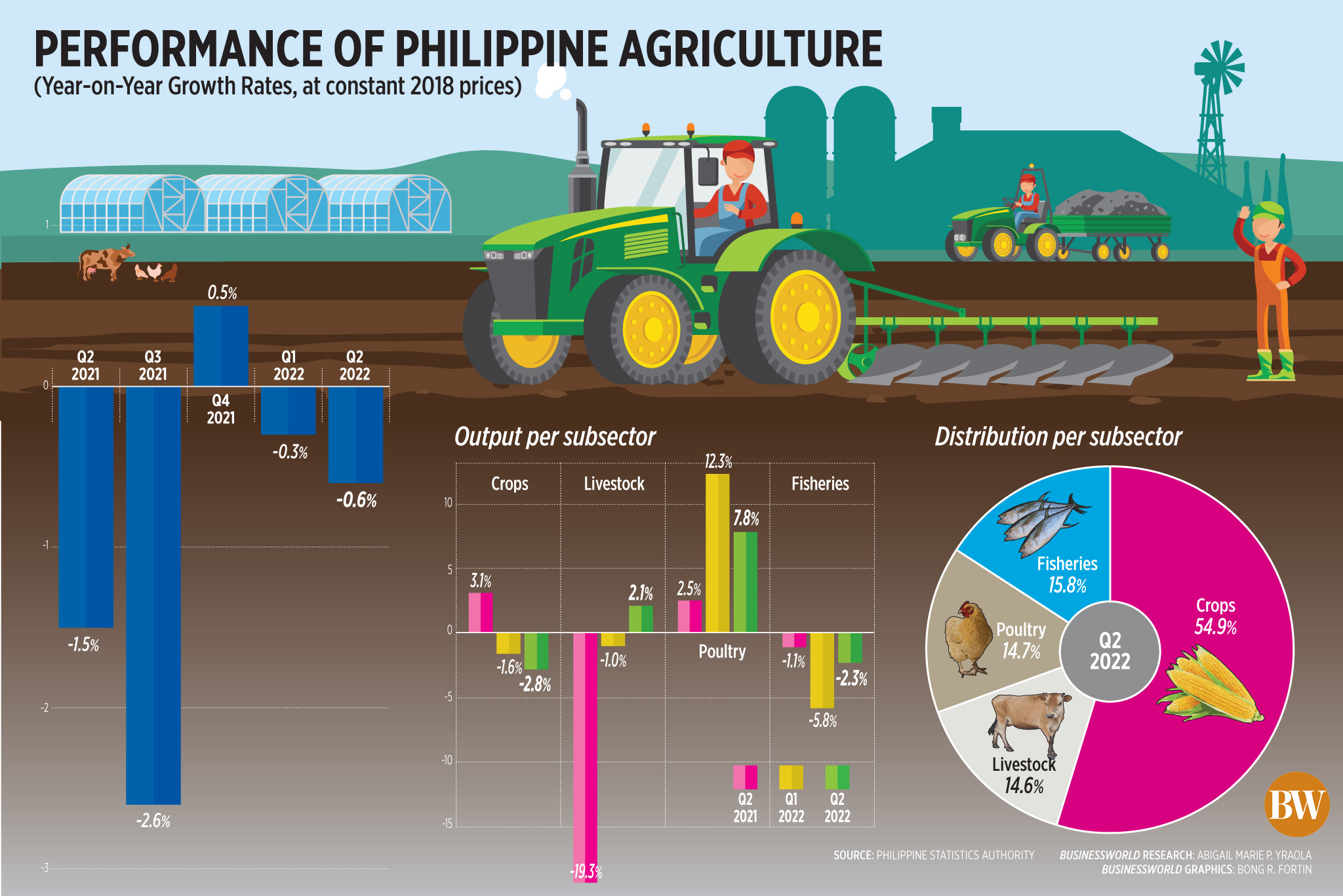
AGRICULTURAL production continued to contract for a second straight quarter, mainly due to lower crops and fisheries output, the Philippine Statistics Authority (PSA) said on Monday.

PSA data showed the value of production in agriculture and fisheries at constant 2018 prices declined 0.6% in the April to June period, worsening from the 0.3% contraction in the first quarter.

However, the pace of contraction slowed from the -1.5% logged in the second quarter of 2021.
Performance of Philippine agriculture

At current prices, the value of production in agriculture and fisheries jumped 6.2% year on year to P532.79 billion.

For the six-month period, the value of production in agriculture and fisheries at constant 2018 prices registered a 0.4% decline.

“Crops and fisheries recorded contractions in the value of production. Meanwhile, expansions in the value of livestock and poultry production were noted in the second quarter of 2022,” the PSA said in a report.

Crops, which make up about 55% of the sector’s overall production, declined 2.8%, while fisheries output fell 2.3% in the second quarter.

On the other hand, livestock production rose 2.1%, and poultry expanded 7.8%.

Federation of Free Farmers National Manager Raul Q. Montemayor said agricultural production has been declining since 2020.

“Crops and fisheries in particular have been faring poorly. Palay (unmilled rice) output value and also volume declined despite the billions poured into the sector. The only bright side has been livestock and poultry but they are still in recovery mode and below 2020 levels,” he said in a Viber message.

Crop production saw a 2.8% drop in the second quarter, despite a 0.7% increase in palay production, and 3.3% rise in corn output. This was a reversal of the 3.1% growth in the same period in 2021.

For the first six months of 2022, the value of crop production fell 2.2%.

In the second quarter, higher value of production was seen in mongo (6.4%), sweet potato (4.0%), calamansi (2.3%), coconut (2.0%), bitter gourd or ampalaya (1.8%), and cacao (1.4%).

Cassava (0.9%), banana (0.4%), and eggplant (0.2%) production were nearly flat.

Sugarcane output plunged 53.8% in the second quarter, while lower production was also seen for coffee (-7.1%), tomato (-6.3%), and mango (-3.8%).

United Sugar Producers Federation President Manuel R. Lamata said that sugarcane production was affected by surging fuel and fertilizer costs.

“The industry is a heavy user of diesel to run the tractors and trucks for hauling and irrigation,” he said in a Viber message.

Mr. Lamata said the cost of fertilizer is now at P4,000 per sack, from P700 per sack before the pandemic.

Oil prices have soared this year amid tight global supply and the Russia-Ukraine war. As of Aug. 2, diesel prices have increased by P32.35 per liter year to date.

At current prices, the value of crop production slipped by 0.1% to P265.98 billion from the previous year’s record.

Fisheries, which account for 15.8% of total farm output, contracted by 2.3% in the April to June period, worse than the 1.1% decline in the same period in 2021.

For the first six months, the value of fisheries production slumped by 3.9%.

The value of fisheries production at current prices grew by 15.4% to P92.59 billion in the second quarter.

Double-digit expansion was seen in the production of bigeye tuna (46.7%), squid or pusit (36.9%), fimbriated sardines or tunsoy (36.1%), yellowfin tuna (23.6%), seaweed (21.2%), grouper or lapu-lapu (20.8%), skipjack or gulyasan (18.8%), and big-eyed scad or matangbaka (13.8%).

There was also a double-digit decline in tiger prawn or sugpo (-30.8%), blue crab or alimasag (-28.5%), frigate tuna or tulingan (-21.8%), mudcrab or alimango (-20.9%), cavalla or talakitok (-16.6%), and milkfish or bangus (-15.5%).

Tugon Kabuhayan Convenor Asis G. Perez, a former director of the Bureau of Fisheries and Aquatic Resources, said fisheries’ poor production was due to the lack of ample feed supply.

“In fisheries, I think that is attributable to the effect of our failure to have nutritious feeds. Even on the ground, there are reports that growing fish has slowed in the absence of appropriate ingredients,” he said in a virtual briefing on Monday.

“We’ve heard reports as far as Mindanao saying that the fish they are raising are not growing. The growth of fish, particularly in aquaculture, has seen some slowdown,” he added.

BRIGHT SPOTS
Meanwhile, the poultry sector remained a bright spot as production grew 7.8% in the April to June period, better than the 2.5% expansion in the second quarter of 2021. The value of poultry production rose 10% in the first semester.

The second-quarter performance was attributed to higher production of duck eggs (11.5%), chicken eggs (10.5%), and chicken (6.9%), which offset the 7.5% drop in duck output.

“The data may be misleading as it was compared to the COVID-19 period last year,” United Broiler Raisers Association President Elias Jose M. Inciong said in a Viber message.

“Also, the growth may be temporary as the industry will adjust to the arrival of imports which has seen a recent surge in arrivals and in frozen inventories. As such, any conversation about improving the numbers is futile,” he added.

In March, the Department of Agriculture suspended the movement of domestic and captured wild birds and poultry products due to the avian influenza or bird flu outbreak.

At current prices, the value of poultry hit P79.79 billion, or an increase of 13.8% from the previous year.

Livestock production expanded 2.1% in the second quarter, a turnaround from the 19.3% drop in the same period in 2021. This helped bring first-half production 0.6% higher.

The sector’s growth was attributed to dairy (22.2%) and hog (3.0%), which offset the lower production of goat (6.7%) and carabao (3.9%).

The value of livestock production at current prices jumped 10.7% at P94.43 billion.

Mr. Montemayor said the Agriculture department must re-evaluate its current programs and policies.

“We could blame the COVID-19 pandemic, high fertilizer and fuel prices, but we also need to thoroughly evaluate the government’s programs and strategies to see if they are working and cost effective,” he added.

Feedmix Specialist II, Inc. Vice-President Norberto O. Chingcuanco said the fisheries sector could rebound if feed ingredients would be imported on time.

“It’s not yet over but we can start to plan rushing in the needed ingredients and catch up. We need to catch up to make up for losses by the next season,” he said in a virtual briefing.


Unemployment rate steady in June

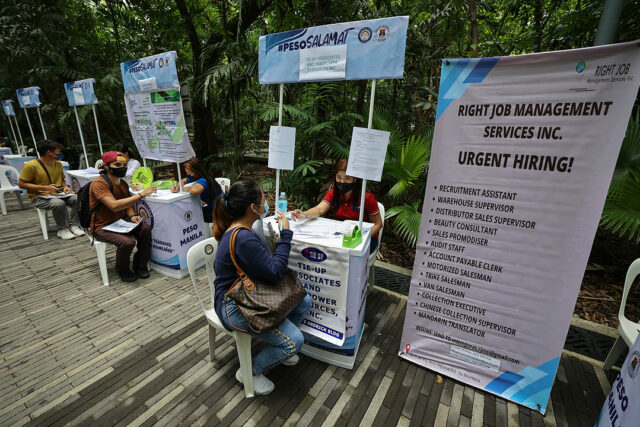
JOB SEEKERS fill up documents during a job fair at the Arroceros Park, Manila, June 20. — PHILIPPINE STAR/KRIZ JOHN ROSALES

By Bernadette Therese M. Gadon, Researcher

THE Philippine unemployment rate held steady in June amid an improvement in job quality.

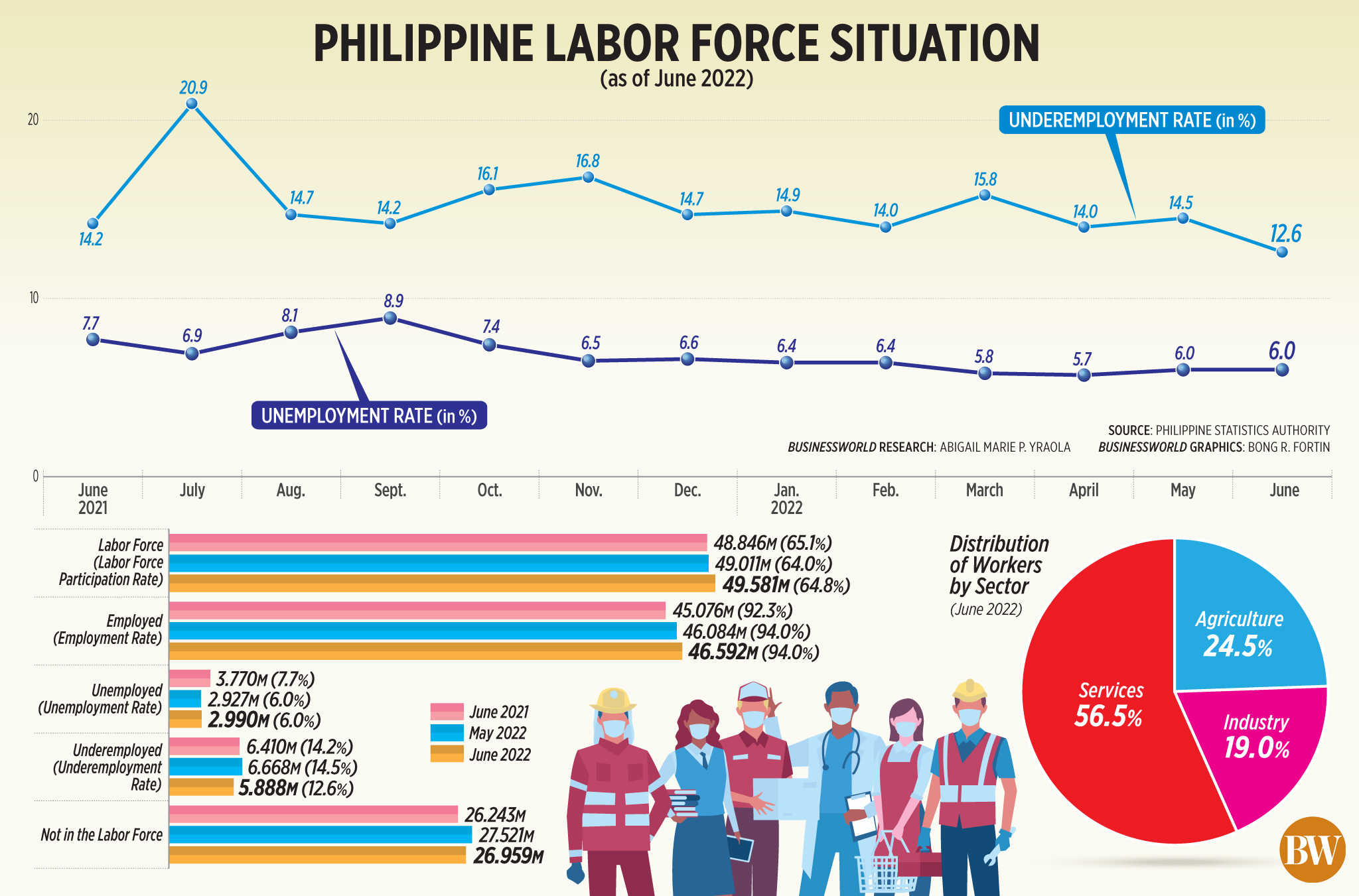
Preliminary estimates of the Philippine Statistics Authority’s (PSA) latest Labor Force Survey put the unemployment rate — or the share of the jobless Filipinos to the total labor force — at 6% in June, unchanged from May, as the total Filipino workforce expanded by 570,000 month on month to 49.581 million.

Year on year, the unemployment rate was an improvement from the 7.7% in June 2021.

Philippine labor force situation

PSA data showed around the total number of unemployed Filipinos reached 2.990 million in June, 62,000 more than the 2.927 million in May. Meanwhile, the ranks of unemployed declined by 781,000 from 3.770 million a year ago.

Labor force participation rate (LFPR) — the share of the Filipino workforce to the total working age population of 15 years old and over — went up to 64.8% in June from 64% in May. However, it was lower than 65.1% in June last year.

Still, the June LFPR was the highest in three months, or since the 65.4% in March.

Meanwhile, the job quality improved as the ranks of underemployed fell 780,000 month on month to 5.888 million in June. The number was also lower by 522,000 from 6.410 underemployed Filipinos in June 2021.

This put the underemployment rate — the share of employed persons who expressed desire to work for more hours, an additional job, or have a new job with longer working hours to the total employed population — at 12.6% in June. This was better than the 14.2% in the same month in 2021, and the 14.5% in May.

This was the lowest underemployment rate in 13 months, or since the 12.3% in May last year.

The number of employed people increased by 508,000 to 46.592 million in June from 46.084 million the previous month. It was also higher by 1.516 million from 45.076 million in June last year.

This was equivalent to a 94% employment rate — the proportion of the Filipinos with jobs to the total workforce — steady from May but an improvement from 92.3% in June last year.

A Filipino worked an average of 40.3 hours a week in June, higher than the 39.8 hours in May and 39 hours a year ago.

In the first semester, the unemployment rate averaged 6%, lower than 8.1% in the same period last year.

The underemployment rate also improved, averaging 14.3% in the six months to June, from 15.7% a year ago.

The employment rate in the January to June period stood at 94%, from 91.9% last year, while the LFPR slightly increased to 63.7% during the same period from 63.6%.

By sector, services remained the largest employer in June with 56.5% share, down from 59% in May. It was followed by agriculture with 24.5% (from 22%), while the industry sector remained at 19%.

Wholesale and retail trade shed the greatest number of jobs at 1.217 million to 9.724 million in June.

Other sectors that shed jobs include manufacturing (down 848,000 to 26.339 million), accommodation and food service activities (down 101,000 to 3.645 million), transportation and storage (down 91,000 to 1.675 million), and financial and insurance activities (down 55,000 to 522,000).

On the other hand, agriculture and forestry had the biggest jump in employment, adding 1.264 million jobs month on month to 9.993 million in June.

The National Economic and Development Authority said in a statement the country needs a safe reopening of the economy to return to the high-growth path and reinvigorate job creation.

“The latest data show a significant increase in the number of workers employed on a full-time basis,” Socioeconomic Planning Secretary Arsenio M. Balisacan was quoted in the statement as saying.

“While this is a good indication of the improving quality of work in our country, the government should incessantly boost its efforts towards providing an environment conducive to the creation of more and better employment opportunities,” he added.

Philippine National Bank Economist Alvin Joseph A. Arogo said the first-quarter growth likely spilled over in the second quarter as mobility restrictions remained lenient.

“As such, the additional capacity required to meet a more open economy resulted in more jobs, a lower underemployment rate, higher labor force participation rate, and higher average weekly hours worked,” he said in an e-mail.

China Banking Corp. Chief Economist Domini S. Velasquez traced the agriculture sector’s jobs increase in June to the harvest season, which may not be sustainable in the coming months.

“Also worrisome is the decline in retail trade employment as it points to a worsening outlook amidst a high inflation and high interest rate environment,” Ms. Velasquez said in an e-mail.

“Decreasing demand for non-essential goods, with households prioritizing essentials amid elevated overall prices, may also lead to a reduction of jobs in non-essential industries,” she added.

INFLATION
Analysts said that inflationary pressures may drive unemployment rate higher in the next months.

Ms. Velasquez said the second semester may be “relatively worse” as businesses deal with rising costs and higher minimum wages, which may push some to lay off workers.

“[E]fforts should be focused on ensuring that Filipinos have sources of income,” she said, adding that the infrastructure program will help create jobs.

Mr. Arogo said the economy continues to recover from the pandemic, but the jobless rate may remain elevated.

“Although we expect full (gross domestic product) recovery to happen by third quarter 2022, unemployment is projected to return close to the pre-pandemic levels only by 2024,” he said.

Q1 growth revised to 8.2%

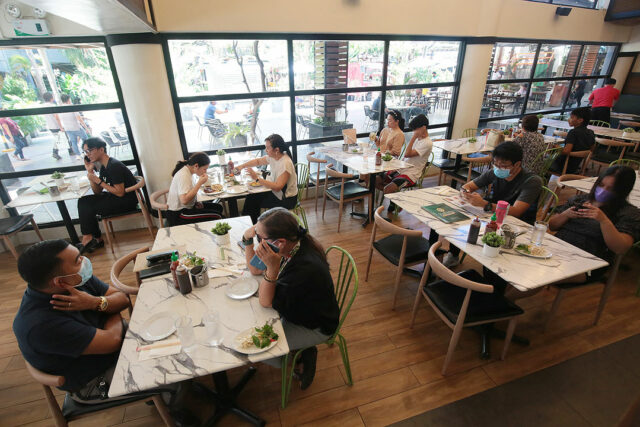
CUSTOMERS eat at a restaurant in a mall in Quezon City. — PHILIPPINE STAR/ MICHAEL VARCAS

By Abigail Marie P. Yraola, Researcher

THE economy grew at a slower pace than initially reported in the first quarter, the Philippine Statistics Authority (PSA) said on Monday.

Gross domestic product (GDP) — the value of all finished goods and services produced in the country at a given period — expanded 8.2% in the January-March period, slightly lower than the 8.3% previously reported on May 12.

First quarter gross national income — the sum of the nation’s GDP and net primary income from the rest of the world — was revised downward to 10.6% from the earlier estimate of 10.7%.

The services sector grew 8.3%, slower than the initially reported of 8.6%. The industry sector saw slightly faster growth at 10.5% from the earlier estimate of 10.4%.

The growth of real estate and ownership of dwellings was lowered to 5.9%, from 7.9% previously.

Downward revisions were also observed in the following services subsectors: accommodation and food service activities (20.3% from 21%); professional and business services (8.3% from 8.8%); wholesale and retail trade; repair of motor vehicles and motorcycles (7% from 7.3%); information and communication (7.4% from 7.7%); and transportation and storage (26.3% from 26.5%).

For the industry sector, mining and quarrying’s expansion was revised upward to 20.3% from 17%, while construction growth was now at 14.7% from 13.5% initially.

Meanwhile, the agriculture sector’s growth remained unchanged at 0.2%.

On the expenditure side, household consumption was revised downward to 10%, from 10.1% initially reported, while government spending was unchanged at 3.6%.

Growth in imports of goods and services was trimmed to 15.4% from 15.6%, while exports growth was upgraded to 10.4% from 10.3%.

Gross capital formation, the investment component of the economy, improved to 20.4% from the earlier estimate of 20%.

The PSA is set to release preliminary data figures for second quarter GDP on Tuesday morning.

A BusinessWorld poll of 18 economists bared a median estimate of 7.5% year-on-year growth in the second quarter.

If realized, this pace would be slower than the revised 8.2% in the first quarter and 12.1% in the second quarter last year. This would also bring the first-half average growth to 7.8%.

The government targets 6.5-7.5% GDP growth this year.

National account revisions are based on approved revision policy, which is consistent with international standard practices, the PSA said.

Meralco customers to see lower bills this month

MANILA Electric Co. linemen work on fixing electric posts in Tondo, Manila. — PHILIPPINE STAR/ RUSSELL PALMA

RESIDENTIAL CUSTOMERS of Manila Electric Co. (Meralco) will see lower bills this month due to the decline in generation and distribution charges and the ongoing refund of a previous over-collection.

In a statement on Thursday, Meralco said the overall rate for a typical household fell by P0.2087 per kilowatt-hour (kWh) this month to P9.5458 per kWh, from P9.7545 per kWh in July. 

A residential household consuming 200 kWh will see a decrease of around P42 in the monthly power bill.

Households consuming 300 kWh, 400 kWh, and 500 kWh, will see monthly bills fall by P63, P83 and P104, respectively.

This is the second straight month of reduction, after Meralco lowered rates by P0.7067 per kWh in July.

“The implementation of distribution-related refunds totaling P48.3 billion as ordered by the Energy Regulatory Commission (ERC) continues to temper customers’ monthly bills. This is equivalent to a total refund rate of P1.8009 per kWh for residential customers,” Meralco said.

Last month, the ERC directed the utility to refund P21.8 billion following the validation of its applicable tariff for July 2015 to June 2022.

Meralco also reduced the distribution charge, equivalent to P0.0360 per kWh for typical residential customers, for the first time since July 2015.

For August, the generation charge fell by P0.1944 to P6.5812 per kWh. The pass-through cost is paid to the power suppliers.

Meralco attributed this to the lower charges from Power Supply Agreements (PSAs), which offset the rise in charges from Independent Power Producers (IPPs) and the Wholesale Electricity Spot Market (WESM).

The PSA charges fell by P0.4273 per kWh, since this month’s rate does not include the recovery of deferred generation costs for April’s power bill.

Meralco said the higher excess energy of some PSAs, which are priced at discount, also helped lower the generation charge.

Meanwhile, IPP charges went up by P0.4213 per kWh as oil prices continued to rise in the global market.

“The underlying Malampaya natural gas price increased by 15% starting this quarter, reflecting recent spikes in world crude oil prices. Power suppliers that have pass-through adjustments in Malampaya fuel — namely, First Gas-Sta. Rita, First Gas-San Lorenzo, and First Natgas-San Gabriel — accounted for 44% of Meralco’s supply during the period,” Meralco said.

Prices at the WESM remained high, rising P0.0433 per kWh. The Luzon grid was placed on a yellow alert on July 5, when several large power plants were on forced outage.

Meralco noted that “persistently high spot market prices triggered the imposition of the secondary price cap almost 27% of the time.”

PSAs, IPPs, and WESM accounted for 52%, 43%, and 5%, respectively, of Meralco’s energy requirement during the month.

Also, the transmission charge for residential customers increased by P0.0235 per kWh, while taxes and other charges dropped by P0.0018 per kWh.

The collection of P0.0025 per kWh as universal charge for the environmental remains suspended as ordered by the ERC.

Pass-through charges from generation and transmission are paid to the power suppliers and the system operator, respectively. Taxes, universal charges, and the feed-in tariff allowance, are remitted to the government.

Meralco’s controlling stakeholder, Beacon Electric Asset Holdings, Inc., is partly owned by PLDT, Inc. Hastings Holdings, Inc., a unit of PLDT Beneficial Trust Fund subsidiary MediaQuest Holdings, Inc., has an interest in BusinessWorld through the Philippine Star Group, which it controls. — AEOJ

DITO files competition complaints vs Globe, Smart

By Arjay L. Balinbin, Senior Reporter

DITO Telecommunity Corp. announced on Monday that it filed complaints with the Philippine Competition Commission (PCC) against PLDT, Inc.’s Smart Communication, Inc. and Globe Telecom, Inc. for “failing to provide sufficient interconnection capacity” to allow phone calls from its subscribers.

The complaints were filed on “Monday morning,” DITO Chief Administrative Officer Adel A. Tamano told reporters during a gathering in Taguig City.

PCC Officer-in-Charge Chairperson Johannes Benjamin R. Bernabe confirmed this in an e-mailed statement, saying DITO had filed two separate complaints against Globe and Smart “for possible anti-competitive practice in their interconnection agreements.”

“Interconnection is an essential component of the telecommunications industry as it allows interoperability and exchange of calls, SMS (short message service), and other information from one network to another,” he noted.

The PCC official also said the commission has 10 days to decide whether or not to give due course to the complaint.

“If given due course, our Competition Enforcement Office will proceed to investigate the charges and if it subsequently finds sufficient basis, file with the Commission en banc a Statement of Objections against the allegedly erring entities,” Mr. Bernabe added.

DITO’s Mr. Tamano said the third telco player “has been trying to fix the problem” with Globe and Smart “for almost a year.”

The National Telecommunications Commission (NTC) requires an interconnection quality with a failure rate of no more than 1%, DITO Chief Technology Officer Rodolfo D. Santiago said.

“According to the NTC, there should only be one unsuccessful call out of 100 calls. The status is that 70 to 80 out of 100 calls are unsuccessful,” he added.

When asked if DITO was pursuing damages, Mr. Tamano responded: “We are not asking money from you. You only have to interconnect us.”

“It’s about interconnection, which is mandated by law. They’re not supposed to stop that,” he noted.

He said that poor interconnection quality hinders DITO’s growth. The company aims to capture 12 million users this year.

“It becomes very clear to us that it has been an abuse of their dominant position,” Mr. Tamano added.

In an e-mailed statement, the PLDT group said: “We are yet to receive a copy of the complaint, but we can assure the government and the public that PLDT and Smart have always supported and ensured fair competition in the telco industry.”

Maria Yolanda C. Crisanto, Globe’s chief sustainability and corporate communications officer, said separately: “We don’t have a copy of the complaint yet. Until such time, we will refrain from issuing a statement. Globe reiterates that it has always advocated for fair business practices and competing on a level playing field.”

Hastings Holdings, Inc., a unit of PLDT Beneficial Trust Fund subsidiary MediaQuest Holdings, Inc., has a stake in BusinessWorld through the Philippine Star Group, which it controls.

ACEN targets 20-GW renewable energy capacity by 2030

ACEN Corp. announced on Monday that it has adopted a new corporate vision and strategy that targets 20 gigawatts (GW) of attributable renewables capacity by 2030.

“We are now facing a global energy crisis, and the elevated fuel prices are compounding the tight power supply situation in the country. The world needs to accelerate the energy transition, and the country needs new capacity urgently,” said ACEN Chairman Fernando M. Zobel de Ayala, in a press release.

ACEN said the company’s “bold aspiration” to boost its growth plan by six times from its current renewable energy capacity of 3.4 GW is achievable by 2030.

Currently, ACEN has 18 GW of pipeline projects across the region.

The company also noted that in terms of technology buildup, solar and wind will remain its core energy technologies, complemented by investments in new technologies such as battery energy storage, floating solar, and offshore wind.

Eric T. Francia, president and chief executive officer of ACEN, said the entire organization is committed to “ACEN 2030,” its vision to reach 20 GW of renewables by 2030.

“It is an aggressive goal, though we believe that we have the right elements to succeed. We have a strong balance sheet, robust pipeline, strong partnerships, and a highly energized organization,” he said.

ACEN, the Ayala group’s listed energy platform, also said that it plans to “aggressively” expand its investments in Australia, which is seen to be its second-largest market within the decade.

The company also plans to expand its presence in Vietnam, Indonesia, and India through strategic partnerships.

“The Philippines will remain as the core market, which currently accounts for 40% of total capacity, and is expected to remain at this level,” it said.

ACEN aspires to be the largest listed renewables platform in Southeast Asia. At present, renewable energy sources account for 87% of its attributable capacity.

On Monday, shares in the company inched up by 0.45% or P0.04 to finish at P8.90 apiece on the stock exchange. — Ashley Erika O. Jose

AboitizPower, foreign partners explore 3,000-MW offshore wind

ABOITIZ Power Corp. has partnered with two foreign entities, with the support of the United States Trade and Development Agency (USTDA), to explore the feasibility of developing up to 3,000 megawatts (MW) of offshore wind projects in the Philippines.

In a press release on Monday, Singapore-based Clime Capital Management Pte. Ltd. said the consortium with AboitizPower and Rocky Mountain Institute (RMI) is launching a feasibility study that aims to complement existing research on wind power.

It quoted AboitizPower President and Chief Executive Officer Emmanuel V. Rubio as saying: “It is our goal to contribute to our country’s energy transition journey by exploring more zero-emissions indigenous energy sources. This offshore wind feasibility study is a step in the right direction as we further diversify our extensive renewable energy portfolio to achieve our goal.”

AboitizPower will be the project lead in the pre-feasibility assessment and wind data collection phase to unlock the offshore wind market, marshal resources to prepare the supply chain in case offshore wind proceeds with the development stage, and capture necessary data.

The project, which is partially funded by the USTDA, will start on Aug. 11 and is expected to conclude by mid-2023.

“Unlocking the offshore wind sector requires significant early-stage development funding. We are delighted to support this and believe offshore wind could prove a significant source of green energy for the Philippines,” Clime Capital Managing Director and Chief Executive Officer Mason Wallick said in the press release.

The Clime Capital team is described as consisting of senior professionals with deep Southeast Asian market experience in clean energy investments and developments.

Citing data from the Department of Energy (DoE), Clime Capital said the Philippines has onshore wind installed capacity of 443 MW as of 2020.

It said there is “significant potential” to expand the generation of wind power, especially offshore where wind farms generate more power. It also cited a 2021 study by the World Bank and BVG Associates, in coordination with the DoE, that identified opportunities for wind power development in the Philippines.

In the Philippine Energy Plan, the DoE targets wind power generation capacity to hit 12,000 MW by 2040. A low-growth scenario places the potential of 3,000 MW by 2040 and 6,000 MW by 2050.

“In partnership with USTDA, RMI aims to unlock private sector investment in offshore wind and utility-scale clean energy power projects in the Philippines and the broader Southeast Asia region,” said Justin Locke, RMI global south program managing director.

Clime Capital quoted US Secretary of State Antony J. Blinken as saying: “The United States stands committed to working with the Philippines to achieve a clean energy future together. The signing of the USTDA grant on offshore wind is an important step in that direction.”

Separately, Aboitiz Equity Ventures, Inc. announced in a media release on Monday that Sabin M. Aboitiz, the group’s president and chief executive officer, accepted an invitation to become a steward of the Council for Inclusive Capitalism (CIC).

CIC is a global nonprofit organization that combines moral and market imperatives to help build a more inclusive, sustainable, and trusted economic system for the world.

Meredith Sumpter, chief executive officer of CIC, said he is thrilled to welcome Mr. Aboitiz to the council “and look forward to working with them as they take the necessary actions to ensure a better future for us all.”

Also on Monday, AboitizPower told the local bourse that Monalisa C. Dimalanta, its compliance officer, has resigned after her appointment as the chairperson of the Energy Regulatory Commission.

On the stock exchange, shares in AboitizPower rose by 1.29% or P0.40 to close at P31.40 apiece. — Ashley Erika O. Jose

Bloomberry returns to profitability with P1.8-B earnings 

BLOOMBERRY Resorts Corp. reported an attributable net income of P1.81 billion for the second quarter, reversing last year’s net loss of P1.16 billion, on eased mobility restrictions.

“Our performance in the second quarter indicates a sustained recovery in all segments of our Philippine operations,” Bloomberry Chairman and Chief Executive Officer Enrique K. Razon Jr. said in a press release on Monday.

“Strong demand from the domestic mass market is pushing revenues closer to pre-pandemic levels and spurring the continued improvement of EBITDA (earnings before interest, tax, depreciation, and amortization) and net income,” Mr. Razon added.

Bloomberry, the operator of Solaire Resort & Casino, reported a consolidated EBITDA amounting to P3.86 billion in the second quarter, almost four times of last year’s P1.03 billion.

Its topline during the three-month period reached P10.23 billion, more than double last year’s P4.75 billion.

“Absent the emergence of new COVID-19 (coronavirus disease 2019) variants that could disrupt our gains, we see scope for further recovery as regional travel starts to pick up in the coming months. In the meantime, we will grow our market leadership by continuing to operate Solaire at the highest levels of service and health security,” Mr. Razon added.

Total gross gaming revenue (GGR) at Solaire posted P13.12 billion, more than double of last year’s P5.67 billion in the second quarter.

“Easy COVID-19 restrictions throughout the quarter furthered the recovery of gaming revenues,” Bloomberry said.

Solaire’s VIP tables contributed P4.41 billion, mass tables accounted for P4.11 billion, and slots made up P4.6 billion.

Meanwhile, Solaire’s non-gaming revenue reached P1.7 billion, almost triple last year’s P657 million, amid operating under more relaxed mobility restrictions.

Its hotel occupancy rate reached 53.4%, higher than the recorded 14.9% rate in the second quarter of 2021.

Year to date, Bloomberry’s attributable net income went up to P2.49 billion from the P1.93-billion net loss recorded in the same period last year.

Its topline for the six months ended in June climbed to P17.49 billion, almost two times last year’s P10.25 billion.

Bloomberry develops destination resorts featuring premium accommodations, gaming and entertainment, restaurants and other amenities.

The company and its subsidiaries own and operate the Solaire Resort & Casino in the Philippines and Jeju Sun Hotel & Casino in Korea.

On the stock market on Monday, shares in Bloomberry soared by 6.45% or 40 centavos to P6.60 apiece. — Justine Irish D. Tabile

ADVERTISEMENT
ADVERTISEMENT