Home Blog Page 6015

Ayala Corp. president and CEO takes leave of absence

FERNANDO Zobel de Ayala has taken a temporary medical leave of absence as Ayala Corp.’s president, chief executive officer (CEO) and vice-chairman of the board, the listed conglomerate said on Monday.

“He remains a member of our Board but has stepped down as member of our Executive Committee and Finance Committee,” the company said in a disclosure on Monday.

Ayala’s Corporate Governance and Nomination Committee endorsed Cezar “Bong” P. Consing for the posts and was elected as acting president and chief executive officer by the company’s board of directors at a meeting held on Aug. 14.

Mr. Consing has been a director of Ayala since December 2020. He is also a director of Bank of the Philippine Islands (BPI), Globe Telecom, Inc., and ACEN Corp.

He was a senior managing director of Ayala and president and CEO of BPI from 2013 to 2021.

Mr. Consing also served as chairman and president of the Bankers Association of the Philippines and as president of Bancnet, Inc.

Meanwhile, the company’s board elected Delfin “Del” L. Lazaro to take Mr. Zobel’s post as the vice-chairman of the executive committee.

Mr. Lazaro has been a non-executive director at Ayala since January 2007. He is a director at Integrated Micro-Electronics, Inc., Globe Telecom, and an independent director at Monde Nissin Corp.

He is also an independent adviser to the board of directors of Ayala Land, Inc. and a member of the BPI advisory council.

“I want to assure everyone that Fernando is in high spirits, but he has asked for some time to focus on his health and recovery,” Ayala Chairman Jaime Augusto Zobel de Ayala said in a Facebook post on Monday.

“Let us all give Fernando the support he needs to focus on improving his health, and Bong and Del our confidence as they take on their new roles,” he added. — Justine Irish D. Tabile

Globe’s credit profile seen to improve over next 6-9 months

GLOBE Telecom, Inc.’s credit profile is expected to improve over the next six to nine months, financial research firm CreditSights, Inc. said, citing the company’s “improving credit story.”

“We see potential for Globe’s deleveraging and capex (capital expenditure) funding buffer to enlarge from recently approved P32-billion equity rights offering (and) P80-90-billion tower sale…, (which) is expected to be completed by (the end of the year),” CreditSights said in its latest outlook report for Globe.

With these developments, the research firm anticipates “further improvements in Globe’s credit profile over the next six-nine months.”

Globe announced on Friday last week that it signed two sale and leaseback agreements for 5,709 telecom towers and related passive telecom infrastructure for over P71 billion.

It said that P53.5 billion of the proceeds will be used for capex and other major infrastructure expansions, with the remaining P17.7 billion going toward debt servicing.

“The first portfolio being sold consists of 2,180 telecom towers in Luzon, which will be acquired by MIESCOR Infrastructure Development Corp. for a total consideration of P26 billion, and leased back to Globe for an initial period of 15 years,” the Ayala-led company said in a statement.

The expected pre-tax transaction gain from the first portfolio will be P10.6 billion.

The second portfolio consisting of 3,529 towers will be sold to Frontier Tower Associates Philippines, Inc. for P45 billion, and also leased back over an initial period of 15 years. Pre-tax gain will be P15 billion.

It is in “advanced discussion” with another tower company for the sale and leaseback of an additional 1,350 telecom towers and related passive telecom infrastructure.

“We maintain our outperform recommendation on Globe, as we believe that its modest… growth and credit profile improvement prospects should cushion the credit risks from its sizable (2022) capex,” CreditSights said.

“Valuations are currently attractive in our view too.”

Outperform, according to finance website Investopedia, means “the company will produce a better rate of return than similar companies, but the stock may not be the best performer in the index.”

“We believe Globe’s hefty (2022) capex of P89 billion is sufficiently funded for, which should reduce the need for additional debt incurrence,” CreditSights added.

According to the research firm, its report is for informational purposes only. “Neither the information contained in this report, nor any opinion expressed therein is intended as an offer or solicitation with respect to the purchase or sale of any security or as personalized investment advice.”

Globe Telecom shares closed 3.57% higher at P2,320 apiece on Monday. — Arjay L. Balinbin

Gotianun firms’ net income declines

GOTIANUN-LED Filinvest Development Corp. (FDC) reported a 34.2% decline in its attributable net income to P1.47 billion in the second quarter after incurring high operating costs and expenses.

The company’s topline was up by 20.1% to P16.24 billion in the second quarter from the recorded P13.52 billion last year.

FDC’s costs were up by 31.7% in the second quarter to P6.74 billion while its expenses rose by 12.2% to P8.25 billion.

In the first half, FDC’s net income went down by 47% to P2.23 billion from P4.2 billion last year.

Its revenues, however, went up to P30.81 billion, an 11.2% increase from last year’s P27.7 billion.

“Core revenues registered a year-on-year growth of 11.2% […],  largely contributed by the core revenue increase in real estate segment, hospitality business and power and utility operations,” the company said in its quarterly report on Monday.

Its subsidiary, Filinvest Land, Inc. (FLI), registered a P526.98-million attributable net income for the three months ended June, 39.3% lower than P868.11 million a year ago.

FLI’s total revenue amounted to P4.67 billion in the second quarter, higher by 16.2% than the P4.02 billion last year.

Its costs from real estate sales went up by 6.3% to P1.79 billion while costs from rental services were up by 20.5% to P687.46 million.

Operating expenses were also up, with selling and marketing expenses amounting to P298.74 million and general and administrative expenses totaling P518.89 million.

Year to date, FLI’s net income slipped to P1.2 billion, 54% lower than year-ago’s P2.62 billion.

On the stock market on Monday, FDC shares went down by 0.99% or P0.07 to P7 apiece while FLI shares ended unchanged at P0.93 apiece. — Justine Irish D. Tabile

Chelsea losses shrink as business segments’ revenues grow

CHELSEA Logistics Infrastructure Holdings Corp. managed to trim its attributable net loss for the second quarter of the year to P587.63 million from P727.09 million previously, as revenues improved amid increased economic activities.

Total revenues for the second quarter climbed 65.3% to P1.61 billion from P975.96 million previously, Chelsea Logistics’ second-quarter financial performance results showed.

“All business segments reported positive revenue growth during the quarter, particularly the passage segment,” the company said.

For the first half, the company’s attributable net loss was reduced to P1 billion from a loss of P1.07 billion in the same period a year ago.

Revenues for the first six months improved 36.6% to P2.91 billion from P2.13 billion previously.

“We are very encouraged by our Q22022 (second-quarter 2022) results with substantial improvements in revenues, especially for the passage segment,” Chelsea President and Chief Executive Officer Chryss Alfonsus V. Damuy said.

“Despite increases in our costs, the strong growth in our revenues was able to narrow our losses on a year-to-date basis,” he added.

Chelsea and its three shipping lines, Starlite Ferries, SuperCat, and Trans-Asia, recently launched Chelsea Travel, a unified online booking system for passengers.

The application will “further accelerate the recovery of our passage business,” Mr. Damuy said.

The group also plans to launch a loyalty application to provide freebies and rewards.

Chelsea Logistics shares closed 0.85% higher at P1.18 apiece on Monday. — Arjay L. Balinbin

PetroEnergy net income surges 39%

YUCHENGCO-LED PetroEnergy Resources Corp. posted an attributable net income of P178.23 million in the second quarter, a 39.1% increase from P128.16 million a year ago.

In its financial report filed with the stock exchange, second-quarter revenues stood at P720.96 million, 13.1% higher compared with P637.62 million in the same period last year.

In the first semester, the company’s attributable net profit increased by 51.5% to P355.19 million from P234.45 million. Revenues stood at P1.37 billion, up 11.4% from P1.23 billion last year.

In a media release, the company attributed its “robust financial performance” in the first half largely to the rise in global crude oil prices and higher offtake sales for PetroSolar Corp.’s Tarlac-2 solar power plant.

It said crude oil prices in the international market averaged at $111.26 per barrel from $64.63 per barrel previously.

PetroEnergy said that it derived the bulk of its revenues from electricity sales of the renewable energy (RE) power plants by operating units of its RE holding firm PetroGreen Energy Corp.

The company said its income drivers included the 32-megawatt (MW) Maibarara geothermal project by Maibarara Geothermal, Inc., the 70-MW Tarlac solar project by PetroSolar, and the 36-MW Nabas-1 wind project by PetroWind Energy, Inc.

Oil revenues from its minority stake in the Etame oil concession in offshore Gabon, West Africa also provided the balance of steady revenues for the company.

In July, PetroEnergy declared a 5% cash dividend or P0.05 per share to all its stockholders of record as of Aug. 15.

On Monday, shares in the company jumped by 4.04% or P0.20 to finish at P5.15 apiece on the stock exchange.

Cebu office market now stable — JLL

THE office market in Metro Cebu is now stable, driven mainly by demand from information technology-business process management firms, according to JLL Philippines.

“The market is stable but there is uneven performance in the office sector, wherein there has been a mix of stability and lackluster performance across indicators,” JLL Philippines Head of Research and Strategic Consulting Janlo C. de los Reyes said in a statement.

Office leasing volumes in Metro Cebu reached 23,825 square meters (sq.m.) in the second quarter.   

“Information technology and business process management (IT-BPM) firms continue to drive leasing activity, accounting to 67.3% as of the first half of 2022, while non-IT-BPM industries such as publishing, finance and banking, maritime technology, and engineering and architecture account for a cumulative 32.7%,” JLL Philippines said.   

IT-business process outsourcing (BPO) companies accounted for 4,600 sq.m. of move-ins in Cebu IT Park, and 4,300 sq.m. of move-ins in Cebu Business Park.

JLL Philippines noted that office pull-outs declined by 79.25% in the first half of 2022 from the second half of 2021.   

“Pull-outs have slowed down to around 9,872 sq.m., where we saw around 2,300 sq.m. BPO pull-out and 800 sq.m. corporate pull-out,” Mr. De los Reyes said.

The vacancy rate has eased to around 21.9%, from a peak of 23.7% in the fourth quarter of 2021.

“We saw the improvement from Cebu IT Park while Cebu Business Park registered an uptick,” he added.

However, Mr. De los Reyes noted “weak precommitment” levels in Metro Cebu, with most of upcoming office stock still vacant.

He noted office rentals will likely remain soft “owing to supply pressure from the sizeable volume of unoccupied future stock.”

Office rental rates were unchanged at P632 per sq.m. per month.

Meanwhile, the logistics market in the country is expected to see “exponential growth,” hitting 3.06 million sq.m. by 2025 and 4.80 million sq.m. by 2030 for Grade A and B logistics facilities, JLL Philippine said.

“The logistics market in the Philippines is still in the early stages of growth, and there’s positive sentiment in a growing market,” Charlie McNaught, JLL Philippines director for logistics and industrial, said.

Demand is driven by the “seismic shift” in consumer spending, as many have shifted to e-commerce platforms during the pandemic.

“There is an opportunity to introduce Grade A logistics to meet the demands of occupiers, as a lot of them improve their supply chain models and become more conscious of their ESG (Environmental, Social, and Governance) commitments,” Mr. McNaught said. — R.M.D.Ochave

Apex Mining earnings surge to P917M

APEX Mining Co., Inc. reported on Monday that its second-quarter net income surged by 337.1% or more than quadrupled to P917.64 million from P209.94 million the year before.

“This consolidated quarter net income is an all-time high for Apex Mining. We consistently look at maximizing revenue through increased production output and minimizing cost through prudent spending,” Apex Mining President and Chief Executive Luis R. Sarmiento said.

In its unaudited quarterly report, Apex Mining said its total revenues climbed to P2.54 billion, or higher by 65% from P1.54 billion in 2021.

Its Maco mine’s gold production climbed by 14% to 23,715 ounces (oz.) in the second quarter while its silver output rose by 29% to 99,645 oz.

Total tons milled in the second quarter rose by 15% to 197,891. Consolidated ounces sold for gold and silver were higher by 48% and 8%, respectively, to 24,083 oz. and 94,234 oz.

“In the second quarter, metal prices were higher by 3% for gold but lower by 17% for silver,” Mr. Sarmiento said, adding that the peso “was also weaker [but] our sound fundamentals protect us from shocks.”

In the second quarter, the firm said it began the construction of its accommodation facility for its employees in Brgy. Nueva Visayas in Mawab, Davao de Oro.

“Our employees are our greatest resource and we continue to prioritize their well-being. This new accommodation facility will provide better amenities for our hardworking miners,” Mr. Sarmiento added.

At the stock exchange on Monday, Apex Mining shares rose by 5% or eight centavos to close at P1.68. — Luisa Maria Jacinta C. Jocson

Savya now ready for occupancy

By Patricia B. Mirasol, Reporter

SAVYA Financial Center, the first green office development in ARCA South, Taguig City, is now ready for occupancy.

A project of Arthaland Corp. in partnership with Japan’s Mitsubishi Estate Co., Ltd., the building offers 59,868 square meters (sq.m.) of gross leasable office area.

Savya Financial Center uses contactless technology, such as touchless turnstiles and RFID (radio frequency identification)-equipped elevators. It also uses energy-efficient lighting and air-conditioning, double-glazed low-E glass, low-flow plumbing fixtures, and a rainwater harvesting and recycling system.

“It’s not easy being green, but Arthaland does it. We are always quadruple-certified,” Anna B. Marco, Arthaland’s commercial project channel director, said in an Aug. 11 media tour. “We want to be the ideal and preferred choice for both international and global locators, especially those who now value very much their sustainability scoring.”

The financial center, whose name is of Sanskrit origin and means “south,” has been pre-certified for Leadership in Energy and Environmental Design Gold Certification. It is on-track for the Philippine Green Building Council’s BERDE Certification, International WELL Building Institute’s WELL™ Building Standard, and the International Finance Corp.’s Excellence in Design for Greater Efficiencies Advanced Certification.

To encourage a sustainable lifestyle, the building has basement bicycle racks and shower facilities as well as a rooftop Potager garden, whose produce will be available to tenants.

“The provision of bike racks and accessible stairwells allow more movement for employees, creating a more active and dynamic work environment,” said Antonio G. Sabarre, a local director at JLL Philippines.

Tenants have an exclusive e-shuttle service to and from key pick-up and drop-off points across the greater Manila area, Mr. Sabarre added.

Savya, which is 60% sold, has a headline rental rate of P800 per sq.m.

Buyers have the option to lease under Arthaland’s Consolidated Leasing Solutions, starting at 100 sq.m.

JLL is the exclusive leasing agent of Savya Financial Center.

Vivant income slips by 23.5%

CEBU-BASED Vivant Corp. reported on Monday that its second-quarter attributable profit dropped by 23.5% to P416.88 million in the second quarter from P544.67 million in the same period last year.

In its quarterly report filed to the stock exchange, Vivant said that its revenues stood at P1.59 billion, up 3% compared with P1.64 billion in the same period last year.

Vivant’s year-to-date attributable net income was recorded at P452.02 million, down by 34.2% year on year.

Earnings before interest, taxes, depreciation and amortization (EBITDA) also went down by 28% year on year to P892.87 million due to a spike in the cost of generation cost, on the back of increased dispatch in 65%-owned Isla Norte Energy Corp. and the higher cost of purchased power of Corenergy Inc. as energy sales volume went up.

Vivant, through its subsidiaries and affiliates, has interests in power generation, power distribution, and the retail electricity supply business.

Gov’t fully awards T-bill offer at higher rates ahead of BSP review

BW FILE PHOTO

THE GOVERNMENT fully awarded its offer of Treasury bills (T-bills) as investors asked for higher rates ahead of the Bangko Sentral ng Pilipinas’ (BSP) Monetary Board’s meeting on Thursday, where it is expected to hike borrowing costs anew.

The Bureau of the Treasury (BTr) raised P15 billion as planned from its auction of T-bills on Monday, with bids reaching P40.532 billion.

Broken down, the Treasury made a full P5-billion award of its offer of 91-day securities as the tenor attracted P14.61 billion in bids. The average rate of the three-month T-bill went up by 2.4 basis points (bps) to 1.874% from the 1.85% fetched at the previous auction. Accepted rates ranged from 1.825% to 1.91%.

The government also borrowed P5 billion as planned via the 182-day securities as tenders reached P18.01 billion. The average rate of the tenor rose by 1.5 bps to 3.226% from the 3.211% fetched at the previous auction as accepted rates were from 3.22% to 3.243%.

Lastly, the BTr raised P5 billion as programmed from the 364-day debt papers, with demand for the tenor reaching P7.92 billion. The average rate of the one-year T-bill rose by 7.7 bps to 3.712% from the 3.635% fetched at the previous auction, with the government accepting offers with yields from 3.6% to 3.8%.

At the secondary market prior to Monday’s auction, the 91-, 182- and 364-day T-bills were quoted at 2.0768%, 3.0247%, and 3.6568%, respectively, based on the PHP Bloomberg Valuation Reference Rates published on the Philippine Dealing System’s website.

T-bill rates climbed across all tenors as the market expects the BSP to raise borrowing costs again at its Aug. 18 meeting, National Treasurer Rosalia V. de Leon told reporters in a Viber message after Monday’s auction.

“Similarly, the Federal Reserve seems unswayed by the softer July CPI (consumer price index) and Fed Chair Jerome H. Powell remains focused on “vanquishing the foe,” Ms. De Leon added.

The first trader said T-bill rates rose slightly as expected ahead of the BSP’s policy review this week.

“No surprises here. The results were broadly in line with expectations. All eyes are now on the Monetary Board decision later this week so investors are really just on wait-and-see mode,” the second trader added.

The BSP is widely expected to raise its benchmark rates anew on Thursday, with most analysts forecasting a 50-bp increase as inflation remains elevated.    

A BusinessWorld poll held last week showed 16 out of 18 analysts expect the Monetary Board to hike rates at its meeting on Aug. 18.

For 13 analysts, the central bank may deliver a hike of 50 bps, while three analysts see a 25-bp increase. Only two analysts expect the BSP to keep rates unchanged.

BSP Governor Felipe M. Medalla earlier said the central bank’s policy-setting Monetary Board may hike rates by 50 bps at their meeting this week inflation quickened to 6.4% in July, a near four-year high. This was also faster than the 6.1% in June and 3.7% a year ago.

For the first seven months, headline inflation averaged by 4.7%, higher than the 4% seen in the same period in 2021 and the central bank’s 2-4% target for the year but lower than its 5% forecast.

The Monetary Board has raised rates by a total of 125 bps since May, including a 75-bp off-cycle hike last month.

Meanwhile, the average rise in US consumer and producer prices slowed in July, which could indicate that inflation has peaked and lead to less aggressive hikes from the Fed.

The US consumer price index ended flat month on month last July from 1.3% in June. On an annual basis, consumer inflation rose by 8.5% in July, slower than 9.1% in June.

On the other hand, the producer price index for final demand declined by 0.5% last month after climbing by 1% in June. In the 12 months through July, it increased by 9.8% after rising by 11.3% in June.

The Fed has raised its key rates by 225 bps since March to temper soaring inflation.

On Tuesday, the BTr will auction off P35 billion in 10-year Treasury bonds (T-bonds) with a remaining life of nine years and 10 months.

The Treasury wants to raise P215 billion from the domestic market this month, or P75 billion through T-bills and P140 billion via T-bonds.

The government borrows from local and external sources to help fund a budget deficit capped at P1.65 trillion this year, equivalent to 7.6% of gross domestic product. — Diego Gabriel C. Robles

The Baseball Player, Blue Room are top winners at the 18th Cinemalaya

Cast and crew of The Baseball Player with the Cinemalaya Organizing Committee. – Photo by Kiko Cabuena

A FILM about young musicians who are arrested for drug possession and one about a young boy who trains tirelessly to become a baseball player in a time of war were the top winners at the 18th Cinemalaya Philippine Independent Film Festival, the awarding ceremony of which was held on Aug. 14 at the Cultural Center of the Philippines (CCP).

Carlo Obispo’s The Baseball Player took home the Best Film award, along with three others: Best Screenplay, Best Actor for Tommy Alejandrino, and Best Editing.

The film follows a Moro child soldier who dreams of having a different life from that of his father who died fighting in a war. However, when the boy grows up, another all-out war against Moro rebels gets in the way of him finally pursuing his dream to become a baseball player.

“[The Baseball Player won Best Film] for its sheer poignance and great power, for its subtle but trenchant storytelling, and for its penetrating take on the Mindanao conflict,” the award citation read.

“I’d like to tell you (my fellow filmmakers) how admirable our work is, not because we are in a pandemic, but because we are brave to tell truthful stories and not only tell stories of individuals or families to protect their selfish and personal interests,” Mr. Obispo said in his speech. “Kailangan nating magkuwento ng mga totoo, makabuluhan, at makakapagbago ng ating pagtingin sa ating lipunan (We need to tell stories that are true, meaningful, and those that can improve our view of our society).”

“The fact that we know that kids are suffering amidst war, if you don’t have a venue and be unable to tell it, you’re [going to] go crazy. It’s important to have avenues like this to be able to tell stories that should be told,” Mr. Obispo told reporters backstage after the ceremony.   

“We want this to be shown to more festivals abroad,” Mr. Obispo said of his goal to have the film reach a wider audience.   

MOST AWARDS
Meanwhile, Ma-an L. Asuncion-Dagñalan’s Blue Room received the most awards of the night — six — including Best Direction, Best Production Design, and Best Original Music Score.

The film follows sheltered teens who are members of an indie rock band. After a gig, they are arrested for drug possession and are hauled to a VIP detention area called the “blue room” where they can bribe their way out of prison. They find themselves caught up between using their privilege to release themselves or owning up to their mistakes.

“[Blue Room was awarded Best Direction] for effectively orchestrating the resources of cinema to evoke the hopes and dreams of Generation-Z,” the award citation read.

Blue Room also bagged awards for Best Cinematography, Best Supporting Actor for Soliman Cruz, and Special Jury Prize.

SHORT FILMS
For the short feature film category, Zig Dulay’s Black Rainbow bagged the top prize — Best Short Film — along with Best Screenplay and the NETPAC Jury Prize.

The film follows a young Aeta boy who wants to become a lawyer in order to help his community save their ancestral land, but finds himself stymied by his family’s needs.

“[Black Rainbow won Best Short Film] for being a bright jewel of a short film, for being a cross-cultural masterpiece that touches the heart and reveals the universality of family, and community and the determination of children to pursue their bright young dreams,” the citation read.

Mr. Dulay, in his speech, thanked the Aeta community in Porac, Pampanga for sharing their stories and stressed that the impact of a film’s message matters over its length.

“I just want to tell stories,” Mr. Dulay said in English and Filipino. “In storytelling, it is not about how long or short, or how many films you have created, but how wide your audience is, how deep the mark of the film gives to the audience, including its relevance, meaning, and purpose, and the goal to give a voice to those seldom heard and give a platform to the marginalized especially to the indigenous community….”

This year’s jury members for the Network for the Promotion of Asia Pacific Cinema (NETPAC) were cinema scholar Patrick F. Campos, director Ida Anita del Mundo, and film critic and historian Max Tessier.

The Cinemalaya main jury members were television and film director and production designer Jeffrey Jetturian; actor, singer, producer Piolo Pascual; President and Chief Executive Officer (CEO) of the production house UXS Inc. (Unitel/StraightShooters) Maria Madonna Tarrayo; documentarist and producer Makiko Wakai; and director, writer, and producer Frederic Auburtin.

The film festival returned to the big screen this year after two years of being held online because of the ongoing coronavirus pandemic. The festival showcased 23 films in competition this year, with 11 full-length features and 12 short feature films.

A FESTIVAL HOMECOMING
This year’s film festival drew an audience of 25,000 to the CCP and its partner commercial cinemas during its 10-day run, earning a gross revenue of P4.5 million combined from ticket sales, sponsorships, and merchandise sales, Cinemalaya festival director Chris B. Millado said of the partial earnings.

“This is 50% less than the 2019 edition, but one has to remember that we also cut down our screenings in half due to the ongoing renovation of the CCP venues,” Mr. Millado said in his speech. “The average number of hours you spent in viewing Cinemalaya films reached a record breaking 20 hours which practically translates into at least seven days that you were with the Cinemalaya festival.

“We must gather strength from each other so we can continue to tell stories with a result that our stories must be better, must be more engaging, must be more elucidating than the lies and disinformation peddled by tyrants in their agents,” Mr. Millado said.

With the goal of bringing the film festival to other areas of the country, Mr. Millado also announced that Dapitan City in Zamboanga Del Norte will be hosting the Cinemalaya 2022 Winners Festival from Sept. 9 to 15. 

“We will also be hosting Film Appreciation Workshops, to be held in various campuses all over Zamboanga Del Norte,” Svetlana Jalosjos De Leon, President of the Dapitan Heritage and Arts Council, said in a speech. “Dapitan City is so excited to be the first to host Cinemalaya in northern Mindanao and we thank you for this opportunity.”

SUBSIDIES FOR NEXT YEAR
Meanwhile, the Film Development Council of the Philippines (FDCP) will fund the production of new films for next year’s festival. FDCP Chairperson Tirso Cruz III announced that each film in the full-length and short feature category for next year’s Cinemalaya will be offered a subsidy. It was an idea agreed upon with his colleagues in the FDCP.

“I am very glad to announce that the FDCP is going to give P1 million each to the Class of 2023 to help in the production of their [full-length] films,” Mr. Cruz announced. “The FDCP will also be giving P100,000 each to the 10 short film finalists that will be chosen,” he continued.

“We were all in one accord to give this support to the 2023 finalists and hopefully we will be doing this every year already. And who knows? We might be able to make it bigger if we could get more funding to help our local Philippine producers, especially the new blood of directors and moviemakers,” Mr. Cruz told reporters backstage during the ceremony. 

He said that during his recent visit to the 2022 Locarno Film Festival in Switzerland, that the international film scene is “looking toward the Philippines because of the past victories and recognitions that most of our movies and our directors have achieved for our industry.”

“Right now, the main thrust of the FDCP is to help our local producers… for global recognition,” Mr. Cruz added.

The competition films of the 18th Cinemalaya festival will continue to be shown until Aug. 16 at selected SM Cinemas (Megamall, Baguio, Clark, Dasmariñas, Legazpi) and Ayala Malls Cinemas (Glorietta, Trinoma, Manila Bay, Capitol Central Bacolod, and CDO Centrio). Ticket prices are P250, while ticket prices are P230 in Ayala Malls Cinemas outside the National Capital Region. The festival films will also be screened online via the CCP’s Vimeo account from Oct. 17 to 31. — Michelle Anne P. Soliman


And the winner is…

Full-length feature films 

• Best Film: The Baseball Player by Carlo Obispo

• Best Direction: Ma-an L. Asuncion-Dagñalan for Blue Room

• Best Actress: Max Eigenmann for 12 Weeks

• Best Actor: Tommy Alejandrino for The Baseball Player

• Best Supporting Actress: Ruby Ruiz for Ginhawa

• Best Supporting Actor: Soliman Cruz for Blue Room

• Best Screenplay: Carlo Obispo for The Baseball Player

• Best Cinematography: Niel Daza for Blue Room

• Best Production Design: Marxie Maolen Fadul for Blue Room

• Best Editing: Zig Dulay for The Baseball Player

• Best Original Music Score: Isha Abubakar for Retirada

• Best Sound: Pepe Manikan for Bula sa Langit

• NETPAC Jury Prize: 12 Weeks by Anna Isabelle Matutina

• Special Jury Prize: Blue Room by Ma-an L. Asuncion-Dagñalan

• Audience Choice Award: Kargo by TM Malones

Short Films 

• Best Short Film: Black Rainbow by Zig Dulay

• Best Direction: Gabriela Serrano for Dikit (Attached)

• Best Screenplay: Zig Dulay for Black Rainbow

• NETPAC Jury Prize: Black Rainbow by Zig Dulay

• Special Jury Prize: Dikit (Attached) by Gabriela Serrano
• Audience Choice Award: Mga Handum Nga Nasulat sa Baras (The Dreams that are Written in the Sand) by Arlie Sweet Sumagaysay and Richard Jeroui Salvadico


Corporate occupiers flocking to new office buildings in Alabang

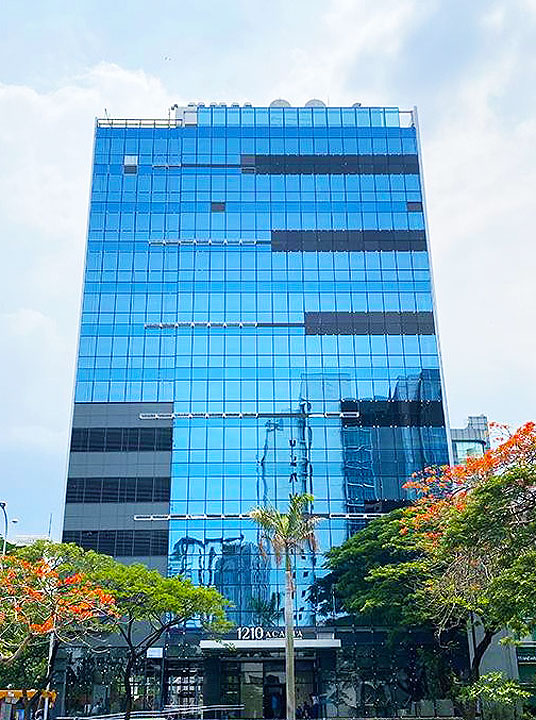
TRADITIONAL corporate occupiers are now filling up recently completed buildings, such as the 12-storey 1210 Acacia at the Madrigal Business Park in Alabang, Muntinlupa.

Phillip Añonuevo, Leechiu Property Consultants (LPC) executive director for commercial leasing, said the Alabang area is preferred by companies with manufacturing facilities or business activity in Laguna and Batangas, especially since the opening of new and upgraded expressways.

Buildings such as 1210 Acacia offer lower densities than the office towers of Makati and Bonifacio Global City.

“This means more exclusivity for its occupants, shorter waiting time in elevators, more personalized building management services and other benefits,” Miguel Manipol, LPC director for commercial leasing, said.

The location of 1210 Acacia Alabang was said to be a key consideration for Amaia Land, which has taken up 70% of the building’s floor area. Amaia is a subsidiary of Ayala Land, Inc.

“It matters to global clients that a supplier’s employees are cared for and have loyalty to the firm. Seeing well-designed work areas in suppliers’ offices drive home a firm’s concern for its work force,” Mr. Manipol said.

The penthouse floors of 1210 Acacia have typical floor plates of 1,092 square meters, which are suited for “showcase offices.”

ADVERTISEMENT
ADVERTISEMENT