Home Blog Page 6005

TDF yields climb on tepid demand, rate hike bets

BW FILE PHOTO

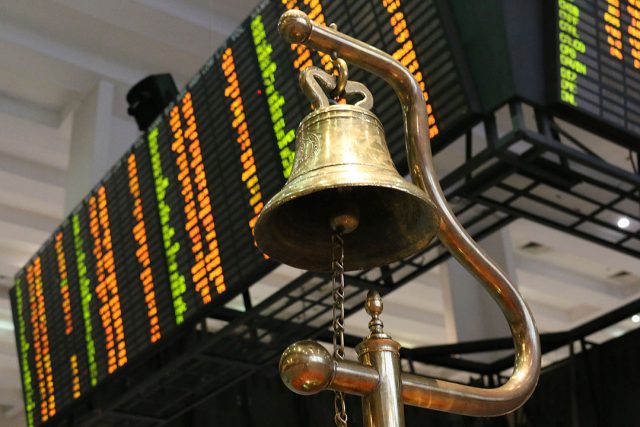
YIELDS on term deposit climbed on Wednesday as the longer tenor on offer was undersubscribed, with the market awaiting the Bangko Sentral ng Pilipinas’ (BSP) policy meeting, where it is expected to raise rates anew.

Total bids for the central bank’s term deposit facility (TDF) reached P290.814 billion, barely filling the P290-billion offer but below the P335.344 billion in tenders last week.

Broken down, the seven-day papers fetched bids amounting to P204.946 billion, higher than the P170-billion auctioned off by the central bank. This was also above the P196.194 billion in tenders logged in the previous auction.

Banks asked for yields ranging from 3.49% to 3.75%, a narrower and higher margin compared with the 3.38% to 3.6888% band seen a week ago. This caused the average rate of the one-week papers to rise by 12.9 basis points (bps) to 3.6913% from 3.5623%.

Meanwhile, demand for the 14-day term deposits amounted to just P85.868 billion, below the P120-billion offering as well as the P139.150 billion in tenders recorded on Aug. 10.

Accepted rates for the papers were from 3.5% to 3.75%, marginally slimmer than the 3.48-3.75% range seen last week. With this, the average rate of the two-week papers inched up by 2.57 bps to 3.7019% from 3.6762% in the previous week’s auction.    

The central bank has not auctioned off 28-day term deposits for more than a year to give way to its weekly offering of securities with the same tenor.

The term deposits and the 28-day bills are used by the BSP to mop up excess liquidity in the financial system and to better guide market rates.

“The results of the TDF auction reflect market participants’ continued preference for the shorter tenor given expectations of another rate hike by the BSP and the issuance of retail Treasury bonds,” BSP Deputy Governor Francisco G. Dakila, Jr. said in a statement on Wednesday.

“In addition, higher loan releases by banks point to lower excess liquidity for placement with the BSP’s deposit facilities. Going forward, the BSP’s monetary operations will continue to be guided by its assessment of the latest liquidity conditions and market developments,” Mr. Dakila added. 

Yields on the term deposits were higher a day before an expected rate hike from the BSP, Rizal Commercial Banking Corp. Chief Economist Michael L. Ricafort said in a Viber message.

“Investors are happy because yields are moving closer to the inflation rate. In relative value, yields are becoming more active for investors,” Bank of the Philippine Islands Lead Economist Emilio S. Neri, Jr. said in an interview on Wednesday, adding that there is excess liquidity in the market.

BSP Governor Felipe M. Medalla on Wednesday said the Monetary Board could hike benchmark rates by as much as 50 bps at their Aug. 18 meeting and that they are not ruling out further increases this year.

A BusinessWorld poll held last week showed 16 out of 18 analysts expect the BSP’s policy-setting Monetary Board to hike rates anew on Thursday, with most analysts forecasting a 50-bp increase as inflation remains elevated.

Headline inflation quickened to 6.4% in July, a near four-year high. This was also faster than the 6.1% in June and 3.7% a year ago.

For the first seven months, inflation averaged 4.7%, higher than the 4% seen in the same period in 2021 and the central bank’s 2-4% target for the year but lower than its 5% forecast.

The Monetary Board has raised rates by a total of 125 bps since May, including a 75-bp off-cycle hike last month. — Keisha B. Ta-asan


Globe Business seeks digital transformation partnerships with more MSMEs

TRUSTPAIR.COM

By Arjay L. Balinbin, Senior Reporter

GLOBE GROUP’s Globe Business on Wednesday said it is currently reaching out to more micro, small and medium enterprises (MSMEs) in the country to accelerate their digital transformation.

“Globe Business seeks to go beyond the surface by helping MSMEs with innovations that accelerate business growth, expertise that guides businesses forward, and… care that supports their journeys, so they can achieve more business breakthroughs,” said KD D. Dizon, head of MSME Group at Globe Business, during a virtual media event.

“We recognize the pain points of these MSMEs. To help them prevail, we provide innovative solutions that accelerate business growth,” she added.

MSMEs, which make up 99% of the country’s businesses, help reduce unemployment by creating jobs. They employ 63% of the country’s total work force.

“We believe that if we help them succeed, we also help our nation succeed,” Globe Telecom, Inc. President and Chief Executive Officer Ernest L. Cu said.

Among Globe’s digital offerings are business-grade connectivity plans from GPlan Biz and GFiber Biz.

GPlan Biz is one of Globe’s connectivity plans intended for MSMEs.

“Aside from its basic mobile connectivity features, [GPlan Biz] allows users to use GCash for business to purchase digital solutions or pay suppliers conveniently, among others,” Globe Business said.

“Subscribers can enjoy unlimited 5G network for six months as well as unlimited text and call to all mobile networks and landlines nationwide,” it added.

Meanwhile, GFiber Biz Plus is a business-grade broadband plan that promises seamless online activity for MSMEs.

“It also comes with two pieces of Wi-Fi mesh that help strengthen internet coverage in different parts of an establishment, and unlimited calls to all mobile networks and landlines nationwide, allowing entrepreneurs to be worry-free of top-up call charges,” Globe Business said.

Vehicle Tracker is another digital solution that allows MSMEs to manage their fleet and ensure safe delivery with real-time monitoring feature.

Globe Business also introduced its Cloud Payroll, which automates employee records and fast-tracks payroll processing, as well as ChatGenie, which lets MSMEs manage their transactions across different channels on one platform.

Filipino recipe book distributed to indigent families

PAGHILOM sa Pagkain, a printed recipe book focusing on daily nutritional needs, was distributed to indigent Filipino families residing in Barangays 42 and 45 of Pasay City and Barangay 745 of Manila to help them receive proper nourishment amid the trying times. In celebration of the recent National Nutrition Month, the 28-page book provides alternative ingredients and cooking methods to traditional Filipino dishes. It features easy-to-follow cooking instructions for wholesome meals such as Tortang TOkra, KaMalunggay Tuyo sa Gata, Gulay Tempura, Pechay Baguio Guisado, Pakbet Kubo, and Meaty Potato Green Beans. It likewise includes procedures in preparing healthy merienda options such as Pancit Bihon, KamoBasa Chips, Turones de Kamote-Malungay, Munggo Croquette, and Beefy Omelette. Produced by the Center for Social Action of the De La Salle-College of Saint Benilde, the recipes, which utilize basic ingredients that are available and affordable in the local markets, were created by registered nutritionist-dietitian and Benilde School of Hotel, Restaurant, and Institution Management educator Dr. Teddy Manansala. Paghilom sa Pagkain also includes Pinggang Pinoy, a visual tool that uses a familiar food plate model to picture the right food group proportions on a per-meal basis to meet the energy and nutrient needs of adults. Pinggang Pinoy was developed by the Food and Nutrition Research Institute of the Department of Science and Technology in collaboration with the World Health Organization, Department of Health, and National Nutrition Council to aid Filipino adults to adopt healthy eating habits through dietary lifestyle messages.

CTA declines to review marketing firm’s refund claim

CTA.JUDICIARY.GOV.PH

THE Court of Tax Appeals (CTA) has denied TKH Marketing’s appeal to refund an item shipment due to an excess value-added tax (VAT) payment worth P1.5 million.

In a 15-page decision on Aug. 8 and made public on Aug. 15, the CTA Special Third Division said it did not have jurisdiction to decide on the refund claim.

“Clearly, petitioner (TKH Marketing) failed to fulfill the requirements of the law in claiming a VAT refund, thereby resulting in the lack of jurisdiction of this court,” CTA Associate Justice Maria Belen M. Ringpis-Liban said in the ruling.

“In other words, the burden of collecting the subject VAT remains with the CIR (commissioner of internal revenue). As such, it is the CIR who has the authority to decide on the refund claim of petitioner pursuant to Section 4 of the NIRC of 1997.”

A district collector granted a refund of the excess VAT payment in the amount of P958,725 and required the firm to properly liquidate and apply for a tax credit certificate pending the approval of the commissioner of customs (CoC).

The CoC affirmed the district collector’s decision and forwarded the appeal to the CIR.

The refund claim was then reviewed by the CIR, which the official denied since the appeal was filed beyond the two-year prescriptive period under the country’s revenue code.

“As stipulated therein, recovery of tax erroneously or illegally collected may, within 2 [sic] years after the payment of the tax or penalty was made, be claimed as tax credit or refund,” the CIR said in a letter to the CoC.

Under the country’s revenue code, refund of taxes or penalties are allowed unless the taxpayer files the administrative claim in writing with the CIR within two years after the payment.

The marketing firm argued the tax court and the Bureau of Customs had jurisdiction over the issue.

The court noted that the protest filed with the district collector cannot be treated as a claim for a refund since only the CIR has jurisdiction over these claims.

In a separate letter, the Bureau of Internal Revenue said the CTA did not have jurisdiction over the petition, reiterating the late filing of the claim.

“If the court has no jurisdiction over the nature of an action, its only jurisdiction is to dismiss the case. The court could not decide the case on the merits,” said the tribunal. — John Victor D. Ordoñez

Cebuana Lhuillier aims to expand network, services

BW FILE PHOTO

CEBUANA LHUILLIER plans to strengthen and expand its business in the country by offering products and increasing its branches in provinces to bring financial services to the underbanked and unbanked.

“We already have more than 3,000 branches across the archipelago, with 500 branches due to open before the year ends. On top of these branches, we have a network of 25,000 domestic partners nationwide and 1.7 million international partner doors for our money transfers business,” Cebuana Lhuillier Integrated Marketing and Communications Group Head Emirosco “Michael” R. Sena said in an interview with BusinessWorld last week.

“This expansion to more than 3,000 branches is based on market need, targeting areas where immediate cash solutions are needed,” he added.

Mr. Sena said the limited availability of locations, especially in rural areas, remains a challenge in the pawnshop chain’s current network expansion.

He said even as a lot of transactions have shifted online, their clients still want to go to physical branches.

“Our experience in the last three years proved that the ‘next normal’ is not purely online, because the reality is, here in the Philippines, many rural communities are still dependent on the physical branches in doing their transactions,” Mr. Sena said.   

“What we’re doing in ensuring that our products and services are easily available through online platforms while also making sure that we have a strong network of physical branches that will complement and complete the online-offline journey in transactions,” he said.

This strategy of using both online and offline platforms or technology and brick-and-mortar stores to deliver its services is called “TechBrick” by Cebuana Lhuillier President and CEO Jean Henri Lhuillier, the company said in a statement on Wednesday.

“Cebuana Lhuillier’s core mission is to break the barriers in finance through effective financial solution offerings. Our TechBrick strategy allows us to make our products and services available on demand, while optimizing our robust network reach in over 3,000 branches in the country,” Mr. Lhuillier said.

The company developed the Cebuana Xpress app for pawning transactions, the Quikz mobile remittance app, and the eCebuana app, which gives customers access to banking services within the Cebuana Lhuillier ecosystem.

It has also made its microinsurance products available online via ProtectNow, a web-based e-commerce platform.

Mr. Sena noted in the interview that the market has become homogenous since the coronavirus pandemic as there is no single brand that captures the market.

“Rather, transactions now flow from one channel to another, from one provider to another,” Mr. Sena said.

EXPANDED PRODUCTS
The official said Cebuana Lhuillier also plans to expand its microinsurance business to add more lifestyle products, including life, health insurance, and pet insurance, among others.

The company is also working on expanded access to purchasing jewelry, pushing for jewelry as a form of micro-investment, Mr. Sena said.

“In essence, what we’re trying to do is open a complete portfolio of products and services that will complement every Filipino’s financial inclusion journey, from loans to microinsurance, from money transfers to saving and even microinvestments (jewelry selling), eventually encouraging each and every one of our kababayans to save and invest for their future,” he added. 

He noted that the pawnbroking industry has evolved through the years. Pawnshops such as Cebuana Lhuillier now offer micro financial services such as remittances and bills payment and also serve as cash agents.

“Pawnshops also became financial touch points for the Filipino masses, for small businesses, and even an access point for government amelioration programs. This became more evident during the pandemic where Filipinos flocked to pawnshops for quick access to cash,” Mr. Sena said.

“As the business evolved through the years, what remained consistent was our mission of financial inclusion for every Filipino. It is this mission that serves at the core of the many innovations introduced by Cebuana Lhuillier through the years, as we strive to provide access to essential financial services to the Filipino masses anytime, anywhere,” he added. — Keisha B. Ta-asan

Apple suppliers to make Apple Watch, MacBook in Vietnam — Nikkei

APPLE, INC.’s suppliers are in talks to produce Apple Watch and MacBook in Vietnam for the first time, Nikkei Asia reported on Tuesday, citing people familiar with the matter.

Apple’s Chinese suppliers Luxshare Precision Industry and iPhone assembler Foxconn have started test production of Apple Watch and MacBook in Northern Vietnam, the report added.

Apple has been shifting some areas of iPhone production from China to other markets, including India, where it started manufacturing iPhone 13 this year, and is also planning to assemble iPad tablets.

India, the world’s second-biggest smartphone market, along with countries such as Mexico and Vietnam are becoming increasingly important to contract manufacturers supplying American brands, as they try to diversify production away from China.

Apple, Foxconn and Luxshare Precision did not immediately respond to a Reuters request for comment.

Last week, Taiwanese contract manufacturer Foxconn gave a cautious outlook for the current quarter after posting results that exceeded expectations, citing slowing smartphone demand after a pandemic-fueled boom.

Like other global manufacturers, Foxconn — formally called Hon Hai Precision Industry Co. Ltd. — has dealt with a severe shortage of chips that hurt production, as bottlenecks from the pandemic lingered and the Russia-Ukraine war further strained logistical channels. — Reuters

Rich-poor income gap slightly narrowed in 2021

AROUND 2.3 million Filipinos have been plunged into poverty between 2018 and 2021, as the coronavirus pandemic left lasting scars on the Philippine economy, according to the Philippine Statistics Authority (PSA). Read the full story.

Rich-poor income gap slightly narrowed in 2021

How PSEi member stocks performed — August 17, 2022

Here’s a quick glance at how PSEi stocks fared on Wednesday, August 17, 2022.


Peso weakens vs dollar ahead of Fed minutes, central bank meet

BW FILE PHOTO

THE PESO retreated versus the greenback on Wednesday as market players expect the US Federal Reserve to remain hawkish to keep rising prices under control.

The local unit closed at P55.86 per dollar on Wednesday, depreciating by three centavos from its P55.83 finish on Tuesday, based on data from the Bankers Association of the Philippines.

The peso opened Wednesday’s session steady from Tuesday’s close at P55.83 versus the dollar. Its weakest showing was at P55.91, while its intraday best was at P55.70 against the greenback.

Dollars exchanged dropped to $918.65 million on Wednesday from $1.02 billion on Tuesday.

“The peso weakened from hawkish expectations prior to the release of Fed policy minutes overnight,” a trader said in an e-mail.

Investors are betting on the US central bank to continue raising rates aggressively as inflation remains high.

The minutes of the Fed’s July review, where it hiked rates by 75 basis points (bps) for a second straight meeting, are expected to provide hints on the direction of policy rates in the world’s largest economy.

The Fed will hold its next meeting on Sept. 20-21. Fed funds futures traders are currently pricing in a 60% chance of a 50-bp increase and a 40% probability of a 75-bp hike.

It has raised rates by 225 bps since March.

Meanwhile, Rizal Commercial Banking Corp. Chief Economist Michael L. Ricafort said in a Viber message the local unit weakened due to market concerns over local sugar supply, which could affect food prices.

President Ferdinand R. Marcos, Jr. is looking into allowing food manufacturers to directly import sugar amid tight domestic supply and high prices.

For Thursday, the trader said the peso may recover against the dollar as the Bangko Sentral ng Pilipinas (BSP) is expected to deliver a rate hike of as much as 50 bps at its policy meeting.

The Monetary Board has raised rates by a total of 125 bps since May, including a 75-bp off-cycle hike last month, as it sought to keep rising inflation in check.

Headline inflation quickened to 6.4% in July, which was a near four-year high. This was also faster than the 6.1% in June and 3.7% a year ago.

For the first seven months, inflation averaged 4.7%, higher than the 4% seen in the same period in 2021 and the central bank’s 2-4% target for the year but lower than its 5% forecast.

For Thursday, both the trader and Mr. Ricafort expect the peso to move from P55.75 to P55.95 versus the dollar. — K.B. Ta-asan

Stocks drop on profit taking ahead of BSP review

BW FILE PHOTO

STOCKS declined on Wednesday as investors pocketed their gains from the market’s recent rally ahead of an expected rate hike by the Bangko Sentral ng Pilipinas (BSP).

The Philippine Stock Exchange index (PSEi) went down by 31.65 points or 0.46% to close at 6,818.99 on Wednesday, while the broader all shares index slipped by 5.20 points or 0.14% to 3,619.88.

Mercantile Securities Corp. Head Trader Jeff Radley C. See said the market declined due to profit taking.

“The PSE index has been bullish as foreign funds went into shopping spree for the past four days,” Mr. See said in a Viber message. “Investors are seeing good quarterly reports and inflation numbers are making a U-turn.”

“After seven consecutive days of gains, investors took some gains, bringing the local bourse to 6,818.99, down by 31.65 points or 0.46%,” Philstocks Financial, Inc. Research Analyst Claire T. Alviar said in a Viber message.

“The profit taking was also ahead of the interest rate decision of the Bangko Sentral ng Pilipinas,” she added.

The central bank is widely expected to raise its benchmark rates anew on Thursday, with most analysts forecasting a 50-basis-point (bp) increase as inflation remains elevated.

A BusinessWorld poll held last week showed 16 out of 18 analysts expect the BSP’s policy-setting Monetary Board to hike rates at its Aug. 18 meeting.

Headline inflation quickened to 6.4% in July, a near four-year high. This was also faster than the 6.1% in June and 3.7% a year ago.

For the first seven months, headline inflation averaged 4.7%, higher than the 4% seen in the same period in 2021 and the central bank’s 2-4% target for the year but lower than its 5% forecast.

The Monetary Board has raised rates by a total of 125 bps since May, including a 75-bp off-cycle hike last month.

The majority of sectoral indices ended in the red on Wednesday except for mining and oil, which went up by 157.02 points or 1.31% to 12,076.96; and holding firms, which climbed by 28.45 points or 0.42% to 6,668.19.

Meanwhile, industrials dropped by 88.26 points or 0.88% to 9,901.85; property went down by 24.19 points or 0.78% to 3,072.65; services declined by 12.88 points or 0.73% to 1,744.37; and financials lost 11.25 points or 0.69% to finish at 1,598.94.

Value turnover declined to P8.04 billion on Wednesday with 1.17 billion shares changing hands from the P8.89 billion with 967.13 million issues seen the previous trading day.

Advancers outnumbered decliners, 117 versus 94, while 34 names closed unchanged.

Net foreign buying declined to P857.07 million on Wednesday from P1.27 billion seen the previous trading day.

Philstocks’ Ms. Alviar placed the PSEi’s immediate support at 6,800 and resistance at the 7,000-7,100 range, while Mercantile Securities’ Mr. See put support at 6,400 to 6,600 and resistance at 6,900. — J.I.D. Tabile

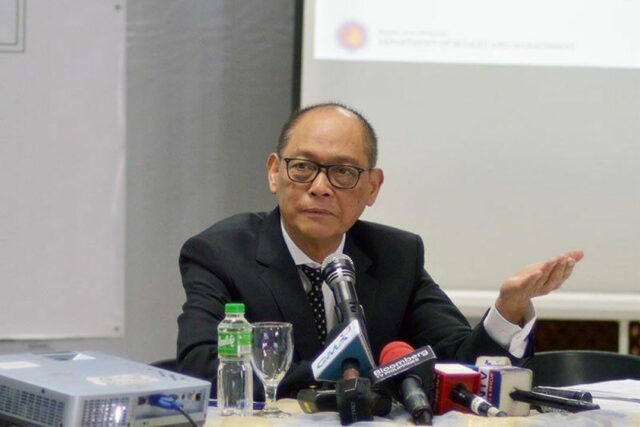
Gov’t ‘working on’ sovereign rating upgrade, Diokno says

PHILSTAR FILE PHOTO

THE Philippines’ credit rating is not expected to worsen, with officials presenting the case to the rating agencies for an upgrade because of the attainability of the country’s growth targets, the Department of Finance (DoF) said in a statement on Wednesday.

The DoF was quoting remarks delivered on Aug. 10 by Finance Secretary Benjamin E. Diokno in an appearance on a public affairs program.

“I think we are very confident that there will be no downgrades. In fact, it is notable that despite the two-year pandemic, the rating agencies have affirmed our investment-grade rating, and downgraded nearly one-third of the emerging economies and even some developed countries. We’re confident that we have presented a medium-term fiscal plan, as stated by the President, that is credible and doable. So, we don’t expect any downgrade within the next few years. In fact, we are working on an upgrade,” Mr. Diokno said.

Fitch Ratings in February maintained the Philippines’ investment-grade “BBB” rating, but retained a “negative” outlook, flagging uncertainties surrounding medium-term growth and hurdles to bringing down debt.

A negative outlook means a downgrade is possible within the next 12 to 18 months.

S&P Global Ratings last affirmed the Philippines’ “BBB+” rating with a stable outlook in May 2021. Meanwhile, Moody’s last affirmed its “Baa2” credit rating with a stable outlook for the Philippines in July 2020.

In July, the Marcos administration unveiled its medium-term fiscal strategy, with a target of 6.5-7.5% gross domestic product (GDP) growth this year, and 6.5-8% starting next year until 2028.

It also seeks to bring down the debt-to-GDP ratio to 61.8% by the end of 2022, from 62.1% at the end of the second quarter. The ratio is expected to drop to 61.3% by next year and 52.5% by 2028.

On Tuesday, National Treasurer Rosalia V. de Leon told the Senate Committee on Ways and Means that the debt load is sustainable and resilient to external shocks because 75% of the debt is expected to be sourced domestically by year’s end.

In the first half, domestic debt accounted for 69% of the total, with the Treasury hoping to raise the share to 80% for borrowing in the second half.

“Because of our conscious practice of stretching our maturities, our debt portfolio provides sufficient time to expand our revenue base and our economy before principal payments fall due,” Ms. De Leon said.

“Only 11.1% of our debt (has) variable interest-rate terms, minimizing our exposure to interest-rate resetting in light of the interest rate normalizations observed locally and abroad,” she added.

Ms. De Leon said the borrowing requirement was reduced to P2.2 trillion this year from P2.5 trillion last year, with the government also aiming to gradually reduce the fiscal deficit from 7.6% this year to 6.1% next year, then to 3% by 2028.

With GDP growth averaging 7.8% in the first half, the economy in the second half would need to grow by 5.2% to attain the lower end of the end-of-year growth target, according to economic managers.

While Mr. Diokno acknowledged inflation as a hindrance to growth, he said inflation has peaked at 6.4% in July, the fourth consecutive month it exceeded the central bank’s target.

“As you know oil prices have started to go down. So, we expect inflation to start to decelerate towards the end of the year. And in fact, we are confident that inflation will be within our target range of 2-4% next year,” Mr. Diokno said.

At the same time, Mr. Diokno expects the peso to stabilize to P55 or even stronger against the dollar by year’s end.

“As you know, there’s usually an influx of overseas Filipino remittances towards the fourth quarter. The peso has actually stabilized and, in fact, it’s strengthening, and so I bet it will be around P55 by the end of the year,” Mr. Diokno said. — Diego Gabriel C. Robles

House ways and means panel OK’s bill imposing VAT on digital transactions

REUTERS

THE House Committee on Ways and Means said it approved a measure on first reading that would impose value-added tax (VAT) on digital transactions.

On Wednesday, the panel approved a substitute bill consolidating House Bills (HB) 372, 3253, and 3341.

If passed, the bill would subject to 12% VAT on the sale of digital services such as online advertisements, subscription services, and others that can be delivered through the internet.

The measure would add a new section in the National Internal Revenue Code of 1997 that would require foreign digital service providers to collect and remit VAT for all transactions.

“This measure seeks to level the playing field between traditional and digital businesses by clarifying the imposition on VAT on (digital service providers),” Albay Rep. Jose Ma. Clemente S. Salceda, who chairs the House Ways and Means Committee, said in HB 372’s explanatory note.

A similar bill, HB 7425, was approved on third reading in the House during the 18th Congress but was not passed by the Senate. — Matthew Carl L. Montecillo

ADVERTISEMENT
ADVERTISEMENT