Home Blog Page 6001

Marcos advisers identify 5 priority areas to accelerate job creation

President Ferdinand R. Marcos, Jr. met with members of the Private Sector Advisory Council (PSAC) in Malacañang led by PSAC Convenor and Aboitiz Group President and CEO Sabin M. Aboitiz (fourth from left). — PSAC HANDOUT

THE Private Sector Advisory Council (PSAC) recommended five priority areas for President Ferdinand R. Marcos, Jr. to address, which it said will accelerate job creation. 

The priorities are headlined by programs to increase the number of small and medium enterprise, identifying labor-intensive industry segments, and attracting more investors by cutting red tape, the PSAC said in a statement on Thursday.

The rest of the five priorities are making labor regulations more flexible, and building worker skills, it added.

The meeting was attended by PSAC head and Aboitiz Equity Ventures, Inc. CEO Sabin M. Aboitiz and the council’s jobs sector lead, RFM Corp. CEO Jose Maria A. Concepcion.

JG Summit Holdings CEO Lance Y. Gokongwei, SM Investments Corp. Vice-Chairperson Tessie Sy-Coson, Magsaysay Group CEO Doris Magsaysay Ho, Alliance Global Group CEO Kevin Andrew L. Tan, and Ayala Corp. Independent Director Rizalina G. Mantaring were also present at the meeting with Mr. Marcos.

Labor Secretary Bienvenido E. Laguesma expressed his support for the PSAC recommendations, the PSAC said.

The council said it will again meet with Mr. Marcos in the coming weeks “to lay out a roadmap that will help the Build, Build, Build and tourism sectoral groups secure quick substantial wins in the first 100 days of the administration.”

In his first address to Congress, Mr. Marcos said he will work with the private sector and make the Philippines a destination for investment. — Kyle Aristophere T. Atienza

DPWH says Japan delivers assurances of support for infrastructure

THE Department of Public Works and Highways (DPWH) said on Thursday that the government has received assurances from the Japanese government of continued support for the Philippines’ infrastructure program.

“Japanese Ambassador Kazuhiko Koshikawa… (gave assurances of) the Japanese government’s continued support for the Philippine government’s infrastructure push… under President Ferdinand R. Marcos, Jr.’s administration,” the DPWH said in a statement.

The Japanese ambassador met with Public Works and Highways Secretary Manuel M. Bonoan on Aug. 17.

The two “talked on coordinating bilaterally” and to bring more infrastructure projects “to fruition,” the department said.

According to Senior Undersecretary Emil K. Sadain, the Japanese government through the Japan International Cooperation Agency (JICA) currently supports 13 big-ticket infrastructure projects in the Philippines, including the widening of the 23-kilometer Arterial Road (Plaridel) Bypass Project Phase 3 in Bulacan.

JICA also supports the improvement and maintenance of about 1,184-kilometer of arterial national roads and the 30-kilometer Central Luzon Link Expressway Project.

It is also backing the construction of the 45.5-kilometer Davao City Bypass project.

“Japan has been, and continues to be, the largest donor of official development assistance in the Philippines, with grants, loans and technical assistance provided all over the country since 1966,” the DPWH said.

The department noted that Marawi City has benefited from a ¥2-billion (P970 million) donation/grant for the design and construction of the 18.97-kilometer Marawi Transcentral Road Phase 1 under the “Program for the Support to Rehabilitation and Reconstruction of Marawi City.”

“This last quarter of 2022, a workshop on construction and operation and maintenance of road tunnels will be held with the goal of providing a strong foundation for joint venture enterprises between Japanese and Philippine businesses,” the DPWH said. — Arjay L. Balinbin

Well-milled rice prices decline in early July

PHILSTAR

THE average retail price of well-milled rice declined in five trading centers in early July, according to the Philippine Statistics Authority (PSA).

Prices fell between P0.10 and P0.75 per kilogram during the July 1-5 period, which the PSA calls the first phase of July, compared with prices from June 15-17, or the second phase of June.

They were down P0.10 at P37.95 in Cotabato City, P38 at P42.50 in Baguio City, P0.50 at P41.50 in Digos City, P0.63 at P41.70 in Legazpi City, and P0.75 at P42.45 in Kidapawan City.

On the other hand, retail prices rose P0.05 to P33.55 in Tuguegarao City, P0.19 to P43.32 in the National Capital Region (NCR), and P0.50 to P51.16 in Tacloban City.

Meanwhile, the price of bone-in pork per kilogram declined between P2.29 and P35 in seven trading centers.

Average prices dropped P2.29 to P321.15 in the NCR, P5 to P212.5 in Cotabato City, P5 to P220 in Cebu City, P20 to P335 in San Fernando City, P25 to P275 in Cabanatuan City, P30 to P190 in Cagayan de Oro City, and P35 to P309.5 in Legazpi City.

Of the trading centers reporting gains, prices increased P10 to P315 in Digos City and P15 to P259.92 in Butuan City.

The price of a kilogram of galunggong (round scad) rose P0.69 to P40.00 in seven trading centers during the first phase.

They rose P0.69 to P238 in the NCR, P10 to P190 in Cabanatuan City, P12.50 to P235 in Baguio City, P15 to P220 in Legazpi City, P20 to P180 in Tacloban City, P40 to P165 in San Fernando City, and P40 to P200 in Pagadian City.

Meanwhile, prices fell P5 to P185 in Tuguegarao City, P10 to P296 in Batangas City, P20 to P140 in Digos City, and P20.5 to P194.5 in Butuan City. — Luisa Maria Jacinta C. Jocson

Singapore to be Asia’s millionaire capital by 2030 — HSBC report

People queue for temperature checks as they enter a mall in Singapore, June 19, 2020. — REUTERS/EDGAR SU

SINGAPORE will overtake Australia to have Asia’s highest share of millionaires in the adult population by 2030, according to a report by HSBC Holdings Plc.

The financial hub is expected to top the list in Asia-Pacific followed by Australia, Hong Kong and Taiwan, the bank wrote in a report Tuesday. The proportion of millionaires in those four countries is also expected to come in higher than the US by the end of the decade, the report said.

Australia ranked highest in the region in 2021, while Singapore was second, according to HSBC, which did not say how the US compared for that year.

Asia’s financial wealth has exceeded that of the US since the aftermath of the Global Financial Crisis, HSBC said, and the region also includes some of the world’s fastest-growing economies. Vietnam, the Philippines and India are likely to see the number of adults holding wealth of at least $250,000 more than double by 2030, according to the report. Still, the region is home to many millions of impoverished people as well.

The household wealth projections in the report used estimates and projections of adult population, per capita mean wealth, and nominal per capita gross domestic product, HSBC said.

In absolute terms, mainland China is expected to have around 50 million millionaires by 2030 and India could house more than six million, HSBC said. That works out to about 4% of adults in mainland China, and less than 1% of adults in India, according to the report.

“An account of Asia’s growing wealth also shines a light on the societal resources that are ultimately available to lift millions more out of poverty,” Frederic Neumann, chief Asia economist and co-head of global research Asia for HSBC, wrote in the report. “After all, the region is hardly short of capital, even if this is unevenly distributed, both between and within economies.” — Reuters

US, Taiwan agree to start formal trade talks

REUTERS

TAIPEI — The United States and Taiwan have agreed to start trade talks under a new initiative to reach agreements with “economically meaningful outcomes,” with a Taiwan official saying China’s “economic coercion” would be also be discussed.

Washington and Taipei unveiled the US-Taiwan Initiative on 21st-Century Trade in June, just days after the Biden administration excluded the Chinese-claimed island from its Asia-focused economic plan designed to counter China’s growing influence.

The office of the US Trade Representative said the two sides had “reached consensus on the negotiating mandate” and it was expected that the first round of talks will take place early this autumn.

“We plan to pursue an ambitious schedule for achieving high-standard commitments and meaningful outcomes covering the eleven trade areas in the negotiating mandate that will help build a fairer, more prosperous and resilient 21st-century economy,” Deputy United States Trade Representative Sarah Bianchi said in a statement.

Taiwan’s top trade negotiator John Deng told reporters in Taipei on Thursday he hoped talks could start next month, and that this could one day lead to a free trade deal the island has long sought with the United States.

The negotiating mandate released along with the announcement said the United States and Taiwan have set a robust agenda for talks on issues like trade facilitation, good regulatory practices, and removing discriminatory barriers to trade.

It said the start of the formal talks would be for the purpose of reaching agreements with “high standard commitments and economically meaningful outcomes”.

Mr. Deng said one topic would be China’s economic coercion, a reference to actions Beijing takes to block trade with countries it is in dispute with, such as when Lithuania allowed Taiwan to open a de facto embassy in its capital.

“Its economic coercion targets are not just the United States or Taiwan, it’s done to a lot of countries. Its harm to the global economic and trade order is great,” he added.

Despite the lack of formal diplomatic ties, Washington has been keen to bolster support for Taiwan, especially as it faces stepped up political pressure from China to accept its sovereignty claims.

China has said it “firmly” opposes the new Taiwan-US trade initiative. — Reuters

Coronavirus’ harmful effects on the brain reverberate years later

REUTERS

COVID-19 survivors remain at higher risk of psychotic disorders, dementia and similar conditions for at least two years, according to a large study that highlights the mounting burden of chronic illness left in the pandemic’s wake.

While anxiety and depression occur more frequently after COVID than other respiratory infections, the risk typically subsides within two months, researchers at the University of Oxford found. In contrast, cognitive deficits known colloquially as “brain fog,” epilepsy, seizures and other longer-term mental and brain health disorders remained elevated 24 months later, according to a study published Wednesday in the journal Lancet Psychiatry.

The findings, based on the records of more than 1.25 million patients, add to evidence of the virus’s potential to cause profound damage to the central nervous system and exacerbate the global burden of dementia — which cost an estimated $1.3 trillion in the year the pandemic began. Oxford researchers showed in March that even a mild case is associated with brain shrinkage equivalent to as much as a decade of normal aging.

“The results have important implications for patients and health services as it suggests new cases of neurological conditions linked to COVID-19 infection are likely to occur for a considerable time after the pandemic has subsided,” said Paul Harrison, a professor of psychiatry and the study’s lead author, in a statement. The work highlights the need for more research to understand why this happens, and what can be done to prevent and treat these conditions, he said.

The study analyzed data on 14 neurological and psychiatric diagnoses from the TriNetX electronic health records network, containing de-identified information on roughly 89 million patients, ranging from children to seniors. The 1.28 million people with a confirmed COVID diagnosis during the two-year study period were matched to an equal number of patients with another respiratory infection that acted as a control group.

The likelihood of most neurological and psychiatric diagnoses after Covid was lower in children than in adults. Unlike adults, they weren’t at an increased risk of mood or anxiety disorders, and any cognitive deficit they experienced tended to be transient.

‘WORRYING’
“It is good news that the higher risk of depression and anxiety diagnoses after COVID is relatively short-lived and there is no increase in the risk of these diagnoses in children,” co-author Max Taquet said. “However, it is worrying that some other conditions, such as dementia and seizures, continue to be more frequently diagnosed after COVID, even two years later.”

The fact that these risks remain elevated for so long suggests the underlying mechanisms driving them persists well past the acute infection, the researchers said. Potential causes include damage to the cells that line blood vessels, leading to blood clots, and leakage of the blood-brain barrier.

Previous vaccination is associated with reduced or unchanged risks of most neurological or psychiatric outcomes, the authors said. The rates of these problems were similar after the emergence of the Omicron and Delta variants, suggesting that coronavirus infections may continue to spur neuropsychiatric illnesses even when they cause otherwise less severe disease.

The study is the first to attempt to examine some of the disparate and lingering neurological and psychiatric consequences of COVID in a large dataset, Jonathan Rogers and Glyn Lewis from University College London wrote in an accompanying comment piece.

“It highlights some clinical features that particularly merit further investigation,” they said, adding that more research is needed to validate the findings. — Bloomberg


Californians urged to cut power use during extreme heat

UNSPLASH

CALIFORNIA’s grid operator urged the state’s 40 million people to ratchet down the use of electricity in homes and businesses on Wednesday as a wave of extreme heat settled over much of the state, stretching power supplies to breaking point.

Temperatures soared well above 100 Fahrenheit (38 Celsius) in many of the inland valleys, reaching 107 F (42 C) in parts of Northern California’s Shasta and Tehama counties and 108 F (42 C) in Southern California’s Imperial County on the Mexican border.

Big Bar, an unincorporated area in the northwest corner of the state, reached 110 F (43 C).

The extreme conditions were the latest sign of the impact of climate change in the US West, where wildfires and severe drought have emerged as a growing threat. As spells of excessive heat become more frequent, the strain on power and water utilities will become more acute, scientists say.

To prevent power outages, the California Independent System Operator (ISO) asked people and businesses to turn off lights and appliances and preset their thermostats to 78F (26C). Reducing usage was especially critical from 4 p.m. to 9 p.m. local time (2300 to 0400 GMT), when demand typically peaks and solar power generation begins to ebb.

California ISO also declared Restricted Maintenance Operations through Thursday, cautioning ISO participants to avoid taking grid assets offline for routine maintenance to ensure that all generators and transmission lines are available.

The grid operator made similar power usage requests during summer and fall over the past two years, when the region experienced several bouts of record-breaking hot weather. Power systems withstood heat waves in 2021 but rolling blackouts for two days in August 2020 left about 400,000 households without power.

On Wednesday, California ISO projected power demand would peak at 44,919 megawatts (MW), the highest since September 2020 when usage hit 47,236 MW. One megawatt can power around 1,000 US homes on a typical day, but only about half that on a hot summer day.

As a result, power prices during the day in Southern California and in Washington state could climb to their highest since September 2021.

The heat on Wednesday also raised the risk of wildfires. The Wishon Fire, a 350-acre (140-hectare) blaze in the Sequoia National Forest, was 45% contained.

On Tuesday, the US government warned that more drastic cuts in water usage were needed to protect dwindling supplies held in reservoirs that are crucial to the well-being of seven Western states.

Two Colorado River reservoirs — Lake Mead and Lake Powell — have fallen to just above one-quarter of their capacity this summer. If they fall much lower, the lakes will be unable to generate hydroelectric power for millions of customers in the West, authorities say. — Reuters

Myanmar to import Russian oil, military says

REUTERS

MILITARY-RULED Myanmar plans to import Russian gasoline and fuel oil to ease supply concerns and rising prices, a junta spokesperson said, the latest developing country to do so amid a global energy crisis.

The Southeast Asian country has maintained friendly ties with Russia, even as both remain under a raft of sanctions from Western countries — Myanmar for a military coup that overthrew an elected government last year, and Russia for its invasion of Ukraine, which it calls a “special military operation”.

Russia is seeking new customers for its energy in the region as its biggest export destination, Europe, will impose an embargo on Russian oil in phases later this year.

“We have received permission to import petrol from Russia,” military spokesperson Zaw Min Tun said during a news conference on Wednesday, adding that it was favored for its “quality and low cost”.

Fuel oil shipments are due to start arriving in September, according to media.

Zaw Min Tun said junta chief Min Aung Hlaing discussed oil and gas during a trip to Russia last month. Myanmar now imports its fuel through Singapore.

Myanmar would consider joint oil exploration in Myanmar with Russia and China, he said.

The military has set up a Russian Oil Purchasing Committee headed by a close ally of Min Aung Hlaing to oversee the buying, importing, and transport of fuel at reasonable prices based on Myanmar’s needs, according to a statement published in a state newspaper on Wednesday.

In addition to political turmoil and civil unrest, Myanmar has been hit hard by high fuel prices and power cuts, prompting its military leadership to turn to imports of fuel oil that can be used in power plants.

Petrol prices have surged about 350% since the coup in February last year to 2,300-2,700 kyat (about $1) per liter.

In the past week, petrol stations have shut down in various parts of the country because of shortages, according to media reports.

Russia is also a major supplier of weapons to the Myanmar military. — Reuters

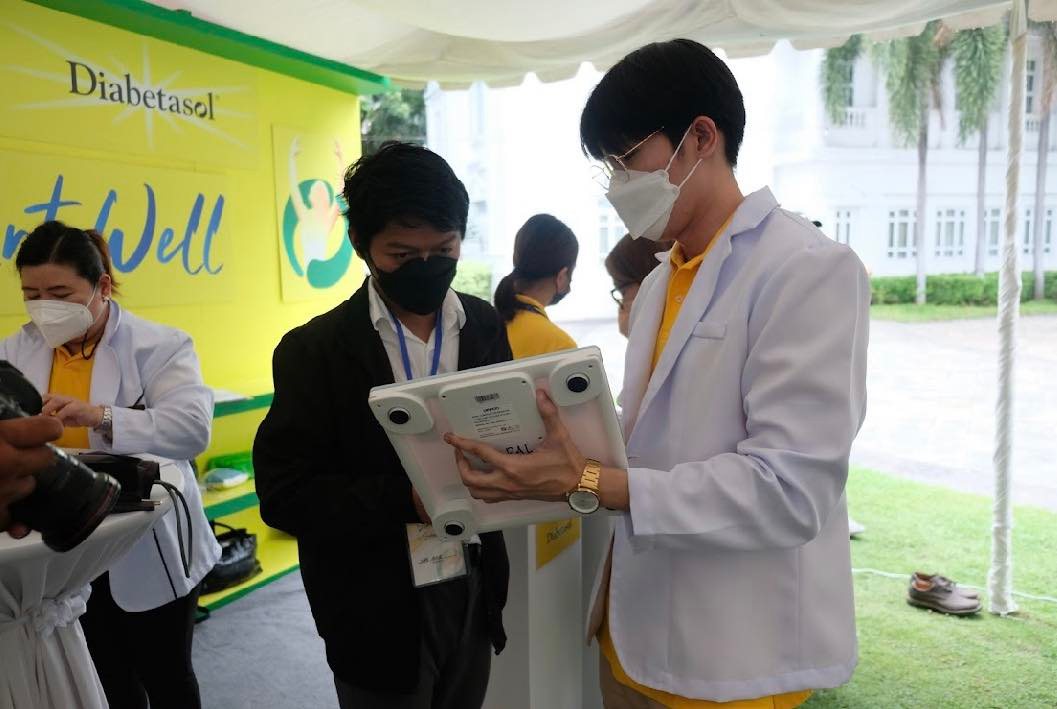
Diabetasol PHL kicks off #TreatYourselfWell campaign to promote sweet life for diabetics

Diabetasol Nutrition Philippines held a “Start-Up the Sweet Life” event last month to kick off their #TreatYourselfWell campaign. This movement is meant to help people with diabetes enjoy a sweet life while maintaining a healthy lifestyle. The campaign was supported by a diabetes management framework: Start Well (having regular checkups), Move Well (regular exercise), Eat Well (proper diet), and Think Well (reading and self-awareness about health).

Dr. Leyden Florido, President of the Philippine Association of Diabetes Educators, began the discussions with a sobering fact about how the prevalence of diabetes in adults aged 20–79 years has more than tripled over the past years, from an estimated 151 million (4.6% of the global population at the time) to 537 million (10.5%).

With these numbers, it may seem difficult to avoid diabetes, but Dr. Florido offered simple solutions – exercising regularly and maintaining a healthy diet. “Every two hours spent watching TV or movies instead of pursuing something more active increases the probability of developing diabetes by 20%,” she added.

Dr. Florido further emphasized how regular exercise such as walking for 50–70 minutes three times per week for 12 weeks, on average, could help prevent diabetes. “Even pulling grass in the yard as an easy form of exercise and sun exposure helps to get enough vitamin D”, she added.

Aside from regular physical activity, Dr. Florido also emphasized the necessity of reducing the consumption of fried foods, sweets, sugary drinks, and anything salty or fatty and adding more healthy foods such as veggies, whole grains, lean protein, low-fat dairy, and fruits into your diet.

Pia Santos, Senior Brand Manager of Diabetasol Nutrition Philippines, introduced the attendees to their main product, Diabetasol, a meal replacement for breakfast and dinner. The basic pack contains a nutrition powder with 11 vitamins and minerals that help regulate blood sugar and hunger pangs with the help of VitaDigest, a combination of insulin fiber and slow-digesting carbohydrates.

Before the event ended, Diabetasol drinks were distributed to the participants who gave a toast to the promotion of starting a sweet life through the #TreatYourselfWell Campaign.


Spotlight is BusinessWorld’s sponsored section that allows advertisers to amplify their brand and connect with BusinessWorld’s audience by enabling them to publish their stories directly on the BusinessWorld Web site. For more information, send an email to online@bworldonline.com.

Join us on Viber to get more updates from BusinessWorld: https://bit.ly/3hv6bLA.

Nat’l University beats Perpetual to sweep Preseason Cup Group A

TEAM captain John Lloyd Clemente dropped 21 points. — FILECO SPORTS

Games Tomorrow
(Filoil EcoOil Centre)
9 a.m. – Perpetual vs. Arellano
11 a.m. – EAC vs. Mapua
1 p.m. –  LPU vs. San Beda
3 p.m. –  San Sebastian vs. JRU
5 p.m. –  La Salle vs. Letran

NATIONAL University (NU) fended off University of Perpetual Help System DALTA, 87-82, and completed a sweep of Group A at the close of its Filoil EcoOil Preseason Cup elimination campaign on Thursday at the Filoil EcoOil Centre in San Juan.

Team captain John Lloyd Clemente dropped 21 points in 21 minutes to banner five cagers in twin digits for the Bulldogs, who clinched the top seeding in Group A entering the quarterfinals.

Germy Mahinay (12), PJ Palacielo (12), Steve Nash Enriquez (11) and Michael John Malonzo (10) were also instrumental for NU, which needed to claw back from an 80-71 deficit early in the fourth quarter.

The Bulldogs, whose unbeaten campaign included a big win over reigning UAAP champion University of the Philippines (UP), uncorked a 16-2 closeout from there on highlighted by Mr. Clemente’s insurance free throws in the waning seconds.

The No. 1 NU will face the still-to-be determined No. 4 team from Group B in a crossover knockout playoffs.

Joining the Bulldogs as Group A quarterfinalists were UP, Adamson and College of St. Benilde with two teams yet to catch the last bus in Group B led by La Salle and Lyceum.

Later, San Sebastian (3-3) bolstered its bid for one of those last two tickets with a 69-64 win over Letran (3-3) to gain a share of fourth place. Far Eastern University has inside track so far at No. 3 with a 4-3 card. — John Bryan Ulanday

Postponed Asian Para Games gives PHL better chance to replicate effort in Indonesia

TANKER Ernie Gawilan with three-gold medal haul in Jakarta.

THE Philippines will have a chance to replicate, if not surpass, its strong effort in the 3rd Asian Para Games in Jakarta, Indonesia four years ago after the 4th edition to be hosted by Hangzhou, China will be staged from Oct. 22 to 28 next year.

“It’s an answered prayer,” said national para chess team coach James Infiesto after the new dates of the quadrennial event, which was postponed in May this year due to the coronavirus disease 2019 (COVID-19) pandemic, was recently announced.

The Filipino chessers raked in five gold medals including four by FIDE Master Sander Severino in Jakarta where the country finished strongly at 10th place with a historic 10-gold, eight-silver and 11-bronze medal harvest.

The team’s other mints came from tanker Ernie Gawilan with three and bowler Kim Ian Chi, cyclist Arthus Bucay with one each.

While there will be no bowling in Hangzhou, the Philippines remains in a position to duplicate, if not eclipse, that incredible feat the last time out.

The development came after the Olympic Council of Asia last month announced the new dates for the Asian Games, which will be now held from Sept. 23 to Oct. 8, 2023.

“We are happy to announce the new dates for the Asian Para Games, which were approved by the APC (Asian Paralympic Committee) Executive Board. We would also like to thank HAPGOC (organizers), the Chinese Paralympic Committee and Hangzhou and Zhejiang provincial governments for their continuous support and efforts to ensure that the Games take place on the new dates,” said APC President Majid Rashed.

This is the second time China will host the Asian Para Games after the successful staging of the first edition of the Games in Guangzhou 12 years ago. — Joey Villar

World no. 3 pole-vaulter Obiena eyes first Olympic medal

CHRISTOPHER Nilsen of USA, Armand Duplantis of Sweden and Ernest John “EJ” Obiena of the Philippines celebrate after the men’s pole vault final during day 10 of the 2022 World Athletics Championships on July 24, 2022 in Eugene, Oregon. — REUTERS

AFTER all external factors have already been sorted out, World Championships pole-vault bronze medalist Ernest John “EJ” Obiena can now focus solely on delivering what this grateful nation hopes for him to accomplish — a first Olympic medal in almost a century.

“This was a long awaited and just decision and one in the best interests of Philippine sports. It’s also a decision that is congruent with the values and principles of the Olympic Spirit,” said Mr. Obiena.

“Now, I look forward as I work tirelessly to bring more glory to our beloved Philippines,” he added.

After a long wait, the World No. 3 and Asian record-holder was finally reinstated by the Philippine Athletics Track and Field Association (PATAFA) into the national team on Wednesday that would allow him due benefits like a monthly stipend and funding from the Philippine Sports Commission (PSC).

“I am very thankful to PATAFA leadership and PSC for reinstating me to the national team. Whilst I shall properly leave the past in the past, I believe the facts have spoken,” said the Southeast Asian Games gold winner.

“The Commission on Audit has spoken. My fellow countrymen have spoken. And my team and I have proven our dedication with our performances on the world stage and a first-ever World Championships medal,” he added.

With the remaining kinks already ironed out, Mr. Obiena is now looking forward to improving his career-best 5.94 meters, breaching the six-meter plateau and snaring the country its first podium finish in the Olympics in the 2024 Paris Games since Miguel White copped a 400m hurdles bronze in the 1936 Berlin Games. — Joey Villar

ADVERTISEMENT
ADVERTISEMENT