Home Blog Page 60

Bill seeks to declare Kibungan mining-free zone

LA TRINIDAD, Benguet — Benguet lawmaker Eric Go Yap has filed a measure declaring the Kibungan town a mining-free zone, which will ban all forms of mineral extraction within its jurisdiction.

The measure defines a mining-free zone as an area where all mining and quarrying activities are strictly prohibited, particularly those that pose risks to the environment and nearby communities.

The move comes amid growing concerns over the long-term environmental and social impacts of mining operations in the highland Cordillera region and around the country.

While mining in the Philippines remains regulated, past incidents have underscored the limits of existing safeguards, Mr. Yap said.

A 2025 report by Amnesty International cited cases of water contamination, ecosystem degradation, and heightened health risks in mining-affected communities.

Studies by the nongovernment Foundation for the Philippine Environment also link mining to deforestation and toxic contamination, with experts warning of long-term health risks from heavy metal exposure.

Mr. Yap said declaring Kibungan mining-free would help protect vital watersheds, preserve biodiversity, and safeguard agricultural lands that sustain local livelihoods, stressing that environmental protection must take precedence to ensure the well-being of present and future generations. — Artemio A. Dumlao

PSE index declines as markets eye US-Iran talks

BW FILE PHOTO

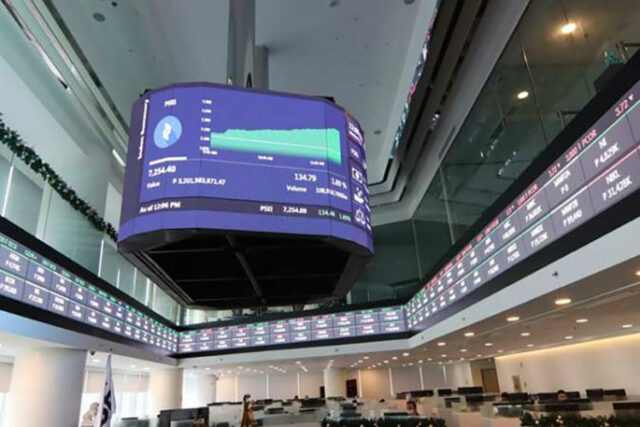
PHILIPPINE STOCKS closed in the red again on Monday amid uncertainty over the conflict in the Middle East amid mixed signals from officials about ceasefire discussions.

The benchmark Philippine Stock Exchange index (PSEi) fell by 0.83% or 50.35 points to close at 5,948.33, while the broader all shares index went down by 0.49% or 16.61 points to end at 3,336.99.

“The local market declined as the latest developments in the Middle East conflict including the US’ military strikes on Iranian infrastructure and further threats from US President Donald Trump if the Strait of Hormuz is not fully reopened cast doubts on the possibility of the war ending soon,” Philstocks Financial, Inc. Research Manager Japhet Louis O. Tantiangco said in a Viber message.

“The PSEi opened the week lower as developments in the Middle East conflict continued to weigh on market sentiment. Market jitters intensified after Donald Trump set a deadline for Iran to open the Strait of Hormuz, adding to global uncertainty,” Regina Capital Development Corp. Head of Sales Luis A. Limlingan said in a Viber message. “Oil prices remained elevated due to continued supply disruptions tied to the prolonged conflict.”

Oil prices rose while stocks were mixed on Monday after Mr. Trump warned of “hell” for Iran unless it reopens the Strait of Hormuz by his self-imposed deadline, but a report of a push for a ceasefire appeared to ease some nerves, Reuters reported.

Mr. Trump’s repeated threats to destroy civilian infrastructure including power plants and bridges if the vital waterway is not open by Tuesday have put traders on edge for reciprocal attacks by Iran on targets in the Gulf states.

Investors took some confidence after Axios reported that the US, Iran and a group of regional mediators are discussing the terms for a potential 45-day ceasefire that could lead to a permanent end to the war, citing four US, Israeli and regional sources with knowledge of the talks.

Brent crude futures opened higher before paring gains, rising 1.2% to $110.29 a barrel on the potential supply disruption.

Majority of sectoral indices ended lower on Monday. Mining and oil slid by 2.99% or 501.88 points to 16,271.46; holding firms sank by 1.93% or 91.52 points to 4,632.12; services dropped by 1.12% or 30.74 points to 2,691.24; financials retreated by 0.35% or 6.72 points to 1,874.52; and industrials went down by 0.09% or 8.02 points to 8,784.82.

Meanwhile, property edged up by 0.01% or 0.36 point to 1,988.07.

Decliners outnumbered advancers, 125 to 70, while 70 names closed unchanged.

Value turnover went down to P5.55 billion on Monday with 816.79 million shares traded from the P7.97 billion with 1.18 billion issues that changed hands on Wednesday.

Net foreign selling decreased to P1.05 billion from the P1.2 billion in the previous session. — Alexandria Grace C. Magno with Reuters

WB approves $600-M loan for Philippine education project

BW FILE PHOTO

By Justine Irish D. Tabile, Senior Reporter

THE World Bank (WB) said that it approved a $600-million loan to improve learning outcomes in Philippine primary and lower secondary education.

In a statement on Monday, the World Bank said the loan will finance the Project for Learning Upgrade Support and Decentralization (PLUS-D) which aims to improve foundational literacy, numeracy and mathematics outcomes.

The loan will finance grants and tailored support for 10 selected Department of Education (DepEd) regional offices and over 11,100 schools, benefiting more than 21 million K-10 students and 770,000 teachers.

“For the Philippines, sustaining growth and creating more jobs will depend on strong human capital — a workforce with solid foundational skills in literacy and numeracy,” according to Zafer Mustafaoğlu, division director for the Philippines, Malaysia, and Brunei at the World Bank.

“This effort is about giving every Filipino child a fair start, ensuring they can build the skills that underpin lifelong learning and future success in the labor market,” it added.

According to the bank, the Philippines faces a severe learning crisis in basic education, exacerbated by the COVID-19 pandemic, with recent studies showing that 91% of 10-year-olds are unable to read and understand an age-appropriate text.

“Low learning outcomes are closely linked to inadequate teaching and learning conditions, including limited teacher capacity, suboptimal school leadership, insufficient infrastructure, and subpar quantity and quality of learning materials,” the World Bank said.

PLUS-D aims to address these challenges through delivering nationwide support to help K-10 learners catch up and excel by focusing on foundational literacy and numeracy improvement.

“It will support DepEd’s learning acceleration and recovery program, while improving how learning is measured and used in classrooms through enhanced assessments,” it said.

The program will also strengthen teaching and leadership through evidence-based training and coaching, making inclusive teaching-learning materials accessible, and advancing DepEd’s digitalization and decentralization programs.

“PLUS-D is about combating learning poverty nationwide by equipping teachers with evidence-based support, promoting school autonomy and accountability, and helping Filipino learners become independent, confident readers,” World Bank Senior Education Specialist and Project Leader Janssen Edelweiss Teixeira said.

“We have seen this work in countries around the world, and the Philippines will be no exception. Help is on the way,” he added.

In a separate statement, the World Bank said that it expects Philippine inflation to intensify further due to the war in the Middle East.

“Price pressures increased in February and are likely to intensify further. Inflation accelerated to 2.4%, driven by higher prices of food, utilities, and restaurant services,” it said.

February inflation is still within the 2-4% target of the Bangko Sentral ng Pilipinas (BSP).

Although the BSP held policy rates steady in an off-cycle meeting on March 26, it said that it could shift to monetary policy tightening if oil price shocks threaten to un-anchor inflation expectations.

It said the conflict also poses a negative terms-of-trade shock for the Philippines as the country heavily relies on imported oil and fertilizer shipments transiting the Strait of Hormuz.

“Depending on the extent of disruption, reduced supply and higher prices will weigh on growth and increase inflation,” it said.

In particular, it said every 10% rise in international oil prices could raise headline inflation by up to 0.5 percentage points.

“Brent crude prices have risen by 42.5% between Feb. 27-March 23. If oil prices remain 60% above the 2025 average, nominal household incomes could fall by 3.3%,” it added.

The government has declared a one-year state of national energy emergency to create freedom of action to deal with the impact of the conflict, including giving President Ferdinand R. Marcos, Jr. the power to reduce fuel excise taxes.

According to the World Bank, if the excise taxes on fuel are suspended through 2026, it will result in foregone revenue equivalent to over 0.5% of gross domestic product.

The World Bank said it will be watching out for the pass-through impact of the oil price shock on domestic inflation and further policy responses to the Iran crisis.

March inflation could exceed BSP target band at 4.51% — Nomura

INFLATION may have accelerated well above the central bank’s target in March due to surging pump prices, electricity rates and the cost of rice, Nomura Global Markets Research said.

In a report, Nomura Global analysts said the consumer price index (CPI) could come in as high as 4.51%, the strongest reading since the 4.9% posted in October 2023.

“We expect CPI inflation to jump to 4.51% year on year in March from 2.42% in February, owing to surging retail fuel prices, combined with higher electricity rates and rice prices,” Nomura Global said.

If realized, this would mark the first time in about two years that the headline indicator breaches the Bangko Sentral ng Pilipinas (BSP) target band, which was last exceeded in July 2024, when inflation came in at 4.4%.

Nomura Global said core inflation, which excludes volatile food and fuel prices, could pick up slightly to 3.2% from 2.9% the previous month due to “some spillovers from higher energy costs.”

Based on the median estimate of 18 analysts polled by BusinessWorld last week, headline inflation is expected to accelerate to a 20-month high of 3.8% in March from 2.4% in February and 1.8% a year earlier.

This is near the upper end of the BSP’s 3.1%-3.9% forecast for the month and would mark the third straight month that inflation settled within the central bank’s 2%-4% target.

This would also bring the three-month inflation average to 2.7%, below the BSP’s revised inflation estimate of 5.1% for the full year and Nomura Global’s 4.4% projection.

The Philippine Statistics Authority will release the March inflation data on Tuesday, April 7.

Philippine fuel prices have risen by double digits weekly since the US and Israel launched attacks on Iran in late February.

In March, fuel retailers hiked pump prices by up to P43.50 a liter for gasoline, P67.35 per liter for diesel and P70.90 per liter for kerosene.

Fuel costs are expected to rise once more this week, with Shell Pilipinas Corp. set to implement a P5.90 per liter increase for gasoline, P19.80 per liter for diesel and P9.10 per liter for kerosene.

Manila Electric Co. also charged 64.27 centavos more per kilowatt-hour (kWh) in March, bringing the electricity rate to P13.8161 per kWh from P13.1734 per kWh the previous month. — Katherine K. Chan

Pharma industry grapples with cost, supply issues

PFIZER.COM

By Beatriz Marie D. Cruz, Senior Reporter

THE pharmaceutical industry is bracing for higher costs as the conflict in the Middle East disrupts global supply chains that the Philippine drug industry depends on, industry executives said.

They noted, however, that some drug manufacturers have sufficient inventory to cover the next 12 months, beyond which they, too will be under pressure if the fighting is prolonged.

Maria Blanca Kim Bernardo-Lokin, president and chief executive officer of Philippine Pharma Procurement, Inc. (PPPI), said the pharmaceutical industry remains import‑dependent, leaving it vulnerable to supply chain disruptions.

“Most, if not all, raw materials used in the drug manufacturing process are imported. Beyond medicines, we source our medical supplies, machines, and vaccines almost exclusively through importation,” she said via Viber.

The industry also imports key ingredients for so-called lifestyle medicines like potassium, sodium, calcium, and magnesium salts, Ms. Lokin added.

She said supply chain disruptions stemming from the Middle East conflict are likely to widen the pharmaceutical trade deficit, which was $2.3 billion in 2025, Fitch Solutions unit BMI reported in March.

Ms. Lokin said that the conflict will eventually drive up the price of medicine.

“While prices are expected to increase — for both manufacturers and consumers alike — PPPI has been regularly conferring and coordinating with industry stakeholders to ensure the steady supply of essential medicines,” she said.

“We are very much affected since almost 95% of our raw materials and 50% of our packaging materials are imported,” Philippine Pharmaceutical Manufacturers Association (PPMA) President Higinio P. Porte, Jr. told BusinessWorld via Viber.

He said the peso breaching the P60-per-dollar mark last month will also increase costs for drug manufacturers.

“On top of this, per unit cost will also increase in the next two months by about 5% to 15%,” Mr. Porte added.

Diana M. Edralin, president of the Pharmaceutical and Healthcare Association of the Philippines (PHAP), said drug manufacturers remain “significantly exposed” to global trade disruptions.

“The Middle East serves as a vital artery for global shipping and logistics networks that facilitate the movement of essential goods, including pharmaceutical products and raw materials,” she said in an e-mail.

“We note that there are already delays in the replenishment of stocks for some medicines due to the conflict,” Ms. Edralin noted.

She said that while there are no signs of shortages, uncertainty over the duration of the Iran war poses risks.

For now, PHAP members have multiple international suppliers to avoid relying on a single trade route, according to Ms. Edralin, who is also the general manager of Roche Philippines, Inc.

Some producers have also activated their business continuity plans due to the conflict, she added.

PPMA’s Mr. Porte said many drug manufacturers have enough stock in the near-term.

“We are not seeing immediate supply chain disruptions as our suppliers are also bound by long-term supply agreements,” he said.

Mr. Porte noted that some members have six to 12 months’ worth of materials.

“But if the situation extends for several months and our buffer is depleted, we have to replenish at a much higher cost,” he said.

To cushion the impact of external shocks, Ms. Lokin cited the need to develop more pharmaceutical economic zones.

Pharmaceutical shipments should also pass through green lanes to minimize delays and added costs, Ms. Edralin said.

She also cited the need to expand cold chain and storage capacity for medicine, and ensuring that pharmaceuticals are granted priority fuel allocation.

Other measures include the adoption of a six-month national inventory buffer; institutional demand forecasting to ensure the timely procurement of medicine; and the establishment of a logistics command center to mobilize supply during crises, Ms. Edralin said.

Agri trade deficit narrows 1.6% in February

BW FILE PHOTO

THE deficit in the agricultural goods trade narrowed by 1.6% in February to $828.95 million, according to preliminary data from the Philippine Statistics Authority (PSA).

The PSA said the deficit in February decreased from $842.6 million a year earlier.

Agricultural exports in February rose 7.1% year on year to $749.95 million, accounting for 10.2% of total exports. As a share of the $2.33 billion in two-way trade in farm products, exports accounted for 32.2%.

Imports of agricultural products in February rose 2.3% year on year to $1.58 billion, accounting for 14.3% of overall imports.

Two-way agricultural trade in February grew 3.8% year on year.

The PSA said exports of animal, vegetable, or microbial fats and oils and their cleavage products; prepared edible fats; and animal or vegetable waxes declined 3.3% year on year to $252.26 million in February, accounting for 33.6% of agricultural exports.

Exports of edible fruit and nuts, including peels of citrus fruit and melons, grew 13% year on year to $204.06 million in February, accounting for 27.2% of agricultural exports.

Agricultural shipments to the Association of Southeast Asian Nations (ASEAN) hit $60.31 million, with top buyer Malaysia accounting for $19.68 million or 32.63% of the total.

Exports to the Netherlands, the Philippines’ top destination for agricultural commodities in the European Union (EU), amounted to $112.65 million or 54.64% of Philippine agricultural exports to the bloc.

Among the major commodity groups, cereals accounted for the largest share of agricultural imports in February, totaling $332.69 million or 21.1%. The value of cereal exports fell 7.6% year on year during the month.

Vietnam was the leading supplier of agricultural products to the Philippines within ASEAN, accounting for $186.4 million or 28.53% of total imports from the region.

The top agricultural goods imported from ASEAN were cereals and animal, vegetable, or microbial fats and oils, and their cleavage products; prepared edible fats; and animal or vegetable waxes.

Within the EU, Spain was the Philippines’ top supplier of agricultural commodities, with imports valued at $25.33 million, or 21.7% of total shipments from the region.

The top agricultural commodities from the EU were meat and edible meat offal. — Vonn Andrei E. Villamiel

DTI hoping incentives for EV makers ready soon

REUTERS

THE Department of Trade and Industry (DTI) said it is hoping the Electric Vehicle Incentives Strategy (EVIS) program is approved in the next three months to accelerate the process of attracting investment in domestic electric vehicle (EV) manufacturing.

“We are hoping to issue the executive order and the implementing rules and regulations within the year — hopefully in three months,” Trade Secretary Ma. Cristina A. Roque told BusinessWorld.

“Since EVIS is primarily geared towards the domestic market, the Board of Investments (BoI) will be the focal agency for attracting participants,” she added.

On Monday, the Department of Finance (DoF) said Mitsubishi Motors Corp. (MMC) is planning to establish a dedicated hybrid electric vehicle (HEV) manufacturing facility through Mitsubishi Motors Philippines Corp. at its plant in Santa Rosa, Laguna.

“This is a landmark investment that will redefine the future of our automotive industry. And the even more exciting possibility is that we could be an exporter of hybrid cars,” Finance Secretary Frederick D. Go said.

The announcement follows a meeting between MMC President and Chief Executive Officer Takao Kato with Ferdinand R. Marcos, Jr. and Mr. Go at Malacañang Palace today.

According to the DoF, the dedicated HEV facility will help accelerate “the localization of advanced hybrid vehicle production, supporting the country’s goals for cleaner transport and higher-value manufacturing.”

“MMC is also looking at the possibility of exporting products from its Laguna plant,” it said.

“This kind of investment becomes more valuable during times of uncertainty, as it will create more job opportunities, while propelling the nation into a more sustainable and technological future,” it added.

Once realized, HEV manufacturing is expected to help the country reduce its oil import dependence and cut urban emissions.

Ms. Roque said that the BoI is working with the Fiscal Incentives Review Board to finalize the details of the EVIS.

“This will provide incentives for in-country value-adding and further hasten the development of the EV ecosystem as it complements other incentives already in place through the Electric Vehicle Industry Development Act.

These include number coding exemptions, tax exemptions, reduced registration fees, and import duty exemptions. — Justine Irish D. Tabile

Regulator presses airlines to use sustainable fuel

NESTE/HANDOUT VIA REUTERS

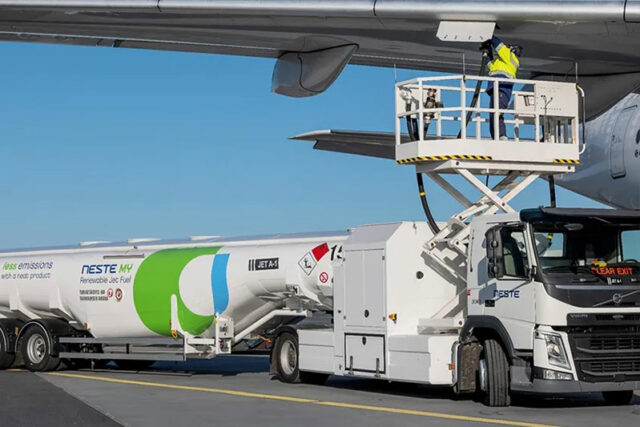
THE Civil Aviation Authority of the Philippines (CAAP) said it is encouraging airlines to adopt sustainable aviation fuel (SAF), adding that it is currently assessing the viability of making the switch by studying the conditions for producing the fuel in the Philippines.

“We reaffirm our commitment in making SAF adoption more viable and accessible, leveraging collaboration between government, industry, and private partners to shape a sustainable and forward-looking Philippine aviation sector,” CAAP Director-General Raul L. Del Rosario said in a statement on Monday.

CAAP said it is assessing feedstock availability, production technology, regulatory and investment opportunities to help support SAF adoption.

Nigel Paul C. Villarete, senior adviser on public-private partnerships at the technical advisory group Libra Konsult, said via Viber: “For as long as the economic benefits are adequately identified and measured and there is a clear indication of economic and environmental benefits, by all means CAAP should proceed towards that direction.”

The government should also evaluate the economic returns of wider SAF adoption, he said, adding that SAF may also be considered for local production.

“This would have an added advantage of decreasing our dependence on imported fuel which will lighten the pressure on our foreign exchange reserves,” Mr. Villarete said.

CAAP said that the Philippines is well-positioned for the SAF transition, citing the potential for its agricultural industry to provide feedstock.

SAF can help reduce emissions from air transportation, being made from non-petroleum raw materials like agricultural waste and used vegetable oil.

“CAAP will continue advancing cleaner aviation, investments, job generation and the Philippines’ role in sustainable aviation,” CAAP said.

Rene S. Santiago, an international consultant on transport development and former president of the Transportation Science Society of the Philippines, noted that the global supply of SAF is more limited than jet fuel.

“Another buzzword to claim Green brownie points? The basic question: can CAAP guarantee more SAF in stock than jet fuel, and at lower prices? Airlines would naturally go for cheaper alternatives, provided their engines can handle the alternative fuel,” Mr. Santiago said.

The International Air Transport Association (IATA) reported in December that SAF production last year accounted for 0.6% of total jet fuel consumption.

The dearth of SAF was attributed to lack of policy support, IATA said, adding that SAF prices are also higher than fossil-based jet fuel.

Among domestic carriers, only Cebu Pacific is currently using SAF. Both Philippine Airlines and AirAsia Philippines have announced plans to use SAF.

The IATA has estimated that SAF will result in a 65% reduction in carbon emissions needed by the aviation industry, en route to achieving net zero by 2050. — Ashley Erika O. Jose

Agri workers call for additional gov’t assistance as costs rise

CENTURYPACIFIC.COM.PH

A FARMERS’ organization said on Monday that the government needs to expand its assistance for agriculture workers, warning that surging fuel and input costs are worsening pressure on production and could worsen food availability in the coming months.

In a statement on Monday, the Kilusang Magbubukid ng Pilipinas (KMP) said the agricultural crisis is worsening as many farmers and fisherfolk remain without sufficient support.

“Diesel prices are now at P140 per liter while gasoline stands at more than P100 per liter. Fuel prices will increase again for the sixth consecutive week, and the government can only offer paltry and delayed aid,” the group said.

KMP said higher fuel prices have increased production expenses, including irrigation, transport, and farm inputs such as fertilizer. It said some farmers have seen the area they planted reduced or have suffered delays in cultivation, while fisherfolk have cut back on fishing trips.

KMP also said traders have reduced procurement or offered lower farmgate prices, which could also contribute to declining output and tighten food supply.

KMP said that of an estimated 11 million farmers and fisherfolk nationwide, only about 4 million are covered by current cash assistance programs, leaving around 7 million without support.

The group added that current fuel subsidy programs only cover up to 45,000 beneficiaries. It said the fuel assistance — P5,000 for farmers and P3,000 for fisherfolk — has also been reduced in value due to inflation.

The Department of Agriculture (DA) has so far allocated P150 million for fuel subsidies, which it sourced from unspent 2025 funds. The subsidy targets farmers using fuel-powered machinery and small-scale fisherfolk.

The DA has also tapped a P10-billion standby fund for the Presidential Assistance for Farmers and Fisherfolk Program, which provides P2,325 in cash aid to about 4 million eligible rice, corn, and sugarcane farmers, as well as registered fisherfolk.

However, KMP said the assistance excludes vegetable growers and farmers cultivating other crops.

“How about farmworkers and those planting vegetables, coconut, banana, abaca, and other crops? Aside from the impact of the fuel crisis, farmers and fisherfolk are also affected by the approaching El Niño,” KMP Chairman Danilo H. Ramos said in the statement.

KMP said that without immediate and substantial subsidies, more small producers may be forced to scale back or stop planting, putting the next cropping season at risk.

“Without immediate and substantial subsidies, farmers will be pushed to stop planting. This will directly translate to higher food prices and greater hunger among consumers,” Mr. Ramos said.

The group urged the government to expand subsidies and ensure broader coverage for farmers and fisherfolk to sustain food production. — Vonn Andrei E. Villamiel

Gov’t budget utilization rate hits 87% in Feb.

BW FILE PHOTO

GOVERNMENT agencies posted a budget utilization rate of 87% in February, ahead of the 83% year-earlier pace, the Department of Budget and Management (DBM) said.

In its latest Notice of Cash Allocations (NCAs) Utilization Report, the DBM reported that the National Government, local governments, and government-owned companies used P608.91 billion of their P700.22 billion in allocations by the end of February.

Unused NCAs stood at P91.31 billion, the DBM said.

NCAs are a quarterly disbursement authority that the DBM issues to agencies, allowing them to withdraw funds from the Bureau of the Treasury to support their spending needs.

As of the end of February, line departments utilized 81.9% of their allotments, equivalent to P373.84 billion out of P456.71 billion.

In the first two months, the Department of Foreign Affairs posted the highest budget usage rate at 98.1%.

It was followed by the Commission on Elections (96.5%), the Commission on Audit (95.6%), the Department of Tourism (94.3%), and the Commission on Human Rights (93.4%).

Meanwhile, the Judiciary recorded the lowest utilization rate of 49.5% as of the end of February.

The other departments posting low utilization rates were the departments of Labor and Employment (50.2%), the Agriculture (59.3%), Social Welfare and Development (60.2%), and Economy, Planning, and Development (61.6%).

Budgetary support to state-run firms amounting to P11.19 billion was 77.7% utilized as of the end of February.

Allocations to the local government units were 97.4% utilized, while the Metropolitan Manila Development Authority had a 99.9% utilization rate. — Justine Irish D. Tabile

Business name registrations up 11% in March

BUSINESS NAME registrations rose 11% to 96,601 in March, led by retail and food service enterprises, according to the Department of Trade and Industry (DTI).

According to the DTI’s business name registration system, March filings were 11.77% higher than the 86,428 recorded a year earlier.

Month on month, registered business names dropped 17% from February.

Of the total, 84,379 were new registrations, while 12,222 were renewals.

The wholesale and retail industry, which includes the repair of motor vehicles, motorcycles, and personal and household goods, reported 50,761 total registrations in March.

This was followed by accommodation and food service activities (13,768 total filings), manufacturing (5,363), real estate activities (5,045), other service activities (4,210), and transportation and storage (4,037).

Total business names registered with the DTI stood at 1.02 million in 2025, down from 1.06 million a year prior.

Women-led enterprises accounted for 12.11% or 56,652 total business registrations for the month, while male-led enterprises contributed 8.54% or 39,949.

In the first quarter, business name registrations rose 7.42% to 464,365.

As of April 5, 25,507 names were registered in Cavite, 17,098 in Laguna, 16,703 in Rizal, 13,757 in Batangas, and 7,565 in Quezon. — Beatriz Marie D. Cruz

The BIR’s updated approach to cross-border services

Since the Supreme Court issued its landmark Aces Philippines Cellular Satellite Corp. v. CIR ruling, the taxation of cross-border services has been the subject of extensive debate. The subsequent issuance of Revenue Memorandum Circular (RMC) No. 5-2024, as later supplemented by RMC No. 38-2024, sought to clarify the ruling but only raised further concerns among taxpayers due to its expansive interpretation and the aggressive audit assessments that followed.

On March 30, the Bureau of Internal Revenue (BIR) seems to have taken a step back with the issuance of RMC No. 24-2026, which appears to have tempered the reach of RMC No. 52024. While framed as a clarification, the new Circular refines its application by underscoring the need for careful factual determination and closer adherence to governing law and jurisprudence.

THE ISSUE OF AUTOMATIC TAXABILITY
One of the most significant takeaways from RMC No. 24-2026 is its clear statement that cross-border services are not automatically subject to Philippine income tax simply because they are categorized as such. This clarification addresses a key concern about RMC No. 5-2024, which listed various services (e.g., consulting, IT outsourcing, and management services) in a way that appeared to presume taxability whenever the services benefitted a Philippine entity.

RMC No. 24-2026 corrects this impression by underscoring the basic principle of tax law that the classification of a service does not determine its taxability.

RMC No. 24-2026 brings the focus back to the general rule for the taxation of situs of services, i.e., that the income is taxed where the service is performed. In considering the application of the Aces Philippines case, which expands the situs rule for taxation of services to include the place where the benefit is received or where the service is completed, Revenue Officers are directed to factually establish the source of income within the Philippines, and not merely rely on the classification of the service. For businesses engaging foreign service providers, this clarification offers much needed assurance that cross-border arrangements will not be taxed by default.

HOW THE BIR MUST ESTABLISH TAXABILITY
As a more disciplined application of the Aces Philippines case, the new Circular emphasized that cross-border service agreements are to be examined as a whole, the evaluation of which must consider the entirety of the services performed, and not just isolate a single activity as the sole income producing act. Assessments must clearly show the existence of the following essential elements:

• The payor is a Philippine resident or domestic entity, and the payee is a non-resident service provider;

• The service or activity: (a) is integral to the completion or delivery of the service, and (b) results in actual payment or accrual, creating economic benefit to the nonresident;

• The income-producing activity is situated in the Philippines; and

• There is no applicable exemption in tax treaties or domestic law.

Passive income, income from the sale of goods, and pass-through payments made to another nonresident for services performed outside the Philippines are excluded from this coverage. This explicit exclusion appears to be an attempt to address the confusion around reimbursable expenses, cost allocations, and shared services. The clarification reduces the risk that simple reimbursements will automatically be treated as taxable income. That said, the Circular provides limited detail on how to distinguish true passthrough payments from taxable service fees, leaving room for interpretation in more complex arrangements.

DOCUMENTS TAXPAYERS MAY PRESENT DURING AUDIT
RMC No. 24-2026 reiterates the principle in the Aces Philippines case that the burden of proof rests on the taxpayer to show that payments to nonresident service providers are from sources outside the Philippines, and therefore not subject to Philippine income tax. Thus, the new Circular provided guidance as to the supporting documents that the taxpayer may present, including, but not limited to sworn statements describing the transaction and services rendered; service contracts, master service agreements, statements of work, invoices, billing statements, or relevant correspondence; Tax Residency Certificate of the non-resident service provider; SEC Certificate of Non-Registration of the nonresident foreign corporation; proof of foreign organization or registration; proof of outward remittance; relevant BIR rulings, if any;  and, Certificate of Entitlement to Treaty Benefits, if applicable. A prior BIR ruling is not required, and the lack of one will not prejudice a taxpayer if the position can be properly supported during audit.

AREAS FOR FURTHER CLARIFICATION
While RMC No. 24-2026 provides meaningful clarification and introduces a more disciplined framework, there remain areas where additional guidance would be welcome and beneficial to taxpayers.

One area where further clarification may be helpful is the inclusion of practical examples. Illustrative scenarios covering common cross-border arrangements, such as consulting services, IT outsourcing, management fees, and fixed-fee engagements could assist taxpayers and revenue examiners alike in applying the sourcing principles consistently and with greater certainty.

Additional guidance may also be useful in relation to fixed-fee and outcome-independent services. While the Circular emphasizes the concepts of “completion” or “delivery” of services, it remains unclear how these tests apply where payment is not contingent on the successful use or measurable results of the service.

There is likewise room for further clarification on cost allocations and shared service arrangements. Although RMC No. 24-2026 excludes passthrough payments from its scope, the lack of clear criteria for evaluating cost charges, particularly in related party arrangements, may still pose challenges for both taxpayers and revenue examiners.

Finally, taxpayers may benefit from guidance on the treatment of pending ruling requests or tax treaty applications during audit. Clarifying whether and how such pending applications may be considered in evaluating taxability would help address procedural concerns for taxpayers who have proactively sought confirmation and are awaiting BIR action.

CONCLUSION
RMC No. 24-2026 reins in the earlier expansive interpretations of RMC Nos. 5-2024 and 38-2024, placing greater emphasis on the facts of each transaction and ensuring that tax assessments are grounded in established legal principles. However, the Circular is best viewed as a course correction rather than a final settlement. Until further guidance is issued, taxpayers should continue to approach cross-border service arrangements with careful documentation, clear contracts, and a well-reasoned sourcing analysis.

Let’s Talk Tax is a weekly newspaper column of P&A Grant Thornton that aims to keep the public informed of various developments in taxation. This article is not intended to be a substitute for competent professional advice.


Ivy Clarize A. Bernardez is an associate from the Tax Advisory & Compliance practice area of P&A Grant Thornton the Philippine member firm of Grant Thornton International Ltd.

pagrantthornton@ph.gt.com