Home Blog Page 5945

Sugar at retail still above P100/kg — DTI

PHILIPPINE STAR/ MICHAEL VARCAS

SUGAR PRICES at the retail level are selling for more than P100 per kilogram (/kg), according to the Department of Trade and Industry (DTI), which has taken on a price-monitoring role for the commodity.  

“We are still seeing sugar that is expensive. The price is hitting P100 to P105/kg,” Trade Undersecretary Ruth B. Castelo said in a televised briefing on Thursday.

Ms. Castelo said consumers have the option to shop for sugar in markets participating in a government scheme to offer sugar for less.

“We have given the consumers choice, since the three supermarkets that entered into an agreement with the President (Ferdinand R. Marcos, Jr.) — they are now selling P70/kg white refined sugar in all SM, Robinsons, and Puregold branches,” Ms. Castelo said.  

Ms. Castelo invited smaller supermarket groups to join the agreement, saying that the DTI will include them in their promotion efforts.

“The small supermarkets are most welcome to join us if they can sell P70/kg white refined sugar. Our incentive is that we will promote these stores so that the consumers will buy their sugar,” Ms. Castelo said.

Separately, American Chamber of Commerce of the Philippines Executive Director Ebb Hinchliffe said on the sidelines of the business group’s 120th anniversary celebration in Pasay City late Wednesday that the Philippines must import sugar to address the supply crisis.

“It is a crisis. It is a big one. Absolutely, we must import (sugar),” according to Mr. Hinchliffe, referring to the needs of US soft drink brands operating in the Philippines.

“I met with Coca-Cola and Pepsi. We’ve sent a letter to the President Marcos outlining that the sari-sari stores will not have Coca-Cola, RC, Pepsi by mid or late September, and it is a reality,” he added.

According to Mr. Hinchliffe, the sugar supply deficit is around 600,000 metric tons (MT). This is much larger than the 150,000 MT the government plans to import.

“The President ordered the import of 150,000 MT. That is a good start. The backlog is 600,000 MT,” Mr. Hinchliffe said.  

Press Secretary Rose Beatrix Cruz-Angeles said on Aug. 18 that Mr. Marcos, Senate President Juan Miguel F. Zubiri, and the sugar industry reached an agreement to import 150,000 MT of sugar.

Mr. Hinchliffe said that the Philippines needs to upgrade its refining industry adding that he believes hoarding is not taking place.

“I’m not concerned about the sugar farmers. They’re doing a pretty good job considering that they don’t have the fertilizer made here. They had Typhoon Odette come through and hurt the crops… The capacity of the refineries is the problem. It is not getting from the farm to the refinery down to the market. I don’t believe there is hoarding. I think there is a shortage,” Mr. Hinchliffe said.

Typhoon Odette, which hit in mid-December, inflicted P13.3 billion worth of damage to agriculture, according to Agriculture department data. The crop year for the sugar industry begins in September.

The DTI’s Ms. Castelo said that the country does not have supply issues with salt, after comments by Agriculture Undersecretary Domingo F. Panganiban about a shortage in industrial-grade salt.

“We have sufficient supply. We have around three or four large companies that are producing salt and we also have imported salt,” Ms. Castelo said.

She added that the DTI is hoping to issue a suggested retail price bulletin for items typically served in the Christmas Eve meal — known as Noche Buena — by the end of October or early-November.

“Our advice to consumers is to buy these Noche Buena products now since these do not expire immediately. It is better to buy while it is still early,” she added. — Revin Mikhael D. Ochave
Sugar industry too protected from competition, former official says

PHILSTAR FILE PHOTO

By Luisa Maria Jacinta C. Jocson, Reporter

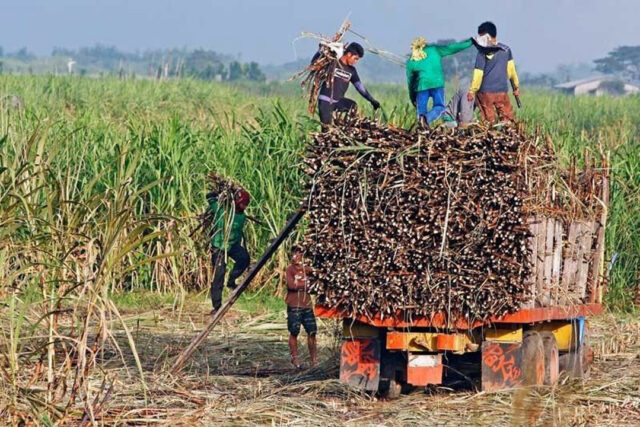
THE SUGAR industry has been stifled by regulation and excessive protection, whose members were not pushed to improve productivity, a former agriculture official said.

“I think we overprotected (and) over-regulated the sugar industry. And there were regulations that allowed them to just be comfortable without improving their efficiency and competitiveness,” Fermin D. Adriano, former Agriculture Undersecretary for Policy, Planning, and Research, said on Thursday on BusinessWorld Live.

“What we’ve seen in some companies since the 1990’s is that they were protected by high tariffs and subsidies. There was never an incentive for them to be able to make their operations efficient,” he added.

“Unfortunately, because of a strong political lobby, we aren’t able to (reform the industry). I think the highest tariff levels in agriculture are in sugar. It’s 50% for the minimum access volume (MAV) and 65% outside of that,” he added.

The MAV is a World Trade Organization (WTO) commitment to open up parts of a market for goods to foreign producers. Each country designates commodities it wishes to protect, either by charging tariffs or restricting volumes, in negotiations with trading partners.

Mr. Adriano said the problem is mainly in the supply of refined sugar, not raw sugar.

“Based on official data, there is a real shortage, but the problem is there’s confusion between what they call washed or raw sugar, and refined sugar,” he said.

“We’re relatively sufficient in terms of raw sugar; in fact we have a surplus of about 1,400 metric tons (MT) per year of brown sugar or raw sugar. But definitely we have a shortage (of) refined sugar because the annual shortage is about 384,000 MT,” he added.

Mr. Adriano said the government should come up with a master development plan for sugar as imports will not solve the industry’s structural problems.

“There has to be a master plan. Unfortunately, because of the current situation, it’s inevitable that we need to import, but that’s a very short-term solution to the problem. The long-term solution is to address the structural problems of the industry, like… sharing arrangements (between planters and millers), and the fragmentation of sugar lands into minuscule sizes,” he said.

“The government must come out with a sugar master plan that will turn around the fortunes of the sugar industry, otherwise it will continue its downward trend. That’s the challenge right now, to come up with a master development plan that is acceptable to all stakeholders,” he said.

Acting Sugar Regulatory Administration (SRA) Head David John Thaddeus P. Alba said that the government is seeking to reduce its dependence on imports.

“Moving forward, President Ferdinand R. Marcos, Jr. emphasized that imports should be our last priority. As much as possible, he does not want to import,” he said in a speech on Thursday.

“We have been falling short in the past few years because of various factors, some of which are beyond our control such as climate change, high input prices and of course the pandemic, which drove up our production costs,” he added.

Mr. Alba said that the SRA is looking to implement a drainage plan in farms and lengthen the planting season, while committing resources to research and development, technology and mechanization.

“This is also why we will work on ensuring that we get the full funding allotted for the implementation of the Sugar Industry Development Act (SIDA) so we can efficiently utilize it to meet the industry’s needs,” he said.

“This year, SIDA funding was further cut down to a fourth of the original P2 billion allocation at only P500 million. We have been accused of under-utilizing the SIDA fund. But with proper programming and with the support of Mr. Marcos and our allies in the Congress, we will ask help to circumvent the red tape and go full blast in utilizing SIDA funds by next year to make us globally competitive,” he added.

He said a new sugar order (SO) will likely be released by next week.

The proposed SO No. 1 recommends full allocation of the sugar harvest to class “B,” designated for domestic use, and zero allocation for class “A,” for export to the US.

“This may be a ticklish issue to some, but this is doable because we have done this in the past and we can do it again. I am confident that our commitment to (fill) the US quota will be met again as soon as we have stabilized our nation’s needs,” he added.

He said that the proposed SO No. 2, which would authorize the import of 150,000 MT of refined sugar, will likely be implemented by mid-September.

“We cannot also do away with imports as the industry cannot meet market demand, as yet. Upon the recommendation of the President, we will work on the import order for 150,000 MT of refined sugar… to stabilize market prices. Again, this will go through further deliberation so we can draw up the mechanics (that are) equitable to all players, before submitting the same to Malacañang for its approval,” he said.

“Our target is to have SO No. 2 released by mid-September so its arrival will not interfere with the resumption of operations by our sugar refineries, which normally start mid-November,” he added.

Rail links to 2 Bulacan towns under study

ART TUGADE FACEBOOK PAGE

THE Transportation department said on Thursday that it is studying possible rail connections to two towns in Bulacan — Santa Maria and Norzagaray.

Bulacan Rep. Salvador A. Pleyto asked the Department of Transportation (DoTr) during a House committee hearing on Thursday about the possibility of connecting the two towns to either the North-South Commuter Railway (NSCR) or the Metro Rail Transit Line 7 (MRT-7), which ends in San Jose del Monte, Bulacan, just south of Norzagaray.

Undersecretary for Railways Cesar B. Chavez responded, “There are three ways. One, we can ask the developer of MRT-7 to extend its project from San Jose del Monte to Balagtas passing through your areas, Norzagaray and Santa Maria, probably.”

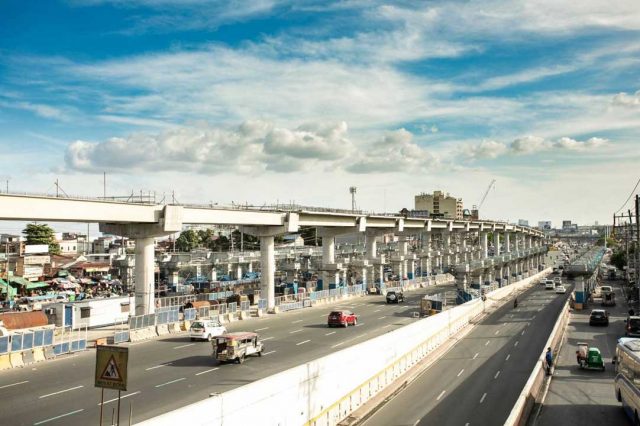
MRT-7, an integrated transit system undertaken and funded by San Miguel Corp., is a 22-kilometer rail and road development starting in North Avenue, Quezon City, and ending in San Jose del Monte. It is expected to start operations next year.

“Second, we can ask for another study. This time… maybe from NSCR (Malolos) to Balagtas connecting to your areas, which are also recognized as very, very densely populated areas,” Mr. Chavez told Mr. Pleyto.

The NSCR is a 148-kilometer railway system with 37 stations. The project has three segments  — Philippine National Railways (PNR) Clark Phase 1 (Tutuban-Malolos), PNR Clark Phase 2 (Malolos-Clark), and PNR Calamba (Solis-Calamba).

The third option, according to Mr. Chavez, is to team up with a private company under a public-private partnership program.

“But ang tingin po natin dyan mas realistic na pwedeng gawing extension ng MRT-7 po ’yan papunta sa inyo, anyway ang MRT-7 naman ay hanggang San Jose del Monte, Bulacan (We consider an MRT-7 extension from San Jose del Monte to be more realistic,” he noted.

In his first address to Congress in July, President Ferdinand R. Marcos, Jr. said that his government intends to “build upon already existing lines by modernizing the old railway systems.”

“This administration is committed to finishing the current portfolio of investments — approved railway projects such as the North-South Commuter Railway System, the Metro Manila Subway project, the LRT-1 Cavite Extension, the MRT-7, and the Common Station that will connect LRT-1, MRT-3 and MRT-7,” he said. — Arjay L. Balinbin

White onion shortage seen as opportunity for farmer direct sales

DA.GOV.PH

THE Department of Agriculture (DA) called the white onion shortage an “opportunity” to forge direct links between institutional buyers and growers.

The DA said fastfood chains and restaurant owners have advised it of their volume and quality requirements to guide farmers’ planting activities.

“A series of consultations and market linkage activities have resulted in the market entry of farmer cooperatives and fastfood chains that agreed to buy directly from farmers,” the department said in a statement.

The shortage presents an “opportunity for aggressive market linkage of farmers to institutional buyers,” it said.

Farmer groups, onion growers, traders and buyers said that they are “strongly objecting” to imports of white onions to address the tight supply conditions, according to the DA. 

“A cooperative composed of onion farmers from Nueva Ecija declared that they will be harvesting their off-season onion before the end of November. As such any import applications processed at this point might arrive at a time that they are harvesting,” the DA said.

The DA’s price reports put red onion prices at P105-P140 per kilogram. The price of white onion was unavailable.

According to the DA, red onions are acceptable to household consumers while institutional buyers prefer white onions. — Luisa Maria Jacinta C. Jocson

DBM to release NCAs to agencies online

BW FILE PHOTO

THE Department of Budget and Management (DBM) said it is planning to start releasing via online channels key notifications to agencies informing them of funding approval.

The mechanism for release will be the DBM’s Action Document Releasing System (ADRS), whose services will be extended to notices of cash allocation (NCAs), notices of organization, staffing, and compensation action (NOSCA), and other such documents.

The ADRS, launched in October, is a web-based application releasing approved documents to authorized users at various government agencies. The system does away with printing, physical signing, and forwarding of documents within the DBM to other departments and government servicing banks.

As of April, all departments and 363 agencies have completed ADRS training.

NCAs, which authorize government agencies to disburse funds allocated to them, will be available in the ADRS upon the approval in the Electronic Budgeting (eBudget) system, the DBM said.

Also set for digital release is the NOSCA, indicating DBM approval for staffing changes.

“The DBM aims to institutionalize the release of the NOSCA through the DBM-ADRS for faster viewing and downloading online during all phases of the budget cycle,” the DBM said.

NOSCAs will be available upon their activation in the government manpower information system, the DBM said in a circular.

By October, the ADRS will enable the online release of NCAs and NOSCAs and printing of such documents will be discontinued.

The DBM also said it is preparing to release online documents like the forward obligation authority, multi-year contractual authority, cash disbursement ceiling, and non-cash availment authority via the ADRS, pending approval in the eBudget system. This functionality is expected to be available in September.

The releases will make use of the Philippine National Public Key Infrastructure, a service of the Department of Information and Communications Technology that allows users to exchange private data securely.

The DBM has transitioned to the online release of the Special Allotment Release Order and Advice of Notice of Cash Allocation Issued. — Diego Gabriel C. Robles

DoE lawyers up ahead of key Malampaya decisions, indigenous energy push

PHILSTAR FILE PHOTO

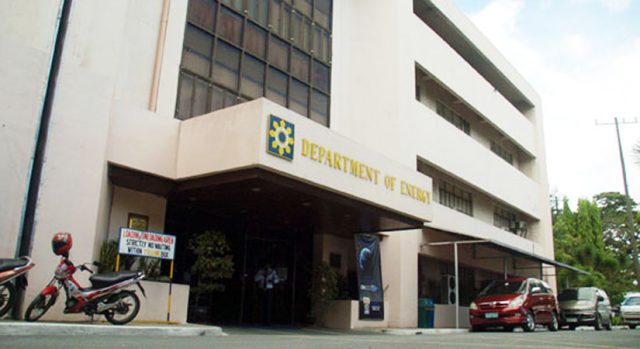
THE Department of Energy (DoE) said it has established an advisory panel which includes two retired Supreme Court justices to guide the department on legal issues it is likely to encounter, particularly regarding the endgame for the Malampaya gas project.

“The DoE law and energy advisory panel (will ensure) that the recommendations to the President coming from the DoE are fully grounded in the Constitution,” Energy Secretary Raphael P. M. Lotilla said at a virtual briefing.

Mr. Lotilla said the members of the panel include retired chief justices Renato S. Puno, and Artemio V. Panganiban.

The panel will advise the department on the process of accelerating and expanding the development of indigenous energy resources, and on legal issues that have arisen with regard to the disposition of Malampaya gas to power project.

“These are among the things that are being addressed right now. As you know the Philippine National Oil Company-Exploration Corp. (PNOC-EC) is considering the matter of giving its consent to the sale of Shell’s interest (in Malampaya), and as far as the DoE is concerned, we will have to review the sale, but I can assure you that we will adhere to the timeline,” Mr. Lotilla said.

Mr. Lotila said that the timetable is “quite tight” on Malampaya, but assured that the DoE will be reviewing the technical and financial aspects of the proposed sale.

Mr. Lotilla said that the DoE will let the Energy Regulatory Commission decide on SMC Global Power Holdings. Corp.’s proposed rate hike.

“I would not want to pre-empt the Energy Regulatory Commission; they are studying these issues intently,” he said.

On Tuesday, SMC Global Power warned that electricity prices in Metro Manila and nearby provinces will rise, pending a decision by the energy regulator on its petition for a temporary rate hike. — Ashley Erika O. Jose

DBCC to brief House on economic assumptions underlying 2023 Budget

PHILIPPINE STAR/ MICHAEL VARCAS

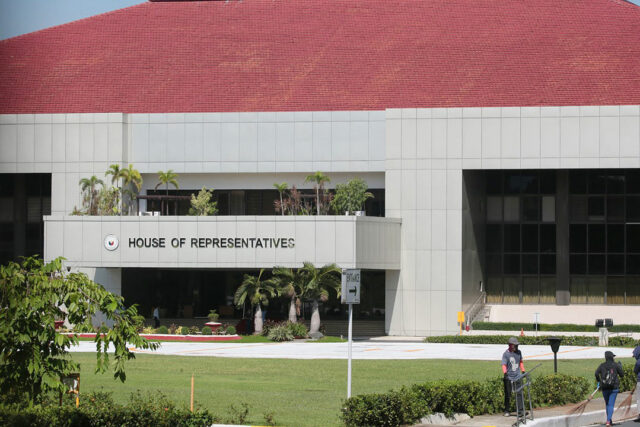
THE Development Budget Coordination Committee (DBCC) will brief the Committee on Appropriations today, Aug. 26, on the macroeconomic assumptions underpinning the 2023 Budget, Speaker Martin G. Romualdez said in a statement.

The P5.268-trillion budget is 4.9% higher than this year’s budget, and equivalent to 22.2% of gross domestic product. The House is considering the government’s spending plan, known as the National Expenditure Program, and hopes to wrap up discussions on a budget bill by the end of September, for passage as the General Appropriations Act (GAA).

The briefing will be given by Budget Secretary Amenah F. Pangandaman, Finance Secretary Benjamin E. Diokno, Socioeconomic Planning Secretary Arsenio M. Balisacan, and Bangko Sentral ng Pilipinas Governor Felipe M. Medalla. The appropriations committee is chaired by AKO-BICOL Party-list Representative Elizaldy S. Co.

Marikina Rep. Stella Luz A. Quimbo said the committee aims to finish hearings by Sept. 16.

“It is our goal to enact the 2023 GAA as scheduled to fund our economic recovery programs and projects, as well as to be vigilant in monitoring their implementation,” Ms. Quimbo, the committee’s senior vice-chair, said in a news conference on Tuesday.

Maria L. Atienza, a political science professor at the University of the Philippines, said in a text on Sunday that “the budget should also be scrutinized by the public, especially if there are special funds allocated for favored districts led by loyalists and supporters of the current administration but (which are) unnecessary and (of low) priority,” she said. — Matthew Carl L. Montecillo

DepEd, procurement officials admit errors in laptop contracts

PHILIPPINE STAR/ WALTER BOLLOZOS

A FORMER Education assistant secretary has admitted to committing a mistake by signing as a witness to a hastily prepared agreement with a government procurement agency for the purchase of what turned out to be allegedly overpriced laptops.

Senator Francis N. Tolentino, chair of the Senate Blue Ribbon Committee, pointed out at a hearing on Tuesday that the memorandum of agreement between the Department of Education (DepEd) and the Procurement Service under the Department of Budget and Management (PS-DBM) included a law relating to food and drugs. 

“What I see here is that the lawyers seemed to be in a hurry and adopted a template contract, forgetting to remove the FDA (Food and Drug Administration),” Mr. Tolentino said. “It’s good thing that the contract did not mention face masks since we are talking about laptops.”

Former Assistant Secretary Salvador C. Malana III, in response, said:

“I would admit that there were mistakes, not on the part of the legal department, but the lawyers involved in crafting the document. But I do take responsibility for having signed as a witness.”

Senate Minority Leader Aquilino Martin D. Pimentel III also questioned why the PS-DBM failed to note specifics on what the chosen market operator should comply with.

“There are other entries where you divulged the base speed of the other products, laptops, that you surveyed, but when it comes to this… you did not divulge, you only put the shortcut, saying comply,” he said.

Procurement Service Special Bids and Awards Committee Provisional Member Marwan O. Amil, one of those who signed the document, admitted that they had “missed out.”

Mr. Pimentel said there is supposed to be an established review system such that ‘missed out’ items could be addressed, but this seems to have been neglected even by the DepEd.

“The requesting entity (DepEd)… also confirmed, trusting the entire system, that the system works but the system does not work,” he said. “This is the problem.”

On the other hand, former PS-DBM head Lloyd Christopher Lao, who initially denied involvement in the contracts, eventually justified the supposedly overpriced laptops purchased by the agency.

“Based on my recollection, although there’s disparity in the technical specification, there are also add-ons in the requirement of DepEd, the warranty, servicing software, I’m not familiar with that, so that’s the reason why when they conducted it, the prices went up,” he said in a mix of English and Filipino

He added that in “2020 and 2021, the laptops of DBM-PS ran out because all agencies were requesting for laptops. Also, laptops in the market ran out because most offices transferred to online processes.”

The former budget undersecretary was previously ordered arrested by the Senate Blue Ribbon Committee in the 18th Congress after being cited in contempt for skipping hearings on the procurement of allegedly overpriced medical supplies for the Department of Health.

Senator Ana Theresia “Risa” N. Hontiveros-Baraquel countered Mr. Lao’s claims, citing that the Commission on Audit had canvassed comparable models in the market to the ones procured by the PS-DBM DepEd, and they found that the same brand and model with bigger screens were being sold in Metro Manila and the Cordillera Administrative Region at a much lower price.

“Some things still don’t square here in the latest statement of former Usec Lao,” she said.

Before the hearing began, Mr. Lao had asked the committee to excuse him from the investigation.

“I would just like to manifest I am no longer the PS-DBM executive director regarding the DepEd laptops so I am requesting if I may be excused from the hearing because I’m no longer executive director,” he said.

But this was denied by Mr. Tolentino who noted that Mr. Lao’s signature was found on some documents related to the procurement of the laptops.

The hearing was held to investigate the PS-DBM’s purchase of laptops flagged by state auditors. — Alyssa Nicole O. Tan

3 dead, thousands displaced from typhoon

SOME families who evacuated on Aug. 23 to the People’s Gymnasium ng Gonzaga in Cagayan, one of the provinces most affected by storm Ma-On, locally named Florita. — DSWD-REGION II

THREE people died due to the onslaught of severe tropical storm Ma-on, locally named Florita, the government reported on Thursday.

Two people from northern Philippines, a 63-year-old man from Cagayan and a 56-year-old man from Kalinga, were killed after they were hit by a fallen tree amid the typhoon, the National Disaster Risk Reduction and Management Council (NDRRMC) said in an 8:00 a.m. situation report.

Authorities were still validating the death of a 32-year-old man who reportedly drowned in Camariñes Sur province in Bicol region, the agency said.

The storm also injured four people, three of whom were from Cagayan province. They were hit by fallen trees and debris, the agency said.

Another injury in Camariñes Sur was still being validated, it added.

The storm has affected 47,169 people or 11,953 families across 15 provinces and five regions, the NDRRMC said.

It has displaced 10,355 people, 6,623 of whom took refuge in 129 evacuation centers.

The storm has damaged 30 houses, mostly in Ilocos, four of which were totally destroyed.

The Department of Public Works and Highways (DPWH), meanwhile, said five national road sections in northern Luzon remained closed to traffic due to landslides, road cut, and soil collapse caused by tropical storm Florita.

DPWH said that as of 6:00 a.m. Thursday, three roads in Cordillera, one in Cagayan Valley, and another one in Calabarzon were still impassable.

Among the affected roads in Cordillera were Kennon Road and Claveria-Calanasan-Kabugao Road.

The storm has affected 724 farmers and almost 1,200 hectares of agricultural land in Ilocos and the Cordillera Administrative Region, Office of Civil Defense Assistant Secretary Bernardo Rafaelito R. Alejandro IV told a news briefing.

The running estimate of agriculture damage was P10.1 million, he said.

“The weather has improved, so all our resources are already moving,” Mr. Alejandro said, noting that government assistance would be concentrated in the Cagayan and Cordillera regions.

He noted that Cordillera is still reeling from the effects of a magnitude 7 earthquake last month.

The government has already lifted storm signals across the country. Ma-On was already outside the Philippine area and was heading towards southern China. Kyle Aristophere T. Atienza and Arjay L. Balinbin

News group asks QC court to hold telecom agency in contempt

BULATLAT FACEBOOK PAGE

NEWS website Bulatlat.com on Thursday asked a Quezon City trial court to hold the National Telecommunications Commission (NTC) in contempt for leaving its website blocked despite being ordered to stop limiting access.

In a six-page petition, Bulatlat said the country’s telecommunications regulator went against the trial court’s order to unblock the website.

It added that the NTC’s non-compliance is an “inexcusable act of defying a lawful order of the court,” which made the agency liable for indirect contempt of court.

“Despite due service of the writ, the respondent defied, and continues to defy, the writ of a preliminary injunction, wherein it was enjoined to discontinue the implementation of its memorandum dated June 8, 2022,” according to the plea.

Bulatlat noted that its website remains blocked and inaccessible to its subscribers on several internet service providers.

The court earlier ordered the NTC to stop limiting access to the website since its order violated the plaintiff’s right to free speech and of the press.

Bulatlat Managing Editor Ronalyn V. Olea said the NTC’s continued blocking of its website is an “outright defiance of the country’s independent judiciary and was an assault of the public’s right to access credible sources of information.”

She said editors had to use virtual private networks to publish news articles and other content.

In June, the NTC issued an order to block 26 websites allegedly “affiliated to and are supporting” the Communist Party of the Philippines, New People’s Army, and the National Democratic Front.

The order was made upon the request of former National Security Adviser Hermogenes C. Esperon, Jr.

Bulatlat sued the telecommunications regulator a month later and sought a temporary restraining order against the agency’s directive. — John Victor D. Ordoñez

House panel OK’s substitute bill for village, youth council election postponement 

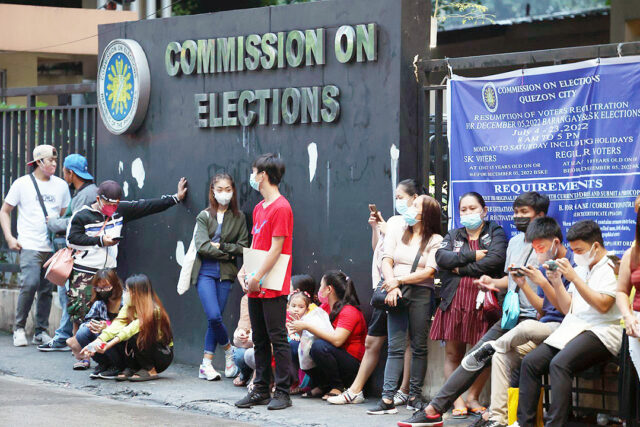
PEOPLE line up outside the Commission on Elections office in Quezon City on July 8 to register as voters for the supposed Dec. 2022 barangay and youth council elections. — PHILIPPINE STAR/ MIGUEL DE GUZMAN

A SUBSTITUTE bill postponing the December 2022 village and youth council elections to 2023 has been approved by the House Committee on Suffrage and Electoral Reforms.  

“Through series of approved motions in the last meeting, we agreed as a committee to craft a substitute bill, consolidating more than thirty bills filed,” Mountain Province Rep. Maximo Y. Dalog, Jr., chair of the committees, said during a meeting on Thursday.   

The unnumbered substitute measure, which was drafted after the panel’s meeting on August 16, seeks to delay the barangay and Sangguniang Kabataan elections to December 2023.  

Mr. Dalog said the postponement would allow more Filipinos to register as voters.  

He added that it would allow the government to apply corrective actions on the allowances of poll workers, which remain subject to tax.  

On Tuesday, the Senate Electoral Reforms and Peoples Participation Committee also held a hearing on the postponement of the Barangay and Sangguniang Kabataan elections.  

Kabataan Party-list Rep. Raoul Danniel A. Manuel gave a dissenting opinion on the postponement, citing that it is antithetical to the democratic right of every Filipino to choose their own leaders.”   

Through voting, we see democracy at work: people working towards bettering their lives through choosing leaders they perceive that will help them towards that goal and booting out leaders who they perceive as incompetent and do not improve their lives overall,he added.   

Elections for youth leaders and barangay officials were set for May 2021 but were postponed due to the coronavirus pandemic.  

The bill will now be passed to the Committee on Appropriations, chaired by AKO-BICOL Party-list Rep. Elizaldy S. Co. Matthew Carl L. Montecillo

DoH warns public vs ‘sensationalized’ illegal organ selling messages 

THE DEPARTMENT of Health (DoH) on Thursday warned the public against illegal organ selling messages, which it calledsensationalized.”  

We assure the public that hospitals and other health centers and facilities do not participate in such malicious activities and continue to practice and facilitate safe and voluntary organ donations,the department said in a statement.  

The agency said circulating messages about illegal organ selling [send] out fear and discouragement to people to help those who are in need of organ donation and potential donors.”  

DoH called for collaborative efforts with stakeholders and the media to help prevent the spread of fake information released to the general public.” 

We urge the public to be more vigilant against fraudulent messages and to trust only verified information from reputable sources, such as the DoH Facebook page and website, and other government agencies,it said. Kyle Aristophere T. Atienza