Home Blog Page 5915

Rampant UP, wounded Ateneo headline unexpected Final Four 

UP Maroons’ Zavier Lucero — THE UAAP

TOP-SEEDED rivals Ateneo and University of the Philippines (UP) shoot for a quick finals date when they tackle lower-ranked Far Eastern University (FEU) and La Salle, respectively, in the Final Four of the University Athletic Association of the Philippines (UAAP) Season 84 at the Mall of Asia Arena in Pasay City.

Armed with the twice-to-beat advantage, the No. 1 and three-time reigning champion Blue Eagles (13-1) want to make quick work of the fourth-running Tamaraws (7-7) in the main game at 6 p.m., while the second-seeded Fighting Maroons (12-2) aim to do the same against the No. 3 Green Archers (9-5) at 2 p.m.

A win by the Katipunan rivals would push them straight to the finals to dispute a first-ever UAAP final under bubble conditions.

If they were to meet for the championship, it would be a rematch of the same teams that met for the UAAP crown in 2018.

But for both teams coming off different paths on to the Final Four, the job is easier said than done.

“You know coach Olsen (Racela) does a great job and they’re gonna be ready. But we will regroup and we have to make sure that our loss (against UP) is useful for us. There will be lessons taken and lessons learned,” coach Tab Baldwin said after Ateneo’s outright finals dream was spoiled over the weekend.

Needing one last triumph to book a direct flight to the championship, the Blue Eagles, then on a 13-0 season start, fumbled and landed hard at the expense of the Fighting Maroons with a gut-wrenching 84-83 loss.

The loss sent the Blue Eagles into the semifinal against the Tamaraws, instead of awaiting the survivor of a stepladder playoff among the other teams.

The costly defeat also snapped Ateneo’s 39-game win streak dating back to 2018, adding fuel to an already spirited UP side on the other end.

“I hope we can carry (the momentum) over to the semis. It’s all about the bigger picture,” Maroons mentor Goldwin Monteverde said as UP seeks to end a 36-year UAAP title drought.

UP as of press time is hoping for the availability of gunner CJ Cansino, who went in for MRI tests on Tuesday following a knee injury against Ateneo.

Both Ateneo and UP swept their semis counterparts in the elimination round. The Blue Eagles clipped the Tamaraws, 79-70 and 70-53, while the Fighting Maroons bested the Green Archers, 61-59 and 72-69. — John Bryan Ulanday

Old frames, new sight

PIXABAY

Old eyeglasses that are donated to the Asian Eye Institute can be cleaned and fitted with prescription lenses, giving beneficiaries the gift of sight.

MultiplEye: The Recycled Frames Project, launched in 2020, is a partnership between the institute and the Ophthalmological Foundation of the Philippines (OFPHIL), a non-governmental organization dedicated to preventing blindness in economically disadvantaged communities in the country.

Different kinds of eyewear — be they reading glasses or sunglasses — are assessed to see if they can be used to correct nearsightedness, farsightedness, astigmatism and presbyopia, which are among the leading causes of preventable blindness in the Philippines.

Frames can be dropped off at Asian Eye Institute clinics in Rockwell Center, Makati City; Ayala Malls Trinoma, Quezon City; SM Mall of Asia, Pasay City; and Commercenter Alabang, Muntinlupa City. They can also be dropped off at EyeSite branches in St. Frances Cabrini Medical Center, Batangas City; SM City Fairview, Quezon City; and Williams Center Building, Mandaluyong City; as well as EyeSite Vision Studio in SM City Rosario, Cavite.

More investments against fraud sought amid vetoed SIM card registration bill

PHILSTAR FILE PHOTO

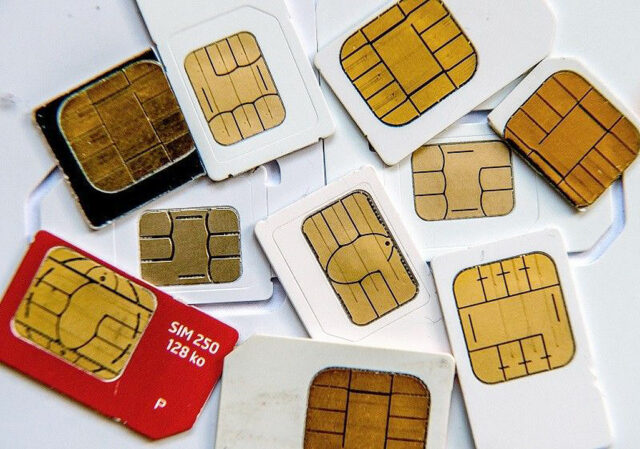
AS the proposed measure mandating the registration of subscriber identity module or SIM cards was vetoed, financial institutions may have to invest more to prevent rising fraud risks for consumers, analysts said.

“This legislative setback would mean that the financial services industry would have to step up investments in modern fraud detection methods that leverage advances in machine learning and artificial intelligence in order to prevent or detect fraudulent behavior,” Swarup Gupta, industry manager at The Economist Intelligence Unit (EIU), said in an e-mail.

Across the world, 160 countries have already implemented measures that require the registration of SIM cards, said Kaspersky General Manager for Southeast Asia Yeo Siang Tiong.

He said the Philippines is the lone country in Southeast Asia — and joins the likes of Canada, US and UK — that do not have such laws.

“Based on existing legislations around the world, SIM-card registration as proposed is a measure that can help deter cybercriminals from committing fraudulent activities but it’s not a ‘be-all-end-all’ solution,” Mr. Yeo said in an e-mail.

Financial technology firms and digital industries are fully supporting the vetoed SIM card registration bill.

“This [measure] will have a significant impact in reducing fraud. Consumer protection is key in keeping trust in digital financial transactions,” FinTech Alliance.ph Chairman Angelito M. Villanueva said in a Viber message.

President Rodrigo R. Duterte last month vetoed the measure that would require the mandatory registration of SIM cards, saying the matter needs a more thorough study. He did not agree with the measure’s provision to require social media networks to secure real names and phone numbers of account users.

The bill was supposedly meant to help fight fraud as well as terrorism and criminal activities.

Since the start of the pandemic, text scams have risen to target Filipinos facing unemployment through fake job offers. Some consumers have been victims of fraud scams that resulted in compromised transaction accounts and fund losses.

The Bankers Association of the Philippines (BAP) has said that unauthorized withdrawals and transfers reached more than P1 billion in 2021. This came amid the increase in cybercrime incidents along with the rise in digital transactions during the pandemic.

During the campaign season, text messages vouching for certain candidates have also been circulating.

In the absence of a state-mandated SIM card registration, financial institutions will have to compensate to ensure checks are in place in preventing fraud, EIU’s Mr. Gupta said.

“They [financial institutions] would also have to prepare to deal with customer dissatisfaction and allocate significant funds towards educating current and prospective customers about methods to protect their data,” he said.

“These are steps that they would have had to take in any case, but the effort and expenditure go up substantially if authorities fail to enact and implement such legislation,” Mr. Gupta added.

Beyond the legislation and infrastructure, educating the people is also important in guarding against cybersecurity risks in the financial system, Kaspersky’s Mr. Yeo said. He said this is crucial as culprits continue to level up attacks amid continued developments in technology.

“Policy makers and the financial industry should look into strategies that help in securing technology by design, enforce cybersecurity law on an international level, and offer a high level of cybersecurity education both to employees and the public,” Mr. Yeo said.

Industry players have been partnering to fight against scammers that target financial consumers. In March, UnionBank of the Philippines, Inc. and Globe Telecom, Inc. partnered to allow disclosure of personal information when needed in order to aid fraud investigation.

The BAP also partnered with the Department of Justice in February for cybersecurity information sharing and training. — Luz Wendy T. Noble

Apple hit with EU antitrust charge over mobile payments technology

BRUSSELS — Apple faces a possible hefty fine and may have to open its mobile payment system to competitors after European Union (EU) antitrust regulators charged the iPhone maker with restricting rivals’ access to its technology used for mobile wallets.

This marks the second EU charge against Apple after EU regulators last year accused the company of distorting competition in the music streaming market following a complaint from Spotify.

The European Commission said on Monday it had sent a charge sheet known as a statement of objections to Apple, detailing how the company had abused its dominant position in markets for mobile wallets on iOS devices.

The Commission said Apple’s anti-competitive practices dated back to 2015 when Apple Pay was launched.

“We have indications that Apple restricted third-party access to key technology necessary to develop rival mobile wallet solutions on Apple’s devices,” EU antitrust chief Margrethe Vestager said in a statement.

“In our statement of objections, we preliminarily found that Apple may have restricted competition, to the benefit of its own solution Apple Pay,” she said.

Apple, which could face a fine up to 10% of its global turnover or $36.6 billion based on its revenue last year, though EU penalties rarely reach the cap, said it would continue to engage with the Commission.

“Apple Pay is only one of many options available to European consumers for making payments, and has ensured equal access to NFC (near-field communication) while setting industry-leading standards for privacy and security,” the company said in a statement.

Apple’s Frankfurt-listed shares fell on the news and were down 0.7% at 1216 GMT.

Apple Pay is used by more than 2,500 banks in Europe and over 250 fintechs and challenger banks. The NFC chip enables tap-and-go payments on iPhones and iPads.

Vestager rejected the company’s security argument.

“Our investigation to date did not reveal any evidence that would point to such a higher security risk. On the contrary, evidence on our file indicates that Apple’s conduct cannot be justified by security concerns,” she told a news conference.

Apple can ask for a closed-door hearing to defend its case and also send a written response before the Commission issues a decision, which could take a year or more.

The EU is set to implement new tech rules next year called the Digital Markets Act which will force Apple to open up its closed eco-system or face fines as much as 10% of its global turnover.

The Commission’s decision to send its statement of objections to Apple confirmed a Reuters story in October last year. — Reuters

World’s first NFT museum in Seattle aims to ‘pull back the curtain’ on blockchain art

PHOTO FROM SEATTLENFTMUSEUM.COM

SEATTLE — The world’s first permanent NFT art museum has opened in Seattle, aiming to “pull back the curtain” on blockchain-based digital art.

Non-fungible tokens (NFTs) are a type of digital asset that has exploded in popularity recently, with NFT artworks selling for millions of dollars. NFTs exist on a blockchain, a record of transactions kept on networked computers.

The museum opened its doors on Jan. 14, and has been providing an outlet for artists, creators, and collectors to display their NFTs in a physical setting, while aiming to educate the public about this fairly new market for digital art.

“We really realized the impact of being able to look at this type of art in a way where you actually slow down, you see all the details,” said Jennifer Wong, a co-founder and curator at Seattle NFT Museum.

Local digital artist Maksim Surguy attended the opening of the museum’s Climate Conversation exhibition on April 16, which features his designs that are sold as NFTs online, but can also be printed in physical form.

“Previously, if you make a digital artwork or physical artwork, there were a lot of limitations about who can see the artwork or how they can own it,” said Mr. Surguy, who works in Seattle’s tech industry and ventured into crypto-based art a year and a half ago.

According to a March report from Ireland-based Research and Markets firm, the global NFT market is expected to grow to over $21 billion in 2022.

“An NFT is really just a contract that signifies the ownership of an asset of some kind,” said Peter Hamilton, who co-founded the museum. “These tokens…  are basically a contract that says this serial number belongs to this piece of art, and if you own this token, you are the rightful owner.”

The museum has programming planned throughout the year.

“I can’t emphasize enough how important the educational part of this museum is,” said Mr. Hamilton. “We’re trying to onboard folks and help them see what the value of NFTs are and help people pull back the curtain a little bit on what blockchain is and what its utility is.” — Reuters

Sparkling odes to New York as Met Gala celebrates Gilded Age

NEW YORK —  Reality TV star Kim Kardashian evoked American history at the annual Met Gala on Monday, donning the sparkling gold gown that Marilyn Monroe wore six decades ago when she serenaded President John F. Kennedy with “Happy birthday, Mr. President.”

Kardashian, her blonde hair in a tight bun, walked gingerly in the close-fitting dress as boyfriend and comedian Pete Davidson held her hand on the red carpet. Mr. Davidson chose a black suit and sunglasses.

The star of The Kardashians said she lost 16 pounds in three weeks so she could wear the iconic dress that Monroe sported in 1962. “It was such a challenge,” Ms. Kardashian said. “It was like a role. I was determined to fit this.”

Known for celebrities in over-the-top outfits, the Met Gala returned to its traditional date of the first Monday in May, just eight months after 2021’s pandemic-delayed event in September.

The event, a fundraiser for New York’s Metropolitan Museum of Art, has been dubbed the Oscars of the East Coast. This year’s A-list guests were told to dress in “gilded glamour.”

Blake Lively, a Met Gala co-chair along with her husband, actor Ryan Reynolds, arrived in a glittering bronze-colored Versace dress influenced by New York’s Grand Central Terminal, the Statue of Liberty, and the Empire State Building.

Attendants removed a large bow and rearranged the gown’s long train to reveal a turquoise and copper look, a switch that Ms. Lively said was an ode to the greenish patina that bronze buildings develop over time.

“Empire State of Mind” singer Alicia Keys also celebrated New York, wearing a Ralph Lauren dress with 200,000 crystals arranged to look like the city’s skyline.

Jared Leto, who starred in last year’s movie House of Gucci, attended with Gucci designer Alessandro Michele. The pair wore identical tan suits and red bow ties. Mr. Leto described the look as “double Victorian gilded trouble.”

Musician Lizzo wore a black dress with a gold-embroidered jacket and carried a gold flute that she played briefly on the red carpet. Billie Eilish appeared in a light green Gucci gown that she said was made with existing materials to be eco-friendly.

As usual, many celebrities seemed to ignore the night’s theme. Model Gigi Hadid wore a red corseted jumpsuit with a large puffy coat. Singer Gwen Stefani stood out in a full-skirted neon-yellow gown.

The invitation-only Met Gala marks the opening of the annual fashion exhibition at the museum’s Costume Institute. This year’s exhibit, In America: An Anthology of Fashion, caps a two-part exhibition and focuses on the history of American dress.

Former presidential candidate Hillary Clinton said she was attending for the first time in 20 years to celebrate the American spirit. Her burgundy gown featured subtle embroidery of the names of 60 famous American women including abolitionist Harriet Tubman and Madeleine Albright, the late secretary of state.

New York City Mayor Eric Adams wore a tuxedo jacket with symbols of New York’s subway system and “End Gun Violence” written on the back. He noted the economic struggles that many people experienced during the opulent Gilded Age of the late 1800s and early 1900s.

“Although we had some great inventions and some great architecture … it was also a dark period,” he said.

Gabrielle Union wore a silver Versace gown inspired by Diahann Carroll. A red rose on the front symbolized blood spilled by people of color who helped build America, she said.

Actor and musician Janelle Monae donned a black Ralph Lauren gown with a silver- and black-striped hood that she described as “the gilded age of the future.” —  Reuters

SEA Games boxers, starring Nesthy Petecio, Eumir Marcial, confident of Vietnam prospects

NESTHY PETECIO — PHILSTAR FILE PHOTO

THE Association of Boxing Alliances in the Philippines (ABAP) is “cautiously optimistic” as its 10-strong contingent defends its overall crown in the Southeast Asian Games (SEAG) against perennial rival Thailand and vastly-improved host Vietnam.

“We are proceeding with a lot of enthusiasm and focus hoping that we can maintain the same kind of excellence that we showed in Manila three years ago,” ABAP president Ed Picson said during Tuesday’s Philippine Sportswriters Association (PSA) Forum.

The ABAP has assembled a crack team bannered by Tokyo Olympics medalists Nesthy A. Petecio and Eumir Felix D. Marcial in this mission to retain supremacy in the SEAG after snaring seven golds, three silvers and two bronzes on home soil.

Rio Olympian Rogen Ladon (52kgs), Ian Clark Bautista (57kgs), and Marjon Pianar (69 kgs) join Mr. Marcial (75kgs) in the men’s hostilities while Ms. Petecio (60kgs) is with Josie Gabuco (48kgs), Irish Magno (51kgs), Risa Pasuit (57kgs), and Hergie Bacyadan (75kgs) in the distaff side.

The boxing team is hoping it has prepared well enough for the May 12 to 23 Games amid the less-than-ideal buildup to the pandemic. The boxers went to Thailand for training camp and tournament to get themselves ready.

“We’re cautiously optimistic. We would have wanted a more stringent preparation, but we have to work with what we have. The quality of preparation that we’re getting in Thailand is excellent and we hope that will make up for whatever shortcomings we’ve experienced in the prior months,” said Mr. Picson.

Thailand, which collected five golds, two silvers and two bronzes in the Manila SEAG, and Vietnam, which netted one gold, five silvers and two bronzes last time, loom as the toughest rivals.

“We’re always looking at Thailand but we’re casting a wary eye as well on Vietnam, which has improved tremendously and they’re also the host,” Mr. Picson said in the forum where he was joined by secretary-general Marcus Manalo.

“And countries like Cambodia and Indonesia, even Malaysia, we can’t discount them. They’ve also been preparing and like I said, our overall preparations have not been optimal so we’re also working on that handicap, hindi katulad before na talagang todo-todo ang preparations.” — Olmin Leyba

Healthcare outsourcing company taps AIM to streamline operations

UNSPLASH

QAVALO, a Cebu-based company that provides clinical documentation solutions, partnered with the Asian Institute of Management (AIM) to streamline and automate its operations.

The data architecture project funded by the Department of Science and Technology (DoST) aims to usher in the development of a regulatory framework for home health care (HHC).

“The project would increase portability and ease sharing of data, including patient records, between physicians and institutions,” said Christian M. Alis, an assistant professor at AIM and the project leader of QARE-HHC (Quicker Analytics for Responsive Home Health Care), which will develop backend technologies that indirectly benefit end users with efficient processes, enhanced competition, and improved services.

QARE-HHC is a partnership between DoST’s Collaborative Research and Development to Leverage Philippine Economy (CRADLE) program; AIM’s Analytics, Computing, and Complex Systems laboratory (ACCeSs@AIM); and Qavalo, which operates in the HHC industry.

By adopting QARE-HHC, Qavalo will improve its predictive analytics and align company data with its business strategies. The project’s main deliverables are a review of electronic medical record (EMR) providers; pipelines for pre-processing data; an EMR plan based on data collection processes; and deployment-ready artificial intelligence (AI) models.

In the future, mobile applications that improve patient outcomes using a prescriptive AI model for treatment plans could be possible, Mr. Alis said in an e-mail.

“Other possible applications that could be developed include early intervention and screening of diseases and conditions as well as recommending lifestyle interventions for better health,” he added.

Already a mature market in the US (which had more than 11,300 agencies registered in 2018), HHC is a nascent market in the Philippines with few established players.

HHC, or medical services that are delivered to patients in their own homes, intersects with telehealth, the provision of medical services over a distance.

The pandemic has paved the way for this service, according to Christopher P. Monterola, executive managing director of ACCeSs@AIM, at the April 26 launch of QARE-HHC.

“HHC is very new… Even the regulatory frameworks are not in place yet,” he said. “[QARE-HHC] aims to contribute to a robust regulatory regime for it.”

Mr. Alis pointed out that the government encourages home care for mild cases of coronavirus disease 2019 (COVID-19).

“By encouraging HHC, we can free up some of the hospital beds for more critical cases,” he said. “If we can do it with COVID-19, we can expand it to more diseases, and then perhaps we can mitigate the lack of hospital beds in the country.”

There are 23 hospital beds for every 10,000 people in the National Capital Region while the rest of Luzon, Visayas and Mindanao have only 8.2, 7.8, and 8.3 beds, respectively, according to a review of the Philippine health system published in 2018. — P. B. Mirasol

CCLEX to ‘slowly’ boost toll road group’s earnings 

CEBU-CORDOVA Link Expressway (CCLEX) — BW FILE PHOTO

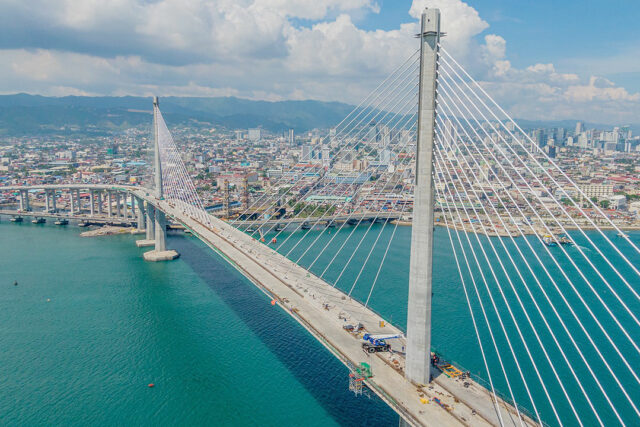
METRO Pacific Investments Corp. (MPIC) expects that the opening of the Cebu-Cordova Link Expressway (CCLEX) will gradually boost the earnings of its toll roads business starting this year, its chairman said.

“It will impact the earnings of the tollways group starting this year, [but] not in a major way because the traffic will slowly, gradually build up,” MPIC Chairman Manuel V. Pangilinan told reporters last week.

“It’s a new market for us and, in a way, Cebuanos are not used to paying tolls… So, this will be a new arrangement for them, and we don’t know how they will react to it,” he added.

The 8.9-kilometer expressway was inaugurated on April 27. Vehicles classified under Classes 1 to 3 are now allowed to use the expressway, while motorcycles under 400cc will be allowed to use it only by July this year, Cebu Cordova Link Expressway Corp. (CCLEC) said in a statement.

The approved toll rates range from P90 to P270, depending on the vehicle type.

“The motoring public is asked to drive at a maximum speed of 60 kilometers per hour (kph). The CCLEX is designed for maximum speed of up to 80 kph, but the CCLEC is implementing a 60 kph limit during initial operations as part of safety measures because motorists are still not familiar with the expressway,” the company said.

CCLEC, a subsidiary of Metro Pacific Tollways Corp., the tollways arm of MPIC, signed a concession agreement with Cebu City and Municipality of Cordova in 2016.

CCLEC was granted concession rights to design, finance, construct, operate and maintain the CCLEX, including the right to collect toll fees over a 35-year concession period (including the construction period).

“Work on the CCLEX started on July 5, 2018, with ceremonies marking the beginning of civil works. It is MPTC’s first toll road project outside Luzon,” the company said.

MPIC is one of three key Philippine units of First Pacific, the others being Philex Mining Corp. and PLDT, Inc. Hastings Holdings, Inc., a unit of PLDT Beneficial Trust Fund subsidiary MediaQuest Holdings, Inc., has a majority stake in BusinessWorld through the Philippine Star Group, which it controls. — Arjay L. Balinbin

Bank deposits hit P16.2 trillion in 2021

TOTAL DEPOSITS with Philippine banks reached P16.2 trillion last year, reflecting the gradual recovery of the economy from the impact of the coronavirus pandemic.

The total is higher by 9% than the P14.9 trillion recorded in 2020, the Philippine Deposit Insurance Corp. (PDIC) said in a statement on Tuesday.

“While the pandemic may have been an unpleasant wake-up call for many Filipinos, it has highlighted the importance of saving for the future and emergencies,” PDIC President Roberto B. Tan said.

The increase in deposit value was driven mainly by accounts with balances of above P5 million.

The PDIC said the number of domestic deposit accounts increased by 8.8% to 87.1 million in 2021 from 80.1 million in the prior year. This was driven by deposits with balances of P5,000 and below as well as rising savings deposits.

“With more banks offering basic deposit accounts, saving money in banks becomes much easier and practical,” Mr. Tan said.

Basic deposit accounts were introduced by the central bank in 2018 to help make financial services more accessible to unbanked and underserved Filipinos.

This type of account has a low opening amount capped at P100, no maintaining balance requirement, no dormancy charges and has a maximum balance limit of P50,000.

The Bangko Sentral ng Pilipinas hopes that 70% of Filipino adults will own a transaction account, whether in banks or e-wallets, by 2023.

As domestic deposits grew,  insurance coverage up to a maximum of P500,000 per depositor per bank rose 3% to P3.2 trillion. This is equivalent to 19.5% of total domestic deposits.

PDIC data showed the deposit insurance system fully covered 96.8% or 84.3 million of domestic accounts. This increased by 8.9% compared with the 77.4 million seen in 2020.

The deposit insurance system fully covered 96.8% or 84.3 million of domestic deposit accounts, higher by 8.9% than the 77.4 million accounts in 2020, PDIC added.

There are 506 banks operating in the Philippines as of Dec. 31, 2021. All lenders operating in the country are PDIC members. — Luz Wendy T. Noble

Rowing team pinning SEA Games hopes on Olympian Cris Nievarez

OLYMPIAN Cris Nievarez anchors the 16-member Philippine rowing team gunning for honors in the Southeast Asian (SEA) Games from May 9-14 in Vietnam.

Competing in Haiphong, the rowers will be led by Mr. Nievarez, who placed 23rd overall in his event at the Tokyo Games. He is aiming to win back-to-back gold medals in the men’s lightweight singles sculls event while also vying in the doubles with CJ Jasmin and the quadruple sculls.

Joanie Delgaco, who ruled the women’s doubles in the 2019 edition with the now-retired Melcah Jen Caballero, is competing in the singles, which Ms. Caballero won last time in Subic.

“We won three golds and one bronze in Subic, but it will be tougher in Vietnam,” said Philippine Rowing Association (PRA) president Patrick Gregorio at Tuesday’s PSA Forum with coaches Shukhrat Ganiev and Ed Maerina.

Mr. Nievarez and company will compete in 13 of the 16 events on tap in Vietnam, where Indonesia, the top nation in 2019 with three gold medals and two bronzes, and the hosts (three silvers and one bronze three years ago) are tipped to be the biggest threats.

The Filipino rowers will also have to contend on borrowed boats as logistics problems prevented the PRA from shipping in its own boats to the northern port city, located 118 kilometers from Hanoi.

The Vietnamese, according to Gregorio, agreed to lend boats to the Philippine contingent. — Olmin Leyba

Korea’s fastest inflation since 2008 raises rate pressure

SOUTH KOREA’S inflation accelerated to the fastest pace since 2008 in April, prompting the central bank to issue a statement as pressure intensifies for it to raise interest rates further at this month’s policy meeting.

Consumer prices advanced 4.8% from a year earlier, quickening from 4.1% in March and exceeding economists’ estimate of 4.4%, data from the statistics office showed Tuesday. Transportation costs led the gains, reflecting surging energy prices that have been exacerbated by Russia’s invasion of Ukraine.

Inflation will remain in a 4% range for the foreseeable future, the Bank of Korea (BoK) said in a statement following the data, a level that’s double the central bank’s 2% target. It’s “important to stably manage inflation expectations” as pressures rise on items such as gasoline, foods and dining, essential to people’s livelihoods, it said.

Intensifying inflationary pressure is a key factor for the BoK to consider when it meets May 26 in what will be Governor Rhee Chang-yong’s first rate decision. The Federal Reserve is widely expected to raise rates by half a percentage point later this week as it seeks to rein in consumer prices that jumped in March.

“The number knocked my hat off,” An Young-jin, an economist at SK Securities, said of the April reading. “The higher-than-consensus figure leads me to believe another rate hike in the BoK meeting in May is inevitable. At this pace, we may even see an inflation number beginning with ‘5.’” 

Mr. Rhee said last week that inflation remains a bigger concern than threats to the outlook for economic growth. Inflationary pressures that drive up wages to create a vicious circle of price rises is another potential risk facing monetary policy makers.

“Inflation is starting to weigh on the economy,” said Lim Dong-min, a Kyobo Securities researcher. “Policy makers will probably concentrate their firepower in battling inflation this quarter.”

The Finance Ministry said in a separate statement earlier that it was quickly implementing various measures such as fuel tax cuts to rein in inflationary pressures.

The BoK has already hiked rates four times since August, leading the global exit from record monetary stimulus that helped soften the hit from the pandemic, while inflating asset bubbles across the economy.

Potential hurdles in the push toward higher rates are Russia’s war on Ukraine that’s weighing on Europe’s economy and COVID lockdowns in China. South Korea’s exports slowed last month as shipments to China fell for the first time since October 2020. — Bloomberg