Home Blog Page 5826

UK wants closer ties with Indo-Pacific region — foreign minister

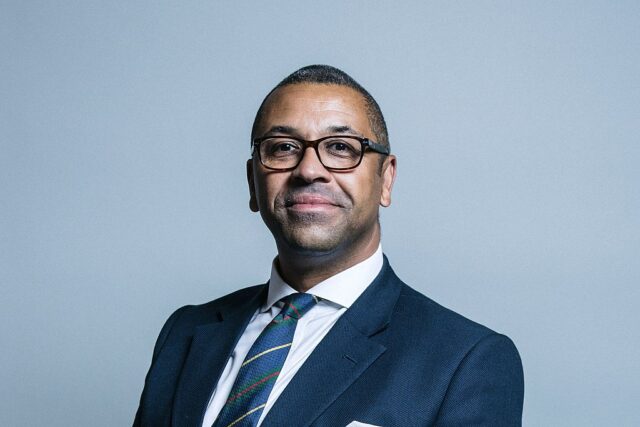
British foreign minister James Cleverly.

LONDON — Britain is committed to forming ever closer links with the Indo-Pacific region, including greater economic, security and defense cooperation, foreign minister James Cleverly will say in a speech in Singapore on Thursday.

Mr. Cleverly, whose trip to the region has also included visits to Japan and South Korea, will tell the audience of business, finance and academic leaders that Britain is set to have “the broadest, most integrated presence in the Indo-Pacific by 2030”.

Britain is seeking to join the trans-Pacific trade pact known as the Comprehensive and Progressive Agreement for Trans-Pacific Partnership (CPTPP), which removes 95% of tariffs between its 11 members.

“We intend to be the first European country to accede to the CPTPP – which will give the region access to the UK’s world-class financial services sector and the world’s sixth largest economy,” he will say, according to extracts of his speech released in advance by his office.

“We are also working closely with countries in the Indo-Pacific to drive prosperity and growth through new trade opportunities.”

He will also say that security and prosperity in the Indo-Pacific is indivisible from Europe’s, welcoming Singapore and Japan’s decision to impose sanctions on Russia over its invasion of Ukraine.

Mr. Cleverly will warn China that when it “departs from global rules and norms, when it aligns itself with countries like Russia – its standing in the world suffers. China will always have a choice about the direction it wants to take.”

“The UK government will always stand up for our sovereignty and economic security – and that of our partners. And no UK government will ever turn a blind eye to repression wherever it occurs,” he will add. — Reuters

Suntrust wins at The Outlook Awards 2022

SPI’s FVP Jerry Rubis (3rd from left), Laguna Sector Head Cezar Cruz (4th from left), Vertical Sector Head Christine Santiago, and Corpcom Manager Princess Tobias received the award with Lamudi representatives. Suntrust Sentosa, a house and lot development of Suntrust Properties, Inc. (SPI) won the Best Affordable House and Lot Development (Luzon) at The Outlook Awards: Philippine Real Estate Awards held last September 27, 2022 at The Shangri-la The Fort, Manila.

Real estate developer Suntrust Properties, Inc. (SPI) won two accolades at the prestigious The Outlook 2022: Philippine Real Estate Awards.

The awarding ceremony was held during the gala dinner last September 27, 2022, Tuesday at Shangri-la, The Fort, Manila. Suntrust Sentosa, a 21.8-hectare Modern-Asian community in Calamba, Laguna was hailed as the Best Affordable House in Luzon while its Modern-Asian condominium project in Quezon City, Suntrust Shanata was recognized as Highly Commended in the Best Affordable Condominium Development in Luzon category.

For Suntrust, this recognition is a testament to the company’s commitment to building affordable and quality homes nationwide. Suntrust has been providing quality residences for 25 years to help uplift the lives of Filipino families.

“This is a fitting gift for the company’s 25th year in the industry. We are beyond honored that our communities are receiving recognition such as this and we would like to assure our homebuyers that Suntrust will continue building communities with their happiness in mind,” said first vice president for Sales & Marketing Mr. Jerry R. Rubis.

Suntrust has always believed that Filipinos deserve a home they can be proud of. For 25 years, the company has been unstoppable in creating safe, sustainable, and affordable communities across the country. It takes pride in developing horizontal and vertical residential communities that cater to affordable and mid-market segments.

The newly recognized Best Affordable House of the Year, Suntrust Sentosa is a Modern-Asian community in Calamba, Laguna. Inspired by the famous island in Singapore, the 21.8-hectare residential development comprises three residential phases, each showcasing a variety of

houses with wide windows that provide more comfort for residents as well as a cost-saving factor. The community also features two replicas of the Merlion and open spaces with family-oriented amenities. Meanwhile, the Highly Commended Suntrust Shanata is a 12-tower condo development in the friendly neighborhood of Brgy. Talipapa in Novaliches, Quezon City.

SPI is just months away from celebrating the company’s silver annniversary. Along with its subsidiaries, Stateland, Inc. (SLI), Sunrays Property Management Inc. (SPMI), and Suntrust Ecotown Developers, Inc. (SEDI), Suntrust continues to rise above today’s challenges by continuously building affordable and quality homes for every Filipino.


Spotlight is BusinessWorld’s sponsored section that allows advertisers to amplify their brand and connect with BusinessWorld’s audience by enabling them to publish their stories directly on the BusinessWorld Web site. For more information, send an email to online@bworldonline.com.

Join us on Viber to get more updates from BusinessWorld: https://bit.ly/3hv6bLA.

Guiding the Philippine energy sector into a brighter future

By Bjorn Biel M. Beltran, Special Features Writer

Since the establishment of the Independent Electricity Market Operator of the Philippines (IEMOP) four years ago, the Philippine energy sector has faced a number of challenges, culminating in the worldwide COVID-19 pandemic. But with every crisis comes opportunity, and IEMOP kept true to its commitment in facilitating a fair and adaptive environment for all stakeholders in the Wholesale Electricity Spot Market (WESM).

“Being a service organization that facilitates the 24×7 trading of electricity, the pandemic, as with any other organization, has been exceptionally challenging,” IEMOP told BusinessWorld. “In line with our mission to operate an efficient, competitive, and transparent electricity market, IEMOP continued to administer the 24×7 operations of the WESM by executing its business continuity procedures. With the easing of government restrictions and with full compliance to health protocols and standards, we have also fully resumed our operations back in our offices this year.”

“These challenges have made IEMOP more resilient which propelled our organization to continue moving forward. The pandemic instilled in our mindset that we should always be resilient and adaptable to changes,” the organization added.

The challenges brought about by COVID-19 only reinforced and accelerated plans that were in place to keep up with global developments in the energy sector. The highly anticipated Enhanced WESM Design and Operations (EWDO) also commenced on June 26, 2021 that brought efficiency gains within the market — thereby making it at par with the advanced electricity markets of other jurisdictions.

At the same time, IEMOP also launched the WESM Central Scheduling in Mindanao, a crucial stepping stone to the eventual launching of WESM in the said region.

Other responses to the ever-changing energy landscape included the Green Energy Option Program (GEOP), which empowers electricity end-users to source their electricity supply from Renewable Energy resources. Finally, the threshold to participate in the Retail Competition and Open Access was also lowered to 500kW and the 7-working day processing of retail customer switching was implemented.

“Our performance as Market Operator has been constantly monitored by the Department of Energy through the Market Operator Performance Standards (MOPS), wherein we have maintained a Very Satisfactory Rating for the past four years,” IEMOP said, adding that IEMOP has also been certified by TÜV SÜD as compliant to ISO 9001:2015 (quality management) and ISO 27001 (Information Security management) and has maintained its certification for the past four years.

“As the Central registration Body for the Retail Competition and Open Access (RCOA) and the GEOP, more and more end-users are reaping the benefits of competition in the retail sector as IEMOP continues to facilitate the switch of consumers to suppliers that offer more competitive rates, promotes energy sustainability, and provides value-adding services.”

Providing unrelenting service to the Filipino people

During the throes of the pandemic, IEMOP has proven its commitment to its mission of creating a fair, competitive, and reliable market for the trading of electricity throughout the Philippines.

“The pandemic has changed the way we operate and do business in the electricity market — compelling us to change some old habits and adopt new ones. Even with the return to almost normalcy in the operations, we strive to deliver quality service to our market participants and stakeholders,” the organization said.

For example, IEMOP increased its presence and broaden mileage both online and offline through conduct of coordination meetings, Kumustahan (focus group discussions), and stakeholder events in various platforms. The digitalization initiatives improved the accessibility and availability of market data on the website and social media platforms, where IEMOP also posts daily WESM updates and information that can be easily accessed by the participants as well as that of the general public. Further, they streamlined the process in its Central Ticketing System to ensure that each query sent within the system is responded to.

“We are constantly working to enhance the market systems in line with the policy issuances of the Department of Energy (DoE) and the Energy Regulatory Commission (ERC) and to deliver our services to our stakeholders in the most cost-efficient way,” IEMOP said.

Currently, IEMOP is planning to launch the Retail Aggregation program by the end of this year, which will allow end-users in a contiguous area to aggregate their demand and participate as a contestable customer. This program will allow more end-users to benefit from retail competition by allowing them to select the supplier of electricity with the best offer and services.

IEMOP is also actively involved in the government’s Energy Virtual One Stop Shop (EVOSS) project. Once this commences, investors in the energy sector will be provided with a portal where they can submit and process all required data and information for their registration, or applications for permits and/or certifications.

As the global energy landscape continues to develop and change, especially in the sustainability aspects, IEMOP remains committed to seek opportunities for growth.

“More and more countries in recent years are pushing for energy sustainability by promoting utilization of indigenous renewable energy resources. The Russia-Ukraine war underscores that our heavy reliance on imported fossil fuels has a huge impact on electricity costs especially during global conflicts,” IEMOP said.

“In the WESM, we have seen a significant uptrend in electricity market prices in the recent months due to the high cost of coal, oil, and natural gas. Given this, the government’s thrust to accelerate renewable energy utilization through the different Renewable Energy Programs as well as the development and exploration of indigenous sources of energy would be vital in ensuring a cleaner and a more secure energy in the future. Another opportunity for growth is to implement other market mechanisms to attract more investments in the Philippines such as the introduction of financial instruments through derivatives or the integration of a capacity market which would help mitigate investment risks.”

Future plans also include the integration of Reserve Market into the WESM to promote security of supply and ensure the reliable and safe delivery of power from generators to customers; the lowering of threshold to participate in the RCOA; and expanding the WESM into Mindanao.

“As we welcome another year, we would like to thank the DoE, the ERC, and all the industry stakeholders, who made our four years of WESM operations meaningful and successful. Rest assured that the men and women of IEMOP will continue to provide world-class services that are responsive to the changing needs of the country for the benefit of all Filipino consumers,” IEMOP said.

Creating local transactive energy markets

By Atty. Richard J. Nethercott, IEMOP President and CEO

We are currently witnessing the transformation of the energy landscape.

The shift towards sustainable development and prevalence of technological advancements has led to widespread adoption of intermittent renewable generation, penetration of distributed energy resources (DERs) like small-scale solar and wind farms, local energy storage, electric vehicles and charging facilities, and the birth of ‘prosumers’ — consumers that are producing electricity to meet their own energy needs.

These changes both contribute to and complicate solving the energy trilemma — energy security, energy affordability, and environmental sustainability. For instance, rooftop solar installations help reduce carbon emissions and allow consumers to lessen their dependence on expensive grid power. However, they pose a threat to system security due to their unpredictability. Similarly, DERs have the potential to both improve and risk system security by providing alternative sources of energy close to loads while also introducing variability and ramping challenges which the grid may not be fully equipped for.

In 2021, the Philippines ranked #70 out of 127 countries in the World Energy Trilemma Index, prepared annually by the World Energy Council to rate nations’ performance in addressing the three dimensions of the energy trilemma. The ranking implies that the Philippines has a lot of catching up to do with other countries in terms of providing reliable, affordable, accessible and clean energy to its citizens.

In the United States, the US Department of Energy formed the GridWise Architecture Council (GWAC) to promote and enable interoperability among the many entities interacting with the electric power system. Cognizant of the challenges and opportunities brought about by the new power environment, the US GWAC developed the Transactive Energy Framework. The Transactive Energy Framework is intended as a starting point to guide industry stakeholders toward further development and application of transactive energy principles to actual power systems. The said framework defined Transactive Energy as “a system of economic and control mechanisms that allows a dynamic balance of supply and demand across the entire electrical infrastructure using value as a key operational parameter.”

In the changing energy landscape, where low-voltage networks have become increasingly active and end-users have become more involved in securing their electricity requirements, the establishment of a localized market mechanism that adheres to Transactive Energy principles — or a local Transactive Energy Market (TEM) — may just be the appropriate solution. Local TEMs provide a venue for the trading of electricity among distribution system users, including end-users, DERs and electricity retailers, whereby these TEM participants minimize their cost of electricity through optimal matching of supply and demand. In theory, they can help to facilitate efficient use of resources in the distribution network and to assign economic value to electricity traded between market participants. In addition, a well-established local TEM can facilitate active end-user participation and encourage appropriate investments through timely price signals.

Real-life applications of local TEMs have mostly been observed in developed economies. For example, companies such as Piclo in the United Kingdom, Our Energy in New Zealand, Vanderbron in the Netherlands, and LO3 Energy in the United States have capitalized on offering energy-sharing platforms to empower consumers to choose and source local electricity from other households and small power producers.

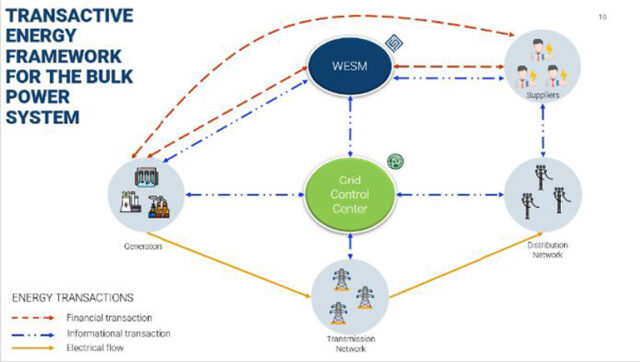
The same concepts are already being employed in our very own Wholesale Electricity Spot Market (WESM) and other wholesale electricity markets around the world, wherein the total system energy requirement is balanced with available generation capacities to produce optimal schedules and prices of bulk electricity. Thus, the framework for energy transactions currently implemented in the bulk power system can also be applied to local networks.

Establishing local TEMs is a complex task requiring a holistic approach that encompasses policy, regulatory and infrastructure initiatives and involves the participation of decision-makers and electric power industry participants. Thus, to operate local TEMs successfully, the inclusion of local TEM policies in power development roadmaps, formulation of pricing mechanisms, updating of technical codes and standards and large-scale deployment of smart grid technologies, among others, are needed.

In summary, Transactive Energy may be a new energy term but not a novel concept as it is already being implemented in bulk systems through wholesale electricity markets. Local TEMs, however, have yet to be fully realized. Creating local TEMs require modernization of the power system infrastructure coupled with appropriate policy and regulatory support.

With the continuous evolution of the power industry, the future energy era may come sooner than we think, and preparations must be done as early as now. For its part, IEMOP is constantly on the lookout for emerging electricity market trends and developments that may be adopted for the betterment of the Philippine power industry.

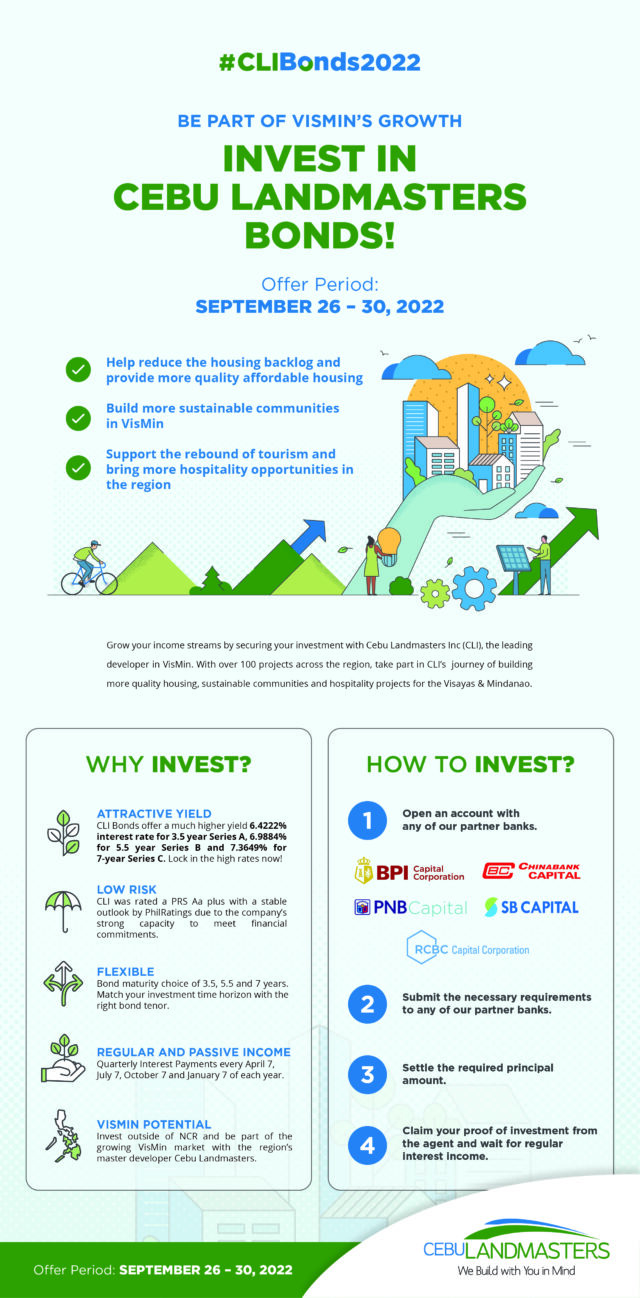
Cebu Landmasters is offering bonds from Sept. 26-30


Spotlight is BusinessWorld’s sponsored section that allows advertisers to amplify their brand and connect with BusinessWorld’s audience by enabling them to publish their stories directly on the BusinessWorld Web site. For more information, send an email to online@bworldonline.com.

Join us on Viber to get more updates from BusinessWorld: https://bit.ly/3hv6bLA.

IT-BPM industry still bullish on growth

BW FILE PHOTO

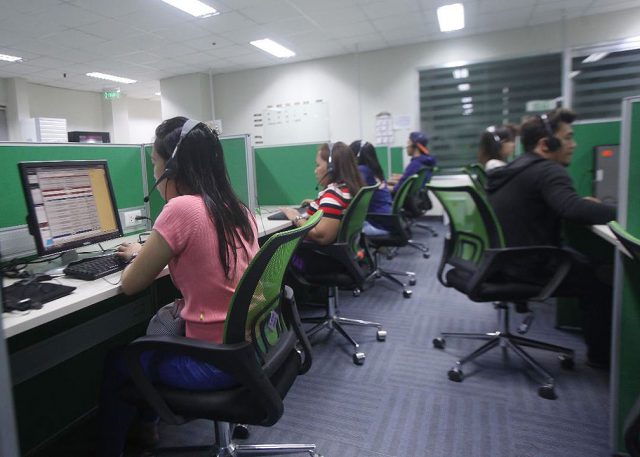
THE INFORMATION TECHNOLOGY and business process management (IT-BPM) industry is targeting to generate as much as $59 billion in revenues by 2028, as it sees continued growth despite the dimming global outlook.

IT and Business Process Association of the Philippines (IBPAP) President Jack Madrid said on Wednesday that the industry expects to grow annually by 8% in the next six years.

“Our industry also has the potential to almost double in revenue what our contribution is to the economy. By the end of 2028, that number could be as high as $59 billion. It shows the potential of the industry to grow further,” he said at a virtual press conference.

In 2021, the IT-BPM sector generated $29.5 billion in revenues.

Mr. Madrid said the industry aims to create another 1.1 million in direct jobs by 2028, of which 54% will be in the countryside.

“If everything is achieved, that will bring our total number to 2.5 million Filipino employees for our industry by the end of 2028,” he said.

Another three million indirect jobs can also be created for sectors such as retail, hospitality, infrastructure, transportation, and real estate, he added.

Mr. Madrid said the industry also aims to increase its contribution to the Philippine gross domestic product (GDP) to 8.5% by 2028, from its 7.5% share in 2021.

“The Philippine IT-BPM sector is at the cusp of a new and exciting era, and the future that awaits us is the brightest that it has ever been. By 2028, the industry may be able to contribute up to 8.5% to the country’s GDP,” Mr. Madrid said. 

PESO IMPACT
Meanwhile, Mr. Madrid said the peso’s depreciation against the US dollar is favorable for the IT-BPM sector.

“At the base level, certainly the depreciation of the peso would appear to be in favor of that cost of optimization for the Philippines relative to other destinations. But we also have to remember that predicting and projecting foreign exchange (forex) rates is a volatile situation. We’ve seen the recent strength of the US dollar affect other currencies as well and many of those currencies are of other emerging IT-BPM locations,” Mr. Madrid said. 

As of Wednesday, the peso has weakened by 15.64% or P7.98 from its P51-per-dollar close on Dec. 31, 2021.

Majority or around 70% of IBPAP members have headquarters in North America.

Meanwhile, Mr. Madrid said the real estate industry will have to adapt to the “new future of work,” as IT-BPM companies will be allowed to conduct 100% work-from-home (WFH) arrangement after transferring their registration to the Board of Investments (BoI).

“I think we will need to continue building, redesigning, and repurposing workspace to adapt to this new future of work that we are now entering and I think the real estate sector will have to adjust to this,” Mr. Madrid said.

“Obviously there is concern over vacancy rates and the use of commercial space especially in Metro Manila. But when you talk about what is at stake, that 1.1 million jobs potential, that number will need workspace. I’m optimistic that there are brighter days ahead for real estate,” he added.

In a separate statement, Go Negosyo Founder Jose Ma. A. Concepcion III said that businesses should be free to decide on their preferred work arrangement, including WFH.

“I am not against the 70:30 on-site — WFH arrangement for IT-BPM companies… The recommended work arrangement solution for the IT-BPM sector may not be the best one for all organizations. Businesses must be free to decide based on what their operations require,” he said.

However, Mr. Concepcion said economic recovery will rely on private sector consumption and spending.

“We need more mobility if we want the economy to grow and for businesses to remain viable so they can generate more employment,” he said. — Revin Mikhael D. Ochave

Philippines improves in digital competitiveness

People hold Philippine flags at the Quirino Grandstand in Manila, June 12, 2007. — REUTERS

By Arjay L. Balinbin, Senior Reporter

THE PHILIPPINES improved two spots in a global digital competitiveness index, but still had the lowest ranking among Southeast Asian countries.

In IMD business school’s World Digital Competitiveness Ranking 2022, the Philippines ranked 56th out of 63 countries with a score of 52.81. This was an improvement from its 58th ranking last year.

The Philippines remained 13th among the 14 Asia-Pacific economies included in the IMD ranking, ahead only of Mongolia.

Philippines rises in digital competitiveness rankingsAmong the five main Southeast Asian economies, the Philippines lagged behind Indonesia (51st), Thailand (40th), Malaysia (31st) and Singapore (4th).

Denmark was the top performer globally, with a score of 100, followed by the United States and Sweden, both with 99.81, and Singapore with 99.48.

On the other hand, Venezuela had the worst score of 27.

“This ranking describes the importance of national factors in explaining the digital transformation of companies and the adoption of digital practices by citizens,” World Competitiveness Center Director Arturo Bris said in a statement.

“Digital nations result from a combination of digital talent, digital regulation, data governance, digital attitudes, and the availability of capital,” he added.

Each economy is ranked in indicators grouped under three factors: knowledge, technology, and future readiness.

In terms of knowledge, the Philippines moved up to 62nd this year from 63rd the previous year, as it maintained its ranking for talent (55th) and training (61st) but fell one spot in scientific concentration (57th).

Knowledge refers to intangible infrastructure that enables the discovery, understanding, and learning of new technologies.

The Philippines also saw its ranking in terms of technology rise to 49th from 54th in 2021, as it improved its rank for the technological framework sub-factor to 45th from 49th previously. Its rankings for the regulatory framework and capital sub-factors were unchanged at 62nd and 40th place.

Under the future readiness factor, the Philippines slipped to 58th from 57th spot. This measures the extent to which technology is adopted by the government, businesses, and society.

However, the country improved two spots to 58th in the sub-factor of adaptive attitudes, but fell to 45th from 37th spot in terms of business agility. It remained at 57th spot for the information technology integration sub-factor.

In an e-mailed reply to questions, José Caballero, senior economist at the IMD World Competitiveness Center, told BusinessWorld that the Philippines’ improvement in the overall ranking stems from its performance in the technology factor, particularly under the technological framework sub-factor.

“Elsewhere, there are relatively strong advances in the availability of digital/technological skills, and IT and media stock market capitalization,” he noted.

Mr. Caballero said strengthening training, education and the regulatory framework can lead to further overall improvements in the Philippines’ ranking.

At the same time, the Philippines also needs to “build adaptive attitudes and businesses agility so that IT integration materializes thereby increasing the country’s future readiness,” he said.

Sought for comment, Philippine Chamber of Commerce and Industry President George T. Barcelon said the results for the Philippines show that the “economy needs to shift more to digitalization.”

“As such, there is a need for better coverage, and affordable connectivity is crucial,” he said in a phone message.

Mr. Barcelon noted the current administration’s priorities are aligned with the knowledge, technology, and future readiness factors considered in the digital competitiveness ranking.

Terry L. Ridon, a public investment analyst and convenor of think tank InfraWatch PH, said the improved ranking is a welcome development but “insignificant at best.”

“This, however, is a result of the current strides achieved by both the public and private sector to expedite tower development, including shortening permitting requirements and opening up the tower sector to other players,” he said in a phone message.

Mr. Ridon said the country needs to catch up in technological development and make gains in governance if it hopes to improve digital competitiveness.

“It is unacceptable that we are at the bottom of regional rankings compared to regional partners… As yet, we remain technology consumers instead of producers. No Silicon Valley-style hub has yet been built in any of our economic centers.”

Rizal Commercial Banking Corp. Chief Economist Michael L. Ricafort described the country’s digital competitiveness performance as “a gradual/modest improvement relative to the digital competitiveness of other ASEAN (Association of Southeast Asian Nations) countries.”

Asked what needs to be done, he said: “The rightsizing of the government… hinges on further automating government transactions, increasing efficiency and productivity, as well as reducing the transaction costs and the amount of time required for the general public to transact with the government.”

“This would have a larger marginal improvement that could further boost the country’s digital competitiveness ranking,” Mr. Ricafort added.

He also noted that the government needs to invest or spend more on IT systems or infrastructure to automate and digitize its internal processes, as well as transactions with the general public.


Gov’t to borrow P200B from domestic market

BW FILE PHOTO

THE NATIONAL GOVERNMENT (NG) plans to borrow P200 billion locally in October, the Bureau of the Treasury (BTr) said on Wednesday.

The October borrowing plan has the same amount as that in September but is 7% lower than the P215-billion program for August.

The government raised just P88.58 billion from domestic borrowings this month, along with an additional P10 billion when the Treasury opened its tap facility in a Treasury bond (T-bond) auction on Sept. 13.

The BTr will hold weekly auctions for Treasury bills (T-bills), which are projected to raise P60 billion.

According to the Treasury, P5 billion worth of 91-day, 182-day, and 364-day T-bills will be offered on Oct. 3, 10, 17, and 24.

Meanwhile, the four scheduled auctions for T-bonds are estimated to generate P140 billion.

For the long-term tenors, the Treasury is looking to raise P35 billion in three-year T-bonds on Oct. 4; P35 billion in six-year debt papers on Oct. 11; P35 billion in 10-year instruments on Oct. 18; and P35 billion in 13-year bonds on Oct. 25.

National Treasurer Rosalia V. de Leon told reporters in a Viber message that the program is “calibrated to meet [the] NG’s funding requirements against [the] current market backdrop.”

Finance Secretary Benjamin E. Diokno previously said that 75% of debt this year will be sourced from domestic lenders, but the government will still try to raise it to 80%.

“Investors may demand higher yield to part with cash given the higher outlook on rates,” the first trader said, also noting how there are no major maturities in October, unlike in previous months. “Let’s see if BTr will give concessions.”

Likewise, the second trader said that market sentiment for interest rates remains bearish.

“Some developments locally and abroad such as inflation data and employment figures may change that view at any given point,” the second trader said, adding that while investors will remain supportive, they may demand relatively higher bids.

In September, the government raised just P18.58 billion in T-bills, with partial awarding in all four auctions following the US Federal Reserve’s hawkish statements.

At the same time, only P70 billion was raised via T-bonds, against the initial P140-billion program, as two auctions saw full rejections. An additional P10 billion was raised in its Sept. 13 auction.

The Fed hiked its policy rates by another 75 bps last week while signaling larger increases to come as inflation is still way above its 2% target at 8.3% as of August. The US central bank has raised key rates by 300 bps since March, including two other 75-bp moves in June and July.

The Bangko Sentral ng Pilipinas (BSP) also increased its benchmark interest rates by 50 bps to 4.25% on Thursday, hiking borrowing costs by 225 bps since May to rein in rising prices. The consumer price index climbed to 6.3% year on year in August, the fifth straight month that inflation exceeded the BSP’s 2-4% target this year.

The gross domestic borrowing program is at P1.91 trillion this year, composed of T-bills that are expected to bring in P52 billion and fixed-rate T-bonds that are seen to raise P1.86 trillion.

Outstanding debt is expected to rise to P13.43 trillion by the end of 2022 from P12.89 trillion recorded in end-July.

The government estimates the debt-to-gross domestic product (GDP) ratio to drop to 61.8% at the end of the year, from 62.1% as of end-June.

The government borrows from local and external sources to help fund a budget deficit capped at 7.6% of GDP this year. — Diego Gabriel C. Robles

Peso touches P59 vs dollar for 1st time

THE PHILIPPINE PESO breached the P59-to-dollar level for the first time in intraday trading on Wednesday, before closing just below the record low.   

The local unit closed at P58.98 against the greenback on Wednesday, strengthening by one centavo from its lowest-ever finish of P58.99 on Tuesday, Bankers Association of the Philippines data showed.   

The peso has weakened by 15.64% or P7.98 from its P51-per-dollar close on Dec. 31, 2021. 

The local currency opened Wednesday’s session at P58.95 versus the dollar.

The peso’s weakest showing was at P59.02, another record intraday low.

Its intraday best was at P58.88 against the greenback.

The peso corrected following a statement from Malacañang that the president is closely monitoring the peso-dollar exchange rate, Rizal Commercial Banking Corp. Chief Economist Michael L. Ricafort said in a Viber message. 

Press Secretary Trixie Cruz-Angeles said on Tuesday President Ferdinand R. Marcos, Jr. is coordinating with the economic team to assess the peso’s impact on inflation.

Dollars exchanged went up to $1.19 billion on Wednesday from $1.06 billion on Tuesday as Bangko Sentral ng Pilipinas (BSP) Governor Felipe M. Medalla said the Philippine central bank will likely be more active in the foreign exchange market.   

ING Bank N.V. Manila Senior Economist Nicholas Antonio T. Mapa said in a Viber message that central banks in emerging markets can do “very little” against the broad dollar strength.   

“Early rate hikes, jumbo rate hikes have all been cannon fodder as (Federal Reserve Chair Jerome H.) Powell and company tighten policy to combat US inflation induced by ongoing Russian invasion of Ukraine,” Mr. Mapa said.   

“BSP governor has ruled out emergency rate hikes (can only surprise them once) and peso, although underperforming, has not been the exception,” Mr. Mapa said.   

Last week the BSP raised its benchmark policy rate by 50 bps to 4.25%. Rates on the overnight deposit and lending facilities also rose by 50 bps to 3.75% and 4.75%.

The Monetary Board has raised rates by 225 bps so far since May, including a 75-bp off-cycle hike in July.

“With dollar strength looking like that, BSP will likely draw down reserves built up over the last two years,” Mr. Mapa said.   

The gross international reserves (GIR) stood at $98.98 billion as of end-August, slipping by 0.85% from the $99.83 billion as of end-July, latest central bank data showed.   

The foreign exchange buffer as of end-August was 8.3% lower from the $107.96-billion level a year ago, and marked the sixth consecutive month of decline. It was also the lowest since the $98.95 billion in gross reserves seen in August 2020. 

“From 2019-2020 BSP grew reserves by $23.8 billion. This year they’ve drawn down a relatively modest $5.5 billion for context,” Mr. Mapa said.   

The BSP expects to end the year with $99 billion in dollar reserves and $100 billion in 2023.

“I think (the BSP) will only be able to manage volatility of the currency,” a trader said in a Viber message.

For Thursday, Mr. Ricafort expects the local unit to move between P58.85 and P59.05 per dollar, while the trader gave a wider forecast range of P58.50 to P59.30. — Keisha B. Ta-asan

Asian central banks need broader FX defense as reserves slide

South Korean won, Chinese yuan and Japanese yen notes are seen on US 100 dollar notes in this file photo illustration. — REUTERS

DECLINING foreign exchange (FX) reserves mean Asian central banks will probably start looking for alternative ways to support their currencies, according to Nomura Holdings, Inc.

Some of the potential methods they may choose include mandating exporters to sell foreign currency proceeds, placing restrictions on trade accounts, and introducing measures to boost capital inflows, Nomura analysts including Sonal Varma in Singapore and Ting Lu in Hong Kong wrote in a research note.

Asian policy makers have bolstered their FX war chests in recent years following previous crises such as the 2013 taper tantrum. Still, the rapid pace of US Federal Reserve interest rate hikes this year means they will be reluctant to rely solely on those funds to defend their currencies.

India is already estimated to have spent $75.1 billion this year supporting the rupee in the spot and forward markets, while China has probably spent $39.6 billion, Thailand $26.9 billion and South Korea $16.7 billion, according to Nomura’s estimates to the end of August. Both the Reserve Bank of India and Bank of Thailand have used up more than 10% of their end-2021 headline reserve levels, the bank said.

“Asia still has FX reserves to prevent runaway depreciation, but amid the erosion of FX reserve buffers, we believe we are closer to a point where some Asia ex-Japan central banks may allow for greater FX flexibility,” the Nomura analysts wrote.

Asian currencies have tumbled this year as Fed rate hikes have bolstered the dollar. The yen has slumped more than 20% to a 24-year low, the Korean won has fallen 17%, and the Philippine peso and Taiwan dollar have both dropped more than 13%.

Here are some steps that Nomura suggests individual Asian central banks may take to support their currencies:

Japan: Foreign asset liquidation by public pension funds and other financial institutions

China: Repatriation from government-related corporations, closing undesired outflow channels, issuing offshore RMB bonds to reduce CNH liquidity

India: FX swap window for oil marketing companies, measures to slow capital outflows, nonresident deposit program

Indonesia: Cut in FX reserve requirement ratio, tax amnesty program, prohibition against using foreign currencies for domestic transaction

South Korea: Repatriation from government-related corporations, introduce tax incentives for local residents’ financial assets held abroad, measures to encourage more capital inflows. — Bloomberg

JFC piles up funds for Tim Ho Wan’s China growth

FACEBOOK/TIMHOWANPH

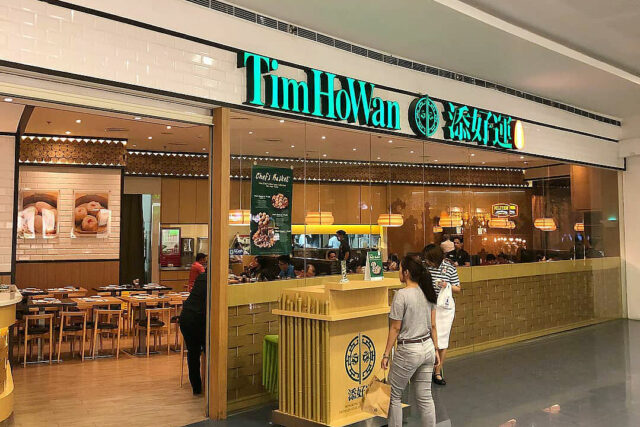
A SUBSIDIARY of Jollibee Foods Corp. (JFC) has committed more funds to the private equity fund that owns the Tim Ho Wan brand and company-owned stores ahead of a planned expansion in China.

In a disclosure to the stock exchange on Wednesday, the food service company said Jollibee Worldwide Pte. Ltd. (JWPL) is committing additional capital to Titan Dining LP, which is increasing its fund size to S$350 million from S$250 million.

The additional funds will be used to fund store expansion plans, the completion of other projects, and the capital requirements of Tim Ho Wan.

“JWPL has a 90% participating interest in Titan. With the increase in fund size, JWPL’s total commitment to the fund shall amount to S$315,000,000,” JFC said.

At present, JFC’s joint venture with Titan has 11 restaurants in the People’s Republic of China, offering “delicious authentic Hong Kong dim sum at a great value for money.”

“JFC plans to aggressively expand Tim Ho Wan in Mainland China with a target of reaching 100 restaurant outlets within the next four years,” the firm said.

The committed funds follow JFC’s steady move to gain its stake in Titan, starting with its S$45-million investment in May 2018 to own a 45% participating interest in the private equity fund, which was the master franchisee of Tim Ho Wan in the Asia-Pacific region.

At that time, JFC said that by investing in the fund, it would have the opportunity to acquire substantial ownership of Tim Ho Wan’s master franchise via a purchase mechanism in the investment agreement.

It then set up a franchise operation of Tim Ho Wan in Shanghai, China, ahead of disclosing in October 2019 that JWPL increased its capital commitment to Titan to S$120 million. The move raised its participating interest to 60%.

“Titan also expanded its assets by acquiring at about this time the Tim Ho Wan brand and trademarks,” JFC said.

In October 2020, JFC’s participating interest in Titan increased to 85% after JWPL bought the 25% participating interest of another investor for S$36.3 million. JFC acquired in August 2021 the remaining 15% of other investors in Titan.

On Nov. 1, 2021, JWPL entered into an amended limited partnership agreement with Titan to increase the fund size to S$250 million. Other investors joined the fund with a 10% participating interest in Titan. JWPL’s total commitment increased to S$225 million or 90% of the increased fund size and total commitments.

“JFC aims to build as an important part of its portfolio a significant business serving Chinese cuisine in different parts of the world,” the listed company said.

It said Tim Ho Wan operates 67 outlets in Asia, which are mostly franchised stores, including seven in the Philippines.

In a separate press release, JFC listed its planned Jollibee store openings in more places in Canada after opening three stores in Canada this year alone. It is set to open at Strawberry Hills Shopping Centre in Surrey and Cambie Street in Vancouver, British Columbia by the end of the year.

“We opened our first store in Canada in Winnipeg in December 2016. Now we have 24 stores in Canada spread across the provinces of Alberta, British Columbia, Manitoba, and Saskatchewan,” JFC President and Chief Executive Officer Ernesto Tanmantiong said in a press release on Wednesday.

“We remain grateful for the support of Canadian communities and its government as we continue to expand in the country,” Mr. Tanmantiong added.

JFC said that the store openings in Canada are part of its aggressive expansion plan in North America, “in line with its mission to become one of the top five restaurant companies in the world.”

At the stock market on Wednesday, JFC shares lost 60 centavos or 0.26% to P228.40 apiece. — Justine Irish D. Tabile

Globe says fraudsters target ‘poor’ as GCash ‘money mules’

BW FILE PHOTO

AYALA-LED Globe Telecom, Inc. on Wednesday issued a public warning against acting as “money mules” to withdraw or transfer illegally obtained money.

“Money mules are verified account owners of a bank or other financial accounts used by a third party to obscure the source of the stolen funds and keep their identity a secret,” Globe said in an e-mailed statement.

“These mules usually receive a commission or a fee for the use of their accounts.”

Fraudsters go to poor communities and tell individuals they can make money using GCash on their phones, the company noted.

Ingrid Rose Ann Beroña, GCash chief risk officer, said: “These individuals ignore all the warning signs that this is an illegal activity, but the worst thing is they no longer possess the actual accounts.”

“The scammers can do anything they want with the accounts and not be liable for the consequences,” she added.

According to Globe, the mobile money service platform is able to detect accounts that are being used for mule activities.

“It has blocked 780,000 accounts due to identity fraud including money mule issues since January this year,” the company noted.

Globe also said that GCash is working with law enforcement agencies to arrest the fraudsters.

“The most recent was an entrapment operation carried out through a collaboration of the Philippine National Police, Globe, and GCash, which led to the arrest of a person selling over 500 GCash-registered SIM cards.”

GCash announced recently that at least one million active borrowers have been registered on the platform as of the end of June.

The company has disbursed over P40 billion in loans, it said in a statement. — Arjay L. Balinbin

ADVERTISEMENT
ADVERTISEMENT