Home Blog Page 5825

Toward a more confident Philippine foreign policy

OFFICE OF THE PRESS SECRETARY

The address at the 77th UN General Assembly was given by the Philippine president in the morning of Sept. 21, 2022 (Philippine time). Identifying himself simply as “Ferdinand Marcos,” he definitely would have known that, almost to the day, 40 years earlier, his father, Ferdinand Marcos the Elder, gave his own remarks before the Assembly.

The elder Marcos spoke of alleviating poverty for what was then designated as the “third world”: “The problems cannot wait. The price of inaction multiplies in severity for nations and the world alike.” The Philippines had just signed on to the GATT (General Agreement on Tariffs and Trade) and the liberalizing effects of the ASEAN FTA (Association of Southeast Asian Nations Free Trade Agreement) was still years away.

Interestingly, Marcos the Elder also spoke of the need for “intensive efforts to employ science and technology” to destroy “nuclear weapons on their launching sites or in flight,” with the hope of limiting warfare to the more conventional and less lethal.

This was echoed by the younger Marcos: looking at the still “unresolved problem: inequalities and inequities within and among countries continue to persist, and they continue to demand urgent action.” “This injustice,” he continued, “was evident during this pandemic, when the richer nations immediately received vaccines at the expense of the have-nots. We see, for example, dangers of this lurking in the persistent digital divide and in ballooning debt burdens.”

On nuclear weapons, such “continue to pose an existential threat despite our efforts to build norms that resoundingly prohibit them. We must reject the notion of deterrence and remain committed to decreasing the global stockpile of these weapons. At the same time, we must also address the scourge of the proliferation of all weapons, be they small arms, light weapons, or improvised explosive devices.”

Thus, while media labeled the New York trip as a “rebranding,” for Marcos the Younger, it could just as well be a necessary continuation of what should have been.

This is all the more evident with regard to international affairs. After the unnecessarily trenchant but ultimately unthought through China policy of Noynoy Aquino, followed by the quite unfortunate China-centric obsequiousness of the Duterte administration, Marcos is seemingly more surefooted and clearer eyed on foreign policy.

Speaking with former Australian prime minister Kevin Rudd, Marcos declared that the position “the Philippines takes is that we have no territorial conflict with China. What we have is China claiming territory that belongs to the Philippines.” That indeed is the more accurate way to frame the matter: our territory is ours, China is just trying to illegally usurp it.

Two additional but quite telling statements: “With our American partners, we have promoted that position.” Also, “I would like to point out this is the first national election in the Philippines where foreign policy was an issue with the people.”

Indeed. After 12 years of contradictory policy towards China, along with the relentless efforts of well-funded foreign and local China propagandists, the Philippines still prefer maintaining its distance from its large domineering neighbor. A Pulse Asia survey found 67% of Filipinos distrust China, while 89% favor the US, as well as Australia (79%), Japan (78%), Germany (69%), South Korea (65%), UK (64%), Indonesia (60%), and India (51%).

Hence, Marcos the Younger’s reminder at the General Assembly about the Philippine’s “solid contributions to the cause of peace and justice. By shepherding the Manila Declaration of 1982, we helped affirm that differences should only be resolved through peaceful means. By reinforcing the predictability and stability of international law, particularly the 1982 United Nations Convention on the Law of the Sea, we provided an example of how states should resolve their differences: through reason and through right.”

He also called attention to the fact that “widening geopolitical polarities and sharpening strategic competitions are transforming the international political landscape. A profound lack of trust is putting enormous strains on our multilateral system. Our very Charter is being violated around the world as we speak. In Asia, our hard-won peace and stability is under threat by increasing strategic and ideological tensions.”

The solution is “to uphold the ideals that led to the establishment of this parliament of nations, and to reject any attempt to deny or redefine our common understanding of these principles.”

It is correct for Marcos to speak of common principles, particularly democratic values. And it is correct that we redeclare our commitment to our relationship with the United States, as well as ASEAN and other traditional allies.

Foreign policy should serve as an extension of our domestic policy and Philippine interests require that it recovers its position as an active player in the world stage: regardless of the supposed shift to ballistic and aerial warfare, our country’s waters maintain huge value in relation to maritime transport and commercial trade. The Philippines must assert its natural position as the gateway to Asia, the same role Great Britain inherently assumes vis-à-vis Europe and which Singapore tries but continually fails to achieve.


Jemy Gatdula is a senior fellow of the Philippine Council for Foreign Relations and a Philippine Judicial Academy law lecturer for constitutional philosophy and jurisprudence

https://www.facebook.com/jigatdula/

Twitter @jemygatdula

Global appetite for oil is peaking

WIRESTOCK

I’VE RARELY FELT more trepidation about writing a column than this one. But here goes: After more than a century of almost continual growth, the world’s appetite for oil is peaking, and will soon enter terminal decline.

That’s hard to write, because those who’ve called a top in oil have a forecasting record on a par with film producer Harry Warner’s skepticism that people in the 1920s wanted to see talking pictures.

As far back as 1919, the chief geologist of the US Geological Survey wrote that domestic output — then running at about 960,000 barrels a day, about 6% of levels nowadays — would start falling within two to five years. In the 2000s, a dearth of oilfield discoveries led to febrile worries that supplies were running out, before the shale revolution prompted a surprise jump in production. BP Plc in 2020 predicted that consumption of liquid hydrocarbons would at best plateau for 15 years around the 97.9 million barrels a day mark it hit in 2019, before revising its forecast to a peak between the middle of this decade and 2030.

Through all that, oil demand has continued to grow as the indispensable energy carrier fueling rising global incomes and development. Still, the reserves of stamina that crude has called on to maintain its upward trajectory are finally giving out — and US Federal Reserve Chairman Jerome Powell may have just delivered the coup de grace.

Consider what is happening in financial markets right now. Equities have been plummeting and bond yields surging after the Fed passed its third consecutive 75-basis-point rise in interest rates, and Powell signaled his willingness to send the US economy into a recession to bring inflation back to target. A soaring greenback has pushed the British pound to record lows, while the yen and euro slumped to their lowest levels in two decades or more. One analyst this week argued there’s now a 98% chance of a global recession.

Then consider just how close to peak oil we already are. Every forecaster has a different estimate for this number, but the median of 12 who see a future date is for a maximum level of about 103.2 million barrels of liquid fuels a day — something most see occurring some time between the mid-2020s and the mid-2030s. In contrast to a history where consumption grew by more than a million daily barrels per year, that’s a modest enough rise that debates about the precise timing of the peak are almost academic. Still, the median target is only a sliver above levels of about 101.6 million daily barrels which both the International Energy Agency and US Energy Information Administration expect to see by the end of this year.

Now think about what a global recession would do to that outlook. Oil consumption fell by more than 2% from peak to trough after the 1973 oil crisis and the 2008 financial meltdown, with output taking three years to recover to its former level. The drop was closer to 10% during the COVID-19 pandemic and in 1980, when the aftermath of the second oil crunch and the Iran-Iraq war collided with the monetary squeeze Powell’s predecessor Paul Volcker inflicted to wipe out the inflation of the previous decade. In each case, consumption didn’t just suffer a temporary blip — the direction of oil demand was permanently set back.

A global recession on the scale that equity and bond markets are now pricing in could easily push liquid fuel consumption back below 100 million barrels until the middle of the decade. That starts bringing things close to the point where most forecasters see long-run shifts in demographics, economic growth, and technology sending oil into terminal decline. Crude itself accounts for only around 80 million daily barrels of total liquids demand, with most of the remainder coming from products derived from gas, plant matter, and coal.

The state of gasoline is a foretaste of what is to come. Demand for the fuel, which uses more than a quarter of the world’s crude, has already peaked. Part of that is about electric cars — BloombergNEF estimates that they’re already subtracting about 1.7 million daily barrels from global consumption. Still, much of it is just that plain old internal combustion engines are sipping less gas. New US cars now travel nearly twice as far per gallon as they did at the start of the Obama administration, with light trucks and SUVs increasing efficiency by a more modest 59%.

As older, less efficient cars are phased out of the fleet, the entropy of the scrapyard is reducing gasoline demand as rapidly as the innovation of the electric vehicle manufacturer. It’s no accident that major refiners such as Reliance Industries Ltd. are already looking beyond road transport, and reconfiguring their plants to produce aviation fuel and petrochemicals instead.

That’s not enough for those who paint a rosy future for oil demand to point to historic correlations with economic growth and argue that the pattern will repeat once again. Away from forecasters’ spreadsheets, OPEC spare capacity is already wafer-thin, and upstream investment is running at not much more than half its level last time crude prices were in the vicinity of $100 a barrel. The oil industry responsible for supplying additional barrels isn’t spending the money to ensure they’ll turn up — and if that doesn’t happen, consumption has no prospect of growing.

Ultimately, it will be central banks that will read crude its last rites. Faced by inflation caused in part by our stubborn failure to produce enough cheap energy to fuel the recovery from COVID-19, they’ve put the global economy on a bed of Procrustes — cutting economic demand until it’s feeble enough to sit within the constraints of current supply.

That makes current levels of oil production look like some sort of hard cap. Since it emerged as our most crucial commodity more than a century ago, oil has always lived on GDP growth. With the Fed planning to push the world economy into a slump to cure the inflation epidemic, we’re about to see it die by the same hand.

BLOOMBERG OPINION

Russia set to annex swath of Ukraine territory

ZAPORIZHZHIA, Ukraine — Russia was poised to annex a swath of Ukraine within days, releasing what it called vote tallies showing overwhelming support in four provinces to join it, after what Ukraine and the West denounced as illegal sham referendums held at gunpoint.

On Moscow’s Red Square, a stage with giant video screens has been set up, with billboards proclaiming “Donetsk, Luhansk, Zaporizhzhia, Kherson — Russia!”

The head of the upper house of the Russian parliament said it could consider the incorporation of the four partially occupied regions on Oct. 4, three days before President Vladimir Putin’s 70th birthday.

The Russian-installed administrations of the four provinces have formally asked Mr. Putin to incorporate them into Russia, which Russian officials have suggested is a formality.

“This should happen within a week,” Rodion Miroshnik, the Russia-installed ambassador to Moscow of the self-proclaimed Luhansk People’s Republic, told the RIA state news agency

“The main thing has already happened — the referendum has taken place. Therefore, let’s say: the locomotive has already started and it’s unlikely to be stopped.”

To annex the territories, which represent about 15% of Ukraine, some sort of treaty will need to be struck and ratified by the Russian parliament, which is controlled by Putin allies. The areas will then be seen as part of Russia and its nuclear umbrella will extend to them.

Mr. Putin has warned he would use nuclear weapons to protect Russian territory from attack.

‘NOBODY VOTED’
Residents who escaped to Ukrainian-held areas in recent days have told of people being forced to mark ballots in the street by roving officials at gunpoint. Footage filmed during the exercise showed Russian-installed officials taking ballot boxes from house to house with armed men in tow.

“They can announce anything they want. Nobody voted in the referendum except a few people who switched sides. They went from house to house but nobody came out,” said Lyubomir Boyko, 43, from Golo Pristan, a village in Russian-occupied Kherson province.

Russia says voting was voluntary, in line with international law, and that turnout was high. The referendums and notion of annexations has been rejected globally, as was Russia’s 2014 takeover of Crimea from Ukraine.

Ukrainian President Volodymyr Zelensky sought to rally international support against annexation in a series of calls with foreign leaders, including those of Britain, Canada, Germany and Turkey.

“Thank you all for your clear and unequivocal support. Thank you all for understanding our position,” Mr. Zelensky said in a late-night video address.

The United States has unveiled a $1.1 billion weapons package for Ukraine that includes 18 High Mobility Artillery Rocket System (HIMARS) launchers, accompanying munitions, various types of counter drone systems and radar systems. The announcement brings the US security aid to $16.2 billion. 

The United States has also said it would also impose new sanctions on Russia for the referendums and the European Union’s executive proposed more sanctions, but the bloc’s 27 member countries will need to overcome their own differences to implement them.

Kremlin spokesman Dmitry Peskov said Russia would need to keep fighting until it had taken control of all of Donetsk. About 40% is still under Ukrainian control.

Russia has announced it will mobilize some 300,000 reservists to bolster its forces in Ukraine. The conscription drive has sent thousands of Russian men fleeing to other countries.

On the ground, Ukraine and Russian forces are engaged in heavy fighting in the four disputed provinces.

Ukraine’s armed forces conducted strikes on Russian forces in four areas near the city of Kherson as part of their counter-offensive, while its aircraft hit six targets, the Ukrainian military’s southern command said.

Reuters was not able to verify battlefield reports.

EUROPEAN ENERGY
Leaking gas bubbled up in the Baltic Sea for a third day after suspected explosions tore through undersea pipelines built by Russia and European partners to send natural gas to Europe.

The Nord Stream 1 pipeline, once the main route for Russian gas to Germany, was already shut but cannot now be easily reopened.

NATO and the European Union warned of the need to protect critical infrastructure from what they called “sabotage,” though officials stopped short of assigning blame.

Russia’s FSB security service is investigating the damage to the pipelines as “international terrorism,” the Interfax news agency cited the general prosecutor’s office as saying.

The Nord Stream pipelines have been flashpoints in an expanding energy war between Russia and European countries that has damaged Western economies and sent gas prices soaring. — Reuters

Hurricane Ian batters Florida Gulf Coast with fury

VENICE, Fla. — Hurricane Ian plowed into Florida’s Gulf Coast with catastrophic force on Wednesday, unleashing howling winds, torrential rains and a treacherous surge of ocean surf that made it one of the most powerful US storms in recent years.

Crashing ashore as a Category 4 hurricane with sustained winds of up to 150 miles per hour (241 kph), Ian quickly transformed an idyllic stretch of sandy beaches and coastal towns into a disaster zone inundated by seawater.

Early video images of the storm’s fury on local TV and social media showed floodwaters sweeping away cars, nearly reaching rooftops in some communities and the ruins of homes as palm trees were bent almost in half.

Up to 30 inches (76 cm) of rain is forecast to fall on parts of central Florida as the storm moves inland, threatening to cause extensive flash floods. Nearly 2 million homes and businesses statewide were without power as of an hour before sunset, utilities reported.

“This storm is doing a number on the state of Florida,” said Governor Ron DeSantis, who asked US President Joseph R. Biden to approve a major federal disaster declaration providing a wide range of US emergency aid to the entire state.

US border authorities said 20 Cuban migrants were missing after their boat sank off the Florida coast as Ian neared the coast on Wednesday.

There were no immediate official reports of other storm-related casualties.

An unknown number of people were stranded in “high-risk” evacuation zones and in need of help after defying orders to seek higher ground, but rescue crews were unable to immediately reach them, the governor said.

Having swept past Cuba on Tuesday, leaving it without power for hours, Ian made landfall in Florida at 3:05 p.m. EDT (1905 GMT) on Wednesday near Cayo Costa, a barrier island just west of Fort Myers, the US National Hurricane Center (NHC) reported.

The storm’s peak wind speeds put it just shy of a Category 5 designation on the Saffir-Simpson scale, the maximum classification.    

Ian then churned ashore on Florida’s mainland, south of the harborside town of Punta Gorda, with slightly diminished winds topping out at 145 mph.

Mr. DeSantis said Ian had generated life-threatening storm surges — waves of wind-driven seawater rushing in along the coast — of up to 12 feet (3.7 meters) in some places. Forecasters also warned of intense thunderstorms and possible tornadoes.

“This is a storm that we will talk about for many years to come, an historic event,” said Ken Graham, director of the National Weather Service.

The sprawling, slow-moving storm pushed farther inland as darkness fell, and within six hours of landfall was downgraded to Category 2, with top sustained winds of 105 mph (170 kph), the NHC reported.

Further weakening was forecast over the next day or so as Ian crosses the Florida peninsula on a northeasterly track, expected to reach the Atlantic Coast on Thursday afternoon.

The region around the landfall is home to miles of sandy beaches, scores of resort hotels and numerous mobile home parks, a favorite with retirees and vacationers alike. 

An hour after landfall, video posted on social media and TV news outlets showed water fueled by storm surges rushing through several communities.

The town of Fort Myers Beach was nearly submerged by floodwaters. A view of Sanibel Island posted on Twitter showed the ocean sweeping over a seawall into a resort hotel’s swimming pool. Other video from the island showed roads inundated by the storm surge, rising to the tops of street signs.

In terms of its sustained wind speeds, which peaked at 155 mph before landfall, Ian ranks as one of the most ferocious hurricanes to strike the US mainland in recent years. By comparison, Hurricane Michael came ashore in Florida’s panhandle in 2018 with steady winds of 155 mph, while Ida last year packed sustained winds of 150 mph when it landed in Louisiana.

TO STAY OR GO
Even as Ian lashed the coast in the final hours before it swept ashore, authorities warned residents it was too late for anyone who had yet to evacuate to safely do so.

Earlier this week, more than 2.5 million residents had been told to evacuate. Doug Coe of Venice was one of those who chose to ignore warnings and stay put.

“I’m staying vigilant, but trying not to worry,” he said.

Most residents abandoned the area’s mobile home parks, taking refuge in local schools and other facilities converted to emergency shelters. The area’s numerous assisted-living facilities were mostly evacuated, too.

Climate change is making hurricanes wetter, windier and more intense. There is also evidence that it is causing storms to travel more slowly, meaning they can dump more rain in one place, scientists say. — Reuters

13 killed as Iran Revolutionary Guards target Iraq’s Kurdish region

DUBAI/SULAIMANIYA, Iraq — Iran’s Revolutionary Guards said on Wednesday they fired missiles and drones at militant targets in the Kurdish region of neighboring northern Iraq, where authorities said 13 people were killed.

The strikes were reported after Iranian authorities accused armed Iranian Kurdish dissidents of involvement in unrest now shaking Iran, especially in the northwest where most of the country’s population of over 10 million Kurds live.

Thirteen people were killed and 58 wounded in the attacks near Erbil and Sulaimaniya in Iraqi Kurdistan, Iraq’s state news agency said citing its counter-terrorism service in Kurdistan.

Iraqi Kurdish sources said drone strikes targeted at least 10 bases of Iranian Kurds near Sulaimaniya in Iraqi Kurdistan on Wednesday morning, without elaborating about possible casualties.

The US Army Central Command said it downed an Iranian drone on Wednesday while it was on its way to Erbil, adding that the drone posed a threat to US personnel in the region.

“No US forces were wounded or killed as a result of the strikes and there is no damage to US equipment,” it said in a statement.

A senior member of Komala, an exiled Iranian Kurdish opposition party, told Reuters that several of their offices were struck as well.

Tariq Haidari, mayor of the Iraqi Kurdish city of Koye, told Reuters that two people including a pregnant woman were killed and 12 wounded. Some of the wounded were rushed in critical condition to hospital in Erbil, he said.

The Revolutionary Guards, Iran’s elite military and security force, said after the attacks that they would continue targeting what it called terrorists in the region. 

“This operation will continue with our full determination until the threat is effectively repelled, terrorist group bases are dismantled, and the authorities of the Kurdish region assume their obligations and responsibilities,” the Guards said in a statement read on state television.

Iraq’s foreign ministry condemned the attacks.

Iraq’s foreign ministry spokesman said in a statement on Wednesday that the ministry would summon the Iranian ambassador to inform him of Iraq’s objection to the attacks on Iraqi territories and that Iraq considers this action as a violation of sovereignty.

Protests erupted in Iran this month over the death of a young Iranian Kurdish woman, Mahsa Amini, in police custody.

Amini, 22, from the northwestern Kurdish city of Saqez, was arrested on Sept. 13 in the capital Tehran for “unsuitable attire” by the morality police, who enforce the Islamic Republic’s strict dress code.

She died three days later in hospital after falling into a coma, sparking the first big show of opposition on Iran’s streets since authorities crushed protests against a rise in gasoline prices in 2019. — Reuters

Trump seeks end to rape accuser’s defamation lawsuit 

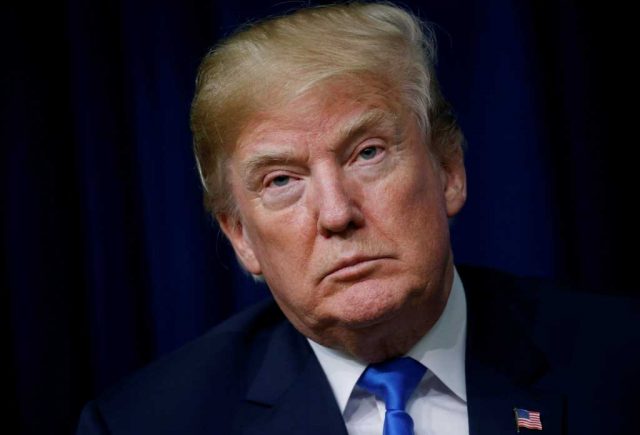
U.S. President Donald Trump — REUTERS/LEAH MILLIS/FILE PHOTO

NEW YORK — Donald Trump is seeking a quick end to the defamation lawsuit by an author who claims he raped her more than a quarter century ago.

A lawyer for the former US president asked a federal judge in Manhattan on Wednesday to substitute the United States as the defendant in E. Jean Carroll’s lawsuit, a move that would end her case because the government cannot be sued for defamation.

The request came one day after the 2nd US Circuit Court of Appeals said Mr. Trump was a federal employee when he branded Ms. Carroll a liar, but left it to a Washington, D.C., appeals court to decide whether Mr. Trump acted as president when he spoke.

In a letter to US District Judge Lewis Kaplan in Manhattan, Mr. Trump’s lawyer Alina Habba said the decision meant the government “must be substituted as a defendant.”

She also asked to put the case on hold, saying it would be “highly prejudicial” for Mr. Trump to spend time and money preparing for trial if the Washington court ruled in his favor.

Roberta Kaplan, a lawyer for Ms. Carroll, said “nothing has changed” and the case should proceed.

“The parties have been cooperatively engaged in discovery at Donald Mr. Trump’s request, and nothing has happened that should change that,” she said in an interview. “There has been no final determination by an appellate court that the government should be substituted in.”

Ms. Carroll sued Trump in November 2019, five months after he denied raping her in a dressing room of department store Bergdorf Goodman in the mid-1990s and said “she’s not my type.”

The former Elle magazine columnist still plans to sue Mr. Trump for battery and inflicting emotional distress in a separate lawsuit in November.

Ms. Carroll plans to invoke a new state law giving accusers a one-year window to sue over alleged sexual misconduct even if the statute of limitations expired long ago.

Tuesday’s decision set aside Kaplan’s ruling that Mr. Trump was neither acting as president when discussing Ms. Carroll, nor a federal employee for purposes of her case.

The case is Carroll v Trump, US District Court, Southern District of New York, No. 20-07311. — Reuters

Multi-model databases to speed up app development — Couchbase

FREEPIK

A multi-model database, a management system that supports multiple data models in a single backend, can solve application development challenges encountered by businesses, according to technology company Couchbase, Inc.  

“As consumers push developers to up their game, the natural need to move away from relational databases towards multi-model databases has become inevitable,” said Chin-Heng Hong, vice president of product management at Couchbase. 

There are more than 1.2 billion mobile broadband users and 96% mobile coverage across the Asia Pacific, Mr. Hong pointed out, and businesses are competing to deliver richer experiences through micro-services, which takes a toll on storage and backend processing.  

Unlike a relational database, a multi-model database can handle different data types and models, such as documents, graphs, and relational and key-value databases. This system can shorten the time to market for a product and lower deployment and operational costs, allowing developers to “benefit from a peace of mind during development and deployment,” he said. 

“For businesses to maintain the functionality, capabilities, and seamless experiences of their apps, a multi-model approach is imperative,” he added. 

Based on 2022 studies by McKinsey, Asia Pacific consumers choose brand experience over traditional notions of loyalty, emphasizing experiences that provide value, health, sustainability, and omni-channel flexibility

Using a multi-model approach, businesses are better positioned to serve consumers and counter potential disruptions and competition in the marketplace.  

“A singular integrated backend database system built for multiple data models helps unify data management, access and governance — ensuring better time and cost management for the business,” said Mr. Hong. — Brontë H. Lacsamana

Wall Street titans to join summit in Hong Kong as COVID rules relaxed

MAN CHUNG-UNSPLASH

HONG KONG — The heads of some of the world’s top banks and asset managers will attend an investment summit in Hong Kong on Nov. 2, the city’s financial regulator said on Thursday, signaling a re-opening of the financial hub after strict pandemic-linked curbs. 

Goldman Sachs Group Inc. Chief Executive Officer David Solomon, Citigroup Inc. head Jane Fraser, Morgan Stanley boss James Gorman and BlackRock Inc. President Rob Kapito will be among the speakers at the Global Financial Leaders’ Investment Summit, the Hong Kong Monetary Authority (HKMA) said. 

Hong Kong officials hope the most high-profile event since the start of the pandemic, which will lead into the Rugby Sevens, will be seen as a re-opening of the city after more than two years of coronavirus disease 2019 (COVID-19) border restrictions. 

Hong Kong’s unrelenting COVID curbs have battered its economy and standing as a financial center. 

The city scrapped mandatory hotel quarantine from Monday, but visitors to the city still face restrictions from attending some places like bars and restaurants for the first three days. 

Some banks had warned top bosses would not attend if any restrictions remained in place. 

HKMA Chief Executive Eddie Yue said on Thursday the final guidelines for those attending the summit were still being finalized. 

“For most of them this will only be a short visit and we need to make sure they can meet people, do business and build relationships in the kind of business-as-usual way they expect from a vibrant international city,” he said in a statement. 

“The latest relaxation of some of the control measures is helpful and provides a good basis for us to finalize an appropriate set of arrangements to facilitate the visit of our guests and make the Summit a success, which will underline Hong Kong’s status as an international financial center.” 

Singapore, which has long been locked in fierce competition with Hong Kong to be considered Asia’s premier financial center, attracted dealmakers, fund managers and CEOs for a slew of high-profile conferences this month. — Reuters

Brands blast Twitter for ads next to child pornography accounts

AKSHAR DAVE-UNSPLASH

Some major advertisers including Dyson, Mazda, Forbes, and PBS Kids have suspended their marketing campaigns or removed their ads from parts of Twitter because their promotions appeared alongside tweets soliciting child pornography, the companies told Reuters. 

Brands ranging from Walt Disney Co., NBCUniversal, Coca-Cola Co. to a children’s hospital were among more than 30 advertisers that appeared on the profile pages of Twitter accounts peddling links to the exploitative material, according to a Reuters review of accounts identified in new research about child sex abuse online from cybersecurity group Ghost Data. 

Some of tweets include key words related to “rape” and “teens,” and appeared alongside promoted tweets from corporate advertisers, the Reuters review found. In one example, a promoted tweet for shoe and accessories brand Cole Haan appeared next to a tweet in which a user said they were “trading teen/child” content. 

“We’re horrified,” David Maddocks, brand president at Cole Haan, told Reuters after being notified that the company’s ads appeared alongside such tweets. “Either Twitter is going to fix this, or we’ll fix it by any means we can, which includes not buying Twitter ads.” 

In another example, a user tweeted searching for content of “Yung girls ONLY, NO Boys,” which was immediately followed by a promoted tweet for Texas-based Scottish Rite Children’s Hospital. Scottish Rite did not return multiple requests for comment. 

In a statement, Twitter spokesperson Celeste Carswell said the company “has zero tolerance for child sexual exploitation” and is investing more resources dedicated to child safety, including hiring for new positions to write policy and implement solutions. 

She added that Twitter is working closely with its advertising clients and partners to investigate and take steps to prevent the situation from happening again. 

Twitter’s challenges in identifying child abuse content were first reported in an investigation by tech news site The Verge in late August. The emerging pushback from advertisers that are critical to Twitter’s revenue stream is reported here by Reuters for the first time. 

Like all social media platforms, Twitter bans depictions of child sexual exploitation, which are illegal in most countries. But it permits adult content generally and is home to a thriving exchange of pornographic imagery, which comprises about 13% of all content on Twitter, according to an internal company document seen by Reuters. 

Twitter declined to comment on the volume of adult content on the platform. 

Ghost Data identified the more than 500 accounts that openly shared or requested child sexual abuse material over a 20-day period this month. Twitter failed to remove more than 70% of the accounts during the study period, according to the group, which shared the findings exclusively with Reuters. 

Reuters could not independently confirm the accuracy of Ghost Data’s finding in full, but reviewed dozens of accounts that remained online and were soliciting materials for “13+” and “young looking nudes.” 

After Reuters shared a sample of 20 accounts with Twitter last Thursday, the company removed about 300 additional accounts from the network, but more than 100 others still remained on the site the following day, according to Ghost Data and a Reuters review. 

Reuters then on Monday shared the full list of more than 500 accounts after it was furnished by Ghost Data, which Twitter reviewed and permanently suspended for violating its rules, said Twitter’s Ms. Carswell on Tuesday. 

In an email to advertisers on Wednesday morning, ahead of the publication of this story, Twitter said it “discovered that ads were running within Profiles that were involved with publicly selling or soliciting child sexual abuse material.” 

Andrea Stroppa, the founder of Ghost Data, said the study was an attempt to assess Twitter’s ability to remove the material. He said he personally funded the research after receiving a tip about the topic. 

Twitter’s transparency reports on its website show it suspended more than 1 million accounts last year for child sexual exploitation. 

It made about 87,000 reports to the National Center for Missing and Exploited Children, a government-funded non-profit that facilitates information sharing with law enforcement, according to that organization’s annual report. 

“Twitter needs to fix this problem ASAP, and until they do, we are going to cease any further paid activity on Twitter,” said a spokesperson for Forbes. 

“There is no place for this type of content online,” a spokesperson for carmaker Mazda USA said in a statement to Reuters, adding that in response, the company is now prohibiting its ads from appearing on Twitter profile pages. 

A Disney spokesperson called the content “reprehensible” and said they are “doubling-down on our efforts to ensure that the digital platforms on which we advertise, and the media buyers we use, strengthen their efforts to prevent such errors from recurring.” 

A spokesperson for Coca-Cola, which had a promoted tweet appear on an account tracked by the researchers, said it did not condone the material being associated with its brand and said “any breach of these standards is unacceptable and taken very seriously.” 

NBCUniversal said it has asked Twitter to remove the ads associated with the inappropriate content.  

CODE WORDS
Twitter is hardly alone in grappling with moderation failures related to child safety online. Child welfare advocates say the number of known child sexual abuse images has soared from thousands to tens of millions in recent years, as predators have used social networks including Meta’s Facebook and Instagram to groom victims and exchange explicit images. 

For the accounts identified by Ghost Data, nearly all the traders of child sexual abuse material marketed the materials on Twitter, then instructed buyers to reach them on messaging services such as Discord and Telegram in order to complete payment and receive the files, which were stored on cloud storage services like New Zealand-based Mega and US-based Dropbox, according to the group’s report. 

A Discord spokesperson said the company had banned one server and one user for violating its rules against sharing links or content that sexualize children. 

Mega said a link referenced in the Ghost Data report was created in early August and soon after deleted by the user, which it declined to identify. Mega said it permanently closed the user’s account two days later. 

Dropbox and Telegram said they use a variety of tools to moderate content but did not provide additional detail on how they would respond to the report. 

Still the reaction from advertisers poses a risk to Twitter’s business, which earns more than 90% of its revenue by selling digital advertising placements to brands seeking to market products to the service’s 237 million daily active users. 

Twitter is also battling in court Tesla Chief Executive Officer and billionaire Elon Musk, who is attempting to back out of a $44 billion deal to buy the social media company over complaints about the prevalence of spam accounts and its impact on the business. 

A team of Twitter employees concluded in a report dated February 2021 that the company needed more investment to identify and remove child exploitation material at scale, noting the company had a backlog of cases to review for possible reporting to law enforcement. 

“While the amount of (child sexual exploitation content) has grown exponentially, Twitter’s investment in technologies to detect and manage the growth has not,” according to the report, which was prepared by an internal team to provide an overview about the state of child exploitation material on Twitter and receive legal advice on the proposed strategies. 

“Recent reports about Twitter provide an outdated, moment in time glance at just one aspect of our work in this space, and is not an accurate reflection of where we are today,” Ms. Carswell said. 

The traffickers often use code words such as “cp” for child pornography and are “intentionally as vague as possible,” to avoid detection, according to the internal documents.  The more that Twitter cracks down on certain keywords, the more that users are nudged to use obfuscated text, which “tend to be harder for (Twitter) to automate against,” the documents said. 

Ghost Data’s Mr. Stroppa said that such tricks would complicate efforts to hunt down the materials, but noted that his small team of five researchers and no access to Twitter’s internal resources was able to find hundreds of accounts within 20 days. 

Twitter did not respond to a request for further comment. — Reuters

SHDA’s Housing Expo to push for equal access to property ownership

Attendees can expect to learn about home ownership, property investment, and programs available for housing assistance

Aiming to help the housing industry bounce back, the Subdivision and Housing Developers Association (SHDA), in partnership with the Department of Human Settlements and Urban Development (DHSUD), is set to bring together the country’s top property developers, the Pag-IBIG Fund, and other private financial institutions, all with the end view of facilitating housing ownership for Filipino families.

Happening on Oct. 7 to 9 at the Megatrade Hall 1, Megamall B, Mandaluyong City, SHDA’s seventh Housing Expo will feature an extensive selection of property offerings, construction supplies, and housing and financial services for home buyers and owners. The event runs back-to-back with the 30th Annual National Developers Convention that will be held at the Grand Hyatt Hotel, Bonifacio Global City in Taguig City.

“Our past expos have brought a menu of resilient, affordable, innovative, and smart housing units directly to end users. This year, we are also bringing various promos, incentives, and special financing schemes from our member-developers and bank partners to help provide a roof over the head of every Filipino family,” said Joy de Joya, SHDA Governor and Housing Expo Committee Chair.

Citing data based on DHSUD’s study, SHDA pointed out that about 3.7 million families still require decent shelter.

“As the largest alliance of more than 300 housing developers in the country, it is our duty to respond to this problem by providing Filipinos with sustainable and affordable housing developments,” SHDA Board 1st Vice-President and Chair of 30th National Convention Maya Colayco avers.

With housing as the primary concern, the upcoming face-to-face housing expo provides buyers direct access to the current offerings of top local developers such as 8990 Holdings, MyCitiHomes, Ayala Land, PHirst Park, Phinma Properties, ProFriends, Raemulan Lands, Inc., SMDC, Convergence, Lynville, Forte Realty, ACM Homes, and PA Alvarez, among others.

Interested buyers will also gain access to property investment and financing opportunities through the exhibitions and seminars at the expo.

Among the exhibitors is CitiHomes Builder and Development, Inc., which recently launched Liora Homes Naic, a sustainable community of 3,345 affordable yet avant-garde homes.

“We push the boundaries of excellence of our products and services by offering sustainable development in the housing industry. Liora Homes Naic will be the biggest rooftop residential solar farm not only in the Philippines but in Southeast Asia,” CitiHomes Builder and Development, Inc. Executive Vice-President John Philip T. Wang said.

The Housing Expo is one of the many efforts of SHDA to help address the housing backlog now expected to affect 6.5 million families by 2030 by extending its reach to more potential home buyers and generating jobs in the process.

“We do hope those interested in owning a home can join us in this three-day event. Registration is free, and exciting offers and prizes await those who can make it,” Ms. de Joya added.


Spotlight is BusinessWorld’s sponsored section that allows advertisers to amplify their brand and connect with BusinessWorld’s audience by enabling them to publish their stories directly on the BusinessWorld Web site. For more information, send an email to online@bworldonline.com.

Join us on Viber to get more updates from BusinessWorld: https://bit.ly/3hv6bLA.

Singapore food vendors launch first hawker center in New York

@urbanhawker/Instagram

NEW YORK — A Singapore-style hawker center has opened in New York for the first time, bringing flavors from the Southeast Asian island’s mix of Malay, Chinese, Indian and other cultures to an American food court.

Urban Hawker, in midtown Manhattan, features 17 vendors handpicked by the food hall’s curator, KF Seetoh, with 11 coming directly from hawker centers in Singapore. Each stall specializes in a well-known dish such as chili crab, oyster omelets, Hainanese chicken rice or nasi lemak, a fragrant rice dish.

“I came across Singaporeans who had been living in the United States in New York for like 20, 30, 35 years, and they still miss Singapore food,” said Mr. Seetoh.

“Street food in Singapore is not something you burn or deep fry. It’s fairly complex. They take six hours just to prepare a meal to get it ready at 10 a.m. or 11 a.m.”

The idea for the food hall was born when Mr. Seetoh met late US celebrity chef Anthony Bourdain in 2013 in Singapore at a street food event. Bourdain was enthusiastic about the idea of a New York hawker market.

Mr. Seetoh later approached Eldon Scott, president of Urbanspace, a property manager who curates immersive public markets, who quickly agreed.

“The amazing thing about him saying yes was that he’s never been to Singapore,” Mr. Seetoh said.

Mr. Seetoh hopes that this hawker center will be the first of many in the country.

“It’s just like exporting grandmother’s deliciousness, the food that I grew up with,” he said.

“Food was good but something was missing without plastic plates, cutlery, and sweltering heat,” said Magdalene Sim, a Singaporean, on social media. “The queues were the same though.”

Customer Julie Lee, on her third visit, raved about Hainan Jones’ chicken over rice. “Everyone should give it a try. So much flavor, so tender,” she said. — Reuters

Opinion on China in advanced economies sours ‘precipitously’ under Xi — Pew

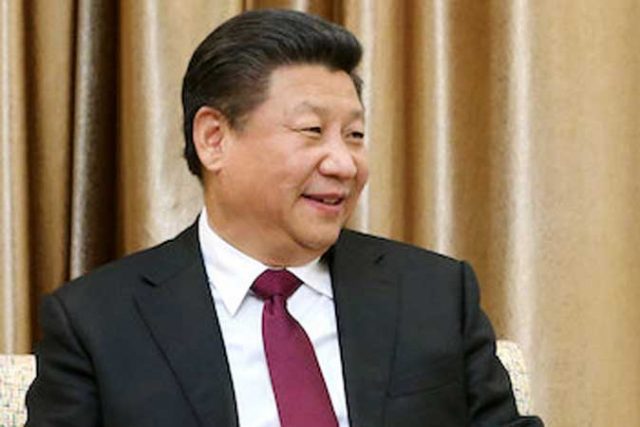
Chinese President Xi Jinping. — WIKIPEDIA.ORG

HONG KONG — Public opinion towards China in the United States and other advanced economies has turned “precipitously more negative” under President Xi Jinping, according to a global survey by the Pew Research Center.

Mr. Xi, 69, is widely expected to win a precedent-breaking third five-year term as leader at a Communist Party congress that begins in Beijing on Oct. 16, securing his status as China’s most powerful leader since Mao Zedong.

While China’s economic rise and investments were seen as a positive for some Latin American, Middle Eastern and African countries, economic competition with China was seen as a “serious problem” in advanced economies like Japan, South Korea, the United States and Australia, according to Pew.

The survey, published on Wednesday, found that unfavorable views of China in developed economies had hovered in a relatively narrow band between 2002–2017, before worsening amid concerns including human rights and military power, with some of the sharpest changes between 2019 and 2020, Washington-based Pew said.

The shift in opinion was triggered partly by perceptions of China’s handling of coronavirus disease 2019 (COVID-19), which emerged in the Chinese city of Wuhan in late 2019, as well as a trade war with the United States, aggressive foreign policy and a military buildup in the South China Sea.

In the United States, 82% of respondents this year expressed an “unfavorable opinion” of China, up from 79% in 2020.

The percentage of those who said they had “no confidence” in Mr. Xi to do the “right thing regarding world affairs” was 87% in South Korea in 2022, up from 29% in 2015. In Britain, the figure increased to 70% in 2022 from 44% in 2014.

“Across advanced economies, there is very little confidence in Xi’s handling of world affairs and very negative views of the country, overall,” Laura Silver, a lead author of the report, told Reuters.

Some of the consequences of the deterioration included a pivot by countries like Australia, Canada, Japan and South Korea towards increasingly favoring economic ties with the United States relative to China, she said.

While most respondents in North America and Europe said their countries should prioritize human rights in China above economic ties, a majority in Israel, Malaysia, Singapore, and South Korea said it was more important to strengthen economic relations with Beijing. — Reuters

ADVERTISEMENT
ADVERTISEMENT