Home Blog Page 5790

PLDT to DITO: Pay P430M for building transmission facilities

By Arjay L. Balinbin, Senior Reporter

THE PLDT group on Sunday said its demand of P429.7 million from DITO Telecommunity Corp. in relation to the construction of transmission facilities for the third telco player has nothing to do with the interconnection capacity issue.

“PLDT understands that [Smart Communications, Inc.] is unable to give DITO any additional bandwidth until DITO agrees to compensate Smart for illegal overseas call traffic that is coming from DITO and which defrauds Smart and the government of legitimate income,” PLDT, Inc. said in an e-mailed statement.

“This has nothing to do with DITO’s refusal to pay an overdue obligation to PLDT for transmission facilities that DITO has asked PLDT to build and which DITO has leased from PLDT and which, to repeat, DITO continues to use,” it added.

The company disclosed on Friday last week “DITO’s defaulted P430 million obligation owed to PLDT.”

According to DITO, “parties have initiated talks to amicably resolve this issue, but PLDT, in material breach of the dispute resolution mechanism under the parties’ agreement, still proceeded in pursuing this unreasonable claim.”

“Smart’s adamant refusal to augment DITO’s capacity (to interconnect with Smart’s subscribers) has to no small degree compromised DITO-SMART voice traffic, adding to the underutilization of the initial bandwidth capacity provided by Smart to DITO,” the third telco player said in a statement.

“Thus, DITO, in a series of letters to PLDT and prior to the delivery of the subject transmission facilities, informed the latter that the same are no longer needed,” it added.

PLDT described DITO’s response as confusing the public, as the third telco player was “referring to and mischaracterizing the issues involving DITO’s other unpaid obligations to Smart Communications, a separate company with a different agreement with DITO.”

“PLDT reserves all of its remedies in case DITO does not cure its latest major payment default within the applicable 30-day cure period, including the suspension or termination of services under the parties’ service agreement,” it added.

DEBTS PILING UP
To recall, Globe Telecom, Inc. has requested the National Telecommunications Commission to compel DITO to pay a P622-million fine for allegedly violating their interconnection agreement.

DITO previously filed competition complaints against the Ayala-led company and Smart of the PLDT group.

“As for DITO, their debts will keep on piling up until they take action. A possible plan is to sell some of Dennis A. Uy’s companies to pay off debt or maybe China Telecom can give a helping hand,” Mercantile Securities Corp. Analyst Jeff Radley C. See said in a phone message.

Terry L. Ridon, a public investment analyst and convenor of think tank InfraWatch PH, said that if DITO and the wider Udenna group are currently facing a cash crisis, it is their obligation to the public to make this specific disclosure, for lenders and the wider capital market to be able to help them at this time.

“It does not help their case to create various scenarios merely to buy more time to settle their obligations,” he added.

Mr. Ridon pointed out that other Uy-led businesses are also embroiled in the non-payment of outstanding obligations, “such as the ruling by a Batangas court allowing Lucio Tan-led Absolut Distillers to collect P157 million from Phoenix Petroleum Philippines for the latter’s non-payment of bioethanol.”

Hastings Holdings, Inc., a unit of PLDT Beneficial Trust Fund subsidiary MediaQuest Holdings, Inc., has a stake in BusinessWorld through the Philippine Star Group, which it controls.


MG Libis is brand’s 42nd Philippine dealership

MG Libis is located along E. Rodriguez Avenue in Quezon City. — PHOTO FROM MG PHILIPPINES

LIBIS is said to be a “progressive locale” within Quezon City, and MG Philippines has chosen the location for its newest dealership. Seen as an ideal site to “introduce the MG brand to an even wider audience,” MG Libis is located along E. Rodriguez Avenue, and measures 500 sq. m.

The dealership is also within close proximity of other major Metro Manila cities such as Marikina and Pasig, and is very near to the eastern province of Rizal. The dealership floor easily houses five display vehicles — of reasonable distance from one another for easy and convenient viewing by customers. MG Libis also features a fully loaded service bay with multiple hydraulic lifters, allowing the accommodation of more periodic maintenance service (PMS) appointments a day.

MG Philippines President and CEO Atty. Alberto B. Arcilla said, “The opening of MG Libis aligns with (the company’s) continuous effort to make the latest MG products and services accessible to even more Filipinos. These stylish, modern, British heritage MG vehicles are also attainable and fuel-efficient — qualities that set the brand apart as a stand-out option for consumers who are keen on making a responsible automobile purchase. The new MG Libis showroom and service facility, like every MG dealership in our 42-strong nationwide dealership network, offers a safe and easily-accessible venue where clients can feel at ease while experiencing the MG brand’s products and top-notch services.”

MG Libis is operated by Britannica United Motors, Inc. group, and joins the 42-strong MG Philippines nationwide dealership network. “With MG Libis, we are excited to service this dynamic locale in Quezon City and provide a modern, safe venue where clients can learn more about MG Philippines’ latest offerings,” stated Britannica United Motors, Inc. President Jan Andrew T. Po. “Libis is one of the most progressive locales not just in Quezon City but in the entire of Metro Manila, and MG Libis looks forward to showcasing these British heritage MG cars and SUVs to a young, upwardly mobile client base.”

MG Libis offers test drives of MG cars and SUVs, provides after-sales service to existing MG owners, and boasts a spacious dealership facility that exhibits the latest design language and functionality of global MG dealerships, consistent with other overseas MG markets such as Europe, Asia, Australia, the Middle East, and South America.

MG Libis is located at Lot 35 Block 11, E. Rodriguez Jr. Avenue, Bagumbayan, Libis, Quezon City. Its showroom and after-sales servicing is open from Monday to Saturday, 8:30 a.m. to 5:30 p.m. Only the showroom is open Sundays. For more information, contact 0931-889-6035 or e-mail sales.mglibis@grandcanyon.ph; or like the MG Libis official Facebook account, MGLibis.

The MG Philippines website is MGMotor.com.ph, official Facebook account is OfficialMGPhilippines, and Instagram account is mg_philippines.

Rescuing a weaving tradition from the brink of extinction

ARUGA HANDWOVENS’ Baby Wrap and Ring Sling

A MODERN woman is bringing back the ancient art of weaving to her ancestors’ land in Nueva Vizcaya.

We first met Jeannie Laccay at a standup comedy open mic by Filipino comedians, the KoolPals, where she cracked jokes about her past life as a flight attendant. If one digs even deeper into her past, one finds out that she’s half-Isinay (an indigenous people who reside in Nueva Vizcaya), and that those people have lost their weaving tradition.

According to Ms. Laccay, the last woven piece from the Isinay was produced in the 1970s. The last woman who wove in the community did not pass on her knowledge to her children. “Already dead,” Ms. Laccay said when asked whether the last weaver was still alive. Her children were still alive to tell Ms. Laccay that their mother did not pass on her knowledge due to a lack of interest in the next generation. All of the other weavers had died, and many Isinays migrated to the lowlands or to other countries.

Ms. Laccay had no idea about the heritage her people had lost. “What got me there is just because I wanted something for my baby and me,” she said during an interview on the sidelines of the preview of the Likhang Habi Fair last month. (See story on this page.)

Ms. Laccay had hopped on to the baby-wearing trend around 2018, but found that some of the slings available on the market were too stiff. Frustrated with her options, she taught herself how to weave through YouTube, of all places. She then contacted the Philippine Textile Research Institute (PTRI) to learn more about the craft. Asked if it was easy for small businesses like her to contact the institution for help, she said that she had shot them an e-mail first, and made inquiries several times. “Makulit ako eh (I’m very persistent).”

She then began weaving in her home around 2018. When she began, her mother (who was from Ilocos) said that the Isinay had once been known for their weaving. She founded her baby-wearing business, Aruga Handwovens, and has since expanded into other items from bags to neckties, and shoes. On that note, while “aruga” means “care” in Tagalog, she found out that the syllable “aru” meant “love” in Isinay.

The pandemic lockdowns in 2020 saw her and her family returning to Nueva Vizcaya, where she taught local women how to weave. She learned later, through a weaving workshop in Mountain Province, the more ancient art of ikat weaving. This is done on backstrap looms, and the yarns are dyed before weaving. Her method uses the more modern upright loom, and her yarns are already dyed.

The question of adaptation raises the question of authenticity. “How is it authentic? Because it’s made by an Isinay weaver,” she said. “It’s not because of the colors — no, it’s not that. What makes it authentic is the weaver who made it.”

One imagines the irony of having modern technology save a dying art form when it seems that modernity had been the culprit in its death in the first place.

“That’s the challenge that we’re facing right now. I have to bring back what the weavers used to do before,” she said in a mixture of English and Tagalog. Still, she said about the advantages of learning the craft online: “Everybody can learn, if you really want to.”

The loss of weaving within the Isinays will not be the first, or the last time, that an ancient art has been lost to the modern world. Rescuing cultural heritage isn’t a part of everybody’s normal workday. What then can normal citizens do to make sure it won’t happen again? “Awareness that there’s money in weaving. It’s not a luxury item or something that only rich people want,” she noted.

“It’s cloth. You can do anything with it.”

We noted that she wore a fashion-forward halter top — made with traditional weaving techniques. “Kung gawa kayo ng gawa, tapos makilala kayong Isinay (If you keep making, and it becomes known as Isinay), that’s when the demand comes in,” she said.

While we met Ms. Laccay while she was cracking jokes, her story seems to be a setup for an epic: modern girl goes back to her roots and pulls an ancient craft back from the very edge of oblivion. It seems to be a heavy task.

“I think it’s in my blood to be in this craft,” she said. “Maybe — I don’t know my purpose yet in this world, but I think it’s one of my purposes, especially for the Isinays,” she said.

“I’m half-Isinay and Ilocano. I’m more in touch with my Isinay roots. Maybe that’s my purpose: to bring back one of the traditions of the Isinay.” — Joseph L. Garcia

Baguio evaluating unsolicited proposals for city’s monorail

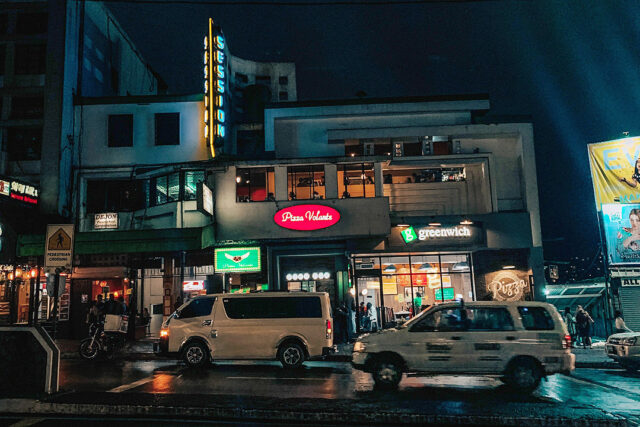
SESSION ROAD, Baguio City — JOHN LORENZ TAJONERA-UNSPLASH

THE Baguio City government is evaluating two unsolicited proposals for a monorail system project aimed at reducing traffic congestion and environmental impact, its mayor said.

“Affirmative,” Baguio City Mayor Benjamin B. Magalong told BusinessWorld in a phone message last week when asked if the planned monorail project would push through.

“We are in the process of evaluating two unsolicited proposals — Metro Global with BYD (Build Your Dreams) and SYSTRA Philippines,” he added.

Metro Global Holdings Corp. is a listed company involved in the Metro Manila Rail Transit Project, while BYD is a major Chinese automaker based in Shenzhen, China.

SYSTRA Philippines, Inc. is a transportation system and infrastructure consulting and design firm based in Pasig City.

To recall, Metro Global executed a memorandum of understanding with Baguio City in September 2021 for the purpose of conducting a feasibility study for the development of an intelligent public transport system that offers access to multiple transport options, including monorail, trolleybus, electric bus, and similar electricity-fed transport.

The plan is a “sustainable long-term strategy to urban mass transport management for Baguio City by easing traffic congestion, improving traffic management, minimizing environmental impact, and increasing benefits of transportation to the public in general,” Metro Global said in a disclosure to the stock exchange.

Baguio City’s Mr. Magalong signed an executive order in May establishing a technical working group that will facilitate the rollout of the low-carbon urban transport system project of the United Nations Development Programme and the Department of Transportation.

The project involves creating a “sustainable smart urban transport masterplan that will give the proper direction of the city in reducing traffic congestion and improving mobility, thereby improving the air quality in the city,” the order reads. — Arjay L. Balinbin

Fuso Modern PUVs to serve Cubao-Divisoria route

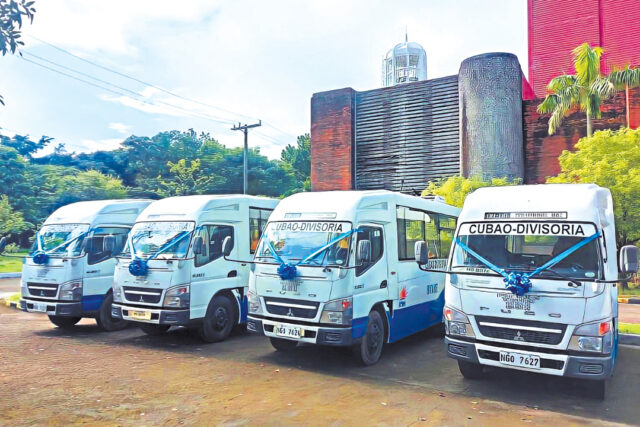
PHOTO FROM SOJITZ FUSO PHILIPPINES

SOJITZ FUSO PHILIPPINES (SFP) recently turned over four Canter Modern PUV Class 2 units to On-Us Solutions, Inc. The vehicles are expected to be deployed immediately as public transportation in the Cubao, Quezon City and Divisoria, Manila loop. This is the first time Fuso has involved itself in these areas. The partnership between SFP and On-Us Solutions was facilitated by Union Motor Corp.-Kalookan. The turnover happened at the UP Bahay ng Alumni in Quezon City, and the vehicles were specifically built based on the requirements set by the Philippine National Standards.

The Canter Commute is powered by a clean and fuel-efficient Euro IV-compliant 3.0-liter engine, said to deliver greater efficiency while reducing harmful emissions. The Commute is an air-conditioned Class-2 vehicle that can accommodate up to 30 passengers — three in the front (including the driver), 17 on side-facing seats, plus 10 standing.

Fuso modern PUVs are also equipped with accessories required by the Land Transportation Franchising and Regulatory Board (LTFRB), such as CCTVs and recorder, Wi-Fi, GPS tracking, LED route signage, and LCD monitor. Transport cooperatives can also choose their automated fare collection system based on their preferences.

“We believe we are changing the landscape of public transportation for the better. Byahe will bring convenience and safety to the riding public while contributing to a more organized and efficient transportation sector. We are also very thankful to Fuso for supporting the PUV Modernization Program,” said Byahe Co-founder Brian Cu.

The government’s vision is to make the public transportation safer and more comfortable for the Filipino people, thus, the turnover of Fuso Modern PUVs Class 2 to On-Us Solutions is a response to the administration in line with the PUV Modernization Program (PUVMP).

SFP expressed its willingness to contribute to the sustainable development of the program, while also offering efficient and well-equipped vehicles to support for customers’ business needs.

The HABI Fair returns onsite after two years online

AFTER successfully pivoting online because of the COVID-19 pandemic, the Likhang Habi Fair, which focuses on local weaving traditions, will go back onsite at Glorietta after a two-year hiatus.

“It’s exciting,” said HABI president Adelaida Lim about going live again. The fair will be held from Oct. 14 to 16 Glorietta Activity Center in Makati, and will feature more than 60 vendors from around the Philippines.

HABI: The Philippine Textile Council has been setting up the fair since 2009. During the pandemic, it had set up shop online, and is now currently selling some items and showing textile-related content on its website, www.habiphilippinetextilecouncil.com.

“That was a learning curve for us. A big one. But we thought it would be a good thing, to go into having a website. There’s so many things we had to learn,” Ms. Lim told BusinessWorld at the sidelines of the press preview for the fair on Sept. 22 in Makati.

While she could not give us exact sales figures, she did say that the website had constant activity. “That really helped the organization grow. Our reach was much wider — we became international overnight.”

Through sales, they not only help traditional textile weavers to earn money, but to help preserve important cultural heritage in the country. “It’s a big, big help, and that’s really the way to start preservation, to get people aware.”

Ms. Lim said that at the last Habi fair before the pandemic, they made P6 million in gross sales. “Just that experience, where you see interest in your product, the more you’ll create,” she said about the participating weavers.

Aside from the commercial aspect, the fair will also feature two competitions: the annual Lourdes Montinola Piña Weaving Competition and, starting this year, the Eloisa Hizon Gomez Abaca Competition.

Among the vendors in this year’s fair are Abek Home & Culture, Abre Linea, Accelerate Sulu, Adante Leyesa, Aishe Fashion, Angie’s Yakan Handloom Weaving, Anihan sa Ibaan, Aruga Handwovens, Balud Craft, Bicol Sweetgrass Handicrafts, Camisa Amana, Cariñosa, Casa Garcia, Coco & Tress, Crafted Pilipinas, Creative Definitions, Ditta Sandico, En Barong Filipino, Gifts and Graces, Habi, Helena Alegre Sculptural Jewelry, Idyllic Summers, Ifugao Nation, Iraya Mangyan Art, Jor-El Espina, Kalinga Weaving, Kaya Mana PH, Knitting Expedition, La Bonne Vie, La Herminia, Lakat Sustainables,  Local Home + Art + Fashion, Mabaysay,  MCV Designs, Milvidas, Monica Madrigal, Narda’s Nina Abel, Pidayit, Piesa,  Pina Seda Primera, PNay, Provenciana, Raquel’s Piña Cloth Products, Ruby Roa with Lila Lifestyle, Rurungan Collective, Siegrid Bangyay Pottery, Silahis Arts and Artifacts, Style Isle, Tadeco Home, The Manila Collectible Co., Tinampuso, Tuwas Yakan Weavers, WeaveManila Inc., Woven, WVN Living, and WYC Wear Your Culture.

On a more personal note, we asked Ms. Lim about the advantages of wearing handwoven textiles. “When I wear something handwoven, I always feel more secure. It’s very assuring.”

For more information about HABI: The Philippine Textile Council, call 0921-849-6974 or e-mail support@habiphilippinetextilecouncil.com. — Joseph L. Garcia

North Star, Alfamart plan community-based meat shops

NORTH STAR Meat Merchants, Inc. said it is planning to work with Alfamart to convert some of the latter’s convenience stores to community-based meat shops.

“We’re going to take the fight to the wet market at a community level. We’re tinkering and tweaking 12 branches and converting those to community-based meat shops,” North Star Chief Executive Officer Anthony Ng said in an interview.

He said the partners “want to transform Alfamart from a convenience store to a mini meat shop.”

The project will be rolled out to the majority of Alfamart branches once the firm has finished the testing and data gathering from the initial 12 stores.

“We want to convert 1,000 stores to mini meat shops by bringing the talipapa (wet market) to the community level in a safe and compliant fashion,” Mr. Ng said.

North Star is eyeing to prioritize Alfamart’s top branches in the greater Manila area.

“This is very revolutionary. [It will have] proper facilities, aircon, freezer, the chiller — it will be very compliant. The meat will be pre-packed in a vacuum seal, ready to cook, designed for the common Filipino household,” Mr. Ng said.

“We have the technology and storage. We have a very progressive way of doing our inventories. Because of how we do things, we are able to provide prices at par or lower than the wet markets,” he added.

The meat retailer last week announced that it inaugurated its solar energy project in Guiguinto, Bulacan with WEnergy Power Pilipinas, Inc.

North Star is an end-to-end fresh frozen meat retailer and operates in SM Markets, WalterMart, and Alfamart across the Philippines.

Its cold storage facilities in Bulacan and Cebu have a capacity of 8.09 million kilograms and can deliver up to 120,000 kilograms of meat daily.

North Star has also invested more than P1.8 billion worth of assets, including cold storage, a meat cutting-processing plant, and in-house equipment fabrication and motor pool facility. — Luisa Maria Jacinta C. Jocson

Changan vehicles offered with flexible payment options

IMAGE FROM CHANGAN PHILIPPINES

CHANGAN PHILIPPINES extends its “Flex in the City” campaign, which allows customers to acquire a Changan model at “best-ever” prices, along with a choice of flexible payment options.

The Changan Alsvin 1.4L 5MT is offered at P65,000 off (SRP P629,000), P70,000 off on the 1.5L 5DCT variant (SRP P689,000), and P80,000 off on the 1.5L 5DCT Platinum trim (SRP P739,000).

Changan Philippines lops off P101,000 the price of the Changan CS35 Plus 1.4L 7DCT-Lite variant (SRP P999,000), P120,000 off on the 1.4L DCT Hype variant (SRP P1.149 million), and P110,000 off on the 1.4L 7DCT Luxe variant (SRP P1.169 million). The Changan CS75 Plus is now available at P105,000 off (SRP P1.379 million).

Low down payment offerings are available as follows: Alsvin 1.4L 5MT (P23,830), 1.5L 5DCT (P26,030), and 1.5 L 5DCT Platinum (P22,030); CS35 Plus Lite (P32,230), Hype (P31,230), and Luxe (P43,630); and CS75 Plus (P77,580).

Changan Philippines also extends “stress-free” amortization plans with 50% down payment: Alsvin 1.4L 5MT (P314,500 DP + P6,174 monthly), 1.5L 5DCT (P344,500 DP + P6,783 monthly), 1.5L DCT Platinum (P369,500 DP + P7,193 monthly); CS35 Plus Lite (P499,500 DP + P9,843 monthly), Hype (P574,500 DP + P11,257 monthly), and Luxe (P584,500 + P11,654 monthly).

For the CS75 Plus: P689,500 DP + P14,160 monthly.

For the low down payment options, the company bundles these perks in: one-year comprehensive motorcar insurance, three-year LTO registration, chattel mortgage, and tint, floor mats, and seat covers. Details are available on www.changanphil.com or ChanganPhil on Facebook.

Paris Fashion Week: Chanel evokes cinematic glamor, McCartney pushes animal-free fashion, L’Oreal focuses on skin, hair

A SCREENSHOT from L’OREAL paris fashion show — LOREALPARIS.COM

PARIS — Chanel creative director Virginie Viard added a streak of Old Hollywood glamour to a slinky collection for spring and summer, sent down a catwalk lined with enormous screens projecting dreamy, black-and-white images of formal gardens and plush interiors. (See the show here: Spring-Summer 2023 Ready-to-Wear — CHANEL Shows ).

One of the largest labels to hit the runway for Paris Fashion Week, the show was held on the final day of events that have drawn crowds from abroad, marking the luxury industry’s strong return from pandemic disruptions.

The audience sat in a darkened space that lit up when a short film began. It starred Kristen Stewart, who sat in the front row with South Korean singing star Jennie Ruby Jane.

“The mythologies that define us, that unite us, they’re ours to create,” said Stewart, in the film that showed her posing in the Paris metro and walking on an empty cobblestoned street at night.

“Everything is on the table.”

Models marched around the room on a carpet of black sand that felt squishy underfoot, wearing sparkly, low-heeled boots and shoes, paired with matching socks pulled up over the calves.

Garments were elevated, with the lineup segueing from tweed minidresses and loosely-fitting suits to shimmery gold gowns and sweeping, airy skirts.

The designer went light on accessories, with just a few handbags and sparse use of the label’s signature gold chains, but added touches of sparkle and tufts of feathers to other looks.

STELLA MCCARTNEY
Stella McCartney sat her audience outdoors in a courtyard of the Centre Pompidou on Oct. 3, sending out a sensual lineup of fluid dresses and smart, low-waisted trousers, accessorized with handbags made from a leather alternative. (See the show here: https://www.stellamccartney.com/us/en/).

“We are proud to be eco-weirdos, and hope you will join us in our mission to end the needless deaths of animals for fashion,” Ms. McCartney wrote in show notes, detailing environmental costs related to using hides like water use, Amazon deforestation, and carcinogenic tanning chemicals.

Pressure continues to mount on fashion labels to improve their environmental credentials, particularly with younger generations who are increasingly embracing second-hand clothing.

A model in flaming red hair marched down the runway with an ivory sweater dotted with holes and slightly unraveled at the hem — stamped with the message “Change the history,” in red letters.

Jeans also had tattered hemlines, and patches of vegan leather for a chaps-like effect, but otherwise the collection was highly polished, with satin asymmetric dresses and smart suits in bright colors.

Models crisscrossed the courtyard on paths in yellow, red or blue, in front of the modern art institution’s facade of jumbled pipes.

The audience extended beyond the fashion set, and included artist Jeff Koons, former basketball star Tony Parker, and actor Jerry Seinfeld, while the designer’s father, Paul McCartney, sat next to LVMH chairman and Chief Executive Bernard Arnault and his clan.

Considered a trailblazer in eco-friendly fashion, Ms. McCartney shunned leather early on in her career, establishing her brand in 2001 as leather-free.

Her brand joined LVMH in 2019, brought on to help steer an acceleration of the group’s efforts on the environmental front.

The label added a vegan line of skincare products over the summer.

L’OREAL
L’Oreal Paris sent a pack of models and dancers down a giant runway in the center of the French capital on Oct. 2, throwing the spotlight on its hair and beauty products in a star-studded show that was beamed around the world on digital channels. (Watch the show here: https://www.lorealparis.com.ph/ ).

“A fashion show is a nice way to show what we know how to do with hair coloring and makeup,” Delphine Viguier-Hovasse, global brand president of L’Oreal Paris told Reuters in an interview.

Models including Camille Emilie Razat, Nikolaj Coster-Waldau, Eva Longoria, Gemma Chan, and Soo Joo Park sashayed down the catwalk, blowing kisses and twirling for photographers.

Andie MacDowell had sparkling eye makeup and a glittering, feather-lined dress, while Coco Rocha donned a slick, electric green mini-dress with matching boots, her bob cut straight.

Part of the L’Oreal group, which also owns Maybelline and Lancome, the label sits in the accessible luxury range, selling products spanning shampoo to more sophisticated skin treatments, costing from around €2.50 and to around €35.

Members of the public were invited to the event, which was also shown on digital channels including Instagram, where it counts 10 million followers, and TikTok.

“It is obvious that TikTok is a digital platform that carries an enormous amount of weight with young people because it’s a video platform — and we know that video is the format that is most watched,” said Viguier-Hovasse.

The L’Oreal group has been benefitting from a strong, post-pandemic rebound in demand for beauty products. — Reuters

Davao Food Terminal targets stronger farm-to-consumer link

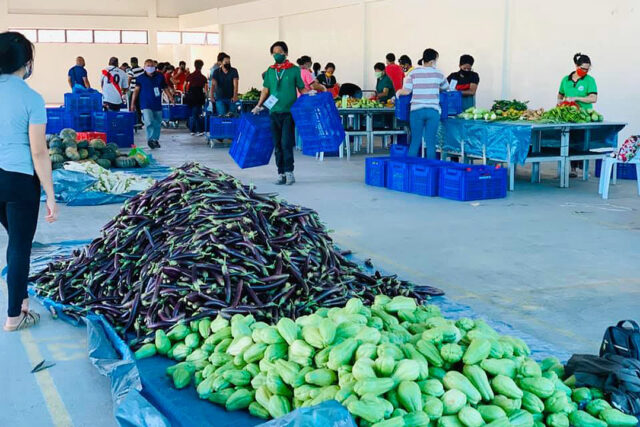
DAVAO CITY AGRI OFFICE

THE Davao Food Terminal Complex, which is due to start operating on a 24/7 basis on Oct. 18, will help link producers and consumers more directly, improving the supply-demand balance for agricultural goods, Davao City’s head agriculturist said.

“Our farmers will really know the current prevailing price in the market, price for retailing, for wholesale, and ultimately the farmgate price,” City Agriculturist Edgardo A. Haspe said last week over the city-run radio program.

The center, located in Toril, will serve as delivery and selling point for all produce from the city’s upland areas of Marilog and Paquibato as well as the neighboring towns in Davao del Sur and as far as Bukidnon.

Other farmers within Davao City can still bring their commodities to the retail markets over the next 12 months.

After the one-year transition period, all farm output will be directed to the food complex. 

“We are conducting meetings with our farmers associations, agricultural cooperatives for our production planning and even clustering so we can determine what specific type of vegetable or produce they can plant at specific periods to prevent a surplus so that prices will not go down,” Mr. Haspe said.

“The hospitals, hotels, and restaurants can get at the food terminal what they need,” he added. 

The P70-million trading hub, which sits on five hectares, will also have eight refrigerated containers, with four currently ready for operations.

Food processing facilities are also being planned with assistance from the Department of Science and Technology.

New public transport franchises will be issued for the area. Farmer and fisherfolk cooperatives have also been receiving cargo vehicles through the Philippine Rural Development Program and other such initiatives to allow direct delivery of their produce.

The city government will initially be managing the terminal but Mr. Haspe said the long-term plan is to turn over operations to cooperatives. — Maya M. Padillo

Senate set to review Razon takeover of Malampaya field

BW FILE PHOTO

THE SENATE is set to review the Energy department’s approval of the sale of the 45% stake of Shell Philippines Exploration B.V. (SPEx) in the Malampaya deepwater project to a subsidiary of Razon-led Prime Infrastructure Capital, Inc. or Prime Infra.

Senator Sherwin T. Gatchalian told reporters on Friday that the Senate will have to evaluate how the Department of Energy (DoE) arrived at its decision to approve the sale.

“I will file a resolution to review the approval of the DoE,” Mr. Gatchalian said, adding that lawmakers need “to check all the aspects, all the technicalities, in the spirit of transparency.”

On Oct. 3, the DoE said that Prime Infra was found to be technically, financially, and legally qualified to be the operator of the Malampaya gas-to-power project.

The DoE said that because of its approval, SPEx will become a wholly-owned subsidiary of Prime Infra.

SPEx as a unit of Prime Infra will continue to operate Service Contract (SC) 38, which covers the Malampaya project located northwest of Palawan Island in the West Philippine Sea.

State-led PNOC Exploration Corp. has a 10% stake in the Malampaya gas field, with UC38 LLC holding the other 45%. Prime Infra previously said that before the DoE approval, the SC 38 consortium members had given their consent to the sale.

“We will need to review it. We need to evaluate how the DoE approved it,” Mr. Gatchalian added.

In a statement, the department said that its review showed the need to maximize the utilization of the existing petroleum resources in Malampaya.

The DoE said that Malampaya supplies up to 20% of Luzon’s total electricity requirements but the consortium’s license for the project is set to expire in 2024.

Prime Infra said that it will assume full ownership of Malampaya on Nov. 1, after the transition process for the handover of SPEx’s operation is completed. — Ashley Erika O. Jose

Rates of T-bills, T-bonds may rise on BSP bets

BW FILE PHOTO

RATES of government securities on offer this week could climb further as the market prices in another rate hike from the Bangko Sentral ng Pilipinas (BSP) after inflation reached a fresh peak last month.

The Bureau of the Treasury (BTr) will offer P15 billion in Treasury bills (T-bills) on Monday, made up of P5 billion each in 91-, 182-, and 364-day debt papers.

On Tuesday, it will auction off P35 billion in fresh seven-year Treasury bonds (T-bonds).

A trader sees T-bill and T-bond yields moving higher at this week’s auctions following the higher consumer price index (CPI) print for September.

“Ultimately, the market will start pricing in BSP’s next move, which could be another 50-basis-point (bp) hike come November, or maybe even earlier,” the trader added.

The trader expects T-bill yields to go up by 25 to 50 bps from the last successful award, while the average rate of the fresh seven-year paper could range between 7% and 7.25%.

Rizal Commercial Banking Corp. Chief Economist Michael L. Ricafort likewise said T-bill and T-bond yields may rise slightly as latest inflation data would support further rate hikes from the BSP.

The $2-billion global bond sale by the National Government might be an offsetting positive factor, Mr. Ricafort added in a Viber message, as it “reduces the government’s need to borrow domestically, thereby avoiding the crowding out of other private borrowers in the domestic market.”

The government last week raised $2 billion from its second dollar bond issuance of the year, comprised of five- and 10.5-year bonds, as well as 25-year sustainability bonds.

Meanwhile, UnionBank of the Philippines, Inc. Chief Economist Ruben Carlo O. Asuncion said he expects significant demand for the seven-year debt paper if the BTr accepts bids between 6.8% and 7%, with the market also monitoring the US Federal Reserve’s next move.

Philippine headline inflation picked up to its fastest pace in more than 13 years in September due to higher food costs.

The CPI was at 6.9% last month, up from 6.3% in August and 4.2% in the same month last year. It matched the 6.9% print in October 2018 and was the fastest since the 7.2% pace logged in February 2009.

The September print marked the sixth straight month that inflation breached the central bank’s 2-4% target for the year.

For the first nine months, headline inflation averaged 5.1%, faster than the 4% seen in the same period last year but below the BSP’s 5.6% forecast for 2022.

The Monetary Board has so far raised borrowing costs by 225 bps since May. Its next policy-setting meeting will be on Nov. 17.

Meanwhile, the US central bank has raised borrowing costs by 300 bps since March, with Fed chief Jerome H. Powell earlier saying they are strongly committed to bringing down inflation and may need to keep rates high for longer to achieve this goal.

At the secondary market on Friday, the 91- 182- and 364-day T-bills were quoted at 3.1811%, 3.65%, and 3.8471%, respectively, based on the PHP Bloomberg Valuation Service Reference Rates published on the Philippine Dealing System’s website.

Meanwhile, the seven-year bond fetched a yield of 6.7463%.

Last week, the Treasury rejected all bids for its offer of T-bills, with demand only reaching P14.2 billion, below the P15 billion on the auction block. 

Broken down, the Treasury turned down all bids for the 91-day T-bills even as total tenders for the tenor reached P5.78 billion, above the P5-billion plan. Had the Treasury made a full award, the three-month debt paper would have fetched an average rate of 4.66%, surging by 234.2 bps from the 2.318% seen for the last successful award of the tenor on Sept. 5.

The BTr also rejected all tenders for the 182-day securities, with total bids coming in at P4.78 billion, lower than the programmed P5 billion. For a full award, the average rate of the six-month T-bill would have gone up by 94.40 bps to 4.902% from the 3.958% quoted for the tenor at the Sept. 27 auction.

Lastly, the government did not award any 364-day debt papers as demand stood at only P3.678 billion, below the P5-billion offer. Had the Treasury accepted these bids, the average yield on the one-year T-bill would have jumped by 115.5 bps to 4.937% from the 3.782% fetched for the tenor when they were last awarded on Aug. 22.

The BTr wants to raise P200 billion from the domestic market this month, or P60 billion through T-bills and P140 billion via T-bonds.

The government borrows from local and external sources to help fund a budget deficit capped at 7.6% of gross domestic product this year. — Diego Gabriel C. Robles

ADVERTISEMENT
ADVERTISEMENT