Home Blog Page 5783

Japan PM Kishida poised to consolidate ruling party power as Shinzo Abe mourned
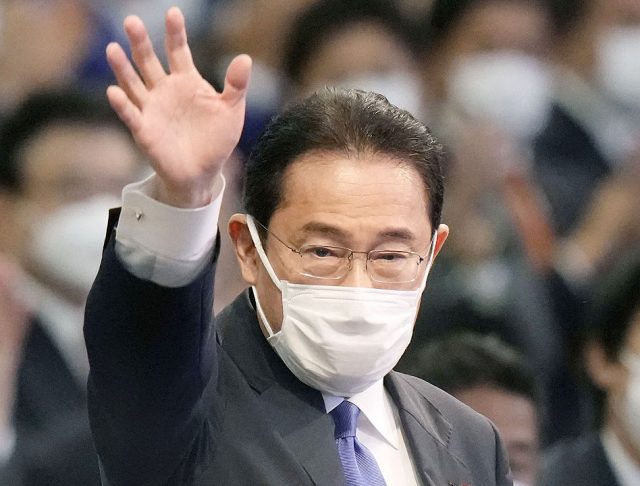
Japanese Prime Minister Fumio Kishida — KYODO/VIA REUTERS

TOKYO/NARA — Japanese Prime (PM) Minister Fumio Kishida looked set to consolidate authority within his ruling party after a strong election result virtually ensured him three more years as premier, even as the party mourned the killing of leading power broker Shinzo Abe.

The ruling conservative coalition, led by Kishida’s Liberal Democratic Party (LDP), extended its majority in the upper house of parliament just two days after Abe, Japan’s longest-serving prime minister before resigning in 2020, was gunned down while giving a campaign speech.

The crime stunned a nation where gun violence is extremely rare, setting off a wave of mourning that included a visit by US Secretary of State Anthony Blinken on Monday to offer condolences on behalf of President Joseph R. Biden.

“I shared with our Japanese colleagues the sense of loss, the sense of shock that we all feel — connected people feel — at this horrific tragedy,” he said at the end of the brief stopover, which included a meeting with Mr. Kishida.

“But mostly, I came at the president’s behest because more than allies, we’re friends. And when a friend is hurting, other friends show up.”

The LDP and its junior partner Komeito won 76 of the 125 seats contested in the chamber, up from 69 previously. The LDP alone won 63 seats, up from 55, to win a majority of the contested seats, though it fell short of a simple majority on its own.

With no elections set for another three years, Mr. Kishida has gained unusually large breathing space to attempt to implement an ambitious agenda that includes expanding defense spending and revising Japan’s pacifist constitution — a long-held dream of Abe’s before ill health led to his resignation in 2020.

Abe led the largest faction within the LDP, and analysts said his death could lead to potential turmoil within the party that might challenge Mr. Kishida’s control.

Asked about constitutional revision on Sunday evening, Mr. Kishida said he would focus on putting together a bill to be discussed in parliament.

What would normally have been a celebratory mood at LDP headquarters on Sunday night turned sombre. A moment of silence for Mr. Abe was offered in his memory, and Kishida’s face remained grim as he pinned rosettes next to winning candidates’ names on a board in a symbol of their victory.

Chief Cabinet Secretary Hirokazu Matsuno said on Monday flags would be flown at half-mast for Mr. Abe, whose wake was set for Monday and his funeral for Tuesday.

As the nation grappled to come to terms with the killing, authorities continued their investigations into the suspect, 41-year-old Tetsuya Yamagami, who was arrested at the scene in Nara, western Japan.

The Nara prefectural police said on Monday the suspect had told them that on the morning of the day before the shooting he had test-fired the apparently home-made weapon used to attack Abe outside an unidentified organization’s building in Nara prefecture.

The suspect told police he spent months planning the attack, accusing the former prime minister of links to a religious group he blames for his mother’s financial ruin, according to Japanese media. — Reuters

‘We’re not the devil’: France Inc. grapples with new political order

A VIEW of the Eiffel Tower in Paris, France, Nov. 28, 2015. — REUTERS

AIX-EN-PROVENCE, France — France’s business elite is grappling to live with a new more hostile political order a month after far-right and hard-left parties robbed President Emmanuel Macron’s government of its control of parliament.

The country’s corporate leaders, who were gathered for an annual business conference in southern France, spent the last five years safe in the knowledge that Macron’s government could push its pro-business reform agenda largely unobstructed.

Not only can Macron’s government no longer expect parliament to rubber stamp its plans, but opposition parties are impatient to wield their new power to substantially rewrite its proposed legislation.

A chief executive officer (CEO) at one of France’s largest industrial companies said that they had contact with some of the new lawmakers and meanwhile were paying closer attention to legislation in the pipeline.

“We are going to have to explain to a lot of new people in parliament that we are not the absolute devil and that we do some good things,” the CEO told Reuters during a break at France’s answer to the Davos forum.

With the anti-capitalist France Insoumise (France Unbowed) part at its head, the leftwing Nupes alliance is particularly eager to flex its new-found muscle in parliament.

The far-right Rassemblement National (National Rally) has yet to indicate how obstructive it intends to be. It also remains to be seen whether Macron’s party can win cooperation from the conservative Les Republicains.

Meanwhile, memories of large-scale “yellow vest” street protests and violence in 2018 remain seared in ministers’ minds, leaving the government eager to avoid the possibility of adding a political crisis to a cost-of-living crisis.

That means the government and the public finances are vulnerable to pressure to ease households’ inflation pain with costly new measures to support their incomes, said Paul Hermelin, chairman of French IT consultancy Capgemini.

“Let’s not downplay the fact that the results of the recent elections have created a chaotic situation with a very combative leader on the left,” he said.

“That can lead the government to make salary concessions in order to avoid strikes,” he said.

Mr. Macron’s government has already aggressively rolled out inflation relief, most recently with a new 20 billion euro ($20.4-billion) package of measures ranging from a 4% hike in welfare and pension benefits and 3.5% salary hike for civil servants.

While some companies seek to build bridges with opposition parties, others are counting on their public support eroding away as the voters who elected them come to the conclusion that their most radical promises cannot be implemented.

“I told the prime minister, we are in a outlandish situation … But the French will realize the futility of what they’re being told,” the chairman of another French industrial company told Reuters.

Meanwhile, other business leaders were confident that the political imperative of getting laws passed in the middle of a cost of living and energy crisis would force more radical parties to back down.

“There’s parties in parliament with more drastic positions than others, and they’re just going to have to learn to be responsible,” the chairman of a major French company said. — Reuters

S. Korea’s Yoon suspends informal media briefings, citing COVID

South Korean President Yoon Suk-yeol. — REUTERS

SEOUL — South Korea’s president will suspend informal media briefings that he has held nearly every day since taking office in May, his office said on Monday, citing rising numbers of COVID-19 infections as a survey showed a fall in his approval ratings.

The end of the free-wheeling briefings, which broke with years of tradition as President Yoon Suk-yeol sought to step up transparency, also comes amid growing questions over scandal and party turmoil.

Mr. Yoon’s approval ratings stood at 37%, pollster Realmeter’s survey showed on Monday, down from more than 52% in the first week of June, while 57% now disapproved of his performance.

In its statement, Mr. Yoon’s office said other coverage of the president would also be limited, with spokespersons switching to mainly written comments, along with photographs and videos of his events, rather than holding in-person briefings.

“In view of the vulnerability to the spread of infectious diseases, we ask for your understanding,” it added.

Health authorities have warned the country is facing a new wave of infections, with some experts predicting hundreds of thousands of new cases in coming weeks.

Monday’s 12,693 new COVID-19 infections took South Korea’s tally to 18,524,583, with 18 deaths for a toll of 24,661 since the pandemic began.

After holding down infections and deaths for much of the pandemic with strict tracing, tracking and quarantine measures, the country dropped most curbs this year despite a huge wave of Omicron-variant infections.

Scandal has cost Mr. Yoon two nominees for a single ministerial position, a first in South Korea’s history, and ethics questions have plagued several other picks for top office.

On Friday, his conservative People Power Party (PPP) was forced to suspend its leader Lee Jun-seok, 37, over accusations of sexual misconduct in 2013.

Mr. Lee has denied the allegations, vowed to appeal the suspension, and accused the party of using him for political gains, saying it waited until after the March election to look into punishing him.

His election last year as the youngest head of a major party in the country’s history was seen as a bid to woo young people concerned over rising home prices, graft and the risk of being disadvantaged by government policies to benefit women.

Mr. Yoon’s popularity has taken a particular hit among young people, with approval from just 30.9% of those in their 20s, the survey showed. — Reuters

On Tinder, Gen Z singles prefer ‘simple dates’

Ivan Radic/Flickr/CC BY 2.0

DETERMINED to curb the loneliness that set in during the pandemic, 24-year-old Manila-based graphic designer Diane put time and effort into meeting people via dating apps, having conversations over chat, and eventually going on dates IRL (in real life). 

“Though I was happy making friends in Tinder and Bumble, I knew that I really wanted to find someone for a serious relationship. I have friends who were able to do it,” shared Diane, who gave only her first name, via direct message on discussion site Reddit.  

After two years in a pandemic, young daters have come to prefer flexible and practical modes of communication and bonding. For Diane, who’s in a serious talking phase with someone she’s dating, affection comes in the form of streaming a movie, playing a game while on voice call, or having food delivered to the other’s doorstep. 

Gen Z Filipinos are now developing a new dating style and veering away from traditional conventions and expectations, according to dating app Tinder, which conducted a survey in the Philippines with users aged 18 to 25 years old. 

“They factor in many considerations in their dating choices, and their preferences reflect their lived experiences and pop culture influences as diverse as Hallyu Wave to Hollywood,” said Papri Dev, Tinder’s senior communications director for Asia Pacific, at a July 1 roundtable that presented the survey’s insights. 

“I think what we’re seeing is they’re not just fluid about their own identity and sexuality, but they’re also open to many different kinds of relationships,” she explained. 

SIMPLE YET MEANINGFUL
Tinder’s survey found that 73% of Filipino young adult daters prefer simple dates like grabbing coffee or strolling in urban spots, with food dates coming in second and movie dates coming in third.  

Still, over 60% said they can create meaningful connections with someone through virtual dates, with many claiming they can tell the connection is genuine via video call. 

Ms. Dev explained: “They find joy in doing simpler activities for their dates and meeting new folks with similar interests that our newest feature Explore is based on with sections on Foodies, Coffee Date, Thrill seekers and so on.”  

Tinder’s Explore feature is a way of helping the 56% who don’t like making the first move and the 43% who feel awkward doing so. 

The latest upgrade will allow our members to tag up to 20 interests in their profiles. 

And when it comes to showing interest, Gen Z daters employ techniques across the board: 78% will frequently message through chat, 59% will ask out their matches to spend more time with them, while 57% send memes, stickers, and GIFs.  

Most importantly, 86% of young Filipinos shared that they are looking for “the one” or, at the very least, a long-term relationship. 

This is the same for Diane, who told BusinessWorld: “Over the pandemic I started to see that it’s not just me and my friends. There’s really a growing number of Filipino women my age who are hopeful about meeting someone meaningful online.” 

She also echoed the recent insights of dating app Bumble, which found that 73% of Filipinos value respect and equality in long term relationships. Over half (63%) of women in particular even said it’s important to address equality early in dating. 

“It’s really a priority nowadays that both parties are not just compatible and open with each other and having fun, but also very respectful and aware of each other’s needs and wants,” Diane said. — Brontë H. Lacsamana

Kiribati’s shock withdrawal overshadows Pacific leaders meeting

PACIFIC ISLANDS FORUM/FORUMSEC.ORG

SUVA, Fiji — The withdrawal of the remote Pacific island nation of Kiribati from the region’s key diplomatic group has overshadowed the Pacific Islands Forum as leaders arrive in Fiji for the first in-person meeting in two years. 

Pacific island leaders will discuss how to gather more international support and funding to fight the impact of rising sea levels and climate change during their July 11–14 meeting, as well as China’s ambitions for greater security ties across the region. 

China’s security deal with the Solomon Islands, and a bid by China to sign a broader regional trade and security deal with 10 nations that recognize China, but is opposed by some forum members, was also to be discussed. 

Tuvalu Foreign Minister Simon Kofe said he was surprised and saddened by the news of Kiribati’s withdrawal and Pacific leaders would need to “look at the concerns raised by Kiribati” when they meet. 

Foreign ministers from 16 South Pacific nations had agreed to keep talking to Kiribati, which is seen as being close to Beijing, to “emphasize the strength of the Pacific family”, notes from a meeting held by ministers on Friday show. 

“Many of us around the table were not fully aware of the extent Kiribati was moving towards withdrawing from the forum,” Mr. Kofe told Reuters in an interview on Monday in Suva. 

“It is disappointing … It is now up to the leaders to find a way forward,” he added. 

Kiribati President Taneti Maamau said in a letter his country would withdraw from the Forum because it did not agree with forum secretary-general Henry Puna continuing in the role, nor other terms of a deal brokered weeks ago to solve a rift between Micronesian states and other Forum members. Kiribati also wanted the meeting delayed. 

“Kiribati has taken the sovereign decision to withdraw from the Pacific Island Forum with immediate effect,” said a letter from Kiribati to the forum secretariat, circulated to several Pacific media outlets on Sunday. 

The Kiribati president’s office did not respond to a request for comment and forum secretary general Puna has not commented. 

A key forum leaders retreat will be held on Thursday. China had proposed a video meeting between the Chinese Communist Party’s international office and 10 Pacific islands on the same day. 

Mr. Kofe said the “geopolitical competition and tug of war that we are seeing right now between China and the US” had been discussed in Friday’s meeting, and ministers had said “the Pacific really needs to define their future themselves and the terms in which we will engage China and the US.” 

He said climate change was the major issue, and must be a collective focus. — Reuters

Macau shuts all its casinos to curb COVID, gaming shares plunge

BRENDEN BRAIN/CC BY-SA 3.0/WIKIMEDIA COMMONS

HONG KONG — Macau shut all its casinos for the first time in more than two years on Monday, sending shares in gaming firms tumbling as authorities struggle to contain the worst coronavirus outbreak yet in the world’s biggest gambling hub. 

The city’s 30-plus casinos and other businesses will shut for one week and people were ordered to stay at home though short trips for essential services were allowed. 

Police will monitor flows of people outside and stringent punishments will be imposed for those who disobey, the government said. 

Although many casinos have been effectively closed for the past three weeks with only minimal staffing allowed, the more drastic measures hit investor confidence hard. Some analysts predicted that any recovery in gaming revenue might not happen until the end of the third quarter or during the fourth quarter. 

“We would probably need to write-off July and likely August as well from the models,” said DS Kim, an analyst at J.P. Morgan. 

Shares in Sands China plunged 9%, while shares in Melco International, Wynn Macau, SJM , Galaxy, MGM China dropped between 6% and 7%. 

Macau has recorded around 1,500 COVID-19 infections since mid-June. Around 19,000 people are in mandatory quarantine as the government adheres to China’s “zero-COVID” policy that aims to stamp out all outbreaks, running counter to a global trend of trying to co-exist with the virus. 

More than 30 zones in the city that have been deemed high risk are now under lockdown, meaning no one is allowed to enter or exit for at least 5 days. While the government said it was not imposing a citywide lockdown, the stringent measures mean Macau is effectively closed. 

Casinos were last shut in Macau in February 2020 for 15 days. The government has previously been hesitant to close casinos due to its mandate to protect jobs. The industry employs most of the population directly and indirectly and accounts for more than 80% of government revenues. 

Frustration is mounting at the government’s handling of the outbreak. Fights have broken out at testing centers while some residents have had to queue for more than 20 hours to access healthcare facilities. 

Residents will be required to take part in mass COVID-19 tests four times this week. They have already been tested six times since mid-June and are expected to do rapid antigen tests daily. 

More than 90% of Macau’s 600,000 residents are fully vaccinated against COVID-19 but this is the first time the city has had to grapple with the fast-spreading Omicron variant. 

Authorities have added two hotels in popular casino resorts to be used as COVID medical facilities as they try to increase capacity to handle the surge of infections. — Farah Master/Reuters

[B-SIDE Podcast] The five challenges to Philippine competitiveness

Follow us on Spotify BusinessWorld B-Side

Switzerland-based International Institute for Management Development (IMD) recently announced that the Philippines improved four spots in its 2022 World Competitiveness Yearbook.

Based on the 2022 version of the report, the country ranked 48th out of 63 economies, climbing up from 52nd place out of 64 economies in 2021.  

IMD looked at the competitiveness of the Philippines via 333 indicators categorized under four factors: economic performance, government efficiency, business efficiency, and infrastructure. The Philippines ranked higher in economic performance (53rd) and in infrastructure (57th), but went down in government efficiency (48th), and business efficiency (39th).   

Despite the improved ranking, IMD World Competitiveness Center Chief Economist Christos Cabolis tells BusinessWorld reporter Revin Mikhael D. Ochave that the Philippines in 2022 faces five key challenges, as provided by the Asian Institute of Management Rizalino S. Navarro Policy Center for Competitiveness.

TAKEAWAYS

The challenges, as explained by Mr. Cabolis in this B-Side episode, are:

Implementing effective post-pandemic economic recovery strategies while strengthening fiscal responsibility. 

“It is the provision of liquidity. Rightfully, the years of the pandemic create the necessity to try to balance that. We try to balance that in two ways. First is to phase out this liquidity support by strengthening the economy and secondly to see how the debt that has been acquired by the country can be sustainable. What exactly is the primary budget balance. How we can bring that in a manageable position, and therefore how we can strengthen the fiscal responsibility.” 

Regaining lost momentum in poverty reduction and inclusive economic development. 

“If one tries to see what are the short-run issues and solutions that the government has to try to tackle is the inflationary pressure. This exacerbates the issue of poverty and by addressing that, one hopes that the poverty issue can be eliminated. Poverty reduction is a much more complicated issue that needs to be addressed not only from the inflation point-of-view.

“Inclusivity of economic development is a must, especially if one tries to see what exactly is going on with the societal framework that we try to measure for each economy we study.”  

Promoting innovative governance and a smooth post-election transition of power. 

“This deals with how the government will be able to make the steps to have a transition in power which will be smooth and to build the credibility that the solutions that it will provide will be good for the country and also good for the residents of the country as a whole. 

“In general, what we see after elections is that new governments enjoy the positive sentiment of the people, the positive sentiment of the business community. Essentially, the challenge for the new government, in my opinion, will be to take that and use it effectively because most of the time, this does not hold for a long period of time. Use this as a springboard in order to accomplish some short-run objectives that they have in mind about the economy, which essentially will be the momentum to move into the more challenging parts of the future.”

Building resilient and future-ready health and education systems. 

“The health system should not only deal with the issue that we have right now, which is the COVID-19 pandemic. But essentially, look forward and try to make sure that it will be ready for the next pandemic. We are not yet out of the pandemic.

“We need more investments in education. What will be good to see is where these investments will have the highest impact. Most frequently, it is a portfolio of things that should happen. You cannot have new infrastructure unless you have people who will use these effectively. Investments should also be made for long-term learning.” 

Investing in sustainable infrastructure and reducing climate change vulnerability. 

“This is a very important task. What will be the future of the economy? What do we need to do? Do we need to continue whatever we do trying to increase certain parts of the economy or do we make a decision where we try to look at the issues that two generations from now will have to face?” 

Recorded remotely June 2022. Produced by Joseph Emmanuel L. Garcia and Sam L. Marcelo.

Read the related story: “PHL competitiveness ranking improves


Follow us on Spotify BusinessWorld B-Side


Why Russia drives European and British gas prices

NORD STREAM AG

LONDON — The Nord Stream 1 pipeline that transports gas from Russia to Germany will undergo planned maintenance from Monday, cutting gas supplies to Europe and raising concerns about a prolonged halt to supply.

Russia has already reduced production to 40% of the pipeline’s capacity, which has helped to push up European and British gas prices. Benchmark contracts are trading around 350%-400% higher than this time last year.

Below are some of the factors explaining the impact of Russian supplies on Europe’s gas markets, including those that do not rely on Russian gas directly.

HOW MUCH GAS DOES RUSSIA SUPPLY?

Europe has historically relied on Russia for around 40% of its natural gas, most delivered through pipelines including Yamal, which crosses Belarus and Poland to Germany, Nord Stream 1, which runs directly to Germany, and pipelines through Ukraine.

A network of interconnecting pipelines links Europe’s internal gas markets.

Not all countries get gas directly from Russia, but if countries such as Germany, Europe’s top buyer of Russian gas, receive less, they must fill the gap from elsewhere, for instance from Norway, which has a knock-on effect on available gas for other countries.

As a result, changes in Russian supplies can cause as much gas price volatility in Britain as the rest of Europe, even though Britain typically gets less than 4% of its gas from Russia. Lower Russian supply means less could be available from its largest supplier Norway.

WHAT IS HAPPENING NOW?

Russian gas flows to Europe have already fallen in the first half of 2022, with flows through the three main pipeline routes down around 50% compared with the first half of 2021.

Flows through Yamal, which historically transported gas from Russia to Europe have been flowing eastwards, to Poland from Germany since the start of the year.

Flows through Nord Stream and via Ukraine, which were already down last year, began falling in March after Russia’s invasion of Ukraine, an action Moscow called a “special military operation.”

This year, Moscow has cut gas flows to Bulgaria, Finland, Poland, Danish supplier Orsted, Dutch firm Gasterra and Shell for its German contracts, after they all rejected a Kremlin demand to switch to payments in rubles.

Several companies such as Germany’s Uniper and RWE and Italy’s Eni made payments under Russia’s new scheme and continued to receive gas.

But many companies, including Uniper and RWE have since seen their supply curbed after Russia cut the capacity of the Nord Stream 1 pipeline.

While Italian Prime Minister Mario Draghi accused Moscow of using its gas supplies for political reasons, Russia said supply reductions were necessary because of the delayed return of equipment that had been sent for repair.

Germany’s Economy Minister Robert Habeck said Moscow could continue to suspend gas flows through the pipeline beyond the planned maintenance shutdown in an effort to destabilize Europe.

The Nord Stream cut has driven up European and British gas prices, which analysts said could rise further if flows do not return after the maintenance that is scheduled to end on July 21.

WHAT ABOUT THE ALTERNATIVES?

The European Union aims to end reliance on Russian fossil fuels by 2027 and has begun looking for alternatives, such as by increasing imports of global liquefied natural gas (LNG).

European imports of LNG rose about 56% in the first half of 2022 compared with the same period in 2021, Refinitiv data showed, reflecting more capacity in the United States and high prices in Europe attracting more cargoes.

But Europe has limited capacity to receive LNG and supply concerns deepened after production was halted at a major US export plant owned by Freeport LNG following an explosion.

Freeport said late last month it hopes to resume operations in part in early October with a return to full production by year-end but it will first have to satisfy the regulator it is safe to do so. — Susanna Twidale/Reuters

Death of ‘Abenomics’ father may give Japan scope to curb stimulus

JAPANEXPERTERNA.SE/FLICKR

TOKYO — The death of Shinzo Abe, namesake of Japan’s “Abenomics” policy, makes any immediate challenge to his legacy highly unlikely but could eventually allow Prime Minister Fumio Kishida to phase out Abe’s government spending and monetary stimulus.

In a rare act of political violence that shocked the nation, Japan’s longest-serving prime minister was gunned down on Friday while campaigning for Sunday’s parliamentary election, where his party’s coalition expanded their upper house majority.

Mr. Kishida is unlikely to do anything immediately that could antagonize lawmakers loyal to Abe, who led the biggest faction in Mr. Kishida’s Liberal Democratic Party (LDP) after stepping down as premier in 2020, analysts say.

But ultimately his absence and the LDP’s victory in Sunday’s election, helped by an Abe sympathy vote, could give Mr. Kishida political capital to change policy course.

Mr. Kishida’s LDP-led conservative coalition was set to increase its majority in the upper house in the election two days after Abe’s assassination.

People close to Mr. Kishida have said the premier and his aides want to move toward normalizing fiscal and monetary policies and gradually whittle down the Abenomics experiment launched nearly a decade ago.

“There likely won’t be a quick reversal of Abenomics, or an exit from ultra-loose monetary policy,” said Koya Miyamae, senior economist at SMBC Nikko Securities.

“In the long run, however, the Bank of Japan must consider some form of tweak to its monetary policy given problems such as the weak yen,” he said. “That will mean former or incumbent BOJ executives will remain strong candidates as next central bank governor.”

Mr. Kishida, who belongs to a smaller LDP faction, remained under pressure from Abe and his supporters to maintain massive stimulus and choose a reflationist dove as the next Bank of Japan governor in April.

Abe’s absence could change the balance of power within the party, diminishing the influence of advocates of big government spending and ultra-loose central bank policies.

“Abe led a group of reflationist-minded ruling party lawmakers favoring big spending, so his absence will have a huge impact on the party’s power balance,” said Daiju Aoki, chief Japan economist at UBS Sumi Trust Wealth Management.

POWER BALANCE SHIFT 

Backed by huge public support for his campaign to pull Japan out of chronic deflation, Abe deployed in 2013 his “three arrows” — aggressive monetary easing, flexible fiscal spending and a long-term growth strategy.

The BOJ’s massive stimulus, driven by Governor Haruhiko Kuroda, helped reverse a relentless yen rise that hurt Japan’s exporters, boost stock prices, and improve business sentiment. Economists, however, criticized a lack of a credible growth strategy and reforms to help the economy shift sustainably into higher gear.

So far, Mr. Kishida has stuck with Abenomics, deploying big spending packages to cushion the economic blow from the COVID-19 pandemic and recently to soften the impact of soaring energy and raw material costs.

He has also endorsed the BOJ’s ultra-low interest rate policy, even as other central banks raises rates, sending the yen to two-decade lows.

“When we look at Japan’s gross domestic product, corporate profits and job conditions, it’s clear Abenomics has produced great results. What’s important now is to generate wage growth,” Mr. Kishida told a television program on Sunday.

Eventually, Mr. Kishida may seek to dial back some of the radical monetary experiment put in place by Mr. Kuroda, which has strained financial institutions’ profits and crippled pricing in the bond market.

Mr. Kishida’s administration was forced to water down Japan’s budget-balancing commitment after fierce pushback from Abe and his allies. Abe’s death could pave the way for Mr. Kishida to focus more on efforts to rein in Japan’s government debt burden, the biggest in the industrial world.

“Abe was a flag-bearer of those who support fiscal expansion. Those people lost their driving force,” said Mikitaka Masuyama, professor at the National Graduate Institute for Policy Studies. “I would not say Kishida’s position within the party is rock solid, but he is now more likely than before to have better control over the party.”

While the BOJ is unlikely to reverse ultra-loose monetary policy anytime soon, the fading influence of pro-growth lawmakers could also affect Mr. Kishida’s choice of BOJ governor.

The prime minister has the final say in who will succeed Mr. Kuroda, handpicked by Abe to deploy a monetary bazooka to eradicate deflation, when his second five-year term ends.

Masayoshi Amamiya and Hiroshi Nakaso, career central bankers, are considered among strong candidates, with Mr. Amamiya seen as taking a more dovish stance than Mr. Nakaso — who had cautioned about the drawbacks of prolonged monetary easing.

“Abe was said to have favored a reflationist-minded person head the BOJ. The change in the ruling party’s power balance could affect the choice of BOJ governor,” said Mr. Aoki of UBS Sumi. — Leika Kihara/Reuters

Candidates jostle to replace UK PM Johnson in packed race

10 Downing Street, the Official residence of the Prime Minister of the United Kingdom. -- 10 Downing Street/Flickr

LONDON — The contest to replace British Prime Minister Boris Johnson gathered pace on Sunday as five more candidates declared their intention to run, with many pledging lower taxes and a clean start from Mr. Johnson’s scandal-ridden premiership.

Mr. Johnson on Thursday said he would resign as prime minister, after lawmakers and cabinet colleagues rebelled over his handling of a series of scandals, including breaches of lockdown rules in gatherings at his Downing Street office.

He said he would stay on until a new leader was elected.

A member of a Conservative party committee which sets the rules for leadership elections said on Sunday the final result would be announced in September.

Junior trade minister Penny Mordaunt officially declared she was running on Sunday, joining transport Secretary Grant Shapps, finance minister Nadhim Zahawi and former ministers Jeremy Hunt and Sajid Javid, who announced their candidacies for the leadership in time for the Sunday newspapers, taking the total to nine.

“This is a critical inflection point for our country. I believe that a socialist or socialist-led coalition government at the next election would be a disaster for the UK,” Ms. Mordaunt said in a statement. “We must win the next election.”

The Conservative Party’s 1922 Committee of legislators, which sets rules for the party in parliament, will set out the exact timetable after a meeting on Monday.

Bob Blackman, an officer on the 1922 Committee’s executive, said that nominations would close on Tuesday evening, followed by a process to whittle candidates down to a final two by July 21.

Party members would elect a new party leader over the summer, who would then become prime minister.

“We’ll (select the final two) by the 21st of July, to allow the party membership sufficient time to have husting sessions and a postal ballot to then lead to a new leader being in place by the fifth of September,” he told Sky News.

LOWER TAX 

Entering the race, Messrs. Shapps, Zahawi, Hunt and Javid all pledged tax cuts, setting them against current favorite, former finance minister Rishi Sunak, whose budget last year put Britain on course for its biggest tax burden since the 1950s.

“I believe in a lower tax, lower regulation, cut-the-red-tape economy,” Mr. Shapps told Sky News, adding he would hold an emergency budget to bring forward a one pence reduction in the income tax rate which is currently planned in 2024, freeze a planned rise in corporation tax and look to reduce the size of the civil service.

Hunt, a former foreign minister who came second in the leadership contest in 2019 when Johnson came to office, and Javid, who twice resigned from Johnson’s government, both said they would cut corporation tax to 15%.

Mr. Hunt said that no Conservative should either raise taxes or offer unfunded tax cuts. Asked if cutting taxes would lead to inflation, Mr. Hunt said: “I don’t agree with that when it comes to business taxes.”

“If you stimulate consumer demand, when there’s some demand-led inflation, there is that risk, but we must bear down on inflation. That’s why I’d be very careful not to promise (tax) cuts that would stoke inflation,” he said.

The Mail on Sunday said Foreign Secretary Liz Truss would launch her campaign on Monday with a promise to cut taxes and tackle the cost-of-living crisis, while one of her main rivals for the role, Defense Secretary Ben Wallace, has ruled himself out. — Alistair Smout/Reuters 

Smart delivers best overall mobile experience with fastest and widest network – Opensignal  

PLDT mobile services arm Smart Communications, Inc. (Smart) delivers the best mobile network experience to Filipinos as it dominated the latest report by independent analytics firm Opensignal covering the essential aspects of service, including speed, coverage, and experience.

Opensignal’s Mobile Network Experience Report*, which covered the period Jan. 1 to Mar. 31, 2022, showed that Smart topped a total of 11 out of a possible 16 categories, knocking competition out of the park when it comes to serving the connectivity needs of subscribers.

In terms of speed, Opensignal recognized Smart for offering the Best Download Speed Experience; Best 5G Download Speed; and Best 5G Upload Speed.

On the other hand, in terms of coverage, Opensignal cited Smart for Best 4G Coverage Experience; Best 5G Availability; and Best 5G Reach.

Smart also earned the lion’s share of categories related to mobile experience, including Best Video Experience; Best Games Experience; Best Voice App Experience; Best 5G Games Experience; and Best 5G Voice App Experience.

Operator to beat in the Philippines

“For the first time, we have directly compared the mobile network experience and the 5G experience of our Filipino users in the same report and in another first we have also analyzed the consistency of our users’ experience. Smart is once again the operator to beat in the Philippines,” said Sam Fenwick, Opensignal senior analyst and author of the report.

“These citations are a testament to our sustained investments in our network, and our combined efforts to continuously improve our customers’ experience. As the economy reopens, our customers’ shifting needs will entail higher mobile usage. Opensignal’s report validates that we are best positioned to enable hybrid workplaces and online learning, the use of e-commerce and digital payments, and empower businesses to thrive in the post-pandemic next normal,” said Al S. Panlilio, PLDT Inc and Smart Communications President and CEO.
 
Outright winner and leader  

“Speed and coverage have never been more crucial in our increasingly digital world. They make a huge difference in experience – whether you’re making a video call to a loved one, sending an urgent file at work,  playing in competitive esports or executing a multimillion trade or life-changing decision. These citations attest to how Smart empowers subscribers to live more through its superior network,” said Francis E. Flores, Head of Consumer Business Group – Individual at Smart.

According to Opensignal, Smart users had the best experience when streaming video over mobile connections, making Smart the outright winner of the Video Experience award.

The report also showed that Smart users observed the fastest average 5G download speeds — 149.9 Mbps, making Smart the winner of the 5G Download Speed award and giving it a lead of 38.8 Mbps or 35 percent over its nearest competitor.

Opensignal also said that Smart is the 4G Coverage Experience award as Smart users were able to find a 4G signal in the most locations out of all the locations visited by their Filipino users.

From Batanes to Tawi-Tawi

To support the growing mobile data needs of Filipinos, Smart increased to 76,600 its total base stations nationwide as of March 2022, supporting its 3G, 4G/LTE and 5G customers from Batanes to Tawi-Tawi. This includes around 7,300 5G base stations.

The accelerated deployment of LTE, 5G, and fiber across the country is part of PLDT and Smart’s broader initiative to deliver world-class experience to customers nationwide.

*Opensignal Awards – Philippines: Mobile Network Experience Report April 2022, based on independent analysis of mobile measurements recorded during the period January 1 – March 31, 2022 © 2022 Opensignal Limited.


Spotlight is BusinessWorld’s sponsored section that allows advertisers to amplify their brand and connect with BusinessWorld’s audience by enabling them to publish their stories directly on the BusinessWorld Web site. For more information, send an email to online@bworldonline.com.

Join us on Viber to get more updates from BusinessWorld: https://bit.ly/3hv6bLA.

CIBI appoints Yolanda Zubieta as new President & CEO

CIBI Information, Inc., the leading credit bureau in the Philippines, today announced that Yolanda Zubieta has been appointed as President & Chief Executive Officer, succeeding Marlo Cruz, who has been acting President & CEO for the past 15 years.

Zubieta, a Colombian national, officially joined CIBI recently. She brings over 20 years of experience in both the credit bureau and information space.

Prior to joining CIBI, she spent more than two decades leading Experian in various segments and has extensive sales and business development experience in multiple products, channels, and markets. Her last position with Experian was Head of Small and Medium enterprise (SME). She also served as General Manager of Sintecto, an information solutions and risk investigation company based in Bogotá, Colombia.

Yolanda holds a Bachelor’s degree in Business Administration with a post-graduate specialization in Sales Management and International Sales and an EMBA.

“Yolanda is the best person to succeed me,” said Marlo Cruz, CIBI’s outgoing President & CEO. “Yolanda’s background coupled with her extensive sales and business development skills should help CIBI strengthen partnerships, develop strategic alliances and expand our presence. We believe her strong experience will help focus CIBI during their revamp and return to market leadership.”

Yolanda believes that CIBI is making the necessary investments in all areas of the company to solidify their position as a leader in the industry and increase financial inclusion in the Philippines. “I have been overwhelmed by the warmth of the Filipino people, and I am confident that the quality of personnel that I have encountered at CIBI, coupled with the 40 years of experience CIBI has in the industry, and the great business environment in the Philippines will lead us to a great future in financial inclusion in this beautiful country.”

Zubieta is confident that the company is delivering streamlined and cost-effective solutions that make credit and job opportunities more accessible to businesses and individuals in various sectors.

CIBI is focusing all its efforts to deliver on its 2022 vision of being more innovative and data-driven across all of its business units, with Zubieta at the helm.


Spotlight is BusinessWorld’s sponsored section that allows advertisers to amplify their brand and connect with BusinessWorld’s audience by enabling them to publish their stories directly on the BusinessWorld Web site. For more information, send an email to online@bworldonline.com.

Join us on Viber to get more updates from BusinessWorld: https://bit.ly/3hv6bLA.