Home Blog Page 5782

Groups condemn arrest of youth leaders for hanging anti-Marcos banners

A LABOR coalition on Thursday denounced the arrest of youth leaders who put up banners expressing opposition to President Ferdinand R. Marcos, Jr., who was inaugurated yesterday in the capital Manila.

In a statement, Nagkaisa said members of the Akbayan Youth and SENTRO Youth groups were violently arrested by police officers during a banner hanging activity near the Commission on Human Rights building along Commonwealth Avenue in Quezon City.

“This is unacceptable in a democratic society,” the group said. “We condemn this reprehensible act and it seems this new government is afraid of its own shadow on the eve of its first day of governance.”

Nagkaisa said police officers destroyed the banner and violently dragged three youth leaders to police vehicles.

“Throughout the incident, the officers refused to explain why the arrest was being made and were being very rough with the detained,” it said.

The Akbayan Party-list group announced on its Twitter page that the youth leaders were released from detention on Thursday afternoon.

It noted that the arresting police officers did not file charges against the activists.

“Why would you arrest them for hanging banners on a footbridge?” Renato M. Reyes, Jr., secretary general of progressive group Bagong Alyansang Makabayan, said in a tweet. “Throwback to the Marcosian Martial Law indeed.”

The Philippine National Police (PNP) earlier said protestors are only allowed to hold demonstrations in designated freedom parks such as Liwasang Bonifacio and Plaza Miranda, in Manila.

Mr. Reyes noted in a separate tweet that protestors were requested by police to move their rally venue from Liwasang Bonifacio to Plaza Miranda, to avoid any conflict with Mr. Marcos’ supporters.

“We have been receiving reports that there are groups planning to stage rallies and they have the right to air out their grievances and issues,” PNP Director for Operations Valeriano T. de Leon told CNN Philippines on Thursday.

“But if they will get out of the freedom parks then we can no longer help but provide police response.” — John Victor D. Ordoñez

Local court convicts NDFP spokesperson, 3 others for murder in 1975 shooting

PHILSTAR FILE PHOTO

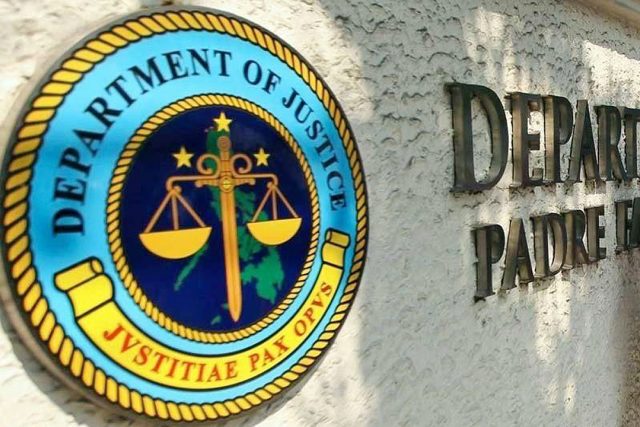
A REGIONAL trial court in Taguig City has convicted a former peace negotiator and three other members of the communist movement over a shooting incident in 1975, according to the Department of Justice (DoJ).

In a press briefer released on Thursday, the DoJ said the court sentenced the four to life in prison after finding them “guilty beyond reasonable doubt” of killing an individual in Madalag, Aklan.

One of those convicted is Maria C. Araneta-Bocal, a former spokesperson of the National Democratic Front of the Philippines (NDFP), a coalition of progressive organizations.

She was part of the NDFP-Communist Party of the Philippines-New People’s Army panel during peace talks with the government.

The court promulgated the decision on June 21 despite Ms. Bocal not appearing before the court since the government suspended peace talks with communist groups in 2018.

In 2015, she pleaded not guilty to the charge through her legal counsel. Her lawyer filed a motion to withdraw as counsel in April 2022, saying she had no communication with her client in the past three years, adding she did not know where she lived.

BusinessWorld sought Ms. Bocal’s comment through social media pages associated with her though unverified. There was no immediate response. — John Victor D. Ordoñez

Debt-to-GDP ratio projected to peak at 66.8% in 2023

PHILIPPINE STAR/MICHAEL VARCAS

THE debt-to-gross domestic product (GDP) ratio is expected to peak at a “manageable” 66.8% in 2023, but is unlikely to return to pre-pandemic levels in the near term, the Philippine Institute for Development Studies (PIDS) said in a report on Thursday.

At the end of the first quarter, the debt-to-GDP ratio was 63.5%, exceeding the 60% threshold that multilateral lenders consider suitable for developing economies. 

The ratio was 39.6% in 2019, but grew significantly as the government was forced to borrow in order to finance its pandemic spending.

The projection for 2025 is 66.4%.

“The debt increase resulted from a widening fiscal deficit triggered by a steep collapse in government revenue and a rise in public spending to support the country’s public health system and provide relief response to the pandemic,” PIDS said in its report.

It called the debt surge less of a worry in the absence of interest rate shocks, excessive foreign debt, and a steady decline in tax effort.

“There is also a ‘consensus view’ in the government and private sectors that the fiscal deficit will trend downwards, and interest-growth differentials will remain negative as GDP growth normalizes to pre-pandemic levels by 2022,” it said.

Fiscal adjustments for 10-, 20-, 30-year time horizons would entail either raising more revenue or reducing spending, PIDS said.

“For instance, in the 10-year time horizon computation or by 2031, additional annual increases in the primary balance need to range from 1.4 to 3.4% of GDP, assuming that the government has reduced the primary deficit to its pre-pandemic level of 0.81% of GDP.”

To ensure debt sustainability, PIDS said that fiscal policy reforms should be maintained, while policy governing medium- to long-term fiscal consolidation should be carefully considered.

Additionally, the government should continue investing in infrastructure and human capital throughout the recovery from the pandemic. — Diego Gabriel C. Robles

Sun Life unit sees further PHL recovery

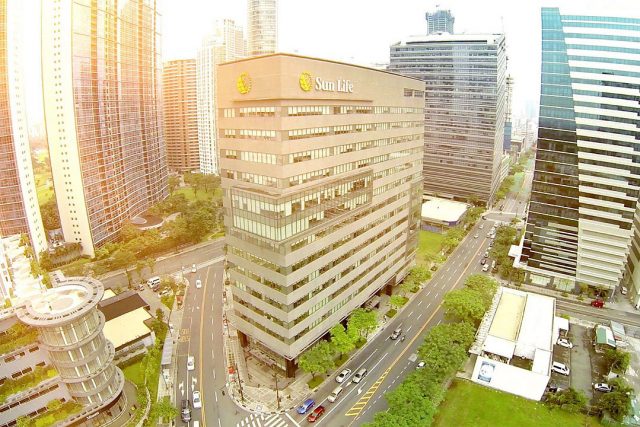
THE PHILIPPINES is set to recover over the course of the year even in the face of rising inflation and global supply chain disruptions, with the economy boosted by election spending and the restoration of much business activity as movement restrictions ease, Sun Life Investment Management and Trust Corp. said.

“Fundamentally, the Philippines continues to be strong despite inflation and interest rate headwinds. We’ve been seeing mobility continue to be sustained in spite of certain COVID-19 scares,” the company’s President and Chief Investment Officer Michael Enriquez said in an update of the Sun Life Investment macroeconomic outlook.

The company projects gross domestic product growth of between 6.3% and 10% this year.

“I think the people are starting to become immune, not only from the virus, but (from the fear of) COVID-19, because they really want to get on with their lives and livelihood.”

Increases in the COVID-19 case count have been small, he added, which suggests the reopening of the economy will proceed.

Growth is still expected because demand for key goods in the consumption-driven economy is inelastic, Mr. Enriquez said, meaning that buyers are less likely to be deterred by price increases.

“There has been some confidence already on expansion (and) borrowing by consumers, so definitely, spending is there,” he added, “despite these global headwinds, domestically our economy is okay.”

Mr. Enriquez said that there is also room for investment to grow, particularly on the Philippine Stock Exchange index (PSEi).

“The PSEi is cheap right now… so in terms of risk-reward, there’s a higher upside potential at these levels for the PSEi… compared to downside risk.”

Mr. Enriquez added that “markets generally move higher during Presidential election years.”

The company sees the peso trading at P51-53 or P52-54 by the end of the year and expects the Bangko Sentral ng Pilipinas to tighten policy by up to 75 basis points by the end of 2022. — Diego Gabriel C. Robles

Tariff body backs safeguard action vs polyethylene product

FREEPIK

THE Tariff Commission has recommended the imposition of safeguard measures against imports of high-density polyethylene (HDPE) pellets and granules for three years.

In a report dated June 27 and posted on its website, the commission found a “causal link between the imminent threat of serious injury to the local HDPE industry in the near future and increased imports of HDPE.”

The commission recommended an ad valorem safeguard duty of 2% for HDPE imports.

HDPE resins are used in consumer and industrial packaging.

“The commission hereby recommends the application of the appropriate definitive general safeguard measure on imports of HDPE to prevent the imminent occurrence of serious injury to the Philippine HDPE industry. The commission further recommends that the definitive safeguard measure be applied for a period of three years,” it said.

“This (2%) rate of duty will allow the domestic industry to adjust its selling price to a level that will allow full recovery of its cost of production,” it added.

The commission said the investigation, carried out between 2015 and June 2021, found that HDPE import volume in 2021 rose to 61,410 metric tons (MT), up 52% from 2018 levels, and exceeding the average import level between 2015 and 2018 by 56%.

“The surge in imports of HDPE, which commenced in 2021, directly caused the deterioration in the overall position of the domestic HDPE industry in the final period of the six-and-a half-year investigation,” the commission said.

It said it deems import levels in 2019 and 2020 to be “not normal” even when considering the planned shutdown of JG Summit Olefins Corp. for maintenance as well as the impact of the pandemic.

“In particular, increased volumes of HDPE imports by traders prevented the local HDPE industry from improving its performance and reaping the growth potential of an expanding Philippine market for HDPE,” the commission said.

The report has been submitted to the Trade Secretary for a final decision on safeguard duties.

Under the implementing rules and regulations of Republic Act 8800 or the Safeguard Measures Act, the Trade Secretary has 15 calendar days from receipt of the report to decide on a Tariff Commission recommendation.  

JG Summit Olefins, asked to comment on the commission’s findings, said in a statement that it welcomes the recommendation for safeguard measures.

“We thank the Tariff Commission for their positive recommendation on the safeguard petition for HDPE. We greatly appreciate that government has recognized the urgency and the need to protect local manufacturing industries especially during this difficult economic period,” Patrick Henry Go, president & CEO of JG Summit Olefins, was quoted as saying.

“This decision of the Commission is an encouraging step also for other local industries and for all who are looking to invest in the Philippines, where both government and private sector work together towards economic self-sufficiency,” Mr. Go added. — Revin Mikhael D. Ochave

Gross national savings post 2nd year of decline

GROSS national savings fell for a second year in 2021 to P3.88 trillion at current prices, down 12.4% from a year earlier and well below the pre-pandemic 2019 level of P6.15 trillion, the Philippine Statistics Authority said on Thursday.

The difference between gross national disposable income and the combination of household and government final consumption yields gross national savings. The drawing down of savings reflects the widespread tapping of reserve funds during the pandemic.

Gross national savings were equivalent to 19.3% of gross national income (GNI) in 2021, against 23% and 28.7% in 2020 and 2019, respectively.

Real gross domestic product (GDP) and GNI grew 5.7% and 1.7% respectively in 2021.

At current prices, GDP and GNI increased by 8.1% and 4.1% respectively last year. Household spending rose 8.4% to P14.61 trillion, while government spending grew 10.3% to P3.02 trillion.

Gross national disposable income was P21.51 trillion, up 4.2% in 2021 but below the 2019 level of P22.88 trillion. The indicator was derived by subtracting GNI from the net difference between “current transfers” to and from the rest of the world. 

Net disposable income per capita was estimated at P195,193 in 2021, against P189,809 in 2020 and P213,216 in 2019.

Nonfinancial corporations had gross savings of P3.54 trillion, followed by financial institutions at P1.46 trillion. Households, including nonprofit institutions serving households recorded negative savings of P622.23 billion, as did the general government at minus P490.62 billion.

“(T)he pandemic continued to weigh on the country’s gross national savings,” University of Asia and the Pacific Senior Economist Cid L. Terosa said by e-mail.  “Also, gross national savings fell because events spawned by the pandemic crippled the capacity of households, individuals, firms, and even the government to earn more in order to meet growing consumption expenditures.” 

He added that both households and governments used up their savings on “greater consumption” and to “overcome the negative effects” of the pandemic.

Mr. Terosa said the Philippines is a long way from recovery with further pressure on savings expected as a result of the Russia-Ukraine war. 

In a separate e-mail exchange, Security Bank Corp. Chief Economist Robert Dan J. Roces said that the depreciating peso would also add pressure on savers. 

The peso depreciated to P55.06 against the dollar on June 29, the weakest close for the currency in nearly 17 years.

“The possibility of recession around the world has added to the gloomy outlook of gross national savings this year since recession will lead to the slowdown of economic and business activities and consequently, personal, business, and government income,” he added. — Bernadette Therese M. Gado

PHL capital No. 12 globally in Airbnb listings 

FREEPIK

THE Philippine capital had the 12th most listed Airbnb home-share dwellings in the world, according to a study conducted by Inkifi, a photo printing company.

According to Inkifi’s Global Airbnb Capitals 2022 survey, the Philippine capital had 15,521 listings. It was not clear whether the survey was referring to “Metro Manila” because the entry for the Philippines was listed simply as “Manila.”

Manila was ranked 13th the last time the survey was conducted in 2019, when it had 18,578 active rentals pre-pandemic.

The 2022 survey did not say how many destinations were studied. The 2019 survey examined 206 cities.

“The study differs slightly from our 2019 version as some cities were removed due to insufficient data being available, or due to ongoing conflicts. These cities were replaced by well-known and popular travel destinations,” Inkifi said.

According to the 2022 survey, London had the most Airbnb active rentals at 34,135 listings, followed by Paris with 24,940, New York City 22,586, Istanbul 21,625, and Shanghai 20,732.

“Since 2019, the number of active Airbnb rentals has fallen across the board, with the total number of listings for the top 10 destinations falling from 303,535 to 209,682, which is equal to a 30.92% drop. This clearly shows that the holiday rental market is still very much feeling the effects of the pandemic, and may take some time yet to fully recover,” Inkifi said.  

John Paolo R. Rivera, associate director at the Asian Institute of Management — Dr. Andrew L. Tan Center for Tourism, said the survey results show that the Philippine capital has the capacity to “handle an influx of tourists.”

However, Mr. Rivera noted that the fall in active rentals between surveys reflects subdued travel demand.

“The absolute value declined but relative capacity increased with respect to other areas. This can be due to (the) slow catching up of demand as occupancy is still limited. Not everyone has returned to Manila yet. Working from home is still prevalent,” Mr. Rivera said.

“More rentals are expected as workers return to Manila and as tourism recovers,” he added.

Pattaya, Thailand had the highest density of Airbnb listings at 79.25 active rentals per 1,000 residents in 2022, followed by Jeju, South Korea at 30.89, and Orlando, Florida at 29.21.

Inkifi found that Ankara had the cheapest average daily rate at the equivalent of 17.13 pounds sterling per night, followed by Bangalore at £19.26. and Kathmandu at £24.90.

Las Vegas was the most expensive Airbnb destination with a nightly rate equivalent to £186.33, followed by Miami at £184.74, and San Francisco at £183.14. — Revin Mikhael D. Ochave

BoC debuts i-Declare system for entry of baggage, currency

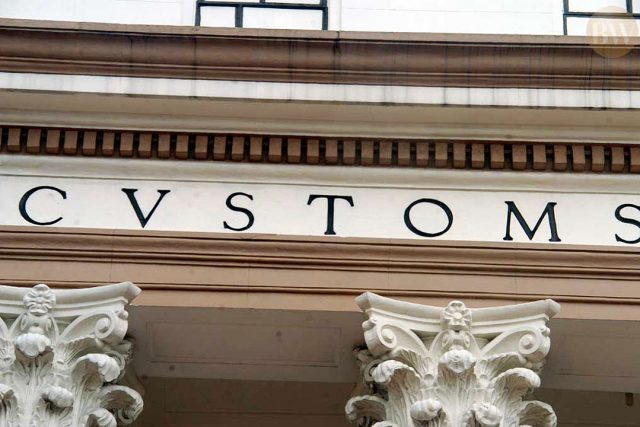
THE Bureau of Customs (BoC) said it launched the online i-Declare system on Thursday for travelers and ship and aircraft crews.

The BoC said in a statement that the Philippines becomes the first jurisdiction in the Association of Southeast Asian Nations to roll out a system addressing declarations on both baggage and currency.

The i-Declare system may be accessed through the eCBCD system online. The website includes Electronic Customs Baggage Declaration Forms (eCBDFs) and Electronic Currency Declaration Forms (eCDFs), which are documents required for travelers and crew members.

“The i-Declare system offers passengers the option to complete their declarations online, in the comfort of their homes before flying or even while en route to the Philippines,” the BoC said.

The Philippines is the third to offer an electronic Customs Baggage Declaration System after Singapore and Indonesia, but the first to bundle the two in one system.

“Automating the decades-old manual filing is another effort to modernize the (BoC), with the intention of integrating it with other government agencies for a more encompassing approach in providing the public with one-stop shop service for all the government’s clearance requirements,” Customs Commissioner Rey Leonardo B. Guerrero said.

Authorized by Customs Memorandum Order No. 11-2022, the i-Declare system is a joint project of the Bangko Sentral ng Pilipinas, the Anti-Money Laundering Council, the BoC Enforcement Group, and the BoC Management Information System and Technology Group. — Diego Gabriel C. Robles

PHL Q1 international investments at net liability of $31.6 billion

JCOMP-FREEPIK

THE Philippines’ international investment position (IIP) has a net liability of $31.6 billion at the end of March, widening from the net liability of $27.6 billion at the end of December, the Bangko Sentral ng Pilipinas (BSP) said on Thursday.

Citing preliminary data, the BSP said the net position resulted from a decline in external financial assets of 1.1% and an increase in external financial liabilities of 0.5%.

Preliminary data released by the BSP showed the country’s IIP stood at a net external liability of $31.6 billion as of end-March, a 14.4% increase from the $27.6 billion seen at end-December 2021.

The BSP said on a year-on-year basis, external financial liabilities of $269.9 billion at the end of March were up 9.8%. Year on year, it rose by 9.8% from $245.9 billion.

The National Government and banks held financial liabilities worth $61.4 billion and $31.3 billion, respectively. Other entities accounted for $173.3 billion, the BSP said.

External financial assets amounted to $238.4 billion quarter on quarter at the end of March. They were up 3.8% year on year.

The BSP held 47% or $111.9 billion of the Philippines’ external financial claims.

Of these, 45% or $107.3 billion consisted of reserves. Debt instruments accounted for 16%, debt securities 13.4%, and equity capital 11.8%. — Diego Gabriel C. Robles

Marcos takes power 36 years after father’s popular ouster

BONGBONG MARCOS FB PAGE

By Kyle Aristophere T. Atienza and Alyssa Nicole O. Tan, Reporters

FERDINAND R. MARCOS, JR. took his oath as Philippine president on Thursday, completing a remarkable comeback for a political dynasty that was ousted by a popular uprising in 1986.

In a speech that echoed his unity campaign slogan, Mr. Marcos, 64, vowed to fulfill his promises to Filipinos without any excuses, including giving them better lives. He urged the people to work with his government, adding that “we will go very far under my watch.“

“You will not be disappointed, so do not be afraid,” Mr. Marcos, better known as Bongbong, said at his inauguration ceremony, with his sister Imee, a senator, and 92-year-old mother Imelda seated close by.

Mr. Marcos won the May 9 election by a landslide and clinched a comeback for his family, which is still facing court cases involving ill-gotten wealth and unpaid taxes.

He thanked Filipinos for what he called “the biggest electoral mandate in the history of Philippine democracy.”

Mr. Marcos praised his father’s rule but said his own presidency was not about the past, but a better future.

“I once knew a man who saw what little had been achieved since independence… But he got it done sometimes with the needed support, sometimes without,” he said in his 30-minute speech.

“So will it be with his son. You will get no excuses from me,” he said. “No looking back in anger or nostalgia.”

Ferdinand E. Marcos ruled the Philippines from 1965 for more than two decades, almost half of it under martial rule, until his overthrow by a “people power” revolt that sent his family into exile in the United States. He died in Hawaii three years later.

On Sept. 23, 1972, he announced on national television that he had placed the country under Martial Law, citing an alleged communist threat.

Proclamation 1081, which was dated two days earlier, abolished Congress and allowed him to consolidate power by extending his tenure beyond the two presidential terms allowed by the 1935 Constitution.

More than 70,000 people were jailed, about 34,000 were tortured and more than 3,000 people died under martial rule, according to Amnesty International.

The Marcoses are estimated to have amassed wealth of $10 billion (P549 billion), according to government estimates.

In his speech, the younger Mr. Marcos said food sufficiency for a country battling spiraling prices would be among his top priorities.

“The role of agriculture cries for the urgent attention that  its neglect and misdirection now demands,” said Mr. Marcos, who will will become the country’s Agriculture secretary. “Food self-sufficiency has been the key promise of every administration. None but one delivered.”

Mr. Marcos should ensure that “rules aren’t changed or bent, and that cronies can’t get an unfair edge,” said Francisco “Coco” Alcuaz, Jr., executive director of the Makati Business Club.

“For business to create jobs, they just want to know the government is for ease of doing business, not squeezing them in ways big and small,” he said in a Viber message. “If he can deliver this, business will create the jobs and he will get the credit that will outweigh the benefits of favoring cronies.”

Mr. Marcos should also clarify government policies and avoid unnecessary pronouncements, Mr. Alcuaz said. “Mr. Marcos and his advisers were very disciplined during the campaign and during the transition. He does not seem to favor bombast. This will be a welcome change from the the unpredictability of President Rodrigo R. Duterte, which stole the attention away from when he was producing results.”

The president’s speech showed he is on top of the country’s problems but it was not specific enough, said George T. Barcelon, president of the Philippine Chamber of Commerce and Industry.

He said Mr. Marcos mentioned the agriculture sector but failed to cite other sectors involved in ensuring food security, such as manufacturers and exporters.

“They are part of the whole agro-industrial base,” he said by telephone.
“Let’s give him time to see what his priorities really are.”

The president should address problems faced by the transport sector to gain people’s trust, said Robert Siy, Jr., senior transport adviser.

“The Marcos administration inherits a transportation crisis and urgently needs to find solutions,” he said in a Facebook Messenger chat. “Despite significant resources poured into flagship projects in the past six years, the travel experience of commuters has deteriorated significantly.”

Coronavirus lockdowns and the fuel crisis have forced many public transport operators and drivers to close shop, Mr. Siy said. “More difficult travel means Filipinos can’t get to jobs and schools and are unable to access essential services.”

“As expected, he opened his speech with his campaign message of unity,” Zyza Nadine Suzara, executive director of governance watchdog I-Lead said in a Messenger chat. “He promised to listen and be open to suggestions but it stopped short at sending a real message to political opponents and critics.”

Mr. Marcos touched on some global issues affecting the Philippines, including spiraling oil and food prices caused by Russia’s invasion of Ukraine, but did not provide “concrete economic goals,” she said.

“By repeatedly saying that Filipinos should not look back, he is basically “appealing to completely forget the martial law era of his father and the uprising that ended it,” she added.

Mr. Marcos tends to speak in general terms, said Maria Ela L. Atienza, who teaches political science professor at the University of the Philippines. “But he is more diplomatic than Duterte in terms of speeches.


SEC orders Bukidnon-based Wellcons to stop soliciting investments

THE SECURITIES and Exchange Commission (SEC) has ordered Wellcons Unlimited Systems, Inc. (Wellcons) to stop soliciting investments and take down its internet presence until it secures the proper permits, the agency’s Davao office said.

The SEC Davao Extension Office said it has validated that the company has been wooing investors within its area, which includes Davao Region, Soccsksargen Region (South Cotabato, Cotabato, Sultan Kudarat, Sarangani, and General Santos City), and Maguindanao province in the Bangsamoro region.

“While Wellcons’s principal office address is located in Valencia City, Bukidnon, the SEC Davao Extension Office has verified its operations within SEC-Davao’s Area of Responsibility,” the office said in a statement.

The cease-and-desist order, issued by the SEC head office on June 23, covers the company’s officers as well as “operators, promoters, representatives, salesmen, agents, investment team planners, mentors, enablers, influencers, assigns, conduit entities, subsidiaries, and any and all persons claiming and/or acting for and in their behalf.”

Their bank accounts and funds in any non-bank financial institution have also been ordered frozen.

SEC-Davao said Wellness has been illegally soliciting investments through its
Pangkabuhayan Program, which promises a “double-your-money scheme.”

Earlier this year, SEC already issued an advisory warning the public against the company. — MSJ

Food balance sheets pick up in 2021   

THE PHILIPPINES supply of calories reached 2,989.54 kilocalories in 2021, up 6.4% from 2,810.28 kilocalories in 2020, the Philippine Statistics Authority (PSA) reported on Thursday.  

Food Balance Sheets (FBS) compiled by the PSA indicate how adequate food supply is relative to the populations nutritional needs.  

Out of the 20 food items listed, half posted growth rates.   

Growth in calories were mainly attributed to vegetable oils at 70.6% in 2021 from 11% in 2020; fruits 38.7% from 11.5%; and alcoholic beverages, 23.2% from -7.7%.   

On the other hand, contractions were posted on miscellaneous foods, stimulants, and milk (excluding butter).  

Supply of both proteins and fats grew by 3% and 5.9% to 85.55 and 60.1 grams/day, respectively, a reversal from the 3.9% and 5% slump in 2020.   

With 10 out of 19 food items in proteins, the following contributed to the growth of supply in 2021: Alcoholic beverages (195.7% in 2021 from -34.8% in 2020), sugar and sweeteners (75.1% from -20.6%), fruits (41.7% from 12.3%), and treenuts (13% from -1.9%).  

In the supply of fats, 11 out of 20 items posted growths, led by vegetable oils (70.6% in 2021 from 11% in 2020), fruits (42.8% from 12.7%), offals (13% from -21.1%), and eggs (6.8% from 2.1%).   

The self-sufficiency ratio (SSR), the percentage of food supply coming from local production, was at 80%. This is lower than the 83% and 81.4% in 2020 and 2019, respectively.   

Meanwhile, import dependency ration (IDR), the percentage of food supply coming from imports, was at 25.1%, higher than the 24.8% in 2020, but below the 28.8% in 2019. Bernadette Therese M. Gadon