Home Blog Page 5754

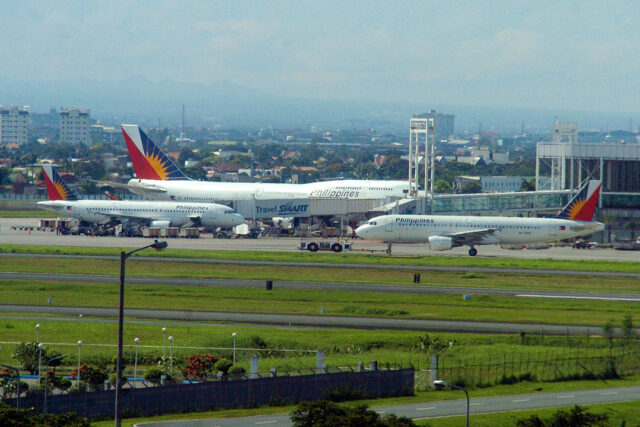
PAL revises 2022 target revenues to $2.6 billion

BW FILE PHOTO

PHILIPPINE Airlines, Inc. (PAL) upwardly revised its 2022 topline target to $2.6 billion after reaching its previous $2-billion revenue goal as early as October.

“We exceeded our target already so it’s quite good. Of course, we forecast another target, for the year it’s $2.6-billion revenue,” PAL Holdings, Inc. President and Chief Operating Officer Stanley K. Ng said on the sidelines of a Management Association of the Philippines event last week.

PAL Holdings is the listed company that operates Philippine Airlines, the country’s flag carrier.

“If I remember correctly, [considering] we have three more months to go, [we are at] around $2 billion already,” Mr. Ng said, referring to Philippine Airlines’ total revenue by the month of October.

Meanwhile, Mr. Ng said that he expects a full recovery in domestic sales and 70% of pre-pandemic levels in international sales by December.

“This year has been strong. In domestic, we’re already about 90% [of pre-pandemic level]. In December, we are approaching 100% of pre-pandemic level in domestic travels,” Mr. Ng said.

For international sales, Mr. Ng said that the airline is already at 60% of its pre-pandemic level.

“By December it’s going to be around 70% already. China is about 20% of our market so that’s why we still can’t go back to 100% of pre-pandemic,” Mr. Ng said.

In the first half of this year, the carrier generated $1.1 billion in revenues representing a 258% growth in passenger revenues and 31% growth in cargo revenues from the same period last year.

Destinations such as New Zealand, London, and Sapporo are still those not being served by the flag carrier after returning more than 20 aircraft to its lessor.

“We don’t have that [many] airplanes to fly to those destinations right now,” Mr. Ng said.

He added that if things improve for the airline, it expects to start servicing the three destinations by next year.

However, more than concerns about adding more planes, Philippine Airlines is putting more focus on re-fleeting to provide better customer experience, Mr. Ng said.

“Some of our [planes] are getting a little bit old in terms of aesthetic but in terms of engines and safety it’s perfect but of course, people right now are more demanding of the seats,” Mr. Ng said.

As a first step, Mr. Ng said that the airline has started by improving the food it serves by partnering with local chefs to introduce Filipino cuisine to the world.

“Here and there if we can do it, we’ve been doing it already. But the metal, the hardware, the aircraft it will take some time but we are in the process of deciding also,” Mr. Ng said about the airline’s target to grow back its fleet. — Justine Irish D. Tabile

Software we’re headed

Hyundai will future-proof its mobility offerings

YOU KNOW you’re living in a completely new era of mobility when “software-defined vehicles” start becoming a thing. Back in the day, the involvement of computer software interfacing with us drivers was usually limited to navigation functions and multimedia options. But these days, we talk about connected cars and autonomous driving — and this is only the tip of the iceberg when we try to imagine where the world’s fast-evolving software technology is taking us.

Hyundai Motor Group, for one, has decided to keep astride with such advancements, and has very recently announced its future road map for software-defined vehicles, during an online global forum entitled “Unlock the Software Age.” Basically, it was an impressive revelation of the company’s new goal to transform all its vehicles into software-defined vehicles or SDVs by 2025. If you think about it, that’s less than three years from now — and that’s why from 2023, all the newly launched vehicles of Hyundai will already be capable of benefiting from over the air or OTA software updates, which will allow for car performance and functions to be remotely upgraded, eliminating the need to take them to a service center for such updates.

“By transforming all vehicles to software-defined vehicles by 2025, Hyundai Motor Group will completely redefine the concept of the automobile and take the lead in ushering in a never-before-experienced era of mobility,” shared Hyundai Motor Group R&D Division President and Head Chung Kook Park. He added, “Creating visionary vehicles empowered with the ability to evolve through software will enable customers to keep their vehicles up to date with the latest features and technology, long after they have left the factory.”

Vehicle functions, such as those meant for safety, convenience — connectivity, security and driving performance — will soon qualify for over-the-air (OTA) software upgrades. And to keep the ball rolling, the Hyundai group plans to invest about KRW18 trillion (around P742 billion) into even more resources — including the formation of a Global Software Center where SDV development could be further accelerated.

And mind you, these transformations are not exclusively geared toward electric vehicles, but will also apply to vehicles with internal combustion engines. In fact, all of Hyundai’s vehicle segments sold worldwide are destined to become software-defined by 2025.

Another interesting development scheduled for take-off next year is Hyundai’s FoD or Features on Demand service. This will enable users to select and purchase particular features they want to have in their car, without having to physically bring it to the shop.

Moreover, the Hyundai Group has also taken the route of developing a shared hardware and software platform for their vehicles (Integrated Modular Architecture), in order to enable parts sharing and reduce R&D and manufacturing costs. Its new EV platforms are eM and eS.

eM is a passenger-EV-dedicated platform, whereas eS is the platform for purpose-built vehicles. The eM will provide a 50% improvement in driving range, based on a single charge; while the eS is meant for PBVs (purpose-built vehicles).

“Hyundai Motor Group’s data platform will not only be simply for driving. It will also play an important role in enhancing the convenience and diversity of the customer’s mobility experience by engaging throughout the vehicle’s entire life cycle,” said Executive Vice-President and Head of ICT Innovation Division Eunsook Jin, adding: “Going forward, we’ll also help create a new mobility ecosystem, connecting cars with other mobility devices, based on data connectivity and scalability.”

What complex albeit exciting changes to come! Congratulations Hyundai Motor Group, on pursuing this big move.

MacroAsia’s TERA targets to become major internet service provider, partners with Gur Lavi 

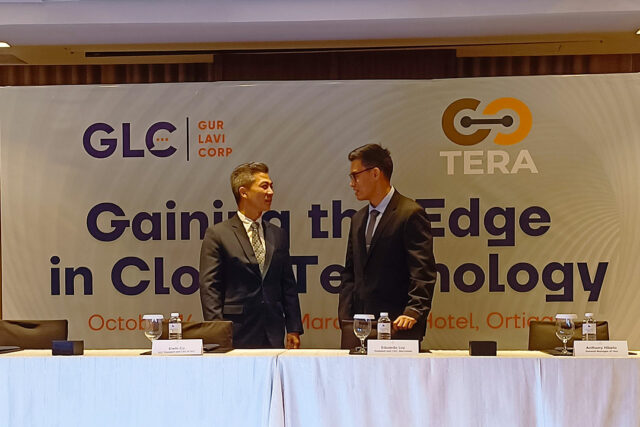
MACROASIA Corp. President and COO Eduardo Luis T. Luy signed on Oct. 14 a partnership deal for the company’s subsidiary, Tera Information and Connectivity Solutions, Inc., with Gur Lavi Corp. President and CEO Erwin Co.

TERA Information and Connectivity Solutions, Inc. (TERA), a subsidiary of MacroAsia Corp., is working to become a fixed-line internet service provider for both business and residential users in the next three to five years, a company official said.

“That’s our aspiration … for the next three to five years,” TERA General Manager Anthony G. Hilario told reporters on Friday after the company signed a partnership deal with telco solutions distributor Gur Lavi Corp.

“[We take] baby steps to become a service provider,” he added.

Under the partnership, TERA aims to deliver “end-user experiences as technology and tier 1 internet services provider to the LT Group, Inc,” a listed holding company of business tycoon Lucio C. Tan.

With Gur Lavi, MacroAsia hopes to reduce operational costs and boost its digitalization efforts as it strives to recover from the pandemic crisis.

Gur Lavi is the company behind TeLavi Cloud, an all-in communication platform introduced amid the pandemic. It provides cloud telephony solutions, team messaging, videoconferencing, and call center solutions to enterprise and residential customers.

“We feel that Gur Lavi has very good expertise and technical understanding of the whole technology side. That is something we can leverage on. Hopefully we can learn a lot from them,” MacroAsia President and Chief Operating Officer Eduardo Luis T. Luy said.

For his part, Gur Lavi President and Chief Executive Officer Erwin Co said: “We wish to impart our expertise, our knowledge in helping TERA and the other companies in their group in their digital transformation journey.” — Arjay L. Balinbin

Toyota ‘adopts’ Laguna, Batangas forests

Toyota Motor Philippines’ local tree-planting, mangrove-planting, and coastal and riverside clean-up activities are part of the “All Toyota Green Wave Project,” a Global Toyota initiative which was started in 2015. — PHOTO FROM TOYOTA MOTOR PHILIPPINES

TO EXPAND its “climate mitigation and biodiversity protection efforts,” Toyota Motor Philippines Corp. (TMP) “adopted” an upland forest block in Siniloan, Laguna and mangrove forests in Calatagan, Batangas.

Under the National Greening Program or NGP, TMP will sign two separate agreements with the Department of Environment and Natural Resources (DENR)-Region IV-A CALABARZON this month to formalize the adoption of the planting sites. TMP commits to plant 41,000 tree and mangrove saplings over a span of five years — aiming for a 80% survival rate.

In the initial phase of reforestation activities, TMP mobilized groups of volunteer team members to plant 10,000 tree and 5,000 mangrove saplings in the two areas in the month of September. TMP also participated in the International Coastal Clean-up Day, turning over to the local authority 150 kilograms or 21 sacks of plastic waste collected from the Calatagan coastline.

“Toyota shares the responsibility in protecting the planet Earth and in fighting climate change in line with United Nations Sustainable Development Goals,” said TMP President Atsuhiro Okamoto, who spearheaded the simultaneous mangrove-planting and coast clean-up activities. “Global Toyota implements the Toyota Environmental Challenge 2050 to achieve zero carbon dioxide (CO2) emissions and net positive environmental impact by year 2050.”

As a biodiversity conservation effort, TMP will plant native and fruit-bearing tree species in a 50-hectare area at the tail-end of Sierra Madre mountain range in Siniloan, Laguna. This area, according to University of the Philippines Los Baños, is the habitat of endemic flora and fauna such as the Philippine Hornbill, Gray’s Monitor Lizard, Civet Cat, Cave Nectar Bat, and Wax Plant species. Moreover, the Sierra Madre hosts some of the country’s oldest forests and serves as a natural barrier against typhoons with its long mountain range on the east of Luzon.

TMP also commits to plant 16,000 mangrove propagules in an eight-hectare area on the coast of Calatagan. This project extends TMP’s existing NGP planting site in Lian, Batangas where the company has already planted 30,000 mangroves since 2018. These two coastal sites are both part of the Verde Island Passage which is considered as the “Center of the Center of Marine Shorefish Biodiversity” in the world.

According to TMP Environment Manager Mark Anthony Marcelo, mangroves are a distinct part of Toyota’s climate change solution in the Philippines. “Mangroves have a high capacity to absorb CO2 as they store up to 10 times more per hectare than terrestrial forests. Mangroves also serve as a blockade against storm surges and are crucial to marine life and livelihood of coastal communities,” he said.

TMP’s local tree-planting, mangrove-planting, and coastal and riverside cleanup activities are part of the “All Toyota Green Wave Project,” a Global Toyota initiative which was started in 2015. This project connects the Toyota Network — including TMP team members, dealers and suppliers — to nature conservation activities while mitigating climate risks and supporting livelihoods of local communities in the long run.

In April 2022, TMP also adopted a 40-hectare NGP planting site in the rainforests of Maragondon, Cavite and initially planted 10,000 seedlings of native and fruit-bearing tree species.

Norway’s Scatec plans 2.4 gigawatts of wind energy projects in PHL

NORWEGIAN renewables company Scatec ASA has lined up five wind energy projects in the Philippines with a combined capacity of 2.4 gigawatts (GW), its regional head said.

“We have a wind energy service contract of 2.4 GW. Five contracts we have, which in total gives you 2.4 GW,” Torbjørn Elliot Kirkeby-Garstad, Scatec general manager for Southeast Asia, told reporters on the sidelines of the Norway-Philippines Maritime and Energy Conference on Friday.

“Four of them [are offshore]. Then we have [an] onshore [project] close to the offshore ones,” he added.

Asked about the value of investments that Scatec is setting aside for the projects, he said: “We’re talking of billions [of dollars] to develop and build those.”

On its website, Scatec describes itself as “a leading integrated independent renewable power producer, delivering affordable, rapidly deployable and sustainable clean energy worldwide.”

The company develops, builds, owns and operates solar, wind and hydropower plants and storage solutions.

It placed the capacity of its projects in operation at 3,355 megawatts (MW) and 1,266 MW under construction. It also said that it has 15.5 GW “in project backlog and pipeline.”

“Our presence in the Philippines is together with Aboitiz, where we own SN Aboitiz Power (SNAP) — it’s largely hydropower, it’s Magat, Ambuklao,” Mr. Kirkeby-Garstad said, referring to the joint venture with Aboitiz Power Corp.

“We’re a partnership with them and we’re also discussing growth opportunities with Aboitiz, also through SNAP,” he added.

He said Scatec is doing the five projects with local partners, and that it will not insist on having a controlling stake.

“My approach to this is shoulder-to-shoulder,” he said. “This can be structured in many ways. You could even have three partners in it.”

“We will be doing these with [a] good local partner, and obviously Aboitiz is our partner,” he said. — VVS

DLSU, PUP to represent PHL in Asian leg of Shell Eco-marathon

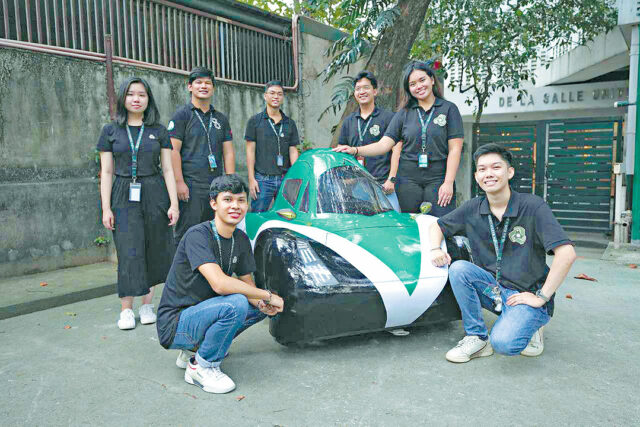
The De La Salle University Eco Car Team — PHOTO FROM PILIPINAS SHELL

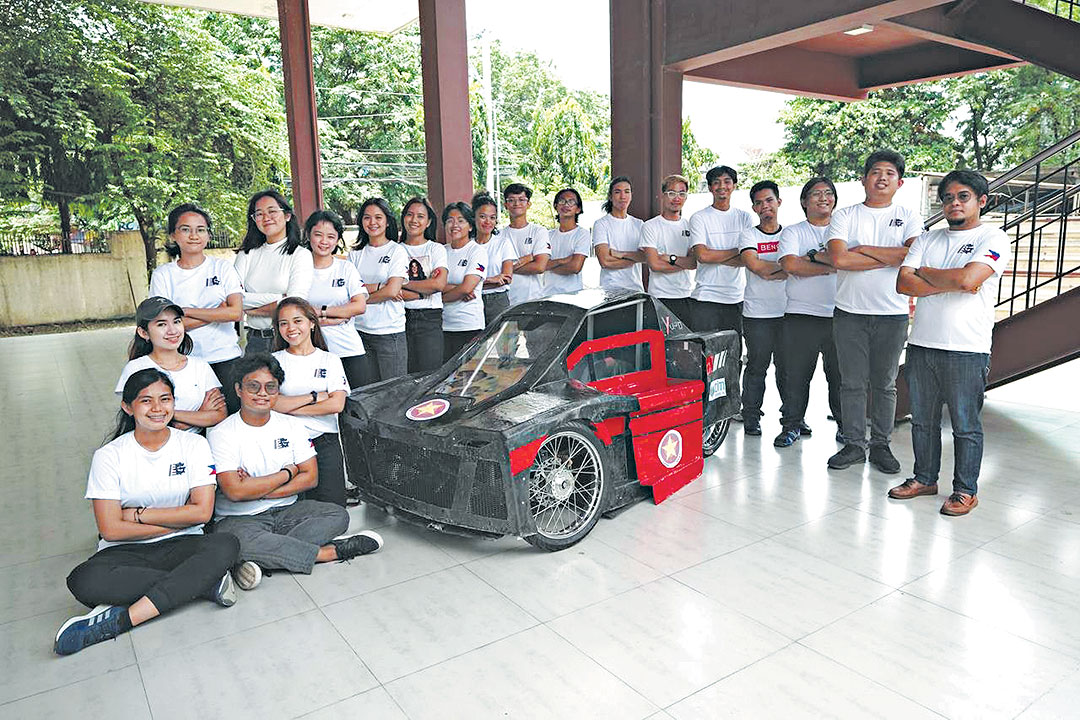
THE DE LA SALLE University (DLSU) Eco Car Team and Polytechnic University of the Philippines (PUP) Hygears will carry the country’s colors when they compete against 49 teams from eight other countries in the Shell Eco-marathon (SEM) Asia.

To be held this year in Lombok, Indonesia, Shell’s annual event provides students of Science, Technology, Engineering, and Math (STEM) an avenue to design, build, and operate automotive vehicles to achieve the highest possible fuel-efficiency.

Pilipinas Shell Petroleum Corp. Vice-President of Corporate Relations Serge Bernal encouraged the students to take the opportunity to learn, collaborate, and make friends not just with members of the Philippine teams, but also with those from other countries’ teams even as he reminded them that SEM is a competition. “Make your family, friends, school, and the Philippines proud,” he said.

For her part, DLSU Eco Car Team Manager Eunice Nicole Rupisan averred, “As a team, we expect the best because we want to surpass our benchmark in testing. Pilipinas Shell has been helping us from the start, helping us communicate with Shell Global. They’ve played a big role in getting us far into the competition.”

PUP Hygears Manager Nicole Tugay described joining SEM as an opportunity. “We will experience working in the industry not only in the technical sense, but also in a managerial sense,” she shared.

The panelists providing practical advice to the teams are SEM alumni: Shell Business Operations Process Data Engineer for Technical Asset Operations (TAO) Meg Celine Cruz, Upstream Turnaround Manager Jericho Paolo Rivera, and Process Data Engineer Joven Talape. “SEM is a great venue to meet people and expand your connections. This is a culmination of your sleepless nights and all your hard work,” Ms. Cruz said to the students.

Making cars more efficient since 1939, SEM shifted to its current eco-friendly focus in 1985. SEM participants are tasked to design an energy-efficient battery-powered vehicle that can outlast others on a track. SEM 2022 will be held at the Pertamina Mandalika International Street Circuit in Lombok, Indonesia from Oct. 11 to 15, resuming face-to-face interactions after running virtually for its 2020 to 2021 season. For more info about the SEM and about joining its 2023 season, visit https://www.makethefuture.shell/en-gb/shell-eco-marathon/2023-programme-on-track.

Saving a traditional art by going modern

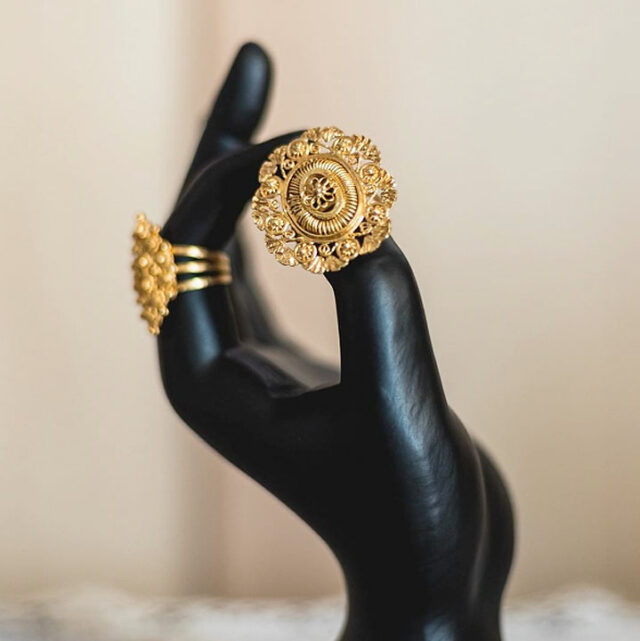
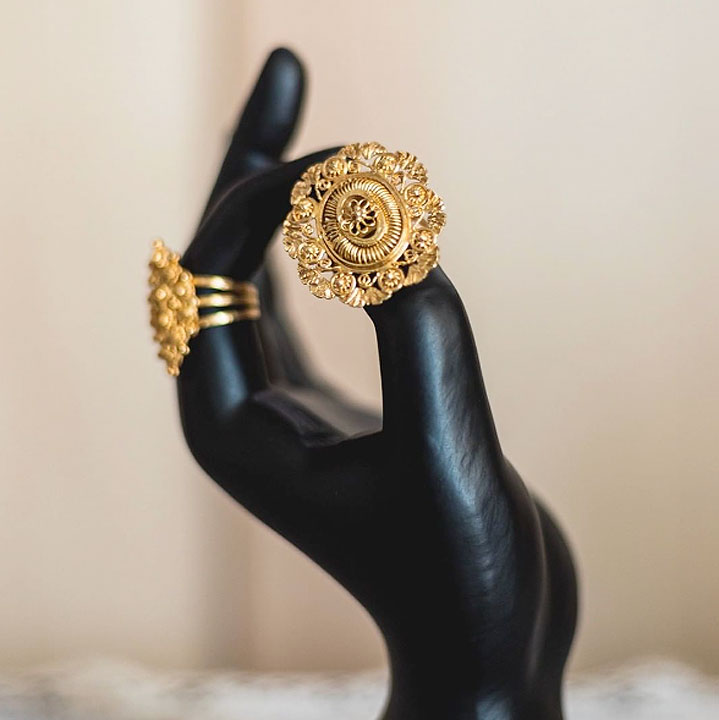
RELIKARYO ring — INSTAGRAM.COM/KAYAMANA.PH

PURSUING a research project for university made a student strike gold — literally.

Paolo Palanca, founder of Kaya Mana PH, found a maker of traditional Filipino tambourine jewelry during a research trip to Ilocos Sur, and has since parlayed that into a business. More than an enterprise, it has become a shared mission between Mr. Palanca and his platero, Mang Nelson* to save a part of cultural heritage, improve a dying industry, and improve Mang Nelson’s life.

We chanced upon Mr. Palanca at his stall at the Likhang Habi Fair in Glorietta, which ran from Oct. 14 to 16. Sitting at his booth, we watched several customers, both young and old, ask about the jewelry.

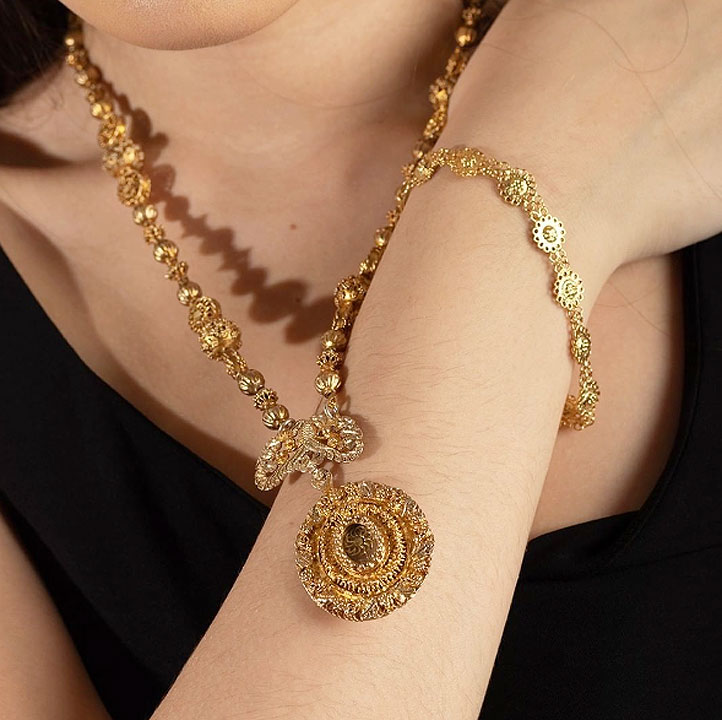
Tambourine jewelry is a hybrid art of pre-colonial Filipino skills in crafting gold, as well as Spanish influences. Many samples of tambourine jewelry from the Spanish colonial period are religious artifacts, such as reliquaries and rosaries.

Mr. Palanca explained why the demand for traditional jewelry fell by the wayside, starting from the 1980s. “The price of gold increased a lot over that period,” he said, with Mang Nelson saying that when he was a boy, gold could be had for P50 per gram, while it now sits at P3,300 per gram, and the price is still increasing. Another reason was the presence of counterfeit tambourine jewelry (liked as it was by collectors and costumers), which scared off customers from artisans. Finally, it just faded from fashion, what with the presence of easily manufactured jewelry from around the world; as well as changing tastes.

STARSTRUCK
Why then did Mr. Palanca decide to invest in an industry that was already dying? At the time Mr. Palanca and Mang Nelson met in 2017, Mr. Palanca had been working under the assumption that the jeweler was the last one in the Philippines (it turns out that there were more traditional jewelers around the country, but the number is still small). During that research trip, Mr. Palanca and his groupmates were shown several pieces by Mang Nelson, things that he couldn’t sell.

Unang kita pa lang, starstruck na kami (We were starstruck at first sight),” said Mr. Palanca. “We found it so impressive that not only did he make this by hand, but the details were so fine.”

“It didn’t make sense that he was having a hard time, struggling to provide for his family, when the things he was making were so beautiful.”

Prior to their partnership, Mang Nelson had been ready to pack up his things and follow his wife to be an Overseas Filipino Worker in Canada, and with him, the heritage and skill involved in making filigree jewelry would have gone away as well. Mr. Palanca and his groupmates took the pieces and sold them to friends and family, while leaving Mang Nelson with some start-up funds to create more pieces. With the proceeds of the initial sale, they reinvested it back into the business, and Kaya Mana was born.

POWER OF INHERITANCE
Mr. Palanca talked about the name. At first, they picked “mana” (a Filipino word for “inheritance”) to reflect the letters in Mang Nelson’s name, as well as recalling ideas of heritage. They added “kaya” (a word associated with “ability”) to differentiate themselves from other businesses, but also to add depth to their name. Of course, combining the two words would result in something close to “kayamanan” (wealth, or treasure), but, “We wanted to be close enough to it, but more than it. It’s not just kayamanan, it’s ‘kaya mana’: the power of our inheritance.”

Tambourine jewelry is made by flattening gold into sheets and turning those sheets into fine wires that can be woven together. In the process of helping Mang Nelson, they’ve also modernized some equipment to make the process faster, as well as making it safer. Some of the designs have been slightly modernized to appeal to a younger audience. Think former rosary beads turned into charms, or earrings, or bracelets. Instead of the traditional 18-karat gold, some pieces are made of gold-plated silver (vermeil). A stunning necklace was being sold for P50,000; but there were bracelets available at P7,500.

With adaptation comes the question of authenticity. Mr. Palanca answers with an insight from Mang Nelson: “The purpose of it is still there. Even if you’re changing some parts, it’s still filigree tambourine jewelry.”

It also comes with the realization that some things are really better when made by hand. “Your hands are better than the machines. You can make pieces that are more finely detailed, more intricate, than any machine could do,” he pointed out.

MAKING A LIVING
“One of the reasons why we want people to come back and do it is (for people to know) that you can make money, you can survive off of being an artisan,” he said. “We want to make it enticing to people.”

According to Mr. Palanca, the minimum wage in Ilocos Sur, where Mang Nelson lives and works, is about P200; a sum they have increased so Mang Nelson could continue making jewelry. In the first year since Kaya Mana’s founding in 2017, Mang Nelson was able to fund for his wife’s first vacation from Canada, which they spent in Baguio.

“The whole point is to get them back to the level where they were before the decline,” said Mr. Palanca. “Eventually, they can be independent again.”

In Aja Raden’s book Stoned: Jewelry, Obsession, and How Desire Shapes The World, she writes: “The very purpose and nature of jewels is one and the same: to transfix and reflect. Just like their glittering surfaces, jewels have one, and only one power: they reflect our desires back to us and show us who we are.”

“As Filipinos, this is something we didn’t know we could be proud of,” said Mr. Palanca. “It’s something that we are very grateful to discover.”

“It’s sad that we had to discover it,” he said. “We wish that we were taught about it in school.”

Kaya Mana is available at the Frankie General Stores in Rockwell and SM Aura, as well as through their Instagram, @kayamana.ph. — Joseph L. Garcia

*For security reasons, BusinessWorld was asked not to use Mang Nelson’s full name.

SNAP considers expanding floating solar project in Magat 

RENEWABLE energy company SN Aboitiz Power (SNAP) is planning to scale up its 200-kilowatt floating solar power project in Magat dam, its top official said last week.

Joseph S. Yu, president and chief executive officer of SNAP, told BusinessWorld that the company is upgrading its solar panels to ones with higher efficiency and newer design.

“We are currently upgrading the panels to a newer design. In the meantime, we still have yet to see the system being challenged by a strong typhoon that would allow us to develop the technical resiliency aspect of the system,” Mr. Yu said.

He said that at present, the company is in coordination with the National Irrigation Administration and National Grid Corp. of the Philippines to work out the access to the reservoir and the transmission units.

“We have a service contract to upscale it to around 67-megawatts,” he added.

“Numbers are changing, almost every time so it is hard to pin it down, but [the] rule of thumb I am assuming [is] that it would be a million dollars per megawatt,” Mr. Yu said.

In 2019, SNAP said it invested around P24 million in the floating solar project in Ramon, Isabela, which consisted of 720 solar panels. The facility is situated over a 2,500-square meter area in the Magat reservoir.

SNAP is a joint venture between SN Power of Norway and Aboitiz Power Corp. — Ashley Erika O. Jose

SC finds transport firm, president liable for tax evasion

FREEPIK

THE Supreme Court (SC) has affirmed the tax evasion convictions of Kingsam Express, Inc. (KEI) and its president for failing to pay deficiency income tax for the taxable years 2008 and 2009 worth more than P4 million and P10.8 million, respectively.

In a 14-page resolution dated Sept. 7 and made public on Oct. 14, the SC First division said the firm and its president “willfully” attempted to evade the tax obligations.

“The president and responsible officer, knew of KEI’s purchase of bus units in 2008 and 2009 and yet he deliberately omitted the transactions in the corporation’s income tax returns and financial statements,” said the High Court.

The ruling affirmed the findings of the Court of Tax Appeals (CTA), which sentenced KEI President Samuel S. Santos to up to four years of imprisonment and a fine of P100,000 for the four indictments against him.

The tax court said noted that the transport firm and Mr. Santos underdeclared their income for 2008 and 2009 by at least 620% and 650%, respectively.

Under the country’s revenue code, taxpayers are required to file an accurate quarterly income tax return and a final or adjustment return.

The law also provides the internal revenue commissioner with the authority to assess a taxpayer’s tax deficiencies based on the “best evidence obtainable.”

KEI argued that the CTA’s ruling should be overturned since Mr. Santos was not properly identified by government prosecutors in the case.

The High Court disagreed saying the firm’s president himself admitted to the tax tribunal that he was in charge of information on the tax returns.

“The state can resort to administrative and judicial remedies to collect taxes from erring taxpayers which comprise both civil and criminal suits,” it noted.

“Thus, the State, through the CIR, can directly file a  criminal complaint to enforce the collection of taxes.” — John Victor D. Ordoñez

37th Honda Cars Philippines dealership opens in Isabela

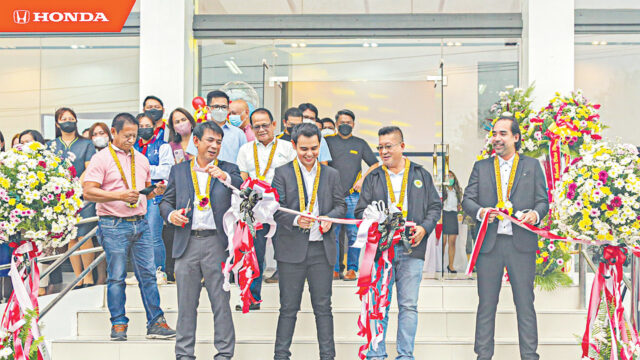
Cutting the ceremonial ribbon at the Honda Cars Cauayan inauguration are (from left) Honda Cars Philippines, Inc. (HCPI) General Manager for Sales Division Atty. Louie Soriano; Gateway Group Executive Vice-President Michael Goho; Cauayan City Vice-Mayor Leoncio Dalin, Jr.; and Gateway Group President Raymund Basubas — PHOTO FROM HONDA CARS PHILIPPINES

HONDA CARS CAUAYAN (HCCU) in Isabela opened last Oct. 3, bringing the Honda Cars Philippines, Inc. (HCPI) dealership count to 37.

HCCU is strategically located in Barangay Tagaran along the National Highway of Cauayan City. In a release, HCPI said that the new dealership makes the Honda brand even closer to customers in Northeastern Luzon. HCCU measures 3,545 sq.m., and features a five-car display showroom, spacious customer lounge, and a Modulo and Mugen parts and accessories corner. Honda owners may also bring their vehicles for after-sales services such as preventive maintenance and general repairs as HCCU’s service area has 15 work bays and eight lifters, along with “state-of-the-art facilities and equipment.” Customers will be assisted by HCCU’s well-trained sales consultants, service advisors, and technicians.

HCCU is the fourth Honda Cars dealer under the management of the Gateway Group. Through HCCU, Honda will “fortify its presence in an already widely established dealer network in the Luzon area.” Furthermore, HCCU “embodies Honda’s global standard of delivering excellent products, as well as services throughout the customer journey.” HCCU is also the first dealership to adopt the complete new visual identity that sports a refreshed look and new dealership signage design, aligned with Honda Motor Co., Ltd. in Japan.

“We are delighted to welcome Honda Cars Cauayan once again into HCPI’s roster of dealerships. The growing network of Honda Cars dealers in the Philippines affirms Honda’s commitment to reaching out to more customers to help ensure a smooth and convenient ownership experience for them. Congratulations and all the best to the Gateway Group. We look forward to serving more customers in partnership with them,” said HCPI President Masahiko Nakamura.

Honda Cars Cauayan is open from Mondays to Saturdays, 8 a.m. to 5 p.m. For appointments or inquiries, contact 0917-844-6586. Alternatively, customers may check Honda’s Virtual Showroom at www.hondaphil.com for convenience in exploring Honda vehicles, online reservations, or booking service appointments.

Piña-silk, wool-like silk, and cocoon exfoliators

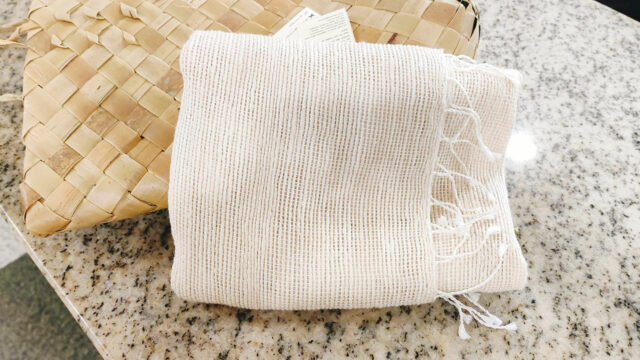
A SCARF made of silk yarn

Negros’ silk industry goes beyond the usual fabric

WE didn’t expect to find luxurious silk in rustic Bago City in Negros Oriental, but there it was, in scarves and cocoons at last month’s Negros Trade Fair in Glorietta.

The silk-reeling operations in Negros began around 20 years ago, according to Thelma Watanabe, President of the Negros Silk Producers’ Association during an interview with BusinessWorld at the Negros Trade Fair, which ran in late September. The project was spearheaded by Japanese-headquartered non-government organization OISCA (The Organization for Industrial, Spiritual and Cultural Advancement). During a tree-planting project, Japanese supporters of the organization saw the potential to plant mulberry trees. “Mulberry is very suitable for our climate,” said Ms. Watanabe. “It grows anywhere except in swampy places.” Mulberry leaves also happen to be the food of choice for caterpillars of the Bombyx mori, otherwise known as the silkworm.

The parent stock is from both China and Japan, and are provided to silk farmers who maintain the mulberry plants from which silkworms eat. The silkworms weave a cocoon as part of their metamorphosis, and these cocoons are then processed into silk threads.

“With our efforts, we were able to see the industry take off. We are now supplying the bulk of the silk being circulated in the local market,” said Ms. Watanabe. Most of the silk is used in Aklan, where silk is woven along with piña (pineapple fiber) to make a piña-seda (silk) blend. She showed a sample of the piña-silk hybrid, which was made into barongs that were worn by world leaders at the 2015 APEC Summit.

“When we started producing the cocoons, it was examined at random in Japan, and it proved to be of very competitive quality,” she said. “Maybe because of the water in Negros.”

She showed off a scarf, made of silk yarn. It did not have the smooth and silky nature that lent the material’s name to the adjective. Instead, it was fuzzy, like very light wool. “This is another type of yarn, which we produce from the innermost part of the cocoon,” she said.

“It may look like cotton, but it’s really very soft. Lighter, softer, and you can see the glow,” she said. “To produce the yarn for this is very hard. You will have to manually make it into yarn, with saliva,” she said. The spinner’s fingers are wet with spit to draw out the thread from the innermost part of the cocoon.

Speaking of cocoons, Ms. Watanabe showed us another product. Individual silk cocoons are cleaned and packed, and are placed on fingertips to use as facial exfoliators. According to her, not only do the cocoons slough off dead skin, but also impart silk proteins (sericin) to the skin, making the skin smoother and firmer. We did try using the exfoliators at home, and they did leave us with a glow that lasted about two days.

Silk farmers harvest around six to seven times in a year, and they are paid for the top-grade cocoons per kilogram, with the highest grade (AA) sold at P260 per kilogram, with farmers bringing about 26 to 28 kilograms per harvest.

“In the beginning, producing silk just augmented their income. But as they get so skilled in producing the raw cocoons, they have additional income, and maybe they can expand, and our silk industry will really put the Philippines on the map.”

For more information, contact the OISCA-Bago Training Center for native silk products at nspa.oisca@gmail.com. — Joseph L. Garcia

Rice inventory up 3.5% in August

PHILIPPINE STAR/WALTER BOLLOZOS

THE rice inventory in August rose 3.5% to 1,633.36 thousand metric tons (MT), the Philippine Statistics Authority said.

On a month-on-month basis, inventory declined 19.7% from July.

Rice held by households rose 5.4% year on year, while that held by commercial warehouses, wholesalers, and retailers rose 9.1%. On the other hand, stocks held by the National Food Authority (NFA) fell 24.7%.

Households accounted for about 48.5% of the month’s rice inventory, followed by commercial warehouses, wholesalers and retailers with 43.3% and the NFA 8.2%.

Meanwhile, corn inventory was estimated at 704.46 thousand MT, down 0.4% year on year.

Compared to the July inventory, corn stocks dropped 5.7%.

Inventory levels in commercial warehouses, wholesalers, and retailers grew 3.3% while households stocks fell 20.5%.

Some 87.9% of the corn inventory was held by commercial warehouses, wholesalers, and retailers, with the remainder in households. — Luisa Maria Jacinta C. Jocson

ADVERTISEMENT
ADVERTISEMENT