Home Blog Page 5692

Inflation, interest rates may dampen retail sector growth in 2023

A bazaar is seen inside a mall in Manila, June 12. — PHILIPPINE STAR/KRIZ JOHN ROSALES

By Revin Mikhael D. Ochave, Reporter

THE PHILIPPINE retail sector’s growth is projected to slow next year, as consumer spending will likely be affected by elevated inflation and rising interest rates.

Barsali Bhattacharyya, Economist Intelligence Unit (EIU) industry manager, told BusinessWorld that local retailers will be affected by weaker consumer spending. 

“In 2023, the pace of growth will slow to 2.7% as persistently high inflation and the increase in domestic interest rates hurt consumers’ spending power,” Ms. Bhattacharyya said via e-mail.

The Bangko Sentral ng Pilipinas (BSP) has raised benchmark rates by 225 basis points so far this year to tame inflation and address the peso’s weakness.

Inflation accelerated to 6.9% in September, bringing the nine-month average to 5.1% as prices of food, commodities and utilities continue to rise. The BSP expects inflation to average 5.6% this year, and 4.1% in 2023.

Consumers will have to spend more on food next year, as global commodity prices remain elevated, Ms. Bhattacharyya said.

“High global agriculture commodity prices will force consumers to spend more on food and essentials, pushing up the share of food retail sales to over 59% in 2023. We expect this share to remain above the 2019 levels until at least 2025, underscoring the country’s dependence on food imports,” she said.

This year, the retail sector is seen growing 5.9%, mainly driven by the reopening of the economy and easing of coronavirus disease 2019 (COVID-19) restrictions, Ms. Bhattacharyya said.

“The Philippines’ consumer market has been recovering strongly from the pandemic-induced slowdown. The relaxation of COVID-19 measures bodes well for consumption and in 2022 we estimate retail sales to increase by 5.9% in real terms, stripping off the effect of inflation,” Ms. Bhattacharyya said. 

Online sales will continue to rise in 2023 on the back of increasing digitalization in the country. 

“The strong shift to digitalization seen during the pandemic will continue to gain ground, with online sales of goods forecast to account for 4% of total retail sales in 2023,” Ms. Bhattacharyya said.

Meanwhile, Philippine Retailers Association (PRA) Vice Chairman Roberto S. Claudio said the group has a slightly higher growth forecast for next year, compared with the EIU’s projection.

“We have a higher growth forecast for 2023 at 3.5% owing to further easing of COVID-19 protocols and consumer expenditures with people having more freedom to travel with end of lockdowns and policies to boost local tourism,” he said in a phone interview. 

Mr. Claudio said the retail sector is showing better growth this year as consumers return to malls and shops.

“We’re almost aligned with EIU for 2022 growth rate. This figure was picked from the PRA figures of consumers who are returning to in-store and mall shopping, while online continues to grow but a slower rate than in 2020-2021,” Mr. Claudio said.

He does not expect consumer spending to be significantly affected by rising inflation and interest rates.

“During bad economic conditions, consumers spend more on food, recreations such as alcohol, sports, and outdoor activities. Luxury goods will suffer. People look for escapism during hard times,” Mr. Claudio said.

Rizal Commercial Banking Corp. Chief Economist Michael L. Ricafort said that the growth of the retail sector could reach 6% in 2023, matching the economy’s gross domestic product (GDP) expansion.

The government targets 6.5-8% GDP growth in 2023.

“The further reopening of the economy led to more employment; increased sales and more economic activities, thereby supporting retail sales… Online retail and other business transactions would also be boosted by further reopening of the economy, as these have been accelerated since the pandemic,” Mr. Ricafort said. 

“However, higher prices and spending on food and other basic commodities due to higher global and local inflation, as well as higher interest rates/borrowing costs would offset the growth in retail sales, both online and physical stores, and overall economic growth,” he added.

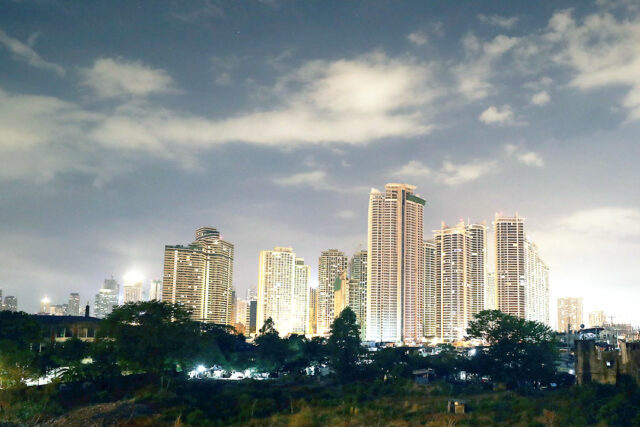
PHL ICT market seen to hit $21B by 2026 as firms spend more on tech

FREESTOCKS-UNSPLASH

By Arjay L. Balinbin, Senior Reporter

LOCAL BUSINESSES are expected to continue spending on information and communications technology (ICT) next year, as they anticipate rising demand for digital solutions, according to some industry players.

“As micro, small and medium enterprises (MSMEs) secure and make their businesses more resilient and adaptable in the face of future economic disruptions, investments in telco and ICT remain as their top priority in the next one to two years,” KD D. Dizon, head of Globe Business MSME Group, told BusinessWorld in an e-mail interview last week.

“This is especially true for those operating within industries that are at the forefront of digitalization such as education, finance, IT and business process management, wholesale/retail, and the hotel, restaurant, and café sector,” she added.

According to London-based data analytics and consulting company GlobalData Plc, the ICT market in the Philippines is expected to grow at an annual growth rate of 8% to $20.6 billion by 2026, from $14.04 billion in 2021.

The cumulative revenue generation opportunities for ICT in the Philippines between 2022 and 2026 are estimated at $89.98 billion.

“The retail sector is the major contributor to the growth of ICT in the Philippines,” GlobalData’s latest report said.

The IT service management company of the PLDT group, ePLDT, Inc., said it has seen a steady increase in investment in ICT solutions from its enterprise customers compared with last year.

“These are customers who are accelerating their digital transformation to improve customer experience (and) operational productivity, (as well as) reduce operational costs,” ePLDT President and Chief Executive Officer Victor S. Genuino said in an e-mail interview last week.

“We see robust demand for data center, cloud, and cybersecurity solutions,” he added.

In a separate e-mail interview, Cisco Philippines Managing Director Zaza S. Nicart said the company continues to see Philippine organizations digitizing their businesses, automating operations, and using innovative technology to strengthen resilience against unexpected challenges.

“This is not only limited to the private sector. The government is leading the movement towards increased ICT investments in the Philippines,” she added.

The Department of Budget and Management proposed a P12.47-billion budget for ICT and digitalization for next year.

“As we enter a post-pandemic era, we’ll continue to see a growing demand in technology innovations and digital solutions such as cybersecurity, integrated cross-architecture IT and networking infrastructure, and collaboration tools supported by data analytics that will help companies better address employees’ health and well-being needs and promote inclusivity,” Ms. Nicart said.

For Ms. Dizon of Globe Business, the overall proportion of ICT spending to the total budget of MSMEs is likely to significantly increase in the next three years.

She said that finance, education, and healthcare industries are “likely to spend more given the government’s fresh digital push.”

“In particular, in 2023, MSMEs are likely to invest more on ICT as they eye to strengthen their backend with cloud-based ERP (enterprise resource planning) and business process systems to support digital customer interfaces, e-commerce, and hybrid workplace strategies,” Ms. Dizon added.

She also said network and endpoint security solutions will be critical for some key industries for data protection compliance and protection from cyber threats such as phishing and ransomware attacks.

“MSMEs with their own custom applications or are in the IT or app development fields also anticipate more spending on Amazon Web Services, Azure, or the Google Cloud Platform to support digital transformation initiatives,” she said.

For his part, ePLDT’s Mr. Genuino noted customers are “cautiously optimistic.”

“Headwinds such as the surge in fuel prices, rising inflation, and the weakening of the peso are causing anxiety. Having said this, it is an opportune time for enterprise customers to design and implement solutions to optimize their operations. By allowing a strategic partner like ePLDT to manage their digital journey and infrastructure, customers can focus on growing their core business,” he added.

Cisco’s Ms. Nicart said businesses need agility to build quicker and better applications in a world “where everything that can be delivered digitally must be delivered digitally.”

“To support hybrid work, they need to be more collaborative, have more adaptable infrastructure, and connect everything with the highest level of security,” she added.

Hastings Holdings, Inc., a unit of PLDT Beneficial Trust Fund subsidiary MediaQuest Holdings, Inc., has a majority stake in BusinessWorld through the Philippine Star Group, which it controls.

Sustained growth key to lowering debt-to-GDP ratio

BUILDINGS at the Makati central business district are seen in this file photo. — PHILIPPINE STAR/ MIGUEL DE GUZMAN

THE GOVERNMENT is seen on track to bringing down the share of debt to gross domestic product (GDP) to 61.8% by yearend through sustained economic growth, debt management, and revenue measures.

“The target by the yearend is still achievable if GDP growth rate won’t fall below 6% despite escalating prices and continuously changing peso-dollar rate,” University of Asia and the Pacific Senior Economist Cid L. Terosa said in an e-mail.

Economic managers are aiming to bring down the debt-to-GDP ratio to 61.8% by yearend. This is higher than the 60% debt-to-GDP ratio considered manageable by multilateral lenders for developing economies, and significantly higher than the 39.6% seen at the end of 2019.

As of the second quarter, the debt-to-GDP ratio eased to 62.1%, from the previous quarter’s 63.5%.

“The easing of the debt-to-GDP ratio to 62.1% at the end of June was partly due to the fantastic GDP growth rate achieved by the country in the second quarter of 2022. I think a debt-to-GDP ratio of 62% by the yearend is achievable,” Mr. Terosa said.

He noted the government must sustain economic growth at a level above 6% if it hopes to lower the debt-to-GDP ratio.

Pantheon Chief Emerging Asia Economist Miguel Chanco said slower GDP growth may hinder the efforts to bring down debt levels.

“I think that a target of 61.8% by end-2022 for the national debt-to-GDP is still doable, but it won’t happen automatically. Just to be upfront, though, we currently have a below consensus real GDP growth forecast of 5.6% for this year, so our working denominator for nominal GDP will be very different from the government’s assumptions,” he said in an e-mail.

The National Government’s outstanding debt rose to a record-high P13.02 trillion at the end of August.

The Philippine economy expanded by 7.4% in the second quarter, bringing six-month GDP growth at 7.8%. The government targets 6.5-7.5% GDP growth for this year.

Mr. Chanco said if economic growth is weaker than expected, the government should pursue new revenue-generating measures and spending cuts to achieve lower debt levels.

Mr. Terosa said the government should ensure there is effective debt management.

“The government has to collect more revenues by ‘deepening’ the tax base and to increase revenues by ‘expanding’ the existing tax base. This will entail making government borrowing yield more productive results,” he added.

Economic managers are hoping to lower the ratio to 52.5% by 2028. — Luisa Maria Jacinta C. Jocson

High Street to rise in Azuela Cove

AZUELA COVE recently unveiled the first phase of its High Street, a lifestyle district that will link to the estate’s planned boardwalk. — COMPANY HANDOUT

AYALA LAND, Inc. (ALI) and the Alcantara Group is bringing the “High Street” experience to its Azuela Cove development in Davao City.

ALI and Alcantara Group held a groundbreaking ceremony for Azuela High Street on Oct. 27.

Described as Davao’s seaside lifestyle district, Azuela High Street will offer a mix of retail and dining destinations similar to the Bonifacio Global City’s (BGC) High Street.

“It’s really the right time to expand Azuela Cove. The market is ready and we’re very excited to offer something that will elevate the overall experience in our community. Drawing from the success of our High Street in BGC, we’re excited to bring the same vibrancy here while leveraging the unique seaside location of Azuela. This will truly be some place special once complete,” Jennylle S. Tupaz, ALI vice-president and senior estate development head, said in a statement.

Azuela High Street will rise on a 1.8-hectare park and later will have a 1.8-meter boardwalk that offers Ztate’s greenery.

“The High Street’s indoor and outdoor spaces are also designed to be seamlessly integrated. This way we can amplify the effect of our green spaces and you can expect to be surrounded by nature all throughout Azuela Cove as our indoor spaces are enveloped by garden and sea views,” Ms. Tupaz said.

This new area will also have a 1.2-kilometer jogging path, bike lanes, a basketball court, as well as open spaces for scenic strolls.

Anton M. Hechanova, vice- president of The Alcantara Group, said Azuela High Street will bring Azuela Cove’s retail experience to a new level.

“Commercial developments act as catalysts in key central business districts and townships. They create lifestyle hubs for customers and patrons to enjoy their shopping, dining, and social activities- all in one location. We are very excited to start Azuela High Street and to bring to Davao a complete lifestyle retail development.”

Azuela Cove, a joint venture project of ALI and the Alcantara Group, is a 25-hectare mixed-use complex located along the Davao City Coast facing Davao Gulf and Samal Island.

Azuela already has a retail area called The Shops, which is anchored by G Center, the specialty department store of the Gaisano chain. It also features Pilates Plus Davao, Galerie Raphael, Young Living Essential Oils Experience Center, and other lifestyle brands. — Cathy Rose A. Garcia

PHL’s first ‘naked-eye’ 3D-LED screen unveiled in BGC

SPECTATORS watch the country’s first-ever 3D LED screen in Bonifacio Global City, Oct. 27. — PHILIPPINE STAR/ WALTER BOLLOZOS

THE country’s first “naked-eye” 3D-LED screen was unveiled in Bonifacio Global City (BGC) last week.

The BGC digital billboard, which covers 400 square meters of multimedia display in One Bonifacio High Street, is the Philippines’ version of iconic screens in New York City’s Times Square and Tokyo’s Shibuya Crossing.

“The sensory impact of the BGC digital billboard is expected to engage audiences, transforming them into story-telling participants rather than mere spectators,” Alfie Reyes, Fort Bonifacio Development Corporation chief operating officer, said in a statement.

BGC’s naked-eye 3D-LED screen shows off the latest trend in graphic design and visual arts called anamorphosis. Anamorphic illusion technology combines LED screen and distortion perspective art using advanced display technology and sharp pixels to provide a realistic feel.

“Considering that BGC is known as the home of flagship global and local brands, from culinary delights to the arts, fashion, and lifestyle options, BGC’s anamorphic display promises stories well told and experiences heightened,” Mr. Reyes said.

Disney, Netflix, Globe, Food Panda, and Maya were among the first set of advertisers on BGC’s digital billboard.

Eagle Cement acquisition seen likely to go through

BW FILE PHOTO

MINORITY shareholders of Eagle Cement Corp. are likely to accept the tender offer from San Miguel Corp. (SMC), a credit research provider said, paving the way for the consolidation of two companies led by businessman Ramon S. Ang.

“In general, if indeed SMC’s planned transaction of purchasing an 88.5%-stake in Eagle Cement will not be subject to review by the PCC (Philippine Competition Commission), then it is likely the transaction could go through,” CreditSights Asia-Pacific Corporates Analyst Rohan Kapur said in an e-mail.

The acceptance from minority shareholders is likely “considering the 43% premium to the value of shares, over the share price before the proposed deal was announced, offered to the major shareholders,” he added.

Earlier this month, Eagle Cement’s majority shareholders agreed to sell their holdings to San Miguel Equity Investments, Inc. (SMEII), a unit of SMC.

CreditSights earlier said the acquisition of an 88.5% stake in Eagle Cement might be blocked by the antitrust watchdog, which it said previously blocked a planned acquisition by SMEII of Holcim Philippines, Inc. It said, “a similar outcome may be possible here.”

According to Mr. Kapur, the PCC review was the main concern for the transaction to go through, and receiving the notice from the commission is likely to see the acquisition push through.

Mr. Kapur said the board of SMC has approved the transaction, “and with the PCC green light, there should not be significant hindrances for the deal to go through.”

In a disclosure to the Philippine Stock Exchange, SMC said it received a notice from the PCC on Oct. 27 which said that the acquisition is not subject to the notification requirement under its implementing rules and regulations (IRR).

SMC said that with the issuance, “the transaction shall not be subject to review by the PCC based on the IRR of [the] Philippine Competition Act.”

It added that the next step would be the completion of a mandatory tender offer of SMEII for the acquisition of 11.5% equity interest in Eagle Cement.

“SMC would now need to proceed to make a mandatory tender offer for the remaining 11.5% of Eagle’s shares, which are not owned by Ramon Ang and his family,” Mr. Kapur said.

He said the acquisition would “roughly double SMC’s cement production capacity.”

SMEII and its three subsidiaries have a cement production capacity of 9 million metric tons per annum (mmtpa). If the acquisition pushes through, Eagle Cement’s plant in Bulacan will add 8.6 mmtpa to SMC’s total cement production capacity.

“The acquisition will also create synergies with SMC’s growing infrastructure business, where it is developing various arterial expressways across Luzon, as well as the mega New Manila International Airport,” Mr. Kupar added.

Mr. Kupar said that based on Eagle Cement’s first-half results, SMC could expect its consolidated revenues and earnings before interest, taxes, depreciation, and amortization (EBITDA) to rise by 2% and 4%, respectively.

“Eagle’s acquisition will add a not-so-material contribution to SMC’s existing revenues and EBITDA, according to us,” he added. — Justine Irish D. Tabile

Full foreign capital in RE projects to bring ‘more supply, lower power prices’

THE Philippines is expected to benefit from newer, cutting-edge technologies after the legal opinion issued by the Justice department that said investments in “inexhaustible” renewable energy (RE) are not subject to foreign ownership limits.

“The opinion of foreign ownership restrictions on renewable energy investments in the Philippines encourages more foreign direct investment into the country,” Emmanuel V. Rubio, president and chief executive officer of Aboitiz Power Corp., said in an e-mail interview on Oct. 25.

Earlier this month, the Department of Energy (DoE) said that investments in the RE sector might be eased after the legal opinion of the Department of Justice (DoJ) that said exploration, development, and utilization of RE sources are not subjected to the 60:40 foreign equity limitation.

As mandated by Section 2, Article 12 of the 1987 Constitution, the state may enter into co-production, joint venture, or production-sharing agreements with Filipino citizens, or corporations or associations at least 60% of whose capital is owned by Filipinos.

After the DoJ legal opinion, the DoE drafted a revised implementing rules and regulations (IRR) of the Renewable Energy Act of 2008, which limits foreign capital in RE projects to 40%.

Mr. Rubio said that with the DoJ opinion, “with more competition in the industry, consumers can look forward to more supply and lower power prices.”

DoE Energy Assistant Secretary Mylene C. Capongcol told BusinessWorld in a Viber message on Oct. 28 that the department targets to release the revised IRR by mid-November.

“We are now collating the comments received and preparing the draft,” she said, adding that the next step is to work with the DoE’s legal service “for the finalization of the revised IRR.”

Alternergy Holdings Corp.’s Vice-President and General Counsel Janina A. Bonoan told BusinessWorld said in an interview last week that the department is set to take out some provisions of the RE Act to lift restrictions on foreign ownership in RE investments.

“We have a consultation with the DoE regarding the proposed provisions on the amendments of the RE law, so they issued draft amendments to the RE law which then deleted Section 19 of the RE [law] IRR,” she added.

Section 19 of the RE law’s IRR states that all forces of the potential energy and other natural resources are owned by the state and should not be alienated.

“The State may directly undertake such activities, or it may enter into co-production, joint venture or co-production sharing agreement with Filipino citizens or corporations or associations at least 60% of whose capital is owned by Filipinos,” Section 19-B. of the RE law’s IRR states.

It also says that foreign RE developers may also be allowed to undertake RE development through an RE service or operating contract with the government.

ACEN Corp. Head of Corporate Communications and Sustainability Irene S. Maranan said that the company expects the legal opinion to help increase investments in renewables.

“This is a welcome move as it could attract more investments in renewables, and help attain the country’s goal to reach 35% share of renewables by 2030,” Ms. Maranan said in a Viber message on Friday. — Ashley Erika O. Jose

Festival of Lights returns onsite for the holidays

FOR over a decade, lanterns along Ayala Avenue would signal the start of the Christmas season at Makati’s central business district. Families and friends would flock to the Ayala Triangle Gardens to witness the Festival of Lights. That tradition pivoted online in 2020 due to the coronavirus pandemic. Now, after two years, the annual holiday tradition returns onsite on its 14th edition with several new activities.

Ayala Land will welcome the Christmas season at 6 p.m. on Nov. 3 by lighting up the Christmas decor along Ayala Avenue. Traditional Filipino-style holiday decor will adorn the Makati Central Business District. In line with Ayala Land’s advocacy for sustainability, the giant lanterns used last year will be the main element this year.

“We actually wanted to come back last year but we put the safety of the people first,” AyalaLand Head of Marketing and Communications Christine C. Roa said at the press launch at the Ayala Tower One building on Oct. 27.

“We wanted to bring back what they were used to, but because it’s been two years, we wanted to offer something different, something nicer,” she said.

In addition to the decorations in front of Tower One, each bay along the whole stretch of Ayala Avenue will now have more ornaments. There will also be a giant parol installation by the courtyard of Ayala Triangle Gardens to make it easier for those who would like to take pictures close to the decorations.

THE FESTIVAL OF LIGHTS
After two years of virtual shows, the Festival of Lights show is finally going live again at the Ayala Triangle Gardens beginning Nov. 10.

This year’s show will be a live 360-degree experience. Conceptualized by director Ohm David and lighting designer Sueyen Austero, the familiar dancing string and laser lights with floating shapes will remain, but in addition, a giant 3D animated video will be projected on the canopy façade at the Ayala Triangle Gardens courtyard. The 3D projection, created in collaboration with Kroma and Acid House, will begin the show with a fun and magical introduction to the actual light show.

“We wanted something to symbolize coming together. So, we gathered different indigenous patterns (from around the country) [for the lights show],” Mr. David said.

“Definitely, some will be emotional seeing these lights live again, especially for the children. That’s what we’re looking forward to,” Mr. Austero said.

Three musical medleys (with a running time of five minutes each) will accompany the show. The first medley is an orchestral rendition by the Manila Symphony Orchestra. This will be followed by a TikTok inspired medley which is a collaboration among composers Tris Suguitan, Jazz Nicolas, and Mikey Amistoso. The show ends with a chorale rendition by musical composer Jazz Nicolas, featuring the Pembo Elementary School children’s choir.

“While we wanted to bring back what the people were expecting, we wanted something new,” Ms. Roa told members of the press.

“We did not want it to be just the usual Christmas songs. We wanted it to be more hip, and more danceable,” she said, noting that the TikTok-inspired medley was a new idea brought by trends that emerged during the lockdown.

Still, a Filipino Christmas is not complete without the Simbang Gabi. Masses will be held on Dec. 15 to 23 at the Ayala Triangle. The first evening of the mass will open with a performance by the Philippine Youth Symphonic Band on Dec. 15, 6 p.m.

“Aside from the Festival of Lights, people come here to have their reunions, to see friends, and to bond with family. We want the venue to be very special for them,” Ms. Roa said.

WHAT’S NEW?
For the first time this year, Ayala Land, in partnership with the French Embassy, will hold a Christmas Market at Ayala Triangle Gardens from Dec. 2 to 31. Inspired by the Marche de Noele Christmas market in Paris, Lille, and Strasbourg, it will feature French restaurants and products, as well as Filipino artisanal goods.

Ms. Roa said that the rest of the food and beverage establishments at the Ayala Triangle Gardens will open on the first week of December.

The Christmas Market’s launch in Dec. 2 will see performances by French and Philippine children’s choirs, and carnival acrobats.

Ayala Land will also have its first Christmas Holiday Concert in Circuit Makati at the Samsung Performing Arts Theater on Dec. 20 to 22. It will feature performances by the Manila Symphony Orchestra and the Steps Dance Studio, among others. More details will be announced closer to the concert dates.

For more information, visit Ayala Land at www.ayalaland.com.ph. — Michelle Anne P. Soliman

BI to hold alien registration at Robinsons Manila

THE Bureau of Immigration (BI) tapped Robinsons Manila as the official venue for the agency’s annual registration of foreigners.

In a statement, Robinsons Land Corp. (RLC) said its Manila mall will be the venue for BI’s alien registration program from Jan. 2, 2023 to March 2, 2023.

Foreigners can go to the BI’s registration area at the second level, center atrium of Robinsons Manila, 9 a.m. to 5 p.m., Monday to Friday.

Under Republic Act No. 562 or the Alien Registration Act of 1950, all registered aliens are required to report in person to the BI within the first 60 days of every calendar year “with the aim to strictly enforce compliance with the Immigration Law for the interest of national security, public safety and public order.”

The BI also extended services in district offices located at Robinsons Ilocos, Robinsons Palawan, Robinsons GenSan and Robinsons Dasmariñas. 

These services include extension of temporary Visitor’s Visa, issuance of emigration clearance certificate, special work permit, provisional work permit, and student study permit, and processing and payment of annual reports.

The district offices can also receive applications for changes to or renewal of immigrant and non-immigrant visas, as well as application for dual citizenship.

Bank lending growth picks up to 27-month high in September

BW FILE PHOTO

CREDIT GROWTH picked up to its fastest in 27 months in September as economic activity continued to rebound despite rising borrowing costs, and with liquidity also rising.

Preliminary data from the Bangko Sentral ng Pilipinas (BSP) on Monday showed outstanding loans by big banks, net of reverse repurchase (RRP) placements with the central bank, rose by 13.4% year on year in September to P10.494 trillion, picking up from the 12.2% growth logged in August.

The September pace was the fastest in 27 months or since the 11.2% expansion recorded in May 2020.

On a month-on-month seasonally adjusted basis, lending net of RRP placements with the BSP increased by 1.7%.

Meanwhile, including RRPs, bank lending grew by 12.5% in September, faster than the previous month’s 11.6%

Broken down, outstanding loans to residents net of RRPs grew by 13% to P10.169 trillion in September from 12.1% in August.

Borrowings for production activities rose by 12.3% to P9.203 trillion in September, fueled by an expansion in loans for real estate activities (16.3%); manufacturing (16.2%); information and communication (25.5%); and wholesale and retail trade, repair of motor vehicles and motorcycles (10.8%).

Consumer loans to residents also jumped by 20.5% to P965.994 billion, faster than the 18.3% growth seen in August, amid an increase in credit card loans (26.1%), motor vehicle loans (4.3%), and salary-based general purpose consumption loans (56.8%).

Meanwhile, outstanding loans to non-residents net of RRPs expanded by 26.6% to P324.808 billion in September, faster than the 16.3% growth seen the previous month.

“The continued expansion in lending activity and ample liquidity will support the recovery of economic activity and domestic demand. Looking ahead, the BSP will ensure that liquidity and lending conditions remain consistent with its price and financial stability mandates,” BSP Governor Felipe M. Medalla said in a statement.

Rizal Commercial Banking Corp. Chief Economist Michael L. Ricafort said in a Viber message that credit growth continued to pick up in September “as the economy reopened further towards greater normalcy.”

“Loan growth again sustaining double-digit growth rate recently … has become one of the bright spots in the Philippine economy and also fundamentally supports faster economic growth, going forward,” Mr. Ricafort said.

“However, offsetting risk factors include higher inflation and higher local and global interest rates that fundamentally increase borrowing costs of consumers, businesses, government and other institutions,” he added.

BSP Governor Felipe M. Medalla last week said the central bank could match the Federal Reserve point by point to support the peso and prevent it from feeding into price pressures.

Mr. Medalla said the Monetary Board could raise benchmark interest rates by 75 basis points (bps) at their Nov. 17 meeting if the Fed delivers a hike of the same magnitude at their Nov. 1-2 review.

The central bank has so far raised benchmark interest rates by 225 bps this year as it seeks to rein in rising inflation, while the Fed has hiked borrowing costs by 300 bps since March.

The BSP sees inflation averaging 5.6% this year, well above its 2-4% target. In the first nine months, the consumer price index averaged 5.1%.

For October, the BSP expects headline inflation to have settled within 7.1-7.9%, up from 6.9% in September.

MONEY SUPPLY
As lending growth continued to pick up, M3, or the broadest measure of liquidity in an economy, expanded by 5% to P15.35 trillion in September, preliminary BSP data released on Monday showed. This was slower than the revised 6.7% growth in August.

On a month-on-month seasonally adjusted basis, M3 decreased by 0.2%, the BSP said.

Domestic claims rose by 10.8% in September, slower than the revised 11.4% in August. Claims on the private sector grew by 10.1% from 8.9% the previous month amid increased lending to non-financial firms and households.

Meanwhile, net claims on the central government grew by 15.3% in September, slowing from 21.2% in August, on sustained borrowings by the National Government.

On the other hand, net foreign assets (NFA) in peso terms contracted by 1.7% in September following the 0.8% decline the prior month.

“The NFA of banks declined mainly on account of higher bills payable. Meanwhile, the BSP’s NFA position was broadly steady year on year,” Mr. Medalla said. — Keisha B. Ta-asan

Rihanna makes music comeback after six years with new song ‘Lift Me Up’

LONDON — Chart-topper Rihanna released her first solo music in six years on Friday, an emotional ballad written in tribute to late actor Chadwick Boseman.

“Lift Me Up,” Barbados-born Rihanna’s first new song since her 2016 album Anti, features on the soundtrack of upcoming Marvel film Black Panther: Wakanda Forever.

The movie is a sequel to the 2018 box office hit Black Panther in which Mr. Boseman played the lead King T’Challa.

The actor died in 2020 after a four-year battle with colon cancer that he had kept private. He was 43.

“Blessed to have written this song in honor of Chadwick Boseman and even more blessed to hear the baddest @badgalriri voice it to perfection,” Tems, the song’s co-writer, wrote on Instagram, referencing Rihanna.

Rihanna’s fans have been waiting for a follow-up to Anti, her eighth studio album. While the singer, born Robyn Fenty, has featured on songs “Lemon” and “Believe it” in recent years, “Lift Me Up” is her first solo release since Anti.

Early last week, the 34-year-old Grammy Award winner, who will perform at the Super Bowl halftime show in February, had teased the new track, in which she sings: “Lift me up / Hold me down / Keep me close / Safe and sound.”

In recent years, Rihanna, whose chart-topping hits include “Umbrella,” “Diamonds,” and “Work,” has developed her makeup and lingerie lines. She welcomed a baby in May with her rapper partner A$AP Rocky. — Reuters

Holiday spending to lift mall operators, retailers

SM CITY San Mateo launched the Bears for Joy, an annual charity program of SM Supermalls, Oct. 29. — PHILIPPINE STAR/ WALTER BOLLOZOS

HOLIDAY spending is expected to bring some much-needed cheer to Philippine mall operators and retailers, according to Colliers Philippines.

In a Oct. 27 report, Colliers said major mall operators are now reporting that foot traffic is now at 85-95% of 2019 levels.

“Consumer traffic is reverting to 2019 levels and we see more retailers now willing to take up physical mall space. Holiday-induced spending should further buoy the retail sector’s recovery, which should translate to higher mall rents and declining vacancies,” Joey Roi Bondoc, Colliers associate director for research, said in the report.

In anticipation of more consumer traffic ahead of the holiday season, Colliers noted that many retailers took up more physical mall space in the third quarter. For instance, Skechers and Superga opened in Rockwell’s Powerplant Mall, while Ever New Melbourne opened in Ayala’s Trinoma mall.

Collier said food and beverage, and clothing and footwear segments still dominated the physical space take-up in the third quarter.

At the same time, mall vacancies are still expected to go up to 16% by end-2022. Vacancy in Metro Manila malls inched up to 15.4% in the third quarter, from 15.2% in the first quarter of 2022.

“We attribute the (vacancy) rise to the completion of 356,000 square meters of new supply. We project vacancy to inch up further to 17% in 2023 before receding to 14% in 2024,” Collier said.

Collier said vacancy rates are expected to improve by 2024, which will raise leasing rates.

Mall leasing rates inched up 0.4% in the third quarter, and are expected to rise 1% by yearend, Collier said, a reversal of the combined 15% decline from 2020 to 2021.

Amid rising inflation, Colliers said mall operators and retailers should keep a close eye on retail segments that may be most affected by higher prices and those that will be able to withstand the impact.

Developers should also reassess the ideal sizes for upcoming retail outlets, as well as use their event spaces and activity centers for events that will attract more consumers.

“High-density retail spaces were greatly affected by COVID lockdowns. Now that restrictions have eased and consumers are starting to go out and gather, Colliers recommends that retailers continue encouraging social distancing measures and implementing regular sanitation and other health and safety protocols. Now is an opportune time to ramp up marketing of these high-density retail spaces,” Colliers said. — Cathy Rose A. Garcia

ADVERTISEMENT
ADVERTISEMENT