Home Blog Page 5611

How the Philippines’ manufacturing value stacks up vs those of its neighbors

This infographic shows the manufacturing sector’s value added as a share of the gross domestic product (GDP) of select East and Southeast Asian economies. It looks at the sector’s value added or the net output after adding up all outputs and subtracting intermediate inputs. The Philippines’ manufacturing value added as share of GDP has been gradually declining since 2000s. It reached 17.6% in 2021, a tad lower than 17.7% in 2020. The country’s manufacturing value added was also lower than East Asia and the Pacific’s 24.6% share last year but a bit higher than the world’s 17%.

How the Philippines’ manufacturing value stack up with its neighbors

Style (08/29/22)

Adolfo Dominguez Crinkled Pants Red

Adolfo Dominguez collection tackles Anthropocene

WE live in a time full of pollution, plastics, climate change, we approach the sixth extinction. Adolfo Dominguez’ Fall/Winter 2022 collection intends to be both a social denunciation and a stream of fresh air in human’s obstinate feud against nature. Human actions all over the planet are shown across the collection: rubbish-bag-inspired garments as the epitome of hyper-consumerism, patchwork print dresses based on the eucalyptus leaf, a tree that signifies monoculture and deforestation of the virgin forests, costume jewelry, or crinkle designs that highlight mining and the desertification of the lands. PET plastic bottles embody another perfect example of the Anthropocene, and plastic waste is also transformed into a bag line. Adolfo Dominguez, available at Rustans Makati and Rustans Shangri-La.


Longchamp introduces the Box-Trot bag

WHAT’s the French girl’s definition of the perfect bag? Shape: chic and structured, classic with a twist. Size: large enough for her everyday essentials, but not so big that it weighs her down. Strap: adjustable for different carry options (but preferably hands-free). Hardware: elegant and authentic, the opposite of bling. Now that perfect bag has a name: the Box-Trot by Longchamp. Box-Trot alludes both to Longchamp’s equestrian associations (it was named after the most famous racecourse in Paris) and to the style of the bag itself: a sleek, boxy shape. Crafted from smooth calfskin with a firm, round feel, the Box-Trot’s flap is signed with an intricately worked medallion in pale gold-tone metal featuring the iconic horse and rider. It comes in five colors — black, cognac, orange, lilac, and cypress — and three sizes: a medium cross-body bag with two adjustable shoulder straps for short and long carry (and anything in between); a smaller version with one adjustable shoulder strap; and a mini format with a top handle and a removable shoulder strap. These are complemented by a wallet on a long leather lace. Longchamp is exclusively available at Rustan’s Makati, Rustan’s Shangri-La, Rustan’s Cebu, Greenbelt 5 and Rustans.com.


2 homegrown Filipino brands find success on Lazada

LAZADA has been empowering local beauty and skincare brands to flourish by providing an avenue for Filipinos to easily find and buy the products they’re looking for. Two local brands who have established their presence on the platform are Clocheflame and Apotheke Science. Both were built from the ground up on Lazada. Arianne Amante, 25, established Clocheflame, a local beauty brand providing quality but affordable make-up products for the everyday Filipina. Her inspiration stemming from her college thesis highlighting Filipino’s perception of self-beauty. She opened her shop in 2020, leaving her corporate job to focus on her business full-time. They were immediately listed on LazMall, Lazada’s curated selection of leading international and local brands, establishing their credibility to consumers. To date, some of the Clocheflame’s biggest products include the All-Around Flush, branded as “tan in a tube”; the TLC Spray, a restorative facial mist; and the Dream Filter, a weightless soft-focus pressed powder. Clocheflame also recently launched its newest offering, the Lip Muse, which combines the creamy glide of a balm, the nourishing benefits of a lip oil, and the power of a lipstick. Meanwhile, Apotheke Science started with the founder formulating a salve that would help the skin of patients undergoing chemotherapy heal from the effects of radiation. The product proved to be effective for them, as well as for those who suffered from the effects of eczema, psoriasis, and dry skin. Initially distributed in a hospital, it also worked for doctors and nurses whose skin was damaged from stress and lack of sleep. The salve would eventually be known as the Apotheke Skin Doctor balm, now sought for its anti-aging effects. Following its success, the founders decided to develop more products to serve the wider population in need of effective but affordable skincare solutions. Check out Clocheflame, Apotheke Science, and other brands by visiting Lazada’s website https://www.lazada.com.ph/ and social media pages: https://www.facebook.com/LazadaPhilippines and https://www.instagram.com/LazadaPH/ .


Adidas unveils the new 4DFWD running shoe

INTERNATIONAL shoe brand adidas has unveiled its most advanced running shoe, the 4DFWD. It is designed to move runners in one direction only: forward. It features the industry-first bowtie-shaped lattice midsole which transforms vertical pressure into a horizontal force, providing runners with a non-stop smooth forward transition. To create the shoe, adidas evaluated over five million variations of the lattice structure and combined 18 years of real-world athlete performance data to identify a design that would change the game for runners around the world. It collaborated with its global innovation partner — Carbon’s Digital Light Synthesis — to create a precisely fine-tuned midsole which offers a scientifically proven forward motion benefit. Anette Pekol Hosoi, Neil and Jane Pappalardo Professor of Mechanical Engineering at the Massachusetts Institute of Technology, said: “When humans run, our forward motion is interrupted every time our foot hits the ground leading to a subtle stop-start motion between strides. This is true for all runners — no matter your ability. At the MIT Sports Lab, we are developing innovative technologies that offer a direct solution for overcoming that intrinsic challenge. And the new 4DFWD does just that.” The new 4DFWD features: a new Continental outsole which provides extra grip in any weather condition; an all-new Primeknit+ and engineered mesh upper construction has been introduced for an extra-supportive and snug fit; the 4DFWD midsole which delivers 23% more cushioning than previous 4D midsole generations. The shoe launches in a number of colorways including a Carbon Cloud White, and Impact Orange iteration for men, and Grey Five, and Cloud White colorway for women. The shoe is priced at P12,000 and will be available to buy from Sept. 1. To find out more, visit: www.adidas.com/4dfwd-running.


Mochi-mochi skin via Hada Labo Shirojyun

JAPAN’s No. 1 face lotion brand, Hada Labo, focuses on giving tired, lackluster skin that crystal bright, hydrated glow which some call mochi-mochi with its Shirojyun Premium Whitening Lotion. This product has a unique formula that combines the hydrating power of hyaluronic acid with brightening ingredients, so it doesn’t only keep the skin hydrated and bouncy, but it also addresses freckles and skin pigmentation, helps rebalance skin tone, and restores skin radiance. This face lotion contains two types of hyaluronic acid that form a layer of barrier on the skin’s surface to prevent moisture loss and enhance the absorption of other skincare ingredients, all while penetrating deeply into the skin to provide moisture into the inner skin layers. It is infused with Vitamins C and E that are known for soothing and relieving discomfort after sun exposure. Vitamin C is a popular skin brightening ingredient that is known for fading dark spots, reducing redness and dullness, and evening out the skin tone. Vitamin E, meanwhile, can help protect skin from discoloration. It’s also linked to minimizing the appearance of scars, fine lines, and wrinkles. The face lotion, suitable for normal as well as for oily and combination skin, should be patted on to the skin twice a day after cleansing. For more beauty and skincare tips, visit hadalabo.com.ph and follow @HadaLaboPH on Facebook and Instagram.


Gap holds denim recycling drive

INSPIRED by the Gap for Good initiatives, Gap Philippines once again mounts its Recycle Your Blues campaign which is ongoing until Aug. 31 at the following Gap stores: Alabang Town Center, Glorietta 4, Shangri-la Mall, SM Mall of Asia, SM Megamall, Trinoma, and Abreeza in Davao. Donate old denim jeans at any Gap store and get 40% off on regular-priced jeans. One pair of denim jeans donated will entitle the customer to one 40% off voucher valid on one pair of denim jeans. Any pair of jeans will be accepted as long as it is sanitized and reusable. In 2019, 755 pairs of jeans were collected in just three days, all given to children in shelters and impoverished communities. This year, Gap is partnering with Goodwill Philippines, Inc., a non-profit civic organization committed to the rehabilitation of persons with disabilities and the disadvantaged through skill empowerment. Livelihood programs have been in place for years, most notably their upcycling program on donated old fabrics from donors around the metro.


HABI focuses on abaca with weavers tilt

WITH the continued success of its Lourdes Montinola Piña Weaving Competition, HABI Philippine Textile Council is training the spotlight, through a new contest, on a textile material that’s deeply rooted in Filipino culture and history: abaca. For the first time, as part of its Likhang HABI Market Fair in October, HABI is introducing the Eloisa Hizon Gomez Abaca Competition, which is open to all local abaca weavers raring to showcase their artistry using this fiber. The competition is inspired by its namesake, who actively encouraged the use of Filipino textiles, and is mother to popular haute couture 1970s fashion designer Gang Gomez, now known as Dom Martin Gomez, OSB. As the main man behind this competition, Gomez says the main goal of the event is to revive and encourage the weaving of abaca cloth, as practiced in Mindanao among the T’boli and other indigenous groups, the Visayas, and the Bicol region where the plant grows well. “There is nothing like competition to stimulate our artisans’ creativity to strengthen and grow that industry,“ said Adelaida Lim, HABI president, in a statement. To join the Eloisa Hizon Gomez Abaca Competition, participants must submit a panel measuring at least six meters long. There are no restrictions on the width; however, entries must be made of 100% abaca and be based on a traditional pattern and/or weaving technique. Each entry must also have a title, a detailed description, and a photograph showing the weaver working on his/her entry. Entries must be packed with care and submitted to the HABI Office at 962 May Street, Mandaluyong City, Metro Manila. Deadline for submission is on Sept. 30. Three winners will be announced at the Likhang HABI Market Fair slated Oct. 14-16 this year. They will each receive a prize of P50,000. The entries will be exhibited as part of the fair and sold, should the contestants agree. These pieces will be displayed alongside entries of the Lourdes Montinola Piña Weaving Competition, making them officially part of a HABI Market Fair annual tradition. As with its piña weaving competition, HABI hopes to inspire mainstream fashion retailers, through this abaca weaving contest, to patronize abaca just as they do the piña cloth, in order to keep alive local textile creations and the use of natural fibers. Interested parties may call HABI at 0921-849-6974 or send an e-mail to support@habiphilippinetextilecouncil.com for more information.

Phoenix to offer home car care services through MyCasa

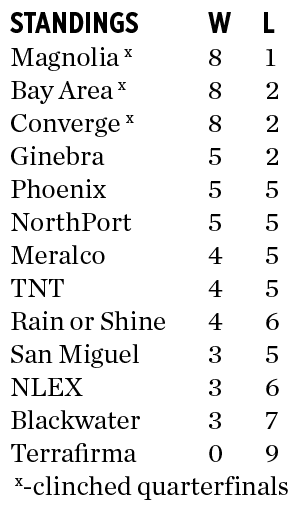
Signing the partnership agreement of Phoenix Petroleum Philippines, Inc. and MyCasa are (from left): Phoenix Business Development Manager Berditho Bagano, MyCasa President Arby Andaya, Phoenix President Henry Albert Fadullon, and Phoenix AVP for Consumer Business Partnerships Jay Mujar.

PHOENIX PETROLEUM, through its car care business Autoworx Plus, recently partnered with home service vehicle maintenance brand MyCasa to offer “upgraded automotive services” for both B2C and B2B customers.

Said Phoenix President Henry Albert Fadullon, “As our way of becoming a more reliable partner to our customers, we are pleased to announce our recent partnership with MyCasa, the pioneer and leading organization that specializes in home service vehicle maintenance.”

Under the partnership agreement, MyCasa will provide home service car care to customers in Metro Manila. These will be serviced by Phoenix Autoworx Plus sites in Timog Avenue in Quezon City, Multinational Avenue in Parañaque, and a soon-to-rise shop in Pasig.

“Our team strives to be creative in complementing our Autoworx Plus offerings by bringing car care services closer to motorists for PMS (preventive maintenance system) and some minor repairs. Integrating the expertise of MyCasa in home service car care with Autoworx Plus will give us leverage in tapping new businesses and markets, allowing us to serve more customers,” stated Phoenix AVP for Consumer Business Partnerships Jay Mujar in a release.

Autoworx Plus is Phoenix Petroleum’s automotive servicing shop that provides reliable, transparent, high-quality, and quick car care and repair through the use of genuine parts and accessories, and quality lubricants with services performed by professional and highly trained technicians. Meanwhile, MyCasa provides professional vehicle maintenance where the customers are.

“We love cars, and we love helping people who depend on vehicles to get to where they want to be. With this partnership with Phoenix and its network of touchpoints, we get to expand our business and serve more people with their car care needs,” averred MyCasa President Arby Andaya.

People facing acute food insecurity reach 345 million worldwide — WFP

REUTERS

BAGHDAD — The number of people facing acute food insecurity worldwide has more than doubled to 345 million since 2019 due to the COVID-19 pandemic, conflict and climate change, the World Food Programme (WFP) said.

Before the coronavirus crisis, 135 million suffered from acute hunger worldwide, Corinne Fleischer, the WFP’s regional director, told Reuters.

The numbers have climbed since and are expected to soar further because of climate change and conflict. The impact of environmental challenges is another destabilizing factor that can drive food scarcity and lead to conflict and mass migration happening.

“The world just can’t afford this,” Ms. Fleischer said. “We see now 10 times more displacement worldwide because of climate change and conflict and of course they are inter-linked. So we are really worried about the compounding effect of COVID, climate change and the war in Ukraine,” she said.

In the Middle East and North Africa, the impact of the Ukraine crisis has had massive repercussions, Ms. Fleischer said, underlining both the import dependency of the region and its proximity to the Black Sea.

“Yemen imports 90% of its food needs. And they took about 30% from the Black Sea,” Ms. Fleischer said.

The WFP supports 13 million of the 16 million people who are in need of food assistance, but that their assistance only covers half a person’s daily needs because of a lack of funds. Costs had gone up 45% on average since COVID and Western donors have faced massive economic challenges with the war in Ukraine.

For oil exporting countries such as Iraq that benefited from the surge in oil prices following the outbreak of the war in Ukraine, food security is at risk. Iraq needs about 5.2 million tons of wheat but only produced 2.3 million tons, she said. The rest had to be imported, which costs more.

Despite state support, severe drought and recurring water crises are endangering the livelihood of smallholders all over Iraq, she said. — Reuters

Investors bullish on URC after spiked spirit foray

UNIVERSAL Robina Corp. (URC) was one of the most actively traded stocks on the local stock exchange last week amid sugar shortage issues as well as its foray into alcoholic beverages.

URC was the fifteenth most traded stock last week, with P469.98 million worth of 3.8 million shares exchanging hands from Aug. 22 to 26 based on the data by the Philippine Stock Exchange.

Shares in the Gokongwei group’s food manufacturing arm went up by 3.5% to P126.30 apiece on Friday from P122 each on Thursday. Week on week, URC dipped by 0.6%. It has fallen by 2.1% since the start of the year.

Diversified Securities, Inc. Equity Trader Aniceto K. Pangan said in an e-mail that the news of the company’s plan to venture into alcoholic beverages made investors buy URC shares last week.

“As it is a million-dollar industry that caters to the young adults, it will definitely boost the revenue of the company as soon as it is introduced to the market,” Mr. Pangan said.

“The issue of the sugar shortage has been all over the news for the past weeks or so, and this somewhat pushed Universal Robinas’ stock price to accelerate. As of the moment, Universal Robina remains to be the largest producer of sugar in the country, and investors must have seen this as a catalyst to buy the stock,” said Jemimah Ryla R. Alfonso, equity analyst at Regina Capital Development Corp.

URC unveiled last week its Chill Spiked Spirit, which is said to have 5% double distilled alcohol, real fruit extract, and soda water, giving the drink the same alcohol strength with a more refreshing taste.

The product will be available in 330-milliliter cans at a suggested retail price of P51 each and will come in three flavors: red apple, lemon lime, and lychee.

“The new spiked spirit could help lift the company’s sales once it takes a hit on the young consumers considering Universal Robina has set a competitive price at P51.00 per can,” Ms. Alfonso said.

URC said that spiked spirits, hard seltzers, and similar beverages “have been disrupting the global beer category,” which it said to account for a 6% share of the alcoholic beverages market in the United States and is projected to soar to $3 billion by 2023.

In the first half of the year, the revenues of URC went up by about 22.9% to P71.11 billion from P57.88 billion a year ago.

Meanwhile, its attributable net income reached P6.2 billion in the six months to June, down by 23% from P8.05 billion last year.

“Universal Robina’s revenues are set to grow by the low double-digits for full year 2022, and topline could reach north of P130 billion. The firm’s performance, however, is largely dependent on how the easing of the macro headwinds would turn out,” said Ms. Alfonso.

Mr. Pangan expects the company’s revenue to hit around P143 billion for this year.

The country has been experiencing a sugar supply shortage — which is disrupting the production lines — due to the higher cost of fertilizer, weed killers, and insecticides.

Last year, the industry was severely affected by Typhoon Odette which inflicted P13.3 billion worth of farm damage, according to the Department of Agriculture.

Press Secretary Rose Beatrix Cruz-Angeles said on Aug. 18 that President Ferdinand R. Marcos, Jr., Senate President Juan Miguel F. Zubiri, and the sugar industry reached an agreement to import 150,000 metric tons (MT) of sugar.

However, the country’s sugar supply deficit is around 600,000 MT, according to Ebb Hinchliffe, executive director of the American Chamber of Commerce of the Philippines.

For this week, Ms. Alfonso expects URC’s long-term trend to be “intact” and to trade within the support and resistance levels of P120 and P127, respectively.

“Looking at the technicals, the selling pressure has been dropping alongside the momentum — which is a good sign for the bulls — as this could mean an accumulation is happening,” said Ms. Alfonso.

Mr. Pangan said that URC would continue to consolidate this week and pegged the stock’s immediate support and immediate resistance levels at P120 and P125, respectively. — Lourdes O. Pilar

Debt yields rise on RTB offering, Powell speech

YIELDS on government securities (GS) rose last week amid strong demand seen for the first retail Treasury bonds (RTBs) offering of the Marcos administration and with the market awaiting more clues on the US Federal Reserve’s policy path.

Debt yields, which move inversely to prices, increased by an average of 6.47 basis points (bps) week on week, based on the PHP Bloomberg Service Reference Rates as of Aug. 26, published on the Philippine Dealing’s Website.

Yields on the short end of the curve climbed the most as the 182-day Treasury bills (T-bills) increased by 19.21 bps (to 3.2516%), followed by the 91-day and 364-day T-bills, which went up by 9.16 bps (2.1447%) and 4.34 bps (3.8085%).

The belly of the curve also rose last week, led by the seven-year Treasury bonds (T-bonds), which climbed by 11.68 bps to yield 5.8643%. Rates of the five-, four-, three-, and two-year T-bonds likewise rose by 8.94 bps (5.5220%), 4.97 bps (5.2525%), 1.99 bps (4.9432%), and 2.31 bps (4.6053%), respectively.

At the long end of the curve, yields on the 10-, 20-, and 25-year papers rose by 7.96 bps (6.0145%), 0.38 bp (6.5791%), and 0.21 bp (6.5673%).

Total GS volume reached P7.967 billion on Friday, higher than the P6.862 billion seen in the week ending Aug. 19.

“The local bond market was mainly on the defensive this past week as market participants looked ahead and anticipated hawkish remarks from US Fed Chair Jerome H. Powell during a conference in Jackson Hole,” a bond trader said in a Viber call.

“Moreover, market players also seemed tied up for the book-building process for the government’s retail Treasury bond offering,” the trader said.

The bond trader said the market was tied up as they expect a “jumbo size” RTB issuance as the rate-setting auction last week was already met with strong demand from investors.

Demand for RTBs rose as global and domestic oil prices climbed again, making the market seek safer investments like government debt.

The government last week raised an initial P162.72 billion from the price-setting auction for its offer of 5.5-year retail bonds as tenders reached P225.32 billion, or more than seven times the P30-billion plan.

The retail bonds fetched a coupon rate of 5.75%, higher than the 4.875% set for the five-year RTBs offered in March.

The offer period for the peso-denominated debt maturing in 2028 is from Aug. 23 to Sept. 2, while settlement is on Sept. 7.

Meanwhile, the Fed began its annual economic symposium in Jackson Hole, Wyoming, on Aug. 26.

Mr. Powell warned in his speech at the event on Friday that the US will see slow economic growth and an increase in unemployment as the central bank continues to raise rates to fight rising inflation.

Mr. Powell said the Fed will raise rates as high as needed and would keep them there “for some time” to bring down inflation.

“Reducing inflation is likely to require a sustained period of below-trend growth. While higher interest rates, slower growth, and softer labor market conditions will bring down inflation, they will also bring some pain to households and businesses. These are the unfortunate costs of reducing inflation. But a failure to restore price stability would mean far greater pain,” he said.

The Fed next meets to discuss policy on Sept. 20-21. It has raised rates by 225 bps so far since March, including back-to-back 75-bp hikes in June and July.

A second bond trader said they expect another hike of 50-75 bps at that meeting following the Fed chief’s hawkish tone.

For this week, both traders said anticipation ahead of the Fed’s meeting next month and the conclusion of the RTB offering will mostly drive yield movements this week.

The second bond trader said yields may continue to rise should the Fed remain hawkish, adding that the market is also awaiting the release of the Bureau of the Treasury’s September borrowing schedule.

“[This] week will be more of the same,” the first bond trader said. “Dealers and investors will remain defensive given that we are about to enter a crucial month for monetary policy as both the Fed and the BSP (Bangko Sentral ng Pilipinas) has scheduled to decide on policy rates later next month, so on that note, yields are expected to move sideways with upward bias.” — B.T.M. Gadon

National Government fiscal performance

The National Government’s budget deficit narrowed in July, as government revenues grew by double-digits, the Bureau of the Treasury (BTr) reported on Friday, with economists attributing this to the uptick in business activity as pandemic restrictions continued to ease. Read the full story.

National Government fiscal performance

How PSEi member stocks performed — August 26, 2022

Here’s a quick glance at how PSEi stocks fared on Friday, August 26, 2022.


PSEi posts strong gains on improved sentiment

PHILIPPINE STAR/KRIZ JOHN ROSALES

THE LOCAL BOURSE posted robust gains in August on improved sentiment amid increased certainty about the economic priorities of the current administration and as listed firms posted strong second-quarter results.

The Philippine Stock Exchange index (PSEi) has gone up by 436.57 points or 6.9% so far this month to end at 6,752.50 on Aug. 26 from its end-July close.

At end-July, the PSEi gained by 2.6% month on month, while in June, it dropped by 9.1%.

Rizal Commercial Banking Corp. Chief Economist Michael L. Ricafort said the PSEi rose as market sentiment was supported by the first State of the Nation Address of President Ferdinand “Bongbong” R. Marcos, Jr. “as it covered a lot of economic-related priorities and reiterated the economic team’s earlier signals, especially economic growth targets and fiscal management in terms of reducing the country’s budget deficit and debt-to-GDP (gross domestic product) ratio.”

“Generally better corporate earnings or results also supported market sentiment and overall valuations,” Mr. Ricafort said in a Viber message.

However, he warned that if the Russia-Ukraine war drags on, it could lead to increased volatility in global financial markets.

Regina Capital Development Corp. Head of Sales Luis A. Limlingan said indicators such as signs of peaking of inflation in the United States and good earnings reports also boosted the market.

“Philippine macro indicators and corporate earnings were also encouraging as the elevated prices of goods did not affect profits as much as analysts expected it would,” Mr. Limlingan said in a Viber message.

“Despite the month of ‘Au-ghost,’ the Philippine index has soared nearly 400 points, indicating that the market is recovering well from the June slump,” Timson Securities, Inc. Head of Online Trading Marc Kebinson L. Lood said in a Viber message.

The ghost month is a period in the Lunar calendar when some Asian investors refrain from making big investments or decisions, resulting in lower trading volumes. For this year, it was set on July 29 to Aug. 26.

“The main factors that contributed to the market’s strong performance are signs of slowing inflation in the Philippines, a lower-than-expected inflation print in the United States, and a better-than-anticipated earnings report from companies, which boosts investor confidence,” Mr. Lood added.

Philippine headline inflation rose further to 6.4% in July from 6.1% in June and 3.7% a year ago, preliminary data from the Philippine Statistics Authority showed.

The July inflation print was the fastest since the 6.9% logged in October 2018.

Meanwhile, consumer prices in the US decelerated last month as gasoline prices dropped sharply, raising market sentiment that the US Federal Reserve may dial back its aggressive interest rate hikes.

The US consumer price index climbed by 8.5% year on year in July, slower than the 9.1% rise in June. — Justine Irish D. Tabile

OCTA: Philippine COVID-19 infections decreasing

PHILIPPINE STAR/EDD GUMBAN

By Kyle Aristophere T. Atienza, Reporter

DAILY coronavirus infections in the Philippines could fall to fewer than 1,000 by mid-September, the OCTA Research Group said on Sunday.

The average daily cases in the past week had fallen to 2,959 as of Aug. 27, 15% lower than a week earlier, OCTA Research fellow Fredegusto P. David said in a report. The daily average hit its highest at 4,071 infections two weeks ago, he added.

The country would likely post fewer than 1,000 daily infections by mid-September and 500 infections by the end of next month, he said.

The virus reproduction number had fallen to 0.91 as of Aug. 24 from 0.96 on Aug. 17. The positivity rate had also decreased to 14.3% from 16.2% as of Aug. 26, he added.

“The current average daily attack rate is 2.69, per 100,000, which is considered low,” Mr. David said. Filipinos are expected to hold more gatherings such as parties during the Christmas holidays.

The Philippines had experienced infection surges in the past holidays, with the highly infectious Omicron variant spreading locally as early as January this year.

“We are still living with COVID-19 even if cases seem low,” the World Health Organization (WHO) said in a Facebook post earlier this month.

It reminded people about the risk of catching the disease, which has killed millions and “can change at any time.” “Not all people with COVID-19 show symptoms. Don’t let cases rise again,” the WHO said. “Avoid getting infected and infecting others.”

Thousands of people are still dying from COVID-19 every week, the WHO said separately in a Facebook post on Aug. 9. “At least one of 10 people with COVID-19 get long-COVID.”

The WHO has been saying that unvaccinated people are 10 times more likely to get seriously ill with the coronavirus than those who have been vaccinated. “Getting vaccinated significantly reduces your chances of getting seriously ill or dying.” 

The Philippine government had fully vaccinated 72.47 million people as of Aug. 27, while 17.82 million people have received booster shots. The state started a campaign in June to encourage more people to get boosters, as the government pushes face-to-face classes this school year.

Last week, millions of children in the Southeast Asian nation returned to schools for their first physical classes in two years.

The government failed to prepare for face-to-face classes while the country was still on lockdown, critics said, noting that students and teachers endured classroom shortages on the first day of school.

A group of teachers earlier said the Department of Education should have limited the number of students per class. Aside from the coronavirus, the monkeypox virus also threatens Filipinos.

The Department of Health this month said monkeypox should not become a reason for the government to delay or to stop the opening of classes.

It said safeguards were in place to keep students safe. The Philippines has recorded four cases of monkeypox, which spreads via contact and causes flu-like symptoms and pus-filled skin lesions.

New monkeypox cases have fallen in some major cities in the United States, CNBC reported.

“Although monkeypox cases are still increasing nationally, the speed of the outbreak appears to be slowing,” it said, citing an official at the US Centers for Disease Control and Prevention (CDC).

The US is watching this with cautious optimism, and hopeful that many of its harm-reduction messages and vaccines were getting out there and working, CNBC said, citing CDC Director Rochelle Paula Walensky.

The number of monkeypox cases reported globally declined by 21% two weeks ago, Reuters reported, citing an epidemiological report by the WHO.

“The decrease in case numbers may potentially signal that the outbreak is declining in the European region,” it said Aug. 25.

Still, almost two-dozen countries have experienced a rise in weekly monkeypox cases, with the highest increase reported in the US, it said. More than 34% of infected people globally were in the US.

Gov’t told not to abolish PCGG during Marcos rule

EX-PHILIPPINE President Ferdinand E. Marcos and his family at the presidential palace on the day of his 1965 inaugural. — MALACANANG.GOV.PH

By John Victor D. Ordoñez, Reporter

THE PRESIDENTIAL Commission on Good Government (PCGG) should not be abolished during Philippine President Ferdinand R. Marcos, Jr.’s rule due to conflict of interest, according to political analysts.

“The PCGG should eventually be abolished but not now and not during the Marcos administration,” Antonio M. La Viña, a human rights lawyer and former dean of the Ateneo School of Government, said in a Facebook Messenger chat.

“It’s in bad taste to do that now. I suggest a 10-year time frame for proper closure of all the cases that are still pending.”

Executive Secretary Victor D. Rodriguez did not immediately reply to a Viber message seeking comment.

At a House of Representatives hearing last week, Cagayan de Oro Rep. Rufus B. Rodriguez and Cavite Rep. Elpidio F. Barza, Jr. said the PCGG had “outlived its usefulness,” adding that agencies such as the Department of Justice and Office of the Ombudsman could take over pending ill-gotten wealth cases.

The late Corazon C. Aquino created the PCGG in 1986 to go after the ill-gotten assets of the late dictator Ferdinand E. Marcos, his family and cronies that were amassed during his two-decade reign. The elder Marcos is the father of the current Philippine president.

PCGG Chairman John A. Agbayani said the agency should be strengthened to help relieve other agencies of handling graft and corruption cases, according to a live-streamed video of the hearing. He noted that for this year alone, the PCGG has remitted P850 million to the Treasury bureau.

Abolishing the PCGG would be an attempt to “dismantle the institutional condemnation of everything the elder Marcos has done,” Hansley A. Juliano, a former political science professor studying at Nagoya University’s Graduate School of International Development in Japan, said in a Facebook Messenger chat.

“There are so many other cases, both local and international, regarding the Marcoses’ ill-gotten wealth that have not been properly processed, not to mention the other cases of corruption of other politicians over the years.”

Last week, the Campaign Against the Return of the Marcoses and Martial Law opposed a proposal to abolish the PCGG. Reassigning pending corruption cases to other agencies could slow proceedings, it said.

“Much more can be discovered and recovered, but abolishing the institution will only put all such efforts down the drain,” it said in a statement.

A popular street uprising toppled the dictator’s regime in February 1986, forcing him and his family to flee into exile in the United States.

The president earlier asked the country’s anti-graft court Sandiganbayan to consider the dismissal of several ill-gotten wealth lawsuits against his family in a similar case.

In July, the Sandiganbayan Fourth Division affirmed its 2019 ruling that dismissed the state’s lawsuit seeking to recover at least four Marcos properties in the absence of sufficient evidence that these had been illegally obtained.

The PCGG filed the case in 1987, accusing business associates of the late dictator and his wife Imelda of acting as their dummies to acquire ill-gotten assets.

Some of the associates are set to present evidence at the case’s next pre-trial hearing on Sept. 1.

After the elder Marcos’ death in 1989, the court ordered his heirs — Imelda, Marcos Jr. and his sisters Imee and Irene — to substitute for him in the case.

The anti-graft court last month allowed the Marcos family to present evidence, rejecting the government’s motion to waive the family’s right to present evidence.

Political analysts have said an unfavorable judgment against the Marcoses could lead to a constitutional crisis since law enforcers are under the president.

A favorable outcome could result in more allegations of using executive power to influence other institutions to protect himself and his family’s interests, Maria Ela L. Atienza, who teaches political science at the University of the Philippines, said on July 9.

In 2003, the Philippine Supreme Court awarded the Philippine government $658 million (P37 billion) of the dictator’s frozen Swiss bank deposits. The court ruled only about $304,000 of the Marcos family’s income was lawful.

Former Supreme Court Justice Antonio T. Carpio had said the former president’s unpaid estate tax, worth P23 million in 1997, had ballooned to more than P200 billion due to interests and other fees.

Tax bureau chief Lillia C. Guillermo said she would enforce the collection of the unpaid estate tax of the elder Marcos as ordered by the courts.

Among the ill-gotten assets recovered by the government were shares in Philippine Long Distance Telephone Co. worth P25.2 billion, shares in Philippine Telecoms Investment Corp. worth P25.2 billion, several houses in Baguio City and 526 art pieces now under the custody of the Philippine central bank.

Analysts: ‘Learning poverty’ could spur labor crisis 

PHILIPPINE STAR/ MIGUEL DE GUZMAN

By Alyssa Nicole O. Tan, Reporter 

THE COUNTRY’s so-called learning poverty could spur a workforce crisis if not resolved soon, according to education experts. 

“If learning poverty in the country will not be urgently addressed, our future human resources will be a major challenge to our economic development,” Jerome T. Buenviaje, dean of the University of the Philippines College of Education said in an e-mail. 

“This simply means producing a generation whose skills are not aligned with the need of our country,” he said, noting that the country relies a lot on the service economy, which requires 21st-century learning skills. 

The Philippines’ learning poverty is among the highest in the region, with nine of 10 Filipinos unable to read and understand short, age-appropriate texts by the age of 10, according to the World Bank. It added that 5% of children who should be in primary school are not enrolled. 

“Reading is the gateway to learning,” Philippine Business for Education Acting Executive Director Justine B. Raagas said in a Viber message. “It is a basic skill that makes all other learning possible, and it is a basic skill needed for an individual to progress in school and join the workforce.” 

“Our learners would not be able to build a better career if they have poor literacy skills,” she added. 

One of two Filipino workers did not finish high school, Ms. Raagas said, citing a labor force survey in June. The lack of basic competencies and qualifications translated to a high underemployment rate. 

About 5.8 million Filipinos were working in low-skilled positions with inadequate pay. “An educated workforce means shared economic prosperity for everyone,” she added. 

Mr. Buenviaje said all education levels are important, but basic education should be prioritized for budget allocations. “This is where the biggest number of learners belong.” 

“Budget allocations should prioritize the improvement of learning environments, organizational development, learning material production and keeping the health and well-being of all stakeholders,” he said. 

The government should aim to build a stronger education system that will help it achieve its quality education agenda and other sustainable development goals, he added. 

Ms. Raagas said she agreed with the government’s decision to allot about 80% of the education sector’s budget for the salaries and benefits of teachers. 

“A low-hanging fruit is to reduce administrative work from teachers so that they can focus on improving themselves and their instruction,” she said. “In the mid-term, we must ensure that we increase their capacity and quality by providing them with better skill training.” 

The government of President Ferdinand R. Marcos, Jr. has said the coronavirus pandemic would no longer become an excuse to suspend face-to-face classes. 

Vice-President Sara Duterte-Carpio, who serves as Education secretary, rejected calls to move the opening of school day to September or October. 

Ms. Raagas said the vice-president should use her political capital to improve the educational system. “The convergence of tools, resources, networks, and technical expertise from the education and private sector is needed to address our country’s learning crisis.” 

She also cited the need to make the education sector more autonomous, noting that local governments and schools should be held accountable. 

“Studies show that students in countries with greater school autonomy tend to perform better. Their autonomy covers what and how students are taught and how they are assessed.”

Local governments should also play a larger role and work with local school systems. 

Mr. Buenviaje said state efforts to handle the education crisis are at an early stage and could be improved further. 

He called for a whole-government approach where different agencies work with the Department of Education to come up with effective policies. “It is also important to make schooling attractive to learners, parents and other stakeholders.” 

“The active participation of local government units and the influence of mainstream and social media can be used to promote back-to-school campaigns and other programs that will increase school enrollment,” he added.