Home Blog Page 558

Top Indian arms makers held rare meetings in Russia on potential joint ventures, sources say

A WORKER folds an Indian flag at a workshop in India, Aug. 11, 2005. — REUTERS

NEW DELHI — At least half a dozen executives from top Indian arms makers, including Adani Defense and Bharat Forge, attended rare meetings in Russia this year to discuss potential joint ventures, three people familiar with the matter said.

The meetings took place during the first visit of India’s defense business leaders to Russia since Moscow’s 2022 invasion of Ukraine. The visit by the defense business leaders had not previously been reported. The Indian government is seeking to reorientate its decades-old defense ties with Russia to focus on joint development of weapons.

After the article was published, a spokesperson for Bharat Forge denied, and an Adani Group spokesperson reiterated its denial, that executives from any of their companies had attended the meetings.

“No Adani representative attended or participated in any meetings in Russia — official or otherwise,” an Adani spokesperson said in a statement. “Any reporting that states or implies otherwise is false.”

Following the story’s publication, the three people and another government source confirmed to Reuters that the meetings had taken place and that representatives of Adani Group and Bharat Forge had attended.

A Reuters spokesperson said: “We stand by our reporting.”

India’s defense ministry declined to comment on this story. It had also not responded to a request for comment earlier.

Any potential collaboration with Russia risks setting back plans by Indian defense firms to jointly develop Western arms as part of Prime Minister Narendra Modi’s push to make India, one of the world’s biggest arms importers, a global manufacturing hub.

Western diplomats have previously said that a key obstacle to the transfer of sensitive military technology to India is its defense ties with Russia and the vast amount of Russian-origin arms used by the Indian military, totaling about 36%.

The talks in Moscow were held on the sidelines of a visit by an Indian defense-industrial delegation on Oct. 29-30, headed by India’s Defense Production Secretary Sanjeev Kumar, that was aimed at laying the ground for Russian President Vladimir Putin’s visit to India on Dec. 4-5.

JOINT PRODUCTION IN INDIA
The meetings discussed the potential for manufacturing of spares for Mikoyan MiG-29 fighter jets, and other Russian-origin air defense and weapon systems, as well as a Russian proposal to set up production units in India for development of equipment that could potentially also be exported to Moscow, said two of the sources and another industry executive.

They spoke on condition of anonymity, citing the sensitivity of the matter.

Russia has been India’s top arms supplier for decades, and during Mr. Putin’s visit the two sides said they had agreed to reorient their partnership “to joint research and development, co-development and co-production of advanced defense technology and systems” to support India’s self-reliance in defense.

INDIAN EXECUTIVES IN MOSCOW
A broad delegation of representatives from defense units of Indian conglomerates, state-owned firms, as well as startups involved in the development of drones and artificial intelligence for military use attended the meetings, the sources said.

An executive at engineering conglomerate Kalyani Group’s Bharat Forge, which makes components for missiles and artillery guns, attended the meetings as part of efforts to source or jointly develop components for Russian-origin tanks and aircraft as well as to explore potential future collaboration on helicopters, two of the sources said.

Adani Defense and Aerospace, a unit of billionaire Gautam Adani’s apples-to-airports conglomerate Adani Group, was represented by its Chief Executive Officer Ashish Rajvanshi, the sources said.

Also attending was an executive from the Society of Indian Defense Manufacturers’ (SIDM) advisory group that lists more than 500 arms and military equipment makers as its members, including the defense arms of conglomerates Tata Sons, Larsen & Toubro, and state-owned firms such as Bharat Electronics.

An SIDM spokesperson said no one from the group attended any such meetings.

Spokespeople for Tata Sons and Larsen & Toubro said none of their representatives attended any meetings in Russia. Reuters was unable to determine if Bharat Electronics was part of the business delegation. It did not immediately respond to a request for comment.

Retired Lieutenant General Arun Sahni, who is an adviser to the defense unit of Tata Sons, said following the Reuters story that he was in Moscow in November in a personal capacity, and not as a representative of the firm.

Mr. Sahni said he did not attend the meetings of Indian defense business leaders in Moscow on Oct. 29-30, but said he knew that they had happened but was not aware of the firms in attendance.

SANCTIONS RISK
Reuters reported in 2024 that a Bharat Forge subsidiary was among the three Indian firms that exported artillery shells to Europe, some of which were later diverted to Ukraine, resulting in a diplomatic protest from Moscow.

Indian firms, however, would be hesitant about striking new deals with Russia due to the risk of secondary sanctions, an Indian executive said.

While India can use diplomatic outreach and lobbying to offer some protection from sanctions, an Indian defense official said the firms would have to factor in the political risks themselves. — Reuters

South Korea nominee for media commission to seek social media curbs for teens

A person using a smartphone is seen in front of displayed social media logos in this illustration taken on May 25, 2021. — REUTERS

SEOUL — The nominee to head South Korea’s broadcast and media commission told parliament on Tuesday he would pursue imposing restrictions on social media use for teenagers, saying it was a priority as a means to protect young people.

Kim Jong-cheol said during a hearing on his nomination that it was a key part of the commission’s mission to ensure the public can “engage in communication in a safe and free environment and in an orderly manner.”

When asked if the government would consider introducing restrictions on social media use for young people such as the measures implemented in Australia, Mr. Kim responded: “I believe we have to, of course.”

“I believe protecting young people in that aspect is an important and key goal and I intend to pursue the job with that in mind,” he said.

Australia earlier this month became the first country to ban social media for children under 16, and other countries are considering similar age-based measures as concerns grow over the effects of social media on young people’s health and safety. — Reuters

Thailand works to repatriate thousands stranded at Cambodia border crossing

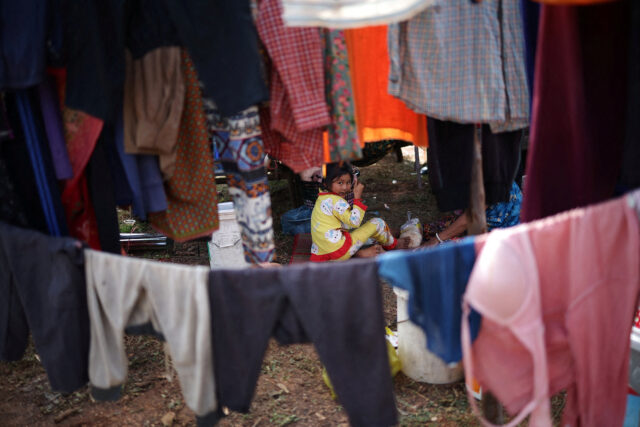
A girl eats a meal at Chong Kal refugee camp on Dec. 11, 2025 after evacuation amid deadly clashes between Thailand and Cambodia along a disputed border area in Chong Kal, Oddar Meanchey Province, Cambodia. — REUTERS

BANGKOK — Thailand is working out how to repatriate up to 6,000 citizens unable to return home through a major border crossing in Cambodia closed as fighting along the contested border extended into a second week, authorities said on Tuesday.

The militaries of the Southeast Asian neighbors are clashing at several locations on their 817 kilometer (508 mile) land border, both have said, with no signs of abatement, despite international efforts to negotiate a ceasefire.

Cambodia’s closure of its checkpoint in the city of Poipet has prevented the return of thousands of Thai workers gathered there amid fighting that has displaced more than half a million people and killed nearly 40 on both sides since last Monday.

Hun Sen, Cambodia’s influential former leader, has said the closure aimed to protect civilians from what he called indiscriminate firing by Thai forces in the area.

But checkpoints were open in areas free of fighting and air travel was unrestricted, he added.

In Bangkok on Tuesday, the foreign ministry said Thais in Poipet could seek help to arrange air travel home from the consulate in the city of Siem Reap, the gateway to the Angkor Wat temple complex.

It urged others still in Cambodia to contact officials if they needed to leave.

Efforts to end the fighting have included calls from US President Donald Trump, who also brokered a halt to a five-day conflict in July by using trade negotiations as leverage.

“The army said there has been continuous fighting across the border line. The situation is still in flux,” said Surasant Kongsiri, a spokesman of the Thai defense ministry, with fighting reported in eight border provinces.

Cambodia’s forces would “continue to stand strong, brave and steadfast in their fight against the aggressor”, its defense ministry said.

There was no international pressure for a ceasefire, Thai Prime Minister Anutin Charnvirakul told journalists in response to a question.

“No one is pressuring us. Who is pressuring whom? I don’t know,” he said, but did not answer a query whether Mr. Trump was using the threat of tariff measures to pressure Thailand to stop the conflict.

The neighbors have long disputed sections of the frontier, but the scale and intensity of the latest clashes, stretching from forested inland areas near the Laos border to coastal provinces, are unprecedented in recent history.

Each side blames the other for starting the fighting.

Malaysia will host a special meeting of Southeast Asian foreign ministers next week as the regional bloc tries to re-establish the ceasefire. — Reuters

Iraq’s dreams of wheat independence dashed by water crisis 

PHILSTAR FILE PHOTO

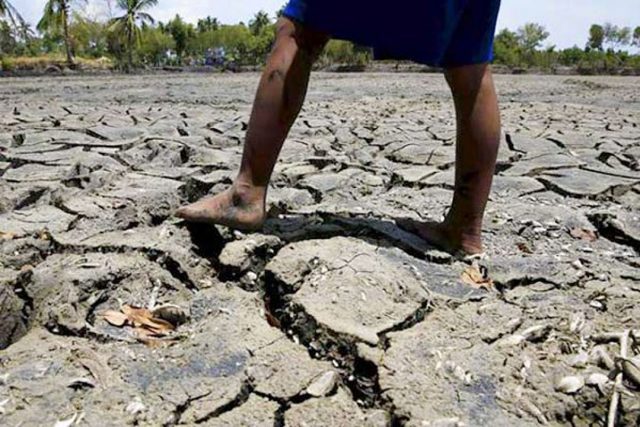
NAJAF, Iraq — Iraqi wheat farmer Ma’an al-Fatlawi has long depended on the nearby Euphrates River to feed his fields near the city of Najaf. But this year, those waters, which made the Fertile Crescent a cradle of ancient civilization 10,000 years ago, are drying up, and he sees few options.

“Drilling wells is not successful in our land, because the water is saline,” Mr. al-Fatlawi said, as he stood by an irrigation canal near his parched fields awaiting the release of his allotted water supply.

A push by Iraq – historically among the Middle East’s biggest wheat importers – to guarantee food security by ensuring wheat production covers the country’s needs has led to three successive annual surpluses of the staple grain.

But those hard-won advances are now under threat as the driest year in modern history and record-low water levels in the Tigris and Euphrates rivers have reduced planting and could slash the harvest by up to 50% this season.

“Iraq is facing one of the most severe droughts that has been observed in decades,” the UN Food and Agriculture Organization’s Iraq representative Salah El Hajj Hassan told Reuters.

VULNERABLE TO NATURE AND NEIGHBORS
The crisis is laying bare Iraq’s vulnerability.

A largely desert nation, Iraq ranks fifth globally for climate risk, according to the UN’s Global Environment Outlook. Average temperatures in Iraq have risen nearly half a degree Celsius per decade since 2000 and could climb by up to 5.6 C by the end of the century compared to the period before industrialization, according to the International Energy Agency. Rainfall is projected to decline.

But Iraq is also at the mercy of its neighbors for 70% of its water supply. And Turkey and Iran have been using upstream dams to take a greater share of the region’s shared resource.

The FAO says the diminishing amount of water that has trickled down to Iraq is the biggest factor behind the current crisis, which has forced Baghdad to introduce rationing.

Iraq’s water reserves have plunged from 60 billion cubic meters in 2020 to less than 4 billion today, said El Hajj Hassan, who expects wheat production this season to drop by 30% to 50%.

“Rain-fed and irrigated agriculture are directly affected nationwide,” he said.

EFFORTS TO END IMPORT DEPENDENCE UNDER THREAT
To wean the country off its dependence on imports, Iraq’s government has in recent years paid for high-yield seeds and inputs, promoted modern irrigation and desert farming to expand cultivation, and subsidized grain purchases to offer farmers more than double global wheat prices.

It is a plan that, though expensive, has boosted strategic wheat reserves to over 6 million metric tons in some seasons, overwhelming Iraq’s silo capacity. The government, which purchased around 5.1 million tons of the 2025 harvest, said in September that those reserves could meet up to a year of demand.

Others, however, including Harry Istepanian – a water expert and founder of Iraq Climate Change Center – now expect imports to rise again, putting the country at greater risk of higher food prices with knock-on effects for trade and government budgets.

“Iraq’s water and food security crisis is no longer just an environmental problem; it has immediate economic and security spillovers,” Mr. Istepanian told Reuters.

A preliminary FAO forecast anticipates wheat import needs for the 2025/26 marketing year to increase to about 2.4 million tons.

Global wheat markets are currently oversupplied, offering cheaper options, but Iraq could once again face price volatility.

Iraq’s trade ministry did not respond to a request for comment on the likelihood of increased imports.

In response to the crisis, the ministry of agriculture capped river-irrigated wheat at 1 million dunams in the 2025/26 season – half last season’s level – and mandated modern irrigation techniques including drip and sprinkler systems to replace flood irrigation through open canals, which loses water through evaporation and seepage.

A dunam is a measurement of area roughly equivalent to a quarter acre.

The ministry is allocating 3.5 million dunams in desert areas using groundwater. That too is contingent on the use of modern irrigation.

“The plan was implemented in two phases,” said Mahdi Dhamad al-Qaisi, an advisor to the agriculture minister. “Both require modern irrigation.”

Rice cultivation, meanwhile, which is far more water-intensive than wheat, was banned nationwide.

RURAL LIVELIHOODS AT RISK
One ton of wheat production in Iraq requires about 1,100 cubic meters of water, said Ammar Abdul-Khaliq, head of the Wells and Groundwater Authority in southern Iraq. Pivoting to more dependence on wells to replace river water is risky.

“If water extraction continues without scientific study, groundwater reserves will decline,” he said.

Basra aquifers, he said, have already fallen by three to five meters.

Groundwater irrigation systems are also expensive due to the required infrastructure like sprinklers and concrete basins. That presents a further economic challenge to rural Iraqis, who make up around 30% of the population.

Some 170,000 people have already been displaced in rural areas due to water scarcity, the FAO’s El Hajj Hassan said.

“This is not a matter of only food security,” he said. “It’s worse when we look at it from the perspective of livelihoods.”

At his farm in Najaf, Mr. al-Fatlawi is now experiencing that first-hand, having cut his wheat acreage to a fifth of its normal level this season and laid off all but two of his 10 workers.

“We rely on river water,” he said. — Reuters

Malaysian PM Anwar to unveil new cabinet members on Tuesday

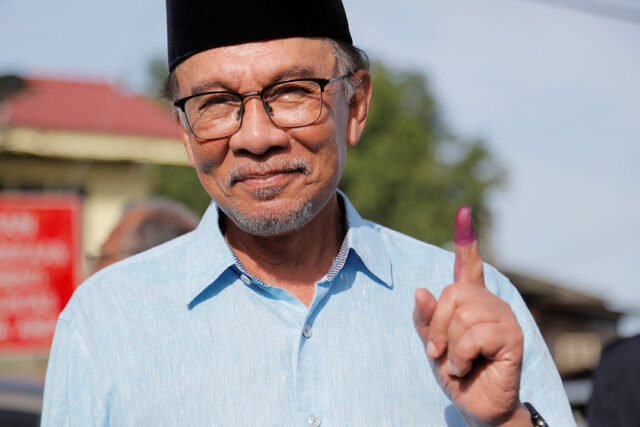
Malaysia’s Prime Minister Anwar Ibrahim — REUTERS

KUALA LUMPUR — Malaysia’s Prime Minister Anwar Ibrahim will appoint new ministers on Tuesday, as he looks to stabilize his administration and fill the vacancies in his cabinet arising from resignations and expired senate terms.

The Southeast Asian nation has seen steady economic growth and a boost in foreign investment since Mr. Anwar took office in November 2022, but his administration has been rocked by internal disagreements among cabinet members and public discontent over rising living costs.

Mr. Anwar said in a social media post that he would make a special announcement about the cabinet on Tuesday, with an accompanying infographic saying the statement would be broadcast at 3.30 p.m. local time (0730 GMT).

The government “will continue to prioritize strengthening governance and policy implementation for the well-being of the people and the nation,” Mr. Anwar said in the post.

Two ministers resigned in May after losing their leadership positions in the premier’s party, while a third quit last month due to unhappiness over the federal government’s position on state rights.

Mr. Anwar will also be looking to replace Tengku Zafrul Aziz, who as trade minister this year led Malaysia’s negotiations with the United States on tariff issues.

His senatorship term expired on December 2 and he has since been appointed head of the Malaysian Investment Development Authority.

Mr. Anwar last made major changes to his cabinet in December 2023 following a dip in opinion polls at the time, amid concerns over the state of the economy, inflation, and the slow pace of promised reforms.

Malaysia’s cabinet comprises elected federal and state lawmakers from both houses of parliament, as well as appointed senators in the upper house. — Reuters

Ford’s $19.5 billion EV writedown: five things to know

FORD MOTOR announced a $19.5 billion charge on electric-vehicle investments on Monday, the most visible sign to date of the auto industry’s pullback from a technology carmakers wholeheartedly embraced early this decade.

Much of that sum reflects expenses related to canceling fully electric models that had been years in the making. Ford is shifting much of its focus to expanding conventional gas models as well as hybrid vehicles in an effort to better match the preferences of American car buyers.

Here are some notable aspects of Ford’s announcement:

WHAT’S IN THE WRITEDOWN?
About $8.5 billion is tied to costs associated with killing several future EVs, including a planned large pickup truck that was to be built in Tennessee. Ford also is writing down $6 billion from a joint-venture battery operation with South Korea’s SK On – that company announced the end of the partnership last week.

Ford described another $5 billion as “additional program-related expenses.” Of the total charges, only about $5.5 billion will impact cash, which Ford said would be incurred next year and into 2027.

EV MODELS SCRAPPED
Ford is effectively scrapping all of its next-generation electric vehicles, including the large pickup as well as some commercial vans. That Tennessee plant, which was envisioned to eventually crank out 500,000 EV trucks when Ford announced details of the manufacturing complex in 2023, now will build gas-powered trucks.

That leaves Ford’s EV strategy focused on a family of more affordable models that a so-called skunkworks team in California has been developing. The company has said the first model from that effort will be a midsize pickup truck, to be priced around $30,000 when it goes on sale, set for 2027.

CUTTING LOSSES
Like nearly every traditional automaker, Ford has been losing money on its EV operations – $5 billion in 2024, and likely billions more this year. A major factor is the high cost of batteries, which have not declined as fast as expected, auto executives have said.

In effect, the company is cutting its losses by incurring big charges now. Reducing its exposure to money-losing EVs should help its bottom line in coming quarters. Executives said the EV business should become profitable in 2029.

HYBRIDS IN FOCUS
Ford said hybrid cars, which use gas engines along with batteries to improve power and fuel efficiency, will drive growth in coming years. The company expects its global mix of hybrids, extended-range EVs, and pure EVs to reach 50% of vehicle sales by 2030, from 17% today.

One example: the Ford F-150 Lightning, a fully electric truck on sale since 2022, which Ford says will eventually be remade into an extended-range electric truck. That setup will include a gas-powered generator that would charge the battery on the go, offering the driver 1126 kilometers (700 miles) of range without needing to recharge or refuel.

BATTERY STORAGE BOOM
Ford will use factories in Kentucky and Michigan to make batteries for energy-storage services, which are in high demand from data centers tied to the artificial intelligence boom. The company described it as a new business that would include sales and service, and said it would invest $2 billion to launch the operation over the next two years. — Reuters

Pag-IBIG Fund rewards members in yearend raffle draws with prizes of up to P500,000

Pag-IBIG Fund held the yearend grand draws of its One-Plus-One Raffle Promo and Multi-Purpose Loan (MPL) Loan-to-Win Raffle Promo on Dec. 16 in Makati City, with winners receiving prizes of up to P500,000.

Pag-IBIG Fund’s One-Plus-One Raffle Promo helped expand Pag-IBIG Fund membership, including among overseas Filipino workers and informal sector workers, while the MPL Loan-to-Win Raffle Promo rewarded members who turned to Pag-IBIG Fund’s cash loan for their financial needs. The initiatives form part of the agency’s efforts to deliver on the directive of President Ferdinand Marcos, Jr. to ensure that more Filipino workers, including those in the informal sector, have a fair opportunity to own a home and secure a stable future.

The One-Plus-One Raffle Promo, which began in January, encouraged active members to become PagIBIGfluencers and invite nonmembers to register with the agency, or inactive members to reactivate their membership, supporting wider access to the agency’s savings and housing programs. Earlier draws produced winners among PagIBIGfluencers and their referred “plus ones,” culminating in the yearend grand draw.

The MPL Loan-to-Win Raffle Promo, for its part, began in February and covered eligible members who took out a Pag-IBIG Multi-Purpose Loan, a short-term cash loan that can help pay for medical expenses, education, small business capital and household needs. Eligible borrowers received one raffle entry for each approved loan, with additional entries for loans applied for online via Virtual Pag-IBIG, first-time MPL borrowers and loans worth more than P50,000.

The One-Plus-One Grand Draw produced three winning pairs for the promo’s top prizes, with one pair receiving P500,000 each, one pair receiving P250,000 each and one pair receiving P100,000 each. The draw also produced 30 “plus ones” and 30 PagIBIGfluencers who won P10,000 consolation prizes each.The MPL Loan-to-Win Grand Draw produced 24 winners, with four receiving P50,000, four receiving P40,000 and 16 receiving P30,000, while 80 other MPL borrowers won P10,000 as consolation prizes.

The winners in the yearend draws joined the 756 winners of the MPL promo and 94 winners of the One-Plus-One promo in earlier draws. Details on winners and prize claiming are available on the Pag-IBIG Fund website and official Facebook page.


Spotlight is BusinessWorld’s sponsored section that allows advertisers to amplify their brand and connect with BusinessWorld’s audience by publishing their stories on the BusinessWorld Web site. For more information, send an email to online@bworldonline.com.

Join us on Viber at https://bit.ly/3hv6bLA to get more updates and subscribe to BusinessWorld’s titles and get exclusive content through www.bworld-x.com.

Philippines confirms visit by alleged Bondi gunmen amid terrorism concerns

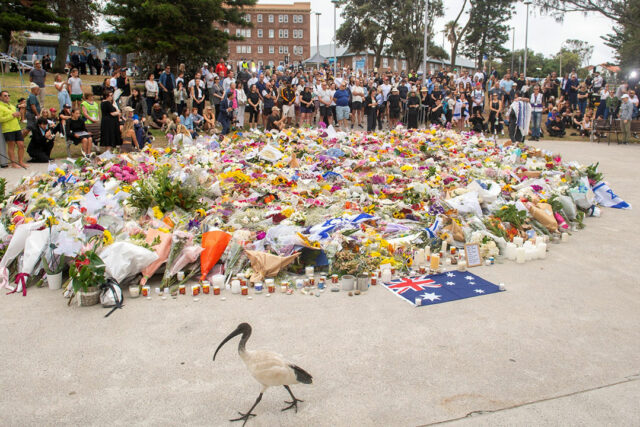
People gather at the floral tribute at Bondi Beach to honor the victims of a mass shooting targeting a Hanukkah celebration on Sunday at Bondi Beach in Sydney, Australia. — REUTERS

MANILA — The Philippines Bureau of Immigration said on Tuesday that the two alleged gunmen behind the mass shooting at Sydney’s Bondi Beach traveled to the Philippines on November 1 aboard Philippine Airlines Flight PR212 from Sydney to Manila and onward to Davao.

A spokesperson for the bureau said that Sajid Akram, 50, an Indian national and Australian resident, travelled on an Indian passport, while his son Naveed Akram, 24, an Australian national, used an Australian passport. Both arrived together on that flight.

They departed on November 28 on the same flight number, PR212, from Davao via Manila back to Sydney, weeks before the assault that killed 15 people.

The attack on Sunday was Australia’s worst mass shooting in nearly 30 years, and is being investigated as an act of terrorism targeting the Jewish community.

It was not immediately clear what activities they undertook in the Philippines or whether they traveled elsewhere after landing in Davao, a city in Mindanao, a region where terrorist groups, including ISIS-linked factions, have operated.

In 2017, Islamic State-inspired militants seized parts of the southern city of Marawi and held it through five months of ground offensives and air strikes by the military.

The siege of Marawi, the country’s biggest battle since World War Two, displaced some 350,000 residents and more than 1,100 people were killed, mostly militants.

While the Armed Forces of the Philippines is validating the reports, its spokesperson said in a statement the military is closely coordinating with relevant agencies on matters involving the movements of foreign nationals and potential terrorist ties. — Reuters

Ayala Land sells 50% stake in Alabang Town Center for P13.5 billion

https://www.philstar.com/

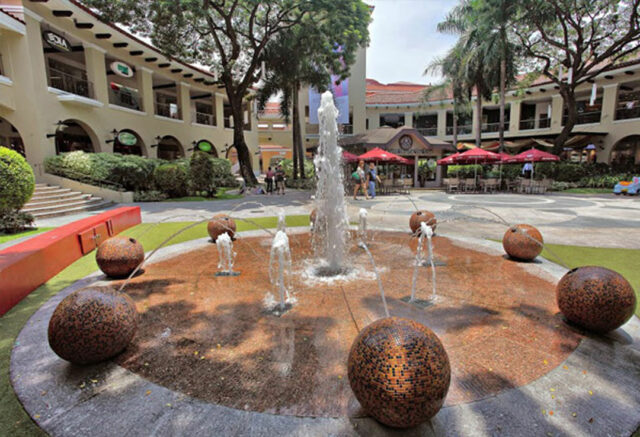
Ayala Land, Inc. (ALI) has signed a share purchase agreement to sell its 50% ownership in Alabang Commercial Center Corp., the company that owns and operates Alabang Town Center in Muntinlupa City, for P13.5 billion.

In a disclosure on Tuesday, the property developer said the agreement was executed with its existing joint-venture partner and is subject to customary closing conditions.

ALI said the unsolicited offer provided a premium, allowing the company to recognize gains from the sale and monetize its stake in Alabang Town Center.

Proceeds from the transaction will be used to support the growth of ALI’s leasing portfolio and to provide a return of capital to stakeholders, the company said. — ALB

Romero led 2nd Air Force Wing Command brings Holiday cheer to Aeta indigenous children and families in Angeles City

The 2nd Air Force Wing Command under the leadership of former House Deputy Speaker and Colonel Michael Odylon “Mikee” Romero delivered a heart-warming “Wings Christmas Community Development” relief mission to over 200 Aeta Indigenous People (IP) children and families in Sapang Bato, Angeles City.

“Today, the 2nd Air Force Wing Reserve, 2nd ARCEN, and Class Salimbay 2025 gave toys, gifts, and food packs — including 5 kilos of rice per family — to 100 Aeta IP children and 100 Indigenous families here as part of our Wings Christmas Community Development,” Col. Romero said. “This effort reflects our deep commitment to uplift marginalized communities, spread joy during the holiday season, and bring meaningful support to our countrymen wherever they are.”

The relief effort included the distribution of toys, gifts, and essential food items — with each family receiving 5 kilos of rice — bringing both immediate relief and Christmas cheer to communities that often have limited access to basic services.

Col. Romero, PhD, a Philippine Air Force reservist and long-time public servant, has been widely recognized for his humanitarian and community outreach initiatives throughout the country specially during pandemic. His extensive work with ARRAPI, a key partner of the Armed Forces of the Philippines in civil-military operations, continues to expand disaster-response readiness, deliver critical aid, and strengthen frontline support networks. ARRAPI now counts more than 5,000 trained reservists nationwide, ready to respond to emergencies and provide humanitarian assistance across regions.

Col. Romero was recently honored with the 2025 Philippine Choice Award for Outstanding Humanitarian and Community Service in recognition of his unwavering dedication to uplifting underserved communities through healthcare missions, education support, disaster response, and direct aid distribution across geographically isolated and disadvantaged areas nationwide.

His humanitarian footprint includes medical and dental missions, the distribution of medical equipment in far-flung islands, rebuilding schools damaged by fire and natural calamities, and delivering emergency food and supplies in times of crisis — reaching from Basco, Batanes to the remote island communities of Tawi-Tawi.

Before transitioning fully to reserve leadership and philanthropic work, Col. Romero served three terms in the Philippine House of Representatives, where he was widely regarded as a “people’s lawmaker.” Among his legislative priorities were programs aimed at poverty alleviation, community welfare, and expanding access to essential services. As chair of the House Committee on Poverty Alleviation, he was the principal author of measures strengthening support for vulnerable families, including conditional cash transfer programs that eventually became law, helping reduce poverty and improve social support systems for millions of Filipinos.

Col. Romero also authored or sponsored a range of bills focused on national development, consumer protection, health, rural financing, and agricultural support, demonstrating his broad commitment to holistic national progress.

Through ARRAPI and his ongoing community development efforts, Col. Romero continues to champion a vision of service, solidarity, and nation-building, ensuring that even the most remote and underserved communities feel supported and valued.


Spotlight is BusinessWorld’s sponsored section that allows advertisers to amplify their brand and connect with BusinessWorld’s audience by publishing their stories on the BusinessWorld Web site. For more information, send an email to online@bworldonline.com.

Join us on Viber at https://bit.ly/3hv6bLA to get more updates and subscribe to BusinessWorld’s titles and get exclusive content through www.bworld-x.com.

US to invite Philippines to AI pact talks amid tech dominance push

The Pax Silica Summit is a historic gathering of nations at the forefront of the global AI supply chain. — OFFICE OF THE UNDER SECRETARY FOR ECONOMIC AFFAIRS, US DEPT. OF STATE OFFICIAL LINKEDIN PAGE

The US plans to invite the Philippines to join a multinational initiative to bolster supply chains for technology vital to artificial intelligence (AI), a top US Department of State official said on Tuesday, as Washington moves to secure dominance in the advanced sector.

Manila’s role in the US-led Pax Silica initiative could center on strengthening supply chains for materials and products vital to AI, US Under Secretary of State for Economic Growth, Energy and the Environment Jacob Helberg said.

Mr. Helberg said there had already been exchanges with his Philippine counterparts on possible deeper supply chain ties, but he did not elaborate on the plan or identify the officials he spoke with.

“We are very eager and look forward to engaging the Philippines on Pax Silica,” he told a virtual media briefing.

“I plan to extend an invitation to my counterpart in the first half of next year in order to be able to resume these discussions face-to-face, and we are confident they’re going to be very fruitful exchanges,” he added.

The US-led C was launched last week with initial partners, including Japan, Singapore, Australia and South Korea, among others. Designed to deepen economic and technology ties among participating countries, the initiative also seeks to diversify sources and reduce risks from dependence on material suppliers.

“If the 20th century ran on oil and steel, the 21st century is going to run on compute and minerals,” said Mr. Helberg. “And so, we’re aligning our supply chains accordingly.” — Kenneth Christiane L. Basilio

Bondi gunmen were inspired by Islamic State, had traveled to the Philippines, Australia police say

People gather at the floral tribute at Bondi Beach to honor the victims of a mass shooting targeting a Hanukkah celebration on Sunday at Bondi Beach in Sydney, Australia. — REUTERS

SYDNEY — Two alleged gunmen who attacked a Hanukkah event at Sydney’s Bondi Beach had traveled to the Philippines before the assault which killed 15 people and appeared to be inspired by Islamic State, police said on Tuesday.

The attack on Sunday was Australia’s worst mass shooting in nearly 30 years, and is being investigated as an act of terrorism targeting the Jewish community.

The death toll stands at 16 including one of the alleged gunmen, identified by police as Sajid Akram, 50, who was shot by police. The man’s 24-year-old son and alleged accomplice, identified by local media as Naveed Akram, was in critical condition in hospital after also being shot.

Australian police said on Tuesday both men had traveled to the Philippines last month and the purpose of the trip is under investigation. Philippines immigration officials said both men traveled to Manila and onward to Davao on November 1 and left on November 28, just weeks before the Bondi shooting.

The father traveled on an Indian passport, while the son was on an Australian passport, officials said.

Islamic state-linked networks are known to operate in the Philippines and have wielded some influence in the south of the country. They have been reduced to weakened cells operating in the southern Mindanao island in recent years, far from the scale of influence they wielded during the 2017 Marawi siege.

“Early indications point to a terrorist attack inspired by Islamic State, allegedly committed by a father and son,” Australian Federal Police Commissioner Krissy Barrett said at a news conference.

“These are the alleged actions of those who have aligned themselves with a terrorist organization, not a religion.”

Police also said the vehicle which is registered to the younger male contained improvised explosive devices and two homemade flags associated with ISIS, or Islamic State, a militant group designated by Australia and many other countries as a terrorist organization.

The father and son allegedly fired upon hundreds of people at the festival during a roughly 10-minute killing spree at one of Australia’s top tourist destinations, forcing people to flee and take shelter before both were shot by police.

Videos have emerged of the younger shooter preaching Islam outside train stations in suburban Sydney. Authorities are still trying to piece together how he went down the path of violence.

MEMORIAL OF FLOWERS
Some 25 survivors are receiving care in several Sydney hospitals, officials said.

Israeli Ambassador Amir Maimon visited Bondi on Tuesday and urged the Australian government to take all required steps to secure the lives of Jews in Australia.

“Only Australians of Jewish faith are forced to worship their gods behind closed doors, CCTV, guards,” Mr. Maimon told reporters in Bondi, after laying flowers at the temporary memorial and paying his respects to the victims.

“My heart is torn apart … it is insane.”

A string of antisemitic incidents in Australia has unfolded in the past 16 months, prompting the head of the nation’s main intelligence agency to declare that antisemitism was his top priority in terms of threat to life.

At Bondi, the beach was open on Tuesday but was largely empty under overcast skies, as a growing memorial of flowers was established at the Bondi Pavilion, meters from the location of the shootings.

Bondi is Sydney’s best-known beach, located about 8.2 kilometers (5 miles) from the city center, and draws hundreds of thousands of international tourists each year.

Olivia Robertson, 25, visited the memorial before work.

“This is the country that our grandparents have come to for us to feel safe and to have opportunity,” she said.

“And now this has happened right here in our backyard. It’s pretty shocking.”

Ahmed al Ahmed, the 43-year-old Muslim father-of-two who charged at one of the gunmen and seized his rifle, remains in a Sydney hospital with gunshot wounds. He has been hailed as a hero around the world, including by US President Donald Trump.

A GoFundMe campaign set up for Ahmed has raised more than A$1.9 million ($1.26 million).

TOUGHER GUN LAWS
Australia’s gun laws are now being examined by the federal government, after police said Sajid Akram was a licensed gun owner and had six registered weapons. Mr. Akram received his gun license in 2023, not 2015 as had been earlier stated, police said on Tuesday.

Home Affairs Minister Tony Burke said gun laws introduced by the previous conservative Liberal-National coalition government following the Port Arthur massacre needed to be re-examined.

Former Liberal Prime Minister John Howard, who introduced the gun restrictions in 1996, said on Tuesday he didn’t want to see gun law reform become a “diversion” from the need to tackle antisemitism.

Mr. Albanese had let the Jewish community down, Mr. Howard told reporters. “He should have done more to fight antisemitism, a lot more,” he said.

The 15 victims ranged from a rabbi who was a father of five, to a Holocaust survivor, to a 10-year-old girl named Matilda Britvan, according to interviews, officials and media reports. Two police officers remained in critical but stable condition in hospital, New South Wales police said.

Matilda’s aunt, Lina Chernykh, said the family was devastated by her death.

“We will be forever heartbroken,” she said.

Chernykh, who visited the memorial on Tuesday afternoon with Matilda’s relatives, said she wanted her niece to be remembered as a “happy kid who gives life, laughs, cuddles, and smiles”. — Reuters

ADVERTISEMENT
ADVERTISEMENT