Home Blog Page 5537

Republicans cry weakness, others see sense in Biden’s China protest response
REUTERS

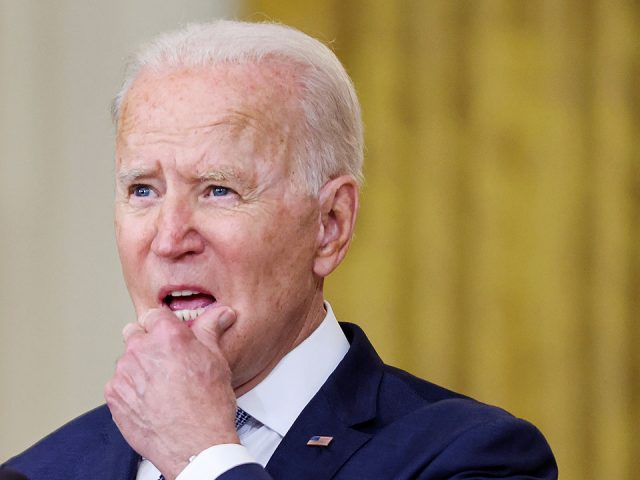
 – The administration of President Joe Biden has drawn Republican fire for its cautious response to nationwide protests in China against COVID-19 lockdowns, with some lawmakers accusing it of failing to seize a historic moment.

But some analysts say caution is the right approach given the volatile US-China relationship and the risk of playing into a Chinese narrative that accuses “foreign forces” of being behind dissent.

On Monday, the White House said it backed the right of people to peacefully protest in China but stopped short of criticizing Beijing as protesters in multiple Chinese cities demonstrated against heavy COVID-19 measures.

The demonstrations came as the number of COVID cases in China hit record daily highs and large parts of several cities faced new lockdowns.

The Republican response was swift.

Senator Ted Cruz called White House response “pitiful,” adding in a tweet: “At a potentially historic inflection point, Dems shill for the CCP.”

Other Republicans, including Senator Marco Rubio and Representative Chris Smith weighed in on what they labeled a “weak” reaction from Mr. Biden, while Michael McCaul, the Republican lead on the House Foreign Affairs Committee, said in tweet: “As Chinese citizens bravely protest, Joe Biden & the corporate class shrug.”

Mr. McCaul vowed a tougher stance against China from the new Republican-controlled House of Representatives from next year while Rubio and Smith declared: “The United States must be unwavering in our support for the Chinese people as they bravely call for freedom.”

The Republican politicians did not state specifically how they would respond in Mr. Biden’s place.

The administration’s careful language contrasted with Mr. Biden’s earlier expression of solidarity with protesters against the Iranian government, when he told a political rally earlier in November that “we’re gonna free Iran.”


RELATIONS FRAUGHT

China‘s biggest wave of civil disobedience since President Xi Jinping took power a decade ago arrives at a delicate moment in US-China relations.

Following an August visit to Taiwan by US House Speaker Nancy Pelosi, China launched military drills around the island, which it considers Chinese territory, and cut off communications with the US in a number of areas, including military issues and climate change.

Since then, China and the US have worked to steady the relationship. Biden and Xi met in-person on the Indonesian island of Bali earlier in November and the countries have agreed to follow-up discussion, including a planned visit to China by Secretary of State Antony Blinken in early 2023.

A US official involved in U.S.-China policy said the White House believed Xi’s handling of the COVID situation was undermining confidence in his approach to the pandemic, but wanted to avoid being seen to be interfering in domestic politics as they make progress in cooling down the relationship.

Beijing and Washington have dealt with the spread of the coronavirus pandemic in vastly different ways.

China‘s zero-COVID policy has kept its official death toll in the thousands, against more than a million in the United States, but at the cost of confining many people to long spells at home, inflicting extensive disruption and damage to the world’s No.2 economy.

Isaac Stone Fish of Strategy Risks, a firm that helps companies navigate political risk in China, said the White House response was likely conditioned by the fact that the United States has far more at stake in its relations with China than with a country like Iran.

“It also may be a perception of longevity. The Biden administration seems to think that the Chinese Communist Party is more likely to survive its protests than Iran’s government.”

Beyond this, say analysts, the US wants to avoid language that allows China to pin the protests on US interference.

“The White House is wise to refrain from speaking out in defense of the protesters and their demands,” said Scott Kennedy, at the Center for Strategic and International Studies.

China has long asserted the US government has been behind domestic protests, from Tiananmen in 1989 to Hong Kong in 2020. Saying anything now would give life to those assertions.”

On Monday, Chinese police tightened security at the sites of weekend protests in Shanghai and Beijing and had begun inquiries into some of the protesters, people who were at the Beijing demonstrations told Reuters.

Without explicitly mentioning the protests, China‘s official Xinhua news agency said domestic security chief Chen Wenqing held a meeting of the Central Political and Legal Affairs Commission on Tuesday that vowed to “resolutely crack down on the infiltration and sabotage activities of hostile forces.”

Daniel Russel, who served as the top US diplomat for East Asia in the Obama administration, said the Biden White House would be focused on the next steps by Chinese authorities.

“There will be plenty of time to turn up the rhetorical dial if Beijing follows the violent Tiananmen Square or the Iranian model and starts killing people,” he said. “So getting out of the way and keeping the spotlight on the protesters themselves is a smart move at this point.” – Reuters

Chinese astronauts board space station in historic mission

STOCK PHOTO | Image by Arek Socha from Pixabay

 – Three Chinese astronauts arrived on Wednesday at China’s space station for the first in-orbit crew rotation in Chinese space history, launching operation of the second inhabited outpost in low-Earth orbit after the NASA-led International Space Station.

The spacecraft Shenzhou-15, or “Divine Vessel”, and its three passengers lifted off atop a Long March-2F rocket from the Jiuquan Satellite Launch Centre at 11:08 p.m. (1508 GMT) on Tuesday in sub-freezing temperatures in the Gobi Desert in northwest China, according to state television.

Shenzhou-15 was the last of 11 missions, including three previous crewed missions, needed to assemble the “Celestial Palace”, as the multi-module station is known in Chinese. The first mission was launched in April 2021.

The spacecraft docked with the station more than six hours after the launch, and the three Shenzhou-15 astronauts were greeted with warm hugs from the previous Shenzhou crew from whom they were taking over.

The Shenzhou-14 crew, who arrived in early June, will return to Earth after a one-week handover that will establish the station‘s ability to temporarily sustain six astronauts, another record for China’s space program.

The Shenzhou-15 mission offered the nation a rare moment to celebrate, at a time of widespread unhappiness over China’s zero-COVID policies, while its economy cools amid uncertainties at home and abroad.

“Long live the motherland!” many Chinese netizens wrote on social media.

The “Celestial Palace” was the culmination of nearly two decades of Chinese crewed missions to space. China’s manned space flights began in 2003 when a former fighter pilot, Yang Liwei, was sent into orbit in a small bronze-colored capsule, the Shenzhou-5, and became China’s first man in space and an instant hero cheered by millions at home.

The space station was also an emblem of China’s growing clout and confidence in its space endeavors and a challenger to the United States in the domain, after being isolated from the NASA-led ISS and banned by US law from any collaboration, direct or indirect, with the American space agency.


FUTURE ‘TAIKONAUTS’

Leading the Shenzhou-15 mission was Fei Junlong, 57, who hailed from China’s first batch of astronaut trainees in the late 1990s. His previous visit to space was 17 years ago as commander of China’s second-ever crewed spaceflight.

Fei was flanked by Deng Qingming, 56, who had trained for 24 years as an astronaut but had never been chosen for a mission until Shenzhou-15. They were joined by former air force pilot Zhang Lu, 46, also a space debutant.

The astronauts will live and work on the T-shaped space outpost for six months.

The next batch of “taikonauts”, coined from the Chinese word for space, to board the station, in 2023, will be picked from the third generation of astronauts with scientific backgrounds. The first and second batches of astronauts in the 1990s-2000s were all former air force pilots.

China has started the selection process for the fourth batch, seeking candidates with doctoral degrees in disciplines from biology, physics and chemistry to biomedical engineering and astronomy.

The selection process has also been opened to applicants from Hong Kong and Macau for the first time.

During the space station‘s operation over the next decade, China is expected to launch two crewed missions to the orbiting outpost each year.

Resident astronauts are expected to conduct more than 1,000 scientific experiments – from studying how plants adapt in space to how fluids behave in microgravity.

While still in its infancy compared with NASA‘s technologies and experience, China’s space program has come far since the mid-20th century, when the country’s late leader Mao Zedong lamented that China could not even launch a potato into orbit. – Reuters

Kazakh McDonald’s shut outlets temporarily after halting supplies from Russia – sources

STOCK PHOTO | Image by Pexels from Pixabay

 – McDonald’s licensee in Kazakhstan was forced to temporarily close its restaurants this month after cutting ties with Russian companies and running out of supplies, three sources with knowledge of the situation told Reuters.

The case highlights supply issues faced by many Kazakh businesses in the wake of Russia‘s invasion of Ukraine and the Western sanctions against Moscow that followed. Neighboring Russia is Kazakhstan’s main trading partner.

In a statement, the US-based company said that its licensee in Kazakhstan has temporarily closed all of its restaurants due to local supply issues. We are working together to resume operations as quickly as possible.”

Food Solutions, the Kazakh licensee company, announced the closure on Nov. 17 and cited “local supply issues.” It did not respond to requests for comment.

Over the past six years, McDonald’s has become a major player on the fast food market of Kazakhstan, a Central Asian nation of 20 million people, growing its network to 24 restaurants.

The company had sourced some supplies abroad, including beef and chicken. The latter was sourced from Russia‘s Miratorg, according to its website.

After Russia invaded Ukraine in what Moscow calls a “special military operation”, McDonald’s exited Russiaselling all the restaurants it owned to a local licensee in May.

Food Solutions, which belongs to prominent Kazakh businessman Kairat Boranbayev, also started looking for suppliers elsewhere and stopped buying Russian products at some point, a source close to the company said.

Another source said it started running out of packaging materials, also imported from Russia, in recent months, and had to shrink its menu. Both sources were not authorized to talk publicly about the matter.

The source said the licensee was now awaiting deliveries from other suppliers and planned to reopen its restaurants in December. It was unclear where the decision to ditch Russian suppliers originated.

Marr Russia, one of the Kazakh company’s Russian suppliers, said it never worked directly with McDonald’s, dealing with its Kazakh logistics partner HAVI instead. It therefore could not say whether sales to Kazakhstan have stopped, it added. HAVI declined to comment.

Miratorg said it was a supplier for Vkusno & Tochka, the Russian successor to McDonald’s, and did not directly address the question of Kazakh sales.

Cargill Russia, also previously mentioned by Food Solutions among its suppliers, said it had sold the business that dealt with McDonald’s to Russian meat producer Cherkizovo, which did not immediately reply to a request for comment.

Kazakh Deputy Prime Minister Serik Zhumangarin, asked about McDonald’s at a briefing on Tuesday, said he could not disclose the reasons for its temporary closure and added that the government was helping the company localize its supplies. – Reuters

Even as Singapore lifts gay sex ban, LGBT families feel little has changed

 – Olivia Chiong and her wife feel like the Singapore government has made clear to them and their two children that they don’t belong in the city-state.

So this week’s vote by Singapore‘s parliament to decriminalize gay sex changed nothing about the family’s painful decision to leave rather than see their children denied schooling – because their legal status remains the same.

Though Indonesia-born Chiong lived in Singapore for decades as a permanent resident, married a Singaporean citizen abroad and gave birth to their first child in Singapore, her first daughter was denied permanent residency at 18 months old.

Chiong says she was given no reason for the government rejecting her daughter’s residency, though it likely did not help that she had to apply as a single, foreign mother because her marriage was not officially recognized.

Without legal residency or a student pass, which may be denied, even private Singaporean schools cannot enroll a child.

A wealthy society straddling traditional and progressive values, Singapore this week decriminalized sex between men, and at the same time entrenched the definition of marriage as between a man and a woman, and of family as mother, father, and children.

“We will try and maintain a balance…to uphold a stable society with traditional, heterosexual family values, but with space for homosexuals to live their lives and contribute to society,” Home Affairs Minister K. Shanmugam told parliament.

The move maintains an unfavorable status quo for children of couples such as Chiong and her wife, who have since moved to the United States.

While the government’s decision to repeal the colonial-era sodomy law was cheered as a symbolic victory for the gay community, many worry LGBT families will continue to suffer under public policies that favor heterosexual marriages and families.

For Chiong, who married her Singaporean wife in the United States, the repeal is “one step forward and 10 steps back”.

“What is the government trying to do? Are they trying to tell you, ‘Send your child away’?” the 42-year-old said in a telephone interview from Seattle, where she now lives.

The family emigrated in 2016.


SLOW TO CHANGE

In Singapore, grassroots attitudes towards the LGBT community have become more liberal in recent years, especially among the young.

Among Singaporeans aged 18-25, about 42% accepted same-sex marriage in 2018, up from 17% five years prior, according to a Institute of Policy Studies survey.

But laws are slower to change.

The government maintains its policy “is and has always been to uphold heterosexual marriage and promote the formation of families within such marriages”.

Prime Minister-in-waiting Lawrence Wong has said these policies will not change on his watch.

Activists say national policies on a range of issues including adoption, surrogacy, education, media and housing are such that children of LGBT parents are effectively penalized for being part of non-traditional families.

Ivan Cheong, a family lawyer with Withers KhattarWong who takes LGBT families as clients, said children of anyone resident in the city-state should at least be entitled to enrolment “in private schools and at rates which are not subsidized” as many parents were willing to pay tuition fees upwards of S$20,000 ($14,530) per year.

But influential conservative groups that strongly opposed lifting the gay sex ban make it politically uncomfortable for the ruling party to further change laws.

An alliance of more than 80 Singaporean churches has decried repealing the gay sex ban as an “extremely regrettable decision” that “celebrates homosexuality”.

Lawmakers this week amended the constitution so that only parliament, dominated by the ruling party, can define marriages.

Such decisions should not be led by the courts, government ministers said, citing the Indian Supreme Court’s decision in August to widen the definition of familial relationships.

However, the changes do not close the door to a future parliament widening the definition of marriage.


‘PUNISHING THE CHILD’

LGBT families in Singapore now worry that further change will not come in time for them.

One single, gay Singaporean man, who declined to be named because of the sensitivity of the issue, said he has to leave the country every three months to renew the tourist visa of his baby, born overseas through surrogacy.

While he is hopeful the child can gain citizenship in time for school, he is also working on a “plan B” to leave his home country.

A British couple, permanent residents who spent a decade in Singapore, were forced to return to Britain in mid-2020 after their two sons, born of surrogacy, were denied residency and student visas.

One of the fathers, who also declined to be named, said he knows at least a dozen families facing the same hurdles, many with at least one Singaporean parent.

“You do that to your own citizens and that is cruel,” he said. “You’re punishing the child.”

The government did not respond to Reuters’ questions about the rights of LGBT families and their children’s residency and access to education.

Chiong, now a product manager in Seattle, says her family has no plans to return to Singapore.

“In the US, you don’t even know who in the school or in the class is American or not. They educate every child. They treat every child the same,” she said. – Reuters

CFO of the Year 2022 accorded to Cebu Landmasters executive

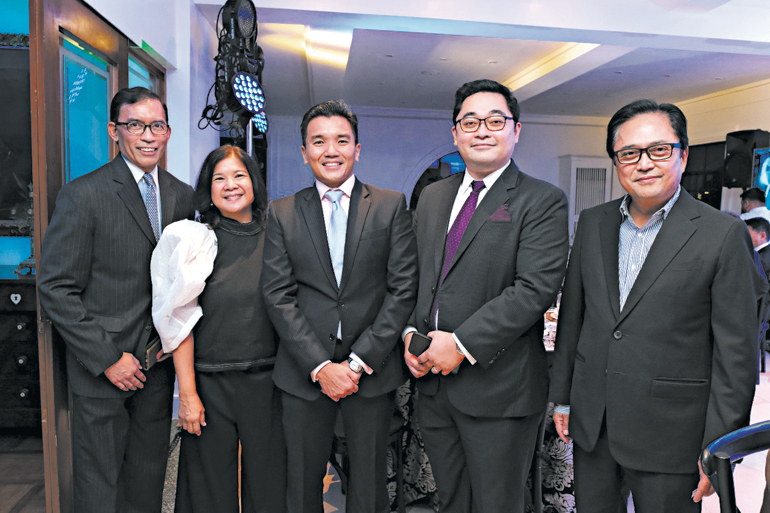
The 2022 ING-FINEX CFO of the Year award ceremony at Palacio de Memoria in Parañaque City on Nov. 24 was one for the history books. Cebu Landmasters, Inc.’s Chief Finance Officer Grant Cheng, 41, was named the youngest awardee of the most prestigious recognition for the country’s top finance leaders. With Mr. Cheng (center) during the trophy presentation were (from left) Augusto Bengzon, liaison director, ING-FINEX CFO of the Year Award Committee; Michael Arcatomy Guarin, president, Financial Executives Institute of the Philippines; Chiqui Escareal-Go, chairperson, 16th ING-FINEX CFO of the Year Award Board of Judges; Hans Sicat, managing director-country manager, ING Bank N.V., Manila Branch; Renan Piamonte, vice-chairman, ING-FINEX CFO of the Year Award Committee; and Enrique Victor Pampolina, overall chairman, ING-FINEX CFO of the Year Award Committee.

The Philippines has never been short of remarkable talent, particularly in the field of business. There has always been world-class luminaries and leaders shaping the country’s economic landscape, making the decisions and setting the trends for various industries.

In 2006, the Financial Executives Institute of the Philippines (FINEX), the premier professional organization for finance executives and decision makers in Philippine business, started the tradition of recognizing the country’s top financial stewards through the annual search. The ING-FINEX CFO of the Year Award is the Philippines’ longest-running and only search that honors outstanding chief financial officers.

The award was launched through a permanent partnership between FINEX and ING Bank, N.V., one of the world’s largest banks. In establishing the prestigious award, the partnership between the two major institutions aims to herald a legacy for future generations of Philippine financial leaders.

Whereas the most recent editions of the Philippines’ longest-running search for outstanding CFOs honored remarkable women in the field, this year’s iteration accords the distinction to its youngest awardee to date.

Beauregard Grant L. Cheng, CFO of listed Visayas-Mindanao property developer Cebu Landmasters, Inc. (CLI), is this year’s recipient of the ING-FINEX CFO of the Year award.

Mr. Cheng, 41 years old, becomes the youngest recipient of the prestigious recognition and also the first awardee from a non-conglomerate organization.

The magna cum laude and ‘Star Scholar’ graduate from De La Salle University with a Bachelor of Science degree in Manufacturing Engineering and Management, Mr. Cheng furthered his studies abroad and graduated from the Singapore Management University and Swiss Finance Institute (Zurich) with a degree in Master’s of Science in Wealth Management.

The chief officer joined CLI in 2019 and is credited by the company for taking the property developer to new heights by establishing the company’s funding framework, driving massive growth with record cash flow and revenue.

He is also recognized by CLI for helping the company remain profitable through the implementation of cost and budget monitoring processes, along with the establishment of approval limits and authority policies; as well as for ushering digital transformation through implementing virtual launches for projects, digital tours, and the development of an online collections portal.

More recently, last June, the Philippine Rating Services Corp. (PhilRatings) assigned an Issue Credit Rating of PRS Aa plus with a stable outlook for CLI’s maiden peso-denominated fixed-rate bond issuance of P5 billion. PhilRatings also upgraded the issue credit rating for CLI’s outstanding series A to C corporate notes worth P5 billion to PRS Aa plus with a stable outlook.

Furthermore, in the 10th annual PropertyGuru Philippines Property Awards in October, CLI was honored as the Best Developer in Visayas and Best Developer in Mindanao. The group also took home special recognitions for promoting the principles of Environmental, Social, and Governance (ESG), and Sustainable Design & Construction.

As BusinessWorld reported last Nov., CLI recorded a 21.3% rise in third-quarter attributable net income to P649.88 million from P535.96 million a year ago. The company’s top line rose by 39% to P3.51 billion from P2.52 billion last year. Sales of real estate were the largest contributor at P3.45 billion, up by 39% from P2.48 billion a year ago.

“We are on full blast with our construction capacity and with God’s grace we can continue to deliver and continue to operate at full capacity,” Mr. Cheng was quoted as saying.

While he received the CFO of the Year award as an individual, Mr. Cheng recognizes the honor as an organizational award.

“I’m very humbled and very honored, but this is for the company and for everyone who has allowed me to be their leader, to set the strategy and the vision for how the financial aspects of a company should be run and managed,” Mr. Cheng previously said in a statement.

Past CFO of the Year awardees are as follows: Delfin C. Gonzalez, Jr. (2007) of Globe Telecom, Inc.; Sherisa P. Nuesa (2008) of Manila Water Co., Inc., who currently serves as an independent director of Ayala Land, Inc. (ALI); Jose T. Sio (2009), then executive vice-president (EVP) and CFO, and now chairman of SM Investments Corp.; Ysmael L. Baysa (2010) of Jollibee Foods Corp.; Jaime E. Ysmael (2011), formerly of Ayala Land, Inc., and now the president and CEO of QualiMed; Jeffrey C. Lim (2012), current president of SM Prime Holdings, Inc.; Felipe S. Yalong (2013), EVP and CFO of GMA Network, Inc.; Jose Jerome R. Pascual III (2014), former CFO, vice-president for finance and treasurer, and chief risk officer of Pilipinas Shell Petroleum Corp.; Luis Juan Oreta (2015), CFO and treasurer of Manila Water Co., Inc.; Danny Y. Yu (2016), CFO and corporate governance officer of SM Investments Corp.; Jose Teodoro K. Limcaoco (2017), then CFO and Sustainability Officer of Ayala Corp., and now CEO of Bank of the Philippine Islands; Ferdinand K. Constantino (2018) of San Miguel Corp.; Augusto D. Bengzon (2019), CFO, treasurer, and chief compliance officer of ALI; Mylene A. Kasiban (2020) of Robinsons Retail Holdings, Inc.; and Annabelle Lim-Chua (2021) of Philippine Long Distance Telephone Co. — Bjorn Biel M. Beltran
IMF sees need for further tightening

PHILIPPINE STAR/EDD GUMBAN
The International Monetary Fund expects the Philippine economy to expand by 6.5% this year, matching the lower end of the government’s 6.5-7.5% goal. — PHILIPPINE STAR/ EDD GUMBAN

THE BANGKO SENTRAL ng Pilipinas (BSP) should continue tightening monetary policy until 2023 to anchor inflation expectations and support the peso, an International Monetary Fund (IMF) official said.

“The BSP has been prompt in tightening, a move that we support. However, if inflation pressures remain high, there will be more work to do,” IMF Director for Asia Pacific Department Krishna Srinivasan said in a recorded message during the BusinessWorld Economic Forum Forecast 2023 at the Grand Hyatt Manila in Taguig City on Tuesday.

He said further monetary policy tightening might be needed through 2023 at least until it is clear inflationary pressures are beginning to recede.

The IMF projects Philippine inflation to average 5.3% this year before easing to 4.3% in 2023. Both projections are beyond the BSP’s 2-4% target.

Mr. Srinivasan said it expects inflation to further ease to 3.1% in 2024.

“More monetary tightening will weigh on growth on 2023, but we think that the growth recovery will continue, because even with heightened interest rates, the monetary policy start will be roughly neutral,” he said.

IMF forecasts 6.5% gross domestic product (GDP) growth for the Philippines this year, matching the lower end of the government’s 6.5-7.5% goal. It expects growth to slow to 5% in 2023, well below the 6.5-8% target.

Since May, the BSP has raised borrowing costs by 300 basis points (bps), bringing the benchmark rate to a 14-year high of 5%. It is widely expected to deliver another 50-bp rate increase on Dec. 15. 

“The BSP is tightening monetary policy to rein in inflation and this is alleviating some of the downward pressure on the peso.” Mr. Srinivasan said. “As long as the depreciation is driven by fundamentals, it will be difficult to use foreign exchange intervention to lean against it in an effective manner.” 

“However, if market conditions become disorderly, the BSP might want to consider foreign exchange intervention to reduce excessive volatility,” he added. 

POLICY MIX
Meanwhile, the IMF executive board said the Philippine outlook for 2023 is more challenging amid a more uncertain global environment.

“Calibrating the policy mix to preserve macroeconomic stability, enhancing fiscal and financial resilience and accelerating structural reforms are critical to sustain the recovery,” it said in a statement after concluding the 2022 Article IV consultation with the Philippines.

“Policies will have to remain nimble, carefully balancing growth and price stability objectives, while managing limited fiscal buffers, preserving financial stability and ensuring external sustainability.”

While the current policy stance remains accommodative, the IMF executive board said the BSP “should aim at bringing the policy rate close to the neutral real rate to securely bring inflation within the target range.”

Inflation accelerated to 7.7% in October from 6.9% in September. It averaged 5.4% in the first 10 months of the year, still below the BSP’s 5.8% forecast this year.

“Should inflation pressures continue to rise, the BSP should respond with a tighter policy stance. Similarly, if inflation proves less persistent, or if significant downside risks to growth materialize, monetary policy tightening would need to be recalibrated,” the IMF executive board said. 

The BSP should closely monitor risks to financial stability amid rising interest rates and higher risks to growth, it said.

The board noted that nonfinancial corporations (NFCs) might face renewed risks due to higher borrowing costs.

“These risks can be amplified through ‘mixed’ conglomerate structures that include NFCs and financial institutions, and in sectors with a relatively high debt burden,” the IMF said.

“To enhance resilience, the BSP’s capacity to conduct financial stability risk assessments and the bank resolution framework should be strengthened. In addition, with the recovery underway, regulatory forbearance measures should be allowed to lapse as scheduled,” it added. — Keisha B. Ta-asan

PHL likely to achieve growth targets

FINANCE SECRETARY Benjamin E. Diokno speaks at the BusinessWorld Economic Forum at the Grand Hyatt Manila, Nov. 29, 2022. — PHILIPPINE STAR/KRIZ JOHN ROSALES

THE PHILIPPINE ECONOMY will likely hit its growth target this year and in 2023 amid global headwinds, Finance Secretary Benjamin E. Diokno said on Tuesday.

“Domestic growth will exceed 7% this year. We should not despair if growth (slows to) 6.5% next year. That’s spectacular given the global headwinds. I expect that next year, we will meet [the target],” Mr. Diokno said on the sidelines of the BusinessWorld Economic Forum in mixed English and Filipino.

Philippine gross domestic product (GDP) growth averaged 7.7% in January to September, still above the government’s 6.5-7.5% full-year goal.

To meet its target, the economy only needs to grow by 3.3% in the fourth quarter.

“I know that navigating the current global political landscape is a daunting task. But it is doable with the right tools to help us stay the course,” Mr. Diokno said in a speech at the forum.

“This is precisely why the Marcos administration prepared a comprehensive eight-point socioeconomic agenda to help us tackle pressing challenges and lay a strong foundation for higher economic growth,” he added.

Mr. Diokno reiterated the Philippines’ debt-to-GDP ratio is not as high compared with other countries.

The National Government’s outstanding debt as a share of GDP rose to 63.7% at the end of September — the highest in 17 years. It is above the 60% threshold considered manageable by multilateral lenders for developing economies.

“Our debt is stretched out, long term to medium term. You cannot just pay for that tomorrow,” Mr. Diokno said. “We need to borrow money for our development efforts. Also, the coronavirus pandemic happened. If there was no pandemic, we would be at 40%. But we need to address the pandemic first.”

The government aims to bring down the debt-to-GDP ratio to 61.8% by yearend and all the way to 52.5% by 2028.

Mr. Diokno also said the government would rely less on foreign borrowings to minimize foreign exchange risks. He said the government would stick to its plan to get 75% of its borrowings domestically.

The government borrows from local and external sources to help fund a budget deficit capped at 7.6% of GDP this year.

SLOWER GROWTH IN 2023
Meanwhile, Philippine Institute for Development Studies (PIDS) researchers said GDP growth “will likely be closer to 7.1%” this year, within the government’s 6.5-7.5% target, as the economy continued to reopen.

In a study, PIDS Senior Research Fellow Margarita D. Gonzales, Supervising Research Specialist John Paul P. Corpus, and Research Analyst Ramona Maria L. Miral said the economy is projected to slow to 4.5-5.5% next year, below the government’s 6.5-7.5% goal.

“Economic activity in the Philippines may be heavily weighed down by simultaneous monetary tightening across the world, heightened risks of a sharp slowdown of major economic partners, mainly the US and China and restrictive financial conditions that confront most emerging markets and developing economies,” the researchers said.

A global downturn would affect the economy mainly through a drop in exports and weaker investment spending, they added.

The PIDS researchers said inflation is expected to average 5.7% in 2022, slightly lower than the BSP’s 5.8% average forecast.

They expect inflation to ease to 3.5-4.5% next year, within the BSP’s 2-4% target.

“Price pressures may persist for the time being, as the effects of regional wage and transport fare increases, and sharp peso depreciation continue to ripple forward,” they said.

Supply issues in agriculture and energy could further drive prices higher, they added.

Headline inflation in October accelerated by 7.7%, the fastest pace in nearly 14 years, mainly driven by rising food costs. For the first 10 months, inflation averaged 5.4%.

“Inflation will be a major limiting factor in the near term. Higher consumer prices have reduced the purchasing power of households, further lowering their real incomes coming out of the pandemic, while higher input costs are pressuring businesses, especially those with already thin profit margins and low net worth,” the researchers said.

They said the government should focus on taming inflation by focusing on supply-side solutions to increase productivity, easing exchange rate volatility by drawing from foreign reserves and providing social protection programs for the most vulnerable. — Luisa Maria Jacinta C. Jocson with Keisha B. Ta-asan

Gov’t urged to focus on measures to boost agricultural production

HOUSE SPEAKER Ferdinand Martin G. Romualdez delivers a keynote speech during the BusinessWorld Economic Forum Forecast 2023 at the Grand Hyatt Manila on Tuesday. — PHILIPPINE STAR/KRIZ JOHN ROSALES

THE PHILIPPINES should focus on measures to boost agricultural productivity and adopt a less protectionist stance to ensure food security and support economic recovery from the pandemic, according to experts.

“We should spend money on productivity, not on price support, because it is short term and it is not sustainable. It is high time that we put the money behind productivity enhancing measures to help farmers and bring down trade barriers,” Monetary Board member V. Bruce J. Tolentino said at the BusinessWorld Economic Forum Forecast 2023 in Taguig City on Tuesday.

Mr. Tolentino, an economist and former deputy director-general at the International Rice Research Institute, said there is a need to bring tariffs down and remove protectionist measures to be able to “achieve lower levels of inflation and to enable people to get food at a competitive price.”

Supply shortages, agricultural damage from typhoons and rising global commodity prices have driven food costs higher in recent months. Inflation soared to a near 14-year high of 7.7% in October, from 6.9% in September and 4% in October 2021.

Mr. Tolentino expressed support for the extension of an executive order that lowered tariffs for rice, corn, coal and pork. Executive Order 171, which is set to expire by yearend, slashed the most favored nation tariff rates on pork, corn, rice and coal.

William S. Co, Philippine Chamber of Commerce and Industry director for its agriculture and fishery committee, said the government should encourage young people to go into the agriculture sector.

“We can attract young people to agriculture if they can make money from it. If they can make more money from farming in rural provinces compared with the city, then they’ll stay where they are,” he said.   

Mr. Co said the government should address the high cost of agricultural production.

“We need to encourage small farmers to have more production in terms of rice. If we plant more rice, we lessen the importation. The government should address production. Rice needs water and also, this high cost of gasoline, how can you go into mechanized farming?” he asked.   

Ricardo Manuel M. Sarmiento, chief executive officer of listed agricultural company Vitarich Corp., said the government should align its policies with the private sector.

“We can prosper more if we can align with the government. We should be able to manage imports as well. The government and the private sector need to work hand in hand,” Mr. Sarmiento said.   

“There is a lot of optimism because the government is putting a lot of importance on agriculture which I’ve never seen before,” he added.   

President Ferdinand R. Marcos, Jr., who also heads the Agriculture department, has made it a priority to boost domestic production, particularly rice and corn.

The agriculture sector contributes about a tenth to the gross domestic product.

RECOVERY ON TRACK
Meanwhile, House Speaker Ferdinand Martin G. Romualdez said lawmakers are now focused on legislation that will drive economic recovery.

“Our immediate focus is creating legislation that will help the government boost domestic demand and increase the competitiveness of domestic production to sustain further economic recovery,” he said in his keynote speech at the BusinessWorld Economic Forum.

Mr. Romualdez cited several pending priority legislative measures, such as the proposed Government Financial Institutions Unified Initiatives to Distressed Enterprises for Economic Recovery (GUIDE) Act, which seeks to provide financial assistance to distressed enterprises, and the amendment of the Electric Power Industry Reform Act to address insufficient power supply.

He said the country is now in the first stage of economic recovery and is headed in the right direction.

“Now is the time to invest in the Philippines. The best is yet to come. The Philippines will soon become the favorite investment destination in Asia,” he added.

The Philippine economy expanded at a faster-than-expected 7.6% in the third quarter, bringing the nine-month average to 7.7%.

In his keynote address at the forum, Finance Secretary Benjamin E. Diokno said the economy is on track to meet the Development Budget Coordination Committee’s growth assumption of 6.5-7.5% this year.

“The Philippines is recovering and we anticipate the labor market will continue fueling domestic demand. This is an impressive feat considering that we are facing unprecedented challenges in the global market, like high inflation and supply chain issues,” he said.

IMF Director for Asia Pacific Department Krishna Srinivasan said the Philippine economy has been growing strongly this year.

The IMF sees the Philippine economy expanding by 6.5% in 2022, before slowing to 5% next year.

“But we do see growth slowing in 2023 as a confluence of global shocks from Russia’s war on Ukraine, commodity price shocks, and a recession in major trading partners will weigh on the economy to trade and price shocks,” he said in a recorded message at the forum. “In the context of the negative shocks that we have, that have headed in the Philippines and the global economy, this is still a robust recovery.”

BusinessWorld President and Chief Executive Officer Miguel G. Belmonte said the economy has been resilient despite global challenges.   

“The past years have clearly demonstrated our ability to bounce back from the blows of black swan events. That gave way to major disruptions and systemic shifts. We were tested but still managed to innovate,” he said. — Revin Mikhael D. Ochave

New show celebrates Pinoy Christmas

IT’s the time of the year when reunions are celebrated with friends and loved ones, and Alice Reyes Dance Philippines (ARDP) showcases just that in its holiday show, Puso ng Pasko.

It was in the middle of the afternoon when BusinessWorld dropped by ARDP’s open rehearsals on Nov. 22, and the dancers were practicing a routine set to the song “Tuloy na Tuloy Pa Rin ang Pasko,” presented as a get-together when friends and family dine and reconnect.

“I’m sure of two things: that Christmas is coming no matter what, and that Filipinos are ready to celebrate,” National Artist for Dance Alice Reyes told BusinessWorld.

Puso ng Pasko will have performances at the Cultural Center of the Philippines’ Main Theater from Dec. 2 to 4.

The show is an expanded version of the 2020 holiday showcase Tuloy ang Pasko.

“The title of Tuloy ang Pasko came about kasi kailangan matuloy ang pasko (because Christmas just had to push through) amid the pandemic,” ARDP artistic director and choreographer Ronelson Yadao told BusinessWorld. “Fast forward to today, [the show was named] Puso ng Pasko to move [forward] from [previous] the notion,”

The production was originally supposed to incorporate disco songs, but since Ms. Reyes has had a good working relationship with fellow National Artist (for Music) Ryan Cayabyab, the repertoire shifted to holiday music.

The show features Mr. Cayabyab’s arrangements of timeless Filipino Christmas songs from the albums Pasko I and Pasko II, performed and recorded by the San Miguel Philharmonic Orchestra and the San Miguel Master Chorale. The production will feature 14 songs from the two albums.

Mr. Yadao is choreographing the full-length Christmas dance show with Erl Sorilla, John Ababon, Al Abraham, Dan Dayo, Bonnie Guerrero, and Lester Reguindin.

A PINOY CHRISTMAS
The story follows Lolo Val (played by musical theater veteran Audie Gemora), an immigrant living in California, who wishes to relive the Christmas of his youth. He reminisces through the stories he shares with his young granddaughter, Angelita.

It was during the lockdown that the choreographers gathered at Ms. Reyes’ home and conceptualized the story for the show.

We were trying to find a situation wherein we had to look back. We thought that a Filipino immigrant who is missing Christmas in the Philippines would be good storyline,” Mr. Yadao said. “And, true enough, many audiences related [to that idea] during the last Tuloy ang Pasko performances. Kahit siguro hindi pandemic, maraming makaka-relate (Even if it were not during a pandemic, many people could relate to it).”

“For years we have been doing The Nutcracker [for Christmas] and it an international thing, it is done everywhere. But I thought, why not a Filipino Christmas show that we will get a lot of positive reaction [to] so we can do it every year?,” Ms. Reyes said.

The show features scenes of the traditional Simbang Gabi — a nine-day series of early morning masseswith churchgoers eating bibingka and puto bumbong (rice flour-based snacks) in the church plaza decorated with the big parol (star-shaped lanterns) and beautiful Christmas decorations. It also features different fiestas held across the Philippine islands in celebration of regional festivals.

The expanded version of the show will run for one hour without intermission, as compared to its early iteration that ran for half an hour.

Other collaborators include co-librettist Eljay Castro Deldoc, production designer Eric Cruz, lighting designer Barbara Tan-Tiongco, costume consultant Dennis Maristany, and director Carlos Siguion-Reyna’s assistance for filmed scenes.

“We hope that with our first season here with the ARDP, we have shown what this company can do…” Ms. Reyes said. “We are very focused on doing shows that are designed to show the Filipino people that they have plenty to be proud of.”

For tickets, contact the CCP Box Office (8832-3704), Bonnie Guerrero (Viber: 0915-412-2152), and TicketWorld (0917-550-6997, 0999-954-5922). — Michelle Anne P. Soliman

AREIT plans 100,000-sq.m. portfolio growth yearly

AREIT, Inc. is planning to grow its assets at an average of 100,000 square meters (sq.m.) of gross leasable area annually from 2023 to 2025, the company said on Tuesday.

In its three-year investment strategy, AREIT said that the target will increase its assets under management by P10 billion to P15 billion yearly.

Previously, AREIT set a growth target of P60-billion assets under management two years after its maiden listing at the Philippine Stock Exchange on Aug. 13, 2020, from an initial P30 billion.

To date, these assets reached P54 billion and are projected to reach P64 billion upon the infusion of Ayala Land, Inc.’s Cebu assets. The transfer of the assets in Cebu will be through a property-for-shares swap and will increase AREIT’s portfolio to 673,000 sq.m. The swap will increase Ayala Land’s stake in AREIT by 5.65 basis points to 66.23%.

Meanwhile, the company said that it would diversify into other asset classes including shopping malls as it bets on the recovery and reopening of the economy.

Also, among its three-year objectives is to achieve a 10% to 12% total shareholder return through organic growth and new acquisitions.

“Targeted total shareholder returns of at least 10% will be achieved from 3% to 5% rental escalations from operating assets and additional dividends generated from new assets to be acquired from 2023 to 2025,” the company said in a disclosure.

At present, the company’s portfolio has 13 commercial properties, namely: Solaris One, Ayala North Exchange, McKinley Exchange, Teleperformance Cebu, the 30th Commercial Development, Laguna Technopark Property, Vertis North Commercial Development, BPI-Philam Life Makati, BPI-Philam Life Alabang, Bacolod Capitol Corporate Center, Ayala Northpoint Technohub, One Evotech and Two Evotech.

AREIT is the real estate investment trust of its sponsor, Ayala Land, which maintains a 60.58% stake in the company.

On the stock exchange on Monday, shares in AREIT added P2.70 or 8.06% to P36.20 apiece. — Justine Irish D. Tabile

Activists aggravate art insurers’ climate headache

GUSTAV KLIMT’s painting Tod und Leben is seen after activists of Last Generation Austria (Letzte Generation Oesterreich) spilled oil on it in Leopold museum in Vienna, Austria, Nov. 15. — LETZTE GENERATION OESTERREICH/HANDOUT VIA REUTERSA

LONDON — Climate activists’ attacks on some of the world’s most precious paintings have added to insurers’ worries about the threat to art from climate change itself, concerns seen as leading to higher art insurance premiums.

In recent weeks, activists have drawn attention to the climate cause by throwing tomato soup at Vincent van Gogh’s Sunflowers in the National Gallery in London and a black liquid at Gustav Klimt’s Death and Life in the Leopold Museum in Vienna to protest against the use of fossil fuels.

The paintings were behind glass or a screen and a spokesperson for the National Gallery said only “minor damage” was done to the Sunflowers’ frame.

The Leopold Museum has said the Klimt was not damaged, but did not respond to a request for further comment.

Many in the art and insurance world, however, say it may be only be a matter of time before art works are vandalized, especially if protests spread beyond climate activism.

Almost 100 galleries, including New York’s Guggenheim and the Paris Louvre, earlier this month issued a statement saying the activists “severely underestimate the fragility of these irreplaceable objects.”

“At the moment it’s just climate change activists, who are mainly middle-class liberals and are not really intending to damage the work,” said Robert Read, head of art and private client at insurer Hiscox. “What we worry about is if it spreads to other protest groups who are less genteel and will take a less caring attitude.”

Even if the art itself is not directly damaged, the clean-up costs of repairing a frame and remounting a picture can reach tens of thousands of dollars, said Filippo Guerrini Maraldi, head of fine art at broker Howden.

“The risk profile has changed now. The insurers might say ‘I want a little bit more money next year’ and ‘what are you doing about security?’” Mr. Maraldi said, adding that art owners were becoming more nervous too.

“We’ve already had several requests from clients that may have pieces in museums, requesting that they are stowed away.”

The art insurance market globally earns around $750 million in premiums. Premium rates rose by around 5% in 2020 and 2021 and remained steady this year but insurers expect them to rise.

PRESSURE ON PREMIUMS
Losses and levels of insurance availability tend to dictate insurance premiums.

Regardless of the climate protests, the increased incidence of fire and flood linked to global warming that has inspired activism is likely to drive insurance premiums higher next year, insurers and brokers said.

Inflation is also piling pressure on premiums.

Jennifer Schipf, global chief underwriting officer for fine art & specie at AXA said she expects reinsurers — who insure the insurers — to raise rates during the Jan. 1 renewal period, which could impact the art market.

So far the attacks have not led to claims, insurers and brokers say. It was unclear what the Leopold Museum’s arrangements were, but the British government bears the risks for the National Gallery’s permanent collections, a gallery spokesperson said.

Major museums often rely on governments to provide financial security in the event of damage rather than seeking commercial insurance.

Commercial museums and galleries, however, buy art insurance, and its use is also more prevalent among larger museums in the United States than in Europe.

The premiums they pay have remained steady in part because more general concerns about terror attacks and violence had already tightened security in recent years, with more works behind glass, and increased numbers of security guards and bag searches.

In some cases, commercial insurers have also grown more wary, with one insurer who declined to be named saying it only insured artworks that were behind glass.

While five insurers contacted by Reuters said they were not yet factoring climate attacks into premiums, some artists say they already face increased costs.

Thomas Hampel, agent for the German artist ANTOINETTE, said the insurance premiums to cover her art were set to rise 12.5% next year, compared with 3%-5% rises in the previous three years.

In addition, the extra expense to exhibit a large artwork safely would be €35,000 ($36,417) for a 100 square meter of anti-reflective glass, on top of transport and assembly. “We cannot afford these additional costs,” Mr. Hampel said.

The attacks may also eat into government indemnity — the state insurance that covers major galleries when they are showing art they do not own, Adam Prideaux, managing director of art insurance broker Hallett Independent, said.

Arts Council England, which provides such indemnity, said in e-mailed comments it could not give any details of individual claims, but said “only a small number of mostly minor claims have been made in the last 10 years.” — Reuters

SEC files criminal cases vs. Silverlion incorporators

THE Securities and Exchange Commission (SEC) extension office in Zamboanga has filed criminal cases against the incorporators of Silverlion Livestock Trading Corp., the regulator said.

The regulator identified the incorporators as Ryan Cagod Ladoing, Renan Lara Ladoing, Rosemarie Alvarez Guzman, Neña Ewayan Algoy, John Paul Dellara Lopez, and Michael Villalobos Berja.

On Nov. 26, the SEC’s extension office and the National Bureau of Investigation (NBI) of Region IX served a search warrant against Silverlion in its two offices in Zamboanga City.

Zamboanga City Regional Trial Court Branch 15 issued search warrants against the entity for violations of the Securities Regulation Code (SRC) in relation to the Cybercrime Prevention Act of 2012.

According to a press release, the SEC and NBI Region IX were able to seize bundles of cash, vouchers, and other devices in Silverlion’s office.

“[Those] were supposedly scheduled to be used for the upcoming payout of profits to its existing investors,” the SEC said.

The regulator added that Mr. Ladoing was also involved in an investment scam under RGS World Marketing earlier this year, which made it a subject of a cease-and-desist order.

Recently, the SEC issued a cease-and-desist order against Silverlion stopping it from soliciting investments from the public and ending its agents’ internet presence.

In the investigations conducted by the SEC extension office, it found that Silverlion had been offering investment packages with a supposed guaranteed return of 35% within 15 days.

The packages start at P1,000 to P100,000 with a yield return of P1,300 to P130,000, respectively.

According to the SEC, the scheme involves the sale and offer of securities to the public through investment contracts where investors are led to expect profits from the efforts of others.

“The SEC continues to be more proactive in its fight against illegal investment-taking activities,” the regulator said.

Year to date, the SEC has already issued 82 advisories against entities it found to be soliciting investments from the public without the necessary license. — Justine Irish D. Tabile