Home Blog Page 5510

Coins.ph gets EPFS license from the BSP

THE CENTRAL BANK has granted crypto exchange platform Coins.ph an Advanced Electronic Payment and Financial Services (EPFS) license, covering the operation of the Coins Pro exchange.

“Being granted an advanced EPFS license is a huge milestone for Coins.ph and solidifies our position as the most trusted crypto platform in the Philippines. We have always been committed to working with regulators to ensure appropriate oversight of this fast-growing industry at the intersection of technology and finance,” Coins.ph Chief Executive Officer Wei Zhou said in a statement on Tuesday.

The EPFS license from the Bangko Sentral ng Pilipinas (BSP) would also make Coins Pro, an order book exchange, available to Coins.ph users.

Clients can now purchase and trade digital currencies at larger volumes and for lower prices. Users can place market, limit, and stop-limit orders in over P20 spot trading pairs.

“Coins was the first crypto company in Asia to gain multiple licenses from a central bank back in 2017, and we have continuously operated within the Philippines’ legal framework,” Mr. Zhou said.

“The advanced EPFS license will facilitate more transparency and safeguards, as it ensures that we can continue to provide secure and reliable services to our users. It will also enable significant upgrades to Coins Pro, our proprietary order book exchange,” he added.

The crypto platform is the first virtual asset service provider (VSP) to be granted a type A EPFS license by the BSP, usually reserved for banks.

The advanced EPFS license is intended to further drive an inclusive and efficient national payment system as it covers financial institutions that facilitate online transactions through digital products and services.

“We truly appreciate the sincere effort that the BSP’s leadership has made to understand the digital assets space in order to craft well-thought-out rules that protect consumers while encouraging innovation. We’re excited to continue leading the development of this industry as a responsible player,” Mr. Zhou added. 

The BSP previously granted Coins.ph VASP and electronic money issuer (EMI) licenses in 2017. Coins.ph was also registered as a remittance and transfer agent in 2016.

“Coins observes strict compliance with all applicable rules and regulations, and is trusted by more than 18 million users to serve as the gateway between Web2 and Web3,” the company said.

The BSP wants digital payments to make up 50% of all transactions both in volume and value by 2023.

The central bank also wants the country to become a cashless society by 2025. — Keisha B. Ta-asan


Elvis and Top Gun land Golden Globe nods, many nominees silent

LOS ANGELES — Avatar: The Way of Water, Top Gun: Maverick, and Elvis were nominated for best drama film at the upcoming Golden Globe awards, but few nominees commented on the honors, a sign of lingering fallout from a diversity and ethics scandal.

The Banshees of Inisherin, a nominee for best comedy or musical film, led all movies with eight nominations on Monday from members of the Hollywood Foreign Press Association, the group that hands out the Globes and announces the nominations.

The Avatar and Top Gun sequels will face off against Elvis, Steven Spielberg’s semi-autobiographical film The Fabelmans, and Tar, the story of a manipulative conductor, for the top prize of best drama film.

Banshees, a dark comedy about a man trying to repair a friendship, will compete with Everything Everywhere All at Once, Babylon, Glass Onion: A Knives Out Mystery, and Triangle of Sadness.

The Globes have been known as a star-studded, booze-fueled ceremony that kicks off Hollywood’s awards season and helps propel nominees and winners in their quest for Oscars.

But the Globes were tainted after a 2021 Los Angeles Times investigation probed the association’s practices and revealed the organization had no Black members. Tom Cruise returned his three Golden Globe statues in protest, and longtime broadcaster NBC dropped the 2022 telecast.

The Comcast-owned network agreed to air the Globes again in 2023 after the organization made reforms. The ceremony will take place Jan. 10 and will also stream on Peacock.

It is unclear if the event will attract the parade of A-list stars that it has in the past. Few nominees commented on Monday.

On the best drama actor list was The Whale star Brendan Fraser, who has said he will not attend the Globes because he has accused a former HFPA president of groping him in 2003. The ex-official has said he pinched Fraser’s buttock as a joke.

Current HFPA President Helen Hoehne told The Hollywood Reporter last week that she respected Mr. Fraser’s decision but hoped the organization could “regain Mr. Fraser’s trust, along with the trust of the entire entertainment community.”

Other Globe-nominated actors included Austin Butler for his portrayal of rock music legend Elvis Presley, Daniel Craig for Glass Onion and Colin Farrell for Banshees.

Cate Blanchett was nominated for best drama actress for the lead role in Tar alongside Viola Davis in The Woman King and Ana de Armas for playing Marilyn Monroe in Blonde.

Jamie Lee Curtis, a supporting actress nominee for Everything Everywhere, thanked audiences and the HFPA for embracing the sci-fi action-adventure film.

“Now YOU and the #HFPA have said that it moved you and made you laugh and made you THINK!” Curtis wrote on Instagram. Her publicist said Curtis would attend the Globes ceremony.

Armas, Hugh Jackman and Taron Egerton also posted statements of gratitude for their nominations.

Top Gun: Maverick producer Jerry Bruckheimer said he was “overjoyed to share this nomination with Paramount, Tom and the entire cast and crew.”

Paramount Global distributed Maverick, the highest-grossing movie of 2022. A spokesperson for Cruise did not immediately respond to a request for comment.

In television categories, comedy Abbott Elementary scored eight nominations, followed by royal family drama The Crown.

Searchlight Pictures, owned by Walt Disney Co., led all movie distributors with 12 nominations. In TV categories, Warner Bros. Discovery’s HBO Max and Netflix, Inc. tied with 14 nods each. —  Reuters

Addressing unmet needs of Filipinos living with psoriasis

HIPPOPX.COM

Psoriasis Philippines (PsorPhil) estimates there are up to 2 million Filipinos living with psoriasis, a chronic, noncommunicable, painful, disfiguring, and disabling disease. While psoriasis can occur at any age, it is most common among people who are 50 to 69 years old, according to a 2016 report on psoriasis published by the World Health Organization (WHO). 

Common signs and symptoms include red patches of skin covered with thick, silvery scales; small scaling spots (commonly seen in children); dry, cracked skin that may bleed or itch; itching, burning or soreness; thickened, pitted or ridged nails; and swollen and stiff joints. 

According to the Department of Health, people with psoriasis have an increased production of skin cells. While skin cells are normally made and replaced every 3 to 4 weeks, this process only takes about 3 to 7 days in psoriasis. The resulting buildup of skin cells is what creates the patches associated with psoriasis. 

With no clear cause or cure, psoriasis is an autoimmune disease, which means that the part of the body’s own immune system becomes overactive and attacks normal tissues in the body. 

Both men and women can get psoriasis. While it occurs mostly in adults, children can also have psoriasis. The US Centers for Disease Control (CDC) said that some people with psoriasis also have an inflammatory condition which affects their joints, called psoriatic arthritis. Psoriasis is also associated with other serious, debilitating and chronic illnesses such as diabetes and heart conditions. The CDC, meanwhile, emphasized that psoriasis is not contagious. 

Suicidal ideation (thinking of or planning to commit suicide) rates among Filipinos living with psoriasis rose to 24% from 18% during the coronavirus disease 2019 (COVID-19) pandemic, according to the Philippine Coalition for Psoriatic Disease (PCPD). 

PsorPhil is advocating the enactment of House Bill No. 9821, otherwise known as the National Psoriasis Care Program Act, under the previous Congress. The bill enhances access to psoriasis treatment in the country by establishing a National Psoriasis Care and Control Program that would serve as the national framework of psoriasis-related activities of the DoH. 

The proposed legislation also mandates the creation of a Psoriasis Assistance Fund to support the program; and donations to the fund will be exempted from taxes. It also directs the Philippine Health Insurance Corp. (PhilHealth) to expand its benefit packages to include screening and treatment for all types and severity of psoriasis. People living with psoriasis are considered persons with disabilities (PWDs) under the proposed law. 

The WHO report that improving access to early diagnosis and appropriate treatment for psoriasis requires universally accessible healthcare systems that provide people-centered care for patients with complex, lifelong conditions.  

“At a minimum, public and private facilities should provide the drugs included on the WHO Model List of Essential Medicines, including systemic therapies. Universal health coverage schemes should cover the costs of these treatments,” the report said. 

Therapies include the application of creams and ointments on the skin, exposure to ultraviolet light, and oral and injected medications.  


Teodoro B. Padilla is the executive director of the Pharmaceutical and Healthcare Association of the Philippines (PHAP), which represents the biopharmaceutical medicines and vaccines industry in the country. Its members are at the forefront of research and development efforts for COVID-19 and other diseases that affect Filipinos. 

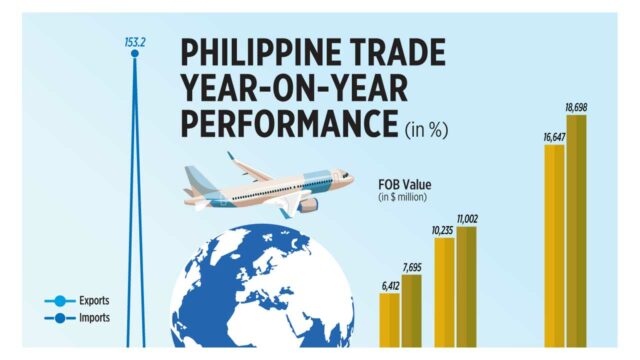
Philippine trade year-on-year performance

THE PHILIPPINES’ trade deficit stood at $3.31 billion in October, the narrowest gap in 17 months, as exports growth continued to outpace imports, the Philippine Statistics Authority (PSA) reported on Tuesday. Read the full story.

Philippine trade year-on-year performance

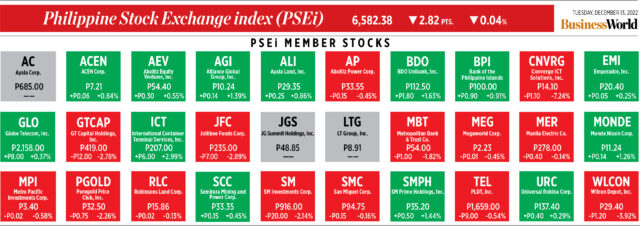
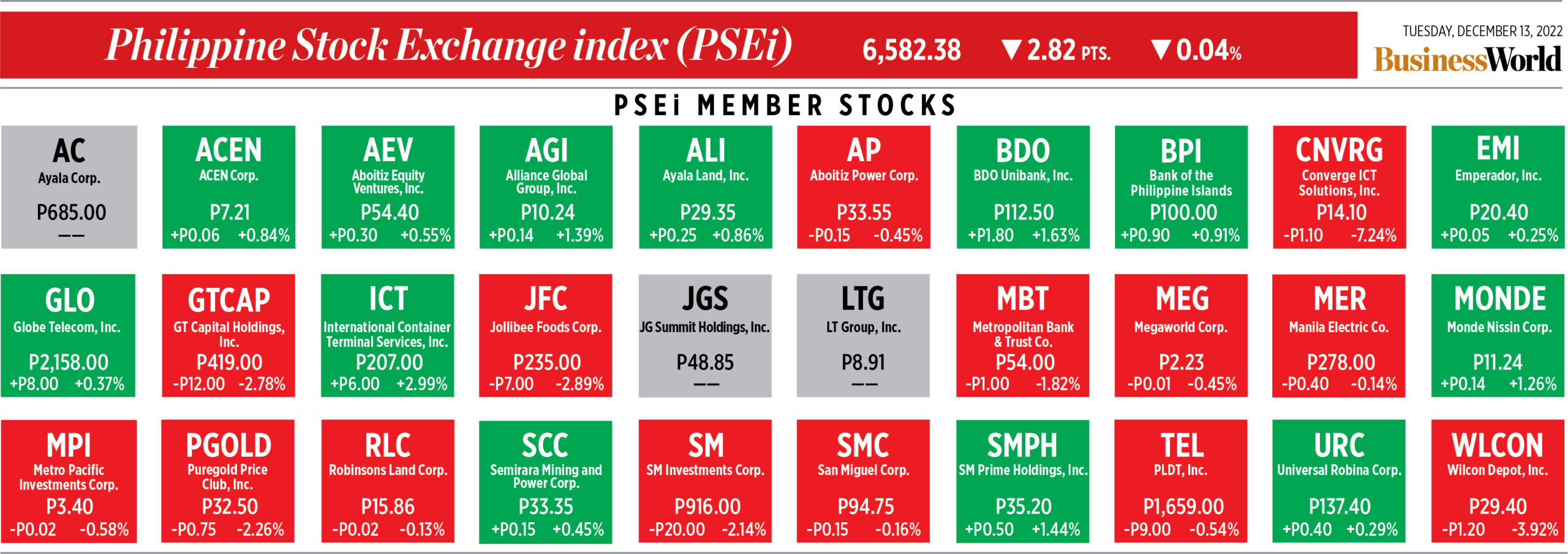
How PSEi member stocks performed — December 13, 2022

Here’s a quick glance at how PSEi stocks fared on Tuesday, December 13, 2022.


Shares slip ahead of US CPI data, Fed meeting

REUTERS

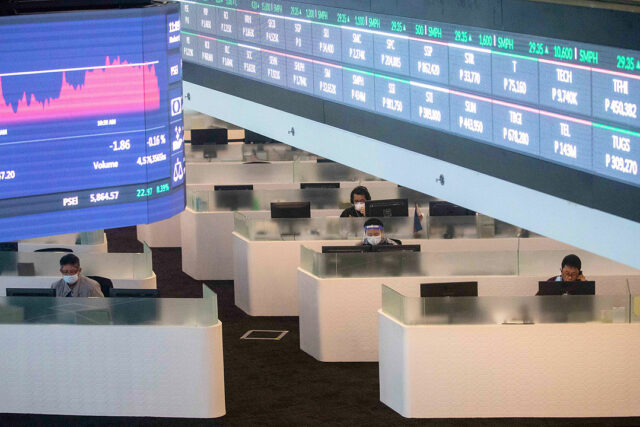
STOCKS inched lower on Tuesday as investors wait for the release of latest US consumer inflation data and the US Federal Reserve’s policy meeting, as these could affect the Bangko Sentral ng Pilipinas’ (BSP) decision this week.

The bellwether Philippine Stock Exchange index (PSEi) inched down by 2.82 points or 0.04% to close at 6,582.38 on Tuesday, while the broader all shares index lost 5.34 points or 0.15% to 3,431.65.

“The market was steady and on a wait-and-see as it tries to digest forthcoming US monthly inflation data and Fed policy hike, whether both will be above expectations at 7.3% and 50 bps (basis points), respectively, and which will sequentially partly determine the extent of next BSP policy hike and messaging,” First Metro Investment Corp. (FMIC) Head of Research Cristina S. Ulang said in a Viber message.

“The PSEi inched down … on profit taking after two consecutive days of gains. Investors also await the November US inflation report. Investors are waiting for the decision of the Federal Reserve on its interest rates to anticipate the next move of the Bangko Sentral ng Pilipinas at their meeting this month,” Philstocks Financial, Inc. Research Analyst Claire T. Alviar said in a Viber message.

The US Bureau of Labor Statistics was set to release November consumer price index data overnight, which markets expect to be a key consideration at the Fed’s policy meeting on Dec. 13-14.

The Fed is seen to hike rates by just 50 bps this week following four straight 75-bp increases.

Meanwhile, the BSP is set to hold its own policy meeting on Dec. 15, Thursday, where it is also expected to hike rates by 50 bps.

Ms. Alviar said data showing lower foreign direct investment (FDI) net inflows in September also weighed on sentiment.

Data released by the BSP on Monday showed FDI net inflows declined by 7.9% to $626 million in September from $680 in the same month in 2021.

For the first nine months of the year, FDI net inflows dropped by 10% to $6.7 billion from $7.5 billion in the comparable year-ago period.

Sectoral indices were split on Tuesday. Mining and oil lost 138.57 points or 1.31% to close at 10,438.53; holding firms decreased by 56.76 points or 0.88% to 6,334.35; and industrials went down by 17.13 points or 0.18% to 9,266.52.

Property rose by 28.07 points or 0.98% to 2,882.82; financials increased by 6.03 points or 0.36% to 1,664.71; and services added 2.77 points or 0.16% to end at 1,707.45.

Value turnover declined to P5.42 billion on Tuesday with 705.24 million shares changing hands from the P5.51 billion with 570.19 million issues traded on Monday.

Decliners outnumbered advancers, 113 to 68, while 43 names closed unchanged.

Net foreign selling dropped to P431.38 million from the P685.2 million seen the previous day.

FMIC’s Ms. Ulang placed the PSEi’s support at 6,500 and resistance at 6,900, while Philstocks Financial’s Ms. Alviar put support at 6,400 and resistance at 6,800. — J.I.D. Tabile

Peso weakens further ahead of US CPI data

BW FILE PHOTO

THE PESO weakened further against the dollar ahead of the release of November US consumer inflation data, which could affect the US Federal Reserve’s policy decision this week.

The local currency ended at P55.90 against the greenback on Tuesday, dropping by 25 centavos from Monday’s P55.65 close, data from the Bankers Association of the Philippines’ website showed.

The peso opened Tuesday’s session at P55.64 per dollar, a tad stronger than its Monday close. Its weakest showing for the day was at P55.92, while its intraday best was at P55.60 versus the greenback.

Dollars traded jumped to $1.12 billion on Tuesday from $683.95 million on Monday.

The trader said in a Viber message that the peso declined as the dollar rose against most Asian currencies on Tuesday ahead of the release of November US consumer price index (CPI) data overnight.

“Looks like this is just an unwinding of bearish dollar bets ahead of key data,” the trader said.

The dollar was firm on Tuesday leading in to the release of US CPI data and the final Fed meeting of the year, with investors waiting to update interest rate outlooks, Reuters reported.

The dollar gained 0.8% on the yen on Monday and was steady at 137.70 yen through the Asia session on Tuesday.

The Fed is seen to hike rates by just 50 basis points (bps) at their Dec. 13-14 meeting following four straight 75-bp increases.

Meanwhile, Rizal Commercial Banking Corp. Chief Economist Michael L. Ricafort said in a Viber message that the peso dropped as the dollar gained after oil prices settled up about $2 a barrel on Monday on supply jitters.

On Wednesday, Mr. Ricafort expects the local unit to move from P55.80 to P56 per dollar. — AMCS with Reuters

Energy storage regulations expected next year

SMCGLOBALPOWER.COM.PH

THE Energy Regulatory Commission (ERC) said it hopes to release a regulatory framework for emerging energy technologies like storage next year.

“By the first quarter of 2023, we are hoping we can do the framework for the energy storage system (ESS),” ERC Chairperson and Chief Executive Officer Monalisa C. Dimalanta told reporters on the sidelines of Energy Investment Forum on Tuesday.

Battery energy storage systems are expected to make intermittent energy sources like wind and solar suitable for providing a continuous supply of energy.  

Ms. Dimalanta said that the ERC is also targeting to issue a regulatory framework by 2023 for micro-grid systems and electric vehicles.

“After the energy storage, we are hoping we can do microgrid following that. Towards the end of the year for the e-vehicle program,” Ms. Dimalanta said.

The Department of Energy (DoE) has cited the need to tap emerging technologies en route to achieving energy security.  

Separately, Energy Undersecretary Felix William B. Fuentebella said the DoE is preparing for tight power supply conditions next year.

In October, Energy Secretary Raphael P.M. Lotilla projected at least 17 yellow and three red alerts on the power grid. The red alerts are expected in May and June. 

“The worst-case scenario is no power. Sometimes, it happens because of no fuel and (during calamities). That is the worst-case scenario that we are looking at,” Mr. Fuentebella told reporters.   

Mr. Fuentebella said the DoE is working on fast-tracking power plants under construction.

“We have a lot of renewables coming in; we are also working to rush the liquefied natural gas (LNG) that is coming in considering that Malampaya is nearing depletion,” Mr. Fuentebella said.

The Malampaya gas field supplies up to 20% of Luzon’s total electricity requirements. However, it is expected to be depleted by 2027.

In 2023, at least two LNG projects are expected to start operations, the projects of Atlantic Gulf & Pacific Co. and First Gen Corp., through its subsidiary FGEN LNG Corp.

Mr. Fuentebella said that for the period where tight supply is seen next year, “it is always the second quarter, this period is where we typically experience tight supply, where demand surges.” — Ashley Erika O. Jose

Electric co-ops back EPIRA tweaks to allow gov’t power generation

BW FILE PHOTO

THE Philippine Rural Electric Cooperatives Association, Inc. (Philreca) has declared its support for amending the Electric Power Industry Reform Act (EPIRA) of 2001, citing the need to once more allow government entities, including local government units (LGUs), to generate power. 

In a statement on Tuesday, Philreca said: “Continuing a deregulated generation sector will only result in imbalance in the power industry, the opportunities of each to bring down the electricity cost being impeded.”

The EPIRA law sought to restructure the power industry via deregulation and privatizing most state-owned power generation and transmission assets.

According to Philreca, the National Government and LGUs should be allowed to generate power, not only the private sector.  

“True competition may be achieved only with the presence in the market of a price neutralizing factor, the government,” it said.

Separately, Philreca also said that it supports the decision of the Energy Regulatory Commission (ERC) to investigate the power supply agreements of private utilities and electric cooperatives after numerous complaints from consumers.

Last week, the ERC said it will review the “accuracy” of the generation rates being passed on by DUs to consumers.

The generation charge accounts for about 61% of the consumer power bill, on average.

Philreca said power rates have risen following the global surge in fuel prices in the wake of the Russia-Ukraine war, the peso’s depreciation, and the difficulty of sourcing coal.  

Generation companies are authorized to pass these charges on to consumers by EPIRA. — Ashley Erika O. Jose

DBS Bank sees PHL growth slowing to 6.3% in 2023

PHOTO COURTESY OF ICTSI

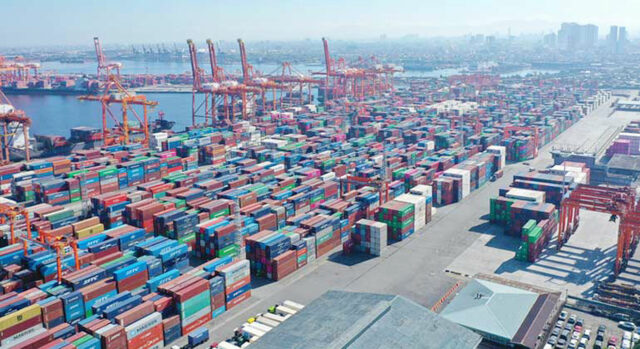
GROWTH of the Philippine economy will likely slow to 6.3% next year from a 2022 rate of at least 7%, Singapore’s DBS Bank said, noting the impact of high inflation, interest rates, and fading pent-up demand.  

In a report written by DBS economists Chua Han Teng, Radhika Rao, and Irvin Seah, the bank said the Philippines is on track to meet the government’s gross domestic product (GDP) targets of 6.5-7.5% this year and 6-7% in 2023. 

“Economic opening from the pandemic has been a key support, despite multiple challenges from rising domestic inflation and interest rates, as well as global headwinds,” DBS Bank said. 

The economy expanded by 7.6% in the third quarter on the strength of the economy’s reopening. This has brought year-to-date average growth to 7.7%.  

“Even as we expect 2022 growth to register above 7%, we see the expansion cooling to 6.3% in 2023 given mounting headwinds,” DBS Bank said.  

“In our view, domestic demand in 2023 is likely to be hit by still-elevated inflation, the lagged impact of aggressive monetary tightening in 2022, and the fading of pent-up demand and reopening gains,” it said, adding that private consumption may grow at a slower pace next year.  

Headline inflation at the national level rose to 8% year on year in November from 7.7% in October. It was the eighth straight month that inflation exceeded the central bank’s 2-4% target. 

DBS Bank expects inflation in the Philippines to average 4.4% in 2023 due to the impact of the central bank’s monetary tightening and easing commodity prices. 

“Philippine households are already seen dipping into their savings and tapping loans given the high inflation environment, despite improving labor market conditions. Inflation has surged to multiple-year highs, undercutting real purchasing power and firms’ margins,” DBS Bank said.  

The Bangko Sentral ng Pilipinas (BSP) has raised benchmark interest rates by 300 basis points (bps) so far this year, bringing the key policy rate to 5%, in a tightening cycle billed as an effort to contain inflation.  

A BusinessWorld poll last week indicated that 14 out of 15 analysts expect the Monetary Board to continue hiking borrowing costs at its Dec. 15 meeting. Thirteen analysts expect the central bank to deliver a 50-bp rate increase, while one forecast a 25-bp hike. 

“We think the tightening cycle will extend into early 2023 but is nearing its end, with the policy rate reaching 6%. It would enter an extended pause to anchor inflation expectations, while Fed pressures on the Philippine peso vs. the dollar also ease,” DBS Bank said.   

As the peso weakened to a record low of P59 against the dollar in October, the BSP intervened to smooth out the currency’s volatility. The peso has since bounced back to the P55-to-the-dollar level, closing at P55.90 on Tuesday.  

The Federal Reserve has raised policy rates by 375 bps since March, and is expected to continue tightening to cool inflation at its Dec. 13-14 meeting. 

“After a sharp increase in the Philippines’ public debt to more than 60% of GDP in 2022 from 40% pre-pandemic to cushion the impact of the unprecedented health crisis, we expect the National Government to stay on a modest fiscal consolidation path,” DBS Bank said. 

It also noted that the National Government is aiming to bring down its fiscal deficit gradually to 3% of GDP by 2028, with debt targeted to fall to less than 60% of GDP by 2025. 

“Fiscal impulse in 2023 will be negative and widen from 2022. Government consumption is likely to provide little support to headline growth in 2023,” it added.  

The government’s budget deficit stood at P1.11 trillion in the 10 months to October, equivalent to 67% of the P1.7-trillion deficit projected for the full year. 

Outstanding debt hit a record P13.52 trillion at the end of September, bringing the debt-to-GDP ratio to a 17-year high of 63.7%. — Keisha B. Ta-asan

Philippines can’t deliver on climate programs without stronger budget, int’l financing commitments — ADB

PHILIPPINE STAR/ MICHAEL VARCAS

THE PHILIPPINES needs to budget more effectively and tap more financing for its climate-change mitigation efforts, given the limited internal resources available to meet its international commitments, the Asian Development Bank (ADB) said.

“With only 2.7% of the 75% (emissions reduction) target to be financed through the public budget, turning ambition into delivery will depend on how the country’s climate program is financed,” the ADB said in a blog post on Tuesday.

“Effective government budgeting is key to building institutions, as well as the teams of people needed to convert climate ambition into action… maintaining and increasing budget allocations — from the 6.27% of the annual budget allocated for climate resilience in 2021 — will be critical,” it added.

In 2021, the Philippines committed to reduce 75% of its emissions by 2030, one of the more ambitious targets in Southeast Asia. 

“Not surprisingly, addressing climate change is a consistent priority across the country’s leadership, whether in government or management of large companies,” the ADB added.

“Living in one of the world’s most vulnerable countries to climate change, people in the Philippines face an increasing barrage of cyclones, floods, drought and heatwaves. The country is hit with an average of 20 typhoons per year, and over 3 million people are affected by extreme floods,” the ADB said.

On the prospects for tapping international financing, the ADB said: “The Philippines’ climate ambitions will not be met without support from development partners and philanthropies.”

Between 2018 and 2020, donor governments and multilateral institutions provided $2.4 billion in climate-related development finance. 

“More of these funds are needed, and fast. A pipeline of projects needs to be built, and project sponsors need more capacity to mobilize funds, design projects and engage investors,” it added.

Banks will also play a key role in financing the bulk of climate initiatives within the country, the ADB said.

“The central bank and other financial regulators have put in place a suite of policies to integrate environmental, social and governance issues into banking practice; encourage green lending; and support banks considering how climate risks affect their lending. Banks and financial institutions need greater capacity to take on this agenda,” it added.

The ADB also cited private investment in clean energy and mobilizing local governments as key to implementing more climate-resilient projects.

“The clock is ticking for the Philippines, and the money needed for climate action cannot be mobilized fast enough,” it added. — Luisa Maria Jacinta C. Jocson

Substitute bill tasks SBCorp. with offering competitive alternative to moneylenders

THE House committee on micro, small, and medium enterprise (MSME) development approved a substitute bill positioning the Small Business Corp. (SBCorp.) as a possible alternative to usurers typically resorted to by small businesses.

The unnumbered substitute bill authorizes SBCorp. to directly lend to MSMEs 40% of its Pondo sa Pagbabago at Pag-asenso Fund, and the remaining 60% indirectly via accredited partner financial institutions (PFIs).

Representative Christian S. Unabia, who chairs the committee, said at the hearing: “Our target is to give 1% interest rate directly to our borrowers (and a) 2.5% interest rate for the borrowers from our PFIs,” he said, referring to the cap on lending rates set at 1% per month for direct lending and 2.5% per month rate via PFIs.

Angelito B. Acupan, head of SBCorp.’s Planning and Policy Management Group, requested a three-year transition period “in order for (SBCorp.) to meet the 60-40 ratio given that it would really take time to build up a considerable portfolio of direct lending for micro and small enterprise loans.”

Underserved and unserved enterprises will enjoy priority access to the fund, subject to review and approval of the Micro, Small, and Medium Enterprise Development Council.

PFIs include rural banks, thrift banks, development banks, cooperative banks, non-stock savings and loan associations, microfinance non-government organizations, and lending companies.

The bill must also clear the committee on appropriations.

The MSME committee also conducted initial deliberations on House Bill 3632, which proposes to make the Mentor Me Program a function of the Go Negosyo center, while also classifying business counsellors of the Go Negosyo centers as full employees of the Department and Trade Industry (DTI).

The counsellors provide business registration assistance, advisory, and business information and advocacy to MSMEs at Negosyo Centers.

“It is hoped that service delivery to MSMEs in the regions will be improved through the 1,334 (Go) Negosyo centers that have been established as of June 30, 2022,” Mr. Unabia said in his sponsorship speech.

The committee deferred approval of the bill to await position papers from the DTI and Department of Budget and Management. — Beatriz Marie D. Cruz

ADVERTISEMENT
ADVERTISEMENT