Home Blog Page 5421

Always racing to meetings? It’s slowing you down

HEADWAY-UNSPLASH

THE start of a new year is a good time to examine assumptions and habits. That seems to be behind the “calendar purge” with which Shopify, Inc. greeted 2023.

The company has declared that it is banning meetings on Wednesdays, limiting 50-person-plus meetings to Thursdays, and — for two weeks — killing any meeting with three or more people. The meeting-free fortnight is designed to be a kind of reboot, after which executives are expected to encourage employees to be choosier about which meetings they schedule and attend. And in an acknowledgment that calendar clutter isn’t the only way to waste time, they are also pushing workers to be more strategic in how they use Slack.

These changes are good. But if Shopify and other companies truly want to tackle the corporate scourge that is meeting overload, they will need to go further.

If you have never experienced the misery of meeting overload, this might sound a little strange. Are meetings really that bad?

While having a few meetings is fine, too often employees spend their entire day bouncing from one to another. When meetings run back-to-back, employees have little time to prepare or to follow up; the value of getting together is wasted. One estimate suggests that useless meetings cost large companies $100 million a year. I’m surprised the figure is so low.

Meeting-clogged schedules make organizations sclerotic and slow. Need to grab your boss for an urgent chat or find a colleague for a quick question? Good luck swinging by their desk. You’ll have to schedule a meeting. Unfortunately, you probably don’t have any mutually free time-slots for at least two weeks.

Recurring meetings are especially difficult to cancel. Sometimes, threats to get rid of a meeting will give it new life — improved attendance or agendas. But the new energy is generally short-lived. The gravitational pull of the old meeting rhythm is too strong to resist. And so the zombie meeting staggers forward, brainless but unkillable.

The problem is that although most people hate this way of working, no one wants to admit that the meetings they run contribute to the problem. Nor do attendees want to miss out: We may dread sitting in useless meetings, but if we decline them, we fear we’re being left out of the loop — or that we’ll look rude or lazy.

To cut back on meeting overload, senior leaders must do more than encourage employees to be more selective about the meetings they schedule or attend.

When organizations seek to limit the number, size or frequency of meetings, they are often treating the symptoms of an underlying disease. But addressing the root causes of meeting overload requires deeper work. Are employees spread across too many projects? Is the culture overly consensus-driven? Are meetings the only way people know to force colleagues to meet for deadlines or to compel managers to make decisions? Is the company over-rewarding visibility at the expense of recognizing lower-profile work?

When meeting excess is a symptom of other problems, simply asking people to meet less often is unlikely to work. I’ve experienced this firsthand. At a former employer, we tried to keep Fridays meeting-free so that staff could focus on their heads-down work, but inevitably, the logjam of meetings Monday to Thursday meant that the pristine calendar space of Fridays was too alluring to ignore. As conference rooms filled up on Fridays, the boss would send periodic e-mails pleading with people to stop. He probably needed to go further — make it impossible for our calendar software to function on Fridays, perhaps, or physically shoo people back to their desks. Even then, I’m sure meeting-addicted employees would have found ways to continue to confabulate.

Leaders can also experiment with different formats. Managers could build prep and follow-up time into the meeting itself; perhaps the first 10 minutes are spent preparing, and the last 10 are spent firing off follow-up e-mails. Or limit the length of meetings to 45 minutes rather than an hour (or 20 minutes rather than 30) to make sure people have a few moments before the next one starts. Or model better meeting etiquette by using a focused agenda to guide every meeting.

In Shopify’s case, a two-week reboot doesn’t sound like enough time to create new habits. Most research into habit formation suggests that it takes 40 days, not 14, to set a new norm. Shopify should consider extending its meeting hiatus to at least a month so that the organization learns how to get work done without them.

As for limiting 50-plus-person meetings to one day, why convene them at all? Does any meeting really need to be that large? Perhaps such super-size gatherings are justified on a quarterly or annual basis, but one has to wonder what gets done at such mega-meetings. Probably a handful of senior execs speak and everyone else listens. Isn’t one-way communication what e-mail is for?

At the very least, managers seeking to cut the number of wasteful meetings should give clear targets, which work better for changing behavior than vague “less of this” and “more of that” pronouncements. Perhaps give people a “meeting budget,” a certain number of meeting-hours they can use each month. (A five-person, one-hour meeting is five meeting-hours.)

It makes sense that Shopify, which is trying to rebound from a difficult quarter, would seek to claw back employee time for the work that matters most. Their meeting memo is a good start — but like most new year’s resolutions, it’s only the beginning. As anyone who has ever tried to set boundaries knows, the real work happens not in declaring them, but in maintaining them.

BLOOMBERG OPINION
F2F with reality

PHILIPPINE STAR/MIGUEL DE GUZMAN

Firecrackers cackled hellish laughter at their delight in defying the “no fireworks” rule for the New Year’s Eve celebrations. Gunpowder-charged homemade bombs whistled mocking warnings, careening mindlessly towards unpredictable targets — not necessarily the sky — sometimes exploding in the hands of some hapless person launching them. Exuberant fireworks danced their giddy extravaganza, lighting up the evening canopy with the blindingly bright Hope for the new year, 2023.

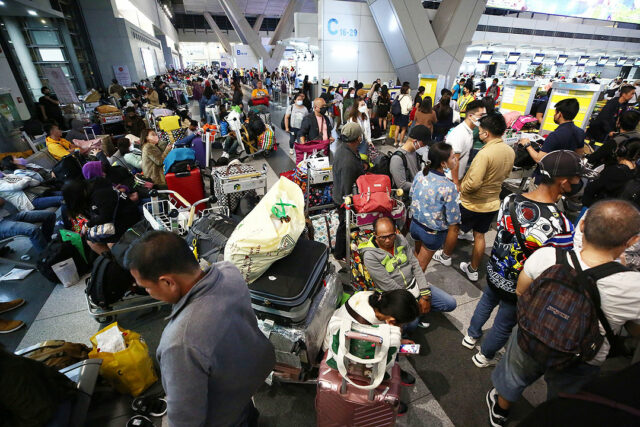
But in the lethargy of the morning after, still-sleepy eyes wakened to reality. “Chaos erupted on New Year’s Day in the Philippines after a severe power outage temporarily impacted air traffic control at the country’s largest airport, disrupting hundreds of flights and leaving tens of thousands of travelers stranded in the Southeast Asian hub,” CNN News blared out. A total of 282 flights were either delayed, canceled or diverted to other regional airports, while around 56,000 passengers were affected as of 4 p.m. local time on New Year’s Day (cnn.com, Jan. 3). How much more descriptive can this be, of a face-to-face (F2F) with reality, after the revelry of a conceptual worry-free world?

What happened? A Babel of know-it-alls proffering technical explanations or conspiracy theories loudly suggesting graft and corruption in procurement might eventually explain the New Year’s Day disaster at the Ninoy Aquino International Airport (NAIA). But perhaps the most real explanation would be that from the Director General of the Civil Aviation Authority of the Philippines (CAAP), retired Captain Manuel Tamayo, a licensed pilot with more than 42 years of experience in the aviation industry:

“The flight delays and cancellations were caused by both the commercial and backup uninterruptible power supply (UPS) of the Communications, Navigation and Surveillance Systems for Air Traffic Management (CNS/ATM) malfunctioning. The CNS/ATM allows planes to communicate their position with each other and to the Air Traffic Management System of the country or the Manila flight information region (FIR). Without this, the CAAP would not be able to direct traffic in the Philippine airspace.” (Ibid.)

According to Tamayo, one of the blowers of the main power supply conked out, leading them to switch to the backup UPS. However, it also malfunctioned when they tried to switch to the standby power supply. Technicians tried to override the power supply by placing an automatic voltage regulator instead, but they received another error message stating that instead of 220 volts, 380 volts were being supplied to the system. This forced a shutdown of the CNS/ATM, but some components were already damaged (Ibid.).

It was not the air traffic management system itself that caused the issue, but the failed backup uninterruptible power supply (UPS) and the complicating human error of plugging the incorrect voltage for the replacement UPS were what wrecked the ATM system and what caused the flight delays and cancellations! Rep. Joey Salceda, chair of the House of Representatives Committee on ways and means, immediately challenged the CAAP and the Department of Transportation (DoTr) for accountability on the airport technical disaster, threatening the government administrative agencies that “at least P660 million would be needed to reimburse 66,000 passengers affected — 56,000 on Jan. 1 and 10,000 on Jan. 2 — if their tickets were worth P10,000 each” (cebudailynews.com, Jan. 3). Of course, Salceda’s charge is impractical and unimplementable, perhaps only incendiary to panic and false hopes. Delayed passengers who waited a day (some, overnight) for re-booking or reimbursement vouchers had to be content with meal tickets and/or short-time hotel stay given by the airlines. The nightmare of re-rescheduling flights and re-booking stranded and delayed passengers persists to this day, one week later.

Lesson learned from the airport’s New Year’s Day bog down is to focus on Today, and to concentrate on performing and accomplishing what must be done Now. It is coming face-to-face with Reality, now that the seclusion and isolation from the shackling three-year COVID pandemic has conditionally relaxed. Have less of the introspective musings about the unreliable, conditional Future with its tentative scenarios and often-inapplicable motherhood guiding principles: Act Now. Just do it!

Start with a blank page, from “Square One.” Acts of nature usually force attention back to basics: “Across the Philippines, the 2022 holiday season was meant to be a time for celebration and a relief after two Christmases tarnished by the punishing coronavirus lockdowns. But on the southern Philippine island of Mindanao, families faced tragedy on Christmas Day when rains triggered flooding and landslides, killing at least 51 people and displacing thousands,” the authorities said (nytimes.com, Jan. 3). As of Jan. 2, at least 19 people were still missing, and thousands of others were living in emergency shelters on Mindanao.

“Imagine losing your home on Christmas Day,” one flood victim cried. Damage to infrastructure and crops has been estimated at P1.36 billion ($24.4 million), the Disaster Relief Center said in a bulletin. Heavy rains mostly affect Northern Mindanao, an area that is less prepared for such disasters than other regions in the Philippines. This is the second straight year that extreme weather has caused death and destruction over the holidays in the Philippines. In December 2021, Super Typhoon Rai lashed Bohol Province with the same intensity as that of a Category 5 hurricane, killing hundreds of people and forcing millions of others from their homes (Ibid.).

Survival is the basic “Square One” in the honest face-to-face with reality. Ominously, the natural environment ultimately decides this bottom line of survival — look at those storms and floods that vengefully decry climate change wrought by the abuse of Nature by humans. It seems even technical glitches, such as the New Year’s Day airport shut-down, say something about the habitual cumulative stealing of Man from Nature. Airplanes emit around 100 times more CO2 per hour than a shared bus or train ride, and the emissions of global aviation are around 1 billion tons of CO2 per year — more than the total emissions of most countries individually. In a recent study published in the journal Environmental Research Letters, scientists calculated that aviation (mostly commercial) contributes around 4% to human-induced global warming and is projected to cause about 0.1° Celsius (0.2° Fahrenheit) of warming by 2050 if aviation continues growing at pre-pandemic rates (news.mongabay.com/2022/04).

But of course, the world cannot now do without air travel. Environmental scientist Milan Klöwer recommends that individuals should consciously try to travel by air less for pleasure, prioritizing necessary flights for business and responsibilities — after all, communications and interaction is not difficult on the internet. Klöwer recommends focused development of alternative fuels for the airline industry. In 2018, there were 4.3 billion passenger journeys recorded. The COVID-19 pandemic halted global travel and reduced aviation by 45% in 2020, but CO2 emissions persist for hundreds of years, so all emissions from all past flights are still at play (Ibid.).

Sins of the past. Steady carbon emissions that last for years are from human activities supposedly made easier and more efficient by the new technologies. But the tradeoffs — global warming and climate change — are expensive. People, plants, and animals living under the ozone hole are harmed by the solar radiation now reaching the Earth’s surface — where it causes health problems, ranging from eye damage to skin cancer (ucsusa.org, July 16, 2008). Don’t people make New Year’s resolutions every year to drop the bad habits of the past, start with a clean slate of to-do’s and vow to one’s self to stick to commitments through hell or high water?

High water, meaning floods and natural calamities from climate change. Nature will tell us, in no uncertain terms, what our reality is and what we have done to ourselves by our greedy taking from our natural resources. “Hell” might be the punishment that COVID has scourged the world with for the past three years, hopefully to be more forgiving in 2023.

Life we have mangled in a world we have abused — that is the reality we face today.

There is time to cleanse the collective soul. We start in 2023.


Amelia H. C. Ylagan is a doctor of Business Administration from the University of the Philippines.

ahcylagan@yahoo.com

Peso may move sideways amid data releases

BW FILE PHOTO

THE PESO may move sideways against the dollar this week, with the market to monitor data at home and in the United States for leads.

The local unit closed at P55.64 per dollar on Friday, strengthening by 11 centavos from its P55.75 finish on Thursday, Bankers Association of the Philippines data showed.

Week on week, the peso strengthened by 11.5 centavos from its P55.755 close on Dec. 29.

The peso opened Friday’s session weaker at P55.85 per dollar. It dropped to as low as P55.89, while its intraday best was at P55.57 against the greenback.

Dollars exchanged inched down to $1.052 billion on Friday from the $1.061 billion recorded on Thursday.

The peso strengthened on Friday after China announced they will be relaxing property borrowing restrictions, which was “positive for the market,” a trader said.

China announced on Friday that they will be dialing back the policy that restricts the amount new borrowing property developers could raise each year.

Meanwhile, Rizal Commercial Banking Corp. Chief Economist Michael L. Ricafort said in a Viber message that the local currency strengthened after strong employment and manufacturing data released last week.

The Philippines’ unemployment rate dropped to its lowest level in over 17 years in November, as firms hired more workers ahead of the holiday season.

Preliminary data from the Philippine Statistics Authority’s (PSA) Labor Force Survey released on Friday showed the unemployment rate further eased to 4.2% in November. This was lower than the 4.5% in October and 6.5% a year earlier.

This translated to 2.177 million unemployed Filipinos in November, lower than the 2.241 million in October and the 3.160 million in the same month in 2021.

Meanwhile, factory output grew for the fifth consecutive month in November as productivity in the manufacturing sector increased, separate data from the PSA showed.

Results of the PSA’s Monthly Integrated Survey of Selected Industries reported that factory output, as measured by the volume of production index, expanded 5.9% year on year in November. This was faster than the previous month’s revised 5.3% but slower than the 28.6% growth in November 2021.

November marked the fastest growth in five months after the revised 0.02% dip recorded in June.

Mr. Ricafort added that the decline in global crude oil prices also supported the peso as it could “help ease inflationary pressures.”

For this week, Mr. Ricafort said that the market will look at December trade data to be released on Jan. 10 for leads.

Meanwhile, the trader said latest US jobs data released on Friday could affect peso-dollar trading to start the week.

The US’ unemployment rate was back to a pre-pandemic low of 3.5% as the labor market remains tight.

Nonfarm payrolls increased by 223,000 jobs last month after climbing 256,000 in November. The US added 4.5 million jobs in 2022, with employment gains averaging 375,000 per month.

Average hourly earnings rose 0.3% after gaining 0.4% in the prior month, with the year-on-year increase in wages at 4.6%.

For this week, Mr. Ricafort expects the local unit to move from P55.40 to P55.90 per dollar, while the trader gave a wider forecast range of P55 to P56. — A.M.C. Sy

PHL shares may move sideways ahead of US CPI

REUTERS

LOCAL SHARES are expected to move sideways this week ahead of the release of US consumer price index (CPI) data, which could solidify expectations of more US Federal Reserve rate hikes this year.

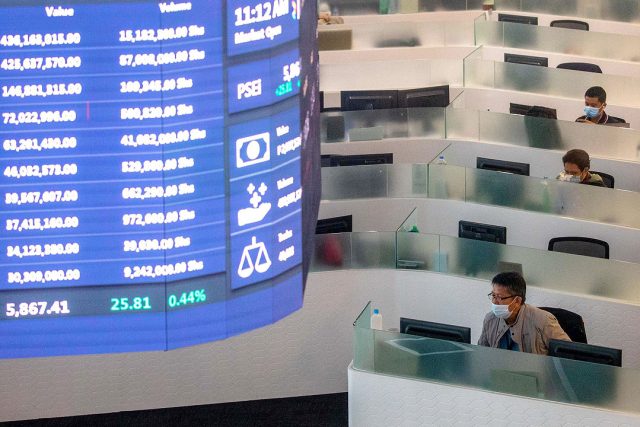
The bellwether Philippine Stock Exchange index (PSEi) went down by 93.36 points to close at 6,667.97 on Friday, while the broader all shares index lost 37.38 points or 1.05% to end at 3,513.07.

Week on week, the PSEi closed higher by 101.58 points or 1.55% from 6,566.39 on Dec. 29.

“Bulls dominated 2023’s first week of trading, shrugging off record-level consumer price index for December 2022, although gains were capped by last-minute profit taking,” Online brokerage 2TradeAsia.com said on a market note.

Headline inflation quickened to 8.1% in December, from 8% in November and 3.1% in December 2021. This was the fastest since the 9.1% print in November 2008.

Inflation averaged 5.8% in 2022, matching the central bank’s forecast but faster than its 2-4% target and the 3.9% average posted in 2021.

“Philippine shares finally had the first profit taking session of the year, on the back of strong US jobs data…, fueling speculations for further rate hikes ahead,” Regina Capital Development Corp. Head of Sales Luis A. Limlingan said in a Viber message.

Nonfarm payrolls increased by 223,000 jobs last month, the smallest gain in two years, after rising 256,000 in November, Reuters reported. The economy added 4.5 million jobs in 2022, with employment gains averaging 375,000 per month.

Average hourly earnings rose 0.3% after gaining 0.4% in the prior month. That lowered the year-on-year increase in wages to 4.6%, the smallest rise since August 2021, from 4.8% in November.

For this week, Philstocks Financial, Inc. Senior Research Analyst Japhet Louis O. Tantiangco said that the market could move sideways as investors weigh the Philippines’ growth prospects against inflation and interest rate concerns.

“Our latest labor force survey could become a point of contention. While our jobs data reflect a strong local economy, they also show a tightening of the labor market which could lead to stronger aggregate spending and conse-quently, demand side inflationary pressures,” Mr. Tantiangco said.

Meanwhile, Mr. Limlingan said the market could see more profit taking this week ahead of the US CPI report to be released on Jan. 12.

Online brokerage 2TradeAsia.com said “the main index’s primary technical challenge is in the 6,800-7,000 zone, where last year’s fourth quarter rally hit a dead end; key is to understand that the PSEi must build a base from here in order to amass enough escape velocity to trade back to 7,500 levels.”

It placed the market’s support at the 6,400-6,500 range and resistance at 6,800, while Philstocks Financial’s Mr. Tantiangco put support at 6,600 and resistance at 7,000-7,100. — Justine Irish D. Tabile

November jobless rate falls to lowest since 2005

The jobless rate eased to its lowest level since 2005 in November. -- Photo by Michael Varcas, The Philippine Star

The Philippines’ unemployment rate dropped to its lowest level in over 17 years in November, as firms hired more workers ahead of the holiday season.

Preliminary data from the Philippine Statistics Authority’s Labor Force Survey (LFS) released on Friday showed the unemployment rate further eased to 4.2% in November. This was lower than the 4.5% in October and 6.5% a year earlier.

This translated to 2.177 million unemployed Filipinos in November, lower than the 2.241 million in October and the 3.160 million in the same month in 2021.

“This was the lowest unemployment rate since April 2005,” PSA Undersecretary and National Statistician Claire Dennis S. Mapa said during the press briefing on Friday.

The government updated the definition of joblessness in 2005.

Starting April 2005, the PSA adopted the definition of unemployed as those persons (1) without work; and (2) currently unavailable for work; and (3) seeking work or not seeking work because of the belief that no work is available, or awaiting results of previous job application, or because of temporary illness or disability, bad weather, or waiting for rehire or job recall.

Prior to that, joblessness was only considered under two criteria: (1) without work and looking for work; or (2) without work and not looking for work due to valid reasons.

Mr. Mapa said the Philippines was back to its pre-pandemic levels in the July to November round of the Labor Force survey.

“The strong labor market signifies the steady recovery of our economy. With the release of the Philippine Development Plan (PDP) 2023-2028, we are starting our work toward deepening economic and social transformation,” National Economic and Development Authority (NEDA) Secretary Arsenio M. Balisacan said in a statement.

Mr. Balisacan said that the government sees a more dynamic labor market as flexible work arrangements and digitalization provide more employment opportunities for Filipinos.

UNDEREMPLOYMENT RISES

However, job quality deteriorated in November. The underemployment rate slightly rose to 14.4% from 14.2% in October, but this was still lower than 16.8% in November 2021.

In absolute terms, the number of underemployed Filipinos increased to 7.161 million in November, from 6.673 million in October. It was lower than the 7.618 million in November 2021.

Meanwhile, employment rate edged up to 95.8% in November, from 95.5% in October and 93.5% in the same month a year ago. This was the highest employment rate based on available data from April 2005.

This was equivalent to 49.706 million employed Filipinos, higher than the 47.106 million in the previous month and 45.474 million in November 2021.
The size of the Filipino labor force expanded to 51.883 million in November, from 49.348 million in October and 48.634 million in November 2021.

This translated to a labor force participation rate (LFPR) — the share of labor force to the total population 15 years old and over — of 67.5%. This was higher than the 64.2% recorded in October and November 2021.

Mr. Mapa also said that the increase seen in the LFPR is due to seasonality, economic activities related to the holidays and employment in family home establishments.

Year to date, the unemployment rate averaged 5.5%, lower compared with the 7.8% average in the 11 months to November in 2021.

The underemployment rate averaged 14.4% in the same period, down from the 16% last year.

The employed Filipino worker worked 39.3 hours a week on average in November, a tad lower from the 40.2 average weekly hours in October and 39.6 on November 2021.

SERVICES

In November, the services sector was still the top employer, accounting for 60.5% of the labor market. Agriculture followed with 21.4% and industry with 18.1%.

Higher employment was seen in agriculture and forestry (up 247,000 to 9.466 million in November); manufacturing (up 668,000 to 4.335 million); electricity, gas, steam and air-conditioning supply (up 52,000 to 152,000); water supply; sewerage, waste management and remediation activities (up 36,000 to 89,000); wholesale and retail trade; and repair of motor vehicles and motorcycles (up 941,000 to 11.318 million); accommodation and food service activities (up 381,000 to 2.260 million) among others.

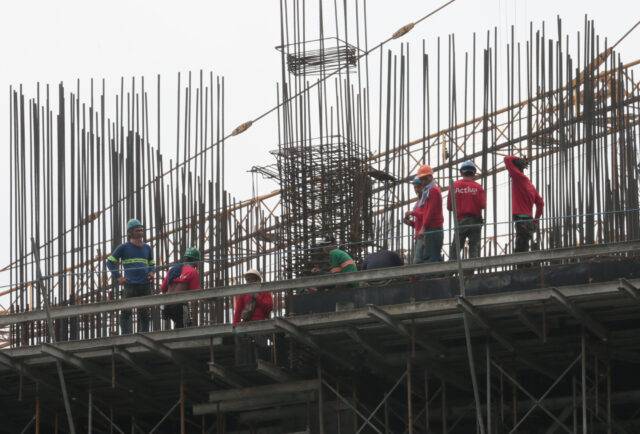
Meanwhile, job losses were seen in fishing and aquaculture (down 211,000 to 1.175 million); mining and quarrying (down 4,000 to 233,000); construction (down 408,000 to 4.169 million); transportation and storage (down 39,000 to 3.350 million) among others.

“Unemployment is now easing because we are moving towards the end of the pandemic where employment opportunities have returned and investments are coming in due to a more open economy,” Asian Institute of Management economist John Paolo R. Rivera said in an e-mail.

For ING Bank NV Manila Senior Economist Nicholas Antonio T. Mapa, the improvement in the labor market mirrors the significant pickup in economic activity especially in retail trade, restaurants, and recreation.

He also added that the jump in hiring for manufacturing matches the gains in recent Purchasing Managers’ Index (PMI) numbers.

“Despite the positive steps in both employment and labor force participation, we note the elevated underemployment rate suggesting that despite finding jobs, workers still need more hours or wages likely to cover the rising cost of living,” he said in a Viber message.

S&P Global Philippines’ PMI showed factory output expanded to 52.7 In November indicating a “modest” pace of expansion from 52.6 in October.

“[We] might see a pullback in gains post holidays and if manufacturing slows due to the global downtrend in trade,” ING’s Mr. Mapa said.

“December 2022 should provide still strong employment numbers as was the case in 2021,” University of Asia and the Pacific economist Victor A. Abola said in an e-mail. — A. M. P. Yraola

ICT expert Reynaldo C. Lugtu, Jr. talks about how financial institutions must educate consumers on glitches and breaches

Though digital adoption provides opportunities for financial inclusion, with it come issues of security, trust, and lack of knowledge. Financial institutions therefore have a responsibility to coordinate with regulating bodies like Bangko Sentral, and properly communicate with their consumers to educate them about various risks and how to deal with them.

Factory output expands for 5th month in a row in November

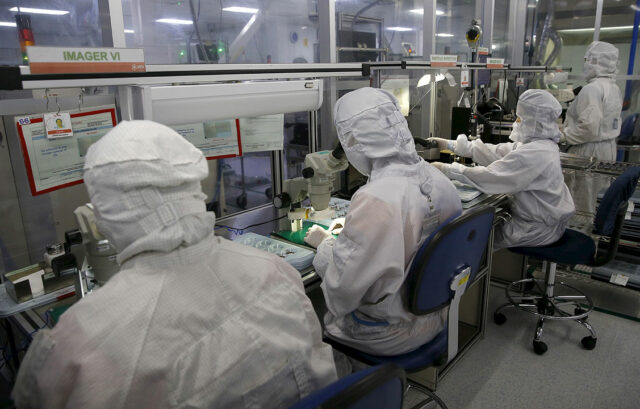
Workers are seen at an electronics manufacturing assembly plant in Biñan, Laguna, April 20, 2016. — REUTERS/ERIK DE CASTRO

Factory output grew for the fifth consecutive month in November as productivity in the manufacturing sector increased, data from the Philippine Statistics Authority (PSA) showed.

Preliminary results from PSA’s Monthly Integrated Survey of Selected Industries (MISSI) reported that factory output, as measured by the volume of production index (VoPI), expanded 5.9% year-on-year in November. This was faster than the previous month’s revised 5.3% but slower than the 28.6% growth in November 2021.

November marked the fastest growth in five months after the revised 0.02% dip recorded in June.

Sergio R. Ortiz-Luis, Jr., Philippine Exporters Confederation, Inc. (Philexport) president, said there was better manufacturing performance in November as the economy continued to reopen and companies have hired more workers.

“There’s still a lot of problems in the supply chain. But those already operating and expanding, going to their usual 100% operation, surely production will increase,” Mr. Ortiz-Luis said in a phone interview on Friday.

In a separate briefing for labor force data on Friday, National Statistician Claire Dennis S. Mapa said employment in the manufacturing sector increased during the month, as reflected in the MISSI data.

“Manufacturing sector had the second highest increase in employment month-on-month with 668,000 new workers [in November],” Mr. Mapa said in Filipino at the press briefing.

“And we can see that there will be a continuous increase in employment [in manufacturing and trade] up until the first month of 2023. But we shall see as for wholesale and retail trade, there are seasonal factors that could affect employment,” he added.

Year to date, factory output growth averaged 16.2%, slowing from the 57.3% average growth in the same period in 2021.

In the report, the PSA said the November figure was mainly driven by positive growth recorded in 15 out of 22 industry divisions. This was led by machinery and equipment except electrical, which grew 68.5% year on year in November, slower than the 79.1% in October but faster than 40.7% in November 2021.

Fabricated metal products, except machinery and equipment likewise jumped by 46.2% in November, from 45.9% in October, while chemical and chemical products’ growth eased to 29.4% from 39.9%.

Meanwhile, seven industry divisions contracted on an annual basis in November. Electrical equipment recorded the largest drop at 54.5% (from -56.8% in October), which was a reversal from the 45.1% growth in November 2021.

“I think seasonal domestic demand has been the push for manufacturing output in the fourth quarter of 2022, and this signals more economic activity from the manufacturing sector. More economic activity means more jobs and incomes,” UnionBank of the Philippines, Inc. Chief Economist Ruben Carlo O. Asuncion said in an e-mail interview.

The MISSI data mirrored the higher reading seen in the S&P Global Philippines Manufacturing Purchasing Managers’ Index (PMI). In November, the Philippines logged a PMI reading of 52.7, a tad higher than 52.6 in October. A reading above 50 marks improvement for the manufacturing sector while anything below indicates deterioration.

Mr. Ortiz-Luis said manufacturing may continue to see slower growth this year.

“Unfortunately, unlike with other countries, services are stronger compared to manufacturing in the Philippines. It’s not as fast as we would like manufacturing to be. There are still a lot of policies and a lot of adjustments to be made to encourage the manufacturing sector. But it’s a good sign that it’s increasing, though I think the growth should be faster than the services industry,” Mr. Ortiz-Luis said.

Mr. Asuncion said better factory output numbers are expected in December.

“[China’s reopening] may provide more volatility in supply chains and higher pressure on input prices, especially for manufactured goods using imported inputs,” Mr. Asuncion added.

Average capacity utilization was penciled at 72.5% in November, inching up from October’s 72.4%. Of the 22 product categories, 21 reported at least 60% utilization rates. — Ana Olivia A. Tirona

A pop-driven message on ‘coming home’

MG Philippines releases new music video for original song

More than simply meaning returning to one’s abode after a long day outside, “coming home,” for many, has meant recalling one’s roots amid the progress in one’s course and even obtaining a sense of fulfillment in one’s personal journey.

Such ideas are what car company MG Philippines aims to highlight through the brand’s first original song “Coming Home,” coupled with a new music video. “Coming Home” by MG Philippines aims to showcase the value of togetherness and embarking on an extraordinary journey through life with friends and family. The electro-pop tune highlights the key message of the journey of coming home to family and friends, which is a key experience among many Filipinos who are very family-centric.

“Coming Home” also captures MG Philippines’ brand tagline “Expect Extraordinary,” and the brand’s promise of offering modern, safe, and attainable mobility options for Filipinos all over the country, and a reliable partner on their journeys back to their loved ones.

The fun and heartwarming music video, moreover, juxtaposes road trips and physical travel with the journeys that we all take in life as individuals. Appealing to Filipinos’ love of traveling and beautiful scenery, the music video is based on the concept of traveling, togetherness, the realization of one’s dreams and goals, and obtaining a sense of fulfillment once these dreams or goals are achieved.

The storyline opens with three friends embarking on a car trip in the popular MG ZS Crossover SUV, proceeding to show various land and waterscapes, while also framing flashbacks of the protagonists’ childhood memories. The video culminates by showing the dreams of the protagonists becoming reality.

The “Coming Home” music video illustrates the “road of life” as it exhibits the different paths that the protagonists took in search of their own personal goals. The story revolves around the idea of coming home itself: that regardless of the different road of life everyone takes, it will always lead back to togetherness.

“Coming Home” also champions the significance of friendship and sharing success with the people who matter the most, while expressing how oneness and togetherness are key instruments towards success. The depiction of the “road of life” is a way to gain new connections by building new memories and also reminiscing at the same time.

With the goal of helping Filipinos immerse themselves in the automotive world, MG Philippines presents itself as an instrument that will help them arrive at their dream destinations and achieve their life goal.

The “Coming Home” music video by MG Philippines can be watched on YouTube (MG Philippines) and Facebook (OfficialMGPhilippines).


Spotlight is BusinessWorld’s sponsored section that allows advertisers to amplify their brand and connect with BusinessWorld’s audience by enabling them to publish their stories directly on the BusinessWorld Web site. For more information, send an email to online@bworldonline.com.

Join us on Viber to get more updates from BusinessWorld: https://bit.ly/3hv6bLA.

US warship sails through sensitive Taiwan Strait; China angered

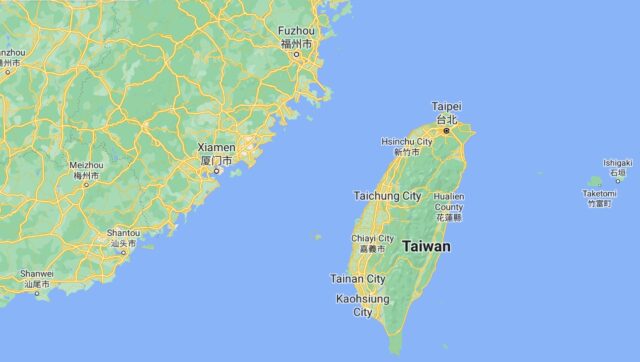
The Taiwan Strait as seen in a screenshot from Google Maps

WASHINGTON – A US warship sailed through the sensitive Taiwan Strait on Thursday, part of what the US military calls routine activity but which has riled China.

In recent years, US warships, and on occasion those from allied nations such as Britain and Canada, have sailed through the strait, drawing the ire of China, which claims Taiwan against the objections of its democratically elected government.

In a statement, the US military said the Arleigh Burke-class guided-missile destroyer Chung-Hoon carried out the transit.

“Chung-Hoon’s transit through the Taiwan Strait demonstrates the United States’ commitment to a free and open Indo-Pacific,” the statement added.

In a statement, Liu Pengyu, spokesman for China’s embassy in Washington, said China firmly opposed the move and urged the United States to “immediately stop provoking troubles, escalating tensions and undermining peace and stability across the Taiwan Strait.”

“US warships frequently flex muscles in the name of exercising freedom of navigation. This is not about keeping the region free and open,” the statement said.

“China will continue to stay on high alert and is ready to respond to all threats and provocations at any time, and will resolutely safeguard its national sovereignty and territorial integrity.”

A spokesman for the Eastern Theatre Command of the Chinese People’s Liberation Army said it organised troops to monitor and guard the ship’s transit, and “all movements were under control”.

Taiwan’s Defense Ministry said the ship sailed in a northerly direction through the strait, that its forces had monitored its passage and observed nothing out of the ordinary.

The narrow Taiwan Strait has been a frequent source of military tension since the defeated Republic of China government fled to Taiwan in 1949 after losing a civil war with the communists, who established the People’s Republic of China.

The United States has no formal diplomatic relations with Taiwan, but is bound by law to provide the island with the means to defend itself.

China has never ruled out using force to bring Taiwan under its control. Taiwan vows to defend itself if attacked, saying Beijing’s sovereignty claims are void as the People’s Republic of China has never governed the island.

Chinese military plane came within 10 feet (3 m) of a US air force aircraft in the contested South China Sea last month and forced it to take evasive maneuvers to avoid a collision in international airspace.

The close encounter followed what the United States has called a recent trend of increasingly dangerous behavior by Chinese military aircraft. – Reuters

Lost your luggage at the airport? Here’s what to do

Sheena L. Shroff, vice president of business development of Philippine Global Explorers, a travel non-profit, advises travelers to report lost luggage immediately, and not wait until they get home before doing so. She also talks about the importance of taking note of the details in one’s luggage tags.

Pfizer to scale down early-stage rare disease research

STOCK PHOTO | Image by Mike Ramírez Mx from Pixabay

US pharma giant Pfizer Inc. said on Thursday it is planning to realign its early-stage research into treatments for rare diseases and oncology, to focus on areas like rare and benign hematology.

Pfizer will also move away from having a rare disease research unit to align important rare disease programs to areas across its research units.

“We are refocusing our approach to early discovery and development research in rare disease and oncology,” a spokesperson said in a statement to Reuters, adding that the company will explore externalization opportunities for “a number of highly innovative, niche programs.”

Pfizer said its oncology research portfolio will become even more focused around breast, prostate and hematological cancer franchises.

Financial newspaper Barron’s first reported the news on Thursday. – Reuters

Pandemic blows hole in Australia population goal but migration recovering

STOCK PHOTO | Image by Patty Jansen from Pixabay

SYDNEY – The COVID pandemic has blown a million-person hole in Australia’s population projections in a challenge for an economy that has relied on having more consumers to drive growth, though a speedy recovery in migration promises to soften the blow.

Data in the government’s 2022 Population Statement out on Friday also showed COVID-19 lowered life expectancy for the first time in decades, though the impact in Australia was modest compared to many of its developed world peers.

Pandemic border closures in 2020 and 2021 saw population growth crater to just 0.1%, far below the 1.6% average of the previous decade, while net migration turned negative for the first time since World War Two.

One result has been a widespread shortage of suitable labour and a drop in the jobless rate to a 48-year low of 3.4%, pushing up wages and adding to inflationary pressures.

Population growth is expected to rebound to 1.4% in the year to June 2023 and hold around there in coming years, but that would still mean there will be 1.2 million less Australians by 2032/33 than forecast before the pandemic.

The population will also end up older than projected, with the median age seen at 39.8 years by 2030/31 compared to the 38.4 years forecast pre-pandemic.

Fortunately for frustrated employers, net migration is recovering faster than first feared and is expected to match the pre-pandemic trend of 235,000 a year in 2022/23, a major turnaround from 2020/21 when there was a net outflow of 85,000.

The rebound has been led by international students, with visa grants last year running at the highest since 2006, the report showed.

“However, the recovery in migration is not expected to fully offset the lost population growth during the pandemic, with Australia expected to remain smaller and older than would have otherwise been the case,” the report concluded. – Reuters

ADVERTISEMENT
ADVERTISEMENT