Home Blog Page 542

Globe to connect FPIP’s 150-plus locators in Batangas

FPIP.COM

GLOBE TELECOM, INC. said it will provide fiber-fast connectivity to more than 150 locators at First Philippine Industrial Park (FPIP) in Sto. Tomas, Batangas.

“This partnership strengthens Globe’s commitment to delivering world-class connectivity to businesses across the Philippines,” Globe Vice-President Michelle Y. Ora said in a statement on Wednesday.

Under a memorandum of agreement, Globe will supply internet and digital infrastructure services to FPIP locators while supporting the industrial park’s broader digital upgrades.

FPIP, established by Lopez-led First Philippine Holdings Corp. and Japan’s Sumitomo Corp., serves as a hub for manufacturers and traders and generates employment and tax revenues for the government.

The industrial park has invested in shared infrastructure, including dark fiber facilities, allowing it to optimize underground networks and facilitate high-speed internet deployment to its locators.

“We understand our locators have diverse connectivity needs, which is why we continue to enhance digital infrastructure in FPIP. Our goal is to support the growing demand for robust digital services,” FPIP Assistant Vice-President for Park and Utilities Group Jason M. de las Alas said.

FPIP, a Philippine Economic Zone Authority-registered special economic zone, spans nearly 600 hectares and hosts more than 150 locators, including global and local manufacturers in aerospace, automotive, electronics, consumer goods, and medical devices.

On Wednesday, Globe shares closed at P1,563 apiece, down P11, or 0.7%, at the local stock exchange. — Ashley Erika O. Jose

PNB, Discovery Capital Finance ink partnership to boost SME lending

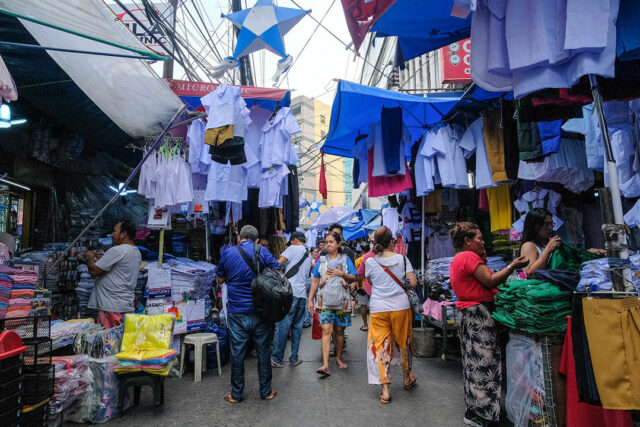
Stalls selling school uniforms are seen at Quiapo Market in Manila. — PHILIPPINE STAR/RYAN BALDEMOR

PHILIPPINE National Bank (PNB) has partnered with Discovery Capital Finance Corp. (DCFC) for a loan facility to boost financing for small and medium enterprises (SMEs).

The two companies signed a loan facility agreement in a strategic partnership that is expected to improve SMEs’ access to funding.

“Our agreement with PNB is a clear signal of Discovery Capital Finance Corp.’s commitment to financial inclusion for the underserved business community,” DCFC President Diosdado Chua Salang, Jr. said.

“By partnering with institutions like PNB, we can effectively amplify our reach beyond our branches, ensuring that crucial capital flows into regional economies where it is needed most,” he added.

The loan facility will give DCFC additional funding capacity to let it extend flexible and more accessible financing solutions to its SME clients nationwide.

“This move aligns with PNB’s sustained commitment to the SME sector, often referred to as the backbone of the Philippine economy,” the companies said. “For many SMEs, access to capital remains the biggest hurdle to their expansion, especially if they lack collateral or a long credit history. This partnership aims to bridge that gap.”

The funding will be mainly used for working capital loans that will help SMEs finance inventory, fulfill large contracts, purchase new equipment, and manage their cash flow.

“By providing capital, the partnership empowers small businesses to execute their expansion plans, which in turn leads to increased production, more employment opportunities, and greater contribution to the local tax base.”

Data from the Bangko Sentral ng Pilipinas showed that loans granted by banks to micro, small, and medium enterprises grew by 7.13% year on year to P536.51 billion as of end-September, which was equivalent to just 4.45% of their total loan portfolio of P12.049 trillion.

DCFC is a financing company  regulated by the Securities and Exchange Commission. 

Meanwhile, PNB’s net income rose by 25.79% year on year to P6 billion in the third quarter. This brought its nine-month profit to P18.51 billion, up by 22.91% from P15.06 billion a year prior.

The bank’s shares rose by 0.30 centavos or 0.59% to close at P50.90 each on Wednesday. — Aubrey Rose A. Inosante

Zed raises $16.5 million from funding round led by Accel

ZED.CO

CREDIT CARD issuer Zed Financial PH, Inc. has raised $16.5 million in funding from a Series A round led by Silicon Valley-based venture capital firm Accel.

“This investment marks a significant milestone for the Philippine startup ecosystem, bringing one of Silicon Valley’s most prestigious investors to the country. Accel joins existing investors Valar Ventures and notable angels including Immad Akhund and Dalton Caldwell, bringing Zed’s total funding to $22.5 million,” Zed said in a statement.

It said the investment backs its goal to use artificial intelligence (AI) for underwriting based on current income, transaction data, and other data sources outside of traditional credit scoring models to help boost young Filipinos’ access to credit.

“Zed is solving a problem that millions of young Filipino professionals face: a banking system stuck in the past. Despite having college degrees, stable incomes and professional careers, many young people are rejected by traditional banks due to credit factors embedded in their credit score that don’t actually reflect their risk — like the age of their existing credit accounts. This leaves a huge segment of potentially prime customers unserved.”

“In leading Zed’s Series A, we’re backing a team with the skill and ambition to build AI-powered finance that’s transparent, personal, and accessible for customers overlooked by today’s banks worldwide,” said Nafis Jamal, partner at Accel. “Young adults navigating the banking system for the first time often find its doors mostly shut. Opaque fees, clunky apps, and impersonal interactions make it clear these institutions were built for a different era (and a different customer).”

Zed last year rolled out its credit card on an invite-only basis. It said it has seen “massive demand” for the card, with its waitlist growing to nearly 200,000 sign-ups.

“Since the beginning of the year, the customer base has grown 10x and transaction volume has surged ~500% — all while the vast majority of the waitlist has yet to be invited,” it said. “With this new funding, Zed is accelerating its rollout to the waitlist and scaling its team.”

“Banks in Southeast Asia are running on infrastructure designed for two decades ago,” said Steve Abraham, Zed co-founder. “This round accelerates our plan to rebuild that stack. The world is changing with large language models maturing, and a new generation of experiences across industries will be born. We envision a future where we can deliver a level of personal, proactive banking that used to be reserved for the few, and make it accessible to everyone.” — BVR

Château Angélus: Still chiming in Manila

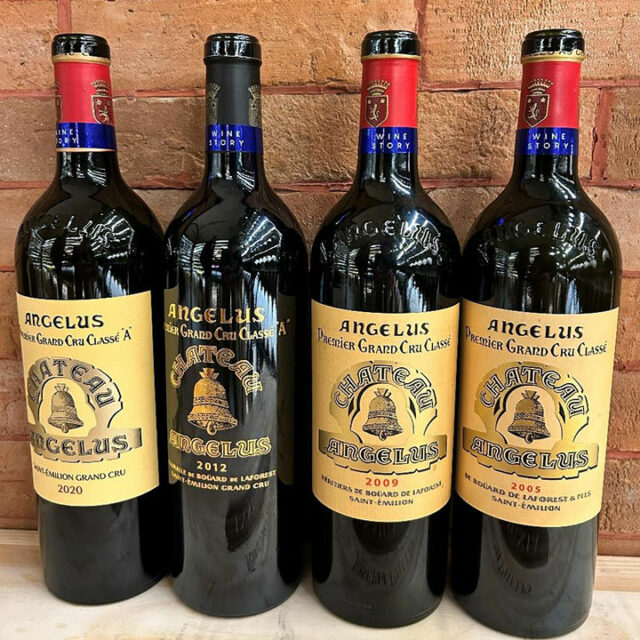
THE HEAVENLY Château Angélus lineup served during dinner: vintages 2020, 2012, 2009 and 2005. — SHERWIN A. LAO

WHEN Hubert de Boüard, owner of Château Angélus, arrived in Manila last month to host a wine dinner at Wine Story in BGC Taguig, the atmosphere was charged with anticipation. This was short notice, but very welcome news. This also happened to be my 4th time meeting Monsieur de Boüard, three of those four times courtesy of Wine Story boss and gourmand extraordinaire Romy Sia. For Filipino wine lovers, it was not just another tasting — it was a rare chance to hear directly from the man who has shaped one of Bordeaux’s most iconic estates.

Over the course of the evening, Mr. De Boüard shared stories of family legacy, vineyard philosophy, and the bold decision to leave the Saint‑Émilion classification, all while pouring his wines that have become benchmarks in the world of fine wine.

A BOLD BUT CALCULATED MOVE
In 2022, Château Angélus made headlines when it withdrew from the Saint‑Émilion classification, following other prestigious names like Château Cheval Blanc and Château Ausone. For many observers, the question was immediate: would this affect the estate’s market value and reputation?

Mr. De Boüard was unequivocal in my short interview with him: “Nothing changed in the value. No change in the market. Perhaps it is even better, because now everyone talks about Angélus itself, not about the classification.” His point was clear, Angélus had already built its brand over decades, rising from Premier Grand Cru Classé B to Classé A, and ultimately reaching a stature where its identity transcended bureaucratic labels.

The decision, he explained, was not an act of rebellion but of independence. “We decided to leave because it was our own way. Angélus has been elected, promoted, recognized. Now it is time to stand on its own.”

For Mr. De Boüard and his daughter Stephanie, who now runs the estate, the focus is on defending and strengthening the brand rather than relying on external validation. In a global market where brand equity often outweighs classification, Angélus has already proven its point.

THE DNA OF ANGÉLUS
Château Angélus has long been associated with Merlot, yet Mr. De Boüard clarified that the estate today is closer to a 50/50 blend with Cabernet Franc. “Merlot is the blue clay on the top of the vineyard. Cabernet Franc is more in the middle, where it doesn’t like too much clay. But Cabernet Franc is, for me, one of the most aristocratic, elegant grapes in Bordeaux.”

This balance reflects both tradition and evolution. The estate’s old vines, some 70 to 90 years old, anchor its identity, while careful vineyard management ensures Cabernet Franc thrives alongside Merlot. Mr. De Boüard even hinted at a future where Cabernet Franc could take a larger role, even reaching 55% of the blend.

A RARE 100% CABERNET FRANC
One of the topics brought up was Angélus’ rare cuvée, Hommage à Elizabeth Bouchet, made entirely from Cabernet Franc. Produced only in select vintages (2016, 2018, 2019, 2020, and 2022), this wine comes from vines nearly a century old, yielding minuscule quantities, around 1,000 bottles per release. This wine pays homage to Hubert de Boüard’s grandmother, Elizabeth Bouchet. In fact, Bouchet was the local name of Cabernet Franc.

“It is very expensive, maybe three times the price of Angélus,” Mr. De Boüard admitted with a smile. But the rarity and uniqueness justify the premium price. Few estates in Bordeaux dare to bottle pure Cabernet Franc, and Angélus’ Hommage stands as a testament to both experimentation and reverence for tradition.

That evening, Wine Story’s entire stock of this rare wine — five bottles — was sold out at roughly P150,000 each bottle.

SURPRISES BEYOND THE RATINGS
When asked about surprise vintages, Mr. De Boüard cited 2001 as a sleeper year, less hyped than 2000 or 2005, yet delivering elegance and longevity. “Wine is not a picture; it is a movie,” he reminded me. Each vintage evolves, and part of the joy lies in revisiting bottles years later to discover unexpected brilliance. Among pre‑2000 vintages, he singled out 1998 and 1995 as outstanding, and even 1994 as surprisingly rewarding despite its modest reputation.

A CINEMATIC CONNECTION
No conversation about Angélus is complete without mentioning James Bond. Château Angélus wines have appeared in three films — Casino Royale (2006), Spectre (2015), and No Time to Die (2021).

The connection, Mr. De Boüard revealed, began casually. “I met the producers at the property. We joked about a collaboration, and it started with Casino Royale. The choice of vintages was also deliberate: the 1982 vintage for Casino Royale, the 2005 vintage for Spectre, and again the 2005 for No Time to Die.”

For Angélus, the Bond partnership is not a marketing gimmick but a friendship. “It is not business. We are together,” Mr. De Boüard said, noting that the producers even attended the inauguration of Angélus’ new winery. The cinematic spotlight has only reinforced the estate’s aura of sophistication and timeless appeal.

A BRIDGE BETWEEN BORDEAUX AND ASIA
Hosting the wine dinner in Manila was more than symbolic. Mr. De Boüard emphasized how Angélus resonates in Asia, where the name is easy to pronounce and the bell motif connects with both Western churches and Eastern temples. For Filipino wine enthusiasts, the event was a rare chance to taste vintages spanning two decades and to hear firsthand the philosophy behind them from “the man” himself, as Mr. De Boüard explained each vintage with passion and precision.

The evening underscored Angélus’ global reach. From Saint‑Émilion to Manila, from James Bond to family legacy, the estate continues to “chime” across cultures and generations.

Below are my customary tasting notes on the featured Château Angélus vintages during the wine dinner (in order of serving):

Château Angélus 2020: “Lively, fresh, perfumed, violets, cherries, friendly tannins despite its youth, velvety in texture, drinkable and can be appreciated now, yet you know this will be good for the long haul.” It is very youthful, but I can drink this and like it very much now.

Château Angélus 2012: “Rustic, cedary, earthy, horse-saddle, the bouquet overwhelms the fruits initially, but after more aeration, plums and red cherries, silky tannins with mocha flavors at the end.” Let this one decant longer to dissipate the earthiness.

Château Angélus 2009: “Bold, rich, concentrated, fruit-forward, cherries, figs, anise, creamy, vanilla, so much going on in the nose alone, full-bodied with lush tannins, and long and deep cocoa finish.” A very concentrated wine that could further evolve beautifully decades from now.

Château Angélus 2005: “Cedary nose, flambe berries, touch of minerals and slate, buttered toast, structured tannin backbone, velvety in texture, long and intense berries at the end.” My hands-down favorite of the evening, and still very fresh and youthful, despite its 20-year existence; one of the best Angélus I ever had.

As Hubert de Boüard left Manila, he carried with him not just the memory of a successful wine dinner but the affirmation that Angélus’ story resonates far beyond Bordeaux. For Filipino wine lovers, the evening was a reminder that great wine is not only about ratings or labels — it is about heritage, artistry, and the joy of discovery.

For Château Angélus and other wines of this majestic caliber, visit Wine Story at Shangri-La Plaza Mall, Mandaluyong City or the branch at One Uptown Residence, BGC, Taguig City. Or check out their website at www.winestory.com.ph.

The author is the first Filipino wine writer member of both the Bordeaux-based Federation Internationale des Journalists et Ecrivains du Vin et des Spiritueux (FIJEV) and the UK-based Circle of Wine Writers (CWW). For comments, inquiries, wine event coverage, wine consultancy and other wine-related concerns, e-mail the author at wineprotege@gmail.com, or check his wine training website https://thewinetrainingcamp.wordpress.com/services/. Also check out his YouTube Channel www.youtube.com/@winecrazy.


From P400 million to P13 billion: The WeeComm story and growth lessons for real estate entrepreneurs

CARSON CHOA (L) and Cesar Wee in an episode of the RJ Ledesma Podcast. — SCREENGRAB FROM THE RJ LEDESMA PODCAST

The story — now a legend in real estate developer WeeComm’s founding — goes like this: 17 years ago, WeeComm’s eventual founder and real estate entrepreneur Cesar Wee was undergoing a mentorship of sorts under the tutelage of Profriends founder Gerry Choa. And when Mr. Wee sold 150 units of Profriends’ development, Lancaster New City, in a single day, he was fired.

It was Mr. Choa’s way of telling Mr. Wee that he had learned all he needed to venture into real estate development on his own. Faced with the options of developing his family’s real estate or putting up a real estate development company of his own, he chose the latter. And WeeComm — short for Wee Community Developers, Inc. — was born.

Today, WeeComm — a relative newcomer in an industry of giants — has been the recipient of awards and accolades from the likes of Property Guru, Lamudi: the Outlook Awards, the Philippine Property Awards, and the National Awards. Mr. Wee was even honored with an Asia-Pacific Stevie award this year as Thought Leader of 2025. When it comes to the bottom line, Weecom was recognized as the ninth largest real estate developer in the country, with P13 billion in sales from projects in San Juan, Quezon City, Mandaluyong, and Cainta, as well as Iloilo City, Davao City, Cagayan de Oro, Bacolod City, and Cavite.

I had the opportunity to speak to Cesar Wee and WeeComm COO Carson Choa on the night when the company was named one of the top two developers in the National Awards. And it was during this conversation, which you can view in its entirety on the RJ Ledesma Podcast, where I was able to delve into the secret sauce of WeeComm’s success — and how they achieved so much so fast.

What I find most remarkable is not just Messrs. Wee and Choa’s uncanny ability to evaluate a project but their unique way of structuring their company for growth to ultimately reward their people.

Their lessons are invaluable, not just for real estate entrepreneurs but for entrepreneurs in any business. Here are three highlights from our conversation.

FIND THE SWEET SPOT
Given the speed and scale of WeeComm’s growth, it’s clear that the company isn’t your usual real estate developer. They do things differently.

It all begins, Carson Choa explained, with something that all real estate developers do: a scan of the market. For WeeComm, however, the end point is different.

“When we do a scan,” Mr. Choa said, “We try to look for the gap. Part of the scan that we do is not only about the selling price. It’s also the sweet spot.”

It’s this sweet spot that sets WeeComm apart. Where other developers may chase profit at all costs, WeeComm commits itself to its market and its partners, and to maximizing value.

“We went against that norm or against the grain by saying that our purpose is to identify the best use for the land,” Mr. Choa explained. “And when you say the best use for the land, it covers both, again. You get the most profit or income out of that property, but you also get the most use out of that land… And from there, you can start developing your product.”

Mr. Wee agreed, saying, “Compared to other developers, I feel we’re very detailed. We really spend a lot of time in checking the market, in checking our competition, making sure the product works, making sure it’s affordable, making sure we hit the sweet spot.”

MENTORSHIP AND MASTERY
“It’s a good first step, always, to have a mentorship program or to have a mentor in general that will teach you the ropes,” said Mr. Wee, who credits his mentorship with industry giant Gerry Choa as the starting point of his career as a real estate entrepreneur. But mentorship, he warned, is only the beginning.

“It doesn’t end with a mentor,” he continued. “You also have to have that personality that would be always learning, always trying to adjust, always accepting of failure, rising up, standing up. I think that’s something [Carson and I] both have that’s always working for us.

“Find a mentor, but it’s also you… Maybe the mentor is a good first step to push you in terms of confidence or doing what other people are doing. But you can’t be a copycat and just try to do what your mentor does.”

SKIN IN THE GAME
As WeeComm grew through the years — starting as a company with P400 million in sales in its first year, to today where it sells P13 billion across key cities across the country — Messrs. Wee and Choa found their concerns to focus more on the company’s people than its individual projects.

Mr. Choa, who also came from Profriends, joined WeeComm a few years after its founding. And initially, Mr. Wee said, they divided the properties among themselves, with Mr. Wee focusing on San Juan and Mr. Choa breaking new ground in Quezon City.

Eventually, the duo would forge a partnership and a shared language, as well as overlapping roles. And when the time was right, Mr. Wee chose to step back and give Mr. Choa a more prominent role in the company.

“That was hard to do because I’m the founder of the company, but I knew that this was the right thing to do,” Mr. Wee said. “I’m not saying I’m a martyr for stepping back, but I’m saying that sometimes you do things for the company.

“What’s best for the company is best for our clients, best for our employees. I think that’s something that people also have to understand when they’re growing a company, and when you’re growing a company this fast.”

A key element in Mr. Choa’s rise was an opportunity to have ownership in the company, he himself said. Business gurus or consultants may call this “shared vision” or “ownership.” Mr. Choa calls it having “skin in the game.”

With a personal stake in the company, Mr. Choa dedicated himself to its success. And having learned from that experience, he made sure to give team members the same chance.

“It cascades down to the project directors,” he said. “So we have programs wherein they can invest their money. They can be a minority owner.”

Carson Choa and Cesar Wee speak at length on the secret sauce and rapid growth of WeeComm in the full interview. Make sure to check it out.


RJ Ledesma (www.rjledesma.com) is a Hall of Fame Awardee for Best Male Host at the Aliw Awards, a multi-awarded serial entrepreneur, motivational speaker, and business mentor, podcaster, an Honorary Consul, and editor-in-chief of The Business Manual. Mr. Ledesma can be found on LinkedIn, Facebook and Instagram. The RJ Ledesma Podcast is available on Facebook, Spotify, Google and Apple Podcasts. Are there entrepreneurs you want Mr. Ledesma to interview? Let him know at ledesma.rj@gmail.com.

PHINMA Education adds 12,000 slots with new Quezon City, Cebu buildings

PHINMA EDUCATION HOLDINGS, INC.

PHINMA EDUCATION Holdings, Inc. said it aims to enroll 12,000 additional students at its Quezon City and Cebu educational institutions with the inauguration of new buildings.

The company inaugurated the 10-storey Ramon V. del Rosario (RVR) Building at Southwestern University (SWU) PHINMA in Cebu on Dec. 12, and the Aurora Building at PHINMA St. Jude College Quezon City (SJC QC) on Dec. 15, it said in a statement on Wednesday.

The RVR Building, named after PHINMA group founder Ramon V. del Rosario, Sr., also marks the 10th anniversary of SWU PHINMA under PHINMA’s management.

The university said the new facility will support efforts in community engagement, social programs, and research addressing local challenges in Cebu City.

“Our goal is to build SWU PHINMA into an accessible, world-class university, providing education to students from lower-middle and lower-income families who need it the most,” PHINMA Education President and Chief Executive Officer Chito B. Salazar said.

The Aurora Building at SJC QC can accommodate up to 5,000 students.

“By opening this campus, we are doing more than expanding access to education,” PHINMA Education Philippines Country Head Happy A. Tan said. “Here, students can pursue a college education, become licensed professionals, find meaningful work, and honor the sacrifices of their families.”

The new building will host classes in nursing, medical laboratory science, early childhood education, special needs education, engineering, and architecture programs.

PHINMA Education said the development aligns with Quezon City’s education agenda, which focuses on improving access to learning opportunities and supporting the growing student population.

PHINMA Education serves 178,000 students across its network of private schools in the Philippines and Indonesia.

Its parent company, PHINMA Corp., reported a net loss of P216.45 million as of end-September, mainly due to weaker performance in its property, construction materials, and hospitality businesses.

On Tuesday, PHINMA Corp. shares closed at P16.40 apiece. — Beatriz Marie D. Cruz

Peso slips on lack of leads

PHILSTAR FILE PHOTO

THE PESO slipped against the dollar on Wednesday amid a lack of catalysts and as oil prices moved up on supply concerns.

The local unit went down by half a centavo to close at P58.725 against the greenback from its P58.72 finish on Tuesday, Bankers Association of the Philippines (BAP) data showed.

The peso opened Wednesday’s session stronger at P58.65 per dollar. Its intraday low was at P58.73 versus the greenback. Meanwhile, the BAP’s website showed that the local currency’s best showing for the session was at P56.65, although spot rates showed that the peso was at the P58 level the entire day.

Dollars traded fell to $1.34 billion from $1.46 billion.

“(The peso weakened) after the latest tensions between the US and Venezuela, as Trump ordered the blockade of all oil tankers in Venezuela; global crude oil prices [were] slightly higher but still among the lowest in nearly five years or since February 2021…,” Rizal Commercial Banking Corp. Chief Economist Michael L. Ricafort said in a Viber message.

US President Donald J. Trump on Wednesday ordered a “total and complete” blockade on all sanctioned oil tankers entering and leaving Venezuela, while saying he now considers the country’s rulers a foreign terrorist organization. This pushed crude up more than 1%, Reuters reported.

Brent crude futures rose by 1.5% or 87 cents to $59.79 a barrel at 07:30 GMT, while US West Texas Intermediate gained 85 cents or 1.5% to $56.12.

“The peso moved sideways amid a lack of major market movers,” a trader said in a Viber message.   

For Thursday, the trader said the peso may continue to weaken in anticipation of US inflation data.

Mr. Ricafort and the trader see the peso moving between P58.60 and P58.85 versus the greenback on Thursday. — A.R.A. Inosante with Reuters

mWell launches wellness ring with built-in ECG monitoring

MWELL

METRO PACIFIC Investments Corp.’s (MPIC) digital healthcare arm mWell or Metro Pacific Health Tech Corp. has launched a new version of its wellness ring with built-in ECG monitoring.

The mWell ECG Ring follows the original mWell Ring launched in May 2024 and has a daily heart monitoring feature. It is now available for an introductory price of P12,999 (regular price is P13,999) with free shipping and no monthly subscription fee. It can be purchased via the mWell app’s eShop or online at https://shop.mwell.com.ph/pages/mwell-ecg-ring.

“mWell envisions a future where every Filipino has access to preventive healthcare that is both accessible and affordable,” mWell Chairman and MPIC Chairman and President Manuel V. Pangilinan said.

“The ECG Ring helps us deliver medical insights that fit into real life. Everyone should be able to take the right steps for their health every single day, and not only when they’re sick.”

The wearable device has an ECG monitor, heart rate monitor, blood oxygen monitor, sleep monitor, and electrical heart sensor.

It is made of titanium with a scratch-free finish and has a lightweight design, IP68 water resistance rating, and a seven-day battery life.

“On top of all existing mWell Ring features, users can now view ECG results directly on the mWell app and share them with their doctors as a PDF file through messaging apps or e-mail, making it easy to get timely medical advice. These readings, along with other health data, can be securely stored in their mWell Health ID to support continuity of care and make it easier to track progress over time,” said Chaye Cabal-Revilla, mWell president and CEO and MPIC chief finance, risk, and sustainability officer.

“As a physician, I believe wearable devices like the ECG Ring are a game-changer for personalized care,” Raymond Francis Sarmiento, chief operating officer of mWell, said. “They make it possible to monitor vital signs effortlessly and detect early warning signs, helping turn prevention into an everyday habit.”

Cardiovascular diseases are among the leading causes of death in the Philippines, according to the Philippine Statistics Authority.

MPIC is one of three key Philippine units of Hong Kong-based First Pacific Co. Ltd., alongside Philex Mining Corp. and PLDT Inc. Hastings Holdings, Inc., a unit of MediaQuest Holdings, Inc., holds a majority stake in BusinessWorld through the Philippine Star Group, which it controls. — BVR

Globe and FPIP partner to deliver fiber-fast internet in Batangas Industrial Park

Globe partners with First Philippine Industrial Park (FPIP) to provide reliable, high-speed connectivity to over 150 locators, strengthening digital infrastructure across the industrial park. Present during the MoA signing are (L–R) Rodel G. Del Valle, VP and Head for Park Management and Development, FPIP; Raymond Catane, Director, Sales Key Accounts, Globe; Jason delas Alas, AVP and Head for Park and Utilities Group, FPIP; Michelle Y. Ora, VP for Strategic Partnerships and Program, Globe; and Yutaro Kuryu, SVP and Head of Industrial Business Group, FPIP.

Globe and FPIP mark a major milestone through a contract signing that will expand high-speed, reliable fiber connectivity for global and local manufacturers within the industrial park located in Sto. Tomas, Batangas.

Globe Telecom has formalized its partnership with First Philippine Industrial Park (FPIP), Inc. through a memorandum of agreement (MoA), bringing faster, more secure, and reliable fiber internet to the park’s locators and employees. Through this collaboration, Globe will provide enterprise-grade connectivity to FPIP’s 150+ locators and over 80,000 employees, enabling seamless operations, real-time collaboration, and data-driven decision-making. FPIP is home to global and industry-leading businesses such as consumer electronics manufacturers.

“This partnership strengthens Globe’s commitment to delivering world-class, fiber-fast connectivity to businesses across the Philippines,” said Michelle Y. Ora, VP, Strategic Partnerships and Program. “We are proud to empower FPIP locators with seamless, secure, and high-speed digital tools that enable innovation, enhance productivity, and position them to compete confidently in the global market.”

FPIP’s shared dark fiber facility, established in 2023, allows Globe to deploy services quickly and cost-effectively, maximize existing infrastructure, and provide locators with more options for their internet needs.

“We are excited to work with Globe. As one of the leading internet service providers in the Philippines, we are confident that they can elevate the experience of our locators by providing high-quality and secure internet connection, which is a must in today’s fast-paced and data-driven environment,” said Jason de las Alas, FPIP’s Assistant Vice-President for Park and Utilities Group. “We understand our locators have diverse needs, which is why we continue to enhance the digital infrastructure in FPIP. We want to ensure we can support the changing and increasing demand for robust digital services.”

Established in 1996, FPIP is a PEZA-registered special economic zone developed by Lopez-led First Philippine Holdings (FPH) and Japanese conglomerate Sumitomo Corp. Spanning nearly 600 hectares, the industrial park is home to over 150 leading global and local manufacturers in aerospace, automotive, electronics, consumer goods, and medical devices.

The contract-signing ceremony was attended by representatives from both Globe and FPIP, formalizing a collaboration that strengthens FPIP’s digital backbone and supports the park’s continued expansion into a future powered by seamless, world-class connectivity.

For more information about Globe, visit www.globe.com.ph.


Spotlight is BusinessWorld’s sponsored section that allows advertisers to amplify their brand and connect with BusinessWorld’s audience by publishing their stories on the BusinessWorld Web site. For more information, send an email to online@bworldonline.com.

Join us on Viber at https://bit.ly/3hv6bLA to get more updates and subscribe to BusinessWorld’s titles and get exclusive content through www.bworld-x.com.

FEU releases book on Noche Buena

Joins history book, fashion tomes in publishing spurt leading to centennial

THE Far Eastern University (FEU) is celebrating this holiday season with a new book, Noche Buena: 100 Stories Shared at the Philippine Holiday Table.

“We did this because of the really wonderful and moving stories of the contributors to this book: stories of family closeness and generations of tradition, stories of the love of a mother or grandmother expressed through food. Stories of struggle, hard work and commitment, and eventual success found through a dedication to authenticity in food,” said Maria Teresa Trinidad Tinio, SVP for Academic Affairs, who also leads the FEU Culture Collective — a group of FEU writers, researchers, and artists.

During a Nov. 28 launch at the FEU campus, Ms. Tinio said, “The original plan was for it to be both a storybook and cookbook,” adding that part of the book’s purpose was to serve as corporate Christmas gifts for the university. In previous years they had given chocolates and soaps made by Persons Deprived of Liberty.

The book’s holiday stories are certainly meaningful, coming from some 100 top names in the culinary world. The book is dedicated to the late Margarita Forés (Awarded Honoris Causa Doctor of Entrepreneurial Management by FEU in 2023), whose son, Amado, shared stories about Christmas at the Araneta compound, and even his mother’s recipe for Truffle Galantina. The book, with 242 pages, only has recipes from pages 203 to 232; the rest of the book is filled with touching anecdotes, illustrations by Isaiah Israel Susi, and forewords by Amado Forés and food historian Felice Sta. Maria.

What it lacks in the number of recipes, it more than makes up for in substance: there’s a recipe for duck from Café Ysabel’s Gene Gonzalez, other recipes from internet “lumpia queen” Abi Marquez, culinary icon scion Sandy Daza, and even a recipe from the Gamboa family of the beloved MilkyWay Cafe chain.

Only a handful of the authors are FEU alumni (we counted six; their stories are marked with an FEU alumni seal). By no means does that take away from the book: haven’t you ever wondered how actor/restaurateur Joel Torre or celebrated chef Claude Tayag celebrate Christmas Eve?

“We did this because of the really wonderful and moving stories of the contributors to this book,” said Ms Tinio in a speech. “Stories of family closeness and generations of traditions, stories of the love of a mother or grandmother… expressed through food, stories of struggle, hard work, and commitment, and eventual success found through a dedication to authenticity in food.”

MORE BOOKS, MORE CELEBRATIONS
Ms. Tinio said that their book production has been amplified in the run-up to FEU’s centennial celebrations in 2028, with the aim of publishing 28 books by that year.

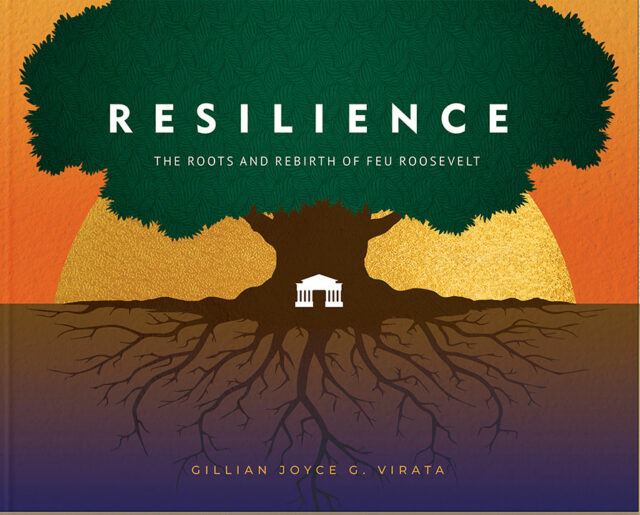
Among the recently released books is Resilience: The Roots and Rebirth of FEU Roosevelt by Gillian Joyce Virata and edited by Dr. Michael M. Alba and Genna Estrabon, which celebrates and chronicles the nine decades of the institution’s milestones. It contains inspiring stories from significant leaders, influential figures, movers, and alumni who helped shape its history.

Then there is Love, Marina by Vicky Veloso-Barrera and edited by Thelma San Juan, which is a tribute to designer Marina Antonio’s sense of style, meticulous attention to detail, and ingenious innovations that made generations of women trust her to create their fashion statements. In this visual inspiration and practical guidebook, Ms. Veloso-Barrera — Ms. Antonio’s granddaughter — distills her memories of her grandmother, and includes loving recollections of family, friends, and clients, and treasured images.

Another of FEU’s recent publications is It’s a WrapDitta Sandico: Unraveling the Future of Fashion by Francine Medina Marquez and edited by Gay Eiko Yoshikawa-Zialcita. The book narrates how the dream and vision of one woman changed the quiet lives of weaving communities and turned them into self-reliant hubs of social enterprise.

All the books can be ordered through TAMS Bookstore. For inquiries, e-mail tamsbookstore@feu.edu.ph. — Joseph L. Garcia

Unwalkable

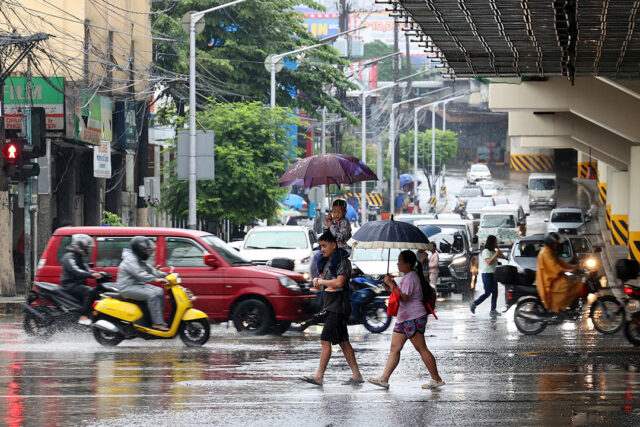
PHILIPPINE STAR/MIGUEL DE GUZMAN

I am not yet a senior, but I am getting there. I have a heart condition and bad legs, but I am not legally classified as a person with disability or PWD. As far as our mobility laws are concerned, I fall into a donut hole. I am invisible. I do not exist. I am treated like any able-bodied adult.

After a doctor’s appointment last week at Makati Medical Center on Amorsolo Street, I decided to “enjoy” the simple pleasure of walking over to Salcedo Village, just across Ayala Avenue, to meet friends for lunch near Velasquez Park.

For someone who occasionally walks with a cane, the stroll was difficult but still doable. But for someone using a wheelchair, I believe it would have been impossible. And public transportation, just to cross Ayala Avenue, would not have been a real option.

Ayala Avenue, the central business district’s main road, has wide enough sidewalks. But once you leave this major thoroughfare, the pedestrian route from the hospital into Salcedo Village quickly becomes unmanageable for anyone “on wheels.”

Between Salcedo and Rufino streets, there is only one road-level crossing on Ayala that people who have difficulty with stairs can safely use. The unkindest cut was that during my walk, a traffic enforcer chose to stop pedestrian movement across Ayala Avenue in favor of cars heading toward EDSA.

He decided to override the light and hold back pedestrians to move more cars. Then he left people with roughly 15 seconds to cross an eight-lane avenue. If you were old, in a cast, pushing someone in a stroller or a wheelchair, you could only pray that your feet would lead you to safety.

Traffic engineering math confirms how unreasonable that was. Standard practice for signal timing assumes a walking speed of a little over one meter per second, the pace of a reasonably fit adult with no health issues and no heavy bags.

Ayala Avenue has eight lanes of around three meters each, or about 24 meters across. At one meter per second, you need at least 24 seconds to cross. If you walk slower, like older adults or people with health conditions, or those pushing a wheelchair or a stroller, you will probably need closer to 30 seconds.

The reality at that intersection was 15 seconds. To clear 24 meters in that time, you need to move at 1.8 meters per second. By allowing an enforcer to shorten the effective crossing time, the city is not just being careless. It is managing the street to be exclusively for the fit and the fast.

To be fair, that incident was a one-off. Left on its own, the light would have given pedestrians around 30 seconds to cross. But why let enforcers tinker with the science? In this case, pedestrians were left standing on the center island for about 100 seconds, in the fumes from passing cars, waiting for the next light change.

On paper, pedestrians come first. We have the Accessibility Law and the Magna Carta for Disabled Persons, and government has updated rules on accessibility standards. In theory, our roads and sidewalks should already be friendly not only to wheelchair users, but also to seniors, pregnant women, children, and anyone who moves slower than two fully able feet.

In the hierarchy of road users, pedestrians are supposed to have the highest priority, since they are the most vulnerable. Government should promote active transport and make safe and accessible walking infrastructure part of every road project, not just an afterthought required by law.

On paper, pedestrians rule. On the ground, the enforcer’s whistle still blows more for cars. Traffic managers continue to think in terms of Level of Service for vehicles, where a good intersection is one where cars experience minimal delay. If vehicles stack up, the grade drops, and the incentive is clear.

This mindset means traffic enforcers protect the flow of cars, even if that means cutting pedestrian time, ignoring crossings, and sending people up to footbridges they cannot climb, or down to underpasses with long flights of stairs. When cars get priority, those lacking full mobility are most disadvantaged.

In a highly paved city like Makati, there is also the heat. Urban surfaces trap and radiate heat, so actual ground-level temperature can be several degrees higher than the air temperature. For someone with a heart condition, walking a few hundred meters in that heat is a cardiac strain. The absence of trees, shade, or properly covered walkways is a public health risk built into the pavement.

My own case is hardly unique. I am not yet a senior. I am not using a wheelchair. I am not classified as a PWD. But I walk slower. I tire more easily. My legs complain at every unnecessary detour. Long walks, standing too long, or going up or down a long flight of stairs are difficult for me.

Designers talk about permanent, temporary, and situational disability. Someone who loses a limb lives with a permanent disability. Someone in a cast is temporarily disabled. Someone pushing a stroller, carrying groceries, dragging a suitcase, holding a child by the hand, or short of breath from the heat experiences situational disability. For that period, and in that place, they cannot move as freely as a strong, unhindered adult.

This is where the “curb cut effect” comes in. When you lower a curb for a wheelchair user, you also help many others: the parent with a stroller, the delivery worker with a handcart, the commuter with luggage. A design meant to help a minority ends up helping almost everyone, and when you fail to design for permanent disability, you also fail those who are temporarily or situationally challenged.

Our infrastructure and regulations still think in terms of categories: PWD or not PWD, senior or not senior. But the street does not care about categories. It only cares about how fast you can move, how long you can stand, and how many stairs you can take in the heat or rain. The present design still caters to the able-bodied. Everyone else is in the donut hole.

Other cities offer clues on how to do better. Singapore has created “Silver Zones” in neighborhoods with many elderly residents. In these zones, speed limits are lowered, crossings are narrowed or redesigned, center islands are widened so slower walkers can stop safely in the middle, and signal timings are lengthened to match slower walking speeds. The street is adjusted to the people, not the other way around.

If Singapore can redesign certain districts as Silver Zones for seniors, a city like Makati can do something similar. The central business district and its residential areas can afford to have longer crossing times, lower speed limits, more shade, and strict enforcement in favor of pedestrians.

The measure of success should no longer be how many cars you can flush through an intersection in one cycle. It should be whether an eight-year-old, an 80-year-old, or someone with a heart condition can cross the road, reach a bus stop, or sit in a park without fear.

We should treat sidewalks as the primary network for trips on foot and in wheelchairs. They must be continuous, wide, shaded, and free of obstructions. Benches, trees, lighting, and safe paving should be part of the main plan. We should move people, not just vehicles.

Cities should also test routes using seniors, people in recovery, parents with strollers, and workers carrying loads. If they cannot complete the trip safely and comfortably, then the design has failed. It should be changed.

A city that makes every trip an ordeal for the slow, the weak, and the tired slowly pushes them out of public life. They go out less. They avoid certain streets, then certain districts, until the city shrinks to a handful of “safe” routes they can still manage. This is where “unwalkable” quietly becomes unlivable.


Marvin Tort is a former managing editor of BusinessWorld, and a former chairman of the Philippine Press Council

matort@yahoo.com

Primeworld Land Holdings, Inc. signs contract with Accor to bring ibis Manila Caloocan to Northern Metro Manila

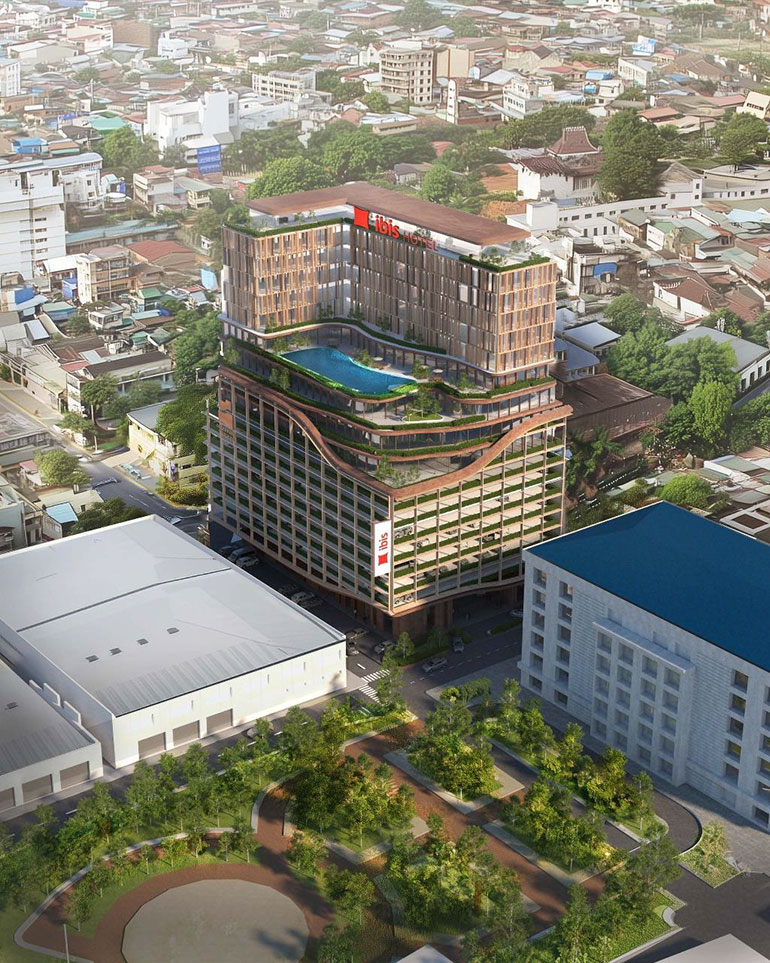
Architect’s Perspective

Primeworld Land Holdings, Inc. announced the formal signing of its partnership with global hospitality leader, Accor, to develop the Philippines’ first ibis hotel, ibis Manila Caloocan, a 6-storey international hotel that will crown Grace Park Terracesa 19-storey mixed-use development poised to become a defining landmark in the rapidly transforming northern gateway of Metro Manila.

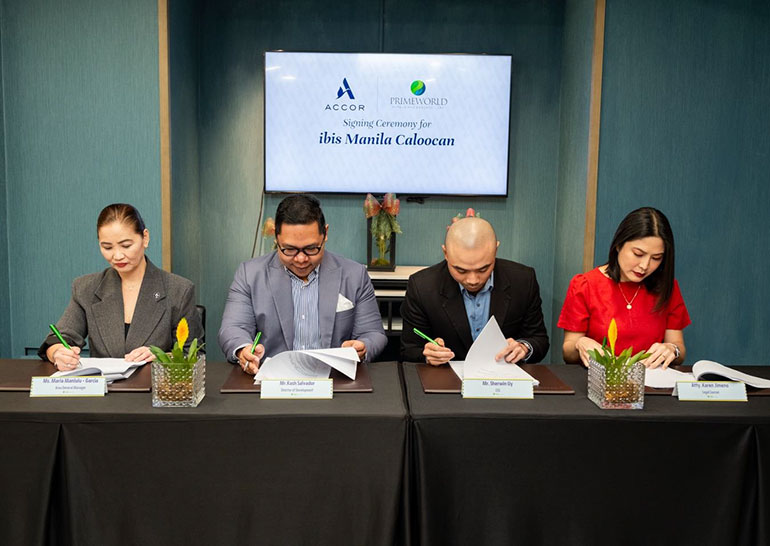
The signing ceremony was held on Dec. 16, 2025 at ibis Styles Manila Araneta City in Quezon City, attended by senior executives from both organizations. Representing Accor were Kash Salvador, Director of Development for the Philippines, and Maria Manlulu-Garcia, Area General Manager for the PhilippinesPremium, Midscale, and Economy segment, and Cluster General Manager of Novotel Manila Araneta City and ibis Styles Manila Araneta City.

Primeworld Land Holdings, Inc. was represented by its executive leadership team, including Sherwin Uy (Chief Executive Officer), Atty. Karen Jimeno (Legal Counsel), Er. Manny Manuel (Engineering Head), Celine Co (Business Development Head), and Amica Ngo (Corporate Marketing Consultant).

Architect’s Perspective

Set to feature 160 well-appointed keys, ample parking, and street-activating commercial spaces, ibis Manila Caloocan will bring global-standard hospitality to the city. The iconic ibis symbol will crown the structure, establishing its presence as a new city marker and gateway destination.

ibis is the pioneer of accessible high-quality accommodation. At the heart of the brand’s ethos lies a commitment to forward-looking modern design seamlessly blending trendsetting elements with cosy comfort. Each ibis hotel is designed to inspire vibrant and fulfilling guest experiences.

Primeworld Land also announced the appointment of WTA Architecture and Design Studio as the project’s lead design team. The firm has envisioned a development that redefines the architectural and urban rhythm of Caloocan City.

Contract Signing for ibis Manila Caloocan

Envisioned as an architectural oasis, the structure moves away from the rigid industrial forms that dominate the district. Its layered façades and landscaped curves create a softer, more inviting presence, offering a deliberate contrast to surrounding heavy-use infrastructure. Through thoughtful spatial composition, the architecture introduces balance, human-scaled movement, and a renewed sense of openness.

The development will offer spaces for gathering, rest, and leisure, rehumanizing the built environment and creating new opportunities for interaction, wellness, and community engagement. Beyond its hospitality function, the hotel is positioned to become a visual and experiential landmark that signals a modern identity for Caloocan.

Strategically located near major infrastructure investments, ibis Manila Caloocan will cater to business travelers, returning overseas Filipinos, staycation guests, and long-stay visitors seeking accessibility and modern convenience.

Situated directly across from Caloocan City Hall, the hotel is also expected to meet the city’s growing need for training, meeting, and conference venues, as well as spaces for private events and celebrations. It will be the closest internationally branded hotel to the Philippine Arena and sits just five minutes from the Skyway entrance, enabling a 30-minute travel time to Ninoy Aquino International Airport.

“This partnership with Accor reflects Primeworld Land’s long-term commitment to uplifting key cities across the Philippines through world-class real estate developments. ibis Manila Caloocan will set a new benchmark for hospitality in the area, supporting tourism, commerce, and the city’s evolving urban landscape,” stated Sherwin Uy, CEO of Primeworld Land. 

Kash Salvador, Director of Development, Philippines, Accor, also expressed  enthusiasm for this milestone:

“We are thrilled to collaborate with Primeworld Land Holdings, Inc. in bringing ibis Manila Caloocan to life. As part of Accor’s growing network in the country, this project aligns with our mission to provide accessible, well-designed, and reliable hospitality experiences for travelers. Caloocan is an emerging gateway destination, and we are proud to contribute to its transformation.”

The project marks Primeworld Land’s expansion into the hospitality sector at scale, complementing its growing portfolio of residential and mixed-use developments across Luzon, Visayas, and Mindanao.

Construction of ibis Manila Caloocan is expected to begin in 2026, with launch targeted in the next development phase. It is Primeworld Land’s second hotel signing after Hilton Garden Inn Cebu Mactan and will become the first international hotel brand to rise within the CAMANAVA region, serving the needs of surrounding industrial and commercial districts.


About Primeworld Land Holdings, Inc.

Primeworld Land Holdings, Inc. is a Philippine property developer committed to building modern, thoughtfully designed, family-oriented communities nationwide. With a diverse portfolio spanning affordable housing to mid-end residential condominium developments, Primeworld Land delivers value-driven projects that enable lifestyle upliftment, growth, and long-term sustainability.

About Accor

Accor is a world-leading hospitality group offering stays and experiences across more than 110 countries with over 5,700 hotels and resorts, 10,000 bars & restaurants, wellness facilities and flexible workspaces. The Group has one of the industry’s most diverse hospitality ecosystems, encompassing more than 45 hotel brands from luxury to economy, as well as lifestyle, with Ennismore. ALL Accor, the booking platform and loyalty program embodies the Accor promise during and beyond the hotel stay and gives its members access to unique experiences. Accor is focused on driving positive action through business ethics, responsible tourism, environmental sustainability, community engagement, diversity, and inclusivity. Accor’s mission is reflected in the Group’s purpose: Pioneering the art of responsible hospitality, connecting cultures, with heartfelt care. Founded in 1967, Accor SA is headquartered in France. Included in the CAC 40 index, the Group is publicly listed on the Euronext Paris Stock Exchange (ISIN code: FR0000120404) and on the OTC Market (Ticker: ACCYY) in the United States. For more information, please visit group.accor.comor follow us on X, Facebook, LinkedIn, Instagram and TikTok.


Spotlight is BusinessWorld’s sponsored section that allows advertisers to amplify their brand and connect with BusinessWorld’s audience by publishing their stories on the BusinessWorld Web site. For more information, send an email to online@bworldonline.com.

Join us on Viber at https://bit.ly/3hv6bLA to get more updates and subscribe to BusinessWorld’s titles and get exclusive content through www.bworld-x.com.