Motorcycle taxi driver dies while queuing for P5,000 aid
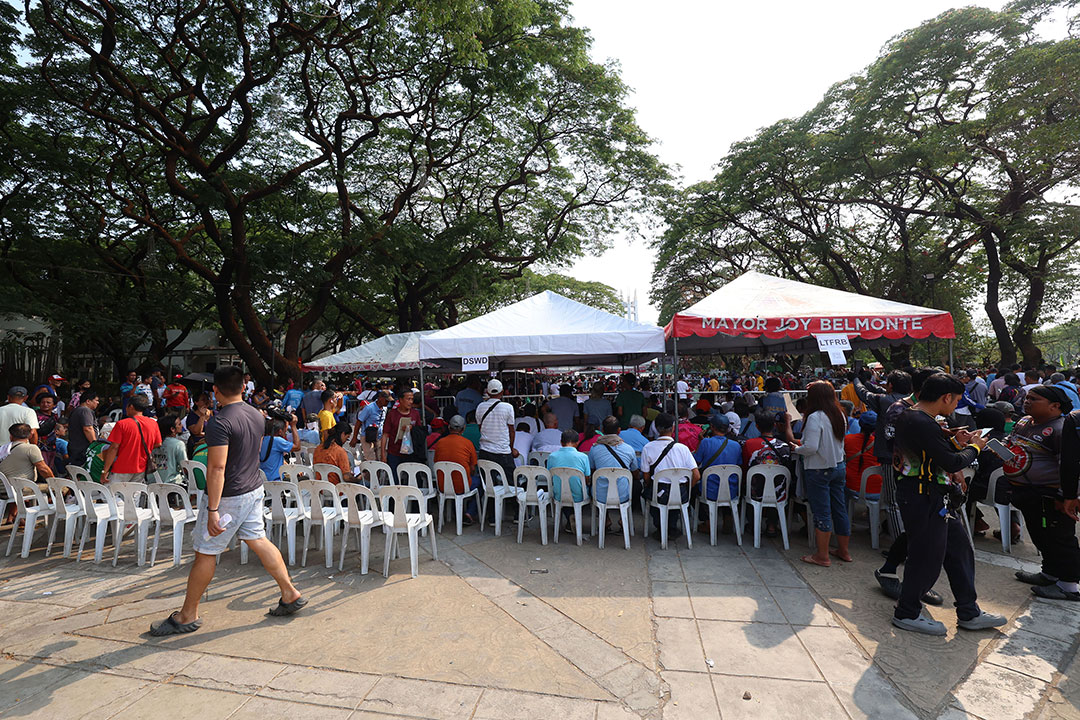
A MOTORCYCLE taxi driver died over the weekend while waiting in line to receive a P5,000 government cash aid meant to help transport workers cope with rising fuel costs linked to the Middle East war, the Department of Social Welfare and Development (DSWD) confirmed.
In a post on X on Sunday, the agency said Social Welfare Secretary Rexlon T. Gatchalian visited the victim’s family to extend condolences and assess additional assistance needs.
He also ordered the National Capital Region field office to coordinate with the hospital, the family and the driver’s employer, the agency said.
“As of this time, assistance has already been extended to cover hospital expenses, funeral wake and burial arrangements, and transportation for relatives,” the DSWD said in Filipino. “The DSWD also provided support for the continued education of the driver’s child.”
The victim was among thousands of motorcycle taxi and transport workers who lined up in Quezon City over the weekend for the emergency payout under the Assistance to Individuals in Crisis Situation program.
The cash aid is meant to cushion the impact of higher fuel prices on daily earnings.
Large crowds were reported at distribution sites, including the Caloocan City Sports Complex, Quezon Memorial Circle in Quezon City and areas near the Makati Coliseum.
The DSWD earlier said more than 17,000 riders are set to benefit from the rollout of the P5,000 assistance package.
The incident has highlighted the pressure faced by transport workers as global fuel prices remain elevated amid the US-Israel war on Iran.
The Philippines has been relying on targeted cash transfers and transport subsidies to ease the burden on low-income earners, particularly in the transport sector.
President Ferdinand R. Marcos, Jr. earlier suspended excise taxes on liquefied petroleum gas and kerosene to help reduce household expenses, though similar relief for diesel and gasoline has not yet been implemented.
The government has also expanded a service-contracting program that provides guaranteed income to public utility drivers through direct subsidies instead of fare-based earnings.
The program is implemented in select routes in Metro Manila and other urban centers, with plans for wider expansion depending on funding and capacity. — Chloe Mari A. Hufana