Home Blog Page 5416

Indonesia, Malaysia to fight discrimination against palm oil

CRAIG MOREY/FLICKR/CC BY-SA 2.0

BOGOR, Indonesia — Indonesia and Malaysia, the world’s biggest producers of palm oil, agreed on Monday to work together to fight “discrimination” against the commodity after a meeting between leaders from the countries.

The comments by Indonesian President Joko Widodo followed a meeting with Malaysian Prime Minister Anwar Ibrahim, who was making his first overseas trip since being elected last November.

Mr. Widodo, popularly known as Jokowi, said the two countries would “fight discrimination against palm oil” and “strengthen cooperation through the Council of Palm Oil Producing Countries” to address concerns.

The European Union plans to phase out palm-oil based fuels by 2030 because of perceived links to deforestation.

During their bilateral meeting, Mr. Anwar and Jokowi signed eight memorandums of understandings covering shipping, export-import financing, green energy, the development of battery industry, which they said they hoped would deepen cross border trade and investment.

The leaders also discussed the development of Indonesia’s planned new capital, Nusantara, with Mr. Anwar handing over 11 letters of interest from Malaysian companies related to possible investment in the new city, located in the Indonesian portion Borneo.

The new capital could boost regional development, Mr. Anwar said, with the Malaysian states of Sabah and Sarawak located in the Malaysian part of Borneo island.

“We hope the development of the capital will bring greater benefits to the wider region, including on Sabah and Sarawak,” he said. — Reuters

Biden visits US-Mexico border as immigration issue heats up

OFFICIAL WHITE HOUSE PHOTO BY ADAM SCHULTZ

 – President Joe Biden visited the USMexico border on Sunday for the first time since taking office, tackling one of the most politically charged issues in the country as he prepares for a re-election bid.

Accompanied by Border Patrol agents, Mr. Biden toured a section of the wall that divides the two countries, a signature priority of his Republican predecessor Donald Trump, in an effort to demonstrate that he was taking the issue seriously.

Mr. Biden on Thursday said his administration would tighten immigration enforcement by blocking Cuban, Haitian and Nicaraguan migrants at the border, expanding the nationalities of those who can be expelled back to Mexico.

But that has not impressed Republicans like Texas Governor Greg Abbott, who accused him of failing to enforce immigration laws.

“You have violated your constitutional obligation to defend the States against invasion through faithful execution of federal laws,” Mr. Abbott, a possible 2024 presidential candidate, wrote in a letter he handed to Mr. Biden upon his arrival in the state.

Mr. Biden told reporters he had not yet read the letter.

Joined by Secretary of Homeland Security Alejandro Mayorkas, the president also visited the Bridge of the Americas, which connects the United States and Mexico, and viewed equipment that border officials use to detect illegal drugs.

Mr. Biden hopes to strengthen relations with Border Patrol agents, some of whom have bristled at the rollback of hardline enforcement policies by the White House.

The long-term goal of Congress reforming America’s creaky immigration system is unlikely to succeed given Republicans’ newly assumed control of the US House of Representatives.

Right-wing lawmakers have repeatedly torpedoed US immigration reform proposals over the past two decades.

Mr. Biden sent Congress an immigration reform plan on his first day in office two years ago, but it floundered due to opposition from Republicans, who also blocked his request for $3.5 billion to beef up border enforcement.

Republicans are pushing their own plans for the border after securing a narrow majority in the House of Representatives in the 2022 midterm elections.

Republican US Representative Jim Jordan told Fox News that Biden should adopt the zero-tolerance policies pursued by Mr. Trump, which included separating children from their migrant parents.

“They’ve allowed now a situation where frankly, we no longer have a border,” Mr. Jordan said.

Mr. Mayorkas on Sunday said international crises and legislative gridlock limited Biden‘s ability to reduce the number of migrants making their way to the United States.

“We’re just dealing with a broken system,” Mr. Mayorkas told reporters aboard Air Force One on the way to Texas.

El Paso’s Democratic mayor declared a state of emergency last month, citing hundreds of migrants’ sleeping on the streets in cold temperatures and thousands being apprehended every day.

US border officials apprehended a record 2.2 million migrants at the border with Mexico in the 2022 fiscal year that ended in September, though that number includes individuals who tried to cross multiple times.


‘MARKEDLY DIFFERENT’

At the same time as he expanded his authority to expel migrants, Mr. Biden on Thursday opened legal, limited pathways into the country for Cubans, Nicaraguans and Haitians – allowing up to 30,000 people from those three countries plus Venezuela to enter the country by air each month.

While winning praise from some US industry groups desperate to solve pressing labor shortages, Mr. Biden‘s moves have drawn criticism from human rights activists and some Democrats who say the new restrictions are a retreat from the president’s 2020 campaign promise to restore historical rights to asylum-seekers.

Mr. Mayorkas rejected the idea that Biden was reviving Trump-era clampdowns.

“It is not a ban at all,” he said. “It is markedly different than what the Trump administration proposed.”

On the ground in El Paso, migrants greeted the new policy with trepidation.

David Guillen, 43, asked Mr. Biden to forgive him and fellow Venezuelan migrants who entered the country illegally, many of whom are now sleeping outside a church in El Paso, fearful of being arrested and deported if they attempt to travel to another city.

“We made a mistake … but not a bad mistake. It’s just that we want a better life,” he said.

After the El Paso visit, Mr. Biden took Air Force One south to an airport near Mexico City, where he was greeted by Mexican President Andres Manuel Lopez Obrador.

Biden, Lopez Obrador and Canadian Prime Minister Justin Trudeau will hold a three day summit beginning Monday on energy, economic cooperation, immigration and drug trafficking, especially fentanyl.

Biden and his Mexican counterpart spoke briefly at the airport, without giving any statement to the press.

Americans give Biden failing grades on immigration policy, polls show.

An average of polls gathered by Real Clear Politics shows 37% of the public disapprove of Biden‘s handling of immigration, a number lower than his overall approval rating.

“Fundamentally we have to fix the system,” Mayorkas told reporters. – Reuters

China stages ‘strike drills’ around Taiwan, citing provocation

A globe is seen in front of Chinese and Taiwanese flags in this illustration, Aug. 6, 2022. — REUTERS/DADO RUVIC/ILLUSTRATION

 – China‘s military said it had conducted “strike drills” in the sea and airspace around Taiwan on Sunday in response to what it said was provocation from the democratically-governed island and the United States.

Taiwan, which China claims as its own territory, said the drills showed Beijing was destroying regional peace and trying to cow Taiwan‘s people.

China staged war games around Taiwan in August following a visit to Taipei by then-U.S. House Speaker Nancy Pelosi, and on Saturday it condemned the United States for a new defense authorization law that boosts military assistance for Taiwan.

In a brief statement, the Eastern Theatre Command of China‘s People’s Liberation Army said it had carried out “joint combat readiness patrols and joint firepower strike drills around Taiwan, though it did not specify the exact location.

“This is a resolute response to the current escalation of collusion and provocation from the United States and Taiwan,” it added, without giving details.

“Theatre forces will take all necessary measures to resolutely defend national sovereignty and territorial integrity.”

Taiwan‘s defense ministry said China‘s actions “once again highlight its mentality of resolving differences by force and destroying regional peace and stability”.

Taiwan-US cooperation contributes to the freedom, openness, peace and stability of the Indo-Pacific, and Taiwan will continue to boost its military in accordance with the enemy threat and its self-defense needs, the ministry said.

“The Chinese Communist’s ‘military intimidation’ acts are obviously aimed at cowing our people and are not conducive to (China‘s) international image,” it added.

Taiwan has complained of repeated Chinese military activity nearby over the last three years or so as Beijing seeks to pressure Taipei to accept Chinese sovereignty.

The United States is Taiwan‘s most important international backer and arms supplier, despite the absence of formal diplomatic ties. US arms sales to Taiwan are a constant irritant in Beijing’s relations with Washington.

Taiwan‘s military is dwarfed by that of its huge neighbor China. Its air force in particular has come under strain from having to repeatedly to see off Chinese incursions near the island.

The Chinese drills coincided with newly-elected city mayors and county chiefs in Taiwan taking up their positions following local elections on the island last month, in which the ruling Democratic Progressive Party was trounced.

China has never renounced using force to bring Taiwan under its control. Taiwan strongly disputes China‘s sovereignty claims, saying only the island’s 23 million people can decide their future. – Reuters

England rushes to discharge hospital patients to ease bed-blocking crisis

STOCK PHOTO | Image by Silas Camargo Silão from Pixabay

England‘s National Health Service (NHS) aims to begin discharging thousands of patients into care homes and other settings in the next few weeks in an effort to free up desperately needed beds during one of its toughest ever winters.

The state-run health service, which delivers free care for to the whole population and until recently had been a source of pride for many Britons, is under strain following years of relative underinvestment, the fallout from the COVID-19 pandemic, and strike action by frontline staff over pay.

Some patients are being treated in corridors and ambulances have been queuing outside hospitals to hand over patients to emergency wards, as doctors and nurses struggle to discharge patients amid a shortage of staff and beds.

The government said in a statement it would make up to 200 million pounds ($242 million) of additional funding available in England to buy short-term care places to allow patients who doctors judge have low medical needs to be looked after outside hospital and 50 million pounds to improve existing facilities.

The statement did not say if the NHS in Scotland, Wales and Northern Ireland would also be putting more funds into care beds.

The objective of discharging some patients into other settings is a revival of a practice used by the NHS in England during the pandemic, when hospitals sought to clear as many beds as possible for use by patients with COVID-19.

“The NHS is under enormous pressure from COVID and flu, and on top of tackling the backlog caused by the pandemic, Strep A and upcoming strikes, this winter poses an extreme challenge,” Steve Barclay, health minister, said in the statement.

Barclays will address parliament on Monday to outline other measures to reduce the pressures facing the NHS.

British Prime Minister Rishi Sunak said last week that reducing hospital waiting lists was one of his five priorities for Britain this year. He said this aim might take longer to achieve than some others.

The government has previously announced extra funding for the NHS and social care, including 500 million pounds ($600 million) for patient discharges, though the opposition Labour Party said the money is yet to reach the front line and comes too late to make a difference this winter.

Health services statistics showed that more than nine in 10 beds in hospitals were occupied in the week running up to New Year, with 13,000 beds a day taken up by patients who were medically fit to be discharged. – Reuters

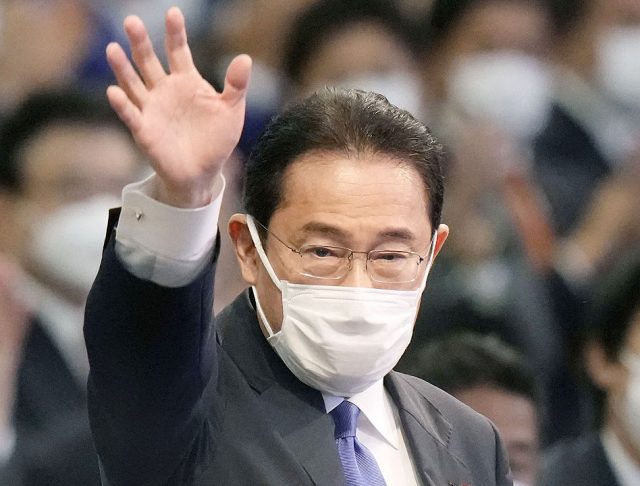
Japan’s Kishida set to talk military buildup, chips on G7 tour

Japanese Prime Minister Fumio Kishida — KYODO/VIA REUTERS

 – Japanese Prime Minister Fumio Kishida starts a tour of key Western partners on Monday, after unveiling his country’s biggest military buildup since World War Two as Tokyo weighs steps to counter China’s growing power.

Mr. Kishida, who will host a summit of the Group of Seven (G7) industrial powers in May, will meet leaders of the United States, Britain, France, Italy and Canada this week. Talks are expected to range from economic security and semiconductors to the war in Ukraine and rising tensions with nuclear-armed China and North Korea.

“As leader of the G7 chair this year, I’ll be making this visit to reaffirm our thinking on a number of issues,” Mr. Kishida told a Sunday news program.

“With the United States, we’ll discuss deepening our bilateral alliance and how to maintain a free and open Indo-Pacific.”

He visits London and Rome after agreeing last month to develop a new jet fighter with those countries. He is to sign a deal with Britain that will establish a legal framework to allow visits by each other’s armed forces, the Yomiuri newspaper reported on Friday.

Issues on Friday’s final stop at the White House are expected to include Japan’s plans to arm itself with missiles able to strike targets in China or North Korea, the bilateral defense agreement and efforts to limit China’s access to advanced semiconductors.

Tokyo and Washington hope the more muscular military policy Mr. Kishida announced last month, a further move away from Japan’s pacifist postwar constitution, will close a widening missile gap with China and deter Beijing from military action, particularly against neighboring Taiwan.

“He’ll be going to show the US that this has been concluded – and, with the G7 summit approaching, to touch base with the rest of the G7 to confirm their stances on Ukraine and Asia,” said political commentator Atsuo Ito.

Japan’s new defensive capabilities may require Washington and Tokyo to revise guidelines that define the roles they play in a decades-old alliance that lets the United States keep warships, fighter jets and thousands of troops in Japan.

Last revised in 2015, the guidelines will likely be among the subjects discussed by Japan’s defense and foreign ministers and their US counterparts on Wednesday before Kishida meets President Joe Biden, a Japanese defense ministry official told a briefing on Friday.

On semiconductors, Japan and the United States are deepening cooperation on advanced chip development amid growing trade tension with China.

Both countries are eager to ensure their manufacturers have access to components considered key to the new technology-driven industries such as data storage, artificial intelligence and quantum computing.

Although Mr. Kishida has said he backs Mr. Biden’s attempt to limit China’s access to advanced semiconductors with export restrictions, he has not agreed to match sweeping curbs on exports of chip-manufacturing equipment the US administration imposed in October.

Even without any major announcements, Mr. Kishida will hope his G7 tour boosts his flagging domestic support, hammered by cabinet resignations and a scandal over his party’s ties to the controversial Unification Church, analysts said.

“Holding a successful G7 summit would bring him maximum political points – and this trip is preparation for that,” said Airo Hino, a political science professor at Waseda University. – Reuters

DTI-CITEM set to feature 30 local brands at international trade show in Germany

DTI-CITEM, via the FAME platform, will showcase exhibitors under the DesignPhilippines brand in the Ambiente 2023 trade fair in Germany.

The Philippines returns as one of the thousands of exhibitors in one of the top home, fashion, and lifestyle (HFL) sourcing platforms in the world.

FAME, the Philippines’ longest-running export promotions program for micro, small, and medium enterprises (MSMEs) and artisan communities in the HFL sectors, brings the Philippine flag to the global map in its participation at Ambiente 2023, a trade fair held in Frankfurt Messe, Germany. The sourcing event is slated on Feb. 3-7 with 30 exhibitors in the HFL industries to be showcased under the DesignPhilippines brand.

A number of 4,700 exhibitors have announced their participation, ensuring Ambiente to be the world’s biggest trade fair platform of its kind. With the theme “Moving the future,” the 2023 edition of Ambiente aims to showcase a unique mix of ideas and products, and provide a major platform for global trends.

The first comeback of the show after its three-year break is simultaneously staged at three venues for the first time. Ambiente is set to be joined by Christmasworld and Creativeworld in order to maximize the visitors’ sourcing experience. The show prioritizes four product areas: Dining, Living, Giving, and Working. These segments consider sustainability, material innovation, and design breakthroughs and trends.

Rattan cushion chairs by Tahanan Furniture

The Philippine pavilion continues the narrative “Hands that work” from its previous participation in 2020. The theme is inspired by the fine workmanship and creative use of natural materials by the local communities that cultivate homegrown crafts. The participating MSMEs have sustainability and social development in mind and are given labor opportunities brought by the continuously strengthened export industry.

Out of the 30 participating exhibitors, 10 are from Tarlac, the country’s Partner Artisan Community. The province, known for its craftsmanship and design prowess, highlights their design expertise to capture the European market in the upcoming global trade fair.

“We are excited for the competitive roster of exhibitors featured in the 2023 edition of Ambiente,” shared Dr. Edward L. Fereira, Ph.D, the executive director of the Center for International Trade Expositions and Missions (CITEM). “A mix of returning and neophyte exporters are set to make a mark on the international stage where our local designs can be appreciated by attendees from different parts of the globe.”

“The strong presence of our homegrown products empower the Filipino craft and lets us cater to more markets, therefore allowing our MSMEs to have a wider reach. Our team at CITEM is committed to offering the world a global range of export-ready products,” Dr. Fereira added.

This participation is also geared to complement signature trade show Manila FAME’s return to the physical floor at the World Trade Center in Pasay City in October 2023. The Philippine pavilion at Ambiente 2023 is spearheaded by the Department of Trade and Industry through CITEM.

To learn more about Manila FAME, visit www.fameplus.com.

FAME is a community of brands, designers, and manufacturers that showcase quality artisanal products in signature trade show Manila FAME, on digital platform FAME+, and in trade fairs and B2B initiatives around the world. The FAME community likewise includes global buyers and other stakeholders.

Eskwelabs selected for the 2023 GSV Cup ‘Elite 200’

A local online data upskilling school will compete as semifinalist in the world’s largest pitch competition for edtech startups.

For its innovative cohort-based learning experiences that help individuals and teams upskill, Eskwelabs has been included in the “Elite 200” of this year’s Global Silicon Valley (GSV) Cup. The edtech startup was selected from a global applicant pool of more than 900 startups across 69 countries, representing the largest and most competitive applicant pool for the GSV Cup.

More than 200 judges from leading venture capital firms and strategic partners in digital learning and workforce skills — including Accel, Bessemer Venture Partners, Blume Ventures, ECMC Group, NEA, Pear, Owl Ventures, and Reach Capital, among others — leveraged a rigorous framework to evaluate each startup and determine the 200 most promising companies in digital learning across the “Pre-K to Gray” space, or the spectrum of lifelong learning.

“What we hear from managers today is that there is simply too much to learn and not enough time for formal training. As companies emerge from the pandemic, there’s mounting pressure to deliver performance and to develop its people. However, methods like self-paced courses that put the onus on the worker fail to deliver with only a small number of learners completing courses. And as remote work increases, teams are becoming more diverse and geographically distributed and that is making it even harder for managers to address skills gaps,” Angela Chen-Delantar, chief executive officer of Eskwelabs, said.

Eskwelabs is a pioneer in building live cohort-based learning experiences and communities that upskill people with work-like projects. Rooted in coaching and empathy, its mentor-driven way of learning improves capabilities, learning, and culture in the workplace.

Its flagship programs include the Data Science Fellowship, an elite 12-week program for those who are serious about working as data scientists in the future, and the Data Analytics Bootcamp, an 8-week program focused on teaching data analytics, data wrangling, data visualization, and data storytelling to anyone who wants to work with data using tools like Excel, PowerBI, and SQL.

“We believe that cohort-based learning has the potential of creating collision moments for hybrid teams to come together and deepen connections which are proven to increase retention and engagement. We are at a unique moment where digital players can exceed the expectations of what learning in the workplace can provide as workplaces become the new classroom so we’re excited to be a part of the Pre-K to Gray movement that GSV champions,” Ms. Chen-Delantar added.

The GSV Cup is part of the ASU+GSV Summit, the premier global event focused on technology innovation in education and skills. Started in 2010 with a collaboration between Arizona State University (ASU) and GSV Ventures, the annual summit connects leading minds focused on transforming society and business around learning and work. The GSV Cup is powered by GSV Ventures, Google Cloud, HolonIQ, HubSpot for Startups, and ASU RealmSpark.

“Our GSV Cup semifinalists epitomize our 2023 theme, ‘Brave New World.’ You can’t use old maps to navigate a new world. These 200 companies are charting new courses and drawing new maps to achieve the scaled delivery of learning and skills. We all hope to achieve the mission that all people deserve equal access to the future through the innovations of these great founders,” said Deborah Quazzo, managing partner of GSV Ventures and co-founder of the ASU+GSV Summit.

The Elite 200 companies selected as semifinalists in this year’s competition support learners from Pre-K to Gray, and are well-distributed across the categories of Early Childhood, K-12, Higher Education, Adult Consumer Learning, and Workforce Learning.

In addition, 43% of this year’s Elite 200 companies are headquartered outside of the United States. 52% of companies have female founders, while 48% of companies have founders that identify as people of color.

Policy tightening seen to continue

People shop for groceries at a supermarket in Quezon City, Oct. 16, 2022. — PHILIPPINE STAR/MIGUEL DE GUZMAN

By Keisha B. Ta-asan, Reporter

THE BANGKO SENTRAL ng Pilipinas (BSP) will likely continue its monetary tightening this year as inflation is seen to remain above target until the second quarter of 2023, analysts said. 

However, economic growth may slow significantly in the next two years, as a result of higher borrowing costs.

BSP Governor Felipe M. Medalla said inflation may have peaked already in December and is expected to settle within the 2-4% target range by third quarter this year.

Headline inflation rose to 8.1% in December, from 8% in November and 3.1% in December 2021, as food prices surged during the holiday season. This brought the average inflation in 2022 to 5.8%, the highest in 14 years.   

“From that point on, we see inflation slowing down in the first half of 2023 and settling between 2-4%, our target range, by the third quarter of 2023,” Mr. Medalla said during the central bank’s first flag-raising ceremony for the year.

“By the fourth quarter, and hopefully for the rest of 2024, inflation is expected to approach the low end of the target range due to base effects,” he said, adding that monetary settings will continue to be guided by data. 

For China Banking Corp. Chief Economist Domini S. Velasquez, inflation momentum slightly eased, as seen with the 0.3% month-on-month increase in December from November’s 0.7%. 

“Inflation’s momentum in December moderated somehow as month-on-month inflation was not as high. However, food prices remained highly elevated, some of which could have been prevented with better domestic supply movements and early recognition of shortages,” Ms. Velasquez said.

“In the next BSP meeting, we expect the BSP to update its inflation projection for 2023. Based on the recent movement in prices, we have actually increased our 2023 average inflation forecast from 4.6% to 5.3%,” she said, adding that food prices may continue to spike.

The BSP currently expects inflation to average 4.5% this year before easing to 2.8% in 2024. 

Higher water rates took effect this month, while electricity rates are also expected to go up. Ms. Velasquez said oil prices are unlikely to go down as much as previously expected with China’s reopening.

“Although inflation will most likely trend downwards starting January, we expect the BSP to continue tightening up to at least 6% in 2023. If other demand side inflationary pressures materialize, such as wage hike increases, they might even increase their terminal rate,” she added.   

STILL ABOVE TARGET
Even though inflation is expected to slow this year, the BSP’s average 2023 inflation forecast is still above the 2-4% official target range, former BSP Deputy Governor Diwa C. Guinigundo said.

“For the BSP to announce its plan to accelerate the disinflation process implies sustained or more aggressive tightening,” Mr. Guinigundo said in a Viber message.

The central bank has raised 350 basis points (bps) last year, bringing its benchmark policy rate to a 14-year high of 5.5% from a record-low of 2% as it sought to tame inflation and help stabilize the peso.   

“I don’t see anything wrong with this decision should it be pursued because the economy seems to have demonstrated its resiliency last year, and is expected to replicate it this year with at least 6-6.5% GDP (gross domestic product) growth,” he said.   

Despite rising rates, GDP expanded by 7.6% in the third quarter, bringing the nine-month average to 7.7%. The government expects GDP to have grown by 6.5-7.5% in 2022, and targets 6-7% growth in 2023.   

The Philippine Statistics Authority is scheduled to release the fourth-quarter 2022 GDP data on Jan. 26.   

“What is more urgent now is to tame inflation because otherwise, it can also restrain economic growth through lower private consumption and investment. What is bothersome is the possibility of getting inflation expectations more entrenched if disinflation takes more time to execute,” Mr. Guinigundo said.   

He noted core inflation continued to accelerate in December, which may reflect significant demand — the target of monetary policy.   

Core inflation, which excludes food and fuel volatile prices, quickened to 6.9% in December from 6.5% in November, marking the fastest print since 7.2% in November 2008. Year to date, core inflation averaged 3.9%.   

The pace of the US Federal Reserve’s policy tightening remains a key consideration for the BSP this year.

“For (2023), we expect BSP to also take its cue from the Fed with rate hikes likely to persist in the first half of the year,” ING Bank N.V. Manila Senior Economist Nicholas Antonio T. Mapa said in an e-mail.     

“If the Fed carries out its pivot, the BSP will be able to do its own pivot with a pause in the second quarter of 2023 and rate cuts in the second half next year,” Mr. Mapa added.     

The US Federal Reserve has delivered 425 bps of cumulative rate hikes in 2022, which brought its own policy rate to 4.25-4.5% in order to curb inflation.   

“I think BSP will still hike but at a lesser magnitude,” Sun Life Investment Management and Trust Co. economist Patrick M. Ella said in an e-mail.       

Mr. Ella said the BSP may raise borrowing costs by 25 bps more this year, and pause rate hikes by mid-2023.   

“To be honest, financial institutions can adjust to the elevated rate environment because the consumer can absorb these and 2022 experience shows that,” he added.                 

The Monetary Board is scheduled to meet on Feb. 16 for its first policy meeting this year.

MONETARY POLICY LAG
Mr. Medalla in December said the central bank’s last 50-bp rate increase may reduce GDP by about 7 bps in 2023, and by 19 bps in 2024 due to the lagged impact of policy tightening.    

“If you’re only looking at one rate increase, it’s not that big. Of course, we increased policy rates from 2% to 5.5%, or by 350 bps, so you multiply these numbers by seven,” Mr. Medalla had said in a mix of English and Tagalog.    

The BSP chief added that this is why the International Monetary Fund (IMF) gave a 5% growth forecast for the Philippines this year, significantly below the economic managers’ 6-7% target. 

“But in our view, it’s more important for the public to bring down inflation. High inflation will hurt people more than low GDP growth,” Mr. Medalla said.

With its 350-bp cumulative rate hikes, the BSP has arrested inflationary expectations and managed the volatility in the foreign exchange market, Ms. Velasquez earlier said in an interview with One News.

The local unit closed at P55.755 versus the greenback on Dec. 29, 2022, weakening by P4.755 or 8.52% from its P51 close on Dec. 31, 2021. Still, the peso has strengthened from its record-low close of P59 in October.

“The total effect should happen in 12-18 months. So, since we had (our first rate hike) in May, you’d expect it in 2023, 2024 for the full effect of the monetary policy,” she said.   

In an earlier e-mail, Ms. Velasquez said that in theory, higher interest rates will discourage people from taking out loans.

“With less money at their disposal, consumers will demand less goods and services while businesses may be forced to put off expansion and hiring plans and reduce capital expenditures,” she said.    

“Less consumer demand, capital assets, and labor inputs will then force firms to produce less goods and services. With output lower than before, economic growth would slow and could go into negative territory, especially if the fall in output is widespread across the economy,” she added.

Ms. Velasquez expects economic growth to slow to 5.5-6% this year.

Philippine National Bank economist Alvin Joseph A. Arogo said he sees GDP growing at a slower rate of 5.5% in 2023.

“This is because the purchasing power of consumers is likely to be affected by high inflation, especially as pandemic savings are used up. Moreover, capital formation would likely slow down with the higher interest rates, while government expenditures would likely increase minimally as indicated in the national budget that was recently ratified by Congress,” Mr. Arogo said in an e-mail.

Maybank Investment Bank Chief Economist Suhaimi Bin Ilias also sees GDP growth easing to 5.5% this year, from a projected 7.3% in 2022.

“Any further rate hikes will push BSP monetary policy deeper into restrictive (territory), some that will be detrimental to GDP growth,” he said in an e-mail.

LOOKING BACK
In 2022, the BSP exited its easy monetary policy strategy that was earlier done to support the pandemic-hit economy in 2020.     

Pantheon Chief Emerging Asia Economist Miguel Chanco said the change in the BSP’s leadership sparked a big shift in policy, as it went from former BSP Governor Benjamin E. Diokno’s “conservative hand” to Mr. Medalla’s more hawkish tone.

“Our general view is that the rate hiking cycle was overly aggressive, partly because it’s clear from the data that the economy’s relative strength this year is based on temporary factors and the same can be said about the upsurge in inflation,” Mr. Chanco said.     

Meanwhile, Mr. Mapa lauded Mr. Medalla’s policy decisions after taking over, as he was faced with the peso’s depreciation against a strong dollar while trying to control price pressures at the same time.    

“With the economic data report in hand, Medalla did what few would dare carry out: an emergency meeting as his first act as governor,” Mr. Mapa said.   

The BSP unexpectedly hiked borrowing costs by 75 bps in July, its biggest rate hike ever, following two 25-bp rate increase each in May and June. This was also the BSP’s first off-cycle move since April 16, 2020, when it cut rates by 50 bps to 2.75% to support the economy.    

“A short four months later, the peso has steadied considerably (thanks in part to fading dollar strength) while previously frayed market sentiment has been steadied to close out the year,” Mr. Mapa said.   

“The next big questions for (2023) would be who will take up the mantle of BSP governor after Medalla retires? July 2023 coincides with the projected Fed pivot and the choice of BSP governor will determine how BSP will react to the potential Fed rate cuts in the second half of the year,” he added.

Colegio de San Juan de Letran Graduate School Associate Professor Emmanuel J. Lopez said the BSP’s policy decisions for the last three quarters in 2022 has brought “mixed effects” to the economy.    

“On one hand, although it is meant to douse cold water on the consumer’s buying spree and meant to control consumer appetite and at the same time discourage investment spending by way of borrowing, this in effect discourages employment and therefore will increase unemployment,” Mr. Lopez said.    

“Although currently, we are back to pre-pandemic status of 95% employment, if we translate 5% unemployed people, that is still equivalent to approximately 3 million people without work,” he added.    

According to the latest data from the statistics agency, employment rate rose to 95.8% in November, from 95.5% in October and 93.5% in the same month a year ago.

Meanwhile, the unemployment rate eased to 4.2% in November — the lowest in over 17 years. This is equivalent to 2.177 million unemployed Filipinos in November, lower than the 2.241 million in the prior month.


11-month gross borrowings drop to P2.1 trillion

BW FILE PHOTO

GROSS BORROWINGS declined by 24.5% year on year as of end-November, preliminary data from the Bureau of the Treasury (BTr) showed.

In the January-to-November period, total gross borrowings dropped to P2.1 trillion from the P2.78-trillion borrowings in the previous year.

The 11-month gross borrowings represent 95.5% of the P2.2 trillion total borrowing target set by the national government for 2022.

In November alone, gross borrowings surged by 266.7% to P97.9 billion from P26.7 billion in the same month of 2021. However, it was 64.6% lower than the P176.56 billion logged in October.

Domestic gross borrowings surged 357.3% to P75.91 billion in November from P16.6 billion in the same month of 2021.

November saw the net redemption of Treasury bills (T-bills) amounting to P22.33 billion, which was offset by the issuance of fixed-rate Treasury bonds (T-bonds) which raised P98.24 billion.

Meanwhile, foreign gross borrowings reached P21.96 billion during the month, up 117.4% from P10.1 billion a year earlier. This consisted entirely of project loans, with no recorded foreign program loans or bonds.

The government also repaid P35.09 billion to foreign creditors in November.

In the first 11 months of 2022, gross domestic borrowings fell by 28.4% to P1.61 trillion from P2.25 trillion in the previous year.

The government raised P834.48 billion from retail Treasury bonds (RTBs), and P1.14 trillion from fixed-rate T-bonds as of end-November.

Gross external borrowings amounted to P493.61 billion in the 11-month period, down by 6.7% from the P528.8 billion posted in 2021.

Broken down, the BTr raised P234.26 billion from global bonds and P28.55 billion from Samurai bonds. It also recorded P94.2 billion in project loans and P136.6 billion in program loans. The government also repaid P122.76 billion of its outstanding foreign debt.

The government borrows from local and foreign sources in order to fund its budget deficit. The Development Budget Coordination Committee (DBCC) last month revised its fiscal deficit projection to 6.9% of gross domestic product (GDP) for 2022.

As of end-November, the National Government’s debt reached a record-high of P13.644 trillion. — L.M.J.C.Jocson

Tax cuts likely to unleash spending power of middle-class Filipinos

PEOPLE eat inside a restaurant in Libis, Quezon City. — PHILIPPINE STAR/ MICHAEL VARCAS

By Luisa Maria Jacinta C. Jocson, Reporter

TAX CUTS implemented this year could spur faster spending and increased savings by middle-class Filipino consumers, as well as lead to higher government revenues from indirect taxes, analysts said.

“I believe the new tax rates will help unleash the power of the middle class to drive the economy through consumption spending, savings, and investments. The spending power of a burgeoning middle class can create sizable output, income, and employment multiplier effects,” University of Asia and the Pacific (UA&P) Senior Economist Cid L. Terosa  said in an e-mail.

Under the Tax Reform for Acceleration and Inclusion (TRAIN) law, personal income tax cuts are being implemented starting Jan. 1.

Taxpayers with annual taxable income below P250,000 are still exempt from paying personal income tax, while the rest with income above P250,000 but less than P8 million will have lower tax rates ranging from 15% to 30%.

Meanwhile, the top individual taxpayers earning more than P8 million have a higher tax rate of 35% from the previous 32%.

“While direct tax revenues could be affected, indirect tax revenues levied on consumption spending could rise as middle-class households have more disposable income to spend,” Mr. Terosa said.

An example of indirect tax is the value-added tax (VAT). An increase in consumer spending may drive VAT collections higher.

The BIR is tasked to collect P2.67 trillion this year, of which P463.3 billion will come from VAT collections.

The Bureau of Customs (BoC) is targeting to raise P901.3 billion this year, of which P570.3 billion is expected to come from VAT on imports.

“The tax reduction will be diverted to consumption given higher disposable income,” John Paolo R. Rivera, an economist at the Asian Institute of Management, said in a Viber message.

Victor A. Abola, an economist at UA&P, said the tax cuts may encourage consumers to spend more.

“I think we should see increased spending, since the tax cuts directly benefit the middle- and high-income classes, which already have more savings during the pandemic,” Mr. Abola said in an e-mail.

In the third quarter, household consumption was one of the main drivers of gross domestic product (GDP) growth on the demand side.

Household consumption rose 8% year on year, faster than 7.1% a year earlier. Quarter on quarter, household final consumption grew by 5.7%.

Mr. Terosa said taxpayers may also be able to pocket more savings.

“The rise in the absolute amount of savings of middle-class households could be channeled to various forms of investments. In my opinion, the new tax rates will support middle-class households to achieve their aspirational goals,” he said.

Ateneo de Manila University economics professor Leonardo A. Lanzona said that revenues from top individual taxpayers can be utilized by the government as part of its recovery from the pandemic.

“TRAIN seems to be on the right track. Raising tax rates on the higher income individuals can bring in more revenues that the government can use for its post pandemic recovery plan. Lowering taxes on the lower income individuals who were most likely affected by the pandemic also seems appropriate,” he said in an e-mail.

Mr. Abola said the boost in government spending will benefit the lower income households more, especially in terms of public health and education programs.

“When combined, the benefits to the lower income groups outweigh the slight increase in taxes. The highest income groups do not benefit much from government spending,” he said.

Under TRAIN, 70% of its incremental revenues will go to infrastructure programs while the rest will go to social services.

WB to warn of global recession risk in economic outlook

MARKUS KRISETYA-UNSPLASH

THE World Bank (WB) is concerned that “further adverse shocks” could push the global economy into recession in 2023, with small states especially vulnerable.

The warning is contained in an abstract for the bi-annual “Global Economic Prospects” report due for release on Tuesday and visible on the group’s Open Knowledge Repository website.

Even without another crisis, global growth this year “is expected to decelerate sharply, reflecting synchronous policy tightening aimed at containing very high inflation, worsening financial conditions, and continued disruptions from Russia’s invasion of Ukraine,” the World Bank said.

“Urgent global and national efforts” are needed to mitigate the risk of such a downturn as well as debt distress in emerging market and developing economies (EMDEs), where investment growth is expected to remain below the average of the past two decades, the Washington-based lender said.

“It is critical that EMDE policy makers ensure that any fiscal support is focused on vulnerable groups, that inflation expectations remain well anchored, and that financial systems continue to be resilient,” it said.

Similar demands have been made by central bankers from around the world as they aggressively raise interest rates to ease price pressures while governments support businesses and households by containing energy costs.

International Monetary Fund Managing Director Kristalina Georgieva started 2023 with a warning that the world faces “a tough year, tougher than the year we leave behind.” One-third of the global economy will be in recession because the US, the EU and China are all slowing down simultaneously, she told CBS’s Face the Nation in an interview aired Jan. 1. — Bloomberg

SEC adds 3 more to alert list, acts on Silverlion

THE Securities and Exchange Commission (SEC) has warned the public about three entities that have been soliciting investments without a license, with two of them not even registered with the agency.

In an advisory, the SEC said that Bit-Cryptorising Marketing Consultancy and BCR Rising Trade, Inc. have been taking investments from the public.

The two solicit investments ranging from P1,000 to P300,000, with a promised return of 15% per week that accumulates up to 60% and 120% in 30 or 60 days.

“The aforementioned investment scheme of BCR Rising and Bit-Cryptorising clearly involves offering and sale of securities in the form of investment contract as defined under Section 3.1 of the Securities Regulation Code (SRC),” the SEC said.

The SRC defines securities as shares, participation or interests in a corporation or a profit-making venture and evidenced by a certificate or contract.

According to the regulator, although BCR Rising is a registered company, it is not authorized to solicit investments as it did not secure prior registration.

Bit-Cryptorising was found to be not registered and therefore does not have the license to take investments from the public.

In a separate advisory, the SEC warned the public against CSTMINE.com, which it found to have a proliferating scam on its website.

“The persons who invested their hard-earned money were left dry by the administrators of the website as they were not able to withdraw their investments when the website closed and became inaccessible,” the regulator said.

Through the investigations of the commission, it found out that CSTMINE.com has been enticing the public to invest in the entity through a platform that is supposed to be a “crypto mining” machine.

The commission defines crypto mining or cryptocurrency mining as the process of creating new digital “coins.”

“Apparently, this is the concept that the new scammers are leveraging on to entice their prospective victims [to invest] hard-earned money on their illegal investment-taking schemes like the subject entity at hand, CSTMINE.com,” said the SEC.

The entity offers investment packages for as low as 3,500 and up to 65,000 Nigerian nairas, with the potential profit depending on the time the amount of initial capital was deposited.

The regulator identifies the offering of the three entities as a Ponzi scheme, which it describes as fraudulent and unsustainable, and not a registrable security.

The SEC also said CSTMINE.com is not a registered company and operates without the necessary license to take investments from the public.

Meanwhile, the regulator issued an order of revocation against Zamboanga-based Silverlion Livestock Trading Corp. after it was found to be selling and offering securities to the public.

Investigations conducted by the SEC Enforcement and Investor Protection Department and the SEC Zamboanga Extension Office revealed that the entity has been offering investments starting from P5,000 up to P100,000 with a promised 2.3% daily earnings.

Although the company is a registered corporation under the SEC, it has not secured the license to sell securities nor has it registered any securities with the commission.

“The investment scheme of Silverlion also operates to defraud investors as it deceives the investing public by making it appear that they have the authority to deal in securities,” the regulator said.

On Nov. 26, 2022, the commission issued a show-cause order against the company, to which it failed to respond.

The commission views the company’s activity as ultra vires act as it constitutes “serious misrepresentation.” It then ordered the revocation of its business registration in violation of the SRC. — Justine Irish D. Tabile

ADVERTISEMENT
ADVERTISEMENT