Home Blog Page 5410

French federation official calls for its president Le Graet to resign

PARIS — The head of the French Football Federation’s (FFF) national ethics committee has called for the governing body’s president Noel Le Graet to step down from his role.

Patrick Anton made the comments on Tuesday, a day after Mr. Le Graet apologized to France great Zinedine Zidane for remarks about the former Real Madrid coach which drew the ire of players, politicians and the Spanish club.

Mr. Zidane was one of the favorites to take over as manager of France if Didier Deschamps left the job but the latter’s contract was extended after he led the national team to the World Cup final, which they lost to Argentina last month.

When asked if Mr. Zidane, a World Cup winner with France in 1998 and a national icon, would now manage Brazil’s national team instead, Mr. Le Graet told RMC: “I don’t give a damn, he can go wherever he wants.”

Mr. Anton told French newspaper L’Equipe: “Le Graet has made comments that show he has lost some of his lucidity. He is a man who is tired, who needs to move on.

“We need a strong and serene governance, which unfortunately is no longer the case. All season long we have to apply the rules of ethics to leaders — especially district and league presidents — and refer cases to disciplinary committees because they have crossed the line.

“As far as the president of the federation is concerned, while we obviously do not intend to refer the matter to a disciplinary committee, we can only ask him to step down in the best interests of football.”

L’Equipe reported that a meeting of the FFF executive committee would take place on Wednesday.

The FFF was not immediately available to comment.

Earlier, France forward Kylian Mbappé also voiced his disapproval of Mr. Le Graet’s comments, saying on Twitter: “Zidane is France, we don’t disrespect the legend like that.”

France’s Minister for Sports Amelie Oudea-Castera was one of many politicians who reacted to Mr. Le Graet’s remarks, saying the president of the country’s “biggest sporting federation” had crossed a line. — Reuters

Thailand beats Malaysia to set up Vietnam final showdown

DEFENDING champions Thailand will take on Vietnam in the final of the Asean Championship after Mano Polking’s hosts notched up a 3-0 win over Malaysia on Tuesday to overturn a first leg deficit and secure their place in the tournament decider.

The Malaysians had held a 1-0 lead from the first leg in Kuala Lumpur but goals from Teerasil Dangda, Bordin Phala and Adisak Kraisorn earned the six-time champions the result needed to advance to the country’s 10th final in 14 tournaments.

Vietnam, who defeated Indonesia on Monday to progress to the final, will host the first leg of the showpiece in Hanoi on Friday with the return in Thailand four days later.

It took the Thais 19 minutes to pull level on aggregate when Teerasil, the tournament’s all-time leading scorer, rose unmarked to firmly head Theerathon Bunmathan’s cross from the left past Malaysian goalkeeper Syihan Hazmi.

Ten minutes into the second half Thailand doubled their lead on the night to go ahead on aggregate when Bordin swept in Ekanit Panya’s cut back from the right.

Substitute Adisak, who had replaced Teerasil at halftime, then put the result beyond doubt in the 71st minute, converting from close range after initially hitting the post following Suphanan Bureerat’s center.

Vietnam and Thailand will be meeting in the final of the regional competition for the first time since 2008, when the Vietnamese won 3-2 on aggregate to claim the trophy. — Reuters

Maybank Philippines’ anniversary gala event: A toast to 25 years, from silver to gold

Thanksgiving Toast. From left, MPI Director Mr Roberto Reyes; MPI PCEO Ms Gail del Rosario; CEO of Group CFS Dato’ John Chong; CEO International Mr Michael Foong; MPI Chairman Pn Fauziah Hisham; Group Chairman Tan Sri Dato’ Sri Zamzamzairani; Group PCEO Dato’ Khairussaleh; MPI Director Datuk Lim Hong Tat; MPI Director Ms Pollie Sim; MPI Director Mr Simoun Ung; and MPI Director Mr Manuel Tordesillas.

Maybank Philippines, Inc. (MPI) recently celebrated its 25th Anniversary with a Filipiniana-Themed Gala last Nov. 25, 2022 at the Grand Ballroom of Shangri-La at the Fort, Bonifacio Global City, Taguig City, with more than 300 valued clients and VIP guests attending to celebrate this milestone.

Maybank Group Chairman Tan Sri Dato’ Sri Zamzamzairani Mohd Isa and Maybank Group President and CEO Dato’ Khairussaleh Ramli led the list of distinguished guests to join in the celebration. Also present were Maybank Group Director and MPI Chairman Puan Fauziah Hisham, CEO for Group CFS Dato’ John Chong, CEO for Maybank International Mr. Michael Foong, and the MPI Board of Directors and Senior Management. Bangko Sentral ng Pilipinas (BSP) Governor Felipe M. Medalla was keynote speaker, while Secretary of Finance Benjamin E. Diokno delivered a pre-recorded congratulatory message.

“MPI’s 25th Anniversary symbolises our Group’s commitment to our regionalisation, deepening customer centricity, the power of our vision and value of our heritage,” commented Michael Foong, CEO-International. “Our unity across Maybank Group continues to be our strength, and our diversity, our growth.”

Recognitions were also given out to long-time clients and industry partners who demonstrated the same T.I.G.E.R. values embraced by MPI. Twenty-two (22) T.I.G.E.R. Champions exemplifying Teamwork, Integrity, Growth, Excellence and Efficiency, and Relationship-Building have been presented with special trophies of appreciation.

Colourful performances from Filipino impersonator and theatre artist Willie Nepomuceno portraying past Philippine Presidents served as backdrop to the highlights of MPI’s journey for the past 25 years.

“Reaching one’s 25th year is reason enough to celebrate, and Maybank Philippines marking it on the Year of the Water Tiger makes this milestone even more auspicious,” said MPI President and CEO Abigail Del Rosario in her thanksgiving message.

“We are grateful that we get to celebrate this momentous occasion with our Key Shareholders and Regulators, who continuously provide guidance and governance; our People, one thousand three hundred strong Maybankers in the Philippines, who have always been the heart and soul of this organisation; and our Customers and Community Partners, who have always been the reason why we are where we are today, and have always stood as our inspiration,” she added.

Maybank’s 25th Anniversary Gala concluded with a toast led by MPI PCEO Ms Gail Del Rosario, and an affirmation of the Bank’s unchanging commitment to humanise financial services in the next 25 years.

Maybank Philippines is a member of Malaysia’s largest banking group by assets and a leading regional financial services provider with an international network of over 2,626 retail and 51 investment banking branches in 18 countries. In the Philippines, Maybank maintains a “phygital” proposition that combines physical accessibility through its network of more than 60 branches and over 90 ATMs nationwide, and digital capabilities through its Maybank2U PH mobile and internet banking platforms.


Spotlight is BusinessWorld’s sponsored section that allows advertisers to amplify their brand and connect with BusinessWorld’s audience by enabling them to publish their stories directly on the BusinessWorld Web site. For more information, send an email to online@bworldonline.com.

Join us on Viber to get more updates from BusinessWorld: https://bit.ly/3hv6bLA.

Women’s sports making their move, one step at a time

ASIAN FOOTBALL CONFEDERATION/PHILIPPINE STAR FILE PHOTO

The new year started with media refocusing its attention on the Philippine women’s national football team which in 2022 qualified for the FIFA Women’s World Cup in July-August 2023 which will be jointly hosted by Australia and New Zealand. The Filipinas, formerly called the Malditas, qualified for the first time to the World Cup when they made it to the semifinals of the AFC Asian Cup.

The Filipinas’ 2022 campaign was certainly a fruitful one, with the squad winning the bronze medal at the 31st Southeast Asian Games (SEAG) in Vietnam. This was followed by the country’s the first ever regional trophy when the team won the AFF Women’s Championship in the Philippines.

The maiden appearance of the Filipinas at the 2023 FIFA Women’s World Cup is a high mark in the checkered history of Philippine football.

It might be bit instructive to go into a bit of Philippine history to better understand the rough and rocky road that Philippine football — and organized sports in general — traveled over the last 120 years.

Close to the start of the 20th century, in 1898, the United States declared war on Spain which by then was losing its grip on whatever was left of its colonies, including Cuba. The Spanish forces sank the American battleship Maine in Havana, Cuba, after which the Americans declared war on Spain on April 25, 1898. The United States brought the war against the fading Spanish empire to the Philippines. By the time the US had entered Manila Bay, the Filipino forces were all but ready to oust the Spaniards.

Fearing reprisals from the indios or the natives for the centuries-long atrocities they committed, the Spaniards chose to strike a deal with the Americans to avoid the ignominy of surrendering to the under-equipped, bolo-wielding brown-skinned “savages.” Both American and Spanish forces waged what was known as an “acoustic war” on Manila Bay, with naval forces of both countries exchanging fire that harmed no one. It was part of a plan to deprive the natives of the chance of forming their own nation. It was a conspiracy that was formalized through the Treaty of Paris and capped by the US buying the Philippines from Spain for $20 million. The Filipinos had been passed on from one master to another.

Hardly had the ink dried on the Treaty, when the Americans sent the USS Army Transport Thomas that had as its passengers an assortment of businessmen, educators, missionaries and others whose presence in the Philippines would firmly establish America’s influence in, and control over, the 7,000 or so islands. The new arrivals were known as the “Thomasites.”

The missionaries and members of what would be the American Young Men’s Christian Association (YMCA), lost no time in their proselytization and evangelization even as the bloody Philippine-American war raged. The missionaries traveled to north and south of the archipelago, with the educators traveling to Dumaguete, Negros Oriental in the south to help establish the Siliman University. Up north, the Americans covered the mineral-rich Baguio-Benguet area.

Along with Coca-Cola and other consumer products, and American culture and system of governance, they also brought in their system of education which included Physical Education and organized sports.

While the Americans brought in track and field (athletics), baseball, swimming, softball, and boxing, a European sport, football, continued to be popular — no doubt due to the Spanish influence established over 370 years. The Philippines won the gold medal in football in the first Far Eastern Games in 1913, the forerunner of the Asian Games. The countries that participated in the Games were: the Philippines, China, Japan, Thailand, the British East Indies (Malaysia), and the British Crown Colony of Hong Kong. That was to be the first and the last time that the Philippines would win a medal in men’s football at the Asian continental level.

During the heyday of Philippine football at that time, the star of Paulino Alcantara Riestra — the son of a Spanish military officer married to an Ilongga from Concepcion, Iloilo — shone bright. Alcantara was a member of the Philippine football team to the Far Eastern Games in 1917 held in Tokyo. Alcantara led the Philippines to a 15-2 victory over host Japan. He played for the Barcelona club and was its youngest player.

What happened to Philippine football in the 1920s and ’30s? The Americans introduced sports such as basketball, track and field, swimming, and baseball. School and YMCA facilities had basketball courts and swimming pools and diving facilities. Baseball occasionally gained some media prominence with the visit of baseball greats like Babe Ruth.

Football sometimes gained a bit of attention, but mainly from the upper levels of society of Spanish parentage whose contacts with football clubs in nearby Hong Kong enlivened the environment.

Other than that, it was all basketball in the ensuing decades — until local businessmen and the national sports association of football and some Local Government Units and schools came together to build up a more competitive men’s team comprised of both Philippine-based and Filipino-foreign players. It was during the period from 2008-2016 that the men’s team improved its international ranking.

The attention given to and the superb performance of the Filipinas reflects the worldwide trend of recognizing the impact of women’s sports. With gender equity and the promotion and defense of women’s rights being taken seriously by both men and women and governments and entire societies, women’s sports can, on their own, draw crowds, sponsors, and networks. The US women’s team demanded from the US football governing body the same pay as the men’s team. The equal pay demand was met.

There are, of course, other factors that attract fans to women’s sports. The surge in popularity of women’s collegiate volleyball in the Philippines in the early 2000s was due, no doubt, to the rivalry between De La Salle and Ateneo, such rivalry extending (amusingly) into almost all aspects of human activity.

At the international level, a winning team will draw 17,000-20,000 fans to a football stadium, crowds that only basketball and women’s volleyball competitions (and rock concerts) can attract.

Like the Azkals, the Filipinas have a strong Filipino-Overseas line-up. These overseas players had the benefit of training in countries like the US, the UK, Australia, Sweden, Taiwan, and Japan, and competing in top level leagues in these football hotspots.

The Filipino diaspora has resulted in millions of Filipino emigrants’ offspring, some of whom have become athletes living and playing in other countries and benefiting from the training and competitive environment in their home and neighboring nations. It is to be noted that more than one half of the national women’s football squad is of mixed Filipino and foreign parentage.

Olivia Davies-McDaniel is a 23-year-old American-born Filipino goalkeeper. McDaniel’s mother is Lindy, who has roots in Pampanga and Davao City. McDaniel was a member of the team that played in the quarterfinals match against Chinese-Taipei. The match went on to a penalty shoot-out. McDaniel stopped two of three penalty attempts by Chinese-Taipei. She converted one penalty kick herself.

Inna Palacios, 28, is the goalkeeper of the national squad. She is one of four Philippine-based players who have joined hands with the Filipino-Overseas players to help the Philippines achieve this trailblazing feat. The three other ladies are members of the De La Salle football team, to which Palacios also belonged before she finished college. Palacios, a graduate of Colegio San Agustin, was heavily scouted by other schools in the UAAP.

Ranked 53rd, the Philippine team is the lowest qualifier among 32 countries seeing action in July this year. But that should not really matter. The important thing is the country is in the game. One step at a time. Being there is already an achievement.


Philip Ella Juico’s areas of interest include the protection and promotion of democracy, free markets, sustainable development, social responsibility and sports as a tool for social development. He obtained his doctorate in business at De La Salle University. Dr. Juico served as secretary of Agrarian Reform during the Corazon C. Aquino administration.


Workplace friendships are worth the awkwardness

AUSTIN DISTEL-UNSPLASH

WHICH is more important to your overall well-being: the work you do, or the people you work with?

Today, we tend to focus a lot on the work itself. For years, young people have been told to “follow your passion” and “do what you love.” Companies of all stripes have lured talent by promising that together, they and their employees can change the world. And although companies also brag about their company cultures, often this is a code for perks like flexibility.

But a new book by the director and associate director of the Harvard Study of Adult Development taps that long-running study on contentment to make the case that relationships — including our work relationships — are far more important than we give them credit for. The Good Life: Lessons from the World’s Longest Scientific Study of Happiness, by psychiatrist Robert Waldinger and psychologist Marc Schulz, draws on more than 80 years of data. Multiple generations of researchers followed the study’s participants — mostly Harvard undergraduates and low-income boys living in Boston tenements — for most of their lives, interviewing them and asking them to fill out questionnaires every few years. Many of their children now participate in the study.

The findings suggest that more of us should pay attention not only to what we do for a living, but whom we do it with.

“Many of us spend most of our waking hours at work,” Schulz told me. “What we found in following our participants across decades of their lives, and now following their children, is that the connections that people have at work are really critical — and that work is a pretty important source of connection for many people.”

In fact, the happiest man in the study, whom they call Leo, never achieved his dream of becoming a writer. Instead, he became a teacher. It wasn’t what he had planned — and likely wouldn’t have happened if his father’s death and his mother’s Parkinson’s diagnosis hadn’t forced him away from his chosen path. But his relationships with his students and colleagues made him so happy that he turned down several promotions.

It’s not that money doesn’t matter — wealthier people tend to have a longer life expectancy, for one thing, and the study’s richest participants lived about nine years longer than the poorest. But looking at the data — their own, and others’ — “money matters most at lower levels of income where a dollar, euro, rupee, or yuan is used to provide basic needs and a sense of security,” write Schulz and Waldinger. “Once you get above that threshold, money does not seem to matter much, if at all, when it comes to happiness.”

We also tend to underestimate what the day-to-day experience of work might be, even for things we’re passionate about. If Leo had become a writer, for example, he would have likely spent many days alone, rather than in noisy classrooms or convivial staffrooms.

Henry and Rosa, another of the study’s happier couples, experienced something similar. Henry worked in an auto plant, and Rosa, his wife, in the city payroll office. They didn’t love their work — it was pretty hum-drum — but they both enjoyed real camaraderie with their colleagues, often inviting them over for backyard barbecues. Over the course of their careers, they reported far higher levels of contentment than study participants who achieved greater financial success. In fact, when Henry retired, he missed work so much that he got a part-time job.

What about work-life balance? This is tricky. While Leo had strong family relationships, the work sometimes pulled him away from his wife and children. In fact, his family told researchers they wished he had spent more time with them. As a full-time working parent, that was tough for me to read.

And by the time they reached their 70s and 80s, many study participants told researchers they regretted spending so much time at work — even if they had loved their jobs. One man, called Michael, took pride in his work and considered it his life’s purpose. But his work ethic took a toll on his marriage. “You don’t always notice what you’ve missed,” he told the researcher interviewing him. “One day you turn around and you realize it’s too late.”

Maybe the best any of us can hope for is making peace with the sense that we’re always robbing Peter to pay Paul — always shortchanging one important relationship in our lives to nurture another. At least then we know we have multiple relationships worth the investment.

Even if you buy the idea that work friendships are vitally important, the modern workplace doesn’t make it easy to forge them. Not only are more of us spending more time working from home, we have to contend with the pressure to be maximally efficient; technology that lets us do more of our jobs independently rather than collaboratively; even HR policies that dissuade sharing personal information.

Power differentials can be especially fraught in a culture that believes emotions and work should never mix. A woman named Ellen told the researchers that she’d forged friendships with a handful of subordinates only to be betrayed by another woman, who apparently thought their closeness was unprofessional and left copies of her confidential appraisals on their desks. She found it so upsetting that she never formed another close relationship with a colleague for the rest of her career.

And on top of all that, we’ve got families to rush home to, errands to run, and friends outside of work we’re trying to keep up with. Women’s second-shift responsibilities — the childcare and household chores that women still do more of than men — also make it tougher to find the time to form friendships at work.

But friendships — even marriages — spring up in offices despite these hurdles. “Connections with others are always within our reach,” Schulz told me. “Relationships aren’t easy. They do require attending to. But if we want to have the benefits, we also have to accept some of the challenges.”

Friendships are “risky and messy and unpredictable,” he said, attributes that don’t exactly sound workplace appropriate. But if we want to enjoy our time at work — and feel happier overall — maybe that’s exactly where we need to be.

BLOOMBERG OPINION

Drawing your attention

WAVEBREAKMEDIA-FREEPIK

A GOOD LEADER or speaker can draw and hold the attention of those around him. Are his explanations and hortatory appeal being given due interest? Do they elicit a yawn or a standing ovation of applause?

It is seen as a sign of intelligence, and helpful later in a successful career, when a child exhibits a long and sustained “attention span.” The opposite of this habit of closely paying attention is considered a learning disability, termed as “attention deficit,” displayed by a child never completing an activity, getting easily distracted and moving hurriedly from one unfinished task to another.

Attentive listening can stave off ennui and the onslaught of sleep in the classroom. A good listener is prized for being able to respond to even the most jejune narrative with a quick summary or an intelligent question at the very least — can you repeat the last part, Teacher?

Putting the burden of paying attention on the listener, or “consumer,” is no longer appropriate. Now, attention must be earned. It is a currency that is paid to the supplier that can provide only the most compelling content or experience. Even a short TikTok segment needs to be compelling.

The challenge to the supplier (or seller) of any experience is to keep the consumer’s attention engaged. It is said that the attention span of the most attractive market segment (age 18-28) is a mere six seconds. The compulsion to stay with some content offering must be quickly earned within that time span. The smart phone is designed to zap out boredom with a tap on the screen or a swipe to the right — time’s up.

Attention, however, is not always sought.

Sometimes, the goal of an organization is to move “under the radar” and try not to draw unwanted attention to itself. Disclosure is part of the regulatory landscape. So, an unfavorable turn of events can be hidden from bad news hunters by sticking to a boring narrative.

The launching of an unnecessary sovereign fund with all its attendant risks and concentration of power may have attracted too much unwanted attention too early. It was best not to have an individual associated with it and accuse the critics of ignorance — have you read all 30 pages of the bill including the fine print? (Which version, Sir?) Anyway, the compelling argument seems to be the strength of the majority vote.

For sure, news items and scandals of all sorts have a natural fatigue factor. The public loses interest even with assassinations of journalists, unwarranted convictions and detentions of celebrities for sexual harassment, or the dealing of drugs by children of the wealthy and powerful.

In the fight for attention, not all the apps and videos available on the phone or other screens can be savored. Algorithms are used to check previous selections and offering more of the same genre to ensure holding the attention of a specific individual. Even frequently visited sites are logged to provide a profile of the viewer whose engagement is being sought. This is called by digital analysts as “stickiness.”

Someone often seeking items on “frog’s legs” is sure to attract the algorithm to offer more of the same, like how frog’s legs can be spread and eaten efficiently.

Attention-seeking is part of the social scene. The ordinary conversation over dinner is not meant to always amuse and delight. It provides a routine that stabilizes life’s journey. It defies the laws that apply to the “attention economy.” With a regular set of friends, the same topics are covered. They include recent championships, corporate scandals involving acquaintances, and problems with household help and various illnesses and afflictions.

There are no slides or visuals, only hand gestures and expletives complete with some table-pounding. There is no interruption (get to the point) for even a meandering presentation full of digressions. No touch screen can switch the channel. Repetition is allowed. And nobody directs who the next speaker should be— she is still staring at her soup.

The routine of life, so ordinary and repetitive, gives pleasure and demands attention. Conversations on small things we can change and big things (like the price of rice) we cannot are a lifeboat in the tossing sea of attention grabbers.

And when suddenly asked for an opinion, it is all right to say… sorry, I wasn’t paying attention.


Tony Samson is chairman and CEO of TOUCH xda

ar.samson@yahoo.com

WHO urges travelers to wear masks as new coronavirus variant spreads

A FFP3 Respirator mask is seen in this illustration taken, April 6, 2020. — REUTERS

LONDON — Countries should consider recommending that passengers wear masks on long-haul flights, given the rapid spread of the latest Omicron subvariant of coronavirus disease 2019 (COVID-19) in the United States, World Health Organization (WHO) officials said on Tuesday.

In Europe, the XBB.1.5 subvariant was detected in small but growing numbers, WHO and Europe officials said at a press briefing.

Passengers should be advised to wear masks in high-risk settings such as long-haul flights, said the WHO’s senior emergency officer for Europe, Catherine Smallwood, adding: “this should be a recommendation issued to passengers arriving from anywhere where there is widespread COVID-19 transmission”.

XBB.1.5 — the most transmissible Omicron subvariant detected so far — accounted for 27.6% of COVID-19 cases in the United States for the week ended Jan. 7, health officials have said.

It was unclear if XBB.1.5 would cause its own wave of global infections. Current vaccines continue to protect against severe symptoms, hospitalization and death, experts say. “Countries need to look at the evidence base for pre-departure testing” and if action is considered, “travel measures should be implemented in a non-discriminatory manner,” Ms. Smallwood said.

That did not mean the agency recommended testing for passengers from the United States at this stage, she added.

Measures that could be taken include genomic surveillance, and targeting passengers from other countries as long as it does not divert resources from domestic surveillance systems. Others include monitoring wastewater around points of entry such as airports.

NEW VARIANT
XBB.1.5 is another descendant of Omicron, the most contagious and now globally dominant variant of the virus that causes COVID-19. It is an offshoot of XBB, first detected in October, itself a recombinant of two other Omicron subvariants.

Concerns about XBB.1.5 fueling a fresh spate of cases in the United States and beyond are on rising amid a surge of COVID cases in China, after the country pivoted away from its signature “zero COVID” policy last month.

According to data reported by the WHO earlier this month, an analysis by the Chinese Center for Disease Control and Prevention showed a predominance of Omicron sublineages BA.5.2 and BF.7 among locally acquired infections.

The European Union Aviation Safety Agency (EASA) and the European Center for Disease Prevention and Control (ECDC) on Tuesday issued recommendations for flights between China and the European Union (EU) including “non-pharmaceutical measures to reduce the spread of the virus, such as mask-wearing and testing of travelers, as well as monitoring of waste water as an early warning tool to detect new variants.”

The agencies recommend “random testing may also be carried out on a sample of arriving passengers” and “enhanced cleaning and disinfection of aircraft serving these routes.”

Last week, the EU’s Integrated Political Crisis Response group (IPCR), is a body made up of officials from the EU’s 27 governments, also recommended all passengers on flights to and from China should wear face masks and random testing of passengers arriving from China.

Many scientists — including from the WHO — believe China is likely under-reporting the true extent of its outbreak.

The WHO is aware that the case-definition of what counts as a COVID-19 death in China is narrow and “not necessarily the case definition that WHO has recommended countries adopt,” said Ms. Smallwood.

More than a dozen countries — including the United States — are demanding COVID tests from travelers from China. — Reuters

Ex-Coinbase manager’s brother gets 10 month-sentence in insider trading case

A token of the virtual currency Bitcoin is seen placed on a monitor that displays binary digits in this illustration picture, December 8, 2017. — REUTERS

NEW YORK — The brother of a former Coinbase Global, Inc. product manager was sentenced on Tuesday to 10 months in prison after pleading guilty in what US prosecutors have called the first insider trading case involving cryptocurrency.

Nikhil Wahi admitted to making trades based on confidential information from Coinbase, one of the world’s largest cryptocurrency exchanges, when he pleaded guilty in September to a wire fraud conspiracy charge.

Prosecutors said Ishan Wahi, the former product manager, shared the information with his brother and their friend Sameer Ramani about new digital assets that Coinbase was planning to let users trade.

Ishan Wahi has pleaded not guilty, and Ramani is at large.

Prosecutors said Mr. Wahi made nearly $900,000 of profit by illegally trading ahead of 40 different Coinbase announcements. They recommended a 10- to 16-month sentence.

At a sentencing hearing in Manhattan federal court, US District Judge Loretta Preska said his crime was “not an isolated error in judgment.”

The sentencing came as US prosecutors and regulators ramp up their scrutiny of cryptocurrency companies and executives.

“Today’s sentence makes clear that the cryptocurrency markets are not lawless,” Damian Williams, the top federal prosecutor in Manhattan, said in a statement.

Last month, FTX founder Sam Bankman-Fried pleaded not guilty to eight counts of fraud and conspiracy over the collapse of his now-bankrupt exchange, a Coinbase rival.

The crypto sector is also struggling, after the values of bitcoin BTC=BTSPand other digital assets plunged last year as interest rates and worries of an economic downturn rose.

Coinbase said on Tuesday it would cut about 20% of its workforce, or 950 employees, in its third round of layoffs since last year.

Mr. Wahi’s mother and about one dozen other family members and friends attended his sentencing.

He told Ms. Preska he had traded in an effort to repay his parents for funding his US college education. “I wanted to help my parents, but instead I put them through great suffering,” said Mr. Wahi, whose lawyer had urged Ms. Preska not to impose a prison sentence. “I’m very sorry for what I did.” — Reuters

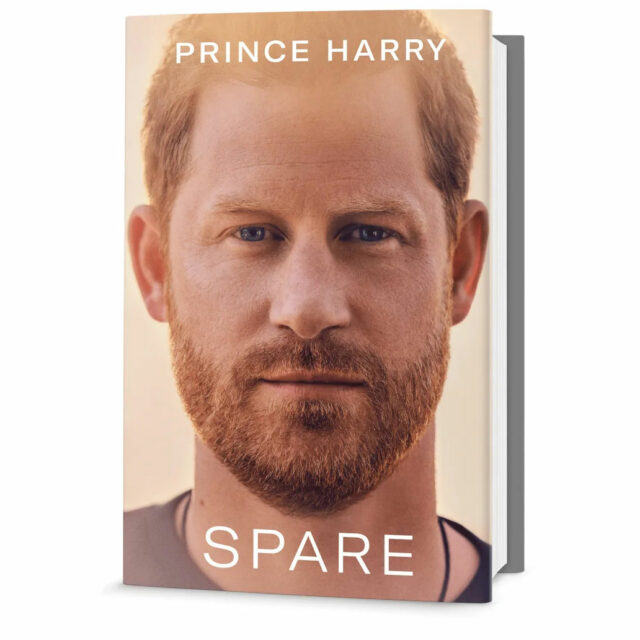
Prince Harry’s memoir breaks UK sales record on first day of release

LONDON — Prince Harry’s Spare became the UK’s fastest selling non-fiction book ever, its publisher said on Tuesday, after days of TV interviews, leaks, and a mistaken early release of the memoir containing intimate revelations about the British royal family.

Harry’s book has garnered attention around the world with its disclosures about his personal struggles and its accusations about other royals, including his father King Charles, stepmother Camilla and elder brother Prince William.

“We always knew this book would fly but it is exceeding even our most bullish expectations,” Transworld Penguin Random House Managing Director Larry Finlay said in a statement.

“As far as we know, the only books to have sold more in their first day are those starring the other Harry (Potter).”

Citing British sales figures, the publisher said it had sold 400,000 copies so far across hardback, e-book and audio formats.

Earlier in the day, Caroline Lennon, a retail worker and one of the eager readers who had headed to bookshops to get their copy on the first day of its release, said she would read the book immediately as she posed for photographers.

“I like him, I like the royal family,” said Ms. Lennon, 59, the first and only person waiting to buy a copy from a Waterstone’s bookshop in central London when it opened.

Despite the lack of queues, Waterstone’s said there had been strong pre-orders for the memoir which currently ranks as the best-seller on Amazon’s UK, US, Australian, German and Canadian websites.

“I know perhaps some of the things he says have rubbed different people the wrong way,” Lai Jiang told Reuters after buying a copy in Singapore.

“And I know, definitely, there are a lot of people who say that he shouldn’t come out and say the things he says, but I believe Harry should be given a chance to say what he wants to say.”

Spare is the latest revelatory offering from Harry and his wife Meghan since they stepped down from royal duties in 2020 and moved to California to forge a new life, and follows their Netflix documentary last month.

The royal family has not commented on the book or the interviews and is unlikely to do so.

Extracts from the book were leaked last Thursday when its Spanish language edition also went on sale by mistake in some bookshops in Spain.

Harry speaks of his grief and growing up after the death of his mother Princess Diana when he was just 12, his use of cocaine and other drugs to cope, how he killed 25 Taliban fighters while serving as a soldier in Afghanistan, and even how he lost his virginity.

He also reveals a heated row with William, the heir to the throne, saying his brother knocked him over, and how they had both begged his father not to marry Camilla, who he wed in 2005 and is now the queen consort.

In TV interviews ahead of the book launch, Harry has doubled down on his accusations that some royals, including Camilla and William, leaked stories to tabloid papers which had damaged either him or his wife Meghan in order to protect themselves or enhance their reputations.

“I think she (his mother Diana) would be heartbroken about the fact that William, his office, were part of these stories,” he told Good Morning America (GMA).

In another interview with CBS show 60 Minutes, he said Camilla had been a tabloid “villain” and needed to rehabilitate her image, which made her “dangerous”.

“I don’t regard her as an evil stepmother. I see someone who married into this institution and has done everything that she can to, you know, improve her reputation and her own image,” he told GMA. — Reuters

Got a call from PHLPost? It’s a scam

David Hahn/Unsplash

By Patricia B. Mirasol, Reporter

Calls claiming to be from the Philippine Postal Corporation (PHLPost) that ask for personal information are scams, a spokesperson said.

“Please beware of scammers who call, send text messages, and/or e-mails about incoming parcels,” PHLPost said in a Jan. 11 e-mail to BusinessWorld.

“The Post Office delivers mails and parcels door-to-door … The public is encouraged to use the Track and Trace feature of the website to check the status of their incoming or outgoing parcels. They can also contact their delivery post office for updates.

The process of sending notification cards has also been removed.

“Recipients should expect their parcels to be delivered door-to-door unless there are duties/taxes to be paid to the Bureau of Customs,” PHLPost added.

BusinessWorld received recent reports of individuals getting robocalls, which are later transferred to actual persons who claim to be from PHLPost. The scammer asks for the recipient’s home address and justifies asking for personal information by saying that the recipient has a package that has to be claimed at the nearest Post Office.

“Online attackers may attempt to gain your personal or financial information or exploit you for financial gain,” a 2022 notice from PHLPost said. “The Philippine Post Office will never call, text, or email you asking for personal or financial information, including password, credit card details, or account information.”

Nor will it “ask you to click on an email link to print off a label to redeem your package,” it added.

Email versions of the scam come with attachments or links, which, when downloaded, can activate viruses that steal passwords, financial account information, and other such details.

The Cybercrime Investigation and Coordinating Center said in October 2022 that Filipino mobile phone users have lost “millions of dollars” due to similar scams.

PHLPost’s hotline is 8288-POST.


SIDEBAR | How PHLPost delivers parcels

According to PHLPost, parcels that are valued P10,000 or less are tax-free and are delivered door-to-door, with the recipient shelling out a standard fee (called the Presentation to Customs Charge) of P112.

Parcels that are valued P10,001 and above, on the other hand, are subject to taxes, per the Customs Modernization and Tariff Act.

Parcels examined by the Bureau of Customs (BoC) go through the following process:

  • The Customs Processing Unit will send a Letter Notice to the recipient through the Domestic Express Mail Service. All Letter Notices from the BoC are enclosed in an envelope and come with a copy of the Consignment Note.
  • For parcels that are deemed taxable, the Customs Examiner will release a Statement and Receipts of Duties Collected on Informal Entry (or BoC Form No. 116). This, plus the Postal Notification Letter, will be sent to the parcel recipient through his/her local postmaster.
  • The recipient pays the tax specified in the BoC Form No. 116 to the Collector of Customs through a Postal Money Order. PHLPost is working on having online modes of payment.
  • After the Collector of Customs verifies the payment of the Postal Money Order, the parcel is then turned over by the Customs Processing Unit to PHLPost’s Dispatching Unit for delivery.

Othello P. Monzon, retail proposition senior manager of AXA Philippines, explains how to file for travel insurance claims

The most common reasons for filing travel insurance claims are baggage loss and flight delays. Travelers needing to file for such will have to submit copies of their plane ticket, passport, and ID, plus a certificate from their airline in cases of flight delays and cancellations.  

Globe Business and Palo Alto Networks utilize AI for cybersecurity

As industries continue to adapt to hybrid work structures, the potential grows for cyber threats to spread across multiple digital spaces used by remote workers. Yet with 91% of Filipinos favoring the work-from-anywhere setup, more and more businesses practicing hybrid work recognize the need to take a proactive approach to their organization’s cybersecurity. With this in mind, Globe Business has dedicated itself to enhancing enterprise cybersecurity by partnering with Palo Alto Networks, the global cybersecurity leader.

“Globe Business redefines security by offering a formidable, end-to-end, and easy-to-use defense platform to help prevent attacks before they happen. Our partnership with Palo Alto Networks enables us to develop a solution that detects and helps to avoid these possible issues,” shared Francisco “Cocoy” Claravall, Vice President for Partner Ecosystem for Globe Business, Enterprise Group.

Exposure to data breaches incurs damaging costs such as reputational harm and legal consequences, which can be prevented with proactive strategies and advanced solutions to counter cyberattacks. However, while most security tools employ authentication processes before granting access to company devices or systems, threats commonly caused by human error can bypass standard security protocols that lead to harmful results.

Claravall added, “A data breach can be just one click away. Persistent hackers can circumvent set security measures and install malware or ransomware on multiple devices in a company. Our partnership with Palo Alto Networks enables us to leverage machine learning to analyze behavioral patterns across systems to help stop potential cyber threats.”

Globe Business Endpoint Detection Response (EDR) Solutions, powered by Palo Alto Networks Cortex XDR, the industry’s first extended detection and response platform, enable security teams to block modern attacks. By combining rich data and analytics, EDR can identify tactics and techniques deployed by attackers, hunt for malicious activities, and provide the visibility needed to investigate and respond to incidents.

Globe gives enterprises access to integrated Next-Generation Firewalls from Palo Alto Networks as organizations transition to a cloud-delivered network security model. The latter’s natively-integrated Prisma Access and Prisma Software-Defined Wide Area Network solutions provide security and uninterrupted connectivity.

“While we can’t control cyber adversaries, we can strengthen our defense, evolve our architecture, and future-proof enterprises by implementing proactive cybersecurity strategies and technologies,” said Oscar Visaya, Palo Alto Networks, Country Manager, Philippines.

With cyber threats becoming increasingly concerning as business processes shift to the cloud, Globe Business continues to support enterprises with ICT solutions and services geared toward digital transformation. Through collaboration with global tech leaders, companies are given a secure foundation to scale their business operations digitally.

Globe strongly supports the United Nations Sustainable Development Goals (SDGs), particularly UN SDG No. 9, which highlights the roles of infrastructure and innovation as crucial drivers of economic growth and development. Globe is committed to upholding the 10 United Nations Global Compact principles and 10 UN SDGs.

To know more about Cybersecurity Solutions, visit the website or consult with your dedicated Globe Business Enterprise Account Manager today.


Spotlight is BusinessWorld’s sponsored section that allows advertisers to amplify their brand and connect with BusinessWorld’s audience by enabling them to publish their stories directly on the BusinessWorld Web site. For more information, send an email to online@bworldonline.com.

Join us on Viber to get more updates from BusinessWorld: https://bit.ly/3hv6bLA.

ADVERTISEMENT
ADVERTISEMENT